DUNE: DigitalUNE
DUNE: DigitalUNE
All Theses And Dissertations Theses and Dissertations
4-2020
Stop-Out Factors For Nontraditional Students In Online
Stop-Out Factors For Nontraditional Students In Online
Competency-Based Education Programs
Competency-Based Education Programs
Henry T. JamesUniversity of New England
Follow this and additional works at: https://dune.une.edu/theses
Part of the Educational Assessment, Evaluation, and Research Commons, Educational Leadership Commons, and the Online and Distance Education Commons
© 2020 Henry T. James
Preferred Citation Preferred Citation
James, Henry T., "Stop-Out Factors For Nontraditional Students In Online Competency-Based Education Programs" (2020). All Theses And Dissertations. 297.
https://dune.une.edu/theses/297
This Dissertation is brought to you for free and open access by the Theses and Dissertations at DUNE: DigitalUNE. It has been accepted for inclusion in All Theses And Dissertations by an authorized administrator of DUNE: DigitalUNE. For more information, please contact [email protected].
STOP-OUT FACTORS FOR NONTRADITIONAL STUDENTS IN ONLINE COMPETENCY-BASED EDUCATION PROGRAMS
by
Henry T. James
BS (Western Governors University) 2013 MBA (Western Governors University) 2015
A DISSERTATION
Presented to the Affiliated Faculty of
The College of Graduate and Professional Studies at the University of New England
Submitted in Partial Fulfillment of Requirements For the degree of Doctor of Education
Portland & Biddeford, Maine
ii
iii
Henry T. James April 2020 Educational Leadership
STOP-OUT FACTORS FOR NONTRADITIONAL STUDENTS IN ONLINE COMPETENCY-BASED EDUCATION PROGRAMS
Abstract
The purpose of this qualitative study was to explore the phenomenon of nontraditional students in online competency-based education (CBE) degree programs taking enrollment breaks known as “stop-outs” between college semesters or terms. Online programs and CBE programs have grown at a pace commensurate with the increased enrollment of working adults or other
nontraditional college students. At the same time, stop-out and attrition rates for online programs and nontraditional students have been significantly higher than for traditional postsecondary education models. A review of existing literature exposed a gap in understanding the factors related to stop-outs for nontraditional students in online CBE degree programs. The researcher applied a theoretical perspective based on the self-determination theory of student persistence to add to the body of knowledge about the stop-out phenomenon. The researcher utilized surveys and interviews to collect and analyze data from current or former students that stopped out of online CBE degree programs to explore the phenomenon from the perspectives of their lived experiences. The researcher found that nontraditional stop-outs were influenced by external factors more than the online CBE environment.
KEY WORDS: stop-outs, dropouts, attrition, persistence, nontraditional students, competency-based education (CBE), self-determination theory of student persistence.
iv
University of New England
Doctor of Education Educational Leadership
This dissertation was presented by
Henry T. James
It was presented on April 13, 2020 and approved by:
Marylin Newell, PhD, Lead Advisor University of New England
Gizelle Luevano, EdD, Secondary Advisor University of New England
Barbara Tucker, DBA, Affiliated Committee Member Western Governors University
v
Acknowledgements
I wish to thank with deep gratitude my indispensable dissertation committee chair
without whose guidance I might not have completed this process. Additionally, I wish to express my appreciation to the members of my dissertation committee for their suggestions, feedback, insights, advice, and support throughout this process and the members of my cohort for their constant encouragement and support.
Finally, I would like to thank key family members. First, my Aunt Virgie who always admonished me to keep learning alive. Next, my devoted wife Charlie Mae for her enduring love, patience, and encouragement as I climbed the rugged trail to achieve my doctoral degree.
vi
Table of Contents
CHAPTER 1: INTRODUCTION ... 1
Statement of the Problem ... 3
Purpose of Study ... 4
Research Question ... 4
Conceptual Framework ... 5
Assumptions, Limitations, and Scope ... 6
Significance of Study ... 7
Definition of Terms... 7
Conclusion ... 8
CHAPTER 2: LITERATURE REVIEW ... 10
Demand for Higher Education ... 11
Economic Demand ... 12
Demographic Demand... 13
Cost of Higher Education... 14
For-Profit Colleges ... 15
State Funding... 16
Community College and Relationships ... 17
Academically Unprepared Students ... 17
Nontraditional Students ... 19
Online and Competency-based Education Programs ... 20
Online Education ... 21
vii
Successful Intervention Initiatives ... 24
What Remains Unknown About Stop-outs ... 26
Theoretical Framework ... 27 Conclusion ... 30 CHAPTER 3: METHODOLOGY ... 31 Setting ... 32 Participants ... 33 Data ... 35 Analysis... 36 Participant Rights ... 37 Potential Limitations ... 38 Conclusion ... 38 CHAPTER 4: RESULTS ... 39
Data Collection and Analysis Overview ... 39
Participant Demographics ... 42
Stop-out Factors ... 49
Competency-Based Education Learning Model ... 49
Online Environment ... 50
Other Factors ... 51
Synthesis... 53
Summary of Findings ... 54
CHAPTER 5: CONCLUSION ... 56
Review of Research Question and Summary of Responses ... 56
viii
Alignment with Self-Determination Theory ... 60
Alignment with Self-determination Theory of Student Persistence ... 61
Competence ... 62
Autonomy ... 63
Relatedness ... 64
Implications... 65
Recommendations for Action ... 67
Recommendations for Further Study ... 68
Focus on Leaders ... 68
Social and Economic Impact ... 69
Conclusion ... 69
References ... 70
Appendix A: Stop-out Survey Participant Invitation ... 88
Appendix B: Stop-out Survey REDCap Instrument ... 89
Appendix C: Survey with Informed Consent... 90
Appendix D: Stop-out Interview Volunteer Form ... 94
ix
LIST OF TABLES
Table 1. Demographic Indentifiers Self-Reported by Survey Participants ... 43 Table 2. Summary and Comparison of Survey and Interview Responses ... 54
x
LIST OF FIGURES
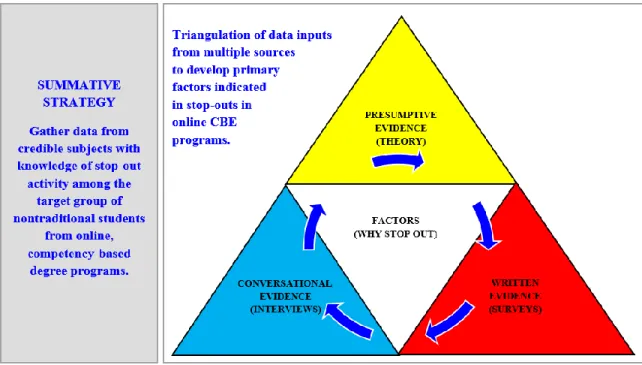
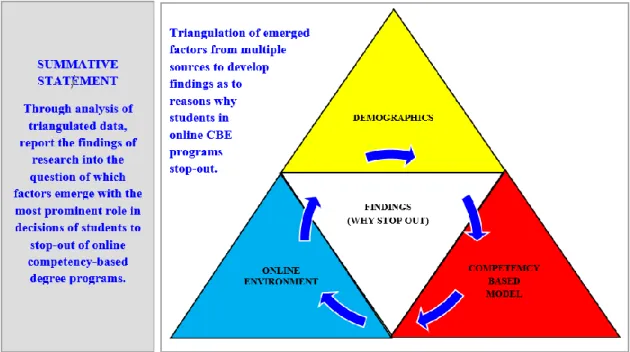
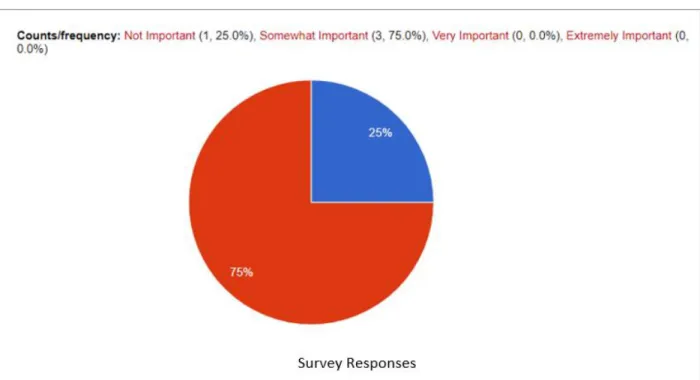
Figure 1. Triangulation Process for Summative Strategy Development. ... 41 Figure 2. Triangulation Process for Summative Statement Development. . ... 42 Figure 3. Importance of Rigor in Online Programs as a Factor for Nontraditional Stop-Outs. ... 62 Figure 4. Importance of Social Connection in Online Programs as a Factor for Nontraditional Stop-Outs. ... 64
CHAPTER 1: INTRODUCTION
Total enrollment in American colleges and universities equaled 20 million students in 2015, an increase from 15.9 million in 2001, and future enrollment was projected to reach 22.6 million by 2026 in a study conducted by Hussar and Baily (2018). According to Grawe (2019), traditional college students will represent a shrinking percentage of total enrollment after 2025 because fertility rates in America declined after the Recession of 2008 producing fewer high school graduates than would normally enter college in the mid-2020’s. In the same report, Grawe (2019) predicted that an increase in enrollment of nontraditional student populations could offset the decline in traditional student enrollment. Nontraditional students are primarily independent working adults over the age of 25 compared to traditional students who are 18-24 years old, enter college directly after high school, and depend on parents for financial support (Choy, 2002, pp. 2-3). A study by Fishman, Ludgate, and Tutak (2017) estimated that students above the age of 25 represented 44% of total enrollment in American colleges and universities (p. 2).
According to Hussar and Baily (2018), enrollment of students older than 25 years of age outpaced enrollment of students under 25 between 2001 and 2016 by at least 10% (p. 25). Including adult learners and other student demographics associated with nontraditional students, New (2014) estimated that 75% of all enrolled college students were nontraditional.
In response to demand for innovations that could lower college costs and improve access, a growing number of institutions have developed online and competency-based education (CBE) degree programs that have proven particularly suited to nontraditional students (Fishman, et al., 2017). According to Poulin and Straut (2016), online education is a form of distance education that is conducted over the internet to deliver instruction and provide interaction for students that are physically separated from the location of the instructor (p. 7). Fishman et al. (2017) described
CBE as programs that award credit to students for demonstration of what they know instead of how much time was spent learning the material.
Studies have shown that traditional higher-education models where students attend classes on campus and earn credits based on satisfactory performance over a specified length of time presented more challenges and greater risk of failure for the growing number of
nontraditional students compared to traditional student groups (Atchley et al., 2013). According to New (2014), a high percentage of nontraditional students struggled to persist and remain in college until they attained their degrees. Prior to dropping out of college permanently, many students, identified as stop-outs, leave school with the intention of returning to complete their degrees in the near future (Scobey, 2017). Schatzel, Callahan, Scott, and Davis (2011) found that at least 21% of nontraditional students in America have stopped out. A 2009 study published by Public Agenda found that 36% of stop-outs did not return to school within five years after leaving and were re-classified as dropouts or stay-outs contributing to the high attrition rate for nontraditional students that fail to persist in college (Johnson, Rochkind, Ott, & DuPont, 2009). With the present and projected growth of nontraditional student enrollment and online CBE programs, higher education leaders and policy makers need a better understanding of the factors that contribute to students stopping-out and becoming part of the high attrition rates among nontraditional online CBE students.
This chapter provides an overview of the study, including the statement of the problem, purpose of the study, the research questions, the conceptual or theoretical framework utilized for the study, assumptions and limitations of the study, significance of the study, definitions of key terms used in the study, and concluding thoughts with a look forward to succeeding chapters of the study.
Statement of the Problem
The problem investigated in this study was the phenomenon of stop-outs among nontraditional students in online CBE degree programs at regionally accredited universities. Stop-outs represent a major portion of the dropout population that threatens higher education, society, and the economy in America (Freedman, 2014). Existing literature examines persistence problems among online students and traditional students (Atchley et al., 2013; Tinto, 2006), but little research can be found that focuses on stop-outs among nontraditional students in online CBE degree programs.
Successful higher-education experiences that reduce stop-outs for nontraditional students may require innovative nontraditional approaches to learning (Fishman et al., 2017). According to Gardner (2019), working adults with obligations to employers and families may perform better in learning environments with more affordable, flexible, and accessible options. In response to the needs of nontraditional students, more institutions have developed online and CBE degree programs (Erisman & Steele, 2015, p. 39). According to Fain (2019), nearly 500 colleges and universities reported in 2018 that they have already launched CBE programs or have reached various stages of CBE program development for their institutions. The Competency-Based Education Network (C-BEN) was organized in 2013 and became a free-standing nonprofit group four years later (C-BEN, 2019). More than 90 colleges, universities, and education systems had joined the network by 2019 (BEN, 2019). According to Kelchen (2016), the purpose of C-BEN is the collaboration and study of efforts to develop high quality CBE programs.
Studies have found that stop-out rates for online programs were higher than stop-out rates for on-campus programs (Heiman, 2010). According to Tinto (2016), higher education leaders must recognize and reverse the negative impact of stop-outs and on the transforming mission of
higher education. It is important to understand the trend lines of retention and persistence and the factors that lead to stop-outs, and with that understanding, to reduce the percentage of students that fail to thrive in online CBE programs.
Purpose of Study
The purpose of this study was to examine factors associated with stop-outs involving nontraditional students in online CBE degree programs at regionally accredited colleges and universities to identify commonalities in the reasoning of stop-outs by exploring their lived experiences. With the growing enrollment in online courses and programs, the dropout rate for online courses has continued to increase (Park & Choi, 2009). At colleges and universities offering online CBE programs, it is important to understand what factors predict or encourage high stop-out rates. In partnership with John Wiley & Sons, Inc., Western Governors University (WGU), one of the largest online CBE schools in America, published the peer reviewed Journal of Competency Based Education and operates the website CBEInfo.org. According to Marcus (2017), WGU collaborates with Harvard, Stanford, Carnegie Mellon, the University of Chicago, and many other universities, colleges, companies, and organizations interested in CBE
advancement to share experiences, research, and strategies that improve the CBE landscape. This study explored the lived experiences of stop-outs to increase understanding of the factors that contribute to the phenomenon of stop-outs among nontraditional online CBE students.
Research Question
Current data available from research indicates that nontraditional students entering college as first-time enrollees represent the largest risk group for failure or stop-out (Fishman et al., 2017). According to New (2014), one third of adult students that stop out but return to college eventually become dropouts. The problem of practice for this study indicated that the
population of stop-outs should be further explored to identify the most common risk factors of the phenomenon by investigating this research question:
What role do nontraditional student demographics, the online learning environment, and/or the CBE learning model have in the decisions of nontraditional students to stop out of their degree programs?
Conceptual Framework
The theoretical perspective framing this study was the self-determination theory of
student persistence described by Kinsey (2017). Chen and Jang (2010) designed a study based on the long-established three motivational concepts of self-determination theory (SDT)—
competence, autonomy, relatedness—to investigate student performance and persistence towards completion of online college courses. According to Ryan and Deci’s (2000) SDT motivational theory, competence refers to self-efficacy or the ability or skill to succeed; autonomy refers to the feeling of freedom or volition; and relatedness refers to the feeling of belonging, affection, or connection to others (pp. 64-65). The study by Chen and Jang (2010) found that students in online environments persisted when their basic needs for self-determination had been met. The themes that emerged from existing literature agree that persistence is related to student
involvement or interaction in college, and many factors cited in previous studies for stop-out among online or older nontraditional students indicated the importance of motivational influences (Park & Choi, 2009, p. 215). The researcher contended that the self-determination theory of student persistence applied to online CBE nontraditional students was a proper
Assumptions, Limitations, and Scope
The researcher held some assumptions about the study prior to conducting research. First, it was assumed that nontraditional students or working adults in online CBE degree programs fail to persist in college and stop out for reasons atypical for traditional students in similar programs if traditional students are enrolled in such programs. The researcher assumed that former students from online CBE degree programs would be identifiable. When contacted as potential
participants in the study, the researcher assumed the former students would willingly offer candid, fair, and transparent responses that would aid in the development of data useful for drawing conclusions about the key factors contributing to their decisions to stop out. Additionally, the researcher assumed that leaders in higher education institutions that offer online CBE degree programs would not encourage and support research to identify factors that contribute to the phenomenon of stop-outs by providing access to former students that fit the criteria for the study. To ensure access to former students, the researcher designed the study to collect data from qualified participants recruited through social media networks not owned or managed by any college or university.
The relatively small number of established online CBE degree programs offered by regionally accredited colleges and universities in America presented a limited opportunity for sampling. With a limited sample, the scope of the study was not likely to be generalizable or transferrable (Creswell, 2013, p. 157). Data collected from a small sample of participants could limit the trustworthiness of the results and conclusions from this study for broader application, but the study could provide a basis for further research.
Significance of Study
This study is significant because it adds new insights and understanding of the factors that contribute to the phenomenon of nontraditional student stop-outs from online CBE degree programs at regionally accredited colleges and universities. Understanding why students enroll in online CBE programs but fail to perform well academically or continue their enrollment
uninterrupted until they earn their degree is the essential predecessor to implementing changes that will solve the problem of stop-outs (Schatzel et al., 2011. p. 57). While retention and persistence are important performance metrics for all colleges and universities, they are especially significant for schools that offer online or CBE degree programs because these
innovative approaches, while gaining more acceptance, currently face significant skepticism and resistance compared to traditional higher education models (Gardner, 2019). As pressure mounts from the public and policy makers, understanding of trends and factors for stop-outs and
persistence at colleges and universities that offer online CBE degree programs bears growing significance and urgency for the future of higher education in America (Tinto, 2016).
Definition of Terms
Terms used in this study may be unique to the topic or offered with unusual context. Following is a listing of intended definitions of key words:
Attrition. The number or percentage of students that leave college and abandon pursuit
of a degree.
Competency-based education (CBE). Education that awards credit for required learning
based not on seat time or pre-determined pacing but on demonstrated competency.
Dropout. A student that withdraws from a college or university before earning a
First-generation student. Students whose parents have never earned a bachelor’s degree.
Nontraditional student. A nontraditional student is one that is over the age of 25,
working full-time, independent of parental support, a parent, a spouse, or one that entered college more than a year after high school.
Online Learning.Education delivered over the internet or via electronic or telephonic
means with no in-person or on-campus interaction required between students and instructors
Persistence. Continued enrollment until degree completion at any college or university.
Retention. Continued enrollment until degree completion within the same college or
university.
Stay-outs. Students that do not re-enroll in college within five years of stopping out.
Students that stay-out are also considered to be dropouts.
Stop-outs. Students that stop attending, withdraw from college temporarily, and re-enroll
within five years.
Traditional student. Age 18-24, dependent on parental support, and entering college
directly after completing high school.
Conclusion
This study is important because it explored the phenomenon of stop-outs from the perspectives of nontraditional online CBE students that have lived through the experience. Research has shown that the nontraditional student population is expanding, innovative programs that include online CBE degrees are increasing, and stop-outs as a large part of total college attrition continue to represent problems for individuals, institutions, society, and the economy (Freedman, 2014). This chapter reviewed the phenomenon of stop-outs, the problem addressed in
the research question, the purpose of this study, and the scholarly significance of this study, including the self-determination theory of student persistence theoretical perspective that framed the study.
Chapter 2 explores existing literature that investigates the phenomenon of stop-outs as part of the larger problem of student attrition, the growth of online CBE programs and
enrollment, and greater insight into the conceptual framework that influenced this study. Chapter 3 discusses qualitative research methods and the application of methodology in the study of stop-outs at colleges and universities that offer online CBE degree programs. Chapter 4 offers an analysis and results from the data collected during research. The report concludes with recommendations and reflections in Chapter 5, followed by a list of references cited and appendices.
CHAPTER 2: LITERATURE REVIEW
Demand for higher education credentials and college-educated workers in America continues to be strong, especially for working adults (Gonser, 2017; Krauss, 2017, p. 7).
Independent working adults over the age of 25 typify most of all learners commonly identified as nontraditional college students (Brower & Schejbal, 2017; Choy, 2002, pp. 2-3). Many states have established projects and goals to increase the level of degree attainment for their residents to compete for jobs and economic success in a competitive, knowledge-based, global
marketplace (Lumina Foundation, 2018; Sims, 2018). Working adults are returning to college to keep pace with the demand for more education to advance their careers (Hussar & Bailey, 2013, p. 21). While more working adults are enrolling in college, policy makers and leaders are searching for new ways to reduce the rising cost of higher education in America (Fishman, Nguyen, & Ezeugo, 2018, pp. 18, 50).
Online degree programs and competency-based education (CBE) courses represent two innovations that improve affordability and access for nontraditional students (Fain, 2019; Lindsay, Goldman, Long, & Leone, 2018; Lurie, Mason, & Parsons, 2019, p. 20). According to Spaulding, Montes, Chingos, and Hecker (2019), CBE programs are especially attractive for first-generation students, low-income, low-asset, low-academic achievers, or working adult populations (p. 9). Research has shown that older students and other student populations that are described as nontraditional experience higher risk of failure in college (TICAS, 2018). This study investigated the phenomenon of nontraditional online CBE students that stopped out of college before completing a degree and the factors that attended the phenomenon.
Sources investigated for this review separately and collectively presented empirical data to confirm the magnitude and direction of college attrition in America. The primary objective of this literature review was to explore or explain the demographic of nontraditional students, examine the factors related to the stop-out phenomenon, and discover existing knowledge reflected in the literature for nontraditional online CBE students. While much has been researched and written about various aspects of student retention, attrition, and lack of persistence among various groups and institution types, little is found in existing literature relative to attrition among nontraditional students from online CBE programs (Erisman & Steele, 2015). This study intended to narrow that gap by exploring the lived experiences of
nontraditional students that did not re-enroll in online CBE college degree programs for a minimum of one semester or term to a maximum of five years. This study provides an understanding of the factors that cause nontraditional students to withdraw from online CBE programs and illuminates possible interventions that higher education leaders could initiate to reduce attrition among this growing group of the student population.
Demand for Higher Education
The demand for higher education to satisfy the needs of business and innovation in a competitive global marketplace has contributed to the growth in total college enrollment among nontraditional students (Gonser, 2017). As more working adults or other nontraditional learners have entered the market for higher education, colleges and universities have been forced to explore innovative nontraditional programs to accommodate this student demographic (Kelchen, 2016). The most successful American colleges and universities in terms of growing total
adults, including schools with online and CBE degree programs like Liberty University, Grand Canyon University, Southern New Hampshire University (SNHU), or WGU (Gardner, 2019). Economic Demand
Economic influences in America have created a high priority for college degrees. According to the Pew Research Center, only 36% of Americans surveyed in 1978 viewed a college education as a necessity compared to 75% of Americans surveyed in 2010 (Fry & Parker, 2012, p. 2). A Lumina/Gallup survey conducted in 2013 found that 97% of Americans believed that a postsecondary credential was important for financial success (Lumina Foundation, 2013). Another Lumina Foundation report indicated that most jobs created in America since the
economic downturn in 2008 have required higher education credentials, and the trend is expected to continue as the country and the world evolve from an industrial economy into a knowledge economy (Lumina Foundation, 2018). Recent research reported by Georgetown University (Carnevale, Jayasundera, & Gulish, 2016) indicated that nearly all jobs created in the last decade required more than a high school level of education, and studies have predicted that most jobs in the future will be targeted towards workers with post-secondary educations. The Bureau of Labor Statistics (BLS) predicted that the American economy would generate about 12 million new jobs from 2016-2026, and 8 million of the new jobs would require education beyond a high school diploma (BLS in Gonser, 2017).
Kraus (2017) estimated that as early as 2020, 66% of the available jobs in America would require more than a high school diploma and many would require a four-year degree (p. 7). Recent studies indicated that at least 46% of available positions in American businesses have remained open because employers struggled to find enough qualified applicants (Marcus, 2019b; Oldham, 2017). A Pew study found that in 2013, 22% of adults between 25 and 32 years of age
with only a high school education were living below the poverty line compared to 6% of young adults in the same age bracket that had earned a college degree (Pew Research Center, 2014). While enrollment projections for traditional students have shown signs of decline, economic indicators have created continued demand for higher education enrollment among nontraditional students, especially among working adults with some level of prior college (Gardner, 2019). Demographic Demand
A Hechinger Report authored by Field (2018) identified a pool of 35 million Americans over the age of 25 that have already earned some level of college credit but no degree.
According to the president of a major university with nearly 30,000 online students, there is no shortage of available students for colleges that are equipped to serve returning adults that already have some college experience (Crow as cited in Gardner, 2019). Most Americans polled believed that higher education was important for financial security, and 41% of Americans without a post-secondary credential indicated that they have considered a return to college (Lumina/Gallup, 2013).
The National Center for Education Statistics (NCES) research reports indicated that total enrollment in higher education institutions in America continued to rise and will continue to grow in the coming decade through 2025 (NCES, 2017, p. 403). In their research, Hussar and Baily (2018) indicated that the enrollment of adult students should increase another 13% by 2026 (p. 25). As states work to increase degree attainment and improve the employability of their citizens, and as colleges and universities pursue working adults to replace expected enrollment declines from traditional college students, the demographic of nontraditional students will continue to be in high demand (Field, 2018).
Cost of Higher Education
The costs to attend college in America—especially for underrepresented and
nontraditional populations—have continued to increase and have created barriers to continued enrollment that demand innovation and disruption to the traditional model (Scobey, 2017). From 2007 to 2017, the median annual cost of attendance at public four-year universities increased from $7,280 to $9,970, and the cost of attendance at private nonprofit four-year schools climbed from $27,520 to $34,740 (College Board, 2017, p. 12). With the underlying causes for the cost of college attendance or contributing factors unidentified or not eliminated, the costs of higher education could be expected to continue an upward trajectory. Until recently, education costs in America continued to rise because policy makers have not addressed the ongoing escalation (Tse, 2017).
Unsuccessful students at universities represent a negative impact on the economy (Johnson, 2012). Even at institutions with low cost of tuition, unsuccessful students incur
significant financial regression due to their enrollment problems associated with non-completion or debt without degree. According to research analysis by the Pew Research Center, total student loan debt in America had grown to $1.3 trillion by 2017 (Cilluffo, 2017). Students that fail to thrive are more likely to default on their student loans: Studies have shown that 24% of students who entered the repayment period in 2011 without a completed degree defaulted on their student loans compared to a 9% default rate for students that had graduated (Perna, Kvaal, & Ruiz, 2017). The odds in favor of bankruptcy filing were higher when the debtor had student loan debt but did not earn a degree (Despard et al., 2016). Houle and Warner (2017) conducted a study of life after loans and found that student debt was more likely to cause students from disadvantaged
population groups to struggle with the successful transition from school into productive independent lifestyles.
For-Profit Colleges
Studies have shown that for-profit colleges and universities have contributed to the rising cost of higher education that influences stop-outs while at the same time delivering poor returns economically (Josuweit, 2017). A recent Forbes article presented data to demonstrate that for-profit schools were a poor investment in education because, as a sector of providers, these
schools charged much higher prices and delivered unimpressive outcomes for students compared to public colleges, which were two to four times less expensive for the same credentials
(Josuweit, 2017). Cellini and Turner (2016), in a report published by the National Bureau of Economic Research (NBER), compared the employment outcomes of a matched group of one million students from similar credential programs at for-profit colleges and public colleges and found that the for-profit graduates were less likely to find employment and earned 11% less when they did find employment after graduation.
A statistical analysis report published by the Brookings Institution suggested that most of the current crisis when student loan debt reached $1.1 trillion in 2014 was concentrated among borrowers that attended for-profit colleges and universities (Looney & Yannelis, 2015).
According to Looney and Yannelis (2015), this large group of debtors was classified as nontraditional borrowers and constituted a high-risk demographic. Under public and political pressure as well as financial pressure and legal proceedings, more than 100 for-profit colleges and career schools closed between 2016 and 2018, and regulators have predicted more closings in the future (Busta, 2019).
State Funding
State funding for higher education has contributed to the cost of college for all students while states have launched initiatives to increase the number of credentialed residents,
particularly within the underserved and nontraditional student demographics (Quinton, 2016). While the cost of higher education has continued to rise, studies have shown that during the past 25 years, nearly every state has reduced funding for public colleges and universities, shifting costs to students and driving up student loan debt (Laderman, 2018, p. 46; Mitchell, Leachman, Masterson, & Waxman, 2018). Research has shown that student loan debt has been a
contributing factor in stop-out decisions by nontraditional students (Huelsman, 2015; Scobey, 2017).
In 2008, Dr. Nicolas P. Restinas (a lecturer at Harvard University; noted author; former Assistant Secretary for Housing; Federal Housing Commissioner at the United States
Department of Housing and Urban Development; and a member of the Board of Directors at Freddie Mac and the Federal Deposit Insurance Commission) and Dr. Eric S. Belsky (noted author and scholar who served as the managing director of the Harvard Joint Center for Housing Studies) edited a book about consumer credit in America. The authors predicted that demand for student loans would grow faster than the federal loan programs could accommodate in the coming decade and half of the students taking on student loans would be unable to make the payments (Retsinas & Belsky, 2008). Research conducted by the nonprofit Demos organization presented a primary finding that indicated that student debt greater than $10,000 had a negative impact on stop-outs and the rate of student persistence to graduation (Huelsman, 2015, p. 13).
Community College and Relationships
Students that begin or resume their quest for a four-year degree at a community college could lower their total cost of education (Powell, 2018). Declining enrollment numbers at community colleges have contributed to the cost of education for nontraditional students. The cost of attending two-year institutions has been on the increase but has remained much lower than the cost of attendance at most four-year colleges and universities. Many adult students that return to college or enter college for the first time choose to enroll at four-year institutions instead of community colleges (Gardner, 2019). Falling enrollment and rising costs at community colleges contribute to the increased cost of higher education and have a negative financial effect on nontraditional students and their ability or motivation to persist to degree completion and graduation.
Academically Unprepared Students
Students entering college before they were prepared for the rigors of higher education have contributed to higher education costs and stop-outs (Gardner, 2019). Students that have demonstrated less academic preparedness and needed remedial courses were at high risk of stopping out of school without completing requirements for a degree (NCES, 2017). Most colleges and universities in America have admitted students that were not academically prepared to succeed in their higher education environments (Butrymowicz, 2017). Data collected from more than 900 colleges indicated that 96% of those schools enrolled students for 2014-15 who were not prepared academically to thrive in college. The report identified more than a half-million students in this category and estimated that the taxpayer cost of remediation was as high as $7 billion per year (Butrymowicz, 2017, p. 1).
The National Student Clearinghouse Research Center (NSCRC, 2018) collected data on student enrollment and persistence. After four years, 23.5% of the students that enrolled as part of the fall 2011 cohort had left college without completing a degree program. Six years after enrolling in college, 27.4 % of the group had left college without earning a degree (NSCRC, 2018). Among first-time students entering college in the 2011-2012 school year, 32% had not earned a credential and were no longer enrolled at any credential-granting college or university by early 2017 (Chen et al., 2019, p. 5). A study of 38,000 community college students that enrolled in 2000, found that 94% stopped out at least once before eventually dropping out altogether or going on to graduate (Fain, 2013).
Complete College America (CCA), a national nonprofit organization, presented data in 2018 that indicated that, among remedial students in four-year college programs, only 17% would graduate (CCA, 2018, p. 2). The report suggested that students in need of remedial courses incurred millions of dollars in student debt before even earning college credit. Such students, according to the report, frequently gave up on college because of discouragement and lack of money. Another persistence study indicated that nearly 40% of academically unprepared students at two-year colleges and 25% of academically unprepared students at four-year colleges ultimately failed to complete remedial courses required to persist and earn a college degree (Butrymowicz, 2017, p. 1). Research has shown that many nontraditional students were academically unprepared and needed remedial assistance when they returned to college, and these students, identified as repeat-non-completers, were at higher risk of failing to persist (NCES, 2017; New, 2014).
Nontraditional Students
Enrollment numbers for nontraditional students represented the largest increase of any demographic entering college in recent years. New (2014) estimated that nontraditional students accounted for as much as 75% of total college enrollment. Shapiro et al. (2015, p. 4) found that nontraditional students had lower completion rates and were at high risk of failure. Between 2013 and 2015, more than three million students withdrew from colleges in America and many of them never went back to complete their degrees (Kolodner & Butrymowicz, 2017). According to the National Center for Education Statistics (NCES), for the academic enrollment year 2011-12, 30% of all first-time college students had stopped out of their degree programs three years after enrollment (NCES, 2017, p. 1). This government study found that adult learners or nontraditional students with family and work obligations failed to thrive and attain degrees in greater numbers than traditional students (NCES, 2017). A study by Looney and Yannelis (2015) indicated far better repayment patterns and economic outcomes for traditional students than for nontraditional students. Research has shown that 24% of students that entered the repayment period in 2011 without a completed degree defaulted on their student loans compared to a 9% default rate for students that had graduated (Perna et. al., 2017).
Student loan debt has had a major impact on the quality of life for high-risk stop-out populations that have debt but no degree. Another study that examined persistence rates between 2003 and 2009 found that 45% of students that delayed the start of college were at higher risk of stopping out and 28% of student loan-takers that stopped out of college during that period had been nontraditional students with full time jobs while attending school (Nguyen, 2012, p. 6). In their book, Akers and Chingos (2014) acknowledged the growing social and economic concerns and specific problem areas within the high-risk population of nontraditional students that never
finished college. A study by Elliott (2014) indicated a disproportionate financial burden incurred by minority and low-income students that often opt to stop out before completing their degrees due to their ever-increasing educational debt (p. 30).
Houle and Warner (2017), in their study on the social impact of attrition, found that students that failed to complete a degree had greater difficulty establishing independence and socioeconomic well-being. Research data from government reports suggested that the greatest negative impact from debt and attrition served to limit the prospects for prosperity and career growth for nontraditional students and the population that needed the most help (Goodnight et al., 2015). Increasing economic demand, growing enrollment, and high attrition rates among nontraditional students have presented challenges and opportunities for policy makers and higher education leaders to find new understanding of the factors that contribute to decisions to stop out.
Online and Competency-based Education Programs
In response to the ongoing demand for higher education, the rising costs of higher education, the anticipated increased enrollment of nontraditional students, and concerns about documented high attrition rates, leaders in the field of higher education have in recent years accepted more innovative approaches to the delivery of higher learning (Kelchen, 2016). Online courses and degree programs have become more mainstream (Klein-Collins, 2013). Studies have shown that more than 600 colleges and universities were launching online and CBE programs and the trend was expected to grow at a double-digit annual pace from 2013 through 2020 (Anderson, 2018; Dusst, & Winthrop, 2019). CBE courses and degree programs have emerged as approved delivery modalities. The innovations or nontraditional disruptions offered by online learning and CBE have been attractive options for nontraditional students or working
adults that have returned to college. Research has shown that these programs have experienced higher attrition rates than more traditional models of higher education (Fain, 2019).
Online Education
The evolution of distance education has followed the development of technology
throughout history. In the 1700’s and 1800’s, distance education was conducted by mail; during the early and mid-1900’s, radio, telephone, and television media were utilized; and in 1994, the first completely online educational program was launched (Dumbauld, 2015). According to Poulin and Straut (2016), distance education enrollment in American colleges had grown to 5.8 million students and represented 28% of all college enrollment by 2014. Most of the increase in online courses was driven by growing nontraditional student enrollment and working adults that returned to college in need of flexible schedules to accommodate work and family obligations (Brower & Schejbal, 2017; Dumbauld, 2015). The largest universities in America in 2019 in terms of total enrollment include the best-known online schools with programs designed to attract nontraditional students. SNHU enrolled 135,000 students with more than 130,000 in their online programs; WGU offers only online programs and enrolled 115,000 students (Adams, 2019). Either of these universities alone enrolled more students than the combined enrollment of the top 14 colleges in America according U.S. News and World Report rankings (Gardner, 2019).
Competency-based Education Programs
According to Kelchen (2015), CBE has been generally defined as recognition of required learning based not on seat time or pre-determined pacing, but on demonstrated competency and flexible pacing (p. 1). Research reported by Lindsay et al. (2018) showed that the promotion of CBE has been around since the Industrial Revolution. While the traditional model of education
was based on seat time and instructor contact during this period of history, some proponents of CBE started to explore the value of experience and self-paced learning. In 1919, the Winnetka Plan was established as one of the first public-school system experiments in CBE (Lindsay et al., 2018). With government backing and encouragement, colleges began to offer credit for prior learning as a form of CBE in the 1970’s (Klein-Collins, 2013). In 1997, WGU was incorporated as America’s first online CBE university (Lindsay, et al., 2018). Online CBE degree programs at WGU were accredited by all four regional accreditors recognized by the U.S. Department of Education in 2003 (King, 2017). By 2019, total active enrollment in WGU’s CBE degree programs exceeded 115,000 full-time students, and graduates from the 22-year old school exceeded 137,000 students (WGU, 2019).
Acceptance of CBE programs has spread to major universities including Purdue
University, the University of Wisconsin, the University of Texas, Northern Arizona University, the University of Michigan, and others (Fishman et al., 2017). A 2018 study conducted by Lurie, et al. (2019) collected data from 501 colleges and universities in America relative to their
approaches to CBE programs and found that 85% were interested in offering CBE programs, 57% had already launched at least one CBE program, and at least 55% believed that CBE programs could improve access for nontraditional students and prepare them for jobs in the knowledge economy. The success of CBE programs, coupled with the changing demographic of student enrollment and economic indicators, has led to increased levels of support by lawmakers, government agencies, and foundations (Kelchen, 2015). While CBE programs in higher
education have attracted more attention and gained more acceptance among nontraditional students and employers of CBE program graduates, attrition rates in online and CBE degree programs have remained higher than attrition rates in traditional degree programs (Fain, 2019).
Interventions
A review of existing literature has demonstrated that the prevailing causes of stop-outs among traditional and nontraditional students alike include the rising costs of education,
economic illiteracy of borrowers, and lack of academic preparation for college. Osam, Bergman, and Cumberland (2017), building upon earlier foundational studies from the 1970’s, found that in 2017, the three basic categories of barriers that prevented nontraditional students from re-entering college or persisting to graduation were still institutional, situational, or dispositional. According to Osam et al. (2017), institutional barriers include degree programs and other features related to the operation of the college or school; situational barriers include personal concerns about work, family, or finances of the student; and dispositional barriers include personality issues of the student such as low self-esteem, limited academic preparedness, or fear of failure. Researchers have investigated possible interventions for the various factors that have contributed to the failure of students to persist. Tinto (2016) wrote about the challenge for leaders to move the focus of institutions from retention to persistence and suggested that leaders should invest energy and innovation in student self-efficacy, sense of belonging, and the
perceived value of the curriculum. Cochran, Campbell, Baker, and Leeds (2014) concluded from their study of attrition and student characteristics that leaders should implement better policies to support and monitor new students, design programs to assist students with lower academic performance histories, and initiate outreach to stop-outs to uncover ideas to reduce withdrawals and related harmful impacts to American society and the economy.
During the 2013 annual conference of the Higher Learning Commission of the North Central Association of Colleges and Schools (HLC), a team of noted professors and authors explained their research and findings related to college students that failed to graduate (Cherif,
Movahedzadeh, Adams, & Dunning, 2013). The report included data and statistics from studies conducted by researchers at the Center for Academic Success at the University of Alabama, NCES, the College Board, and other authors. This study suggested that the high failure rate of college students amounted to a national tragedy and offered remediation ideas for educators to employ as countermeasures to help students thrive (Cherif, et al, 2013). The authors concluded that the root cause for failure to thrive in college was student motivation and suggested that educators should take steps to motivate students by providing interesting and engaging learning materials as well as provide extra support to help students stay focused. HLC recommended that colleges consider the findings of the research in their institutional improvement efforts (Van Kollenburg, 2013).
Successful Intervention Initiatives
Studies indicated that two of the main reasons for stop-outs have been located at the front end of the student experience (Butrymowicz, 2017; Looney & Yannelis, 2015). Financial
literacy–especially for young people first entering college and for certain nontraditional
students–was proven inadequate. According to Porter and Uhlman (2015), students often entered college and took out student loans without understanding the future consequences of student loan debt (Porter & Uhlman, 2015, p. 8). A lack of preparation for the academic rigor of college, especially among high-risk student groups including nontraditional learners, was shown to contribute to a high rate of failure to thrive or persist (Butrymowicz, 2017).
Financial literacy. The literature showed that there have been some examples of
successful programs to improve financial literacy. In 2013, WGU established a financial literacy effort to encourage responsible borrowing by students (Shaw, 2016). The university called the project the Responsible Borrowing Initiative (RBI). Three years later, the American Association
of University Administrators recognized WGU with an award of excellence for helping students to reduce student loan debt by $400 million through the RBI program. The WGU financial literacy program simply presented incoming students with detailed explanations and encouraged students to minimize their borrowing (Shaw, 2016). During the three-year period surveyed, the average WGU student in the RBI program reduced their student loans from $7870 to $4640 per year for a 41% decrease in student loan debt (Shaw, 2016).
Some schools have embraced the idea of innovation and use of technology to lower the cost of education (Soares & Morgan, 2011). Arizona State University (ASU) has offered freshman-level courses on a global scale without charging any up-front tuition. Students paid fees for credit only after passing the courses and earning credit that could be transferred to any other school that accepted ASU transfer credits. Purdue University recently purchased Kaplan University for developing innovative low-cost methods to deliver college credits via online learning (Carnevale et al., 2016). The president of Purdue University was one of the first governors to endorse and establish a state university affiliate of WGU. WGU and its affiliated state universities—all regionally accredited, online, competency-based, with some of the lowest tuition costs in the nation—have been recognized by the US Department of Education,
lawmakers, and the White House as a model of innovation for the future of higher education value (King, 2017).
Academic preparation. Graduation rates and lack of persistence have been the focus of
attention by many schools and policy makers (Butrymowicz, 2017). Many universities have started developing partnerships with high schools and community colleges to reduce the number of incoming college students and nontraditional transfers that are academically unprepared for the rigors of higher education. Boston College developed a remediation model with impressive
success and on-time graduation rates, and the model has been used with good results at other schools (Heiman, 2010). During a four-year period from 2010-2014, the Texas Higher Education Coordinating Board (THECB) funded an initiative for intensive college readiness programs designed to help adults returning to college make the transition and enroll in fewer remedial courses that often result in high stop-out and failure rates (Kallison, 2016). In May of 2019, WGU launched WGU Academy, aimed at helping academically unprepared students hone their readiness before applying for admission to any college or university (Neitzel, 2019). The Minnesota Office of Higher Education (OHE) launched the MN Reconnect program in 2019 to support adult learners returning to four participating colleges after stop-outs of two years or longer (OHE, 2019). The program provides a dedicated staff member at each institution to help nontraditional students navigate every aspect of their return including academic planning, financial planning, and a variety of community services. The state of Tennessee also has an award-winning college readiness program called TN Reconnect that serves nontraditional students returning to more than 70 colleges in the state (Tennessee Reconnect, 2019).
What Remains Unknown About Stop-outs
Attrition has been explored in-depth relative to many demographic groups and social factors including age, ethnicity, academic background, academic discipline, and financial literacy. Attrition has been studied in environments that include public universities, private institutions, community colleges, and four-year schools. Existing literature is limited on
discovery of effective best practices for leaders and policy makers to prevent the phenomenon of stop-outs among the high-risk and fast-growing population of nontraditional college students in online CBE programs (Looney & Yannelis, 2015).
Theoretical Framework
This stop-out study is framed from the perspective of the self-determination theory of student persistence (Kinsey, 2017). Over the last 50 years, many theories and models of thinking have emerged from studies aimed at understanding student persistence, retention, and attrition (Aljohani, 2016). Kinsey (2017) observed that a review of the historical evolution of persistence theories indicates that “initial thought relied on academic and social influences, whereas more recent developments have brought certain circumstantial and personal influences into the question” (p. 1). A review of the literature by Aljohani (2016) supports this viewpoint:
• 1970: One of the earliest models of persistence theory was the dropout process model developed by Spady (1970). The author found that persistence decisions for college students hinged upon the two variables of academic and social systems.
• 1973: Transactional distance theory subsequently introduced the idea that lack of contact and interaction in distance education led to lower persistence by college students (Moore, 1973).
• 1975: Tinto’s institutional departure theory (1975) placed greater emphasis on social integration as a determining factor for student persistence.
• 1980: Bean’s (1980) student attrition model found that satisfaction with the college experience carried the greatest influence on persistence behaviors. • 1984: The theory of student involvement presented by Astin (1984) cited various
factors that indicated levels of student involvement correlated to levels of persistence. The author indicated the involvement was similar to motivation but emphasized behaviors instead of psychological disposition.
• 1985: Bean and Metzner (1985) developed the nontraditional model of persistence to address the unique situations of commuter students and posited that
environmental and external factors determined persistence.
• 1985: Self-determination theory (SDT) developed for multiple fields of application including higher education suggested that persistence is based on achievement of motivation from competence, autonomy, and relatedness (Deci & Ryan, 1985).
• 1996: Transactional distance theory was updated to include emphasis on teaching and planned learning within specialized institutions in part to capture the rise of nontraditional student enrollment and the evolution of online courses and programs (Moore & Kearsley, 1996).
• 2010: Building upon the elements of motivation theory and online education, Chen and Jang (2010) applied SDT to a study of student persistence in online courses. The result was described as the self-determination theory of student persistence (Kinsey, 2017).
Common to each of the foundational theories of persistence from the perspective of the researcher is the power of connection or interaction between students and institutions and the question of motivation for success. According to Deci and Ryan (1985)—the developers of SDT—individuals possess and demonstrate self-determination based on fulfillment of three basic motivational needs: competence, autonomy, and relatedness. Competence refers to self-efficacy or the ability or skill to succeed; autonomy refers to the feeling of freedom or volition; and relatedness refers to the feeling of belonging, affection, or connection to others (Ryan & Deci, 2000, p. 64-65). This study of stop-outs from the viewpoint of self-determination theory of
student persistence can lead to new understanding of the factors that motivate or de-motivate nontraditional students to overcome the barriers that prevent persistence in their degree programs.
This study of stop-outs is important because of the harmful effects of this phenomenon on society and on individuals. Students that do not persist to graduation or attain degree completion do not thrive economically as a group (Itzkowitz, 2018). Cellini and Turner (2016) found
evidence to demonstrate a large and disproportionate negative impact on nontraditional students that were driven by economics to return to school but faced higher risks of failure and further erosion of economic viability. Baker, Andrews, and McDaniel (2017) held that many students stopped out of school and gave up on educational goals because they lost confidence. Noted author Tinto (2016) suggested that students failed to persist in part because colleges and
universities did not address the individual perceptions, experiences, and needs of at-risk students to keep them motivated and confident enough to persist.
Research has proven a harmful impact on the American economy due to the trillion-dollar student loan debt (Friedman, 2018), much of which has been attributed to nontraditional students that failed to thrive and persist to attainment of degrees (Fuller, 2014). The theory supporting this persistence study is based on self-determination because studies show that students fail to thrive and persist when specific motivational needs have not been met by their educational experience. Nontraditional students in online CBE programs are particularly
vulnerable to perceptions of factors that reduce motivation, which can cause them not to persist, graduate, or make significant progress towards the accumulation of assets and net worth to help prosper themselves, their families, and the overall economy. This study will help policymakers and leaders in higher education to better understand the phenomenon and social impact of
stop-outs and the actions needed to reverse the expansion of attrition among the demographic of nontraditional students at online CBE colleges and universities. The self-determination theory of student persistence approach to examination of barriers for nontraditional students in online CBE degree programs was an appropriate framework for this study.
Conclusion
The literature on existing research about the phenomenon of stop-outs among
nontraditional students at online CBE colleges was a necessary review upon which to build a platform for advancing knowledge and understanding of an concern important to society and the future of higher education. Policymakers and leaders in higher education can sculpt new studies and develop new programs to help students attain college degrees that are important to their economic success while lowering their student debt. This chapter has provided a brief
exploration of the history and evolution of the problem and its impact on American society, the economy, and the lives of individuals. The impact of stop-outs as part of attrition in higher education has been illustrated from the perspectives of self-determination and student
persistence. Minus this study, leaders in higher education may not understand the magnitude of the problem of stop-outs and the urgency for developing effective innovations to help
nontraditional students to thrive, persist, and succeed in college.
The next chapter describes the methodology used in the design of this study and the data collection process. Chapter 4 will present analysis of the data. Chapter 5 will offer conclusion and recommendations, followed by a list of references and appendices.
CHAPTER 3: METHODOLOGY
The design of a scientific study should connect the stated purpose of the study and the research questions proposed for the study into a cohesive presentation (Creswell, 2013, p. 50). This chapter describes the methodology that was used in the design of this study. The purpose of this study was to discover and explore the various factors associated with stop-outs and lack of persistence among nontraditional, working adult students in online CBE degree programs at regionally accredited colleges and universities. According to Park and Choi (2009), the nontraditional student demographic continues to display a high dropout rate from online programs while the number of online CBE degree programs and nontraditional student
enrollment continues to increase. Given these trends it is important for colleges and universities offering online CBE programs to increase understanding of the factors that predict or encourage high stop-out rates among nontraditional students. The researcher designed this study to add to existing knowledge of attrition factors for nontraditional online CBE students.
According to Fishman et al. (2017), research has demonstrated that nontraditional college students have a high risk of attrition whether they are in their first term ever at college, their first term back in school as returning students, or as continuing students enrolled for a second
consecutive term or later. The unique characteristics of the nontraditional student demographic have not been explored in depth in previous persistence research (Burke, 2019). The problem and phenomenon of stop-outs among nontraditional students in online CBE degree programs
presented opportunity for further examination to identify the most common risk factors of attrition in this group by investigating the following research question:
What role do nontraditional student demographics, the online learning environment, and/or the CBE learning model have in the decisions of nontraditional students to stop out of their degree programs?
This chapter offers an introduction and overview of the problem, purpose, and research question that were explored in the study. The researcher describes the setting, participants in the sample, type of data collected, data analysis process, concerns about participant rights, potential limitations of the study, and provides a summary of the chapter. The researcher elected to use an interpretive phenomenological design for this qualitative study. According to Creswell (2013), multiple approaches to data collection fit the function of qualitative inquiry (p. 44). Creswell (2013) posited the idea that qualitative study involves the researcher as an instrument when conducting participant interviews. Conducted from a conceptual framework based on the self-determination theory of student persistence (Chen & Jang, 2010; Kinsey, 2017), the researcher designed the study to accumulate new insight into the phenomenon of stop-outs by identifying commonalities in the reasoning of stop-outs based on that population’s lived experiences.
Setting
The setting for the study was the landscape of competency-based education in online degree programs offered by regionally accredited universities. The number of institutions offering qualified programs continues to grow rapidly, but few institutions offer large, well-established online CBE degrees designed specifically to enroll nontraditional working adult students (Kelchen, 2016). Students from colleges and universities with large, well-established CBE degree programs were identified as potential participants for this study. These institutions represented a mix of public universities, private nonprofit, and private for-profit structures with different approaches to CBE learning models. In addition to—or in lieu of—course work, some
universities have been approved by the U.S. Department of Education to offer credit for prior learning assessment through portfolio assessment (PLA) or award college credit by direct assessment instead of using the traditional credit-hour model (Fain, 2014). According to Lederman (2012), other schools require students to pass courses and final assessments to earn credit in a CBE model that is considered a modified traditional college credit-hour structure based on demonstrated course competency without regard to seat time.
Participants
The researcher approached participants for this study only in online, public, social media spaces not owned or managed by a university. The researcher posted a general announcement (Appendix A) on LinkedIn and/or Facebook directed at current students with stop-out histories or alumni of online CBE programs who had experienced a period of disenrollment before but ultimately completed their degree programs. The announcement specified that participants should be 25 or older and should have attended but interrupted their enrollment in a program clearly identified by their school as an online CBE program where all courses were completed entirely online and credit was awarded based on completion of projects or assessments instead of classroom attendance or how fast the work was done. The announcement included a general description of the kinds of schools and programs that participants should have attended but did not include any identifying information about specific institutions that the participants must have attended. According to Moreno et al. (2015),
This kind of research clearly qualifies as human subjects research, but is potentially exempt when only adults are recruited, and when either the information obtained is recorded in such a manner that human subjects cannot be identified, directly or through identifiers linked to the subjects or any disclosure of the human subjects’ responses
outside the research could not reasonably place the subjects at risk of criminal or civil liability or be damaging to the subjects’ financial standing, employability, or reputation (p. 124).
The researcher believed that, as public spaces from which participants voluntarily consented to provide information for the study, these social media sites for research settings posed no ethical violations with the universities or the students, according to institutional research guidelines for human subjects, while providing access to qualified participants for the study. Nonetheless, the researcher described in detail the recruitment process in the research proposal presented to the University of New England’s (UNE) Institutional Review Board (IRB) prior to any contact with the study participants.
Students or alumni that self-identified as potential participants in public spaces not sponsored or owned by any universities such as LinkedIn and Facebook were invited to
participate in an electronic survey and possible follow-up phone interview for the study. Survey participants responded anonymously unless they indicated a desire to be available for a follow-up interview. Participants who volunteered for possible follow-follow-up interviews were entered into a random drawing to win one $100 Amazon gift card that was awarded at the conclusion of the interviews. Current or former students from universities that offered online CBE programs who indicated that they had stopped out of full-time enrollment before graduation comprised the target population from which the research sample was drawn. The researcher set a goal for a minimum of six qualified volunteers for follow-up phone interviews to be gathered from survey respondents. In addition to the initial data provided by the surveys, the volunteers provided more detailed information for analysis in follow-up semi-structured telephone interviews to support the qualitative aspect of the study. Interviewees were selected based on the number of
nontraditional markers identified and the types of institutions attended to create opportunity for analysis of shared experiences despite institutional differences. Proposed interview questions (Appendix D) were revised based on the survey responses and comments received from participants. Participants were assured of confidentiality and privacy during the study, and the researcher maintained control of the records in a secure location. Data collected from the survey questions and interviews allowed the researcher to code for trends and themes from the responses of the participants in the sample group while maintaining privacy and confidentiality.
Data
Previous persistence, retention, and attrition studies for college students have identified and confirmed specific barriers to re-enrollment (Erisman & Steele, 2015, p. 11; Osam et al., 2017). Emergent literature on the topic of stop-outs, dropouts, and student attrition addressed nontraditional students and online or distance education, but no data could be located during the literature review that was related specifically to the CBE environment in prior studies. To close this gap, the researcher used survey questions that elicited responses from stop-outs regarding their reasons for disenrollment and their personal experiences that influenced their decisions to stop out of online CBE programs. Data initially collected from participants in the study was solicited via social media invitations and reported via a survey instrument that was distributed and collated by REDCap (Research Electronic Data Capture), a secure, web-based software platform designed to support data capture for research studies, providing 1) an intuitive interface for validated data capture; 2) audit trails for tracking data manipulation and export procedures; 3) automated export procedures for seamless data downloads to common statistical packages; and 4) procedures for data integration and interoperability with external sources (Harris, et al., 2019). Information requested on the survey (Appendix B) included the institution attended,