An increasingly complex code
Hugh T. Spotswood, Bryan M. Turner
J Clin Invest.
2002;
110(5)
:577-582.
https://doi.org/10.1172/JCI16547
.
The nucleosome core particle is the fundamental unit of chromatin structure in all
eukaryotes. It comprises eight core histones (two each of H2A, H2B, H3, and H4) around
which are wrapped 146 bp of DNA, and its structure has been defined at 2.8 resolution by
x-ray crystallography (1). Since it was first described, it has been assumed that the function
of the core particle is to package DNA into the interphase cell nucleus and metaphase
chromosomes. Wrapping DNA around the histone octamer in left-handed supercoils results
in an approximately sevenfold reduction in its length. Although this is only a small fraction of
the several-thousand-fold length reduction required for compaction into metaphase
chromosomes, it is presumably an essential first step that enables higher-order structures to
assemble. The nucleosome’s rather mundane packaging job became more interesting with
the realization that compaction of DNA into chromatin is a crucial element in eukaryotic
gene regulation (2). Appropriately located nucleosomes can hinder assembly of
transcription initiation complexes and polymerase progression, and over recent years,
whole families of chromatin-remodeling enzymes have been identified whose primary
purpose is to reorganize histone-DNA interactions so as to facilitate (or repress)
transcription (3). These enzymes disrupt the nucleosome in an ATP-dependent manner that
often results in movement of the histone core relative to the DNA, thereby exposing
recognition sequences […]
Spotlight
Find the latest version:
The nucleosome core particle is the fundamental unit of chromatin structure in all eukaryotes. It comprises eight core histones (two each of H2A, H2B, H3, and H4) around which are wrapped 146 bp of DNA, and its structure has been defined at 2.8 Å resolution by x-ray crystallography (1). Since it was first described, it has been assumed that the function of the core particle is to package DNA into the interphase cell nucleus and metaphase chromosomes. Wrapping DNA around the histone octamer in left-handed supercoils results in an approximately sevenfold reduction in its length. Although this is only a small fraction of the several-thousand-fold length reduction required for com-paction into metaphase chromosomes, it is presum-ably an essential first step that enables higher-order structures to assemble.
The nucleosome’s rather mundane packaging job became more interesting with the realization that com-paction of DNA into chromatin is a crucial element in eukaryotic gene regulation (2). Appropriately located nucleosomes can hinder assembly of transcription ini-tiation complexes and polymerase progression, and over recent years, whole families of chromatin-remod-eling enzymes have been identified whose primary pur-pose is to reorganize histone-DNA interactions so as to facilitate (or repress) transcription (3). These enzymes disrupt the nucleosome in an ATP-dependent manner that often results in movement of the histone core rel-ative to the DNA, thereby exposing recognition sequences for DNA-binding activators or repressors. However, even these insights still left the nucleosome as a passive inhibitor of transcription, something to be moved aside so transcription could proceed.
The final transformation of the nucleosome into a truly exciting and colorful character has come through
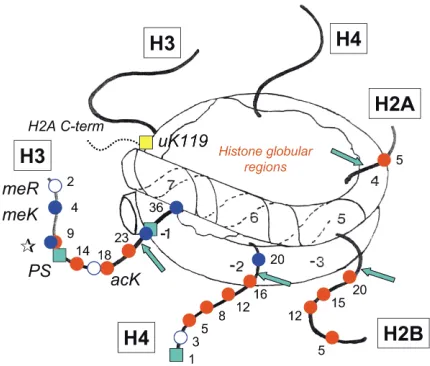
studies on the effects and properties of other enzymes that act on chromatin. It has been known for many years that the histone N-terminal tails are exposed on the surface of the nucleosome and that selected amino acid residues are subject to a variety of enzyme-cat-alyzed, posttranslational modifications. These include acetylation of lysines, phosphorylation of serines, and methylation of lysines and arginines. The locations of the histone N-terminal tails in the nucleosome and the residues that can be modified are shown in Figure 1. The function of these modifications, and indeed of the tails themselves, is the focus of much current attention, centered largely on the possibility that the nucleosome, with its modified tail domains, is not just a humble packer of DNA, but a carrier of epigenetic information that determines both how genes are expressed and how their expression patterns are maintained from one cell generation to the next.
An epigenetic code
The first association between a histone tail modification and a particular functional state of chromatin came with the demonstration that transcriptionally active chro-matin fractions are enriched in acetylated histones (4, 5). Subsequently, regions of transcriptionally silent consti-tutive and facultative heterochromatin were found to be underacetylated (6), consistent with the idea that acety-lation of the histone tails, with the associated loss of pos-itive charge and weaker DNA binding, somehow caused chromatin to become more “open” (or less “condensed”) and thereby more conducive to transcription. While such charge-mediated structural changes are likely to contribute to altered patterns of gene expression, it has now become clear that the story is much more complex and that the functional effects of tail modifications depend on the specific amino acids that are modified. An early indication that modification of specific tail residues was linked to chromatin functional states came from immunostaining of Drosophila polytene chromo-somes. Unlike in mammals, where female cells inacti-vate one of their two X chromosomes to avoid unbal-anced expression of X-linked genes, Drosophilaequalizes the levels of X-linked gene products between XY males and XX females by transcribing X-linked genes in males at twice the rate seen in females. Analyses using residue-specific antibodies show that H4 acetylated at lysine 16 (H4Ac16) occurs almost exclusively on the transcrip-tionally hyperactive male X chromosome. In addition, the DrosophilaH4 lysine 12 remains acetylated in centric heterochromatin, whereas lysines 5, 8, and 16 are all underacetylated (7). These observations led to the sug-gestion that the histone N-terminal tails constitute nucleosome surface markers that can be recognized by nonhistone proteins in a modification-dependent man-ner to alter the functional state of chromatin (7). More
An increasingly complex code
Hugh T. Spotswood and Bryan M. Turner
Chromatin and Gene Expression Group, Anatomy Department, University of Birmingham Medical School, Birmingham, United Kingdom
J. Clin. Invest.110:577–582 (2002). doi:10.1172/JCI200216547.
SPOTLIGHT
Critical review
Address correspondence to:Bryan M. Turner, Chromatin and Gene Expression Group, Anatomy Department, University of Birmingham Medical School, Edgbaston, Birmingham B15 2TT, United Kingdom. Phone: 44-0-121-414-6824;
Fax: 44-0-121-414-6815; E-mail: [email protected].
Conflict of interest:No conflict of interest has been declared.
importantly, these observations also raised the possi-bility that tail modifications not only contribute to the ongoing up- and downregulation of transcription but also carry information regarding the potentialfor tran-scription (or lack of it) in response to specific factors. In other words, the nucleosome may have a role not only in DNA packaging, but also in the transmission from one cell generation to the next of epigenetic informa-tion regarding transcripinforma-tional potential (8, 9).
The amount of epigenetic information that can be carried in the histone tails is remarkable. For example, there are 50 different acetylated isoforms of the four core histones (H2B, H3, and H4 have 16 each and H2A has two). These isoforms can be modified further by methylation of selected lysines and arginines (H3 and H4) and phosphorylation of serine (H3, H4, H2B). Fur-ther, methylation can involve attachment of one, two, or three methyl groups (see below), and there are other modifications, such as ubiquitination and ADP-ribo-sylation (10). The total number of possible histone iso-forms, carrying different combinations of tail modifi-cations, that can mark the nucleosome surface, runs into many thousands. This has given rise to the idea that the tail modifications constitute a histone code (11, 12) or epigenetic code (13), which is set and main-tained by tail-modifying and -demodifying enzymes and read by nonhistone proteins.
The histone tail modifications are likely to act in con-cert with a rather more widely known mediator of chro-matin structure and gene expression, namely
methyla-tion of cytosine residues in CpG dimers through the action of DNA methyltransferases. Long-term silencing, as found in imprinted genes or the female inactive X chromosome, is generally associated with relatively high levels of CpG methylation. The mechanism(s) by which CpG methylation leads to gene silencing remains to be defined, but there is evidence that in at least some situ-ations, histone modifications are involved. The methyl DNA-binding protein MeCP2 can bind histone deacety-lases, thereby targeting them to methylated DNA and resulting in local histone deacetylation and suppression of transcription (14). Conversely, experiments in the fil-amentous fungus Neurospora crassa have shown that DNA methylation is dependent upon methylation of histone H3 lysine 9 (15).
Dynamics of histone modification
The modifications to the N-terminal histone tails in chromatin are put in place and maintained by the action of families of modifying and demodifying enzymes. For example, most histone acetates are under-going a continuous cycle of acetylation and deacetyla-tion and turn over with half-lives ranging from just a few minutes to several hours (16). Thus, the level of acetylation of a particular lysine in a particular histone is likely to be a steady state maintained by the ongoing activities of histone acetyltransferases (HATs) and deacetylases (HDACs). While this makes continuous demands on the cell’s energy resources, it also offers an advantage to those genes whose expression may need to be up- or downregulated relatively quickly, such as those that respond to hormonal cues or growth factor stimu-lation. Removal or inhibition of either HATs or HDACs will precipitate a rapid change in acetylation, and hence transcription or transcriptional potential. Conversely, where levels of gene expression are to be stably main-tained over long periods, patterns of histone modifica-tion are stabilized by removing (or inhibiting) the HATs and HDACs targeted to that genomic region. In the case of the imprinted gene U2af1-rs1in mice, differential acetylation levels on the maternal and paternal alleles are maintained dynamically early in development but become static (operationally defined by resistance to HDAC inhibitors) as development proceeds (17).
Lysine methylation seems to be an exceptionally sta-ble modification. Early studies showed that turnover of histone methyl groups was even slower than turnover of the histones themselves (see, for example, ref. 18). No conclusive evidence has yet been found for histone-demethylating enzymes, which may indeed not exist. Removal of methylated histones may simply occur pas-sively through postreplication chromatin assembly and replacement of old, methylated histones with new, unmethylated ones. However, the possibility remains that local methylation patterns may be more dynamic and may involve novel mechanisms for removal of methylated tails, such as proteolysis (19) or histone replacement uncoupled from DNA replication (20).
Setting the code
[image:3.576.60.275.49.232.2]Among the various tail modifications, setting patterns of histone phosphorylation might seem relatively
Figure 1
straightforward in that only a few residues are typical-ly involved (Figure 1). However, the same modification has been implicated in two different functions. Phos-phorylation of H3S10, precisely targeted to control regions, accompanies activation of immediate-early genes, while a genome-wide phosphorylation of the same residue occurs just prior to entry into mitosis (21, 22). Different kinases are involved in each case (22). At first sight, it seems odd that the same modification is associated with both progression through mitosis (a time of chromatin condensation and transcriptional silence) and gene induction. Perhaps H3S10 phospho-rylation is involved in the chromatin decondensation and reinitiation of transcription that accompany pro-gression from mitosis into G1.
In theory, the setting of specific patterns of acetyla-tion (i.e., residue-specific modificaacetyla-tions) could reflect the specificities of HATs or HDACs. Both HATs and HDACs constitute extensive enzyme families and are often found as a catalytic subunit in multiprotein com-plexes whose other components confer genomic tar-geting and other capabilities (23, 24). In vitro assays have shown specificity, or at least substrate preferences, for most HATs. The most extreme example is provided by the Drosophilaenzyme MOF, which acetylates H4 specifically at lysine 16 and is responsible for the acety-lation of this residue exclusively on the male X chro-mosome (ref. 25 and references therein). The HDACs so far tested show less specificity for individual his-tones or residues, though there are certainly prefer-ences (ref. 26 and referprefer-ences therein). It is, of course, dif-ficult to be sure that in vitro assays provide a true reflection of specificity in vivo. Both HATs and HDACs can show quite different specificities, or levels of cat-alytic activity, depending on whether they are assayed against peptide, whole histone, or chromatin sub-strates. Linking in vitro specificity to in vivo effects, as in the case of MOF, is reassuring.
Histone methyltransferases (HMTs) are specific for either lysine or arginine and are the subject of two excellent recent reviews (27, 28). There are five argi-nine HMTs (four of which are confirmed as enzymes). All have the same, highly conserved catalytic domain and S-adenosyl methionine–binding region, but little else in the way of known protein domains. The enzymes studied so far show varying degrees of speci-ficity for particular histone arginines. All can attach one or two methyl groups to a single arginine, but they differ in whether the two methyl groups are dis-tributed symmetrically (i.e., one on each of the two terminal nitrogens) or asymmetrically (i.e., both on the same nitrogen) (27).
Lysine HMTs all contain a SET domain, although not all SET domain proteins have HMT activity (29). Data-base searches reveal 73 SET domain proteins in humans, of which about one-third have been charac-terized and grouped into four families on the basis of sequence homology and relationship to the SET domain proteins in yeast (28). Several have confirmed HMT activity, and some are highly specific. For exam-ple, four members of the SUV39 family methylate only H3 lysine 9 (30–32). Importantly, this specificity has
been linked to a particular chromatin state, namely, formation of heterochromatin.
The mammalian enzymes SUV39H1 and SUV39H2 have been shown to locate to constitutive heterochro-matin, which also, by immunofluorescent labeling, appears to be relatively rich in H3 methylated at lysine 9 (33, 34). The protein HP-1 is also enriched in hete-rochromatin, where it plays a crucial, although as-yet unspecified, role in heterochromatin assembly. HP-1 has recently been shown to bind, through its chromod-omain, specifically to H3 peptides methylated at lysine 9 (35, 36). This is the first example in which the enzymes that put a specific modification in place, the protein that reads it, and the functional effects that result are all known, at least in outline. As always, there are compli-cations, as discussed below, and much remains to be worked out. In particular, we need to understand how the appropriate HMTs are targeted to defined genomic regions. Lysine HMTs are rich in known protein domains (28), some of which may have a targeting func-tion. Intriguingly, some SET domain proteins also have a methyl DNA–binding domain, which would be pre-dicted to target them to methylated CpG, and which may play a role in establishing the transcriptionally silent state usually associated with DNA methylation. Modifications can interact, both in determining whether or not a particular residue can be modified and in providing a meaningful code. For example, H3 tail peptides phosphorylated at S10 are not methylat-ed at lysine 9 by SUV39H1 in vitro (29). Conversely, peptides methylated at lysine 9 are poor substrates for phosphorylation of serine 10 by the IpI1/aurora kinase. Unsurprisingly, acetylation of lysine 9 prevents methy-lation of the same residue by SUV39H1 (29), but it is interesting that the homologous enzyme in Drosophila has been shown to exist in a protein complex contain-ing dHDAC1 (37). The deacetylase activity in the com-plex may serve both to clear away any potentially inhibitory acetates and to create a globally underacety-lated chromatin context in which the H3 methylation signal can be most appropriately read.
Attention to detail and creating a context
The lysine ε-amino group can be mono-, di-, or trimethylated, and all three methylation levels occur at high frequency in vivo. In mammalian cultured cells, the ratio of mono-, di-, and trimethylated lysines in H3 has been estimated as 1:2:1, with the overall methyla-tion of H3 lysines 4 and 9 being close to 100% (18). Whether different enzymes are responsible for putting the different levels of methylation in place remains to be determined, but it is clear from recent results that these extremely detailed differences are significant in vivo. Studies in yeast using antisera that distinguish between H3 dimethylated and H3 trimethylated at lysine 4 show that only the trimethylated isoform, not its dimethylated counterpart, is consistently associat-ed with transcriptionally active chromatin (38).
heterochro-matin (ref. 6; ref. 39 and references therein). This underacetylation is not reversible by HDAC inhibitors such as butyrate or trichostatin A suggesting that the underacetylated state is static and that HATs are absent from heterochromatin. The inactive X chromosome (Xi) in female human cells is also deficient in H3 dimethylated at lysine 4 (40) but retains H3 dimethy-lated at lysine 9 at levels at or above those found else-where in the genome (41). Thus, Xi exemplifies both extremes of the histone code, namely the general deacetylation of all four core histones and the specific retention of H3 dimethylated at lysine 9. It also illus-trates the great stability of epigenetic signals carried by the histone tails. The general underacetylation of Xi, the demethylation of H3 lysine 4, and the selective retention of H3 dimethylated at lysine 9 are all main-tained in human x hamster somatic cell hybrids, in which Xi is maintained in an almost completely foreign cellular environment (Figure 2).
It may be that the general deacetylation of all four histones provides a molecular or structural context in which the specific methylation signal can be most effectively read. Perhaps deacetylated tails encourage binding of a protein that recognizes H3 dimethylated at lysine 9, just as selective deacetylation of some H4 tail lysines encourages binding of the proteins Sir2 and Sir3 that assemble heterochromatin-like structures in yeast (42). This hypothetical protein remains to be identified. It seems not to be HP-1, which has not been detected on Xi (43). The fact that HP-1 binds to con-stitutive centric heterochromatin, but not to Xi, even though both are underacetylated and retain H3 dimethylated at K9, suggests that there is an addition-al determinant of HP-1 binding.
Reading the code
Antibodies can distinguish modified tails, combina-tions of modificacombina-tions, and even lysines carrying two or three methyl groups. Other proteins appear to make similar discriminations. The clearest example may be HP-1’s ability to bind specifically, but with different
affinities, to H3 peptides di- or trimethylated at lysine 9 (35, 36). Also, certain bromodomains (sequence ele-ments found in proteins associated with maintenance of transcriptionally active states) bind preferentially to acetylated tail peptides in vitro (44, 45). Recent results have added a new twist to the question of how tail mod-ifications might be read by implicating the histone tails in targeting of chromatin-remodeling enzymes. Firstly, immobilized H3 tail peptides lacking lysine methylation can remove components of the chromatin remodeling complex NuRD from crude cell extracts in pull-down assays. Remarkably, peptides methylated at lysine 4 lose this NuRD-binding ability, while peptides methylated at lysine 9 do not (46). It seems that binding of the NuRD complex to the nucleosome requires a specific region of the H3 tail and is methylation-sensitive.
Secondly, a genetic approach has provided evidence that the selective accumulation of H4 acetylated at lysine 16 on the Drosophilamale X chromosome coun-teracts the condensing effect of the chromatin-remod-eling ATPase ISWI (47). Related work shows that the site on chromatin recognized by ISWI consists of the H4 tail bound to DNA, and that acetylation of H4 at lysine 16 reduces the ability of ISWI to interact productively with its substrate (47, 48). Together, these results pro-vide a plausible mechanism by which H4 acetylated at lysine 16 can lead to decondensation and transcrip-tional upregulation of the Drosophilamale X chromo-some. The results also provide an important example of how signals on the nucleosome surface, read by nonhi-stone proteins, may require a combination of both DNA and the appropriately modified histone tail.
[image:5.576.63.286.49.179.2]To take full advantage of the information potential of histone tail modifications, the histone code must encompass combinationsof modifications. Ideally, com-binations will involve not only modifications on the same tail, but those on different tails as well. Recent studies in yeast have provided a dramatic example of how modification of one histone tail can influence that of another and have brought an additional player, the 76–amino acid peptide ubiquitin, into the limelight.
Figure 2
Metaphase chromosome spreads from human X hamster somatic cell hybrids immunostained with rabbit antibodies (green) to H3 dimethy-lated at lysine 4 (a) and H3 dimethylated at lysine 9 (b). The inactive X (arrow) is the only human chromosome retained by these cells and is detected with a DNA probe specific for the human X centromere (red). The inactive X retains H3 dimethylated at lysine 9 but lacks H3 dimethy-lated at lysine 4.
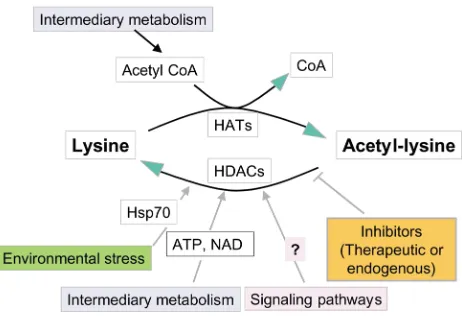
Figure 3
[image:5.576.307.538.518.676.2]Ubiquitin can be attached to specific lysines in the C-terminal tails of H2A (lysine 119) and H2B (lysine 120) in higher eukaryotes, and to H2B lysine 123 alone in yeast (49). By a combination of genetic and bio-chemical assays, Sun and Allis (50) have shown that yeast mutants that cannot ubiquitination H2B show no detectable methylation of lysine 4 in the N-terminal tail of H3. This is true whether the ubiquitination defect is due to mutation of the enzyme responsible (RAD6) or to substitution of lysine 123 of H2B with arginine. RAD6 is involved in many cellular processes, including DNA repair and gene silencing. The mecha-nism that links H2B ubiquitination and H3 methyla-tion remains uncertain, though one can hazard a guess that ubiquitination somehow enhances the ability of the SET1 histone methylase to access its chromation substrate. It also remains to be determined whether this, or similar, interactions occur in higher eukaryotes.
Manipulating the code: new routes to therapy
Like all enzymes, the enzyme families that modify core histones or reorganize chromatin structure are suscep-tible to inhibition by appropriately designed reagents. Since these enzymes regulate patterns of gene expres-sion by targeting selected genes or chromosome regions, the therapeutic potential of such inhibitors is enor-mous, particularly for treating cancers or other diseases showing aberrant patterns of gene expression. The enzymes most closely studied to date are the HDACs, for which a wide range of inhibitors is now available. Some of these agents have proved to be remarkably effective at selectively inhibiting the growth of human tumor cells, and several are now in clinical trials against a variety of tumor types (51). Unfortunately, we know rather little about the in vivo roles of the various deacetylases and their inhibitor sensitivities. The differ-ent members of the deacetylase family are likely to have very different functions in vivo, which provides a strong incentive to identify more selective inhibitors. Inhibitors specific for the NAD-dependent deacetylase Sir2 have recently been identified from screens of relatively small numbers of compounds using an in vivo assay (52). Ini-tial experiments showed no increase in histone acetyla-tion in cultured cells treated with these inhibitors, sug-gesting that acetylated histones are not a major substrate of the Sir2 enzyme family in vivo (52).
When considering therapeutic approaches, it is worth bearing in mind that factors other than enzyme inhibitors (natural or synthetic) can influence patterns of histone modification in vivo. The situation for his-tone acetylation is summarized in Figure 3. Metabolic factors include intranuclear levels of acetyl-CoA for HAT activity, NAD for Sir2 deacetylases (ref. 52 and ref-erences therein), and ATP for deacetylation of chro-matin substrates by at least some HDACs (26). The HDAC inhibitor butyric acid occurs in the large intes-tine in millimolar concentrations that may be enced by diet (53). HDAC activity can also be influ-enced indirectly by targeting of proteins that modify or interact with the HDACs themselves. For example, HDACs are phosphorylated in vivo by protein kinases such as CK2 in ways that influence both their catalytic
activity and their ability to interact with other proteins in functional complexes (54, 55). This links HDAC function to intracellular signaling pathways. Also, the stress response (heat shock) protein HSP70 has recent-ly been shown to be present in HDAC complexes, where it may play a role in the ATP-dependent deacetylation of chromatin substrates (22). Levels of HSP70 and other stress response proteins rise in response to a vari-ety of toxins and other adverse environmental condi-tions, and it will be of interest to determine to what extent this influences HDAC activity in vivo. Finally, patterns of acetylation are inevitably influenced by, and exert an effect on, other histone tail modifications. These interactions, some of which are discussed above, will make it difficult to predict the functional effects of even highly specific enzyme inhibitors.
Pressing questions
With new results appearing at such a pace, prediction is a risky business. However, there remain some fairly obvious gaps in our knowledge. Firstly, how is histone methylation removed? Is there a histone demethylase, or are methylation levels regulated by histone replace-ment or even removal of N-terminal tails by proteoly-sis? What is the significance of H3 isoforms mono -methylated at lysines 4 and 9, and how do we reconcile the frequency and stability of histone methylation with a regulatory role in gene expression? We also need more information on the relatively neglected histones H2A and H2B: The importance of H2B ubiquitination has been noted, and H2B phosphorylation has been asso-ciated with the chromatin reorganization that accom-panies apoptosis (56), but studies on these histones still lag behind those on H3 and H4. Finally, we need to refine our ideas about the histone code and what it does, and to continue to search for specific examples of how it operates. The “epigenome” provides an attrac-tive target for those seeking new work for soon-to-be-redundant DNA sequencing factories, but revealing the secrets of such a complex, dynamic, and multifaceted entity presents a challenge even more daunting than that of the genome itself.
Acknowledgments
The authors thank Darren White for advice on the preparation of illustrations. H.T. Spotswood is sup-ported by a Prize Studentship from the Wellcome Trust.
1. Luger, K., Mader, A.W., Richmond, R.K., Sargent, D.F., and Richmond, T.J. 1997. Crystal structure of the nucleosome core particle at 2.8Å resolution.
Nature. 389:251–260.
2. Grunstein, M. 1992. Histones as regulators of genes. Sci. Am.267:68B–74B. 3. Langst, G., and Becker, P.B. 2001. Nucleosome mobilization and posi-tioning by ISWI-containing chromatin remodeling factors. J. Cell Sci. 114:2561–2568.
4. Pogo, B.G., Allfrey, V.G., and Mirsky, A.E. 1966. RNA synthesis and histone acetylation during the course of gene activation in lymphocytes. Proc. Natl. Acad. Sci. USA.55:805–812.
5. Hebbes, T., Thorne, A.W., and Crane-Robinson, C. 1988. A direct link between core histone acetylation and transcriptionally active chromatin.
EMBO J.7:1395–1403.
6. Jeppesen, P., and Turner, B.M. 1993. The inactive X chromosome in female mammals is distinguished by lack of histone H4 acetylation, a marker for gene expression. Cell.74:281–289.
8. Turner, B.M. 1993. Decoding the nucleosome. Cell.75:5–8.
9. Tordera, V., Sendra, R., and Pérez-Ortin, J.E. 1993. The role of histones and their modifications in the informative content of chromatin. Experi-entia.49:780–788.
10. Hansen, J.C., Tse, C., and Wolffe, A.P. 1998. Structure and function of the core histone N-termini. More than meets the eye. Biochemistry. 37:17637–17641.
11. Strahl, B.D., and Allis, C.D. 2000. The language of covalent histone mod-ifications. Nature.403:41–45.
12. Jenuwein, T., and Allis, C.D. 2001. Translating the histone code. Science. 293:1074–1080.
13. Turner, B.M. 2000. Histone acetylation and an epigenetic code. Bioessays. 22:836–845.
14. Bird, A. 2002. DNA methylation patterns and epigenetic memory. Genes Dev.16:6–21.
15. Tamaru, H., and Selker, E.U. 2001. A histone H3 methyltransferase con-trols DNA methylation in Neurospora crassa. Nature.414:277–283. 16. Covault, J., and Chalkley, R. 1980. The identification of distinct
popula-tions of acetylated histones. J. Biol. Chem.255:9110–9116.
17. Gregory, R.I., et al. 2002. Inhibition of histone deacetylases alters allelic chromatin conformation at the imprinted U2af1-rs1locus in mouse embryonic stem cells. J. Biol. Chem.277:11728–11734.
18. Thomas, G., Lange, H.W., and Hempel, K. 1975. Kinetics of histone methylation in vivo and its relation to the cell cycle in Ehrlich ascites tumor cells. Eur. J. Biochem.51:609–615.
19. Lin, R., Cook, R.G., and Allis, C.D. 1991. Proteolytic removal of core his-tone amino termini and dephosphorylation of hishis-tone H1 correlate with the formation of condensed chromatin and transcriptional silencing dur-ing Tetrahymenamacronuclear development. Genes Dev.9:1601–1610. 20. Ahmad, K., and Henikoff, S. 2002. The histone variant h3.3 marks active
chromatin by replication-independent nucleosome assembly. Mol. Cell. 9:1191–1200.
21. Thomson, S., Mahadevan, L.C., and Clayton, A.L. 1999. MAP kinase-mediated signalling to nucleosomes and immediate-early gene induction.
Semin. Cell Dev. Biol.10:205–214.
22. Cheung, P., Allis, C.D., and Sassone-Corsi, P. 2000. Signaling to chro-matin through histone modifications. Cell.103:263–271.
23. Ng, H.-H., and Bird, A. 2000. Histone deacetylases: silencers for hire. TIBS. 25:121–126.
24. Grant, P.A., and Berger, S.L. 1999. Histone acetyltransferase complexes.
Semin. Cell Dev. Biol.10:169–178.
25. Akhtar, A., and Becker, P.B. 2000. Activation of transcription through his-tone H4 acetylation by MOF, an acetyltransferase essential for dosage compensation. Mol. Cell.5:367–375.
26. Johnson, C.A., White, D.A., Lavender, J.S., and Turner, B.M. 2002. Human class I histone deacetytlase complexes show enhanced catalytic activity in the presence of ATP and co-immunoprecipitate with the ATP-dependent chaperone protein Hsp70. J. Biol. Chem.277:9590–9597.
27. Zhang, Y., and Reinberg, D. 2001. Transcription regulation by histone methylation: interplay between different covalent modifications of the core histone tails. Genes Dev.15:2343–2360.
28. Kouzarides, T. 2002. Histone methylation in transcriptional control. Curr. Opin. Genet. Dev.12:198–209.
29. Rea, S., et al. 2000. Regulation of chromatin structure by site-specific his-tone H3 methyltransferases. Nature.406:593–599.
30. O’Carroll, D., et al. 2000. Isolation and characterization of Suv39H2, a second histone H3 methyltransferase gene that displays testis-specific expression. Mol. Cell. Biol.20:9423–9433.
31. Yang, L., et al.2002. Molecular cloning of ESET, a novel histone H3-spe-cific methyltransferase that interacts with ERG transcription factor.
J. Biol. Chem.277:148–152.
32. Tachibana, M., Sugimoto, K., Fukushima, T., and Shinkai, Y. 2001. Set domain-containing protein, G9a, is a novel lysine-preferring mammalian histone methyltransferase with hyperactivity and specific selectivity to
lysines 9 and 27 of histone H3. J. Biol. Chem.276:25309–25317. 33. Bannister, A.J., et al. 2001. Selective recognition of methylated lysine 9 on
histone H3 by the HP1 chromodomain. Nature.410:120–124. 34. Lachner, M., O’Carroll, D., Rea, S., Mechtler, K., and Jenuwein, T. 2001.
Methylation of histone H3 lysine 9 creates a binding site for HP1 pro-teins. Nature.410:116–120.
35. Nielsen, P.R., et al. 2002. Structure of the HP1 chromodomain bound to histone H3 methylated at lysine 9. Nature.416:103–107.
36. Jacobs, S.A., and Khorasanizadeh, S. 2002. Structure of HP1 chromod-omain bound to a lysine 9-methylated histone H3 tail. Science. 295:2080–2083.
37. Czermin, B., et al.2001. Physical and functional association of SU(VAR)3-9 and HDAC1 in Drosophila. EMBO Rep.2:915–919.
38. Santos-Rosa, H., et al. 2002. Lysine tri-methylation in active genes extends histone code. Nature.In press.
39. Maison, C., et al. 2002. Higher-order structure in pericentric heterochro-matin involves a distinct pattern of histone modification and an RNA component. Nat. Genet.30:329–334.
40. Boggs, B.A., et al. 2002. Differentially methylated forms of histone H3 show unique association patterns with inactive human X chromosomes.
Nat. Genet.30:73–76.
41. Heard, E., et al. 2001. Methylation of histone H3 at lys-9 is an early mark on the X chromosome during X inactivation. Cell.107:727–738. 42. Hecht, A., Laroche, T., Strahl-Bosinger, S., Gasser, S.M., and Grunstein,
M. 1995. Histone H3 and H4 N-termini interact with SIR3 and SIR4 pro-teins: a molecular model for the formation of heterochromatin in yeast.
Cell.80:583–592.
43. Cowell, I.G., et al. 2002. Heterochromatin, HP1 and methylation at lysine 9 of histone H3 in animals. Chromosoma.111:22–36.
44. Zeng, L., and Zhou, M.M. 2002. Bromodomain: an acetyl-lysine binding domain. FEBS Lett.513:124–128.
45. Jacobson, R.H., Ladurner, A.G., King, D.S., and Tjian, R. 2000. Structure and function of a human TAFII250 double bromodomain module. Sci-ence.288:1422–1425.
46. Zegerman, P., Canas, B., Pappin, D., and Kouzarides, T. 2002. Histone H3 lysine 4 methylation disrupts binding of nucleosome remodeling and deacetylase (NuRD) repressor complex. J. Biol. Chem.277:11621–11624. 47. Corona, D.F., Clapier, C.R., Becker, P.B., and Tamkun, J.W. 2001. Modu-lation of ISWI function by site-specific histone acetyModu-lation. EMBO Rep. 3:242–247.
48. Clapier, C.R., Nightingale, K.P., and Becker, P.B. 2002. A critical epitope for substrate recognition by the nucleosome remodeling ATPase ISWI.
Nucleic Acids Res.30:649–655.
49. Jason, L.J.M., Moore, S.C., Lewis, J.D., Lindsey, G., and Ausio, J. 2002. His-tone ubiquintination: a tagging tail unfolds? Bioessays.24:166–174. 50. Sun, Z.-W., and Allis, C.D. 2002. Ubiquitination of histone H2B regulates
H3 methylation and gene silencing in yeast. Nature.418:104–108. 51. Marks, P., et al. 2001. Histone deacetylases and cancer: causes and
thera-pies. Nat. Rev. Cancer.1:194–202.
52. Grozinger, C.M., Chao, E.D., Blackwell, H.E., Moazad, D., and Schreiber, S.L. 2001. Identification of a class of small molecule inhibitors of the Sir-tuin family of NAD-dependent deacetylases by phenotypic screening.
J. Biol. Chem.276:38837–38843.
53. Boffa, L.C., et al. 1992. Modulation of colonic epithelial cell proliferation, histone acetylation and luminal short chain fatty acids by variation of dietary fiber (wheat bran) in rats. Cancer Res.52:5906–5912.
54. Tsai, S.C., and Seto, E. 2002. Regulation of histone deacetylase-2 by pro-tein kinase CK2. J. Biol. Chem.In press.
55. Galasinski, S.C., Resing, K.A., Goodrich, J.A., and Ahn, N.G. 2002. Phos-phatase inhibition leads to histone deacetylases 1 and 2 phosphoryla-tion and disrupphosphoryla-tion of corepressor interacphosphoryla-tions. J. Biol. Chem. 277:19618–19626.