DEVELOPING A CONSTRUCTION
MANAGEMENT SYSTEM BASED ON
LEAN CONSTRUCTION AND
BUILDING INFORMATION
MODELLING
Bhargav DAVE
Table of Contents
List of Tables ... VIII
List of Figures ... X
Publications ... XIII
Refereed Journals: ... XIII
Book Chapters/Articles: ... XIII
Conference Papers ... XIII
Acknowledgements ... XV
Dedication ... XVI
Abbreviations ... XVII
Abstract ... XIX
1 Introduction ... 1
1.1 Background ... 1
1.2 Justification for Research and the Research Problem ... 6
1.3 Research aim and objectives ... 8
1.4 Research method ... 8
1.5 Scope ... 9
1.6 Contents ... 10
2 Research Methodology ... 12
2.1 Need and justification for Constructive Research ... 12
2.2 Comparing Design Science with other approaches ... 15
2.2.1 Convergence of design science and constructive research ... 15
2.2.2 Comparison of Constructive Research with Natural Science ... 16
2.2.3 Position of Constructivism or Interpretive Philosophy in Information Science Research ... 17
2.3.1 Find a practically relevant problem, which also has potential for
theoretical contribution. ... 20
2.3.2 Examine the potential for long-‐term research cooperation with the target organisation. ... 20
2.3.3 Obtain deep understanding of the topic area both theoretically and practically. ... 20
2.3.4 Innovate a solution idea and develop a problem solving construction, which also has potential for theoretical contribution. ... 21
2.3.5 Implement the solution and test how it works ... 21
2.3.6 Ponder the scope of applicability of the solution ... 21
2.3.7 Identify and analyse the theoretical foundation ... 22
2.4 Research outputs ... 22
2.4.1 Constructs ... 22
2.4.2 Model ... 23
2.4.3 Method ... 23
2.4.4 Instantiation ... 23
2.5 Research Process for VisiLean ... 24
2.6 Evaluation of research ... 25
2.7 Summary of Research Methodology ... 27
3 Problems with the Production Management Systems: Understanding the problem and the context ... 29
3.1 Problem Awareness: Observations from the industrial practice ... 29
3.1.1 Observations from Company A ... 29
3.1.2 Observations from Company B ... 30
3.1.3 Summary – Problem Awareness ... 34
3.2 Problems with production management in construction – observations from literature ... 34
3.2.1 Product and Process Visualisation: ... 36
3.2.3 Problems with the integration of supply chain ... 38
3.3 Root causes behind the problems ... 42
3.3.1 Current construction theory ... 42
3.3.2 Production planning, scheduling and control methods ... 44
3.3.3 Planning in production management ... 44
3.4 Information and Communication System Problems in Construction ... 50
3.4.1 Shortcomings of the current design and product modelling systems: ... 50
3.4.2 Effectiveness of ICT in Construction ... 56
3.4.3 Problems with Integration in Information Systems: ... 57
3.4.4 Summary of ICT Problems in Construction: ... 59
3.5 Synchronisation, Visualisation and Integration ... 60
3.6 Summary ... 61
4 Lean Construction and Building Information Modelling: potential solutions to the problems ... 63
4.1 What is Lean Construction ... 63
4.1.1 TFV theory of Construction: ... 64
4.1.2 Concept of Waste ... 66
4.1.3 Effect of the “T” view on Organisational Processes and Technology ... 69
4.2 Tools and techniques that support the TFV theory of production ... 69
4.2.1 The Last Planner System™ of Production Planning and Control ... 70
4.2.2 Key features of the Last Planner System ... 73
4.2.3 Visual Management and other lean tools ... 79
4.2.4 Summary of Lean Production Management ... 83
4.3 Building Information Modelling ... 84
4.3.1 A brief history of BIM ... 84
4.3.2 What is BIM ... 85
4.4 Benefits of BIM ... 87
4.4.1 Pre-‐construction/Feasibility Study ... 87
4.4.2 Design and Detail ... 88
4.4.3 Construction ... 89
4.4.4 Fit-‐out and Handover ... 90
4.4.5 Operation and Maintenance ... 91
4.4.6 Summary ... 91
4.5 The integration of Lean and BIM ... 92
4.5.1 Introduction ... 92
4.5.2 Emerging Trends around Lean and BIM ... 95
4.5.3 Summary of recent developments in Lean Construction and BIM ... 100
4.6 Current BIM Systems for Production Management ... 100
4.6.1 Autodesk Navisworks ... 100
4.6.2 Bentley ProjectWise Navigator ... 102
4.6.3 Synchro ... 103
4.6.4 Vico Constructor 5D ... 104
4.6.5 Tekla CM and BIMSight ... 105
4.6.6 Solibri Model Checker ... 106
4.6.7 Comparison between systems ... 106
4.7 State-‐of-‐the-‐art in software systems for production management ... 109
4.7.1 WorkPlan System ... 109
4.7.2 LEWIS ... 112
4.7.3 Bentley ConstructSim ... 116
4.7.4 Integrated Project Scheduler ... 117
4.7.5 CONWIP (Sacks et al., 2009) and KanBIM ... 119
4.8 Conceptual framework – BIM and Lean ... 124
4.10 Discussion and Identifying Opportunities for a Solution ... 133
5 Designing and Developing VisiLean: A Production Management System ... 136
5.1 Designing the framework ... 136
5.1.1 Gathering Feedback from Practitioners ... 138
5.1.2 Gathering general production management requirements ... 141
5.1.3 Capturing Requirements from Previous Research into Advance Visualisation in Production Management ... 143
5.1.4 Discussion about the requirements from literature ... 149
5.1.5 A Critical Review of Previous Research ... 150
5.1.6 Defining VisiLean Requirements Framework ... 152
5.1.7 Differences between KanBIM and VisiLean ... 154
5.2 Choosing the Design Methodology ... 156
5.2.1 Development methodology ... 157
5.3 Defining Functional Requirements for VisiLean ... 162
5.3.1 User Interface Design ... 163
5.3.2 BIM/Product Visualisation Capability ... 166
5.3.3 Product and Process Integration Capability ... 169
5.4 Specifying the VisiLean System ... 173
5.4.1 Project Administration ... 173
5.4.2 The Planning Process in VisiLean ... 180
5.5 Developing the System Architecture ... 193
5.5.1 Selecting the Technological Platform ... 195
5.5.2 Defining Top Level System Architecture ... 198
5.6 The iterations of VisiLean ... 204
5.6.1 Iteration 1 ... 205
5.6.2 Iteration 2 ... 206
5.7 Summary and Analysis of Feedback ... 212
5.8 Unimplemented features ... 215
5.8.1 Cost and quantity integration within the task management ... 215
5.8.2 Quality and safety management workflow ... 216
5.8.3 Multiple task visualisations in the model window ... 217
5.8.4 BIM based task creation ... 217
5.8.5 Resource Booking Management ... 217
5.9 Plans for Future Development ... 218
5.9.1 Mobile Interfaces ... 218
5.9.2 Knowledge Management ... 219
5.9.3 Simulation of a look-‐ahead or weekly plan ... 220
5.10 Summary ... 220
6 Evaluation of VisiLean ... 223
6.1 Introduction and selection of evaluation methods ... 223
6.1.1 Analytical ... 224
6.1.2 Observational ... 225
6.1.3 Experimental ... 226
6.2 Evaluation Through Static and Dynamic Analysis ... 227
6.2.1 Iteration 1 ... 228
6.2.2 Iteration 2 ... 230
6.2.3 Iteration 3 ... 232
6.3 Pilot Project ... 235
6.3.1 Project Specifics ... 237
6.3.2 Scope of the Pilot ... 240
6.3.3 Implementation Process ... 241
6.4 Current state of development and its critical analysis ... 249
7 Discussion and Conclusion ... 255
7.1 Discussion ... 255
7.1.1 Research Method and Problem Identification ... 255
7.1.2 Design and Development of the Research Solution ... 256
7.1.3 Research Evaluation ... 257
7.2 Contribution to knowledge ... 258
7.3 Limitations of research ... 262
7.4 Future research ... 263
7.4.1. VisiLean in Design ... 263
7.4.2 VisiLean in the Field ... 263
7.4.3 Other Features ... 263
7.4 Conclusions ... 263
References ... 266
Appendices ... 282
Appendix A: Evaluation Demonstrations ... 283
A.1 Interview Notes ... 284
A.2 Workshops Notes ... 289
Appendix B – Agile Programming Methods ... 293
B.1 Extreme Programming (XP) ... 293
B.2 Scrum ... 294
B.3 Crystal Methods and Feature Driven Development ... 295
B.4 Dynamic Systems Development Method (DSDM) ... 296
Appendix C Additional VisiLean Images ... 298
List of Tables
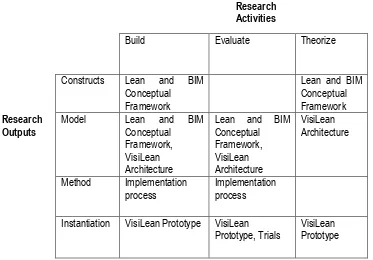
Table 1. Research Process followed for VisiLean. ... 24
Table 2. Manufacturing vs. Construction Supply Chains (Azambuja and O'Brien et al., 2008). ... 40
Table 3. Distribution of time in design tasks (Freire and Alarcón, 2002). ... 53
Table 4. Level of functional integration within the construction industry (Tatari et al., 2007). ... 58
Table 5. The TFV Theory of Production (Koskela, 2000). ... 66
Table 6. The TFV perspectives on People, Process and ICT in Construction (Dave et al., 2008). ... 69
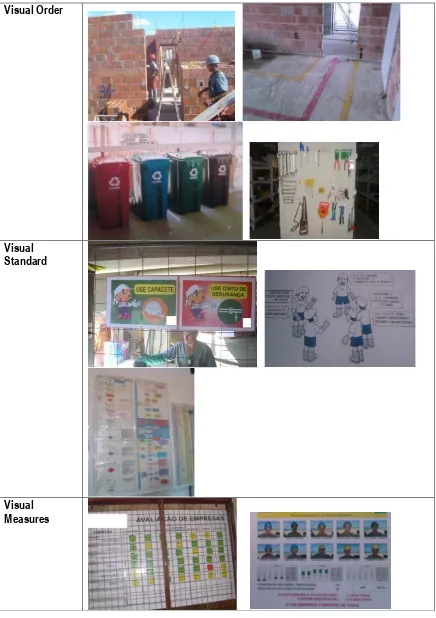
Table 7. Examples of Visual Management functions (Tezel, 2011). ... 82
Table 8. Characteristics of a Lean and BIM Project. ... 94
Table 9. Comparison of traditional design vs. CAVT (Rischmoller et al., 2006). ... 96
Table 10. Main features of Bentley Projectwise Navigator. ... 103
Table 11. Comparison between Construction Management Capabilities of BIM Systems. ... 109
Table 12. Lean Principles (Sacks et al., 2010a). ... 125
Table 13. BIM Functionalities (Sacks et al., 2010a). ... 126
Table 14. Lean & BIM Matrix (Sacks et al., 2010a). ... 128
Table 15. Lean & BIM Interactions – Explanation of cell content (Sacks et al., 2010a). ... 129
Table 16. Lean Construction Requirements and CAVT Support (Sacks et al., 2009). ... 145
Table 17. Aspects of construction planning and control at various levels (Sacks, 2009b). ... 149
Table 18. Defining VisiLean requirements. ... 152
Table 20. Main difference between traditional and agile development (Dybå and
Dingsøyr, 2008). ... 159
Table 21. Comparison between BIM systems considered for VisiLean. ... 167
Table 22. Project Administration Specifications in VisiLean. ... 176
Table 23. Phase Planning Specifications in VisiLean. ... 184
Table 24. Look-‐ahead Planning specifications in VisiLean. ... 190
Table 25. Weekly Planning Specifications in VisiLean. ... 193
Table 26. Selecting the technology platform for VisiLean. ... 195
Table 27. Main VisiLean Iterations. ... 205
Table 28. Summary of feedback received during evaluation. ... 213
Table 29. Design Evaluation Methods (Hevner et al., 2004). ... 224
Table 30. Schedule of the VisiLean demonstration and implementation sessions. ... 244
Table 31. Feedback from pilot demonstration and outcome ... 246
Table 32. Current state of development and its critical analysis. ... 250
List of Figures
Figure 1. Perception of main benefits of the Rethinking Construction agenda
(Wolstenholme, 2009). ... 5
Figure 2. Industry performance since 1999 (Wolstenholme, 2009). ... 5
Figure 3. Elements of constructive research (Lukka, 2003). ... 13
Figure 4. A research framework for design science research (March and Smith, 1995). ... 19
Figure 5. Steps taken in design science research (Lukka, 2003). ... 19
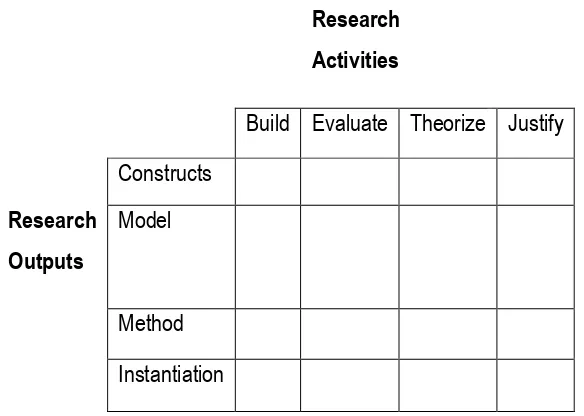
Figure 6. Research Matrix for VisiLean (adapted from March and Smith, 1995). ... 24
Figure 7. Proportion of UK Construction Firms by Size (DTI, 2004). ... 39
Figure 8. Percentage increase in total factor productivity (Appel et al., 2004). ... 57
Figure 9. Importance of three key strategies in projects (Shelbourn et al., 2007). . 59
Figure 10. Task productivity as in CPM method (Koskenvesa and Koskela, 2005). 71 Figure 11. Task productivity of a construction task in reality (Koskenvesa and Koskela, 2005). ... 72
Figure 12. Feature of the Last Planner System in addressing the task productivity (Koskenvesa and Koskela, 2005). ... 72
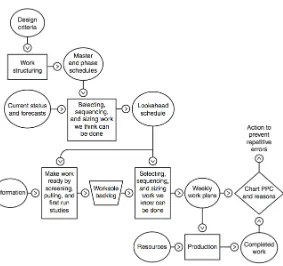
Figure 13. The Last Planner System of Production Management and Control (Ballard, 2000). ... 74
Figure 14. Work Package addition in the WorkPlan system. ... 110
Figure 15. Work Package constraints input screen in WorkPlan. ... 111
Figure 16. Workflow for the LEWIS system (Sriprasert and Dawood, 2003). ... 113
Figure 17. Example of look-‐ahead analysis (Sriprasert and Dawood, 2003). ... 115
Figure 18. Constraints analysis with Bentley ConstructSim (Bentley, 2011). ... 117
Figure 19. Principles of Lean Construction and IPS system (Chua et al., 2003). .... 118
Figure 20. System architecture of the IPS system (Chua et al., 2003). ... 119
Figure 22. Work Package status signals (Sacks et al., 2009). ... 120
Figure 23. 3D visualisation of past, present and future work using CONWIP (Sacks et al., 2009). ... 121
Figure 24. User interface for defining tasks and work packages (Sacks et al., 2010b). ... 122
Figure 25. Trade crew leader work status and reporting interface in KanBIM (Sacks et al., 2010b). ... 123
Figure 26. Types of Information System Requirements. ... 142
Figure 27. Scrum Skeleton (Schwaber, 2009). ... 161
Figure 28. The BIM Window in VisiLean. ... 168
Figure 29. The Task Status window in VisiLean. ... 171
Figure 30. Project Administration Screenshot. ... 175
Figure 31. Adding Organisation and Teams in VisiLean. ... 175
Figure 32. Phase Planning in VisiLean. ... 183
Figure 33. Phase Planning Tasks Window. ... 184
Figure 34. Look-‐ahead planning workflow in VisiLean. ... 187
Figure 35. Look-‐ahead Planning in VisiLean. ... 189
Figure 36. Look-‐ahead Planning Window in VisiLean. ... 189
Figure 37. Task Detail Window in Look-‐ahead Planning. ... 190
Figure 38. Weekly planning in VisiLean ... 192
Figure 39. Top Level System Architecture for VisiLean. ... 200
Figure 40. Example of VisiLean Object Model. ... 204
Figure 41. Tabbed User Interface in VisiLean. ... 205
Figure 42. Development and evaluation cycle. ... 228
Figure 43. Managed Motorway System (Courtesy of Highways Agency, UK). ... 238
Figure 44. Discussion during the final feedback session. ... 244
Figure 45. Final Feedback Meeting at the main contractor's Office. ... 245
Publications
The Author has published the following during the research, which share some of their contents with this thesis.
Refereed Journals:
Dave, B. & Koskela L. (2009) Collaborative Knowledge Management – A Construction Case Study. Automation in Construction. 18 (7), pp 894-‐902.
Sacks, R., Koskela, L., Dave, B. Owen, R.L. (2010). The interaction of Lean and BIM: a conceptual analysis. Journal of Construction Engineering and Management, Vol. 136, No. 9, September 1, 2010.
Koskela, L.J., and Dave, B. (2008). Process and IT. Journal of Construction Innovation. Vol 8, No 4, pp 224-‐249. (Editorial)
Book Chapters/Articles:
Maryland General Hospital Case Study – BIM Handbook 2nd edition, Eastman et al., Wiley Press. (2011) (Chapter 9, case study 9.4)
Conference Papers
Porwal, V., Dave B., Fernandez-‐Solis J., Koskela L. & Mehta H.S. (2012) State of Production Plan Reliability – A Case Study from India. Proceedings of the 20th Annual Conference of the International Group for Lean Construction, San Diego, USA
Pikas, E & Koskela, L & Sapountzis, S & Dave, B & Owen, R. (2011), Overview of Building Information Modelling in healthcare projects, in: 'Global health
infrastructure -‐ challenges for the next decade. Delivering innovation, demonstrating the benefits', HaCIRIC, Manchester, UK
Dave, B., Boddy, S., Koskela, L. (2010). Improving information flow within the production management system with web services. Proceedings of the 18th Annual Conference of the International Group for Lean Construction, Haifa, Israel. Dave, B., Koskela, L.J., Kagioglou, M., Owen, R.L. (2009). Towards Business Process Improvement – A Construction Case Study. Proceedings of the 12th Europia
Conference, Paris, France.
Dave, B., Koskela, L.J., Kagioglou, M., Bertelsen S. (2008). A Critical Look at Integrating People, Process and Information Systems within the Construction Sector. Proceedings of the 16th Annual Conference of the International Group for Lean Construction, Manchester, UK, pp 795-‐808
Dave B. & Goulding J.S. (2006). Collaborative Knowledge Management – A Case Study in Construction. INCITE World Conference of IT in Construction.
Acknowledgements
First of all, I would like to thank my Supervisor Prof. Lauri Koskela, for his excellent and sincere support during my PhD and research under his capable guidance. I am indebted to Prof. Koskela for giving me freedom while pursuing research, and providing prompt guidance when needed.
I am also thankful to the Salford Centre for Research and Innovation, where I worked as a researcher during my PhD, for funding my research and the excellent support I received during my employment. I would especially like to acknowledge Prof. Mike Kagioglou and Prof. Carl Abbott for their help and support, and also all of my colleagues and friends at SCRI, including Bob Owen, Patricia Tzortzopoulos-‐ Fazenda, Karen West, and Ricardo Codinhoto, for the invaluable friendship. A special thanks to Stefan Boddy, whose patient and efficient programming skills were helpful in realising the VisiLean prototype, who also put up with my endless requests for new features.
I would like to thank all the supporting organisations and the team members that took part in the research, as without their support this research would not have been possible as intended. In particular, I would like to thank Derek Drysdale, Andrew Wingrove and Katie Jones from the Highways Agency, UK. My sincere thanks also to Ian Cook from Balfour Beatty, UK and Heikki Haikonen from Tekla, Finland.
I would like to acknowledge and thank Prof. Rafael Sacks from Technion University, Israel, for his guidance during my research. It has been an immense pleasure in discussing exciting research ideas and collaborating during the early stages of my research.
Dedication
Abbreviations
2D Two dimensional 3D Three dimensional 4D Four dimensional 5D Five dimensional
ADM Activity Definition Model
AEC Architecture, Engineering, Construction AIA American Institute of Architects
API Application Programming Interface BIM Building Information Modelling BPR Business Process Reengineering CAD Computer Aided Design
CAVT Computer Aided Visualisation Tools CCPM Critical Chain Project Management
CEIS Construction Enterprise Information Systems CM Construction Management
CPM Critical Path Method CVR Cost Value Reconciliation DB Database
DSDM Dynamic Systems Development Method EOQ Economic Order Quantity
EPC Engineering, Procurement, Construction ERP Enterprise Resource Planning
GRN Goods Receive Note
HTML Hypertext Markup Language
HVAC Heating Ventilation and Air conditioning ICT Information and Communication Technology IT Information Technology
LPDS Lean Project Delivery Process LPS Last Planner System™
MEP Mechanical Electrical Plumbing MIS Management Information System MIT Massachusetts Institute of Technology MS Microsoft
OS Operating System PC Personal Computer
PERT Programme Evaluation and Review Technique PMS Project Management System
PPC Percentage Plan Complete QS Quantity Surveyor
RFI Request for Information ROI Return on Investment TFV Transformation Flow Value UK United Kingdom
VBA Visual Basic Access
Abstract
This research aims at improving construction management through simultaneous implementation of Lean Construction and Building Information Modelling. Specifically, the area of production management and control is addressed by developing a prototype software system that supports Lean Construction processes and provides a visual interface through Building Information Modelling. The research addresses a practically relevant problem, and follows the Design Science Research method. The first stage of the research explores the problem area through the author’s own observation of industrial practice, and also through a literature review. At the broad level, a two-‐fold problem is identified; first the problems with the production management process itself, and second the problems with visualisation and management of the product model and its integration with the production management. At the fundamental level, it is found that many of these problems are linked with the deficient theory behind production, which is predominantly based on the “Transformation” view of production. Additionally, it is found that the previous attempts at solving the problems of construction management through information systems have only met with limited success as they mostly address the peripheral processes rather than the core area of production management.
and Building Information Modelling are identified, with applications also spanning the entire construction lifecycle. Specific benefits to the production management process are also found, backed by empirical evidence. However, it is also found that the current Building Information Modelling systems do not fully support an integrated implementation of production management. This particular aspect of an integrated and visual system, which would support the core production management process, is identified as a potential solution area.
The third stage of the research is dedicated to the design and development of a software system called VisiLean, which provides a collaborative planning and control platform, which is integrated with the Building Information Modelling platform, and which supports the production management process. A prototype system is developed through an iterative and incremental process, through simultaneous feedback, evaluation and review.
1 Introduction
1.1Background
The problems faced by the construction industry are well known both internationally and in the UK. Some of the most criticised issues within the industry are:
• Inefficient (wasteful) processes: The construction process is highly inefficient. In terms of productivity, a meta-‐analysis of wasted time in construction was conducted by Horman and Kenley (2005), where the authors reported that over the last 30 years, almost 49.6% of time was wasted during construction in non-‐value adding activities. Similarly, a research carried out in Sweden showed that only 15-‐20 % of the workers time is spent in direct work (i.e. carrying out the planned activity) (Jongeling & Olofsson 2007). There are similar studies around the world, which have reported sub-‐optimal performance of construction projects in terms of productivity and efficiency (Teicholz et al., 2001, Ramaswamy and Kalindi, 2009). A separate study in USA in the productivity of non-‐agricultural industries has found that the construction industry has actually seen a decline in productivity over recent years (Teicholz et al., 2001).
• Cost/time overruns: Seldom does a construction project finish within time and budget (Ahmed, et al., 2003; Chan and Kumaraswamy, 1996). This results in penalties to contractors and on many occasions, lengthy legal disputes within the supply chain as everyone tries to find a way to recover losses and someone to blame.
• Technological aversion: Construction is also seen as an industry, which lags behind other industries such as manufacturing in terms of technological adaptation. In general, there has been an active effort by the industry in recent years to implement technological solutions to improve the process, but due to misguided efforts, the results have not been satisfactory (Koskela, and Kazi 2003; Tatari et al., 2006).
It is equally important to understand the critical success factors, as it is to understand the root causes of failure on construction projects. Zhang (2005) reports on a survey carried out with construction managers to identify success factors behind desirable outcomes on construction projects. The top five factors outlined are:
1. Planning & control
2. Communication/coordination 3. Labour availability and quality 4. Equipment and tools (availability) 5. Working methods.
The first two factors mentioned above are significant as they govern the overall construction process and also affect the next three success factors up to a degree. This is due to a culmination of several factors that have weakened the production management processes. In a study of the main root causes of failure behind construction activities, Koch (2005) reports production planning and control, communications and cooperation, and design activities as the main factors contributing to problems. In construction, the traditional planning and control processes and also the communication/coordination between stakeholders have been problematic (Sacks et al., 2010a; Navon and Sacks, 2007; Sarhan and Fox, 2012).
(Latham, 1994), Rethinking Construction (Egan, 1998) and Accelerating Change (Egan, 2002), which have highlighted key issues faced by the industry namely, the fragmentation, low and unpredictable profitability, low investment in innovation, and focus on cost rather than quality which all contribute up to a degree to failure. Latham’s report was the initial catalyst in starting the change process for construction industry. The report focussed mainly on collaboration within the team stating that up to 30% savings could be achieved in five years. In Rethinking Construction (Egan, 1998), which focussed strongly on processes and collaboration, five key drivers for change were identified.
1. Committed leadership 2. Focus on the customer 3. Product team integration 4. Quality driven agenda 5. Commitment to people
The report also identified four process improvement proposals: 1. Product development
2. Partnering in the supply chain 3. Project implementation &
4. Production of components (offsite)
The Accelerating Change (2002) report also highlighted problems with the construction supply chain and recommended that the industry should aim to take measures to improve the collaboration within the supply chain. It set the target of 20% of projects to be undertaken by integrated teams by 2004 and 50% by 2007. However, even though the above mentioned reports have been able to kick start an improvement process across the industry, and several organisations such as the aforementioned Lean Construction Institute (UK) have been established, the uptake of lean construction in the UK has been quite slow and the industry has not met the targets by a considerable margin as reported by the recently published report “Never Waste a Good Crisis” (Wolstenholme et al., 2009). In the report, results from an extensive online survey were published, which was completed by nearly 1000 professional people from the industry. The survey gathered opinions across the industry about progress made since the Egan report and also put industry performance data in context to highlight key issues prevailing in the industry. Figure 1. Perception of main benefits of the Rethinking Construction agenda (Wolstenholme, 2009) demonstrates the perception of the industry of the benefits that have been brought by the Rethinking Construction agenda.
Figure 1. Perception of main benefits of the Rethinking Construction agenda (Wolstenholme, 2009).
Figure 2. Industry performance since 1999 (Wolstenholme, 2009).
The report claims that the stated aim of genuinely changing the nature of the construction industry has not been met and that there is not enough evidence of a genuine intent to change across the construction industry to achieve the targets set by Egan’s vision of the modern construction industry.
There are several suggestions made by these reports as noted above, however, one of the common suggestions across all reports is that of the need to improve 8
What has been achieved since the publication of Rethinking
Construction? Our findings suggest that while there has been significant improvement, it has not been on the scale anticipated by the Task Force.
The strongest body of evidence lies with the five hundred or so demonstration projects monitored by Constructing Excellence and its predecessors, which have consistently shown superior performance relative to the rest of the sector (as measured by the Construction Industry KPIs since 1998 – see page 12).
The problem, however, as our survey reveals, is that even where the principles of Rethinking Construction have been adopted, too often the commitment is skin-deep. Scratch beneath the surface and you find many so-called partners still seek to avoid or exploit risk to maximise their own profits, rather than find ways to share risk and collaborate genuinely so that all can profit.
A further point that is particularly relevant today – we cannot assess how far the improvements in, say, profitability are attributable to the favourable economic conditions of the last decade, as opposed to process efficiency and the elimination of waste. As we emerge from global recession, we should be concerned, therefore, about the prospects for future improvement in the absence of a fresh impetus for change.
Our Survey
Nearly one thousand industry professionals completed the Constructing Excellence survey, which was a far greater response than expected. The response included a good cross section of consultants, contractors, housebuilders, clients and suppliers, and was evenly split between members and non-members of Constructing Excellence. Respondents tended to be working in larger organisations in senior level positions, rather than SMEs or the broader employee base.
The main themes to emerge from the survey are clear. Around 90% reported a positive impact from Rethinking Construction, but this has been limited by partial uptake. In summary there has been too little change, too narrowly adopted and at too slow a rate.
Where there has been improvement, such as in the quality of major projects, many respondents commented on the patchy nature of the change. The overall impression is of a few shining examples of progress against a backdrop of fairly entrenched behaviour. This idea was succinctly captured by one respondent who referred to the “minority club” that had adopted the Egan philosophy, while another commented, "…there is no evidence that the progress made in a small percentage of the industry's activity will ever spread to the rest."
Where Rethinking Constructionis considered to have been most influential is in raising awareness of the need within much of the industry and its bigger clients for improvement. At the same time, respondents expressed their frustration about the slow pace of change and the sense of too much talk and too little action.
One particularly strong theme is that people often pay lip service to the Egan agenda and fail to engage in the true spirit of the report. Instead they cherry pick the behaviours they wish to adopt, based on their own self-interest. So, while many clients say they want a best value solution, they still start out by pursuing the lowest tender price, and end up paying a lot more as a result.
The most widely perceived benefit ofRethinking Construction, mentioned by over half of those who commented, is a greater emphasis on integration, collaboration or partnering, though many qualified their view by saying that the benefit was patchy and did not reach into the supply chain. Companies who say that they partner will still seek to retain profit for themselves and pass risk down the supply chain, rather than use shared profit to eliminate risk for the whole team.
A wide variety of other benefits was described, of which only an increased focus on value/the client/the end user was mentioned by more than one tenth of respondents. Other recurring themes included the importance of quality, design and whole life costing, and people issues such as health and safety, skills and site conditions. Yet the perceived benefits are not universal across the sector, in part reflecting the different drivers in each section of the supply chain, nor do they necessarily penetrate below the senior levels of management.
3. Progress So Far
– The Evidence
"What has been achieved? More than I expected but less than I hoped"
Sir Michael Latham, 2009 "We could have had a revolution and what
we've achieved is a bit of improvement”
“I would give the industry 4 out of 10"
Sir John Egan, 2008
Fig.3| Survey responses on the benefits since Egan
How much of this measured improvement is due to Egan is of course arguable. For example, profitability is likely to have been significantly affected by the favourable economic circumstances of the last decade.
The light blue bars on the charts show that the Constructing Excellence demonstration projects have come much closer to achieving the targets, particularly for predictability, safety and productivity.
The most obvious area which has yet to show any improvement is predictability. There is still only around a 50/50 chance of a project coming in on cost or on time. Client-approved changes account for up to half of this variation, with the remainder attributable to the industry's variability. Clearly, there is still a need for major improvement by both clients and suppliers in this area.
10
Figs.5-7 | Median industry performance year-on-year
Looking ahead to the next ten years, respondents were clear about where the industry needs to focus its attention – people issues. Training, skills development, people management, the constitution of the labour force and its regulation were all frequently cited. There was a widely perceived need to improve the image of the industry in order to attract the right calibre of employees for the future prosperity of the industry. These of course are familiar themes and clearly they remain as big a challenge now as they were a decade ago.
So what does the survey tell us about the adoption of Rethinking
Construction? It is clear that the stated aim of genuinely embedding the spirit of changes has not been met. There is not enough evidence of a united resolve across the diverse constituencies of UK construction to achieve Egan's vision of a modern construction industry. Where there are commitments, they tend to be superficial and expedient, not tangible and sustainable.
Construction Industry Key Performance Indicators
The Egan Task Force asked the industry to develop the Construction Industry Key Performance Indicators (KPIs). 2009 was the eleventh year of their publication, based on data from thousands of projects collated from Government and industry surveys. The KPIs allow individual firms to benchmark their performance with other firms. They also enable Constructing Excellence to measure improvement across the industry in its annual Industry Performance Report.
While the data collection process is by its nature somewhat subjective, it represents an invaluable source of data, and we believe conveys messages that many would intuitively recognise. For example, most of the headline economic KPIs have shown improvement over the last eleven years. Analysis by Constructing Excellence in 2009 reveals that the average improvement over the whole set of economic measures, including various measures of client satisfaction, is 42%, which represents a year on year improvement of around 3%. Almost all of the people KPIs show improvement over eight years, averaging about 30% (year on year 2.5%), and there has been an average improvement in the environmental KPIs of 20% (year on year slightly under 2%).
process efficiency and collaboration between the supply chain members through the application of lean construction.
Although there are many tools and techniques associated with Lean Construction, one of the most implemented and effective tools in Lean Construction implementation is The Last Planner System™ (Ballard, 2000). The Last Planner System™ emphasises the need to take into consideration information and resource constraints while preparing detailed near term and short-‐term plans. Also, as the name suggests, the Last Planner System™ emphasises the involvement of the construction teams including foremen, site supervisors and project manager(s) while planning in a collaborative way. The Last Planner System™ along with other lean construction tools rest their foundation on the TFV (Transformation, Flow and Value) theory of production developed by Koskela (2000). In TFV, there is a greater emphasis on managing the flow aspect of production while taking care of the actual transformation process, which should ultimately lead to value generation for the client. The Last Planner System™ takes care of the flow aspect by the process of constraints analysis, where individual constraints are analysed and managed for each task. This detailed planning workflow demands accurate and timely information, especially from constraints (resource) management perspective.
1.2 Justification for Research and the Research Problem
This research aims to solve a problem that is practically relevant and also has potential for theoretical contribution, that of inefficient production management systems in construction. The research is relevant in the real world and makes contributions to the production management theory in construction.
use of inappropriate tools as one key factor (Johansen et al., 2002, Bashir et al., 2010, Sarhan and Fox, 2012). Furthermore, Sarhan and Fox (2012) identified “Lack of Process Based Project Management Systems” as one of the significant barriers to the successful implementation of Lean Construction in the UK. Hence it emerges that while lean production management is one of the recommended approaches to improve the efficiency of the construction process, the tools and systems that support it are not yet fully developed.
The importance of information management from lean construction perspective, with greater emphasis on managing flow has also been highlighted by several authors (Sacks et al., 2010a; Sriprasert and Dawood, 2003; Navon and Sacks, 2007; Dave et al., 2010). Chua et al. (2003) emphasise the role of information technology in planning, especially from constraints management perspective, however they conclude that the current information management systems do not offer effective solutions. During a survey of a large-‐scale project management information and control system, Futcher (2001) highlighted the need for the data entry at the project level as one of the most significant obstacles to the successful implementation. Similarly Koskela and Kazi (2003) have brought to attention the ineffectiveness of construction information systems as they do not support the core production processes, and in many cases prove to be counterproductive. From a theoretical perspective, the effects of TFV on production management in construction have been very well explored (Koskela 2000), however its effects on enabling systems such as information management are not yet tackled (Dave et al., 2008). Analysis of the effects of TFV theory in information management systems could help identify and potentially resolve the problem of its ineffectiveness in production management.
1.3 Research aim and objectives
Research Aim: This research aims at improved construction management through lean construction principles and building information modelling. To realise this aim the following research objectives have been identified.
Research Objectives:
1. To identify and analyse the main deficiencies within the current construction management process
2. To explore the solution area and develop a conceptual framework of processes and tools for a production management and control system for construction
3. To design and develop a prototype of a computer based system based on the above framework.
4. To evaluate the solution and analyse/synthesise the results
1.4 Research method
The type of method(s) used in research depends on the type and nature of research being conducted. In this case the research being carried out falls within the disciplines of information science and construction management as the aim is to develop a computer based system to support production management in construction.
Lukka (2003) describes the constructive research approach as a research procedure for producing innovative constructions, intended to solve problems faced in the real world and, by that means, to make a contribution to the theory of the discipline in which it is applied. It is suggested that all human artefacts such as models, diagrams, plans, and information systems and their designs are constructions. The core features of the constructive research approach require that it (Lukka, 2003):
• Focuses on real-‐world problems felt relevant to be solved in practice
• Includes an attempt for implementing the developed construction and thereby a test for its practical applicability
• Implies a very close involvement and co-‐operation between the researcher and practitioners in a team-‐like manner
• Is explicitly linked to prior theoretical knowledge, and
• Pays particular attention to reflecting the empirical findings back the theory A detailed methodology Chapter (Chapter 2) discusses the methodology used and the justification behind it in more detail. It also explains in detail the steps taken to develop and evaluate the solution. Here, it should be noted that both design science and constructive research approaches are similar in nature and both provide guidelines outlining steps to be followed while designing a solution. Chapter 2 covers both, Design Science (Hevner et al., 2004) and Constructive Research (Lukka, 2003) approaches and puts forward a set of guidelines (research framework) that were developed specifically for this research.
1.5 Scope
This research is limited to the production management and control on site on a construction project. Specifically the planning scheduling workflow to support the Last Planner System™ is targeted. The research aims to develop an information system to improve the production management process, however, the actual programming and database development are not within the scope of this research, but taken care of by a fellow researcher. Particular limitations related to this aspect are described in relevant Chapters in detail.
Also, the research takes into consideration the product and process integration aspect while designing a solution. Here it is assumed that a product model (Building Information Model) already exists and is made available to the production team. The research does not make any suggestions or recommendations regarding the design practice.
be applicable to the whole process of design and construction (and operations). From this perspective, exploration of design management workflow, i.e. managing design production (planning and controlling of design tasks using the Last Planner™ process) emerges as one of the possible areas that the research can address. Nevertheless, due to the limitation of time and resources it is not possible to explore all these areas within one doctoral thesis. Due to the background of the research candidate and the problem area being tackled, the research only focuses on the construction management aspects of the production process, predominantly on site based processes (in alignment to the use of the Last Planner™ process to site based construction).
Finally, as the research mostly took place in the UK, the construction processes and other choices related to the geographical context were related to this region. However, during the initial design (requirements capture) and then at the evaluations stage, several overseas organisations provided their feedback, most of them belonging to the lean community.
1.6 Contents
The remaining part of this document is divided in six Chapters. The second Chapter describes the research methodology selected and the justification behind its selection. It also outlines the specific research method that was followed while designing a solution.
The third Chapter begins by exploring the problem area of production management and information systems in construction through observations from industrial practice. These observations are from researcher’s own experience while working with these organisations. Subsequently, the Chapter explores the problems with the production management and information systems from literature review.
The fifth Chapter is also divided in two main parts; the first part discusses the design of the solution, which is called VisiLean, while the second part details the development process and the iterations of the prototype. This is followed by the evaluation of the prototype through demonstrations, discussions and a pilot project, and analysis of the evaluations in the sixth Chapter.
2 Research Methodology
It is important to select an appropriate research method suitable for the problem at hand. As mentioned in previous chapter, the research problem falls within the realm of production management in construction and Information Science, and is practice oriented in nature. Design Science is fundamentally a problem solving paradigm (Hevner, 2004), which has its roots in engineering and the science of the artificial (Simon, 1996). It is suggested by Lukka (2003) that all human artefacts such as models, diagrams, plans, and information system designs are constructions. Design Science is increasingly being applied in the realm of information science research, but it is also being applied to other sectors including construction management (Tezel, 2011; Rooke, 2012). The core features of the constructive research approach require that it (Lukka, 2003):
• Focuses on real-‐world problems felt relevant to be solved in practice
• Produces an innovative construction meant to solve the initial real-‐world problem
• Includes an attempt for implementing the developed construction and thereby a test for its practical applicability
• Implies a very close involvement and co-‐operation between the researcher and practitioners in a team-‐like manner
• Is explicitly linked to prior theoretical knowledge
• Pays particular attention to reflecting the empirical findings back the theory.
This chapter provides details on the selected research method, starting with need and justification followed by a comparison between Design Science and Constructive Research. Following this, a comparison between Design Science and Natural Science, and place of Constructivism in Information Science is provided. This is followed by research process followed by VisiLean including the overarching research framework, research output and evaluation.
2.1 Need and justification for Constructive Research
and academic world with the industrial issues (Lukka, 2003; Hevner, 2004). Hence, the relevance of topic (in other words quality of research problem) improves significantly when using constructive research methodology in certain research fields.
In research areas dealing with practical problems or issues that are close to the industry, using other research methods exclusively (i.e. surveys, observation, interviews) leads to unsatisfactory and low results. This is due to increasing frustration of organisations being asked to participate in surveys or interviews, as they feel that they don’t get much in return for their effort (Lukka, 2003). Instead, in constructive research, emphasis is on two-‐way communication as the researcher works very closely with organisations imparting valuable knowledge in the process.
Lukka (2003) also mentions that to validate the research, and identify whether a certain solution/hypothesis/framework really works, is to actually test the idea in the field with practitioners. It is extremely difficult to validate such research just by asking questions or distributing questionnaires or collecting data through surveys. The constructive approach advocates the practice of testing the “truth” by finding out what works in practice through direct intervention of the researcher(s).
Figure 3 illustrates the key elements of the constructive research approach (Lukka, 2003).
Figure 3. Elements of constructive research (Lukka, 2003).
Research scholars in management and information science argue that whilst rigorous research is paramount to create new knowledge, it should also deliver application and relevant results for practical use (Holmström et al., 2009; van Aken
2
of this approach, the (novel) construction, is an abstract notion with great, in fact infinite, number of potential realisations. All human artefacts - such as models, diagrams, plans, organisation structures, commercial products, and information system designs - are constructions. It is characteristic of them that they are invented and developed, not discovered. By developing a construction, something that differs profoundly from anything, which existed before, is created: novel constructions bring forth, by definition, new reality.
Mathematical algorithms and new mathematical entities provide theoretical examples of constructions. In philosophy, the application of constructive research can be found in those cases where the world is constructed, step by step, from supposedly basic elements like objects, time-space slices, observations, thoughts, or logical relations. Creating an artificial language - such as Morse alphabet, Braille's alphabet, or computer languages - is an example of developing a construction at its purest. In medicine we can find the constructive approach in the development of new pharmaceuticals, or in the creation of a new treatment (Kasanen et al., 1993).
The core features of the constructive research approach require that it • focuses on real-world problems felt relevant to be solved in practice,
• produces an innovative construction meant to solve the initial real-world problem, • includes an attempt for implementing the developed construction and thereby a test for
its practical applicability,
• implies a very close involvement and co-operation between the researcher and practitioners in a team-like manner, in which experiential learning is expected to take place,
• is explicitly linked to prior theoretical knowledge, and
• pays particular attention to reflecting the empirical findings back to theory (Lukka, 2000).
Figure 1 illustrates the key elements of the constructive research approach.
Figure 1: The central elements of the constructive research approach2
It is characteristic to a constructive study that the researcher’s empirical intervention is explicit and strong. As an opposite to the typical objective of a conducting research with minimal empirical obtrusion in mind, here having an impact is one part of the method itself
2 Slightly adapted from Kasanen et al. (1993) and Lukka & Tuomela (1998).
Connection to prior theory Practical relevance of the problem and the solution
Practical
functioning of the solution
Theoretical contribution of the study
Construction