Open Access
Study protocol
The 2BFit study: is an unsupervised proprioceptive balance board
training programme, given in addition to usual care, effective in
preventing ankle sprain recurrences? Design of a Randomized
Controlled Trial
Maarten DW Hupperets, Evert ALM Verhagen and Willem van Mechelen*
Address: EMGO Institute, Department of Public & Occupational Health, VU University Medical Center, Postbus 7057, 1007 MB, Amsterdam, The Netherlands
Email: Maarten DW Hupperets - [email protected]; Evert ALM Verhagen - [email protected]; Willem van Mechelen* - [email protected]
* Corresponding author
Abstract
Background: There is strong evidence that athletes have a twofold risk for re-injury after a previous ankle sprain, especially during the first year post-injury. These ankle sprain recurrences could result in disability and lead to chronic pain or instability in 20 to 50% of these cases. When looking at the high rate of ankle sprain recurrences and the associated chronic results, ankle sprain recurrence prevention is important.
Objective: To evaluate the effect of a proprioceptive balance board training programme on ankle sprain recurrences, that was applied to individual athletes after rehabilitation and treatment by usual care.
Methods/Design: This study was designed as a randomized controlled trial with a follow-up of one year. Healthy individuals between 12 and 70 years of age, who were actively participating in sports and who had sustained a lateral ankle sprain up to two months prior to inclusion, were eligible for inclusion in the study. The intervention programme was compared to usual care. The intervention programme consisted of an eight-week proprioceptive training, which started after finishing usual care and from the moment that sports participation was again possible. Outcomes were assessed at baseline and every month for 12 months. The primary outcome of this study was the incidence of recurrent ankle injuries in both groups within one year after the initial sprain. Secondary outcomes were severity and etiology of re-injury and medical care. Cost-effectiveness was evaluated from a societal perspective. A process evaluation was conducted for the intervention programme.
Discussion: The 2BFit trial is the first randomized controlled trial to study the effect of a non-supervised home-based proprioceptive balance board training programme in addition to usual care, on the recurrence of ankle sprains in sports. Results of this study could possibly lead to changes in practical guidelines on the treatment of ankle sprains. Results will become available in 2009.
Trial registration: ISTRCN34177180.
Published: 20 May 2008
BMC Musculoskeletal Disorders 2008, 9:71 doi:10.1186/1471-2474-9-71
Received: 8 April 2008 Accepted: 20 May 2008
This article is available from: http://www.biomedcentral.com/1471-2474/9/71
© 2008 Hupperets et al; licensee BioMed Central Ltd.
Background
Ankle injuries in sports
Ankle injuries are the most common injuries across a wide variety of sports [1-5]. It has been estimated that about 25% of all injuries across all sports are ankle injuries. Of all ankle injuries 85% involve the lateral ankle ligaments, i.e. acute lateral ankle sprains. The most recent count of sports injuries in the Netherlands (2000/2002) estimated that there was an absolute number of 1,200,000 acute sports injuries each year in a sporting population of 7,300,000 athletes [6]. A total of 120,000 ankle sprains were registered during this period, of which 43,000 (36%) required any form of medical treatment.
Recent research showed that the mean total costs (direct and indirect costs) of one ankle sprain are approximately 360 [7]. This would give a rough estimate of the annual ankle sprains costs being 43.200.000. Absence from paid or unpaid work was responsible for up to 80% of these costs [7]. In addition, there is strong evidence that athletes have a twofold risk for re-injury after a previous ankle sprain, especially during the first year post-injury [8-11]. These ankle sprain recurrences could result in disabil-ity and lead to chronic pain or instabildisabil-ity in 20% to 50% of these cases [12].
The relatively high rate of ankle sprains across all sports, as well as the severity and subsequent negative conse-quences of ankle sprains on future sports participation motivates attention for preventive measures against this type of injury.
Preventive measures
The most commonly used preventive measures against ankle sprains, i.e. tape and braces, have been evaluated in previous research. An overall ankle sprain reduction of approximately 50% can be attributed to any of these measures [13]. More recently a similar reduction in ankle sprain incidence has been ascribed to proprioceptive bal-ance board training [14,15]. When comparing the preven-tive effects of tape, braces and proprioceppreven-tive balance board training a preventive effect was established only for players with previous ankle sprains. Players without a his-tory of ankle sprains do not seem to benefit from these preventive measures. It is striking that this effect was established despite thorough treatment after an ankle sprain [14]. This suggests a secondary preventive effect, and could imply that the current rehabilitation after an ankle sprain is insufficient. For instance, the current guideline for acute ankle sprain by the Royal Dutch Phys-iotherapy Association (KNGF) states a rehabilitation period of no more than six weeks [16]. It is noted that after this period it could be decided individually whether further rehabilitation is needed. However, this prolonged treatment phase is intended specifically for high-level
ath-letes and is aimed at reaching the personally desired load-ing capacity [16]. However, when lookload-ing at the high rate of ankle sprain recurrences and the known effectiveness of preventive measures, it is fair to state that prolonged reha-bilitation after six weeks is needed in all athletes with ankle sprains in order to prevent ankle sprain recurrences.
Such a prolonged rehabilitation does not need to be supervised by a (sports) physician or (sports) physical therapist and might also suffice if the injured athletes are encouraged to follow a specific preventive programme for a certain period of time after their usual care. Such an unsupervised preventive programme would keep the medical costs associated with a prolonged rehabilitation period to a minimum, would put no additional demand on medical practitioners, and would have large potential positive effects in terms of health improvement and sav-ings of direct medical costs due to ankle sprain recur-rences. Another potential strength of an unsupervised programme lies in the fact that not all athletes with ankle sprains seek medical attention. However, the twofold-increased risk for an ankle sprain recurrence also exists in these athletes. Therefore, an unsupervised preventive pro-gramme targeted at ankle sprain recurrences would also benefit these athletes, and the unsupervised nature of such a programme makes it possible to administer the programme to these athletes through non-medical chan-nels.
Proprioceptive balance board training is the most promis-ing of the three mentioned preventive measures for such an unsupervised preventive programme [14]. Whereas taping and bracing are functionally supportive devices of the ankle, proprioceptive balance board training is aimed at changing ankle structural characteristics by re-strength-ening muscles and ligaments and restoring propriocep-tion of the damaged structures around the ankle [17-19]. Proprioceptive balance board training is an equally effec-tive, easy to apply measure that is already widely used in the supervised rehabilitation after an ankle sprain [14,20]. Next to tape loosening, which was shown to occur after as little as ten minutes of exercise [21], tape can be irritating to the skin. Negative effects were shown for certain types of braces as well [20]. Moreover, the use of tape and/or braces is accompanied by relatively high costs [22], as compared to proprioceptive balance board training [23]. Costs of a proprioceptive balance board in this study was 12.50, which is much lower compared to multiple roles of tape (costs: 3.00 per roll), or a brace (costs: 67.89 per brace) [24].
Objective
recur-rences, that was applied after the usual care of individual athletes who had sustained an acute sports-related lateral ankle ligament injury.
Methods/Design
The CONSORT statement was followed to describe the design of this study [25,26]. This statement is a checklist intended to improve the quality of reports of randomized controlled trials.
Study outline
The Balance Board Functional Instability Training (2BFit) study was a randomized controlled trial (RCT) with a one
year follow-up. The study design and flow of participants are shown in Figure 1.
The focus of this study was to examine the effectiveness of an extended treatment procedure, on top of the standard usual care after an ankle sprain. Therefore, subjects in the intervention group received an eight week training pro-gramme following treatment by usual care, whereas the control group received usual care only.
The study was funded by the Netherlands Organization for Health Research and Development (ZonMW). The study design, procedures and informed consent procedure
2BFit study flow chart
Figure 1
were approved by the Medical Ethics Committee (number 06/085) of the VU University Medical Center, The Nether-lands. All participants provided written informed consent.
Hypotheses
The first hypothesis of this study was that the intervention would lead to a 50% reduction of ankle sprain recurrence incidence. The second hypothesis was that the interven-tion would addiinterven-tionally lead to ankle sprain cost-reduc-tion, mediated through a decrease of productivity loss and prevention of direct medical costs related to recurrent ankle sprains.
Participants
Healthy participants between 12 and 70 years of age, who were actively participating in sports and who had sus-tained a lateral ankle sprain up to two months prior to inclusion, were eligible for inclusion in the study. Partici-pants were excluded if they did not master the Dutch lan-guage, had a history of vestibular complaints, or in case of a diagnosis of a different injury than a lateral ankle sprain (e.g. fracture of the ankle).
This resulted in a diverse source population of athletes from all types and levels of sports were involved in the study. The intervention was considered to be appropriate for all athletes and to have no negative side-effects.
Sample size
A power calculation was carried out for the main outcome variable ankle sprain recurrences. A difference of 50% in the incidence of recurrent ankle sprains between the inter-vention and control group after a follow up of 12 months was considered to be clinically relevant and was found previously in a volleyball setting [14].
The prevalence of ankle sprain recurrences being about 13% in 12 months [11], 275 subjects per group were needed to detect the intended difference of 50% in the incidence of acute ankle sprain recurrences, with a power of 80% and an alpha of 5%. Assuming a dropout rate of about 20% a total of 688 athletes were needed to detect a potentially clinically relevant effect of the intervention.
Recruitment of study population
Recruitment was carried out at eleven hospital emergency rooms (ER's), five general practices, and four physical therapy offices throughout the Netherlands, assisted by advertisements in Dutch media (i.e. newspapers, sports magazines, sports tournaments and the internet). An information brochure was handed to individuals, partici-pating in sports, who had sustained an ankle sprain and visited the cooperating (para-)medical institutes. If indi-viduals were interested in participating in the study, they returned an answer form to the researchers. Enrolment
through the internet was possible as well. The total number of positive reactions is shown as step 1 in Figure 1. Step 2 depicts the total number of individuals ready for inclusion. This phase started with contacting potential participants by phone. When contact was made, individu-als were screened on their reported ankle injury and were asked if they were still interested to participate. Athletes who met the inclusion criteria were sent written informa-tion about the study along with an informed consent. The third step shows the total number of this convenience sample of individuals who were randomized to the inter-vention or control group. In this phase, a baseline ques-tionnaire was sent after written informed consent was received. Stratified randomization was based on the com-pleted baseline questionnaire.
Recruitment of participants for the 2BFit trial took place between August 2006 and August 2007. A total of 796 people were interested to participate in the 2BFit trial and reacted on the call for subjects with a recent ankle sprain. A total of 166 athletes were classified as non-responders after a maximum of ten attempts to contact them through telephone or email failed. Of 630 people who were avail-able for inclusion, 101 were excluded. Reasons for exclu-sion were: no return of baseline questionnaire (63), still undergoing treatment at the end of inclusion period (12), no agreement on informed consent (9), not participating in sports (9), and private reasons (8). After baseline meas-urements and stratification, 529 athletes were randomly assigned to the intervention group (n = 261) and to the control group (n = 268).
Randomisation procedure
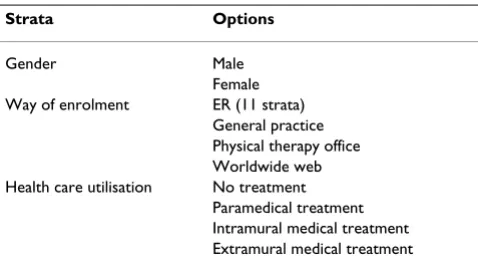
was formed by paramedical treatment of the ankle sprain. Next to this option, the athlete utilized intramural medi-cal treatment, or as a fourth category extramural medimedi-cal treatment. From each stratum participants were allocated to the intervention and control group by random num-bering.
Usual care of an ankle sprain in the Netherlands
There are three Dutch medical guidelines for the treat-ment of an ankle sprain. As stated in the introduction, in general, treatment duration of no more than six weeks is considered to be sufficient according to the KNGF (physi-otherapy) guideline. High-level athletes could have a treatment duration of up to twelve weeks [16]. Therefore, the majority of amateur athletes will only have a rehabili-tation period of six weeks. This guideline is aimed at opti-mal functional recovery of the ankle, at returning to full (or highest possible) sports participation, and at prevent-ing recurrent ankle injuries [16]. The usual care treatment process starts with reducing pain and swelling, an improvement in blood circulation, and promoting partial loading. The next treatment phase consists of gradual increase of load and re-establishing function. After 11 to 21 days muscle strength can be improved, as well as active functional instability, range of motion and moving. The last phase aims to improve load and ADL tasks. The dura-tion of each stage is prescribed in the guideline, but inter-individual differences in treatment duration can occur.
The Dutch College of General Practitioners (NHG) prac-tice guideline for ankle sprains states that follow-ups are not necessary for an individual with a mild sprain [32]. A mild sprain is diagnosed if the person had reasonably good ability to bear weight on the foot (walking), if there was mild swelling and pain, if there was no visible bruis-ing, and if the anterior drawer test was negative. There should be improvement within one to two weeks. If not, the physical examination should be repeated. According to the NHG practice guideline, a person with a ruptured ligament is advised to be treated with a tape bandage and should be seen at two-week intervals for six-weeks [32].
After tape bandaging, patients who engage in sports with a high risk of inversion injury (such as football, basket-ball, outdoor hockey, volleyball) should be advised to use an ankle brace for secondary prevention [32].
The Dutch Institute for Healthcare Improvement (CBO) has formulated a consensus statement on diagnostics and treatment of acute ankle sprains [33]. This guideline is a multidisciplinary collaboration of several Dutch colleges of medical associations, of which the NHG is one. This guideline states that a maximum treatment duration of six weeks is sufficient [33]. It is noted that the advised treat-ment procedure consists of taping and bracing, whereas the use of proprioceptive balance board training as a treat-ment method is not discussed.
In this study the aim was to compare usual care of athletes with a recent lateral ankle sprain with a proprioceptive training programme after usual care. Usual care of the ankle sprain was by choice of the athlete; there was no interference from the authors.
Description of the intervention
The intervention programme consisted of an eight-week proprioceptive training, which started after finishing the complete ankle sprain treatment procedure and from the moment that sports participation was again possible. From that moment athletes completed the baseline ques-tionnaire and commenced their one-year follow-up.
The programme was a modification of the programme previously proven effective for the prevention of ankle sprain recurrences in volleyball [14]. The previously stud-ied programme was designed specifically for volleyball (i.e. volleyball specific exercises) and had to be carried out in couples. The proprioceptive balance board training programme used for this study was similar to this previ-ous programme, but consisted of more general exercises on and off the balance board that were carried out indi-vidually. The different basic exercises of the propriocep-tive balance board training programme are depicted in Figure 2.
All participants of the intervention group received the same balance board, and general written and visual infor-mation on the duration and intensity of the programme. In addition, a website was created including basic infor-mation on the project and a section only accessible for intervention group subjects (including all exercises and a 'frequently asked questions' section).
[image:5.612.56.295.99.233.2]The frequency of exercising was consistent throughout the full eight weeks: three training sessions per week (see Table 2). Participants were encouraged to perform the exercises as part of their warm up to their normal sporting
Table 1: Strata used for subject randomization.
Strata Options
Gender Male
Female
Way of enrolment ER (11 strata)
General practice Physical therapy office Worldwide web Health care utilisation No treatment
activity. This was previously shown to be effective in a study on volleyball players [14]. Gradual increase of train-ing load, that is, exercises became more difficult after sev-eral sessions (see Table 3).
All participants trained individually, without supervision of a coach or medical practitioner.
Outcome measures
The primary outcome of the 2BFit study was the number of recurrent ankle injuries in both groups within one year after the initial sprain. A follow-up time of one year was chosen as a higher risk of re-injury was previously found during the first year post-injury [8-11]. An ankle sprain recurrence was recorded if the subject suffered a sudden inversion of the ankle, which caused the subject to stop his or her current sporting activity, or resulted in the
par-ticipant not participating (fully) in the next planned sports or work activity.
Secondary outcome measures are:
1. Severity of re-injury
2. Etiology of re-injury
3. Medical care
This study had a one-year follow-up with measurements scheduled monthly for 12 months after baseline. All ques-tionnaires and other forms were sent to athletes by mail, unless requested otherwise. The questionnaires were derived from validated questionnaires [34]. Where appro-priate, questions were adapted to fit this particular study.
Basic exercises of the 2BFit proprioceptive balance board training programme
Figure 2
Basic exercises of the 2BFit proprioceptive balance board training programme.
A: one-legged knee flexion B: t oe st and C: one-legged st ance
[image:6.612.63.546.93.302.2]D: runner’ s pose E: crossed leg-sway F: t oe walk
Table 2: Eight week training programme for the intervention group.
Week 1 Week 2 Week 3 Week 4 Week 5 Week 6 Week 7 Week 8
1 2 3 4 5 6 7 8 9 10 11 12 13 14 15 16 17 18 19 20 21 22 23 24
A 1 1 1 1 1 1 1 1 2 2 2 2 2 2 2 2 3 3 3 3 3 3 3 3
B 1 1 1 1 1 1 1 1 1 1 1 1 2 2 2 2 2 2 2 2 2 2 2 2
C 1 1 1 1 2 2 2 2 3 3 3 3 3 3 3 3 3 3 3 3 3 3 3 3
D 1 1 1 1 2 2 2 2 3 3 3 3 3 3 3 3 3 3 3 3 3 3 3 3
E 1 1 1 1 1 1 2 2 2 2 2 2 3 3 3 3 4 4 4 4 4 4 4 4
F 1 1 1 1 1 1 1 1 1 1 1 1 2 2 2 2 2 2 2 2 2 2 2 2
Baseline measurement
The baseline questionnaire was the largest questionnaire and consisted of six parts. Part one covered demographic variables (i.e. gender, age, body weight, and body height), and type of sport. Sports participation was assessed in part two by means of questions concerning mean training hours per week, number of matches played per month, and participation in other sports. Part three covered the working situation including questions on mean working hours a week and type of occupation. For stratification purposes, part four consisted of a question about treat-ment after the initial diagnosis of ankle injury. Preventive measures were assessed in part five, with questions con-cerning use of braces, tape, and/or socks. Information about medical history was collected by the last part of the baseline questionnaire. Questions about previous ankle and knee injuries were assessed as well as other injuries of the lower extremities.
Follow-up measurement
The monthly questionnaires gathered information on sports participation, on the use of preventive means and sustained knee or ankle injuries in the past month. Per training or match session the total minutes of participa-tion, type of sports and participation percentage of total session duration were registered. In case of absence from a training or match session, the reason (injury, illness, motivation, or other reason) for it was asked.
Compliance
During the 8 weeks proprioceptive training programme, the intervention group completed an additional question-naire on the subjective response to the proprioceptive and balance board training programme, and reasons of (non-)compliance.
If participants did not fill in their questionnaires or forms after one week, a reminder was sent by email. If the ques-tionnaires or forms were not returned after two weeks, contact was made by telephone.
Injury registration
In case of an ankle sprain, athletes were asked to fill in a web-based ankle sprain registration form. This form
con-sisted of questions concerning the diagnosis, the cause, and the etiology of the re-injury. Furthermore, the advised treatment and the person who treated the injury were reg-istered. Based on this form, a cost diary was sent to the athlete.
Cost diary
To evaluate the cost-effectiveness of the intervention pro-gramme subjects (intervention and control group) who sustained an ankle sprain received a cost-diary.
The cost-diary was a log, which registered all absence from work, school and other chores of life, and (para-)medical treatment (including use of medication) from the moment of injury onwards until full recovery. From these cost-diaries direct and indirect costs resulting from the sustained ankle sprain could be calculated for use in an economic evaluation.
Cost-effectiveness evaluation
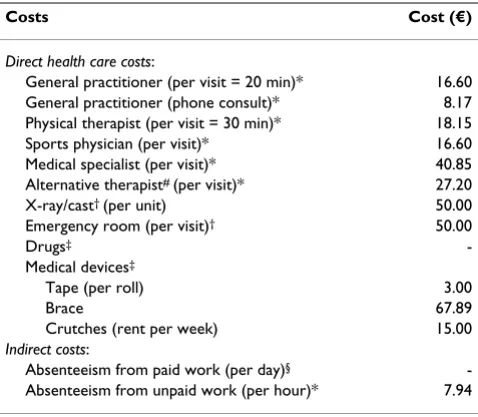
[image:7.612.52.558.100.200.2]The economic evaluation was performed from a societal perspective. Table 4 provides an overview of the costs col-lected [35,36]. Cost of the intervention included costs that were directly related to the implementation of the inter-vention programme. These costs included the written information materials, an instructional video, develop-ment and maintenance of an informational website, and the balance boards. Besides the cost of the intervention itself, direct health care costs were included: i.e. costs of care by a general practitioner, physiotherapist, massage therapist, alternative therapist, and care by a sports physi-cian or medical specialist (e.g., orthopaedic surgeon, gen-eral surgeon); hospital care; use of drugs (e.g., paracetamol/actaminophen, ibuprofen) and medical devices (e.g., crutches, tape, braces). The costs of drugs were estimated on the basis of prices recommended by the Royal Dutch Society of Pharmacy [37]. Also indirect costs resulting from a loss of production due to absenteeism from paid or unpaid work were included. Indirect costs for absenteeism from paid work were calculated using the friction cost approach of 4 months, based on the mean age and sex specific income of the Dutch population [24,36]. Indirect costs for productivity loss of unpaid
Table 3: Exercise difficulty levels
Exc Difficulty level Exc Difficulty level
A 1. on even surface E 1. on even surface; with handhold
2. on even surface; eyes shut 2. on even surface; without handhold
3. on balance board 3. on even surface; eyes shut and without handhold
B 1. on high surface; with handhold 4. on balance board
2. on high surface; without handhold F 1. on even surface; walking
C Same 3 levels as exercise A 2. on even surface, jumping
work, such as study and household work, costs were esti-mated at a shadow price of 7.94 an hour [35].
Process evaluation
A process evaluation was conducted for the intervention programme. The supplement questionnaires, which were sent to intervention group participants in questionnaires two and three, contained questions on the subjective response to the programme, the expected effect of the intervention, and the compliance to the programme.
Statistical analyses
To evaluate the success of the randomization, baseline values were analyzed for differences between intervention group and control group, using a chi-square for categori-cal data and a student's t-test for numericategori-cal data. Cox-regression analysis was used to compare ankle sprain recurrence risk between the intervention and control group. Other variables were checked for confounding and/or effect-modification and were adjusted accordingly. Severity of re-injury was tested between groups using a Mann-Whitney test, since it is shown to be not normally distributed [8,11,14,20]. Etiology and medical care were descriptive variables.
All analyses were carried out according to the 'intention to treat' principle. Differences were considered statistically significant at p < 0.05.
Mean direct, indirect and total costs were estimated and compared between the two groups, both for the costs per subject in the injured population and for the costs per subject in the total population. Because costs were not normally distributed, 95% confidence intervals for the differences in mean costs was obtained by bias corrected and accelerated bootstrapping (2000 replications) [38]. Differences in costs and differences in ankle sprain recur-rences were included in a cost-effectiveness ratio, which estimated the additional costs to prevent one ankle sprain recurrence. Confidence intervals for the cost-effectiveness ratio were calculated with bootstrapping, using the bias-corrected percentile method with 5000 replications. Uncertainty regarding the estimate of this ratio was expressed on a cost-effectiveness plane.
Discussion
The 2BFit trial is the first randomized controlled trial to study the effect of a non-supervised home-based proprio-ceptive balance board training programme in addition to usual care, on the recurrence of ankle sprains in sports.
Recruitment
The recruitment of athlete participants in the 2BFit study was the most challenging task. Although a total of eleven participating hospitals was deemed sufficient to reach the desired number of participants within one year, the way of enrolment had to be adjusted. This total number of hos-pitals was based on the estimated annual number of acute ankle sprains in the Netherlands. The partaking hospitals had an estimated total of 4000 acute ankle sprains in 2003. A two-month pilot study was performed at one of the participating hospitals to identify the strong and weak points and feasibility aspects of the intended way of recruitment at the ER's. This pilot resulted in a high number of positive reactions from hospital employees as well as from athletes, and encouraged us to state that eleven hospitals was sufficient.
Nevertheless actual inclusion of participants through par-ticipating ER's was below expectations, namely 26 partic-ipants after two months, where 100 particpartic-ipants were expected. Therefore, it was chosen to approach general practitioners and physical therapists to participate in the project. Additionally, the internet was used as a mean to increase awareness of the existence of our programme. It was also possible to enroll through the webpage of the study.
[image:8.612.56.295.119.328.2]In conclusion, although the recruitment of participants started of slow, appropriate measures were taken, and the
Table 4: Costs applied in the economic evaluation of a proprioceptive balance board training programme for the prevention of recurrent ankle sprains.
Costs Cost (€)
Direct health care costs:
General practitioner (per visit = 20 min)* 16.60
General practitioner (phone consult)* 8.17
Physical therapist (per visit = 30 min)* 18.15
Sports physician (per visit)* 16.60
Medical specialist (per visit)* 40.85
Alternative therapist# (per visit)* 27.20
X-ray/cast† (per unit) 50.00
Emergency room (per visit)† 50.00
Drugs‡
-Medical devices‡
Tape (per roll) 3.00
Brace 67.89
Crutches (rent per week) 15.00
Indirect costs:
Absenteeism from paid work (per day)§
-Absenteeism from unpaid work (per hour)* 7.94
€1.00 = €0.78, $1.56 (d.d. 04-03-2008)
* Guideline price according to Dutch guidelines [36]. # Price according to professional association.
† Cost price according to hospital administration of VU Medical Center
‡ Price according to tariff of the Royal Dutch Society of Pharmacy [24].
§Indirect costs for paid work was calculated for each injured separately based on mean income of the Dutch
number of responders was adequate at the end of the recruitment period.
Co-intervention
It is striking that the only Dutch medical guideline explic-itly describing the use of proprioceptive training for the treatment of acute ankle sprains is the KNGF guideline. This guideline states that proprioceptive balance board training could be useful as part of an ankle sprain treat-ment protocol [16]. It was possible that athletes rand-omized to the control group were subjected to proprioceptive training as part of their ankle sprain treat-ment by means of usual care. The aim of this study was to evaluate the added value of proprioceptive training on top of usual care, which made co-intervention of the proprio-ceptive balance board training programme impossible.
Non-response
Between step 1 and step 2 of the study flow (see Figure 1) about twenty percent (n = 166) of a total number of 796 positive reactors were lost. This is a fairly high number of non-response after athletes declared their interest in par-ticipation. A possible reason for this high number of non-response could be that the way of contact was not appro-priate. Possible participants had to be contacted through email or by phone, since that was the only information gathered from the answering forms. It turned out to be hard to reach athletes through email or by telephone. If athletes were contacted by postage mail, perhaps non-response would have been lower. Nevertheless, from an ethical point of view it was not allowed to have access to the patient's medical status. Another possible reason for the high number of non-response was that the ankle sprain is an easily forgotten injury; as soon as typical symptoms of an ankle sprain (i.e. pain, swelling) are over, athletes consider their ankle as healed.
Loss to follow-up
Once athletes had given informed consent it turned out to be a struggle to retain them. As discussed, re-injury risk is highest in the first year after the initial ankle sprain [14]. Therefore athletes were prospectively followed for one year and were asked to fill in a web based questionnaire every month.
The compliance to the intervention programme was diffi-cult to assess, since the proprioceptive balance board training was performed at home, without supervision. Athletes completed a compliance questionnaire each month during their training. Effort was made to make the training programme as appealing as possible: a parcel including a balance board, an instructional DVD, and instructional forms was sent to the athlete. Furthermore, athletes could log on to the internet and watch the train-ing programme online.
Impact of results
The results of this study could possibly lead to a change in the treatment of ankle sprains. Positive results on second-ary outcomes could offer extended possibilities for imple-mentation of the intervention in usual care. Positive study results could also lead to changes in the three practical guidelines on the treatment of ankle sprains. Results of this study will become available in 2009.
Competing interests
The authors declare that they have no competing interests.
Authors' contributions
EALMV conceived of the idea and obtained funding for the study. EALMV and MDWH developed the interven-tion, developed the design of this trial, and MDWH recruited participants. WvM provided advice on the study design and contributed to the content of the article. MDWH is the study investigator, was responsible for data acquisition, and wrote the article. All authors read and approved the final manuscript.
Acknowledgements
This study was funded by the Netherlands organisation for health research and development (ZonMW), grant number 750-20-002.
References
1. Garrick JG, Requa RK: Role of external support in the preven-tion of ankle sprains. Med Sci Sports 1973, 5:200-3.
2. Rovere GD, Clarke TJ, Yates CS, Burley K: Retrospective compar-ison of taping and ankle stabilizers in preventing ankle inju-ries. Am J Sports Med 1998, 16:228-33.
3. Sitler M, Ryan J, Wheeler B, McBride J, Arciero R, Anderson J, Horo-dyski M: The efficacy of a semi rigid ankle stabilizer to reduce acute ankle injuries in basketball: a randomized clinical study at West Point. Am J Sports Med 1994, 22:454-61.
4. Surve I, Schwellnuss MP, Noakes T, Lombard C: A fivefold reduc-tion in the incidence of recurrent ankle sprains in soccer players using the sport-stirrup orthosis. Am J Sports Med 1994, 22:601-6.
5. Wexler FK: The injured ankle. Am Fam Phys 1998, 57:474-80. 6. Schmikli SL, Schoots W, de Wit MJP: Sportblessure het totale
speelveld. Kerncijfers en trends van sportblessures in Neder-land 1997–2002. NOC*NSF Arnhem, publicatienummer NOC*NSF:639.
7. Verhagen EALM, Van Tulder M, Beek AJ van der, Bouter L, van Mechelen W: An Economical Evaluation of a Proprioceptive Balance Board Training Program for the Prevention of Ankle Sprains in Volleyball. British Journal of Sports Medicine 2005, 39:111-5.
8. Bahr R, Bahr I: A Incidence of acute volleyball injuries: a pro-spective cohort study of injury mechanisms and risk factors. Scand J Med Sci Sports 1997, 7:166-71.
9. Ekstrand J, Tropp H: The incidence of ankle sprains in soccer. Foot Ankle 1990, 11:41-4.
10. Milgrom C, Shlamkovitch N, Finestone A, Eldad A, Laor A, Danon YL, Lavie O, Wosk J, Simkin A: Risk factors for lateral ankle sprains: a prospective study among military recruits. Foot Ankle 1991, 12:26-30.
11. Verhagen EALM, Beek AJ van der, Bouter LM, Bahr RM, van Mechelen W: A One-Season Prospective Cohort Study of Volleyball Injuries. British Journal of Sports Medicine 2004, 38(4):477-81. 12. Sander E: Ligamentous injuries to the ankle. Am Fam Phys 1980,
22:132-8.
Publish with BioMed Central and every scientist can read your work free of charge "BioMed Central will be the most significant development for disseminating the results of biomedical researc h in our lifetime."
Sir Paul Nurse, Cancer Research UK
Your research papers will be:
available free of charge to the entire biomedical community
peer reviewed and published immediately upon acceptance
cited in PubMed and archived on PubMed Central
yours — you keep the copyright
Submit your manuscript here:
http://www.biomedcentral.com/info/publishing_adv.asp
BioMedcentral 14. Verhagen EALM, Beek AJ Van der, Twisk JWR, Bouter L, Bahr R, van
Mechelen W: The Effect of a Proprioceptive Balance Board Training Program for the Prevention of Ankle Sprains: a Prospective Controlled Trial. Am J Sports Med 2004, 32(6):1385-93.
15. Wedderkopp N, Kaltoft M, Holm R, Froberg K: Comparison of two intervention programmes in young female players in European handball; with and without ankle disc. Scand J Med Sci Sports 2003, 13:371-5.
16. De Bie RA, Hendriks HJM, Lenssen AF, van Moorsel SR, Opraus KWF, Remkes WFA, Swinkels RAHM: KNGF Richtlijn: Acuut enkelletsel. Nederlands Tijdschrift voor Fysiotherapie 1998, 108(sup-plement):.
17. Gauffin H, Tropp H, Odenrick P: Effect of ankle disk training on postural control in patients with functional instability of the ankle joint. Int J Sports Med 1991, 9:141-4.
18. Karlsson J, Peterson L, Andréasson G, Högfors C: The unstable ankle: a combined EMG and biomechinal modelling study. Int J Sport Biomech 1991, 8:129-44.
19. Konradsen L, Ravn JB: Prolonged peroneal reaction time in ankle instability. Int J Sports Med 1991, 12:290-2.
20. Bahr R, Lian O, Bahr IA: A twofold reduction in the incidence of acute ankle sprains in volleyball after the introduction of an injury prevention program: a prospective cohort study. Scand J Med Sci Sports 1997, 7:172-7.
21. Gross MT, Bradshaw MK, Ventry LC, Weller KH: Comparison of support provided by ankle taping and semirigid orthosis. J Orthop Sports Phys Ther 1987, 9(1):33-9.
22. Safran MR, Benedetti RS, Bartolozzi AR 3rd, Mandelbaum BR: Lat-eral ankle sprains: a comprehensive review: part 1: etiology, pathoanatomy, histopathogenesis, and diagnosis. Med Sci Sports Exerc 1999, 31(7 Suppl):S429-37.
23. Handoll HH, Rowe BH, Quinn KM, de Bie R: Interventions for pre-venting ankle ligament injuries. Cochrane Database Syst Rev
2001:CD000018.
24. Koopmanschap MA, Rutten FF: A practical guide for calculating indirect costs of disease. Pharmacoeconomics 1996, 10:460-6. 25. Altman DG, Schulz KF, Moher D, Egger M, Davidoff F, Elbourne D,
Gøtzsche PC, Lang T: The revised CONSORT statement for reporting randomized trials: explanation and elaboration. Ann Intern Med 2001, 134:663-94.
26. Begg C, Cho M, Eastwood S, Horton R, Moher D, Olkin I, Pitkin R, Rennie D, Schulz KF, Simel D, Stroup DF: Improving the quality of reporting of randomized controlled trials. The CONSORT statement. JAMA 1996, 276:637-9.
27. Hosea TM, Carey CC, Harrer MF: The gender issue: epidemiol-ogy of ankle injuries in athletes who participate in basketball. Clin Orthop Relat Res 2000, 342:45-9.
28. Arendt E, Dick R: Knee injury patterns among men and women in collegiate basketball and soccer. NCAA data review of lit-erature. Am J Sports Med 1995, 23:694-701.
29. Bjordal JM, Arnly F, Hannestad B, Strand T: Epidemiology of ante-rior cruciate ligament injuries in soccer. Am J Sports Med 1997, 25:341-345.
30. deLoes M, Dahlstedt LJ, Thomee R: A 7-year study on risks and costs of knee injuries in male and female youth participants in 12 sports. Scand J Med Sci Sports 2000, 10:90-7.
31. Stevenson J, Webster J, Johnson R, Beynnon B: Gender difference in knee injury epidemiology among competitive alpine ski racers. Iowa Orthop J 1998, 18:64-6.
32. Goudswaard AN, Thomas S, Bosch WJHM van den, van Weert HCPM, Geijer RMM: NHG practice guideline for ankle sprains 2004. 33. Consensus diagnostiek en behandeling van het acute
enkel-letsel, CBO. 1999.
34. van Mechelen W, Hlobil H, Grolla I, Kemper HCG: Hardloopbles-sures bij Amsterdamse ambtenaren. VU uitgeverij. Amsterdam
1991.
35. Oostenbrink JB, Koopmanschap MA, Rutten FF: Handleiding voor kostenonderzoek, methoden en richtlijnprijzen voor econo-mische evaluaties in de gezondheidszorg. In The Hague Neth-erlands: Health Care Insurance Council; 2000.
36. Dutch Central Organisation for Health Care Charges: Tarieven voor medisch specialist, exclusief psychiaters. In Bijlage bij tariefbeschikking nummer 5600-1900-97 Utrecht: CTG; 1996. 37. Tax report. In The Hague The Netherlands: Z-index; 2000.
38. Efron B, Tibshirani RJ: An introduction to the bootstrap. New York London: Chapman & Hall; 1993.
Pre-publication history
The pre-publication history for this paper can be accessed here: