HUMAN RESOURCE/ LABOUR LAWS AND HUMAN RESOURCE MANAGEMENT PRACTICES: AN INDIAN PERSPECTIVE
Dr. R. Uma Devi, M. Com., M.Phil., MBA, Ph. D. Assistant Professor of Commerce Dr. S. R. K. Govt. Arts College Pondicherry University
Yanam – 533464 Puducherry (UT), India
================================================================== ABSTRACT:
“Ignorance of law is not considered in the court of law”
As a business grows, the web of laws and regulations to which it is subject becomes increasingly complex. Human resources laws governing the employer-employee relationship comprise a significant part of this regulatory burden. The landscape of statutes of labor laws is constantly evolving, and it takes a special agility to keep abreast of all the latest developments and ensure compliance. It is absolutely imperative to comply with all legal and statutory norms for businesses to operate successfully in India. This often involves significant investment of resources, time, and continuous monitoring to be in the know of all the changes that are happening, in order to be compliant and avoid penalties. With the ever-changing employment laws, it becomes a challenge for the companies to keep themselves compliant. On this backdrop, an attempt is made to overview the significance of Human Resource Laws in Human Resource Management practices in India.
Keywords: Legal Compliances, Labor Laws, Human Resources and Non-compliance 1. CONCEPTUAL FALLACY:
“Human resources are like natural resources; they‟re often buried deep. You have to go looking for them; they‟re not just lying around on the surface. You have to create the circumstances where they show themselves.”
- Ken Robinson
Human Resources Management (HRM) is a set of practices that businesses use to ensure that
they have an effective workforce in place to meet operational needs. Successful organizations
are those which value, develop and nurture their human capital to achieve their organizational
goals and objectives. Human Resource Management Practices is a term used by many
organizations which describes the combination of traditionally administrative personnel
functions with performance, employee relations and resource planning. The objective of
Human Resources is to maximize the return on investment from the organization's human
capital and minimize financial risk. It is the responsibility of human resource managers to GE-International Journal of Management Research
ISSN (O): (2321-1709), ISSN (P): (2394-4226) Vol. 7, Issue 4, April 2019 Impact Factor: 5.779 © Association of Academic Researchers and Faculties (AARF)
conduct these activities in an effective, legal, fair, and consistent manner. HRM has been
widely defined as a strategic function that encompasses management of its critical human assets
for gaining competitive advantage in a dynamic business environment. HRM is the function
performed in organizations that facilitates the most effective use of people to achieve
organizational and individual goals.
One of the essential goals for an enterprise‟s operation is the effective management of its
human resources and labor relations. To achieve this, statutory compliance with labor-related
laws and regulations is a minimum requirement. Most of the company‟s time and money goes
into ensuring compliance to these laws. Everything to being compliant needs not just whole
lot of time but also experts who can guide on all of these statutory compliance measures.
Therefore, dealing with statutory compliance requires for companies to be well-versed with
the various labor regulations in India.
In recent years, India has enacted numerous laws and regulations to address labor and
employment-related issues. Therefore, a business entity should be well-informed when
establishing human resource and labor-related policy and guideline. The word statutory
means “of or related to statues”- rules and regulations. Compliance means adherence. Thus,
Statutory Compliance means adhering to rules and regulations. Statutory compliance in
Human Resource refers to the legal framework which organizations must abide by with
respect to the treatment of their employees. Every country has several hundreds of federal
and state labor laws that companies need to align with. A lot of company‟s effort and money
goes into ensuring compliance to these laws which could deal with a range of issues; from the
payment of minimum wages to maternity benefits or professional taxes. Therefore, dealing
with statutory compliance requires for companies to be well versed with the various labor
regulations in their country of operation.
Even after six decades of getting independence, India is plagued with victimization, non
compliance of labour legislations at large. With the Government, time and again, laying
down, implementing policies / programmes / schemes / projects for providing social security,
welfare measures, regulating conditions of work, occupational health, safety of workers,
eliminating child labour from hazardous occupations and strengthening enforcement of
labour law etc. The said policies and laws have made compliance of Labour Laws an arduous
task at hand. The complexities and the unawareness of labour laws have often wearied an
enterprise by persistent Litigation, penalties and Fines for Non - Compliance.
2. REVIEW OF LITERATURE:
and process of HRM within a dynamic and uncertain environment are ongoing for many
decades. Statutory compliance, in HR/ Labour laws refers to the legal framework within
which organizations must operate, in the treatment of their employees.
The concept of Human Resource (HR) was introduced by Prof. L. Nadler (1969) in American
Society for Training and Development Conference. In India, Larson and Tubro Ltd
introduced this concept in 1975 in their organization with an objective of facilitating growth
of employees, especially people at the lower levels. Mondy and Noe (1993) suggested that
activities and practices of HRM can be classified into six domains: Planning and
Recruitment, Development and Appraisal, Compensation and Reward, Safety and Health,
Labor Relations and Human Resource Research.
Stone (1998) remarked that organizations need to effectively manage their human resources if
they are to get the maximum contribution from their employees. Guest (1999) suggested the
best Human Resource Practices that included: job design in such a manner that employees
have the responsibility and autonomy to use their knowledge and skills. According to
Dwivedi (2006), the key to competitive advantage in the modern world is the application of
sophisticated HR policies and practices. Murthy (2006) explained that the role of Human
Resources is curial to face the challenges of globalization, liberalization, profit maximization
and cost effectiveness. Teseema & Soeters (2006) explained eight HRM practices -
recruitment and selection, placement, training, compensation, employee performance
evaluation, promotion, grievance procedure and pension or social security practices. Dwivedi
(2007) concluded that the survival and growth of today's organization necessitate close
linkages between HR and business policy and planning.
Rajendhiran (2007) concluded that the human resource is a very special kind of resource. If it
is properly managed the organizational effectiveness can be increased. Bharathi (2009)
explained the value of HR functions in business and its impact on higher productivity,
enhanced quality, better customer service, good industrial relations and lower cost which
influence the profitability of an organization. The sole aim of HRM is to guarantee that the
firm human capitals are being used in the fullest capability to produces the greatest
organization results that meets with the firm needs Nadeem Moiden, (2003) and Gilley and
Gilley, (2007). When organization recruit the most effective, capable, committed and flexible
people; and managed and reward them accordingly their performances, competencies and
efficiency would help the firm productivity immensely (Price A., 2007).
Price (2007) inferred that recruitment strategies can be divided in three significant
within the cultural norms, and flexibility – the most reliable and versatility employee, which
are quite complicating. According to Patel & Cardon (2010) compensation is vital for
contemporary organization as it contributes to attract and retain high skilled workers with
superior salaries, and it encourages a desired stakeholder behavior regarding recognition and
legitimacy. Minbaeva et al. (2003) inferred that compensation would enhance motivation
among personnel too. Balkin and Swift (2006) suggest a more flexible approach toward the
payment issue. Salaries and benefits in the eyes of employees affect their loyalty is one of the
important factors. “Money is not the most important, but no doubt a very important” (Cook,
2008).
The Labour welfare addresses, multidimensional socio-economic aspects affecting labour
welfare, productivity, living standards of labour force and social security. It attempts to 'raise
living standards of the workforce and achieve higher productivity, skill up gradation through
suitable training'. The various labour legislations in India can be grouped into four broad
areas: (a) Employment security and industrial relations; (b) Income security i.e., wages and
other remunerations; (c) Work security i.e., working conditions, safety and occupational
health; and (d) Social security and labour welfare (Ministry of Labour and Employment
2010).
It has been argued from the point of view of the employers that labour laws put unreasonable
restrictions on the employers to hire persons, terminate employment or deters opening of new
business. On the other hand the pro social security policy groups feel lack of labour laws
would encourage exploitation of workers and deterioration in the quality of employment
(Ministry of Labour and Employment 2010). Minimum wages are expected to cover the
essential current costs of accommodation, food and clothing of a small family (Varkkey and
Mehta 2006). In India, wage level, work-life balance, and career opportunities revealed to be
particularly important attributes of employer image (e.g., Budwhar, Luthar & Bhatnagar,
2006; Bhatnagar, 2007b as cited in Holtbrugge et al, 2008).
3. OBJECTIVES & METHODOLOGY:
The Labor law is created to safeguard the rights and interest of workers from any form of
exploitation by the factory owners. According to this, factory owners and employers have to
guarantee certain working conditions to their employees. HR manager plays an important role
in safeguarding the welfare of the employees. The organizations have to abide to some labor
laws while Human Resource Management. On this backdrop, present study titled “HUMAN
RESOURCE/ LABOUR LAWS AND HUMAN RESOURCE MANAGEMENT PRACTICES: AN INDIAN PERSPECTIVE”
1. To overview the meaning and importance of Human Resource Management
2. To analyze the need for Labor laws
3. To study the various labor laws and Acts with regard to Human Resource
4. To analyze the need and importance of Labour Laws
5. To analyze the advantages of Labour Laws
6. To analyze the risks involved in non-compliance labor laws
In order to accomplish the objectives of the study, secondary data from various sources such
as reports, publications & bulletins, journals and magazines etc. has been used. Interpretation
of data is based on rigorous exercises aiming at the achievement of the study objectives and
findings of the existing studies. Interpretation of the data is more on qualitative terms than on
quantitative terms.
4. ANALYSIS:
Labor laws are backbone for the human resource management, without the involvement of
labor law there is no human resource management. There is no validity for the human
resource management without following the labor laws, sometimes disobey of labor laws
may lead to serious consequences like penalization or sometimes imprisonment or sometimes
both basing on the gravity of incident. Labor laws were formulated for Labor/employees who
are employed under any employment by an employer for the purpose of protection of labor or
employees against exploitation by their employer vice versa. Labor laws lays down certain
restrictions on labor or employees against their employer, labor or employees must follow the
rules and regulations prescribed by the labor laws, if not they are also liable for punishment
or penalty by the court.
Every Human Resource manager must know the labor laws of that country where he is
working, because most of the core HR functions are linked and according to the labor laws of
concerned country. Managing human resources without following labor laws may be illegal
and in some cases it may be serious offence which may lead to close down of factory or
establishment. There are various functions performed by human resource manager such as -
recruitment, selection, training, performance appraisal, compensation, and attending to labor
relations, safety & welfare and health concerns. Maintaining the good labor relations improve
the productivity and organization overall performance. Hence every human resource manager
should know and have thorough knowledge about the labor laws as many of the human
resource functions are based on the labor laws and should be implemented in accordance with
regulations in mining, child labor, and compensation in case of accidents etc. are performed
according to the labor laws strictly. When HR manager has proper knowledge on the labor
laws, then he can resolve the conflicts according to laws and can save time.
HR laws or human resources law in India are synonymous with the labor laws and
industrial laws in India. Labour laws in India govern the relationship between employer,
employee and the Government and ensure that the rights and obligations of all parties are
satisfied. It is important for all HR personnel to know the laws pertaining to HR practices
in India and ensure there is no violation.
Human Resources Planning and Legal Compliance
Providing enterprises with human resource planning; drafting and reviewing
employment contracts, work rules and work-hour policies; designing and implementing
non-competition mechanism, intellectual property management and trade secret
protection from the perspective of labor and employment laws.
Providing legal consultation for the employment of mandated managerial personnel
Providing legal consultation for gender equality plans
Providing legal consultation for employee retirement plans and legal analysis of retired
employees‟ rights and benefits
Planning and implementing employee benefit programs
Human Capital Management and Legal Compliance
Providing legal consultation for human capital management and employee dispatch
issues
Providing legal consultation on human capital strategies in business reorganization
Providing legal consultation and planning for employee pension reserve funds.
Labor-Related Dispute Resolutions
Assisting businesses in resolving legal controversies related to termination of
employment, retirement, and occupational injuries, including settlement, mediation,
administrative relief and litigation.
Consultation for Collective Agreement Negotiation
Assisting enterprises and labor unions in negotiating and drafting collective agreements
and providing related legal consulting services.
Assisting in planning sexual harassment prevention measures, managing sexual
harassment claims and investigations, and providing legal services during
administrative review, petition and litigation for sexual harassment claims.
Consultation for Labor Related Issues in Merger and Acquisition
Providing legal consultation and risk analysis in merger and acquisition.
Mass Lay-off Planning, Consultation and Legal Compliance
Assisting corporations and employees in negotiating mass lay-off issues
Employee Education and Training Project
Workshop for employee education and on-site training.
Providing on-site training classes related to issues of labor and employment laws.
HR Laws pertaining to Recruitment: Indian employment laws do not provide any rules
or procedures that must be adopted while recruiting a person. But it is important to note
that during the recruitment, interviewing or hiring process, the fundamental rights
provided to a person like avoiding discrimination or maintaining confidentiality of private
information of applicant must be upheld.
Recruiting: The organization must notify the vacancies to the local employment
exchange, though there is no requirement to appoint any person forwarded by the
employment exchange.
Interviewing: There are no regulations against an employer asking for information
about the candidate, including personal questions relating to health, race, religion,
case, etc, However, asking such questions are deemed unethical and could lead
to discrimination, which is an offense.
Pre-employment Enquiry: There are no regulations or requirement to conduct
pre-employment enquiry. However, employers are required to obtain the consent of the
employee by fax/email/letter for carrying out a pre-employment enquiry or background
check.
HR Laws pertaining to employment offer letters: Indian employment and labour laws
do not mandatorily require an employer to issue an offer letter. In case an offer letter is
provided, it is not binding on either party until it is construed as an employment contract
and there is a valid offer by one party and an acceptance by another party.
HR Laws pertaining to employment appointment letters: Employment appointment
letters in India usually include; Name and Address of the Employee, Title of Job, Job
Description, Place of Work, Date of Commencement of Employment, Wage/Salary
entitlement, Conditions for termination, Non-compete, Confidentiality, Non-solicitation
and other restrictive covenants.
HR Laws pertaining to termination of employment: Termination of employment could
be due to voluntary reason or involuntary reason. Termination of employment must be as
per any prior employment contract entered into by the employee with the business and
must also follow other laws and regulations, which ensure that employees are not unduly
harassed.
HR Laws pertaining to workplace health and safety: Central and State Governments
place certain duties and obligations on the employer to ensure the wellbeing, health and
safety of its employees. Hence, it is important for all organizations to maintain a safe and
hazard free work environment.
The field of human resources management is greatly influenced and shaped by the state and
federal laws governing employment issues. Employment laws/labor laws are very support to
the human resource management. In the sense to the human resource manager, There are
various Labor laws and Acts mentioned below which are commonly used and supported;
1. The Child Labour Act 1986
2. The Indian Factories Act 1948
3. Payment of Gratuity Act 1972
4. Sexual Harassment of Women at Workplace (Prevention, Prohibition & Redressal) Act 2013
5. The Shops and Commercial Establishments Act (S&E) 6. The Apprentice Act 1961
7. The Contract Labour (Regulation & Abolition) Act 1970 (CLRA)
8. The Labour Welfare Fund Act (LWF)
9. The Minimum Wages Act 1948
10. The Employment Exchange (Compulsory Notification of Vacancies) Act 1959 11. The Equal Remuneration Act 1976
12. The Industrial Disputes Act 1947
13. The Industrial Establishment (N&FH) Act
14. The Interstate Migrant Workmen Act 1979
15. The Professional Tax Act (PT)
16. The Payment of Gratuity Act 1972
17. The Payment of Wages Act 1936
19. The Payment of Bonus Act 1965
20. The Workmen‟s Compensation Act 1923
21. The Trade Unions Act 1926
22. The Employees Provident Funds and Miscellaneous Provision Act 1952 (EPF)
23. The Industrial Employment (Standing Orders) Act 1946
24. The Employees State Insurance Corporation Act 1948 (ESIC)
Knowing the Employment Agreement: The employment agreement is the Holy Grail for
both the employer and employee. Any rights, obligations, disputes arising out of the
employment agreement have to be kept in mind by the HR. Therefore, they need to know
the terms and conditions assured to the employees and their obligations under
the Payments of Bonus Act, Equal Remuneration Act, Payment of Gratuity
Act, Employees Provident Fund and Miscellaneous Provisions Act, Employees‟ State
Insurance Act, Maternity Benefit Act, etc.
Ensuring a Healthy Working Environment: The HR has to ensure that employees have the
necessary amenities, safety, and hygiene at the workplace and the workplace is adhering
to the standards assured under the labour laws. The Factories Act 1948, The Shops and
Commercial Establishments Act(s) contain provisions relating to registration of an
establishment, working hours, overtime, leave and privilege leave, notice pay, safe
working conditions for all employees, transportation for female employees working
overtime a clean premises and hygienic restrooms etc.
Prevention of Sexual Harassment at Workplace: For a healthy work environment, based
on the realistic situations, legislation like Sexual Harassment (Prevention, Prohibition and
Redressal) Act, 2013 are in place. Due to the nature of offence, it becomes imperative for
the HR to be informed and handle it with sensitivity. There are labour laws courses which
help HR personnel learn about the nuances of the workplace sexual harassment.
Grievances Redressal: HR personnel need to know the laws like Factories Dispute Act,
Sexual Harassment (Prevention, Prohibition and Redressal) Act, etc. to address the
employees‟ grievances. The HR personnel are in a crucial position to address the issue
suitably and help avoid any expensive future lawsuits for the company. They are the link
between the company and the employee during the whole process.
4.1.Need for Labour Laws
Every country has its own set of state and central labor laws that companies need to comply
with. Dealing with statutory compliance requires companies to be updated on all the labor
Non-compliance with these regulations can cause a company a lot of legal trouble such as
penalties and fines. That is why every company invests a huge amount of money, effort and
time to meet compliance requirements from professional tax to minimum wages act. To help
in this, the company seeks expert advice from labour law and taxation law experts.
In order to manage with demanding regulatory environment, every company should be well
versed and take notice of all regulations in the labour laws. They need to formulate efficient
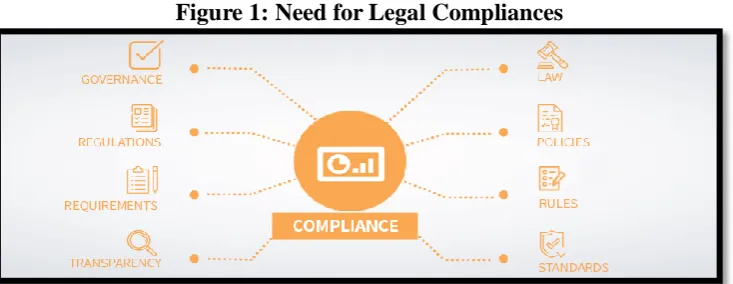
[image:10.595.115.482.182.324.2]ways to maintain compliance and minimize risks.
Figure 1: Need for Legal Compliances
The complexity of doing business has increased tremendously and it has become very
challenging to be in sync with the operational aspect of every business. As discussed earlier,
organization seek the help of statutory compliance experts whose main focus is to be
compliant with the ever-changing regulatory environment.
Adhering to Labour Laws is necessary for every business organization in the world to keep
their businesses safe from the legal trouble. A deep knowledge of statutory compliances is
required to minimize the risk associated with the noncompliance of statutory requirements. In
today‟s competitive and legal business world, it is very challenging for employers to
manage statutory compliances without good management practices. Each country has
various kinds of compliance requirements.
4.1.1. Advantages of Labour Laws
These laws are of great importance because they offer protections to both the employee and
employer. On the larger scale, compliance with these laws offers benefits to society as a
whole, both on the interpersonal and financial levels.
Protection of Employee
In the India, most employees and employers operate under what is known as a master-servant
relationship. Employment laws are designed to balance out the master-servant relationship so
that the employer cannot abuse or discriminate against the employee. Under these and
additional labor laws, workers have the right to fair compensation, an equal opportunity for
1.Ensures fair treatment of employees
2.Ensure they are paid fairly for the work they have done and their company complies
with the minimum wage rate
3. Prevents employees from working for long hours or inhuman condition
Protection of Employer
The purpose of most labor laws not to abolish the master-servant relationship, but rather to
make it more equal and ensure that all individuals have the same opportunity to enter into
such a relationship. These laws ultimately protect the employer's productivity and, therefore,
profits, as well as the ability to remain competitive in the marketplace.
1. Avoid penalty or fines because of their timely payments
2. Protects the organization from unreasonable wage or benefit demands from trade
unions
3. Prevents legal troubles as the company is fully compliant
4. Mitigate risks and increases awareness about compliance
5. With compliance in place, there is a lower risk of an adverse incident
Dual Protections
Labor laws offer some dual protections to both employers and employees. Compliance with
labor laws also is financially beneficial to both employees and employers. If an employer is
compliant, for instance, he avoids fines stemming from not following the law, as well as
potential lawsuits. Similarly, adherence to labor laws means that employees are properly
compensated for the work they do and, in many instances, receive benefits such as reduced
medical expenses.
Value Recognition
Labor laws, similar to any other laws, reflect the dominant values of the society in which
people create them. Compliance with labor laws is important because it indirectly preserves
these underlying concepts, thereby stabilizing the overall value system of the society. Periods
of change in labor laws reflect less stable social norms and a shift in dominant belief systems.
Economic Stability
Because labor laws preserve the right of the employer to profit and the right of the employee
to compensation that can be spent and invested, labor laws are crucial to a healthy economy.
Periods of economic growth reflect healthy businesses with employees who are earning
enough to participate as consumers. Changes in employment laws, as well as laws on
4.1.2. Risk of Non Compliance of Labor laws
There are a number of statutory requirements for Indian companies and companies have to
spend a significant amount of time in HR management to ensure that they are compliant with
the legal regulations. If companies fail to adhere to statutory compliance, they may have to
face heavy penalties, which are several times more than complying with legal guidelines.
If a company does not conform to rules and regulations in labor laws, it will risk:
1. Penal actions and financial losses to the organization
2. Loss of reputation and business integrity
3. Customer loyalty will be impacted severely
4.2.Common employment law issues in India
Common employment laws issues in India can be divided into two areas: the issues faced by
employers and the ones faced by employees, though some of these issues are common to
both. The summarized key employment laws issues which are most common are mentioned
as below;
Issues faced by employer:
(i) Employees joining competing organizations are a common problem faced by employers.
As per the Indian Contract Act 1872, non-competition restrictions are deemed restraint in
trade and therefore unenforceable post termination of employment irrespective of the
covenants contained in the employment agreements. Further, the Contract Act does not
recognize the concept of „reasonable restrictions‟. As a result, even reasonable
(ii) Under the Industrial Disputes Act 1947, in case of termination of workmen by
organizations, the organizations are required to follow the last-in first out (“LIFO”) rule. It is
important to note that unless an employee is actually performing managerial or supervisory
duties; such employee will be deemed a workman under the ID Act.
(iii) Other issues commonly faced by employers include challenges in enforcing recovery of
training costs and garden leave clauses post termination of employment, as such clauses are
again deemed as restraint in trade under the Contract Act.
(iv) At present, labour laws like the Factories Act 1948 (“Factories Act”) and the shop and
establishment laws of different states prescribe working hours, number of overtime hours,
etc. This becomes a challenge for employers, where employers have very limited flexibility
in managing their workforce to achieve greater efficiency.
Issues faced by employees:
(i) It is common for employees to join similar sector industries which may be competing with
their previous employer. As mentioned above, although the non-compete clauses are
unenforceable post termination of employment; employees usually receive legal notices from
their previous employers regarding alleged violation of non-compete clauses and therefore,
need to spend their resources in such legal battles.
(ii) It is common for employees to receive legal notices from their past employers regarding
alleged breach of provisions regarding confidential information. Employees should be
extremely careful and ensure that they possess no confidential information of the previous
employer and ensure to keep such information highly confidential.
Other issues:
Other issues include multiple laws and regulations governing labour matters. Under the
Constitution of India, labour falls in the Concurrent List giving power to both the Central and
the respective State Government to legislate on such items, with the residual law-making
powers vesting with the Centre. This has resulted in a plethora of Central and State laws
related to wages, employment, industrial relations, social security, etc. This results in several
compliances and regulatory requirements for the employers. As far as employees are
concerned, they need to keep themselves abreast of reporting and other requirements
prescribed for employees under various labour laws.
4.3. Recent changes in labour law regulations
The Central Government has been pursuing a pro-reform agenda since they took over three
years ago and the overall trend has been to simplify labour regulations. The Ministry of
conveyed that the aim is to first concentrate on reforms that are focused on employee welfare
and benefits. We have summarized key amendments/proposals for labour law reforms at the
central level, below;
(i) Maternity Benefit (Amendment) Act 2017 (“MB Amendment Act”): This amends the Maternity Benefits Act 1961 (“MB Act”) and became effective from 1 April 2017. Salient
features of the MB Amendment Act include increased maternity leave from 12 weeks to 26
weeks, availability of maternity leave of 12 weeks to adoptive and commissioning mothers,
introduction of work from home options and requirement to provide crèche facilities in case
of organizations employing 50 or more employees.
(ii) Special Benefits to Start-ups: The Ministry of Labour vide its notification dated 12th July 2016 has exempted all eligible start-up companies from labour inspections under 9
central legislations, viz.,, the ID Act, Trade Unions Act 1926, Building and Other
Constructions Workers‟ (Regulation of Employment and Conditions of Service) Act 1996 (“BOCW Act”), Industrial Employment (Standing Orders) Act 1946 (“IESO Act”),
Inter-State Migrant Workmen (Regulation of Employment and Conditions of Service) Act 1979
(“ISMW Act”), Payment of Gratuity Act 1972, Contract Labour (Regulation and Abolition) Act 1970 (“CLRA Act”), Employees‟ Provident Funds and Miscellaneous Provisions Act 1952 and the Employees‟ State Insurance Act 1948 for a period of 3 years and will be
conditional upon the organizations providing self-compliance reports.
(iii) Combined Registers under various labour laws: On 21 February 2017, the Ministry of Labour notified the Ease of Compliance to Maintain Registers under various Specified
Labour Laws Rules 2017. The Ease of Compliance Rules enable an employer to maintain 5
types of combined registers viz., (i) Employee Register; (ii) Wage Register; (iii) Register of
Loan / Recoveries; (iv) Attendance Register; and (v) Register of Rest Days / Leave account
of employees / Leave with Wages.
(iv) Payment of Bonus Amendment Act: The Payment of Bonus Act 1965 which aims at ensuring a payment of bonus based on profit or productivity to workers in certain
establishments. The Payment of Bonus (Amendment) Act 2015 sought to amend bonus
entitlements prescribed under the Bonus Act.
(v) Child Labour (Prohibition and Regulation) Act 1986 (“CL Act”): This is intended to
regulate the employment of workers below a certain age in industrial establishments. Salient
features of the CL Amendment Act include prohibition on employment of children below the
age of 14 years in certain other professions such as bidi-making, mines, domestic work and
5. CONCLUSION:
The complexity of doing business has increased tremendously and it has become very
challenging to be in sync with the operational aspect of every business. The firms have to
abide by the labor laws in order to succeed in the competitive world. Labour laws in India
govern the relationship between employer, employee and the Government and ensure that the
rights and obligations of all parties are satisfied. It is important for all HR personnel to know
the laws pertaining to HR practices in India and ensure there is no violation.
Laws in India offer employees a great degree of protection, and both the judiciary and the
government tend to have a pro-worker stance in employment-termination disputes. It is,
therefore, not unusual for employees who have been dismissed from employment to exercise
their right of appeal.
References:
1. Amba-Rao, S.C. (1994b). Human Resource Management Practices in India: An Exploratory Study. Indian Journal of Industrial Relations, 30(2), 190-202.
2. Armstrong, M. (2006). A Handbook of Human Resource Management, 10th ed.. London: Kogan, 6-8, 11-13.
3. Bhandari A. K. and Heshmati A. (2005). Labour Use and Its Adjustment in Indian Manufacturing Industries. Global Economic Review, 34(3), 261-290.
4. Budhwar P. (2003). Employment Relations in India. Employee Relations, 25(2), 132-148.
5. Cappelli, P., Singh, H., Singh, J. V. and Useem, M. (2010). Leadership lessons from India. Harvard Business Review, 88(2), 90-97.
6. Hill, T. M., Haynes, W. W. and Baumgartel, H. (1973). Institution Building in India: A Study of International Collaboration in Management. Cambridge: Harvard University Press.
7. Mirza, S. (2009). Human Resource Management, 4th ed. Delhi, Tata Mcgraw Hill, 3-5. 8. Ramaswamy, E. A. and Schiphorst, F. B. (2000). Human resource management, trade
unions and empowerment: two cases from India. International Journal of Human Resource Management, 11(4), 664-680.
9. Rao, Subba P. (2008). Essentials of Human Resource Management and Industrial Relations. Delhi, Himalaya Publishing House.
10. Report of the First National Commission of Labour, Formulated in 1962. Report submitted in 1969 (500 pages), Published on website of The Govt. of India, Ministry of Labour (accessed from http://www.labour.gov.in on 13th July 2010).
11. Saini, D. S. and Budhwar, P. S. (2008). Managing the human resource in Indian SMEs: The role of indigenous realities. Journal of World Business, 43(4), 417-434.