5
III
March 2017
Technology (IJRASET)
Effective Avoidance of Queuing and
Analyzing User Behaviour
A. Sharmi1 ,V.Sindhu2, K. Siva Sankari3, Mrs. Jayashree4
[image:2.612.156.454.344.527.2]Abstract: Large super markets has a great variety of goods and different supermarkets may have different distribution of commodity. Most of the customers find it difficult to stand in long queue for billing the purchased products. This project provides a great solution to all these problems. Most recently LIFI is new emerging technology in the trend. In this project data transfer is processed Products and the cell phone. Each and every product is having LIFI transmitter and it store the encoded data similar to the product id, cost of product and quantity. Here the mobile Incorporated with LIFI receiver via OTG communiqué inside the buying cart. It can study the commodities’. information when the LIFI transmitter holding goods are chosen by the customers, each information Of the goods can be entered by means of using the cellular LIFI and whilst the product is saved into the trolley, which is also contain the LIFI module, double check the product identity . After completing The acquisition, the payment is processed in cell itself through mobile banking machine. Finally the cart section will verify the payment and purchase of product which will be again cross Test by the trolley module whilst come out of the exit phase of the purchasing center. If the product is mismatched at this stage immediately give the alarm to the owner. This technology is used in this project for finding out the information of the commodities.
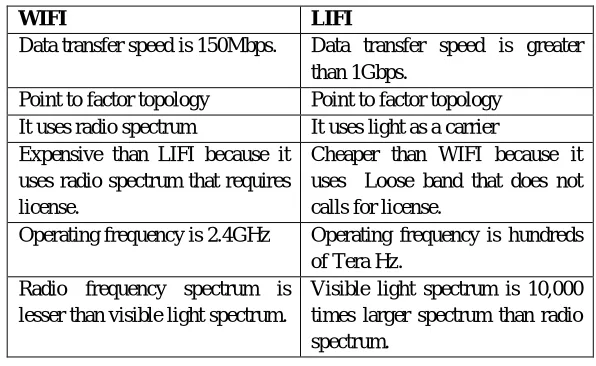
Fig .difference between wifi and lifi
I. INTRODUCTION
Li-Fi technology, was proposed by the German physicis Harald Haas. This provides transmission of data through illumination by sending data through an LED light bulb that varies in intensity faster than the human eye can follow. Li-Fi contains a wide range of frequencies and wavelengths, from the infrared through visible and down to the ultraviolet spectrum. It incorporates of sub-gigabit and gigabit-magnificence verbal exchange speeds for brief, medium and lengthy ranges. The logic is very simple. If the LED is on, a digital 1 is passed on. If the LED is off, a digital 0 is passed on. These high brightness LEDs can be switched on and off very quickly which is fast for passing data through light. The working of Li-Fi is very simple. There is a mild emitter on one quit, as an instance, an LED, and a picture detector (mild sensor) at the other. The photo detector registers a binary one when the LED is on; and a binary zero if the LED is off.
Li-Fi is an important part of the Internet of Things (IoT), in which everything is connected to the internet. It enhances energy-efficiency by conjoin data communication and illumination. Li-Fi promotes an extensive forms of application. This project, presents a new application using Li-Fi technology which is serving the customers at supermarket. Li-Fi module Is hooked up with mobile, trolley and cart. It is interfaced with the microcontroller which is programmed using Embedded C language. Payment is carried out
WIFI LIFI
Data transfer speed is 150Mbps. Data transfer speed is greater than 1Gbps.
Point to factor topology Point to factor topology It uses radio spectrum It uses light as a carrier Expensive than LIFI because it
uses radio spectrum that requires license.
Cheaper than WIFI because it uses Loose band that does not calls for license.
Operating frequency is 2.4GHz Operating frequency is hundreds of Tera Hz.
Radio frequency spectrum is lesser than visible light spectrum.
Technology (IJRASET)
in android mobile. Purchased product details are processed to the server and further verification is done in gate section.
II. RELATED WORKS
The main drawback of supermarket system is that the customers have to stand In a long queue for billing the product. In large supermarkets, many stalls are to be had for billing. But even at the season of sale or festival, crowd will enormously be increased and the shop owner can’t be able to maintain the customers. To avoid these problems, many new technologies have been introduced in the shopping malls to get the consumers satisfaction. RFID (Radio Frequency Identification) tag is used instead of barcode. It will be directly read by the trolley. Serial communication is used to transfer the data from the trolley to the server. But Each trolley need to be interfaced separately via wired connection for the billing purpose. This still consumes more time. Therefore, Zigbee module is added to the trolley to send the information of the product to the server. This was effective but, After purchasing the product, customer has to stand in a queue to pay the bill.
Trolley system is used to locate the items in the shopping Mall and it mechanically consists of the goods to the specified vicinity whilst the product list is entered .The information of shopping mall is shared among the customers using android application. This reduces time but it rather deviates from the objective of reducing the billing time. Hence we are proposing an automated Billing device the usage of Li-Fi. Li-Fi technology is proposed via the German physicist Harald Haas, presents transmission of information through illumination with the aid of sending data through an LED light bulb that varies in intensity faster than the human eye can follow. Li-Fi contains a wide range of frequencies and wavelengths, from the infrared through visible and down to the ultraviolet spectrum. The working principle of Li-Fi is quite simple. If the LED is on, a digital 1 is passed on. If the LED is off, a digital 0 is passed on. These high brightness LEDs can be switched on and off very quickly which is fast for transmitting statistics through light . As codes and data’s of products are made in binary format transmission of data is very fast through LED. Thus the method of Li-Fi technology steadily reduces billing time of customers.
III. SYSTEM ARCHITECTURE
Li-Fi or light fidelity is a new technology in trend. Li-Fi uses common LED (light emitting diodes) light bulbs to enable data transfer, boasting data transfer speeds of up to 224 gigabits per second. Best advantage of Li-Fi Technology is accessing internet at high speed in the areas where optical fires are not easy to install. Many times while setting up a wi-fi route, we need to choose an correct spot to place our router so that on an average, it gives an good connectivity in all rooms. But Li-Fi provides transmission of data through illumination by transferring data through an LED light bulb that varies in intensity faster than the human eye can follow. Li-Fi works best for high density wireless data coverage in limited area and for relieving radio interference issues. Li-Fi provides better bandwidth, efficiency, availability and security than Wi-Fi and has already achieved very high speed in transmission of data’s.
In our system, Li-Fi technology is used to reduce the shopping time of customers in shopping centres.
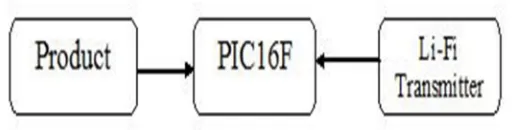
[image:3.612.173.429.532.597.2]A. Product Module
Fig. 1 Block Diagram of Product Module
Technology (IJRASET)
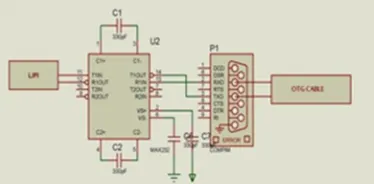
The wiring diagram and the finished hardware of the product module is displayed below.
Fig. Wiring diagram for product module
Fig. Finished hardware of product module
[image:4.612.233.380.99.231.2]B. Mobile Module
Fig. 2 Block diagram of Mobile module.
Mobile Shopping Application is created and established in the users mobile. It is developed using advance Java concepts like JSP(Java Server Pages) and Servlet. After launching the software, it's far linked to the shopping center server using IP address to retrieve the product information and to send the billing details to the users mobile. Mobile contains a Li-Fi receiver which is connected through OTG cable to the trolley. It is shown in Fig 2. Fig 3 shows final circuit for mobile module. A Li-Fi receiver contains the IR detector which reads the product ID and transmits it to the mobile.
[image:4.612.213.400.617.709.2]The users mobile is also used for the payment of the products purchased by the user. This is done by the registration of the credit card details of the user at the billing center. This process will further reduce the time consumed due to the payment of bill.
Technology (IJRASET)
OTG cable is hooked up to the UART port of the Li-Fi.
C. Trolley Module
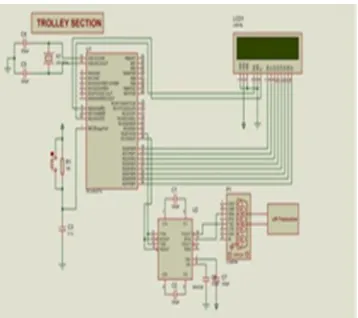
[image:5.612.215.393.237.353.2]The Trolley contains a Li-Fi Transceiver (transmitter and receiver) integrated with PIC Microcontroller as shown in Fig 4. When a product is dropped into the trolley by the customer, Li-Fi module automatically reads the product information by the product ID transmitted by the product module. It will maintain an list of all the products which are inside the trolley. LCD screen on the trolley module displays the product ID. The LCD screen is connected to the port D of the PIC microcontroller. The signal is passed in the form of encoded digital data. The product ID is displayed on the LCD screen. When the product is removed from the trolley, it will be automatically gets deleted from the list. Its final circuit is shown below. MPLAB IDE is used to program the PIC microcontroller. MPLAB IDE is an integrated toolset for the improvement of embedded packages employing Microchip's PIC and PIC microcontrollers. It uses Hi-Tech C compiler and PIC Programmer/Debugger.
[image:5.612.217.396.379.538.2]Fig. 4 Block Diagram of Trolley Module
Fig. 5 Wiring Diagram for trolley section
[image:5.612.215.398.570.706.2]Technology (IJRASET)
The wiring diagram and the finished hardware of the trolley section is given above.
[image:6.612.220.395.116.275.2]D. Gate Section
Fig. 6: Block diagram of Gate Module
Mobile will transmit the purchased product information to the server data base. Then server will transmits these to the gate section. Li-Fi receiver in the gate section a also collects the product details which are inside the trolley module. Cross verification is carried out with the data from the server data base and the trolley module information’s. DC Motor connected to the port B of microcontroller runs when all the products are billed ie, if the data’s that are crosschecked are the same. It is a commonly used actuator for producing continuous movement. When the mismatch happens, buzzer sound will be produced to indicate that there is some unbilled product inside the trolley. The block diagram and very last design of gate section is shown in Fig. 6 and Fig. 7 respectively.
[image:6.612.217.396.415.532.2]The finished hardware module of the gate section is also shown below.
Fig. 7 Wiring Diagram for gate section
[image:6.612.215.399.563.699.2]Technology (IJRASET)
IV. SYSTEM WORKFLOW
Li-Fi technology here is used to reduce the shopping time of consumers in large supermarkets. Li-Fi module are attached to mobile, trolley and gate section. Every product in the super market has a Li-Fi module which contains a unique ID for each product. Using these ID’s, product details are got from the database of the server. When the product is dropped into the trolley, Li-Fi module reads the product ID. The product details will be taken from the database and displayed in the mobile phone.
The trolley section will store the product ID when the shopper drops them into the cart. If the customer wants to remove any product, he/she will just remove from the trolley. Then the details of the product will be removed from both the sections (trolley and users mobile). Once the customer finishes shopping, the payment is achieved in cellular itself using cellular banking machine. After payment, the billed product information are been updated in the server data base. The server data base sends the information to the gate section. Gate section will cross verify with the products billed(the data from the server) and the products in the trolley(from the trolley section). If any product is not billed, then an buzzer alarm sound will be produced. The main aim of this project is to provide an automatic billing system to avoid queue in malls and super markets.
The Fig. 8 shows the overall working of the Of the Automated Billing System and demonstrates how the facts is transferred among the modules.
Fig. 8 Workflow diagram of system
A. Server Login & Adding Products to the Database
[image:7.612.241.372.426.524.2]Administrator has to login to the shopping mall server to add the product details including product ID, product name, price and discount. The product details are stored in the server database using MYSQL. This is shown in Fig. 9
[image:7.612.252.376.553.699.2]Fig. 9 Product entry
Technology (IJRASET)
B. Connecting Mobile to the Server
Mobile is connected to the shopping mall server using the IP address as shown in Fig 10. The server will accept the mobile request and the database will be connected to the mobile.
[image:8.612.223.388.152.325.2]For this the mobile of the user must be registered to the administer server data base. After which the mobile is provided with the IP address of the sever of the mall for tracking the mobile.
Fig. 10 Connecting mobile
C. Getting the Product Details from Database
[image:8.612.231.416.378.496.2]The Fig.11 shows the details of the product in the trolley obtained from the database
Fig. 11 Product details
D. Adding the Product to Trolley
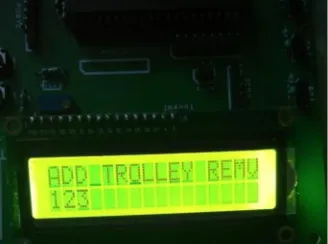
When the product is dropped into the trolley by the user, the product ID will be read by the Li-Fi receiver that is been placed in the trolley module and is displayed on the LCD screen as shown in Fig. 12.
[image:8.612.236.400.569.691.2]Technology (IJRASET)
E. Android Payment
[image:9.612.231.383.142.289.2]After purchasing the product, the total amount is calculated. The bank database is connected to the mobile. The customer has to enter their card and pin number. Authentication is carried out and the amount will be transacted to the shopping mall database. This possible as the card details are already been registered by the user to the data base. This is shown in Fig.
Fig. 13 Making payment
F. Gate Section Verification
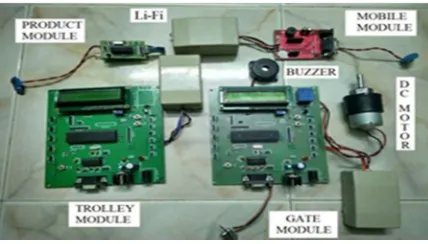
After payment, the purchased product details from the server base will be sent to the gate section. The gate section cross verify with the products inside the trolley. If there is any mismatch or any product is not been billed, the buzzer sound will be produced. Otherwise, the gate will open. The Fig. 14 shows the final hardware of the Automated billing system with all modules and important parts.
Fig. 14 Final Hardware of Automated Billing System
V. CONCLUSION AND FUTURE SCOPE
The main objective of the proposed system is to avoid standing in queues while billing and reduce the time consumption for shopping. With the usage of Li-Fi technology, the billing process takes place automatically and payment is also enhanced using mobile banking. Security is managed by checking products in trolley and verifying it with billed products. If any product is unbilled or if data in crosschecking is mismatched, a buzzer sound will be produced.
There are many useful ideas for further enhancement. Automatic billing system with a credit/debit card facility in the trolley itself will further reduce the human effort. Indoor mapping technology along with IoT can be used to locate the commodities in large supermarkets. Continuous development in this area will lead to a revolutionary change in shopping experience.
REFERENCES
[1] Kalyani Dawkhar, Shraddha Dhomase, SamruddhiMahabaleshwarkar, “Electronic Shopping Cart forEffective Shopping based on RFID” International Journalof Innovation Research in Electrical, Electronic, Instrumentation and Control Engineering Vol. 3, Issue 1, January 2015
[2] Mr.P. Chandrasekar, Ms.T. Sangeetha “Smart ShoppingCart with Automatic Billing System through RFID and ZigBee” in Information Communication and EmbeddedSystems (ICICES), 2014 International - 27-28 Feb. 2014
[image:9.612.198.412.394.516.2]Technology (IJRASET)
smart trolley system for supermarkets using FPGA," 2015International Conference on Communication, Information & Computing Technology (ICCICT),, vol., no., pp.1-6, 15-17 Jan. 2015
[4] H. Aida, S. Aoki, J. Nakazawa and H. Tokuda, "Real-time information distribution at a shopping mall using android phones," Wireless Communications and MobileComputing Conference (IWCMC), 2011 7th International,Istanbul, 2011, pp. 1923-1928.
[5] Z. Ali and R. Sonkusare, "RFID based Smart Shopping: An overview," Advances in Communication andComputing Technologies (ICACACT), 2014 International Conference on, Mumbai, 2014.
[6] H. Haas, L. Yin, Y. Wang and C. Chen, "What is LiFi?" in Journal of Lightwave Technology, vol. 34, no. 6, pp. 1533-1544, March15, 2016.
[7] Zimu Zhou; Zheng Yang; Chenshu Wu; Wei Sun; Yunhao Liu, "LiFi: Line-Of-Sight identification with WiFi,", 2014IEEE Transactions on INFOCOM, vol., no., pp.2688-2696, April 27 2014-May 2 2014
[8] M. Mathankumar and N. Sugandhi, "A low cost smart shopping facilitator for visually impaired," Advances inComputing, Communications and Informatics (ICACCI), 2013 International Conference on, Mysore, 2013.
[9] Eui-Seok Hwang, Kyung-Il Lee and Choong-Ho Cho, "Intelligent shopping mall agent based on user's preference," Industrial Electronics, 2001. Proceedings.ISIE 2001. IEEE International Symposium on, Pusan,2001. \
[10] Fleites, F.C.; Haohong Wang; Shu-Ching Chen, "Enhancing Product Detection WithMulticue Optimization for TV Shopping Applications," IEEETransactions on Emerging Topics in Computing,, vol.3,no.2, pp.161-171, June 2015
[11] Pujapanda, K.P., "LiFi Integrated to Power-lines for Smart Illumination Cum Communication”,2013 InternationalConference on Communication Systems and Network Technologies (CSNT), vol., no., pp.875-878, 6-8 April2013
[12] R. P. Gilliard, M. DeVincentis, A. Hafidi, D. O'Hare and G. Hollingsworth, "Operation of the LiFi Light Emitting Plasma in Resonant Cavity," in IEEE Transactions onPlasma Science, vol. 39, no. 4, pp. 1026-1033, April 2011.
[13] M. Ayyashet al., "Coexistence of WiFi and LiFi toward 5G: concepts, opportunities, and challenges," in IEEECommunications Magazine, vol. 54, no. 2, pp. 64-71,February 2016.
[14] Ananda Kanagaraj S, Arjun G and SreeSharmila T, "Pseudo Eye: The next-generation shopping application using Augmented Reality," Internet Technology andSecured Transactions (ICITST), 2013 8th International Conference for, London, 201