5
IV
April 2017
Technology (IJRASET)
Cost based Selection of Cloud Providers using
Broker in Multi Cloud Environment
P. Padma Sri1, Sk. Subhani2, Sk. Zaheer Basha3, Salma. Sk4
1,2,3,4
Department of IT, LBRCE, Krishna, A.P
Abstract: In cloud computing resources are provided to customers based on their priorities and their requests, but sometimes non-cloud provider organizations also want to share their unused resources through cloud broker to same customers. So in this system we created a heterogeneous environment is created between customer, cloud broker, regular and non-regular cloud provider organizations. In this paper, we proposed a method for maintaining the communication secure and accurate between them. Here we are generating a link between user and provider for making the services secure till the session expires.
Keywords: Cloud Computing, Cloud Brokering, Heterogeneous Cloud Management, Session Management, Managing Link Generation.
I. INTRODUCTION
In this paper, we presented a cloud brokerage heterogeneity [1] security protocol for multiple cloud providers. A cloud broker is the one who keeps 2-different cloud provider services and serves the services to users at single place. Now a difference in cloud brokering i.e. heterogeneity. The functions of a cloud broker is to contact those companies who has services related to cloud computing such as PaaS, IaaS, SaaS but there are some companies which are having only some resources such as space, Infrastructure, Platform etc. and they also can considered as a service providers with the help of cloud broker. So this is called heterogeneity in multiple cloud providers. There are some non-cloud provider organizations who want to keep their unused services on cloud for effective utilization of those services so cloud brokerage is the best way to achieve that goal. Reliability and security is the main complexity that arises between cloud provider and customer.
Here we are implementing a secure protocol between end user, cloud broker and cloud provider with all security constraints between them. There are some organizations who wants to provide their private cloud to public but they are unable to provide their resources because there are some providers who provide full featured cloud to customers directly. So the cloud broker aggregates the resources of both cloud and non-cloud provider organizations and fulfils the needs of customers. Security and reliability between customers and cloud providers is done by the cloud broker.
There are three entities that are involved in this protocol, they are user, cloud broker and cloud provider. First the customer should generate a request to cloud provider for a specific service such as SaaS, PaaS, IaaS along with the cost range after registering as a new user after that cloud broker generates a secret key and sends to both provider and user. After this step a link is generated to customer’s E-mail ID for payment of requested service and after payment a session is created by the broker for limited amount of time and customer and cloud provider is directly communicated in this session. After if the session gets expired then connection between cloud provider and customer is closed and the customer should again request the broker. In this protocol the benefits to customer are all services are available at one place and there is no need to search in 2-different cloud platforms. By this we have completed the task of heterogeneity between new cloud providers and existing providers.
II. BACKGROUND
A. Cloud Brokering Issues
From both public cloud and private cloud it can move the resources which lie on it.
Here are some cloud brokers which are providing solutions for many cloud providers they are as follows. APPIRIO provides mix for amazon.com, google.com, salesforce.com.
Applegate provides sequence for mid-level size companies.
BOOMI provides services for Microsoft, amazon, Google, Quicbooks.com, Azure, Net suite, Taleo.
Here cloud brokers are APPIRIO, Appregata, BOOMI and remaining companies are cloud providers. Nowadays cloud brokers are providing many solution on its neighbourhood as cloud monitoring, session tracking, cloud security [7], cloud governance etc depending upon the bargain allowed by the companies personnel.
Some issues related to cloud security [6], [7] and reliability are exclusive to discuss they are as follows-
1) Cloud monitoring as well as cloud security is literally much needed because if you are efficient to inspect some threat and not to
able to take any action so no use.
2) Reliability between new customers and new cloud provider is furthermore an issue of discussion.
3) Cloud governance is roughly important feature here for governing the cloud between end user and cloud provider.
4) To manage the complexities between new providers and old providers.
5) To grant integration and aggregation [3], [4] between services and service providers.
So all the issues are discussed through this algorithm and briefly heterogeneity in cloud is explained in later section.
III. EXISTINGSYSTEM
In previous system we are confined only to a single provider. The disadvantage in that system is the provider always cannot provide better resources and services for end user. Cloud Broker is not acting as middleware between cloud provider and user so that security and reliability of service is not guaranteed.
IV.PROPOSEDWORK
In Cloud Computing environment the main feature is security [5] that must be available in all the scenarios whether it is cloud monitoring, cloud governance, cloud distribution or cloud framework etc. In proposed security framework there are some entities like cloud broker, cloud provider and customer. This algorithm is briefly described in steps, they are as follows-
A. Service Request Module
In this step the user will request a required service to cloud broker like SaaS, IaaS, PaaS along with the range of cost within which he wants the service after logging in as an appropriate user. Then cloud broker receives the request and provides an appropriate service to user by selecting a best provider among the list of providers and serve it to user in the next step.
B. Processing Module
After receiving the request from the user then broker generates a unique ID and serves it to both provider and user’s E-mail for further verification.
C. Link Generation Module
In this step, the cloud broker programmatically generates a link and sends it to both users and providers E-mail ID. Both user and provider anyone can start the link and communicates with each other. Meanwhile the cloud broker governs the activity between user and cloud provider.
D. Verification and Validation Module
In this step verification is done by provider and user. Here user enters the unique ID and provider will match the ID with his own
Technology (IJRASET)
Figure 1: System Procedure
After verification and validation process when cloud provider issues any service to user then a session is created for a limited time. In that session communication between provider and user has to be completed. After the timer is expired the session is automatically expired and connection between them is crashed. User can again request the broker for renewal of service.
V. CONCLUSION
Cloud broker is acting as middleware between cloud provider and user. Many of the previous methods implemented the secure protocols without cloud broker. But this procedure is very useful to end user. The users are very curious about full-fledged resources at one place and this is possible only by cloud broker. Security is the main concern for making transparency between cloud user and cloud provider. Even it is believed that security is implemented at broker side but all the security related algorithms must pass through the broker. So it is beneficial to implement the protocol by cloud broker itself. So here we presented a protocol that is secure enough for broker to implement between user and cloud provider.
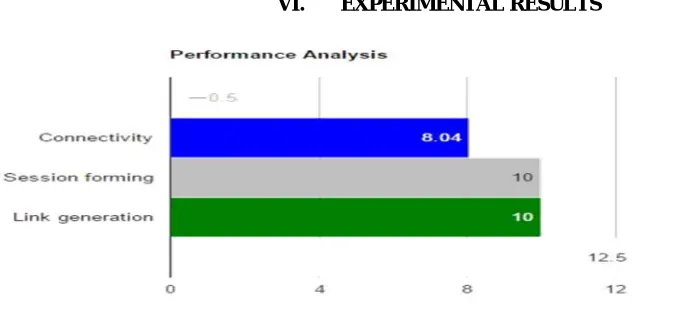
[image:4.612.80.421.538.694.2]method. The attributes that we had taken is connectivity, Session forming, link generation.
A. Connectivity
The quality of being trustworthy or for performing consistently well. The connectivity cannot be full-fledged because there will be loss of internet connection due to power loss or no available balance in the modems and soon.
B. Session Forming
A session is a semi-permanent interactive information interchange also known as a dialogue or a meeting between two or more communicating devices or between a computer and a user.
C. Link Generation
Generating a link between user and provider for providing security to the cloud. This link generation is done by the broker and sends to both user and customers E-Mail. As generation of link is done by the program itself, there will be no loss of links as they directly given to their mail’s and they connect to the whenever it is possible.
REFERENCES
[1] Vikas Pardesi, Aditya Khamparia, Narendra Kr Bagde, “A secure framework in the brokerage of heterogeneous environment for multiple cloud providers,” CLOUD by IEEE, 2014.
[2] M. Almorsy, A.S. Ibrahim, “Collaboration based Cloud computing security,” CLOUD by IEEE, April 2011.
[3] Amanatullah, Y.,”Toward cloud computing reference architecture: cloud service management perspective”, ICISS by IEEE, 2013. [4] Chalse R, “A new technique of data integrity for analysis of the cloud computing security,” 5th CICM by IEEE, 2013.
[5] Kretzschamar M, “Security Management interoperability challenges for collaborative clouds,” 4th DMTF workshop by IEEE 2010. [6] Wenatau Lio, “Research on cloud computing security: problem and strategy,” 2nd CECnet by IEEE 2012-119.