Wavelet Transform and Genetic Algorithm Based
User Interactive Query System
Archana.B.T1,K. Suma 2 1, 2
Assistant Professor Dept. of Electronics and communication Engineering, Dadi Institute of Engineering & Technology, Visakhapatnam
Abstract: Content based image retrieval is a technique which uses visual contents to search images from large scale image databases according to user’s interests. CBIR represents visual information based on properties that are inherent in the image itself. It is popular nowadays due to the rapidly expanding visual information. Here CBIR is done using Wavelet Decomposition, Feature Extraction and Interactive Genetic Algorithm. The visual features extracted are colour, texture and edges. With wavelet decomposition and feature extraction, a similarity function is calculated and with this result query refinement is carried out. For query refinement, Interactive Genetic Algorithm is used in which the user can participate in the retrieval process. The interactive genetic algorithm is a genetic algorithm which combines the global search capability of genetic algorithm and the evaluation capabilities of humans. The main application of these techniques includes domains where it is hard or impossible to design a computational fitness function. Content based image retrieval using wavelet transform and Interactive Genetic Algorithm not only recognizes the images that have been stored in database, but also be able to find some resemblance ornament image or texture as well.
Keywords: CBIR, Interactive Genetic Algorithm, Wavelet Decomposition, Feature Extraction
I. INTRODUCTION
Images have many types of attribute which could be used for retrieval, including the presence of a particular combination of colour, texture or shape features, the presence or arrangement of specific types of object, the depiction of a particular type of event, the presence of named individuals. ‘Content based’ means that the search uses information like colours, shapes, textures or any other information derived from the image itself. CBIR is desirable because searches that rely purely on metadata such as keywords, tags or descriptions associated with the image are dependent on annotation quality and completeness. Content based image retrieval uses the visual contents or the features of an image such as colour, shape, texture and spatial layout to represent and index the image.
II. PROPOSEDSYSTEM
The visual contents of the images in the database are extracted and described by multi-dimensional feature vectors. The feature vectors of the images in the database form a feature database. To retrieve images, user provides the retrieval system with example images or sketched figures. The system then changes these examples into its internal representation of feature vectors. The distance or similarities between the feature vectors of the query example or sketch and those of the images in the database are then
calculated and retrieval is performed with an indexing scheme. Indexing scheme provides an efficient way to search for the image
database. The system has incorporated users’ relevance feedback to modify the retrieval process in order to generate perceptually and semantically more meaningful retrieval results.
III.SYSTEMDESCRIPTION
visual characteristic of a surface. Measures of texture computed using only histograms carry no information regarding the relative position of pixels with respect to each other.
Fig 1 System Description
[image:3.612.151.437.489.608.2]This is important when describing texture and one way to incorporate this type of information when regarding texture is to consider not only the distribution of intensities, but also the relative position of pixels. Thus Gray Level Co-occurrence Matrix (GLCM) is used to extract texture which gives the information of relative position of pixels. Edges in the image are considered as an important feature to represent the content of the image.
Fig.2 Example for GLCM
Histogram is the most commonly used characteristic to represent the global feature composition of an image. Five different edges
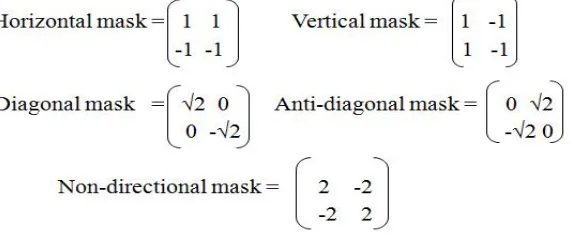
are described in the edge histogram descriptor; four directional edges and a non-directional edge. Four directional edges include vertical, horizontal, 45degree, and 135 degree diagonal edges. Five different masks are used to filter each edge from an image.
After filtering each block with five different masks, sum each of the edges i.e., horizontal, vertical, diagonal, anti-diagonal and
non-directional. A normalization factor is calculated which is the sum of all the edges.
A.
Interactive Genetic Algorithm
For query refinement, a feed-back algorithm is used in which the user can interact in the process of evaluation. The interactive genetic algorithm is a genetic algorithm which combines the global search capability of genetic algorithm and the evaluation capabilities of humans. The main application of these techniques includes domains where it is hard or impossible to design a computational fitness function.
In a genetic algorithm, a fitness function is used to measure the goodness of a solution. At each iteration of the relevance feedback process, the information captured from the user interaction can be used to build this function. We are certain that pictures which have been rated as positive have a phenotype which is closer to that of the query than other images which have been flagged as non-relevant or simply not rated. Thus, these are the pictures which should be allowed to reproduce and are assigned a maximum score. Non relevant selections are removed from the population and not allowed to reproduce. By similarity function a list of images ranked by their similarity is obtained. The user can participate in the process of evaluation by rating the images. The user can rate images with values 0 and 1 or in the multiples of 0.1 known as the impact factor. If the impact factor is 10, the user is satisfied otherwise we have to calculate the fitness function.
Fitness Function = 0.5 x similarity + 0.5 x (1-impact factor).
C. Algorithm
Step 1: A population is created with a group of individuals created randomly. Step 2: The individuals in the population are then evaluated.
Step 3: The evaluation function is provided by the user and gives the individuals a rating based on the performance.
Step 4: Two individuals are then selected based on their fitness; the higher the fitness, the higher the chance of being selected. Step 5: These individuals then reproduce to create one or more offspring, after which the off springs are muted randomly. Step 6: This continues until a suitable solution has been found or a certain number of generations have passed, depending on the need of the user.
In the evaluation process, a population is created that means similarity function retrieved images based on the similarity of images in the database with that of the query image. Next step is the user participation in which the user can rate images based on the performance. The images with best fitness values are selected and their features are crossed to retrieve images that are similar to that of the query image. The user is asked to rate the retrieved images. Based on user rating and similarity function, a fitness function is calculated for all the retrieved images. Features of the retrieved images with the best fitness function values are mixed to form new feature vectors. The new features are then compared with that of the database images. The above process is repeated till the user is satisfied.
IV.RESULTS
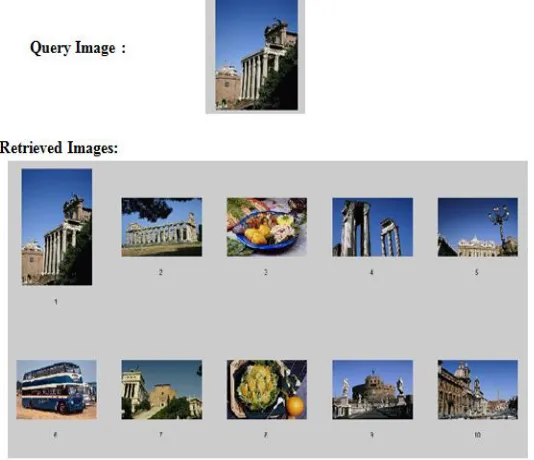
[image:4.612.175.442.467.697.2]Content Based Image Retrieval represents visual information based on properties that are inherent in the image itself. With Wavelet analysis and the Feature extraction process, a similarity function is calculated and the result is obtained as:
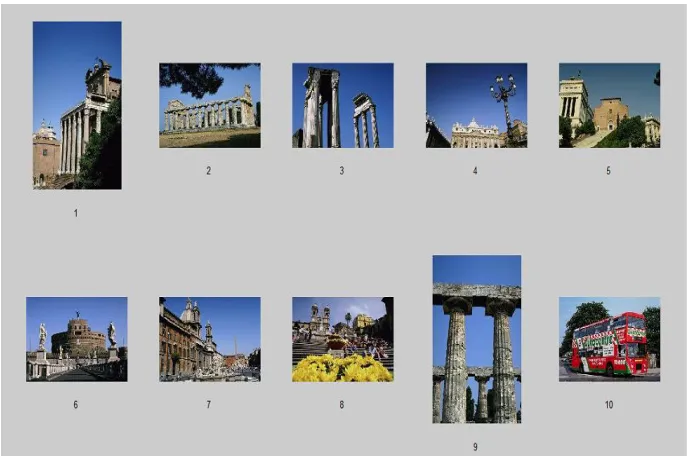
Fig 2 shows the images retrieved using similarity function alone. If the user is not satisfied or if he needs more images similar to that of the query image, then Interactive Genetic Algorithm can be used as shown in Fig 3.
Fig 3 Images retrieved using first generation of IGA
Figure 4: Images retrieved using second generation of IGA
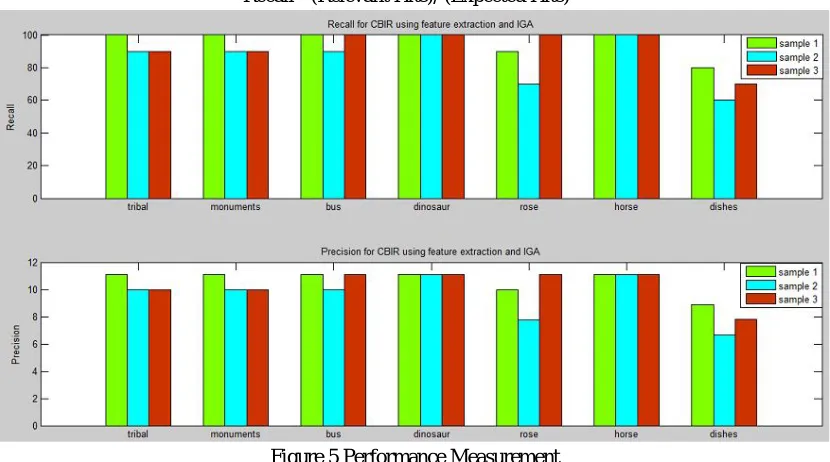
Precision= (Relevant Hits)/ (All Hits)
Recall gives information about the absolute accuracy of the system. It is the ratio of total number of images retrieved to the total number of images in the database.
[image:6.612.99.514.125.356.2]Recall= (Relevant Hits)/ (Expected Hits)
Figure 5 Performance Measurement
In the bar graph, the measure of performance measurement is shown. Three samples were taken from each group and average precision and recall were calculated for three generations. By evaluation, the recall for dinosaurs resulted hundred percentages.
V. CONCLUSION
Content based image retrieval uses the features of an image such as colour, shape and texture. Colour descriptor, Texture Descriptor and Edge Descriptor were used for feature extraction. After extracting features from the database images, these are converted into feature vectors. The feature vectors of the image in the database form a feature database. These features vectors are then compared with the features extracted from the query image. Accordingly, the retrieval result is not a single image but a list of images ranked by their similarities with the query image. For query refinement, a feed-back algorithm is used in which the user can participate in the process of evaluation. It will display the image based on the representation of the highest grade in each query image, which has been compared with the image database. Content based image retrieval using wavelet transform and feedback algorithm not only recognizes images that have been stored in database, but also be able to find some resemblance ornament image or texture as well. The above system has limitations in the field of Sketch images. The developed CBIR system can be extended to include stronger features and additional learning capabilities.
REFERENCES
[1] A.H. Rangkuti, N.Hakiem, R.B Bahaweres, A.Harjoko, A.E.Putro, "Analysis of Image Similarity with CBIR Concept Using Wavelet Transform and
Threshold Algorithm", IEEE Symposium on Computers & Informatics 2013
[2] C.C Lai, Y.C Chen, "A User-Oriented Image Retrieval System Based on Interactive Genetic Algorithm",IEEE Trans.Instrum.Meas., vol.60, no.10,
[3] Vijay K. Sambhe1, Archana R. Wasule, "Content Based Image Retrieval System for Texture Images with Relevance Feedback",International Journal of Recent Trends in Engineering, Vol 2, No. 1, November 2009
[4] Dr. Fuhui Long, Dr. Hongjiang Zhang and Prof. David Dagan Feng,"Fundamentals of content-based image retrieval".
[5] R. Zhang and Z. Zhang, "A robust color object analysis approach to efficient image retrieval", EURASIP J. Appl. Signal Process., vol.2004, pp. 871-885,
2004.