Open Access
S38 Vol 9 No Suppl 3
Research
Case mix and outcomes for admissions to UK adult, general
critical care units with chronic obstructive pulmonary disease: a
secondary analysis of the ICNARC Case Mix Programme Database
Martin J Wildman
1, David A Harrison
2, Anthony R Brady
3and Kathy Rowan
41Lecturer in Health Services Research, London School Hygiene and Tropical Medicine, London, UK 2Statistician, Intensive Care National Audit and Research Centre (ICNARC), London, UK
3Senior Statistician, ICNARC, London, UK 4Director, ICNARC, London, UK
Corresponding author: David A Harrison, [email protected]
Received: 15 Feb 2005 Revisions requested: 8 Apr 2005 Revisions received: 20 Apr 2005 Accepted: 26 Apr 2005 Published: 17 Jun 2005
Critical Care 2005, 9:S38-S48 (DOI 10.1186/cc3719) This article is online at: http://ccforum.com/content/9/S3/S38 © 2005 Wildman et al.; licensee BioMed Central Ltd.
This is an Open Access article distributed under the terms of the Creative Commons Attribution License (http://creativecommons.org/licenses/by/ 2.0), which permits unrestricted use, distribution, and reproduction in any medium, provided the original work is properly cited.
Abstract
Introduction Chronic obstructive pulmonary disease (COPD) is a common cause of admission to intensive care units (ICUs) in the UK. This report describes the case mix and outcomes of these patients and explores associations of measures of case mix available in the first 24 hours with outcome.
Method We conducted a secondary analysis of a high quality clinical database, the ICNARC Case Mix Programme Database, of 129,647 admissions to 128 adult, general critical care units across England, Wales and Northern Ireland for the period from 1995 to 2001.
Results Nonsurgical admissions with COPD accounted for 3752 admissions (2.9% of all admissions). Patients were acidotic (median pH 7.26, interquartile range [IQR] 7.18–7.33), hypercapnic (median arterial CO2 tension 8.7, IQR 6.9–10.7) and hypoxic (median arterial O2 tension/fractional inspired oxygen gradient 22.9, IQR 17.2–29.6). Overall, 2775 (73.9%) were definitely intubated and 278 (7.4%) were probably
intubated in the first 24 hours in the ICU. The median (IQR) ICU length of stay was 4.0 (1.6–9.4) days and the hospital length of stay was 16 (9–29) days. a total of 827 patients (23.1%) died in the admitting ICU and 1322 (38.3%) died during hospital admission. Age, presence of severe respiratory disease, length of stay in hospital before critical care admission, cardiopulmonary resuscitation within 24 hours before admission, intubation status in first 24 hours in critical care, pH, arterial oxygen tension/fractional inspired oxygen gradient, albumin, cardiovascular organ failure, neurological organ failure and renal organ failure all had independent associations with hospital mortality. Respiratory organ failure had a significant independent association with decreased hospital mortality.
Conclusion Nonsurgical patients with COPD represent an important group of patients admitted to UK ICUs. The presence of single organ respiratory failure in the first 24 hours in critical care identifies patients with a 70% chance of surviving to leave hospital.
Introduction
The prevalence of chronic obstructive pulmonary disease (COPD) in the UK has been estimated to be 1%, increasing to 5% in men aged 65–74 years and 10% in men older than 75 years [1]. COPD accounted for more than 100,000 hospital admissions in England in 2000/2001 and is the fifth most common cause of mortality in the UK, with 30,000 deaths each year [2]. Exacerbations of COPD may lead to respiratory failure requiring ventilatory support either noninvasively or
inva-sively following endotracheal intubation. A recent UK study [3] suggested that clinicians involved in the emergency care of COPD patients had made a median of 10 intensive care unit (ICU) gatekeeping decisions for COPD patients in the preced-ing 12 months.
COPD is a progressive disorder that spans a continuum from early mild disease to severe and disabling terminal disease, and prognostic estimates can be important in informing critical
S39
care admission decisions [4]. Factors found to have an asso-ciation with mortality have included those related to diminished functional reserve resulting from the COPD, such as impair-ments in activities of daily living (ADL) and factors related to the aetiology of respiratory failure [5]; severity of the acute ill-ness, measured using either the acute physiology score of APACHE (Acute Physiology and Chronic Health Evaluation) II [6] or APACHE III [5,7]; and the presence of nonrespiratory organ failures [7,8].
The majority of studies reporting COPD ICU outcomes origi-nate from the USA, and there have only been two recent stud-ies from the UK; one reported on 42 intubated patients in a single centre [9] and another reported hospital mortality of 277 COPD ICU admissions from 24 ICUs in one region of the UK [10].
This report examines the outcomes of COPD patients admit-ted to ICUs across England, Wales and Northern Ireland, iden-tified using a high quality clinical database. The case mix at ICU admission, outcome and activity associated with these admissions are described. The effect of factors, determined a priori, on hospital mortality is investigated.
Materials and methods
Case Mix Programme Database
Data were extracted for 129,647 admissions to 128 adult, general critical care units (ICUs including combined intensive care/high dependency units) from the Case Mix Programme Database (CMPD), covering the period from December 1995 to August 2001. Data were collected locally by trained data collectors according to precise rules and definitions, and the data underwent extensive validation before incorporation into the CMPD. The process of data validation and cleaning was described in detail previously [11].
Selection of data
A standard coding method that classifies information describ-ing the reasons for admission was used to identify the patients, and has been described previously [12]. Surgical patients were identified and excluded when the primary or secondary reason for admission was a surgical code or if the patient was admitted from theatre having undergone all or part of a surgical procedure. Nonsurgical admissions were selected if they had a primary reason for admission of COPD, exacerbation of COPD or emphysema, or any of these three conditions as the secondary reason for admission when pneumonia, right ven-tricular failure, or left venven-tricular failure was the primary reason. Patients were assigned to one of three subgroups of COPD (pneumonia in a patient with COPD, right ventricular failure in a patient with COPD, or left ventricular failure in a patient with COPD) if the primary or secondary reason for admission was pneumonia, right ventricular failure, or left ventricular failure, respectively, in a patient in whom the other reason for admis-sion was COPD, exacerbation of COPD, or emphysema. The
primary and secondary reasons for admission were the diag-noses made by the clinicians and recorded in the patient notes. As such the diagnoses were not arrived at by applying preset diagnostic criteria but by using the working clinical diagnoses reached during the management of the patients, and will reflect the uncertainty inherent in clinical practice.
In addition, the intubation status of the COPD admissions was categorized on the basis of whether they were definitely intu-bated within the first 24 hours of admission to the Case Mix Programme (CMP) unit, probably intubated in the first 24 hours, or not intubated in the first 24 hours. The CMPD does not contain a response field solely for the identification of intu-bation status, but patients with an intubated fractional inspired oxygen (FiO2) recorded and those defined as intubated in the field describing the intubation status associated with the low-est arterial oxygen tension (PaO2) were identified as definitely intubated. Patients who were probably intubated had a response of 'yes' in the field for mechanical ventilation at admission, or a non-zero value for the lowest or highest venti-lated respiratory rate. Patients not intubated in the first 24 hours in the CMP unit fulfilled none of the above criteria.
Data
Data were extracted on case mix, outcome and activity for non-surgical COPD admissions to CMP units. Detailed description of the definitions used in the CMPD are described elsewhere [11], but the definitions of particular relevance to the COPD patients are outlined below.
Case mix
S40
resistance to infection and those who have received radiother-apy. AIDS patients were those meeting the current World Health Organization definition. Patients with metastatic cancer had distant metastases documented by surgery, imaging, or biopsy. History of steroid treatment was defined as the receipt of 0.3 mg/kg, or greater, prednisolone (or equivalent) daily for the 6 months before critical care admission. Patients receiving cardiopulmonary resuscitation within 24 hours before unit admission were also identified.
The following physiological variables, selected a priori, were extracted from the data collected during the first 24 hours in the CMP unit: lowest pH; arterial carbon dioxide tension from the arterial blood gas with the lowest pH; PaO2/FiO2 gradient from the arterial blood gas with the lowest PaO2; and lowest serum albumin. Organ failures were defined according to Knaus [14] using data describing the patient's status during the first 24 hours in the CMP unit. Acute severity was also measured with the acute physiology scores from APACHE II and APACHE III, and the APACHE II and APACHE III scores.
Outcome
Survival data were collected at discharge from the CMP unit and at ultimate discharge from an acute hospital.
Activity
Length of stay in the CMP unit was calculated, as fraction of days, from the date/time of admission to the CMP unit and date/time of discharge from the CMP unit or death in the CMP unit. Total length of stay in hospital was calculated, in days, from the date of original admission to hospital and date of ulti-mate discharge from hospital or death in hospital. Transfers in from (out to) another critical care unit were identified as admis-sions whose source of admission to the CMP unit (destination following discharge from the unit) was any ICU or high dependency unit in the same or another hospital. Readmis-sions to the CMP unit in the same hospital stay were identified from the postcode, date of birth and sex, and confirmed by the participating units.
Analyses
The overall proportion of admissions to CMP units with non-surgical COPD was calculated along with the proportion by subgroups: COPD with pneumonia; COPD with right ventricu-lar failure; and COPD with left ventricuventricu-lar failure. Case mix, outcome and activity were described for the overall group and for the subgroups. Admissions of patients younger than 16 years, admissions of patients who stayed for less than 8 hours in critical care, and readmissions within the same hospital stay and transfers from other ICUs were excluded from the calcula-tion of the APACHE II acute physiology score and APACHE II score. Admissions of patients younger than 16 years, admis-sions of patients who stayed fewer than 4 hours in critical care, and readmissions within the same hospital stay were excluded
from the calculation of the APACHE III acute physiology score and APACHE III score.
The effects of case mix factors, specified a priori, on ultimate hospital mortality for nonsurgical admissions with COPD were investigated using logistic regression.
Readmissions within the same hospital stay and admissions for whom hospital outcome data were missing were excluded from all analyses relating case mix factors to ultimate hospital mortality. In addition to univariate analyses, the factors were entered into a multiple logistic regression model. Adjusted subgroup effects were calculated for the three specified sub-groups from the multiple logistic regression model.
All analyses were performed using Stata 8.0 (StataCorp, Col-lege Station, TX, USA).
Results
Case mix
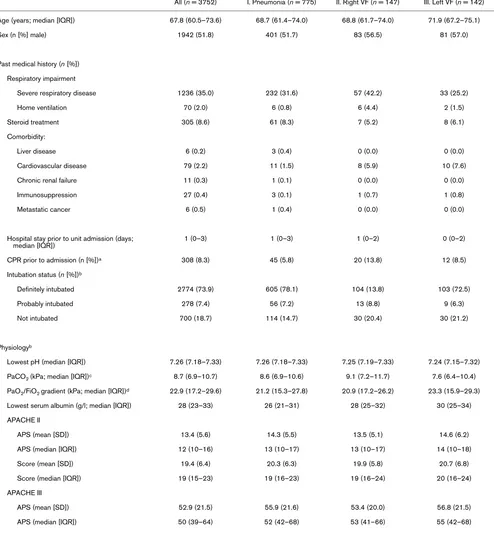
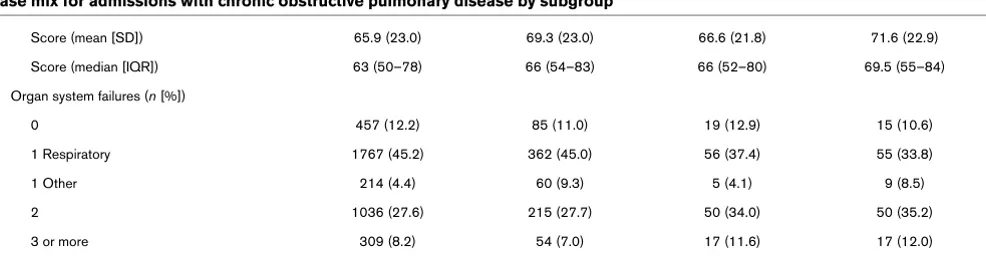
Of 129,647 admissions to 128 adult, general critical care units in the CMPD, 3755 (2.9%) of admissions were identified as nonsurgical COPD patients. Table 1 describes measures of case mix for all patients with COPD and the subgroups with pneumonia, right ventricular failure and left ventricular failure. Overall, 35% of patients had severe respiratory disease before hospital admission and 9% had received daily steroids in the 6 months before admission, although only 2% were receiving home ventilation. Comorbidity was relatively rare, with fewer than 1% of patients having any comorbidity other than cardio-vascular disease, and with cardiocardio-vascular comorbidity present in 2.2% of the group as a whole, 5.9% of those with right ven-tricular failure and 7.6% of those with left venven-tricular failure. Patients spent a median of 1 day in hospital before admission to the CMP unit, and 8.3% of patients received CPR in the 24 hours before admission to the CMP unit. Of the group as a whole, 2775 (73.9%) were definitely intubated in the first 24 hours, with an additional 278 (7.4%) probably intubated in the first 24 hours. Patients were acidotic, hypercapnic and hypoxic, and had low serum albumin (Table 1). For the group as a whole the median (interquartile range [IQR]) APACHE II and APACHE III scores were 18 (14–23) and 62 (49–78), respectively. Of all admissions, 12.2% had no organ failures, 49.4% had single organ failure (the majority, 45.2% of all admissions, being respiratory), 27.6% had two organ failures, and had 8.2% three or more organ failures.
Outcome and activity
S41
Table 1
Case mix for admissions with chronic obstructive pulmonary disease by subgroup
All (n = 3752) I. Pneumonia (n = 775) II. Right VF (n = 147) III. Left VF (n = 142)
Age (years; median [IQR]) 67.8 (60.5–73.6) 68.7 (61.4–74.0) 68.8 (61.7–74.0) 71.9 (67.2–75.1)
Sex (n [%] male) 1942 (51.8) 401 (51.7) 83 (56.5) 81 (57.0)
Past medical history (n [%])
Respiratory impairment
Severe respiratory disease 1236 (35.0) 232 (31.6) 57 (42.2) 33 (25.2)
Home ventilation 70 (2.0) 6 (0.8) 6 (4.4) 2 (1.5)
Steroid treatment 305 (8.6) 61 (8.3) 7 (5.2) 8 (6.1)
Comorbidity:
Liver disease 6 (0.2) 3 (0.4) 0 (0.0) 0 (0.0)
Cardiovascular disease 79 (2.2) 11 (1.5) 8 (5.9) 10 (7.6)
Chronic renal failure 11 (0.3) 1 (0.1) 0 (0.0) 0 (0.0)
Immunosuppression 27 (0.4) 3 (0.1) 1 (0.7) 1 (0.8)
Metastatic cancer 6 (0.5) 1 (0.4) 0 (0.0) 0 (0.0)
Hospital stay prior to unit admission (days;
median [IQR]) 1 (0–3) 1 (0–3) 1 (0–2) 0 (0–2)
CPR prior to admission (n [%])a 308 (8.3) 45 (5.8) 20 (13.8) 12 (8.5)
Intubation status (n [%])b
Definitely intubated 2774 (73.9) 605 (78.1) 104 (13.8) 103 (72.5)
Probably intubated 278 (7.4) 56 (7.2) 13 (8.8) 9 (6.3)
Not intubated 700 (18.7) 114 (14.7) 30 (20.4) 30 (21.2)
Physiologyb
Lowest pH (median [IQR]) 7.26 (7.18–7.33) 7.26 (7.18–7.33) 7.25 (7.19–7.33) 7.24 (7.15–7.32)
PaCO2 (kPa; median [IQR])c 8.7 (6.9–10.7) 8.6 (6.9–10.6) 9.1 (7.2–11.7) 7.6 (6.4–10.4)
PaO2/FiO2 gradient (kPa; median [IQR])d 22.9 (17.2–29.6) 21.2 (15.3–27.8) 20.9 (17.2–26.2) 23.3 (15.9–29.3)
Lowest serum albumin (g/l; median [IQR]) 28 (23–33) 26 (21–31) 28 (25–32) 30 (25–34)
APACHE II
APS (mean [SD]) 13.4 (5.6) 14.3 (5.5) 13.5 (5.1) 14.6 (6.2)
APS (median [IQR]) 12 (10–16) 13 (10–17) 13 (10–17) 14 (10–18)
Score (mean [SD]) 19.4 (6.4) 20.3 (6.3) 19.9 (5.8) 20.7 (6.8)
Score (median [IQR]) 19 (15–23) 19 (16–23) 19 (16–24) 20 (16–24)
APACHE III
APS (mean [SD]) 52.9 (21.5) 55.9 (21.6) 53.4 (20.0) 56.8 (21.5)
S42
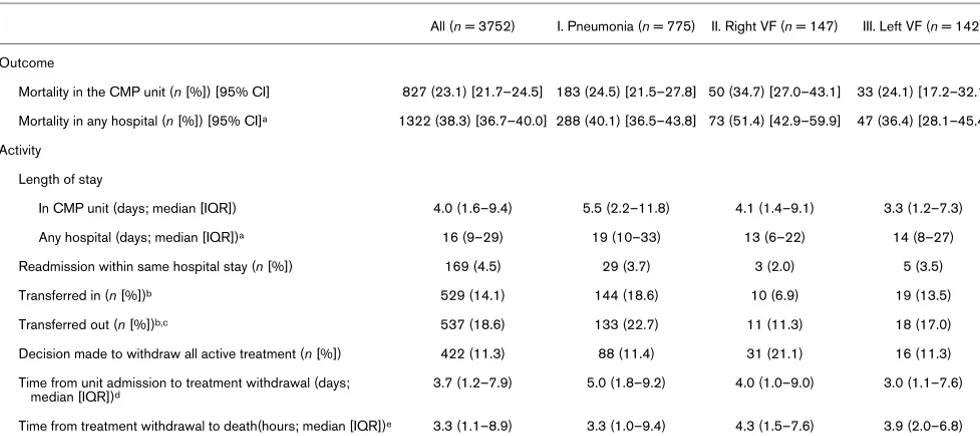
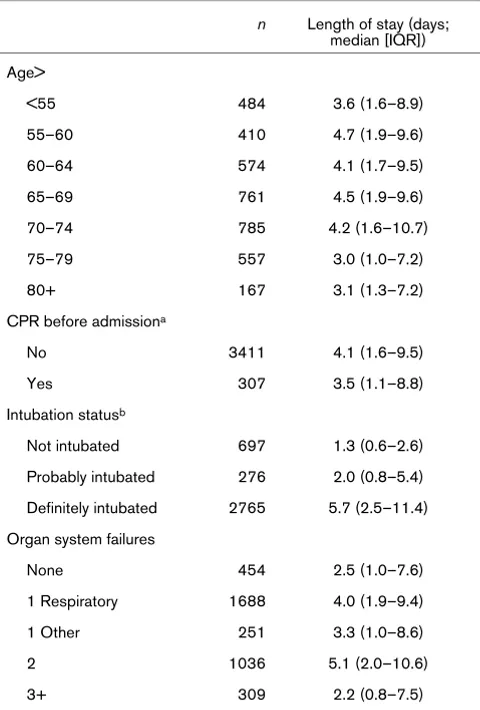
decision being made a median (IQR) of 3.7 (1.2–7.9) days after admission to the CMP unit. The 2765 patients who were definitely intubated in the first 24 hours in the CMP unit had a median (IQR) stay in the CMP unit of 5.7 (2.5–11.4) days, as compared with 1.3 (0.6–2.6) days for the 697 patients who were definitely not intubated in the first 24 hours (Table 3).
Risk factors for hospital mortality
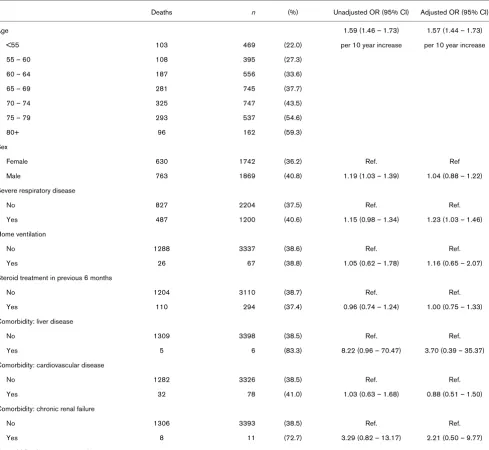
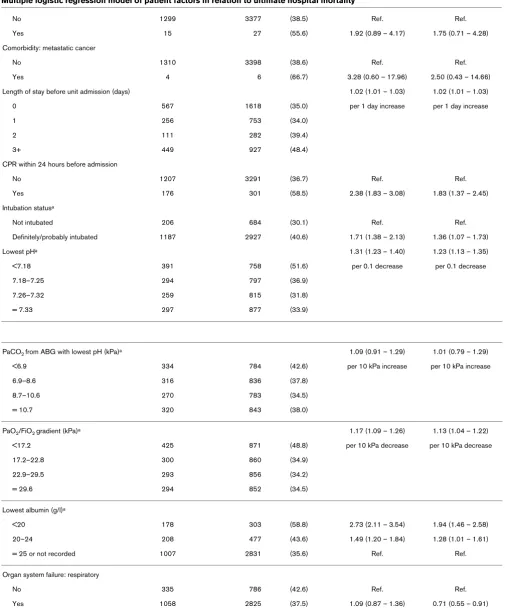
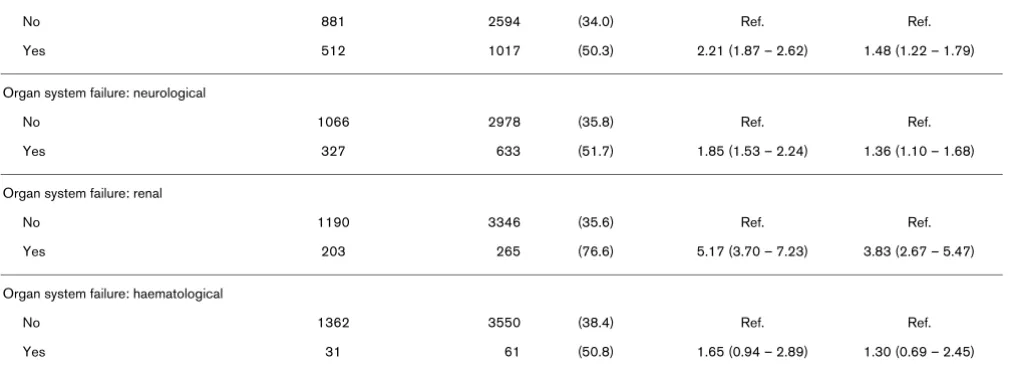
Patients without any organ failure had a hospital mortality (95% confidence interval [CI]) of 33.8% (29.4–38.4%) whereas patients with single organ respiratory failure had a hospital mortality of 29.8% (27.6–32.1%; Table 4). As the number of organ failures increased the hospital mortality increased, with patients who had respiratory failure and three additional organ failures having a hospital mortality of 83.3% (65.3–94.4%). Eleven characteristics were found to have a significant independent association with increased hospital mortality in the multivariate analysis (Table 5): increased age; presence of severe respiratory disease; increased length of stay in hospital before admission to the CMP unit; cardiopul-monary resuscitation within 24 hours before admission; intu-bation status in the first 24 hours in the CMP unit; low pH; low PaO2/FiO2 gradient; low serum albumin; cardiovascular organ failure; neurological organ failure; and renal organ failure. Res-piratory organ failure had a significant independent associa-tion with decreased hospital mortality (Table 5).
Case mix adjusted comparison of the three subgroups pneu-monia, right ventricular failure and left ventricular failure gave adjusted odds ratios for ultimate hospital mortality (95% CI) of 1.04 (0.86–1.27), 1.59 (1.06–2.38) and 0.77 (0.50–1.18), respectively. This showed patients with right ventricular failure to have a significantly increased risk for hospital mortality after case mix adjustment.
Discussion
This study describes the outcomes of 3752 COPD patients admitted to UK ICUs over a 5-year period and includes
analy-ses that describe the association between patient characteris-tics available within the first 24 hours of ICU admission and hospital outcome.
Overall, patients with COPD admitted to the 128 ICUs in this study had a 77% chance of surviving to leave ICU and a 61% chance of surviving to leave hospital. Comparisons of ICU outcomes between studies are difficult to interpret because ICU beds are used in different ways in different countries and subtle differences in inclusion criteria can make populations differ in prognostically important ways. The SUPPORT (Study to Understand Prognoses and Preferences for Outcomes and Risks of Treatment) study [5] recruited consecutive hypercapnic COPD patients admitted to five US hospitals. Of the 1016 hospitalized hypercapnic COPD patients, 526 (51.8%) were admitted to ICU and 348 (66.2%) of those admitted to the ICU were intubated. This intubation rate con-trasts with 81.1% being probably or definitely intubated in the first 24 hours in the present study. Caution must also be exer-cised in comparisons focusing on the apparently more homo-geneous intubated groups. For example, although the study conducted by Seneff and coworkers [7] included patients with COPD exacerbations, patients who had right ventricular failure or pneumonia were excluded. In our study, patients with right ventricular failure had a significant, independent increased risk for death, and the exclusion of these patients may go some way to explaining the difference in hospital mortality in intu-bated patients between the Seneff study (31.8%, 95% CI 24.8–39.3%) and this study (40.6%, 95% CI 38.8–42.3%). Although almost all studies report hospital mortality, measures such as 30- or 60-day mortality are more robust for compari-son purposes because the definition of hospital mortality may be influenced by local discharge practices. For example, Nev-ins and Epstein [6] reported a comparatively low hospital mor-tality of 27.7% (95% CI 21.1–35.2%) in 166 intubated COPD patients from one US centre, but 38% of patients were trans-ferred to chronic care facilities. In contrast, Ely and coworkers [15] reported a hospital mortality of 38.6% (95% CI 24.4–
Score (mean [SD]) 65.9 (23.0) 69.3 (23.0) 66.6 (21.8) 71.6 (22.9)
Score (median [IQR]) 63 (50–78) 66 (54–83) 66 (52–80) 69.5 (55–84)
Organ system failures (n [%])
0 457 (12.2) 85 (11.0) 19 (12.9) 15 (10.6)
1 Respiratory 1767 (45.2) 362 (45.0) 56 (37.4) 55 (33.8)
1 Other 214 (4.4) 60 (9.3) 5 (4.1) 9 (8.5)
2 1036 (27.6) 215 (27.7) 50 (34.0) 50 (35.2)
3 or more 309 (8.2) 54 (7.0) 17 (11.6) 17 (12.0)
aDuring 24 hours before unit admission. bDuring first 24 hours following unit admission. cTaken from ABG with lowest pH. d Taken from ABG with lowest PaO2. ABG, arterial blood gas; APACHE, Acute Physiology and Chronic Health Evaluation; APS, Acute Physiology Score; CPR,
[image:5.612.62.555.107.235.2]cardiopulmonary resuscitation; FiO2, fractional inspired oxygen; IQR, interquartile range; PaO2, arterial carbon dioxide tension; PaO2, arterial oxygen tension; SD, standard deviation; VF, ventricular failure.
Table 1 (Continued)
S43
54.5%) for 44 intubated COPD patients from a US academic centre, which is similar to that observed in the present study. Esteban and coworkers [16] studied 522 patients with COPD receiving mechanical ventilation in 361 ICUs in 20 countries and found an overall hospital mortality of 28% (95% CI 24– 32%) with a median (IQR) Simplified Acute Physiology Score II of 38 (31–49), as compared with 42 (35–52) for the intu-bated patients in the present study.
Differences in length of stay between studies are likely to be influenced by the case mix and supply side factors discussed above. The 522 mechanically ventilated COPD patients from the study by Esteban and coworkers [16] had a median (IQR) length of ICU stay of 8 (5–13) days, as compared with 4.0 (1.6–9.4) days observed in our study. However, the total hos-pital length of stay was similar in both studies, with the Este-ban study having a median (IQR) hospital stay of 17 (10–27) days versus 16 (9–29) days in the present study. Longer ICU stay (median 7 days, IQR 4–14) and similar hospital stay (median 14 days, IQR 9–29) are also apparent in the study by Nevins and Epstein [6]. The greater proportion of the total hos-pital stay spent in European and North American ICUs com-pared with the UK may well reflect the lower proportion of all hospital beds designated for critical care in the UK.
This study demonstrates that age has an independent relation-ship with hospital death. This increased risk is similar to that observed in the SUPPORT study, which calculated the inde-pendent relative hazard of death to be 1.22 (95% CI 1.05– 1.41) per 10-year increase [5]. A number of studies of COPD
outcome [6,8,9,17] did not find a relationship between age and hospital mortality. There is potential for prognostic studies to produce conflicting results because of inaccuracy in the measurement of patient characteristics, inadequate measure-ment of and adjustmeasure-ment for confounding, and lack of power [18,19]. Most commentators suggest that a minimum of between 15 and 20 deaths will be required per risk factor ana-lyzed [20,21]. In three of the studies that did not find age to predict mortality [6,8,9], age was analyzed as a univariate pre-dictor with between 20 and 46 deaths. In the study by Breen and coworkers [17], in which age was analyzed in a multivari-ate logistic regression, there were only 15 hospital deaths.
[image:6.612.58.548.113.331.2]Of chronic diseases existing before hospitalization, only severe respiratory disease had a significant independent rela-tionship with hospital death. Patients with severe respiratory disease have shortness of breath performing most ADL, and the increased risk for mortality for patients with severe respira-tory disease is consistent with the increased hazard of death associated with impairment in ADL identified in SUPPORT (relative hazard per additional ADL impairment: 1.14, 95% CI 1.03–1.26) [5]. Prior cardiovascular disease was only present in 78 patients (2% of the total) and did not have a significant independent association with outcome. Although a 2% preva-lence of cardiovascular comorbidity may seem surprisingly low in a COPD population, it is should be remembered that, to qualify for this comorbidity, patients had to have impairment equivalent to New York Heart Association functional class IV. A total of 294 patients (7.8%) had received 0.3 mg/kg steroid daily for the 6 months prior to admission. Oral steroids have
Table 2
Outcome and activity for admissions with chronic obstructive pulmonary disease by subgroup
All (n = 3752) I. Pneumonia (n = 775) II. Right VF (n = 147) III. Left VF (n = 142)
Outcome
Mortality in the CMP unit (n [%]) [95% CI] 827 (23.1) [21.7–24.5] 183 (24.5) [21.5–27.8] 50 (34.7) [27.0–43.1] 33 (24.1) [17.2–32.1]
Mortality in any hospital (n [%]) [95% CI]a 1322 (38.3) [36.7–40.0] 288 (40.1) [36.5–43.8] 73 (51.4) [42.9–59.9] 47 (36.4) [28.1–45.4]
Activity
Length of stay
In CMP unit (days; median [IQR]) 4.0 (1.6–9.4) 5.5 (2.2–11.8) 4.1 (1.4–9.1) 3.3 (1.2–7.3)
Any hospital (days; median [IQR])a 16 (9–29) 19 (10–33) 13 (6–22) 14 (8–27)
Readmission within same hospital stay (n [%]) 169 (4.5) 29 (3.7) 3 (2.0) 5 (3.5)
Transferred in (n [%])b 529 (14.1) 144 (18.6) 10 (6.9) 19 (13.5)
Transferred out (n [%])b,c 537 (18.6) 133 (22.7) 11 (11.3) 18 (17.0)
Decision made to withdraw all active treatment (n [%]) 422 (11.3) 88 (11.4) 31 (21.1) 16 (11.3)
Time from unit admission to treatment withdrawal (days;
median [IQR])d 3.7 (1.2–7.9) 5.0 (1.8–9.2) 4.0 (1.0–9.0) 3.0 (1.1–7.6)
Time from treatment withdrawal to death(hours; median [IQR])e 3.3 (1.1–8.9) 3.3 (1.0–9.4) 4.3 (1.5–7.6) 3.9 (2.0–6.8)
S44
been suggested to confer an increased risk for hospital mor-tality in a small study conducted in intubated COPD patients using univariate analysis [9]. It is possible that the lack of asso-ciation of oral steroids with death in this study may represent a true absence of association. However, the use of oral ster-oids in a heterogeneous population, which might have included both COPD patients with a marked asthmatic com-ponent and a better than average prognosis, as well as very severe COPD patients with a worse than average prognosis, could lead to no net effect being detected, as of course could incomplete documentation of steroid use in the population as a whole.
In a study of 362 COPD admissions to US critical care units [22] the number of days in hospital before critical care admis-sion was reported to be significantly associated with hospital mortality, although the increased risk per day was not reported. This study confirms an association between days in
hospital before ICU and hospital mortality, but it shows the independent risk to be relatively small with patients having only a 2% (95% CI 1–3%) increased odds of hospital death for each day in hospital before ICU admission.
Brochard and coworkers [23] suggested that invasive ventila-tion was associated with increased mortality when compared with noninvasive ventilation, but there were differences in severity between groups. Seneff and coworkers [7] found that intubation on day 1 was not an independent predictor of hos-pital mortality (P = 0.07) in a multiple regression model, with 170 patients intubated on day 1 and 54 deaths among intu-bated patients. Afessa and coworkers [8] also failed to find an independent association between intubation and death in a study of 250 episodes of respiratory failure in 180 COPD patients, in which 153 patients episodes involved intubation and 31 patients died. In this study, 3052 patients were defi-nitely or probably intubated on day 1 and intubation on day 1 was associated with an independent odds ratio (95% CI) of 1.36 (1.07–1.73) for hospital mortality. Given that the risk for ventilator-associated pneumonia has been estimated to be 3% per day [24], it would not be surprising to find increased hos-pital mortality associated with intubation, and it is possible that the Seneff and Afessa studies were underpowered to detect this effect.
Cardiovascular, neurological and renal organ failures were all associated with a significant, independent increased risk for hospital mortality. Treatment withdrawal was reported to occur in 11.3% of admissions, and if the development of organ fail-ure were to precipitously trigger withdrawal decisions then interpretation of the prognosis associated with organ failure would be difficult. Treatment withdrawal was most common in patients with acute renal failure, but treatment withdrawal accounted for fewer than one-third of the deaths, and recalcu-lation of the risk for death after removing all patients with with-drawal decisions resulted in little change in the OR for death associated with acute renal failure. Respiratory organ failure had a significant independent association with lower hospital mortality, with patients with isolated respiratory failure having a hospital mortality of 29.8%, as compared with 33.8% for patients without any organ failures. It is possible that patients admitted to ICU with COPD but without respiratory organ fail-ure had more severe illness in other organ systems. For exam-ple, although the regression model adjusts for the presence or absence of acute renal failure, the severity of renal failure may still constitute residual confounding. Afessa and coworkers [8] also used the Knaus organ failure classification [14] and found an independent increased odds of hospital death of 5.5 per organ failure (excluding respiratory organ failure). Seneff and coworkers [7] found that the development of nonrespiratory organ dysfunction was the major predictor of hospital mortality in 362 COPD admissions to US ICUs. This is also consistent with a study of patients with heterogeneous causes of
respira-Table 3
Length of stay in the Case Mix Programme unit by patient factors
n Length of stay (days; median [IQR])
Age>
<55 484 3.6 (1.6–8.9)
55–60 410 4.7 (1.9–9.6)
60–64 574 4.1 (1.7–9.5)
65–69 761 4.5 (1.9–9.6)
70–74 785 4.2 (1.6–10.7)
75–79 557 3.0 (1.0–7.2)
80+ 167 3.1 (1.3–7.2)
CPR before admissiona
No 3411 4.1 (1.6–9.5)
Yes 307 3.5 (1.1–8.8)
Intubation statusb
Not intubated 697 1.3 (0.6–2.6)
Probably intubated 276 2.0 (0.8–5.4)
Definitely intubated 2765 5.7 (2.5–11.4)
Organ system failures
None 454 2.5 (1.0–7.6)
1 Respiratory 1688 4.0 (1.9–9.4)
1 Other 251 3.3 (1.0–8.6)
2 1036 5.1 (2.0–10.6)
3+ 309 2.2 (0.8–7.5)
[image:7.612.57.297.124.479.2]S45
Table 4
Ultimate hospital mortality by organ system failures
Organ system failures n Mortality (95% CI)
None 441 33.8 (29.4–38.4)
1 Respiratory 1632 29.8 (27.6–32.1)
1 Other 244 45.9 (39.5–52.4)
2 991 43.8 (40.7–46.9)
3+ 303 70.0 (64.5–75.1)
CI, confidence interval.
Table 5
Multiple logistic regression model of patient factors in relation to ultimate hospital mortality
Deaths n (%) Unadjusted OR (95% CI) Adjusted OR (95% CI)
Age 1.59 (1.46 – 1.73) 1.57 (1.44 – 1.73)
<55 103 469 (22.0) per 10 year increase per 10 year increase
55 – 60 108 395 (27.3)
60 – 64 187 556 (33.6)
65 – 69 281 745 (37.7)
70 – 74 325 747 (43.5)
75 – 79 293 537 (54.6)
80+ 96 162 (59.3)
Sex
Female 630 1742 (36.2) Ref. Ref
Male 763 1869 (40.8) 1.19 (1.03 – 1.39) 1.04 (0.88 – 1.22)
Severe respiratory disease
No 827 2204 (37.5) Ref. Ref.
Yes 487 1200 (40.6) 1.15 (0.98 – 1.34) 1.23 (1.03 – 1.46)
Home ventilation
No 1288 3337 (38.6) Ref. Ref.
Yes 26 67 (38.8) 1.05 (0.62 – 1.78) 1.16 (0.65 – 2.07)
Steroid treatment in previous 6 months
No 1204 3110 (38.7) Ref. Ref.
Yes 110 294 (37.4) 0.96 (0.74 – 1.24) 1.00 (0.75 – 1.33)
Comorbidity: liver disease
No 1309 3398 (38.5) Ref. Ref.
Yes 5 6 (83.3) 8.22 (0.96 – 70.47) 3.70 (0.39 – 35.37)
Comorbidity: cardiovascular disease
No 1282 3326 (38.5) Ref. Ref.
Yes 32 78 (41.0) 1.03 (0.63 – 1.68) 0.88 (0.51 – 1.50)
Comorbidity: chronic renal failure
No 1306 3393 (38.5) Ref. Ref.
Yes 8 11 (72.7) 3.29 (0.82 – 13.17) 2.21 (0.50 – 9.77)
[image:8.612.61.550.267.717.2]S46
No 1299 3377 (38.5) Ref. Ref.
Yes 15 27 (55.6) 1.92 (0.89 – 4.17) 1.75 (0.71 – 4.28)
Comorbidity: metastatic cancer
No 1310 3398 (38.6) Ref. Ref.
Yes 4 6 (66.7) 3.28 (0.60 – 17.96) 2.50 (0.43 – 14.66)
Length of stay before unit admission (days) 1.02 (1.01 – 1.03) 1.02 (1.01 – 1.03)
0 567 1618 (35.0) per 1 day increase per 1 day increase
1 256 753 (34.0)
2 111 282 (39.4)
3+ 449 927 (48.4)
CPR within 24 hours before admission
No 1207 3291 (36.7) Ref. Ref.
Yes 176 301 (58.5) 2.38 (1.83 – 3.08) 1.83 (1.37 – 2.45)
Intubation statusa
Not intubated 206 684 (30.1) Ref. Ref.
Definitely/probably intubated 1187 2927 (40.6) 1.71 (1.38 – 2.13) 1.36 (1.07 – 1.73)
Lowest pHa 1.31 (1.23 – 1.40) 1.23 (1.13 – 1.35)
<7.18 391 758 (51.6) per 0.1 decrease per 0.1 decrease
7.18–7.25 294 797 (36.9)
7.26–7.32 259 815 (31.8)
= 7.33 297 877 (33.9)
PaCO2 from ABG with lowest pH (kPa)a 1.09 (0.91 – 1.29) 1.01 (0.79 – 1.29)
<6.9 334 784 (42.6) per 10 kPa increase per 10 kPa increase
6.9–8.6 316 836 (37.8)
8.7–10.6 270 783 (34.5)
= 10.7 320 843 (38.0)
PaO2/FiO2 gradient (kPa)a 1.17 (1.09 – 1.26) 1.13 (1.04 – 1.22)
<17.2 425 871 (48.8) per 10 kPa decrease per 10 kPa decrease
17.2–22.8 300 860 (34.9)
22.9–29.5 293 856 (34.2)
= 29.6 294 852 (34.5)
Lowest albumin (g/l)a
<20 178 303 (58.8) 2.73 (2.11 – 3.54) 1.94 (1.46 – 2.58)
20–24 208 477 (43.6) 1.49 (1.20 – 1.84) 1.28 (1.01 – 1.61)
= 25 or not recorded 1007 2831 (35.6) Ref. Ref.
Organ system failure: respiratory
No 335 786 (42.6) Ref. Ref.
Yes 1058 2825 (37.5) 1.09 (0.87 – 1.36) 0.71 (0.55 – 0.91)
[image:9.612.55.560.107.716.2]Organ system failure: cardiovascular Table 5 (Continued)
S47
tory failure [25], in which other organ failures were found to be more important than the severity of the respiratory failure.
Although practice may have changed over the period during which data were sampled, for example because increasing use of noninvasive ventilation, this analysis was not conceived to explore, detect and report secular trends. This may be a suita-ble topic for further research in this area.
When patients with obstructive lung disease present with decompensated type II respiratory failure, it can be very diffi-cult to distinguish those with 'pure' COPD (without any signif-icant reversibility) from those with a mixture of COPD and asthma (patients with a major component of fixed obstruction that coexists with some reversibility). It is likely that patients with greater reversibility will tend to be younger, possibly respond better to steroids and have a better overall prognosis. Unfortunately, the CMP data do not allow this distinction to be explored, and there is no real agreement about how this dis-tinction should be made even when a patient has had full lung function – a distinction that is even harder in the acute setting when information regarding lung function is rarely available. Additional prospective research may be required to further illu-minate this problem.
Conclusion
This study demonstrates that patients admitted to ICU with COPD and single organ respiratory failure have a 70% chance of leaving hospital alive and a median length of stay in hospital of 16 days. Although patients entering critical care will repre-sent a selected group of all those patients admitted to hospital with respiratory failure, it is reassuring that the independent risk factors for mortality have much in common with those
identified in the SUPPORT cohort, which included all COPD admissions with hypercapnic respiratory failure irrespective of whether the patient was admitted to ICU.
Competing interests
The author(s) declare that they have no competing interests.
Authors' contributions
MW drafted the manuscript. DH performed the analyses and contributed to drafting the manuscript. All authors participated in the design and interpretation of the study, and critical revi-sion of the manuscript, and read and approved the final manuscript.
Acknowledgements
This study was supported by ICNARC. Dr Martin Wildman is funded by a Medical Research Council Health Services Research Training Fellow-ship. The authors wish to thank everyone in the ICUs participating in the CMP [26].
No 881 2594 (34.0) Ref. Ref.
Yes 512 1017 (50.3) 2.21 (1.87 – 2.62) 1.48 (1.22 – 1.79)
Organ system failure: neurological
No 1066 2978 (35.8) Ref. Ref.
Yes 327 633 (51.7) 1.85 (1.53 – 2.24) 1.36 (1.10 – 1.68)
Organ system failure: renal
No 1190 3346 (35.6) Ref. Ref.
Yes 203 265 (76.6) 5.17 (3.70 – 7.23) 3.83 (2.67 – 5.47)
Organ system failure: haematological
No 1362 3550 (38.4) Ref. Ref.
Yes 31 61 (50.8) 1.65 (0.94 – 2.89) 1.30 (0.69 – 2.45)
[image:10.612.56.565.115.298.2]Ultimate hospital mortality excludes admissions who were readmissions to the intesnive care unit within the same hospital stay, admissions whose ultimate hospital discharge status was missing, and admissions for whom any of the entered risk factors were missing. aDuring first 24 hours following unit admission. ABG, arterial blood gas; CI, confidence interval; CPR, cardiopulmonary resuscitation; FiO2, fractional inspired oxygen; OR, odds ratio; PaCO2, arterial carbon dioxide tension; PaO2, arterial oxygen tension.
Table 5 (Continued)
Multiple logistic regression model of patient factors in relation to ultimate hospital mortality
Key messages
• Non-surgical COPD patients account for 2.9% of all ICU admissions in the UK
• Intubated patients have a median stay in intensive care of 6 days
S48
References
1. Calverley P, Bellamy D: The challenge of providing better care for patients with chronic obstructive pulmonary disease: the poor relation of airways obstruction? Thorax 2000, 55:78-82. 2. Britton M: The burden of COPD in the UK: results from the
Con-fronting COPD survey. Respir Med 2003:S71-S79.
3. Wildman MJ, O'Dea J, Kostopoulou O, Walia S, Tindall M, Khan Z: Variation in intubation decisions for patients with chronic obstructive pulmonary disease in one critical care network. Q J Med 2003, 96:583-591.
4. Department of Health: Guidelines on the Admission and Dis-charge from Intensive Care and High Dependency London: Department of Health; 1996.
5. Connors AF Jr, Dawson NV, Thomas C, Harrell FE Jr, Desbiens N, Fulkerson WJ, Kussin P, Bellamy P, Goldman L, Knaus WA: Out-comes following acute exacerbation of severe chronic obstructive lung disease. The SUPPORT investigators (Study to Understand Prognoses and Preferences for Outcomes and Risks of Treatments). Am J Respir Crit Care Med 1996, 154:959-967.
6. Nevins ML, Epstein SK: Predictors of outcome for patients with COPD requiring invasive mechanical ventilation. Chest 2001, 119:1840-1849.
7. Seneff MG, Wagner DP, Wagner RP, Zimmerman JE, Knaus WA: Hospital and 1-year survival of patients admitted to intensive care units with acute exacerbation of chronic obstructive pul-monary disease. JAMA 1995, 274:1852-1857.
8. Afessa B, Morales IJ, Scanlon PD, Peters SG: Prognostic factors, clinical course, and hospital outcome of patients with chronic obstructive pulmonary disease admitted to an intensive care unit for acute respiratory failure. Crit Care Med 2002, 30:1610-1615.
9. Hill AT, Hopkinson RB, Stableforth DE: Ventilation in a Birming-ham intensive care unit 1993–1995: outcome for patients with chronic obstructive pulmonary disease. Respir Med 1998, 92:156-161.
10. Goldhill DR, Sumner A: Outcome of intensive care patients in a group of British intensive care units. Crit Care Med 1998, 26:1337-1345.
11. Harrison DA, Brady AR, Rowan K: Case mix, outcome and length of stay for admissions to adult general critical care units in England, Wales and Northern Ireland: the Intensive Care National Audit & Research Centre Case Mix Programme Database. Crit Care 2004, 8:R99-R111.
12. Young JD, Goldfrad C, Rowan K: Development and testing of a hierarchical method to code the reason for admission to inten-sive care units: the ICNARC Coding Method. Br J Anaesth 2001, 87:543-548.
13. Knaus WA, Draper EA, Wagner DP, Zimmerman JE: APACHE II: a severity of disease classification system. Crit Care Med 1985, 13:818-828.
14. Knaus WA, Draper EA, Wagner DP, Zimmerman JE: Prognosis in acute organ-system failure. Ann Surg 1985, 202:685-693. 15. Ely EW, Baker AM, Evans GW, Haponik EF: The distribution of
costs of care in mechanically ventilated patients with chronic obstructive pulmonary disease. Crit Care Med 2000, 28:408-413.
16. Esteban A, Anzueto A, Frutos F, Alia I, Brochard L, Stewart TE, Benito S, Epstein SK, Apezteguia C, Nightingale P, et al.: Charac-teristics and outcomes in adult patients receiving mechanical ventilation: a 28-day international study. JAMA 2002, 287:345-355.
17. Breen D, Churches T, Hawker F, Torzillo PJ: Acute respiratory failure secondary to chronic obstructive pulmonary disease treated in the intensive care unit: a long term follow up study. Thorax 2002, 57:29-33.
18. Altman DG: Systematic reviews of evaluations of prognostic variables. BMJ 2001, 323:224-228.
19. Phillips AN, Davey Smith G: The design of prospective epidemi-ological studies: more subjects or better measurements? J Clin Epidemiol 1993, 46:1203-1211.
20. Peduzzi P, Concato J, Kemper E, Holford TR, Feinstein AR: A sim-ulation study of the number of events per variable in logistic regression analysis. J Clin Epidemiol 1996, 49:1373-1379.
21. Harrell FE Jr, Lee KL, Califf RM, Pryor D, Rosati RA: Regression modelling strategies for improving prognostic modelling. Stat Med 1984, 3:143-152.
22. Seneff MG, Zimmerman JE, Knaus WA, Wagner DP, Draper EA: Predicting the duration of mechanical ventilation. The impor-tance of disease and patient characteristics. Chest 1996, 110:469-479.
23. Brochard L, Mancebo J, Wysocki M, Lofaso F, Conti G, Rauss A, Simonneau G, Benito S, Gasparetto A, Lemaire F, et al.: Noninva-sive ventilation for acute exacerbations of chronic obstructive pulmonary disease. N Engl J Med 1995, 333:817-822. 24. Cook DJ, Walter SD, Griffith LE, Guyatt G, Leasa D, Jaeschke RZ,
Brun-Buisson C: Incidence of and risk factors for ventilator-associated pneumonia in critically ill patients. Ann Intern Med 1998, 129:433-440.
25. Flaatten H, Gjerde S, Guttormsen AB, Haugen O, Hoivik T, Onar-heim H, Aardal S: Outcome after acute respiratory failure is more dependent on dysfunction in other vital organs than on the severity of the respiratory failure. Crit Care 2003, 7:R72-R77.