Georgia State University
ScholarWorks @ Georgia State University
Psychology Dissertations Department of Psychology
Winter 12-3-2010
Examination of Perceived Norms and Masculinity
Threat as Predictors of College Men's Behavioral
Intentions as Bystanders in a Party Gang Rape
Situation
Doyanne A. Darnell
Georgia State University
Follow this and additional works at:https://scholarworks.gsu.edu/psych_diss Part of thePsychology Commons
This Dissertation is brought to you for free and open access by the Department of Psychology at ScholarWorks @ Georgia State University. It has been accepted for inclusion in Psychology Dissertations by an authorized administrator of ScholarWorks @ Georgia State University. For more information, please [email protected].
Recommended Citation
Darnell, Doyanne A., "Examination of Perceived Norms and Masculinity Threat as Predictors of College Men's Behavioral Intentions as Bystanders in a Party Gang Rape Situation." Dissertation, Georgia State University, 2010.
EXAMINATION OF PERCEIVED NORMS AND MASCULINITY THREAT AS
PREDICTORS OF COLLEGE MEN’S BEHAVIORAL INTENTIONS AS BYSTANDERS IN
A PARTY GANG RAPE SITUATION
by
DOYANNE A. DARNELL
Under the Direction of Sarah Cook
ABSTRACT
Sexual assault of women is a well-documented phenomenon in U.S. samples, particularly on
college campuses. Innovative approaches to prevention encourage men and women to intervene
as bystanders in sexual assault situations; however, bystander behavior is notoriously inhibited
by various situational factors. This study used a mixed-method approach to better understand the
role of situational factors in college men’s bystander behavioral intentions in a party gang rape
situation. The first aim was to develop an experimental paradigm using vignette methodology to
manipulate the amount of masculinity threat present in a party gang rape situation, which could
then be used to explore the effect of masculinity threat on men’s bystander behavioral intentions.
Although I was unable to heighten masculinity threat, findings indicate that a previous
relationship with the offenders results in men expecting a typical male college bystander to
experience less negative affect in the situation. The second aim was to use the vignettes to
norms among the offenders involved, as well as indicators of masculinity threat, would predict
men’s bystander behavioral intentions. Boding well for bystander intervention programs, the
majority (98%) of men reported intention to intervene to stop the assault to some degree,
although this intention was lower for men who perceived the party gang rape situation to result in
more negative affect for a typical college male bystander. Data depicts the party gang rape
situation as one in which masculine norms and masculinity threat are salient; however, these
aspects did not play a role in intentions to intervene. Eighteen percent of men reported some
intention to join in the assault, which was predicted by perceived masculine norms and men’s
demographic characteristics. Findings point to the importance of culturally competent
programming and the utility of incorporating a social norms approach in bystander intervention
programs. Programs may benefit from addressing concerns about retaliation, particularly as a
function of men’s relationships to the offenders. A limitation is the exclusion of individual
difference variables to explore whether men’s own attitudes interact with situational factors to
predict bystander behavioral intentions.
INDEX WORDS: Sexual assault, Party gang rape, Masculinity, Social norms, Bystander
EXAMINATION OF PERCEIVED NORMS AND MASCULINITY THREAT AS
PREDICTORS OF COLLEGE MEN’S BEHAVIORAL INTENTIONS AS BYSTANDERS IN
A PARTY GANG RAPE SITUATION
by
DOYANNE A. DARNELL
A Dissertation Submitted in Partial Fulfillment of the Requirements for the Degree of
Doctor of Philosophy
in the College of Arts and Sciences
Georgia State University
Copyright by Doyanne Aspen Darnell
EXAMINATION OF PERCEIVED NORMS AND MASCULINITY THREAT AS
PREDICTORS OF COLLEGE MEN’S BEHAVIORAL INTENTIONS AS BYSTANDERS IN
A PARTY GANG RAPE SITUATION
by
DOYANNE A. DARNELL
Committee Chair: Sarah Cook
Committee: Tracie Stewart
Dominic Parrott
Volkan Topalli
Electronic Version Approved:
Office of Graduate Studies
College of Arts and Sciences
Georgia State University
DEDICATION
ACKNOWLEDGEMENTS
Many people have contributed to the development and completion of this project. I would like to
thank my committee chair, Sarah Cook, for her mentorship, never-ending encouragement, and
shared passion for this work. Thank you to her and all of my committee members, Tracie
Stewart, Dominic Parrott, and Volkan Topalli, for giving generously of their time and expertise.
Thank you to current and past members of the Violence against Women research team including
Elizabeth Anthony, Lindsey Zimmerman, Bradley Goodnight, Tracy Huerta, Chantal Tusher,
and Dulamdary Enkhtor, who assisted in the creation of the study vignettes and provided helpful
feedback on drafts of this manuscript. Thank you to Katherine Colmer who assisted with coding
of the qualitative data and Kyle Stillwater Paris for editing my final document. I have enjoyed
working with all of these students and faculty and have benefited personally and professionally
from our time together. To my husband, Adam Darnell, thank you for providing me with joy and
invaluable emotional and instrumental support that has made it possible for me to complete this
project and graduate work. And finally, I appreciate the recognition and financial support
provided for this dissertation through a grant awarded by Georgia State University’s University
TABLE OF CONTENTS
ACKNOWLEDGEMENTS v
LIST OF TABLES vi
LIST OF FIGURES vii
Introduction 1
Method 21
Results 39
Discussion 68
References 92
LIST OF TABLES
Table 2.1 Party Gang Rape Vignettes 37
Table 2.2 Final Sample Size per Experimental Condition 38
Table 3.1 Descriptive Statistics for Continuous Study Variables 53
Table 3.2 Results of 2 x 2 Factorial ANOVAs Testing the Effect of Experimental
Conditions on Bystander Affect
55
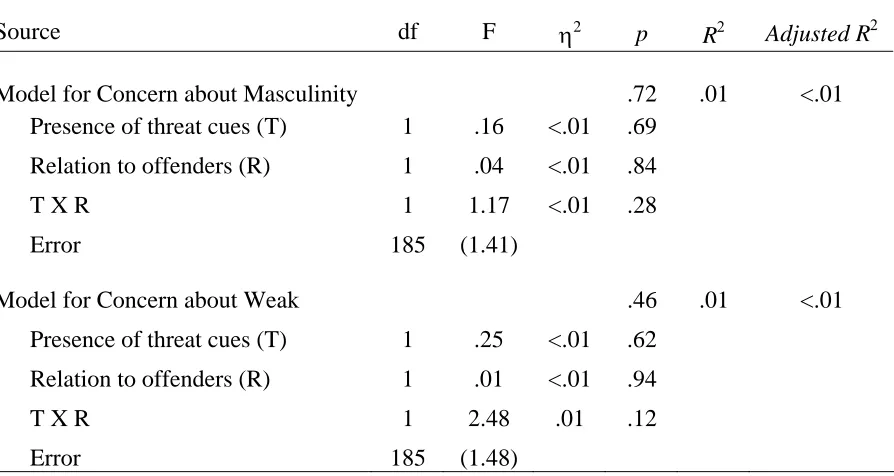
Table 3.3 Results of 2 x 2 Factorial ANOVAs Testing the Effect of Experimental
Conditions on Concern about Being Perceived as Masculine and Weak.
57
Table 3.4 Predictors of Endorsement that the Offenders Would Perceive the Bystander
as Unmasculine if He Intervened and Did Not Join
58
Table 3.5 Intercorrelations between Covariates and Predictors of Intention to Intervene 59
Table 3.6 Predictors of Self-Reported Intention to Intervene 60
Table 3.7 Negative Affect Items Predicting Self-Reported Intention to Intervene 61
Table 3.8 Intercorrelations between Predictors and Intention to Join in the Assault 62
Table 3.9 Predictors of Intention to Join in the Assault 63
Table 3.10 Predictors of Intention to Join in the Assault 64
Table 3.11 Indicators of Inter-Rater Reliability for Coded Themes for “What do you
think the men in the scenario would think about a guy who did not join
them?”
65
Table 3.12 Indicators of Inter-Rater Reliability for Coded Themes for Perception of the
Bystander in response to “What do you think the men in the scenario would
think about a guy who tried to stop them?”
Table 3.13 Indicators of Inter-Rater Reliability for Coded Themes for Offenders in
response to “What do you think the men in the scenario would think about a
guy who tried to stop them?”
67
Table 6.1 Bystander Behavioral Intention Items 108
Table 6.2 Perceived Adherence to Masculine Norms Items 110
LIST OF FIGURES
Figure 1.1 Aim 1: Exploration of Effects of Experimental Conditions on Indicators of
Masculinity Threat
20
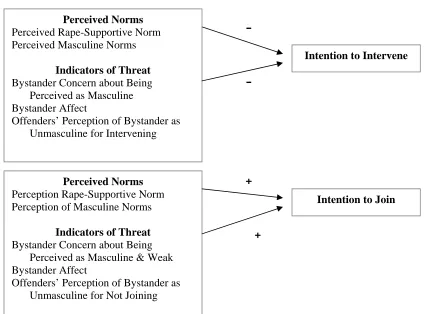
Figure 1.2 Aim 2: Hypothesized Relations between Perceived Norms, Indicators of
Threat, and Bystander Behavioral Intentions
20
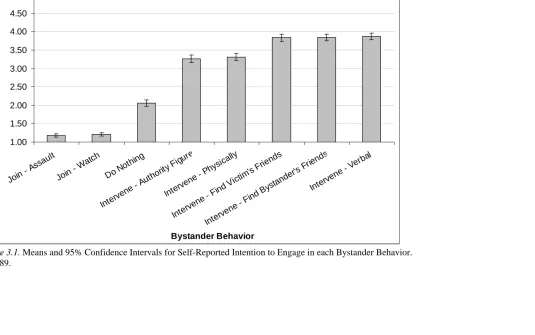
Figure 3.1 Means and 95% Confidence Intervals for Self-Reported Intention to Engage
in each Bystander Behavior.
54
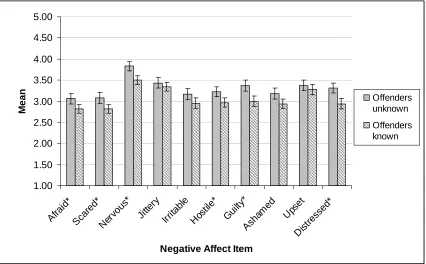
Figure 3.2 Means and 95% Confidence Intervals for Negative Affect Items, by Relation
to Offenders Experimental Condition
56
Figure 6.1 Means and 95% Confidence Intervals for Quantitative Variables with and
without Missing Data Imputed
105
Figure 6.2 Histograms of Each Bystander Behavioral Intention Item 107
Figure 6.3 Means and 95% Confidence Intervals for Perceived Adherence to Masculine
Norms Items
109
Figure 6.4 Means and 95% Confidence Intervals for Perceived Adherence to
Rape-Supportive Norms
112
Figure 6.5 Means and 95% Confidence Intervals for Positive and Negative Affect Items 114
Figure 6.6 Percent of Participants reporting each Theme in Responses to “What do you
think the men in the scenario would think about a guy who did not join
them?”
Figure 6.7 Percent of Participants reporting each Theme about the Bystander in
Responses to “What do you think the men in the scenario would think about
a guy who tried to stop them?”
126
Figure 6.8 Percent of Participants reporting each Theme about the Offenders in
Responses to “What do you think the men in the scenario would think about
a guy who tried to stop them?”
Introduction
Sexual assault of women is a well documented phenomenon in U.S. samples, particularly
on college campuses (Cook & Koss, 2005; Koss, Gidycz, & Wisniewski, 1987). Three percent of
a nationally representative sample of college women reported an attempted or completed rape
since the beginning of the academic year (an average of 7 months), with 90% committed by
someone known to the victim (Fisher, Cullen, & Turner, 2000). Sexual assault leads to numerous
mental and physical health consequences (Cloutier, Martin, & Poole, 2002; Resick, 1993; Sugar,
Fine, & Eckert, 2004; Ullman & Siegel, 1996) even if women themselves do not identify the
experience as rape or assault (Littleton & Henderson, 2009). Family and friends are affected by
victimizations (Resick, 1993), as well as the larger community by increasing women’s fear of
assault in general (Gordon & Riger, 1989), thereby limiting access to public space and resources
(Pain, 1997), and taxing government resources to pay for costs incurred due to sexual assault
crimes (Post, Mezey, Maxwell & Wibert, 2002).
A variety of prevention programs and initiatives to reduce sexual assault have developed
over the past 20 years with varying success (Anderson & Whiston, 2005; Brecklin & Forde,
2001; Breitenbecher, 2000; Lonsway, 1996). Historically, these programs have focused on
changing rape-supportive attitudes among men to prevent perpetration or teaching women how
to avoid victimization. Recently, innovative approaches, termed bystander intervention
approaches, encourage all men and women to intervene in situations that could lead to sexual
assault. Early empirical research on bystander interventions is promising, but researchers in the
field have yet to identify factors that inhibit or promote bystander behavior in sexual assault
situations so that program developers can directly address such barriers and encourage
paradigm using vignette methodology to heighten masculinity threat in a party gang rape
situation, a type of rape known to occur among the college-age population and one in which
bystanders necessarily are present, which could then be used to explore the effect of masculinity
threat on men’s bystander behavioral intentions and 2) to explore situational predictors of men’s
bystander behavioral intentions in the party gang rape situation, including masculinity threat and
perceived masculine and rape-supportive norms.
First, I will briefly review the sexual assault prevention literature, focusing on the nature
of educational prevention programs and the unique contribution of bystander intervention
approaches to such programs. I then review what is known about men’s bystander behavior in
sexual assault situations and the factors that may inhibit men from intervening to prevent sexual
assault, emphasizing the roles of peer norms and masculinity in sexual assault situations. I end
this section by specifying the research aims and hypotheses of this study, noting the importance
to the advancement of bystander intervention approaches for sexual assault prevention.
Traditional Sexual Assault Prevention Educational Programs
Historically, rape prevention has focused on individual change. Spearheaded in the 1970s
by rape crisis centers (Campbell & Martin, 2001; Koss & Harvey, 1991), efforts consisted of
educational programs that attempted to raise awareness about the problem of rape and change
distorted belief systems among the general population that diminish the problem and blame
victims for assaults (Koss & Harvey, 1991).
In response to the growing awareness of rape on campus, universities began routinely
incorporating such programming in the late 1980s to the present (National Association of
Student Personnel Administrators, 1994). Programs have varied considerably in terms of content,
videos, lecture, group discussions, role plays, and dramatic performances with men, women, or
mixed gender groups, that are delivered by professionals, students, peers, or trained facilitators,
to increase empathy for victims, decrease rape-supportive beliefs and attitudes, increase rape
knowledge, improve dating communication and behaviors, improve skills for assisting victims,
and decrease the incidence of sexual assault. Many programs are effective at increasing
knowledge about sexual assault and decreasing rape-supportive attitudes immediately following
programs, although very few studies document long-term changes or examine behavior, making
it hard to discern whether attitude changes are sustained or result in reduced perpetration
(Anderson & Whiston, 2005; Brecklin & Forde, 2001; Breitenbenbecher, 2000; Lonsway, 1996).
The field of prevention continues to be dominated by educational approaches, stalling
progress due to limitations of relying on individual-level change (Casey & Lindhorst, 2009).
Although important in an ecological approach to prevention (Dahlberg & Krug, 2002),
approaches that rely on individuals to either not assault or avoid assault are labor intensive and
limited in scope of impact. Further, approaching men solely as perpetrators limits the appeal and
potential impact of such programs as they are likely to elicit defensiveness from men who do not
want to be considered a potential perpetrator. Also limited are programs that target women to
reduce risk of victimization. Although an important goal, risk reduction programs may help some
women avoid being victims but do not prevent assaults from occurring.
Bystander Intervention Approaches to Sexual Assault Prevention
Interest is growing in innovative approaches, such as bystander intervention programs,
that encourage both men and women to intervene to stop sexual assault from taking place and to
challenge sexual assault-supportive attitudes. These approaches are built on decades of
of peer behavior and social norms on sexually assaultive behavior (Banyard, Moynihan, &
Plante’s, 2007; Fabiano, Perkins, Berkowitz, Linkenbach, & Stark, 2003; DeKeseredy, Schwartz,
& Alvi, 2000). In effect, programming goes beyond changing individual attitudes to changing the
way peers relate to each other around sexually aggressive behavior (affecting the
interpersonal-relational level of the ecological model) and increasing the presence of antiviolence social norms
(affecting the community level of the ecological model).
Bystander approaches stemming from sociological work identify the patriarchal social
structure, reinforced by gender-based inequality and anti-femininity, as causing men’s violence
against women. Related prevention programs encourage men to take responsibility for the
problem of sexual assault and engage in active efforts to challenge the patriarchal social structure
(Berkowitz, 2004; DeKeseredy, et al., 2000). Psychological approaches attempt to raise
awareness about the problem of sexual assault and importantly, teach people how to intervene in
situations that could lead to sexual assault. The opportunity to practice bystander intervention
skills as well as discuss and explore beliefs that might inhibit bystander behavior (e.g., that
violence against women is a women’s issue with no place for men; the extent of violence against
women has been exaggerated) are emphasized (Crooks, Goodall, Hughes, Jaffe, & Baker, 2007).
Two bystander intervention programs have been empirically evaluated. Banyard et al.
(2007) pioneered the application of social psychological research on the bystander effect and
prosocial behavior to sexual assault prevention. The intervention attempts to increase empathy
for victims, raise awareness about sexual violence, and teach men and women skills for
intervening in a variety of sexual assault situations. In an experimental evaluation of the program
increasing bystander behaviors, a sense of efficacy in carrying out these behaviors, and the
perceived rewards versus costs of intervening (Banyard, et al., 2007).
Foubert & Perry (2007) developed a program to teach men skills to assist friends who
have been assaulted and increase empathy for victims through the use of a male-on male sexual
assault story. The program appears to result in long-term (7 months) changes among diverse
groups of college men in rape-supportive attitudes and behaviors such as rape-myth acceptance
and telling jokes about rape (Foubert, 2000; Foubert & Cremedy, 2007). A more recent version
of the program added a component in which college men were invited to visualize an
alcohol-facilitated assault as a bystander and come up with ways to intervene. Qualitative follow-up with
184 of the men (majority white) two years after the intervention demonstrated anti-rape attitude
and behavioral change that participants tied directly to the intervention (Foubert, Godin, &
Tatum, 2009).
These evaluations are promising and point to the importance pursuing and improving
upon such approaches. However, improvement is limited by the fact that little research has
specifically examined factors that influence bystander behavior in sexual assault situations. The
purpose of this study is to better understand factors that predict men’s decisions to intervene as
bystanders in a specific sexual assault situation known as party gang rape, using theory and
research on bystander intervention, models of prosocial behavior, and findings from the sexual
assault literature to guide my aims and hypotheses. Before reviewing potential factors involved
in men’s decisions to intervene, I review findings on men’s bystander intervention behavior and
Men’s Bystander Behavior in Sexual Assault Situations
Many men will intervene to prevent an assault. In a unique observational study with
college men, the majority of participants intervened in a stranger rape simulation (Harari, Harari,
& White, 1985). Specifically, 80 Caucasian male undergraduate students were observed walking
on the university campus near a parking garage where a rape scene was staged to reflect a clear
stranger rape, with the stranger grabbing the woman unexpectedly and her yelling “help, rape!”
Sixty-five percent of the men walking alone to the parking lot intervened and 85% of the men
walking in groups intervened. Eighty percent of participants directly intervened to assist the
victim. Although encouraging, these findings for stranger rape may not generalize to other types
of sexual assault situations. For instance, acquaintance rape situations, such as the one examined
in the present study, are often perceived as ambiguous situations (Shotland & Goodstein, 1983),
making it potentially unclear whether intervention is needed. Further, victims are often perceived
to be more responsible for and less harmed by acquaintance rape than stranger rape (Johnson &
Jackson, 1988), again making bystander intervention potentially less likely.
Given the difficulties in conducting observational research for sexual assault, some
studies ask men to report on their past bystander behavior. In their evaluation of a bystander
intervention program, Banyard et al. (2007) inquired about 51 different bystander behaviors such
as, “…walk a friend who has had too much to drink home from a party” and “When I hear a
sexist comment, I indicate my displeasure,” and asked participants to indicate whether they
actually had done the behaviors in the previous 2 months. On average, men reported engaging in
8 different bystander behaviors before receiving the educational intervention, with a statistically
significant increase to 11.5 behaviors 2 months after the intervention. In a separate study to
participants to report on their general bystander behavior with items such as “To keep my friends
out of trouble, I stop them from doing things that might meet the definition of sexual assault” and
“I say something if I hear a stranger or acquaintance talking about taking sexual advantage of
someone’s intoxicated state.” Men reported more agreement than disagreement with such
statements (Burn, 2009).
A number of studies inquire about men’s intention to intervene in sexual assault
situations. In the Theory of Planned Behavior (TPB), behavioral intentions are influenced by
subjective norms for the behavior, a person’s attitudes about the behavior, and a person’s
perceived control over being able to engage in the behavior (Ajzen, 1991). Intention to engage in
a behavior directly leads to the behavior (Webb & Sheeran, 2006). In Banyard’s analysis of
intervention evaluation data (2008), self-reported willingness to engage in the behaviors (i.e.
intention to intervene) predicted participants’ reports of actual engagement in the behaviors.
Men frequently report that they are willing to intervene to prevent assault. In one study,
undergraduate men reported they were more willing than not (just above the midpoint for the
scale) to intervene in several different behaviors such as “When I hear sexist comments, I
indicate my disapproval,” “I am willing to educate other men about rape and sexual assault
prevention,” and “If a friend planned to give a woman alcohol or drugs in order to have sex with
her, I would stop him” (Stein, 2007). In an unrelated study, on average, men reported they are
“sometimes” willing and generally “agree” that they are willing to intervene in similar situations
(Fabiano, et al., 2003). A sample of 395 undergraduate men (95% White) reported, on average,
across 10 different behaviors, they would “strongly agree” to intervene to stop a peer from
While these findings are promising for bystander intervention, not all men report
intervening or an intention to intervene, underscoring the importance of identifying factors that
might inhibit such behavior. As described below, research from the social psychology field
points to such factors that may also be relevant in sexual assault situations.
Factors Influencing Men’s Bystander Intervention in Sexual Assault Situations
The role of social norms in men’s bystander behavior in sexual assault situations.
Bystander behavior in emergency situations is known to be both inhibited and motivated by a
variety of situational and individual factors (Penner, Dovidio, Piliavin, & Schroeder, 2005). Two
models that attempt to explain bystander behavior are Latane and Darley’s (1970)
decision-making model of bystander intervention and Piliavin et al.’s (1981) arousal: cost-reward model
of prosocial behavior (i.e. behavior that is beneficial or helpful to others). Both models contend
that bystanders engage in a rational decision-making process that is influenced by various
situational and individual factors. The decision-making model emphasizes factors that inhibit
behavior, whereas the arousal: cost-reward model emphasizes motivating factors. Both of these
models point to the importance of social norms as both inhibiting and facilitating bystander
intervention, depending on the norm and the behavior.
Social norms are common attitudes and behaviors among groups of people that provide
rules or guides as to how to act in social situations. Generally, people feel pressure to fit in with a
social group, particularly if the group is important to their identity (Levine & Thompson, 2004)
and look to two types of norms to guide their behavior: descriptive norms, or common behaviors
exhibited by a group in a given social situation, and injunctive norms, commonly shared beliefs
among group members about how people should behave in certain situations. One’s perception
group. The perception of injunctive norms, or attitudinal support for a behavior, has a stronger
effect on an individual’s behavior than the descriptive norms (Borsari & Carey, 2003). A
bystander’s perception of the norm regarding intervening behavior suggests to him the
appropriate action to take. The perceived norm also provides motivation for conforming behavior
because of the cost of social disapproval for not adhering to the norm. Using these models, one
would expect men to conform to what they perceive the norm to be among the other men
involved in a sexual assault situation. Two types of norms routinely implicated in sexual assault
that may be relevant to bystander intervention are rape-supportive and masculine gender role
norms.
The role of rape-supportive norms in men’s behavior in sexual assault situations.
Men’s perception of their peers’ acceptance of and support for sexual assault (i.e. the perceived
rape-supportive norm) influences their own rape-supportive attitudes and assaultive behavior
(Berkowitz, 2004; Boswell & Spade, 1996; Bohner, Siebler, & Schmelcher, 2006; DeKeseredy
& Kelly, 1995; Kanin, 1967; Kanin, 1985; Schwartz and DeKeseredy, 1997). These
rape-supportive attitudes and beliefs are most commonly captured in rape myths.
Rape myths are shared cultural beliefs about the nature of sexual assault, which are
untrue but nevertheless justify and support the behavior (Burt, 1980; Lonsway & Fitzgerald,
1994). Examples of rape myths, include “In any rape case one would have to question whether
the victim is promiscuous or has a bad reputation” and “When a woman allows petting to get to a
certain point, she is implicitly agreeing to have sex” and “If a woman doesn't physically fight
back, you can't really say that it was a rape” (Lonsway & Fitzgerald, 1994). These myths define
sexual assault narrowly (e.g., as one in which a chaste woman is attacked by a stranger and fights
allowing many types of assault to go unrecognized. In fact, research conducted largely with
undergraduates using written vignettes or scenarios of sexual assaults demonstrates that
adherence to rape myths is related to perceptions of whether an assault has occurred and the
attribution of blame to the victim for the assault (Frese, Moya, & Megías, 2004; Kopper, 1996;
Mason, Riger, & Foley, 2004; Newcombe, van den Eynde, Hafner, & Jolly, 2008; Stormo, Lang,
Stritzke, 1997). Victims are blamed more for assaults when assaults are depicted in a rape-myth
consistent manner, such as when the victim is wearing sexy clothing (Johnson & Jackson, 1988;
Maurer & Robinson, 2007; Shotland & Goodstein, 1983).
Unique experiments conducted with 264 German male college students showed a causal
relationship between the rape myth acceptance of a peer reference group and men’s own rape
myth acceptance and proclivity to rape (Bohner, et al., 2006). Men who were told that their
fellow students have high rape myth acceptance reported higher rape myth acceptance and
self-reported willingness to rape than men who were told that their fellow students have low rape
myth acceptance. In another study with undergraduate men comparing 71 self-reported date
rapists with 227 non-rapists, date rapists more often indicated that their reputation would be
enhanced by sexually coercing certain types of women fitting rape myth stereotypes, such as
those perceived to be ‘teasers’ or after men’s money (Kanin, 1985). In a national probability
survey of Canadian male college students, men’s assaultive behavior in dating relationships was
predicted by their report of verbal guidance and advice they receive from friends to sexually
assault their female partners and their perception that their male friends actually do sexually
assault women (DeKeseredy & Kelly, 1995).
Extending these findings to bystander behavior suggests men may feel pressure to behave
intervene when the perception of peer support for rape appears high. A recent study found
evidence for this relation. In the Brown & Messman-Moore (2010) study referenced earlier,
college men reported on their own and their peers’ support for sexual aggression using a
three-item measure developed for the study. Questions included “I/Most of my peers think sexual
assault is wrong,” “I/Most of my peers think sexual assault is justified under some
circumstances,” and “I/Most of my peers would commit sexual assault if I/they know I/they
would not be punished.” After controlling for demographic variables, peer support for sexual
aggression strongly predicted (sr2 = .10) men’s own willingness to intervene to stop a peer from
committing sexual assault (greater peer support resulted in less willingness). Men’s own support
using the same measure had no effect on willingness to intervene after controlling for peer
support.
The role of masculine gender role norms in men’s behavior in sexual assault
situations. Masculinity is a set of role behaviors that most men are encouraged to perform
(Kilmartin, 2000). These behaviors, some of which relate to biology or biological processes (e.g.,
men’s greater muscularity compared to women may result in men being considered physically
stronger than women) are largely socially constructed and suggest how men should be (e.g., one
must be physically strong to be considered manly). Masculine ideology refers to the set of
injunctive male role norms that articulate the behavior men should do and characteristics they
should have to be considered masculine (Thompson, Pleck, & Ferrera, 1992). Essential elements
of masculine ideology vary among researchers, but these masculine norms have historically and
traditionally reflected the valuation of toughness, being non-feminine, and achieving status
(Thompson & Pleck, 1986). These norms vary across cultures, although endorsement of
Newcomb, 2000). The status norm reflects beliefs that men should work to achieve status and
gain the respect of others. The toughness norm refers to beliefs that men should be emotionally
and physically strong, never showing vulnerability or weakness, and the antifemininity norm
reflects beliefs that men should be unlike women. Endorsement of these beliefs is theoretically
and empirically distinct from gender role orientation (i.e., an identity as masculine based on
personality traits) and attitudes toward women (Sinn, 1997; Thompson & Pleck, 1986). For
example some men may believe that men should be tough, but not see themselves as tough, and
have no particular belief about how tough women should be.
Research indicates that the pressure to conform to these norms influences men’s
behavior. Perceiving one’s self to be highly masculine (e.g., hypermasculinity) and adhering to a
traditional masculine ideology are both related to violence against women and sexual assault
perpetration (Locke & Mahalik, 2005; Malamuth, Sockloskie, Koss, and Tanaka, 1991; Murnen,
Wright, & Kaluzny, 2002; Parrott & Zeichner, 2003; Zaitchik & Mosher, 1993). This may be due
to a traditional masculine role that values expression of dominance, particularly in relation to
women, as well as the expression of heterosexuality that calls for aggressive pursuance of sex
with women. Research suggests the pressure to conform to the masculine role is stressful for
some men and may motivate some men to be violent against women in an effort to sustain a
masculine image. Male bystanders to sexual assault situations may be concerned about adhering
to the masculine gender role, particularly if it appears the other men involved value traditional
masculinity. Such concern may result in decreased intention to intervene and greater intention to
go along with the apparently masculine behavior.
Masculine gender role stress (MGRS; Eisler & Skidmore, 1987) is the cognitive appraisal
dominant version of masculinity. Five factors reflecting this stress include 1) physical
inadequacy (stress related to being competitive, physically), 2) emotional inexpressiveness
(stress related to expressing emotions or feelings), 3) subordination to women (stress related to
competitive threat from women), 4) intellectual inferiority (stress related to being sufficiently
smart and rational), and 5) performance failure (stress related to being able to perform
sufficiently at work or sexually; Eisler & Blalock, 1991).
Studies indicate that MGRS predicts violence against women. Using total scores that sum
across subscales of the MGRS scale (Eisler & Skidmore, 1987), greater MGRS predicted
intimate partner violence in a sample of substance abusing men (Copenhaver, Lash, & Eisler,
2000) and intimate partner violence during the previous year for men with greater adherence to
masculine role norms in a undergraduate, Caucasian, sample (N = 167; Jakupcak, Lisak, &
Roemer, 2002). In a study examining the unique contribution of each MGRS subscale on
intimate partner violence against women in a sample of men (70% Caucasian, 13% African
America, 9% Hispanic) court-referred to batterer intervention programs demonstrated that
greater stress related to performance failure predicted psychological aggression, greater stress
related to physical inadequacy predicted sexual coercion, greater stress related to intellectual
inferiority predicted partner injury, and the MGRS total score predicted physical aggression
(Moore, Stuart, McNulty, Addis, Cordova, & Temple, 2008). These findings suggest male
batterer’s sexually coercive behavior with intimate partners is predicted by their experience of
stress related to adhering to masculine standards that demand men be non-feminine, physically
competitive, and capable of finding a sexual partner.
The role of masculine gender role threat in men’s behavior in sexual assault
stressed, in general, by situations considered threatening to traditional masculinity. Situations
themselves, however, can vary by how challenging or threatening to traditional masculinity they
are generally perceived to be. Common situations include those calling for masculine behavior
(e.g., competitive sports), receiving the message that one is not masculine enough or is behaving
too feminine (e.g., told he “throws a ball like a girl”), or those that blur the distinction between
masculinity and femininity (e.g., working alongside women doing traditionally masculine jobs).
A variety of methods have been used in the research literature to explore the impact of threat to
masculinity on men’s behavior. Highlighting the importance of the situation on individual
behavior, greater total scores on the MGRS scale predicted the use of verbal aggression against
female dating partners only under conditions of experimentally manipulated masculinity threat
(e.g., men imagined themselves in an audio-taped vignette situation that depicted an interaction
between a male and female dating partner in which the female threatened the man’s control and
authority) in diverse samples of college undergraduates (Franchina, Eisler, & Moore, 2001;
Moore & Stuart, 2004).
Men may also exaggerate the expression of the masculine gender role, a phenomenon
known as compensatory masculinity, to cope with anxiety they feel when their gender-role is
threatened. In an experimental study of compensatory masculinity in response to gender-role
threat, 72 undergraduate masculine and androgynous (equally masculine and feminine) men
completed questionnaires about their affect, antisocial and prosocial behaviors, and masculinity
and femininity after listening to audiotapes designed to either validate, threaten, or be unrelated
to (i.e. neutral condition) masculinity (Babl, 1979). The audiotapes consisted of fake reports of
sociocultural research findings showing over time that American men were either becoming less
changed (masculinity validated condition), or were presented with a gender-irrelevant research
study (control condition). Gender-typed (i.e., masculine) men became more anxious in response
to gender-role threat and reported higher levels of masculinity and antisocial behavior compared
to androgynous men. Androgynous males did not react to sex-role threat by exaggerating
masculinity.
Studies using a computer harassment paradigm show that some men engage in sexually
harassing behaviors to cope with masculinity threat. In the computer harassment paradigm,
participants are brought into a laboratory with a computer and use the computer to engage in a
faux game or interaction with a confederate woman using another computer in a separate
laboratory space. Researchers can manipulate the type of woman, content of the game or
interaction, and manner of the woman, to observe men’s behavior toward the confederate
woman. Men are given opportunities to engage in what would be considered sexual harassment,
such as sending the woman sexist jokes or pornographic pictures. Researchers can observe men’s
harassing behavior, relating it directly to experimental manipulations. In these studies conducted
with largely undergraduate men, men more often sexually harassed (i.e., sent the confederate
pornographic pictures) non-traditional or feminist women, which are situations and interactions
believed to threaten men’s masculine identity (Dall’A ra & Maass, 1999; Maass, Cadinu,
Guarnieri, & Grasselli, 2003; Siebler, Sabelus, & Bohner, 2008).
In case studies exploring the pathway towards sexual violence, two White, teenage boys
articulate how challenges to their masculinity resulted in using sexual violence as a means to
establish a more masculine sense of self (Messerschmidt, 2000). Both boys had internalized a
dominant masculine identity that required them to be powerful and have control over others, but
was physically less developed than his peers, not achieving sexually with women, and was teased
by peers for these characteristics, leading to feeling un-masculine. The other boy had been raped
by a male relative, which led to him questioning his sexuality and feeling fearful about whether
he was sufficiently masculine. The two adolescents had sexually assaulted girls or women they
knew and described feeling entitled to their victims because of their maleness and that sexually
assaulting the girls made them feel masculine and powerful.
A recent qualitative study supports the role of masculinity on men’s decision-making as
bystanders in a party gang rape situation (Carlson, 2008). In interviews with 20 college men
(85% Caucasian), participants were asked how masculinity plays a role in bystander
decision-making among three situations: witnessing a fight between two young men on the street,
witnessing a fight between a young man and woman on the street, and witnessing a gang rape (a
woman is unconscious on a table while one guy has sex with her and other guys are watching).
Participants consistently identified the themes of appearing sufficiently masculine and not weak
in front of other men as paramount in the bystander’s behavior.
While the physical violence in public appeared to evoke men’s sense of responsibility
and protection for women, participants indicated that men in the gang rape scenario would not be
as likely to intervene because intervening in the gang rape would cause a male bystander to lose
respect, the bystander would appear unmasculine, or would be stepping on the toes of the men
involved in the scenario. One participant claimed that intervening in the gang rape would be
“desecrating his territory” (pg. 10). One man commented on a potential bystander’s behavior in
the party gang rape situation saying, “They’re not going to leave; they’re not going to do
anything about it. ’Cuz they’re too scared to look like a pussy leaving the room” (pg. 10). This
sufficiently masculine and would potentially rather stay and watch or participate. While
participants generally agreed that they would intervene in the physical aggression against a
woman in public, they were mixed in whether they themselves would intervene in the gang rape
scenario. I am not aware of any other published study that has specifically examined men’s
bystander behavioral intentions in party gang rape.
Summary
Bystander approaches to sexual assault prevention recognize that peer attitudes and
behaviors and the perception of rape-supportive social norms influence men’s sexual assault
behavior. These approaches encourage men to change the way they interact with peers to stop
assaults from occurring and to promote anti-assaultive social norms (Baynard, Plante, &
Moynihan, 2004). Some of these programs have demonstrated empirical support in their ability
to increase empathy for victims, decrease endorsement of rape-supportive attitudes, and promote
a range of bystander behaviors. Although some lessons learned from the social psychological
literature on why people intervene in emergency situations can be used to encourage bystander
intervention, little research has been done to explore how these factors apply to sexual assault
situations. Bystander prevention programs would benefit from increased understanding of such
factors so that they may directly address factors that inhibit or facilitate intervening behavior. For
instance, it may be necessary for bystander intervention programs to not only teach bystander
skills, but to also challenge the accuracy of perceived rape-supportive norms and/or incorporate
Aims & Hypotheses
Previous quantitative research demonstrates that college men are more willing than not to
intervene as bystanders across different types of situations, or to stop sexual assault in general.
However, given the powerful role of social norms and masculinity threat indicated in men’s
behavior in sexual assault situations, the purpose of this study is to quantitatively and
simultaneously examine these factors on college men’s bystander behavioral intentions in a
sexual assault situation known as party gang rape. Party gang rape occurs when a woman is
coerced or forced to have sex, typically due to incapacitation through alcohol or drugs (which
may have been taken voluntarily or involuntarily), with men she is acquainted with through
attendance at a party (Ehrhart & Sandler, 1985). I sought to examine these factors in party gang
rape because, although no prevalence estimates exist, the college party setting is an environment
in which party gang rape is known to occur and in which bystanders are necessarily present
(Ehrhart, & Sandler, 1985; Gidycz & Koss, 1990; Sanday, 1990).
Aim 1. The first aim of this study was to develop an experimental paradigm using
vignette methodology to manipulate the degree of masculinity threat present in a party gang rape
situation, which could then be used to examine the relation between masculinity threat and men’s
bystander behavioral intentions. Vignettes, short descriptions of social situations, are frequently
used to examine attitudes, judgments, and decision-making by providing participants with a
description of real-life situations or experiences to which they can respond. Vignettes can be
manipulated to gain a better understanding of variables involved in attitudes, judgments, and
decision-making in social situations. They are useful to examine phenomenon difficult to
reflecting real-life experiences, and allow for indirect observation of participant attitudes,
reducing social desirability bias (Alexander & Becker, 1978).
The development of the vignettes is described in the method section. I developed four
vignettes that depicted a party gang rape situation that varied by the presence of masculinity
threat cues (present, not present) and men’s relationship to the offenders (known, unknown) and
examined men’s reactions to the party gang rape vignettes on indicators of masculinity threat,
predicting that the presence of threat cues would result in greater indication of masculinity threat
(see Figure 1.1). I had no hypothesis about how men’s relation to the offenders would affect
masculinity threat.
Aim 2. The second aim of this study was to use the vignettes of party gang rape situations
to examine men’s perception of the rape-supportive and masculine gender role norms among the
offenders in the vignettes, as well as indicators of masculinity threat, as predictors of men’s
bystander behavioral intentions in a party gang rape situation (see Figure 1.2).
Specifically, I hypothesized that
1) Greater perceived adherence to rape-supportive and masculine gender role norms among the
offenders as well as greater indication of threat to masculinity would result in lower
self-reported intention to intervene in the assault.
2) Greater perceived adherence to rape-supportive and masculine gender role norms among the
offenders as well as greater indication of threat to masculinity would result in greater
Figure 1.1. Aim 1: Exploration of Effects of Experimental Conditions on Indicators of Masculinity Threat
Figure 1.2. Aim 2: Hypothesized Relations between Perceived Norms, Indicators of Threat, and
Bystander Behavioral Intentions
Experimentally Manipulated Vignettes of a Party Gang
Rape Scenario Presence of Masculinity Threat
Cues (Present, Not Present) Relation to Offenders
(Known, Unknown)
Indicators of Masculinity Threat Bystander Concerns about Being
Perceived as Masculine & Weak Bystander Affect
Offenders’ Perception of Bystander as Unmasculine for Intervening and Not Joining
Intention to Intervene Perceived Norms
Perceived Rape-Supportive Norm Perceived Masculine Norms
Indicators of Threat Bystander Concern about Being
Perceived as Masculine Bystander Affect
Offenders’ Perception of Bystander as Unmasculine for Intervening
Intention to Join Perceived Norms
Perception Rape-Supportive Norm Perception of Masculine Norms
Indicators of Threat Bystander Concern about Being
Perceived as Masculine & Weak Bystander Affect
Offenders’ Perception of Bystander as Unmasculine for Not Joining
-+
[image:33.612.77.503.294.608.2]Method
Participants
Participants were 189 college men enrolled in an introductory psychology course at
Georgia State University (GSU). They were on average 20.60 years old (SD = 4.11; minimum
18, maximum 47). Seven percent of participants endorsed more than one racial/ethnic identity.
Of those endorsing one race/ethnicity, 44% endorsed Caucasian/White, 30%
African-American/Black, 8% Hispanic/Latino, 8% South Asian, 6% East Asian, 3% Other, and 1%
Middle Eastern. Ninety-four percent of participants endorsed a heterosexual orientation. Four
percent endorsed a homosexual, and two percent a bisexual, orientation. Sexual orientation, or
the enduring pattern of emotional, romantic, and/or sexual attractions to men, women, or both
sexes (American Psychological Association, 2008) is distinct from how masculine men may
perceive themselves to be (i.e. masculine gender role orientation) and how masculine they
believe men should be in general (i.e. masculine gender role norms). I retained homosexual men
in my sample because I expected peer pressure in the party gang rape situation and the normative
expectations for masculine behavior to be present for all men, regardless of sexual orientation.
Design
This study used a mixed-method design with experimental and survey components to
collect quantitative and qualitative data. To accomplish Aim 1, I used an experimental design to
randomly assign men to read one of four party gang rape vignettes that varied by the presence of
masculinity threat cues (present, not present) and the relation of the bystander in the vignette to
the offenders (known, unknown). Men then responded to survey questions designed to assess
masculinity threat. To accomplish Aim 2, I asked men to answer survey questions referencing
the offenders in the scenario, their bystander behavioral intentions, and the experience of a
typical college male bystander in the situation.
Variables and Measures
Experimental conditions. I created four scenarios that varied by the presence of
masculine gender role threat cues (present versus not present) and relation to the offenders
(known versus unknown; see Table 2.2 & Appendix A, Table 6.1). To create the scenarios, I
began with the definition of party gang rape presented in the introduction that could apply
broadly to the male college student population. To create conditions of masculinity threat, I
added situational events into the scenario that fit threatening elements including 1) physical
adequacy 2) being in a subordinate position to women, 3) sexual performance (Eisler &
Skidmore, 1991), and 4) concerns about maintaining status (Thompson & Pleck, 1986). I also
utilized findings from the social psychological literature on bystander intervention to articulate
aspects known to predict bystander intervention to increase clarity in the interpretation of study
findings and reduce error in the statistical model (i.e., perceptions of articulated scenario
characteristics would be more uniform).
Development and description of vignettes. Each scenario in the study begins with the
participant imagining himself at a party he has been invited to by some men he knows from
school (see Table 2.1). He considers leaving the party and goes upstairs to find the bathroom.
This is intended to create conditions in which he may perceive himself equally as likely to stay at
as leave the party, and sets him up to come across the assault by accident. The participant then
comes upon a bedroom while looking for the bathroom in which three men are assaulting a
woman. The number of men involved including the bystander is four since findings suggest
present in the situation; Latane & Darley, 1968; Latane & Nida, 1981), plateaus at a group size
of four (Morgan, 1978). Participants were informed that they know the victim from class, which
indicates that the woman is an acquaintance the participant may see again in the future. In
previous research, expectations of seeing the victim again increases bystander intervention
(Gottlieb & Carver, 1980) and men endorsed being more likely to intervene to prevent sexual
assault if they know the victim (Burn, 2009). As it is a common condition to such assaults, and
necessarily defines the event as a rape, one of the men is “having sex” with the victim who is
clearly incapacitated. A victim becoming intoxicated on her own accord before an assault occurs
predicts bystanders assigning more responsibility for the assault to the victim (Maurer &
Robinson, 2008), which may result in less willingness to intervene (McMahon, 2010). However,
how the woman came to be “passed out” is left ambiguous since it is irrelevant to whether the
sexual contact is considered consensual and such ambiguity is likely to be encountered in
real-life situations.
Differences among the scenarios begin at this point. First, it is unclear what impact
knowing the men would have on intervening in the situation. Previous research indicates that
group cohesiveness can increase bystander intervention in emergency situations (Rutkowski,
Cruder, & Romer, 1983) and that men think they would be more likely to intervene to prevent
sexual assault if they know the perpetrator (Burn, 2009). To experimentally examine the relation
of the bystander to the offenders, I created scenarios in which the men involved are those that
invited the participant to the party versus a scenario in which he does not know the men for both
the control and experimental conditions. The second divergence among the scenarios is the
inclusion of the masculinity threat cues. In all versions of the scenario, the participant is invited
contains threat cues. Specifically, the threat cues target the concerns about maintaining status in
the group, appearing sufficiently dominant and not weak, and engaging in a heterosexual display.
The invitation in the threat condition includes one of the other men telling the participant he has
been looking for him to get him to join in the assault. Having a friend looking for the bystander
was intended to increase concerns about maintaining status with the group. However, this line is
omitted in the condition in which the participant does not know the men since it does not make
sense for an unknown man to be looking for the participant. The invitation also includes a verbal
insult from one of the men involved when he tells the participant to not be a “pussy,” overtly
threatening the man’s masculinity by suggesting he is weak if he does not join. This suggestion
of weakness also calls for the participant to display his dominance and maintain status. Further,
the threatening invitation from this same man includes the phrase “come in and get some,” which
calls for dominance of the victim sexually.
Participants’ perceptions of their relation to the offenders. I asked participants “How
well do you think you know the other men involved in the scenario?” I provided the response
options “do not know at all,” “know somewhat/an acquaintance,” and “know very well/a good
friend” as a check on the relation to offenders manipulation.
Demographics. Participants completed a brief demographic questionnaire at the
beginning of the survey asking them to report their age, race/ethnicity (African-American/Black,
Hispanic/Latino/a, Caucasian/White, Native American, Middle Eastern, East Asian, South Asian,
and other) and sexual orientation (heterosexual/straight, bisexual, homosexual/gay/lesbian, or
Bystander behavioral intentions. I assessed bystander behavioral intentions by adopting
the method used to assess bystander willingness and likelihood to engage in bystander behaviors
used in the Banyard et al. (2007) study. The measure was originally used to assesses how willing
or likely a bystander is to engage in a variety of behaviors across a variety of sexual
assault-related situations on a 5 point Likert-type scale (1 = not at all likely, 5 = extremely likely; higher
scores indicate more likelihood of intervening as a bystander). I used the same method, asking
participants how likely they would be to engage in eight bystander behaviors that referenced the
party gang rape scenarios presented specifically. Items included five behaviors reflecting direct
(i.e. those that required the participant to confront the perpetrators directly) and indirect (i.e.,
those that did not include direct confrontation with the perpetrators) intervention, two behaviors
reflecting joining in the assault, and one item assessing the likelihood to neither intervene nor
join in the assault (items are available in Appendix A).
Intention to intervene. I measured participants’ intention to intervene by calculating the
average of the five items reflecting intervening behaviors. Higher scores reflect greater intention
to intervene ( = .77).
Intention to join. I asked two items about joining in the assault: whether men would join
by watching the assault or join by assaulting the victim themselves. Given the high positive skew
of each variable, I combined responses from these two items to create one variable representing
being likely to join in the assault in either way. Specifically, I classified men who endorsed being
at all likely (response of >/= 2) of either joining in the assault by watching the other men or
joining in the assault by “having sex” with the victim as joining in the assault. I assigned these
men a value of one on a dichotomous intention to join variable and a value of zero to all other
Other bystander behaviors suggested by participants. Following the bystander
behavioral intention items, I inquired about other potential bystander behaviors the participant
and other men might be likely to engage in by asking two open-ended questions: “Is there
something else you would be likely to do that is not listed here?” and “Is there something else
not listed here that you think other men coming across this situation would be likely to do?” I
observed responses to identify unique behaviors not offered in the bystander behavioral
intentions measure that may be useful in future research.
Perceived masculine gender role norms. Participants’ perceptions of the degree to
which the men in the scenario adhere to traditional beliefs about the masculine gender role was
assessed using a modified version of the Male Role Norms Scale (MRNS; Thompson & Pleck’s
1986). The MRNS consists of three subscales to assess men’s adherence to prescriptive and
proscriptive norms for the male gender role. The three subscales include norms for status (e.g.,
“A man should always try to project an air of confidence even if he really doesn’t feel confident
inside;” “It is essential for a man to always have the respect and admiration of everyone who
knows him”), toughness (e.g., “I think a young man should try to become physically tough, even
if he’s not big;” “A real man enjoys a bit of danger now and then”), and antifemininity (e.g., “It
bothers me when a man does something that I consider ‘feminine’;” “It is embarrassing for a
man to have a job that is usually filled by a woman”). The MRNS does not include items that
compare men to women or beliefs about gender in general, making this scale specific to beliefs
about how men should be. A confirmatory factor analysis found support for the factor structure
of the MRNS and evidence for the discriminative and predictive validity of the scale in a
Participants read the instructions, “How much do you think the men in the scenario
would agree or disagree with the following statements?” and items were reworded as needed to
refer to beliefs the men in the scenario would have, rather than the participant’s beliefs (e.g.,
instead of “I always like a man who’s totally sure of himself” the item read “They always like a
man who’s totally sure of himself”). Participants rated their agreement with the 26 items (status
= 11; toughness = 8, antifemininity = 7) on a 7-point Likert-type scale (1 = very strongly
disagree; 7 = very strongly agree). Higher scores indicated more perceived adherence to
traditional male role norms ( = .88 for status, .86 for toughness, and .87 for antifemininity).
Perceived rape-supportive norms. Men’s perception of the rape-supportive attitudes of
the men in the sexual assault scenario was assessed by modifying instructions to the Rape Myth
Scale (RMS; Lonsway & Fitzgerald, 1995), which was created by revising Burt’s (1980) Rape
Myth Acceptance Scale to better reflect “attitudes and generally false beliefs about rape that are
widely and persistently held, and that function to deny and justify male sexual aggression” (pg.
706). Lonsway & Fitzgerald used a sample of 200 undergraduate students (100 men, 100
women) to determine the psychometric properties of the 19-item scale. Items reflect myths about
the following constructs: victim precipitation, definition of rape, male intention, victim
desire-enjoyment, false charges, trivialization of the crime, and deviance of the act, and include
statements such as “In some rape cases, the woman actually wanted it to happen” and “When a
woman is raped, she usually did something careless to put herself in that situation.” Instructions
for this study read: “How much do you think the men in the scenario would agree or disagree
with the following statements?” Participants indicated their agreement on a 7-point Likert-type
scale (1 = strongly disagree, 7 = strongly agree). Items were positively scored such that higher
reflects support for the idea that a woman “passed out” at a party is fair game to have sex with to
have an item that reflect support for the behavior in the presented vignettes.
Indicators of threat to masculinity. To reduce socially desirable responses in
participants, I assessed the threatening nature of the party gang rape scenarios indirectly by
asking participants to report on perceptions the offenders and a typical college male bystander
might have rather than their own.
Offenders’ perceptions of a bystander. To assess participants’ expectations of how a
bystander would be perceived by the offenders and to determine if these perceptions included
reference to the bystander as unmasculine, I asked participants to respond to two open-ended
questions that read “What do you think the men in the scenario would think about a guy who did
not join them?” and “What do you think the men in the scenario would think about a guy who
tried to stop them?” Responses were reviewed for content that indicated the offenders would
perceive a bystander as unmasculine, which I interpreted as reflecting that a typical college man
would expect his masculinity to be threatened by the offenders in the situation. I created a
variable for each of the open-ended questions to capture the presence of reference to the
bystander as unnmasculine. For each variable, a response that included reference to the bystander
as unmasculine was coded as one. Responses left blank by participants or lacking reference to
the bystander as unmasculine were coded as zero.
Concern about weakness. I asked participants to indicate on a scale from 1 (not at all
concerned) to 5 (extremely concerned), “How concerned do you think a typical college man
Concern about masculinity. I asked participants to indicate on a scale from 1 (not at all
concerned) to 5 (extremely concerned), “How much do you think a typical college man would be
concerned about being perceived as masculine by the other men involved in the vignette?” I
assessed concerns about being perceived as masculine in reference to a bystander in general,
rather than based on a specific bystander behavior.
Bystander affect. I used the positive and negative subscales of the Positive and Negative
Affect Scale (PANAS-X), each consisting of 10 items (Watson & Clark, 1992), to assess the
perceived affect of a typical college male bystander in the party gang rape situation. The
PANAS-X is widely used in psychological research and has solid psychometric properties
(Bagozzi, 1993). I asked participants to “Indicate to what extent you imagine a typical college
man would feel if he came across the scenario as it was described to you” on a scale with 1 =
very slightly or not at all, 2 = a little, 3 = moderately, 4 = quite a bit, and 5 = extremely. Scores
reflect an average of the ten subscale items with higher scores indicating greater negative or
positive affect than lower scores ( = .81 for negative and .75 for positive affect).
Procedure
Procedures for protecting human subjects were approved by the GSU Institutional
Review Board prior to data collection. I recruited college men age 18 and over using the GSU
Psychology Department participant pool. Participants received course credit for participating.
Participants could select to participate in this study from among numerous other studies offered
or opt to complete an alternative assignment for course credit. Participants could sign up for the
study at any point during the semester and had to complete the online survey anytime, from their
own or a university library computer, before the end of the semester. Participants followed a link
web-based survey tool designed specifically for use in the social sciences. At that point they were
presented with the consent form. The consent form explained the purpose of the study was to
pilot test vignettes for use in future research about bystander behavior in social situations and
that they would be asked to read a brief vignette about a sexual situation at a party and asked a
number of questions about the situation. To demonstrate consent, they typed their name into text
boxes provided on the page. Consent information was downloaded into a separate spreadsheet
from their survey data and was used to document consent as well as assign course credit.
Participants received credit for the study if they signed the consent form, regardless of how much
of the survey they completed. The consent form also offered a place for participants to type in
their email address to which I could send a copy of the consent and debriefing information (also
provided at the end of the survey). Participants were informed they could print the consent form
before moving on to the survey if they preferred. Once the consent form was signed and
participants selected to continue with the survey, they were taken to an instructions page for the
survey. All data were collected using PsychData and downloaded into statistical software for
analysis.
Participants were randomly assigned to complete the anonymously online survey
consisting of one of the party gang rape scenarios, all other measures, and demographic
questions. As a feature of the PsychData software, random assignment was determined by the
web-based program itself. All participants took identical surveys, with the exception of the
differences in the scenarios provided. The order of presentation was the same for each participant
and participants were not allowed to skip or return to sections. A copy of the scenario was
provided on each page with questions referencing the scenario. The order of measures/variables