Munich Personal RePEc Archive
Systematic Reviews: Questions, Methods
and Usage
Hansen, Henrik and Trifkovic, Neda
Danida, Ministry of Foreign Affairs of Denmark
11 June 2013
Online at
https://mpra.ub.uni-muenchen.de/47993/
E
VALUATION
S
TUDY
E valuation Study
Systematic Reviews
Questions, Methods and Usage
May 2013
Henrik Hansen, Department of Economics, University of Copenhagen
Neda Trifkovic, Department of Food and Resource Economics, University of Copenhagen
Table of Contents
Executive summary ... 1
Abbreviations ... 3
1. Introduction ... 4
2. Background: history and expansion ... 6
3. Defining systematic reviews ... 8
4. Methods and data ... 12
5. Results ... 14
5.1. The protocol ... 18
5.2. Primary studies and primary research methods ... 18
5.3. Methodology of conducting systematic reviews ... 21
5.4. Comprehensiveness of the review ... 24
5.5. Questions addressed in systematic reviews ... 25
5.6. Usage of systematic reviews ... 25
6. Typologies of systematic reviews ... 27
7. Systematic reviews in international development ... 32
8. Conclusion ... 38
References ... 40
Appendix ... 48
A1. A brief history of systematic reviews ... 48
A2. Databases used for the study ... 49
A3. Glossary ... 52
1
E xecutive summary
Policymakers and researchers all value systematized research evidence. Particularly relevant research synthesis products are systematic reviews that present a well-established way of mapping all relevant evidence, assessing its quality and synthesizing it. Systematic reviews have a long history in medicine, from where they have diffused into many arts and science disciplines – including, recently, international development.
In this evaluation study we provide a mapping of the use of systematic reviews across the arts and sciences. Based on the mapping exercise, we assess the extent to which the practice of systematic reviewing in the context of development interventions corresponds to practices in other related fields of research.
By analyzing 49 different information sources, including academic and institutional
databases, journals and books, we identify several patterns in systematic reviewing practice. The structure and methods for conducting the review, the criteria for including primary studies, the comprehensiveness of the search, the criteria used in assessing the quality of the individual studies, the questions addressed and the usage of the review are important, if not essential, components of a systematic review. We use these six main features of systematic reviews to organize our findings around several themes that enable the appraisal of systematic reviewing practice.
Many practitioners agree that the main defining characteristic of systematic reviews is the
existence of a protocol that ensures reproducibility and provides the essential procedures for conducting the review. A systematic review usually proceeds in several stages:
formulating the review question(s), planning the review, locating studies (literature search), appraising contributions, analyzing and synthesizing information and reporting the best available evidence.
We stress the importance of the question addressed in the systematic review, because all characteristics of systematic reviews can be traced to the research question. The question determines not only the objectives, but also the stages of conducting the review: selection and appraisal of primary studies, methods in which these studies are synthesized and the comprehensiveness, i.e. the coverage of the final review.
We have identified three broad groups of review questions: focusedquestions that aim to
determine ‘what works’ for various interventions; complexquestions that aim to address
context-sensitive issues such as people’s attitudes and experiences, environmental or
practical concerns and hybridquestions that tackle both focused and complex issues. From
The typology of the systematic reviews we propose may prove useful in dealing with complexities caused by different types of review products that are conducted with different users and purposes in mind. It can also serve as a tool for guiding the review process and identifying the most suitable evidence synthesis methods. For example, although systematic reviews have a quantitative tradition, we are witnessing an increased recognition of
qualitative studies included as primary types of evidence in systematic reviews and
qualitative methods that are used to synthesize available evidence. This is particularly true for more recent systematic reviews in international development and other social sciences that assess diverse intervention programs and face a wide range of outcome indicators while addressing complex research questions.
Systematic reviews in international development mostly address health-related
interventions, but the donor involvement since the mid-2000s has resulted in a broader range of topics in which a specific intervention is assessed over a range of variables and intervention groups. Still, the focused questions dominate in estimating direct, easily measurable effects or the intervention impacts even though the development reviews operate in a complex multidisciplinary environment, which requires acknowledging the influence of institutions and social interaction. In addition, the scarcity of comparable evidence about the effects of development interventions necessitates that authors change their strategies when assessing the strength of evidence or synthesizing data. For example, narrative synthesis is used to systematize empirical evidence when data quality and quantity do not allow meta-analysis, which is the preferred method for calculating the effect size in more traditional systematic reviews.
Due to the inherent differences in value judgments, different ways of reviewing and
interpreting the same data (evidence) can lead to conflicting conclusions.The focus on
asking the ‘right’ questions in international development reviews is important precisely because no review process is immune to bias. We emphasize in this study that systematic reviews in international development may be vulnerable to a range of biases and warn that these reviews should not aim, at all cost, at pursuing the classical approach suitable for traditional, ‘easy-to-measure’ situations. Instead, the development reviews should adjust the review process so it caters for the type of question they are trying to address. In this way, the differences in type and quality of the included primary studies, methodological
3
Abbreviations
3ie – International Initiative for Impact Evaluation AMSTAR – Assessment of Multiple Systematic Reviews CRD – Centre for Reviews Dissemination, University of York DFID– Department for International Development, UK DIME – Development Impact Evaluation, World Bank
EPPI-Centre – Evidence for Policy and Practice Information and Coordinating Centre ERIC – Education Resources Information Center
ICT – Information and communications technology IPA – Innovations for Poverty Action
JPAL – Abdul Lateef Jameel Poverty Action Lab NHS – Evidence in Health and Social Care
OQAQ – Overview Quality Assessment Questionnaire
PICOS – Participants, Interventions, Comparators, Outcomes, and Study design PRISMA – Preferred Reporting Items for Systematic reviews and Meta-Analyses QUORUM – QUality Of Reporting Of Meta-analyses
RCT – Randomized Controlled Trial
1.
Introduction
Systematic reviews are nowadays an indispensable component of both scientific and policy life. Through systematic reviews huge numbers of scientific studies and analyses are condensed and transformed to knowledge accessible to policy-makers and the broader scientific community. Some consider the use of systematic reviews to be increasing to an extent where it is starting to replace primary research, in particular considering health care decisions (Evans & Pearson, 2001).
A systematic review is a well-established way of impartially mapping the relevant evidence, assessing the quality of the evidence and synthesizing it. Systematic reviews are focused on reporting what is known and what is not known about a specific question that usually has high policy relevance. But there is no consensus about the application of systematic reviews. While some investigate treatment effectiveness, diagnoses or epidemiology, other reviews may focus on measurement or the methodological rigor of primary studies. The
defining attribute is that a systematic review offers objective inference based on available
evidence and not a description of everything on the subject.
Systematic reviews have a long history in health-related disciplines, while the tradition is much shorter in most scientific and social science disciplines. Within medicine, systematic reviewing was introduced in the 1970s and further developed in the 1980s, leading to the establishment of the Cochrane Collaboration in 1992. Further on, the EPPI-Centre has been undertaking systematic reviews in education since the early 1990s and the Campbell Collaboration in the context of social policy since 2000. International development is one field in which the attention to systematizing the many individual pieces of empirical evidence has only recently come to focus, particularly because of the donor interest in evidence-based policies. The lack of systematic reviews in development research is
sometimes cited as a reason for pursuing RCTs in developing countries, for example in the case of the Abdul Lateef Jameel Poverty Action Lab projects (see e.g. Duflo et al., 2008; Baird et al. 2012).
5
We examine the occurrence of systematic reviews within various disciplines as well as the types of systematic reviews that occur in different research areas, within which topics and with what research objectives. We also develop an operational definition of ‘systematic review’, which is sufficiently broad to encompass both traditional systematic reviews, such as those undertaken under the auspices of the Cochrane and Campbell Collaborations, and more unconventional ones, such as realist reviews, employed within the social sciences. Our definition is, at the same time, suitably restricted to allow for establishment of clear criteria for distinguishing between systematic reviews and other forms of literature reviews. The definition is based on examining the methodological literature and statements from major institutions working with systematic reviews. This process has enabled us to describe and identify criteria for classification of systematic reviews by type.
2.
Background: history and expansion
Historical accounts are not consistent neither when it comes to determining when the first systematic review was conducted, nor which review it was. It is apparent that systematic reviews have a long record in medicine and health care (Smith et al., 1980), but some consider that systematic reviews originate from educational research (Smith & Glass, 1980). Several sources trace the beginning to the first meta-analysis by the statistician Gene Glass in 1976 (Davies, 2000). Others attribute the invention of systematic reviews to Scottish naval surgeon James Lind, who is also considered to be the inventor of RCTs (Chalmers et al., 2002; Dunn, 1997; Lind, 1753). Still other researchers describe the production of
systematic reviews since the foundation of the Oxford Database of Perinatal Trials project in
1985 (Chalmers et al., 1986).
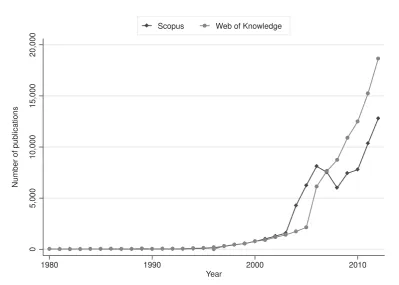
Browsing scientific databases also results in ambiguities. The Web of Knowledge shows that the first use of the phrase ‘systematic review’ occurred in 1916, Scopus has 1945 as the earliest year, while ProQuest reports 1905. However, it is unlikely that the early papers encompass all the traits of a structured process present in modern-day systematic reviews. From the 1930s onwards, the term ‘systematic review’ was used to refer to literature reviews and the early examples of literature reviews often described themselves as
7
Figure 1. Number of publications in Web of Science and Scopus using the term ‘systematic review’
Source: Authors’ elaboration.
A range of conceptual initiatives preceded the introduction of systematic reviews, primarily the methods for analyzing groups of experiments, or combining data and results from independent studies (Table A1, Appendix A1). Advances in statistics, such as the least
squares method, correlation coefficient and p-value were necessary for a successful
development of systematic review practice. Statistical pooling of findings from primary studies that grew from Glass and Smith’s evaluation of outcomes in psychotherapy and counseling (Smith & Glass, 1977; Glass, 1976) – a practice known as meta-analysis – is a common component of most systematic reviews. Later on, the recognition that the medical profession needs ‘critical summaries’ of RCTs led to the establishment of a collaborative database of perinatal trials (Cochrane Collaboration, 2012a), which is considered a cornerstone of modern systematic review practice. However, the medical profession was not alone in making explicit efforts to limit bias in the review of literature. Similar efforts have been reported by social scientists at least since the 1960s (Chalmers et al., 2002). Petticrew and Roberts (2008, p. 19) conclude that ‘contrary to what is commonly supposed, neither the term ‘‘systematic review’’ nor the general approach of systematic literature reviewing are particularly new, nor particularly biomedical’.
0
5,000
10,000
15,000
20,000
Number of publications
1980 1990 2000 2010
Year
3.
Defining systematic reviews
There is no shortage of definitions of systematic reviews. For some, it is simply a process of offering accountable, replicable and updateable piece of research to the involved users (EPPI-Centre, 2009a). For others, it is more narrowly defined. The Campbell
Collaboration defines a systematic review as ‘a transparent procedure to find, evaluate and
synthesize the results of relevant research’. According to the Cochrane Collaboration, a systematic
review is a ‘high-level overview of primary research on a particular research question that tries to identify,
select, synthesize and appraise all high quality research evidence relevant to that question in order to answer
it’. As such, systematic reviews seek, summarize and interpret primary studies while
attempting to provide unbiased research evidence on a given topic. They need to be rigorous in their approach to summarizing and interpreting the evidence. If not, they are
‘little more than … subjective commentaries on the state of the science’ (Weed, 2013, p. 280).
The aim of a systematic review, in its original form, is to produce results that are
generalizable to other contexts such that it can be used to make reasonable predictions of future events (Briner & Denyer, 2012). And, as a latecomer in the field, DFID states that
‘Systematic reviews … mak e it easier for policy mak ers and practitioners to rapidly understand the body of evidence and use this as a strong foundation on which to base policy and practice decisions’ (DFID, 2012).
Several organizations involved in producing systematic reviews have issued guidelines on how to plan and structure a systematic review in order to help minimize bias and enhance transparency and objectivity. Guidelines have been elaborated in medicine (Higgins & Green, 2011), social sciences (Petticrew & Roberts, 2008) and computer science
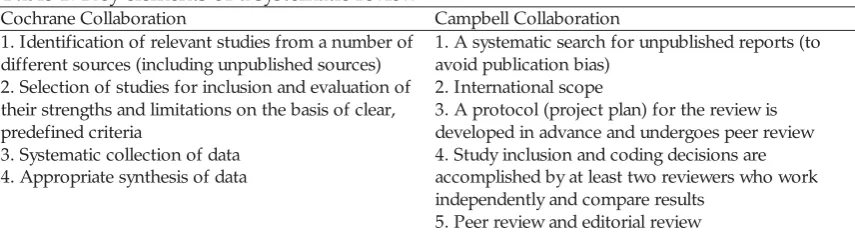
9 Table 1. Key elements of a systematic review
Cochrane Collaboration Campbell Collaboration 1. Identification of relevant studies from a number of
different sources (including unpublished sources) 2. Selection of studies for inclusion and evaluation of their strengths and limitations on the basis of clear, predefined criteria
3. Systematic collection of data 4. Appropriate synthesis of data
1. A systematic search for unpublished reports (to avoid publication bias)
2. International scope
3. A protocol (project plan) for the review is developed in advance and undergoes peer review 4. Study inclusion and coding decisions are accomplished by at least two reviewers who work independently and compare results
5. Peer review and editorial review
Source: Authors’ elaboration, Cochrane Collaboration (2012a) and Campbell Collaboration (2012).
In analyzing the different guidelines, we identified several overlapping traits regarding the stages and information any systematic review needs to contain. Broadly speaking, a systematic review involves the following steps:
1. Formulating the review question(s),
2. Planning the review,
3. Locating studies (literature search),
4. Appraising contributions,
5. Analyzing and synthesizing information and
6. Reporting the best available evidence.
Unlike other forms of research synthesis, systematic reviews are based on a rigorous protocol (a standard set of stages) for organization and systematization of research results.
Therefore, the first criteria by which to identify a systematic review is the existence of a
research protocol, which guarantees that the review process can be replicated.
Second, the search and selection of primary research to be included in a systematic review
needs to be comprehensive enough to include both electronic and print sources, as well as unpublished material and gray literature. The purpose is to avoid reliance on anecdotal evidence and ‘cherry picking’ of favorable cases.
Third, clear criteria for inclusion of primary research must be established for a systematic
review. The quality of primary research plays a decisive role. Primary research needs to be appropriate for review not only in terms of topic, but also in terms of the rigor and success with which the research was conducted.
Fourth, a systematic review needs to include an analysis of the primary research. The
Fifth, a systematic review must include a synthesis of the information contained in the primary research. Hence, a systematic review must go beyond the simple summary of primary research findings. Examples of synthesis activities include: assessing the size of the effect of a given treatment, assessing the causes of a given outcome, assessing the consistency across different studies and assessing the quality of primary data. In addition to presenting key findings, a systematic review should identify reasons for differing results across studies and state limitations of current knowledge.
Sometimes the term ‘systematic review’ is used loosely, without particular reference to the rigorous approach to literature synthesis. In these instances, the authors neither aim to assess available evidence nor to provide an answer to a specific, policy-related question, but to provide an overview or to describe practices of, say, cases, research methods and measurements. It is usually assumed in such articles that if one conducts a broad review of the literature then one is conducting a systematic review. However, such articles cannot be classified as true systematic reviews because they lack a replicable search protocol, methods and criteria for selecting relevant literature.
We also find that some expressions are used synonymously with the term ‘systematic review’. For example, structured review, scoping review and systematic mapping appear under the ‘systematic review’ heading in EPPI-Centre’s library. Moreover, terms such as: systematic synthesis of research, systematic literature review, in-depth review and narrative review are often used to signify ‘systematic review’. Also, a meta-analysis is commonly considered as a form of systematic review, not only a form of statistical technique for
secondary data analysis (see Appendix A3).While these different forms of reviews offer
relevant information about empirical knowledge from experienced authors, they typically use an implicit – and not always replicable – process in assimilating evidence to support the statements being made. In case of narrative reviews, it may be difficult for the reader to determine if the statements are based on the author's experience or the range of available literature. It may be equally difficult to identify the reasons why some studies were given more emphasis than others and whether some reports were selectively cited to reinforce preconceived views of a topic (Garg et al., 2008).
11
Lavis (2009) explains that policymakers and stakeholders have access to at least three types of review-derived products: summaries of systematic reviews highlighting decision-relevant information; overviews of systematic reviews providing a ‘map’ of what policy questions have been addressed by systematic reviews and where additional reviews are needed; and policy briefs drawing on many systematic reviews to better understand a problem and possible implementation strategies. In addition, rapid evidence synthesis reports
(differently called rapid reviews, defined in Appendix A3) are competing with systematic reviews for the attention of users. Neither the Campbell nor the Cochrane Collaboration
offer rapid evidence syntheses. Analyzing the ME DLINE database between 1950 and 2007,
4.
Methods and data
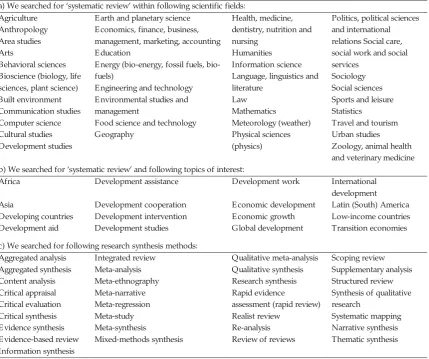
The data for the present study are from meticulous database searches that took place between 1 December 2012 and 28 February 2013. The literature search included databases dedicated to systematic reviews; several medical and scientific databases; larger subject and multidisciplinary databases; specific journals and databases maintained by research
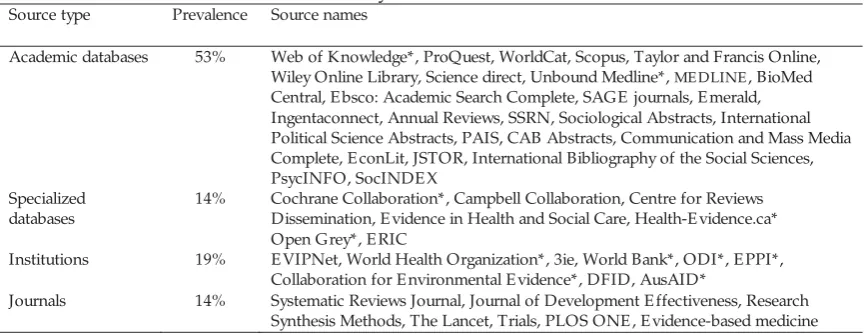
[image:16.595.81.514.288.455.2]institutions and international organizations. We searched 49 different sources of information about systematic reviews as shown in Table 2. More detailed information about these sources is in Appendix A2.
Table 2. Sources of information about systematic reviews
Source type Prevalence Source names
Academic databases 53% Web of Knowledge*, ProQuest, WorldCat, Scopus, Taylor and Francis Online,
Wiley Online Library, Science direct, Unbound Medline*, MEDLINE, BioMed
Central, E bsco: Academic Search Complete, SAGE journals, E merald, Ingentaconnect, Annual Reviews, SSRN, Sociological Abstracts, International Political Science Abstracts, PAIS, CAB Abstracts, Communication and Mass Media Complete, EconLit, JSTOR, International Bibliography of the Social Sciences, PsycINFO, SocINDEX
Specialized databases
14% Cochrane Collaboration*, Campbell Collaboration, Centre for Reviews
Dissemination, E vidence in Health and Social Care, Health-E vidence.ca* Open Grey*, ERIC
Institutions 19% EVIPNet, World Health Organization*, 3ie, World Bank*, ODI*, EPPI*,
Collaboration for Environmental Evidence*, DFID, AusAID*
Journals 14% Systematic Reviews Journal, Journal of Development Effectiveness, Research
Synthesis Methods, The Lancet, Trials, PLOS ONE, Evidence-based medicine
Note: * indicates that the database search could not be restricted to Title, Abstract and Keywords, which was the preferred search option; the search was performed on full text instead. Source: Authors’ elaboration.
13
Table 3. Scientific areas, topics and methods relevant for systematic reviews
a) We searched for ‘systematic review’ within following scientific fields: Agriculture
Anthropology Area studies Arts
Behavioral sciences Bioscience (biology, life sciences, plant science) Built environment Communication studies Computer science Cultural studies Development studies
Earth and planetary science Economics, finance, business, management, marketing, accounting Education
E nergy (energy, fossil fuels, bio-fuels)
Engineering and technology E nvironmental studies and management
Food science and technology Geography
Health, medicine, dentistry, nutrition and nursing
Humanities Information science Language, linguistics and literature Law Mathematics Meteorology (weather) Physical sciences (physics)
Politics, political sciences and international relations Social care, social work and social services
Sociology Social sciences Sports and leisure Statistics
Travel and tourism Urban studies Zoology, animal health and veterinary medicine b) We searched for ‘systematic review’ and following topics of interest:
Africa Development assistance Development work International
development
Asia Development cooperation Economic development Latin (South) America
Developing countries Development intervention Economic growth Low-income countries
Development aid Development studies Global development Transition economies
c) We searched for following research synthesis methods: Aggregated analysis Aggregated synthesis Content analysis Critical appraisal Critical evaluation Critical synthesis Evidence synthesis Evidence-based review Information synthesis Integrated review Meta-analysis Meta-ethnography Meta-narrative Meta-regression Meta-study Meta-synthesis Mixed-methods synthesis Qualitative meta-analysis Qualitative synthesis Research synthesis Rapid evidence
assessment (rapid review) Realist review
Re-analysis Review of reviews
Scoping review Supplementary analysis Structured review Synthesis of qualitative research
Systematic mapping Narrative synthesis Thematic synthesis
5.
Results
The popularity of systematic reviews stretches across all fields of research. Our search returned articles containing the phrase ‘systematic review’ in practically all arts and sciences. However, the search outcomes were disproportionally in medicine and health-related fields. Still, the systematic reviewing practice is spreading rapidly within the broadly defined fields of life sciences and education. The least common was to find systematic reviews in philosophy, arts and humanities.
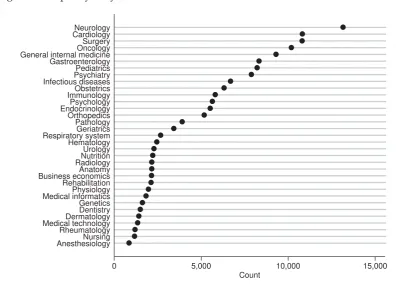
[image:18.595.88.488.411.697.2]Systematic reviews are conducted in almost any branch of medicine, as Figure 2 shows. We find the highest occurrence in neurology, followed by cardiology and surgery, where systematic reviews are ten times more frequent than in the smaller areas of medicine, such as nursing or anesthesiology. These differences are linked to the tradition of systematic reviews, which in general focus on the effect size and give preference to data obtained through experimental designs (e.g., RCTs). The observational and interpretative research methods are either excluded from the reviews or classified as lower-level forms of evidence (Evans & Pearson, 2001).
Figure 2. Frequency of systematic reviews in different branches of medicine
Source: Authors’ elaboration based on Web of Knowledge (2013).
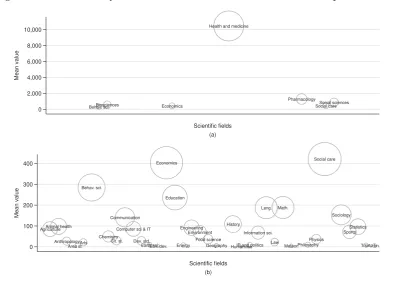
In Figure 3 the average number of systematic reviews across different databases are given. The mean value represents the average number of systematic reviews in 26 databases.
0 5,000 10,000 15,000
Count AnesthesiologyNursing
15
To separate large and small values, we split the figure in two panels so that panel (a) shows scientific fields in which systematic reviews appear the most, while panel (b) shows scientific fields in which systematic reviews occur less frequently. For example, systematic reviews are 25 times more prevalent in medicine (around 10,000 reviews) than in
economics and social care (around 400 reviews). The early topics of systematic reviews in non-medical fields are often related to various aspects of health. For example, in the social sciences, such as anthropology and sociology, the earliest topics of systematic reviews were measures of social psychological attitudes (Robinson & Shaver, 1973), abortion support (Rosoff, 1975) and immigrant mortality (Marmot et al., 1984). In economics, the interests revolved around costs of specific treatments or health services, such as costs of drug prescription (Vuturo et al., 1980) and cost-effective choices of anti-microbial therapy (Weinstein et al., 1986). Interestingly, the early mentions of systematic reviews in political science were not related to health, but to e.g. urban political processes (Schnore & Fagin, 1967) and the Taiwan issue in Peking's foreign relations (Shen, 1981).
The closer inspection shows how articles appearing in non-medical fields are in fact often applications of medicine to other disciplines. This is also the case for the arts as articles classified under the subject heading ‘Art’ are mostly concerned with medical uses of art,
i.e., art as a form of therapy for different medical conditions. Likewise, for language and
Figure 3. Prevalence of systematic reviews across different scientific disciplines
Source: Authors’ elaboration.
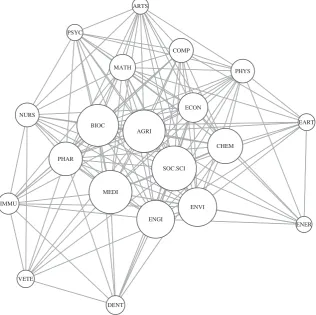
We investigate the transfer of influence from medicine to other research areas through the degree of betweenness centrality (Freeman, 1977), which we show in Figure 4. The figure measures both the frequency of systematic reviews in different disciplines, as Figure 3, and also the importance of different disciplines for the spread of information about systematic review practice. In Figure 4, the size of the circle is proportional to the frequency of systematic reviews in each scientific field while the lines between circles show which scientific fields are connected in the systematic review practice. The lines illustrate the co-occurrence of systematic reviews in different scientific fields and they are constructed by searching for ‘systematic reviews’ in ‘one scientific field’ and ‘other scientific field’,
e.g. ‘systematic reviews’ in fields ‘medicine’ AND ‘dentistry’. The figure shows that, for
example, dentistry is connected with medicine, but not with energy research, nursing or earth sciences.
Behav. sci.Biosciences Economics
Health and medicine
Pharmacology
Social careSocial sciences
0 2,000 4,000 6,000 8,000 10,000
Mean value
Scientific fields (a)
Agriculture
Anthropology
Area st.Arts
Behav. sci.
Chemistry Communication
Computer sci & IT
Clt. st. Dev. std.
Earth sci.Ecn. dev.
Economics
Education
Energy Engineering
Environment
Food science Geography
History
Humanities Information sci.
Lang.
Law Math.
Meteor.Philosophy Physics IR and politics
Social care
Sociology
Sports Statistics
Trsm.Urbn.
Animal health
0 100 200 300 400
Mean value
17
Figure 4. The importance of medicine for systematic review practice relative to other research areas
Note: The following scientific fields are included: AGRI: Agricultural and Biological Sciences; ARTS: Arts and Humanities; BIOC: Biochemistry, Genetics and Molecular Biology; CHE M: Chemistry and Chemical E ngineering; COMP: Computer Science; DE NT: Dentistry; E ART: E arth and Planetary Sciences; E CON: Economics, Econometrics, Finance, Business, Management and Accounting; E NE R: E nergy; E NGI: E ngineering; E NVI: E nvironmental Science; IMMU: Immunology and Microbiology; MATH: Mathematics; ME DI: Medicine and Health; NE UR: Neuroscience; NURS: Nursing; PHAR: Pharmacology, Toxicology and Pharmaceutics; PHYS: Physics and Astronomy; PSYC: Psychology; SOC. SCI: Social Sciences; and VE TE : Veterinary medicine. Source: Authors’ elaboration.
While medicine has a strong influence on the increase in systematic review practice in biosciences, agriculture, environmental and social sciences, other health-related fields, such as pharmacology, psychology, nursing, immunology, dentistry and veterinary medicine do not. There is also a strong link between medicine and engineering, due to the importance of medical engineering. Finally, energy, earth sciences, physics and arts are on the periphery of systematic review practice, while computer sciences, chemistry, mathematics and
economics appear closer to the main information sources.
We were able to identify several patterns in systematic reviewing practice. It is apparent that the protocol, the criteria for including the primary studies to be summarized and interpreted, the comprehensiveness of the search, the criteria to be used in assessing the quality of the individual studies, the questions addressed and the usage of the review
AGRI ARTS
BIOC
CHEM COMP
DENT
EART ECON
ENER ENGI
ENVI IMMU
MATH
MEDI NURS
PHAR
PHYS PSYC
SOC.SCI
are important, if not essential, components of a systematic review. We use these features of systematic reviews to organize our findings around several topics that enable the appraisal of systematic reviewing practice.
5.1.
The protocol
As stated in Section 3, the main defining characteristic of systematic reviews is the
existence of a protocol describing the essential procedures for conducting the review. Cook et al. (1995) suggest that a protocol should include: a question that specifies the population, intervention and outcomes of interest; specification of the methods used to retrieve, select, assess and analyze relevant data; specification of the hypothesis-testing analyses and
disclosure of any changes in the protocol. The protocol format of the Cochrane
Collaboration requires certain information to be presented: funding sources, the text of the review (background, objectives, criteria for selecting studies for this review, search strategies for identification of studies, methods of the review, acknowledgements, conflicts of interests), references, tables and figures, and comments and criticism (Higgins & Green, 2011). Interestingly, though, Moher et al. (2007) revealed that less than half of the
systematic reviews in their sample were working from such a protocol.
5.2.
Primary studies and primary research methods
The objective to consider a wide range of primary literature sources while looking for policy-relevant evidence is also well reflected in our results. Literature sources typically include research and institutional databases, journals, book chapters, trial registries and gray literature. It is actually often required that a search of gray literature is performed so the working and conference papers, pre-prints and similar materials are not omitted from the search simply because they may be difficult to find. These are important requirements since it has been documented that published studies in medicine tend to have more positive results, whereas unpublished studies tend to show smaller effects or even insignificant findings (Schlosser, 2007). However, as gray literature is not subject to peer-review, it must be considered accordingly (Schlosser, 2007). The good practice for conducting systematic reviews proposes that reviewers examine differences between outcomes of published and unpublished studies. In this way, it is possible to eliminate doubt that the actual size of the estimated effect may in fact be lower due to publication bias.
19
studies present the most reliable forms of evidence, whereas diagnostic and case-control studies present the least reliable evidence that can be incorporated in systematic reviews (CEBM, 2013). There are also quality scales devised specifically for primary methods. For example, a so-called Jadad Scale is used to assess the quality of RCTs (Jadad et al., 1996). Frequently used is the Checklist for Measuring Quality, which is applicable to both randomized and non-randomized studies of health care interventions (Downs & Black, 1998).
Unfortunately, this plurality of systems for grading the quality of evidence is a source of frustration, if not confusion, for many. The same evidence and recommendation could be evaluated as ‘the best’ or only as ‘good’ depending on the system used. An evidence-based medicine workgroup has therefore developed the GRADE (Grades of Recommendation, Assessment, Development and Evaluation Working Group) system that addresses the major limitations of its predecessors. Cochrane Collaboration relies exclusively on this
approach for evaluating the quality of evidence (Higgins & Green, 2011) and the British
Medical Journal states that authors preferably should use the GRADE system (BMJ, 2013).
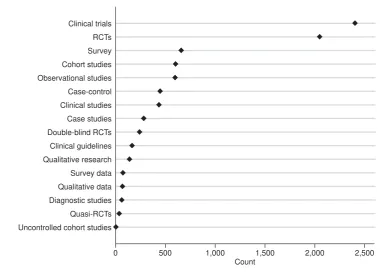
We conducted an extensive search in 42 academic and institutional databases to uncover the preferred primary research methods. We show definitions of these research methods in Appendix A3. The search results are presented in Figure 5 from which it is clear that systematic reviewers rely heavily on clinical trials and the empirical evidence obtained through RCTs. Drastically less common sources of evidence incorporated in systematic reviews are surveys, cohort and observational studies. Only very few systematic reviews rely on diagnostic studies, quasi-RCTs and so-called uncontrolled cohort studies. The most frequent method in Cochrane and Campbell Collaborations, the Centre for Review
Figure 5. Most frequent methods in primary studies that are incorporated in systematic reviews, averaged across various databases.
Source: Authors’ elaboration.
Currently we see an increasing demand for inclusion of qualitative information in systematic reviews. Some institutions, such as the EPPI-Centre insist on including both quantitative and qualitative original research in their systematic reviews. In as much as the early systematic reviews at the EPPI-Centre addressed the ‘what works?’ situations and tested the effects of interventions, more recent EPPI-Centre reviews aim to address a broader range of questions, i.e. the acceptability of an intervention, or the factors influencing implementation of interventions, for which qualitative research is
indispensable. The focus of the reviews has thus evolved to incorporate the understanding of a specific health issue from the experiences and points of view of people targeted by different interventions (Thomas & Harden, 2008). This is where we see an important contribution from social sciences as several articles instruct about the best way of choosing qualitative data sources, appraising the data quality, assessing the explanatory power of qualitative evidence and combining qualitative with quantitative data (see, e.g., Barnett-Page & Thomas, 2009; Petticrew & Roberts, 2008; Paterson et al., 2001; Noblit & Hare, 1988).
0 500 1,000 1,500 2,000 2,500
Count Uncontrolled cohort studies
21
5.3.
Methodology of conducting systematic reviews
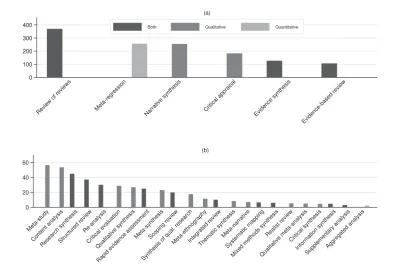
[image:25.595.113.502.322.604.2]The methods section is a third crucial component of any systematic review. It provides assurance that the review has been designed rigorously. The content of the methods section could include: (1) a description of the literature search terms, (2) inclusion and exclusion criteria, (3) an assessment of publication bias, (4) quality criteria for each study included, (5) study validity considerations of bias and confounding, and (6) descriptions of ‘weight of evidence’ or research synthesis used in the review. A wide range of methods is available for the analysis of secondary data. These methods, usually termed meta-methods, can be both qualitative and quantitative. Some examples of these methods and their definitions are given in the Glossary (Table A3, Appendix A3). The most common synthesis method is meta-analysis, followed by meta-regression and narrative synthesis, as Figures 6 and 7 illustrate.
Figure 6. Numbers of systematic reviews and meta-analyses across various databases
Source: Authors’ elaboration.
0
50,000
100,000
150,000
Number
Scopus
Web of Knowldge ProQuest
Evidence in Health and Social Care Unbound Medline
Centre for Reviews Dissemination Ebsco
Medline Science direct
JST OR
Wiley Online Library IngentaconnectBioMed Central
Cochrane Collaboration PsycINFO Health-Evidence.ca
CAB Abstracts WorldCat
SAGE journals Campbell Collaboration
IBSS
Sociological Abstracts ERIC
Systematic reviews
It is not surprising that the most common synthesis methods are quantitative, as the tradition of systematic reviews rests on summarizing effects of various medical treatments. It appears particularly popular to conduct a systematic review and a meta-analysis at the same time. This is true for 30,926 articles available in Web of Knowledge and 25,253 articles available in ProQuest. Scopus reports that around 35 thousand meta-analyses are incorporated in some 75 thousand systematic reviews, which means that a meta-study is performed in 45% of all systematic reviews. Depending on the focus of a database and the precision of the search process, the share of meta-analyses in systematic reviews differs.
ME DLINE shows that 49% of systematic reviews include meta-analysis, while the CRD
shows 47%. However, combining systematic reviews and meta-analysis in one project has not decreased the popularity of conducting meta-analyses independently; they are three times more frequent than systematic reviews, as shown in Figure 6. The knowledge from systematic reviews is often integrated further through a ‘review of reviews’ method (see Appendix A3), which is designed to systematize evidence from already available systematic reviews. Figure 7 shows that meta-regression, narrative synthesis and critical appraisal are also frequently used for analyzing secondary data.
Quantitative systematic reviews and meta-analyses can achieve increased power and precision that come from pooling primary data. Mulrow (1994) has compiled several examples of the advantages of systematic reviews in various quantitative effect
23
Figure 7. Average number of different research synthesis methods in combination with systematic reviews across various databases
Note: For clearer illustration, we present the less frequent research methods in panel (b). Source: Authors’ elaboration.
The appropriateness of meta-analyses depends on the review question and the criteria developed for determining which primary studies should be included, simply because the degree of heterogeneity introduced in the meta-analysis can affect the result. Moreover, the interpretations of the meta-analysis results depend on the way data are synthesized, through weighted average, regression analysis or individual data modeling (Lau et al., 1998).
Warnings that systematic reviews can underestimate the magnitude of evidence in relevant literature have been voiced since the late 1990s. The problem arises when the reviews only include primary studies of a certain ‘methodological quality’ (Edwards et al., 1998). For example, including only evidence from RCTs and clinical trials may lead to a distorted evidence synthesis if the reviewers automatically, and without reflection, exclude results obtained through other, weaker, study designs that contain equally relevant
information. Conversely, including such weak study designs can misleadingly amplify the strength of an estimated effect if the weaker designs have biased effect estimates. It is thus common to trade off the loss of additional perspectives for the improved precision of findings (Booth, 2001). Another approach to minimizing heterogeneity includes assessing the ‘message’ within each individual piece of research. Edwards et al. (1998) propose to assess both the methodological quality and the weight of its message, rather than rejecting studies that fall below a certain quality threshold.
0 100 200 300 400
Review of reviews Meta-regression Narrative synthesis Critical appraisal Evidence synthesis
Evidence-based review
(a)
Both Qualitative Quantitative
0 20 40 60
Meta-study Content analysis
Research synthesisStructured review Re-analysis
Critical evaluation Qualitative synthesis Rapid evidence assessment
Meta-synthesisScoping review
Synthesis of qual. research
Meta-ethnographyIntegrated reviewThematic synthesis Meta-narrative
Systematic mapping Mixed methods synthesis
Realist review
Qualitative meta-analysis Critical synthesis
Information synthesis Supplementary analysis
Aggregated analysis
Narrative synthesis is frequently used to summarize quantitative data in systematic reviews. Different systematic review traditions, either Cochrane, Campbell or peer-reviewed articles, have incorporated this method into their reviews. Moreover, there is a general ‘softening’ towards qualitative, theoretical and interpretative methods and appraisal techniques, which are required when answering ‘messier’ questions. Qualitative data are delivered in the form of narratives, where themes and concepts function as the analytical device (Dixon-Woods et al., 2001, p. 126). By supporting a narrative review, ‘the toolkit of the evidence-based policy movement is expanded, enhanced and enriched’ (Jones, 2004).
We show in Figure 7 which qualitative methods are often incorporated in systematic reviews. Barnett-Page and Thomas (2009) have identified nine distinct approaches to qualitative synthesis: meta-ethnography, grounded theory, thematic synthesis, textual narrative synthesis, meta-study, meta-narrative, critical interpretive synthesis, ecological triangulation and framework synthesis. The first qualitative synthesis methods appeared late in the 1980s (Noblit & Hare, 1988) and they dealt with synthesis of ethnographic research. The method proposed by Noblit & Hare (1988) was termed ‘meta-ethnography’, but it found applications beyond ethnographic studies (Campbell et al., 2003) and
extensions in methods termed ‘meta-study’ (Paterson et al., 2001), ‘critical interpretive synthesis’ (Dixon-Woods et al., 2006), ‘meta-synthesis’ (Sandelowski & Barroso, 2002) and ‘thematic synthesis’ (Thomas & Harden, 2008).
Some organizations, like the EPPI-Centre and the UK National Health Service's research promote the inclusion of non-quantitative methods, whereas systematic reviews published by Cochrane Collaboration rarely rely on qualitative data and methods. This indicates certain disagreements over the use of qualitative studies in systematic reviews. These disagreements stem from the nature of qualitative data as it is not clear how this kind of data should be synthesized using the traditional systematic review methodology. One of the problems comes from the need to apply quantitative methods of synthesis that are reductionist to data from a study genre that is intended to be explorative. Further, extracting qualitative data is susceptible to imprecision due to the subjective nature of identifying themes from text descriptions, in contrast to the practice of extracting data from tables in quantitative systematic reviews. But a specific meta-triangulation is possible when the same theme is identified in different studies conducted among different
populations. In sum, bringing together qualitative findings requires consistent synthesis methods that preserve the essential context and complexity of qualitative research (Thomas & Harden, 2008).
5.4.
Comprehensiveness of the review
25
higher reliance on non-journal sources, gray literature, reports from government and research institutes, or websites.
Only a small fraction of trial reports is incorporated in up-to-date systematic reviews (Bastian et al., 2010). A typical Cochrane systematic review contains about six trials, in which the median number of participants is 945 per review (Mallett & M. Clarke, 2002). Reviews of social interventions count usually tens or fewer, rather than hundreds of studies (Petticrew & Roberts, 2008). This is due to a relatively weak evidence base characterized by few replication studies and scarce outcome evaluations of social interventions (Oakley, 2002).
The language in which the primary studies are written is highly relevant for inclusion in the review. As there is a well-documented bias towards English language articles (Bronson & Davis, 2011), systematic reviews of good quality should aim at including non-English language publications. This is advisable as reviews that include only studies reported in English may yield biased results and inferences (Grégoire et al., 1995). Even if language
bias does not in
fl
uence estimates, it may affect precision simply because the analysis willbe based on fewer data (Moher et al., 2000).
5.5.
Questions addressed in systematic reviews
Systematic reviews are generally motivated by the need to answer a pressing question deemed important for either policy or practice. Thus, it is important to look into both the existence of a well-defined question and the type of question asked in a systematic review. Counsell (1997) states that ‘A good systematic review is based on a well-formulated, answerable question. The question guides the review by defining which studies will be included, what the search strategy to identify the relevant primary studies should be, and which data need to be extracted from each study’.
Best practices of conducting systematic reviews propose that the questions be formulated using the PICOS approach, which includes several components: the patient population or the disease being addressed (P), the intervention or exposure (I), the comparator group (C), the outcome or endpoint (O), and the study design chosen (S) (Oxman & G. H. Guyatt, 1993).
5.6.
Usage of systematic reviews
receive a service, intervention or program, ii) practitioners (i.e. social workers, teachers,
doctors), iii) policy-makers, iv) researchers or v) funders. The CRD considers their users
to be any person or group who might potentially use the findings of a review (CRD, 2009).
All systematic reviews produced by CRD have an advisory group, comprising a range of
users who provide input at various stages of the review process. Similarly, the EPPI-Centre stresses the importance of user involvement in obtaining a wide range of viewpoints (EPPI-Centre, 2009b).
27
6.
Typologies of systematic reviews
It is evident that the systematic review practice experiences various complexities. We have therefore attempted to offer a way in which to organize thinking and practices around systematic reviews, which are recognizable by a question of specific type, comprehensive search and retrieval of the relevant research, explicit inclusion criteria, critical analysis and synthesis of the primary studies, methodological rigor and user involvement. These characteristics of systematic reviews are further analyzed and applied in the context of systematic review types.
Presently there are four different typologies of systematic reviews. The typologies are listed in Table 4. Starting with the Cochrane Collaboration (Cochrane Collaboration, 2012a), we observe a distinction between three types of systematic reviews: intervention reviews, diagnostic test accuracy reviews and methodology reviews. Lavis (2009) focuses on the type of data and evaluation method and defines four review types: reviews of observational studies, reviews of qualitative studies, reviews of effectiveness studies and reviews of economic evaluations. The Dutch Knowledgecenter Measurement Instruments of the VU University Medical Center also focuses on data and methods, but emphasizes the
extensiveness of the studies in their typology, i.e., if the object of investigation is a single
instrument or all available instruments for measurement performed against a defined or
unspecified construct (KMIN, 2012).Finally, based on the review objectives and synthesis
Table 4. Typologies of systematic reviews Cochrane Systematic Reviews (Cochrane Collaboration, 2012a) Policymaking systematic reviews (Lavis, 2009)
Systematic reviews of measurement instruments (KMIN, 2012)
Examples of review types from Gough et al. (2012)
1. Intervention reviews assess the benefits and harms of interventions used in healthcare and health policy.
2. Diagnostic test accuracy reviews assess how well a diagnostic test performs in
diagnosing and detecting a particular disease. 3. Methodology reviews address issues relevant to how systematic reviews and clinical trials are conducted and reported. Reviews of 1. Observational studies 2. Qualitative studies 3. Effectiveness studies 4. Economic evaluations
A systematic review of 1. One measurement instrument
2. A selection of measurement instruments that aim to measure a particular construct in a particular population 3. All available measurement instruments that aim to measure a particular construct in a particular population
4. All available measurement instruments (without specifying the construct to be measured) in a particular population
1. Aggregative
a)‘What works?’ reviews b)Diagnostic test c)Cost benefit d)Prevalence 2. Configurative
a)Meta-ethnography b)Critical interpretative
synthesis
c)Meta-narrative review 3. Configuring and aggregative
a)Realist synthesis b)Framework synthesis Source: Author’s elaboration based on the sources cited in the table.
Any categorization of systematic review types should, in our view, include the dimensions of systematic review practice we have mapped out in Section 5. In Figure 8 we illustrate how all characteristics of systematic reviews can be traced to the research question, which informs the structure of the review, included studies, synthesis methods, the overall comprehensiveness of the review and its usage. At the same time, the research question is informed by the usage of the review as it reflects needs and desires of the users, i.e. commissioning bodies.
Source: Authors’ elaboration.
Every review question contains implicit ideological and theoretical assumptions that determine specific choices researchers make during the review process. Depending on the question, a systematic review will include both qualitative and quantitative research, be limited to only experimental evidence, or allow all types of research evidence, even the
Question Structure Included studies Synthesis methods Compre-hensiveness Usage
[image:32.595.85.450.565.671.2]29
non-empirical one. In practical terms, this means that questions determine not only the underlying conceptual framework used to interpret and understand the research evidence, but also the way in which the review is undertaken, including the decision about the primary studies included, the way they are analyzed and synthesized into the final review.
It is often emphasized that the topic of a review should be based on a concise question (Schlosser, 2007). As many types of review products may be taken for systematic reviews, it is important that the true systematic review clearly indicates the question it tries to answer. Gough et al. (2012) have compiled a list of most frequent questions in systematic reviews:
What is the effect of this intervention? What is the accuracy of this diagnostic tool? What is the cost of this intervention? What is the meaning of a process or a phenomenon? What is the effect of this complex intervention? What is the effect of this approach to social policy in this context? What are the attributes of this intervention or activity?Starting from this list, we identify three broad groups of questions (Table 5). We term
the first group as ‘traditional’ or focusedquestions. Such questions are usually direct and aim
to determine ‘what works’ for various interventions, healthcare procedures or drug
treatments. We term the second group complexquestions (in some contexts recognized as
‘messy’) because they go beyond ‘what works’ and aim to address context-sensitive issues such as people’s attitudes and experiences, environmental or practical concerns. Where the focused questions offer straightforward ways of understanding if and how relatively simple interventions work, the complex questions provide more useful insights when investigating various organizational and policy interventions. The complexity comes at a price of
increased methodological challenges and reliance on evidence forms that are deemed less
desirable by some authors. We term the third group hybridquestions because systematic
reviews based on such questions aim to tackle both focused and complex issues. From the three broad categories, we identify five specific groups of questions, which form the basis of our typology. The five categories of questions are:
•
Effect-driven,•
Explanatory,•
Economic,•
Hermeneutic,•
Mixed.Effect-driven, explanatory and economic questions are all variations of focused questions. The hermeneutic category is a natural way of thinking about complex questions, as
the term mixed is also used as a description of the approach applying both quantitative
and qualitative assessments (e.g., a mixed methods approach). An overview of the most
common systematic review questions is given in Table 5 together with the corresponding category. Notice, how each type of research question results in a specific type of systematic review.
[image:34.595.83.531.401.758.2]As noted, Lavis (2009) classifies systematic reviews based on the methods used to synthesize the research evidence. Further, Gough et al. (2012) state that the synthesis methods reflect many of the ‘approaches, assumptions, and methodological challenges of the primary research that they include’. But Lavis (2009) and Gough et al. (2012) overlook the fact that the choice of synthesis methods can sometimes be conditioned by other factors, such as the type and quality of primary study designs. One could say that using the methods to classify systematic reviews would be appropriate if the best methods to answer a specific question were always possible and always chosen. But in this case categorizing by method would be equivalent to categorizing by question whereby our suggestion for typology would coincide with Lavis’ classification. In the same vein, we consider the classifications based on the research objectives by the Cochrane Collaboration and Gough et al., (2012) to be direlectly related to a typology using the type of question because we would argue that the research objective is in an expression of the research question.
Table 5. Classification of types and questions commonly addressed by systematic reviews
F
oc
us
ed
Classification of questions and systematic review types
Characteristic questions Examples of possible synthesis methods
E ffect-driven (impact) question • Questions concerned with impact of different interventions
What is the effect of this treatment or intervention?
Statistical meta-analysis of experimental trials What is the difference in the effect
of two or more competing interventions?
Statistical meta-analysis of experimental trials What is the effect of this complex
intervention?
Multi-component mixed methods reviews
What is the effect of this approach to social policy in this context?
Realist synthesis of evidence of efficacy and relevance across different policy areas What is the accuracy of this
diagnostic tool?
Meta-analysis of evaluations of diagnostic tests
Explanatory (causal)
• Questions concerned with why and how events occur
What is the cause of a specific phenomenon?
Statistical meta-analysis What are the sources of variation
between two groups, conditions or states?
Statistical meta-analysis
How and why the outcomes between groups differ?
Statistical meta-analysis or qualitative meta-synthesis
E conomic
• Questions about economic impact
31
C
om
pl
ex
Hermeneutic
(interpretative and/or descriptive)
• Questions aiming to interpret, describe, summarize and present data, events and observations
What is the meaning of a specific phenomenon?
Critical interpretative synthesis of ethnographic studies
What is the process of a specific action, phenomenon or event?
Conceptual synthesis such as meta-ethnography
What are the attributes of this intervention or activity?
Framework synthesis framed by dimensions explicitly linked to particular perspectives Is this complex intervention
appropriate?
Multi-component mixed methods reviews
H
yb
ri
d
Mixed
• Questions aiming to determine effect and interpret phenomena
What is the impact of an intervention and what are the participants’ views and experiences of participating in the intervention?
Multi-component mixed methods reviews such as meta-analysis alongside the thematic narrative synthesis
Source: Authors’ elaboration and Gough et al. (2012).
However, compared to the four typologies in Table 4, the typology we propose clearly links the users of the reviews and the research questions. One should not overlook the importance of ‘whose questions are being asked’ (Gough et al., 2012) because users of the reviews can bring a wide range of different perspectives into the review process. Users contribute to the review production in more than one way: for example, by ‘identifying and prioritizing review topics, defining review questions and important outcomes, conducting reviews, editing review protocols and reports, and disseminating and implementing review findings in practice’ (Campbell Collaboration, 2008). The EPPI-Centre argues for
considering users’ perspectives in order ‘to make a considered decision about the question that the review is attempting to answer’ (EPPI-Centre, 2009b) and users are appointed to comment on the external validity of reviews (Higgins & Green, 2011).
7.
Systematic reviews in international development
Policy briefs – especially summing up different donor-led impact evaluations – can be considered as predecessors of systematic reviews in international development. Several development research groups and organizations, notably the J-PAL, Innovations for Poverty Action (IPA) and International Initiative for Impact Evaluation (3ie) strongly promote evidence from studies with rigorous protocols (White & Waddington, 2012). This demand for rigorous evidence has led to an increased interest in systematic reviews within international development since the mid-2000s. A recent estimate indicates that at least 100 new reviews, covering topics of international development, are on-going or completed, many of which are funded by donors (White & Waddington, 2012).
Experiences from conducting systematic reviews in international development were
described in a recent special issue of the Journal of Development E ffectiveness, emphasizing
the importance of systematic reviews for better-informed development policies, as well as the conceptual and methodological challenges specific for international development. This issue includes a ‘good practice guide’ on how to do systematic reviews in international development (Waddington et al., 2012), and special guidance on how to synthesize
qualitative information (Snilstveit, 2012; Snilstveit et al., 2012). The authors also explain
how to assess the risk of bias in development reviews through e.g. methodological
pragmatism (Duvendack et al., 2012; Stewart et al., 2012).
Even though the interest in systematic reviews in international development is high, it presents only a small fraction of the total number of reviews. Figure 9 shows that development reviews comprise 1% of the total number of systematic reviews based on the information in the databases Scopus and Web of Knowledge (The total number of systematic reviews is shown in Figure 1). Our interest was identifying as many systematic reviews in development research as possible using several keywords related to development assistance. We show the prevalence of relevant terms in Figure 10. In addition to specifying that a review concerns developing countries, the most common is to use ‘international development’ and ‘development work’. Similar numbers of systematic reviews have been conducted in Africa and Asia; there are only 10% more reviews in Africa than in Asia, but 50% more in Africa than in Latin America. In contrast, there are only few systematic reviews in transition economies.
33
[image:37.595.112.483.170.433.2]provision, anti-corruption policies and infrastructure investments, which, as a norm, depart from easily measurable indicators and need to account for complex social interactions.
Figure 9. Systematic reviews in international development as a share of total number of systematic reviews in databases Scopus and Web of Knowledge
Source: Authors’ elaboration.
The 3ie commissions finding and using evidence on what works, when, why and for how much. Moreover, the 3ie is in charge of peer reviewing systematic reviews in international development (3ie, 2012a). Further, some of the first systematic reviews performed by the EPPI-Centre were funded by DFID and in 2007, the Alliance for Health Policy and Systems Research awarded grants to four institutions in low- and middle-income countries to establish centers for systematic review of health policy and systems research, which are supported by the EPPI-Centre (EPPI-Centre, 2009c).
Systematic reviews commissioned by development agencies are different from traditional, Cochrane and Campbell systematic reviews in several ways. Most of the ‘developmental reviews’ do not state in the title that the material is in fact a systematic review, despite the explicit request from PRISMA (Preferred Reporting Items for Systematic Reviews and Meta-Analyses) to indicate in the title that the review is systematic (PRISMA Statement, 2009). Also, systematic reviews in international development often serve as scoping reviews, in the sense that they state in the objectives section that they aim to establish how much methodologically reliable and comprehensive literature exists for a specific topic. A fraction of reviews also aims to identify gaps in research and to recommend further research paths.
0 .5 1 1.5 2
Share
1995 2000 2005 2010 2015
Year
Figure 10. Number of systematic reviews in the international development context obtained by searching for a range of keywords and averaged across various databases
Source: Authors’ elaboration.
The topics in international development cover a range of issues, such as: health and nutrition, education, social protection and social inclusion, governance and fragile states, environment, infrastructure and technology, agriculture and rural development, aid delivery and effectiveness, economic development and gender (DFID, 2013). The earliest record of a systematic review in 3ie’s database is from 2002 and the frequencies of different topics are presented in Table 6 and Figure 11.
Clearly, systematic reviews in development research deal mostly with health-related topics, as this is where it all started (see Figure 11). The second most frequent group of issues includes different forms of human development and economic interventions, such as interventions in schooling, employment and finance. Several systematic reviews are multidisciplinary as they analyze several types of interventions at the same time. In such reviews, health-related topics are combined with economic or social interventions. The topics of systematic reviews dealing with developing countries simply reflect the areas of specialization of individual organizations conducting the reviews. For example, the EPPI-Centre systematic reviews related to developing countries deal mostly with various aspects of public and social policy, such as education.
0 100 200 300
Number of search results
Africa Asia
Developing countries Development aid
Development assistanceDevelopment cooperationDevelopment intervention
Development studiesDevelopment work
Economic development Economic growth
Global development
International development Latin America
Low income countriesTransition economies
35
Table 6. Systematic review topics in international development in EPPI-Centre publications
Topic Number Percent
Education 79 56.03
Health 29 20.57
Health services 9 6.38 Public services 4 2.84
Micro-finance 3 2.13
HIV/AIDS 2 1.42
Criminal justice 2 1.42 Economic growth 2 1.42
Poverty 2 1.42
Nutrition 2 1.42
Social interventions 2 1.42 Conditional cash transfers 1 0.71
RCTs 1 0.71
Childhood interventions 1 0.71 Tariff reductions 1 0.71
Trade 1 0.71
Total 141 100
Source: Authors’ elaboration.
The 3ie’s database shows that it was not until 2006 that non-health systematic reviews started appearing. These reviews investigated interventions related to natural resources, social programs and conditional cash transfers. The real diversification of topics started in 2009, when the interest spread to child labor, service provision and agriculture. Non-health topics have remained relevant until present but still do not surpass the amount of heath research.
The typology set out in Section 6 implies that evidence synthesis can be achieved in a focused, complex or a hybrid way. Examples of question categories within international development are illustrated in panel (a) in Figure 12. Around 85% of the reviews are motivated by focused questions as they attempt to evaluate effects or the impact of various interventions. Usually, the impact of a given intervention is assessed over a range of