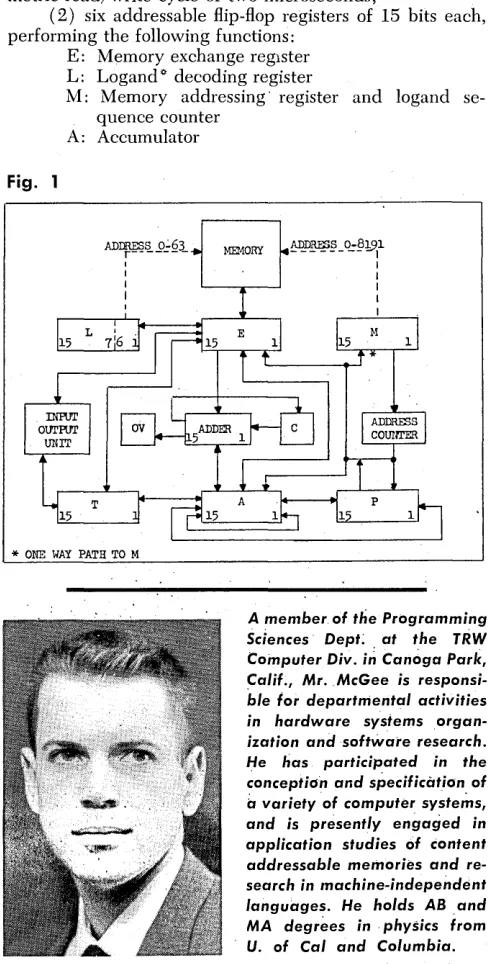
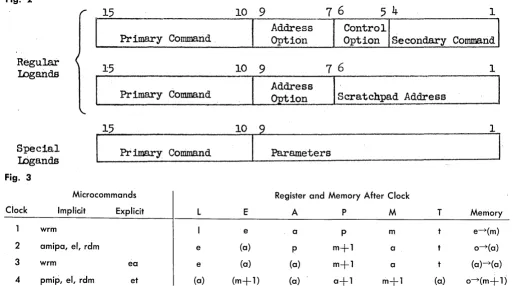
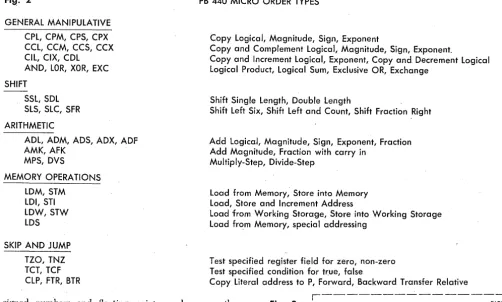
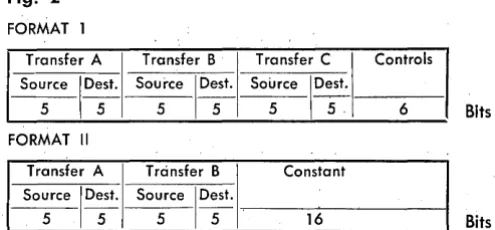
© AMPEX CORP. 1963
What has a drive concept so simple it's revolutionary?
AMPEX TM-7
. Here's a transport that's far in advance of anything in its class-the all new Ampex TM-7. It's a low-cost tape transport designed for less maintenance, less tape wear. And its most advanced feature is the revolution-ary single capstan drive system. The new drive system has three major moving parts-a capstan and two reels. As a result, most of the components found in this type transport have been eliminated. Maintenance is far less. And tape wear? Virtually none. The two vacuum chambers keep a uniform tape tension on the capstan. There is nothing to smear the tape; nothing to stretch It. Tapes last and last. Even the old soft-binder tapes can be used with very little wear. The new Ampex TM-7
CIRCLE 1 ON READER CARD
~~~ ~~lSE
. 'CURRENT
. . . .GENERATORS
. " . " ~ .[] ~ise and Fall Time: ,1D nse'c to 5.usec
o
Output Current: D.1 amp to 1. amp[3
Output Impedance: 1DK ohms min.II
Frequency: 2D megacycle ma~.iii
D~ty Cycle:fI
Back Voltage:II
Solid StateDem~strations on request
up
to BDDID-I- 5D volts
COMPUTER CONTROL COMPANY, INC.
OLD CONNECTICUT PATH, FRAMINGHAM, MASS.' 2217 PURDUE AVE., LOS' ANGELES 64, CALIF.
New generation of Shaped-Beam Tubes makes
by: A. H. Wisdom,
Manager of Research and Engineering for Data Products
CHARACTRON® Shaped-Beam Tubes
produced nearly 10 years ago, many of which are still being used in the dis-play consoles of the SAGE program, have achieved 20,000 hours or more of reliable performance. Today's
CHARACTRON Tube represents a new
generation of· development, offering dozens of major improvements over the original tube. The principle, how-ever, remains essentially the same.
HOW IT WORKS
Heart of the CHARACTRON Shaped-Beam Tube is the stencil-like matrix, a thin disc with alphanumeric and symbolic characters etched through it. This matrix is placed within the neck of the tube, in front of an electron gun. The stream of electrons emitted from the gun is extruded through a selected charaCter in the matrix. When the beam impinges on the phosphor-coated face of the tube, the char~ter is re-produced.
The standard matrix carries 64 char-acters. However, matrices have been made with 88, 128, and 132 characters. Coupled with new variable character size capabilities, the CHARACTRON
Tube offers a wide latitude in symbol generation. The beam is passed through one of the characters by ap-plying the proper voltage to ~he selec-tion plates. Electrostatic reference plates and
lor
magnetic deflection are then used to position the beam at any tube face location. In more compact tubes, the entire matrix is flooded with electrOns generating a complete array of characters, while only the desired . character is allowed to pass through a small masking aperture. A small di-ameter beam can be. used to display data from analog, inputs simultane-ously with the characters.2
NEW GENERATION OF TUBES
Today's CHARACTRON Tube is not the same tube built ten years ago. While all major improvements cannot be dis-cussed, following are some of the more significant:
. Earlier tubes had some deformation of the characters at the screen edge. The modern tube is sharp to the edge, with much greater resolution. New bright phosphors have been developed including a pastel green which elimi-nates spot size variation or
"bloom-Time-share version of CHARACTRON Shaped-Beam Tube.
ing". When necessary, tube length can now be dramatically decreased. A tube 25 in. long now achieves the same re-sults once requiring a tube 45 in. long.
SPEED
Many optimistic goals have been claimed regarding the speed of char-acter writing tubes. Frequently, how-ever, these claims do not delineate the time required for the positioning of these generated characters but simply state the time necessary for generation. It is a simple matter to blink a char-acter at tremendous speeds at the same place on the tube face. Generating dif-ferent characters and positioning them in different places on the tube is some-thing else. The shaped-beam principle generates characters in a period of time independent of the complexity of the character. Complex symbols can be generated as simply as a dot. With high speed circuitry, selection can be accomplished at rates equivalent to oscilloscope deflection frequencies.
For example, characters could easily be generated at a million each second. However, today's magnetic deflection yokes require a minimum 5 to 8 micro-seconds to settle the magnetic domain
in the core and this is the limiting
fuclM~~~tioo~g~oo~U~~a
high speed selection system and allow~
ing fiVe to ten micro-seconds for
un-blanking, CHARACTRON Tubes can
provide realistic writing rates of 50,000 characters per second or more, even using random deflection. Electro-static deflection tubes now under development promise writing speeds of up to 200,000 characters per second.
ECONOMICS
A CHARACTRON Tube by itself
ap-pears to be relatively expensive, but a system using this tube can economic-ally justify itself easily. This is true because the CHARACTRON Tube re-places both the necessary character generator and much of the circuitry required by other systems.
In recent models, alignment proce-dures have been simplified, and· the tube holds alignment longer than' other character writing systems.
A
CHARACTRON Tube can be set up by
an experienced mlm in less than one hour. Tubes are available in a wide range of phosphors with practically any desired color or degree of persist-ence. Resolution of 1800 TV lines can
ClATAMA"I:'IClN
',-advanced techniques possible in data display
be provided, the only limitation being the grain size of the phosphor.
CHARACTRON Tubes are no more
fragile than any other cathode ray tube. They have been exposed to a 32G shock for 52 milliseconds without harm, and can take just about any shock that does not fracture the glass. In one application, the tube was used in a portable battlefield display console.
PICTURE WINDOW TUBE
Frequently, it is necessary to continu-ously repeat certain data on the face of a tube while changing other data.
This may be done easily with a new development called the "picture win-dow" concept. In the "winwin-dow" tube, changing data from computer, radar, or communications link, is presented in the usual manner. Repetitious data are projected through the "window" onto the faceplate using a slide or film projector (Figure I). In a typical ap-plication, a geographic map of the area is projected on the'face while the com-puter presents changing data. As tlie area under surveillance changes, the operator pushes a button to select an-other map. In anan-other application, business or engineering forms are pro-jected on the tube and filled in with data from the computer. Included in this option is a recording camera. By means of a beam splitting half-silvered mirror, the camera maintains. optical access to the entire tube face. A button actuated solenoid operates the camera, recording all data being displayed.
TIME-SHARE TUBE
A new "time-share" version of the tube
produces alphanumeric data and at the same time performs beam writing to draw curves and vectors. In the draw-ing mode, electrons pass through a special large aperture so that none of the beam is blocked. Brighter beam drawings result. The name "time-share" is derived .from the fact that both the alphanumeric and drawing mode share the beam from one cathode for part of the time. This tubeis ideal for applications such as long range radar where the antenna may turn at a relatively low speed of six times a minute.
TWO-GUN TUBE
On short range radar requiring high rotation speeds of perhaps 25 times a minute and many hits on small tar-gets to build up an image, there may not be enough time left for forming alphanumeric symbols. With these ap-plications, a two-gun tube (Figure II) is suggested. This tube retains the beam shaping electron gun for produc-ing characters and employs another gun to accomplish the video writing. This second gun, when coupled with video driving circuitry, can be used to generate high resolution TV images including scan converter readout or
raw radar data. These images, of course,can occur at the same time as and without any effect on the alpha-numeric data supplied from the shaped-beam gun.
SYSTEMS
General Dynamics
I
Electronics designs and produces a number: of custom and standard display, printing and film recording systems which utilize theCHARACTRON Shaped-Beam Tube.
Custom installations include direct-view consoles as well as film recorders
I
which automatically process and pro-ject large.screen displays for group viewing.
The SoC 1090 Display console (Fig-ure III) presents alphanumeric, sym-bolic and graphic data from computers
or other sources. It is a complete, "off-the-shelf" display unit. Optional equip-ment includes internal test routine, input register, level converters, inter-nal storage of complete display frame, vector generator, expaI\sion and off-centering, category selection and var-· ious data channel buffers. The console is 66 in. long, 32112 in. wide, and 47 in.
high. It is recommended for a variety of. applications, including command and control systems, air traffic control, computer readout and data display for any automated process.
The SoC 4020 records the output of large scale computers on film and/or paper at equivalent speeds. Combina-tions of drawings and alphanumeric data may be recorded in fractions of a second.
The SoC 3070 provides high-speed asynchronous printing without impact, on -paper for communication~ or com-puter output applications.
WRITE FOR MORE INFORMATION
For technical information on the SoC 1090 Display, the SoC 4020 Computer Recorder, the SoC 3070 Electronic Printers, or the new generation of
CHARACTRON Shaped - Beam Tubes,
wri te to General Dynamics
I
Electronics, Department E-10, P. O. Box 127, San Diego 12, California.GENERAL DYNAMICS
I
ELEC;TRONICSG II II ID
SAN DIEGOSee G DIE Booth at Society for Information Display Exhi bit, Feb. 26-27, San Diego, Calif.
CIRCLE 5 ON READER CARD
Butcher
Baker
Candlestick Maker
Educator
Lawyer
Auto Maker
You don't have to be big to benefit from
the
UNIVAC
Data Processing Center network.
You just need the ambition and the address.
Once data processing was the special
computer. Designed to service every business
province of giants. TheU.
S.
Census Bureau.
and scientific problem.
Major universities. Big business. Today elec-
We have staffed the UNIVAC network
tronic data processing is a necessary fact of
with over 750 highly trained people: sci
en-life for a business of any size.
tists, mathematicians, engineers,
consult-That's why UNIVAC has built a net\vork
ants, programmers, systems analysts.
Any-of Data Processing Centers serving 29 major
one any job would require.
cities in the U.S. and parts of Canada. With
We're ready. As ready as anyone can
over 15 million dollars worth of equipment.
get for bjg jobs, small jobs, workaday jobs,
Including UNIVAC®III and UNIVACll07,
one-shot jobs. Any job.
the world's only thin film commer:i::VAc:DDo ..•
ooo:.~~
.•
:~at
did you say your job is?
UNIVAC DIVISION OF SPERRY RAND CORPORATION :
(!)
CIRCLE 6 ON READER CARD- - - -
.---~----Doing business with Adage gives you such a
com-fortable feeling. For so many reasons. For one thing,
nobody is more experienced in solid-state analogi
digital circuitry.
Nobody is so finicky about meeting specs (even
specs that others wouldn't dare publish).
Nobody makes analog/digital hardware more
reliable.
Or as handsome.
Or as mechanically perfect.
Or as well documented.
Nobody beats Adage, either, when it comes to
effi-cient use of rack space. For example, a 60-channel
data acquisition system with a I6-bit BCD Voldicon
converter and VMX Multiplexer is housed
com-pletely in a 57;4:" box.
So whether you need a component or a
custom-designed system, get a quote from Adage. The price
will please you. And remember -
from HZA input
buffer amplifiers to output digital amplifiers -
only
Adage manufactures all the hardware necessary for
analog/digital systems -
all of it solid-state.
~~~(I)7~
~/NO--~~~----292 Main Street, Cambridge 42, Mass. - Offices in Los Angeles, St. Louis, Washington and New York.
Ada.ge, Inc. welcomes employment inquiries from prcfessional engineers
letters
0 0 0 0 0 0
0 0 0 0
0 0 0
0 0
escalated emotions
Sir:
Your December editorial (p. 23) dis-played R. L. Patrick clearly as the Most Hysterical Nuclear Thinker of 1963, and probably the Worst Writer. Let's not have any more of this kind of stuff!
WILLIAM J. HARRINGTON
Livermore, California
Sir:
I have seldom read a more fatuous, juvenile, and asinine editorial in a trade magazine of national circulation . . '. your attempt to mix God, Kennedy, atomic war, and computers into a pot-pourri was the height of bad taste.
"GEORGE GORDON
F ordTe-ch Agency New York, New York
Sir:
Please cancel my subscription . . . I feel that the editorial is in very poor taste.
JOSEPH M. FONTANA
TRW Computer Division Canoga Park, California
Granted.
Sir:
Let's hope that at a later, calmer time, you put aside your preoccupation with chimerical wars, riots and panics, and found a moment to mourn the death of our president (who had a great-er life in front of him at 47 than any of us will ever know) and to commiserate his widow and children.
What moved me to prayer was not that some factitious holocaust wasn't there to be averted, but that our gov-ernment, its Constitution and. laws made the assassination as futile as it was insane. You might offer a prayer of thanks (but, please, in plain, ordi-nary English) for that, and leave the concern for war to calmer minds of the men who have that responsibility.
J. R. JOHNSTON
Malibu, California
Admittedly highly emotional, the editorial re-flects the thoughts expressed by two intelligent, competent computer specialists-who have been active in, among other things, the design of military command and control systems-in the 60-or-so minutes following the first news of the President's tragic assassination. Its publication
was intended to draw the attention of those en-gaged in the design and operation of such infor-mation systems to the importance of the human decision-making processes. We are thankful to the military for exercising control during a period which could easily have been twisted into a major international crisis. We do not think this is in "bad taste./I
leasing: bold or ...
Sir:
The December Business & Science
quotes Bob Harmon of McDonnell Automation Center as having taken a bold move in leasing a 7094. By leas-ing, I assume is meant hardware own-ership in some form. I disagree that this is a bold step, certainly not if one analyzes use-time, extra-shift time and hardware life and compares these fac-tors. to rental cost. This fear of buying is even harder to understand among the business firms and government users with large requirements. Sup-pose gear is no longer needed at one installation, it could become a surplus item of supply for another user to empoy.
This month at the FCC, we ac-cepted delivery of a purchased Uni-vac III system. Let us hope the trend continues, at least in the federal gov-ernment.
TERRY MILLER
Computer Operations Branch Federal Communications Commission Washington, D.C.
the 1004 &. computers
Sir: .
Charles W. Adams is to be congrat-ulated for honesty and frankly includ-ing the Univac 1004 among compu-ters and edp equipment-where it properly belongs ("Once Again," Nov., p. 30). Anyone who correctly programs this machine and uses it intelligently finds himself ( 1) em-ploying the soundest of edp princi-ples, systems and techniques, and (2) trimming the pants off several other acknowledged edp systems insofar as real work production and cost are concerned.
Why the Univac people fail to properly recognize this product is, I guess, "one of those things." So the 1004 is a "card machine?" What com-puter or edp system other than ana-logs do not use cards somewhere in their operations? Thank goodness we
have magazines like Datamation and
experts like Mr. Adams to keep the records straight.
JOHN FUNARO
California Revenue and Management Agency Department of General Services Sacramento, California
price correction
Sir:
Contrary to your write-up (Dec., p. 17), the price of the model 909 input unit is $4500, instead of the $1500 quoted.
RAYMOND B. LARSEN
The Electric Information Company Broomfield, Colorado
communication line speed
Sir:
Regarding your Business & Science story (Dec., p. 20) on Philco's PCP-150 message and data switching sys-tem, different speeds and methods of data transmission must be considered individually and cannot all be pro-vided over a 75 wpm line.
A.M. ROSCOE
, Bell Telephone Co. of Pennsylvania Pittsburgh, Pennsylvania
statistical relevance
Sir:
In "Programmer Training," (Dec., p. 48) James Saxon claims that an ex-perimental . group of people were taught programming fundamentals with a self-instructional text· and scored higher on an identical final exam than a group of people taught in a traditional classroom setting. A factor Mr. Saxon apparently did not take into account was the possible dif-ference in intelligence, abstract rea-soning or even learning ability that might have existed between the two groups ...
A. J. BIAMONTE
NYU Management Institute New York, New York
Author's reply: The point is valid if the study had been designed as a psychological depth proj-ect. All people hired for programming jobs by Lockheed had to meet basic requirements for education and intelligence. Since the selection of personnel for the two groups was random, it was safe to assume that learning ability, etc.; was also randomly distributed between the groups. The basic point of the article was not the original experimental study, but the fact that after considerable tryout, the. technique coninued to work, producing people who knew the basics of programming at least as well as had been previously accomplished • . . The accrued advantages of savings of unproduc-tive time (waiting for a class to be formed), classroom space and instructor time far over-shadows other considerations even if it would take longer (rather than less time) to produce the same r~s~lts by "self-instruction."
never-ending k's
Sir:
Please let me know how many of your erudite readers point out to you that in your Letters column of November, in discussing with Clifford Woodbury
DATAMATION is published monthly on or about the tenth day of every month by F. D. Thompson Publications, Inc.,· Frank D. Thompson, president. Executive, Circulation and Advertising' offices, 141 East 44th St., New York 17, N.Y. (MUrray Hill 7-5180). Editorial offices, 1830 W. Olympic Blvd., Los Angeles, 6. Published at Chicago, III. Controlled Ci~culation paid
at Columbus, O. Form 3579 to be sent to F. D. Thompson Publications, Inc., 201 N. Wells St., Chicago 6, III. Copyright 1964, F. D. Thompson Publica-tions, Inc.
the matter of Roman numerals, both of you are talking Greek!
JOHN TRYTTEN
Sola Electric Company, Elk Grove Villiage, Illinois
Sir:
A simple and straight-forward sug-gestion: use BK to denote 1,024 com-puter locations, and DK to denote a
unit of 1,000. .
ARTHUR P. BUHRMAN
C omputinr.. Genter Florida State University Tallahassee, Florida
recording calendar dates
Sir:
The following proposal for aNew Standard Practice for . Recording the Date may be of interest to your read-ers. It is proposed that by not later than January 1, 1966, the practice of
n:j~ording all dates be standardized in the sequence of year, month, and day. Perhaps this new standard should be adopted no later than the date upon which the world calendar is
adopted. .
. In the U.S., the usual practice has been to record the month, day and year; thus the 6th of. Janua~y 1964 would be re~orded as 1-6-64 . . . o~r military organizations liave preferred the day, month, year sequence . . . However, there is another facet to this besides confusion. Dates are a prime basis for filing in many data· storage systems because the chronological se-quence is most important. An alpha-numeric code is the best means of filing in avast preponderance of filing systems. 'But the ·current practice . of recording ·dates makes the dates them~ selves unsuitable as a modern filing means . . ' .
. . . If the date code, sequence were year, month, day, then the code be-comes a practical means of data filing. 64-01-:05 would thus represent 1964 January 5. In every case, t~e date code would maintain the true chrono-logical order· by date and, if desired, the hours or minutes could be added without affecting the system.
EDWARD L. PAGE
Department of Industrial Engineering University of Michigan
Ann Arbor; Michigan
D 2020
COMPUTER TAPE UNITS
AND MULTIPLE TAPE UNIT SYSTEMS
COMPLETELY PACKAGED
for data system integration
There's nothing novel in the appearance of the D 2020's master cable connector. But its function looms big in the D 2020 economy picture. Here, at last, you get a complete package - a magnetic tape unit (or multi-unit tape system) matched to your computer. And ready to go. (An absolute minimum of engineering needed for interfacing.) We believe you'll find this a significant feature. Along with other D 2020 advantages.
Triple Density ... D 2020 units write and read tapes in all three ' standard compatible formats: 800, 556 and 200 bpi. You select density with a single switch on the tape unit's operator control panel. Units operate at any single tape speed from 3 to 45 ips.
Greater Reliability ... On every D 2020, production testing maintains a generous margin over each rated specification -the only way to guarantee long-term reliability. According to all field reports, our specification ratings for up-time, tape life, data reliability and maintenance cost are definitely on the conservative side.
Like to investigate this new (D 2020) approach and learn why more than 30 leading companies already are using it with their computers and data systems? Write now. We'll see that you get the picture - in depth. Datamec Corporation, 345 Middlefield Road, Mountain View, California.
8
Too busy for automation?
" LThe problem of many small busi-nessmen: too busy with 'paperwork to find a way to cut it down.
The Friden Flexowriter® can free you from a lot of that paperwork.
The Flexowriter is an automatic writing machine combining a tape punch and a tape reader.
As you type on its standard key-board, the Flexowriter records every keystroke, space, carriage return,' tab, margin, automatically.
You now have a punched tape o'f
~LEXOWRITER IS A REGISTERED TRADEMARK OF FRIDEN, INC,
whatever you typed: a letter, sten-cil, statement, price list; bulletin, contract, legal document, etc.'
That punched tape can be re-used, in whole or part, hundreds of times by justinserting it back into the Flexowriter.
To update information, just let the tape run until a change occurs. Type in the change. Your tape is revised ..
Speed? 100 words a minute, with-out error. Because it's a heavy-duty machine, the Flexowriter can take that pace for years, with nor-mal maintenance.
Call your local Friden man. Let him show you how you'll never be too
work again. Or •
busy with
paper~
F d
write: Friden, Inc.,
fl'
en
San Leandro, Cal.
A Subsidiary'of The Singer Company Sales, Service and Instruction Throughout the World
CIRCLE 9 ON READER CARD
'0'00
0000000
• The winter 1964 meeting of
SHARE, the IBM 704/9/90/94/40/ 44 Users Group, will be held at the Jack Tar Hotel, San Francisco, March 2-6.
• The American Management Assn.' s EDP conference will be held March 2-4 at the Statler-Hilton in New York
City.
• Northwest Chapter of DPMA
will hold a Management Seminar, March 12-13, at the Leamington Ho-tel, Minneapolis.
• The 14th meeting of TUG
( Philco 2000 users group) will be held March 18-20, at the St. Francis Hotel, San Francisco. Western De-velopment Lab. will host.
• CDC's small and medium-scale
computer users group will meet April 7 at the Hi~ton in Albuquerque, N.M.
• The Spring c~nference of the
Univac Users Assn. will be held April 20-22 at the Sheraton-Chicago Hotel, Chicago. Hosts will' be U.S. Gypsum Co. and Harris Trust & Savings Bank.
• The 1964 Spring Joint Computer
Conference will be held at the
Shera-ton Park Hotel, WashingShera-ton, D.C~,
April 21-23. '
• The spring meeting of CUBE
(Burroughs Users group) will be held April 22-24 at the Ben Franklin hotel in Philadelphia.
• GUIDE International (large
scale IBM edp machine users group) will hold its next meeting at the El Cortez Hotel, San Diego, May 5~8.
• The fourth national conference of the Computing and Data Processirig Society of Canada will be held on May 11-12 at the Univ. of Ottawa.
• The ninth annual Data Processing
Conference will be held 'at the 'Hotel Stafford, Tuscaloosa, Ala., May 12-13.
Sponsors include DPMA, N ational Ac~
countants Assn., U. of Alabama, and Certified Public Accountants.
• The POOL 1964 annual general
meeting will be held May 1.2-14, at ,the Palmer House in Chicago.
P
0
THE FIRST
REAL
SYSTEMS
COMPUTER
WE THINK SO, but we put the question mark in so you wouldn't accuse us of un-abashed arrogance. What we mean is we have a computer that isn't restricted by the fixed logic wired in by the manufacturer. The PB440 has a separate logic memory-distinct from its conventional mempry-and commands and word formats are specified by information stored in this logic memory and can be readily changed. In other words, commands and word formats can be tailored by the user to fit the systems problem at hand. Packard Bel.! provides several com-mand sets and the user can create addi-tional commands as required.
Asingle PB440 can, in the fraction of a sec-ond it takes to reload logic memory, switch from one command set to another and thus from one application to another. No other computer can do this, and that's why we think it is the first real systems computer. Now,the system designer can adaptthe com-puter to the problem, not the problem to a fixed command list and format:
FOR THE SYSTEMS ENGINEER the PB440 can be a special-j:)Urpose computer de-signed (to his specs) for his specific system. But he still has the reliability, versatility, ex-pandabilityand speed of the PB440 as a general purpose computer. This is al.! made possible by the Dual-Memory Stored-Logic organization of the PB440.
SPECIFICALLY, the systems engineer should consider the fol.!owing features:
SOFTWARE. More than 100 systems-ori-ented commands written, more every day
170 scientific commands FORTRAN compatible with 7090
MEMORY ACCESS
. Direct memory access from external devices Simultaneous computation &1/0 data transfer Shared memory feature that permits
multi-ple processor configurations
/\ " ,-0
I ' - --J ~'::~-0
01101"00 III 0 I 0
, , ... ,
I .. 1 I . \ \ \ \ l ' . . J \ ' o~
PRIORITY INTERRUPT • Multi-level, mini-mum response time
SPEEDS. Memories:
I 1 it sec non-destructive logic memory (256
to 4096 words)
5 J..I. sec main memory (4096 to 32,512 words)
I/O rate to 9.6 mil.!ion bits per second Typical execution times,with memory access:
Compare data against upper & lower limits-13 J..I. sec, including two memory
references
Floating point multiply 8 bit exponent, 16 bit mantissa-36 J..I. sec
24 bit mantissa-42 J..I. sec
39 bit mantissa-110 J..I. sec
Fixed point add-3 J..I. sec
Relocate data within memory-10J..l.sec/word Polar to rectangular coordinate conversion
-435 J..I. sec
SOME TYPICAL PB440 SYSTEMS APPLICATIONS.
• Telemetry data reduction
• Communications switching and data formatting
• Hybrid analog/digital computing • Real-time data acquisition· • Command and control • Automatic checkout • Launch control • Antenna steering • Nuclear reactor control • Process control
I/O VERSATILITY. Unique I/O bus design means more flexible arrangement of peri-pheral equipment. User need only add inter-face electronics as needed; does not pay for hardware capability he wil.! never use. I/O system designed to accept next generation of higher speed peripheral equipment. GENERAL CHARACTERISTICS. Paral.!el data handling mode ... 24 bit word length, can be programmed for 12 & 48 bits ... 400KC I/O character transfer rate, 800KC optional . .. 1/0 bus handles up to 64 controllers.
$IIOK
I
iJR!Y~c5
/T
A~
Y.
PRICE. Basic computerwith 256 word logic memory, 4096 word main memory: $110,000. PERIPHERAL EQUIPMENT. Magnetic tape at 83.4,41 or 25KC ... punched cards at 800/min. in and 250/min. out ... 1000 Ipm alphanumeric printer ... paper tape at 500 char/sec read, 110 char/sec punch ... Selec-tric typewriter. Also Packard Bel.! A to D and D to A converters, multiplexers, commu-tators, and other data systems equipment.
THERE'S MUCH MORE to be said about the PB440 and its unique concept of Dual-Memory Stored-Logic. We have shelves of technical literature that can handle most of your questions, representatives who should be able to take care of the rest. If you are in Los Angeles, try and drop in for a demon-stration. We might even pop for lunch. . MICROPROGRAMMING the logic memory
provides ability to duplicate command lists and formatsofothercomputers. Forexample, digital guidance computer command struc-ture and format can be developed before hardware prototypes are built. Similarly, you can duplicate the guidance computer in a hybrid simulation of a missile guidance and control system.
P a c : k a r d B e l l
II
:;1
aQt;/Yttti!.~/
A DIVISION OF PACKARD BELL ELECTRONICS.
1905 Armacost Avenue· Los Angeles 25, Calif.· Dept. C-18-7
CIRCLE 10 ON READER CARD
TRANSPORTS
"matched" to
the performance
of your computer
You're looking at the business end of a Potter MT-36, one of a family of 3 new digital magnetic tape transports now available for prompt delivery to value-conscious buyers.
Compact ... reliable, each of these new vacuum-column tape memory systems was designed to serve a specific data range. You don't have to pay for perform-ance you can't use. All of these new units look alike, operate alike, are designed alike -with most parts interchangeable. You can get the benefits of standardiza-tion, yet still have choice of performance and price.
PACKING DENSITIES TO 800 bpi
136ips -data transfer
to 28.8ke
150ips -data transfer
to 40ke
175ips -data transfer
to 60ke
IBM or other computer formats
Interested? Call Potter today (516) OV 1-3200
POTTEFa
®
I N S T R U M E N T C O .• INC. 151 Sunnyside Boulevard, Plainview, New York
-, .
volume 10 number
2
'.J
'
. .~ ~.,.
Staff
President FRANK D. THOMPSON
Publisher GARDNER F. LANDON
Editor ROBERT B. FOREST
Managing Editor & Art Director
CLEVE MARIE BOUTELL
Assistant Editor EDWARD YASAKI
News Editor VALERIE ROCKMAEL
Washington Reporter
.' JAMES McCROHAN
Editorial Advisers
DANIEL D. McCRACKEN ROBERT L. PATRICK LOWELL AMDAHL
Technical C.onsultant DON B. PRELL
Production Manager
MARILEE PITMAN
Circulation Mgr. ALGENE TRAINA
the automatic handli,!g oj ~nJormation
Feature Articles
24 Microprogrammin~ .. & Stored .~<?gic,by Lowell D. Amda:h1
27 The TRW-133 computer, by W. C. McGee
30 The PB 440 Computer, by E. O. Boutwell Jr.
33 The. C-8401 Data Processor, by L. Beck & F. Keeler
36 Stored Logic Programming & Applications, by Richard H. Hill
42 Using Decision Structure Tables, by D. T. Schmidt & T. F. Kavanagh
54 Data Processing Management Association, by Robert B. Forest
59 The Honeywell 200, by Irma M. Wyman & Dr. Reinhokl P. Sell
61 The FADAC: Portable Field Computer
63 Time-Sharing at MIT & SDC: A Progress Report
79 The Language's Prayer, by Robert A. Baker
80 Computer Programming Concepts: A Book Review
Departments
6 Letters to the Editor
8 Datamation Calendar
17 Datamation in Business & Science 21 Washington Report
23 The Editor's Readout
63 People in Datamation
6,5 New Firms in Datamation
69 News Briefs in Datamation
77 New Products in Datamation
. 87 Datamation's Feature Index
89 New Literature in Datamation
99 Advertisers' Index
Eastern District Managers
FELIX CHARNEY THIS ISSUE - 46,650 COPIES JAMES M. MORRIS
141 E. 44th St., New York 17, N.Y. MUrray Hill 7-5180
New England District Manager
WARREN A. TIBBETTS 112 West Haven Rd., Manchester, N.H., NAtional 5-9498
Midwest District Manager
JOHN BRENNAN 201 N. Wells St., Chicago 6, III. Financial 6-1026
Western District Manager
& V ice President
HAMILTON S. STYRON 1830 W. Olympic Blvd., Los Angeles 6, Cal., 385-0474
EDITORIAL OFFICES
1830 WEST OLYMPIC BLVD. LOS ANGELES 6, CALIF.
Microfilm copies of DATAMATION may be ob-tained from University Microfilms, Inc., 313 No. First St., Ann Arbor, Mich.
February 1964
Cover
"Ordered, chaos" - the inherent capability of microprogrammed computers to provide varied command repertoires by different combinations of micro-instructions is suggested in this month's cover design by Art Director Cleve Boutell.
Circulation audited by Business Publications Audit
Member, National Business Publications
Wbo iD tbe world would guarmtee
tbe maDufacture of forms
tbat WOD't make your bigb-speed priDter
stick, stall or stop
1
· .-... ~~.
-We would.
Because at Standard Register we probably know more about how forms act in machines than anyone else in the world. Years of digging-working with the manufacturers of every type of EDP system has made us the experts. Helped us develop Machine Mated forms. As a result, you can get the form sizes, styles and
II
constructions to match your machine. A written warranty says you can bank on high quality Machine ....!
Mated forms. Tell us what type of machine you have. We'll see that you get a Machine Mated Forms ~ ... Specification Chart to match it. Just call our local representative, or write us at Dayton, Ohio 45401. •
MACHINE MATED FORMS BY STANDARD REGISTER ®
CIRCLE 12 ON READER CARD
UWhy we chose the NCR 315 Computer with CRAM."
HOur choice of the NCR 315 Computer with CRAM (Card Random Access Memory) resulted from a 3V2-year evaluation study .. In each case, the factors pointed to the 315 with CRAM as the computer best suited to our needs.
"Our reasons for going electronic were twofold: 1) to gain the benefits of
- STATE OF NEW MEXICO, Santa Fe, New Mexico
better management control, including fiscal control of the state's r~sources;
and 2) to keep pace with the growth a nd the econom i c progress of ou r state.
. "With the 315 we a re able to react quickly to changing financial condi-tions. We have more timely and meaningful data upon which to base
management decisions. We have an expansible system - one that is cap-able of growing as we grow ... and we are in a much better position to fulfill our fiscal responsibilities to the citi-zens of New Mexico."
Jack M. Campbell Governor
State of New Mexico
NCR PROVIDES TOTAL SYSTEMS - FROM ORIGINAL ENTRY TO FINAL REPORT-THROUGH ACCOUNTING MACHINES, CASH REGISTERS OR ADDING MACHINES, AND DATA PROCESSING The National Cash Register Co. • 1,133 offices in 120 countries • 80 years of helping business save money
CIRCLE 13 ON READER CARD
---, ·---.---.~- --~-.-.----..
-"We'
use Computer Audiotape
in all phases of
our computer operation"
",i<*>t.
says Mr. Louis L. Hodge, Director of Data Processing Operat.ians far
(~~'---;J
.,... +(.;
Government Employees Insurance Company, Chevy Chase, Maryland ... "r~>cc~
,,,~,,~'t-GEICO is one of the leading auto insurers in the United States. As a result,
.
our large computer section is used to keep the individual files on almost a
million policyholders constantly up to date, as Well as to process thousands of claims
weekly. Computer Audiotape is active in all phases of these operations.
~Wehave purchased
close to
l~OOOreels in less than a year. We prefer Computer Audiotape for a number of
reasons. First-and most important-its quality has been very good. Second,
the price is right. And third, the service we get is most satisfactory.
GEICO is Just one of the many prominent companies that consist-ently specify Computer Audiotape. They know that each reel is manufactured with extreme ca;e. They know that each reel is 100% checked to insure that every "bit" reproduces properly. Try Com-puter Audiotape in your own operation. It's available in a variety
of lengths, in bit densities of 200, 556 and 800, in standard and heavy duty types. And consider Audio's new Extra Length Com-puter Audiotape which offers 50%more tape on the same size reel. Write for complete information to Audio Devices, Dept. DT.
AUDIO DEVICES, INC., 444 Madison Avenue, New York 22, New York
CIRCLE 14 ON READER CARD
Until now, there were three ways' to break the digital computer speed/cost barrier:
SOS 910 16 J.Lsec. 248 J.Lsec. to 16,384 words $41,000
SOS 920 16 J.Lsec. 32 J.Lsec. to 16.384 wo~ds $83.000
SOS 9300 1.75 J.Lsec. 7 J.Lsec. to 32,768 words , $215,000
The new SDS 930 makes four
The SOS 930 is the newest addition to Scientific Oata Systems' line of high speed, general purpose computers. It has complete program compatibility with the SOS 910 and 920 (which are now operational in more than seventy-five installations). The 930 instruction list is identical to the 920's. The remarkable 930 speed includes 211sec. cycle time and 20 llsec. divide time.
with computation. All SOS 900 Series Computers share these features: all-silicon s"emi-conductors, buffered input/output, com-prehensive software including FORTRAN II and floating point and multi-precision operation. For all the facts about the 930, write ...
The SOS 930 has one standard and seven optional buffered input/
. output channels and all I/O. channels can operate simultaneously
&1.-1&9:340
SCIENTIFIC DATA SYSTEMS 1649 Seventeenth St., Santa Monica, Calif.CIRCLE 15 ON READER CARD
- -I
-0'
6
2 8 3
7
Lan-Westinghouse Air Brake Co.
3409 ARLINGTON BOULEVARD
(a suburb of Washington, D. C.)
an equal opportunity employer
CIRCLE 85 ON READER CARD
·'i
I
.
I
-,
DATAMATION
BUSINESS
&
SCIENCE
INCENTIVE MAKES SENSE
-FOR L.A. PROGRAMMING FIRM
Incentive salaries and the ability to control and
measure programming efforts have paid off for a
young Los Angeles-area programming services firm.
Founded a year and a half ago, Data Processing
Systems switched to an incentive plan after two months
during which founders Hank Watson and H. V. Nichols
"lost their shirts." Since then, the firm has
been in the black, and programmer salaries have
increased an average 40%.
DPS, with 18 people in L. A., 11 in Palo Alto,
divides all programming work into logic charting,
coding, and testing/debugging; pay is divided
among these activities 60, 30 and 10 percent
respec-tively. Customers are charged per workable
instruc-tion; pay is allocated on the same basis. Charges
are approximately 25% of the lowest figure obtained
in a survey made by Watson while he was head of
dp for a division of General Controls.
DPS pays careful attention to environment;
pro-grammers work in a phone-less bull pen--a separate
room with blackboard is provided for conferences.
The company also limits a project manager's
working group to five programmers • • • only three
such groups report to anyone division manager.
Average age of the company's employees: 31. Average
computer experience is
4Yzyears. Only person not
on the incentive plan is the receptionist. That's
only until they figure how to evaluate her
contribution.
ASSORTED FINANCIAL NOTES;
CSC STOCK TAKES OFF
- -
-Industry insiders watched agog last month as Computer
Sciences stock went crazy. Sparked by merger rumors,
the news that CSC would be going on the American
Stock Exchange, and some solid promotion, the
over-the-counter stock zoomed up to the 30-31 range
in mid-January, after opening at
l2Yzin September.
Meanwhile, competitors' CEIR and Computer Usage
stock hovered in the 9-10 and 18-20 ranges,
respec-tively. CSC denies categorically any rumors that
it's for sale, but is looking acquisitively at three
companies. Other financial news: Anelex has also
won listing on the American; Data Products has
asked for SEC registration of 324,903 more shares of
common stock to go with some 2Yz-million now
out-standing.
--continued on page 19
18
Specify the Printer Systems you need
to satisfy your customer requirements
with Anelex Series 5 building blocks
Computer designers and system builders are using the Anelex "building-block" principle to specify printer sys-tems which fit their customers' needs. An almost unlimited choice of specifications is available . . . printing speeds from 200 to 2500 lines per minute . . . any number of columns from 20 to 160 ... any language, type font or character array, plus an add-on feature which provides for future system expansion. You select the modules and logic designs which most economically meet your printer requirements. Then Anelex will build your printers or printer systems in quantities from one to a hundred or more, without prototype cost or delay.
Write for more information on the Series 5 Printers.
A
~au~y~t,bto~,~
SYMBOL OF QUALITY
CIRCLE 16 ON READER CARD
CRTRMRTION
SAVE
MAC/TAPE
DOLLARS
GKI 'tape preventive' mainte-,"-ance. ~)~ystems, sharpJy_._ , reduce tape errors ••• save data'
• • • reduce r&'run time •.• • in-" crease b~th tape lif~ 'and system "Uup-time" . and create
$$
savings.
NOW .... users 'of computer and
·
. '
instrumentation tape can go to one center for' rehabilitation, testing and evaluation of mag-netic tape.
Already successfully operating a similar center for a major Gov-ernment agency, a new com-pany, GKI TAPE SERVICE COR-PORATION, offers to industry and Government, the following tape services:
• Computer Tape Rehabilitation and Certification.
• Instrumentation Tape Rehabilitation.
• Tape Testing to Government and Commercial Specifications. • Scientific Investigation of
Physical and Magnetic Characteristics of Tapes. For free folder 011 tape services. call or write, Donald H. Blollch:
GKI
lIDeKI TAPE ··SE.RVICE CORPORATION
. 2563 Shirlington Road Arlington, . Virginia 22206
Phone: (703) 671-4500
CIRCLE 47 ON ,READER CARD
-
"
c
c
:
-,-
PR1"
10 19 28
37 46 55 64 73
ir-
f
-(
--
PR 1"10 19 28
DU5IN!lSS C. SCIENCE
r:=C::===-=================================================:::J
MORE HARDWARE
FOR FTS, AUTODIN
MICROFILM PRINTER
DISAPPEARS
ADP GLOSSARY
WINS FRIENDS
RUMORS AND
RAW RANDOM DATA
Univac will supply three 418 computers to Western
Union for the $27.8-million Federal
Telecommuni~ationsSystem, private wire hookup for GSA. Placed in
Ea~t
coast, Central and West coast sites, the 418's
will handle message switching for an
estim~tedlioo
stations initially • • • maybe up to 4000 government
"subscribers" eventually.
Another federal communications system, AUTODIN,
is being updated; RFQ's have gone out. It's
under-stood that the system's five operating centers will
be expanded to 10-15, including a brand new tie-in of
overse~s
centers. Expansion may call for an addiiional
20 computer systems, including back-up units'.
Indica-tions are that computers for foreign sites will be
acquired directly by DOD; domestic site systems will
be
acquir~dunder subcontracts let by AUTODIN prime
Western Union.
Silently folded, taking with it the Benson-Lehner.
943/4
~icrofilmprinter, is Transdata, San Diego-area
firm.
Marke~edby
~-L,the printer may appear in new
form under
th~sponsorshipof Straza Industries,
San'Diego~
which has absorbed
k~yTransdata
engi-neering personnel. Still mum about its print'er
plans, Straza--primarily a metalworking firm--has
announced a 'symbol generator.
The year-old "Automatic Data Processing Glossary,"
though put together on a shoe string basis by an ad
~oc
committeeoi the Budget Bureau,has won
consider-able favor among computer folk, in and' out of
Gov-ernment. The glossary, which coverS 62 pages and some
1,500 terms, is being're60mmerided as an interim
'
standard by the X-3.5 sUb-committee of the American
Standards Association until publication of the ASA's
own glossary. 'Some universities are also reported' ,
using the glossary as a text. Copies may be had from
the Government Publishing Office at 40 cents each.
AFIPS has opened an office, sharing
spa~ein NYC
with the ACM, and has Redmond Gardner, formerly with
the IEEE, running it • • • San Diego and Los Angeles
have lost their bids for the "65 FJCC, which will be
held in'Las Vegas again • • • The L. 'A. Sheriff's
dept. has thrown in the towel on its attempt to
develop a realtime system.
Cons~ltantComputer Usage
hasrecommend~d
a feasibility study of a small-scale
system for only the most active criminal and
jail· files • • • A
c~ntestfor ,the most original
computer prqgram is being sponsored for high school
students by the Association for Educational Data
Systems. First prize: $150; the six runner-ups get
$50 each; the next 10 will win
(?) subscriptions to
Datamation. Information can be obtained from Don
Bushnell, Systems Development Corp., 2500 Colorado,
Ave., Santa Monica, Calif. 90406 • • • Walter F.
B~uer,
George Forsythe, and Bruce Gilchrist haye
been nominated for the presidency of the ACM, vmich .,
has named a five-man committee to investigate
possibilities of a reorganization of its structure .
• • • Latest computer firm to go public: Planning
Re~earchCorp.,
L. A. systems consulting
&
software
house.
20
SCIENTIFIC COMPUTATIONS · SYSTEM AND PROCESS
CONTROL· DATA
CO~LECTION
AND REDUCTION
Based on DIGITACS high re-liability line of logic modules, the PDP-5 offers this unique combination of machine fea-tures:
• 6-microsecond cycle time - 12-bit word le'ngth
• 55,555 additions-per-second computation
rate .
• 1024- or 4096-word, rClndom access, mag-netic core memory • 24-bit arithmetic
• 2-megacycle bit input via built-in data chan-nel
• Program interrupt for input-output devices • I/O Buss for direct
con-nection of 64 externa I devices
• Complete software package - including
FORTRAN,
assembler, double-precision, float-ing point, and mainte-na nce routi nesCentral processor with 1024-word memory,
keyboard-CIRCLE 17 ON READER CARD
printer, paper tape reade~
and punch - $24,000. With
4096-word memory~
$27,000.
~D~DDmD
EQU(PME;NT
CORPORATION
MAYNARD,MASSACHUSETTS
SALES OFFICES: Los Angeles &
Palo Alto ~ Washington, D. C .•. Parsippany, N. J .• Monroeville, Pa.· • Park Ridge,
JI! ..
~ Ottawa, Canada • Munich, Germany • Sydney, Australia· .AUTOMATION
AND POLITICS
DOD PLANS
$200 MILLIONSWITCH
TO COMPUTER PURCHASES
A.F. PURCHASE OF CDC 1604
WINS MERIT
po'iNTS
February 1964
"We must ••• establish a high level commission on
automation. If we have the brain power to invent these
machines, we have the brain power to make certain
that 'they are a boon and not a bane to humanity."
With these State of the Union words, President Johnson
reaffirmed a committment to the late President
Kennedy's long-standing proposal. He has enthusiastic
supporters in Congress,both from Republicans and
Democrats, for establishment of an automation
com-mission. Sen. Jacob Javits (R.-N.Y.) entered a measure,
SJ 105, last July which would establish a Federal
Commission on Automation. Hearings have been held
and testimony taken, nearly all favorable. A
sub-committee report, which will be the basis for further
legislative action, is now being prepared.
'A similar bill in the House, HR 8429,' has been
referred to committee. To deal with economic and
social dislocations caused by automation, a
Hoover-type commission has been proposed by two Democratic
senators, Humphrey (Minn.) and Hart, (Mich.).
Despite all the tub-thumping, not much action is
expected on these measures in the current Congress.
"If the President wanted," noted'one capitol observer,
"he could appoint an executive :commission on automation
without specific Congressional direction. He has the
authority, but a lot of noses on the Hill would be put
out of joint if he did.," ,Odds are, he'll wait for
Congressional
action~The Defense Dept. is reported planning in the near
future to purchase some $200 million worth of
com-puting equipment it now leases. This figure, which
represents current market price, is expected to
increase substantially as additional economies are
identified.
This decision, made last December, to act on the
policy recommendations set forth in BuBudget circular
A-54, dated Oct. 14, 1961, effectively ends several
years of military heel-dragging in the purchase vs.
lease controversy.
The immediate effect on hardware manufacturers will
be a swollen cash flow for the year, though for the
long range it means a substantial fall-off in revenue
from DOD. Chief loser is, of course, IBM, which has
the lion's share of the DOD market and has in the past
favored leaSing arrangements.
The GAO's most recent report to Congress on computer
acquisition practices of the military' places a
left-handed pat on the back of the Air Force. The report,
Continued on page 92
DATA-PHONE WORKS AT NIGHT TO MAKE YOUR DAYS MORE PROFITABLE
DATA·PHONE service lets your business machines IItalk" over regular telephone lines-16 times faster than people talK.
Overnight it can transmit the day's accumulation of business data to and from your branch offices-payrolls, waybills, inventories, orders, technical data - anything that can be punched on cards or tape.
Bright and early next morning, everyone has the vital information needed for the day's work. No mailing. No costly delays. No postponed decisions.
Just call your Bell Telephone Business Office and ask for a Communications Consultant to contact you.
BELL TELEPHONE SYSTEM
Serving you
DATAMATION
February 1964
-EDITOR'S READOUT
. I
WANTED: SUPER-SPECIALISTS
Despite a continuing cacophony of complaints about hardware, people remain the biggest problem in information processing. Computers are meant to be used by people, after all, although this is not always apparent. Which is perhaps the clearest indication that they are designed by humans.
The people problem takes many forms-from machines which don't do what they are supposed, or promised to do . . . to the inability to use hardware and software intelligently. In nearly every case, the cry goes out for more and better people.
Since experienced computer people are not manufactured overnight, atten-tion turns to something called educaatten-tion. Certificate programs are created, programmed instruction is tried . . . high schools, trade schools and universities _ develop special curricula. It's just a little bit reminiscent of the scene just after Chicken Little announces that the sky is falling.
We have no quarrel with honest attempts to upgrade people, to help them grow, get more savvy. But we feel that perhaps what has passed for education could better be called training: the development or enhancement of technical skills to meet today's technical problems.
But we'd like to suggest that the really big problems are not primarily technical ... and that they are not today's but tomorrow's. This is another way of saying that what we need is not. so much specialists as . . . well, let's call them generalists or super-specialists: people capable of understanding (and communicating intelligibly about) a problem in its broadest-perspective total-ity . . . able to foresee the implications of a problem and its solution, able to evaluate and direct the work o~ specialists.
We're not pretending to know how such people can be found or developed. But perhaps education-as distinguished from training-holds a clue. This kind of education develops the abilities to think critically and creatively, to grasp the fundamental tools of analysis-in English, statistics and math-to distinguish between large and small, critical and petty problems . . . and to communicate clearly.
Perhaps one of the greatest strengths of the computer industry so far is that it has attracted from an amazing variety of disciplines a wild assortment of bright, interesting, creative people. Maybe we need more of this kind of per-son, rather than the nicely homogenized product of a standard training system.
MICROPROGRAMMING
AND
an
introduction
STORED LOGIC
by LOWELL D. AMDAHL
D
In recent years .a few computers have appearedon the scene with the billing "stored logic" or "microprogrammed." They have been greeted with a mixture of wonderment, apathy and concern. Inter-estingly, the, concern has been both that these computers are not really different, and that they are· too different. While manufacturers have claimed that they are a step forward in ease of use, the prospective user has often responded that these computers are difficult to program. To investigate stored logic and microprogrammed com-puters, we are forced to consider a subject that has been largely relegated to the classroom-computer organization. Rather than dust off a classical model of this type of computer organization, three existing computers are de-scribed: the Thompson Ramo Wooldridge 133, the
Pack-ard-Bell 440, and the Collins 8401. . .
Microprogrammed computers basically differ from con-. ventional computers in that the equivalent of a single in-struction in a conventional computer is often a subroutine
(interpreted instruction) in a microprogrammed computer. This simplifies the control sequences which are built into the microprogrammed computer, and permits greater. flexi-bility in producing variations of instructions. However, the penalty for using interpretive subroutines is additional execution time. Much of this additional time can be off-set by designing for efficient subroutine linkage, and by
24
the use of a high speed memory to store the interpretive control sequence.
definitions
First, let's clear away some terminology. As a design characteristic, we'll equate stored logic and
microprogram-Mr. Amdahl is a Southern Cali-fornia-based consultant in com-puters and computer systems,
and an editorial adviser to Datamation. His systems
ex-perience includes command
control, data acquisition and telemetry, multiple computer
configurations, and automatic
test and checkout. He has also participated in the design of
several computers. Previous af-filiations: Digital Science
Con-sultants, TRW, and ISM. He
holds a SS in engineering physics from So. Dakota State College, and an MS in physics
from Kansas.