© 2019, IRJET | Impact Factor value: 7.211 | ISO 9001:2008 Certified Journal | Page 7175
An Experimental Study on Mechanical Properties of Concrete by Partial
Replacement of Cement with Alccofine and Coarse Aggregate with
Recycled Concrete Aggregate
Anandu K P
1, Fahad Bin Faizal
2, Lino Tomy
3, Navaneeth K P
4, Revathi B
5,
T Karthikeyan
6 1, 2, 3 ,4 ,5B.Tech Students,
Department of Civil Engineering, Achariya College of Engineering Technology Villianur,
Puducherry, India
6
Assistant Professor, Department of Civil Engineering, Achariya College of Engineering Technology Villianur,
Puducherry, India
---***---Abstract -
Concrete based materials are among the mostimportant construction materials, and it is most likely that they will continue to have the same importance in the future. This study explores the performance of concrete mixture in terms of compressive strength, split tensile strength and flexural strength by the partial replacement of cement with Alccofine and coarse aggregate with Recycled Concrete Aggregate (RCA). Over the past few years, the efforts which are made for improving the performance of concrete suggest that cement replacement material along with minerals and chemical admixtures can improve the strength and durability of concrete. Alccofine 1203 is known to produce high strength concrete and is used in two different ways as a cement replacement to reduce cement content and as an additive to improve concrete properties. Recycled concrete aggregate are produced by crushing concrete to reclaim the aggregate. In addition possible use of RCA leads to a possible solution for environmental problems caused by concrete waste and reduces the harmful environmental impact of the aggregate extraction from natural resources.
Key Words: Recycled concrete aggregate, Alccofine, Compressive strength, Split tensile strength, flexural strength.
1. INTRODUCTION
Concrete is a superior material in many ways. The growing needs of material resources and the condition to protect the environment in a vision of sustainable development, it has become essential and important to prospect and explore all the possibilities and opportunities for reuse and recycling of waste. Due to increase in use of this material many environmental problems are faced. During the time of production of cement, carbon dioxide is released in to the atmosphere. So it’s very important to think about an alternative material which can be used in concrete. On the other hand construction and demolition waste constitute one of the waste generated worldwide. When the useful life of structure is over it will be demolished and all this waste just find their way to landfill. This requires large area of
land which is becoming difficult to find.so it is very important that construction wastes are accounted properly. By taking that into consideration we are using Alccofine as replacement of cement recycled building waste as coarse aggregate. Alccofine is ultra-fine particle with high glass content and high reactivity. The raw materials of Alccofine, are composition of low calcium silicate. The main aim of the experiment is to produce environmentally and ecofriendly concrete.
1.1
MATERIALS USED
The materials used for concrete are:
i. Cement
ii. Alccofine iii. Fine aggregate iv. Coarse aggregate
v. Recycled concrete aggregate
Cement
In this work, ordinary portland cement OPC (43
grade) was used.
Table-1: Cement Properties
SI NO
CHARACTERISTICS VALUES
OBTAINED
STANDARD VALUE
1 Specific Gravity 3.11 3.15
2 Initial Setting Time 35 min < 30 min
3 Final Setting Time 600min >600 min
Alccofine 1203
© 2019, IRJET | Impact Factor value: 7.211 | ISO 9001:2008 Certified Journal | Page 7176
Ambuja Cements.it has unique characteristics to enhance [image:2.595.32.279.231.357.2]the performance of concrete. Alccofine 1203 is a specially processed product based on slag of high glass content with high reactivity attained through the process of controlled granulation. It is used to improve compressive strength and workability of concrete. It is known to produce a high strength concrete. It is commonly used in two different ways as a cement replacement, to reduce the cement content and as an additive to improve the properties of concrete.
Table-2: Chemical Properties of Alccofine 1203
CHEMICAL COMPOSITION PERCENTAGE (%)
SiO2 35.30
MgO 6.20
Al2O3 21.40
Fe2O3 1.20
SO3 0.13
Na2O 32.20
Table -3: Test Results of Alccofine 1203
SI NO CHARECTERISTICS VALUES
OBTAINED
1 Specific Gravity 2.9
3 Fineness Modulus 12000cm2/gm
Fine Aggregate
In this project work we are used Manufactured Sand or M-Sand, it is made by powdering hard granite rocks and it’s sieved at 4.75 mm to remove all the pebbles.
Table -4: Test Results of Fine Aggregate
SI NO CHARECTERISTICS VALUES
OBTAINED STANDARD VALUE
1 Specific Gravity 2.62 2.70
2 Water Absorption 1.2% 1.6%
3 Fineness Modulus 3.37 4.66
Coarse Aggregate
Two types of coarse aggregates has been used natural Coarse aggregate and recycled concrete aggregate of 20mm size.
Table -5: Test Results of Natural Coarse Aggregate
SI
NO CHARACTERISTICS VALUES OBTAINED STANDARD VALUE
1 Specific Gravity 2.7 2.5-2.9
2 Water Absorption 1.1% 0.1-2%
3 Fineness Modulus 6.62 6.5-8
Recycled concrete aggregate
Recycled concrete aggregate is a granular material and we manufactured by removing, crushing and processing cement concrete. It reduces the demand of virgin concrete. Table -6: Properties of Recycled Concrete Aggregate
SI
NO CHARACTERISTICS OBTAINED VALUES
1 Specific Gravity 2.469
2 Water Absorption 2.24%
3 Fineness Modulus 5.61
2. METHODOLOGY
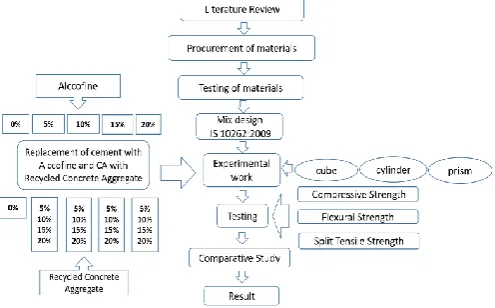
[image:2.595.310.558.555.709.2]Methodology explains how the project had been carried out in a step by step manner.
Fig 1: Methodology flow chart
© 2019, IRJET | Impact Factor value: 7.211 | ISO 9001:2008 Certified Journal | Page 7177
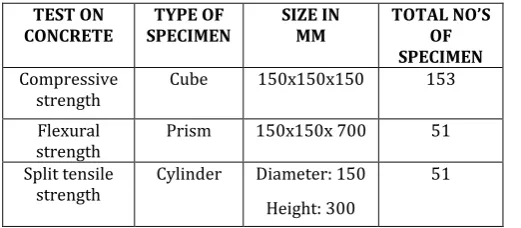
specimens were prepared for different mixes by manualmixing. For preparation of concrete specimen aggregates, cement, Alccofine and recycled concrete aggregates were added. After thorough mixing with water a uniform mix was obtained. Then concrete is filled in to the properly oiled moulds. After placing of concrete in moulds, proper compaction was given using the tamping rods manually. For compressive strength test, cubes of size 150mm x 150mm x 150mm were cast. For splitting tensile strength test, cylinders of size 150mm diameter and 300mm height were cast and for flexural strength test, beams of size 700mm x 150mm x 150mm without reinforcement were cast. Specimens thus prepared were demoulded after 24 hours of casting and were kept in a curing tank for curing and the testes are carried out in the appropriate dates.
Table -7: Details of Specimen
TEST ON
CONCRETE SPECIMEN TYPE OF SIZE IN MM TOTAL NO’S OF
SPECIMEN Compressive
strength Cube 150x150x150 153
Flexural
strength Prism 150x150x 700 51
Split tensile
strength Cylinder Diameter: 150
Height: 300
51
3. RESULTS AND DISCUSSION
This section offerings the results of the indirect externality assessment of the Project Case compared to the Base Case as identified through the figures. A material flow analysis occurring with the movement from the Base Case to the Project Case is discussed first and evaluation of externalities are conducted.
A. Compressive Strength
The results of compressive strength were presented in Table 8. The test was carried out to obtain compressive strength of concrete at the age of 7, 14 and 28 days. The cubes were tested using compression testing machine.
Table -8: Compressive Strength Test Results
MIXES PARTIAL
REPLACEMENT COMPRESSIVE STRENGTH OBTAINED(N/mm2)
CEMENT BY ALCCOFINE
%
C.A BY RCA
%
CURING PERIOD (days)
7 14 28
CC 0% 0% 23.79 32.94 36.6
M1 5% 5% 22.36 30.96 34.4
M2 5% 10% 20.93 28.98 32.2
M3 5% 15% 18.75 25.96 28.85
M4 5% 20% 18.72 25.92 28.8
M5 10% 5% 23.66 32.76 36.4
M6 10% 10% 22.36 30.96 34.4
M7 10% 15% 19.24 25.96 29.95
M8 10% 20% 18.72 25.92 29.6
M9 15% 5% 28.40 39.33 43.7
M10 15% 10% 26.84 37.17 41.30
M11 15% 15% 23.91 33.40 38.3
M12 15% 20% 22.30 32.26 35.85
M13 20% 5% 22.36 30.97 35.3
M14 20% 10% 22.96 31.79 35.05
M15 20% 15% 22.13 30.97 35.1
M16 20% 20% 21.64 29.97 33.1
[image:3.595.29.290.309.423.2]© 2019, IRJET | Impact Factor value: 7.211 | ISO 9001:2008 Certified Journal | Page 7178
Chart -1: Compressive strength of concrete (M1 to M8)Chart -2: Compressive strength of concrete (M9 to M16)
From the graph, the compressive strength of concrete decreases from mix 1 to mix 4 as compared to conventional concrete. It is clear that the compressive strength decreases as the percentage of RCA increases. Where the minimum value of compressive strength is 28.8N/mm2. The compressive strength increases at 15%
of replacement of alccofine and 5% of RCA where then it goes on decreases and the compressive strength decreases with increases in alccofine and RCA content after 15% of replacement of alccofine. Therefore, the optimum replacement of alccofine and RCA in concrete is at 15% of alccofine and 5% of RCA.
B. Split Tensile Strength
The results of split tensile strength were presented in Table 9. The test was carried out to obtain split tensile strength of concrete at the age of 28 days. The cylinders were tested using compression testing machine of capacity 2000KN.
Table -9: Split Tensile Strength of Concrete
The graphs are divided into two parts and a comparison is carried out with the result of conventional mix in the following graphs.
0 5 10 15 20 25 30 35 40 45 50
CC M1 M2 M3 M4 M5 M6 M7 M8
Com
pre
ss
iv
e
st
re
ngt
h
N/m
m
2
Mix
7DAYS 14DAYS 28DAYS
0 5 10 15 20 25 30 35 40 45 50
CC M9 M10 M11 M12 M13 M14 M15 M16
Com
pre
ss
iv
e
st
re
ngt
h
N/m
m
2
Mix
7DAYS 14DAYS 28DAYS
MIXES PARTIAL
REPLACEMENT
SPLIT TENSILE STRENGTH
OBTAINED(N/mm2)
CEMENT BY ALCCOFINE%
C.A BY RCA%
CURING PERIOD
28DAYS
CC 0% 0% 2.97
M1 5% 5% 3.0
M2 5% 10% 2.82
M3 5% 15% 2.77
M4 5% 20% 2.67
M5 10% 5% 3.67
M6 10% 10% 3.23
M7 10% 15% 2.85
M8 10% 20% 2.77
M9 15% 5% 4.52
M10 15% 10% 4.38
M11 15% 15% 4.20
M12 15% 20% 3.94
M13 20% 5% 3.72
M14 20% 10% 3.19
M15 20% 15% 2.82
© 2019, IRJET | Impact Factor value: 7.211 | ISO 9001:2008 Certified Journal | Page 7179
Chart -3: Split tensile strength of concrete (M1 to M8)
Chart -4: Split tensile strength of concrete (M9 to M19) From the graph it shows the increase and decrease of split tensile strength with gradual increases in percentage of alccofine and RCA. From mix 1 to mix 8 the maximum split tensile strength is 3.67 N/mm2 as compared to
conventional concrete. It is clear that split tensile strength increases at 15% of alccofine and 5% of RCA (M9). After M9 it is found that split tensile strength goes on decreasing. Where the minimum value of split tensile strength is 2.67 N/mm2. therefore, the optimum replacement of alccofine
and RCA in concrete for split tensile strength is found to be 15% of alccofine and 5% of RCA.
C. Flexural Strength
The results of flexural strength were presented in Table 10.
Table -10: Flexural Strength of Concrete
MIXES PARTIAL REPLACEMENT FLEXURAL STRENGTH OBTAINED (N/mm2)
CEMENT BY ALCCOFINE
%
C.A BY RCA%
CURING PERIOD
28DAYS
CC 0% 0% 4.04
M1 5% 5% 3.73
M2 5% 10% 3.21
M3 5% 15% 3.13
M4 5% 20% 2.90
M5 10% 5% 3.56
M6 10% 10% 3.52
M7 10% 15% 3.36
M8 10% 20% 3.31
M9 15% 5% 4.16
M10 15% 10% 4.14
M11 15% 15% 4.09
M12 15% 20% 3.99
M13 20% 5% 3.94
M14 20% 10% 3.73
M15 20% 15% 3.54
M16 20% 20% 3.21
Here also a detailed comparison is done by comparing the test results with flexural strength of prism casted for the conventional mix.
0 0.51 1.52 2.53 3.54 4.55
CC AF 5% RCA 5%
AF 5% RCA 10%
AF 5% RCA 15%
AF 5% RCA 20%
AF 10% RCA 5%
AF 10%
RCA 10%
AF 10%
RCA 15%
AF 10% RCA 20%
Sp
lit
te
nsi
le
stre
ngth
N/
mm
2
% of replacement 28 DAYS
0 0.51 1.52 2.53 3.54 4.55
CC AF 15% RCA 5%
AF 15%
RCA 10%
AF 15%
RCA 15%
AF 15% RCA 20%
AF 20% RCA 5%
AF 20% RCA 10%
AF 20% RCA 15%
AF 20%
RCA 20%
Spl
it
te
nsil
e
st
re
ngt
h
N/m
m
2
© 2019, IRJET | Impact Factor value: 7.211 | ISO 9001:2008 Certified Journal | Page 7180
Chart -5: Flexural strength of concrete (M9 to M19)Chart -6: Flexural strength of concrete (M9 to M19)
From the graph, it is clear that the flexural strength of prism is decreasing from mix 1 to mix 4 as compared to conventional concrete, where the minimum value of flexural strength is about 2.90N/mm2. From mix 5 to mix 8
the maximum flexural strength is found at 10% of alccofine and 5% of RCA. It is clear that the flexural strength increases at 15% of replacement of alccofine and 5% of RCA and then it goes on decreasing. The flexural strength of concrete decreases with increases in alccofine and RCA after 15% of replacement of alccofine. Therefore, the optimum replacement of alccofine and RCA in concrete is found at (M9) which is 15% of alccofine and 5% of RCA.
4. CONCLUSIONS
It has been observed from the literatures that the partial replacement of alccofine with up to 15% in concrete gains strength and the replacement of RCA with coarse aggregate up to 20% also gains strength.
Combining these two replacements together in concrete as per our thesis objective and after testing the concrete specimens, the following have been predicted.
1) There is constant increase in strength if we increase the percentage of alccofine up to 15% but there is a fall of strength if we increase the percentage of RCA.
2) The maximum compressive strength of 43.7 N/mm2 is obtained at 15% of alccofine and 5% of
RCA (M9).
3) There is an immense gain in split tensile strength has been observed from M9 to M11 and maximum strength is found at 15% alccofine and 5% of RCA that is 4.52N/mm2.
4) The maximum flexural strength obtained 4.16 N/mm² for the combination of 15% of alccofine and 5% RCA.
5) The result indicates that increasing percentage replacement of cement by alccofine over 15% and coarse aggregate by RCA over the certain percentage has resulted in reduction of compressive, flexural, split tensile strength.
6) It is found that harden properties of concrete with alccofine are enhanced.
7) Use of RCA in concrete provides a promising solution for the problem of waste management and reducing the impact on environment by saving the natural resources.
8) From the study we concluded that concrete made with 15% of Alccofine and 5 to 15 of RCA shows ncrese in performance of compressive, flexural and split tensile strength when compared with the normal mix and also other mixes.
9) The application of Alccofine and RCA in concrete are concluded feasible and can be suggested for future use. 0 0.5 1 1.5 2 2.5 3 3.5 4 4.5 CC AF 05% RCA 05% AF 05% RCA 10% AF 05% RCA 15% AF 05% RCA 20% AF 10% RCA 05% AF 10% RCA 10% AF 10% RCA 15% AF 10% RCA 20% Fl exu ra l s tre ngt h N/m m 2
% of replacement
28 DAYS 0 0.5 1 1.5 2 2.5 3 3.5 4 4.5 CC AF 15% RCA 05% AF 15% RCA 10% AF 15% RCA 15% AF 15% RCA 20% AF 20% RCA 05% AF 20% RCA 10% AF 20% RCA 15% AF 20% RCA 20% Fl ex u ral s tr en gth N /mm2
% of replacement
© 2019, IRJET | Impact Factor value: 7.211 | ISO 9001:2008 Certified Journal | Page 7181
REFERENCES
[1] Jianguang Shi, Yuezhou Xu. “Estimation and
forecasting of concrete debris amount in China” doi:10.1016/j.resconrec.2006.03.011.
[2] “Alccofine” By Counto Micro fine Products Pvt Ltd (A
joint venture with Ambuja Cement Ltd and Alcon Developers).
[3] IS 2386-4 (1963): Methods of Tests for Aggregates for Concrete, Part 4: Mechanical properties.
[4] IS 383 (1970): Specification for Coarse and fine aggregate from natural sources for concrete properties.
[5] IS 456 (2000): Plain and Reinforced concrete –Code of practice.
[6] IS 10262 (2009): Guideline for concrete mix design proportioning.
[7] Abhijitsinh Parmar, Dhaval M Patel, “Experimental
Study on High Performance Concrete by Using Alccofine and Fly Ash - Hard Concrete Properties” International Journal of Engineering Research & Technology (IJERT) Vol. 2 Issue 12, December.
[8] Silva RV and all. 2014“Properties and composition of
recycled aggregates from construction and demolition waste suitable for concrete production” Con. Build. Mater.65, 201–217.
[9] Yatin Patel, Dr. B.K. Shah, Study on durability of high
performance Concrete with alccofine and fly ash, (1998). IJSRD Vol.1 Issue (2013)
[10] Saurav, Ashok Kumar Gupta, “Experimental study of
strength relationship of concrete cube and concrete cylinder using ultrafine slag Alccofine” International Journal of Scientific & Engineering Research, Volume 5, Issue 5, May-2014 102 ISSN 2229-5518
[11] Manisha M. Magdum, Dr. V. V. Karjinni “Influence of
Mineral Admixture (Alccofine-1203) On the Properties of Hybrid Fiber Reinforced Concrete”
[12] Praveen Nayak S, H. S. Narashimhan and
Raghunandan V.Kadaba, “Hardened Properties of Concretes made with Micro Silica and Alccofine- A Performance Optimization based Comparative Study, International Journal of Engineering Research and Development e-ISSN: 2278-067X, p-ISSN: 2278-800X, www.ijerd.com Volume 10,Issue 8 (August 2014).
[13] Yatin H Patel, P. J. Patel, Prof. Jignesh M Patel, Dr. H S
Patel, “Study on Durability of High Performance Concrete with Alccofine and Fly Ash”. International Journal of Advanced Engineering Research and Studies, Vol. 2, Issue 3, pp. 154-157, April-June, 2013.
[14] D. Kornack and P. Rakic, “Cell Proliferation without
Neurogenesis in Adult Primate Neocortex,” Science, vol. 294, Dec. 2001, pp. 2127-2130, doi:10.1126/science.1065467.
[15] Chandra S., Implications of using recycled
construction and demolition waste as aggregate in concrete, Session lead paper, International Conference on Sustainable Waste Management and Recycling, Kingston University, London. 2004. Chandra S. Conference report.
[16] Rajesh Kumar S, Amiya K Samanta, Dilip K. Singha Roy An experimental study on the mechanical properties of alccofine based high grade concrete. Volume: 2, Issue:
10, 218-224 Oct 2015 www.allsubjectjournal.com.
[17] M.S. Pawar, A. C. Saoji. “Performance of Self
Compacting Concrete by Using Alccofine www.ijera.com Vol. 3, Issue 4, Jul-Aug 2013, pp.190-192.
[18] Sharma Devinder, Sharma, S. and Goyal, A., Utilization
of Waste Foundry Slag and Alccofine in Developing High Strength Concrete, Int. J. Electrochemical Sciences, Vol.11 (2016) (SCIE 1.5).
[19] Sunil Suthar, B.K.Shah and P.J.Patel , “Study on Effect
of Alccofine and Fly Ash Addition on the Mechanical properties of High Performance Concrete "International Journal for Scientific Research and Development pp 464-467 vol.1,issue 3,2013 ISSN(online) : 2321-0613.
[20] Al-Harthy(2007) “Properties of Recycled Aggregate