Non Invasive Brain Computer Interface for
Movement Control
V.Venkatasubramanian
1, R. Karthik Balaji
2Abstract: - There are alternate methods that ease the movement of wheelchairs such as voice control, joystick control etc. Despite the claim that these measures has proved to be useful, the serious disadvantage is that it cannot aid people who suffer from Slow Cortical Potentials SCPs. Hence there is a delay between the mechanical inputs and therefore a delay in response from the system. The proposed work in this area of research is the Use of EEG and a BCI to detect the signals from the brain. A hand held EEG is connected with the Subject's brain with an interfacable GUI. The principle used here is “The oddball paradigm”, According to this; The EEG that is placed strategically on the motor cortex of the brain collects the analog P300 signals amplifies them converts them into digital signal and renders it to the hand held embedded computer. The Computer has programmed BCI 2000 software running in it is for signal translation and feature extraction.
Index Terms:- EEG- Electroencephalography, BCI- Brain Computer Interface, p300- Signals from the sensory cortex, SCP-Slow Cortical Potential
I. INTRODUCTION
For the past few decades technological advancements has proved to be a boon for the disabled people with very restricted movement abilities. New innovations such as voice controlled wheelchair, remote and joystick controlled wheelchairs has served as an aid for these people. Despite the claim that these measures has proved to be useful, the serious disadvantage is that it cannot aid people who suffer from serious Slow Cortical Potentials SCPs. A SCP is a state where the motor reflex of the patient is very slow. Hence there is a delay between the mechanical inputs and hence a delay in response from the system.
Manuscript submitted for review on June 22, 2009.
1V. Venkatasubramanian was with Velammal Engineering College, Anna
University, Chennai, Tamilnadu, India He is now with Computer Engineering, Faculty of EEMCS, Delft University of Technology in Netherlands.(phone: 091 9884483919; e-mail: [email protected]).
2R. Karthik Balaji was with Velammal Engineering College, Anna
University, Chennai, Tamilnadu, India (e-mail: [email protected]).
Amyotrophic lateral sclerosis, or ALS, is a degenerative disease of the motor neurons which results in complete paralysis of the victim. We are developing a wheel chair system that aids people suffering from ALS as well as SCPs. The system must be usable with minimal infrastructure modification. It must be safe and relatively low cost and must provide optimal interaction between the user and the wheelchair within the constraints of the brain-computer interface. Our Control strategy involves controlling the wheel chair in a closed environment like office, home, hospitals etc. Therefore we have proposed a new idea to aid such people, by using their mind to control such devices with more ease.
II. BACKGROUND
There has been a lot of improvement in the field of Human Computer Interaction (HCI). There is lot of invasive techniques to record activity signals from the human brain. For instance, BCI researchers have placed neural implants in the brains of animals and humans to control simple mechanisms1. But such invasive methods to record brain
signals might sound to be very risky at times as it needs penetration into human brain. Since, such invasive techniques are still risky, human BCI research has focused mainly on noninvasive methods for monitoring brain activity, such as electroencephalography (EEG), magneto encephalography, near-infrared spectroscopy, and functional magnetic resonance imaging. Attempts to control the movement of an object using EEG BCI directly have been too complicated, and it requires a series of complex decision makings even to complete a simple command.
III. PROPOSED SYSTEM
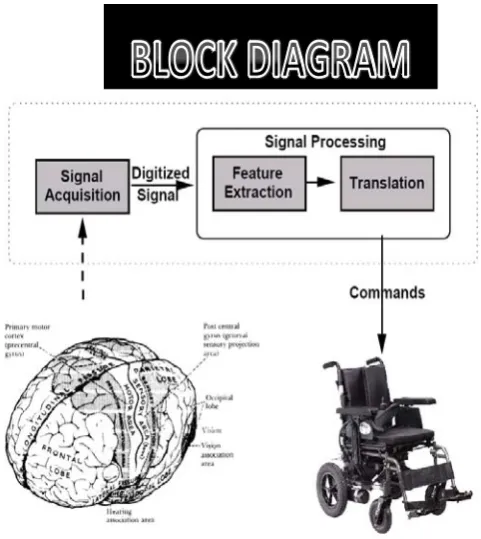
[image:2.595.309.518.196.326.2]All that has been said already exists in a way or the other. What is exactly new in the system? The System, apart from making use of the p300 signals from the motor cortex, also is built in a cost effective scale. We have implemented the system using BCI 2000 software that can perform all the functions that an actual Brain Computer Interface (BCI) does. So look what is the advantage? It is rather more of a software implementation of the system rather than going in for high end hardware components. Now let us go in depth into the realization of the system.
Fig. 1 Overall Architecture
A. Properties of P300 Signal
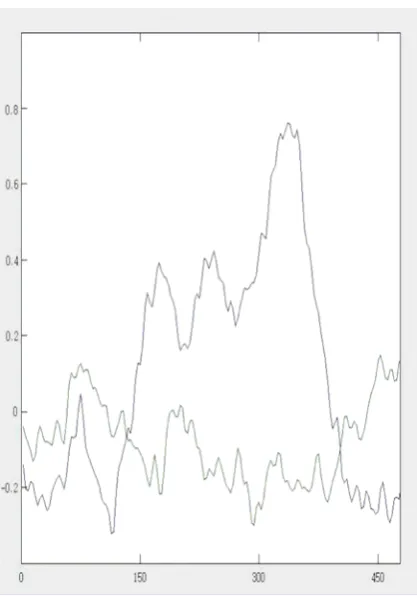
The P300 (P3) wave is an event related potential (ERP) which can be recorded via electroencephalography (EEG) as a positive deflection in voltage at a latency of roughly 300 ms in the EEG. The signal is typically measured most strongly by the electrodes covering the parietal lobe. The presence, magnitude, topography and time of this signal are often used as metrics of cognitive function in decision making processes. While the neural substrates of this ERP still remain hazy, the reproducibility of this signal makes it a common choice for psychological tests in both the clinic and laboratory.
[image:2.595.52.293.270.540.2]An EEG-based BCI is particularly well suited for our wheelchair system because it can deliver a continuous time signal and the necessary hardware is portable. A set of electrodes on a cap (see figure 2) is wired to an amplifying, filtering, digitizing device, which transfers the signals to a computer for analysis. The associated electronic equipment is smaller than a laptop and weighs less than one kilogram.
Fig. 2 A mind controlled wheelchair using EEG and a programmed computer using BCI 2000 software
A typically acquired P300 signal using EEG looks like the one below.
Fig. 3 P300 Signals Acquired using EEG during various states
B. BCI 200
[image:2.595.319.532.417.653.2]acquisition, stimulus presentation, and brain monitoring applications. BCI2000 supports a variety of data acquisition systems, brain signals, and study/feedback paradigms. During operation, BCI2000 stores data in a common format (BCI2000 native or GDF), along with all relevant event markers and information about system configuration. BCI2000 also includes several tools for data import/conversion (e.g., a routine to load BCI2000 data files directly into Mat lab) and export facilities into ASCII. The Supported Brain Signals are Slow Cortical Potentials (SCPs), Evoked Potentials, EEG mu/beta Rhythms (ERD/ERS) (2 methods), ECoG Oscillations, Single-Neuron Action Potentials.
Fig. 4 Filtering of Desired Signal done using BCI 200
C. Motor Cortex
Motor cortex is a term that describes regions of the cerebral cortex involved in the planning, control, and execution of voluntary motor functions. The motor cortex is divided into Primary Motor Cortex (M1) and the secondary motor cortex which includes posterior parietal cortex, premotor cortex and supplementary motor area. The primary motor cortex (or M1) is a brain region that in humans is located in the posterior portion of the frontal lobe. It works in association with pre-motor areas to plan and execute movements. M1 contains large neurons known as Betz cells which send long axons down the spinal cord to synapse onto alpha motor neurons which connect to the muscles. Hence the movement of muscle takes place. The posterior parietal cortex is responsible for transforming visual information into motor
commands. Our aim in this highly focused to the generation of P300 signal peak from the motor cortex area when the patient wants to plan and execute a movement.
D. Embedded Computer
An embedded Computer is a special-purpose
computer system designed to perform one or a few dedicated functions, often with real-time computing constraints. It is usually embedded as part of a complete device including hardware and mechanical parts. In contrast, a general-purpose computer, such as a personal computer, can do many different tasks depending on programming. Embedded systems control many of the common devices in use today. Since the embedded system is dedicated to specific tasks, design engineers can optimize it, reducing the size and cost of the product, or increasing the reliability and performance. Some embedded systems are mass-produced, benefiting from economies of scale.
IV. IMPLEMENTATION
The Electroencephalogram or EEG that is attached to the head of the patient is placed strategically along the motor cortex to amplify and extract the signals that are produced in the area. The handheld embedded computer is specifically designed to get input from the EEG and process the signal and give the output to a joystick controlled wheel chair.
[image:3.595.349.500.524.732.2]The GUI of the hand held embedded computer is specially designed in such a way that random buttons indicating the directions of the movement flashes in periodic time intervals.
Fig. 5a Random buttons flashing at periodic time intervals
[image:3.595.363.501.636.725.2]Now when the buttons keep flashing in the screen at random time intervals, when the patient sees the direction of the button he wants to move, a P300 signal peak is generated in the motor cortex of the brain.
The EEG that is placed strategically on the motor cortex of the brain collects the analog P300 signals amplifies them converts them into digital signal and renders it to the hand held embedded computer. The Computer has programmed BCI 2000 software running in it is for signal translation and feature extraction.
Now when the computer receives the signal from the EEG device, it checks with the frequency pattern of the already stored formats. When the obtained signals cross the threshold values, this means that the patient has initiated voluntary stimuli. The P300 signal peak is received 300 milliseconds after the user has initiated a stimulus. Thus there is not too much lag between the time when the user has wanted to move and the time when the signal is received by the computer.
When the input signal exceeds the threshold value the button that was responsible for generating a P300 signal peak is given as digital input to the joystick controlled wheel chair.
A Digital to Analog Signal Converter DAC is embedded to a joystick controlled wheel chair. When the button input is received at the wheel chair, a comparator checks and compares the type of operation that has to be performed. The type of operation corresponds to the direction of the movement that has to be activated in the wheelchair. When the direction is determined by the comparator circuit, the DAC circuit converts the Digital signal to an analog signal and then activates the corresponding switch. Hence the system moves.
V. CONCLUSION
Thus the system is implemented in such a way that it is simple and cost effective so that it can aid the physically challenged people with slow cortical potentials SCP and ALS. Since in most of the cases SCPs usually accompany various disabilities of limbs, this system would be a most economical form of locomotion within a closed area. However, the efficiency of the system greatly depends on the efficient programming of the embedded computer and the frequency at which the GUI flashes, as the human brain responds more to sudden changes in the system, rather than a predetermined regular change. Hence GUI should be designed in such a way that it flashes in a haphazard manner within less time intervals. However care has to be taken such that the time at which the button flashes,
is more than the time that is taken for the system to respond. Hence there would be a smooth operation of the system.
VI. FUTURE WORKS
[image:4.595.307.516.335.634.2]The entire concept of the paper started with the idea of serving some form of aid for people suffering with dementia. This paper being the smallest level of implementation, at larger scales this tool could be a big boon for people who suffer memory loss by converting the brain signals into some form of text and storing it in a hand held device. This could serve as a form of reminder for the people with memory loss. This system can also be implemented with path guidance algorithm form Artificial Intelligence to detect the obstacles in its way and to control the movement of the system accordingly.
Fig. 6 P300 Signal received which crosses the threshold frequency already stored in the handheld computer
REFERENCES
[1] “Focus on Brain-Machine Interfaces,” Nature, 13 July 2006, pp. 164–171; www.nature.com/ nature/focus/brain.
[2] Anthony J. Portelli and Slawomir J.Nasuto, “Towards Construction of Cost Effective Brain Computer Interface for goal oriented applications,” School of Systems Engineering, University of Reading,Whiteknights, RG6 6AY,
Reading, UK
[3] Luck, S. J., ‘An Introduction to the Event Related PotentialTechniqe,’ MIT Press, 2005.
[4] Rebsamen, B., Burdet, E., Guan, C.T., Chee, L., Zeng, Q.,Ang, M. and Laugier, Ch., ‘Controlling a wheelchair using a BCI with low information transfer rate,’. Proc. 2007 IEEE 10th International Conference on Rehabilitation Robotics, Noordwijk, The Netherlands, 2007, 1003-1008.