II
Abstract
Purpose – Creative capital has been a popular topic in the urban and economic literature since it was introduced by Florida (2002). Research on creative capital has been focused on the urban level, where creative capital is considered a key predictor of economic growth of urban cities and regions. Scholars tried to translate this concept to an organizational level. However, this research stream is still limited and mostly based on conceptual papers. This research stream also proposed that Human Resource Management impacts the firm-level creative capital(Straatman, Veenendaal, and van Velzen, 2012) . This thesis is therefore aimed at extending existing literature by exploring creative capital at an organizational level as well as its relationship to Human Resource Management with a special focus on the role and use of external labor. Design / methodology / approach – A qualitative multiple comparative case study based on a explorative research approach was employed. Semi-structured interviews with managers at eight organizations within the design, engineering and manufacturing industry in the Twente region in the Netherlands were conducted. Previous to the interviews, these organizations were categorized into low- and high creative capital organizations in order to ensure that both low and high creative capital organizations constituted the sample to allow for exploration of differences between these quotas. The interviews were fully transcribed and analyzed by using open coding. Before cross comparing between the cases, the case organizations were first separately analyzed in order to describe the role and use of external labor and assess if the assumed level of creative capital coincided with the actual creative capital findings of the interviews. This then allowed for the exploration of differences in the use external labor between high and low creative capital organizations. Findings – Creative capital exists at the organizational level and therefore has a right for existence. Differences exist between the use and role of external labor for low level creative capital and high firm-level creative capital organizations. While low creative capital organizations mostly use external labor in form of temporary employees for non-core functions for capacity and flexibility reasons, high creative capital organizations also make use of external employees in form of contract and project-based employees as well as consultants and specialists for core activities in order to enhance the diversity of KSAOs and in turn the creative capital of the organization. Additionally, we found support that the use of labor market intermediaries for external labor differs between low creative capital organizations and high creative capital organizations. While low creative capital organizations mostly use labor market intermediaries that are primarily focused on providing information about external employees, high creative capital organizations used specialized labor market intermediaries that resulted in a better match between the organization and the external employee in order to stimulate the creative capital of the organization. Additionally, the dynamism of the market seemed to influence the importance of external labor for creative capital of organizations as the findings indicate that external labor has a stronger effect on creative capital for companies operating in dynamic environments than for companies operating in stable environments.
Limitations / further research – The findings cannot be generalized as an explorative case study based on purposive sampling was conducted. Thus, future research should aim at developing a study design that allows generalizing the findings to a larger population. This should include a larger sample size as well as a more detailed research scope by focusing on certain departments within an organization. Additionally, research should also further investigate the role of consultants for firm-level creative capital and the possible moderating effect of the dynamism of the market environment.
Originality / value – The study is of high originality and value to existing theory as no research exists aimed at exploring the relationship between external labor and firm-level creative capital.
Key-Words: Creative Capital, Firm-level creative capital, External labor, Innovation
III
Executive Summary
This thesis is part of the creative capital research program, which is focused on exploring the relationship between HRM and firm-level creative capital. Firm-level creative capital, which originates from the urban literature (Florida, 2002), has been argued to be underdeveloped (Straatman, Veenendaal, and van Velzen, 2012). Florida and Goodnight (2005) therefore conducted research on creative capital on the organizational level. However, the authors only based the study on one organization without assessing the creative capital of that case based on an operationalization of firm-level creative capital. Straatman et al. (2012) aimed at conceptually extending literature. Based on the idea that firm-level creative capital is embedded within employees, Straatman et al. (2012) propose that Human Resource Management might stimulate firm-level creative capital as HR is responsible for practices used to recruit, select, train, develop and motivate these employees. Thus, this research builds upon the work of Straatman et al. (2002) by exploring the relationship of HRM, specifically the use of external labor, on firm-level creative capital.
However, due to the fact that existing empirical research is limited, no operationalization of the concept of firm-level creative capital exists. Nonetheless, in order to explore the relationship between external labor and firm-level creative capital, an operationalization is of utmost importance. Hence, in conclusion with the creative capital research program, an operationalization of creative capital and its dimensions was developed. In order to derive at the operationalization, firm-level creative capital was positioned in relation to other capitals and therewith refuted existing critiques regarding the novelty and importance of creative capital by Glaser (2004). Based on existing literature, we argued that there is an overlap in the scope of the concepts of firm-level creative capital as well as human capital, social capital and organizational capital. However, as only firm-level creative capital constitutes the essence of the aggregated creative ability, the other concepts alone cannot explain firm-level creative capital, which is why we strongly argue in contrast to the critique of Glaser (2004) that firm-level creative capital has a right for existence.
Based on the literature review we therefore defined firm-level creative capital as “the aggregated creative organizational ability, which is the organizational enactment to integrate the creativity of individuals as well as the creativity embedded in their relationships”. Individual creativity is therewith understood as the ability of employees to make a valuable combination of previously unrelated concepts, knowledge, ideas or experience for the organization.
As mentioned above, organizations might use HR management to increase their firm-level creative capital (Straatman et al., 2012). Organizations might obtain firm-level creative capital from its environment by simply hiring employees with higher creative abilities (Straatman et al., 2012). In turn, we expect that the added creative ability then increases the firm-level creative capital. These employees can be either hired based on a standard employment contract or as flexible, external employees.
IV knowledge, skills, abilities and other characteristics (KSAOs) that are not currently available within the organization
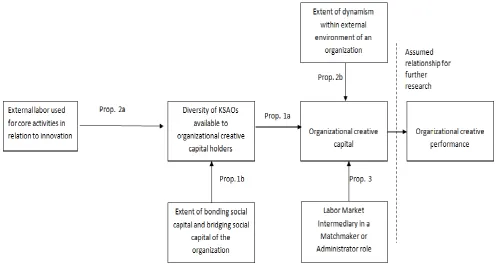
The extensive literature review relating the concepts of creative capital, firm-level creative capital and the use of external labor has led to a research framework, indicating that we expected organizations using external labor for core positions in relation to innovation to have a stronger influence on the firm-level creative capital as a wider variety of knowledge, skills, abilities and further characteristics (KSAOs) are available within the organization that the employees can draw upon to enhance their creativity. In turn, we further proposed that this diversity of knowledge and skills through external labor can be enhanced through the use of a labor market intermediary focused on supporting the organization in finding an external employee that actively stimulates the creative capital of the organization. Additionally, we expected the importance of external labor for the creative capital of an organization to differ based on the dynamism o f the market.
Subsequently, a qualitative, multiple comparative case study of organizations with low, medium and
high creative capital was conducted using semi-structured interviews among eight case organizations in the Twente area in Netherlands were selected using a combination of purposive, quota sampling and self-selection. The respondents were asked to discuss the existing level of creative capital at the company, as well as the use and role of external labor for the organization. The interview outcomes have led to valuable insights of both theoretical and practical relevance.
The research findings indicated support for the above discussed proposed framework. However, we only found partly support for our proposition that external labor increases the diversity of the workforce as the research findings indicated that external labor can be either used to increase the diversity or to hire external employees with similar KSAOs and backgrounds as the existing workforce, leading to homogeneity of the workforce. Nonetheless, the main conclusions in this paper are that differences exist between the use and role of external labor for low creative capital and high creative capital organizations. While low creative capital organizations mostly use external labor in form of temporary employees for non-core functions for capacity and flexibility reasons, high creative capital organizations also make use of external employees in form of contract and project based employees as well as consultants and specialists for core activities in order to enhance the diversity of KSAOs and in turn the creative capital of the organization. Additionally, we found support that the use of labor market intermediaries for external labor differs between low creative capital organizations and high creative capital organizations. While low creative capital organizations mostly use labor market intermediaries that are primarily focused on providing information about external employees, high creative capital organizations used specialized labor market intermediaries that resulted in a better match between the organization and the external employee in order to stimulate the creative capital of the organization. Additionally, the dynamism of the market seemed to influence the importance of external labor for creative capital of organizations.
VI
Acknowledgments
This thesis is the conclusion of the research I have done as part of my graduation for the Master
of Sciences in Business Administration at the University of Twente. Having chosen the study track Human Resource Management, I realized that I am especially interested in the relationship between HRM and innovation. I am therefore thankful to be part of a research team focusing on creative capital and its relation to HRM. I highly enjoyed working on this topic within this research team for the past six months.
I would like to use this opportunity to first thank my supervisors, Ir. André Veenendaal, Prof. Dr. Jan Kees Looise and Dr. Tanya Bondarouk for their constant support and insightful comments. Further, I would also like to thank my fellow students, who were part of the research team, Roy Noordhoek and Celesté van Zijp. I am grateful to have had you as my group members and that I could always rely on you. Working with you kept me motivated and enthusiastic, even in challenging phases of the research.
I also would like to thank my parents, family, and friends who have helped me out in more than one occasion and always believed in me and my capabilities. You have all kept me on track and your feedback has proven to be very helpful in completing my studies at the University of Twente.
Last but not least, I would like to thank and to express my gratitude to all the companies participating in this study! It was a great experience to research something theoretical and investigate it in praxis.
VII
Table of contents
Abstract ... I Executive Summary ... III Acknowledgments ...VI List of Figures ...IX List of Tables...IX List of abbreviations ... X
1Introduction ... 1
1.1Research background... 1
1.2Research problem statement ... 3
1.3Research objective ... 5
1.4 Research questions ... 6
1.5Research strategy ... 6
1.6 Relevance of the thesis ... 8
1.7 Disposition of the thesis ... 9
2 Theoretical foundation ... 10
2.1 An introduction to Creative Capital ... 11
2.2 Research findings of creative capital in the urban literature ... 12
2.2.1 Research findings concerning the creative class and economic growth ... 13
2.2.2 Shortcomings in the research on creative class ... 14
2.3 Defining and positioning organization-level creative capital ... 15
2.3.1 Positioning firm-level creative capital in relation to the concept of intellectual capital ... 16
2.3.2 Conclusion of the relationship between firm-level creative capital and other forms of capital ... 21
2.3.3 Extending the definition of creative capital by discussing the concept of creative ability ... 22
2.3.4 Definition of firm-level creative capital ... 25
2.4 Firm-level creative capital and innovation ... 25
2.5Firm-level creative capital and HRM ... 27
2.6 External labor ... 28
2.6.1 Advantages and disadvantages of using external labor ... 29
2.6.2 Theory development on the relationship between external labor and creative capital... 30
2.6.3 Labor market intermediaries ... 35
2.7 Resulting Research Framework ... 39
3 Methodology ... 41
3.1 Research philosophy ... 42
3.2 Research approach ... 43
3.3 Research strategy ... 43
VIII
3.5 Sampling methods and selection of respondents for the qualitative study ... 44
3.6 Performed research activities and data analysis ... 48
3.7 Operationalization of concepts ... 50
3.7.1 Operationalization of firm-level creative capital ... 51
3.7.2 Operationalization of external labor ... 54
3.8 Issues related to qualitative reliability and validity ... 56
4Research findings ... 58
4.1 Case descriptions ... 58
4.1.1 Analysis of Case Organization A ... 59
4.1.2 Analysis of Case Organization B ... 62
4.1.3 Analysis of Case Organization C ... 67
4.1.4 Analysis of Case Organization D ... 71
4.1.5 Analysis of Case Organization E ... 73
4.1.6 Analysis of Case Organization F ... 76
4.1.7 Analysis of Case Organization G ... 78
4.1.8 Analysis of Case Organization H ... 83
4.2 Cross comparison of firm-level creative capital ... 87
4.3 Cross comparison of the role and use of external labor ... 90
5. Discussion and Conclusion ... 95
5.1 Research findings in relation to the research propositions ... 95
5.2 Answering the research questions ... 99
5.3 Findings in relation to existing literature ... 101
5.4 Limitations and further research ... 102
5.5 Conclusion ... 105
References ... 109
Appendix ... 116
I Interview protocol ... 117
II Introduction e-mail send to case organizations ... 128
IX
List of Figures
Figure 1 Firm-Level Creative Capital Research Program Framework ... 2
Figure 2 Research process ... 7
Figure 3 Chapter outline ... 9
Figure 4 Visualization of the relationship between firm-level creative capital and other capitals ... 22
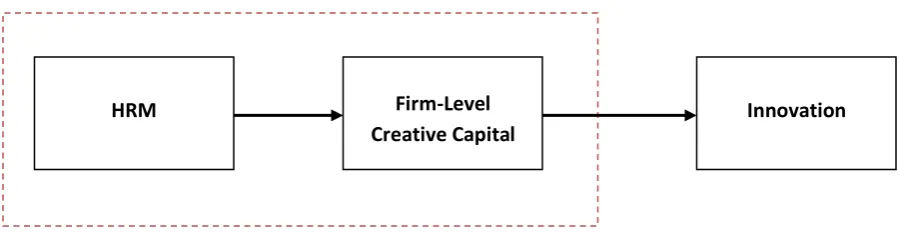
Figure 5 Proposed relationships between HRM, Firm-level creative capital and Innovation and research focus of this thesis ... 25
Figure 6 Creative Capital Research Program Focus ... 28
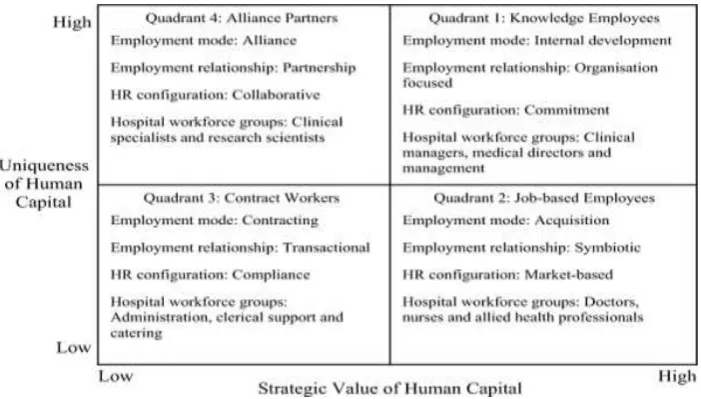
Figure 7 Employment modes in relation to strategic value of uniqueness of employees ... 33
Figure 8 Types of Labor Market Intermediaries ... 36
Figure 9 Resulting research framework with proposed relationships ... 40
Figure 10 The Research Onion ... 41
Figure 11 Assumed creative capital of case organizations ... 58
Figure 12 Positioning of case organizations on creative capital scale... 88
Figure 13 Actual Creative Capital Quotas based on the interview analysis ... 89
Figure 14 Proposed relationship for further research ... 98
List of Tables
Table 1 Comparison of different capitals at the organizational level ... 21Table 2 Overview of Case Organizations ... 46
Table 3 Operationalization of firm-level creative capital ... 52
Table 4 Operationalization of External Labor ... 54
Table 5 The role and use of external labor of low creative capital organizations ... 90
Table 6 The role and use of external labor for medium creative capital organizations ... 92
X
List of abbreviations
AMO
Ability, Motivation, Opportunity
CC
Creative Capital
HR
Human Resources
HRM
Human Resource Management
KSAO
Knowledge, Skills, Abilities and other Characteristics
LMI
Labor Market Intermediary
OCC
Firm-level creative capital
THS
Temporary Help Service Firm
PEOs
Professional Employer Organizations
1Introduction
1
1Introduction
1.1
Research background
Creative capital has been a popular topic in the urban and economic literature since it was introduced
in Richard Florida’s best-selling book The rise of the Creative Class (2002). Since its introduction, research on creative capital has been focused on the urban level, where creative capital is considered a
key predictor of economic growth of urban cities and regions. Florida (2002, p. 249) therefore argues
that “regional economic growth is powered by creative people, who prefer places that are diverse, tolerant and open to new ideas”. This means that creative people can be understood as the key drivers
of urban and regional growth as they attract creative business, generate innovation and have a higher
level of entrepreneurship. Hence, areas with more creative people are expected to outperform areas
with fewer creative people (Florida, 2002, 2004, 2008; Lee, Florida & Acs, 2004; Stolarick & Florida,
2006). The discussion within this literature stream has been mostly concentrated on questions
regarding the measurement and accumulated of urban creative capital. Often cited in relation to this is Florida’s (2002, 2005) work on the creative class, which is a list of occupations that require and use
creative capital. However, Straatman, Veenendaal, and van Velzen (2012) arguee that literature
regarding creative capital is rather undeveloped as it should rather focus on fundamental questions
such as proofing the existence of creative capital. Since organizations are the places where people
work together and create economic value for the organization, Straatman (2011) conceptualizes that
firm-level creative capital will contribute to this research as it is the performance of organizations
within a city or region that determines that area’s economic performance. By this logic, it is expected
that the creative capital identified in regions could also be identified in the organizations within this
regions. Hence, we expect creative capital to contribute to the organization's performance similar to
the way it does on the urban level (Veenendaal, van Velzen, & Looise, 2012).
In this paper we define firm-level creative capital as the aggregated creative organizational ability, which is the organizational enactment to integrate the creativity of individuals as well as the creativity embedded in their relationships. Individual creativity is therewith understood as the ability of employees to make a valuable combination of previously unrelated concepts, knowledge, ideas or experience for the organization.
Based on this definition, the concept of creative capital can be considered as a resource, which is
defined as “all assets, capabilities, organizational processes, firm attributes, information, knowledge
etc. controlled by a firm that enable a firm to conceive of and implement strategies that increase its
efficiency and effectiveness” (Barney, 1991, p. 101). Furthermore, according to the resource based
view, organizations achieve sustainable competitive advantage if they possess resources that are
valuable, rare, inimitable and non-substitutable (VRIN) (Barney, 1991). As creative capital is
1Introduction
2 capital might be difficult to replicate by competitors. Further, creative capital is valuable for
innovation (Florida & Goodnight, 2005). Consequently, creative capital fulfils the VRIN criteria and
might therefore lead to competitive advantage to organizations. It is therefore of utmost importance to
study the concept of creative capital and how it can be facilitated.
Based on the idea that firm-level creative capital is embedded within employees, Straatman et al.
(2012) propose that Human Resource Management might stimulate firm-level creative capital as HR is
responsible for practices used to recruit, select, train, develop and motivate these employees. Hence,
organizations might obtain creative capital either from its environment or develop it internally
(Straatman et al., 2012). The first option refers to organizations using HR practices related to
recruiting standard employees or external employees with higher creative ability in order to stimulate
firm-level creative capital. The latter option refers to training and job design practices to enhance the
creative ability of the existing workforce (Straatman et al., 2012).
We therefore build upon the work of Straatman et al. (2012) by extending the existing literature
and further exploring the proposed relationship of creative capital and HRM with qualitative research.
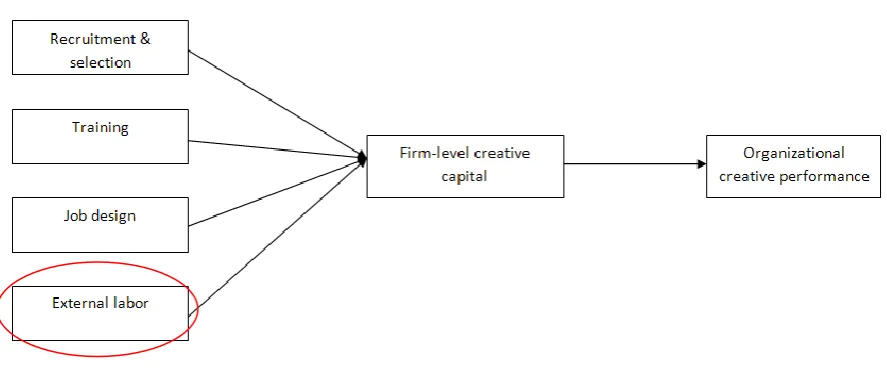
This thesis is part of a larger research program focused on exploring the central research question of: What is the impact of human resource management on creative capital?
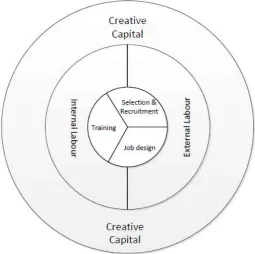
[image:12.595.196.452.483.737.2]In order to explore and answer the central focus question of the creative capital research program, the four HR practices- recruitment and selection, training, job design and external labor- mentioned by Straatman et al. (2012) were chosen to be researched (see figure 1).
1Introduction
3 The focus of this specific thesis is the relationship and role of external labor on creative capital. The research on the relationships of the further HR foci and creative capital is discussed in different theses (Noordhoek, 2013; van Zijp, 2013; Groot Koerkamp, forthcoming). The overall objective of the research group is to provide a profound, comprehensive overview and shed light onto the relationship between human resource management and creative capital.
1.2
Research problem statement
As mentioned above, organizations might obtain firm-level creative capital from its environment by simply hiring employees with higher creative abilities (Straatman et al., 2012). In turn, we expect that the added creative ability then increases the firm-level creative capital. These employees can be either hired based on a standard employment contract or as flexible, external employees.
External labor, also referred to as contingent labor or flexible staffing within literature, can be understood as all forms of non-standard employment agreements including temporary agency workers, consultants, part-time employees, network partners and alliances. These employees are only hired for a short period of time or for the duration of a certain project and therewith fulfill specific requirements of knowledge, skills, abilities and other characteristics (KSAOs) that are not currently available within the organization.
Nesheim, Olsen, and Kalleberg (2007) found that the use of external labor is in line with an organization following an innovation strategy as organizations can hire external labor with scarce KSAOs, which in turn leads to the generations of new ideas. Nesheim et al. (2007) refer to this as ‘qualitative flexibility’ as they argue that external labor allows “to assess, create, and implement new knowledge and to change tasks and activities according to changes in the market, the strategy of the firm, and relevant technology” (p. 251). We therefore argue that this ‘qualitative flexibility’ also applies to firm-level creative capital. Hence, we propose that the use of external labor allows for new knowledge development through a wider available network of diverse KSAOs, and in turn to increased firm-level creative capital.
1Introduction
4 barriers, which in turn enhances the creative economic performance in regions (Boschma & Fritsch, 2009).
Straatman et al. (2012) translate this idea to an organizational level and argue that creative capital should not only be obtained but should be mobilized similar as proposed in urban literature. Hence, a diverse, heterogeneous workforce might mobilize creative capital (Veenendaal et al., 2012). Also Shalley and Gilson (2004, p. 43) argue that “increasing diversity should increase the range of knowledge, skills, and perspectives available within a group that should positively impact creativity [and] stimulate the consideration of nonobvious alternatives”. This is also in line with human capital theorists, who argue that areas or organizations with a high variety of knowledge, skills, abilities and other characteristics leads to higher performance (Glaeser, 2004; Veenendaal et al., 2012). Also organizational theorists found that diversity in terms of group composition benefits group creativity performance (Shalley & Gilson, 2004; Woodman, Sawyer, & Griffin, 1993). In turn, this then increases organizational creativity (Woodman et al., 1993).
Urban scholars usually operationalize creative capital in terms of diversity in ethnicity (melting pot index) (Hoyman & Faricy, 2009), diversity in terms of the number of bohemians (bohemian index) (Boschma & Fritsch, 2009; Florida, 2004) and in terms of sexual orientation (gay index) (Hoyman & Faricy, 2009). According to Bissola and Imperatori (2011) diversity in an organizational context could be understood in terms of ethnic background as well as differences in creative abilities between employees or teams. Consequently, this means that a higher organizational diversity, such as differences in KSAOs and in creative abilities between employees or teams, might lead to an increase of firm-level creative capital as the employees, which are the holders of the creative ability, have an increased amount of KSAOs to draw upon in order to generate new ideas (Straatman et al., 2012).
1Introduction
5 However, these finding are contradicting to the propositions of Straatman et al. (2012). Possible reasons for these contradicting findings could be the study design of Florida and Goodnight (2005) as only one case was used and no operationalization was developed to actually assess and compare the firm-level creative capital of SAS to other organizations. Additionally, the use of external labor to influence firm-level creative capital might also depend on further contingent factors such as the competitive pressures of the environment and might therefore explain the absence of flexible staffing at SAS. As an illustration, if competitive pressures are high it might be that organizations need to ensure that all KSAOs are developed internally to protect their competitive advantage from their competitors.
In order to gain new knowledge relating the relationship of the use and role of external labor on firm-level creative capital, it is therefore of utmost importance to conduct further research based on multiple case organizations in order to allow for comparisons between low firm-level organizations and high-firm-level organizations.
1.3
Research objective
Forthcoming the research problem statement, the main research objective of this thesis is to extent the existing literature by exploring the relationship between external labor and firm-level creative capital. Within this research objective, three research goals can be identified.
First, in order to explore the relationship between external labor and firm-level creative capital, it first needs to be further investigated how creative capital can be applied to an organizational level as the existing literature on this issue is rather limited. Second, as the relationship between external labor and firm-level creative capital can then be explored, the goal for this objective is to research conditions influencing the use and role of external labor and how this then in turn influences firm-level creative capital. Lastly, in order to extend the existing literature, the goal is to research the relationship in form of qualitative, semi-structured interviews for multiple organizations with both high and low creative capital, rather than with just one case organization as Florida and Goodnight (2005) did.
1Introduction
6
1.4 Research questions
In order to derive at answers to the research objective, the following research question arises What is the impact and role of external labor on firm-level creative capital?
Based on this research question, the following sub questions will be answered
- What constitutes firm-level creative capital? How does creative capital differ from other capitals?
- How can an organization make use of external labor? What are advantages and disadvantages
of using an external labor?
- How does the use and role of external labor influence creative capital?
- How does the use of external labor for core activities versus non-core activities influence creative capital?
- What is the role of labor market intermediaries on creative capital?
1.5
Research strategy
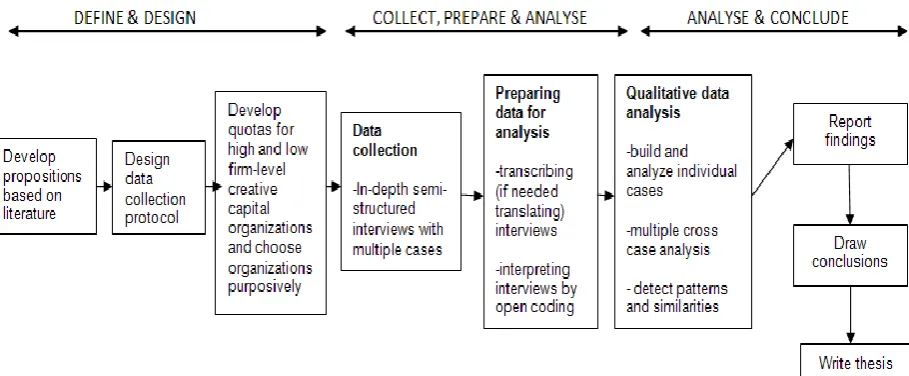
The thesis pursues a research design in which the existing literature on creative capital and firm-level creative capital form the basis of the analysis. Hence, the first step of the research was to review the existing literature and extend it by positioning firm-level creative capital.
Additionally, based on a literature review on external labor, propositions relating the relationship of these concepts were formulated. In order to conduct research on this relationship, it is of utmost importance to be able to operationalize the concepts. However, the intense literature review revealed that no existing operationalization for firm-level creative capital exists. An assessment of the operationalization of creative capital in urban literature showed that these existing scales were not applicable to the organizational level as the focus of these studies were on indexes such as the amount of bohemians or gays. Hence, in conclusion with the research program, an operationalization for firm-level creative capital was developed. In order to assess this operationalization and detect differences between organizations with high and low creative capital, the choice for a comparative, multiple case study appeared to be valuable. Hence, the advantage of this thesis is that the results are not only based on one case such as the research of Florida and Goodnight (2005) but on eight case organizations, which in turn also increases the reliability and validity of this study.
firm-1Introduction
7 level creative capital. However, as the organizations decided if they would participate, also a form of self-selection sampling exists.
The next step of the research process was to conduct the interviews with all case organizations. Within these interviews, the dimensions of the operationalization of firm-level creative capital were discussed in order to analyze if the pre-interview assumed level of creative capital is in line with the actual described firm-level creative capital of the interviewees. Additionally, interviewees were encouraged to describe the use, experience and importance of external labor within their organization.
[image:17.595.55.510.400.588.2]The interviews were then transcribed and if needed translated in order to conduct the analyses, which had been done in form of open coding. This analysis was conducted individually for each case, which then allowed to cross compare between cases and detect patterns, similarities and differences between the use of external labor for high and low firm-level creative capital organizations. These patterns then allowed drawing conclusions on the role of external labor on firm-level creative capital. Figure 2 visualizes the research process of this thesis.
1Introduction
8
1.6 Relevance of the thesis
This research is of both highly practical and theoretical relevance as it extends existing research by providing research findings based on a multiple comparative case study, while at the same time enabling practitioners to understand how human resource management could be used to stimulate creative capital.
The development of the operationalization of firm-level creative capital is of high theoretical relevance as the existing literature lacked an operationalization (Straatman, 2012). However, without an operationalization, no profound research can be conducted. This thesis therefore provides novel insights into the operationalization of firm-level creative capital and in turn offers a valuable starting point for further research to conduct empirical research.
Additionally, this thesis also holds theoretical relevance by positioning creative capital in relation to other capitals such as human and social capital. Literature has argued that creative capital is not a novel concept but rather constitutes the same as these other concepts and has therefore no right for existence (Glaeser, 2004). However, we argue that while there are overlaps between firm-level creative capital and other capitals, the concept is of relevance to both theory and praxis and therefore has a right for existence. In order to illustrate this, we position firm-level creative capital within other forms of capital.
Moreover, this thesis also is of theoretical relevance as the relationship between firm-level creative capital and external labor is explored based on a multiple comparative case study. Hence, this thesis extends the existing research of Florida and Goodnight (2005) and Straatman et al. (2012) by exploring the topic further with a multiple comparative case study compared to Straatman et al. (2012) who conceptually developed their paper and Florida and Goodnight (2005) who only conducted one case study.
1Introduction
9
1.7 Disposition of the thesis
[image:19.595.41.554.331.411.2]Within this first chapter, relevant background information about the thesis and its rationale were provided. Chapter two continues by providing a theoretical foundation regarding all relevant concepts, leading to the development of the research propositions and a conceptual research framework, which guides the remainder of the research. The third chapter discusses the employed methodology that was used to conduct the research. Chapter four outlines the findings of each case organization as well as an analysis of the assumed creative capital and the actual firm-level creative capital of the cases. Additionally, chapter 4 provides an analysis by cross comparing between the cases and outlining patterns, similarities and differences between the quotas of high and low creative capital organizations. Lastly, chapter 5 provides the final discussion as well as recommendations for further research, leading to the conclusion of this study. Figure 3 visualizes the chapter structure of this thesis.
2 Theoretical foundation
10
2 Theoretical foundation
The underlying idea of firm-level creative capital is based on Florida’s (2002) concept of urban creative capital. Firm-level creative capital is a newer concept and rather unexplored (Straatman et al., 2012). One of the first attempts to transfer creative capital to an organizational level was by Florida and Goodnight (2005) who argued that firm-level creative capital is “an arsenal of creative thinkers whose ideas can be turned into valuable products and services” (p.5). Straatman et al. (2012) further investigated the concept of firm-level creative capital by conceptually defining it as “the aggregated creative ability of the organization, embedded in the individual employees and in the relations between employees” (p.5). The work of Straatman et al. (2012) can be conceptually considered as state of art research regarding firm-level creative capital. However, we argue that their definition has the prominent drawback that it does not clearly explain what exactly aggregated creative ability consist of. Moreover, the debate about the right of existence for creative capital, which entails the argument that creative capital has the same essence as human and social capital (Glaeser, 2005), has still not been solved. Additionally, due to the fact that existing literature is limited, no operationalization of firm-level creative capital exists.
With this chapter we therefore aim at extending the existing literature by
- Extending the definition of firm-level creative capital by explaining the concept of creative ability
- Proving the right of existence of firm-level creative capital by positioning it in relation to other capitals
- Build a theoretical foundation to derive at an operationalization of firm-level creative capital and its sub-dimensions (see chapter 3 for more information).
In order to do so, we will first go back to the origins of firm-level creative capital by discussing the concept of urban creative capital. Despite the fact that also literature regarding urban creative capital has been argued to be underdeveloped (Straatman et al., 2012), empirical evidence exists. Hence, reflecting on creative capital and existing research findings allows reflecting on limitations that need to be addressed for the operationalization of firm-level creative capital.
2 Theoretical foundation
11
2.1 An introduction to Creative Capital
According to Florida (2002), who coined the terms creative capital and creative class, creative class is the main force behind the economic growth and regional development of a city or region. The reason for this is that regions with a high share of creative people generate more innovations, have a higher level of entrepreneurship, and attract creative businesses (Boschma & Fritsch, 2009). As a result, it is concluded that cities and regions who want to succeed in economic performance should concentrate their efforts on trying to attract members of the creative class (Batabyal & Nijkamp, 2012).
Florida (2004) divided the creative class in separate groups of creative occupations. He makes a distinction between the creative core, creative professionals and bohemians. The creative core consists of members “whose economic function is to create new ideas, new technology and/or new creative content” (Florida, 2004, p. 8). Creative core members can be found “in science and engineering, architecture and design, education, arts, music and entertainment” (Florida, 2004, p. 8). Creative professionals “engage in complex problem solving that involves a great deal of independent judgment and requires high levels of education” (Florida, 2004, p. 8) and work in “business and finance, law, health care and related fields” (Florida, 2004, p. 8). The group of bohemians is made up of individuals who are engaged in cultural and artistic occupations.
Places with high levels of tolerance and an open-minded view towards new ideas and new people are especially attractive to members of the creative class, according to Florida (2004). More specific, Florida (2003, 2004) identified three critical factors which places should possess in order to make creativity and the attraction of creative class members happen. These three conditions are Technology, Talent and Tolerance (3Ts) (Florida, 2003). Technology can be seen as a function of both innovation and high- technology concentration. Talent includes the people with a bachelor’s degree and above, and Tolerance stands for the openness, inclusiveness, and diversity to all ethnicities, races and walks of life of the people within the specific city or region (Florida, 2003).When a city or region is diverse this means that they are open and possess low entry barriers for people and gain a creativity advantage, because they are able to attract people from a wide range of backgrounds (Boschma & Fritsch, 2009).
According to Florida (2004), Boschma and Fritsch (2009) and Hoyman and Faricy (2009), one of the factors that a city or region can measure in order to find out if they are attractive to people from the creative class is looking at the gay and bohemian indexes according to Florida (2002), which indicates the tolerance of a region. The gay index looks at the number of gay people that live in a high-technical concentration in a region, which is an indicator of the level of discrimination within a region. The bohemian index measures the number of writers, designers, musicians, actors, directors, painters, sculptors, photographers and dancers within a region. This will predict the regional employment and the population growth.
2 Theoretical foundation
12 people, the so called people’s climate (Boschma & Fritsch, 2009). This means that talented and creative people are considered mobile and choose to live in a region with a people’s climate instead of a business climate. A business climate uses conventional explanations for growth, for example low taxes or a rich supply of physical infrastructure (Boschma & Fritsch, 2009). Based on the proposition of Florida (2004) it can be concluded that certain areas are better able to retain and attract creative people because of their climate. It is necessary to attract creative people because as is claimed by Florida (2002) businesses move to areas with qualified labor instead of the creative class moving to areas for jobs.
2.2 Research findings of creative capital in the urban literature
The following subchapter discusses research findings of creative capital in the urban literature to see if there are applicable and transferable to an organizational level in order to be able to define and operationalize firm-level creative capital.
The research by Boschma and Fritsch (2009) indicates that the creative class, that constitutes creative core, creative professionals and bohemians, is unevenly distributed across the European regions. Within these European regions the highest creative population are found in the main cities of the countries (Boschma & Fritsch, 2009).
2 Theoretical foundation
13 research of Hansen and Niedomysl (2009) who found that the main reason for migration is employment and this migration is more profound for highly educated people.
Consequently, based on these findings it can be concluded that a region that is tolerant and open is able to attract the creative class. Moreover, regions with cultural and recreational activities are able to explain the share of the creative core and creative professionals when the share of bohemians is omitted from the regression. While an open culture and cultural activities are important for attracting the creative class, employment opportunities are of equal importance (Boschma & Fritsch, 2009).
However, the findings of Hansen and Niedomysl (2009) are contradictory to the findings mentioned before. They investigated the migration of different age groups in Sweden. Hansen and Niedomysl (2009) found that highly educated people and low educated people move away from a place that is characterized by tolerance as measured by the integration-, bohemian- and openness index. Nevertheless, they found that people below twenty-five years old and with low education move towards areas which score high on tolerance. It is argued by Hansen and Niedomysl (2009) that people with low education move towards areas which score high on tolerance in order to get education and afterwards when educated move towards areas which score lower on tolerance. Thus, people move towards areas that score high on people climate and afterwards when they are part of the creative class move towards areas which score low on people climate and therefore these findings are the opposite as argued by Florida (2002). This is even more pronounced by their survey research which showed that the share of education reason to migrate is bigger for low educated persons (18%) than for high educated persons (15%).
To conclude, some authors find evidence for the notion of Florida that the creative class is attracted to areas that are open, tolerant and have employment opportunities. However, other authors find that the creative class move away from areas that are open.
2.2.1 Research findings concerning the creative class and economic growth
2 Theoretical foundation
14 effect of education on patents is stronger than that of creative occupations. While Hansen and Niedomysl (2009) focused on the effect of the creative class on employment growth in Sweden, Marlet and van Woerkens (2007) focused on the creative class in The Netherlands. They also found support for the notion that the creative class is correlated with employment growth. It is found that the creative class is a better predictor of employment growth than the education measures and the employment growth is especially caused by the employment growth in the financial and commercial services, and start-up companies. This effect of the creative class on start-up rate is also found by Boschma and Fritsch (2009). Nevertheless, Hoyman and Faricy (2009) found that growth measured by job growth, absolute levels of wages or growth in wages is not affected by the creative class, while human capital is found to be a predictor of economic growth and development measured by job growth, average wage and average wage change.
Thus, while some authors find evidence for the notion that the creative class positively affects growth other researchers find no effect on the creative class on growth.
2.2.2 Shortcomings in the research on creative class
Due to the fact that the creative class is a rather new concept, as it was introduced in 2002 by Richard Florida, research is still limited. While there are empirical findings on the creative class of Florida and each empirical research on this topic provides guidelines for further research, there are some shortcomings that should be addressed.
2 Theoretical foundation
15 Second, a more broad perspective on creativity should be taken into account because it is possible that creativity is not only a characteristic of the creative class (Boschma and Fritsch, 2009). Boschma and Fritsch (2009) therefore argue for a more dynamic approach.
Third, although Hansen and Niedomysl (2009) found that the creative class moved in the opposite direction than expected this finding should be viewed in its regional context (Hansen and Niedomysl, 2009). The regional hierarchy in Sweden can be regarded as a strong, which means that for countries which have less strong regional hierarchy it is still possible that people move towards areas with high people climate. There is some evidence in the study of Hansen and Niedomysl (2009) that highly educated persons move towards areas with high people climate; these areas are Stockholm and Gothenburg in Sweden.
Consequently, a better measure for openness should be used because the gay index, bohemian index, openness index and the melting pot index are not appropriate measures simply due to the fact that a higher score on each measure does not reflect how open-minded people truly are. Moreover, a dynamic approach should be taken into consideration because creativity does not necessarily imply characteristics of the creative class. Third, research on the creative class is context dependent for example on countries, which means that findings cannot easily be generalized to other countries.
We therefore argue that these shortcomings need to be kept in mind when researching firm-level creative capital. Hence, chapter three provides a first attempt to operationalize creative capital on an organizational level.
2.3 Defining and positioning organization-level creative capital
Having reflected on the origins and existing empirical evidence of creative capital, the concept of creative capital can now be applied on an organizational level for the purposes of this paper.
2 Theoretical foundation
16 2.3.1 Positioning firm-level creative capital in relation to the concept of intellectual capital
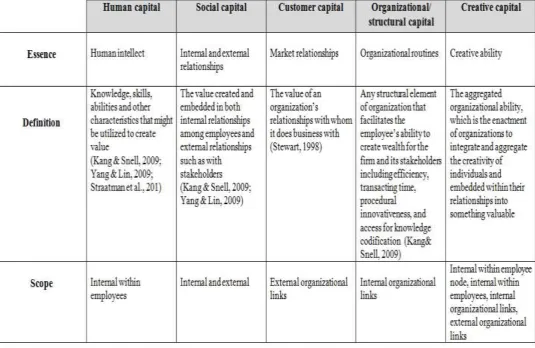
Intellectual capital can be understood as all knowledge stocks firms utilize for competitive advantage (Kang & Snell, 2009). One research stream views intellectual capital as consisting of (1) human capital, (2) social capital/ relational capital, (3) organizational/ structural capital and (4) customer capital (Kang & Snell, 2009; Stewart, 1997; Yang & Lin, 2009). Within this research stream, it can be broadly differentiated between literature focusing on human, social and organizational capital (Kang & Snell, 2009; Yang & Lin, 2009) and Bontis (1998) work encompassing human, structural and customer capital. Within these foci, the understanding of human capital is similar as both foci concentrate on the KSAOs of individuals. Additionally, the concept of organizational and structural capital also contains the same underlying idea as both concepts are focused on the organizational routines and structures that enable organizations to function (Kang & Snell, 2009; Yang & Lin, 2009; Bontis, 1998). However, while customer capital and social capital have some overlaps such as the scope of external relationships to stakeholders (Kang & Snell, 2009; Bontis, 1998), also some differences to be found, which is why both concepts will be further explained.
According to Yang and Lin (2009), human capital is defined as the “core asset of an organization, including knowledge, skills, experience, competence, attitude, commitment, and individual personal characteristics; in other words, a firm’s repository of valuable knowledge and skills” (p.1968). While various scholars include further concepts such as intellectual agility (Ross, Ross, Dragonetti, & Edvinssin, 1997), education and psychometric evaluations (Edvinsson & Malone, 1997; Schultz, 1961), most scholars define human capital as the knowledge, skills, abilities and other characteristics (KSAOs) of individuals that might be utilized to create value (Kang & Snell, 2009; Yang & Lin, 2009; Straatman et al., 2012). As an illustration, Kang and Snell (2009) argue that human capital is the basis for organizational learning as organizational learning is facilitated through individual learning. On an organizational level, human capital can be understood as “the aggregate accumulation of individual human capital that can be combined in a way that creates value for the unit” (Wright & McMahan, 2011, p. 95). The human capital within an organization can either be homogenous or heterogeneous (Gong, 2003; Willis, 1986). While heterogeneous organizational human capital consists of employees with differences in KSAOs, homogenous organizational human capital refers to employees with the same KSAOs.
2 Theoretical foundation
17 capital has been used too widely and stretched (Veenendaal et al., 2012). In order to create focus Veenendaal et al. (2012) have drawn on the seminal work of Coleman (1990), defining social capital in terms of the value available in relationships, which are generated through socialization and sociability.
Various scholars distinguish social capital into bonding and bridging social capital (Putnam, 2000). While bonding social capital refers to the value of relationships between homogenous groups, bridging social capital refers to relationships between heterogeneous groups (Putnam, 2000). Kang and Snell (2009) argue that three main dimensions influence social capital- the structure, affect and cognition. While, the structural dimension of social capital relates to the network configuration, the affective dimension can be understood as characteristics of relationships such as trust and expectation. Lastly, the cognitive dimension relates to the importance of shared values and norms among groups. Based on these dimensions, Kang and Snell (2009) conceptualized two archetypes of social capital. The first one, cooperative social capital, is characterized by a tight network configuration with strong and dense relationships, a foundation of trust and a common understanding of how knowledge can be merged. Entrepreneurial social capital on the other hand is compromised by a loose social system with weak network relationships, flexible trust through personal experiences and a common understanding regarding technical, professional or operational knowledge (Kang & Snell, 2009). Kang and Snell (2009) conceptualize that cooperative social capital might therefore facilitate exploitation, while entrepreneurial social capital might facilitate exploration.
2 Theoretical foundation
18 creative capital in relation to social capital as we argue that this entails also customer capital. Further research is encouraged though to build upon this research and investigate the relation to customer capital.
Lastly, organizational or also sometimes termed structural capital refers to knowledge that is transferred into processes, systems and routines (Yang & Lin, 2009). In a similar way, Yang and Lin (2009) define organizational capital as any structural element of an organization that facilitates the employee’s ability to create wealth for the firm and its stakeholders including efficiency, transaction time, procedural innovativeness, and access to information for knowledge codification. Consequently, it has been argued that organizational capital basically is the knowledge that stays behind if all employees leave (Kang & Snell, 2009). Thus, organizational capital is possessed by the organization and is not influenced by employees.
Based on these understandings of the concepts, scholars argue that intellectual capital is related to knowledge management and innovation (Ling, 2012; Stewart, 1997; Subramaniam & Youndt, 2005). According to Powell, Kenneth, and Lauren (1996) knowledge, learning capabilities and knowledge transfer are vital for innovation. Thus, innovation is dependent on the interaction and exchange of knowledge (Landry, Amara, & Lamari, 2000), leading to the establishment of the link to intellectual capital.Consequently, intellectual capital can explain how knowledge, which is embedded in individuals- human capital- and relationships- social capital and customer capital- as well as in organizational processes- organizational capital, leads to innovation. Also creative capital is related to human and social capital as it is the creative ability embedded within and between employees. Thus, there is a close relationship to creative capital. According to Glaeser (2004) creative capital is fundamentally the same as human or social capital and no novel idea and therefore should not be positioned as an individual capital. In order to further explore this issue, the next section demonstrates the differences and similarities between creative capital and other capital such as social, human, organizational/structural and customer capital.
Positioning creative capital in relation to human capital
It could be argued based on the definition of creative capital used by Veenendaal et al. (2012) that creative capital is the similar to the concepts of human and social capital. Human capital includes the KSAOs of individuals and social capital the relationships individuals possess. However, human capital is understood as the collection of knowledge, skills, abilities and other characteristics, not the aggregation as proposed in the definition of firm-level creative capital (Veenendaal et al., 2012).
2 Theoretical foundation
19 on unit-level and states that human capital is more than the sum of the KSAO’s of individuals, what is stated by the definition that is used by Straatman et al. (2012). When using this definition the only difference between human and creative capital would be creative ability. Creative ability can be seen as a part of all the abilities of human capital. Consequently, creative capital is not a different concept but a part of human capital. This is also found by (Marlet & van Woerkens, 2007) who found that creative capital is a better predictor than education (part of human capital) for employment growth (p.2616).
When looking at creative capital as a part of human capital we need to figure out where we position it within the theory. Human capital can either be homogeneous or heterogeneous. The difference between a heterogeneous and a homogeneous workforce depends on whether an organization uses the KSAO’s of their employees for exploration or exploitation. A homogeneous workforce consists of people with the same KSAO’s and uses exploitation. Exploitation looks at old certainties and makes the existing workforce more efficient (March, 1991). A heterogeneous workforce uses exploration and is about risk taking, variation, experimentation, etcetera (March, 1991). Within a heterogeneous workforce the KSAO’s of the employees are different and can be used to look outside the boundaries of an organizations, which makes more radical innovation possible (Veendenaal et al, 2012; Florida, 2002)..
Combining human and creative capital it can be stated that creative capital only arises when the human capital of the workforce of an organization is heterogeneous. Because a heterogeneous workforce has no boundaries, the creative abilities of the employees will be used for innovations. Within a homogeneous workforce the (possible) creative abilities of employees will not arise, because they are not needed for making the existing processes more efficient.
Positioning creative capital in relation social capital
Similar to human capital, also social capital has a close relationship to creative capital. According to Straatman et al. (2012), the difference between social and firm-level creative capital is that social capital is possessed by the organization, while creative capital is embedded within the employees. However, based on the definitions of social capital discussed earlier (Kang & Snell, 2009; Yang & Lin, 2009), social capital is as well embedded within the employees. Additionally, while an organization might possess a relationship based on a contractual form, it is not possible to actually possess these relationships as the employees establish and endure these relationships. Consequently, when an employee leaves the organization, the relationships in relation to this employee might end as well.
2 Theoretical foundation
20 the required network characteristics for open innovation, indicated that organizations should share the same goals, have a common level of trust in terms of fairness and reliability and have a high resource complementarity, while having weak network ties in order to have successful open innovation. The reason for this is, that weak network ties allow a business-like approach to open innovation, which in turn leads to higher performance. Relating this to creative capital, it could be argued that organizations should follow a rather entrepreneurial social capital structure with weak ties, resilient trust and common knowledge (Kang & Snell, 2009).
This can also be applied to the concepts of bonding and bridging social capital. We argue that firm-level creative capital requires bridging social capital as a heterogeneous workforce might lead to creativity. As discussed before, the underlying idea for this is that a diverse, heterogeneous group will have higher creative ability as a homogenous group as the diverse KSAOs will broaden and stimulate the group’s creativity (Veenendaal et al., 2012). Also Leana and van Buren (1999) argue that strong bonding social capital can prevent that new ideas are entering an organization and that external relationships will allow new ideas to enter. However, in order for these new ideas to actually enter the organization, bridging social capital is needed to develop a relationship to a dissimilar group (Putnam, 2000). However, we argue that employees can only make use of bridging social capital if a certain level of trust and bonding social capital exists. This is in line with the findings of Pullen et al. (2012), who found that a shared objective and trust is of importance in order to simulate open innovation. Consequently, we argue that a certain amount of bonding social capital is required in order to make use of bridging social capital.
Lastly, as discussed above, social capital can encompass both internal and external relationships. Consequently, we argue that firm-level creative capital encompasses both internal relationships as well as external relationships.
Positioning creative capital in relation to organizational/structural capital
2 Theoretical foundation
21 2.3.2 Conclusion of the relationship between firm-level creative capital and other forms of capital
[image:31.595.28.564.300.648.2]Having positioned firm-level creative capital in relation to other capitals, we argue contradictory to Glaeser (2005) that firm-level creative capital has its right for existence besides of the overlap to the other capitals. Table 1 indicates that neither human, social capital nor organizational capital alone are sufficient to explain creative capital as they do not have the focus and essence on the organizational aggregated ability. Hence, also a combination of these concepts does not explain firm-level creative capital.
2 Theoretical foundation
22 Hence, while there is an overlap in the scope of the capitals as firm-level creative capital basically includes the scope of the other capitals, we argue that firm-level creative capital has a right for existence. Consequently, it is vital to research the concept of firm-level creative capital as it extends intellectual capital.
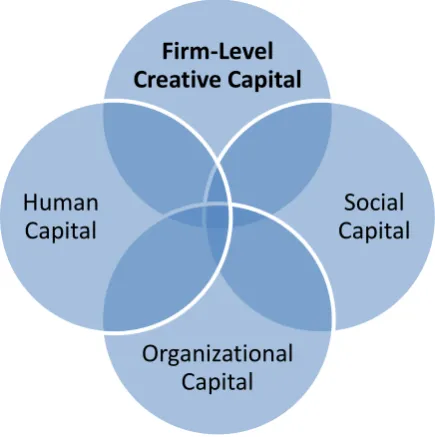
[image:32.595.169.387.302.521.2]Figure 4 further visualizes the relationship between creative capital and other capitals. Human and social capital have the largest overlap with firm-level creative capital as also argued by Glaeser (2005). However, firm-level creative capital as explained above cannot be fully explained by these other forms of capitals as they do not entail the essence of creative ability and therefore has its right for existence.
Figure 4 Visualization of the relationship between firm-level creative capital and other capitals
2.3.3 Extending the definition of creative capital by discussing the concept of creative ability
As mentioned before, the definition of firm-level creative capital by Straatman et al. (2012) has a prominent drawback as it states that creative capital entails the aggregated organizational creative ability but does not explicit state what creative ability is constituted of. Consequently, this section is aimed at discussing the concept of creative ability in order to derive at a definition for the purposes of firm-level creative capital.
Firm-Level
Creative Capital
Social
Capital
Organizational
Capital
Human
2 Theoretical foundation
23 As argued by Veenendaal et al. (2012) the firm-level creative capital concentrates on the creative ability instead of the creative thinking ability. The creative thinking ability is the manner in how individuals cope with problems and solutions (Amabile, 1998). It is their capacity to combine ideas into new combinations. This thinking ability is based on an individual’s personality, but also on how individuals think and work (Amabile, 1998). As argued by Amabile (1998) not only is creative thinking ability important for creativity but also expertise and motivation are essential for creativity. Creativity can be understood as the development of new and valuable ideas in any domain (Amabile, Conti, Coon, Lazenby, & Herron, 1996). Creativity can therefore relate to products, processes and people. Creativity is not the same as innovation, as Amabile et al. (1996) describe creativity is part of innovation: “innovation is the successful implementation of creative ideas within an organization” (p. 1155). Thus, creativity does not necessarily imply the implementation of the ideas. As mentioned before creative thinking, expertise and motivation are essential for creativity. In this regard expertise can be seen as the knowledge of the individual. While expertise and creative thinking are part of individual’s human capital, the individual will not put forward his knowledge, skills and abilities if that individual is not motivated (Amabile, 1998). The motivation comes in two forms, extrinsic- and intrinsic motivators (Amabile, 1998). Extrinsic motivators come from outside the person and are used by the individual to get something desirable like incentives or avoid something painful like getting fired. Intrinsic motivators come from inside the person. It is the desire of a person to do something (Amabile, 1998). Amabile (1998) found that people are more creative when they are motivated mainly by interest, satisfaction, and when they are challenged and not by extrinsic motivators. While the definition of creativity by Amabile (1998) is on a rather individual level, Woodman et al. (1993) argue that group creativity is influenced by the constitution of the group in terms of its diversity, certain group characteristics, such as the size, shared identity, homogeneity, as well as contextual influences.
2 Theoretical foundation
24 2005). Concerning creativity, creative thinking and expertise can be regarded as the human capital of an individual and the motivation the promoter for creative performance. However, based on the AMO-framework even if a person is motivated and has the abilities to generate new and valuable ideas that person still needs the opportunity to do so. Therefore creative ability should have at least some component of the provided opportunity.
The definition of creativity by Amabile et al. (1996) is in line with the definition used by Choi (2004a, 2004b) who defined creativity as “the generation of novel or original ideas that are useful or relevant” (Choi, 2004a, p. 188). Creativity is seen as performance outcome while creative performance is the behavioral manifestation of creativity. Creative performance is measured in both studies as the degree to which the student listens to someone’s ideas and is open towards their ideas; the degree to which the actor produces and shares new ideas, provide different explanations, have alternative perspectives and other solutions which can be regarded as creative; the degree to which the actor combines or integrate different perspectives, ideas or materials in a manner that can be regarded as constructive. This measure is in both studies of Choi (2004a; 2004b) used to assess the creative performance of students by their instructors. It is found that creative performance can be predicted by creative ability, because of the positive relation between creative ability and creative performance (Choi, 2004b; as mentioned in Choi, Anderson, & Veillette, 2009). The creative ability at the individual level can be defined as the individual “skills or competencies that are relevant for creative performance” (Choi, 2004a, p. 198). It is about the abilities to generate new ideas or take a differentiating view towards problems (Choi, 2004a).
This definition of creative ability has some similarities with the definition on the regional creative ability of the workforce as mentioned by Veenendaal et al. (2012). It is about the entity’s ability to make a combination of unrelated concepts, knowledge, ideas or experience into something valuable for the region (Baer, 2010; Vartanian, Martindale, & Matthews, 2009). This definition can be converted to an organizational definition of creative ability. This paper defines organizational creative ability as the aggregated ability of organizations to integrate the creativity of individuals into something valuable. Individual creativity is therewith understood as the ability of employees to make a valuable combination of previously unrelated concepts, knowledge, ideas or experience for the organization.