doi:10.4236/pos.2011.22007 Published Online May 2011 (http://www.SciRP.org/journal/pos)
Machine Perception Through Natural Intelligence
Rostyslav Sklyar
Verchratskogo st. 15-1, Lviv 79010 Ukraine Email: [email protected]
Received December 30th, 2010; revised March 1st, 2011; accepted April 20th, 2011.
ABSTRACT
The sensing organs are exponentially better than any of analogous artificial ones. That is why using them in full scale is a perspective trend to the efficient (advanced) machine perception. On the other hand, limitations of sensing organs could be replaced by the perfect artificial ones with the subsequent training the nervous system on their output signals. An attempt to lay down the foundations of biosensing by natural sensors and in addition to them by the artificial trans-ducers of physical quantities, also with their expansion into space arrays and external/implantable functioning in rela-tion to the nervous system is performed. The advances in nanotechnology are opening the way to achieving direct elec-trical contact of nanoelectronic structures with elecelec-trically and electrochemically active neurocellular structures. The transmission of the sensors’ signals to a processing unit has been maintaining by an electromagnetic transis-tor/memristor (externally) and superconducting transducer of ionic currents (implantable). The arrays of the advanced sensors give us information about the space and direction dynamics of the signals' spreading.The measuring method and necessary performance data of the sensor for the robot’s orientation in the ambient magnetic field with living be-ing-machine interaction in order to obtain input and output signals from brain and motor nerves to the measurement system and vice versa are introduced. The range of applied sensors differs from an induction sensor to superconducting induction magnetometer. The analytical expressions for arrangements of the head sensors in differential and vector (3D) relative positions are deduced. Sensitivity of the perception method makes it possible to recognize the linear translation of 10−2 m and disposal in space of 10−3 m3. Interaction between living beings and robotic equipment is given analytical
treatment.
Keywords: Magnetic Field, Induction Sensor, SuFET, Nerve Impulses, Interface, Gradiometer, Sensing Area
1. Introduction. Artificial Sensors with the
Human Machine Interface
Electronic Nose is a smart instrument that is designed to detect and discriminate among complex odours using an array of sensors. The array of sensors consists of a num-ber of broadly tuned (non-specific) sensors that are treated with a variety of odour-sensitive biological or chemical materials [1].
This instrument provides a rapid, simple and non- invasive sampling technique, for the detection and iden-tification of a range of volatile compounds. The key function of an electronic nose is to mimic human olfac-tory system. Typically an electronic nose consists of three elements: a sensor array which is exposed to the volatiles, conversion of the sensor signals to a readable format and software analysis of the data to produce cha-racteristic outputs related to the odour encountered. The main parts of a typical biosensor are shown in Figure 1.
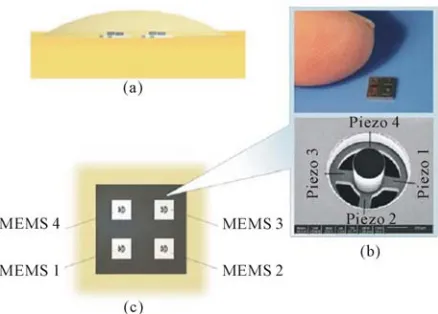
The artificial tactile sensor integrates a micro elec- tro-mechanical system (MEMS) array having a number
of sensing elements (16 channels in about 20 mm2)
simi-lar to the innervation density of mechanoreceptors in the hand (about 1 unit/ mm2). The technological approach is
based on a 3D MEMS core unit with a soft and com- pliant packaging. The microsensor can be integrated with a packaging architecture resulting in a robust and com-pliant tactile sensor for application in artificial hands, while sensitive enough to detect slip events, showing that silicon based tactile sensors can go beyond laboratory practice [2]. The tactile sensor array, depicted in Figure 2, had 16 channels as total tactile sensor outputs.
The measurement of magnetic fields (MFs) is an im-portant task for the majority of autonomous missions. The distribution of permanent and the value of periodical MFs give the data about placement of ferromagnetic ob-jects and sources of EM radiation respectively. On the other hand, these signals will be a reference point and guiding line for a walking robot (Figure 3).
Figure 1. (A) The main parts of a typical biosensor, (B) A sensor array, each polymer changes its size and therefore its resistance, by a different amount and making a pattern of the change.Copyright 2009 IFSA.
[image:2.595.63.280.82.188.2]Figure 2 (a) 3D design of the tactile sensor array. (b) Top: the 2 × 2 MEMS array compared with human finger; bot-tom: a FIB image of the MEMS sensor. (c) Top view of the sensor array.Copyright 2008 IEEE.
Figure 3 The walking robot in MF environment. a) x-y plane defines the varying DC natural MF; b) around z axis spreads AC industrial MF interference.
[3]. When the spectrum of EM signals in the environ-ment lies in a wide frequency range (10 Hz - 500 kHz),
the application of highly-sensitive induction sensors (ISs) is necessary. The application of a low-Tc SQUID device is able to embrace both of the said frequency ranges with maximum sensitivity. It is made of non-magnetic mate-rial and the principle of operation is to detect two mag-netic signals at different distances from the source and arrange for them to be in opposition around a local su-percooled circuit. This ‘gradiometer’ approach eliminates most of the noise—caused by spurious MFs originating from, for example, electrical devices or natural (geo-magnetic sources. A typical unshielded laboratory has a noise level in the 0 - 10 Hz frequency region of about 10−7 T and geomagnetic noise in the same frequency
range is of the order of 10−10 T. Any small field changes
the direction of the MF vector in the space and this pro-duces a distortion in the waveform of the signal in the detection coils. The very expensive use of the SQUID magnetometer up until now has produced many advances in the understanding of MFs from weak sources. The advance of much cheaper room—temperature sensor technologies offers the prospect of much greater use of MF monitoring [4]. As a general rule, scientific instru-mentation should impact mass constraints as little as pos-sible; however, robot-mounted instruments in particular must be lightweight to survive deployment under high- stress conditions when used in connection with space-craft or underwater. This weight constraint can limit both the size of the sensor and its placement on moving part. Also, autonomous systems require minimal consumption power. Both factors translate into severe constraints on the capability of the instrument to measure weak EMFs encountered in the environment. In addition, outer space and underwater conditions require endurance against variations in the wide range of temperature, humidity, and atmospheric pressure.
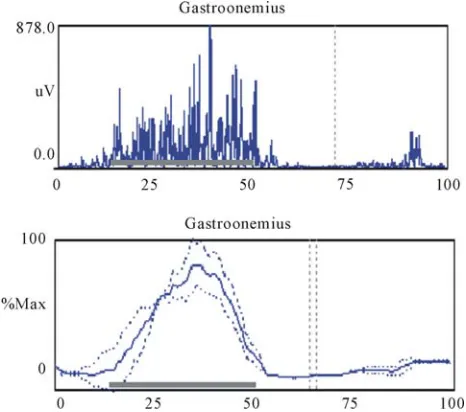
The human machine interface using electromyjogram (EMG) signal to artificially control the limb movement. Each muscle fiber has a potential and motor unit action potential generated by construction of muscle is studied and corresponding actuation is provided to robotics arm. In this system a relatively more flexible and robust communication technique generates commands from EMG signals (Figure 4). Such an autonomous mobile humanoid robot will be able to assist in a workshop en-vironment and interact with a human [5]. Three aspects to reach this target are considered. First, how the brain of the exoskeleton robot is constructed to be able to ma-nipulate objects like humans do. Second exploration of appropriate binominals that can be used as an actuating quantity to move the Robotic arm; and finally how pro-gramming of manipulation tasks is realized.
[image:2.595.62.281.249.406.2] [image:2.595.64.280.467.648.2]have a minimum footprint as possible to minimize neural damage and to facilitate easy entry and movement through the brain tissue. Polymeric microprobes have received a great deal of attention owing to their simple fabrication process, flexibility and biocompatibility. Im-plantable neural probes for neuroscience and brain ma-chine interfaces are generally preferred to have a mini-mum footprint as possible to minimize neural damage [6]. A conceptual representation of the multichip recording interface is shown in Figure 5. The device handles 16 neural recording channels as a proof of concept [7].
Alternatively, a superconducting field-effect transistor (SuFET) based neurotransducer (SuFETTr) with carbon nanotubes (CNT) or pickup coil (PC) kind of input cir-cuit for the nerve and neuronic impulse has been de-signed [8]. A nanoSuFET with a high-temperature su-perconducting channel is introduced into the nerve fibre or brain tissue for transducing their signals in both direc-tions. As a result, we have achieved SuFETTr that is suitable for ascertaining the variety of values [9]. Two directions of SuFETTr function enable decoding of these signals by comparing the result of its reaction on some process or organ with an action on them of the simulated electrical or biochemical signal after their reverse trans-ducing through the SuFETTr(s). Moreover, a number of the relevant measuring devices, as an intermediate ele-ment between physical value and the nerve system, are designed on its basis [10].
2. Signal Processing in the Biointerfaces
Magnetocardiography (MCG) is a noninvasive method of detecting the cardiac magnetic fields above the body surface using DC SQUIDs. MCG has the potential to detect arrhythmia and ischemia with a lower level of ad-verse effects than electrocardiograms. Also most SQUIDs are incorporated into whole-head systems for magnetoencephalography (MEG) - the detection of MFs produced by brain. A typical helmet contains about 300 sensors, including a number of reference sensors for noise cancellation, cooled to 4.2 K. [11]
A current trend in such diagnostics are portable and wearable magnetometer systems which have, in the same time, high signal processing and signal-to-noise ratio parameter data characteristics. Simultaneous amplifica-tion of the piking up MCG & MEG neurosignals by an on-site magnetic flow has been implemented. Matrix of the sensing micro-nanoPCs are distributed under the heart or brain surface with temperature of the body [12].
Implantable neural probes are generally preferred to have a minimum footprint as possible to minimize neural damage and to facilitate easy entry and movement through the brain tissue. Polymeric microprobes have
received a great deal of attention owing to their simple fabrication process, flexibility and biocompatibility. Im-plantable neural probes for neuroscience and brain ma-chine interfaces are generally preferred to have a mini-mum footprint as possible to minimize neural damage [13].
The concept of an implantable wireless platform, without any percutaneous skin-puncturing elements, de-mands the implementation of a heterogeneous, active microelectronics platform. At a minimum, the implanted “microsystem” requires in-situ integration of ultra- low-power microelectronic ASICs with the cortical mi-croelectrode neural probes, and must provide broadband telemetry and a means to deliver power wirelessly to the active implanted components [14].
A 16-channel version of a fully implantable microsys-tem has been implemented and tested on the benchtop and used in initial animal tests. This microsystem is a single-unit construct (Figure 6) where analog and digital chips are integrated on a flexible substrate together with a low threshold, infrared semiconductor diode laser to transmit the digitized neural signals through the skin. Power and clocking are delivered to the system via in-ductive coupling, but the system can also be configured to be powered optically using a high efficiency photo-voltaic energy converter.
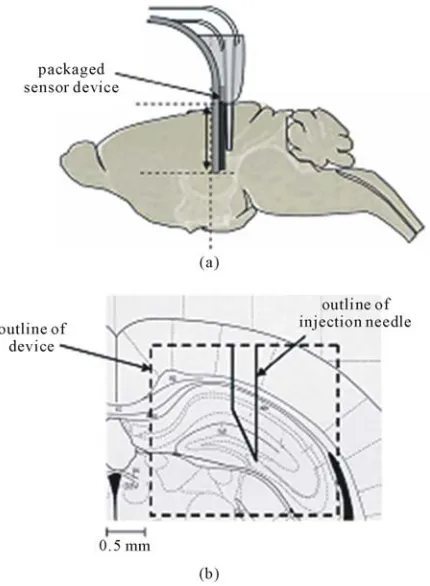
By implementing CMOS technologyfor neural imag-ing, not only is imaging in multiple modalities possible, electrical stimulation and sensing can be integrated onto a single device, thereby resulting in a highly compact and miniaturized tool for the study of the brain (Figure 7) [15].
[image:3.595.307.540.491.697.2]Improvement in the packaging process has resulted in
Figure 5. Conceptual representation of the multichip neural interface. the ICs implementing the active part are stacked and bonded on the base of a micromachined stainless-steel microelectrodes array. Copyright 2009 IEEE.
Figure 6. Schematics of the ‘dual panel’ brain implantable microsystem featuring an active brain sensor (microelec-trode array integrated to amplifier IC) in the cortical unit, and hybrid A/D, control, and RF-IR (Infrared) telemetry in the cranial unit. Copyright 2009 IEEE.
a compact single-chip device for minimally invasive im-aging inside the mouse brain. observation. Furthermore, it was found that the brain continued to function nor-mally and respond to external stimulus, both chemical and electrical, while the device was embedded inside the brain. Figure 8 shows typical recordings with and with-out the device inserted in the brain.
Brain Communication Interface (BCI) is an umbrella term for the technology in which the motor behavior de-coded from neural activity in real-time is used to control an external electro-mechanical device. The forces and position can be predicted simultaneously without any degradation in decoding quality. Various important fea-tures of the approach and issues are raised by its imple-mentation [16].
Once the Digital Signal controller (DSC) is finalized an appropriate sensor would be selected to pick the bio-logical data. A hardware system then needs to be devel-oped to amplify and filter the biological signal picked
[17]. The analog output of this amplifier system is then converted into a digital output using ADC so that it can be interfaced with the host computer that acts as the out-put display device. Designs however now make it possi-ble to interface analog data directly to the computer. Data control and signal processing algorithms are then ex-plored on the acquired signal.
Block diagram of the Digital Signal Processor based real time embedded system for acquisition of Human
Figure 7. Position of the device inside the mouse brain dur-ing imagdur-ing showdur-ing. (a) The sagittal plane view. (b) Cor-onal plane view. Copyright 2008 IEEE.
[image:4.595.61.284.289.420.2] [image:4.595.315.524.544.696.2]sensing sig-na
-potential signals taken from th
s undesirable
h Physiological Signals is sketched in Figure 9. The
measurement system consists of a transducer to pick the human physiological signal, amplifier system, hardware band-pass filter, fifty hertz notch filter, DSC and a per-sonal computer as the output display device.
An example of further processing of the
ls is analogous to the combination of heart rate and body position information recorded or monitored simul-taneously can provide a valuable set of physiological and behavioral data related to the physical activity and car-diac activity. The added knowledge of the subject’s body position and activity intensity provides very valuable information and creates a history for monitoring, diag-nostics, or health alerts. A discrete and minimally obtru-sive wearable device allowing synchronous measurement of these physiological parameters can further offer en-hanced mobility, for the very first time, to the collection and monitoring of these datasets for both research and practical applications [18].
The acceleration and bio
e multi-functional sensor are first amplified through a custom signal conditioning circuit. The resulting signals are then inputted into the analog-digital converter (ADC) used to digitize the output signals. Figure 10 shows an overview diagram of the accelerometer data collection and processing system. This prototype device is able to detect different body positions such as standing, sitting, and lying on different sides of the body. It also processes motion sensor data by calculating the variance of the sample data, in order to determine movement intensity.
3. IS as the Organ of Sixth Feeling
Taking into account the said restrictions, it i
to use in the robot a fluxgate sensor due to its active type of action. Also is impossible to exploit a SQUID device since it needs a liquid helium container. SQUID systems being almost ideal for the detection of very small amounts of flux from small samples, but less well-suited to the detection of low flux densities (i.e. where very low MFs are encountered). The high coil inductance of the induction system, on the other hand, can couple to a large quantity of flux [19]. It appears that these difficulties frequently reduce, in principle, the performance of SQUID magnetometers to a level below that demon-strated in this article, using an ambient-temperature in-duction system. This IS is also compact, robust, operates
at room temperature, exhibits a wide dynamic range, and may be easily integrated into differential or multiple sensor gradiometric configurations which are feasible in a multi-limb walking robot.
A new method to assess a body inclination/azimuth using 3-D Earth’s MF sensor, even in dynamic condi-tions was proposed [19]. Indeed, a magnetometer is in-sensitive to acceleration while responding to a change of orientation in the 3-D space. However, in the general case, a 3-D magnetometer is not sufficient to track a 3-D orientation. Magnetometers are more commonly em-ployed to either determine a compass heading informa-tion or to compensate a rate gyroscope integrainforma-tion drift.
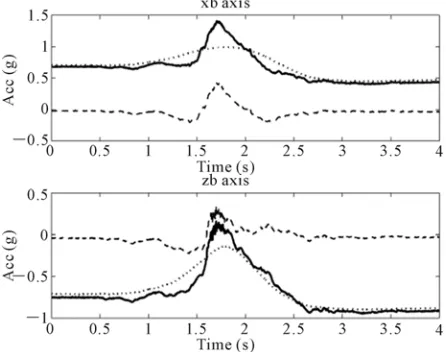
The main point is that by restricting ourselves to par-ticular movements with one or two degrees of freedom (DOFs), a magnetometer is sufficient to estimate 2 DOFs: the movement is constrained in one plane which can ro-tate around one fixed (or not) axis. For example, during walking, we can be interested in rotations in the saggital plane (e.g., knee flexion/extension) and azimuth direction of walk. Although limited to two DOFs, it is important to note that we can address a movement in 3-D space. Fig-ure 11 presents the different normalized accelerations measured in t e sensor frame: the calibrated measured acceleration v accm : dark solid line, the predicted gravita-tional component g B: dotted line, and the computed kinematical component a B : light solid curve.
3.1. Placing of the PCs on the Limbs
PC of a walking robot is connected in parallel with the drain of a SuFET cryogenic device or an ordinary OA which are placed in the body. A PC realizing the oscilla-tory−forward movement along both AC industrial inter-ferences and quasi-DC natural (Earth) environmental MFs. These fields are distributed on a surface and in space roughly according to Figure 3. The movement in quasi-DC MF HDC with the defined speed v and
oscillat-ing frequency ω with a magnitude Δα gives e.m.f. from PC:
0 sin
PC eff DC
E SN H (1) where S=µeff πd2 N/4 with µ
0- the permeability of free
space, µ0=4π·10-7 henry/meter; µeff- the effective relative
permeability of a high-µ metal core; d- the average di-ameter of a PC; N-total turn number of the solenoid; α
[image:5.595.130.471.651.707.2]Figure 10. Sensor data extraction setup. Copyright 2007 IEEE.
Figure 11. Separation of the gravitational and kinematical
n angle between PC’s magnetic axis and the vector of
the MF transducer
S he best
fea-tu
.f.
components in body frame. Accelerations during a sit- to-stand transition: measured acceleration (solid line), pre-dicted gravitational component (dotted line), and computed kinematical component (dashed line). xb-axis (top) denotes the craniocaudal axis, pointing upward; zb-axis (bottom) is the anteroposterior axis, pointing forward. Copyright 2007 IEEE.
a
HDC. Further the amplifying/processing circuit depends
on the measuring conditions and can vary from the sim-plest of the ordinary IS modifications to the supercon-ducting one [21].
1) The design of
ome combined device, that includes all t
res of the said MF sensors/transducers seems to be the prefered trend for further development as a perception organ [21]. The SuFET is implemented into a wide-band IS device in order to acquire the sensitivity threshold below 1fT/√Hz in the frequency range from small values of Hertz to tens of MHz (0.1 Hz - 107 Hz). The proposed
superconducting induction magnetometer (SIM) circuit consists of both a room-temperature or a cooled (up to superconductive) PC and a SuFET. Moreover, it gives the opportunity of repudiating both windings and elec-tronics of feedback loops that are used in the known magnetometers. Magnetic induction BPC of AC MF with
in PC:
E B SN
the frequency ωlimb of limbs' oscillations produce an e.m
lim
PC PC b (2) where S- a cross-section of PC, N-
All AC MFs with the frequencies ω, be
its number of turns. high than ωlimb can rejected by the passive HF filter [22].On the other hand, the value of EPC can be determined from the output voltage Uout of the specific kind of IS [21] with its known transfer function G according to the formula:
out PC
U GE (3) As a result, an output signal receiving spontaneously, f a walking robot in a during two-dimensional travel o
qu
differe peration between the robot’s
arying MF BPC.
asi-DC MF. Moreover, by picking up the signals from both horizontal and vertical parts of the limbs, the robot derives its’ directional information from the axial course of the field lines and their inclination (defined as the an-gle between the direction of the field lines and the hori-zontal) in space. Executing the oscillations of PC with parameters (number of turns N = 2⋅104 and a cross-
section area S = π⋅10−4 m2) [13] in the earth MF B 0 = 50
mkT [23] with the frequency 2 Hz and α = 30˚, Δα = 30˚ arouse e.m.f. with a magnitude 50 mV according to Equation. 1. This e.m.f. will be on average equal to 5 mkV for the possible variations of the said MF with magnitude 1 - 10 nT. With these data it is possible to calculate the value of Uout for all the known five of ISs [13] with given parameters of their electrical circuit. So then (see Table 1 and Figure 4): a) for the basic trans-ducer's variant with PC's resistance R = 2.4 kOhm, in-ductance L = 30 H and capacitance C = 50 pF the values of Uout shown in the second column of Table 1; b) the voltage feedback resistance Rfb= 27 kOhm is introduced into the circuit; c) the magnetic flux feedback turns Nfb= 1000 are introduced into the device; d) for SuFET the constant partial of gate voltage equal to 0.1 V and ωT,
which closely relates to the small signal transconduc-tance, are defined [13].
3.2. Using an Ambient DC and AC MFs for Ro-bot’s Perception
An output signal of the sensor will be involved into the ntial (gradiometric) o
limbs. After envelope detection of the quantity Uout, can be presented by changing the corresponding quasi-DC MF by the robot’s movement as defined in Figure 12. In
Table 1.The dependence of signal’s value Uout from the
v
BPC\Uout a b c d
50 mkT 10 V 70 mV 1.4 V 3 mcV + 0.1 V
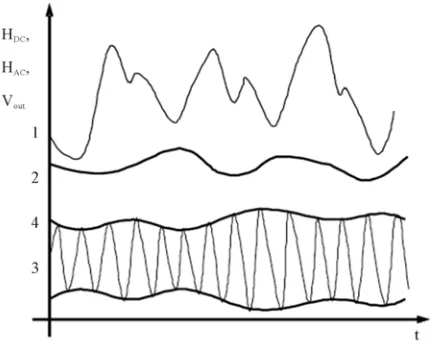
[image:6.595.308.537.669.719.2]Figure 12. The variations of measured MF strength HDC,
HAC: 1-oscillations of a PC modulated by variations of
ex-ternal natural MF; 2-an envelope of sensor’s output voltage
d
t because it measures the spatial UDC as the appropriate quasi-DC MF along the walking way;
3-changing of an AC industrial MF interference into the travel space; 4-the integral output voltage UAC which
de-termines changing of the interference's power by a distance.
a similar manner, way an AC MF partial can be shown. The linear travel of the robot can be derived from the known distance between any two limbs and measure during the movement gradient of MF ΔH, which is pre-sumed constant. Otherwise, the robot can be walking in the direction of minimal or maximal MF strength H ac-cording to the said gradient (Figure 13). In both cases the precision of movement will be defined by the sen-sors’ sensitivity, which lies in a range of the orders from pT/√Hz to fT/√Hz.
1) Determination of the earth’s MF gradient
A portable single axis magnetic gradiometer, which is a relative instrumen
Figure 13. 3D Orientation of the walking robot in an envi-ronmental MF: a) distribution of the detected gradients of DC natural MF over the x-y plane; b) distribution of DC MF interference in the space around z axis as a difference between the limbs.
variation of the MF, has been described [24]. The finite distance d between the magnetic sensors for detecting the field difference is used to get an expression for the esti-mate of the exact magnetic gradient, adjusted by the function of the field distance,
ΔBz = Bz (z + (1/2)d)Bz(z(1/2)d), as follows:
2 0
6
5 4
z z B
d z z
B
md (4)
where z is the distance from the dip the gradiometer probe and m the magn dip
ole to the center of etic moment of the ole.
In the following case, the oscillations of the limbs are taking place according to the law closer to harmonical. Then the magnitude value of magnetic induction, which produced by oscillations of PC in the ambient DC MF Bz
is:
sin
PC z
B B (5) where α is an angle between PC's direction of detection and vector of B, Δα is a range of a value of this angle variation.
Having substituted Equations. 1, 3, 5 into Equation. 4, we have the dependence between signals from PCs of any two limbs and the relevant magnetic gradient occurs:
20 6 lim
1 2 1 2
5
sin 4
out z z
b
U z z md
B
G SN z
(6) A first order radial gradiometer consists of two
displaced magnetometer loops, wound in an opposing way
axially
from a common wire that is connected to IS. Two radial magnetometers with opposite polarity can be con-nected together to form planar gradiometers [24]. Such devices detect the tangential gradient of the radial field, and two gradiometers are usually used at each site to detect two orthogonal planar gradients. The planar gra-diometer behaviour is qualitatively different from that of the radial gradiometer.
2) Measuring of the MF signal in a triaxial arrange-ment
[image:7.595.62.281.522.662.2]complete pass of the robot’s walking. Placing of the PC’s triplets (the three orthogonal components at each location) on the respective limbs give the necessary data for the triaxial MF determination according to the geometrical summation. In such a case, the frequency of the limb’s oscillations is much lower than ambient MF noise. That is why, they do not influence the measured components and, moreover, these oscillations can be additionally suppressed by a passive LF filter [26]. The value of MF induction along a single component will be calculated similarly to Equation. 1 and Equation. 2 by the formula:
out
PC SNU
B G (7) The dependence of volumetric error on the baseline for environmental noise is shown [25].
3.
illations of an elec-to with
ency is introduced. Interfer-en
3. Experimental Validation of the Method In the Figure 6 are shown the osc
tromotive force 2-3 of the described PC with respect the basic voltage 1, which are conform to MF B0
an onward movement speed of IS 1 m/s. The sig-nal-wave envelope 4 is a result of the informa-tional-measuring process and confirming about the space distribution of the MF variations, which are bases for the advanced perception-guide abilities. The levels of the IS’s output signals and boundaries of their changes in reality for all the described devices’ variants are shown in Figure 14.
In order to improve reliability of the method and in-crease the working frequency intensity signal filtration outside, a working frequ
ce suppression is achieved by introducing n-unit RC-filters into the input stages of preamplifier intensi-fication.
The equation for LF filtration is of the sixth order rela-tive to RC:
6
22
1 32 16 0
L L
L
RC RC
(8)
where αL and ωL are the interference suppression factors.
The experimental curve, given in Figure 15 confirms th
o-unit RC-filter. It is also possible to apply a tw
e computed values of suppression a transfer function G for a tw
in-T RC-filter, but only for the HF- fH, relative to the
working one fwork [22]. The response curve in the fre-quency range that is of importance for orientation, would be virtually flat GF, when R and C are related to each
other as follows: 1
2RC fwork (9) As a result, the working MF frequency will be
effec-tively “cut-out” from the rest of oscillations, both of EM and mechanical origin [26].
3.
eans to update operating-,
en-r”. 4. MF Feeling with a Living Being-Machine
Interface
The design provides a m
monitoring parameters, operational thresholds, and s sor and RF link specific firmware modules “over-the-ai It is composed of two main components - a sensor- wire-less hardware interface and system integration frame-work, which facilitates the defining of interaction be-tween sensors/actuators based on process needs. The intelligence necessary to process the sensor signals, monitor the functions against defined operational tem-plates, and enable swapping of sensor and RF link, re-sides on the microcontroller of the hardware interface [27].
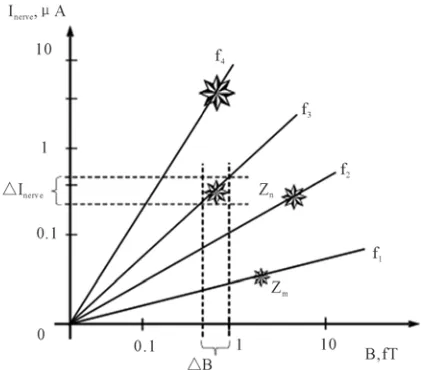
The basic scenario is shown in Figure 16. As a result living beings control drives by previously translated biosignals. In the other variant, biosignals from organs of the senses or brain transduce directly into intelligent or robotic systems which, in such a way, pick up environ-mental information.
[image:8.595.318.538.383.540.2]Let us consider the connection between the input (bio-signal Inerve) and output (MF B) variables of the autono-mous system in the wide frequency range ωB:[28]
Figure 14. The magnitude changes of orientate on MF fre-quency during the walking path.
[image:8.595.313.535.579.696.2]Figure 16. The living being-machine interface in the bioro-botic perception system.
eq nerve
B c S I
B z (10) Taking into account Equation. (6) is possible to calcu-late the relation between sensor out-in (Inerve) and actua-tor in-out (Uout) respectivelywhen robot’s limbs are os-cillating with the frequency ωlimb.
20
1 2 1 2 +5 sin
B
out c
U z z md z
G SN
limb 4 6
eq
nerve S
I
z
(1
mulated qualitative performance data of the human robot interface in the ambient MF B
17.
4.
le to create a new gen-eration of intelligent sensing. There are d
portunities for combining natural and ar
abilities in the synthesized system. Backed up by the rapid strides of nanotechnology, nanosensor research is m
ndly in the performance enhancement of existing
either the size of t or its sensitivity is in the 1)
Si
are shown in Figure
Multisensor Data Fusion for the Medium
and Environment
Recent developments in bioengineering, nanotechnology, and soft computing make it possib
eveloping op-tificial sensing
aking a two-directional progress, firstly in evolving new sensors employing mesoscopic phenomena, and seco
sensors. Nanosensors are nanotechnology-enabled sen-sors characterized by one of the following attributes:
he sensor
nanoscale, or the spatial interaction distance between the sensor and the object is in nanometers. These nanosen-sors have been broadly classified into physical and chemical categories, with the biosensors placed on bor-derlines of biological signals with the remaining classes [29].
With continued miniaturization of information sensing,
computing, and processing technologies, it now seems likely that insects could be navigated as mobile informa-tion gatherers. Therefore, our specific methodology has broad implications not only for studying the isect – ma-chine interface but also for the future use of navigated insects as environmental sentinels. When instrumented with equipment to gather information for environmental sensing, such insects potentially can assist man to moni-tor the ecosystems that we share with them.
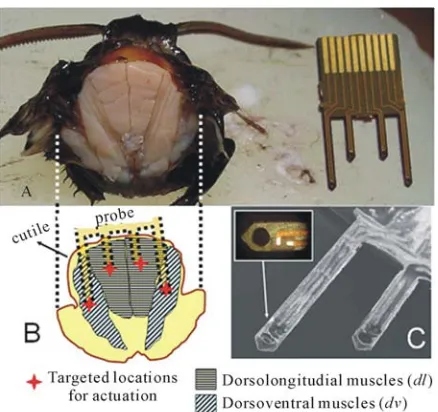
Highly miniaturized CMOS electronics on micro-machined probes has enabled complex BCI. Develop-ments in microprobe technology have shifted the notion of vertebrate implantable neuromotor prosthetics from science fiction to reality. This technology provides tech-niques and tools to understand and generate robust elec-tronically controlled muscle movement [30]. The adop-tion of the payload by the body, as the developing tissue forms around it, not only ensures a secure attachment to the insect, but also enables a highly predictable electronic interface to the insect’s sensorial, neural, or muscular systems. We call this procedure Early Metamorphosis Insertion Technology (EMIT). EMIT procedure allows for reliable IMI and hybrid bioelectronic structures where CMOS devices and MEMS structures are coupled with insects natural sensors and actuators. These systems can lead to the solution of many engineering challenges by understanding and manipulating the communication and automatic control systems of insects (Figure 18).
[image:9.595.322.534.490.675.2]The implanted probes can also be used to record elec-trophysiological signals during natural flight to study the locomotive behavior. Further feedback studies of insect muscle can be conducted to optimize the flight control. In this study, the recording capability was used solely to assess the success of bioelectrical coupling (Figure 19).
Figure th
[image:10.595.64.283.92.298.2]18. (A) Cross section and (B) illustrated diagram of e flight muscles powering the up- and downstroke of Manduca sexta wings. The tips of the flexible probe in (A) target the flight powering muscles dl and dv (B). SEM im-age of the flexible-probe tip with expanded imim-age of the ground and actuation pads can be seen in (C). The hole at the tip is opened for muscle growth. Copyright 2009 IEEE.
Figure 19. Actuation probes were also used to record mus-cle potentials as an indication of efficient tissue–probe cou-pling. Potentials recorded from the dorsolongitudinal mus-cles (multiple-cell recording with 50 – 100 times amp- lification) have spiking frequency similar to wing-flapping
y .
cial-living being multiprocessor system is to acquire complete information, such as a decision or the meas-urement of quantity, using a selected set of input data stemming to a multiprocessor system- digital data are coming to artificial processor and the rest of information consumes by a neural system of living being. Thereby, a big amount of available information is managed using sophisticated data processing for the achievement of high level of precision and reliability.
th
gnals in prosthetic ap
e overlap of active nodes’ sensing areas [31]. The se
E = μ1·D, and for m
rate (~23 Hz). Observed spikes disappeared immediately when wing flapping stopped. Copyright 2009 IEEE.
Multiprocessor data fusion is in effect intrinsicall performed by animals and human beings to achieve a more accurate assessment of the processing environment The aim of signal processing by the combined
artifi-a
It is possible to substitute the microcomputer in an ob-ject-oriented problem solution scheme by the natural processing organ- brain or spinal cord. As a result, the software component will be eliminated and the most general characterization of the processing problem in one-coordinate dimensional calculations could be ac-quired naturally, according to the feedback reaction on
e input exposure for calibration, error correction, scal-ing up or down, range extension, samplscal-ing, resolution, etc.
Multisensor data fusion is in effect intrinsically per-formed by animals and human beings to achieve a more accurate assessment of the surrounding environment. The described intelligent system is introducing a new mul-tisensor-brain interface [9].
High-channel count recording microsystems are needed to record from a growing number of sites in the central nervous system. These devices are intended to provide high investigation accuracy in neuroscience ex-periments, and retrieve the control si
plications [7]. They are mainly composed of a micro-electrode array assembled and enclosed with integrated circuits (ICs), implementing the active part. Figure 20 shows the output sequence responses of the ASICs when the constructed test signals are attenuated and used as input signals to the multichip interface.
Coverage can be achieved by designing some kind of density control mechanism, that is, scheduling the sensors to work alternatively to minimize the power wastage due to th
nsing area of a node is a disk of a given radius (sensing range). The sensing energy consumption is proportional to the area of sensing disks by a factor of μ1, or the power consumption per unit. Then, the sensing energy consumption per (unit) area (SECPA) is
odel we have:
1 2 1.57 1
E (5)
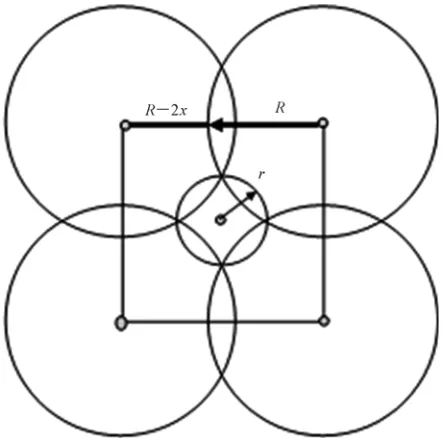
If every four equal neighboring disks in model are tangent, then there is a gap between them (see Figure 21). That uncovered space may be covered by one extra disk.
If the energy consumption of a disk of radius r is pro-portional to r2, n≥ 2, then one could save energy by
de-creasing the radius of an extra disk. In order to decrease the radius r of an extra disk and to preserve the coverage, the neighboring disks of radius R must overlap. Though this overlapping may be small, the radius r may decrease gradually. We seek an optimal radius r for the extra disk, and this determines the extent to which the disks of ra-dius R overlap. This case is intermediate between the previous models, and we will illustrate its advantage over them.
Figure 20. Measured outputs of the different stages of the multichip interface. output signal of the conditioning circuits (top), reconstructed output of the ADC (middle), and reconstructed output of the digital ASIC (bottom). only detected waveforms are captured and transmitted. Copyright 2009 IEEE.
Figure 21. Optimal arrangement of sensors with two ad-justable sensing ranges. Copyright 2009 MDPI Publishing.
these four disks are the neighbors of an extra disk of ra-dius r.
As a result, we have the ratio of the total area Sf = 6πR2/5 of the parts of disks inside the tile divided by the
area Sp= 16 R2/5 of the tile, and the coverage density D = 3π/8 ≈ 1788, and E ≈ 1.178 μ1.
5. Results
1) It is possible to apply a twin-T RC-filter for com-bating such interferences and noises, but only for the FR on the high or decreasing part of the transfer function (TF). The improvement of metrological performance data
range where TF is rising was proposed. Suppression of such interferences is achieved by incorporating n-unit RC-filters into the input circuits of the transducer with a negative magnetic flux feedback loop;
2) A magnetometer-based motion capture system that can address several usual human movements has been presented. This approach is well suited to planar move-ments which are classically performed by humans. Fur-thermore, in an advantageous way, this angle information with an accelerometer to separate the gravitational and kinematical components in the accelerometric signal can be combined;
[image:11.595.62.285.389.608.2]or superior performance to their microsensor competitors, at smaller sizes and in many cases, more economically.
The limits of advanced method are:
1) presence of the AC MFs which are considerable strong than the noise level of MF and walking vibrations;
2) the head sensor is connected rigidly to the robotic legs and movement is performed with a constant hori-zontal speed;
3) the power consumption of the autonomous robot is slightly increased for the sensor’s functioning mainte-nance. Also robot’s mass will be added in a case of ap-plication of a Dewar for superconducting sensor;
4) the differential arrangement of a sensing element al-lows a single-directional perception and the three-com-ponent vector sensor can be used for orientation in a space;
5) between both sensors and actuators a mutual flow of information exists by means of the explained human r
hich are restricting to the transducing ability of a
bio-
p-, S. Roccella and L. Ascari et al., “Developm
[5]
n, A. E. Ayoub, J.-F. Roy and M. Sawan,
”
), Vol. 7, 2007, pp.
r, D. Koelle and F. Ludwig et al.,
“Supercon-pp. 339-345. doi:10.1109/TNSRE.2009.2024310 akagawa and T. Mizuno, et al., “Integrated
007.912921
l. 105, iss. 6, 2009, pp. 26-32.
al, Vol. 7, 2007, pp.
Level Field
iot, “A Magnetometer-Based Ap-
o-bot interface. It is presumed that the nerve- machine in-terface will allow the close monitoring of flow data w
sensor of nerve impulses and mass-dimensional parame-ters of IS.
6. References
[1] E. Mahmoudi, “Electronic Nose Technology and Its A
s Journal, Vol. 107, iss. plications,” Sensors & Transducer
8, 2009, pp. 17-25.
[2] L. Beccai ent In Vivo Neural Imaging and Interface CMOS Devices: Design, Packaging, and Implementation,” IEEE Sensors
Journal, Vol. 8, No. 1, 2008, pp. 121-130. doi:10.1109/JSEN.2
and Experimental Analysis of a Soft Compliant Tactile Microsensor for Anthropomorphic Artificial Hand,”
IEEE- ASME Transactions on Mechatronics, Vol. 13,
2008, pp. 158-168.doi:10.1109/TMECH.2008.918483 [3] A. Cerman, P. Ripka and P. Kaśpar, “Precise Magnetic
Sensors and Magnetometers for Military and Space Ap-plications,” Sensors & Transducers Magazine, Vol. 38, iss. 12, 2003, pp. 54-58.
[4] D. J. Mapps, “Remote Magnetic Sensing of People,” Sen-sors and Actuators A, Vol. 106, 2003,pp. 321-325,. doi:10.1016/S0924-4247(03)00193-6
G. S. Patel, A. Rai and S. Prasad, “Artificially Controlling the Limb Movement of Robotic Arm Using Machine In-terface with EMG Sensor,” Sensors & Transducers Jour-nal, Vol. 89, Iss. 3, March 2008, pp. 39-51.
[6] M. Hajjhassan, V. Chodavarapu and S. Musallam, “Neuro MEMS: Neural probe microtechnologies (Review) ,”S- ensors, Vol. 8, 2008, pp. 6704-6726.
doi:10.3390/s8106704
[7] B. Gosseli et al., Sensitivity,” 8, 2003, pp. 3735-3739. Review of Scientific Instruments, Vol.74, No. “A Mixed-Signal Multichip Neural Recording Interface
With Bandwidth Reduction,” IEEE Transactions on Bio-medical Circuits and Systems, Vol. 3, No. 3, 2009, pp. 129-141. doi:10.1109/TBCAS.2009.2013718
[8] R. Sklyar, “CNT and Organic FETs Based Two-Way
Transducing of the Neurosignals,” Proceedings Nanote- chnology 2008: Life Sciences, Medicine, and Bio Materi-als, Nano Science & Technology Institute, Cambridge, CRC Press, Vol. II, chapt. 6: Nano Medicine & Neurol-ogy, June 2008, pp. 475-478.
[9] R. Sklyar, “Sensors with a Bioelectronic Connection,
IEEE Sensors Journal (Special Issue
835-841. doi:10.1109/JSEN.2007.894903
[10] R. Sklyar,“A Complex of the Electromagnetic Biosensors with a Nanowired Pickup,” Journal of Sensors, 2009, Article ID 516850. doi:10.1155/2009/516850
[11] R. Klaine
ducting Quantum Interference Devices: State of the Art and Applications (Invited Paper) ,” Proceedings of the IEEE, Vol. 92, No. 10, 2004, pp. 1534-1548.
doi:10.1109/JPROC.2004.833655
[12] R. Sklyar, “The Method of Instant Amplification of the MCG&MEG Signals,” Proceedings TechConnect World Conference and Expo 2010, Anaheim, California, June 2010, pp. 467-470.
[13] M. Hajjhassan, V. Chodavarapu and S. Musallam, “Neuro MEMS: neural Probe microtechnologies (Review) ,”
Sensors, Vol. 8, 2008, pp. 6704-6726. doi:10.3390/s8106704
[14] Y. K. Song, D. A. Borton and S. Park, et al., “Active Microelectronic Neurosensor Arrays for Implantable Brain Communication Interfaces, ” IEEE Transactions on Neural Systems and Rehabilitation Engineering, Vol. 17, 2009,
[15] D. C. Ng, T. N
[16] R. Gupta and J. Ashe, “Offline Decoding of End-Point Forces Using Neural Ensembles: Application to a Brain–Machine Interface,” IEEE Transactions on Neural Systems and Rehabilitation Engineering, Vol. 17, No. 3, 2009, pp. 254-262. doi:10.1109/TNSRE.2009.2023290 [17] M. Khan, A. K. Salhan and D. Bansal, “A Real Time
Embedded Set Up Based on Digital Signal Controller for Detection of Bio-Signals Using Sensors,” Sensors & Transducers Journal, Vo
[18] H. Ramamurthy, B. S. Prabhu and R. Gadh, et al., “Wire-less Industrial Monitoring and Control Using a Smart Sensor Platform,” IEEE Sensors Journ
611- 617. doi:10.1109/JSEN.2007.894135
[19] R. J. Prance, T. D. Clark, and H. Prance, “Compact Room-Temperature Induction Magnetometer with Su-perconducting Quantum Interference Device
doi:10.1063/1.1590745 [20] S. Bonnet, and R. Hél
64.
ate Sensors,” Sensors and
Nielsen et al.,
d Control Using a Smart Sensor
s Jounal, Vol. 7, 2007, pp. 611-
Tachi S.,
, pp.
. Stern,
“In-56, 2009, 9.2015460
446-2460. [21] R. Sklyar, “Superconducting Induction Magnetometer,”
IEEE Sensors Journal, Vol. 6, 2006, pp. 357- 3 doi:10.1109/JSEN.2006.870167
[22] L. F. Zambresky, T. Watanabe, “Equivalent Circuit of a Magnetic Sensor Coil and a Simple Filter for Rejection of 60 Hz Man-Made Noise,” Journal of Geomagnetism and Geoelectricity, Vol. 32, 1980, pp. 325-331.
[23] P. Ripka, “Review of Fluxg
617.
Actuators A, Vol. 33, 1992, pp. 129-141. doi:10.1016/0924-4247(92)80159-Z [24] J. M. G. Merayo, J. R. Petersen, and O. V.
“A Portable Single Axis Magnetic Gradiometer,” Sensors and Actuators A, Vol. 93, 2001, pp. 185-196.
doi:10.1016/S0924-4247(01)00656-2
[25] J. Vrba, and S. E. Robinson, “SQUID Sensor Array Con-figurations for Magnetoencephalography Applications (Topical Review) ,” Superconducting Science and Tech-nology, Vol. 15, 2002, pp. R51–R89.
doi:10.1088/0953-2048/15/9/201
[26] R. Sklyar, “Suppression of Low-Frequency Interferences in the Induction Sensor of Magnetic Field,” Measurement, Vol. 39, 2006, pp. 634-642.
doi:10.1016/j.measurement.2006.01.005
[27] H. Ramamurthy, B. S. Prabhu, R. Gadh, et al., “Wireless Industrial Monitoring an
Platform,” IEEE Sensor
doi:10.1109/JSEN.2007.894135
[28] R. Sklyar, “A SuFET Based Either Implantable or Non-Invasive(Bio) Transducer of Nerve Impulses,” In: Armada, M. A., Gonzales de Santos, P., and
Eds., Measurement and Control in Robotics, Producción Gráfica Multimedia, PGM, Madrid, Spain, 2003 121-126.
[29] V. K. Khanna, “Frontiers of Nanosensor Technology,”
Sensors & Transducers Journal, Vol. 103, 2009, pp. 1-16.
[30] A. Bozkurt, R. F. Gilmour, A. Sinha, D
sect–Machine Interface Based Neurocybernetics,” IEEE Transactions on Biomedical Engineering, Vol.
pp. 1727-1733. doi:10.1109/TBME.200
[31] V. Zalyubovskiy, A. Erzin, S. Astrakov and H. Choo, “Energy-Efficient Area Coverage by Sensors with Ad- justable Ranges,” Sensors, Vol. 9, 2009, pp. 2