Master Thesis
The Relationship between Perceived Relevance and User
Participation, and its Effect on ES Implementation Success
A Theoretical Framework
Written by
The Relationship between Perceived Relevance and User
Participation, and its Effect on ES Implementation Success
A Theoretical Framework
Author: S.X. (Sebastiaan) Koperberg BSc
Place: Haarlem
Date: Februari 28th, 2010
University University of Twente
Faculty: School of Management and Governance
Program: Business Information Technology
Company: KPMG, Amstelveen
Committee: 1st university supervisor
Dr. Ir. C.P. Katsma
School of Management and Governance
Chair of Information Systems and Change Management
2nd university supervisor
S.M. Eckartz MSc
Faculty of Electrical Engineering, Mathematics and Computer Science Chair of Information Systems
Company supervisor
Drs. Ing. A.M. Meuldijk RE
Management summary
This thesis explores the phenomenon of enterprise system (ES) implementations and explains a specific part of the complex dynamics that are common during these types of large scale change processes, focusing on the relationship between perceived relevance and user participation. While user participation is a familiar term, perceived relevance describes the expectations of users regarding the relevance and importance of the new system and related change. Meanwhile, this thesis acknowledges the complexity of the research domain and recognizes that these implementations require large investments over extended periods of time, in addition to the substantial organisational commitment of all involved stakeholders. Considering the extensive constraints to which ES implementations are subjected, it is of key importance to understand what strategies can be used to ensure an optimal implementation result. The research succeeds in improving the insight into an under exposed part of the ES domain, for both professionals and academic researchers.
The research focus has been brought forward by the principal of this investigation: KPMG IT Advisory, who frequently encounter problems and issues with the acceptation, adoption and embedment of enterprise systems into implementing organisations. The specific focus of this investigation is the qualitative exploration of the dynamics that play a major role in determining the acceptation and adoption of these enterprise systems. This explains the focus on perceived relevance and user participation. The combined effect of these two variables contributes significantly to the eventual acceptation and adoption, and thus success, of the ES implementation.
By exploring the dynamics between user participation and perceived relevance, this research succeeds in explaining the underlying mechanisms in such a fashion that a number of important recommendations for practice can be suggested. It appears that the users’ perception of relevance of the system is very important for motivating users to participate in the implementation. On the other hand, user participation provides a key opportunity for making users understand the new system and actually giving them influence over it and the related organisational change. Both understanding and influence prove to be essential for the system to be perceived as relevant among users. Case study research shows that current ES implementation in the field do not make use of the dynamics that have been identified in this thesis.
Acknowledgements
Writing my Business and IT Master thesis has been a turbulent period, with highlights and lows. I have met new exciting people and gained valuable experiences, while at the same time, I have been challenged with less pleasant events on a number of other fronts. For me personally, it also means a profound transition from the familiar into the unknown, exchanging my student days for a new phase. Soon, I will have to make important decisions regarding my professional working career, but I am certain that the experiences of the past year and a half will help me during all my future endeavours. A number of people have played important roles during this process and I would like to give credit where credit is due.
Most importantly, I would like to thank my two university supervisors and my external company supervisor. Without their patience and support, this thesis would not have been completed in the current form. In order to express my gratitude, I would like to address each of my supervisors individually.
Looking back, I am still convinced that my initial preference for Christiaan Katsma as my first university supervisor has been a good one. Already familiar with Christiaan’s drive and enthusiasm from his lectures in the classroom, I think I even got more than I bargained for. He frequently pushed my boundaries to new levels and certainly extended my view. Christiaan’s encouragements, guidance, and enthusiasm from the initial to the final level enabled me to develop an understanding of the complex topic.
Silja Eckartz became my second university supervisor a couple of months into the project. She proved to be an excellent addition to my gradation committee: she always provided me with practical, thorough and invaluable feedback, which was especially useful when my other supervisors where pressed for time and where unable to read all the new material I send them. In addition, she always kept the project in check with reality, providing the necessary grounding for Christiaan’s drive and enthusiasm.
Furthermore, I am also thankful for the opportunity KPMG provided me, combining my Master thesis with an internship. In addition to gaining access to their practical experience in the field of ES implementations and their clients for my case study research, KPMG offered me a chance to get acquainted with their consultancy business. This experience has been of great value to me.
Also I would like to express my gratitude towards all my KPMG ITA GPA colleagues for their contribution to a pleasant and inspiring working environment. Even as a “lowly” intern, I really felt accepted in their midst. It is my pleasure to personally thank Kimberly Lemmens, Anno Perk, Maurice Lacroix, Jochem Pasman, Alexander Jansen, Bas Huiskens, Johan Steenstra, Kees Jan van der Moolen, Frank Engel, Jan Willem van Houwelingen, Harry Boersen, Michel Troost and Jarno Roos for their interest, friendship, advice, support and/or occasional listening ear.
Concluding my acknowledgements, I would like to thank the most important people in my life: my girlfriend and my parents. Cynthia Kuipers, I am grateful for the fact that you are my girlfriend. You put up with me during the entire project, which certainly was not always easy, especially during those moments in time that I was struggling, stressed out, or feeling down. You always managed to make me feel better and this support has meant a lot to me.
The final thanks go to my parents. Over the course of my life, you have always supported me unconditionally. My Master of Science degree would not have been possible without this support and the occasional disciplining. Therefore, I would like to dedicate this thesis to you, my parents.
Sebastiaan Xander Koperberg
Contents
1 Introduction ... 1
1.1 Research motivation ... 1
1.2 Background ... 3
1.2.1 Implementation methodologies ... 3
1.2.2 Acceptance and adoption ... 4
1.2.3 User participation and perceived relevance ... 5
1.3 Problem definition ... 6
1.4 Goal definition ... 6
1.5 Theoretical model ... 7
2 Research design ... 8
2.1 Literature study & Theoretical framework ... 11
2.2 Case study ... 12
2.2.1 Data selection... 12
2.2.2 Case selection... 15
2.3 Research questions ... 16
3 Literature study ... 17
3.1 Enterprise system ... 19
3.1.1 Anatomy of an enterprise system ... 19
3.1.2 Functionality of an enterprise system ... 20
3.1.3 Important ES characteristics ... 20
3.2 Enterprise system implementation ... 21
3.2.1 IS development vs. ES development ... 21
3.2.2 ES development life cycle ... 22
3.2.3 The iterative nature of ES implementations ... 23
3.2.4 Implementation terminology ... 23
3.2.5 Summary of the ES implementation process ... 24
3.3 Perceived relevance ... 25
3.3.1 Expectations ... 26
3.3.2 Changes in expectations ... 27
3.3.3 Measuring perceived relevance ... 28
3.4.1 The IS perspective ... 31
3.4.2 The organisational change perspective ... 33
3.4.3 Measuring user participation ... 35
3.5 ES implementations success ... 42
3.5.1 Project metrics ... 42
3.5.2 Enterprise system success ... 44
3.5.3 Measuring ES implementation success ... 52
3.6 Confounding variables ... 53
3.6.1 Distortion of perceived relevance ... 54
3.6.2 Contingencies for user participation ... 55
3.6.3 Critical success factors for ES ... 56
3.7 Summary of key variables and confounding factors ... 58
4 Relations in the theoretical framework ... 59
4.1 Theoretical model revisited ... 59
4.2 Procedure for investigating relationships ... 61
4.2.1 Foundation for the line of reasoning ... 61
4.2.2 Relationship in detail ... 62
4.2.3 Preliminary conclusion ... 64
4.3 Effect of participation on relevance ... 66
4.3.1 Foundation for line of reasoning ... 66
4.3.2 Relationship in detail ... 71
4.3.3 Preliminary conclusions ... 75
4.4 Effect of relevance on participation ... 81
4.4.1 Foundation for line of reasoning ... 81
4.4.2 Relationship in detail ... 84
4.4.3 Preliminary conclusion ... 88
4.5 Effect of relevance and participation on success... 92
4.5.1 Foundation for line of reasoning ... 92
4.5.2 Relationships in detail... 101
4.5.3 Preliminary conclusion ... 106
4.6 Summary of theoretical framework ... 109
4.6.2 Identifying important stages and phases... 111
4.6.3 The next step ... 113
5 Case study ... 114
5.1 The cooperating organisations ... 114
5.2 Data requirements ... 115
5.3 Structured interviews ... 118
5.3.1 Interview perspectives... 118
5.3.2 Structured interview protocol ... 119
5.4 Case study results ... 120
5.4.1 Management of perceived relevance ... 121
5.4.2 Management of user participation ... 122
5.4.3 Summary ... 123
6 Practical recommendations ... 124
6.1 Setting up recommendations ... 125
6.1.1 Key considerations ... 125
6.1.2 How to formulate recommendations ... 127
6.2 Recommendations for practice ... 129
6.2.1 Recommendations for managing perceived relevance ... 129
6.2.2 Recommendations for managing user participation ... 135
6.3 Summary of the recommendations, limitations and final remarks ... 141
6.3.1 Overview of recommendations ... 141
6.3.2 Limitations of the recommendations for practice ... 142
6.3.3 Final remarks ... 143
7 Conclusions, limitations and recommendations ... 144
7.1 Conclusions ... 144
7.2 Limitations and recommendations ... 146
References ... 148
Appendix A. User participation contingencies ... 151
Table of figures
Figure 1: Organisational structure of KPMG ... 1
Figure 2: Overview of KPMG's ERP implementation service components ... 2
Figure 3: Theoretical model ... 7
Figure 4: Research model (Verschuren & Doorewaard, 2000) ... 10
Figure 5: The literature study (overview of chapter 3)... 18
Figure 6: The anatomy of an enterprise system (Davenport, 1998) ... 19
Figure 7: Traditional system development life cycle ... 21
Figure 8: Project stage model of ES implementations (Parr & Shanks, 2000) ... 22
Figure 9: Combined implementation model (Parr & Shanks, 2000) ... 24
Figure 10: Fictive example of perceived relevance in relation to the ES implementation project ... 29
Figure 11: Overview of the perceived relevance measure ... 29
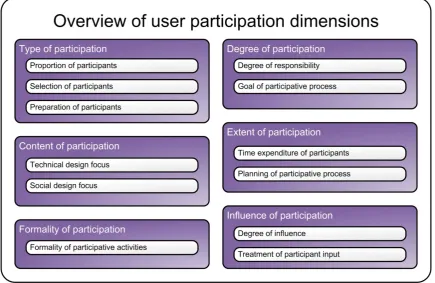
Figure 12: Overview of Cavaye's user participation dimensions ... 35
Figure 13: Fictive example of the type of participation... 36
Figure 14: Fictive example of the degree of user participation ... 37
Figure 15: Fictive example of the content of participation ... 38
Figure 16: Overview of phases of the implementation process ... 38
Figure 17: Fictive example of the extent of participation ... 39
Figure 18: Fictive example of the influence of participation ... 40
Figure 19: Fictive example of the formality of participation ... 40
Figure 20: Overview of the measure for user participation ... 41
Figure 21: Fictive example of planned budget and possible overrun ... 43
Figure 22: Fictive example of planned timeline and possible overrun... 43
Figure 23: Fictive example of an overview of planned vs. actual functionalities ... 44
Figure 24: DeLone & McLean's IS success model (1992) ... 45
Figure 25: Gable, Sedera & Chan's IS success model (2003) ... 46
Figure 26: Adapted ES success model (DeLone & McLean, 2003; Gable, et al., 2003) ... 48
Figure 27: Overview of ES implementation success measures ... 52
Figure 28: Confounding variables ... 53
Figure 29: Overview of all aspects of the key variables and confounding factors ... 58
Figure 30: Review of the theoretical model and an alternative interpretation... 60
Figure 31: The role of connecting concepts and mediating factors ... 61
Figure 32: Content perspective on the relationships between key variables... 63
Figure 33: Time-oriented perspective on the relationships between the key variables ... 64
Figure 34: Timeline of the ES implementation process ... 65
Figure 35: The effect of user participation on perceived relevance ... 66
Figure 36: Overview of the dimensions of user participation in relation to perceived relevance ... 70
Figure 37: Anticipate direct effects of participation on relevance... 74
Figure 38: Anticipate mediated effects of participation on relevance ... 74
Figure 39: Timeline used to describe the effect of participation on relevance ... 77
Figure 42: Overview of the aspects of perceived relevance in relation to user participation ... 85
Figure 43: Anticipate impact of relevance on participation ... 87
Figure 44: Anticipate impact of differentiation of improvements on relevance ... 87
Figure 45: Anticipate impact of change of expectations on relevance ... 88
Figure 46: example of the effect of the combined mechanisms ... 89
Figure 47: Timeline used to describe the effect of relevance on participation ... 90
Figure 48: The effect of relevance and participation on ES implementation success... 92
Figure 49: Overview of relevance and participation in relation to success ... 101
Figure 50: Anticipate effect of relevance and participation on success ... 105
Figure 51: The effect of the interaction of relevance and participation on success ... 109
Figure 52: Effects of key variables over time ... 112
Figure 53: Recommendations for the initiate stage and blueprint phase ... 141
Figure 54: Recommendations and checks during all stages and phases ... 142
Figure 55: Identified mechanisms in the relation between key variables ... 155
Figure 56: Overview of participation dimensions and underlying aspects ... 158
Figure 57: Aspects related to the type of participation... 158
Figure 58: Aspects related to the degree of participation ... 163
Figure 59: Aspects related to the content of participation ... 166
Figure 60: Aspects related to the extent of participation ... 168
Figure 61: Aspects related to the influence of participation ... 170
Figure 62: Aspects related to the formality of participation ... 173
Figure 63: Overview of perceived relevance dimensions and underlying aspects ... 175
Figure 64: Aspects related to the expectations regarding relevance ... 175
Figure 65: Aspects related to the change of perception regarding relevance... 179
1
Introduction
Information systems have created opportunities for small, medium and large organisations to provide novel products and services and make their daily routines more effective and efficient. However, integrating and embedding an information system into an organisation has proven to be complex, if not problematic. This especially holds true for implementations of enterprise (resource planning) systems, which are large and comprehensive systems, orchestrating many complex and concurrent activities. Enterprise system implementations are the subject of this Master thesis. Before diving into this broad and complex domain, let us first explore the circumstances that initiated this research.
1.1
Research motivation
This research is conducted by a student of the Management and Governance faculty of the University of Twente and constitutes the final stage in the process of obtaining his Business & Information Technology (BIT) Master of Science degree. For this specific academic study, it is usual to carry out this final research project in an external setting and not within the bounds of the university. This way the student gains, among other arguments, a valuable experience in a corporate setting. The research involves three parties:
• The student, who carries out the actual research
• Two academic experts (supervisors) of the University of Twente
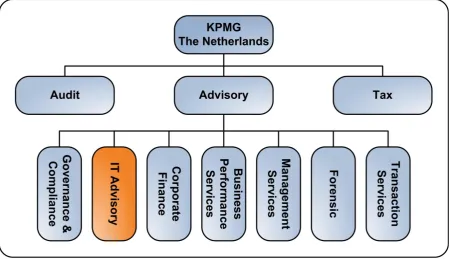
[image:11.595.75.526.481.740.2]The external party that was approached by the student is KPMG. KPMG is an international organisation that operates in 144 countries and employs 120.000 people worldwide. KPMG has three main activities, Audit, Tax and Advisory. This research project is conducted in the IT Advisory department of the Advisory branch of KPMG. An overview of the Dutch organisational structure of KPMG with a specific focus on the Advisory branch is provided in Figure 1.
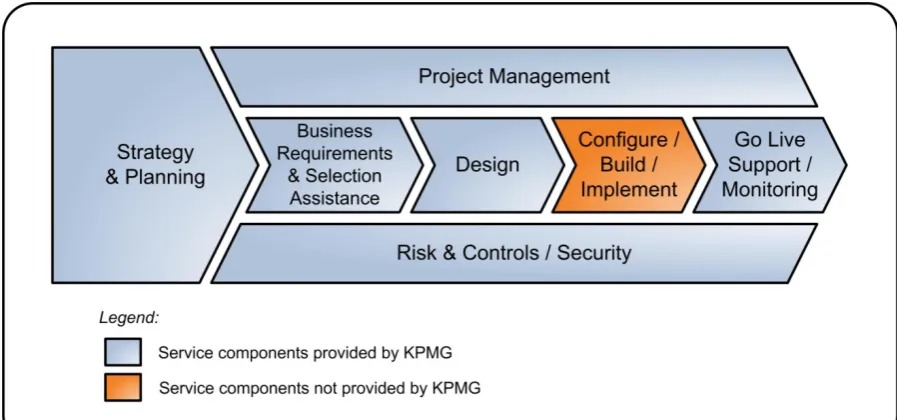
[image:12.595.73.522.341.551.2]The IT Advisory department (ITA) provides assurance and advisory services to assist clients to identify risks, establishing appropriate controls and security measures arising from the use of information systems and technology. The ITA department does not only support accountants in their decision making process, but also performs IT-assessments, quality checks of existing and new systems, risk analysis, information security research, assessments of continuity plans and other IT related advisory activities. Consultancy activities in relation to enterprise system domain are carried out by the enterprise resource planning (ERP) specialist group. Figure 2 gives an overview of the different enterprise system implementation activities of KPMG that are directly provided or supported during the implementation process.
Figure 2: Overview of KPMG's ERP implementation service components
1.2
Background
The introduction of enterprise systems (ES) is so complex that only a minority of these projects are successful. In other words, most enterprise system implementations are not completed in time, in budget and with complete system functionality. Additionally, only a small percentage of these system implementations tend to fulfil the promise of significant return on investment (Katsma, 2008).
Although implementation often is unsuccessful and tends to introduce new organisational issues, the main purpose of an enterprise system is to solve an important organisational problem. Large companies struggle with the vast quantities of data that are collected, generated and stored in electronic databases (Davenport, 1998). The strength of an enterprise system is its capability to integrate the fragmented nature of information across functional areas in large business organisations. The enterprise system dramatically streamlines the flow of information throughout the organisation (Davenport, 1998). What all enterprise systems have in common is that they offer businesses templates of “best business practices”, which when implemented should result in company-wide streamlined and efficient operations. At the same time these best practices limit the extend in which such systems can be customized to meet the organisation’s needs and demands (Katsma, 2008). So instead of adapting the enterprise system to fit the organisation, radical change in the organisation is required. As the low success rate of enterprise systems reveals, the change management principles that should be applied to guide these complex projects have not yet matured sufficiently. The result is that the adoption of the best practices and the accompanying changes to the company’s strategy, organisation and culture bring along significant risks (Davenport, 1998). The push towards generic business processes and the accompanying change management issues can result in the loss of competitive advantages which were realized by the previous way of working (Kawalek & Wood-Harper, 2002).
1.2.1
Implementation methodologies
The problematic nature of enterprise system implementations can be explained from the used system design and implementation methodologies. These methodologies might have been sufficient to develop and implement traditional information systems, but now fall short with systems as large and complex as enterprise systems. The important difference between these two types of systems is the impact they have on the organisation. In the case of a traditional IS implementation this impact would be limited. However, in the case of an ES implementation, the impact on the organisation is very significant and companies fail to reconcile the technological imperatives of the ES with the business needs of the organisation. Davenport (1998, p. 122) states: “An enterprise system, by its very nature, imposes its own logic on a company’s strategy, organisation, and culture”. Davenport further concludes that the biggest problems of enterprise system implementations are not technical issues but business problems.
1. Changes to the business process and systems 2. Changes to the organisational structure
3. Changes to individual and group behaviour in the work situation
On every one of these levels, the induced changes need to be addressed and managed. Even though enterprise systems are profoundly complex pieces of software, requiring large amounts of money, time, and expertise to implement (Davenport, 1998), this does not mean this is the only aspects deserving attention. The organisational structure and individual and group behavioural aspects of the change should not be underestimated and certainly not be neglected. Currently the focus seems to be overly fixed on the technical and design aspects of the new enterprise systems. This is observed in practice; the methodologies for implementing enterprise systems are even more rigidly and deterministically employed than those for far less complex and invasive “traditional” information systems (Katsma, 2008). The tendency to be more in control of the project is understandable, but is actually the wrong measure to compensate for the increased technological, organisational and behavioural complexity of ES implementations. Especially the organisational and behavioural factors (also referred to as soft factors) are hard to control with rigid and deterministically oriented methodologies (Katsma, 2008).
1.2.2
Acceptance and adoption
Too little attention is given to the soft factors during large, far-reaching, ES implementations. It is not surprising that in most cases acceptance of the new ES becomes an issue among the different types of users in the organisation (Amoako-Gyampah & Salam, 2004). This is reinforced by Lim, Pan & Tan (2005), who found that acceptability of ERP systems among their targeted users is a crucial determinant for the strategic application of the system. The integrative properties of enterprise system packages introduce complications and challenges in securing user acceptance (Lim, et al., 2005). Presenting one approach to improve the understanding of user acceptance, Amoako-Gyampah & Salam (2004) depart from the famous technology acceptance model (TAM). They try to relate TAM to the context of ES systems and even though their research has some important limitations, Amoako-Gyampah & Salam did find support for their extended technology acceptance model. Acceptance is among other things influenced by the following factors:
1. user training,
2. project communication, and
3. shared beliefs in the benefits of the ES by users.
1.2.3
User participation and perceived relevance
All in all, a sufficient focus on user acceptance is crucial for ES implementation success. User participation plays an important role in the process of increasing acceptance and thus the overall success of the enterprise system implementations (Esteves, Pastor & Casanovas, 2005). Barki & Hartwick (1994) define user participation as a series of (observable) activities or behaviours performed by potential future users and even though user participation research does not offer consistent and cumulative outcomes, some form of participation is considered desirable in most system development methodologies (Cavaye, 1995). According to Esteves, et al. (2005, p. 2) the goal of these activities and behaviours is that the participation process “results in a better fit of user requirements, achieving better system quality, use and acceptance”. In addition, Robey, Ross & Boudreau (2002) pose that situated learning through user participation is another important aspect and a means for overcoming knowledge barriers that are encountered by users during ES implementations. The “shared beliefs in the benefits of the system” by users (already mentioned above) is an important factor that influences user participation. In the context of this research this is called “perceived relevance”. The concept of perceived relevance is based on relevance as it is presented by Katsma, Spil, Ligt, & Wassenaar (2007). In this case that is the relevance of the new ES as it is perceived by the future users of the system. This perceived relevance has to do with the expectations the users have of the new system. Since expectations can be managed, perceived relevance can be influenced and manipulated by the organisation. Getting users to participate and involve themselves in the ES implementation project can play an important role in the realisation of perceived relevance (Katsma, et al., 2007).
The phenomenon that the motivation for a process or activity is depended on its (perceived) relevance to the receiver at the time of receipt is referred to as “elaboration likelihood”, which suggests “that individuals must be motivated and able to process information in order for it to become salient and spur them to action” (Wagner & Piccoli, 2007, p. 53). The elaboration likelihood principle can be illustrated with the following marketing example:
“In a normal day-to-day situation, most people are not very receptive for car advertisements. However, this changes for the small group of people looking to buy a new car. For this small group car advertisements are relevant. In that case, the advertisements represent stimuli that warrant attention.”
Wagner & Piccoli (2007, p. 53) note a parallel in software design and implementation projects: “For end users caught in their day-to-day activities, involvement in new software design is often treated as no more than a distraction”. Even for end users that are participating in the change process, the saliency of a new ERP system is often rather low. Here perceived relevance can have an important impact. A high perceived relevance can help improve the salience of the project.
1.3
Problem definition
KPMG often experiences acceptation, adoption and embedment of a new enterprise system into the organisation as problematic. In practice, KPMG encounters situations where little to no attention is paid to the user acceptance of a new enterprise system. There seems to be a complex problem: even though most ES implementation facilitators acknowledge the importance of user acceptance and participation during the implementation of the ES, in most cases the responsibility of really engaging stakeholders throughout the business lies with the ES implementing organisation itself. They themselves are responsible for the cooperation of their staff. As a result it happens that external partners/consultants in the implementation process do only as much as is necessary to show they tried to get the different stakeholders involved and committed. This way they can show on paper, they have taken appropriate measures to promote acceptation and embedment of the ES, regardless of the actual involvement or commitment of the different stakeholders in the organisation. In many cases this leads to a situation where problems arise during the project or after the project is finished. In a late stage of the project it is discovered that the system is not accepted by its users or did not embed sufficiently into the organisation. These types of situations are also recognized in the academic community. In these situations, Wagner & Piccoli (2007, p. 52) describe user participation as “nothing more than a window dressing effort aimed at gaining buy-in”.
As explained earlier on, the rigid and deterministically oriented management approach utilized during ES implementations is one that restrains the consideration of the softer organisational and behavioural (human) factors in the change process. Both in practice and the academic community there is a demand for change management principles that ensure an increased success rate for ES implementations (Finney & Corbett, 2007). As illustrated by KPMG’s example, acceptation, adoption and embedment of an enterprise system into an organisation is a contemporary issue. Based on various existing research papers, it is established that, in relation with acceptation and embedment, participation and perceived relevance have an important, but as of yet still poorly predictable, effect on the implementation success in the ES context (Barki & Hartwick, 1994; Katsma, et al., 2007; Pasmore & Fagans, 1992). The quantitative nature of the majority of existing research and the lack of a qualitative theoretical framework hamper our understanding of the dynamics of ES implementations. This leads us to the main research question:
1.4
Goal definition
value of the research: for KPMG to be better equipped to perform their consulting practices in the domain of ES implementations and the involved change management principles. Next to the practical value for the business community, the investigation also leads to new insights for the academic research community. It helps to qualitatively refine the theoretical foundation of the relationships between relevance, participation and success.
1.5
Theoretical model
Based on the research introduction, problem statement and goal definition, a theoretical model is suggested (see Figure 3). The theoretical model defines the relationships between the three central variables of this research. The dependent variable is ES implementation success, while the manipulated variables are perceived relevance and user participation. Besides directly influencing ES implementation success (relations R1 and R2 in Figure 3), it is posited that perceived relevance and user participation also influence each other (relation R3 in Figure 3). In turn, the mutual relationship between perceived relevance and user participation has an effect on the successfulness of the ES implementation through R1 and R2.
Figure 3: Theoretical model
2
Research design
The phenomenon that is studied in this research is enterprise system implementations. More specifically, the important role user participation and perceived relevance play in this process and how these two variables influence the eventual successfulness of the ES implementation. This type of knowledge can be used to improve implementation principles and methodologies. Therefore, it is valuable to ES related consultancy firms, such as KPMG, and all other ES implementing organisations. This investigation aims to presents KPMG with a qualitative research which provides insight and recommendations to improve the efficacy of an important part of the implementation process in practice. In addition, this main body of this research helps to increase the understanding of ES implementations in the academic community.
This chapter describes the research design that will guide this investigation. A thorough research design is essential for every research and improves the reliability and validity. The research approach also provides boundaries for the choice in available research methods. Regarding problems and issues in the academic domain of ES implementations, there are essentially two main research approaches that can be distinguished (Katsma, 2008; Kim & Pan, 2006). These can be differentiated in a quantitative and a qualitative approach. These are:
• Variance-oriented research (quantitative approach). In the academic research community there is a lot of variance-oriented or factorial research (frequently also called critical success factor based research) available. Factorial investigations focus on a collection of independent and manipulative management variables (Katsma, 2008). By nature, factor based research is a form of quantitative research. Although it is valuable for advancing our understanding of ES implementation success, it adopts a rather static view, which limits its appropriateness for explaining the depths and dynamics of the implementation process. In other words; it does little to explain how the actual transformation from unsuccessful ES implementation to successful ES implementation takes place. However, as the quantitative approach points us in the right direction (Aladwani, 2001), it certainly holds value. Among other critical success factors identified by factor based research, acceptance of an enterprise system among their targeted users has been mentioned as a crucial determinant for the strategic application of the system (Lim, et al., 2005).
Research method and model
The research design presents the path to successfully solving the research problem. The current research is aiming to explore the relationships in a theoretical model. The first step is to identify the key concepts in the research domain and to investigate the current state of academic research into these concepts: in other words, a literature study. Based on this foundation, the relationships between the key concepts are explored. Academic literature again plays an important role, but gaps in the current knowledge regarding the relations and dynamics will be expanded with the help of induction. The theoretical framework that result from these explorations is then compared with the current practices, which are established by empirical research. The reason for comparing the theoretical framework with the current implementation approaches enables the identification of practical recommendations.
ES implementations need to be studied in practical setting because the phenomenon is not readily separated from its organisational context. This also causes considerable limitations to the available research methods. The inextricable nature of ES implementations makes it impossible to simulate these kinds of projects under lab conditions. Because of the high costs related to ES implementations, most far-reaching, invasive forms of research involvement are not really possible. However, due to its scalability and limit impact, the case study research method is very suitable for studying an ES implementation phenomenon in its organisational context. The choice for the case study research method under these kinds of circumstances is supported by Yin (2003, p. 13), who defines case study research as “an empirical inquiry that
• investigates a contemporary phenomenon within its real-life context, especially when
• the boundaries between phenomenon and context are not clearly evident.”
To improve the validity of the case study research, two avenues of inquiry will be pursuit, namely data collection through interviews with organisational stakeholders and a review of organisational documentation. However, before any case study research can be conducted, a sound literature study is required. Based on the theoretical foundation of the literature study it will be possible to frame the actual situation in selected organisations. Based on the literature study a new theoretical framework will be introduced. The theoretical knowledge guides the focus of the data collection during the case study phase of this research. The first cases will be used as a pilot study, and serve to offer a first glance at the subject in a practical setting and improve the evidence collection protocols that are created for this research. These pilot cases have a lower degree of reliability because of the smaller scale of the investigation in those organisations. The results obtained from the primary cases and to a lesser extend the results of the pilot cases are analyzed in an effort to identify practical recommendations and finally lead to the conclusion. In addition to adding value to the academic research community, the practical recommendation have the main goal to provide insight and support for KPMG’s ES business activities.
Figure 4: Research model (Verschuren & Doorewaard, 2000)
Reading guides
2.1
Literature study & Theoretical framework
The purpose of the literature study is to provide existing constructs that can be both adopted and adapted in order to reach the research goals. Literature studies are essential to the academic research as they provide us with a means to learn and build upon what others have already done, instead of working alone. Combining literature sources also helps to synthesize new theory, which is done through induction and deduction. In a later stage these new constructs and structures can be validated through research methods such as case study research. The literature study effectively forms the foundation for the construction of the theoretical framework and the data requirements that will be used to guide the data gathering process during the case study research. It also helps identifying the contextual factors or confounding variables that could distort the results. The literature study consists of the identification of three important elements:
1. General constructs. The extensive literature study first helps to identify the general constructs in the research domain, namely the enterprise system and its corresponding implementation process. This foundation is required to identify specific characteristics within this research domain and understand the current state-of-art in the field. Also some of the general dynamics that are relevant for this investigation are discussed.
2. Key constructs or Key variables. The second element details the theoretical constructs of perceived relevance, user participation and ES implementation success in the current research context, which has been delineated by the first element of the literature study. The key constructs also help to create a set of measures in order to assess the state of the key variables in the targeted organisations during the case study research. The created set of indicators is essential to interpret the situation in ES implementing organisations.
3. Confounding variables. In order to account for confounding variables, an investigation of critical success factors and other contextual influences is required. The confounding variables help to explore the contextual circumstances of the ES implementation project in the organisation for interfering factors. These interfering factors potentially distort the data gathered through the case study research (Cavaye, 1995). The interfering factors for all three key variable are investigated separately.
2.2
Case study
The case study method is used to gain insight into the implementation process in a corporate setting. Through KPMG client contacts four individual case studies are initiated. To guide the design of the case study setup, parts of the methodology proposed by Yin (2003) are used. Data selection and case selection requirements stipulate the research approach. Additionally they help to mitigate the validity issues in order to create generality and reduce the variance in the research sample.
2.2.1
Data selection
There are at least six sources of evidence in case study research; documentation, archival records, interviews, direct observation, participant observation and physical artefacts (Yin, 2003). Due to their highly complementary nature, the use of as many data sources as possible is recommended. All sources have their engrained strengths and weaknesses, which have to be taken into account. The nature of this research and the imposed time constraints to which this investigation is subjected limits the number of sources that can be consulted.
The qualitative nature of this research dictates that the primary means of data collection will be through interviews. Interviews can give the process related insight that is sought after. Even though interviews are usually associated with the survey method, they are an essential source of case study information (Yin, 2003). Documentation is used to complement and corroborate the information obtained through the interviews. Beside documentation and interview sources of evidence, other sources are not discarded outright, but are also not actively pursuit. Both the documentation and interview sources of evidence, including their strengths and weaknesses will now be discussed in more detail.
Documentation as source of evidence
Relevant project documentation is used whenever possible, depending on the availability of documentation. For every case, the author requests all ES implementation related documentation the involved organisation has available and permits access to. The type of requested documents can include administrative documents, communiqués, agendas, minutes of meeting, and other written rapports of events (Yin, 2003). However, not all of these general types of documentation are necessarily useful in the ES context of this research. Table 1 presents the ES specific documentation sources in relation to the general types of documentation that are relevant in this research context.
Table 1: Relevant case study documentation sources
Type of documentation Requested ES specific documentation
Communiqués Organisational communiqués
Written rapports of events Project initiation documents Progress reports
Project reviews
Documentation is a very important source of evidence in case study research. Yin (2003) has summarized a number of strengths and weaknesses of this source. The strengths illustrate the appropriateness of this type of source and will be discussed briefly. The strengths of the documentation source of evidence are:
• Stability. Documentation is stable and can be easily reviewed repeatedly.
• Unobtrusiveness. Documentation is unobtrusive and is not created as a result of the case study.
• Exactness. Documentation is exact and contains the exact names, references, and details of an event.
• Broad coverage. Documentation has a broad coverage and can span an expanded period of time, many events, and many settings.
The weaknesses of the documentation source of evidence require more explicit attention because of their negative implications for this research and consequently how to minimize the negative impacts. According to Yin (2003), the shortcomings of the documentation are:
• Retrievability. The first type of weakness acknowledges issues with regard to the retrievability of documents. Low retrievability results in an incomplete collection of evidence. During this research the retrievability of documentation can hardly be verified.
• Bias selectivity. The second type of weakness, which among other things is caused by the above mentioned weakness, is called biased selectivity and is caused by the incompleteness of collections of documentation. In the case of incomplete collections only a partial image of the object under investigation is provided. Most times it is very difficult to establish the (in)completeness of a collection of documents. In this research, the available documentation will be studied for signs of incompleteness. Incompleteness is detected by establishing by a gap analysis of the timeline which is described by the documents.
• Reporting bias. The third type of weakness also addresses a bias, which is named a reporting bias. Documents are written or composed by authors, who each have their own unknown biases. Reporting bias is hard to detect. Therefore, the objectivity of the documentation is not taken for granted. Verification of documents with interviews sources and vice versa will provide triangulation of the information and therefore overcome reporting bias.
Interview as source of evidence
The main effort to collect data for this research is through interviews. For every ES implementation case a number of stakeholders is selected. The investigation of every ES implementation project is, when possible, triangulated by interviewing different stakeholders that were involved in the implementation project. This approach aims to corroborate the same facts (Yin, 2003). Because not all the same stakeholders are accessible or available in the four different cases, a changing selection of the stakeholders is interviewed for every case (see Table 2).
Table 2: Relevant stakeholders
Stakeholder Description
The project manager The project manager of the enterprise system implementation project. This person can be internal or external to the implementing organisation.
The IT manager The IT manager of the implementing organisation. In general, this person acts as the official receiver of the project result. In most cases the new system is his/her responsibility.
Key users A key user is a knowledgeable end user in the implementing organisation that has been asked to participate in the implementation project.
End users The end users are the eventual users of the new enterprise system who are not (directly) involved in the implementation project.
KPMG consultants KPMG consultants are advisors that have been involved with the implementing organisation. They provide an external, more objective, view of the organisation. In some cases KPMG consultants merely provide general information about the organisation.
This is also influenced by the fact that some stakeholders are unique in the organisation, while others are present in larger numbers. In order to keep the research manageable and reduce the amount of interviews (and therefore the strain on the cooperating organisations), the number of interviews per organisation is limited. One additional source of information are the KPMG consultants who were involved with the ES implementing companies and can provide a external and less biased view of the cooperating organisations.
Yin (2003) has also summarized the strengths and weaknesses of the interview approach. The interview source of evidence provides two main advantages:
• Focus. Interviews are targeted and have a direct focus on the case study topic.
• Insight. Interviews are insightful because they provide insight in the causal interferences and relationships between variables.
• Poor interview protocol. The first type of weakness, which introduces bias, arises from poorly constructed interview protocol. This bias can be reduced by careful and controlled interview protocol design with expert supervision. In addition, the pilot cases help to refine the interview protocol.
• Respondent bias. The second type, also introducing bias, is called respondent bias and is caused by individual not correctly representing their rank and file. Unfortunately, time constraints limit the maximum number of interviewees and thus the degree of triangulation that is attainable within each organisation. However, triangulation among the interviewed stakeholders should filter out extreme views.
• Human memory. The third type of weakness is the fact that human memory is not infallible and can introduce inaccuracies. Again, data triangulation should filter out most of the contradictory findings. To ensure the quality of the author’s memory does not influence the research, the interviews are recorded in order to ensure the accurate processing of the interviews.
• Reflexivity. Finally there could be reflexivity; it is not uncommon for interviewees to tell the interviewer what they expect he/she wants to hear. The use of follow-up questions attempts to anticipate on any reflexivity that may occur.
2.2.2
Case selection
Explicit definition of the selection criteria for the candidate cases is very important. This optimizes the generality of the findings within the boundaries of the selection criteria, improving the external validity of this research for comparable organisations. As a result a candidate organisation should adhere to the following selection criteria:
1. Organisation size and type. The ES is implemented in a large organisation (>5000 employees) in the private sector, preferably a multinational. There is a preferred focus on retail organisations, but due to difficulties finding cooperative organisations this explicitly is a preferential and not an exclusive restraint.
2. Number of users. The ES has or will have between 50 and 500 eventual users. An individual roll-out within a business unit or geographical region also qualifies as an implementation. 3. Implementation status. The ES implementation project has recently been concluded.
However, it should not have been concluded before 2008, in order to maximize correct recollection by the stakeholders.
4. ES characteristics. The ES suffices the enterprise system characteristics stated in the literature study (see section 3.1.3).
2.3
Research questions
This section discusses the research questions that guide this investigation. The research questions provide the rationale for the research. It is very important to verify which of the questions can be answered with a literature study and which questions require a case study approach to provide the appropriate answers. The main question of this research is:
This main question leads to a set of sub questions. For each sub questions and indication of where the answer can be found is included. For each question the corresponding section, where the answer can be found, is indicated in italic. The research questions are:
1. What, according to literature, are valid measures/indicators to analyse, in an ES context,: a. perceived relevance? (Section 3.3)
b. user participation? (Section 3.4)
c. ES implementation success?(Section 3.5)
2. What confounding variables, in the context of enterprise system implementations, can be interfering with the research variables? (Section 3.6)
a. Which research variables are affected by confounding variables? (Section 3.6)
b. Is there a need to control for these confounding variables? If so, how can this be accomplished? (Section 3.6)
3. What, according to literature and logical induction, is the impact of a. user participation on perceived relevance? (Section 4.3)
b. perceived relevance on user participation? (Section 4.4)
c. participation on ES implementation success? (Section 4.5)
d. perceived relevance on ES implementation success? (Section 4.5)
4. How, according to literature and logical induction, is the relationship between participation and perceived relevance? (Section 4.6)
a. How does the relationship between perceived relevance and user participation eventually impact ES implementation success? (Section 4.6)
3
Literature study
The literature study provides the foundation and definition of the key concepts within the broader research context. This foundation, based on prior academic research, is crucial for the advancement of knowledge (Webster & Watson, 2002). According to Webster & Watson, the literature study is an important aspect of any academic project. They state that literature studies are structured concept-centric, meaning concepts determine the organizing framework of the study. This concept-centric structure is also visible in this literature study. As stated in the research design, this literature study has a number of important goals, which are summarized below.
Definition of the general concepts
In order to increase our general understanding of the enterprise system implementation domain, two important concepts are defined in this section. Frequent referral to these two terms throughout the document and the central role they occupy in the research domain requires clear formulation.
1. Enterprise system. This research has an exclusive focus on enterprise systems. As a result, it is very important to see which characteristics differentiate an enterprise system from a regular information system. The conceptualisation, presented in section 3.1, helps to explain the differences between enterprise systems and more classical information systems. In addition, the definition of this general concept helps to formulate the exact system characteristics that are important in the selection of case study organisations.
2. Enterprise system implementation. The conceptualisation of enterprise system implementation shows the process oriented nature of an enterprise system introduction into an organisation. It provides us with a time oriented framework into which all implementation-related activities can be incorporated. The discussion on ES implementations, presented in section 3.2, also focuses on the difference between ES implementations principles and more traditional IS implementation principles.
Definition and measures of the key research variables
The key research variables are perceived relevance, user participation and ES implementation success. Especially the user participation and ES implementation success concepts are broad and not univocally defined (Cavaye, 1995). Within the information system research domain, there is not one single accepted definition for all three concepts. Therefore an explicit definition and scoping is required in order to ensure manageable research boundaries. One of the larger challenges of this research is to measure the three variables in the targeted case study organisations. This is also reflected in the research questions, which were presented in the section 2.3. Defining proper measurement instruments for the variables is an important element of this literature study and this research.
validity. Even though this research is focused on qualitative results, it adopts and adapts (parts of) quantitative methods from academic literature. Perceived relevance is discussed in section 3.3, user participation in section 3.4, and ES implementation success in section 3.5.
Definition and measures for confounding variables
In order to reduce the influence of confounding variables on the research outcome, it is important that interfering factors are explored and, if necessary, kept in check. The interference is surveyed with an assessment of confounding variables for each of the three key research variable individually. The confounding variables for perceived relevance, user participation and ES implementation success are respectively referred to as “distortion of the perception”, “user participation contingency factors” and “critical success factors”. Section 3.6 describes these confounding variables and their potential impacts on the correct assessment of the key research variables. The above sequence of concepts is also the order in which this chapter discusses these topics.
This chapter is concluded with a short overview of all key variables and their confounding variables in section 3.7. Figure 5 provides an overview of the structure of the literature study chapter.
3.1
Enterprise system
Enterprise systems (ES) have evolved from enterprise resource planning systems (ERP systems). Kumar and Hillegersberg (2000) define an ERP system as a system that “integrates information and information-based processes within and across functional areas in an organisation”. These functional areas include sales, finance, production, procurement, and logistics. As more and more functional and specialist modules where added to ERP systems, there has been a slow shift in the naming convention, from ERP system towards enterprise system. This better illustrates the broadened scope of this type of system. However, because both the ERP and ES terms basically refer to the same concept (Davenport, 1998), both terms can and will be used interchangeably throughout this document.
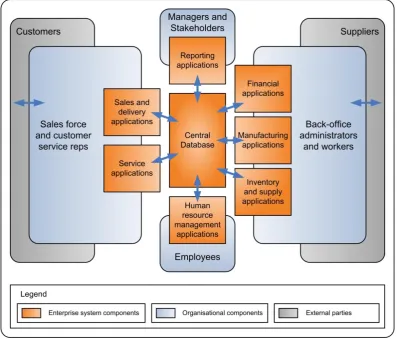
Enterprise systems are discussed in terms of their general anatomy, the functionality that makes these systems so interesting and the specific characteristics that differentiate them from other types of information systems.
3.1.1
Anatomy of an enterprise system
[image:29.595.100.498.402.741.2]3.1.2
Functionality of an enterprise system
The functionality of an ES can be described in more detail. For this research, that functionality is presented in terms of the benefits that these systems offer for adopting organizations. According to Amoako-Gyampah (2007), ERP systems allow companies to:
• “integrate and synchronize all their activities within the supply chain and help in the management of the supply chain and its attendant benefits such as faster response to customers, reduced cycle times and productivity increases.”
• “design an integrated information system that eliminates multiple sources of data, eliminates multiple data entries and provides more accurate and timely data.”
• “facilitate information flows and communication among different organizational units so as to help meet the needs of both employees and customers.”
• “reduce the costs required to maintain previously segregated legacy systems that provide incompatible data.”
3.1.3
Important ES characteristics
It is important to differentiate enterprise systems from other information systems. Among other things, this differentiation allows for clear boundaries of the ES domain and critical selection of system implementations for the case study research. According to Kawalek & Wood-Harper (2002), enterprise systems have two important characteristics:
1. “An ES is a large system that encompasses many organisational functions, supporting end-to-end process chains.”
2. “An ES is bought commercial off-the-shelf (COTS), implying all ES are standard packages.”
However, in the opinion of the author, these two characteristics are not sufficient in differentiating ES from the larger IS domain. Katsma (2008) extends these characteristics by adding four additional characteristics that greatly improve the ability to differentiate ES from IS:
3. “An ES employs best practices.”
4. “Data and information are available in real time.”
5. “An ES is supplied by a single supplier (not a patch work of systems).”
6. “An ES is customizable (even though it has consequences for cost, implementation time and upgradeability).”
3.2
Enterprise system implementation
There are many interpretations of the term “implementation” in academic literature. Even within the IS domain, the term is used in different meanings: it can be the realization of a system, it can be used to refer to the actual programming of software code, or the post-sales process of guiding a client from purchase to use of the software or hardware that was purchased (Gottschalk, 1999). Due to this research’s focus on the interaction of the key variables (perceived relevance, user participation and ES implementation success), the actual process of acceptation, adoption and embedment of the new enterprise system within the organisation is of key importance. This means that large parts of the average ES project hold relevance for this research and are therefore treated as a part of the implementation process. It is important to note that the implementation is used differently in the traditional IS development life cycle and the ES development life cycle. These life cycles are compared in the next section.
3.2.1
IS development vs. ES development
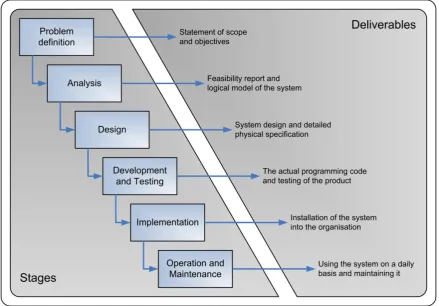
[image:31.595.79.519.438.744.2]The implementation of an ES extends beyond “flipping the switch” (Wagner & Piccoli, 2007, p. 55) and is about the various user groups accepting, adopting and embedding the system in the organisational core processes (Katsma, 2008). The radical change, which is introduced into the organisation by the ES project, makes acceptation, adaptation and embedment central aspects that require planning and attention early on during the ES project (Wagner & Piccoli).
The reason that IS and ES implementation differ, and thus go through a different system development life cycle, is because ES present a noteworthy discontinuity from traditional IS. According to Kawalek and Wood-Harper (2002, p. 14) “the established IS and software engineering literature has overwhelmingly focused upon IT as a tailorable artefact”. This tailorability is a central property of the traditional system development life cycle, which stresses that an IS should be adapted to the particular exigencies and intricacies of the implementing organisation (Kawalek & Wood-Harper). However, ES require a fundamentally different approach. As already discussed in the previous section, ES are commercial off-the-shelf (COTS) packages. Even though an ES needs to be configured to “fit” into the implementing organisation, the COTS nature of such systems severely limits the tailorability of these systems. This difference between traditional IS and ES has large consequences for the steps taken during the implementation process, resulting in different models to describe that same process.
3.2.2
ES development life cycle
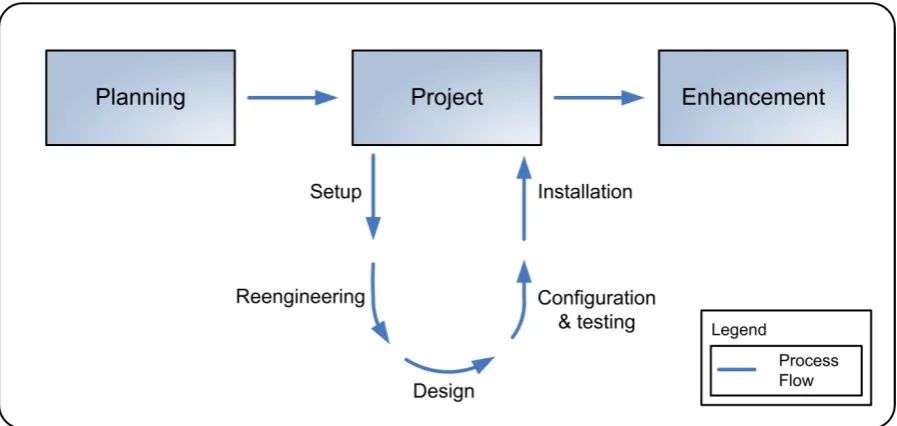
[image:32.595.75.524.506.719.2]Based on the assessment of ES project structure by Katsma (2008), a more appropriate model for the enterprise system life cycle is selected. This model by Parr & Shanks (2000) differentiates between three important main stages of the ES life cycle, namely the planning stage, the project stage and the enhancement stage. The project stage consists of a number of phases that follow after each other, as can be seen in Figure 8. The Parr & Shanks’ implementation structure is straightforward and therefore will be used as a starting point to describe and visualize the ES implementation process.
However, in order to provide a sufficiently accurate ES life cycle model, there are some additional considerations to be taken into account and some aspects of the ES implementation process are not optimally presented in Parr & Shanks’ model. Research by Kawalek & Wood-Harper (2002) can be used to extend the ES implementation model.
3.2.3
The iterative nature of ES implementations
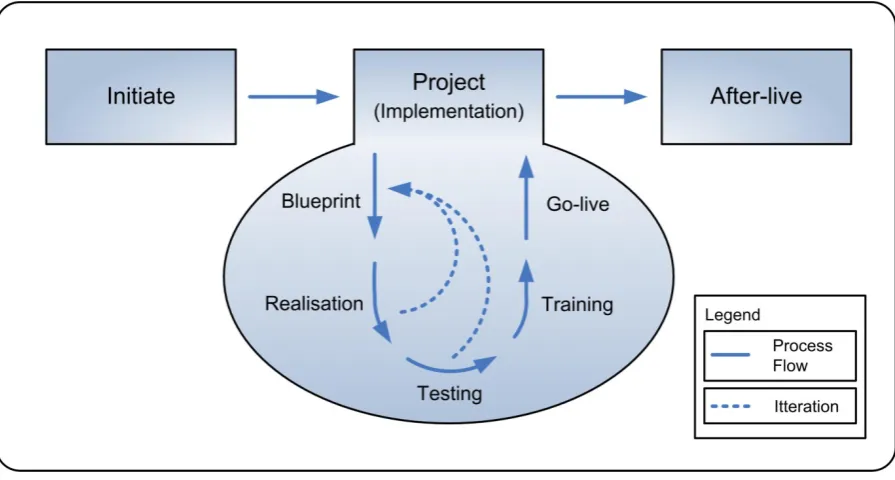
Kawalek & Wood-Harper (2002) take a specific user participation approach which, in this research, can be used to complement the model of the implementation phases provided by Parr & Shanks (2000). According to Kawalek & Wood-Harper two phases are of major importance during enterprise system implementations; the design phase (which roughly corresponds with Parr & Shanks’ reengineering and design phase) and the implementation phase1
When multiple models are meshed together like this, quickly difficulties and ambiguity in terminology emerge. As illustrated by Parr & Shanks and Kawalek & Wood-Harper, the academic ES community does not use a single set of terminology for the different phases of the ES development life cycle. Therefore, a single implementation methodology is advisable and will be adopted in this document.
(which roughly corresponds with Parr & Shanks’ configuration and testing phase). In practice, it is very rare for these kinds of large-scale projects to be completed without a single iteration, especially when (end) users are involved in the process (Kawalek & Wood-Harper). The acknowledgement of the iterative nature of this process is especially important because of the focus on user participation and perceived relevance during the ES implementation. Even though some iteration is very common, a large amount of iteration can signal above average challenges for the project or changes in the planned functionalities of the new system.
3.2.4
Implementation terminology
Due to the case study setup this research would benefit from a universal and easily recognizable terminology for the key implementation phases. This way, the people that are cooperating with this research are best able to relate the author’s questions to their ES implementation experiences.
Based on their practical experience, KPMG uses a general ES implementation terminology to describe the ES development life cycle. Table 3 presents the project structure which KPMG encounters most frequently in practice. It is also very similar to the terminology used in SAP’s own implementation methodology ASAP (Khan, 2002). It is also noteworthy that both KPMG and SAP use a similar phasing as the Parr & Shanks model. Fortunately, the approaches do not differ much with regard to content, al-be-it with slightly different terminology for the different phases. As KPMG’s version of implementation terminology will look most familiar to the people with whom KPMG is involved in ES projects, KPMG’s terminology is preferred.
1 Unfortunately, Kawalek & Wood-Harper have chosen “implementation” to convey a different meaning as the one that is posed in this
Table 3: KPMG's terminology for ES project phases
#. Phases
1. Initiate 2. Blueprint 3. Realisation
4. Testing
5. Training
6. Cut-over / Go-live 7. After-live
3.2.5
Summary of the ES implementation process
Based on these considerations about ES implementation, this research uses a combination of existing models and terminology merged into one to describe an ES implementation. At the foundation lies Parr & Shanks’ model, which is extended with Kawalek & Wood-Harper’s acknowledgement of the iterative nature of some key phases within ES implementation projects. Finally, to bridge the gap between academic and practical terminology, KPMG’s terminology is selected. Combined, this leads to the model of an ES implementation that will be used during this thesis. It is shown in Figure 9. The ES implementation refers to the entire project stage, including the underlying phases.
3.3
Perceived relevance
Perceived relevance is the indicator for the users’ perception of the apparent value the system holds for them. It provides an indication of the importance and the relevance the users attribute to the new enterprise system. The importance of perceived relevance and its effects on related factors have been studied by various researchers. Based on their review of relevance and involvement literature, McGill & Klobas (2008) conclude that users who attribute relevance, importance or value to a system:
• use the system more,
• have a more positive attitude towards it,
• perceive it to be more useful, and
• are more satisfied with it.
It is important to notice that not all these effects are relevant in the ES context. Perceived relevance as a predictor of eventual system use is not applicable because of the obligatory nature of ES usage. As the detailed study of the relationships between perceived relevance and the other key variables in this specific domain will be discussed in the theoretical framework in chapter 4, the current section will take a more detailed look on perceived relevance.
Perceived relevance is similar to the constructs that are presented in other publications such as “user involvement” by Barki & Hartwick (1994) or simply “relevance” by Katsma et al. (2007), of which the definitions are presented below.
• User involvement. Barki & Hartwick define user involvement in the systems development context as “a psychological state reflecting the importance and personal relevance of a new system to its users” (1994, p. 62). Barki & Hartwick explicitly name two dimensions of user involvement that they measure with their method, namely importance and personal relevance. They actively tried to align the terminology used in the information systems research domain with other scientific research domains, especially that of psychology. Even though it is likely that there is a connection, user involvement is defined explicitly not to include other psychological states such as user attitude, which is defined as “an affective or evaluative judgement” (Barki & Hartwick, 1994, p. 75).
• Relevance. Katsma et al. divide the relevance of an IT development in two categories: macro relevance and micro relevance. Macro relevance is defined as “the degree to which the user expects that the ICT system will solve problems or help to realize her actual goals” (Spil, Schuring & Michel-Verkerke, 2004). Micro relevance is defined as: “the degree to which IT-use helps to solve the here-and-now problem of the IT-user in his working process” (Spil, et al., 2004).
involvement". Perceived relevance is based on the future user’s expectations towards the new system, as it is still under development. Micro relevance is discarded as it measures the actual relevance of the IT system after the go-live moment, once the new system is in actual use. It might be an important factor in explaining IT use (Schuring & Spil, 2003), but our focus on the relationship between perceived relevance and user participation, which occurs during the implementation project of an enterprise system, makes the concept less significant in this research context.
Summarizing, the users’ perception of relevance indicates the relevance, value and importance that future users attribute to the new system before it is taken into use. Even though micro relevance (the actual relevance) also has an influence, perceived relevance plays an important role in the attitude towards the new system during its development and is deemed a herald of its overall acceptation and embedment. Because perceived relevance evaluates the relevance, value and importance of a not yet existing system, it is based on expectations of the users and their experiences with the project thus far. Therefore, it is important to understand what kinds of expectations influence perceived relevance and how these expectations change over time.
3.3.1
Expectations
The relevance, value and importance of a new ES are based on the users’ expectations of how the new system will solve existing problems and/or offer new opportunities (or create threats) for those individuals that will be affected by the change. These expectations can be divided into at least four different categories (Katsma, et al., 2007). These categories are: economic improvements, social improvements, functional improvements and finally time and effort saving. These four different aspects of the users’ expectations and their respective explanations are presented in Table 4 and make a more detailed examination of perceived relevance possible.
Table 4: Aspects of perceived relevance (Katsma, et al., 2007)
Aspect of perceived relevance Explanation
Economic improvements
How the user expects the new system will affect his/hereconomic position in the organisation.
Social improvements
How the user expects the new system will affect the socialaspects of his/her activities in the organisation. This also includes his/her expectations about the changes in the organisation’s structure, hierarchy and power structure.
Functional improvements
How the user expects the new system will affect his/herfunctional role in the organisation.
Saving time and effort
H