AN EVALUATION OF FINANCIAL MANAGEMENT SKILL OF
DEVELOPMENT OF SMALL BUSINESSESS
Department of Management and Accounting, University of
ARTICLE INFO ABSTRACT
Financial Management being the main core of any business organization has roles
importantly in small businesses. Testing the influence of financial management on small businesses operational activities in Iwo Local government of osun state Nigeria is expected to give insight into the economy and provide measuring guide to
financial management practices characteristics on small business development and carried out
administered and
Questionnaires were found useful for the purpose of the study. frequency table and percentage analysis while the non
to test the formulated hypothesis to evaluate the influence of
managers on the development of small businesses. The analysis of findings show that small businesses must keep proper books of accou
efficient financial management practices for small businesses to develop. The results of the tested hypothesis showed that there is significant relationship between financial management practices development of small businesses. The paper recommends that Small business owners should make sure that accurate and up
supervision of responsible officers in the organization and Governme
to organize programmes for the small business owner, so as to improve their managerial skill.
Copyright © 2014 Dr. Akande, O. O.This is an open access article distributed under the Creative Commons Attribution License, unrestricted use, distribution, and reproduction in any medium, provided the original work is properly cited.
INTRODUCTION
Prior to and even after the Nigeria independence in 1960, small businesses was overshadowed by corporation phenomenon which explains the close relation between the large businesses sector and small businesses. Then, resources and efforts were directed towards the development of large scale industries, which failed to launch the country towards the desired economic development. Erik and Anamaria (2004) postulates that firms in many developed and developing countries continue to make a substantial and ever
contribution to economic activity and employment and entrepreneurial development contributions are often used as positive and concrete reasons for developing small scale business. They can also serve as a good means for propagating and diffusion of innovative ideas, difficulties to expand the economy and promotion of indigenous technology.
to achievements and contributions mentioned above, small businesses are currently being faced with many serious difficulties such as shortage of capital for expanding and
*Corresponding author: Dr. Akande, O. O., Department of
Management and Accounting, Faculty of Management Sciences, Ladoke Akintola University of Technology, Ogbomoso, Oyo State, Nigeria
ISSN: 0975-833X
Available online at http://www.journal
International Journal of Current Research
Vol. 6, Issue, 09, pp.852
Article History:
Received 15th
June, 2014 Received in revised form 06th
July, 2014 Accepted 10th
August, 2014 Published online 18th
September,2014 Key words: Small Businesses; Financial Management; Manager; Development; Managerial Skill.
RESEARCH ARTICLE
AN EVALUATION OF FINANCIAL MANAGEMENT SKILL OF OWNER-MANAGERS IN THE
DEVELOPMENT OF SMALL BUSINESSESS
*Dr. Akande, O. O.
Department of Management and Accounting, Faculty of Management Sciences, Ladoke f Technology, Ogbomoso, Oyo State, Nigeria
ABSTRACT
Financial Management being the main core of any business organization has roles
importantly in small businesses. Testing the influence of financial management on small businesses operational activities in Iwo Local government of osun state Nigeria is expected to give insight into the economy and provide measuring guide to business performance .This study
financial management practices characteristics on small business development and carried out in Iwo local government, Osun state of Nigeria with
administered and distributed to small businesses owners in Iwo local government Area.
Questionnaires were found useful for the purpose of the study. Data collected was analyzed using frequency table and percentage analysis while the non-parametric statistical te
to test the formulated hypothesis to evaluate the influence of financial management skill of owner managers on the development of small businesses. The analysis of findings show that small businesses must keep proper books of accounts for the preparation of financial statements which is an efficient financial management practices for small businesses to develop. The results of the tested hypothesis showed that there is significant relationship between financial management practices development of small businesses. The paper recommends that Small business owners should make sure that accurate and up-to-date proper books of accounts are prepared and kept under the supervision of responsible officers in the organization and Government should try as much as possible to organize programmes for the small business owner, so as to improve their managerial skill.
is an open access article distributed under the Creative Commons Attribution License, unrestricted use, distribution, and reproduction in any medium, provided the original work is properly cited.
Prior to and even after the Nigeria independence in 1960, small businesses was overshadowed by corporation- a phenomenon which explains the close relation between the large businesses sector and small businesses. Then, resources owards the development of large-scale industries, which failed to launch the country towards the desired economic development. Erik and Anamaria (2004) postulates that firms in many developed and developing countries continue to make a substantial and ever-increasing contribution to economic activity and employment and entrepreneurial development contributions are often used as positive and concrete reasons for developing small scale business. They can also serve as a good means for propagating n of innovative ideas, difficulties to expand the economy and promotion of indigenous technology. In addition to achievements and contributions mentioned above, small businesses are currently being faced with many serious
capital for expanding and
Department of Management and Accounting, Faculty of Management Sciences, Ladoke Akintola University of Technology, Ogbomoso, Oyo State,
renovating equipment and technology, low
competitiveness, lack of experience in terms of marketing, production management and financial management. Of these difficulties, lack of financing resources and experience may damage small businesses growth and development and, as a result, the difficulties of small businesses will become greater. Conversely, efficient financial management will help small businesses to strengthen their profitability and, as a result, these difficulties can partly be overcome. The process of funding as well as the efficient utilization of and management funds constitute major challenges for the accountants of SMEs. The challenges require the involvement of well trained/professional accountants which SMEs lack the resources to attract. The role of accountants
broader than the conventional definition of the accounting function. Apart from the basic accounting functions of providing the accounting information, auditing tax matters, the SMEs accountants is responsible for providing the general leadership in all aspects of financial decision
working capital management, budgeting and financial planning. It has been noted that the failure to effectively discharge these broad financial management functions have contributed largely to global financial crisis. Similarly, careless or poor financial management practice has been
Available online at http://www.journalcra.com
International Journal of Current Research
Vol. 6, Issue, 09, pp.8528-8534, September,2014
INTERNATIONAL
OF CURRENT RESEARCH z
MANAGERS IN THE
Ladoke Akintola
Financial Management being the main core of any business organization has roles to play most importantly in small businesses. Testing the influence of financial management on small businesses operational activities in Iwo Local government of osun state Nigeria is expected to give insight into business performance .This study evaluate effect of financial management practices characteristics on small business development and. The study was Sixty (60) Questionnaires small businesses owners in Iwo local government Area. Fifty (50) Data collected was analyzed using parametric statistical test Chi- square was used financial management skill of owner-managers on the development of small businesses. The analysis of findings show that small
nts for the preparation of financial statements which is an efficient financial management practices for small businesses to develop. The results of the tested hypothesis showed that there is significant relationship between financial management practices and development of small businesses. The paper recommends that Small business owners should make date proper books of accounts are prepared and kept under the nt should try as much as possible to organize programmes for the small business owner, so as to improve their managerial skill.
is an open access article distributed under the Creative Commons Attribution License, which permits
renovating equipment and technology, low productivity and competitiveness, lack of experience in terms of marketing, production management and financial management. Of these difficulties, lack of financing resources and experience may damage small businesses growth and development and, as a t, the difficulties of small businesses will become greater. Conversely, efficient financial management will help small businesses to strengthen their profitability and, as a result, these difficulties can partly be overcome. The process of as the efficient utilization of and management funds constitute major challenges for the accountants of SMEs. The challenges require the involvement of well-trained/professional accountants which SMEs lack the resources to attract. The role of accountants in SMEs is often broader than the conventional definition of the accounting function. Apart from the basic accounting functions of providing the accounting information, auditing tax matters, the SMEs accountants is responsible for providing the general adership in all aspects of financial decision-making like working capital management, budgeting and financial planning. It has been noted that the failure to effectively discharge these broad financial management functions have al financial crisis. Similarly, careless or poor financial management practice has been
identified as one of the reasons for small businesses failure (Abiodun, 2011; Alugbe & Abiola, 2004; Carter, 2011). Lee
et al. (2004) noted that the appraisal of new and existing
capital investment projects is fundamental to the success of firms. The increase in the number of traditionally small-business in Nigeria, suggest that the situation offers substantial opportunity for the intensive development and improvement of this sector, by the provision of modern management techniques, efficient marketing method, modern technology for production and so on; all of which have one or two things to do with the available finance. In today’s economy, successful small manufacturing firms must be strategically poised to take advantage of constantly changing market conditions. Small business firms must ascertain the best way to raise and repay theses funds. The influence financial management skill for small businesses development is worthy of explored. Evidence of studies in this regards is scarce in a developing economy like Nigeria. All these put together form the thrust of this paper. with a focus on impacts of financial management practices characteristics on small business development and growth.
Statement of the Problem
Most owner-managers have no financial formal training in management of skills, especially, financial management. Lack of knowledge of financial management combined with the uncertainties of the business environment, often lead small businesses to serious problems regarding financial management. Small businesses development could fail because of inefficient financial management. A major problem that small businesses face is assumed to be inefficient financial management practices which adversely affect their growth and development. As such, this study is to investigate the effects of financial management practices, also, to determine the best measures for improving small businesses profitability by using efficient management tools. . Specifically, the study will answer the following research questions:
Is there any significant relationship between financial management practices and development of small businesses?
What actions can improve financial management and invariably, the development of small businesses?
Does financial management practices Influence small businesses development?
Research Hypothesis
H0: There is no significant relationship between financial management practices and development of small businesses?
Literature Review and Conceptual Explanation
Financial management is basically concerned with the management of financial resources in form of capital assets which may be targeted at achieving a particular financial objective in line with the financial characteristics surrounding such financial objectives (Omotola & derinola, 2008). Also, Abiodun (2011) gave his own definition of financial
management as the operational activity of a business that is responsible for obtaining and effectively utilizing the funds necessary for efficient operation. Financial Management as related to small business development cannot be over-emphasized. Financial Management being the main core of any business organization has roles to play most importantly in small businesses. There is always a need for adequate financial plan and timely decision making for every business to make success record both at micro and macro levels of the economy (Becker, 1975; Chan, 2004; Ake, 2009; Tage, 2007). Therefore, to give thorough evaluation of financial management in small businesses, the growth rate and sustainability of said to be directly proportional to the level of financial management plan, in terms of capital budgeting which may be short, medium or long term in nature. However, financial decision, investment decision and targeted profit level are very essential (Olawale et al., 2004). Many small businesses fail because their owners do not pay attention to their financial management, analysis, and operations of the business firm. This includes forecasting future cash needs and operations as well as business valuation, financial ratios, employee benefits, and bankruptcy. However, in today’s economy, successful small businesses must be strategically poised to take advantage of changing marketing situations and opportunity and at the same time be appraised intermittently to avoid losses and some other financial crashes.
Small and Medium Scale Enterprises
The importance of small and medium scale enterprises has not been in doubt; unfortunately classifying businesses into large, medium and small scale is subjective and premised on different value judgment. Such classification has followed different criteria such as employment, sales or investment for defining small and medium scale enterprises. According to extant literature the definition vary in different economics but the underlying concept is the same. Ayaggari et al. (2003) contends that the “definition of small and medium scale enterprises varies according to context, author and countries”. Small and medium scale enterprises are certainly not transnational company, multinational cooperation, publicly owned enterprises or large facility of any kind. However they can depend on business and ownership structure to become a large business unit (Macqueen 2006) while it can be argued that 80% of the financing of SMEs come from owners, friends and families, business form can take different form including private ownership, limited partnership, contract and sub-contracts, cooperatives or association (Kozak, 2007). Small business have a narrow context within which its operation is carried out. However, where it is effectively operated it has capacity to sprout the economic growth and national development. (Amoros and Cristi, 2008)
Problems of Small Businesses Development
Lack of formal training in management skills, especially financial management.
Lack of knowledge of financial management combined with uncertainty of the business environment often lead small businesses to serious problems regarding financial plan (Vandenberg, 2006).
Poor access to credit facilities, and or inadequate funding has been the major stumbling block.
Inadequate physical facility; ill-equipped offices and production unit affect the rate of output or turn-over.
Financial Management and Small Businesses
The relationship between financial management and small businesses growth is a direct relationship; such that it is quite glaring that lack of financing resources and experience of financial management is one of the most serious issues. Inefficient financial management may damage small business profitability and, as a result, the difficulties of small businesses will become greater (Emmanuel, 2004; Rosemary, 2013). Conversely, efficient financial management will help small businesses to strengthen their profitability and make them to be cost effective in order to maximize profit. Previous researchers have provided valuable findings related to financial structures or characteristics of small businesses. The four variables including liquidity, financial leverage, activity and profitability were used to measure financial characteristics of small businesses. However, it appears that the financial characteristics of small businesses in developing countries, especially such as Vietnam, China and Nigeria have not been investigated and empirical data has not been produced; as a result, lack of empirical evidence from emerging economies and the lack of examination of the impact of financial management practices and financial characteristics on small businesses’ profitability are the major banes in the knowledge of financial management. New business leaders and managers have to develop at least basic skills in financial management. The basic skills in financial management start in the critical areas of cash management and book-keeping, which could be done according to certain financial controls to ensure integrity in the book-keeping process. New leaders and managers should soon go on to learn how to generate finance statements (from book-keeping journals) and analyze those statements to really understand the financial condition of the business.
Appraisal Techniques on the Profitability of Small Businesses
One of the most significant strategic decisions that small manufacturing firms or businesses must make, is how to allocate scarce investment resources amongst manufacturing processes and projects. In the same vein, they have a solid defense mechanism in place against competition; such as capital budgeting techniques and discounted cash flow method of appraisal
Capital Budgeting Techniques
Capital budgeting techniques are probably one of the tools of financial management and as a result, one of the least used by small organizations (Tracy, 2007). Capital budgeting, which can be described as the formulation and financing of long term plans for investment, is one of the most important responsibilities of the owners/ managers of small manufacturing firms. The decisions made during the capital budgeting process determine the future growth and productivity of the firm. Capital budgeting is a process
designed to achieve the greatest profitability and cost effectiveness in the private and public sectors of the economy. Capital budgeting and the estimation of the cost of capital (the rate of return that a firm must earn on its investments to ensure that the minimum requirements of the providers of capital are met) are the most important financial decisions facing owners/managers of the small firms. The need for relevant information and analysis of capital budgeting alternatives has inspired the evolution of a series of methods to assist firms in making the ‘’best’’ allocation of resources. Amongst the earliest methods available were the non-discounted cash flow methods and the discounted cash flow techniques. The non-discounted cash flow method are form of capital budgeting techniques used in evaluating the uncertainty and risk of the value of s firm without considering the time value of money. These techniques are biased in selecting projects and also do not consider cash flows on investment decisions. The techniques constitute the traditional Payback Period (PB) and the Accounting Rate of Return (ARR) as discussed (Chartered Institute of Management Accountants [CIMA].
Payback Period
Payback as the time it takes the cash inflow from a capital investment project to equal the cash outflows, usually expressed in years. When deciding between two or more competing projects, the usual decision is to accept the one with the shortest payback. Payback is often used as a ‘’first screening method’’. This implies that when a capital investment project is being considered, the first question to ask is ‘How long it will take to payback its cost’?
Accounting Rate of Return
The accounting rate of return is the ratio of the project’s average after tax income in relation to its average book value. Accounting Rate of Return evaluates the project based on standard historical cost accounting estimates. It is also referred to as the book rate of return. It bases project evaluation on average income and in accounting data rather than the project cash flows. Unlike the payback period, this technique produces a percentage rate of return figure which is then used to rank the alternative investments.
Discounted Cash Flow Method of Appraisal
This is a method of evaluating an investment by estimating future cash flows and taking into consideration the time value of money. This is also called capitalization of income. Discounted cash flow method requires both an understanding of compound interest and an ability to set out the inflows and outflows likely to result from a particular decision to invest. Maximizing a firm’s value is dependent on correct investment choices, thus management needs sound and reliable tools to minimize the risk of poor investment decisions. The changing nature of global markets and the high interest rates paid on borrowed money by the small firms in a dynamic environment necessitated the need to examine the merits of different types of discounted cash flow techniques which are explicitly subdivided into:
Net Present Value (NPV)
This is the present value of cash flows discounted at the cost of capital, less the investment outlay. An understanding of various project evaluation techniques provides evaluation techniques provides the investor with valuable tools for determining which projects, if any, should be accepted or rejected. The net present value is a popular technique for investment decision because it is a financial measure that ascertains the time value of money invested in a business.
Internal Rate of Return (IRR)
IRR is a capital budgeting method that uses discounted cash flows in order to decide on the viability of long term investment. If the IRR is greater than the project cost of capital, then the project will add value to the company, that is, it is said to worthwhile and profitable.
Management of Small-Scale Enterprises
The owner of a small business is also the chief financial officer and needs to have an understanding of accounting and financial statements. There are various sources of information, assistance and guidance available. One of the many roles of a small business owner is that of chief financial officer. While the bookkeeping and accounting activities of a small business can be delegated or outsourced, the owner needs to keep a finger on the pulse of the business finances. No one is more interested in the business’ financial success than the owner. To run a successful business, you need a diverse range of business management skills. When a business is started, it’s likely that the responsibilities include;
Sales and marketing
Human resources
Communication and Negotiation Skills
Marketing, Sales and Promotion
Marketing is more than just selling and promoting your business. It’s about identifying customers and working out how to get them to purchase product or service.
Human Resources
Human resources is about managing and looking after your staff. If buying an existing business or taking on a franchise is needed, you may find that there are employees you have to manage before the business even starts.
Understanding Business Financials
The primary objective of any business is to make profit. Goo financial management is essential to ensure that goal is achieved.
Communication and Negotiation Skills
Business is all about people regardless of the industry or the product or service to be offered. On a daily basis, there will be
an encountering of a range of people including customers, suppliers, employees and business associates. Developing your communication and negotiation skills will be invaluable in a range of situations from negotiating a suppliers contract to dealing with a difficult customer.
Entrepreneurship and Management Development Issues Related to the Small Enterprise Sector
Management support to the small enterprise sector covers the whole range of issues from identification/selection of entrepreneurs, initial management training, support through extension services and functional support to strengthening of small enterprise development agencies and development of national policies on promotion of small enterprises. Many countries have training programmes for the small enterprise sector but lack a specific education and training policy for small enterprises development. A number of issues need to be resolved before policies can be implemented at the national level. In the first place, only a relatively small percentage of graduates actually start and succeed in business. Some experts believe that wasted effort and financial loss can best avoided by a self-selection process whereby rigorous exercises completed before attending a formal training programme allow participants to judge their own entrepreneurial potential. Another issue is to determine the appropriate level of training.
Assuming that that entrepreneurship can be induced, should the starting point for entrepreneurship development be the primary, secondary, post-secondary or post-tertiary education level? The answer to this question will depend to a certain extent on the type and level of training of the personnel involved in small enterprises development assistance. It is sometimes argued that including entrepreneurship training in the primary or secondary curriculum would mean devoting less attention to basic skills such as languages, mathematics and science. This is countered by those who maintain that entrepreneurial attitudes take a long time to develop and should therefore be taught as early as possible. One reason for introducing self-employment concepts to children at the primary level in developing countries is that many of them do not pursue their formal education at the secondary level. The cost of doing so would be minimal yet it would enable young people to be informed of the possibilities of self-employment as a career. An issue of interest is also whether early entrepreneurship training should be sector oriented in order to gear potential entrepreneurs towards expanding lines of business or if the training should be kept general.
In some industrialized countries, post-secondary educational institutions provide special training provide special training programmes for potential entrepreneurs. In the developing countries, university-level business programmes sometimes cater to the specific needs of small enterprises. Governments are now having to decide whether to introduce basic changes in the educational system so as to offer business education and training for various age-groups. Financing entrepreneurship development programme is also an important issue. In some countries, the entire cost is borne by the government, in others by the participants. The decision in this matter will depend to a large extent on the type of small enterprises being aimed at
(modern small enterprises, craft workers, informal sector entrepreneurs, self-employed women, etc). As to whether the government or the private sector should be responsible for such programmes, opinions differ, some arguing that overall government should not be involved in any part of the programme and others that can be carried out by the private sector. In some instances, entrepreneurship development programmes are offered jointly by government and private sector organizations.
MATERIALS AND METHODS
Study Area
The research was carried out in Iwo Local Government, Osun State of Nigeria. The research was carried out among the workers in the small businesses. The choice of this is that, they have been in to the practice of small businesses over a period of time, for sufficient and appropriate information to be generated on the evaluation of financial management skill and sourcing of finance for the development of the small businesses.
Study Population
The research work was conducted within Small Businesses in Iwo Local Government. Sixty (60) respondents of small businesses owners were involved. It involves comparison of employees of different age, different working system/ experience, different qualifications. Related data were collected from few members of the organization whose area of specification relates to the scope and context of the study.
Sampling Size and Sampling Procedure
(50) Skilled staffs in Financial Department were used as the sample size on which questionnaire were distributed and administered by all the staffs. The Fifty staff member was purposively sampled.
Method of Data Collection and Data Analysis
Both primary and secondary data were used. Primary data were gathered through questionnaire. Secondary data were collected from Annual report of the sampled SMEs Owner in Iwo, Osun State of Nigeria. Data collected was analyzed using descriptive tables and simple percentages while the study hypothesis was analyzed using Chi-Square.
RESULTS AND DISCUSSION
[image:5.612.324.536.70.128.2]Respondents Characteristics and Classification
Table 1. Analysis of the sex of the respondents
SEX FREQUENCY PERCENTAGE
Male 24 48
Female 26 52
Total 50 100
Author’s Field Survey, 2014.
From Table1 above, it can be seen that 48% of the respondents were male and 52% of the respondents were female.
Table 2. Analysis of the age of the respondents
AGE FREQUENCY PEPERCENTAGE
Under 30 12 24
31 – 40years 13 26
41 – 50years 10 20
Above 50years 15 30
Total 50 100
Author’s Field Survey, 2014.
[image:5.612.323.543.211.269.2]From the above Table 2, it is clear that 24% are below 30years, 26% are between 31-40years, 20% are between 41-50years and 30% are above 50years.
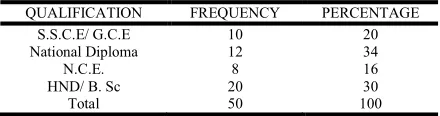
Table 3. Educational qualification of the respondents
QUALIFICATION FREQUENCY PERCENTAGE
S.S.C.E/ G.C.E 10 20
National Diploma 12 34
N.C.E. 8 16
HND/ B. Sc 20 30
Total 50 100
Author’s Field Survey, 2014.
[image:5.612.322.543.362.412.2]Table 3 above revealed that 40% of the respondents are in the highest qualification group. This indicates that they know the importance of the research work and their responses are likely to be correct and not misleading.
Table 4. Years of the business of the respondents
NUMBER OF YEARS FREQUENCY PERCENTAGE
Under 2years 8 66
Between 2-10 13 20
Above 10 29 58
Total 50 100
Author’s Field Survey, 2014.
[image:5.612.314.550.494.552.2]The above table4 shows that most of the respondents have the necessary experience to deal with the questions in the questionnaire.
Table 5. Annual income of the respondents
ANNUAL INCOME (#) FREQUENCY PERCENTAGE
Below 200,000 33 66
200,000-300,000 10 20
300,000-500,000 7 14
Above 500,000 0 _
Total 50 100
Author’s Field Survey, 2014
Table 5 above revealed that 66% of respondents’ annual income is below #200,000, 20% earn between #200,000 - #300,000 and 14% earn between #300,000-#500,000.
Analysis of the Research Questionaire
In the test, observed frequencies (denoted as O) represents the actual number of respondents, while the Expected frequencies (denoted as E) was the anticipated response which the Researcher hoped to get from the Respondents by equal distribution.
[image:5.612.69.288.634.674.2]Table 6. It is good to be trained in the area of small business specialization
OPTION SA A SD D TOTAL
NO OF PEOPLE OBSERVED 36 9 4 1 50
Author’s Field Survey, 2014.
Result
Since the X2 computed of 60.52 is greater than tabular X2 of 7.815, the difference between observed frequencies and expected frequencies is significant; as such there is a relationship between financial management training and development of small businesses.
Table 7. Ability to manage the available resources is an important financial management practice of small businesses development
OPTION SA A SD D TOTAL
NO OF PEOPLE OBSERVED 25 15 2 8 50
Author’s Field Survey, 2014.
Result: Since the X2 computed of 23.02 is greater than tabular
X2 of 7.815, the difference between the observed frequencies and the expected frequencies is significant, as such there is a relationship between management of the available resources in small businesses and financial management practices.
Table 8. Having knowledge of financial management skills leads to the development of small business
OPTION SA A SD D TOTAL
NO OF PEOPLE OBSERVED 33 10 5 2 50
Author’s Field Survey, 2014.
Result: Since the X2 computed of 47.44 is greater than tabular
X2 of 7.815, the difference between the observed frequencies and the expected frequencies is significant, as such there is a relationship between having knowledge of financial management practices and small businesses development.
Table 9. To succeed in a small businesses one of the most important tool is financial on the business records
OPTION SA A SD D TOTAL
NO OF PEOPLE OBSERVED 9 30 0 11 50
Author’s Field Survey, 2014.
Result: Since the X2 computed of 25.66 is greater than tabular
X2 of 7.815, the difference between the observed frequencies and the expected frequencies is significant; as such there is a relationship between financial analysis of records, which is one of the most important tools of financial management practices and small businesses development. Hence, Table 6,7,8 and 9 shows that knowledge of financial management skills and proper keeping business records are of great importance in the development of small businesses.
Test of Hypothesis
In order to determine the relationship between the variables generated for the purpose of this research, the Chi-square test was used. One hypothesis was proposed for this study in null form. The responses to the statement being hypothesized are as presented in the table below.
Restatement of Hypothesis
[image:6.612.329.536.135.192.2]H0: There is no significant relationship between financial management practices and development of small businesses
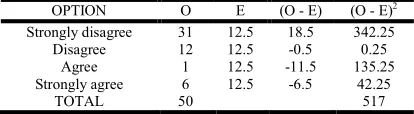
Table 10. There is no relationship between financial management skill of owner-manager and small businesses development
OPTION O E (O - E) (O - E)2 Strongly disagree 31 12.5 18.5 342.25 Disagree 12 12.5 -0.5 0.25
Agree 1 12.5 -11.5 135.25 Strongly agree 6 12.5 -6.5 42.25
TOTAL 50 517
Author’s Field Survey, 2014.
Decision Rule
If at the level of significance of 0.05, the calculated value exceeds the critical value, we reject the hypothesis that there is no significant relationship between financial management practices and development of small businesses in Iwo local government of Osun state. On the other hand, if at the level of significance of 0.05, the calculated value is less than critical value, we accept the hypothesis that there is significant relationship between financial management practices and development of small businesses in Iwo local government of Osun state. From the above calculation, the calculated value of 41.36 greatly exceeds the critical value of 7.815 at the 0.05 level of significance. Therefore, the hypothesis that was tested “There is no relationship between small businesses and financial management in Iwo Local Government” was rejected. Since the null hypothesis was rejected, the alternative hypothesis is accepted that”. There is significant relationship between financial management practices and development of small businesses in Iwo local government of Osun state
Conclusion
This study evaluates the financial management skill in the development of small businesses in Osun State, focusing on Iwo Local Government area of Osun State. The analysis of findings show that small businesses must keep proper books of accounts for the preparation of financial statements which is an efficient financial management practices for small businesses to develop. Also, ability to manage the available resources, attending of formal training on financial management skill is important financial management tool for the development of small businesses. The result of tested hypothesis show that there is significant relationship between financial management practices and development of small businesses in Iwo local government of Osun state. In view of the above findings the following recommendations were made:
Small business owners should make sure that accurate and up-to-date proper books of accounts are prepared and kept under the supervision of responsible officers in the organization.
Government should try as much as possible to organize programmes for the small business owner, so as to improve them on managerial skill. The government should also provide small businesses owner with long term funds
which could lead to the development of small businesses in the Nigeria economy.
REFERENCES
Abiodun Fatai 2011. Small and Medium Enterprises in Nigeria: Department of Political Science, Faculty of Social Science, University of Lagos, Nigeria.
Ake Sahlin 2009. Management Development Branch, International Labour Organization, Geneva.
Alugbe, J O and Abiola, R O 2004. Efficiency of Financial Management in the Small Scale Firms: Federal University of Technology, Akure, Nigeria.
Amoros and Cristi 2008 O. ‘Longitudinal Analysis of Entrepreneurship and Competitiveness Dynamics in Latin Americal. “International Entrepreneurship and
Management Journal, 4(4); 381- 99
Ayyagari, M., Demirgtic-Kunt, A. and Maksimovic, V. 2011. Small vs. Young Firms Across the World; Contribution to Employment, Job Creation, and Growth, World Bank Policy Research working paper 5631, Washington DC, World Bank.
Becker, G. 1975, Human Capital: A Theoretical and Emprical Analysis, with special Reference to Education 1st ed. National Bureaue of Economic /research; distributed by Columbia University Press (New York).
Carter McNamara 2011. Financial Management in Business: Journal of Small Business Management.
Chen, S. and M. Ravallion 2008. ‘The Developing World is Poorer than we Thought, but no less Successful in the Fight Against Poverty.’ Policy Research Working Paper 4703, Washington, DC: World Bank.
Emmanuel, C. L. 2004: Entrepreneurship: A Concept Approach. Concept Publications, Lagos, Nigeria.
Erik Hurst & Annamaria Lusard, 2004. “Liquidity Constraints, Household Wealth, and Entrepreneurship, “Journal of
Political Economy, University of Chincago Press vol. 112
(2), pages 319-347, April.
Kozak, M., 2007. Micro, Small and Medium Enterprises: A collection of published Data. International Finance
corporation, Washington, D.C.
Lee, Sam You, Richard Florida and Zothan Acs, 2004 Creativity and Entrepreneurship: A Regional Analysis of New Firm formation Regional Studies 38, no:8:879-891. Macqueen D. 2004. Association of Small and Medium Forest
Enterprises: An initial Review of Issues for Local Livelihood and Sustainability. International Institute for Environment and Development (IIED), Briefing Paper. London, United Kingdom Federal Repulic of Nigeria, National Bureau of Statistic Report, 1999.
Macqueen D. 2006. Governance Towards Responsible Forest Business. Guidance on Different Types of Forest Business and the Ethics to which they gravitate. International Institute for Environment and Development (IIED) London, United Kingdom.
Omotola and Derinola, 2008. Small Scale Enterprises, Economic Reform and National Development in Nigeria. Lagos, Adejo Publishing.
Rosemary Perler 2013. Understanding the Basics of Bookkeeping: Journal of Business Management.
Tage Tracy 2007. Basics of Financial Management: Journal of Small Business Financial Management.
Vandenberg, P. 2006; “Poverty Reduction Through Small Enterprises; Energy Consensus, Unresolved Issues and ILO Activities.” SEED Working Paper No. 75 ILO Office, Geneva.