OncoTargets and Therapy 2017:10 4969–4979
OncoTargets and Therapy
Dovepress
submit your manuscript | www.dovepress.com 4969
O r i g i n a l r e s e a r c h
open access to scientific and medical research
Open access Full Text article
Mutation analysis and copy number alterations
of KIF23 in non-small-cell lung cancer exhibiting
KIF23 over-expression
ann-louise Vikberg1
Tõnu Vooder2
Kaie lokk3
Tarmo annilo4
irina golovleva1
1Department of Medical Biosciences/ Medical and clinical genetics, Umeå University, Umeå, sweden; 2Department of Thoraic surgery, helios Klinikum Krefeld, Krefeld, germany; 3institute of Molecular and cell Biology, 4estonian genome center, University of Tartu, Tartu, estonia
Abstract: KIF23 was recently suggested to be a potential molecular target for the treatment of lung cancer. This proposal is based on elevated expression of KIF23 in several tumors affecting breast, lung, brain, and liver, and also on the presence of KIF23 mutations in melanoma and colorectal cancer. Recently, we identified a mutation in the KIF23 gene causing a rare hereditary form of dyserythropoietic anemia (CDA III) with predisposition to blood cancer. We suggested that KIF23 overexpression in tumors might be due to the presence of activating somatic mutations, and therefore, mutation screening of the KIF23 in 15 non-small-cell lung cancer (NSCLC) cases with elevated expression level of KIF23 was undertaken. Eight sequence variants were found in all samples. Furthermore, one variant was present in two cases, and one variant was case specific. Nine variants were previously reported while one variant lacks frequency information. Nine of ten cases available for single nucleotide polymorphism-array analysis demonstrated aberrant karyotypes with additional copy of entire chromosome 15. Thus, no activating somatic mutations in coding regions of the KIF23 were found. Furthermore, no mutations were detected in cell cycle genes homology region in KIF23 promoter responsible for p53-dependent repression of
KIF23 expression. We showed that the elevated level of KIF23 could be due to additional copy
of chromosome 15 demonstrated in 90% of NSCLC cases analyzed in this study. Considering the crucial role of KIF23 in the final step of mitosis, the gene is a potential molecular marker, and for better understanding of its role in cancer development, more tumors should be analyzed.
Keywords: KIF23, overexpression, mutation, copy number alteration, CNA, lung cancer
Introduction
Currently, multiple studies aim on screening for novel diagnostic and prognostic biomarkers in different types of tumors. Molecular markers in combination with clinical features allow better understanding of cancer development and progression
compared to only histological examination.1
A key regulator of cytokinesis, kinesin motor protein KIF23 also known as MKLP1,
was proposed to be a potential marker for several tumors.2 KIF23 overexpression
assessed by cDNA microarray or by quantitative reverse transcription-polymerase chain reaction (PCR) was recently shown in lung cancer, breast cancer, gliomas,
paclitaxel-resistant gastric cancer, and hepatocellular carcinomas.3–8 Notably, the
poor survival in patients with several cancer types was associated with KIF23
overexpression.4,6,7
Dysfunctional KIF23 causes a cytokinesis failure leading to appearance of bi-
and multinucleated cells.9,10 Recently, we reported on a KIF23 mutation causative
of congenital dyserythropoietic anemia type III (CDA III), a rare hereditary disease, correspondence: irina golovleva
clinical genetics, University hospital of Umeå, se 901 85, Umeå, sweden Tel +46 90 7856 820
Fax +46 90 1281 63 email [email protected]
Journal name: OncoTargets and Therapy Article Designation: Original Research Year: 2017
Volume: 10
Running head verso: Vikberg et al
Running head recto: Mutation analysis and copy number alterations in non-small-cell lung cancer DOI: http://dx.doi.org/10.2147/OTT.S138420
OncoTargets and Therapy downloaded from https://www.dovepress.com/ by 118.70.13.36 on 25-Aug-2020
For personal use only.
Number of times this article has been viewed
This article was published in the following Dove Press journal: OncoTargets and Therapy
Dovepress Vikberg et al
characterized by large multinuclear erythroblasts in patients’
bone marrow.11 Knockdown experiments using KIF23 siRNA
and following rescue with mutant P916R KIF23 in HeLa cells resulted in cytokinesis failure with bi-nucleated cells
present.11 Moreover, cancer diagnosis was overrepresented
among CDA III patients in the Swedish family. It might be due to the effect of mutated KIF23 on cytokinesis result-ing in polyploid cells, a feature associated with a risk for
carcinogenesis.12
In this study, we hypothesized that overexpression of
KIF23 might be explained by the presence of activating
somatic mutations or genomic amplifications. For this pur-pose, we conducted direct sequencing of KIF23 and copy number analysis by genome-wide genotyping in non-small-cell lung cancer (NSCLC) samples exhibiting high level of KIF23. Along with our experiments, we browsed the cBioPortal for Cancer Genomics and Catalogue of Somatic Mutations in Cancer (COSMIC) in order to retrieve KIF23 mutations spectrum in cancer analyzed by whole exome sequencing (WES).
Materials and methods
NSCLC patients were part of the study3 on identification of
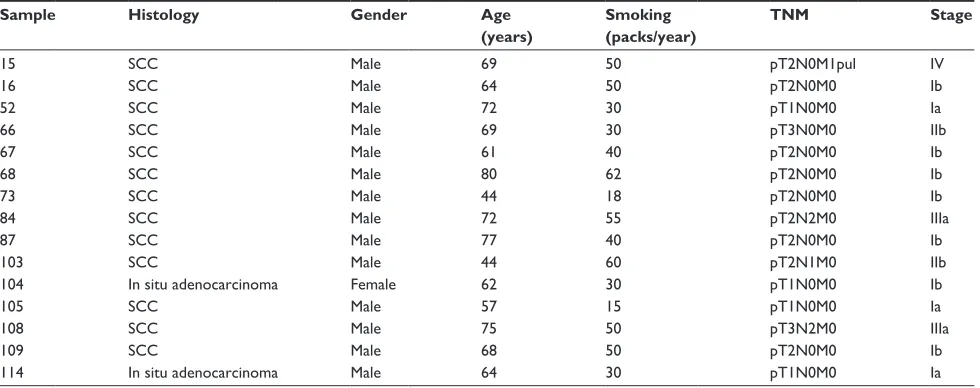
new NSCLC biomarkers by whole-genome gene expres-sion microarray (Illumina, San Diego, CA, USA). Fifteen samples with elevated expression of KIF23 were selected for the current study (Table 1). Tumor samples were examined by a pathologist, and the samples rich in content of tumor
cells were selected for DNA extraction using a NucleoSpin®
Tissue kit (Macherey–Nagel, Düren, Germany). Correspond-ing DNA extracted from peripheral blood was available for
some of the patients. An informed written consent for genetic analyses of biological samples was obtained from all patients, and the Ethics Review Committee on Human Research of the University of Tartu, Estonia approved the project. All samples analyzed at Umeå University were anonymized and did not contain any personal identification information.
sanger sequencing
For bidirectional sequencing of KIF23 (NM_138555.3) coding exons and adjacent intronic sequences were ampli-fied from genomic tumor DNA. Primers were designed with Primer3 software and are available upon request. Sequence primers for cell cycle genes homology region (CHR) in
KIF23 promoter were 5′
-ACCTCAAGATCTCCCTCCAG-forward and 5′-CCGGCAGCAAGAACTAGAAC-reverse.
PCR amplification was carried out using AmpliTaq®
DNA polymerase enzyme system (Applied Biosystems, Waltham, MA, USA). An amount of 30 ng of tumor DNA
was amplified in a 15 µL PCR mix containing 3 nmol
dNTPs, 1× PCR Buffer II, 4.5 nmol MgCl2, 2% dimethyl
sulfoxide, 0.45 U AmpliTaq Gold, and 3 pmol of each M13
tagged primer. PCR was performed using Veriti®96 Well
Thermal Cycler (Applied Biosystems) with ramp time set
to 50%. PCR included denaturation at 95°C for 10 minutes,
followed by a touchdown step for 7 cycles (denaturation at
95°C for 30 seconds, annealing at 64°C to 1°C/cycle for
30 seconds, elongation at 72°C for 45 seconds), cycling
step for 40 cycles (denaturation at 95°C for 30 seconds,
annealing at 58°C for 30 seconds, elongation at 72°C for
45 seconds), followed by a final elongation at 72°C for an
additional 10 minutes. Amplicons for exon 7 and 17 were
Table 1 characteristics of 15 nsclc patients with elevated level of KIF23
Sample Histology Gender Age
(years)
Smoking (packs/year)
TNM Stage
15 scc Male 69 50 pT2n0M1pul iV
16 scc Male 64 50 pT2n0M0 ib
52 scc Male 72 30 pT1n0M0 ia
66 scc Male 69 30 pT3n0M0 iib
67 scc Male 61 40 pT2n0M0 ib
68 scc Male 80 62 pT2n0M0 ib
73 scc Male 44 18 pT2n0M0 ib
84 scc Male 72 55 pT2n2M0 iiia
87 scc Male 77 40 pT2n0M0 ib
103 scc Male 44 60 pT2n1M0 iib
104 in situ adenocarcinoma Female 62 30 pT1n0M0 ib
105 scc Male 57 15 pT1n0M0 ia
108 scc Male 75 50 pT3n2M0 iiia
109 scc Male 68 50 pT2n0M0 ib
114 in situ adenocarcinoma Male 64 30 pT1n0M0 ia
Abbreviations: scc, squamous cell carcinoma; nsclc, non-small-cell lung cancer.
OncoTargets and Therapy downloaded from https://www.dovepress.com/ by 118.70.13.36 on 25-Aug-2020
Dovepress Mutation analysis and copy number alterations in non-small-cell lung cancer
amplified without touchdown step with elongation at 60°C.
Any remaining primers were removed from the PCR products by treatment with 0.06 U of exonuclease I, ExoI (Thermo
Scientific, Waltham, MA, USA) at 37°C for 15 minutes,
followed by enzyme inactivation at 85°C for 15 minutes.
Further, PCR clean up was done by dilution 1:6 with H2O.
Sequencing was performed using BigDye® Terminator v3.1
Cycle Sequencing Kit (Applied Biosystems). PCR product
of 1.0 µL was used in a 10 µL sequencing reaction as well
as 0.5 µL BigDye Terminator reaction mix, 1× sequencing
buffer, and 3.2 pmol of M13 tagged primer. Reactions were cycled according to manufacturer’s instructions. Sequencing reactions were separated using ABI 3730xl DNA Analyzer (Applied Biosystems). Raw data were analyzed using DNA Sequencing Analysis Software v5.1 (Applied Biosystems) and then aligned and evaluated using Sequencher software version 4.9 (Gene Codes Corporation, Ann Arbor, MI, USA). All sequence variants were described according to the nomen-clature recommended by Human Genome Variation Society by using GRCh37/hg19 as reference. To predict the impact of sequence variants, the Alamut software version 2.9 (Inter-active Biosoftware, Rouen, France) was applied. Variants detected in intronic sequences were analyzed with the splice site prediction programs: GeneSplicer, Splice Site Finder, MaxEntScan, Human Splicing Finder, and NNSPLICE, all included in Alamut package. Population frequency of KIF23 sequence variants was obtained from NHLBI (National Heart, Lung, and Blood Institute) Exome Sequencing Project (ESP) or Exome Aggregation Consortium.
Mutations in KIF23 gene in tumors were retrieved from
cBioPortal for Cancer Genomics13,14 and from COSMIC.15
snP array genome-wide genotyping
High-resolution genome-wide single nucleotide polymor-phism (SNP)-array genotyping was applied for identifica-tion of DNA copy number alteraidentifica-tions (CNAs) in 10 NSCLC cases. DNA was genotyped according to manufacturer’s instructions on a SNP microarray (HumanOmniExpress-24 BeadChip, Illumina) containing more than 715,000 SNPs. The data were analyzed using GenomeStudio software (Illumina) and cnvPartition 3.2.0 was applied for CNAs detection by retrieving log R ratio (LRR) and the B allele frequency (BAF). LRR is the ratio between the observed and the expected probe intensity. A region without evi-dence of CNA shows an LRR around zero, and BAF 0, 0.5, or 1 correspond to the genotypes AA, AB, and BB. Human genome build 19 was used for assigning chromo-some positions.
Results
Mutation screening
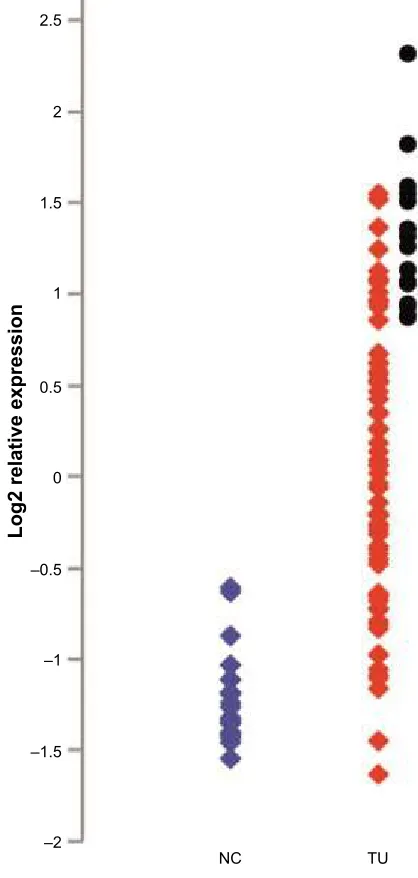
Tumor DNA from 15 NSCLC patients with elevated level of KIF23 was available for mutation screening (Figure 1). Detailed characteristics of these cases are shown in Table 1. In short, the age of the NSCLC patients (14 males and 1 female) ranged from 44 to 80 years (mean 65 years). Histologically,
1&
/RJUHODWLYHH[SUHVVLRQ
78
±
± ±
±
Figure 1 relative expression of KIF23 in nsclc and noncancerous lung samples from the study.
Notes: nsclc samples with the highest KIF23 expression analyzed in the present work are indicated with black circles. expression level was detected using illumina, human-6 microarrays, quantile-normalized, and log2-transformed as described.3
Differential gene expression analysis comparing nsclc samples to noncancerous lung tissue was performed using t-tests with an empirical Bayes correction from the Bioconductor limma package. On average, the KIF23 expression in tumor samples was 2.79 times higher than in noncancerous samples. Matched samples (tumor and noncancerous tissue from the same individual) were available only for a minority of the cases. Data from Valk et al.3
Abbreviations: TU, tumor; nc, non cancerous; nsclc, non-small-cell lung cancer.
OncoTargets and Therapy downloaded from https://www.dovepress.com/ by 118.70.13.36 on 25-Aug-2020
Dovepress Vikberg et al
the tumors were presented in situ adenocarcinoma (n=2) and
squamous cell carcinoma (n=13).
somatic KiF23 mutations
DNA was extracted from the tumors with high content of cancer cells; therefore, we undertook Sanger sequencing as a method with detection level high enough for mutation detection in these samples. DNA from 15 NSCLC cases was available for Sanger sequencing.
All samples were found to harbor eight sequence altera-tions, six intronic (introns 2, 5, 6, and 14) and two exonic (exons 14 and 17). Genomic locations, frequencies, and bioinformatics prediction are shown in Table 2. Three of the
changes (c.454–14delT, c.564–3delT, and c.1555+50delT)
present in all NSCLC cases were deletions of a single T in the chain of 12–13 T; therefore, five control-DNA from healthy individuals were sequenced. Control sequences were identical to tumor sequences; thus, these three vari-ants represent either a common sequence variant or a result of problematic sequencing of long-stretch repetitive DNA and, therefore, considered unable to cause overexpression of
KIF23 in these samples.
Two case-specific sequence changes were detected in
cases 16, 68, and 108 (Table 2). Variant c.82–112C.G in
intron 2 (case 68) and synonymous change c.1326A.C,
p.(V442=) (cases 16 and 108) have been previously detected
by WES and reported in NHLBI ESP. Case-specific sequence variants are shown in Figure 2. We also tested those two case-specific variants in the corresponding DNA extracted from
peripheral blood of the patients. c.82–112C.G was detected
only in tumor tissue. c.1326A.C was present in both tumor
and peripheral blood in the patient 108. Notably, patient 16 was heterozygous for this variant in peripheral blood but, probably, hemizygous for an A allele in the tumor.
chr sequencing
Recently, it was shown that reduction of KIF23 expression of the mRNA and the protein level in different cell types
is regulated by p53.16 The introduction of the mutations
into the highly conserved CHR in the KIF23 promoter (TTTGAA) resulted in a significant increase of KIF23
pro-moter activity.16–18 Thus, we speculated whether the patients
included in our study with increased KIF23 level carry any CHR mutations.
Nine NSCLC samples (15, 52, 73, 87, 104, 105, 108,109, and 114; Table S1) were subjected to Sanger sequencing of the CHR in KIF23 promoter. Wild-type sequence was detected in all tumors and corresponding peripheral blood samples (Figure S1A).
Dna copy number alterations
CNAs were analyzed by using high-resolution genome-wide genotyping of SNP-array technology (Illumina). All NSCLC cases tested showed extensively aberrant karyotypes, with large gains and losses involving even entire chromosomes (Tables S1 and S2; Figure S2). Average number of CNAs
detected by cnvPartition frequency was 112 (n=10) ranging
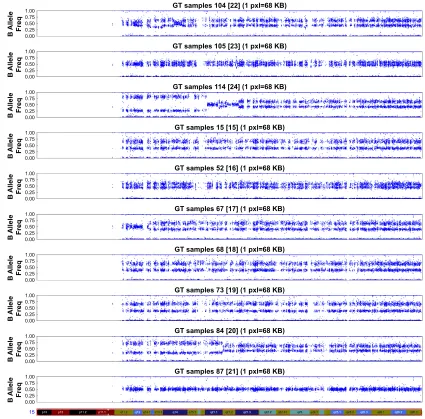
from 43 to 172 excluding case 87 with 11 CNAs detected (Table S1). Additional copy of chromosome 15 where
KIF23 resides was detected in nine NSCLC cases examined
(Figure 3). B-allele indicated presence of a third copy of chromosome 15. No CNAs were detected specifically at
KIF23 locus (15q23).
Discussion
In this study, we investigated whether the somatic muta-tions in the KIF23 gene potentially present in NSCLC might explain protein overexpression. Fifteen cases of NSCLCs with high level of KIF23 expression were examined in regard to sequence changes and DNA CNAs. We considered that high percentage of cancer cells in our samples would allow mutation detection by Sanger sequencing, despite limited sensitivity for mutation detection in tumor samples repre-senting heterogeneous mixture of normal and cancer cells. By assessment of CNAs by high-resolution genome-wide genotyping, we aimed to investigate whether KIF23 locus (15q23) was possibly amplified.
Recent publications highlighted role of KIF23 in cancer development and proposed KIF23 to be a potential biomarker
for cancers with poor outcome.3–7 KIF23, also known as
MKLP1, is a member of the kinesin-like protein family, which interacts with Aurora family protein kinases, regulates
cell division, and ensures proper cytokinesis.19 We reported
KIF23 mutation, p.P916R, as a genetic cause of a rare heredi-tary form of anemia, CDA III. The disease characterized by giant multinuclear erythroblasts in patients’ bone marrow is due to cytokinesis failure proven in knockdown experiments
in HeLa cells.11 Correct performance of cell division is
cru-cial for stable maintenance of the genome while a failure of cytokinesis might lead to aneuploidy and genomic instability, often associated with cancer, and probably representing initial
step in cancer development.12 Notably, the incidence of blood
cancer such as myeloma is higher in a large Swedish family
with CDA III than a general population risk.11,20,21
By means of next generation sequencing, many tumors have been investigated in order to understand molecular mechanisms of cancer, and identify diagnostic and prognostic biomarkers. A mutation analysis of 3281 tumors from 12 can-cer types revealed mutations in seven cell cycle genes among
OncoTargets and Therapy downloaded from https://www.dovepress.com/ by 118.70.13.36 on 25-Aug-2020
Dovepress Mutation analysis and copy number alterations in non-small-cell lung cancer
Table 2
KIF23
mutations in cancer
Position GRCh37 DNA, amino acid change rs ID MAF a Prediction Genotype Cancer type References
69,709,610, intron 2
c.82–112 c . g rs150343049 g = 0.0004 (1000 g ) n o predictable effect c /g
, case 68
nsclc
This study
69,709,686, intron 2
c.82–36 g . a rs3759825 g = 0.0749 ( ex ac ) splicing change b a /a
, all cases
nsclc
This study
69,714,651, intron 5
c.454–14delT rs769142360 – = 0.0186 ( ex ac ) n o predictable effect
–/T, all cases
nsclc
This study
69,714,707, exon 6
c.496 g . a , p .e 166K – na Possibly damaging c splicing change d Melanoma c
ifola et al 2013
24
69,715,488, intron 6
c.564–10 c . T rs7180624 c = 0.2610 ( ex ac ) n o predictable effect
T/T, all cases
nsclc
This study van
de Wetering et al 2015 25
69,715,488, intron 6
c.564 10del c rs199725995 – = 0.2552 ( ex ac ) splicing change e
–/–, all cases
nsclc
This study
69,715,495, intron 6
c.564 3delT – na splicing change f
–/T, all cases
nsclc
This study
69,728,530, exon 13
c.1326 a . c , p .(V442 = ) rs11852675 c = 0.0481 ( ex ac ) splicing change g a /c
, cases 16, 108
nsclc
This study
69,728,949, exon 14
c.1443 a . g , p .(P481 = ) rs3825858 a = 0.1097 ( ex ac ) n o predictable effect g /g
, all cases
nsclc
This study
69,729,001, exon 14
c.1495 g . a , p .e 499K – na Benign c splicing change h Melanoma c
ifola et al 2013
24
69,729,111, intron 14
c.1555 + 50delT rs72161188 – = 0.0044 ( ex ac ) n o predictable effect
–/T, all cases
nsclc
This study
69,732,736, exon 17
c.1977 c . T, p .(T659 = ) rs937724 c = 0.1095 ( ex ac ) splicing change i
T/T, all cases
nsclc
This study
69,732,770, exon 17
c.2011 c . T, p .r 671W rs377162847 T = 7.7e-5 ( eV s) Probably damaging c splicing change j c olorectal cancer De r
ycke et al 2013
23 Notes: aa llele frequencies for all variants were retrieved from http://www.ncbi.nlm.nih.gov /variation/vie w using data from exome Variant server ( http://evs.gs.washington.ed u ), exome a ggregation c onsortium ( http://exac.broadinstitute.or g ) and a Deep c atalog of h uman g enetic Variation ( http://browser.1000genomes.or g ). bc reated splicing signal at branch point according to splice siteFinder-like (from 0/100 to 72.3/100), and increased splicing signal according to h uman splicing Finder (from 71.2/100 to 79.5/100). ca ccording to PolyPhen2. dc reated splicing signal at intron 5 acceptor site according to nns Plice (from 0/1.0 to 1.0/1.0). increased splicing signal in exon 6 according to Max ent scan (from 2.9/12 to 5.2/12), and increas ed splicing signal nearby according to MaxEntScan (from 1.5/12 to 4.2/12). Abolished splicing binding site for splicing factor SF2/ASF in exon 6 according to ESE finder. Abolished splicing signal at intron 6 donor site according to nns Plice (from 1.0/1.0 to 0/1.0). eDecrease d splicing signal at acceptor site acco rding to Max ent scan (from 9.0/16 to 6.4/16). fDecreased splicing signal at acceptor site according to Max ent scan (from 9.0/16 to 7.6/16) and increased splicing signal according to g ene splicer (from 7.8/15 to 8.5/15). gSplicing binding sites for SC35 and SRp55 are changed to SF2/ASF and SF2/ASF (IgM-BrCa1) according to ESE finder. hc reated splicing binding sites for splicing binding factor sc 35 and sr p40 in exon 14.
icreated
splicing signal according to h uman splicing Finder (from 0/100 to 66.4/100). Binding sites for splicing factor sF2/ as F (igM-Br c a1) were changed to a binding site for sr p40. jTwo splicing binding sites for each of
splicing binding factor
sF2/ as F, sF2/ as F ( igM-Br c a1), and sr
p40 were abolished.
Abbreviation:
nsclc
, non-small-cell lung cancer.
OncoTargets and Therapy downloaded from https://www.dovepress.com/ by 118.70.13.36 on 25-Aug-2020
Dovepress Vikberg et al
& & 7 * 7 $ * $ & $
& & 7 * 7 $ * $ & $
& & 7 * 7 1 1 $ & $
& & 7 * 7 1 1 $ & $
%BB.,)Bî)IUDJPHQWEDVHEDVH
$
* $ * & 7 & 7 7 $ $
)BBWXPRUBî5BB))UDJPHQW,
* $ * & 7 6 7 7 $ $
& 7 & * $ 6 $ $ 7 7
& 7 & * $ * $ $ 7 7
%
& 7 * 1 & * $ & $ $
&
BB.,)Bî)IUDJPHQWEDVHEDVHRI
7 * 7 & * $ & $ $
& 7 * 7 & * $ & $ $
& 7 * 1 & * $ & $ $
&
Figure 2 Sequences of case-specific heterozygous DNA variants present in 3 of 15 NSCLC samples.
Notes: (A) c.1326a.c in exon 13, case 16. The same change was seen in case 108 (C). (B) c.82–112c.g in intron 2, case 68. Upper panels show sequence of Dna from peripheral blood, and lower panels show sequence of tumor Dna.
Abbreviation: nsclc, non-small-cell lung cancer.
%
$OOHOH )UHT
*7VDPSOHV>@S[O .%
%
$OOHOH )UHT
*7VDPSOHV>@S[O .%
%
$OOHOH )UHT
*7VDPSOHV>@S[O .%
%
$OOHOH )UHT
*7VDPSOHV>@S[O .%
%
$OOHOH )UHT
*7VDPSOHV>@S[O .%
%
$OOHOH )UHT
*7VDPSOHV>@S[O .%
%
$OOHOH )UHT
*7VDPSOHV>@S[O .%
%
$OOHOH )UHT
*7VDPSOHV>@S[O .%
%
$OOHOH )UHT
*7VDPSOHV>@S[O .%
%
$OOHOH )UHT
*7VDPSOHV>@S[O .%
S
S S S T TT T T T T T T T T T T T T T T T T
Figure 3 DNA CNA of chromosome 15 profiles in NSCLC. Whole-genome genotyping was performed using Illumina, SNP-array. Analysis was done using GenomeStudio and cnvPartition v. 3.2.0 with manual revision of the SNP-array profiles. BAFs for SNPs along the chromosome 15 show additional copy of chromosome 15 in 9 NSCLC cases. Only case 87 demonstrates normal profile with BAF =0.5 indicating absence of cna on chromosome 15.
Abbreviations: cna, copy number alteration; nsclc, non-small-cell lung cancer; snP, single nucleotide polymorphism; BaF, B-allele frequency.
OncoTargets and Therapy downloaded from https://www.dovepress.com/ by 118.70.13.36 on 25-Aug-2020
Dovepress Mutation analysis and copy number alterations in non-small-cell lung cancer
127 significantly mutated,22 though KIF23 was not one of
them. Nevertheless, in the study of 16 families with colorectal cancer among 375 missense single nucleotide variants, a rare
KIF23 variant, c.2011C.T, p.R671W segregated with the
disease in one family23 (Table 2). Furthermore, mutations in
KIF23 were also found in melanoma cell lines derived from
metastatic lesions patients24 (Table 2). Currently, by WES,
136 mutations in KIF23 have been detected in a range of
tumours13 available via cBioPortal for Cancer Genomics.
Majority of the mutations scattered all over the gene are missense mutations with five nonsense mutations and two mutations affecting splicing. A total of 123 mutations were submitted to COSMIC. KIF23 mutations were detected in a half out of 38 cancer types tested with minimum frequency 0.07% in hematopoietic and lymphoid tissues, and maximum mutation frequency of 2.03% in stomach. All tested tumor types (20 out of 38) confirmed upregulation of KIF23. Three out of ten tumors analyzed for CNAs showed gain, two con-firmed loss, and five had both gain and loss.
In our study, we found in total ten sequence variants, eight were present in all NSCLC samples while two additional variants were found in three cases. One of those variants was present only in tumor DNA and not in blood. The bioinfor-matics tools retrieved predicted effect of all variants detected in this study. Three variants in exons were synonymous and did not cause amino-acid change although two of them
(c.1326A.C and c.1977C.T) were predicted to have some
effect on splicing. Variant c.564–3delT might affect splicing resulting in skipping of exon 7 though located in the chain of 12 Ts, it is difficult to assign this change to exact sequence position, and to exclude sequencing error. Bioinformatics tools such as Human Splicing Finder, SpliceSiteFinder, and ESE predict some changes in splicing factors binding sites for two other intronic variants found in this study (Table 2). Despite the prediction of subtle changes in splicing signals, the possible effect of those two variants cannot be completely neglected without further functional studies.
Intronic variant c.564–10C.T (rs7180624) was reported
as somatic mutation in a living organoid of a patient with
colorectal cancer;25 however, this variant was present in all
NSCLC samples and healthy control cases in this study. None of the mutations reported in lung cancer on BioPortal, E203Q, D211Y, L525V, X188splice, G869W, and P415H
were present in any of our samples.13
Recently, it was shown that p53 indirectly represses tran-scription of the cell cycle genes including KIF23 via
p53–p21-DREAM-CDE/CHR pathway.17 p53 wild-type downregulates
KIF23 expression at mRNA and protein levels by regulation of
KIF23 promoter activity, and the CHR is the crucial element
mediating p53-dependent repression of KIF23 expression.16
The increased KIF23 levels in this study could be explained by p53 mutations or deletions or mutations in the CHR in
KIF23 promoter. We observed a slight but not significant
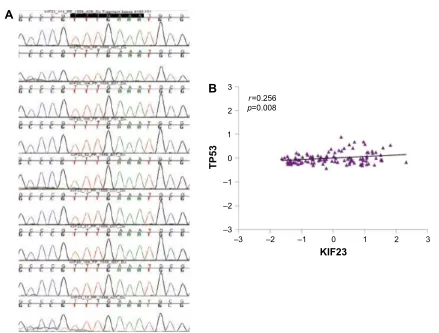
correlation between KIF23 and TP53 expression (Figure S1B) and investigated the presence of CHR mutations. None of the examined samples were positive for the CHR mutations.
Since the sequence variants in our NSCLC cases were absent, previously reported, had high frequency in general population, or lacked convincing predicted impact on splic-ing or protein function, we investigated CNAs in these patients. Ninety percent of NSCLC were found to contain an additional copy of entire chromosome 15 without amplifica-tion of KIF23 locus at 15q23. Therefore, overexpression of
KIF23 might be due to extra chromosome 15 in nine out of
ten NSCLC patients examined here.
Conclusion
Importance of KIF23 as a key player in cytokinesis and chro-mosome segregation during cell cycle for cancer development is undeniable. Overexpression of KIF23 in several different cancer types promotes tumor cell proliferation, and also down-regulation of KIF23 decreases proliferation of glioma and
lung cancer cells,4,6 indicating its potential as a prognostic
bio-marker and therapeutic target. Sequence alterations in KIF23 detected in this study might represent “passenger” mutations with no obviously causative role for cancer progression, though further investigations in larger data sets are required, and more data mining should be done in the future.
Acknowledgments
We acknowledge the TCGA Research Network for using the TCGA data set. This investigation was supported by a regional agreement between Umeå University and Västerbotten County Council in cooperation in the fields of Medicine, Odontology, and Health and Cancerforsknings-fonden Norrland.
Author contributions
ALV and IG contributed to design of this study. TV, KL, and TA contributed to collection of patients’ data and expression studies. All authors contributed toward data analysis, drafting and critically revising the paper and agree to be accountable for all aspects of the work.
Disclosure
The authors report no conflicts of interest in this work.
OncoTargets and Therapy downloaded from https://www.dovepress.com/ by 118.70.13.36 on 25-Aug-2020
Dovepress Vikberg et al
References
1. Golub TR. Genome-wide views of cancer. N Engl J Med. 2001;344(8): 601–602.
2. Nislow C, Lombillo VA, Kuriyama R, McIntosh JR. A plus-end-directed motor enzyme that moves antiparallel microtubules in vitro localizes to the interzone of mitotic spindles. Nature. 1992;359(6395): 543–547.
3. Valk K, Vooder T, Kolde R, et al. Gene expression profiles of non-small cell lung cancer: survival prediction and new biomarkers. Oncology. 2010;79(3–4):283–292.
4. Takahashi S, Fusaki N, Ohta S, et al. Downregulation of KIF23 sup-presses glioma proliferation. J Neurooncol. 2012;106(3):519–529. 5. Sun X, Jin Z, Song X, et al. Evaluation of KIF23 variant 1 expression
and relevance as a novel prognostic factor in patients with hepatocel-lular carcinoma. BMC Cancer. 2015;15(1):961.
6. Kato T, Wada H, Patel P, et al. Overexpression of KIF23 predicts clinical outcome in primary lung cancer patients. Lung Cancer. 2016;92:53–61.
7. Zou JX, Duan Z, Wang J, et al. Kinesin family deregulation coordinated by bromodomain protein ANCCA and histone methyltransferase MLL for breast cancer cell growth, survival, and tamoxifen resistance. Mol
Cancer Res. 2014;12(4):539–549.
8. Murakami H, Ito S, Tanaka H, Kondo E, Kodera Y, Nakanishi H. Establishment of new intraperitoneal paclitaxel-resistant gastric cancer cell lines and comprehensive gene expression analysis. Anticancer Res. 2013;33(10):4299–4307.
9. Zhu C, Bossy-Wetzel E, Jiang W. Recruitment of MKLP1 to the spindle midzone/midbody by INCENP is essential for midbody formation and completion of cytokinesis in human cells. Biochem J. 2005;389(Pt 2):373–381.
10. Liu X, Zhou T, Kuriyama R, Erikson RL. Molecular interactions of Polo-like-kinase 1 with the mitotic kinesin-like protein CHO1/MKLP-1.
J Cell Sci. 2004;117(Pt 15):3233–3246.
11. Liljeholm M, Irvine AF, Vikberg AL, et al. Congenital dyserythropoietic anemia type III (CDA III) is caused by a mutation in kinesin family member, KIF23. Blood. 2013;121(23):4791–4799.
12. Steigemann P, Wurzenberger C, Schmitz MH, et al. Aurora B-mediated abscission checkpoint protects against tetraploidization. Cell. 2009; 136(3):473–484.
13. Cerami E, Gao J, Dogrusoz U, et al. The cBio cancer genomics portal: an open platform for exploring multidimensional cancer genomics data.
Cancer Discov. 2012;2(5):401–404.
14. Gao J, Aksoy BA, Dogrusoz U, et al. Integrative analysis of complex cancer genomics and clinical profiles using the cBioPortal. Sci Signal. 2013;6(269):pl1.
15. Forbes SA, Beare D, Gunasekaran P, et al. COSMIC: exploring the world’s knowledge of somatic mutations in human cancer. Nucleic
Acids Res. 2015;43(database issue):D805–D811.
16. Fischer M, Grundke I, Sohr S, et al. p53 and cell cycle dependent transcription of kinesin family member 23 (KIF23) is controlled via a CHR promoter element bound by DREAM and MMB complexes.
PLoS One. 2013;8(5):e63187.
17. Fischer M, Quaas M, Steiner L, Engeland K. The p53-p21-DREAM-CDE/CHR pathway regulates G2/M cell cycle genes. Nucleic Acids
Res. 2016;44(1):164–174.
18. Seguin L, Liot C, Mzali R, et al. CUX1 and E2F1 regulate coordinated expression of the mitotic complex genes Ect2, MgcRacGAP, and MKLP1 in S phase. Mol Cell Biol. 2009;29(2):570–581.
19. Neef R, Klein UR, Kopajtich R, Barr FA. Cooperation between mitotic kinesins controls the late stages of cytokinesis. Curr Biol. 2006;16(3):301–307.
20. Haraldsdottir J, Sandstrom B. Detection of underestimated energy intake in young adults. Int J Epidemiol. 1994;23(3):577–582.
21. Sandstrom H, Wahlin A, Eriksson M, Bergstrom I, Wickramasinghe SN. Intravascular haemolysis and increased prevalence of myeloma and monoclonal gammopathy in congenital dyserythropoietic anaemia, type III. Eur J Haematol. 1994;52(1):42–46.
22. Kandoth C, McLellan MD, Vandin F, et al. Mutational landscape and signif-icance across 12 major cancer types. Nature. 2013;502(7471):333–339. 23. DeRycke MS, Gunawardena SR, Middha S, et al. Identification of novel
variants in colorectal cancer families by high-throughput exome sequenc-ing. Cancer Epidemiol Biomarkers Prev. 2013;22(7):1239–1251. 24. Cifola I, Pietrelli A, Consolandi C, et al. Comprehensive genomic
characterization of cutaneous malignant melanoma cell lines derived from metastatic lesions by whole-exome sequencing and SNP array profiling. PLoS One. 2013;8(5):e63597.
25. van de Wetering M, Francies HE, Francis JM, et al. Prospective deriva-tion of a living organoid biobank of colorectal cancer patients. Cell. 2015;161(4):933–945.
OncoTargets and Therapy downloaded from https://www.dovepress.com/ by 118.70.13.36 on 25-Aug-2020
Dovepress Mutation analysis and copy number alterations in non-small-cell lung cancer
Supplementary materials
.,)
73
±
± ±
± ±
±
U S
$
%
Figure S1 (A) sequencing of cell cycle homology region (chr) in the promoter of KIF23 in 9 nsclc tumors. The consensus wild-type sequence TTTgaaa was present in all samples. (B) correlation between TP53 and KiF23. scatter plot of log2 mean-centered expression values of KiF23 and TP53, TP53: Pearson’s correlation 0.256, uncorrected p-value =0.008. Pearson product-moment correlation (r) and uncorrected p-value were calculated using r software package.
Abbreviation: nsclc, non-small-cell lung cancer.
Table S1 sanger sequencing and cnas detection in nsclc
Sample Sex Histology Sanger sequencing
CNAs number detected by SNP-array
15 Male scc + 153
16 Male scc + naa
52 Male scc + 148
66 Male scc + na
67 Male scc + 171
68 Male scc + 172
73 Male scc + 92
84 Male scc + 97
87 Male scc + 11
103 Male scc + na
104 Female in situ adenocarcinoma
+ 68
105 Male scc + 43
108 Male scc + na
109 Male scc + na
114 Male in situ
adenocarcinoma +
164
Note:aData not available, snP-array was not performed due to a lack of Dna.
Abbreviations: ssc, squamous cell carcinoma; cna, copy number alterations; nsclc, non-small-cell lung cancer.
OncoTargets and Therapy downloaded from https://www.dovepress.com/ by 118.70.13.36 on 25-Aug-2020
Dovepress Vikberg et al
Table S2
c
hromosomal copy number alterations in
nsclc
analyzed by genome wide genotyping using
illumina sn P-array Chr omosome case 1 2 3 4 5 6 7 8 9 10 11 12 13 14 15 16 17 18 19 20 21 22 15 + 1 + 2 + 3 + 4 + 5 + 6 + 7 + 8 + 9 + 10 + 11p + 12p, q + 13 + 15 + 16 + 17 + 18 + 19 + 20p + 21 + 22 52 + 1p + 2 + 3 + 4 + 5q + 6 + 9p + 13 + 14 + 15 + 17p + 21 67 + 1 + 2 + 3 + 4 + 5 + 6 + 7 + 8 + 9p + 10 + 11 + 12q + 13 + 14 + 15 + 16 + 17p, q + 18 + 19 + 20p + 21 + 22q 68 + 3p + 4 + 8q + 9p, q + 11q + 12 + 13 + 15 + 16 + 17p + 18 + 19 + 20p + 22 73 + 1 + 2 + 3p + 4q + 5p, q + 6 + 7 + 9p + 10 + 11q + 12p + 13 + 15 + 16q + 17p + 18 + 19 + 21q + 22 84 + 1q + 2 + 3p, q + 4q + 5 + 6 + 7p + 8 + 9 + 10p + 11 + 12 + 13q + 14 + 15 + 16 + 17 + 18q + 19 + 20 + 21 + 22 87 + 1p + 3 + 4q + 5q + 6p + 7p + 8p + 9 + 10 + 11p + 13 + 14 + 16p + 17p, q + 22 104 + 1q + 2 + 3 + 4 + 5 + 6q + 7q + 8 + 9 + 11 + 12p, q + 13 + 14 + 15 + 17 + 18 + 19q + 20 + 21 + 22 105 + 1q + 2q + 3q + 4 + 5 + 6p + 8 + 9 + 10 + 12p + 13q + 14q + 15 + 16p + 17p + 18 + 19q + 20q + 21 + 22q 114 + 1 + 2q + 3q + 4 + 5 + 6 + 7q + 8 + 9q + 10 + 11 + 12 + 13 + 14q + 15 + 16 + 17 + 18q + 19 + 21q + 22 Notes: c
hromosome gains are marked with “
+
”. Partial gain of a short (p) or a long arm (
q) of chromosome is indicated with
+ p or + q. Abbreviations: nsclc
, non-small-cell lung cancer;
sn
P, single nucleotide polymorphism.
chr1 chr2 chr3 chr4 chr5 chr6 chr7 chr8 chr9 chr10 chr11 chr12 chr13 chr14 chr15 chr16 chr17 chr18 chr19 chr20 chr21 chr22 chrX chrY
0M 15 52 67 68 73 84 87 104 105 114
249M 492M 690M 881M 1,062M 1,233M 1,392M 1,539M 1,680M 1,815M 1,950M 2,084M 2,199M 2,307M 2,409M 2,500M 2,581M 2,659M 2,718M 2,781M 2,829M 2,881M 3,036M
Figure S2 cnV region display from genomestudio performed by cnvPartition 3.2.
OncoTargets and Therapy downloaded from https://www.dovepress.com/ by 118.70.13.36 on 25-Aug-2020
OncoTargets and Therapy
Publish your work in this journal
Submit your manuscript here: http://www.dovepress.com/oncotargets-and-therapy-journal
OncoTargets and Therapy is an international, peer-reviewed, open access journal focusing on the pathological basis of all cancers, potential targets for therapy and treatment protocols employed to improve the management of cancer patients. The journal also focuses on the impact of management programs and new therapeutic agents and protocols on
patient perspectives such as quality of life, adherence and satisfaction. The manuscript management system is completely online and includes a very quick and fair peer-review system, which is all easy to use. Visit http://www.dovepress.com/testimonials.php to read real quotes from published authors.
Dovepress
Dovepress
Mutation analysis and copy number alterations in non-small-cell lung cancerOncoTargets and Therapy downloaded from https://www.dovepress.com/ by 118.70.13.36 on 25-Aug-2020