A Comparative Study on the Energy Efficiency of 4th
Gen Intel ® Core ™ Processor vs 3rd Gen Intel ®
Core ™ Processor
Siti Nur Diana Muhd Azmi School of Computing, Creative Technologies, and Engineering, Leeds Beckett University,
Leeds, UK
[email protected] beckett.ac.uk
Nazarudin Bujang Intel Kulim, Perak
Malaysia
Ah-Lian Kor School of Computing, Creative Technologies, and Engineering, Leeds Beckett University,
Leeds, UK [email protected]
Colin Pattinson School of Computing, Creative Technologies, and Engineering, Leeds Beckett University,
Leeds, UK
Abstract—This research aims to compare the energy efficiency in between two generations Intel processors; the 4th Gen Intel ® Core ™ Processor and 3rd Gen Intel ® Core ™ Processor. It also surveys the technologies that provide better energy performance for both of the processors. The methodology used for this research is a physical experiment conducted in an Intel production plant. The results obtained from the experiment show that the 4th Gen Intel ® Core ™ Processor is more energy efficient than the 3rd Gen Intel ® Core ™ Processor.
Keywords—energy consumption, energy efficiency, Intel Processor, 3rd Gen Core Processor, 4th Gen Core Processor
I. INTRODUCTION
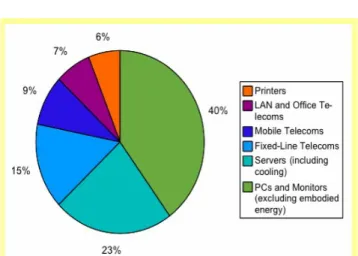
Statistics has shown an increasing trend of ICT use and its growth rate could surpass that of the aviation industry. Consequently, the ICT-related energy use is comparable to that of the aviation industry (UK Parliamentary Office of Science and Technology (2008)[1]. ICT’s substantial energy consumption has a significant impact on GHG emissions and climate change where 2% of global carbon emissions come from manufacturing and using of Information and Communication Technology (ICT)[2]. In Europe, ICT equipment and services account for 2.5%-4% for EU’s carbon emissions[3]. According to the Smart2020[4] report by the Global e-Sustainability Initiative, GeSI (2008), the ICT sector’s emissions are expected to increase, from 0.53 billion tonnes (Gt) carbon dioxide equivalent (CO2e) in 2002 to 1.43 GtCO2e in 2020 (in Business As Usual, BAU, scenario). Figure 1 shows the estimated distribution of global CO2emission for ICTs. The main contributorsare PCs and monitors (40%), telecommunications (31%), followed by data centres (23%).
Figure 1: Estimated Distribution of GlobalCO2 emission for ICTs (extracted from
ITU,2009, p.4)[5]
Murugesan’s (2013) [9] definition of Green IT is environment sustainability-focused. It refers to environmentally friendly computer, information systems, applications, and practices which aim to improve energy efficiency, lower GHG emissions, use of less toxic materials, encouraging reuse and recycling. Greening of IT aims to mitigate the environmental
impact of ICT itself. This encompasses energy efficient and environmental sustainable designs, operations, use and disposal ICT equipment, infrastructure and systems.
Since 2012, Intel has set their 2020 environmental goals[10] which aim to reduce greenhouse gas emission and increase energy efficiency of their products and operations. Consequently, Intel has developed many energy-efficiency products through their product innovation. Additionally, they prioritise the minimisation of their products’ environmental footprint throughout their entire life cycle. Intel (2015) is an innovation leader and has come up with innovative technology and products in every two years following Moore’s Law[11] (see Figure 2) which states that computing would dramatically increase in power, and decrease in relative cost, at an exponential pace.
In this research, we shall examine and compare the energy efficiency in between 3rd and 4th Gen Intel ® Core ™ Processor. The energy consumption during standby and active mode of both processors are measured and analysed. The Ivy Bridge (Figure 3) 3rd generation processor is an enhanced version of Sandy Bridge[12] 2nd generation processor while Haswell (Figure 6) is the 4th generation processor.
Rationale
Even though Intel continually innovate their product architecture design, they ensure the innovation does not compromise with the performance and energy efficiency of
new microprocessors. Hence, this study investigates the reduction in processors’ energy consumption due to innovative architecture design.
Based on Intel’s microprocessors history, their first microprocessor was introduced to market in 1971 (Intel 4004) and the latest recently launched microprocessor by Intel is the 5th generation processor, with the codename, skylake. Intel has continuously improved on the processors’ clock speed and sizes where it ranges from 10 micron for Intel 4004 up to 22-nanometer for Intel 4th generation processor and finally, 14-nanometer for recently launched 5th generation processor [13]. Since energy efficiency is one of the greatest issues in ICT and computer application in dealing with environmental issues. Lower energy consumption could help to reduce carbon footprint. Producing environmental friendly products could give Intel a competitive advantage.
Aim and objectives
i. To critically review literature on Intel ® Core ™ Processors, their performances and energy efficiency;
ii. To conduct experiments to investigate the energy consumption for both 3rd and 4th Intel ® Core ™ Processors in the following states: active and on standby;
iii. To draw a comparison between 3rd and 4th Intel ® Core ™ Processors using the following parameters: performance (based on document review); and energy consumption (states: active and on standby).
II. LITERATUREREVIEW
A. 3rd Gen Intel ® Core ™ Processor (Ivy Bridge)
Figure 3: 3rd Generation Intel ® Core ™ Processor (Ivy Bridge)
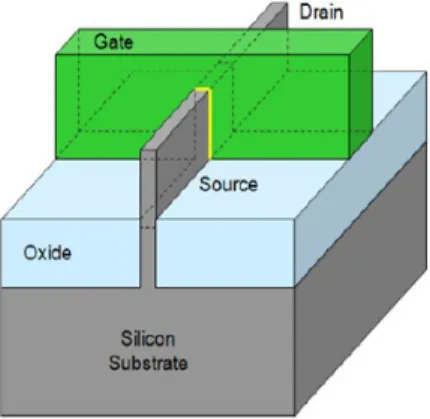
According to Intel, the 3rd generation Intel® Core™ processor, is featured with smart technologies that allow users to exploit it to meet their needs. It also incorporates incredible visual built-in for visual enhancement where users do not need additional graphics card or software to experience a brilliant visual. Intel® HyperThreading Technology1 further improves the performance and multi-tasking capability to spped up workflow. In addition, the 3rd generation Intel® Core™ processor improves energy consumption and efficiency[14]. Officially launched in April 2012,Ivy Bridge is the codename for the 3rd Generation Intel ® Core ™ Processor and is the successor to the Sandy Bridge the 2nd Generation Intel ® Core ™ Processor. As a record, Ivy bridge or 3rd Generation Intel ® Core ™ Processor carry 1.4 billion transistors on the chip compared to Sandy Bridge the 2nd Generation Intel ® Core ™ Processor carry 1.16 billion. Ivy Bridge has a microarchitecture (see Figure 5) on a processing die which shrinks from 32nm to 22nm. Ivy Bridge is the first processor in the Intel family with a 22 nm logic technology microprocessor that uses first high-volume chip called Tri-Gate technology that provides significant processing performance [15]. Tri-Gate technology allows power consumption reduction and die size.Tri-Gate technology is the world’s first 3-D transistor. According to National Instrument [16], it is a technology that could boost the performance by up to 37 percent compared to 32 nm planar transistors, the traditional two-dimensional. Subsequently, power reduction and energy usage by the chips on board are made possible due to lower voltage and lower leakage. However, according to Intel, 3-D planar could perform at the same same level as 2-D planar transistors with a reduction of 50 per cent power consumption. Intel’s 3-D Tri-Gate transistor (see Figure 4) employs three gates where, a single gate crosses on top of the other two vertical gates which then form all three sides. This
formation allows electrons to travel three times on the surface area that could give benefits to less power consumption and greater current flow due to leakage reduction effect from current control. This new transistor designed by Intel brings about ultra-low power benefits for handheld devices.
B. 4th Gen Intel ® Core ™ Processor (Haswell)
Haswell is the Codename for 4th Generation Intel® Core™ processor, a replacement to the Ivy Bridge. It is released in 2013 and Haswell is the extension of Intel advanced version of
The key comparisons between the 3rd and 4th gen processors are[19]: the latter is the first System on Chip (SoC) which integrates all major building blocks for a system onto a single chip; enhanced battery life for the latter (9.1 hours compared to 6 hours for HD video; 10-13 days on standby power compared to 4.5 days); graphiocs performance on the 4th gen processor doubles its predecessor’s; enhancement of power-performance efficiency. There are few techniques that have been employed by Intel to improve power-performance efficiency[20]. Firstly, low-level implementation which involves the optimization of manufacturing, process technology and circuits, optimize microarchitecture and algorithms and finally optimization of design and
implementation. Secondly, high-level architecture improvement in Haswell encompasses the use of independent voltage-frequency domains (e.g. cores, caches, graphics, system agent, etc…) which run on dedicated, and individually controlled voltage-frequency points. In order to maximize performance, a power control unit (PCU) dynamically allocates power budget among these domains. Lastly for the platform power management operation, Intel has improved battery life by introducing new active idle-power state, S0ix that could deliver 20 times improvements in idle-power compared to 3rd gen processors supported by fully integrated voltage regulator (FIVR) [18, 20].
III. METHODOLOGY
“Experimentation and data collection are the tools of science for validating theories” [21]. This method is chosen as
according to Montgomery [22] in the book title “Design and Analysis of Experiment” – ‘experimentation is a vital part of
the scientific (or engineering) method’ (p.2) and this is the best method to evaluate a system performance.
consumption for both processors, a series of tests had to be executed to verify and ensure all the components perform well.
The first test undertaken was ‘Functional Test Level 1 and 2’. These procedures were carried out to verify and ensure the motherboard and each of the components were functioning in accordance to product specification. These tests could be conducted using few methods which are; Auto Test Process with Activated Test Platform (APSE) (Host Control System
(HSC) + Scan Terminal (ScanTer)) or Manual Test with APSE or Manual Test Process with PQIUHC. The entire process is depicted in Figure 7. The method conducted during test was Auto test Process with APSE (HSC) + ScanTer and the operating procedures are as follows:
i. Motherboard was placed properly on the Base Plate / Carrier Plate of the (Standardized Test Hook Interface (STHI).
ii. Motherboard was clamped with STHI Back Plane / Control System. CPU, Memory cards and other testing peripherals were also placed on the boards according to operating manual provided.
iii. All the cards installed and toggle clamper was in clamping down position. At this stage, the card must be ensured it was properly fully clamped down which enabled proper contact.
iv. Next motherboard removed to be tested from the pick location of the incoming trolley
v. Unit Under test (UUT) was examined for defects according to the Quality manual requirement
vi. UUT then placed on the test station and tested following the Motherboard testing procedure
vii. Control system powered on and waited until the control system was fully initialized (until LED became green).
viii. Location Barcode on the ASTF (At Speed Test Fixture) tester and motherboard serial number base
are scanned into HSC system which then triggered the APSE/HSC software to execute the test automatically.
ix. Screen for the UUT observed and on-screen instruction was followed.
x. Test was completed by displaying a green screen with prominent "PASS" message on the station monitor. Power OFF the UUT and control system MBPS3 switches. At this stage, the control system was ensured it was properly power OFF to avoid APSE BLT content went missing due to CC3 cache did not flushed out.
xi. Waited until 5V stand by totally off until the green LED light disappeared
xii. The motherboard moved from the station to the passed indicated trolley and ready for the next test.
Processor power consumption test for 3rd and 4th Gen was executed at Intel KM1 production plant. 20 units of processor from each generation were tested separately in 2 different modes (standby and active) in order to gain more precise and accurate result.
The processor power consumption test operating procedures are as follows:
i. 20 units of processor placed properly on the Base Plate / Carrier Plate of the (Standardized Test Hook Interface (STHI).
ii. UUT then placed on the test station and tested following the processor power testing procedure iii. Control system powered on and waited until the
control system fully initialized (until LED became green).
iv. Location Barcode on the ASTF (At Speed Test Fixture) tester and processors Serial Number base scanned into HSC system which then the APSE/HSC software executed the test automatically.
v. Screen for the UUT observed and on-screen instruction followed.
vi. Test completed by displaying a green screen with prominent “PASS” message on the station monitor. Power OFF the UUT and control system MBPS3 switches. At this stage, the control system was ensured it was properly power OFF to avoid APSE BLT content went missing due to CC3 cache did not flushed out.
vii. Waited until 5V stand by totally off until the green LED light disappeared
viii. The processors moved from the station to the passed indicated trolley and ready for next test.
ix. Data from the test then generated and transferred to the station monitor.
IV. RESULTSANDDISCUSSION
A. Standby Mode
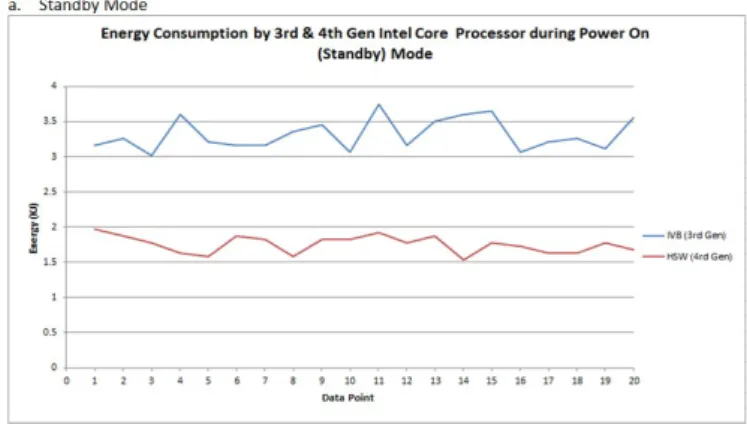
Table 1 below shows the energy reduction from the 3rd generation to the 4th generation range between 1.2KJ and 2.064 KJ in the standby mode.
Figure 8 shows the energy consumption for both 3rd and 4th Gen Intel ® Core ™ Processor during standby mode. It shows that the 3rd Gen Intel ® Core ™ Processor consumes more energy compared to 4th Gen Intel ® Core ™ Processor during standby mode.
B. Active Mode
Table 2 shows the energy reduction for the 4th generation processor and it ranges from 3.168KJ to 4.944 KJ in the active mode.
Figure 9 shows the energy consumption for both 3rd and 4th Gen Intel ® Core ™ Processor during active mode. It shows that the 3rd Gen Intel ® Core ™ Processor consumes more energy compared to 4th Gen Intel ® Core ™ Processor during active mode.
Figure 10 shows the energy efficiency between 3rd and 4th Gen Intel ® Core ™ Processor during standby mode during processor standby mode. It shows that the efficiencies range from 40.63% to 57.33% during standby mode.
V. CONCLUSIONS
The study aims to make comparisons of energy efficiency for the 3rd Gen Intel ® Core ™ Processor and 4th Gen Intel
® Core ™ Processor. It reveals that the 4th Gen Intel ® Core ™ Processor consumes less energy than the 3rd Gen Intel ® Core ™ Processor. The feature that distinguishes both processors is the Fully Integrated Voltage Regulator (FIVR) which helps the 4th Gen Intel ® Core ™ Processor reduce energy consumption by the CPU and subsequently lower its temperature. Other advanced technology in the 4th Gen Intel ® Core ™ Processor helps to accelerate the performance which results in the reduction of energy consumption as it helps users to speed up their application and reduce execution time. Fully Integrated Voltage Regulator (FIVR), the innovative technology for the 4th Gen Intel ® Core ™ Processor obviously helps 4th Gen Intel ® Core ™ Processor to save energy.
The fact that the 4th Gen Intel ® Core ™ Processor is more energy efficient than the 3rd Gen Intel ® Core ™ Processor shows that product architecture design innovations by Intel aims to boost up performance as well as decrease energy consumption. However, Ivy Bridge, the 3rd Gen Intel ® Core ™ Processor may not completely phase out from the market in the near future as the 4th Gen Intel ® Core ™ Processor seems to be more suited for high end systems that require very powerful technologies.
Acknowledgment
A special thanks to Mr. Nazarudin Bujang and team from Intel for the knowledge sharing, guidance and assistance during Diana’s data collection at their production plant in Intel Kulim, Malaysia.
References
[1]. http://www.parliament.uk/documents/post/postpn319.pdf
[2]. http://globalactionplan.org.uk/sites/gap/files/Green%20ICT %20Handbook.pdf and http://www.gartner.com/newsroom/id/503867
[3]. http://ec.europa.eu/digital-agenda/en/pillar-vii-ict-enabled-benefits-eu-society/action-69-assess-whether-ict-sector-has-complied-common
[4]. http://gesi.org/files/Reports/Smart%202020%20report%20in %20English.pdf
[5]. http://www.itu.int/dms_pub/itu-t/oth/06/0F/ T060F00600C0004PDFE.pdf
[6]. http://www.smart2020.org/_assets/files/02_Smart2020Report.pdf
[7]. http://www.itu.int/dms_pub/itu-t/oth/06/0F/ T060F00600C0004PDFE.pdf
[8]. http://gesi.org/SMARTer2020
[9]. Murugesan, S. (2013). Harnessing Green IT: Principles and Practices to be published by John Wiley.
[10].http://newsroom.intel.com/community/intel_newsroom/blog/ 2012/05/17/intel-sets-2020-environmental-goals
[11]. http://www.intel.com/content/www/us/en/silicon-innovations/moores-law-technology.html
[12].http://www.pcmag.com/article2/0,2817,2405317,00.asp
[13]. http://www.intel.com/content/www/us/en/processors/core/5th-gen-core-processor-family.html
[14].http://www.intel.com/content/dam/www/public/us/en/documents/ product-briefs/3rd-gen-core-family-mobile-brief.pdf
[15]. Bohr, M. & Mistry, K. (2011). Intel’s Revolutionary 22 nm Transistor Technology. Tech. rep., Intel, pp.1–28.
[17]. Kurd, N. et al. (2014). 5.9 Haswell: A family of IA 22nm processors. Digest of Technical Papers - IEEE International Solid-State Circuits Conference, 57, pp.112–113.
[18]. Aswell, H. et al.(2014). The Fourth Generation Intel Core Processor. , pp.6–20.
[19]. https://software.intel.com/sites/default/files/introduction-to-intel-4th-generation-core-processor.pdf
[20].http://pages.cs.wisc.edu/~rajwar/papers/ieee_micro_haswell.pdf
[21]. Zelkowitz, M. V. & Wallace, D. (1997). Experimental validation in software engineering. Information and Software Technology, 39(11), pp.735–743.