1
The role of collaborative reflections in clinical practice: Using an
asynchronous online learning environment to promote reflective
learning in nursing education.
Michael Browne
Thesis submitted in fulfilment of the requirements for the degree of Master of Education by Research, College of Arts & Education, Victoria University
2
Abstract
Nurse education has widely adopted reflective practice during clinical practicum in
the form of individual reflective journals in order to enhance learning in the clinical
experience. Major problems with this style of reflection have become evident through
a review of the research literature, including issues with trust, difficulty choosing the
experiences that might be reflected upon, the honesty of reflection, lack of feedback
and a propensity to reflect at descriptive levels. These deficits have led many to
question the value of reflection during the clinical placement, while others argue that
a distortion of the purpose of reflection itself occurs. A limited number of studies
have challenged the method of reflection during nursing practicum, most producing
minor, or resource inhibitive recommendations without meaningful follow-up studies
to verify their merits.
A reflective asynchronous environment was incorporated into the practicum of
first year nursing students in an Australian university. Peers were directed to post
reflections and respond to reflections of peers. A case study approach incorporated
analysis of data from the peer reflections to determine themes and quality of
reflections. A questionnaire and a focus group session were undertaken to
corroborate reflective data and provide insight into participant perspectives of the
new environment.
Findings indicated that improvement in reflective levels related to engagement
with the new environment. Participants were able to validate peer experience,
leading to enhanced trust, honesty of reflection and quality of reflection, addressing
3
exploration of a new reflective approach, the merits of which directly challenge the
5
Acknowledgements
I am extremely lucky and thankful for my research supervisors who have stayed the
course throughout this thesis. Thank you Professor Nicola Yelland, your direction,
encouragement and expertise in ICT research proved invaluable to this research, I
truly appreciate the effort you have made to maintain close direction of this thesis
despite your busy workload. Thank you also Professor Tarquam McKenna for the
deep interest you maintained in the research. Your reading suggestions, review of
chapters and unparalleled ability to phrase the incomprehensible provided not only
guidance but inspiration and confidence in my writing.
I would like to thank all participants in the study, who were brave and forthcoming
throughout their reflective journey, and also the clinical facilitators who assisted in
the implementation of the research.
Special thanks are due to my wife, who has managed to not only birth, but care for
our two children Kiara and William during the research. This has been a time of
change for us both, though her support and belief in me never changed. I owe her a
sincere debt of gratitude.
Finally, I would like to thank my brother Gavin, whose unwavering support and drive
6
Table of Contents
ABSTRACT 2
ACKNOWLEDGEMENTS 5
LIST OF FIGURES 10
LIST OF TABLES 10
CHAPTER 1 INTRODUCTION 11
1.1 Thesis Structure 17
1.2 Terminology 18
1.3 Summary 18
CHAPTER 2 LITERATURE REVIEW 20
2.1 Introduction 20
2.2 Learning theory and models for reflective practice 21
2.3 Reflective practice in nursing education 40
2.4 Social reflection in nursing literature 56
2.5 Asynchronous environments 63
2.6 Summary 70
CHAPTER 3 METHODOLOGY 73
3.1 Introduction 73
3.2 Case study and units of analysis 76
3.2.1 Participants 77
3.2.2 Asynchronous environment 79
3.4 Linking data to purpose and collection 80
3.4.1 Asynchronous environment data 83
3.4.2 Focus group 85
7
3.5 The criteria for analysing findings 90
3.5.1 Asynchronous data 91
3.5.2 Focus group data 99
3.5.3 Questionnaire data 99
3.6 Summary and conclusion 100
3.7 Quality 101
3.8 Ethics and consent 103
CHAPTER 4 FINDINGS AND DISCUSSION 104
4.1 Introduction 104
4.2 Q.1 - In what ways does an asynchronous journal effect the reflections of nursing
students while on clinical placement? 104
4.2.1 Shared experience 105
4.2.1.1 Self-reflection 105
4.2.1.2 Confirmation 109
4.2.1.3 Confirmation with some expansion 110
4.2.1.4 Discussion 111
4.2.2 Collaborative consensus 114
4.2.3 Validation of experience 116
4.2.3.1 Self-disclosure of conflict 118
4.2.3.2 Discussion 125
4.2.4 Communication 125
4.2.4.1 Therapeutic relationship 126
4.2.4.2 Language 130
4.3 Q.2 - How do levels of reflection change in the asynchronous environment? 135
4.3.4 Weekly levels of reflection 135
4.4 Q.3 - What changes in reflections, if any, can be attributed to the new environment? 137
4.4.1 Reflecting at the level of peer 138
4.4.2 Participants responded to more reflective posts as deemed by levels of reflection 139
4.4.3 Number of posts read improved level of reflection 140
4.4.4 Number of responses to peers improved level of reflection 141
4.4.5 Reflection improved over time 142
8
4.4.7 Discussion 145
4.5 Q.4 - What changes to student perspectives on the reflective process evolve as a
consequence of the asynchronous reflection? 152
4.5.1 Authority figures in reflection 152
4.5.1.2 Facilitator role in asynchronous reflection 154
4.5.1.3 Discussion 156
4.5.2 Trust and willingness to share 157
4.5.2.1 Emotionally significant experiences 161
4.5.3 Engagement with peers 168
4.5.4 Time constraints 170
4.6 Summary 171
CHAPTER 5 SUMMARY AND CONCLUSION 172
5.1 Summary of key findings 173
5.1.1 Q.1 - In what ways does an asynchronous journal effect the reflections of nursing
students while on clinical placement? 173
5.1.2 Q.2 - How do levels of reflection change in the asynchronous environment? 175
5.1.3 Q.3 - What changes in reflections, if any, can be attributed to the new environment?
176
5.1.4 Q.4 - What changes to student perspectives on the reflective process evolve as a
consequence of the asynchronous reflection? 177
5.2 Conclusions 178
REFERENCES 190
APPENDICES 196
Appendix 1: Levels of reflectivity (Mezirow, 1981) 196
Appendix 2: Levels of reflection 197
Appendix 3: Reflective data 198
Appendix 4: Questionnaire to examine the perceptions of student nurses in their clinical
practice (Chong, 2009) 210
Appendix 5: Questionnaire data 212
Appendix 6: Focus group data 216
9
Appendix 8: Topic guide for focus group 228
Appendix 9: Research information sheet 229
Appendix 10: Consent form for participants 232
10
List of Figures
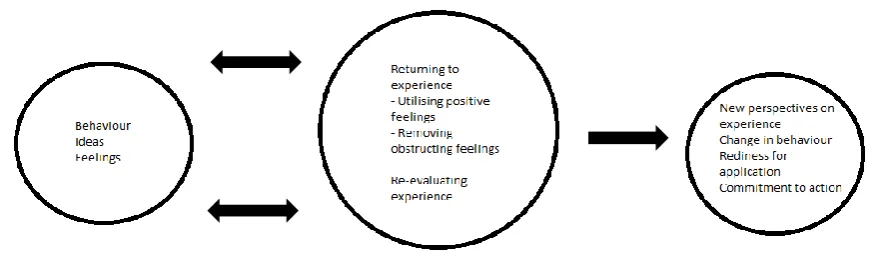
Figure 1: The reflection process in context (Boud et al., 1985) ... 23
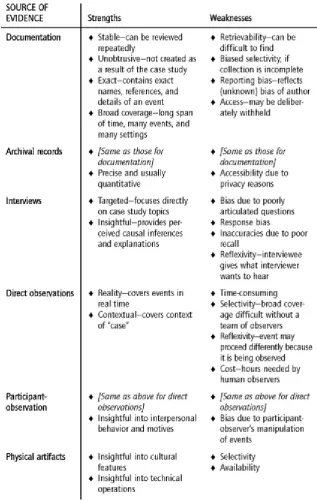
Figure 2: Six Sources of Evidence: Strengths and Weaknesses (Yin, 2009, Chapter 4, Section 2, para. 4) ... 82
Figure 3: Convergence of evidence in triangulation of data (Yin, 2009, chapter 4, section 2, para 10) ... 91
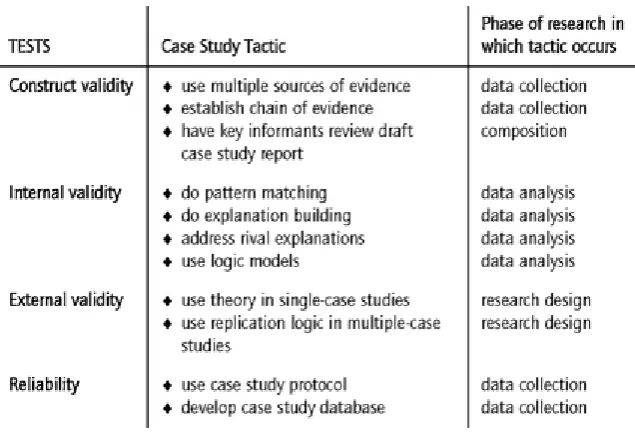
Figure 4: Case Study Tactics for Four Design Tests (Yin, 2009, Chapter 2, Section 5, Para.5)... 101
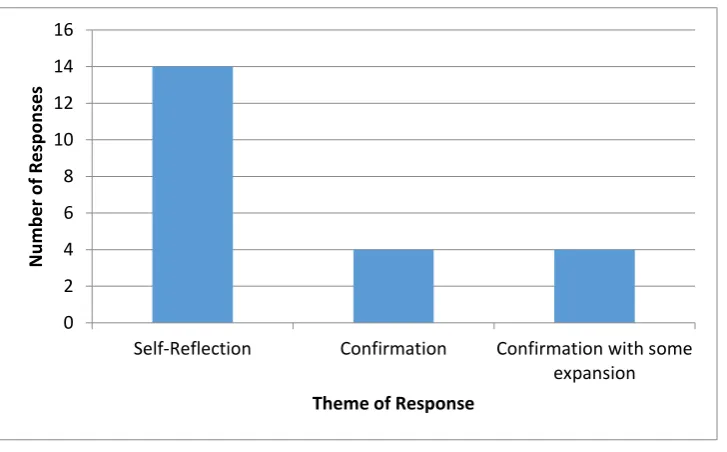
Figure 5: All responses to peers fell into three categories, being self-reflection, confirmation and confirmation with some expansion. ... 105
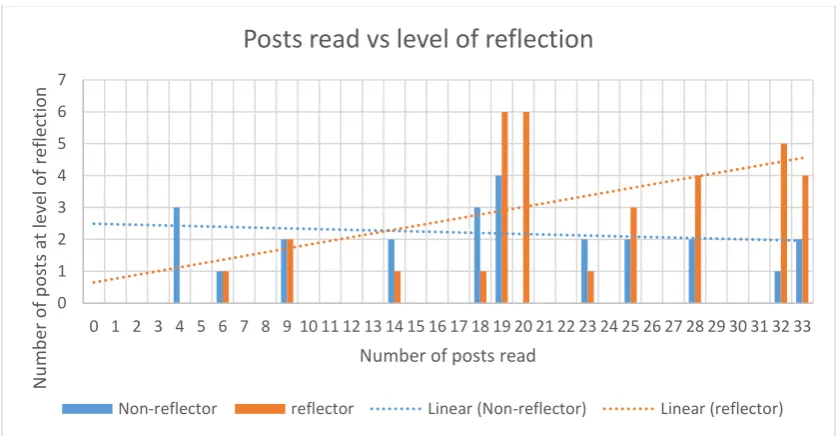
Figure 6: Posts read by participants compared to number of posts at varying levels of reflection. ... 140
Figure 7: Percentage of posts at non-reflector or reflector level vs number of responses to peers. ... 141
Figure 8: Percentage of initial posts at non-reflector or reflector level over time. ... 142
Figure 9: Percentage of responses to peers at non-reflector or reflector level over time. ... 143
List of Tables
Table 1: Distribution of respondents based on frequency and percentage (N=12) ... 120Table 2: Distribution of respondents based on frequency and percentage (N=12) ... 121
Table 3: Distribution of reflections based on frequency and percentage ... 135
Table 4: Distribution of respondents based on frequency and percentage (N=12) ... 139
Table 5: Distribution of respondents based on frequency and percentage (N=12) ... 143
Table 6: Distribution of respondents based on frequency and percentage (N=12) ... 148
Table 7: Distribution of respondents based on frequency and percentage (N=12) ... 149
Table 8: Distribution of respondents based on frequency and percentage (N=12) ... 149
Table 9: Distribution of respondents based on frequency and percentage (N=12) ... 154
Table 10: Distribution of respondents based on frequency and percentage (N=12) ... 155
Table 11: Distribution of respondents based on frequency and percentage (N=12) ... 155
Table 12: Distribution of respondents based on frequency and percentage (N=12) ... 156
Table 13: Distribution of respondents based on frequency and percentage (N=12) ... 159
Table 14: Distribution of respondents based on frequency and percentage (N=12) ... 160
Table 15: Distribution of respondents based on frequency and percentage (N=12) ... 168
Table 16: Distribution of respondents based on frequency and percentage (N=12) ... 169
11
Chapter 1
Introduction
Reflective learning has been described as “examining and exploring an issue of
concern, triggered by an experience, which creates and clarifies meaning in terms of
self, and which results in a changed conceptual perspective” (Boyd & Fales, 1983, p.
100). Reflective practices aim to enhance this learning from authentic experiences
and may be differentiated from traditional models of learning such as ‘technical
rationality.’ Technical rationality is when students and practitioners are encouraged
to learn and apply known theory or technical skills into practice. This style of learning
is seen to lack the ability to generate learning from living the actual experience and is
related to the variables of real world practice (Boud, Keogh, & Walker, 1985;
Mezirow, 1981; Schön, 1983).
Schön (1983) explained that variables related to professional practice are
innumerable and claimed that professionals required learning in the context of these
challenges. It required a shift in intuitive knowledge learned from such experience
from the tacit state being brought to the fore, through reflection. Encounters with
such challenges are found throughout all areas of nursing clinical practicum, owing
to the ever dynamic aspects of interactions with patients, the multidisciplinary team,
family members and the complexities surrounding medical conditions. Reflective
learning techniques have therefore been widely adopted in nursing to encourage
examination and learning from the artistry of practice, related to experience, in order
to develop meaning, perspective and plans for future practice (Thompson & Pascal,
2011).
Traditionally, students undertaking a Bachelor of Nursing program are
12
goal of this practice is to provide an authentic nursing experience for students,
enabling the connection of theory and practice. To address learning related to the
dynamics of practice, the addition of a reflective journal to the clinical placement has
become more commonplace (Schön, 1983). This typically requires that students
maintain an individual journal containing their deliberations on their thoughts and
experiences throughout the clinical practicum, with the intention of enhancing
learning from such clinical experiences.
The desired outcomes of effective reflection described in the research
literature are varied and include a consideration of; enhancing or developing critical
thinking skills, problem solving, connecting theory to practice, developing
self-awareness and deriving meaning from experience (Carroll et al., 2002; Chong, 2009;
Duffy, 2009; Epp, 2008; Legare & Armstrong, 2017; O’Connor, 2008). Other more
freely defined benefits include identifying clinical strengths, limitations, knowledge
gaps, clarifying learning objectives, improving the quality of patient care, challenging
personal values, and exploring alternative approaches to practice. (Burton, 2000;
Levett-Jones, 2007; O’Connor, 2008; Stonehouse, 2015). Despite such claims being
described in the nursing research literature, there exists a limited research base to
support such claims, particularly when reflective learning is driven by the primary
method of individual reflective journals, which tend to report more descriptive or
qualitatively lower levels of reflection (Duke & Appleton, 2000; Jensen & Joy, 2005;
Kok & Chabeli, 2002; G. Richardson & Maltby, 1995).
The imbedded notion of learning through reflection utilising individual
reflective journals deserves some challenge. This style of reflective practice, while
seeming to encourage students to explore their own experience, neglects to
13
(2012) emphasise that reflective learning seeks to validate learning from clinical
experiences. The method of individual journaling does not promote authentic
validation of experience, relying on a well-developed reflective writing ability, or the
chance of receiving feedback from a clinical facilitator. Nursing research literature
has indicated that students require more feedback on their reflections and exemplars
to provide clarity of both positive and negative reflective examples (Bowman &
Addyman, 2014; Chirema, 2007; Chong, 2009). It becomes apparent that the
primary method for feedback of individual reflection comes directly from the clinical
facilitator. Feedback on reflection however, needs to be ongoing in order to ensure
that learners reflect at appropriate levels (Jensen & Joy, 2005).
Contrary to the request for feedback by nursing students, the research
literature describes poor reflective outcomes when of authority figures, such as a
facilitator, review, assess or provide feedback for student reflections. It has been
noted that the presence of authority creates a sense of being judged, encourages
students to write reflections to what they believe is expected, and most significantly,
reduces honesty of reflections, defeating the purpose of reflective learning by
reducing the ability to create meaning in terms of self (Chong, 2009; Kok & Chabeli,
2002; G. Richardson & Maltby, 1995).
The literature seems to show that the current method of feedback and
validation is seemingly inhibiting reflective learning. Detraction from reflective
learning related to authority lends consideration to the exploration of different
methods for feedback. Wadsworth (1971), describing the work of Jean Piaget, states
that learners will actively seek validation of thoughts related to experience through
social interaction with peers. The social aspect of reflective learning is strikingly
14
encouragement for its adaption in reflection by prominent reflective authors (Boud et
al., 1985; Mezirow, 1981). Mezirow (1981) discussed the role of social interaction in
reflection when involved in common endeavours, making the point that this may
enhance learning through shared construction of meaning, developing an
understanding of how peers perceive, think or feel and provide the ability to
challenge or form consensus through consideration of differing perspectives.
Thompson and Pascal (2012) make the point that engaging in reflection
provides the opportunity for students to participate in the determination of reflective
learning, enabling students to focus learning to what they deem to be necessary or
important, rather than following prescriptive methods that are rarely challenged.
There is a clear recognition that practitioners are active participants in learning
(Thompson & Pascal, 2012). The individual journal, while supposedly enabling the
determination of experience to reflect upon, often suffers from facilitator involvement,
shaping which experiences are reflected upon and therefore, the authenticity of such
reflections is called into question. This can lead to a sense that the individual journal
being regarded as busy work that must painfully meet the needs of the facilitator
rather than acting as an effective and relevant student driven learning strategy.
Unsurprisingly, nursing research literature notes that nursing students assign a low
priority for reflective learning, limiting engagement and diminishing reflective quality
(Chirema, 2007; Chong, 2009; Kok & Chabeli, 2002).
Creating more engaging environments for students to participate in may
challenge any negative perceptions related to reflective practice and provide clear
mechanisms for feedback from authentic peers who are sharing the same
15
occurred since reflective practice became significant in nursing curriculum. Yet is
seems as if the nature of reflective practice has remained static.
Generating ideas and strategies to improve the quality of the nursing
profession in the 21st century, is not only technologically possible, but socially
relevant, and constitutes the inspiration for this research. The works of authors such
Boud et al. (1985) and Mezirow (1981, 1990, 1998) have made significant
contributions to our understandings about reflection and promoted the idea that
discursive practices are fertile spaces for reflection. This premise has not been
thoroughly investigated in nursing research literature and warrants further
exploration. This research aims to utilise contemporary approaches by creating an
online asynchronous reflective environment aimed at enhancing student learning
through reflective discourse, adding the missing element of social discourse
suggested by reflective theorists. The negative elements related to authority in
reflection such as feeling judged, lack of honesty and the inclination to write what the
facilitator expects, may be diminished by authenticity of feedback through a peer
driven discourse, in an environment in which students define the learning required
related to their own shared experiences.
There is minimal research relating to group reflection in nursing research
literature, particularly in asynchronous online environments. This provides a clear
gap for exploration, and grounds for the unique and substantial contribution of this
research to the current literature. This research has the potential to enhance and
change a significant aspect of nursing education practice that is not currently
meeting the expectations of students or teachers. This study will provide real
16
to greater quality of outcomes for student learning during clinical placement and
providing guidance for future research.
This research provides the context for group based asynchronous reflective
journals in the Victoria University Collaborate program. This requires participants to
reflect within their clinical group, providing reflective feedback, critical analysis and
confirmation of experiences with authentic peers, rather than create individual paper
based journals that may never be read or validated. The research explores the
impact of the asynchronous environment on social reflective discourse by coding
reflective levels, analysing student reflective discourse and perspectives while
determining what changes may be attributable to the new environment.
A case study approach was chosen for its flexibility and ability to explore the
complexities of this contemporary social phenomena, while accurately representing
findings of real life behaviours that cannot be manipulated (Yin, 2009). Both
qualitative and quantitative sources of evidence were collected to provide data for
analysis and synthesis of findings including; asynchronous reflective data, focus
group data and survey responses. The research design incorporated multiple data
sources to explore a broader range of variables while allowing for converging lines of
inquiry to corroborate findings through triangulation, synthesising more accurate and
convincing findings (Yin, 2009).
Four research questions were established to address the exploratory nature
of this study, providing guidance and scope for the data collection and analysis. The
four questions also provided mechanism to frame the thesis presentation throughout
17
1. In what ways does an asynchronous journal effect the reflections of nursing
students while on clinical placement?
2. How do levels of reflection change in the asynchronous environment?
3. What changes in reflections, if any, can be attributed to the new environment?
4. What changes to student perspectives on the reflective process evolve as a
consequence of the asynchronous reflection?
1.1 Thesis Structure
Chapter one provides an introduction to reflective practice in nursing clinical
practicum, the background, identification of the research gaps, the research
questions and an overview of the research design.
Chapter two, the literature review, examines, critiques and summarises learning
theory and models for reflective practice, reflective practice in nursing education,
social reflection in nursing, and the application of asynchronous feedback
environments.
Chapter three describes the research approach and methodology utilised in the
study, detailing and rationalising the approach implemented in the study.
Chapter four combines the analysis and synthesis of both findings and discussion.
These are presented in relation to the research questions.
Chapter five presents the summary of main findings and conclusions of the study.
18 1.2 Terminology
Reflective Practice refers to learning techniques designed to enhance reflective
learning from experience such as developing or challenging meaning or perspective
ascribed to the experience.
Facilitator or clinical facilitator refers to the registered nurse supervising students
during clinical practicum. Facilitators may be employed by either the university or the
hospital hosting the clinical placement.
Asynchronous online environment refers to an environment in which learners can
post initial reflections or feedback to peers separated by time, allowing for more
considered or reflective responses.
1.3 Summary
This chapter has explored some of the background premises of reflective practice in
nursing education. The key issues were described and a gap for research
exploration was identified. The rationale for the research design and implementation
was described along with the necessity for change in reflective practice in nursing.
The research purpose here was to explore a contemporary method of reflective
practice during nursing clinical practicum that has the potential to address the
shortfalls of the current prevailing paradigm, individual reflective journals, through
implementation of a social, engaging, modern environment.
Next, chapter two, the literature review, explores concepts related to reflective
19
strengths and weaknesses. The gap for exploration is further defined and further
20
Chapter 2
Literature Review
2.1 Introduction
This chapter explores the research literature related to studies of reflective practice
in nursing education. Reflective practice is described as ‘examining and exploring an
issue of concern, triggered by an experience, which creates and clarifies meaning in
terms of self, and which results in a changed conceptual perspective’ (Boyd & Fales,
1983, p. 100). Reflective learning takes place in various settings, but none more
widely than during student nurse clinical placements. Developing an understanding
of environments or learning tasks that enhance reflection in the context of clinical
experience is the focus of this research literature review.
The chapter is organised to provide context, inform the research designed for this
study, and is detailed in the following sections:
- Learning theory and models for reflective practice
Definitions, theory and models of reflective practice are examined. Evaluation
techniques of reflective practice are also critically explored.
- Reflective practice in nursing education
Critical analysis of the contemporary research literature related to reflective
practice in nursing education.
- Social reflection in nursing literature
A review of various social interventions adapted in reflective practice research
literature is explored and critiqued.
- Asynchronous environments
Consideration of the role of asynchronous environment and peer related
21 - Summary
Summarises the key findings of the literature review, linking gaps in the
research literature to the proposed study.
2.2 Learning theory and models for reflective practice
Yin (2009) made the point that case study research benefits from a thorough review
of the literature in order to guide data collection and analysis techniques. A review of
learning theory and reflective practice models was pertinent to this literature review
in order to identify and aid in the selection of models for evaluation in the design of
the research (Yin, 2009). Background and other relevant learning theory has also
been reviewed to enable the ability to determine the merits of each model and the
relevant research literature explored in further sections of this chapter.
Prior to the work of Schön (1983, 1987), there was little evidence of reflective
practice found in nursing research literature. Schön (1983) is considered to have
produced some of the seminal works on reflective practice, and nursing education
has endeavoured to incorporate his theories into the field. This is evidenced by the
multitude of citing’s in nursing research and journal articles relating to reflective
practices (Duffy, 2007; Dyment & O'Connell, 2011; Mantzoukas & Jasper, 2004;
O’Connor, 2008; Ruth-Sahd, 2003; Thompson & Pascal, 2012; Thorpe, 2004; Van
Horn & Freed, 2008; Youssef, 2011). Schön (1983) put forth that ‘technical
rationality’ had overwhelmed the drive of many professions and described it as “high,
hard ground” in which a practitioner can problem solve by drawing upon known
research or theory to assist them in their decision making. Schön (1983) argued that
22
of social or humanistic studies, but he makes a clear distinction between the high
ground of technical rationality and the “swampy lowland” in which there are situations
that the practitioner has no theoretical basis to draw upon. Schön (1983) explained
that these unique areas require practitioners to rely on experience, trial and error and
intuition without which one may reduce their scope of practice. Schön (1983)
theorised that by utilizing in-action, during the experience, and
reflection-on-action, after the event, practitioners could bring forth understandings that may
have otherwise remained tacit. While the work of Schön was influential, it does not
provide details of the concise methods for implementing effective reflective practices
in a particular learning environment.
Boud et al. (1985) are also highly influential authors in nursing literature
related to reflective practice, and importantly, comprise the basis of the current
research participant’s prior learning related to reflection. Boud et al. (1985) describe
reflection as the response of the learner to experience, which are broken into two
major components, being the experience, including the thoughts, feelings, actions or
conclusions made related to this, followed by the reflective activity based upon
learning from that experience. Boud et al. (1985, p. 34) make the point that the
outcome of reflection may include “a new way of doing something, the clarification of
an issue, the development of a skill or the resolution of a problem.” They continue to
claim that reflecting on experience may lead to a new cognitive map, new
perspectives, and that behaviour changes may result from reflection. They continue,
stating that synthesis, validation and appropriation of knowledge are not only
outcomes, but part of the reflective process. The work of Boud et al. (1985) has
23
nursing, partly because it attempts to clarify the reflective process and provides
guidance on implementing effective reflective learning methods.
Boud et al. (1985) assert that learning may be enhanced by strengthening the
link between the learning experience and the reflective activity which follows. They
provide a three stage model of the reflective process that may enhance reflection
and corresponding learning, This is a non-linear model, whereby learners may move
back and forth through stages in order to create a deeper understanding of the
experience, outlined in Figure 1.
Figure 1: The reflection process in context (Boud et al., 1985)
Stage one involves returning to experience, recollecting the experience objectively,
taking note of what has occurred, and one’s own reaction to the experience. In this
manner, the learner has the ability to visualise data about the actual event without
judgement or what the learner wished had happened (Boud et al., 1985). Stage two
refers to attending to feelings, creating an awareness of the learner’s feelings during
the initial experience being reflected upon. Stage two enables the learner to explore
their feelings toward an experience in an attempt to clarify and address negative
obstructions that may cause impairment in learning from similar experiences in the
future. This stage prevents the learner from closing themselves to learning
24
includes four aspects that may enhance outcomes; association, relating new
experience to existing knowledge and attitudes, integration, beginning the process of
discriminating ideas related to association whilst attempting to understand the nature
of relationships that may have developed and drawing conclusions or insights,
validation, whereby learners begin to challenge new insights for internal consistency,
and appropriation, whereby learners adopt new knowledge into their own value
systems and become less amenable to future change. Importantly, Boud et al.
(1985) make the point that reflective writing about experience can provide a clear
way to return to the experience while exploring aspects of reflection can benefit from
discussion between learner and facilitator or peer-to-peer. Asynchronous
environments provide a new method of exploring reflections in a peer guided
environment. They may contribute to deeper reflection and learning from experience.
Mezirow (1981, 1990, 1991, 1998) is also regularly cited in nursing related
reflective practice journals and has written extensively on the topic (Chirema, 2007;
Dyment & O'Connell, 2011; Hargreaves, 2004; Kember et al., 1999; Murphy, 2004;
Thompson & Pascal, 2012). Mezirow takes a similar view to Schön (1983), and
contends that education is largely focused on technical rationality, in which
competency based, skills training, task analysis and criteria-referenced evaluation
are frequently applied to practice. Mezirow (1981) described two other modes of
learning and educational design that he believed are lacking in practice. He
maintained that social interaction and perspective transformation are key elements
lacking in education and may be found by adopting reflective practice. Social
interaction is described as being when learners, and others they are involved with,
construct meaning, how they label themselves and others and understanding of
25
the learner in common endeavours. The second characteristic, perspective
transformation, involves the learner being able to identify problems and considers
the way in which power relationships and institutionalised ideologies, in which the
learner can identify cultural or personal beliefs that may be challenged through
considering differing perspectives. It should be noted that to achieve both modes,
Mezirow (1981) recommended the use of reflection, and identifies alternative
perspectives and collaboration in reflection as significant. This is a significant
addition in the research literature and is neglected in current nursing curriculum.
Mezirow (1981) added further to the reflective concept by developing a
hierarchy, or levels of reflection. These levels have been adapted and utilised in
some nursing research to determine the effectiveness of individual reflections.
Mezirow’s levels of reflection include:
Level 1: Reflectivity
Aware of a specific perception, meaning or behaviour of our own or of habits
we have of seeing, thinking or acting.
Level 2: Affective Reflectivity
Aware of how we feel about the way we perceive, thinking or acting or about
our habits of doing so.
Level 3: Discriminant Reflectivity
Assess the efficacy of our perceptions, thoughts, actions and habits of doing
things; identify immediate causes; recognize reality contexts (a play, game,
dream, or religious, musical or drug experience, etc.) in which we are
26 Level 4: Judgemental Reflectivity
Making and becoming aware of our value judgments about our perceptions,
thoughts, actions and habits in terms of their being liked or disliked, beautiful or
ugly, positive or negative.
Level 5: Conceptual Reflectivity
The act of self-reflection which might lead one to question whether one’s own
concepts are adequate for understanding or judging.
Level 6: Psychic Reflectivity
Recognize in oneself the habit of making precipitant judgments about people,
events or ideas on the basis of limited information about them (as well as
recognizing the interests and anticipations which influence the way we
perceive, think or act.)
Level 7: Theoretical Reflectivity
Aware that the reason for this habit of precipitant judgment or for conceptual
inadequacy is a set of taken-for-granted cultural or psychological assumptions
which explain personal experience less satisfactorily than another perspective
with more functional criteria for seeing, thinking and acting.
The later work of Mezirow (1991, Chapter 4, Section 4, Para. 1) provides more
clarity about reflection and posited the definition “Reflection is the process of critically
assessing the content, process, or premise(s) of our efforts to interpret and give
meaning to an experience." Mezirow (1991) surmised that reflective learning could
be confirmative or transformative, and clarified reflection by describing it as being
27
reflection. Non-reflective action included three sub-categories, habitual action, an
activity that is performed automatically with little conscious thought, thoughtful action,
existing knowledge or experience identified with no attempt to appraise that
knowledge or experience, and introspection, identification of feelings or thoughts
towards the self or others without attempt to examine why these exist. Reflective
action is described in two sub-categories, content reflection and process reflection.
Content reflection pertains to reflection based on what we perceive, think, feel or act
upon, while process reflection examines how one critiques their own perception,
thinking, feeling or acting with an assessment of efficacy in performing them.
Premise reflection is described as the dynamic by which our meaning or
perspectives become transformed. These meanings may be more inclusive,
discriminating, open and more able to integrate experience. Mezirow (1991) clarified
the differences between learning techniques, making the distinction that problem
solving is different to problem posing, in which reflection may bring about to
challenge the validity of the experience.
Understanding the depth of reflection in learning is significantly different than
theoretical concepts of reflection. In this sense, researchers have developed models
to identify the depth of reflection learners are able to achieve. This research is
particularly useful, as without a clear guide, it is difficult to assess the effectiveness
of reflective interventions or understand if students are benefiting from this style of
learning. Significant research has utilised the work of Boud et al. (1985) and the later
work of Mezirow (1990) as templates to develop clearer methods to recognise the
purpose and extent of student reflection.
Wong, Kember, Chung, and Yan (1995) conducted a study with the intent of
28
reflections. During a post-registration unit related to nursing education, participants in
the study were asked to deliver planned education to either student nurses or their
patient and write a reflective paper related to this experience. Theoretical work by
Mezirow (1990) and Boud et al. (1985) formed the basis for estimating the quality of
reflections in two separate systems. 45 scripts were included in the study and coded
into respective categories by five independent researchers. The first model was
derived from the work of Boud et al. (1985), described earlier, and pertained to six
levels, including attending to feelings, association, integration, validation,
appropriation and outcome of reflection. This model posed significant challenges for
the researchers to code, though they described the ability for researchers to
discriminate between the first three levels, attending to feelings, association and
integration versus the three higher levels, validation, appropriation and outcome of
reflection. Reliability values of the coding in this study were calculated by dividing the
number of agreements by the total number of agreements plus disagreements. The
first three coders reached agreement between 0.5 and 0.75, though two coders
found this method too difficult to differentiate between the elements and the study
provides no reference to the reliability of this method when the missing coders are
added. The researchers made the point that the model itself suggests that some
aspects are not distinct or unrelated. The researchers do not recommend the further
use of this model. The second model was derived from the later work of Mezirow
(1991), described earlier. It classified the 45 participants into three categories,
non-reflector (13%), non-reflector (76%), and critical non-reflector (11%). A reliability coefficient of
0.88 was reached independently between coders and it was possible to reach full
agreement with discussion. The researchers made the point that this three level
29
Building upon the work of Wong et al. (1995), Kember et al. (1999) conducted
further analysis of methods to evaluate reflection in student journals by adapting the
work of Mezirow (1991) into a similar but more defined classification scheme. The
classifications were broken into those discussed by Mezirow (1991), being habitual
action, thoughtful action, introspection, content reflection, process reflection and
premise reflection. Kember et al. (1999) collected journals from students undertaking
undergraduate degree programs in Hong Kong, including nursing, occupational
therapy, physiotherapy and radiotherapy. An initial sample student journals were
reviewed to determine the reliability of coding and to modify definitions of each
category and tested upon three representative journals. Cronbach alpha was utilised
as a measurement of reliability, computing this at 0.65. Following this, an unknown
number of reflective papers from students undertaking clinical placement were coded
independently by four separate assessors with a higher level of agreement, a
Cronbach alpha value of 0.74, of which the authors state is considered reliable. The
authors indicated that the major difference between both coding attempts was the
later assessed reflections as a whole while the former assessed divided text
segments. The authors also make the point that this method is sufficient to
determine if reflective thinking is taking place. Categorising reflectors as this study
demonstrates, is possible to accurately attain and provides a solid benchmark for
interventions intending to evaluate and implement reflective curricula. The coding
scheme and determinants were utilised and adapted for coding in the current
research. This method is less reliable than the previous adaption of Mezirow’s work
described by Wong et al. (1995), but does provide significantly more instruction
about how to code reflections into the categories. A model utilising the coding
30
provide more reliability while still creating insight into the categories originally
described by Mezirow.
The process of reflective practice has many roots, though it is firmly
embedded in Constructivist theory. Constructivist theory is derived from the work of
Piaget (1972) and describe learners as being able to construct their own knowledge,
and building upon previous experience and knowledge, rather than passively
absorbing or reproducing it (Brandon & All, 2010; Garmston & Wellman, 1994;
Young & Paterson, 2007). Young and Paterson (2007) state that Constructivism is
individualistic in nature, overlooking the social aspect to learning. This proposition is
in direct conflict however with Piaget’s thoughts on egocentrism and socialisation, in
which a learner seeks validation of thoughts through social interaction with peers
(Wadsworth, 1971). When thinking about learning, reflective practice, learning from
experience is a key foundation and is consistent with the premise of constructivist
theory. Unfortunately, if students are asked to document reflections in a private
journal, there can be no interaction of ideas among peers, negating the aspects of
validation through social interaction. Providing a model to incorporate Piaget’s
descriptions may increase learning in the reflective model. Constructivism is often
described including social parameters for learning, though to be technically correct,
the theory that incorporates Constructivist and social interaction is titled ‘Social
Constructivism.’
Social Constructivism’s origin is predominantly credited to Vygotsky (1978),
who implied that learning cannot be separated from social context. Vygotsky (1978)
put forth that learning can lead development. This has implications for the proposed
research, as the aim of reflective practice is for learners to develop higher levels of
31
by nursing students under the current paradigm of individual journaling. Vygotsky’s
major theme was that the space between a learners’ actual level of development and
the potential level of development, termed the ‘Zone of Proximal Development
(ZPD),’ can be reached through guidance or collaboration with peers at higher levels
of development.
The ZPD may also be reachable by the process of scaffolding, initially
described by Wood, Bruner, and Ross (1976) as the processes which enable the
student to achieve learning which would typically be beyond their unassisted ability.
These processes take various forms and often include teacher intervention to
determine necessary scaffolds or peer interaction (Howe, 2013; Lin & Samuel, 2013)
Wood et al. (1976) made the point that for scaffolding to be successful,
comprehension of the solution must precede the ability to produce the steps leading
to independent production of the learning outcome. Without this comprehension,
strategies such as feedback are ineffective (Wood et al., 1976). Yelland and Masters
(2007) build upon scaffolding theory, making the point that scaffolding needs to be
dynamic in order to meet individual ZPD requirements, collaborative and with the
learners intentions being the aim, provide an environment slightly beyond the
learner’s level, and that the scaffold must be gradually withdrawn as the learner
becomes more adept. Rosenshine and Meister (1992) cited in Yelland and Masters
(2007) add that scaffolds should be dynamic and generative when higher level
cognitive skills, such as reflective practice, are being learned, noting that
step-by-step scaffolds are not appropriate to these formats. Various types of scaffolding are
apparent in the research literature, though the expectations of reflective learning with
32
Howe (2013) conducted a review of studies related to abstract learning and
scaffolding, concluding that scaffolding has the ability to support abstract learning
and improve learner performance on subsequent tasks. Howe (2013) described
positive associations with teacher directed scaffolds rather than peer related, stating
that scaffolding would benefit from a richer range of tasks and teacher input,
prompting groups of students to explain their reasoning. Peer interaction, while
viewed as positive, enabling consensus forming in the group and the ability to
challenge uncertainties, did not display positive correlations to testing in the abstract
environment. Despite examining the use of scaffolding on abstract ideas, these ideas
still tended to relate to technical rationality, to which firm answers could be reached
or researched, for example ideas influencing the size of shadows or rates of cooling
(Howe, 2013). This type of scaffolding seems suited to technical learning rather than
the experiential learning desired through reflective practices. Reflective practices are
designed to challenge learners to engage with their own pre-conceived beliefs
related to experience. The peer related portion of this model may enhance reflection
through the asynchronous reflective environment through the ability to form
consensus and challenge uncertainties of experience (Mezirow, 1981).
Yelland and Masters (2007) conducted a case study to explore scaffolding
strategies and interactions in computer contexts over two years, examining two
separate cohorts in the same primary school. First year participants were observed
and teaching incorporated aspects of technical and affective scaffolding. The study
of second year participants adopted three simultaneous scaffolding strategies post
observation and strategy planning from year one. These included cognitive, technical
and affective scaffolding. Yelland and Masters (2007, p. 367) defined the term
33
and procedural understandings which involve either techniques or devices to assist
the learner,” and included the use of questions, modelling, planning and encouraging
collaboration. Technical scaffolding related to assistance with the technological
learning context. Affective scaffolding was utilised to keep participants on task,
including encouragement to engage with various activities. The study indicated that
the second year scaffolded participants completed tasks at higher and more
knowledgeable levels, spent more time discussing plans, were more enthusiastic
and noted the requirement for differing levels of individual scaffolding. Paired
scaffolding participants displayed the ability to work together to understand and
interpret requirements, create actions, reflect upon plans, predict consequences,
monitor and modify progress, discuss and analyse results and seek information from
their partners related to the environment. The study indicated a direct need for
teachers to be included in the scaffolding process, particularly in the affective,
providing means for learners to present their ideas to an authentic audience of
peers.
The research context proposed for the current study includes an
asynchronous environment, and despite the research of Yelland and Masters (2007)
pertaining to young learners, it identifies significant implications for peer based
reflection in adult learners. Yelland and Masters (2007) made the point that a major
factor in cognitive scaffolding is collaboration with peers, promoting problem-solving
ability, planning, and implementation of strategies when young learners are able to
listen to alternative perspectives, reconcile these with their own experience and
reach consensus. This style of scaffolding is directly relatable to reflective practice,
specifically that of Mezirow (1981), who described a need for reflective practices to
34
endeavours such as nursing clinical practicum. Mezirow (1981) also noted that
reflection requires the challenge of personal beliefs through consideration of different
perspectives, provided for in the cognitive scaffolding model and a significant gap in
the process of individual reflection. Technological scaffolding displays a need for
clear and concise instruction for the utilisation of the online environment which
should be peer led. Affective scaffolding including prompts and encouragement in a
true peer led environment may be the most significant challenge, as the teacher
presence is deliberately removed and interference in reflective processes may
influence the outcomes of this study. Perhaps assigning specific roles for the teacher
in the asynchronous reflective environment such as allocating specific time for
participants to reflect may be useful. Yelland and Masters (2007) concluded their
work by indicating teachers need to recognise how learners spontaneously solve
problems in order to be effective in determining the level of scaffolding. This point
highlights the importance of the current study in recognising how participants reflect
and learn in the new environment, providing potential to explore, and in the future,
implement targeted scaffolding related to the affective, technological and cognitive
needs in the constructivist inspired asynchronous reflective environment.
Brandon and All (2010) make clear that Constructivist learning theory
promotes conceptual growth, which develops from the sharing of differing
perspectives, especially if another perspective can challenge a students’ own
pre-conceptions. This re-enforces the notion that an asynchronous dialogue, which
replaces an individual journal, may enable students to challenge and grow ideas
through dialogue with peers. Garmston and Wellman (1994) contend that in the
constructivist model, the environment is just as important as the material, or content
35
which students may work together, sharing experiences, to find meaning, holding
true to the social aspect of Mezirow (1981, 1998) and reflective learning.
Tobias and Duffy (2009) argue that Constructivist approaches may not be
appropriate for every learning situation. Tobias and Duffy (2009) use the example of
a learner being required to perform highly repetitive skills. In such contexts,
repetitive drill and practice exercises may produce better or more accurate
outcomes, such as accurate drug measurements or injection techniques. In these
situations, direct observation and repetitive practice generally tend to be more
effective than constructivist approaches. Tobias and Duffy (2009) make the point,
however, that in other areas, such as creating sustained interest in learning, student
growth, interest, and agency, adopting constructivist ideals such as social
engagement in activities, would result in deeper learning than the repetitive drill and
practice approach. Constructivist driven learning theory supports the contention that
reflective based, experience focused learning models and environments may
maximise certain learning outcomes, such as those outlined by Mezirow (1981,
1998).
Another learning theory that may support the use of reflection includes social
learning theory. Rutherford-Hemming (2012) with reference to Bandura (1977,
1993), outlined social learning theory, also known as social cognitive theory, making
the point that learning begins through observation of others, but recognise that
people are self-reflecting, self-organising individuals who gain expertise through
practice with internal and external feedback. This theory resonates with the current
research in that individual participants will not only be provided the opportunity to
36
expertise through their own internal reflection and receive external feedback from
peers.
Andragogy is another learning theory that can be considered to align with
constructivist thinking and approaches. Andragogy is described by Forrest and
Peterson (2006) as a theory of adult learning. Forrest and Peterson (2006) state that
Andragogy contains four key components, first, a self-directing self-concept, whereby
students will learn more effectively using self-directed approaches. Secondly, use of
experience, meaning students bring with them valuable life experience to aid class
discussion and learning. Third, a readiness to learn, whereby students will perform
better if the unit is relevant to their life or future. Lastly, a performance-centred
orientation to learning, in which students will learn if tasks are set in relevance to real
life. Knowles, cited in Bryan Taylor and Kroth (2009) add two more components, being
motivation to learn, whereby adults motivation is based more internally and focuses
on goal attainment and self-fulfilment. Secondly, the need to know, describes how
adults will perform more exceptionally when they understand the reasons behind the
learning and why it is relevant or important. All these key features resonate with
constructivist approaches and reflective theory, since the majority of points require
some form of reflection to determine the abstract meanings.
The implementation of andragogy in a practical sense raises issues and
questions for educators. Gehring (2000) asserted that the distinction between a
student being an immature learner in an adult body is common. However, we need
to consider the diversity of the student population in order to design relevant learning
environments. For example, if we consider first year nursing students, who come to
nursing education in a university directly from high school education, we need to
37
work, in self-directed environments? Reflective and constructivist approaches may
provide insight into the depths of experience which may answer these questions for
both student and teacher.
Allman (1983) cited in Grace (1996) makes the point that Andragogy is limited
in that human beings are social beings and are socially and historically, interactive.
She noted that andragogy is an approach involving a realignment of relationships.
Andragogy seems to neglect the social context of learning and puts a large
emphasis on the self.
Another prominent learning theory related to reflection and constructivist
theory is Kolb’s learning cycle. The importance of this learning theory is highlighted
by Desmedt and Valcke (2004) who conducted a citation analysis using the Institute
for Scientific Information’s Social Science Citation Index. This analysis revealed that
Kolb’s cycle pertained to 49% of the literature related to learning styles, indicating its
significant interest by researchers. This cycle contains four aspects of a learners’
path that must be achieved for learning to take place. Duff and Duffy (2002) describe
the four aspects, being; concrete experience which leads to; observations and
reflections of the experience, which leads to; forming abstract concepts about the
experience, which leads to; experimenting or testing the concept. This theory
contends that without reflection on the learning, a student may not strive to the
higher levels of learning, being forming abstract concepts or experimenting. Utilising
reflection to enhance aspect the second aspect, observations and reflections of the
experience, may enable the student to achieve higher learning. Incorporating this
model encourages students to build upon new and existing experience and change
pre-conceptions that may not be accurate. The potential for nursing students on
38
experience on clinical placement, a concrete experience, they require a chance to
reflect upon this thoroughly. The reflective environment or task may have potential to
enhance learning as set out in Kolb’s cycle, and validates investigation into creating
effective environments.
In contrast to the paper written by Duff and Duffy (2002), Vince (1998) makes
the point that experiences are not always positive, and utilising this type of learning
may actually have the opposite effect if the experience is a negative one. Vince
(1998) also stated that people are not always open to experience in the first place,
blocking their minds to potential learning and without adequate support, may resent
the learning process aimed at reflection. E. Smith (2011) supported this, and
highlighted that without proper explanation of techniques, students may perceive
reflective practice as elusive or idealistic rather than essential to learning. An
engaging environment and applying an environment that can address negative
experiences, as described by Boud et al. (1985) may limit or negate the negatives
described.
Honey & Mumford (1986, 1992) cited in Rassool and Rawaf (2007, pp. 36-37)
developed a questionnaire oriented toward Kolb’s learning cycle, designed to identify
a participant’s learning style. The questionnaire was written on the assumption that
individual learners will learn more effectively under differing portions of Kolb’s cycle.
Each of Kolb’s 4 aspects were renamed to reflect the learner categories as follows;
(1) Activist: Learning dominated by immediate experience. Learn in the here
and now.
(2) Reflector: Prefer to Observe and reflect on experience thoroughly.
39
(3) Theorists: Adopt logical and rational approaches, need structure with
clear goal.
(4) Pragmatists: Take a practical approach, like to experiment and test
ideas to see if they work.
Much of the research performed on the learning styles of nursing students utilised
Honey & Mumford’s questionnaire (2000a). Cavanagh, Hogan, and Ramgopal
(1995) administered the questionnaire to 184 nursing students prior to any contact
with teaching staff and found 46.3% of learners identified as reflective. Rassool and
Rawaf (2007) administered this questionnaire to 108 undergraduate nursing
students, finding that the reflector group was the highest category identified, with
48.44%, followed by activist, 16%, theorist 6.5% and pragmatist 5.5%. The
remainder of the group fell into duel categories. The findings of this study were
confirmed by Fleming, Huntley-Moore & Mckee (2011) who performed the same
questionnaire on 58 nursing students in their first and then in their final year. They
found the preferred learning style of students in their first (69%) and final (57%) year
was as reflector. The high levels of reflector styles in nursing students over many
years remains relatively consistent and highlights the importance of developing
teaching and learning that will encompass and enhance reflective learning.
A. Smith and Jack (2005) examined the attitudes toward reflective practice
using a focus group interview and web discussion board. They stated that after
completing Honey & Mumford’s learning style questionnaire, participants who were
identified in the reflector category found reflection more useful. Although the
research does not provide conclusive or substantial evidence for this claim, it does
add to the assertion that reflector category students may learn best in an
40
nursing students described earlier, adding appropriate teaching and learning
techniques that target reflection may improve learning outcomes of nursing students.
2.3 Reflective practice in nursing education
This section intends to explore the current state of reflective practice in nursing
research literature. A review of the beliefs, application and outcomes of older and
current research papers will be explored in this section to gather an understanding of
the usefulness of various approaches. This provides an opportunity to adapt
successful strategies and avoid the pitfalls of previous attempts to improve reflective
outcomes. Gaps in the literature will be critiqued, discussed and rationalised in the
context of the current study.
The reflective process as documented in nursing literature may leave one with
a sense of vague and loosely defined benefits, without clear definition or instruction
on how to incorporate this into practice (Carroll et al., 2002; Cotton, 2001). Take for
example “Reflection involves not only cognitive processes but also affective, social,
cultural, and political reasoning” (Mezirow, 1981) cited in (Jensen & Joy, 2005, p.
139). Chong (2009, p. 112) states ‘in short’ that reflective practice “is associated with
relationships and to individual needs and to a larger extent emotional and personal
feelings that have impacted on the intellectual reflective learning.” Statements such
as these may leave nursing educators wondering what tangible practice could
possibly incorporate so many divergent ideas.
Schön (1983) originally put forth the theories of ‘reflection-in-action’ and
‘reflection-on-action.’ Reflection-in-action refers to that of ‘tacit’ knowledge or actions
we may do intuitively, unaware at the time of the reflective process involved. This is
41
reflection-in-action may have merit, enabling nurses to ‘think on their feet,’ intuitively
utilising the knowledge from coursework to put into practice. Despite this, the use of
reflection in nursing tends to focus more on the latter, reflection-on-action, whereby
students may reflect on actions or events that happened prior to the reflective period.
The major premise is that through discourse on action, learning and meaning will
result (Clegg, Tan, & Saeidi, 2002).
There is some consensus in nursing literature as to the intended beneficial
aspects of reflection. These include, enhancing or developing critical thinking skills,
problem solving, bridging theory to practice, self-awareness and deriving meaning
from experience (Carroll et al., 2002; Chong, 2009; Duffy, 2009; Epp, 2008; Legare
& Armstrong, 2017; O’Connor, 2008). Other more loosely defined benefits include
identifying clinical strengths, limitations, knowledge deficits, learning objectives,
improving the quality of patient care, challenging personal values, and exploring
alternative approaches. (Burton, 2000; Levett-Jones, 2007; O’Connor, 2008;
Stonehouse, 2015). Unfortunately there does not seem to be consensus on which
reflective strategies actually meet the loosely defined goals of reflection in the most
efficient way, despite reflection being strongly advocated in nursing curriculum, the
actual benefits, especially those focused on student learning, also seem to be
lacking in current research literature (Dyment & O'Connell, 2011; Hargreaves, 2004).
Without clear objectives of reflective practice, it raises the question of what is
actually being assessed or evaluated, is there congruence among higher education
providers or is this left entirely to the assumption of educators? There is little
evidence in the literature to make a clear determination of this and many even
42
legitimacy due to safety or privacy concerns (Bristol & Kyarsgaard, 2012; Chirema,
2007; O’Connell & Dyment, 2011).
There is also an obvious need for clear objectives of reflection in nursing
practice. The nursing literature puts forth some ways in which to incorporate
reflective practice into curriculum. Typically, reflective practice is utilised during
clinical placements and may include narrative reflection, journaling, debrief by group,
individual debriefing, diaries, discussion, or a combination of these (Burton, 2000;
Chong, 2009).
The literature surrounding reflective research provides more layers of
complexity. As with the learning outcomes, there are many abstract frameworks for
identifying appropriate levels of reflection. There does seem to be a basic theme
however. Levels of reflection tend to adopt certain criteria, though the wording of
such and levels of hierarchy differ. Typically these criterion move from lower levels to
higher, encompassing the following; describing or identifying, evaluation or critical
analysis, developing action plans, developing hypothesis, changed viewpoint, or
drawing conclusions (Mantzoukas, 2008; Mezirow, 1981, 1998; Thorpe, 2004).
These types of criterion provide educators a guide as to how reflection can be either
graded or guided. Not surprisingly some of the nursing research into reflection
utilises similar scales to draw conclusions from.
It has been noted that in nursing, and in particular nursing education
programs and institutions, the ability to critically reflect is held as being of particular
importance (E. Smith, 2011). Some of the more recognised claims in non-researched
nursing literature are that reflective practice enhances critical thinking, problem