Preparation and
S
tudying the
O
ptimum
P
erformance for
B
oth
CuO and CeO
2as
A
M
etal
O
xide
N
anoparticles
C
atalyst
for
S
ynthesis of
G
lycerol
C
arbonate from
R
eaction of
G
lycerol with
C
arbon
D
ioxide
G
as
Jassim Mohamed Hamed AL-Kurdhani 1, 3,
*
; Huajun Wang 1, 2andTaha Seham Ismail 31Key Laboratory for Material Chemistry for Energy Conversion and Storage, Ministry of Education,
School of Chemistry and Chemical Engineering, Huazhong University of Science and Technology, Wuhan 430074, PR China
2.Hubei Key Laboratory of Material Chemistry & Service Failure, Huazhong University of Science
and Technology, Wuhan 430074, PR China.
3 Industrial research and development directory - Ministry of sciences and technology, Baghdad - Iraq
*
Corresponding author: E-mail: [email protected], Tel.: +86 13164696930. Abstract:Two important types of metal oxide nanoparticle catalysts Copper (II) oxide (CuO) and Cerium oxide (CeO2) are prepared by a suitable method which was traditional precipitation (PT) method at calcination temperature of 400oC for 5h and used for the synthesis of glycerol carbonate GC (C4H6O4) from the direct reaction by the carbonylation of Glycerol GL (C3H8O3) with Carbone Dioxide. The precipitation (PT) was an important route for the preparation of nanoparticles catalyst. The effects of performance of (CuO and CeO2) nanoparticle catalysts on the conversion of glycerol GL, yield of glycerol carbonate GC, selectivity of glycerol carbonate are researched. XRD, XPS, BET, FT-IR, CO2-TPD, H2-TPR are used for the characterization of the prepared catalysts. Comparing the optimal performance between them under reaction conditions were 150 oC, 4MPa (40 bar.), 5h, and both CuO and CeO2 catalyst amount 37.6 % (based on ratio of glycerol weight) by using 2-pyridinecarbonitrate (C6H4N2) as dehydrating agent and dimethylformamide (DMF), (C3H7NO) as solvent. The glycerol conversion (XGL), glycerol carbonate yield (YGC) and glycerol carbonate selectivity (SGC) over 0.7g CuO are 57.151%, 47.524%, and 83.156%, respectively, and glycerol carbonate yield over 0.7 CeO2 is 36.2185% or 35.076%, and the yield of GC could reach as high as 78.234% over 1.73g CeO2, the both catalysts could be easily regenerated by washing with methanol and water after a reaction and then dried at 60 oC overnight after that calcination at 400◦C for 5h without loss of activity after five recycling times, In addition to, the (ICP- MS) results confirmed that the leaching of CuO and CeO2 was below the detection limit.
Keywords: carbonylation of glycerol;glycerol carbonate; CO2; nanoparticle catalyst; CuO; CeO2.
______________________________________________________________________________
1. Introduction
Glycerol carbonate (GC) was a high value-added derivatives but Glycerol (GL) was by-product of biodiesel manufacture, is available in a great quantity, it is predicted that the global production capacity of biodiesel will reach 50 million tons a year in 2020. Because of rapidly increasing production of global biodiesel in a great quantity, it becomes a research and study focus to transform GL to value-added chemicals. One of the derivatives of GL is the glycerol carbonate (GC), GC has a number of science and industrials applications such as a polar high boiling solvent, chemical intermediates, a surfactant component, carrier in batteries, lubricating oils, monomer for polymers and as components for gas separation membranes.[1-5]
GL can be converted to GC by several routes, indirect and direct routes. For the direct route (GL converted to GC by carbonylation with CO2 by using suitable catalyst), Among this method, the most suitable industrial process for producing GC is the carboxylation of GL with CO2 due to the non-toxic raw material, mild operation condition, high selectivity of GC and simple purification of GC.[6-8]
The first work attempt was carried out by Vieville et al. [9] using GL and CO2 gas under supercritical conditions as reactants in the presence of zeolites and basic ion-exchange resins as catalyst, when adding the co-reactant materials such as ethylene carbonate, could GC be formed. Even though the yield of GC could reach 32%, there was no evidence about the direct insertion of CO2.Also the metal-impregnated zeolite [10] and Tin complexes [11] were reportedly for the carboxylation of glycerol with CO2, but the conversion of glycerol was not high came to only 2.5% (180 OC, 5 MPa, 6 h) and 5.8% (180 OC, 10 MPa, 3 h), respectively. Thermodynamic calculations showed that the low conversion of GL to GC was because of the number of equilibrium limitations [12], so dehydrate should be used to change the thermodynamic limit. 13X type of zeolite and acetonitrile were employed for this purpose with both Cu/La2O3 [13], Bu2SnO [14] and achieved to a good result. Despite of all these improvements, the conversion of GL is still relatively low and it is a challenge to improve and develop new effective catalytic system.
To produce GC from GL with dimethyl carbonate (DMC) by transesterification of GL process can be obtained high conversion and high yield by using a suitable catalyst such as alkali metal or carbonate or hydroxide (for example, K2CO3, KOH, NaOH), Ma/Al/Zr mixed oxide, Mg/Al hydrotalcite, calcium diglyceroxide, alkaline earth metal oxide (CaO) and others [7, 15-19].
Nano metal oxide heterogeneous catalysts are a technologically very important as acid-base and unique redox properties such as (La2O3, CeO2, NiO, CuO and Co3O4 and others).[20]
As the heterogeneous catalysts, Nano metal oxide catalysts performance showed excellent in some catalytic reactions, such as CeO2 in reduction of carboxylic acid [21], dehydration of alcohols [22] and in alkylation of aromatic compounds [23], Honda et al. 2014 used CeO2 as the
catalyst for the production of various cyclic carbonates from diols and CO2 with 2-pyridincarbonitrite as dehydrating agent [24]. Recently, Jiaxiong Liu et al. 2016 used CeO2 as
the Nano catalyst for the production GC from GL and CO2 by carboxylation reaction [25]. Kankanit Phiwdang, et al. 2013 [26], reported that the Catalyst preparation CuO nanostructures catalysts by traditional Precipitation (PT) method using copper chloride (CuCl2) and copper nitrate (Cu(NO3)2.3H2O). First, each precursor was dissolved in 100 ml deionized water to form 0.1M concentration. NaOH solution (0.1 M) was slowly dropped under vigorous stirring until pH reached to 14. Black precipitates were obtained and repeatedly washed by deionized water and absolute ethanol for several times till pH reached 7. Subsequently, the washed precipitates were dried at 80 °C for 16 h. Finally, the precursors were calcined at (400-500) °C for (4-5) h.
In our present work, we prepared and employed two type of metal oxide nanoparticle (CuO and CeO2) as the catalyst for the synthesis of GC from GL and CO2 in the presence of (2-pyridinecarbonitrate) which was used as a dehydration agent to pull water from the middle of the chemical reaction as side product and shift the chemical equilibrium to the GC production side
and solvent of CO2 (Dimethylformamide (DMF)). The important objective of this work was to
2. Experimental Section. 2.1. Chemicals.
Cerium nitrate hex hydrate [Ce(NO3)2.6H2O] ≥ 90% purity, Copper(II) nitrate trihydrate [(Cu(NO3)2.3H2O] 99% purity, (25 wt.%) ammonia solution (NH3), Glycerol GL (C3H8O3) 99%
purity and N.NDimethylformamide(DMF) (C3H7NO) 99% purity were bought from Sinopharm
Chemical Reagent Co., Ltd., Beijing-China. 2-pyridinecarbonitrate (C6H4N2) was purchased from Aladdin Industrial Corporation Co., Shanghai-China. Carbon dioxide (CO2) 99.9% purity was supplied by Sichuan Tianyi Science & Technology Co., Ltd., Sichuan-China. All these chemicals were used without further purification.
2.2. Catalyst preparation method.
The precipitation (PT) method was a suitable route for the preparation of metal oxide nanoparticles catalysts, the amounts of materials depended on the stoichiometric of materials to prepared the metal oxide nanoparticles catalysts:
Metal oxide nanoparticle catalysts, CuO, and CeO2, were prepared by the precipitation (PT) method. CuO is used as the example to introduce the method. 7.55 g of copper nitrate (Cu(NO3)2.3H2O) was firstly dissolved in 250 mL of deionized water in a 500mL round bottom 3-neck glass flask (the molar concentration for copper nitrate was 0.125 mol/L), then, the solution was heated to 80 °C by using oil bath and held about 1 h with vigorous stirring. After an appropriate amount of ammonia solution (1.0 mol/L) was added into the mixture, keeping the pH value (10 ± 1), a nanoparticle suspension was formed. The precursor was aged at 60 oC for 1 h, filtered and washed with deionized water for five times, and after that dried at 60oC in vacuum dryer for 2 h, and then grinded to 100 mesh scale, followed by calcination at 400oC for 5 h in air. The obtained product was denoted as CuO-PT-400. Other metal oxide nanoparticle catalysts were also prepared by the same procedure using corresponding salt such as Cerium nitrate hex hydrate [Ce(NO3)2.6H2O] depend on the stoichiometric amount of materials . The samples of metal oxide calcined at 400oC temperatures were named as MxOy-PT-400 (400 means the calcination temperature).
2.3. Catalyst characterization
A Bruker VERTEX 70 FT-IR spectrometer was used to obtain the FT-IR spectra of samples using KBr pellet technique, with 2 cm-1 resolution over the wavenumber range 4000-400 cm-1.
The morphology of the particles was observed by use of a scanning electron microscope (SEM, TESCAN VEGA3) with 20.0 kV of an accelerating voltage.
Nitrogen adsorption-desorption isotherms were determined by a volumetric adsorption apparatus (Micrometrics ASAP 2420) at 77K. The surface areas of samples were calculated by using the Brunauer-Emmett-Teller (BET) method. The pore volume was given at p/p0 =0.99. The pore size distribution was calculated by the Barrett-Joyner-Halenda (BJH) method.
Also, the basicity studies of the prepared catalysts were conducted with
temperature-programmed desorption of CO2 as probe molecule (CO2-TPD) using Huasi DAS-7000 apparatus
equipped with thermal conductivity detector (TCD). The analysis was performed by heating 100 mg of the catalyst sample under a He flow from room temperature to 800 oC for 2 h (10 oC/min, 50 mL/min). Then, the temperature was decreased to 90 oC, and a flow of pure CO2 (50 mL/min) was subsequently introduced into the reactor during 1 h. After the catalyst was swept with (He) for 1 h to remove the physisorbed CO2 from catalyst surface, the TPD of CO2 was carried out between 90 oC and 900 oC under a He flow (10 oC/min, 30 mL/min) and the detection of the desorbed CO2 was by an on-line gas chromatograph provided with a TCD.
H2 temperature programmed reduction (H2-TPR) measurements were carried out on the CHEMBET 3000 TPR/TPD instrument. Before the reduction, a sample was preheated in a gas (30 mL/min) at 400 oC for 30 min to remove surface contaminants. After the sample cooled down to 50 oC, a mixture of 5.01% H2/Ar was flowing through the reactor and the temperature was increased from 30 oC to 920 oC. The hydrogen consumption was monitored by a TCD detector.
mixture to identify metal oxide in sediments using the (ICP-MS) (Varian company production) acid Digestion.
2.4. Reaction procedure.
Glycerol carbonate (GC) was obtained from the carbonylation of glycerol (GL) with CO2 over nanoparticles catalysts. As shown in scheme 1.
Scheme1. Carboxylation of glycerol with CO2 over nanoparticles metal oxide catalysts.
Fig.1. Autoclave reactor system
2.5. Liquid product analysis.
All the components in liquid product were analyzed by the gas chromatograph (Fuli 9790-II) equipped with a flame ionization detector (FID) and a capillary column DM-FFAP (30 m long, 0.25 mm id). The internal standard method was used. Hydrogen (H2) nitrogen (N2) (99.999% pure) and air (20.8% O2, 79.2% N2), were supplied by (Sichuan Tianyi Science & Technology Co., Ltd., Sichuan, China), air and N2 were used as the carrier gas with a flow rate of 30 mL/min at 0.4 MPa and H2 at 0.25MPa. The temperatures of the injector and the detector were 250 C and 270 oC, respectively. The temperature of the column was programmed to have a 2min initial hold at 70 oC, a 15 oC/min ramp from 70 oC to 250 oC and a 15 min hold at 250 oC. A good peak separation was achieved under these conditions for all components. n- Butanol was used as the internal standard to determine Methanol, while tetra ethylene glycol was used as the internal standard to determine GL and GC. Added about 1g methanol to liquid product sample for diluting before injecting into gas chromatograph (Fuli 9790-II), the mass of all sample was (mass of sample + mass of methanol) to determining the mass of GL and GC output with product.
The conversion of GL, XGL, and the yield of GC, YGC, and selectivity of GC, SGC were
calculated according to the following equations:
𝑪𝒐𝒏𝒗𝒆𝒓𝒔𝒊𝒐𝒏(𝑿𝑮𝑳) =
𝒏𝑮𝑳.𝒊𝒏 𝒏𝑮𝑳.𝒐𝒖𝒕
𝒏𝑮𝑳.𝒊𝒏 ×100 % (1)
𝒚𝒊𝒆𝒍𝒅 (𝒀𝑮𝑪) = 𝒏𝑮𝑪.𝒐𝒖𝒕
𝒏𝑮𝑳.𝒊𝒏 × 100 % (2)
𝑺𝒆𝒍𝒆𝒄𝒕𝒊𝒗𝒊𝒕𝒚 (𝑺𝑮𝑪 ) = 𝒀𝑮𝑪
Where 𝒏𝑮𝑳.𝒊𝒏 the number of initial moles of GL, 𝒏𝑮𝑳.𝒐𝒖𝒕 is the number of moles of GL
output (unreacted), 𝒏𝑮𝑪.𝒐𝒖𝒕 is the number of moles of GC product.
3. Result and discussion.
The synthesis of GC from GL and CO2 by carbonylation reaction over metal oxide nanoparticles catalyst in the presence of (2-pyridincarbonitrate), which was used as a dehydration agent to pull water from the middle of the chemical reaction as byproduct to produced 2-picolinamide (C6H6N2O) and shift the chemical equilibrium to the GC production
side and solvent of CO2 Dimethylformamide (DMF). As shown in mechanism of carboxylation
reaction in scheme.2. The conditions of reaction were (150 oC temperature, 5h time, and 4MPa initial pressure of CO2 and 500 rpm of mixing. The Gas chromatography (G.Ch.) analysis of the liquid product mixture out of autoclave reactor is given in Fig.2 it can be found a good peak separation is achieved for all components.
Scheme2. Bath way of carboxylation of glycerol by CO2 and hydration of 2-cyanopyridine over
nanoparticles metal oxide catalysts as the coupling reaction
3.1. Effect of type of nanoparticles metal oxide catalyst.
Two types of metal oxide nanoparticle catalysts (CuO-PT-400) and (CeO2-PT-400) were used in carbonylation of GL with CO2 to produce GC and their catalytic performances and presented in table 1. Among two catalysts, the (CuO-PT-400) nanoparticle has the highest catalytic performance; in contrast, CeO2-PT-400 shows the lowest activity for the reaction of GL with CO2. Over (CuO-PT-400) catalyst, the GL conversion (XGL), GD yield (YGC), and GD selectivity (SGC) were determined by equations (1, 2, 3) and we could reach 57.151%, 47.524%, and 83.156%, respectively as shown in table.1.The results mean (CuO-PT-400) nanoparticle is a good catalyst for carbonylation of GL with CO2.
Table.1
The catalytic performances of the metal oxide nanoparticle catalysts in the carbonylation of GL with CO2 to produce
GCa.
Cat. XGL/% YGC/% SGC/% Ref.
CuO-PT-400 57.151 47.524 83.156 This work
CeO2-PT-400 51.097 36.218 70.88 This work
b.CeO2-PT-400 - 35.076 - [25]
a. Reaction condition: 40 mmol GL, 0.7g Cat. (Cat/GL=19%), 5 g of 2-pyridinecarbonitrate, 15g DMF, 150 oC,
4 MPa CO2 and 5h.
b.The results from Y
GC/% were calculated as ( cat./GL=36.9%), 0.34 g CeO2 cat., from ref. J. Liu, et al. 2016
[25].
The catalytic performances were presented in Table1. Show conversion of GL., optimal yield of GC and optimal selectivity of GC with (CuO-PT-400) Nano catalyst when compared with (CeO2-PT-400) and yield of (CeO2-PT-400), results from Ref. Jiaxiong Liu, al.et [25] ranked as:
(CuO-PT-400)
>
(CeO2-PT-400)>
(CeO2-PT-400)from J. Liu, al.et [25]And the (CuO-PT-400) was more activity than (CeO2-PT-400) catalysts at 0.7 g catalyst/40
mmol GL.
3.2. Effect of reaction conditions
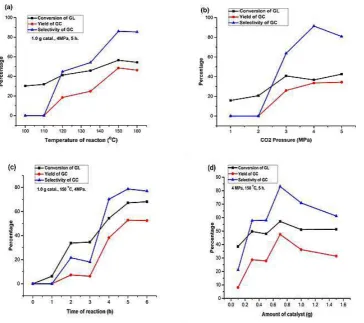
Fig. 3Effect of (a) reaction temperature, (b) pressure of CO2, (c) reaction time, and (d) weight of catalyst on
carbonylation of GL with CO2 over CuO-PT-400 catalyst (Reaction condition: 40 mmol GL, 0.7 g Catalyst (Cat/GL=19%), 5 g of 2-cyanopyridine, 15 g of DMF, 150 oC, 4 MPa CO2 and 5.0 h)
And from article J. Liu, et al. 2016 [25], the effect of reaction conditions over (CeO2 -PT-400) nanoparticle catalyst as reaction temperatures, CO2 pressure, time of reaction and amount of catalyst had investigated in this research [25] and all the results were shown in Fig.4 (a-d) and the optimal performances of reaction conditions had shown in Table.3.
0.7g of (CuO-PT-400) the yield of GL YGC/% = 47.5240 and the mass ratio CuO /GL =0.19, therefore the Optimal performance for (CuO-PT-400) was higher than for (CeO2-PT-400) in these conditions.
Fig. 4Effect of (a) reaction temperature, (b) CO2 pressure, (c) reaction time, (d) amount of catalyst on
carbonylation of glycerol with CO2over CeO2-PT-400 (Reaction condition: 10 mmol (0.91g) glycerol, 30 mmol
2-cyanopyridine, 0.34 g CeO2 for (a), (b) and (c), 10 mL DMF), results from J. Liu, et al. [25]
Table.3 The catalytic performances of the CeO2-PT-400 nanoparticle catalysts
in the carbonylation of GL with CO2 to produce GC a
the optimal performances of reaction conditions
Yield of GC (YGC/%)
T=170 oC ,Fig.4a 22.354
PCO2=5MPa ,Fig.4b 21.456
Time = 20h ,Fig.4c 35.076
mcata.=1.73g
(10 )mmol ,Fig.4d 78.234
mcata.=0.7g
(4.07mmol) ,Fig.4d 33.786
Table.4 the amount of CO2 adsorption and H2 consumption of CuO-PT-400 nanoparticle atalysts measured
respectively by CO2-TPD and H2-TPR
Cat. aCO2 adsorption amount (μmol/g) H2 consumption
(mmol/g)
<200 oC 200~380 oC >380 oC Total amount
CuO-PT-400 13.80(27.3%) 15.00(29.7%) 21.70(43.0%) 50.49 1.66
bCeO
2-PT-400 - - - 55.00 c 0.072
a. The number in bracket is the percentage of different strength basic sites on total CO
2 desorption amount.
b. The results of CeO
2-PT-400 were calculated from J. Liu, et al. 2016 [25].
c. 72 μmol/g from J. Liu, et al. 2016 [25].
3.3 Catalyst characterization. 3.3.1 XRD.
Fig.5, 6 shows the XRD patterns of (CuO, CeO2 and CeO2 from work of Ref. [25]) nanoparticles catalysts calcined at temperature (400 oC) for 4h. The samples present a typical band of CuO phase with monoclinic crystal system Ref. Code(00-048-1548) (at 2θ = 32.5, 35.5, 38.8, 46.2, 48.8, 51.4, 53.5, 58.3, 61.5, 66.3, 68.13, 72.5, 75.1, 80.1, 82.5, 83.1, 83.6, and see PDF-2….e2004-163835) also a typical band of CeO2 phase with monoclinic crystal system Ref. Code(00-044-1159) (at 2θ = 28.55º, 33.077º, 47.490º, 56.328º, 59.096º, 69.407º, 76.736º, 79.079 º, 88.451 º, 95.432 º, and see PDF-2….e2004-163835 ) In Fig. 5, it is also found the diffraction intensity of crystal face for CuO-PT-400 sample (-110, 002, 111, 200, -112, 020, 202, -113, 022, -311, 113, -220, 311, 004, -222, -204, -313, 222, 400, 402) and the diffraction intensity of crystal face for CuO-PT-400 sample (111, 200, 220, 311, 222, 400, 331, 420, 422) indicating the gradual bulk sintering and growth of crystallite size of CuO-PT-400. All the catalysts show clear and sharp peaks of CuO-PT-400 more than CeO2-PT-400 and the diffraction intensity of crystal face (111) in CuO-PT-400 and in CeO2-PT-400 were the greatest among all about (91-100)%. The width of the diffraction lines is produced using the smaller grains. The diffraction peaks of nanoparticles CeO2-PT-400 were broader, which indicates the presence of small particles in the former catalysts and show the particle size is fine, and all the Cu-based,
Ce-based metal oxides nanoparticles obtained by calcination at 400◦C for 5h. Exhibit the
nanoparticles catalyst may be have more active site for the carbonylation of GL with CO2. The predominantly exposed planes were the most stable (111) plane, whereas the CeO2 and CuO nanoparticles catalyst predominantly exposed the well-defined and less stable (200) and (220) planes. Since the energy required to create oxygen vacancies on the plane has strong relevance with their stabilities, the difference of exposed plane might have affection the catalytic performance of CuO-PT-400 and CeO2-PT-400 nanoparticles catalyst.
Fig.5 XRD patterns of the nanoparticle catalysts: (a)CeO2-PT-400, (b) CuO-PT-400.
3.3.2 CO2-TPD
The basicity of CuO nanoparticle catalysts is characterized by CO2-TPD and the profiles are shown in Fig. 7. In the TPD profiles of these samples, the peaks at the temperature range of 50~277 oC, 277~490 oC, and > 490 oC are attributed to desorption of CO2 from weak, medium, and strong basic sites, respectively. By integrating these peak areas shows that except the medium basic sites, the amounts of weak and strong basic sites increase with the increase of calcination temperature and the total amounts of the basic sites as well as. The results mean that the quantitative distribution of different strength basic sites and total amount of desorbed CO2 are dramatically influenced by the calcination temperature.
Fig.7. CO2-TPD profiles of CuO-PT-400 nanoparticles catalyst
Fig.8. (a) CO2-TPD profiles of CeO2-PT-400 nanoparticles catalyst only (a) from J. Liu, et al. 2016 [25]
By integrating these peak areas, the amounts of basic sites can be evaluated and the results are presented in Table 4.
In general, a more basicity is beneficial for the carbonylation of GL with CO2. Compared with CuO-PT-400 and CeO2-PT-400 has higher amount of basic sites, so it also has higher GC yield. It is also observed that among these samples, though CeO2-PT-400 has the highest basicity.
3.3.3 H2-TPR
The H2-TPR was used to determine the redox ability and oxygen vacancy density of
CuO-PT-400 nanoparticle catalysts in our present work compared with CeO2-PT-400 nanoparticle catalysts in the J. Liu, et al. 2016 [25]. The H2-TPR profiles of CuO and CeO2 are shown in Fig. 8 and Fig. 9; the data of H2 consumption at 400 oC are listed in the sixth column in Table 3. It is found that all of the samples have only one strong and sharp reduction peak, indicating that there may be a type of CuO and CeO2 species in these samples. Meanwhile, in these H2-TPR profiles, the temperature of H2 consumption maximum is different and it was 277 oC for CuO-PT-400. In these samples, CuO-PT-400 has the lowest reduction temperature, meaning this sample can be easily reduced.
reduction profiles: the low-temperature peak at about 540◦C and the high-temperature peak at about 890◦C. The peak below 600◦C is generally interpreted as the surface shell reduction, including the reduction of the surface Ce from Ce4+ to Ce3+ and the formation of bridging OH 1-groups, and the peak above 600◦C is corresponding to the bulk reduction [25].
Fig.9 H2-TPR profiles of the CuO-PT-400 nanoparticle catalysts calcined at temperature 400 oC, in our
work.
Fig.10 H2-TPR profiles of the CeO2-PT-400 nanoparticle catalysts only (a) calcined at temperature
400 oC, from the J. Liu, et al. 2016 results [25]
representative of oxygen vacancy density and decreases with the increase of the calcination temperature (see the sixth column in Table 3), suggesting that CuO-PT-400 may have the highest oxygen storage/release capacity and CeO2-PT-400 has the lowest. In the present work, we have found that the catalytic activity of CuO nanoparticle catalyst is connected to not only its amount of basic sites and surface area, but also the redox ability and oxygen vacancy density. CuO-PT-400 with the best redox ability and a higher oxygen vacancy gives the highest yield of GC. In contrast, CeO2-PT-400 produces the lowest GC yield by using the same amount of catalyst (0.7g) because of the least oxygen vacancy and the weakest redox ability. On the basis of these understanding, it is not unreasonable to predict that the best catalyst for the synthesis of GC from carbonylation of GL with CO2 should have not only high amount of basic sites and surface area, but also high redox ability and oxygen vacancy.
3.3.4 XPS
Fig.11. X-ray photoelectron spectroscopy (XPS) of (CuO –PT–400) nanoparticles catalyst Survey scan in the our work
In order to reveal the chemical state of cerium on the catalyst surface, the three as-prepared CeO2 samples were investigated by XPS. The XPS patterns of Ce (3d) and O (1s) region are illustrated in Fig. 12. From the J. Liu, et al. 2016 results [25]. The O (1s) spectra was composed of two overlapping peaks. The main peak with lower binding energy of 529.1eV roots in the lattice oxygen with Ce4+ ions [28]. The lower intense peak at 531.2 eV was assigned to different attributions: CO32− contamination [29], hydroxyl contamination [30], highly polarized oxygen around the defect site [31] and oxygen vacancies in metal oxides [28].
3.3.5 Nitrogen adsorption–desorption isotherms analysis (BET)
The catalysts showed large BET surface areas: 58.54 m2/g and 59.40 m2/g for nanoparticles catalyst, (CuO-PT-400) and (CeO2-PT-400), respectively, as listed in Table 5. Compared with the other two type of nanoparticles catalyst, (CuO-PT-400) and (CeO2-PT-400) and in the Jiaxiong Liu, et al. 2016 results [25] showed larger surface area and average pore diameter, which was in favor of the activation and diffusion of the reactants. Typically, metal oxide grains grew into nanoparticles catalyst, the dissolution and recrystallization at the crystal-solution interface under hydrothermal condition, which was beneficial of the homogenous morphology and crystallite size.
Table.5:
The BET surface area and pore diameter for the (CuO-PT-400) and
a.(CeO
2-PT-400)nanoparticles catalysts.
Cat. BET Surface Area (m2/g) Average pore diameter (nm)
CuO-PT-400 58.54 7.75
aCeO
2-PT-400 59.40 9.94
a.From the J. Liu, et al. 2016 results [25].
3.4 Stability of the CuO-PT-400 and CeO2-PT-400 nanoparticle catalyst.
Fig.13. The stability of CuO-PT-400 nanoparticle catalyst on the reaction of GL with CO2 (Reaction condition: 40
mmol GL, 37.7mmol % Cat./GL, 5 g of 2-pyridinecarbonitrate, 15g DMF, 150 oC, 4 MPa CO
2, 5 h).
Fig.15. FT-IR spectra of CuO nanoparticles catalysts: (a) the recovered CuO-PT-400 catalyst after the fifth recycling; (b) the recovered CuO-PT-400 catalyst regeneration by again calcination at 400 oC.
Meanwhile, the regenerated catalyst CuO-PT-400 was used to the reaction of GL and CO2
and also can produce GL conversion of 48.25% and GC yield of 38.10% (Fig. 13). It indicates that the recovered catalyst CuO-PT-400 can be easily regenerated by calcining at 400 oC after washing in methanol three times. Furthermore, the Cu concentration in the reaction mixture in the first run was also measured by inductively coupled plasma-mass spectrometry (ICP-MS) and the result only 45.12 μg/L, indicating that the leaching of CuO almost can be neglected.
In addition; the used CeO2-PT-400 catalysts in the J. Liu, et al. 2016 results [25], were
recovered, washed with ethanol or methanol and dried at 60◦C for 24 h, but they showed great
For the recycle use of CeO2, the regeneration of spent catalysts was performed by
calcination at 400oC for 5 h. The recyclability of CeO2 nanoparticles was verified as shown in
Fig.16. The yield of glycerol carbonate and 2-picolinamide over regenerated CeO2 stayed practically the same as that of the fresh one even after recirculation for five times[25]. ICP results confirmed that the leaching of CeO2 was below the detection limit, indicating that the microstructure of the catalyst was stable and the active sites were easily regenerated by a simple calcination procedure [25].
Fig.16 Recyclability of CeO2-PT-400 (Reaction condition: 10 mmol glycerol, 30 mmol 2-cyanopyridine, 0.34 g
CeO2 , 10 mL DMF, 150◦C, 4 MPa CO2, 5 h). From the J. Liu, et al. 2016 results [25]
3.5. Comparison the Optimal performance for both CuO and CeO2
Comparison the Catalyst characterizations as shown in table.5, it is very clear that the XRD and CO2-TPD Catalyst characterizations for both CuO-PT-400 and CeO2-PT-400 were most stable 111 face, high basic sites respectively, but the Catalyst characterizations H2-TPR and XPS for CuO-PT-400 were (high redox ability and high O2 vacancy) and (high polarized O2 with impurity C) respectively, and for CeO2-PT-400 were (low redox ability and low O2 vacancy) and (high polarized O2) respectively, also the BET Surface area (m2/g) for CuO-PT-400 was 58.54 m2/g, and for CeO2-PT-400 was 59.40 m2/g. Moreover the recyclability for CuO-PT-400 and CeO2-PT-400 were five times.
Through the above mentioned and according to our knowledge, the optimal performance of CuO-PT-400 and CeO2-PT-400 are both high and higher than metal oxide nanoparticles Catalyst else in the carbonylation the Glycerol with Carbon Dioxide to produce Glycerol carbonate, but when comparing the overall optimum performance of both CuO-PT-400 and CeO2-PT-400 (Table.6,7) were very close and when looking closely, the optimal performance of CuO-PT-400 is somewhat better than CeO2-PT-400 because the catalyst/GL was very suitable less than 20% but over CeO2-PT-400 good yield of GC with high amount of catalyst/GL was more than 188%.
Table.6
Comparison the Optimal performance for both CuO and CeO2 as a metal oxide nanoparticles Catalyst in the carbonylation the Glycerol with Carbon Dioxide to produce Glycerol carbonatea..
The optimal
performances properties CuO-PT-400 (this work) CeO2-PT-400 (this work) b.CeO2-PT-400 (ref.[25])
XGL/% 57.1507 57.1507 -
YGC/% 47.5240 47.5240 33.786, (78.234)c.
SGC/% 83.1556 83.1556 -
XRD Most stable 111 Most stable 111 Most stable 111
CO2-TPD High basic sites High basic sites High basic sites
H2-TPR High redox ability and O2
vacancy
High redox ability and O2
vacancy
low redox ability and O2vacancy
XPS High polarized O
2 High polarized O2 High polarized O2 with
impurity C
BET 58. 54 m2/g 58. 54 m2/g 59. 40 m2/g
Recyclability 5 times 5 times 5 times
a.Reaction condition: 40 mmol GL, 0.7 g Catalyst (cat/GL=19%), 5 g of 2-cyanopyridine, 15 g of DMF, 150 oC,
4MPa CO2 and 5.0 h.
b.from the J. Liu, et al. 2016 article results [25].
c.Over 1.73 g Catalyst (CeO
Table.7
Comparison the Optimal performance of mass for both CuO and CeO2 as a metal oxide nanoparticles Catalyst in the carbonylation the Glycerol with Carbon Dioxide to produce Glycerol carbonatea
The Mass of Catalyst (g)
YGC/% over
(CuO-PT-400) (this work)
YGC/% over
(CeO2-PT-400)
(this work)
YGC/% over
(CeO2-PT-400)b.
(ref.[25] work)
0.5 27.8 14.0 28.0
0.7 47.5(cat/GL=19%) 36.0(cat/GL=19%) 35.0(cat/GL=76%)
1.0 36.5 - 48.0
1.73 33.0(cat/GL=46.96%) - 78.0 (cat/GL=188%)
aReaction condition: 40 mmol GL (3.684g GL.), 5 g of 2-cyanopyridine, 15 g of DMF, 150 oC, 4MPa CO
2 and
5.0h.
bfrom the J. Liu, et al. 2016 article results for 0.921g GL [25].
4. Conclusion.
CuO and CeO2 nanoparticle were synthesized by precipitation method (PT). It showed the best two and excellent catalytic optimal performance among nanoparticles metal oxide catalyst in the carbonylation of glycerol and CO2 with 2-cyanopyridine as a dehydrating agent. The active site of CuO-PT-400 and CeO2-PT-400 catalysts may be crystal face (111). The incredibly yield of glycerol carbonate GC (can reach about 33-47%) had strong relevance with the efficient hydration of 2-pyridinecarbonitrate (2-cyanopyridine) and solvent effect of DMF and (400) oC
was a good calcination temperature for 5h. The proper reaction conditions were (5.0-7.0) g 2-pyridinecarbonitrate (about 3 times of stoichiometric value), 150 ◦C, 4 MPa and 5 h. The
active site of the CuO catalyst is all CuO surface also the CeO2 catalyst is all CeO2 surface. The catalyst not only has higher surface area, but also higher mechanical strength, and is suitable for the industrial reactor. The stability research for CuO and CeO2 nanoparticle shows that the catalyst can be reused five times with little loss of activity and can be easily regenerated by calcination at 400 oC after washing in methanol or ethanol three times. In our future work, the suitable support for this catalyst and mixed this catalyst with another suitable nanoparticles metal oxide catalyst will be investigated and reported in due course and when Comparison the Optimal performance for CuO, CeO2 in this our work and CeO2 from J. Liu, et al. 2016 [25] article work found the Optimal performance were very close in low mass of catalyst less than 1g and the
Optimal performance of CuO-PT-400 more than CeO2-PT-400 but at high mass of catalyst more
amount of catalyst as the mass ratio CeO2 /GL =1.88 ( cat./GL=188%) this very high, in our work the amount of catalyst as the mass ratio CuO /GL = 0.19 ( cat./GL=19%) (Table 6, 7).
Economically and industrially: in our work and comparison with results of ref. [25], the
optimal performance of CuO-PT-400 more than CeO2-PT-400 because the CuO-PT-400 was an
economic, efficient and new catalyst for synthesis of glycerol carbonate from glycerol and Carbon Dioxide.
Author Contributions: Formal analysis, Jassim Mohamed Hamed AL-Kurdhani; Funding acquisition, Jassim Mohamed Hamed Kurdhani; Investigation, Jassim Mohamed Hamed AL-Kurdhani; Project administration, Huajun Wang; Resources, Taha Seham Ismail; Software, Jassim Mohamed Hamed AL-Kurdhani; Supervision, Huajun Wang; Writing – original draft, Taha Seham Ismail; Writing – review & editing, Jassim Mohamed Hamed AL-Kurdhani.
Acknowledgements
We acknowledge the financial support by the National Natural Science Foundation of China (21106050), the Specialized Research Foundation for the Doctoral Program of Ministry of Education of China (20100142120066), and the Fundamental Research Funds for the Central Universities of China (2011QN117) for laboratory work at the School of Chemistry and Chemical Engineering and for testing and analysis of materials. XRD and SEM analysis was performed in the Analytical and Testing Center, and FT-IR analysis was performed in the Experimental Teaching Center of chemistry and Chemical Engineering, School of Chemistry and Chemical Engineering, Huazhong University of Science and Technology. Also we acknowledge the financial support by Industrial research and development directory - Ministry of sciences and technology, Baghdad - Iraq. The content is solely the responsibility of the authors and does not necessarily represent the official views of these official institutions
Conflicts of Interest: The authors declare no conflicts of interest.
References
[1] P. Okoye, B. Hameed, Review on recent progress in catalytic carboxylation and acetylation of glycerol as a byproduct of biodiesel production, Renewable and Sustainable Energy Reviews, 53 (2016) 558-574.
[3] A.P. Vyas, N. Subrahmanyam, P.A. Patel, Production of biodiesel through transesterification of Jatropha oil using KNO3/Al2O3 solid catalyst, 88 (2009) 625-628.
[4] G. Baskar, I.A.E. Selvakumari, R. Aiswarya, Biodiesel production from castor oil using heterogeneous
Ni doped ZnO nanocatalyst, Bioresource technology, 250 (2018) 793-798.
[5] F. Moghzi, J. Soleimannejad, Sonochemical synthesis of a new nano-sized barium coordination
polymer and its application as a heterogeneous catalyst towards sono-synthesis of biodiesel, Ultrasonics sonochemistry, 42 (2018) 193-200.
[6] J.R. Ochoa-Gómez, O. Gómez-Jiménez-Aberasturi, B. Maestro-Madurga, A. Pesquera-Rodríguez, C. Ramírez-López, L. Lorenzo-Ibarreta, J. Torrecilla-Soria, M.C. Villarán-Velasco, Synthesis of glycerol carbonate from glycerol and dimethyl carbonate by transesterification: Catalyst screening and reaction optimization, Applied Catalysis A: General, 366 (2009) 315-324.
[7] P. Lu, H. Wang, K. Hu, Synthesis of glycerol carbonate from glycerol and dimethyl carbonate over
the extruded CaO-based catalyst, Chemical engineering journal, 228 (2013) 147-154.
[8] K. Hu, H. Wang, Y. Liu, C. Yang, KNO3/CaO as cost-effective heterogeneous catalyst for the synthesis
of glycerol carbonate from glycerol and dimethyl carbonate, Journal of Industrial and Engineering Chemistry, 28 (2015) 334-343.
[9] C. Vieville, J. Yoo, S. Pelet, Z. Mouloungui, Synthesis of glycerol carbonate by direct carbonatation of
glycerol in supercritical CO 2 in the presence of zeolites and ion exchange resins, Catalysis Letters, 56 (1998) 245-247.
[10] M. Aresta, A. Dibenedetto, F. Nocito, C. Pastore, A study on the carboxylation of glycerol to glycerol
carbonate with carbon dioxide: the role of the catalyst, solvent and reaction conditions, Journal of Molecular Catalysis A: Chemical, 257 (2006) 149-153.
[11] R.P. Leonardo P. Ozorioa, Luciana da Cruz Machadoa, Jussara L. Mirandab, Cássia C. Turcib, Antônio C.O. Guerrab, E. Falabella Souza-Aguiara, c, Claudio J.A. Mota, , Metal-impregnated zeolite Y as efficient catalyst for the direct carbonation of glycerol with CO2”, Appl. Catalyst., A-Gen. , Volume
504 (5 September 2015) Pages 187–191.Pages 187-191.
[12] J. Li, T. Wang, Chemical equilibrium of glycerol carbonate synthesis from glycerol, The Journal of Chemical Thermodynamics, 43 (2011) 731-736.
[13] S. Paulose, R. Raghavan, B.K. George, Copper oxide alumina composite via template assisted sol–gel
method for ammonium perchlorate decomposition, Journal of industrial and engineering chemistry, 53 (2017) 155-163.
[14] J. George, Y. Patel, S.M. Pillai, P. Munshi, Methanol assisted selective formation of 1, 2-glycerol carbonate from glycerol and carbon dioxide using nBu2SnO as a catalyst, Journal of Molecular Catalysis A: Chemical, 304 (2009) 1-7.
[15] S.C. Kim, Y.H. Kim, H. Lee, B.K. Song, Lipase-catalyzed synthesis of glycerol carbonate from renewable glycerol and dimethyl carbonate through transesterification, Journal of Molecular Catalysis B: Enzymatic, 49 (2007) 75-78.
[16] J.R. Ochoa-Gómez, O. Gómez-Jiménez-Aberasturi, C. Ramírez-López, M. Belsué, A brief review on
industrial alternatives for the manufacturing of glycerol carbonate, a green chemical, Organic Process Research & Development, 16 (2012) 389-399.
[17] Q.X.L. M.M. Du, W.T. Dong, T. Geng, Y.J. Jiang, , Synthesis of glycerol carbonate from glycerol and
dimethyl carbonate catalyzed by K2CO3/MgO, Res. Chem. In termed, 38 (2012) 1069–1077.
[18] F.S.H. Simanjuntak, T.K. Kim, S.D. Lee, B.S. Ahn, H.S. Kim, H. Lee, CaO-catalyzed synthesis of glycerol
carbonate from glycerol and dimethyl carbonate: Isolation and characterization of an active Ca species, Applied Catalysis A: General, 401 (2011) 220-225.
[20] S. Sato, F. Sato, H. Gotoh, Y. Yamada, Selective dehydration of alkanediols into unsaturated alcohols over rare earth oxide catalysts, ACS Catalysis, 3 (2013) 721-734.
[21] Y. Sakata, V. Ponec, Reduction of benzoic acid on CeO2 and, the effect of additives, Applied Catalysis A: General, 166 (1998) 173-184.
[22] H. Gotoh, Y. Yamada, S. Sato, Dehydration of 1, 3-butanediol over rare earth oxides, Applied Catalysis A: General, 377 (2010) 92-98.
[23] M. Kobune, S. Sato, R. Takahashi, Surface-structure sensitivity of CeO2 for several catalytic reactions, Journal of Molecular Catalysis A: Chemical, 279 (2008) 10-19.
[24] M. Honda, M. Tamura, K. Nakao, K. Suzuki, Y. Nakagawa, K. Tomishige, Direct cyclic carbonate synthesis from CO2 and diol over carboxylation/hydration cascade catalyst of CeO2 with 2-cyanopyridine, ACS Catalysis, 4 (2014) 1893-1896.
[25] J. Liu, Y. Li, J. Zhang, D. He, Glycerol carbonylation with CO2 to glycerol carbonate over CeO2 catalyst and the influence of CeO2 preparation methods and reaction parameters, Applied Catalysis A: General, 513 (2016) 9-18.
[26] K. Phiwdang, S. Suphankij, W. Mekprasart, W. Pecharapa, Synthesis of CuO nanoparticles by
precipitation method using different precursors, Energy Procedia, 34 (2013) 740-745.
[27] J. Xu, W. Ji, Z. Shen, S. Tang, X. Ye, D. Jia, X. Xin, Preparation and characterization of CuO nanocrystals, Journal of Solid State Chemistry, 147 (1999) 516-519.
[28] V. Grover, R. Shukla, R. Kumari, B. Mandal, P. Kulriya, S. Srivastava, S. Ghosh, A. Tyagi, D. Avasthi,
Effect of grain size and microstructure on radiation stability of CeO2: an extensive study, Physical Chemistry Chemical Physics, 16 (2014) 27065-27073.
[29] D. Xue-yan, L. Wen-chao, L. Zhen-xiang, X. Kan, X-ray photoelectron spectrascopy investigation of
ceria doped with lanthanum oxide, Chinese physics letters, 16 (1999) 376.
[30] A. Pfau, K. Schierbaum, The electronic structure of stoichiometric and reduced CeO2 surfaces: an
XPS, UPS and HREELS study, Surface Science, 321 (1994) 71-80.
[31] M. Škoda, M. Cabala, I. Matolínová, T. Skála, K. Veltruská, V. Matolín, A photoemission study of the