Article
1
On the mechanism of magnesium storage in micro- and
2
nano-particulate tin battery electrodes
3
Francisco Nacimiento, Marta Cabello, Carlos Pérez-Vicente, Ricardo Alcántara, Pedro Lavela,
4
Gregorio F. Ortiz* and José L. Tirado
5
1 Departamento de Química Inorgánica e Ingeniería Química, Instituto Universitario de Investigación en
6
Química Fina y Nanoquímica IUIQFN, Universidad de Córdoba, Campus de Rabanales, Edificio Marie
7
Curie, E-14071 Córdoba, Spain
8
* Correspondence: [email protected]; Tel.: +34-957-218637
9
10
Abstract: A study is reported on the electrochemical alloying-dealloying properties of Mg2Sn
11
intermetallic compounds. 119Sn Mössbauer spectra of β-Sn powder, thermally alloyed cubic-Mg2Sn
12
and an intermediate MgSn nominal composition are used as references. The discharge of a
13
Mg/micro-Sn half-cell led to significant changes in spectra line shape that are explained by a
14
multiphase mechanism involving the coexistence of c-Mg2Sn, distorted Mg2-δSn and Mg-doped
15
β-Sn. Capacities and capacity retention were improved by using nanoparticulate tin electrodes.
16
This material reduces significantly the diffusion lengths for magnesium and contains surface SnO
17
and SnO2, which are partially electroactive. The half-cell potentials were suitable to be combined
18
versus MgMn2O4 cathodes. Energy density and cycling properties of the resulting full Mg-ion cells
19
are also scrutinized.
20
Keywords: Electrode nanomaterials; magnesium-tin intermetallics; magnesium-ion batteries;
21
Sn-119 Mössbauer spectroscopy
22
23
1. Introduction
24
Recent concerns regarding future lithium availability [1-4], together with safety issues [5]
25
affecting Li-ion batteries have prompted an expanding research activity on alternatives to
26
lithiumDue to its high abundance, easy extraction and moderate cost, magnesium is one of the
27
multivalent elements that show promising possibilities [6-13]. Despite its lower potential as
28
compared with lithium, Mg electrodes provide higher volumetric capacity and shows a better
29
reconstruction of its surface on cycling, being less prone to form dendrites on electroplating. Mg2+
30
ions have a similar radius to the Li+ ones, which avoids pronounced volume changes on cycling.
31
However, there is a major difficulty in obtaining reliable Mg-anode batteries, related with the
32
stability of electrolyte solutions [12,13]. Thus, electrolytes commonly stable versus Mg are mostly
33
unstable versus common cathodes found so far and vice versa. For this reason, the research for
34
alternative anodes and hence the concept of Mg-ion batteries is also valid for this alkali-earth
35
element. Recently, the chemical and electrochemical Mg deinsertion from MgMn2O4, leading to
36
Mg1-xMn2O4 or λ-MnO2 have been reported using both aqueous and non-aqueous electrolytes
37
[14-16]. While examining the possible use of several materials as anodes to be combined vs.
38
MgMn2O4 as positive electrode, the most successful results were found for tin, a material previously
39
reported to have reversible electrochemical alloying reactions with Mg [17]. On the other hand,
40
Mössbauer spectroscopy (MS) is a uniquely selective technique to study changes in oxidation state
41
and chemical environment of tin. When tin oxides and intermetallic compounds are used as active
42
electrode material in lithium batteries, 119Sn MS provides valuable information [18-22]. Particularly,
43
Aldon et al. found 119Sn MS useful to study lithium insertion in c-Mg2Sn [21].
44
A 119Sn Mössbauer study is reported here for Sn powdered electrodes in Mg test cells, to unveil
45
the details of the complex mechanism of the electrochemical reaction, which involves a tin-rich
46
intermetallic phase with electrical gradient environment of tin atoms and cubic Mg2Sn. On the other
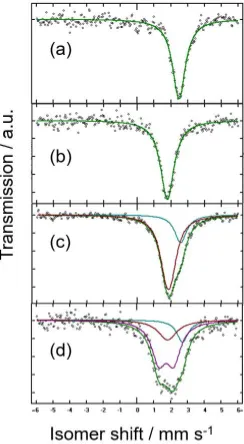
47
hand, due to the increasing interest in nanomaterials for battery applications [23-24], the
48
optimization of the electrode was carried out by using a nano-dispersed Sn-SnOx composite powder
49
which provides a unique surface electroactive coating of tin oxides that allows better cycling
50
stabilities. Finally, the nano-tin electrodes are combined with a low temperature MgMn2O4 material
51
recently reported by our research group to obtain a novel suitable Mg-ion battery.
52
2. Materials and Methods
53
Commercial magnesium strip and micro- and nano-Sn (Aldrich) powders were used as
54
received. Thermally prepared Mg-Sn intermetallic samples included stoichiometric crystalline
55
Mg2Sn and a sample with MgSn nominal stoichiometry. Both thermal samples were obtained from
56
mechanical mixtures of Mg and micro-Sn, which were heated at 700 ºC for 1 h and then cooled to
57
room temperature at 4ºC min-1 in a N2 atmosphere. The low-temperature spinel (LT)-MgMn2O4 was
58
prepared as described elsewhere [16], following the Pechini method. The dry powdered precursor
59
was first heated at 200ºC, ground in an agate mortar and then heated at 400°C for ten hours.
60
The electrochemical experiments were performed in a multichannel VMP instrument.
61
Swagelok-type cells were mounted in an M-Braun glove-box filled with Ar. Tin powders and
62
magnesium strip were used as received. The working electrodes were a mixture of active
63
material:carbon black: polyvinylidene difluoride (PVDF) binder in a 80:10:10 ratio supported on Ti
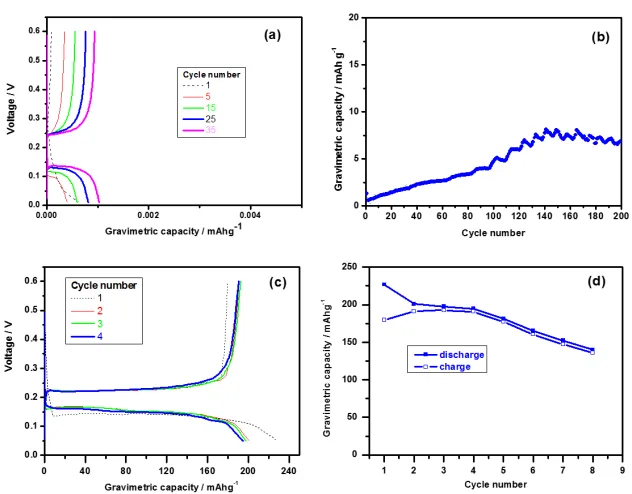
64
substrate. The carbon black additive was supplied by SAFT. The electrode mass load was 3.0-5.0 mg
65
cm-2. Several non-aqueous electrolyte solutions were tested, including 0.5 M PhMgCl in
66
tetrahydrofuran (THF) or 0.5 M EtMgCl in THF for Mg/Sn half cells, and 0.5 M Mg(N(SO2CF3)2)2 in
67
dimethoxyethane (DME) or 0.5 M Mg(ClO4)2 in acetonitrile (AN). Mg-ion full cells were tested in
68
SwagelokTM-type three-electrode cells to monitor separately cathode and anode voltages versus a
69
reference electrode consisting of a metallic Mg disk.
70
X-ray diffraction (XRD) measurements were carried out in a Bruker D8-Advance instrument
71
with CuKα1 radiation. Ex-situ XRD patterns of discharged electrodes were recorded by dismantling
72
the electrochemical cells in the dry box under Ar atmosphere and, after recovering the electrodes
73
and separating them from the Ti collector, covering them with Kapton bag to avoid contact with air.
74
The 119Sn Mössbauer spectra (MS) were recorded in a Wissel instrument at room temperature.
75
The spectra were recorded with adequate acquisition time to permit a deconvolution, typically ten
76
days. The 119Sn isomer shifts are referenced to BaSnO3. A pure β-Sn foil was used for the calibration.
77
For the fitting of the experimental spectra, the WINSO1.0 program, Lorentzian line-shape absorption
78
peaks and a least-squares method were employed. When the fitting process reached the
79
convergence, the quality of the fitting was controlled by the classical χ2- test. The Mössbauer spectra
80
of discharged electrodes were recorded ex-situ by putting the active material under Ar atmosphere
81
in polybags (Aldrich), which were hermetically closed by heat-sealing with a commercial heat sealer
82
at 150ºC.
83
Field-Emission Scanning Electron Microscope (FESEM) images were obtained in JEOL FESEM
84
1400 provided with Energy-dispersive X-ray spectroscopy (EDX).
85
3. Results
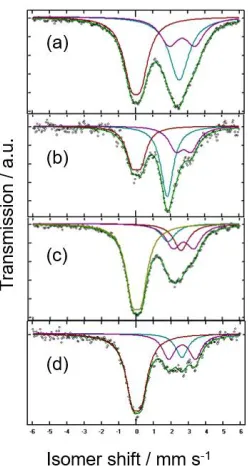
86
Figure 1 shows the X-ray diffraction patterns of thermally prepared, crystalline cubic c-Mg2Sn
87
phase with a fluorite-type structure. To compare with the electrochemically prepared products with
88
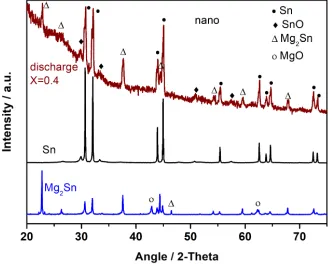
intermediate composition, a sample with MgSn nominal stoichiometry was also prepared by
89
thermal treatment at 700ºC. For thermal-MgSn, crystalline β-Sn and c-Mg2Sn are clearly detected.
90
Traces of MgO impurities were also visible.
91
Figure 2(a) shows the 119Sn MS data for the commercial tin microparticles. The observed isomer
92
shift (IS) value of 2.5619 mm s-1 (Table 1) and its negligible quadrupolar splitting are consistent with a
93
high-purity and well crystallized β-Sn phase.
95
Figure 1. Powder X-ray diffraction patterns of the thermally prepared samples with Mg2Sn and
96
MgSn nominal compositions.
97
98
Figure 2. 119Sn Mössbauer spectra of (a) tin microparticles, and thermally prepared samples with (b)
99
Mg2Sn and (c) MgSn nominal compositions. (d) micro-Sn electrode after discharge in Mg half-cell to
100
a Mg0.4Sn nominal composition.
101
Figure 2(b) shows the spectrum of the crystalline Mg2Sn alloy. The IS value of 1.8479 mm s-1
102
is ascribable to cubic c-Mg2Sn [21,25]. In agreement with the well-known fluorite-type
103
structure of c-Mg2Sn, tin atoms are eight-fold coordinated by magnesium and twelve-fold
104
coordinated by tin second neighbors, which is in contrast with the use of less and more
105
directional covalent bonds in β-Sn and agrees with the significantly lower isomer shift
106
relative to β-Sn (Fig 2(a)). Again, the highly symmetric coordination of tin atoms in the
107
structure impedes a quadrupole splitting of the signal (Table 1). The spectrum of
108
thermal-MgSn shows two deconvoluted contributions close to c-Mg2Sn and β-Sn-related
109
phases (Figure 2(c)). However, this spectrum reveals unexpected results. Thus, the singlets
110
ascribable to crystalline β-Sn and c-Mg2Sn were not sufficient to fit the spectrum. A
111
significant quadrupole splitting (0.304 mm s-1) of the low IS signal was also present (Table
112
1). This doublet is indicative of the presence of tin nuclei in a low symmetry environment
113
of Sn atoms. It is probably due to incomplete coordination by Mg atoms, in a metastable,
non-stoichiometric and distorted d-MgδSn phase, which is not discerned form the
115
crystalline products in the XRD patterns. This result is consistent with the report by Sirkin
116
et al. [26] on quenched ternary Sn-Mg-M alloys, and latter corroborated by theoretical
117
calculations by Fries and Lukas [25].
118
Table 1. Isomer shift (IS), quadrupolar splitting (QS), line width (LW), % contribution and attribution
119
of the signals appearing in the 119Sn Mössbauer spectra of commercial micro- and nano-Sn,
120
mechanochemically produced Mg2Sn. and discharged/recharged electrodes. *Recoilless fractions, f =
121
0.05 (Sn) [28,29], 0.3 (c-Mg2Sn) [27] and 0.15 (Mg2-δSn; ca. half of the reported value [27], due to the
122
possible tin excess). These values were used to convert spectral contributions (%) into
123
semiquantitative composition (%corr).
124
Sample (nominal) IS/mms-1 QS/mms-1 LW/mms-1 % %corr* attribution
(a) micro-Sn 2.5619 - 0.953 100 100 β-Sn
(b) thermal-Mg2Sn 1.8479 - 0.993 100 100 c-Mg2Sn
(c) thermal-MgSn 2.643 - 0.877 24 49 β-Sn
1.913 0.304 0.964 76 51 Mg2-δSn
(d) micro-Mg0.4Sn 2.798 - 1.831 15 38 β-Sn
discharged 1.82 - 1.45 21 9 c-Mg2Sn
1.795 0.9082 1.0512 64 53 Mg2-δSn
125
Figures 3 (a) and (b) show the cycling properties of the Mg / 0.5 M PhMgCl (THF) / micro-Sn
126
cell. Extremely low capacity values were obtained in the 0.01-0.6 V potential window, although the
127
capacity increases upon cycling, probably indicating the progressive conditioning of the metal
128
electrode surface. According to the Gibbs phase rule, the presence of well-defined plateaus in both
129
discharge and charge should be consistent with a biphasic mechanism of the alloying-dealloying
130
reaction:
131
132
β-Sn + 2Mg2+ + 4e−⇌ c-Mg2Sn (1)
133
134
135
136
Figure 3. (a) Galvanostatic charge-discharge plots and (b) cycling performance at at 10 mA/g (C/20)
137
current density of microparticulate β-Sn in Mg half-cell, using 0.5 M PhMgCl in THF as electrolyte.
138
(c) Galvanostatic charge-discharge plots and (d) cycling performance at 10 mA/g (C/20) of
139
The average discharge and charge voltages are 0.1 V and 0.25 V, respectively. The limited cell
141
polarization and low charge potential suggest that a Sn / 0.5 M PhMgCl (THF) / MgMn2O4 full cell
142
(ca. 2.0 V) would provide a suitable energy density.
143
144
Figure 4. 119Sn Mössbauer spectra of (a) Commercial nano-Sn, and (b) discharged nano-Sn electrodes
145
in Mg half-cell to a Mg1.3Sn nominal composition. (c) discharged-charged nano-Sn electrodes in Mg
146
half-cell to a Mg0.4Sn nominal composition. (d) discharged-fully charged nano-Sn electrodes in Mg
147
half-cell.
148
Table 2. Isomer shift (IS), quadrupolar splitting (QS), line width (LW), % contribution and attribution
149
of the signals appearing in the 119Sn Mössbauer spectra of commercial micro- and nano-Sn,
150
mechanochemically produced Mg2Sn. and discharged/recharged electrodes. *Recoilless fractions, f =
151
0.05 (Sn and d-MgδSn), 0.35 (SnO), 0.60 (SnO2) [27,28], and 0.3 (c-Mg2Sn) [26]. These values were used
152
to convert spectral contributions (%) into semiquantitative composition (%corr).
153
Sample (nominal) IS/mms-1 QS/mms-1 LW/mms-1 % %corr* attribution
(a) nano-Sn 2.5798 - 1.419 33 76 β-Sn
2.753 1.525 1.122 25 2 SnO
0.0267 1.581 1.165 42 13 SnO2
(b) nano-Mg1.3Sn 1.871 - 0.884 40 50 c-Mg2Sn
discharged 2.856 0.906 1.01 27 29 SnO
0.052 0.533 0.836 33 21 SnO2
(c) thermal-MgSn 2.672 - 1.043 14 60 d-MgδSn
discharged+charged 1.903 - 1.044 9 7 c-Mg2Sn
2.812 1.223 1.041 23 14 SnO
0.051 0.551 0.942 54 19 SnO2
(d) micro-Mg0.4Sn 2.708 - 0.874 15 60 d-MgδSn
discharged+fully 2.712 1.573 0.877 26 17 SnO
charged 0.051 0.542 0.963 61 23 SnO2
154
The reaction mechanism of the micro-Sn electrodes was explored by using 119Sn MS. Figure 2(d)
155
shows the results for a discharged electrode prepared by applying multiple galvanostatic pulses
156
followed by relaxation periods to a Mg/micro-Sn half-cell until a stable nominal Mg0.4Sn
157
stoichiometry was achieved. The spectrum shows significant changes in line shape as referred to the
158
pristine tin microparticles (see Figure 2(a)) that agree with tin electroactivity. The IS parameters
159
shown in Table 1 evidence the simultaneous presence of a Mg-deficient, distorted MgSn phase, a
β-Sn-related phase with possible Mg doping and c-Mg2Sn, which partially agrees with the biphasic
161
mechanism above suggested. The low proportion of c-Mg2Sn is indicative of impediments to the full
162
conversion of the tin microparticles, probably due to an incomplete diffusion of magnesium through
163
the large tin particles. Moreover, the high broadening and significant quadrupole splitting of the
164
d-MgδSn signal may point out to a structural deterioration and/or partial Mg alloying in a metastable
165
phase yielding many different local environments of the tin atoms. It is well known that
166
electrochemical reactions may lead to metastable products, thus being one of the most useful
167
soft-chemistry synthetic routes in the solid state [18-22].
168
To improve the electrochemical performance, a nanodispersed commercial sample (nano-Sn)
169
was also essayed. 119Sn MS data were also recorded. This spectrum was deconvoluted in several
170
components attributed to β-Sn, a quadrupole split signal of SnO (IS = 2.65 mm s-1) and SnO2 with a
171
cassiterite structure with IS ca. 0.0 mm s-1 (Figure 4(a) and Table 2) [28]. The high intensity of the
172
signals attributed to tin oxides, as compared with that of metallic tin is a consequence of the
173
significantly lower f value for the latter. The necessary corrections lead to an atomic percentage of 76
174
% β-Sn. The XRD pattern shows reflections of β-Sn and some additional low intensity lines which
175
could be ascribable to SnO (Figure 5) that support this conclusion. The presence of the oxides may
176
involve surface oxidation of tin nanoparticles. This process is particularly visible in nanoparticulate
177
materials due to their high surface-to-volume ratio. However, its presence could provide passivation
178
of the electrode material that could prevent undesirable surface reactions with the electrolyte during
179
the cycling or contribute to the total capacity if the oxides are electroactive. Figure 6 shows the
180
FESEM images of micro and nano-Sn. In contrast to the ca. 100 μm particles of crystalline tin,
181
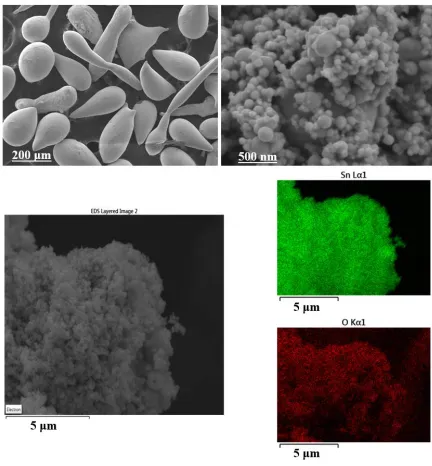
nano-Sn shows particle around 100 nm. Also, the EDX spectra showed an average Sn/O atomic ratio
182
of 1.16, and the composition mapping showed a uniform distribution of oxygen in the surface of the
183
particles. With this in mind, we decided to use the nano-Sn sample without further chemical
184
treatments for the electrochemical experiments.
185
186
Figure 5. Powder X-ray diffraction pattern of commercial nano-Sn, and discharged nano-Sn electrode in Mg
187
half-cell at MgxSn nominal compositions with x = 0.4 and x = 2.0.
188
Figures 3 (c) and (d) show the galvanostatic cycling experiments of Mg/nano-Sn half-cells. The
189
initial capacity is higher and cell polarization is lower than that of micro-Sn cell, preserving
190
well-defined plateaus. Moreover, cycling stability is also considerably better than that of micro-Sn,
191
doing of nanodispersion a suitable strategy to improve the electrode performance.
192
Figure 4(b) shows 119Sn MS data for nano-Sn electrodes after discharge to a nominal Mg1.3Sn
193
composition. The fitting parameters in Table 2 reveal the expected formation of c-Mg2Sn but also that
194
those tin oxides initially present in the samples are still present, thus offering a sufficient coating of
195
the tin nanoparticles to be preserved during the alloying-dealloying processes and stabilized the
196
electrode structure upon cycling. The XRD pattern for x = 0.4 in Figure 5 is also in agreement with
197
the MS data. The good reversibility of the process is exemplified by the 119Sn MS data for nano-Sn
198
electrodes after recharge to a nominal Mg0.4Sn composition (Figs. 4 (c, d) and Table 2). Although the
199
oxide lines were always present, it can be highlighted that the initial SnO2/SnO ratio in nano-Sn
200
decreases during the discharge and increases again during charge. The SnO2/SnO pair can be then
considered electroactive, as shown in other systems [28]. Not only prevents undesirable surface
202
reactions but also contributes to the overall capacity.
203
204
Figure 6. Upper: FESEM images of micro and nano-Sn. Lower: EDX composition mapping of nano-Sn.
205
A better perspective of the possible use of these materials as anodes in Mg-ion batteries, can be
206
given by essaying their electrochemical behavior in full cells. For this purpose, the cycling properties
207
of the nano-Sn/MgMn2O4 full cells were tested for different electrolyte solutions. The expected
208
overall reaction can be written as:
209
210
2 MgMn2O4 + x nano-Sn ⇌ 2 Mg1-xMn2O4 + x Mg2Sn (2)
211
212
213
Figure 7. Galvanostatic charge-discharge plot at 20 mA g-1 of a nano-Sn/MgMn2O4 full cell, using 0.5
214
M Mg(ClO4)2 in AN electrolyte and m+/m- = 4:1. Inset: Capacity vs. cycle number.
215
Due to the incompatibility of the organometallic electrolytes versus MgMn2O4 [16], and
216
perchlorate electrolytes in acetonitrile versus Mg metal, the changes in cell voltage were monitored
217
by using two electrode cells and Mg(ClO4)2 in AN as the electrolyte. Several mass ratios m+/m- were
218
examined. Figure 7 shows the best response observed that corresponds to a spinel mass excess
219
(m+/m- = 4.0) that could provide enough magnesium extraction from the cathode during charge to
220
complete eq. (2) in the anode, even assuming that x=1.0. The capacities were thus calculated by using
the anode mass. The full Mg-ion cell showed the typical S-shaped voltage profile with an average
222
discharge potential close to 0.8 V and moderate polarization and an increasing discharge capacity up
223
to ca. 150 mA h g-1 (Figure 7). This trend is related with the conditioning behavior of the anode that
224
was discussed in the light of Figure 3. An energy density of up to ca. 120 W h kg-1 can be estimated.
225
5. Conclusions
226
The alternative intermetallic anode Mg2Sn/Sn for Mg-ion batteries is evaluated in Mg half cells
227
with the valuable help of 119Sn Mössbauer spectroscopy. This technique suggests the electrochemical
228
alloying-dealloying properties by a complex mechanism involving amorphous intermetallic phases
229
with an electrical gradient in the environment of tin atoms. Nanoparticulate tin was also examined.
230
Tin nanoparticles are surrounded by a SnO/SnO2 film due to surface oxidation and are partially
231
reduced during cycling. Their lower diffusion lengths for magnesium improve the performance as
232
compared to tin microparticles. The spinel-related solid, MgMn2O4, which is known to deintercalate
233
magnesium by chemical and electrochemical means in both aqueous and non-aqueous electrolytes,
234
was found to be compatible with Mg2Sn anodes. Cycling properties of the full Mg-ion cells provided
235
voltages around 0.8 V. Capacity values and their retention during cycling were good for the
236
Mg(ClO4)2 - AN electrolyte. In this case, a reversible discharge capacity of ca. 25 mA h g-1 and
237
maximum energy density of ca. 120 W h kg-1 were observed.
238
Author Contributions: All authors contributed substantially to the work reported. Formal analysis, Francisco
239
Nacimiento, Marta Cabello and Ricardo Alcántara; Investigation, Francisco Nacimiento, Marta Cabello, Carlos
240
Pérez-Vicente, Pedro Lavela and Gregorio F. Ortiz; Project administration, Gregorio F. Ortiz and José L. Tirado;
241
Software, Carlos Pérez-Vicente; Supervision, Pedro Lavela; Writing – original draft, Ricardo Alcántara,
242
Gregorio F. Ortiz and José L. Tirado; Writing – review & editing, Pedro Lavela, Gregorio F. Ortiz and José L.
243
Tirado.
244
Funding: The authors are grateful to Ministerio de Ciencia e Innovación (MICINN) (MAT2014–56470-R, and
245
MAT2017-84002-C2-1-R), ERDF funds and Junta de Andalucía for financial support (group FQM288).
246
Acknowledgments: We also thank the Fine Chemistry Institute (IUIQFN).
247
Conflicts of Interest: The authors declare no conflict of interest. The funders had no role in the design of the
248
study; in the collection, analyses, or interpretation of data; in the writing of the manuscript, and in the decision
249
to publish the results.
250
References
251
1. Gerst, M.D.; Graedel, T.E. In-Use Stocks of Metals: Status and Implications. Environ. Sci. Technol. 2008, 42,
252
7038–7044.
253
2. Tarascon, J.M. Is lithium the new gold? Nat. Chem. 2010, 2, 510.
254
3. Wadia, C.; Albertus, P.; Srinivasan, V. Resource constraints on the battery energy storage potential for grid
255
and transportation applications. J. Power Sources 2011, 196, 1593 –1598.
256
4. Speirs, J.; Contestabile, M.; Houari, Y.; Gross, R. The future of lithium availability for electric vehicle
257
batteries. Renew. Sust. Energ. Rev. 2014, 35, 183-93.
258
5. Lyon, R.E.; Walters, R.N. Energetics of lithium ion battery failure. J. Hazard. Mater. 2016, 318, 164-172.
259
6. Novák, P.; Imhof, R.; Haas, O. Magnesium insertion electrodes for rechargeable nonaqueous batteries - a
260
competitive alternative to lithium? Electrochim. Acta 1999, 45, 351–367.
261
7. Aurbach, D.; Lu, Z.; Schechter, A.; Gofer, Y.; Gizbar, H.; Turgeman, R.; Cohen, Y.; Moshkovich, M.; Levi, E.
262
Prototype systems for rechargeable magnesium batteries. Nature 2000, 407, 724-727.
263
8. Saha, P.; Datta, M.K.; Velikokhatnyi, O.I.; Manivannan, A.; Alman, D.; Kumta, P.N. Rechargeable
264
magnesium battery: Current status and key challenges for the future. Prog. Mater. Sci. 2014, 66, 1–86.
265
9. Zhao-Karger, Z.; Zhao, X.Y.; Wang, D.; Thomas, D.; Behm, R.J.; Fichtner, M. Performance Improvement of
266
Magnesium Sulfur Batteries with Modified Non-Nucleophilic Electrolytes. Adv. Energy Mater. 2015, 5,
267
1401155.
268
10. Song, J.; Sahadeo, E.; Noked, M.; Lee, S.B. Mapping the Challenges of Magnesium Battery. J. Phys. Chem.
269
11. Jia, X.; Wang, C.; Ranganathan, V.; Napier, B.; Yu, C.; Chao, Y.; Forsyth, M.; Omenetto, F.G.; MacFarlane,
271
D.R..; Wallace, G. G. A Biodegradable Thin-Film Magnesium Primary Battery Using Silk Fibroin–Ionic
272
Liquid Polymer Electrolyte. ACS Energy Lett. 2017, 2, 831–836.
273
12. Muldoon, J.; Bucur, C.B.; Gregory T. Quest for Nonaqueous Multivalent Secondary Batteries: Magnesium
274
and Beyond. Chem. Rev. 2014, 114, 11683 –11720.
275
13. Canepa, P.; Gautam, G.S.; Hannah, D.C.; Malik, R.; Liu, M.; Gallagher, K.G.; Persson, K.A.; Ceder, G.
276
Odyssey of Multivalent Cathode Materials: Open Questions and Future Challenges. Chem. Rev. 2017, 117,
277
4287–4341.
278
14. Okamoto, S.; Ichitsubo, T.; Kawaguchi, T.; Kumagai, Y.; Oba, F.; Yagi, S.; Shimokawa, K.; Goto, N.; Doi, T.;
279
Matsubara, E. Intercalation and Push-Out Process with Spinel-to-Rocksalt Transition on Mg Insertion into
280
Spinel Oxides in Magnesium Batteries. Adv. Sci. 2015, 2, 1500072.
281
15. Knight, J.C.; Therese, S.; Manthiram, A. On the Utility of Spinel Oxide Hosts for Magnesium-Ion Batteries.
282
ACS Appl. Mater. Interfaces 2015, 7, 22953–2296.
283
16. Cabello, M.; Alcántara, R.; Nacimiento, F.; Ortiz, G.; Lavela, P.; Tirado, J.L. Electrochemical and chemical
284
insertion/deinsertion of magnesium in spinel-type MgMn2O4 and lambda-MnO2 for both aqueous and
285
non-aqueous magnesium-ion batteries. CrystEngComm 2015, 17, 8728–8735.
286
17. Singh, N.; Arthur, T.S.; Ling, C.; Matsui, M.; Mizuno, F.A high energy-density tin anode for rechargeable
287
magnesium-ion batteries. Chem. Commun. 2013, 49, 149–151.
288
18. Courtney, I.A.; Dunlap, R.A.; Dahn, J.R. In-situ 119Sn Mössbauer effect studies of the reaction of lithium
289
with SnO and SnO:0.25 B2O3:0.25 P2O5 glass. Electrochim. Acta 1999, 45, 51–58.
290
19. Fernández-Madrigal, F.J.; Lavela, P.; Pérez-Vicente, C.; Tirado, J.L.; Jumas, J.C.; Olivier-Fourcade, J. X-ray
291
Diffraction, 7Li MAS NMR Spectroscopy, and 119Sn Mössbauer Spectroscopy Study of SnSb-Based
292
Electrode Materials. Chem. Mater. 2002, 14, 2962–2968.
293
20. Alcántara, R.; Ortiz, G. F.; Lavela, P.; Tirado, J.L. Electrochemical and 119Sn Mössbauer studies of the
294
reaction of Co2SnO4 with lithium Electrochem. Commun. 8 (2006) 731–736.
295
21. Aldon, L.; Ionica, C.M.; Lippens, P.E.; Larcher, D.; Tarascon, J.M.; Olivier-Fourcade, J.; Jumas, J.C. In situ
296
119Sn Mössbauer spectroscopy used to study lithium insertion in c-Mg2Sn. Hyperfine Interact. 2006, 167,
297
729–732.
298
22. Alcántara, R.; Rodríguez, I.; Tirado, J.L. Structural and Electrochemical Properties of Micro-and
299
Nano-Crystalline CoSn Electrode Materials. ChemPhysChem 2008, 9, 1171–1177.
300
23. Gogotsi, Y.; Penner, R.M. Energy Storage in Nanomaterials − Capacitive, Pseudocapacitive, or
301
Battery-like? ACS Nano 2018, 12, 2081−2083.
302
24. Liu, Z.; Lee, J.; Xiang, G.; Glass, H.F. J.; Keyzer, E.N.; Dutton, S.E.; Grey, C.P. Insights into the
303
Electrochemical Performances of Bi Anodes for Mg-Ion Batteries Using 25Mg Solid State NMR
304
Spectroscopy. Chem. Commun. 2018, 4, 743−746.
305
25. Kapitanov, E.V.; Pakovl E.K. Mössbauer Study of Phase Transitions (I) The Phase Transition of Mg2Sn.
306
phys. stat. sol. (a) 1979, 53, 473–480.
307
26. Sirkin, H.; Mingolo E.; Nassif, N.; Arcondo, B. Increase of the glass-forming composition range of
308
Mg-based binary alloys by addition of tin. J. Non-Cryst. Solids 1987, 93, 323–330.
309
27. Fries, S.G.; Lukas, H.L. Optimisation of the Mg-Sn System. J. Chim. Phys. 1993, 90, 181–187.
310
28. Chouvin, J.; Olivier-Fourcade, J.; Jumas, J.C.; Simon, B.; Biensan, Ph.; Fernández Madrigal, F.J.; Tirado, J.L.;
311
Pérez-Vicente, C. SnO reduction in lithium cells: study by X-ray absorption, 119Sn Mössbauer spectroscopy
312
and X-ray diffraction. J. Electroanal. Chem. 2000, 494, 136–146.
313
29. Stockler, H.A.; Sano, H. Mössbauer recoilless fraction in tin compounds. Nucl. Instrum. Meth. 1966, 44,