Simplifying Handwritten Characters Recognition
Using a Particle Swarm Optimization Approach
MAJIDA ALI ABED
College of Computers Sciences and Mathematics University of Tikrit, Iraq
HAMID ALI ABED ALASADI Computers Sciences Department Education of Pure Science College University of Basra, Iraq
Abstract:
This manuscript considers a new approach to Simplifying Handwritten Characters Recognition based on simulation of the behavior of schools of fish and flocks of birds, called the Particle Swarm Optimization Approach (PSOA). We present an overview of the proposed approaches to be optimized and tested on a number of handwritten characters in the experiments. Our experimental results demonstrate the higher degree of performance of the proposed approaches. It is noted that the PSOA in general generates an optimized comparison between the input samples and database samples which improves the final recognition rate. Experimental results show that the PSOA is convergent and more accurate in solutions that minimize the error recognition rate.
Key words: Pattern recognition techniques, handwritten characters recognition, feature extraction, particle swarm optimization algorithm
Introduction
applications, engineering, business, medicine etc. (Litvin 1982; Davis and Lyall 1986).
Common examples include character recognition, the scanning of a printed page, natural language recognition, analysis of images taken from airplanes or satellites, and analysis of medical images in order to scan for abnormalities (Savas and Elden 2007; Ganapathy and Leong 2008). A particle swarm optimization algorithm (PSO) is used to solve many difficult problems in the field of pattern recognition (Poli, Kennedy, and Blackwell 2007; Eberhart and Kennedy 1995).
This manuscript investigates the application of an efficient optimization method (PSO) in the field of pattern recognition. PSOs solve optimization problems by simulating the social behavior of bird flocks (Omran 2004). Character recognition is one form of a pattern recognition process. A PSO algorithm starts with a random population initialization of particles in the search space. Unlike other evolutionary optimization methods, particles in PSO do not recombine genetic material directly between individuals during the search, but instead work on the social behavior of swarms. Therefore, the global best solution is found by simply adjusting the moving vector of each individual according to personal best and the global best position of particles in the entire swarm at each time step (generation) (hyma, Jhansi, and Anuradha 2010).
2. Related Work
Arabic handwriting recognition can be divided into the tasks of recognizing characters or numerals, individual words, and unconstrained text consisting of a sequence of an a priori unknown number of words. Recognition of characters and numerals is by far the simplest problem for which mature solutions have become available. The other two problems, word and word sequence recognition, are considerably more difficult and are still subject to research.
variations among writers, such as style ofwriting, shape, stroke etc. Handwritten characters recognition, including both isolated characters and continuous text, has received intensive attention (Mantas 1986; Shridhar and Badreldin 1986). Character recognition is one form of a pattern recognition process. In reality, it is very difficult to achieve very high accuracy. Even humans will make mistakes when it comes to pattern recognition. Common techniques that are used for character recognition include the use of artificial neural networks and the feature extraction method (Mao and Jain 1995; Oja 1992).
Nowadays, the Evolutionary Algorithm (EA) has been successfully applied to find the solution to numerous problems in the pattern recognition domain. This technique uses biological evolution viz. reproduction, mutation, recombination and selection. The most common Evolutionary Algorithms now being used are Genetic Algorithm, Evolutionary Programming, Evolutionary Strategy, Genetic Programming, Particle Swarm Optimization, Artificial Immune, Ant Colony Optimization and Invasive Weed Optimization and Bee’s Optimization (Dorigo, Birattari, and Stuzle 2006).
3. Particle Swarm Optimization Algorithm
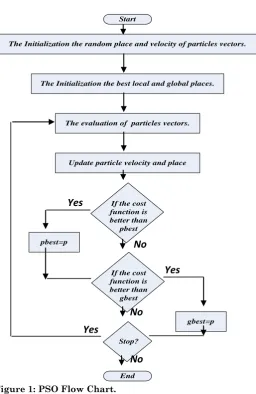
The Particle Swarm Optimization algorithm (PSO) was originally designed by Kennedy and Eberhart in 1995. PSO is a population-based searching method which imitates the social behavior of bird flocks or fish schools. The population and the individuals are called a “swarm” and “particles”, respectively. Each particle moves in the swarm with a velocity that is adjusted according to its own flying experience and retains the best position it has ever encountered in memory. The best local and global positions ever encountered by all particles of the swarm are also communicated to all other particles. The advantages of PSO are that there is neither mutation calculation nor overlapping. The popular form of particle swarm optimizer is defined in the following equations and in the flow chart in Figure (1) (Moraglio et al. 2008):
(2)
Where:
vid: is the velocity of particle i along dimension d.
xid: is the position of particle i in dimension d.
c1: is a weight applied to the cognitive learning portion.
c2: is a similar weight applied to the influence of the social
learning portion.
r1, r2: are separately generated random numbers in the range of
zero and one.
w: is the inertia weight.
Start
The Initialization the random place and velocity of particles vectors.
The Initialization the best local and global places.
The evaluation of particles vectors.
Update particle velocity and place
If the cost function is better than
pbest
If the cost function is better than
gbest pbest=p
gbest=p
Stop?
End
Figure 1: PSO Flow Chart.
Yes
No No
No Yes
4. Character Modeling
4.1. Normalization
There are many variations in the handwriting of different persons. Therefore, the process of normalization of characters is performed so that all characters can become of equal dimensions of the matrix. In this manuscript, characters are normalized into 18X18 pixel characters, and then we take every character from 2000 characters, locate the area for the character and calculate how many rows and columns after reading it as a matrix. Set out below are the steps of the normalization algorithm, explaining how the area of the matrix is located.
Normalization Algorithm:
1. The main program call location subroutine program. 2. Delete matrix elements of any character from the top until
the first location contains the value 1, then stop the deletion operation and save this row in the variable c1 3. Delete matrix elements of any character downwards until
the first location contains the value 1, then stop the deletion operation and save this row in the variable c2 4. Make new matrix, saving the matrix dimension as c1xc2 5. Rotate for new matrix by angle 900, repeat steps 2, 3, 4
and replace c1 by r1, c2 by r2 and save this matrix 6. Rotate saved matrix by angle 2700 until the character
returns to original shape but its dimension is r2xc2 7. Save the resultant matrix to use it in the next processing
mechanism, zooming in to the main program 8. Let the zero matrix of dimension 18x18 be called (w). 9. Read the result file from cut character called (m).
10. Apply zooming equation to obtain new value for matrix of dimension 18x18
W( i , j)=m(ceil(i*c2/18),ceil(j*r2/18)
11. Save the matrix w with an area 18x18 in external file for future use (its shape to be larger and fixed)
End
4.2. Feature extraction
Feature extraction is used to look for properties or behavior of each character entrance and these properties are qualities with which to describe a particular character and distinguish it from another character. Algorithms can be used effectively in features extraction (Pradeep and Srinivasan 2010; Pradeep, Srinivasan, and Himavathi 2010). A diagonal feature extraction scheme for recognizing handwritten characters is proposed in this manuscript. Every character image of size 18X18 pixels is divided into 7 equal zones, each of size 4X4 pixels, which are analyzed and the features are formed. The features are extracted from each zone of pixels by moving along the diagonals of its respective 4X4 pixels. It is known that a feature represents the smallest set that can be used for discrimination purposes and for a unique image at this stage, the features of the characters that are crucial for classifying them at recognition stage are extracted. This is an important stage as its effective functioning improves the recognition rate.
5. Database and Experiment
5.1. Database
Figure 2: Sample of English handwritten characters written by six different writers.
5.2. Experiments
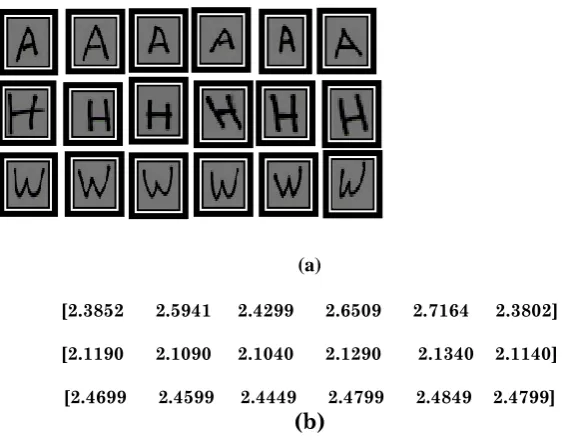
In order to check the working of the approach proposed in this manuscript, we applied it in Matlab. Some different images after normalization and the features extracted values of the six English handwritten characters (A, H and W) from 2000 characters are shown in Figure (3 a and b).
(a)
[2.3852 2.5941 2.4299 2.6509 2.7164 2.3802]
[2.1190 2.1090 2.1040 2.1290 2.1340 2.1140]
[2.4699 2.4599 2.4449 2.4799 2.4849 2.4799]
(b)
Figure 3: (a) Some samples of images after normalization of characters (A, H and W) from 2000 English handwritten characters and, (b) the features extracted values.
Figure 4: The variation of feature extraction values of six different shapes of some input English handwritten characters from 2000 Training Dataset characters.
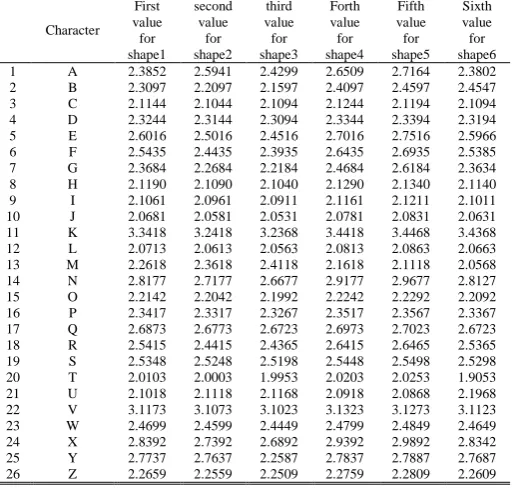
The features extracted are given to the proposed approach, and similarly the features of other characters from A-Z are extracted and given for training. Table (1) shows the feature extraction results for some input English handwritten characters.
Table 1: Feature extraction results for some input characters from 2000 Training Dataset characters.
6. Results and Discussions
Experiments were carried out on a database of English handwritten characters obtained as described in section 4.2. The input characters were grouped into 26 subsets. During each iteration, every subset was saved in different locations as, character A in locations from 1 to 6, character B in locations 7 to 12 and through to character Z in locations 151 to 156.
The input character was chosen as the test set and the process of transformation starts with a scanning of the matrix of any character of database (A). The matrix of required recognized character (B) was combined to form training set F(A, B). Row sizes (1 to 18) represent the map sizes in the horizontal directions and Column sizes (1 to 18) represent the map sizes in the vertical directions. Note that F(A, B) has four valid coordinates: (0,0), (0,1), (1,0) and (1,1). Then a simple operation is performed which replaces the value of matrix F(A, B) with the minimum among the four values obtained by adding the values of the matrixes A, B and normalizing the value of matrix F(A, B) corresponding to the matrix M, as in equation (3).
(3)
Start
k=1 Initialize xi(k), vi(k)
Compute f(xi(k))
Recorder the particles Generate neighborhoods
i=1
Determine best particle in neighborhood of i
Compute xi(k+1)
Compute f(xi(k+1))
i = Ns
No
i=i+1
No Yes
Yes
End
Update previous best if necessary
k = K
i=i+1
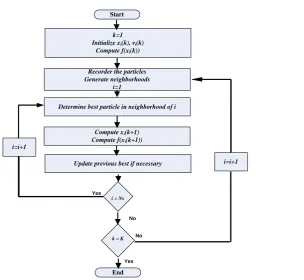
Figure 5: Proposed recognition approach flowchart of Handwritten English Characters.
0000000000000000000000000000000000000000 0000000000000000000000100000000000000001 1100000000000000111110000000000001100011 0000000000011000111000000000110000011100 0000001100000111000000001111111111000000 0110000000111000000110000000111000000110 0000001110000001100000001110000000000000 0000000000000000000000000000000000000000 0000
0000000000000000000000000000000000000000000000000000000 0000000100000000000000001110000000000000011111000000000 0001100011000000000001100011100000000011000001110000000 0110000011100000000111111111100000001100000001110000001 1000000011100000011000000011100000011000000011100000000 0000000000000000000000000000000000000000000000000
A
A
A
A
000000000000000000
000000000000000000
000000000000000000
000000001000000000
000000011100000000
000000111110000000
000001100011000000
000001100011100000
000011000001110000
000011000001110000
000011111111110000
000110000000111000
000110000000111000
000110000000111000
000110000000111000
000000000000000000
000000000000000000
000000000000000000
000000111110000000
000001100011000000
000001100011100000
000011000001110000
000011000001110000
000011111111110000
000110000000111000
000110000000111000
000110000000111000
000110000000111000
000000000000000000
000000000000000000
EUROPEAN ACADEMIC RESEARCH, VOL. I, ISSUE 5/ AUGUST 2013
546
000000000000000000
000000000000000000
001100001100001100
001100011100001100
000110011100011000
000110011100011000
000110011100011000
000110110110001100
000111110011111000
000111100011111000
000111100001111000
000111100001111000
000111100001111000
000111000001111000
000111000001111000
000000000000000000
000000000000000000 000110011100011000
000110011100011000
000110011100011000
000110110110001100
000111110011111000
000111100011111000
000111100001111000
000111100001111000
000111100001111000
000111000001111000
000111000001111000
000000000000000000
000000000000000000
000000000000000000
000000000000000000
001111000000111100
000110000000011000
000110000000011000
000110000000011000
000110000000011000
000111111111111000
000111111111111000
000110000000011000
000110000000011000
000110000000011000
000110000000011000
000111000001111000
001111000000111100
000000000000000000
000000000000000000
000110000000011000
000110000000011000
000111111111111000
000111111111111000
000110000000011000
000110000000011000
000110000000011000
000110000000011000
000111000001111000
001111000000111100
000000000000000000
000000000000000000
000000000000000000000000000000000000001100001 100001100001100011100001100000110011100011000
000110011100011000000110011100011000000110110 110001100000111110011111000000111100011111000
000111100001111000000111100001111000000111100 001111000000111000001111000000111000001111000
000000000000000000000000000000000000
000000000000000000000000000000000000001111 000000111100000110000000011000000110000000 011000000110000000011000000110000000011000 000111111111111000000111111111111000000110 000000011000000110000000011000000110000000 011000000110000000011000000111000001111000 001111000000111100000000000000000000000000 000000000000
W
W
W
W
ص
H
H
H
H
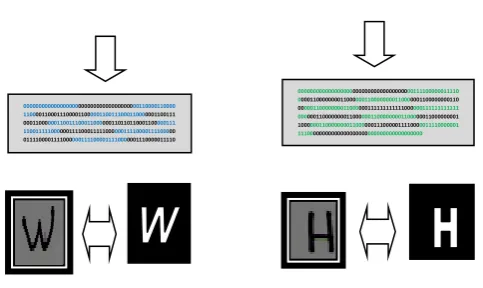
Figure 6: The application of the proposed PSOA on the six shapes of some input characters A, H and W.
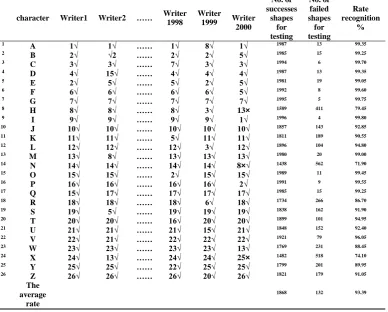
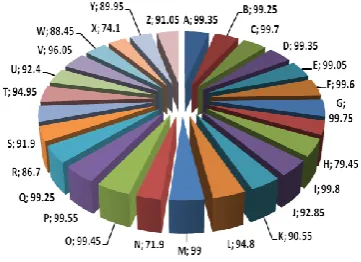
Take each character from the above input characters, compute the matrix F(A, B) with characters of the database and after application of the PSOA, a Window appears containing the recognized characters and the value of F(A, B). The following Tables (2, 3) present the results obtained from testing our proposed approach on the English handwritten database. Our experiment results are illustrated in Figures (7 a and b), yielding recognition rates for 2000 English handwritten characters of about 93.39%. We have achieved major improvements by applying PSOA with a low rate of error recognition.
00000000000000000000000000000000000000111100000011110 00001100000000110000001100000000110000001100000000110 00000110000000011000000111111111111000000111111111111 00000011000000001100000011000000001100000011000000001 10000001100000000110000001110000011110000011110000001 11100000000000000000000000000000000000000
Table 2: Recognition results obtained from testing our proposed approach on English Handwritten database
Rate recognition % No. of failed shapes for testing No. of successes shapes for testing Writer 2000 Writer 1999 Writer 1998 …… Writer2 Writer1 character 99.35 13 1987 1√ 8√ 1√ …… 1√ 1√ A 1 99.25 15 1985 5√ 2√ 2√ …… √2 2√ B 2 99.70 6 1994 3√ 3√ 7√ …… 3√ 3√ C 3 99.35 13 1987 4√ 4√ 4√ …… 15√ 4√ D 4 99.05 19 1981 5√ 2√ 5√ …… 5√ 2√ E 5 99.60 8 1992 5√ 6√ 6√ …… 6√ 6√ F 6 99.75 5 1995 7√ 7√ 7√ …… 7√ 7√ G 7 79.45 411 1589 13× 3√ 8√ …… 8√ 8√ H 8 99.80 4 1996 1√ 9√ 9√ …… 9√ 9√ I 9 92.85 143 1857 10√ 10√ 10√ …… 10√ 10√ J 10 90.55 189 1811 11√ 11√ 5√ …… 11√ 11√ K 11 94.80 104 1896 12√ 3√ 12√ …… 12√ 12√ L 12 99.00 20 1980 13√ 13√ 13√ …… 8√ 13√ M 13 71.90 562 1438 8×√
Table 3: Final recognition results obtained from testing our proposed approach
Figure 7: Experiment results from testing PSOA approach on English Handwritten database (a) recognition rates, (b) recognition value of number of failed, successes shapes from 2000 characters and rate error recognition.
No. of characters recognition
Rate recognition
%
Rate recognition
from 26 characters
Rate error recognition
No. of characters recognition
Rate recognition
%
Rate recognition
from 26 characters
Rate error recognition
1 2 99.35 7.692 0.262 12 1 99.00 3.846 0.202
2 2 99.25 7.692 0.302 13 1 71.90 3.846 7.816
3 1 99.70 7.692 0.060 14 1 99.45 3.846 0.111
4 1 99.05 7.692 0.192 15 1 99.55 3.846 0.090
5 1 99.60 3.846 0.080 16 1 86.70 3.846 3.068
6 1 99.75 3.846 0.050 17 1 91.90 3.846 1.763
7 1 79.45 3.846 5.173 18 1 94.95 3.846 1.064
8 1 99.80 3.846 0.040 19 1 92.40 3.846 1.645
9 1 92.85 3.846 1.540 20 1 96.05 3.846 0.822
10 1 90.55 3.846 2.087 21 1 88.45 3.846 2.612
11 1 94.80 3.846 1.097 22 1 74.10 3.846 6.991
100%
93.39%
Conclusions
In this present manuscript, the diagonal feature extraction method and an approach of handwritten characters recognition using the concept of particle swarm optimization algorithm (PSO) have been discussed. It is noted that the PSOA in general generates an optimized comparison between the input samples and database samples which improves the final recognition rate. The proposed approach has been tested with many handwritten English characters; a high recognition rate was recorded of 93.39%. Experimental results show that the PSO approach is convergent and more accurate in providing a solution to the problem.
BIBLIOGRAPHY:
Davis, R. H., and J. Lyall. 1986. “Recognition of handwritten characters- A review.” Image Vision Cornput.: 208-218.
Dorigo, M., M. Birattari, and T. Stuzle. 2006. “Ant Colony Optimization, Artificial Ants as a Computational Intelligence Technique.” IEEE Computational Intelligence Magazine.
Symposium on Micro Machine and Human Science. Nagoya, Japan. Piscataway, NJ: IEEE Service Center 39-43.
Ganapathy, V., and K. Leong. 2008. “Handwritten Character Recognition Using Multiscale Neural Network Training Technique.” World Academy of Science, Engineering and Technology 15: 32-37.
Hyma, J., Y. Jhansi, and S. Anuradha. 2010. “A new hybridized approach of PSO&GA for document clustering.” International Journal of Engineering Science and Technology 2(5): 1221-1226.
Impedovo, S., P. Wang, and H. Bunke. 1997. Automatic Bank check Processing. Singapore: World Scientific.
Litvin, Y. 1982. “Principles of evaluation for handwritten and cursive text recognition methods.” GTE Lab. Res. TN-401.1 Mantas, I. 1986. “An overview of character recognition methodologies.” Pattern Recognition 19(6): 425-430.
Mao, J. and A. K. Jain. 1995. “Artificial neural networks for feature extraction and multivariate data projection.” IEEE Trans. Neural Networks 6(2): 296-317.
Moraglio, A., C. Di Chio, J. Togelius, and R. Poli. 2008. “Geometric particle swarm optimization.” Journal of Artificial Evolution and Applications ID 143624, 14 pages.
Oja, E. 1992. “Principal components, minor components and linear neural networks.” Neural Networks 5: 927-935.
Omran, M. G. H. 2004. Particle Swarm Optimization Methods for Pattern Recognition and Image Processing. University of Pretoria.
Poli, R., J. Kennedy, and T. Blackwell. 2007. “Particle swarm optimization: an overview.” Swarm Intelligence 1(1): 33– 57.
Pradeep, J., E. Srinivasan, and S. Himavathi. 2011. “Diagonal Based Feature Extraction for Handwritten Alphabets Recognition System Using Neural Network.” International Journal of Computer Science & Information Technology (IJCSIT) 3(1): 27-38
Savas, B., and L. Elden. 2007. “Handwritten Digit
classification using Higher Order singular value