M E T H O D O L O G Y
Open Access
Measurement of Epstein-Barr virus DNA load
using a novel quantification standard containing
two EBV DNA targets and SYBR Green I dye
Meav-Lang J Lay
1*, Robyn M Lucas
2, Mala Ratnamohan
1, Janette Taylor
1, Anne-Louise Ponsonby
3,
Dominic E Dwyer
1, the Ausimmune Investigator Group (AIG)
Abstract
Background:Reactivation of Epstein-Barr virus (EBV) infection may cause serious, life-threatening complications in immunocompromised individuals. EBV DNA is often detected in EBV-associated disease states, with viral load believed to be a reflection of virus activity. Two separate real-time quantitative polymerase chain reaction (QPCR) assays using SYBR Green I dye and a single quantification standard containing two EBV genes, Epstein-Barr nuclear antigen-1 (EBNA-1) and BamHI fragment H rightward open reading frame-1 (BHRF-1), were developed to detect and measure absolute EBV DNA load in patients with various EBV-associated diseases. EBV DNA loads and viral capsid antigen (VCA) IgG antibody titres were also quantified on a population sample.
Results:EBV DNA was measurable in ethylenediaminetetraacetic acid (EDTA) whole blood, peripheral blood
mononuclear cells (PBMCs), plasma and cerebrospinal fluid (CSF) samples. EBV DNA loads were detectable from 8.0 × 10² to 1.3 × 10⁸copies/ml in post-transplant lymphoproliferative disease (n = 5), 1.5 × 10³to 2.0 × 10⁵copies/ml in
infectious mononucleosis (n = 7), 7.5 × 10⁴to 1.1 × 10⁵copies/ml in EBV-associated haemophagocytic syndrome (n = 1), 2.0 × 10²to 5.6 × 10³copies/ml in HIV-infected patients (n = 12), and 2.0 × 10²to 9.1 × 10⁴copies/ml in the population sample (n = 218). EBNA-1 and BHRF-1 DNA were detected in 11.0% and 21.6% of the population sample respectively. There was a modest correlation between VCA IgG antibody titre and BHRF-1 DNA load (rho = 0.13, p = 0.05) but not EBNA-1 DNA load (rho = 0.11, p = 0.11).
Conclusion:Two sensitive and specific real-time PCR assays using SYBR Green I dye and a single quantification standard containing two EBV DNA targets, were developed for the detection and measurement of EBV DNA load in a variety of clinical samples. These assays have application in the investigation of EBV-related illnesses in immunocompromised individuals.
Background
Epstein-Barr virus (EBV) causes infectious mononucleo-sis, an acute but self-limiting disease affecting children and young adults. After primary infection, the virus per-sists indefinitely in B-lymphocytes [1], only to reactivate when cellular immunity is impaired. In immunocompro-mised individuals, EBV-related disorders following virus reactivation are associated with significant morbidity
and mortality [2]. Up to 15% of transplant recipients develop post-transplant lymphoproliferative disease (PTLD), a heterogeneous group of disorders charac-terised by EBV transformation of lymphocytes [3,4]. Although uncommon, PTLD is aggressive and coupled with high mortality rates of 50-80% [4]. Also related to other diseases in immunosuppressed individuals, includ-ing chronic active EBV, fatal infectious mononucleosis (IM) and EBV-associated haemophagocytic syndrome (EBVAHS) [5-7], EBV is linked to several malignancies such as nasopharyngeal carcinoma (NPC) and Burkitt’s lymphoma (BL) [5]. In HIV-infected individuals, EBV is associated with diseases such as oral hairy leukoplakia and AIDS-related non-Hodgkin’s lymphoma [5,8].
* Correspondence: [email protected] 1
Virology Department, Centre For Infectious Diseases & Microbiology Laboratory Services, Institute of Clinical Pathology & Medical Research, Institute Road, Westmead Hospital, Westmead 2145, New South Wales, Australia
Full list of author information is available at the end of the article
Though sometimes detectable in the immunocompe-tent [9], EBV DNA is found in greater concentrations in immunosuppressed populations [10-13]. The presence of circulating EBV DNA does not always correlate with symptomatic infection, nor does it predict clinical disease in immunocompetent or immunosuppressed individuals [2,9]. Nevertheless, although the correlation between EBV burden and disease status is incompletely under-stood, several studies have shown an association between symptomatic infection and elevated DNA loads in clinical samples [14,15]. Increasing virus burden is also believed to be a rapid indicator of immunopathological changes preceding and/or underlying the B-lymphocyte driven changes caused by EBV [16]. Therefore, determining EBV DNA loads in EBV-related disorders in immuno-compromised populations is an important step towards disease diagnosis, management and treatment [17].
Several methods for quantifying absolute DNA load have been developed since its first application to EBV diagnos-tics in 1999 [18-20]. These include semi-quantitative, quantitative competitive and real-time PCR methods [21], with each using different means for amplicon detection; visualisation on agarose gel, Southern blot analysis and enzyme immunoassay [21]. Real-time PCR quantification is generally preferred for its wider dynamic range, speed, ease of handling, sensitivity and specificity [2,22-25]. Although commercial assays incorporating probe-based chemistries are available [26,27], in-house methods employing high saturating dyes such as SYBR Green I are more cost-effective and just as sensitive as the widely used TaqMan PCR [21,28-30].
Here, in an effort to ascertain the relationship between EBV DNA load and disease, two real-time quantitative PCR (QPCR) assays using SYBR Green I dye and a sin-gle quantification standard incorporating two separate EBV genes, Epstein-Barr nuclear antigen-1 (EBNA-1) and BamHI fragment H rightward open reading frame-1 (BHRF-1), were developed. EBV DNA was measured in a range of clinical samples, including unfractionated whole blood, plasma, PBMC and CSF from patients with EBV-associated disorders or immune dysfunctions. EBV sero-status was also determined for individuals in a population sample to assess the correlation between DNA load and antibody titres.
Methods
Groups with EBV-associated diseases or immune disorders
A total of 60 clinical samples from 25 individuals with various EBV-associated diseases or immune disorders were collected between February 2007 and September 2008. Specimen types included EDTA whole blood, plasma, PBMC and CSF. Each patient was assigned a letter (A to Y) and classified into one of four groups.
Group 1 consisted of five patients with EBV-related PTLD following matched-unrelated donor haematopoie-tic stem cell transplantation, generating 40 samples: whole blood (n = 20), plasma (n = 18) and CSF (n = 2). Group 2 consisted of seven patients with IM, with plasma (n = 4) or whole blood (n = 3) samples and Group 3 was based on a single patient with EBVAHS from whom a whole blood sample was available. Group 4 consisted of PBMC (n = 3) and plasma (n = 9) sam-ples from 12 HIV-infected individuals with HIV RNA plasma loads greater than 10,000 copies/ml.
Population sample
A fifth group was comprised of 218 individuals from a population sample for whom whole blood and serum were collected between 2004 and 2007. This included 46 males and 172 females with a mean age of 39 (SD = 10) and 40 (SD = 9.5) years respectively. These individuals resided in one of four regions in eastern Australia including Brisbane (n = 78), Newcastle (n = 28), Geelong and the western districts of Victoria (n = 45) and Tasmania (n = 67) [31].
Serology testing
EBV-specific antibody detection in the population sample
Quantitative EBV-specific serology was performed on sera from individuals in Group 5 only. EBV VCA IgG antibodies titres were determined by an immunofluores-cence assay (IFA) using FITC conjugated anti-human IgG prepared in goats (Sigma-Aldrich, Castle Hill, NSW, Australia). Cells from the B95-8 marmoset cell line pro-ductively infected with EBV were grown in 27 mls of RPMI 1640-modified (ThermoFisher Scientific, Scoresby, VIC, Australia) +10% foetal calf serum (FCS) (Thermo-Fisher Scientific, Scoresby, VIC, Australia) medium containing 3 mls of 0.4 mM phosphonoacetic acid (Sigma-Aldrich, Castle Hill, NSW, Australia). Cells were spotted on 10 well slides (Pathech, Preston, VIC, Austra-lia) and used as the antigen. Four-fold dilutions of known EBV positive sera were used as controls. Samples were diluted using phosphate buffered saline containing 10% FCS four-fold from 1:10 to an endpoint; samples with a titre < 1:10 were reported as negative, whilst titres equal to or greater than 1:10 were defined as positive.
Molecular testing
EBV gene targets, beta-globin and PCR controls
infection and confers anti-apoptotic properties similar to Bcl-2 for enhancing cell survival [34]. Groups 2-5 were evaluated by both PCR targets, while inadequate sample volume limited testing to EBNA-1 in Group 1. The beta-globin gene targeting the TAL57 region was used as a ‘house-keeping’gene to control for PCR inhibitors and check for DNA integrity [35]. All samples were sub-jected to beta-globin PCR prior to EBV QPCR. Contam-ination was monitored by the use of PCR-grade water and no template DNA controls.
DNA extraction and molecular assay design
DNA was isolated from 200 μl of EDTA whole blood, plasma or CSF using the GenElute™Mammalian Genomic DNA Miniprep Kit® (Sigma-Aldrich, Caste Hill, NSW Australia) according to the manufacturer’s instructions, and eluted in 200μl elution buffer. The QIAamp DNA mini kit (Qiagen, Doncaster, VIC, Australia) was used to extract DNA from PBMC in accordance with the manu-facturer’s instructions. Extracts were aliquoted in single use volumes to prevent freeze-thaw cycles and stored at -80°C prior to testing. Each reaction mixture was con-tained in a PCR-certified colourless 200μl flat capped tube (Integrated Sciences, Willoughby, NSW, Australia) to a final 25μl volume, comprising of 2.0μl LightCycler® Fas-tStart DNA Master SYBR Green 1 dye (Roche Diagnostics, Castle Hill, NSW, Australia) at 10× concentration pre-combined with the LightCycler® FastStart enzyme, 0.5μl of 0.2 mM sense and antisense primers (Invitrogen, Mount Waverley, VIC, Australia), 0.8μl of 25 mM MgCl2
and 5μl of the DNA eluate. Samples were tested on the 36-well rotor on the Rotor-Gene 6000® analyser (Qiagen, Doncaster, VIC, Australia). PCR was divided into two
cycles: a first cycle with three repeats at 40 seconds for each stage, and a second cycle with 40 repeats at 30 seconds per stage. Thermal cycling conditions included an optimised initial denaturation step followed by 95°C denaturation, optimised annealing temperatures and extension at 72°C (Table 1). To ensure complete product formation, a final extension step at 72°C for 5 minutes concluded the PCR. A melt analysis immediately followed at between 60°C to 99°C as a check for amplicon purity. For confirmation, EBNA-1 and BHRF-1 products were electrophoresed in 2% agarose gel containing 1:20 dilution of SYBR® safe DNA gel stain in 0.5× TBE buffer (Invitro-gen, Mount Waverley, VIC, Australia).
Cloning of EBNA-1 and BHRF-1 DNA targets into plasmid vector pGEM and standard curve construction
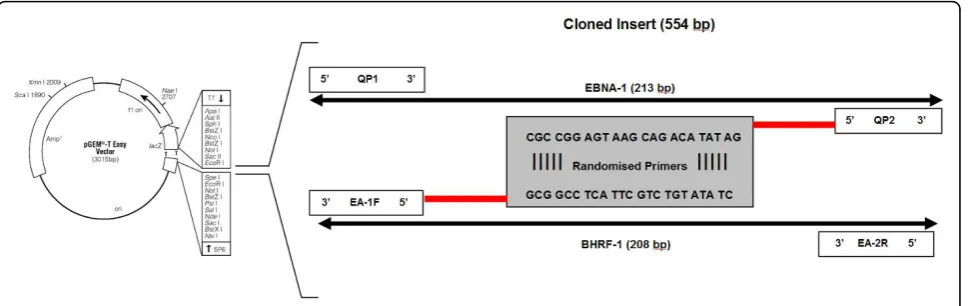
[image:3.595.59.538.111.320.2]A novel feature of the assay was the design of a quantifica-tion standard incorporating both EBNA-1 and BHRF-1 DNA targets in a single plasmid (Figure 1). This was done to minimise the necessity for two separate EBV standards, thus reducing costs and labour. The EBNA-1 and BHRF-1 DNA targets were linked using randomised primers (Table 1) and inserted into the pGEM vector, using the pGEM®-T Easy Vector System II (Promega Corporation, Alexandria, NSW, Australia) according to the manufac-turer’s instructions. The cloned targets were then purified using the PureYield™Plasmid MidiPrep System (Promega Corporation, Alexandria, NSW, Australia), and stored in single use aliquots. Target copy number was calculated following double stranded DNA approximation using the Beckman DU® 530 Life Science UV/Vis spectrophotometer (Beckman Coulter, Gladesville, NSW, Australia). A new plasmid aliquot was used for standard curve dilution for
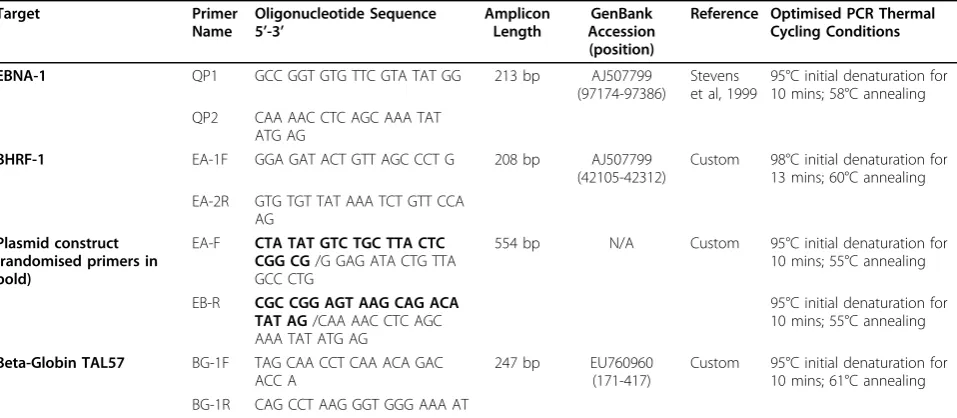
Table 1 Oligonucleotides used for EBV QPCR, beta-globin detection, construction of plasmid and PCR thermal cycling conditions
Target Primer
Name
Oligonucleotide Sequence 5’-3’
Amplicon Length
GenBank Accession (position)
Reference Optimised PCR Thermal Cycling Conditions
EBNA-1 QP1 GCC GGT GTG TTC GTA TAT GG 213 bp AJ507799 (97174-97386)
Stevens et al, 1999
95°C initial denaturation for 10 mins; 58°C annealing
QP2 CAA AAC CTC AGC AAA TAT
ATG AG
BHRF-1 EA-1F GGA GAT ACT GTT AGC CCT G 208 bp AJ507799 (42105-42312)
Custom 98°C initial denaturation for 13 mins; 60°C annealing EA-2R GTG TGT TAT AAA TCT GTT CCA
AG Plasmid construct
(randomised primers in bold)
EA-F CTA TAT GTC TGC TTA CTC CGG CG/G GAG ATA CTG TTA GCC CTG
554 bp N/A Custom 95°C initial denaturation for
10 mins; 55°C annealing
EB-R CGC CGG AGT AAG CAG ACA TAT AG/CAA AAC CTC AGC AAA TAT ATG AG
95°C initial denaturation for 10 mins; 55°C annealing
Beta-Globin TAL57 BG-1F TAG CAA CCT CAA ACA GAC ACC A
247 bp EU760960
(171-417)
Custom 95°C initial denaturation for 10 mins; 61°C annealing BG-1R CAG CCT AAG GGT GGG AAA AT
each PCR run consisting of three replicates starting at 101 to 106copies/5μl. PCR runs were accepted when the stan-dard curve correlation co-efficient was≥0.99.
Product identification, reproducibility, sensitivity, limit of detection and specificity
PCR products were identified by an amplification curve, melt analyses and amplification efficiency generated by the Rotor-Gene™6000 Software 1.7 (Build 90). Positive EBV DNA samples had a cycle threshold (CT) less than 40, and melted between 86°C to 87°C with an average amplifica-tion efficiency of 1.74. PCR products for EBNA-1 DNA and BHRF-1 DNA were identified on agarose gel by 213 bp and 208 bp bands, respectively. Reproducibility studies consisting of triplicates of each standard curve dilution (101-105 copies/5μl) were performed prior to testing. Intra-assay variation was determined in three repeat assays tested within 24 hours on three consecutive days. Inter-assay variation was assessed using three different batches of the same PCR master mix kit. Sensitivity was deter-mined by end-point PCR using gel electrophoresis. To establish the minimum DNA copy number that could be reliably detected, ten plasmid replicates spanning 100to 102copies/5μl were assayed in three separate runs. Primer specificity was verified on the Basic Local Alignment Search Tool on GenBank and by assaying known cytome-galovirus (CMV), human herpesvirus 6 (HHV6), HIV and varicella zoster (VZV) positive samples. The EBV QPCR was evaluated against an external quality assurance pro-gram (Quality Control for Medical Diagnostics (QCMD), Glasgow, Scotland, http://www.qcmd.org/ for EBV QPCR in 2008 and 2009.
Viral load calculation and result interpretation
Viral load calculations were based on DNA extraction volume and final elution volumes as well as the number of replicates tested. Samples were extracted and eluted in equal quantities, keeping ratios constant. Hence, the amount of sample used for PCR (5μl) was multiplied by a factor of 200 (elution volume) and divided by the
number of replicates to obtain a final measurement expressed as DNA copies per millilitre (copies/ml) of sample. This unit of measurement has close correlations with copies per microgram of DNA, therefore does not require normalisation to the amount of input DNA [36]. Furthermore, copies/ml removes unnecessary processing steps and reduces costs, as well as minimising sample volume for testing. EBV DNA was quantifiable in a dynamic range spanning six logarithms with the mini-mum reportable viral load at 2.0 × 10² copies/ml of sample. Samples with no detectable target DNA were assigned a load of zero and resulted as negative.
Statistical calculations
Data analysis was conducted with SPSS version 17. Spearman’s (rho) correlation co-efficient was used to assess the correlations between EBNA-1 and BHRF-1 DNA loads and VCA IgG antibody titres.
Results
Performance of EBV QPCR assays: reproducibility, sensitivity, detection limit and specificity
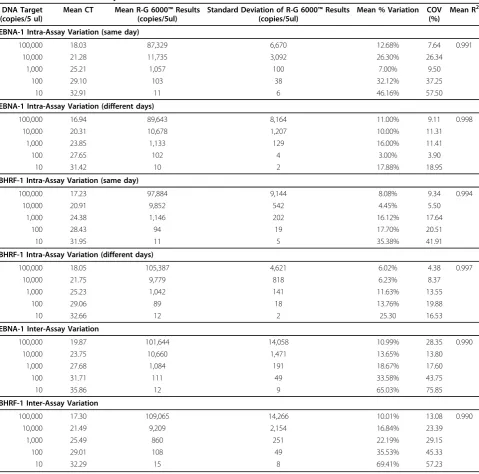
The intra-assay and inter-assay co-efficient of variation for EBNA-1 and BHRF-1 QPCRs are shown in Table 2. Both EBV targets were detected at levels as low as 2.0 × 10² copies/ml of sample. However, the reliable limit of detection for both EBNA-1 and BHRF-1 DNA was 2.0 × 10³copies/ml, where the proportion that were detected (positivity ratio) were 97% and 93% respectively. Primers showed no cross reactivity to other herpesviruses (data not shown). All samples in both the 2008 and 2009 QCMD programs were correctly identified using the EBNA-1 primers.
EBV detection and load in EBV-associated disease states and immunocompromised individuals
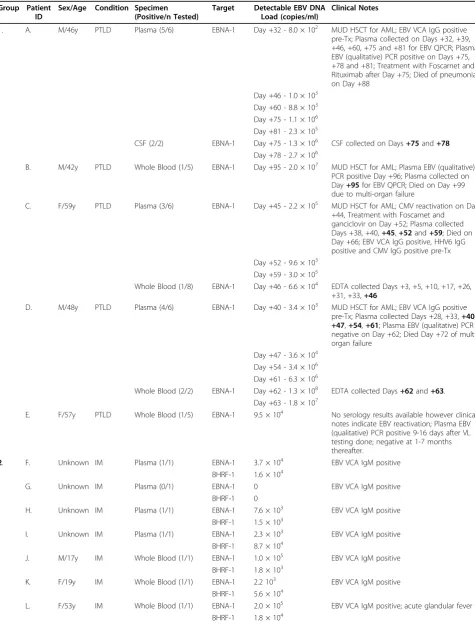
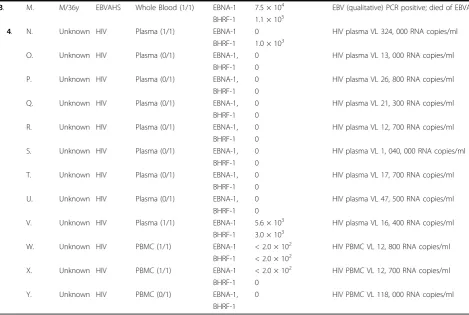
[image:4.595.58.547.89.242.2]quantifiable viral load using one or other of the EBV DNA targets, EBNA-1 or BHRF-1 (Table 3). EBV DNA was detected in 100%, 85.7%, 100% and 33.3% of patients with PTLD, IM, EBVAHS and HIV-infected individuals (Groups 1 to 4), respectively. EBV DNA loads were detectable at ranges from 2.0 × 10² to 1.3 × 10⁸copies/ml in these clinical samples, with the highest EBV DNA load recorded in an individual with PTLD (1.3 × 10⁸ copies/ml of sample). High levels were also seen in individuals with IM (2.0 × 10⁵ copies/ml of
sample), EBVAHS (1.1 × 10⁵ copies/ml whole blood), and HIV infection (5.6 × 10³ copies/ml of sample).
[image:5.595.58.538.97.571.2]In Group 1 (PTLD), EBV DNA concentrations spanned six logarithms and were detected in multiple samples from early to end-stage disease. EBV DNA loads increased sequentially following transplantation, decreased after anti-viral therapy in Patients A and C and peaked ten days prior to death in Patients A to D. EBV DNA loads were detectable in some samples, but were absent in others. In Patient D, plasma EBV DNA was qualitative PCR negative
Table 2 Intra- and inter-assay co-efficient of variation for EBNA-1 and BHRF-1 QPCRs
DNA Target (copies/5 ul)
Mean CT Mean R-G 6000™Results (copies/5ul)
Standard Deviation of R-G 6000™Results (copies/5ul)
Mean % Variation COV (%)
Mean R2
EBNA-1 Intra-Assay Variation (same day)
100,000 18.03 87,329 6,670 12.68% 7.64 0.991
10,000 21.28 11,735 3,092 26.30% 26.34
1,000 25.21 1,057 100 7.00% 9.50
100 29.10 103 38 32.12% 37.25
10 32.91 11 6 46.16% 57.50
EBNA-1 Intra-Assay Variation (different days)
100,000 16.94 89,643 8,164 11.00% 9.11 0.998
10,000 20.31 10,678 1,207 10.00% 11.31
1,000 23.85 1,133 129 16.00% 11.41
100 27.65 102 4 3.00% 3.90
10 31.42 10 2 17.88% 18.95
BHRF-1 Intra-Assay Variation (same day)
100,000 17.23 97,884 9,144 8.08% 9.34 0.994
10,000 20.91 9,852 542 4.45% 5.50
1,000 24.38 1,146 202 16.12% 17.64
100 28.43 94 19 17.70% 20.51
10 31.95 11 5 35.38% 41.91
BHRF-1 Intra-Assay Variation (different days)
100,000 18.05 105,387 4,621 6.02% 4.38 0.997
10,000 21.75 9,779 818 6.23% 8.37
1,000 25.23 1,042 141 11.63% 13.55
100 29.06 89 18 13.76% 19.88
10 32.66 12 2 25.30 16.53
EBNA-1 Inter-Assay Variation
100,000 19.87 101,644 14,058 10.99% 28.35 0.990
10,000 23.75 10,660 1,471 13.65% 13.80
1,000 27.68 1,084 191 18.67% 17.60
100 31.71 111 49 33.58% 43.75
10 35.86 12 9 65.03% 75.85
BHRF-1 Inter-Assay Variation
100,000 17.30 109,065 14,266 10.01% 13.08 0.990
10,000 21.49 9,209 2,154 16.84% 23.39
1,000 25.49 860 251 22.19% 29.15
100 29.01 108 49 35.53% 45.33
10 32.29 15 8 69.41% 57.23
Abbreviations: CT, cycle threshold; Mean % variation, average percentage variation between the calculated (Rotor-Gene results) and the given concentration (DNA target); COV, co-efficient of variation is the ratio of standard deviation to the mean; R2
Table 3 EBV DNA loads in various EBV-associated disease states and immunocompromised individuals
Group Patient ID
Sex/Age Condition Specimen (Positive/n Tested)
Target Detectable EBV DNA Load (copies/ml)
Clinical Notes
1. A. M/46y PTLD Plasma (5/6) EBNA-1 Day +32 - 8.0 × 10² MUD HSCT for AML; EBV VCA IgG positive
pre-Tx; Plasma collected on Days +32, +39, +46, +60, +75 and +81 for EBV QPCR; Plasma EBV (qualitative) PCR positive on Days +75, +78 and +81; Treatment with Foscarnet and Rituximab after Day +75; Died of pneumonia on Day +88
Day +46 - 1.0 × 10³ Day +60 - 8.8 × 10³ Day +75 - 1.1 × 10⁶ Day +81 - 2.3 × 10⁵
CSF (2/2) EBNA-1 Day +75 - 1.3 × 10⁶ CSF collected on Days+75and+78
Day +78 - 2.7 × 10⁶
B. M/42y PTLD Whole Blood (1/5) EBNA-1 Day +95 - 2.0 × 10⁷ MUD HSCT for AML; Plasma EBV (qualitative)
PCR positive Day +96; Plasma collected on Day+95for EBV QPCR; Died on Day +99 due to multi-organ failure
C. F/59y PTLD Plasma (3/6) EBNA-1 Day +45 - 2.2 × 10⁵ MUD HSCT for AML; CMV reactivation on Day
+44, Treatment with Foscarnet and ganciclovir on Day +52; Plasma collected Days +38, +40,+45,+52and+59; Died on Day +66; EBV VCA IgG positive, HHV6 IgG positive and CMV IgG positive pre-Tx Day +52 - 9.6 × 10³
Day +59 - 3.0 × 10⁵
Whole Blood (1/8) EBNA-1 Day +46 - 6.6 × 10⁴ EDTA collected Days +3, +5, +10, +17, +26, +31, +33,+46
D. M/48y PTLD Plasma (4/6) EBNA-1 Day +40 - 3.4 × 10³ MUD HSCT for AML; EBV VCA IgG positive
pre-Tx; Plasma collected Days +28, +33,+40, +47,+54,+61; Plasma EBV (qualitative) PCR negative on Day +62; Died Day +72 of multi-organ failure
Day +47 - 3.6 × 10⁴ Day +54 - 3.4 × 10⁶ Day +61 - 6.3 × 10⁶
Whole Blood (2/2) EBNA-1 Day +62 - 1.3 × 10⁸ EDTA collected Days+62and+63. Day +63 - 1.8 × 10⁷
E. F/57y PTLD Whole Blood (1/5) EBNA-1 9.5 × 10⁴ No serology results available however clinical
notes indicate EBV reactivation; Plasma EBV (qualitative) PCR positive 9-16 days after VL testing done; negative at 1-7 months thereafter.
2. F. Unknown IM Plasma (1/1) EBNA-1 3.7 × 10⁴ EBV VCA IgM positive
BHRF-1 1.6 × 10⁴
G. Unknown IM Plasma (0/1) EBNA-1 0 EBV VCA IgM positive
BHRF-1 0
H. Unknown IM Plasma (1/1) EBNA-1 7.6 × 10³ EBV VCA IgM positive
BHRF-1 1.5 × 10³
I. Unknown IM Plasma (1/1) EBNA-1 2.3 × 10³ EBV VCA IgM positive
BHRF-1 8.7 × 10⁴
J. M/17y IM Whole Blood (1/1) EBNA-1 1.0 × 10⁵ EBV VCA IgM positive
BHRF-1 1.8 × 10³
K. F/19y IM Whole Blood (1/1) EBNA-1 2.2 103 EBV VCA IgM positive
BHRF-1 5.6 × 10⁴
L. F/53y IM Whole Blood (1/1) EBNA-1 2.0 × 10⁵ EBV VCA IgM positive; acute glandular fever
on Day +62 whilst simultaneously QPCR positive in whole blood. EBV-specific serology results were available for four patients, and confirmed EBV infection prior to the trans-plant. Four patients died as a result of PTLD complica-tions, on average +81.25 days post transplantation. In Group 2 (IM), EBV DNA was quantifiable from 1.5 × 10³ to 2.0 × 10⁵copies/ml. One sample was negative for EBV DNA (Patient G), despite a positive EBV VCA IgM profile. Group 3 (EBVAHS) EBV DNA load results were similar to Group 2, however Patient M died as a consequence of the disease condition. In Group 4 (HIV), EBV DNA was detectable in both plasma and PBMC ranging from 2.0 × 10²to 5.6 × 10³copies/ml. However, 50% of these samples were below 2.0 × 10³copies/ml.
EBV detection and load in the population sample
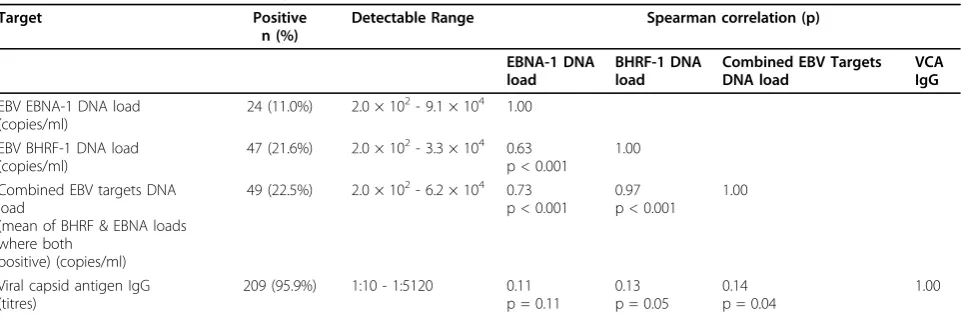
EBNA-1 and BHRF-1 DNA were detected in 11.0% and 21.6% of Group 5 (the population sample), respectively; 22.5% of samples were positive for at least one EBV DNA target (Table 4). Of the 24 EBNA-1 DNA positive samples, 91.7% were also BHRF-1 DNA positive, and of
the 47 BHRF-1 DNA positive samples, 46.8% were also EBNA-1 DNA positive. Viral loads (combined targets) were detectable between 2.0 × 10² to 6.2 × 10⁴ copies/ ml of whole blood, but 54.2% and 85.1% of samples were below 2.0 × 10³copies/ml for EBNA-1 and BHRF-1 DNA levels, respectively. All samples with measurable EBV DNA were EBV VCA IgG antibody positive, which were found in 95.9% of the population sample. There was a modest correlation between VCA IgG antibody titres and BHRF-1 DNA load (Spearman’s rho = 0.13, p = 0.05) and a weaker (not statistically significant) cor-relation between EBNA-1 DNA load and VCA IgG anti-body titres (Spearman’s rho = 0.11, p = 0.11) (Table 4).
Discussion
[image:7.595.58.528.102.417.2]With increasing availability of nucleic acid testing (NAT) methods, measuring EBV DNA in blood has pro-ven valuable in diagnosing and monitoring PTLD [16,21,22,37-41], NPC [42,43], IM [13,44], EBV infection in HIV-infected individuals [8,13,45], BL [13] and chronic active EBV infection [18,46]. In this study, we
Table 3: EBV DNA loads in various EBV-associated disease states and immunocompromised individuals(Continued)
3. M. M/36y EBVAHS Whole Blood (1/1) EBNA-1 7.5 × 10⁴ EBV (qualitative) PCR positive; died of EBVAHS
BHRF-1 1.1 × 10⁵
4. N. Unknown HIV Plasma (1/1) EBNA-1 0 HIV plasma VL 324, 000 RNA copies/ml
BHRF-1 1.0 × 10³
O. Unknown HIV Plasma (0/1) EBNA-1, 0 HIV plasma VL 13, 000 RNA copies/ml
BHRF-1 0
P. Unknown HIV Plasma (0/1) EBNA-1, 0 HIV plasma VL 26, 800 RNA copies/ml
BHRF-1 0
Q. Unknown HIV Plasma (0/1) EBNA-1, 0 HIV plasma VL 21, 300 RNA copies/ml
BHRF-1 0
R. Unknown HIV Plasma (0/1) EBNA-1, 0 HIV plasma VL 12, 700 RNA copies/ml
BHRF-1 0
S. Unknown HIV Plasma (0/1) EBNA-1, 0 HIV plasma VL 1, 040, 000 RNA copies/ml
BHRF-1 0
T. Unknown HIV Plasma (0/1) EBNA-1, 0 HIV plasma VL 17, 700 RNA copies/ml
BHRF-1 0
U. Unknown HIV Plasma (0/1) EBNA-1, 0 HIV plasma VL 47, 500 RNA copies/ml
BHRF-1 0
V. Unknown HIV Plasma (1/1) EBNA-1 5.6 × 10³ HIV plasma VL 16, 400 RNA copies/ml
BHRF-1 3.0 × 10³
W. Unknown HIV PBMC (1/1) EBNA-1 < 2.0 × 10² HIV PBMC VL 12, 800 RNA copies/ml
BHRF-1 < 2.0 × 10²
X. Unknown HIV PBMC (1/1) EBNA-1 < 2.0 × 10² HIV PBMC VL 12, 700 RNA copies/ml
BHRF-1 0
Y. Unknown HIV PBMC (0/1) EBNA-1, 0 HIV PBMC VL 118, 000 RNA copies/ml
BHRF-1
successfully developed two in-house QPCR methods incorporating a novel single quantification standard con-taining two EBV DNA targets for measuring viral load on the Rotor-Gene 6000™. Substituting SYBR Green I dye as a fluorescent marker for product accumulation over fluorogenic probes, this method proved useful for quantifying EBV DNA concentrations in clinical samples from individuals with a variety of EBV-associated disor-ders or immune dysfunctions and in a healthy popula-tion sample.
Previous studies in PTLD have found that EBV DNA loads increased with disease progression and decreased with remission of lymphoproliferation [47,48]. This pat-tern was observed in Group 1, where EBV DNA loads appeared to be correlated with disease status. We found similar EBV DNA loads to those previously reported, with most studies showing EBV DNA concentrations ranging from 5.0 × 10²to 2.0 × 10⁷copies/ml in whole blood, plasma and serum [37,49,50]. EBV DNA was also detected in CSF at concentrations comparable to plasma, however detectable CSF EBV DNA has been previously reported only in association with acquired immunodefi-ciency syndrome (AIDS)-related brain lymphoma [51]. The significance of EBV DNA in CSF of PTLD remains to be elucidated.
EBV DNA loads in IM patients were also similar to those reported in the literature [13,22,26,44,52], although some authors described loads as high as 106 and 107 copies/ml [12,46,53]. In Group 3, EBV DNA loads were consistent with acute phase EBVAHS [46,54], and corre-lated with the deterioration of the patient’s disease condi-tion. Elazary et al also found that a viral load ranging from 104-105copies/ml was associated with poor patient outcome [54]. One study found much higher EBV DNA loads (up to 107copies/ml) [55], but this may have been due to differences in sample type and detection methods. In Group 4, EBV DNA was detected in 33% of samples
(22% of plasma, 67% of PBMC), compared to 34% to 76% positivity reported in other studies [8,26]. Notably how-ever, these studies used whole blood for quantifying EBV DNA load, which could have increased the probability of viral DNA detection. As none of the Group 4 patients were known to have EBV-related disease, low positivity ratios and viral loads were expected.
Similar to our findings, the literature describes EBV DNA detectable from 102 to 104 copies/ml and positiv-ity ratios up to 29% in whole blood of healthy indivi-duals [11-13,26,38,56-59]. However, DNA loads as high as 5.5 × 10⁵ copies/ml of whole blood and a positivity ratio of 72% have been reported [58]. Differences in the results may be attributable to more sensitive methods associated with nested PCR and dual-labelled probes [58]. Interestingly, another study showed 100% EBV DNA positivity in whole blood, although DNA loads were all below the detection limit of the assay (2.0 × 10³ copies/ml) [38].
In the population sample the EBV VCA IgG antibody detection rate was consistent with levels of EBV sero-posi-tivity in Western societies [2]. One study previously showed a correlation between EBV VCA IgG antibody titres and EBV viral load (detectable versus non-detectable) [60]. We similarly found a modest correlation with quantitative BHRF-1 DNA loads, and a weaker (not statistically signifi-cant) correlation with EBNA-1 DNA load (see Table 4).
[image:8.595.58.539.98.257.2]We noted some discrepancies in our measures of EBV positivity. In one PTLD patient (Patient D), plasma was qualitative EBV PCR negative whilst simultaneously reporting an EBV DNA load of 1.3 × 10⁸ copies/ml in whole blood. However, a growing number of studies have shown that cell-associated EBV is detectable before plasma EBV DNA and can persist without accompany-ing plasma DNA loads [21,48]. In Group 2, Patient G, despite being EBV VCA IgM antibody positive, was EBV QPCR negative. As EBV DNA loads can change rapidly
Table 4 EBV DNA load and antibody titre detection rates in the population samples (Group 5, n = 218)
Target Positive
n (%)
Detectable Range Spearman correlation (p)
EBNA-1 DNA load
BHRF-1 DNA load
Combined EBV Targets DNA load
VCA IgG
EBV EBNA-1 DNA load (copies/ml)
24 (11.0%) 2.0 × 10²- 9.1 × 10⁴ 1.00
EBV BHRF-1 DNA load (copies/ml)
47 (21.6%) 2.0 × 10²- 3.3 × 10⁴ 0.63 p < 0.001
1.00
Combined EBV targets DNA load
(mean of BHRF & EBNA loads where both
positive) (copies/ml)
49 (22.5%) 2.0 × 10²- 6.2 × 10⁴ 0.73 p < 0.001
0.97 p < 0.001
1.00
Viral capsid antigen IgG (titres)
209 (95.9%) 1:10 - 1:5120 0.11
p = 0.11
0.13 p = 0.05
0.14 p = 0.04
1.00
from being undetectable to being very high in a short period of time [38], it is possible that sampling occurred late in the convalescent phase where low EBV DNA positivity ratios of 44% have been previously reported [46]. Other factors contributing to DNA load variation include differences in sample type, method of extraction or NAT, and target chosen for PCR amplification.
As specimen type is known to influence DNA loads and impact on assay performance [36], unfractionated EDTA whole blood was used for DNA quantification where possible. The dynamic changes of EBV DNA are better reflected in circulating whole blood [38], which also contains all the compartments that may harbour virus [13,21,61]. However, despite reports of greater test sensi-tivity with whole blood [12,36], EBV DNA load has also been quantified in PBMC [14,16,62-64]. Although infection is typically associated with cell compartments [8,12,13], EBV DNA is also found in cell-free blood parti-tions such as plasma or serum, usually in fragmented, cell-derived form [12]. In this study, 2 of 9 plasma samples from HIV-infected patients had detectable EBV DNA, compared to 2 out of 3 PBMC samples. As we did not have simultaneous plasma and PBMC samples from the same individuals, we were unable to assess the differences in viral load between these compartments. Further studies comparing suitability of different sample types in various EBV-related diseases and immune disorders are required.
The method of DNA purification is known to affect viral load measurements. One study showed yield from manually extracted DNA was 57% higher than that of robotic systems [65]. Therefore, to improve DNA recov-ery and maximise PCR sensitivity, samples here were purified using a commercial silica-based column method [61,66]. For optimal quantitation results, an earlier study showed that DNA should be subjected to PCR within one to two weeks post-extraction [67]. Here, delay between extraction and testing could have contributed to low DNA loads and positivity ratios in clinical sam-ples. Furthermore, DNA from blood samples that had undergone more than four freeze-thaw cycles were found to be partially degraded [68]. Since the clinical samples used here were tested retrospectively, monitor-ing these conditions were not possible.
EBV DNA loads also vary according to type and size of gene target [69]. Ryanet al, found assay sensitivity was dependent on the specific gene segment and that different targets had varying lower limits of detection [15]. For EBV, BamHI-W is reportedly 10 times more sensitive than other targets for PCR, allowing for detec-tion of viral DNA at trace amounts [8,13,15]. However, precise quantification of viral genomes is complicated by the number of reiterated BamHI-W sequences among EBV strains, which typically ranges between 7 and 11
repeats per genome [15]. To avoid overestimation in this study, we chose to use the next most sensitive EBV gene; EBNA-1 [15], and an abundantly expressed gene, BHRF-1, for QPCR.
Despite targeting highly conserved EBV regions, selec-tive drop out of amplifiable EBV DNA at the EBNA-1 and BHRF-1 loci was observed in Group 4 (Patients N and X), and in 25 of 218 (11.5%) whole bloods from the population sample. Instead of amplifying both EBV DNA genes, only one target was detected, 93% of which had viral loads less than 2.0 × 10³ copies/ml. As beta-globin was detected in all samples, PCR inhibitors and/ or defective nucleic acid purification methods were excluded [70]. Alternatively, selective drop out may have been due to low viral load and/or sampling error [71]. Since load determination is reliant on the amount of EBV genomes pipetted into a reaction and assumes viral homogeneity, QPCR results, particularly at low viral load levels are prone to random sampling error. This phenomenon is well documented in DNA quantification and results in less reliable viral load measurements [70,71]. Therefore, samples reporting low levels of target nucleic acid may not be reproducible in repeated assays from the same or different specimens [72].
Currently, there are no standardised methods for mea-suring EBV DNA, complicating inter-laboratory compar-isons in multicentre studies of EBV-related diseases. Standardisation is difficult as PCR assay conditions vary between laboratories, leading to variations in the accu-racy and reproducibility of viral load quantification [21]. Although there appears to be a strong concordance between laboratories for qualitative EBV DNA estimates, there continues to be marked inconsistency in quantita-tive results [73]. It has been suggested that the use of unfractionated whole blood [26] or an international cali-bration standard could be the first step towards standar-disation [73]. However, instrumentation, chemistries, gene targets and other test-related aspects remain diverse. One solution for enabling inter-laboratory com-parisons is the distribution of proficiency panels such as QCMD. Such programs have already been used for assessing methods for the detection and quantification of EBV and other viruses [27,74,75].
Conclusion
herpesviruses such as HHV6, CMV, and VZV. This pro-cedure is suitable for robotics and automation, and would be a useful addition in larger laboratories.
Acknowledgements
The Ausimmune Investigator Group includes C Chapman, A Coulthard, K Dear, T Dwyer, T Kilpatrick, R Lucas, T McMichael, MP Pender, A-L Ponsonby, B Taylor, P Valery, I van der Mei and D Williams. The Ausimmune Study is funded by the National Multiple Sclerosis Society of the USA, the National Health & Medical Research Council (Project Grant 316901) and Multiple Sclerosis Research Australia. We also acknowledge the work of the Ausimmune Study research nurses who undertook sample collection: S Agland, B Alexander, M Davis, Z Dunlop, A Wright, R Scott, J Selvidge, M Steele, K Turner, B Wood and the study project officers, H Rodgers and C Jozwick. Clinical samples were kindly provided by N Gilroy, D Gottlieb, P Ferguson, F Kwok and I Kay. We would also like to thank B Wang of the Westmead Millennium Institute for assisting with the cloning work, B O’Toole for statistical analyses, D Patel for assistance with the serology and C Toi for laboratory guidance and review of the manuscript.
Author details 1
Virology Department, Centre For Infectious Diseases & Microbiology Laboratory Services, Institute of Clinical Pathology & Medical Research, Institute Road, Westmead Hospital, Westmead 2145, New South Wales, Australia.2National Centre for Epidemiology and Population Health, The Australian National University, Canberra, ACT, 0200 Australia.3Murdoch Childrens Research Institute, 9th Floor AP Building, The Royal Children’s Hospital, Flemington Road, Parkville, Victoria 3052, Australia.
Authors’contributions
MLL developed the assays, carried out all of the DNA work, assisted in the data analysis and result interpretation, and writing of the manuscript. On behalf of the Ausimmune Investigator group, RML supplied the whole blood and serum from the population sample, and was involved in the data analysis. VMR aided in primer design and JT performed the serology testing. MLL, DED, VMR, RML and ALP were involved in the design and conception of the study. All authors have read, reviewed and approved the final manuscript.
Competing interests
The authors declare that they have no competing interests.
Received: 26 May 2010 Accepted: 22 September 2010 Published: 22 September 2010
References
1. Steven NM:Epstein-Barr virus latent infection in vivo.Rev Med Virol1997,
7(2):97-106.
2. Hess RD:Routine Epstein-Barr virus diagnostics from the laboratory perspective: still challenging after 35 years.J Clin Microbiol2004,
42(8):3381-7.
3. Tsai DE,et al:EBV PCR in the diagnosis and monitoring of posttransplant lymphoproliferative disorder: results of a two-arm prospective trial.Am J Transplant2008,8(5):1016-24.
4. Loginov R,et al:Monitoring of EBV-DNAemia by quantitative real-time PCR after adult liver transplantation.J Clin Virol2006,37(2):104-108. 5. Timbury MC, Edmond E:Herpesviruses.J Clin Pathol1979,32(9):859-81. 6. Cohen JI:Epstein-Barr virus infection.N Engl J Med2000,343(7):481-92. 7. Kimura H,et al:Viral load in Epstein-Barr virus-associated
hemophagocytic syndrome.Microbiol Immunol2002,46(8):579-82. 8. Stevens SJ,et al:High Epstein-Barr virus (EBV) DNA loads in HIV-infected
patients: correlation with antiretroviral therapy and quantitative EBV serology.AIDS2002,16(7):993-1001.
9. Espy MJ,et al:Comparison of three methods for extraction of viral nucleic acids from blood cultures.J Clin Microbiol1995,33(1):41-4. 10. Leung E,et al:Dynamic EBV gene loads in renal, hepatic, and
cardiothoracic transplant recipients as determined by real-time PCR light cycler.Transpl Infect Dis2004,6(4):156-64.
11. Bai X,et al:Quantitative polymerase chain reaction for human herpesvirus diagnosis and measurement of Epstein-Barr virus burden in posttransplant lymphoproliferative disorder.Clin Chem1997,
43(10):1843-9.
12. Kozic S,et al:Evaluation of a commercial real-time PCR assay for quantitation of Epstein-Barr virus DNA in different groups of patients. J Virol Methods2006,135(2):263-8, Epub 2006 May 2.
13. Stevens SJ, Pronk I, Middeldorp JM:Toward standardization of Epstein-Barr virus DNA load monitoring: unfractionated whole blood as preferred clinical specimen.J Clin Microbiol2001,39(4):1211-6. 14. Leung E,et al:Use of real-time PCR to measure Epstein-Barr virus
genomes in whole blood.J Immunol Methods2002,270(2):259-67. 15. Ryan JL,et al:Epstein-Barr virus quantitation by real-time PCR targeting
multiple gene segments: a novel approach to screen for the virus in paraffin-embedded tissue and plasma.J Mol Diagn2004,6(4):378-85. 16. Rowe DT,et al:Use of quantitative competitive PCR to measure
Epstein-Barr virus genome load in the peripheral blood of pediatric transplant patients with lymphoproliferative disorders.J Clin Microbiol1997,
35(6):1612-5.
17. Fan H, Gulley ML:Epstein-Barr viral load measurement as a marker of EBV-related disease.Mol Diagn2001,6(4):279-89.
18. Kimura H,et al:Quantitative analysis of Epstein-Barr virus load by using a real-time PCR assay.J Clin Microbiol1999,37(1):132-6.
19. Lo YM,et al:Quantitative and temporal correlation between circulating cell-free Epstein-Barr virus DNA and tumor recurrence in
nasopharyngeal carcinoma.Cancer Res1999,59(21):5452-5.
20. Lo YM,et al:Quantitative analysis of cell-free Epstein-Barr virus DNA in plasma of patients with nasopharyngeal carcinoma.Cancer Res1999,
59(6):1188-91.
21. Stevens SJ,et al:Role of Epstein-Barr virus DNA load monitoring in prevention and early detection of post-transplant lymphoproliferative disease.Leuk Lymphoma2002,43(4):831-40.
22. Niesters HGM,et al:Development of a real-time quantitative assay for detection of Epstein-Barr virus.J Clin Microbiol2000,38(2):712-5. 23. Xu S,et al:A comparison of quantitative-competitive and realtime PCR
assays using an identical target sequence to detect Epstein-Barr virus viral load in the peripheral blood.J Virol Methods2006,137(2):205-12. 24. Brengel-Pesce K,et al:Routine use of real-time quantitative PCR for
laboratory diagnosis of Epstein-Barr virus infections.J Med Virol2002,
66(3):360-9.
25. Mackay IM, Arden KE, Nitsche A:Real-time PCR in virology.Nucleic Acids Res2002,30(6):1292-305.
26. Fafi-Kremer S,et al:Evaluation of the Epstein-Barr virus R-gene quantification kit in whole blood with different extraction methods and PCR platforms.J Mol Diagn2008,10(1):78-84.
27. Ruiz G,et al:Comparison of commercial real-time PCR assays for quantification of Epstein-Barr virus DNA.J Clin Microbiol2005,
43(5):2053-7.
28. Papin JF, Vahrson W, Dittmer DP:SYBR green-based real-time quantitative PCR assay for detection of West Nile Virus circumvents false-negative results due to strain variability.J Clin Microbiol2004,42(4):1511-8. 29. Karlsen F, Steen HB, Nesland JM:SYBR green I DNA staining increases the
detection sensitivity of viruses by polymerase chain reaction.J Virol Methods1995,55(1):153-6.
30. Hilscher C, Vahrson W, Dittmer DP:Faster quantitative real-time PCR protocols may lose sensitivity and show increased variability.Nucleic Acids Res2005,33(21):e182.
31. Lucas RM,et al:Associations between silicone skin cast score, cumulative sun exposure, and other factors in the ausimmune study: a multicenter Australian study.Cancer Epidemiol Biomarkers Prev2009,18(11):2887-94. 32. Humme S,et al:The EBV nuclear antigen 1 (EBNA1) enhances B cell
immortalization several thousandfold.Proc Natl Acad Sci USA2003,
100(19):10989-94.
33. Lee MA, Diamond ME, Yates JL:Genetic evidence that EBNA-1 is needed for efficient, stable latent infection by Epstein-Barr virus.J Virol1999,
73(4):2974-82.
35. Huang Y,et al:Proper developmental control of human globin genes reproduced by transgenic mice containing a 160-kb BAC carrying the human beta-globin locus.Blood Cells Mol Dis2000,26(6):598-610. 36. Hakim H,et al:Comparison of various blood compartments and
reporting units for the detection and quantification of Epstein-Barr virus in peripheral blood.J Clin Microbiol2007,45(7):2151-5.
37. van Esser JW,et al:Molecular quantification of viral load in plasma allows for fast and accurate prediction of response to therapy of Epstein-Barr virus-associated lymphoproliferative disease after allogeneic stem cell transplantation.Br J Haematol2001,113(3):814-21.
38. Stevens SJ,et al:Frequent monitoring of Epstein-Barr virus DNA load in unfractionated whole blood is essential for early detection of posttransplant lymphoproliferative disease in high-risk patients.Blood
2001,97(5):1165-71.
39. Lucas KG,et al:Semiquantitative Epstein-Barr virus (EBV) polymerase chain reaction for the determination of patients at risk for EBV-induced lymphoproliferative disease after stem cell transplantation.Blood1998,
91(10):3654-61.
40. Kimura H,et al:Measuring Epstein-Barr virus (EBV) load: the significance and application for each EBV-associated disease.Rev Med Virol2008,
18(5):305-19.
41. Wheless SA,et al:Post-transplantation lymphoproliferative disease: Epstein-Barr virus DNA levels, HLA-A3, and survival.Am J Respir Crit Care Med2008,178(10):1060-5.
42. Chan KC,et al:Molecular characterization of circulating EBV DNA in the plasma of nasopharyngeal carcinoma and lymphoma patients.Cancer Res2003,63(9):2028-32.
43. Lin JC,et al:Quantification of plasma Epstein-Barr virus DNA in patients with advanced nasopharyngeal carcinoma.N Engl J Med2004,
350(24):2461-70.
44. Bauer CC,et al:Serum Barr virus DNA load in primary Epstein-Barr virus infection.J Med Virol2005,75(1):54-8.
45. Dehee A,et al:Quantification of Epstein-Barr virus load in peripheral blood of human immunodeficiency virus-infected patients using real-time PCR.J Med Virol2001,65(3):543-52.
46. Yamamoto M,et al:Detection and quantification of virus DNA in plasma of patients with Epstein-Barr virus-associated diseases.J Clin Microbiol
1995,33(7):1765-8.
47. Wagner HJ,et al:Patients at risk for development of posttransplant lymphoproliferative disorder: plasma versus peripheral blood mononuclear cells as material for quantification of Epstein-Barr viral load by using real-time quantitative polymerase chain reaction. Transplantation2001,72(6):1012-9.
48. Rowe DT,et al:Epstein-Barr virus load monitoring: its role in the prevention and management of post-transplant lymphoproliferative disease.Transpl Infect Dis2001,3(2):79-87.
49. Rosselet A,et al:Associations of serum EBV DNA and gammopathy with post-transplant lymphoproliferative disease.Clin Transplant2009,
23(1):74-82.
50. Wada K,et al:Simultaneous quantification of Epstein-Barr virus, cytomegalovirus, and human herpesvirus 6 DNA in samples from transplant recipients by multiplex real-time PCR assay.J Clin Microbiol
2007,45(5):1426-32.
51. Bossolasco S,et al:Epstein-Barr virus DNA load in cerebrospinal fluid and plasma of patients with AIDS-related lymphoma.J Neurovirol2002,
8(5):432-8.
52. Stevens SJ,et al:Monitoring of epstein-barr virus DNA load in peripheral blood by quantitative competitive PCR.J Clin Microbiol1999,37(9):2852-7. 53. van Laar JA,et al:Epstein-Barr viral load assessment in
immunocompetent patients with fulminant infectious mononucleosis. Arch Intern Med2002,162(7):837-9.
54. Elazary AS,et al:Severe Epstein-Barr virus-associated hemophagocytic syndrome in six adult patients.J Clin Virol2007,40(2):156-9. 55. Teramura T,et al:Quantitative analysis of cell-free Epstein-Barr virus
genome copy number in patients with EBV-associated hemophagocytic lymphohistiocytosis.Leuk Lymphoma2002,43(1):173-9.
56. Compston LI,et al:Multiplex real-time PCR for the detection and quantification of latent and persistent viral genomes in cellular or plasma blood fractions.J Virol Methods2008,151(1):47-54.
57. Kullberg-Lindh C,et al:Comparison of serum and whole blood levels of cytomegalovirus and Epstein-Barr virus DNA.Transpl Infect Dis2008,
10(5):308-15.
58. Hudnall SD,et al:Herpesvirus prevalence and viral load in healthy blood donors by quantitative real-time polymerase chain reaction.Transfusion
2008,48(6):1180-7.
59. Engelmann I,et al:Rapid quantitative PCR assays for the simultaneous detection of herpes simplex virus, varicella zoster virus, cytomegalovirus, Epstein-Barr virus, and human herpesvirus 6 DNA in blood and other clinical specimens.J Med Virol2008,80(3):467-77.
60. Besson C,et al:Positive correlation between Epstein-Barr virus viral load and anti-viral capsid immunoglobulin G titers determined for Hodgkin’s lymphoma patients and their relatives.J Clin Microbiol2006,44(1):47-50. 61. Fafi-Kremer S,et al:Assessment of automated DNA extraction coupled
with real-time PCR for measuring Epstein-Barr virus load in whole blood, peripheral mononuclear cells and plasma.J Clin Virol2004,30(2):157-64. 62. Jabs WJ,et al:Normalized quantification by real-time PCR of Epstein-Barr
virus load in patients at risk for posttransplant lymphoproliferative disorders.J Clin Microbiol2001,39(2):564-9.
63. Wadowsky RM,et al:Measurement of Epstein-Barr virus DNA loads in whole blood and plasma by TaqMan PCR and in peripheral blood lymphocytes by competitive PCR.J Clin Microbiol2003,41(11):5245-9. 64. Baldanti F,et al:Kinetics of Epstein-Barr virus DNA load in different blood
compartments of pediatric recipients of T-cell-depleted HLA-haploidentical stem cell transplantation.J Clin Microbiol2008,
46(11):3672-7.
65. Riemann K,et al:Comparison of manual and automated nucleic acid extraction from whole-blood samples.J Clin Lab Anal2007,21(4):244-8. 66. Schuurman T,et al:Reduced PCR sensitivity due to impaired DNA
recovery with the MagNA Pure LC total nucleic acid isolation kit.J Clin Microbiol2005,43(9):4616-22.
67. Malcomson RD,et al:The scope of quantitative polymerase chain reaction assays in clinical molecular pathology.Clin Mol Pathol1995,
48(4):M178-M183.
68. Lahiri DK, Schnabel B:DNA isolation by a rapid method from human blood samples: effects of MgCl2, EDTA, storage time, and temperature on DNA yield and quality.Biochem Genet1993,31(7-8):321-8. 69. Stevens SJ,et al:Diagnostic value of measuring Epstein-Barr virus (EBV)
DNA load and carcinoma-specific viral mRNA in relation to anti-EBV immunoglobulin A (IgA) and IgG antibody levels in blood of
nasopharyngeal carcinoma patients from Indonesia.J Clin Microbiol2005,
43(7):3066-73.
70. Gulley ML, Fan H, Elmore SH:Validation of Roche LightCycler Epstein-Barr virus quantification reagents in a clinical laboratory setting.J Mol Diagn
2006,8(5):589-97.
71. Diaco D:Practical Considerations for the Design of Quantitative PCR Assays.InPCR Strategies.Edited by: G DH, S JJ, Innis MA. Academic Press Limited, London; 1995:84-107.
72. Smith TF,et al:Quantitative real-time polymerase chain reaction for evaluating DNAemia due to cytomegalovirus, Epstein-Barr virus, and BK virus in solid-organ transplant recipients.Clin Infect Dis2007,
45(8):1056-61.
73. Hayden RT,et al:Multicenter comparison of different real-time PCR assays for quantitative detection of Epstein-Barr virus.J Clin Microbiol
2008,46(1):157-63.
74. Perandin F,et al:Comparison of commercial and in-house Real-time PCR assays for quantification of Epstein-Barr virus (EBV) DNA in plasma.BMC Microbiol2007,7:22.
75. Pillet S, Bourlet T, Pozzetto B:Comparative evaluation of a commercially available automated system for extraction of viral DNA from whole blood: application to monitoring of epstein-barr virus and cytomegalovirus load.J Clin Microbiol2009,47(11):3753-5.
doi:10.1186/1743-422X-7-252