Enhancing software automation using DevOps
1
Gokul Patil,
2Nisha Magar,
3Vaishnavi Gangurde,
4Zarka Khan,
5Srushti Magar
1, 2, 3, 4, 5Department of Computer Engineering1, 2, 3, 4, 5
SITRC, Sandip Foundation, Nashik, India
Email ID:[email protected],[email protected],[email protected],[email protected] 5[email protected]
Abstract- DevOps is a software practice that aims at unifying development, operations and quality assurance process. It strongly advocates automation and providing the cloud security. DevOps that stands for development and operations along with quality assurance is a technology which is used for the automation purpose. The sole purpose of this technology is to provide automation throughout the entire software development process right from the planning phase, along with construction, integration, testing and also the release of the product to the customer. DevOps provide with different tools such as Git, Jenkins, Chef, Selenium, etc. which help us throughout this automation process. The platform used for this technology is Visual Studio Team Services (VSTS) and the Microsoft Cloud Azure. It includes the Continuous integration, continuous delivery, Continuous Testing and Release Management processes. Due to the strong automation, it saves a lot of time and manual effort which serves as a great benefit to a lot of organizations. All the stakeholders associated with the project can keep a track of all the activities going on throughout the development process. It bridges the gap between Continuous Integration and Continuous Delivery.
Keywords - TFS, VSTS, IIS, Release Management, Continuous Integration, Visual Studio, Triggers, Build and Release, Manage Connections.
1. INTRODUCTION
DevOps as a term came across 2-3 years ago as a moment, as a philosophy to help the development team and operations to work better together, to have better collaboration and communication and the goal was to build trust. DevOps is a software practice that aims at unifying development, operations and quality assurance process. It strongly advocates automation. DevOps is basically the combination of development and quality assurance (QA). In DevOps idea is at the design stage also we have requirement enhancement, request and bug fix. After deploying the software product to the customer, the customer will give feedback to the deployment team and according to that feedback, the deployment team will make changes in the product. The team can improve two things the product and the deployment process itself. The process is usually improved in two ways i.e. reduce the amount of rework that needs to be done for the specific project and reduce the amount of overhead in the process in general.
Abbreviations and Acronyms
VSTS:-Visual Studio Team Services (VSTS) is an extension of the Microsoft Visual Studio architecture that allows it to encompass development teams, with special roles and tools for software architects, developer specialties and testers. It is a collection of hosted DevOps services for application developers.
TFS:-Team Foundation Server (TFS) is a Microsoft product that provides source code management either with Team Foundation Version Control or Git, reporting, requirements management, project management automated builds and lab management. It is the on premises version of VSTS that you can install and manage on your server.
IIS:- Internet Information Services is an extensible web server created by Microsoft to serve requested HTML pages or files. It hosts the website and other content on the web.
Release Management: - Release Management is
the process responsible for planning, scheduling, and
controlling the build, in addition to testing and deploying releases it is used to develop and deploy applications regularly to any platform.
Continuous integration:- Continuous Integration (CI) is a
development practice that requires developers
to integrate code into a shared repository several times a day. Each check-in is then verified by an automated build, allowing teams to detect problems early.
Builds and Releases - A “build” is a developed application for the customers that are given by development team to the software testing team. A “release” is an official launch of the application for the customers. A build when tested and certified by the software testing team is provided to the customers as “release”.
Description:
• DevOps is a software engineering culture and
practice that aims at unifying software development and software operations.
System
User Database
User Posts
If failed to block
• DevOps as the name itself suggests, is an integration of Development and Operations, along with quality assurance. It is a software practice which is used for the purpose of automation.
• The sole purpose of this technology is to strongly advocate automation throughout the entire software development process.
• The utmost goal of DevOps is to have better
communication and collaboration between different business units within the organization, therefore developing a quality product.
• DevOps provide with different tools such as GIT, Jenkins, Selenium, etc. which help us throughout this automation process.
• DevOps is used to automate the entire workflow, thereby increasing the productivity of the product and delivering it at a faster pace.
• DevOps is a practice of optimizing development and
operational activities through structured process, collaboration and automation.
• DevOps’s central concept is to manage end to end engineering processes.
• Due to increased communication and collaboration, DevOps allows the members of the organization to deliver the product to their customers within a short time, in order to achieve total customer satisfaction.
• DevOps presents a significant broader perspective in
delivering software. The perception of DevOps being a mere tool has been formulated into a change in culture, paradigms in automation, clarity in measuring risks and felicitating ease of sharing. [11]
• In simple words, DevOps can be defined as an
alignment of development and IT operations with improved communication and collaboration.
Why is DevOps Needed?
Before DevOps, the development and operation team
worked in complete isolation and the communication was carried out with maximum effort which led to a bad collaboration between different departments.
Testing and Deployment were isolated activities done
after design-build. Hence they consumed more time than actual build cycles.
Without using DevOps, team members are spending
a large amount of their time in testing, deploying, and designing instead of building the project.
Manual code deployment leads to human errors in production
Coding & operation teams have their separate timelines and are not in synch causing further delays.
How Is Devops Different From Traditional IT
Let's compare traditional software waterfall model with DevOps to understand the changes DevOps bring.
Old Process DevOps
After placing an order for new servers, the Development team works on testing. The Operations team works on extensive paperwork as required in enterprises to deploy the infrastructure.
After placing an order for new servers Development and Operations team work together on the paperwork to set-up the new servers. This results in better visibility of infrastructure requirement.
Projection about failover,
redundancy, data center
locations, and storage
requirements are skewed as no inputs are available from developers who have deep knowledge of the application.
Projection about failover,
redundancy, disaster
recovery, data center
locations, and storage
requirements are pretty
accurate due to the inputs from the developers.
Operations team has no clue on the progress of the
Development team.
Operations team develops a monitoring plan as per their understanding.
In DevOps, the Operations team is completely aware of the progress the developers are making. Operations team interact with developers and jointly develop a monitoring plan that caters to the IT and business needs. They also use
advance Application
Performance Monitoring
(APM) Tools Before go-live, the load
testing crashes the
application. The release is delayed.
Before go-live, the load testing makes the application a bit slow. The development
team quickly fixes the
bottlenecks.
Why Is Devops Used?
DevOps allows Agile Development Teams to implement Continuous Integration and Continuous Delivery. This helps them to launch products faster into the market. The time it has been realized that this optimization as part of continuous integration - alone - is just not helping to make the entire delivery lifecycle efficient or is not driving the organization efficiency. Unless all the pieces of a software delivery lifecycle work like a well oiled machine - efficiency of organization to optimize the delivery lifecycle can not be met. This is the problem which DevOps tries to address. [12]
Other Important reasons are:
1. Predictability: DevOps offers significantly lower failure rate of new releases
3. Maintainability: Effortless process of recovery in the event of a new release crashing or disabling the current system. 4. Time to market: DevOps reduces the time to market up to 50% through streamlined software delivery. This is particularly the case for digital and mobile applications. 5. Greater Quality: DevOps helps the team to provide improved quality of application development as it incorporates infrastructure issues.
6. Reduced Risk: DevOps incorporates security aspects in the software delivery lifecycle. It helps in reduction of defects across the lifecycle.
7. Resiliency: The Operational state of the software system is more stable, secure, and changes are auditable.
8. Cost Efficiency: DevOps offers cost efficiency in the software development process which is always an aspiration of IT companies' management.
9. Breaks larger code base into small pieces: DevOps is based on the agile programming method. Therefore, it allows breaking larger code bases into smaller and manageable chunks.
DevOps Lifecycle
Devops is the combination of Development, operations and quality assurance. DevOps lifecycle is the integral part without which understanding of DevOps gets difficult.
DevOps is a set of methods in which developers and operations communicate and collaborate to deliver software and services rapidly, reliably and with higher quality. DevOps is sharing of tasks and responsibilities within a team empowered with full accountability of their service and its underlying technologies stack; from development, to deployment and support. [1]
Here is brief information about the Continuous DevOps life-cycle:
1. Development
In this DevOps stage the development of software takes place constantly. In this phase, the entire development process is separated into small development cycles. This benefits DevOps team to speed up software development and delivery process.
2. Testing
QA team use tools like Selenium to identify and fix bugs in the new piece of code.
3. Integration
In this stage, new functionality is integrated with the prevailing code, and testing takes place. Continuous development is only possible due to continuous integration and testing.
4. Deployment
In this phase, the deployment process takes place continuously. It is performed in such a manner that any changes made any time in the code, should not affect the functioning of high traffic website.
5. Monitoring
In this phase, operation team will take care of the inappropriate system behavior or bugs which are found in production.
DevOps Principles
Here, are six principles which are essential when adopting DevOps:
1. Customer-Centric Action: DevOps team must take customer-centric action for that they should constantly invest in products and services.
2. End-To-End Responsibility: The DevOps team need to provide performance support until they become end-of-life. This enhances the level of responsibility and the quality of the products engineered.
3. Continuous Improvement: DevOps culture focuses on continuous improvement to minimize waste. It continuously speeds up the improvement of product or services offered. 4. Automate Everything: Automation is a vital principle of DevOps process. This is not only for the software development but also for the entire infrastructure landscape. 5. Work As One Team: In the DevOps culture role of the designer, developer, and tester are already defined. All they needed to do is work as one team with complete collaboration. 6. Monitor And Test Everything: It is very important for DevOps team to have a robust monitoring and testing procedures.
Summary:
Before DevOps operation and Development team
working in completed isolation.
Manual code deployment is mostly never accurate
and has errors to some extent, because humans are not that precise.
Earlier, the operational team has no idea regarding the progress of the Development team as they work in total isolation.
After DevOps was introduced, both the teams are
aware about other team’s activities as they work in collaboration. The purchase, monitoring and planning is accurate.
DevOps offers Maintainability, Predictability,
Greater quality cost efficiency and time to market.
Agile process focuses on functional and
non-functional readiness while DevOps focuses on that IT infrastructure aspects.
DevOps life cycle includes Development, Testing,
Integration, Deployment, and Monitoring.
DevOps engineer will work with development team
DevOps helps organizations in shifting their code deployment cycles to weeks and months instead of years.
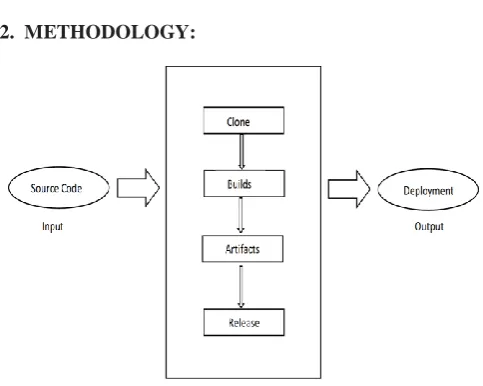
[image:4.595.37.279.114.307.2]2. METHODOLOGY:
Fig. Release Management Cycle
The above figure shows the representation of entire release management cycle of DevOps. The input consists of the source code which must be coded in offline Visual Studio. This input is then cloned (copied) onto the online Visual Studio, following which the build pipeline is created. A “build” is a developed application for the customers that are given by development team to the software testing team. A build represents one execution of a pipeline. It collects the logs associated with running the steps and the results of running tests. “Artifacts” are the static files which cannot be changed. An artifact is a collection of files or packages published by a build. Artifacts are made available to subsequent tasks, such as distribution or deployment. After the creation of artifacts now the project is ready to be released and hence we get our desired output. A release is the term used to describe one execution of a release pipeline. It is made up of deployments to multiple stages. A “Deployment” target is a virtual machine, web app, container or any service that is used to host the application being developed. A pipeline might deploy the app to one or more deployment targets after build is completed and tests are run.
Survey: SR. NO
Tools Advantages Dis-advantages
1. GIT Free open source
tool, allows
distributed development,
enables faster
release cycle,
supports pull
request.
Binary files are a big no, Steep learning curve.
2. Jenkins Free open source
tool, provides
multiple ways of communication: web based GUI, automate testing ,integrate all your
DevOps stages,
find and solve
bugs in your code.
Unpredictable costs, Lack of governance, No collaboration features, Lack of analytics, Needs personnel
3. CHEF Free open source
tool, supports
multiple platforms
like AIX,
freeBSD, easy to
integrate with
cloud based
platform, active
smart and fast-growing
community support.
Bringing up new
instances is
extremely slow,
there are many
moving parts and there is a high risk of failure.
4. PUPPET Free open source tool, Based on Master-Slave architecture, long commercial track record , platform independency.
Hard to configure. Time Consuming
and need large
group of people’s participation.
5. SELENIUM Free open source tool, Create robust
browser based
automation suites
and tests,
supports
multi-platform for
testing like ios and android.
Designed only to create prototypes of tests.
No support for
conditional and
iteration operations.
ACKNOWLEDGEMENT:
deployment. DevOps is the integration of Devlopment, Operations and Quality Assurance. It aims at delivering the product at a faster pace, thereby improving the quality of the product. It comes with the advantage of version control feature, where we can rollback to previous versions of the code without actually using a backup tool. The output will help companies who practice DevOps and quality engineering teams to take decision to improve testing practices.
Research findings have clearly indicated that culture, automation, measurement, and sharing have impacted on quality of the products therefore practicing DevOps will improve the software quality if they consider above facts correctly.
REFERENCES
[1] Pulasthi Perera. Roshali Silva. Indika perera, Improve software quality through practicing DevOps, 2017 IEEE.2017 Seventeenth International Conference on Advances in ICT for Emerging Regions (ICTer). [2] P. Perera, I. Perera, M. Bandara, "Evaluating the
Impact of DevOps Practice in Sri Lankan Software Development Organizations", ICT for Emerging Regions, pp. 281-287, 2016.
[3] "Agile Manifesto", Agile Manifesto, 04 2017, Available: http://www.agilemanifesto.org/.
[4] M. Huttermann, "Beginning DevOps for Developers", DevOps for Developers, pp. 3-13, 2012. [5] D. L. Farroha, B. S. Farroha, "A Framework for
Managing Mission Needs Compliance and Trust in the DevOps Environment", Military communicationsConference, pp. 288-293, 2014. [6] "2016 State of DevOps", Puppet and Dora, 2016. [7] D. Farley, J. Humble, Continuous Delivery: Reliable
Software Releases through Build Test and Deployment Automation, Pearson Education, 2010. [8] diazhilterscheid, 06 2016, [online] Available:
hilterscheid.de/en/ready-for-cams-the-foundation-of-devops/.
[9] "ISO/IEC 9126–1:2001 - Software engineering - Product quality - Part 1: Quality model", ISO, 03 2001, [online] Available: https://www.iso.org/standard/22749.html.
[10] M Rajkumar. Anil Kumar Pole. Prabal anta. Vittalraya Shenoy Adige, DevOps culture and its impact on cloud delivery and software development, 2016 IEEE. [11] Manish Virmani, Understanding DevOps & bridging