Argumentative Learning
with Intelligent Agents
Xuehong Tao
PhD in Computer Science
A thesis submitted in fulfillment of the requirements for the degree of
Doctor of Philosophy
College of Education
Supervisor: Professor Nicola Yelland
College of Education, Victoria University, Australia
Associate Supervisor: Dr. Greg Neal
i
Abstract
Argumentation plays an important role in information sharing, deep learning and knowledge construction. However, because of the high dependency on qualified arguing peers, argumentative learning has only had limited applications in school contexts to date. Intelligent agents have been proposed as virtual peers in recent research and they exhibit many benefits for learning. Argumentation support systems have also been developed to support learning through human-human argumentation. Unfortunately these systems cannot conduct automated argumentations with human
learners due to the difficulties in modeling human cognition.
A gap exists between the needs of virtual arguing peers and the lack of computing
systems that are able to conduct human−computer argumentation. This research aimed
to fill the gap by designing computing models for automated argumentation, develop a
learning system with virtual peers that can argue automatically and study
argumentative learning with virtual peers.
This research designed and developed four computing models for argumentation, which can be applied in building intelligent agents to conduct argumentation dialogues on learning topics. The research is ground breaking in the aspect of enabling computers to conduct argumentation dialogues automatically.
The computing models developed enabled studies on argumentative learning with virtual peers. In this research, a learning system was developed with an intelligent agent (modeled as a virtual peer) to argue with learners on science topics. Then, a study was conducted with secondary school students to investigate the argumentative learning between human learners and intelligent agents.
In summary, this multidisciplinary research is significant: it enables automated
ii
iii
Declaration
I, Xuehong Tao, declare that the PhD thesis entitled "Argumentative Learning with Intelligent Agents" is no more than 100,000 words in length including quotes and exclusive of tables, figures, appendices, bibliography, references and footnotes. This thesis contains no material that has been submitted previously, in whole or in part, for the award of any other academic degree or diploma. Except where otherwise indicated, this thesis is my own work.
Signature:
iv
Acknowledgements
First and foremost I would like to thank my supervisor, Professor Nicola Yelland. I appreciate all her contributions of time, inspiring ideas and strong supports to my Ph.D study. Whenever I meet difficulties, she is always there for help. Her passion for education and dedication for working is a motivation for me to pursue my study, and her thoughtful and insightful advice helped in the completion of this study.
I would also like to thank my associate supervisor, Dr. Greg Neal, for his kind support and constructive suggestions on research methodologies, technology supported deep learning and thesis writing.
I would like to extend my thanks to the College of Education, Victoria University, for providing excellent research experiences. I would also like to thank the teachers and students who enthusiastically participated in the study and generously shared their experiences and feelings with me.
v
Published Outputs from Thesis
[1] Tao, X., Yelland, N. & Shen, Z. (2014). Learning outcomes and experiences while learning with an argumentative agent. In Proceedings of World Conference on Educational Multimedia, Hypermedia and Telecommunications 2014 (pp. 2312-2322). Chesapeake, VA: AACE.
[2] Tao, X., Yelland, N. & Shen, Z. (2014). Do learners argue with intelligent virtual characters seriously? In Proceedings of World Conference on Educational Multimedia, Hypermedia and Telecommunications 2014 (pp. 2302-2311). Chesapeake, VA: AACE.
[3] Tao, X., Miao, Y. & Zhang, Y. (2012). Cooperative-competitive healthcare service negotiation. International Journal of Software and Informatics, 6(4), 553~570.
[4] Tao, X., Yelland, N. & Zhang, Y. (2012). Fuzzy cognitive modeling for argumentative agent. In Proceedings of the 2012 IEEE International Conference on Fuzzy Systems. Piscataway, New Jersey: IEEE.
[5] Tao, X., Shen, Z., Miao, C., Theng, Y. L., Miao, Y. & Yu. H. (2010). Automated negotiation through a cooperative-competitive model. In T. Ito, M. Zhang, V. Robu, S. Fatima, T. Matsuo & H. Yamaki (Eds.), Innovations in agent-based complex automated negotiations (pp. 161-178). Springer-Verlag Berlin Heidelberg.
[6] Tao, X., Theng, Y. L., Yelland, N., Shen, Z. & Miao, C. (2009). Learning through argumentation with cognitive virtual companions. In G. Siemens & C. Fulford (Eds.), Proceedings of World Conference on Educational Multimedia, Hypermedia and Telecommunications 2009 (pp. 3179-3194). Chesapeake, VA: AACE.
[7] Tao, X., Shen, Z., Miao, C., Theng, Y. L., Miao, Y. & Yu. H. (2009). A cooperative-competitive negotiation model. The Second International Workshop on Agent-based Complex Automated Negotiations, ACAN’09, Budapest, Hungary.
[8] Tao, X., Yelland, N. & Miao, Y. (2008). Adaptive learning through interest based negotiation. In Proceedings of the 16th International Conference on Computers in Education (pp. 191-192). Asia-Pacific Society for Computers in Education. [9] Tao, X. & Miao, Y. (2008). Interest based learning activity negotiation. In
Proceedings of the International Conference on Cyberworlds 2008 (pp. 58-64). Los Alamitos, CA: IEEE Computer Society.
vi
Table of Contents
Abstract ... i
Declaration ... iii
Acknowledgements ... iv
Publications Relevant to Thesis ... v
Table of Contents ... vi
List of Figures ... xi
List of Tables ... xiii
Part I. Introduction and Background
1.
Introduction ... 2
1.1 Argumentative Learning and the Needs for Virtual Arguing Peers ... 3
1.2 Research Aims and Research Questions ... 6
1.3 Research Methods ... 9
1.4 Significance of the Research ... 11
1.5 Organisation of the Thesis ... 12
2.
Argumentative Learning ... 16
2.1 Learning through Argumentation ... 16
2.2 Theoretical Foundation ... 17
2.2.1 Piaget’s Cognitive Constructivism ... 17
2.2.2 Vygotsky’s Social Constructivism ... 19
2.3 Benefits of Argumentative Learning ... 21
2.3.1 Argumentation Promotes Scientific Thinking ... 21
2.3.2 Argumentation Leads to Deep Learning ... 23
2.3.3 Argumentation Fosters Conceptual Change ... 26
2.3.4 Argumentation Supports Problem Solving ... 27
2.4 Barriers of Argumentative Learning in Education ... 30
3.
Pedagogical Agents and Learning ... 33
3.1 Pedagogical Agents ... 33
3.2 Appearance of Pedagogical Agents and Learning ... 34
3.3 Cognition of Pedagogical Agents and Learning ... 37
3.4 Important Features of Pedagogical Agents as Learning Peers ... 40
4.
Computer Supported Argumentation Systems and Learning ... 42
4.1 Collaborative and Single User Argumentation Systems ... 42
4.2 Agent Mediated Argumentation Systems ... 47
4.3 Issues of the Current Argumentation Systems ... 48
vii
Part II. Argumentation Computing Model Development
5.
Conceptual Design of Argumentative Agents ... 53
5.1 Computer Science Research Method ... 53
5.2 Agent Architecture ... 54
5.3 Agent Dialogues ... 56
5.3.1 Types of Argumentation ... 57
5.3.2 Dialogue Types in Computer Based Argumentation ... 60
5.3.3 Dialogue Protocol for the Argumentative Agent ... 64
5.4 Collaborative Argumentation Strategy ... 66
5.5 Argumentation Automation ... 67
5.5.1 Fundamental Concepts ... 68
5.5.2 Argumentation Computing Models ... 71
5.6 Summary ... 72
6.
Argumentation Computing Model for Chained Knowledge ... 74
6.1 Chained Knowledge and Graph Representation ... 74
6.2 Argumentative Dialogues Automation ... 75
6.3 Remarks ... 78
7.
Argumentation Computing Model for Hierarchical Knowledge... 79
7.1 Hierarchical Knowledge Model ... 79
7.2 Argumentation Automation ... 81
7.2.1 Backward Chaining and Forward Chaining ... 81
7.2.2 Argumentative Dialogue Automation ... 85
7.3 Examples ... 86
7.4 Remarks ... 90
8.
Argumentation Computing Model for Fuzzy Dynamic Knowledge 91
8.1 Fuzzy Cognitive Map (FCM) ... 918.2 FCM Based Argumentation ... 94
8.3 Argumentation Automation ... 98
8.4 Examples ... 100
8.5 Remarks ... 102
9.
Argumentation Computing Model for Collaborative Optimisation103
9.1 Argumentation Approaches ... 1039.2 Knowledge Model ... 105
9.3 Argumentation Automation ... 110
9.4 Example ... 114
9.5 Remarks ... 121
viii
Part III. Educational Study
– Intelligent Agents as Argumentative Learning Peers
10.
Educational Research Methodology ... 124
10.1 Review of Research Methodology ... 124
10.1.1 Research Paradigms ... 125
10.1.2 Qualitative, Quantitative and Mixed Methods ... 127
10.2 The Choice of Design Based Research Approach ... 131
10.2.1 Design-Based Research ... 131
10.2.2 Rationale of Design Based Research ... 131
10.2.3 Design Based Research Phases ... 133
10.3 The Choice of Phenomenography as a Qualitative Method ... 134
10.3.1 Phenomenography ... 135
10.3.2 The "Outcome Space" of Phenomenography ... 137
10.3.3 Why Apply Phenomenography in this Study? ... 138
10.4 The Choice of Science as Learning Topic ... 139
10.5 Briefs on Data Collection and Analysis Methods ... 140
10.5.1 Pilot Study Procedure and Methods ... 140
10.5.2 Further Study Procedure and Methods ... 141
10.6 Reliability and Validity ... 143
10.7 Limitation ... 145
10.8 Summary ... 146
11.
Pilot System and Study ... 147
11.1 Overview of the Pilot System - ArgPal ... 147
11.2 Study Procedures ... 152
11.3 Results ... 153
11.3.1 Children's Interaction with Peedy ... 154
11.3.2 Children's Perception to Peedy's Persona ... 158
11.4 Discussion ... 161
12.
Argumentative Learning System and Study Design ... 163
12.1 Overview of the Animal Classification Learning System ... 164
12.2 Participants and Procedures ... 168
12.3 Data Collection and Measurements ... 172
12.4 Data Analysis ... 173
ix
13.
Results ... 176
13.1 Test Scores ... 176
13.2 Argumentative Activities ... 178
13.2.1 Self-reported Activities from Questionnaire ... 178
13.2.2 Observed Activities from Screen Recording ... 180
13.3 Learning Experiences - A Phenomenographic Study ... 184
13.3.1 Overview of the Learning Experience Categories and the Outcome Space ... 185
13.3.2 Category 1: Argumentative Learning is a Way for Knowledge Building ... 188
13.3.3 Category 2: Argumentative Learning is a Way for Skill Building... 194
13.3.4 Category 3: Argumentative Learning is a Way for Disposition Building ... 195
13.3.5 The Response Distribution ... 198
13.4 Relationships Discovered ... 200
13.4.1 Peedy and Students' Performance ... 200
13.4.2 Argumentative Activity and Learning Experience... 202
13.4.3 Argumentative Activity, Biology Interest and Knowledge Acquisition ... 203
13.5 Summary ... 206
14.
Discussions ... 208
14.1 Academic Achievement ... 208
14.1.1 The Argumentative Agent Led to Better Learning Gain ... 208
14.1.2 Learning Opportunities Fostered by Argumentative Learning ... 209
14.2 Learner-Agent Interaction ... 212
14.2.1 The Argumentative Agent Engaged Serious Interaction ... 212
14.2.2 “The Media Equation” ... 214
14.3 Learning Experiences... 216
14.3.1 The Learning Experiences are Multi-Dimensional ... 216
14.3.2 Relationships between the Learning Experiences and Educational Objectives 221 14.4 Argumentative Activities ... 224
14.4.1 Argumentative Activities are Affected by the Nature of Problems ... 224
14.4.2 Learning Activities Influence Learning Experiences ... 226
14.5 Suggestions ... 227
14.5.1 Personalised Argumentation ... 227
14.5.2 Open-ended Problem Solving Learning Tasks... 228
14.5.3 Variety of Learning Content ... 229
14.6 Summary ... 230
Summary of Part III ... 231
Part IV. Conclusions
15.
Conclusions and Future Works ... 233
15.1 Main Contributions ... 233
x
References ... 238
Appendix ... 252
Appendix 1. Survey 1 on Animal Classification System ... 252
Appendix 2. Survey 2 on Animal Classification System ... 254
Appendix 3. Survey 3 on Animal Classification System ... 255
Appendix 4. Reference Interview Schedule ... 258
Appendix 5. Pre-test and Post-test Scores ... 259
Appendix 6. Argumentative Activities from Video Recording ... 260
xi
List of Figures
Figure 3.1 Herman the Bug ... 35
Figure 3.2 Agents with Different Facial Expression and Deictic Gesture ... 36
Figure 3.3 The Teachable Agent Betty ... 39
Figure 4.1 Interface of the Belvédère ... 43
Figure 4.2 AcademicTalk Interface ... 44
Figure 4.3 Screenshot of Reason!Able ... 46
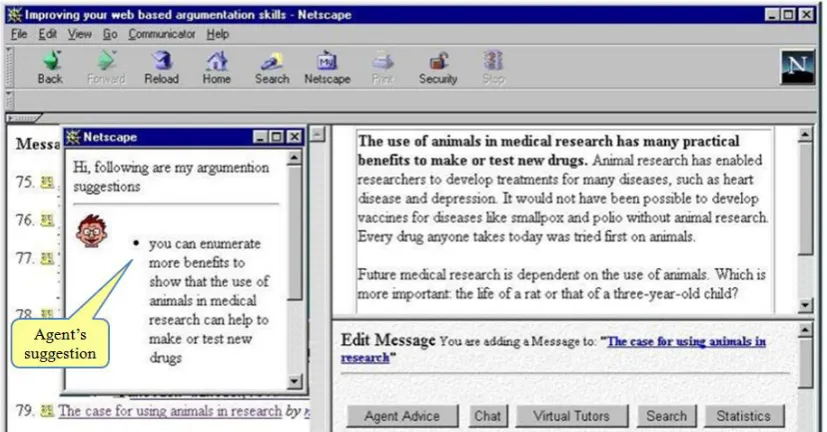
Figure 4.4 Agent Providing Advice ... 48
Figure 5.1 Architecture of Argumentative Agent ... 56
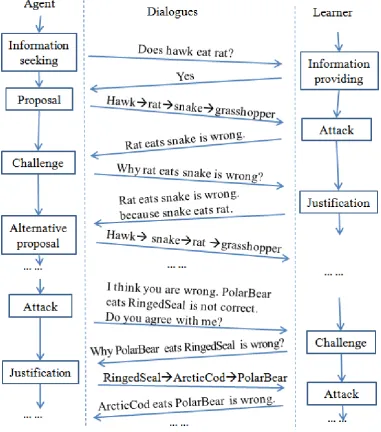
Figure 5.2 Sample Dialogue Scenarios ... 65
Figure 6.1 A Food Web ... 75
Figure 6.2 Sample Argumentative Dialogue ... 78
Figure 7.1 Hierarchical Structure of Rules ... 80
Figure 7.2 Graph Representation of the Rule Set ... 88
Figure 8.1 An Example of Fuzzy Cognitive Map ... 92
Figure 8.2 FCM on Disease Risk Factors ... 95
Figure 9.1 Graph Representation of Knowledge ... 110
Figure 9.2 Knowledge Base of Agent A ... 117
Figure 9.3 Knowledge Base of Agent B ... 118
Figure 9.4 Knowledge Base of Agent C ... 118
Figure 9.5 Proposal of Agent A ... 119
Figure 9.6 Proposal of Agent B ... 119
Figure 9.7 Agent A’s Revised Knowledge Base ... 120
Figure 9.8 B’s Alternative Solution Graph ... 120
Figure 9.9 Agent C’s Proposal ... 121
Figure 10.1 Design-based Research Phases ... 134
Figure 10.2 Phenomenographic Relationality ... 136
Figure 11.1 Interface of ArgPal ... 148
Figure 11.2 Peedy's Attack ... 150
Figure 11.3 Peedy Requests Advice ... 150
Figure 11.4 Ask Peedy Dialogue Box ... 151
Figure 11.5 Sample Knowledge Base ... 152
Figure 12.1 Main Interface ... 165
Figure 12.2 Peedy Accepts the Other's Opinion ... 168
Figure 12.3 Peedy's Attack ... 168
xii
Figure 13.1 Activities When Peedy Showed Different Opinions ... 179
Figure 13.2 Activities When Peedy Needed Help ... 180
Figure 13.3 Screen Shot of a Student ... 182
Figure 13.4 Observed Argumentative Activities ... 183
Figure 13.5 High Level Outcome Space ... 186
Figure 13.6 Detailed Outcome Space ... 187
Figure 13.7 Metaphor of the Outcome Space ... 188
Figure 13.8 Response Distribution ... 200
Figure 14.1 Student Experience and Educational Objective Taxonomy ... 222
xiii List of Tables
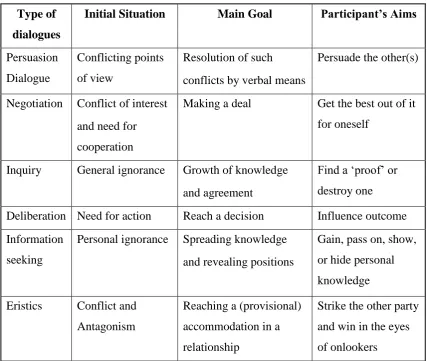
Table 5.1 Type of Dialogues ... 61
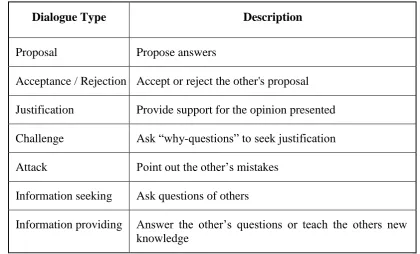
Table 5.2 Dialogue Types of the Agent ... 64
Table 10.1 Paradigms, Methods and Tools ... 130
Table 11.1 Dialogues between Children and Peedy ... 156
Table 12.1 Study Protocol ... 171
Table 13.1 Mean and Maximum Score of Pre-test and Post-test ... 176
Table 13.2 T-tests Results ... 177
Table 13.3 Argumentative Activities from the Questionnaire ... 179
Table 13.4 Correlation Between Different Activities ... 184
Table 13.5 Categories of Argumentative Learning Experience ... 185
Table 13.6 Comparison of the Sub Categories ... 194
Table 13.7 Learning Experience Response ... 199
Table 13.8 Peedy and Student's Correct Answers and Correct Features ... 201
Table 13.9 Correlation Between Peedy and Students’ Performance ... 201
Table 13.10 Average Activities of Group X and Y ... 202
Table 13.11 T-test Between Group X and Group Y ... 203
Table 13.12 Descriptive Statistics of Variables ... 205
1
Part I. Introduction and Background
Part I introduces the background of the research, reviews the related literatures,
2
1.
Introduction
Argumentation plays an important role in education. Argumentative learning is a promising learning strategy in information sharing, deep learning, and knowledge construction. However, in an argumentative learning process, learners require qualified learning peers to conduct argumentative dialogues regarding the learning content. A qualified arguing peer should have argumentation skills, relevant knowledge levels and sufficient available time to ensure the effectiveness of
argumentative learning. Student peers may not have the proper argumentation skills and knowledge levels to provide the right scaffolding to each other, and teacher peers may not always be available due to factors such as high teacher - student ratios. Because of the high dependency on qualified arguing peers, argumentative learning has only had limited applications in school contexts.
A possible solution is to apply intelligent agents as virtual learning peers. In recent
research development, intelligent agents have been proposed as virtual learning peers and exhibited many benefits for learning. Studies have been conducted on various aspects of using virtual peers in learning, such as those where agents' appearances can
have a profound impact on learners' motivation and learning transfer (Baylor & Plant,
2005; Rosenberg-Kima et al. 2008; Baylor & Kim, 2009). Argumentation is a high
level intelligence and requires profound modelling of human’s cognition. Currently,
there is no intelligent agent that is able to conduct argumentation dialogues with
learners. Argumentation support systems have also been developed to support learning through human-human argumentation. However, these systems also cannot conduct automated argumentations with human learners.
A gap exists between the needs of virtual peers to facilitate argumentative learning
and the lack of computing systems that are able to conduct human−computer
argumentation. The research presented here aims to fill this gap by advancing
3
This is a multidisciplinary research project. It designed four computing models to
automate human-computer argumentation. With the computing models designed, the
research developed learning systems with virtual peers to conduct argumentative
dialogues with learners. The virtual peer can be largely “cloned” to meet the needs in
argumentative learning. Furthermore, this research conducted studies with students
and for the first time investigated argumentative learning between human learners and virtual peers.
1.1 Argumentative Learning and the Needs for Virtual Arguing Peers
Learning is a social process. Intellectual growth is achieved when learners are
involved in learning activities with others (Vygotsky, 1978). Learning is socially
constructed during interaction and activity with others. Dialogue and communication
during the learning processes are important. As Yelland (2011) noted, “it is also
essential that learners be provided with opportunities to share their strategies and to
communicate and disseminate their ideas. This is important for the creation of
knowledge building communities, and because we can learn a great deal from each
other about the varied processes and strategies used, in order to evaluate their
effectiveness” (p.35).
Recently, a new form of “learning by arguing” strategy was proposed by Andriessen
(2006). In this learning approach, argumentation is described as a form of
collaborative discussion in which both parties are working together to resolve an issue,
and in which both parties expect to find agreement by the end of the argumentation.
Andriessen (2006) termed it as collaborative argumentation to emphasise that it is
different from a debate. In collaborative argumentation, students do not have to take
sides and persuade others. They are free to explore positions and find mutually
accepted solutions. In this thesis, such learning is noted as argumentative learning, or
“learning by collaborative argumentation”.
Collaborative argumentation can help students to think critically. A collaborative
argumentation may contain a mixture of arguments, explanations and a variety of
4
and/or counterarguments to resolve their conflicting opinions; they may also elaborate
misconceptions and generate associations among new ideas and prior knowledge.
These interactions will bring in new view points, and broaden and deepen their
existing understandings. Research studies showed that there are significant benefits of
argumentative learning: it promotes scientific thinking (Duschl & Osborne, 2002;
Driver, Newton & Osborne, 2000); it leads to deep understandings and knowledge
co-construction (Newton, Driver & Osborne, 1999); it fosters conceptual change
(Asterhan & Schwarz, 2007); and it supports problem solving (Oh & Jonassen, 2007).
Although collaborative argumentation is regarded as being very beneficial to learning,
it has not been widely applied in schools. Osborne (2010) pointed out that the lack of
opportunities to develop the ability to reason and argue scientifically would appear to
be a significant weakness in contemporary educational practices. However, there are
some barriers that prevent argumentative learning from being widely applied in
schools. On one hand, some students view argumentation as constituting discord and
disagreement, so they are not willing to engage in argumentation (Nussbaum, Sinatra
& Poliquin, 2008). On the other hand, as Duschl and Osborne (2002) noted, the
discursive nature of argumentation requires both time to undertake the process, and
time for reflection and consideration of the outcomes. Therefore, it is important for
argumentative learning to be guided by experienced teachers to ensure that it is on the
right track and achieve productive outcomes. Schools also have limited resources to
accommodate argumentative learning in the current context.
An alternative approach to enable argumentative learning is to develop intelligent
agents as virtual learning peers. There are multiple benefits if such virtual peers can
be developed. Firstly, it is possible to largely clone the virtual peers once they are
created. Secondly, students do not have to worry about the face to face disagreement
with their friends. Thirdly, virtual peers can facilitate argumentative learning with
more flexible time schedules.
Using virtual peers to facilitate learning is not new. A number of computer simulated
virtual characters have been developed and studied in education. For example, virtual
5
& Baylor, 2006b), as trouble makers to encourage students to solve conflicts (Aïmeur,
Frasson & Dufort, 2000), and as learners to promote learning by teaching (Blair et al.,
2007). Researchers have discovered profound impacts of virtual peers on learning. For
instances, the influence may come from the virtual characters’ appearances, such as
gender (Baylor, Shen & Huang, 2003), facial expression (Baylor & Kim, 2009),
emotion (Alepis & Virvou, 2011), and the manners in which virtual characters
communicate with students (Wang et al, 2008). Although progresses have been made
in developing virtual learning peers and applying them in various studies, no
argumentative learning peer has been reported.
There have been a few computer systems developed to support argumentation, such as
InterLoc (Ravenscroft, McAlister & Sagar, 2010) and Reason!Able (Van Gelder,
2002). Some researchers have also applied intelligent agents as assistants for
argumentation (e.g. Monteserin, Schiaffino & Amandi, 2010). However, the existing
systems are, in fact, argumentation support systems. They either provide
communication platforms to support human-human argumentation, or provide
feedback on human’s arguments. Due to the difficulties in modeling human cognitive
processes with computers, there is no computer-based learning systems that are able
to conduct argumentation dialogues with learners, especially for school science topics.
A clear gap exists between the needs of artificial peers to facilitate argumentative
learning and the fact that there is a lack of computing systems that are able to conduct
human−computer argumentation. This thesis aims to fill the gap by designing
computing models for automated argumentation, developing learning systems with
virtual peers that can argue automatically, and studying argumentative learning with
virtual peers.
Yelland (2007, p.1) has suggested that, “in the information age or knowledge era, we
should not be mapping the use of new technologies onto old curricula; rather, we need
to rethink our curricula and pedagogies in light of the impact that we know new
technologies can have on learning and meaning making in contemporary times.” This
research is to advance technologies to create innovation in a promising new way of
6 1.2 Research Aims and Research Questions
To enable argumentative learning, computing models need to be developed for virtual
peers to conduct argumentation with human learners automatically. Following on,
studies can then be conducted to gain understandings on argumentative learning
powered by intelligent virtual peers. This multidisciplinary research has two broad
aims:
firstly, to design and develop computing models that enable computer
automated argumentation with human learners; and
secondly, to implement a learning system with an intelligent agent that is
able to conduct collaborative argumentation with learners; and to investigate
the learning outcomes, the learner - agent interaction and learning
experiences in this context.
Particularly, the research will address the following two broad issues and consider the
four research questions posed in B below.
A. Computing models for argumentation automation
Knowledge is the basis of arguments. People argue based on their knowledge. Human
beings have different types of knowledge. Some knowledge is in the form of chained
components; some knowledge is based on fuzzy concepts; and some knowledge is
hierarchically structured. Therefore, different computing models are needed to
automate the corresponding knowledge based argumentation. In this research, four
types of major computing models have been developed for argumentation automation.
- Computing model for chained knowledge. In our everyday life, there is some knowledge that describes sequences of items. For example, the knowledge that
7
order of a set of given items. Knowledge model for chained knowledge and
algorithms to automate the argumentation dialogues were developed in this
study.
- Computing model for hierarchical knowledge. The If…Then alike rules are widely used in expert systems and our lives. They are commonly understood
as logical entailments, e.g. If an animal is warm blooded, has fur, feeds young with milk, Then this animal is a mammal. In addition to logical entailments, this kind of rule can also be used to represent a wide range of relationships
among components, such as part and whole, or detailed description and
abstract concept, and so on. One such rule shows the relationship between one
component and other components. A set of such rules will show a hierarchical
relationship among components. This kind of knowledge is termed as
Hierarchical Knowledge in this thesis. The corresponding knowledge model, reasoning algorithms and argumentation algorithms were developed to
automate the argumentation for hierarchical knowledge.
- Computing model for fuzzy and dynamic knowledge. Classical knowledge models use crisp concepts. When a rule states that a zebra is a mammal, there
is no ambiguity. However, the most common concepts human beings possess
are fuzzy concepts. For example, eating more vegetables is good for your
health. Here, more and good are all fuzzy descriptions. Fuzzy Cognitive Map (FCM) is a knowledge model to represent fuzzy and dynamic knowledge,
which has wide application in decision making systems such as medical
systems, ecosystems and management systems. Based on FCM, this research
developed the first FCM based argumentation model.
- Computing model for collaborative optimisation. When a group of people encounter a problem, they usually propose individual opinions, critique and
evaluate each other’s opinion, and collaboratively construct solutions by
considering the shared knowledge of the group. In this case, people are often
able to explore a wide range of possibilities, compare the advantages and
8
on the collective knowledge of the group. A computing model was developed
in this thesis to automate argumentation dialogues for optimal solutions.
B. Educational studies on argumentative learning with virtual peers
By applying the argumentation computing models, a learning system was developed
with an intelligent agent that was able to conduct automated argumentation. An
intelligent agent that can conduct automatic argumentation is termed as argumentative agent in this thesis. The argumentative agent was modeled as a virtual learning peer in the developed learning system. Virtual learning peers have many advantages. They
can be largely cloned at low cost; they can be specially designed to implement
particular pedagogies; they can carry various domain knowledge thus can be applied
in different learning subjects. However, virtual peers are different from human peers.
Do students argue with the virtual peers seriously? Are the virtual peers beneficial to
students’ learning? Studies were carried out to investigate the argumentative learning
with intelligent agents.
Particularly, this study focused on the following research questions:
- Is learning with argumentative agents effective in improving learners' knowledge? A main concern of the learning system was whether it could improve the learners’ knowledge. This study was carried out to evaluate the
learning gains while learning with the argumentative agent.
- Are learners interested in arguing with the argumentative agent and do they argue with the agent seriously? The argumentative agent was modeled as a virtual peer in the developed learning system. A virtual peer is different from a
human peer. If the students didn’t argue with the virtual peer seriously, there
wouldn’t be meaningful argumentative learning. Therefore, the learner – agent
interaction was investigated.
9
learners’ experiences while arguing with intelligent agents. For the first time,
this research studied the qualitatively different ways of learning experiences
while arguing with virtual learning peers. The learners’ experiences provide
feedback on argumentative learning from the learners' perspectives rather than
the researcher's interpretation.
- Do different activities have different impacts on learning? The purpose of introducing the argumentative learning system was to improve the learners'
learning. Therefore, the argumentative activities were expected to be positively
related to the learners' achievement. Whether or not argumentative activities
were main contributors to students’ academic achievements was also examined
in this study.
1.3 Research Methods
This is a multidisciplinary research. This thesis reports two major parts of research:
one part was to develop computing models for automated argumentation so that
argumentative virtual peers become possible; another part was to implement
argumentative learning systems in a school context and study the effectiveness and
learning experiences of argumentative learning with virtual peers. The research
methods also include two parts as described below.
A. Research methods in argumentation computing modeling
This thesis adopts the theoretical method in computer science research
(Dodig-Crnkovic, 2002) which adheres to the traditions of logic and mathematics, and seeks
to find solutions or better solutions to complex problems through algorithms design
and analysis. The key phases of argumentation computing model development are:
- Identify the key requirements and components, - Design the argumentative agent architecture,
10
Altogether, four computing models were developed in this research to represent four
types of widely used knowledge, and to automate the argumentation processes. The
development of each of the computing model had experienced multiple rounds of
iterations on requirements identification, architecture design, dialogue design and
algorithms development. The models or algorithms of each phase were revised and
improved until a final mature model was established.
B. Research methods in educational studies
As this research aims to improve learning through the design and development of
argumentative learning systems, design based research was employed as the overall
methodology to guide the educational research process. The design based research
methodology intends to bring together design and research in order to create a better
improvement and understanding of the argumentative learning with virtual peers
(modelled by intelligent agents).
The design based research involved two iterative cycles of design, development and
evaluation. A pilot learning system was developed by applying an argumentation
computing model. There was an argumentative intelligent agent in the learning
system which was modeled as a virtual learning peer. The virtual peer was able to
conduct argumentation with learners automatically. The software system development
followed the iterative waterfall software engineering model (Sommerville, 2011) with
each iteration including a number of phases: requirements analysis, system design,
implementation, testing, and operation and maintenance/improvement. After the pilot
system was implemented, a pilot study was conducted with 5 children. Both video
recording and interviews were collected. The children’s activities and perceptions to
the learning system were investigated.
The findings from the first study informed the development of a second learning
system. A further study was conducted on the second learning system with 33
secondary school students. Data were collected from multiple sources and the analysis
11
learning experiences. A Phenomenographic approach (Marton, 1981, 2001) was
incorporated to analyse students’ learning experiences.
Argumentative learning is a new way of learning. There is no report regarding the
study of argumentative learning with intelligent agents in school based contexts. This
research generated new understandings about human-agent argumentative learning
and suggests guidelines for future argumentative learning systems design and
development.
1.4 Significance of the Research
This research is significant in both computing models for argumentation automation
and understandings about human-agent argumentative learning in education.
Firstly, the computing models developed will enable a wide range of applications.
Argumentation is one of the most common human interactions. It is widely applied in
knowledge building, decision making, business negotiation, conflict resolution and so
on. However, computing models for human oriented argumentation automation
remained unavailable. This research developed computing models for four typical
human knowledge types, namely chained knowledge, hierarchical knowledge, fuzzy
dynamic knowledge and knowledge for optimal solutions. The computing models
provided mechanisms for computers to conduct argumentation dialogues
automatically. This work will enable a wide range of applications in various areas,
such as education, business and legal services.
Secondly, this research will make significant impacts on education by enabling a practical approach for widely adopting argumentative learning. It is known that argumentation plays an important role in information sharing, deep learning and
12
without intelligent virtual peers, argumentative learning is not practical. With the argumentative virtual peers, argumentative learning can be applied whenever needed.
Third, this research is a pioneer work on argumentative learning with intelligent agents. This research for the first time has studied students’ learning with an argumentative agent. It will contribute to knowledge on the understandings of
argumentative learning with virtual peers, and the design and development of future
argumentative learning systems.
In summary, this multidisciplinary research is significant: it enables automated
argumentation of computers by designing four computing models for argumentation; it makes the desirable argumentative learning practical by developing learning systems with intelligent agents to facilitate human-computer argumentation; and for the first time, it investigates argumentative learning with intelligent agents which contributes to knowledge on argumentative learning between human learners and virtual peers.
1.5 Organisation of the Thesis
This is a multi-disciplinary research project. To achieve the goal of using computer
based virtual peers to support argumentative learning, this study involves research
from the computer science area within the education context. Part I of the thesis
introduces the background and related literature this research is situated; Part II
presents the computing research on argumentation model design and development;
Part III presents the educational studies on argumentative learning between human
learners and computer based argumentative virtual peers; and Part IV concludes the
thesis. Details are as follows:
Part I introduces the background of the study and reviews the related literature this study is situated.
Chapter 1 introduces the motivation, aims and research questions, as well as presents
13
Chapter 2 reviews the theoretical foundation and benefits of argumentative learning. It
summarises the current issues of applying argumentation in schools which are the
situations this research attempts to improve.
Chapter 3 reviews the contemporary research on pedagogical agents. Pedagogical
agents are animated virtual characters which help learners in computer based learning
environments. The review covers the properties of pedagogical agents and the impact
of different properties on learning. Pedagogical agents are potential technologies that
can facilitate argumentative learning in schools.
Chapter 4 reviews the existing computer supported argumentation systems in the
literature. These systems can only support human-human argumentation, or provide
feedbacks to human’s arguments. They lack the capability to support human-computer
argumentation. To design and develop mechanisms for human-computer
argumentation is a goal of this research.
Part II presents the design and development of argumentation computing models.
Chapter 5 introduces the fundamental concepts used in the computer science area
regarding argumentation modeling, and the collaborative argumentation strategy used
in this study. It presents the conceptual design of an argumentative agent.
Chapter 6 presents an argumentation computing model for chained knowledge,
including the knowledge model and argumentation dialogue automation algorithms.
Chapter 7 presents an argumentation computing model for hierarchical knowledge,
including the knowledge model, argumentation dialogue automation algorithms and
illustrative examples.
Chapter 8 presents an argumentation computing model for fuzzy dynamic knowledge,
including the knowledge model, argumentation dialogue automation algorithms and
14
Chapter 9 presents an argumentation computing model for applications seeking
optimal solutions, including the collaborative optimal seeking argumentation
approach, knowledge model, argumentation dialogue automation algorithms and an
illustrative example.
Part III presents the educational study by applying the designed and developed argumentative virtual peer in education contexts.
Chapter 10 presents the research methodology. Design based research is adopted and
it guides the whole education study. The study included two iterative cycles of design,
development and evaluation: a pilot study and a further study. Mixed methods
research is applied to collect and analyse both quantitative and qualitative data. Data
was collected from multiple sources including pre-testing, post-testing, questionnaires,
screen recordings and interviews. The data was analysed with quantitative methods
using statistics and a qualitative method including phenomenography.
Chapter 11 reports the pilot study. The pilot study confirms the potential for effective
learning with argumentative virtual peers. The study also revealed valuable points of
argumentative learning with intelligent agents that helped further design and develop
the learning system and the study that followed.
Chapter 12 presents the improved argumentative learning system and the design of the
educational study, including the study procedures, data collection and analysis
methods and measurements.
Chapter 13 reports the analysis of results. The results cover learning gains,
learner-virtual peer interaction, learning activities and learning experiences. The results show
that learners were engaged in serious discussion with the virtual peer, and
argumentative learning was effective in improving learners' knowledge. The results
also reveal multi-dimensional learning experiences of the students who participated in
15
Chapter 14 discusses the findings of this research, answers the research questions, and
compares the results with related research.
Part IV concludes the thesis.
16
2.
Argumentative Learning
Argumentative learning can be traced back to 1978 when Vygotsky (1978) studied the
important role of social interaction for intellectual growth. Since then, argumentative
learning has been studied by researchers. Many benefits of argumentative learning
have been identified. It has broadened human understanding of learning from
knowledge transfer between teachers and students to knowledge construction through
social activities. This chapter reviews the theoretical foundation, benefits and current
issues of argumentative learning.
2.1 Learning through Argumentation
Peer learning has been a central theme in the learning sciences for a long time. Peer
interactions have been shown to influence learning in the classroom and have been
reported as beneficial to the learners (Howe et al, 1995; Thurston et al, 2007).
De Lisi and Golbeck (1999) highlighted four reasons for the prominence of peer
learning: One reason is that a shift away from traditional learning approaches that
focus on knowledge transmission from teachers to students, to the constructivist
approaches that emphasize discovery learning and view knowledge acquisition as a
social activity. Peer learning has become an important means of implementing
constructivist educational approaches. A second reason is related to the fact that one
of the fundamental goals that schools have is to prepare students for life after school
in the workplace and in communities. Working cooperatively with peers is regarded
as a very important skill in contemporary workplaces. A third reason is that schools
have introduced many technologies into classrooms in recent years, especially
computer technologies. Peer learning is necessary for sharing of technological
resources. Finally, the Internet provides opportunities for students to access ideas of
others and share ideas easily. That is, the Internet has removed some key restrictions
of peer learning such as peer learning does not have to happen in class time nor
17
Argumentation is one of the most common interactions in peer learning. Andriessen
(2006) proposes a new “learning by arguing” paradigm. Here argumentation refers to
the dialogues that learners engage in when solving problems. In an argumentation
process, learners can collaboratively explore and evaluate different perspectives. The
goal is to reach an agreement on the problem solution. It is unlike a debate where
people retain their own positions and attempt to persuade others, and to win the debate
is the ultimate goal. Educators often use the term ‘collaborative argumentation’ to
differentiate it with debating. Nussbaum (2008) defines collaborative argumentation
as a social process in which individuals work together to construct and critique
arguments. He explained that collaborative argumentation is unlike a debate, students
do not have to take sides and persuade others, but are free to explore positions flexibly
and to make concessions. Andriessen (2006) has a similar view and noted that when
students collaborate in argumentation, they work together to critically explore and
resolve issues which they all expect to reach agreement on. Ultimately, they are
arguing to learn.
2.2 Theoretical Foundation
Argumentative learning involves two or more students collaboratively contributing
ideas to solve issues. In the process of learning, students are usually surrounded by
conflicting perspectives and arguments. They are encouraged to work together to
evaluate these perspectives and reach a commonly agreed solution. Piaget's cognitive
constructivism (1985) and Vygotsky's social constructivism (1978) are two of the
most relevant theoretical foundations for argumentative learning.
2.2.1 Piaget’s Cognitive Constructivism
Jean Piaget was a Swiss psychologist who was one of the first to make a systematic
study of the processes inherent to the acquisition of conceptual understandings in
children. Piaget asserted that children develop their understanding through the
processes of assimilation and accommodation, associated with the construction of
18
Piaget used assimilation and accommodation to describe the processes when new
information is encountered. Piaget (1952) borrowed the term assimilation and
accommodation from physiology. In terms of cognitive processes, Piaget used assimilation to refer to the collecting and classifying of new information. When new
information is encountered, if it does not contradict with the existing schema, it is
assimilated to the existing schema. Accommodation is the alteration of schemas in
order for allowing new and contradictory information (Pritchard & Woollard, 2010).
Schema is an important concept in Piaget's theory. Schemas refer to the set of rules
that human beings use to interpret their everyday surroundings. They are stored in
long term memory. A schema is a representational model of all of the knowledge that
an individual has on a topic. Schemas are organised around themes or topics; the
elements of a schema are linked by a common theme. Human schemas are very large
and constantly evolving. There are many links both within and among human schemas.
(Pritchard & Woollard, 2010)
Piaget (1985) developed his cognitive development theory into what is often called an
equilibration model. When children do not change very much, they assimilate more
than they accommodate. Piaget referred to this steady period as a state of cognitive
equilibrium. During periods of rapid cognitive change, children are in a state of
disequilibrium, where they accommodate more than they assimilate. They have to
frequently modify their current schemes due to the large amount of new information.
Piaget referred to this back-and-forth movement from equilibrium to disequilibrium as
equilibration (Bornstein & Lamb, 1999, p. 278). According to Piaget (1985),
equilibration refers to the mental activity of changing and developing while regulating
itself to maintain coherence. Cognitive development takes place by the subject's
advancing from one stage of equilibrium to another. Equilibrium is thus never
achieved except in temporary stages. The cycle of equilibrium - disequilibrium - new
equilibrium thus goes on. Equilibration then reflects a process that involves the
creation, or construction of new forms that lead to a better, improved state of
19
Piagetian theory implies the benefits of peer learning and provides a strong foundation
for the use of peer learning in classrooms. Peer interactions provide rich and necessary
contexts for students, reflecting on peer reactions and perspectives serves as a basis
for a student to revise his or her schema. Such revisions would in turn, lead students to
make new meanings (De Lisi & Golbeck, 1999). Specifically, peer interaction creates
critical cognitive conflict. If learners are aware of a contradiction in their shared
knowledge base, the experience creates disequilibrium. This disequilibrium motivates
the learners to question their beliefs and to try out new ones. This leads to the existing
cognitive structure being displaced and a new structure taking its place, hence leads
learners towards internal cognitive development.
Argumentation constitutes a major source of cognitive conflict, and cognitive conflict
is regarded as an important stimulus for learning (Veerman, 2000). Argumentation
provides a context full of cognitive conflicts, and the cognitive conflicts stimulate
learners' cognition advances from one equilibrium to another. Hence, Piaget's
cognitive conflict theory provides a theoretical foundation for argumentative learning.
2.2.2 Vygotsky’s Social Constructivism
Lev Vygotsky was a Russian psychologist. His theory of social development and
particularly his work on learning in social contexts has become central to current
thinking and practice in education. Vygotsky (1978) considered that social interaction
as a fundamental aspect of successful cognitive and intellectual growth. He thought
that cognitive and intellectual development is achieved when learners are involved in
learning activities in which they interact with others. Learning is socially constructed
during interaction and activity with others. His theory is usually labeled as social
constructivism.
The major aspect of Vygotsky's theory is that social interaction, language and
discourse play a fundamental role in the development of cognition. He stated that
“every function in the child's cultural development appears twice: first, on the social
level, and later, on the individual level; first, between people (inter-psychological),
20
attention, to logical memory, and to the formation of concepts. All the higher
functions originate as actual relations between human individuals.” (Vygotsky 1978, p.
57). Vygotsky believed that all cognitive functions originate in social interactions, and
human cognitive structures are essentially socially constructed. Different from the
traditional belief that knowledge is transmitted from teachers to students, Vygotsky’s
theory advocates that knowledge is constructed during the interactions between
students and teachers. Individuals learn by interacting, communicating, collaborating
and negotiating meaning with each other in a social context. According to Vygotsky,
learning environments should be designed to promote students’ interactions (such as
group discussion, argumentation, collaborative problem solving) so as to foster
knowledge construction.
Another important aspect of Vygotsky's work is the idea that the potential for
cognitive development depends on the zone of proximal development (ZPD). The
concept of ZPD is at the center of learning and developmental processes. He believes
that people learn and construct knowledge within the ZPD, which is “the distance
between the actual developmental level as determined by independent problem
solving and the level of potential development as determined through problem solving
under adult guidance or in collaboration with more capable peers.” (Vygotsky 1978,
p.86).
The ZPD is a notional area of understanding, or cognitive development, that is close
to, but just beyond a learner's current level of understanding. If learners are to make
progress they must be helped to move into this zone and then beyond it to a new and
higher level. In this new level there will be a new ZPD. Successful and timely
movement across this notional zone is dependent upon social interaction. Learners can
be assisted in the progress made across their ZPD in a given situation by a more
knowledgeable other who can provide support that will make progress possible
(Pritchard & Woollard, 2010). This assistance is known as scaffolding.
Dialogues within the ZPD are essential to cognitive growth. Vygotsky distinguished
two interrelated groups of concepts that called scientific concepts and spontaneous
21
contextual associations but unsystematic. They follow a common sense logic and are
expressed via informal language. Scientific concepts originate during highly
structured activities within the culturally coordinated practices of a school. The ZPD
represents the place where the child's empirical spontaneous concepts meet with the
systematic and logic of adult reasoning. Through dialogue and tasks within the ZPD,
the flaws of the child's spontaneous concepts and reasoning are made explicit and
compensated by the strengths of the adult's scientific conceptions and reasoning. Then
the child becomes socialised with scientific conceptualisations. Thus, by using
dialogues and tasks, the teacher (or more capable peer) develops the child's
spontaneous concepts into scientific conceptions (Ravenscroft, 2001).
Vygotsky's theory about social interaction and the ZPD laid the foundation for
argumentative learning. Argumentation among peers provides a social learning
environment for learners to carry out learning discourse. The dialogues or
argumentation can generate hints, verify ideas or generate new ideas and help the
learner reach the potential.
2.3 Benefits of Argumentative Learning
Argumentation is a popular subject of investigations in education. The interests can be
found in many fields of expertise, such as argumentation theory itself, discourse
analysis and psychology (Asterhan & Schwarz, 2007). Researchers and educators
have studied argumentation practice in various subjects, including science (Driver,
Newton & Osborne, 2000) and mathematics (Krummheuer 2007). Significant
benefits of argumentative learning have been discovered.
2.3.1 Argumentation Promotes Scientific Thinking
Scientific knowledge is socially constructed and validated (Driver et al. 1994).
Scientific knowledge does not directly exist in the natural world, it is constructed and
developed by scientists to interpret and explain the nature world. Once such constructs
have been validated and agreed on, they become part of the "take-for-granted" way of
22
In this social construction and validation process, argumentation is a core activity of
the scientific community. When scientists invent concepts or models to interpret the
world, these new scientific conjectures do not become public knowledge until they
have been checked and generally accepted. The scientific community will carry out
argumentative practices to validate the conjectures, such as an evaluation of
conjecture in the light of available evidence; determination which conjectures present
the most convincing explanations for particular phenomena in the world. These
argumentative practices are essential in the establishment of knowledge claims
(Newton, Driver & Osborne, 1999). Argumentative practice is also used in examining
the appropriateness of an experimental design, or the interpretation of evidence in the
light of alternative theories. Furthermore, scientists also extend argumentation beyond
the scientific community to the public domain through journals, conferences and the
wider media. It is through such processes of having claims checked and criticized that
"quality control" in science is maintained (Driver, Newton & Osborne, 2000).
Since argumentation is essential in the social construction of scientific knowledge and
argumentative practice is a key activity of scientists, it has been suggested that science
education should largely involve argumentation. Driver et al. (1994) believed that the
role of science education is to mediate scientific knowledge for learners, to help them
to make personal sense of the ways in which knowledge claims are generated and
validated. When learning science concepts it should not simply be a case of extending
learners' knowledge of phenomena, or developing and organizing learners'
commonsense reasoning. It should lead learners to a different way of thinking about
and explaining the natural world, and help learners become socialized into the
practices of the scientific community. Newton, Driver and Osborne (1999) also
pointed out that it is not enough for students just to hear the explanations from experts,
they should know both the questions and answers that scientists value, and practice
using the questions and answers for themselves. Through practice in posing and
answering scientific questions, students become active participants in the community
of science rather than just passive observers. Furthermore, through taking part in
activities that require them to argue the basis on which knowledge claims are made,
23
itself. Driver, Newton & Osborne (2000) concluded that if we intend to show the
socially constructed nature of scientific knowledge, students should be given some
insight into its epistemology, the practices and methods of science and its nature as a
social practice through studies of science-in-the-making. Students should be given the
opportunity for discursive practices in general and argumentation in particular.
Argumentation promotes epistemic knowledge and scientific thinking. Duschl &
Osborne (2002) believed that "if the structures that enable and support dialogical
argumentation are absent from the classroom, it is hardly surprising that student
learning is hindered or curtailed. Or, put simply, teaching science as a process of
enquiry without the opportunity to engage in argumentation, the construction of
explanations and the evaluation of evidence is to fail to represent a core component of
the nature of science or to establish a site for developing student understanding (p.
41)". They claimed that teaching science must address epistemic goals that focus on
how we know what-we-know, and why we believe the beliefs of science. Engaging
learners with conceptual and epistemic goals in argumentative learning environments
can help make scientific thinking and reasoning visible. Driver, Newton and Osborne
(2000) pointed out that when students engage in argumentation, they will learn not
only what a phenomenon is, but also how it relates to other events, why it is important
and how this particular view of the world came to be. Through argumentative learning,
they practice the way that scientists do, promote scientific thinking and gain
experience for their future scientific works.
2.3.2 Argumentation Leads to Deep Learning
Deep learning is regarded as a desirable goal for education. It enables learners to learn
in an integrated way, and know how to apply the knowledge learned in a variety of
contexts. Moon (1999) claimed that learning is a continuum ranging from surface
learning to deep learning. The representation of surface learning is when bits of
information may be recalled but the learner does not demonstrate it in a coherent or
varied form, nor is it substantially related to their previous knowledge. Deep learning
is represented as a coherent form because new ideas are meaningfully related to each
24
structures. In surface learning, learners simply memorise isolated ideas, while in deep
learning learners integrate new ideas into their cognitive structures. Offir, Lev and
Bezalel (2008) defined deep learning in distance education as a process that takes
place when students translate new information into engraved concepts and relate it to
their life experiences. Existing thinking schemes are changed during this process and
the learned material is integrated within the students' perceptions web. Surface
learning is the understanding and remembering of existing information, or primary
absorption of new information at a simple level. It does not change the students'
engraved thinking process. Neal (2005) suggests that effective learning is more likely
to occur when students adopt a deep learning approach.
Deep learning happens when learning tasks are challenging. Neal (2013) stated that
“surface learning approaches include tasks that involve low-level thinking – these
primarily consist of reproducing information or memorising information; also, the
student’s sole intention is the completion of the task…. When given tasks demand
more than routine effort and demand the use of higher cognitive strategies by
challenging the students’ thinking, these are considered to be deep learning
approaches. Deep learning includes the intention to understand, relating previous
knowledge to new knowledge, and discovering relationships between ideas.” (p.27)
Argumentation can promote deep learning because it challenges the learners to apply
higher cognitive strategies, and when learners engage in argumentation, they seek to
find evidence to prove a claim and they seek to infer from their existing knowledge
base. This enables them to connect relevant information together and link new
information with the existing ones.
Generating relations among knowledge, experience and existing knowledge are
important for learning. Wittrock (1992) believes that the focus in learning is on
generating relations, rather than on storing information. He proposed a generative
model of learning and teaching, which deals with the effects of generation of
meaningful relations, among concepts and between knowledge and experience. People
actively and dynamically use generative learning processes to (a) selectively attend to
events and (b) generate meaning for events by constructing relations between new or