THE CODEX COWMBINO-BECKER
Nancy Ireze Patterson Troike
ii
ABrBAcT
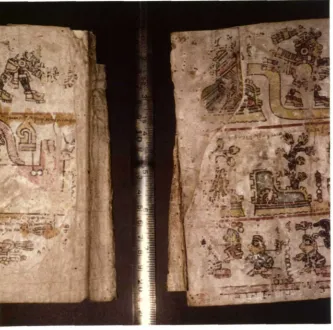
This study is an interpretation of the historical events re-corded in the Codex Colombino-Becker. Beginning with the earliest known appearances of the parts of this document, Its owners are traced and a survey made of scholarly thought concerning its text. The physical dimensions and. internal structure of the manuscript are described, and these form the basis for re-grouping the present seven franents into three larger sections.
All the scenes of the codex are described and. discussed in de-tail. The events are found to be occurring within a broader context that Is not expressed in the pictorial content of the manuscript, but which must be understood in order for the individual scenes to become meaningful. The discovery aM anaLysis of this larger con-text has enabled much of the material in the codex to be integrated into a more coherent history in this study than has been possible heretofore.
iii
TABTh OF COItrNrS
Abstract ii
Table of Contents iii
Chapter I: Introduction 1
Chapter II: The History of the Codex Colombino-Becker 16 Chapter III: The Structure of the Codex Colombino-Becker
Chapter IV: Section I of the Codex Colonibino-Becker:
Coloznbino Fragments I and. III: Part I 107 Chapter V: Section I of the Codex Coloabino-Becker:
Colombino Fragments I and III: Part II 161i. Chapter VI: Section II of the Codex Colonibino-Becker:
Colonibino Fragment IV and Becker Fragment 1 239 Chapter VII: Section III of the Codex Colombino-Becker:
Becker Fragment 2, Colombino Fragment II,
and Becker Fragment 3: Part I 2811. Chapter VIII: Section III of the Codex Colombino-Becker:
Becker Fragment 2, Colombino Fragment II,
and Becker Fragment 3: Part II 314.3
Chapter IX: Suiwnary and Conclusions 14.07
Bibliography 14.90
Appendix: Articles by Nancy P. Troike 11.99
'Observations on the Physical Form of the Codex Becker I •' Archl y fUr V1kerkunde, 1969, band 23, pp. 177-182.
'Observations on Some Material Aspects of the Codex Colonabino.' TIalocan, 1970, toino VI, mini. 3, pp. 214.0-22. Mxico.
iv
'The Structure of the Codex
Colombino-Becker.' Anales del Instituto Naclonal de
Antroologa Historta,
1971,
septima
poca, tomo II, pp. l81-2O. Mxico.
'The Identification of Individuals in the
Codex Colombino-Becker.' James H. Rauh,
ed.: New World Writing Systems. American
Museum of Natural History, Natural History
Press. (In press.)
'The History of the Codex Zouche Since 185i.
Actas }morias del XXXIX Congreso
Inter-nacional de Ainericanistas, Lima,
&gosto, 1970. (In press.)
1
CHAPTER I INTRODUCTION
Long before the arrival of the Spanish in the New World, the Mixtec Indians of Mexico evolved a pictorial system for recording the events they wished to remember. This system reached a high degree of interrelated artistic, linguistic, and. representational complexity, and enabled them to paint lengthy documents on folded strips of animal hide. Mzst of these manuscripts are now lost,
destroyed by time, accidents, and. the zeal of the conquering SpanlEh, but a few have survived.
During the late nineteenth and early twentieth centuries scholars held conflicting opinions regarding the nature of these Mixtec texts, but by the beginning of the present century a body of reliable information began to be built up • The manuscripts were found to contain two different types of data: the lines of genea-logical descent of the ruling families in various areas of the Mix-teca, and the outstanding activities of a few of the most important individuals of that ruling class • Both types of information often occur in the same text.
Interpretations of these manscripts may therefore contribute significantly to the reconstruction of the pre-Hispanic history and culture of the )1ixtecs. The detailed analysis of a single document can be of particular value, for each separate text presents a
2
study is to be an interpretation of the pictorial contents of one
such Mixtec manuscript, the Codex Colombino-Becker.
Since a codex will reflect the knowledge -- that Is, the
tradi-tions -- of its painters at the time and. place in which It is
created, the history recorded in one manuscript may differ either
slightly or significantly from that given in another. Such
differ-ences between texts are not necessarily errors in need of correction
but rather may be evidence of divergent traditions, and as such are
potentially sources of important information. These variations may
not only supply costplementary or additional data that clarify the
events concerned, but more importantly, they may reveal social and.
political factors affecting the different areas of the Mixteca by
showing changes in the emphasis accorded to different persons or
occurrences.
It I. therefore very undesirable to attempt to force the data
of one manuscript into the framework of another text, since this
would. mask the very differences that might
be
the most informative.
Rather, each codex needs to be studied separately to determine Its
individual statement of Nixtec history. Not only is this the best
way to comprehend the full amount of information an artist may put
3
distinguish differing traditions, those individual selections that
are a matter of personal artistic choice, and information that may
simply be erroneous.
If there is no single uniform history of the Mixtecs that may
be imposed upon all these manuscripts, there are still a series of
localised histories which may be in general accord although varying
individually in both information and emphases. For persons or events
to be depicted in a codex is clearly an indication of their
impor-tance in at least the tradition recorded in that particular text,
and, the appearance of these same data in several manuscripts should
signify that this importance was wide-spread and not merely local.
Direct conflicts in f&cts, and the omission from one text of
in-formation found in another, may both reflect different local
tradi-tion. In addition, however, omissions may also reveal the existence
of other social and. political factors, for Mixtec painters did not
normally depict unfavourable information concerning the area or
person. whose history they were recording. It is the data upon
which all the texts agree that should ultimately become the basis
of a general history of the )(ixteca, while the remaining information
may apply only to a particular region or even to a single town.
1.
in seven fragments, four of these being in Mexico where they are called the Codex Colombino, while the other three are in Vienna and. are named the Codex Becker 1.2 me
extant text is incomplete,
parts of the original still being lost.
Since the manuscript is badly fragmented, its pieces must first
be restored to their correct sequence before a meaningful study of
the text can be uertaken. This restoration is essential, for an
improper order of the surviving parts would alter the sequence of the
historical events in the manuscript. As already noted,
it is notpossible to
determinethe arrangement of the text of one codex by
comparing it with another similar document, f
oreach may derive from
a somewhat different tradition and consequntly have different
em-phases or variations in the sequences of events. It is therefore
necessary to
examinethe original fragments themselves for clues,
and for this purpose I
made severaltrips to Mexico and Vienna to
study the Colombino and the Becker. I was able at those times to
take numerous measurements of them, and. to study them under
ultra-violet light or through a microscope. All descriptions and. physical
data cited
in thisstudy and not specifically credited to another
1lnventory number 35-50,
Museo Nacional deAntropologfa,
t4xico, D. F.
5
source, are drawn from my examinations of these original
manu-scripts.
The present study will be concerned with interpreting the pictorial text of the Codex Colombino-Becker to determine its
ver-sian of the lives of
8
Deer and Ii. Wind. As a consequence of the problems outlined above, no attempt will be made to resolve the differences among the extant Mixtec texts concerning these two men or to create a single 'correct' account of their histories, although some of the variations found in other manuscripts will be utilised in interpreting the Coloabino-Becker.Foremost among those scholars whose research established the nature of the Mixtec codices was Alfonso Caso. Working over a period of years and with almost no previous studies to guide him, he was eventually able to decipher many of the conventions and com-plexities in these manuscripts and so enable their texts to be
under-stood for the first time in several centuries • He is thus the true founder of th. field of Mixtec historical-genealogical studies, and it is upon his work that all subsequent studies are based. During these years he was necessarily principally engaged in basic research work to define this area of specialisation and to determine the
6
and It should certainly be no reflection upon the quality of his
work if these later students are able to propose interpretations
that go beyond those he suggested.
The present Colombino-Becker study Is of course based upon
this foundation created by Caso. Both Caso
(1966)
and Karl A.
Nowotny
(196
1)
have made studies of all or part of the
Colonibino-Becker, but these have been primarily descriptive rather than
inter-pretive. While descriptions are also
basicto the work that follows
here, they are
intended only as the foundation for interpretations
concerning the meaning of the
individual scenes andthe significance
of the overall context within which those events occur. By
con-centrating my analysis upon only
the Colombino-Becker,I hope to
achieve a more fully integrated interpretation of Its text than is
found
inthese earlier studies. Successive scenes in this codex
are organised into lengthy, continuous narratives, and, the
deter-mination of their larger context should not only yield a better
in-sight into the events themselves, but also reveal more clearly the
Mixtecs'
viewof their own history.
All the Mixtec historical-genealogical codices share a common
body of pictorial conventions concerning the representation of
dates, place signs, names of persons, important crises in the humai
life cycle,
and many otbr activities.The meanings and uses of
7
detail by Mary Elizabeth nith
(1975: 2 0-51i. ).The terminology
em-ployed in the present study normally agrees closely with that used
by ith
(196 5; 1966; 1975)in her works on the Colonibino-Becker
and other Mixtec manuscripts, and in her translation of Caso's
(1966)
notes on the Colombino-Becker. Such variations as may occur
here are usually the result of my interpretation differing from that
of Caso; because the Idenity of some of the objects drawn in the
codices is not now known, I have preferred to use a descriptive
phrase rather than to inject a name or function from a non-Mixtec
culture.
Each individual shown in these historical-genealogical codices
normally bears two different names: a calendar name indicating the
day of birth, and a more individualistic personal name. This
latter name is essential for distinguishing between persons who
were born on the same day and hence have the same calendar name.
In the Colombino-Becker, however, there are few duplications of
calendar names and hence few occasions for confusion between
in-d.ividuals on this basis. As a consequence, the use of personal
names becomes redundant and will be omitted in this study except
when ambiguity might result. When used, these names are given
within quotation marks, with diagonal (/) lines separating the
various elements that comprise the name.
8
by the appropriate male or female biological symbol as a further aid. in distinguishing between individuals. All but a very few of the figures in the Colombino-Becker are male, however, and therefore only the female biological symbol () has been retained in this
study; it will be used preceding the calendar tames of all women. All other calendar names are those of males.
Many objects and numbers in day and year dates, and calendar and personal names, have been damaged or obliterated in the original fragments of the Colombino-Becker. A short dash (--) will be used here in place of those elements that have been totally erased, and a question mark will follow numbers or identifications that now seem doubtful. The locations of scenes in all the Mixtec codices will be
specified by the page and band number where the event is painted, this system having been evolved by Caso in his many studies. Dif-ferent methods of numbering are found in the various available re-productions of these manuscripts, but in the interest of clarity and consistency, Arabic numbers will be used here only for pages, and. Roman numerals only for bands, for all texts.
9
'Reverse'
and 'Obverse', Bodley, Selden, and
VindobonensisRe-verse.
1
Themain contributions of the Vindobonensis Reverse and.
Zouche-Nuttall 'Obverse' are
genealogicalbackground relating to 8
Deer's family. The Selden supplies extensive information on the
life of
6
1krnkey,mother of 1 Wind. The Bodley is the prime
source for 1
Wind hiuislf, and also contains detailed genealogiesfor
8 Deer'sfamily and
marriages as veil asother details of his
life.
The Coloinbino-Becker
has its closest connexions, however, with
the Zouche-Nuttal]. 'Reverse',
2
which also pictures the politicalThe Zouche-Iluttall, also called the
Codex Zouche or Codex
Nuttali, is catalogued as Md. 1. 39671
at the British Museum,
London. The manuscript is painted on both faces, each of which is
actually a separate and distinct text • The Bodley bears inventory
number
2858,and the Slden,
number 3155,both at the
Bodlelan Library, Oxford. The Vindobonensis is inventoried as Bibl. Pal. Vind. Cod. 1xic. 1 at the Osterreichiache Nationalbibliothek,Vienna. Its two faces are painted with separate and. unrelated texts,
only that
on its Reverse side being anintegral member of the
Mixtec historical-genealogical group.2
1 have previously demonstrated (1969b)
that the 'Reverse' faceof the
Zouche-Nuttall waspainted before the 'Obverse' side and. so
is actually the original manuscript. To avoid confusion, however,
I have
retainedthe
names by which the two sides have long been known, but placed them within quotation marks to indicate that the terms are no longer directly applicable.The only
availablereproduction of the Zouche-Nuttall is
alithograph issued
in 19CQ,with
mOtesby Zelia Nuttall.
Unfortu-nately, this publication deviates considerably from
the form of the
original codex, moat importantly in
that the first two pages of the
'Reverse' text have
been transposed to the 'Obverse' face following
the final scene of that
side.Neither the reproduction nor
10
events of B Deer's life but breaks off, incomplete, before reaching
his death. While the texts of the two codices are often in
agree-ment, there are also important differences between them, and their
emphases vary considerably. Smith
(19
66:
166-170)
has pointed out
the differing importance accorded in each manuscript to specific
towns in different areas of Oaxaca, and. concluded from this that
the account of
8
Deer'slife presented
Inthe
Colombino-Beckerre-flects the tradition of Tututepec and the coastal area of Oaxaca,
while that
inthe Zouche-Nuttall 'Reverse' represents the tradition
of
Tilantongo inthe Mixteca Alta.
Some attempts have been
madeto divide the extant Mixtec
codicea on the
basisof their supposed pre- or post-Hispanic origin,
or upon their composition before or after an approximate date, but
inherent difficulties
makeall such schemes speculative and
unsatis-text and the two pages printed at the end. of the 'Obverse' side of
the facsimile • Some of the
errors inthis
l9C
edition have also
been moted briefly by Cotti. Burland.
(1957) and
Case(i966 i-].6).
Because of the
transferof the two 'Reverse' pages and the
omis-sion of all the
bank pagesof the original manuscript, the page
numbers of the 19CQ reproduction do not correspond to the numbers
assigned the
originalcodex about 1919 after it became the permanent
property of
the BritishMuseum (Troika n.d.b). Although the
Muse-um's numbering system will doubtless be used in future facsimile
editions, the pagination of the lithograph must be referred to
In11
factory. Smith
(1973: 19),
after giving a concise suninary of such
efforts, concluded:
In the case of strictly genealogical manuscripts...it is
likely that the native ruler who commissioned the
inanu-script would be seeking a pictorial record that culminated
in his generation or that of his children. However, in
the case of
Colombino-BeckerI, which is devoted to the
biography of an...(earlier] hero, it is always possible
that this manuscript was a much later copy of an earlier
manuscript or was merely telling a story that was centuries
old at the time the manuscript was painted.
Thus even if the internal dates given In the Colombino-Becker could
be satisfactorily correlated with the modern calendar, these would
not necessarily Indicate the time at which the codex was actually
painted. Until a reliable method is discovered for the accurate
dating of ancient manuscripts, it will not be possible to make any
valid estimation of the age of this codex.
Even though It is not yet possible to determine the times at
which moat of the surviving
I4ixteccodices were painted, a very uful
distinction may still be msde between those texts whose composition
shows some European characteristics, and those that do not reveal
any such influence (Robertson 1959). Although the lack of Spanish
traits in a document cannot be taken as an iniallible indication of
its pre-Hispanic origin, since manuscripts without such elements
are known to have been painted in the early Colonial period, the
appearance of European elements in a text clearly demonstrates a post
-Contact origin. The
Colombino-Beckeris painted entirely in the
12
In my previous research concerning the overall chronology of
the dates found in the surviving historical-genealogical codices, I
have reached conclusions that differ from those of Caso regarding
the equation of the Mixtec dates with the Christian era. Some
potential discrepancies have also been pointed out by H. B. Ilicholson
(1967
a
: 258),who considered that Caso's temporal sequence should be
taken as a stimulating working hypothesis, with full cognizance of
some fragile links', and subject to modification by new lnformaticn
or more convincing arguments. Until these problems are resolved and.
a single unified chronology proposed that will adequately cover a]].
the individuals
inthese manuscripts, it seems best to refrain from
equating the Mixtec cycle with the modern calendar.
An internal chronology for the Colombino-Becker is necessary,
however, even
though the time span of the text is not great.
Be-cause these larger chronological problems have nobearing upon the
relative sequence of the
Mixtec yearsbut refer only to their
equa-tions with the
modern calendar, inthe present study all events
will
be
dated byreference to the age of an important individual,
such as
8
Deer.To facilitate these references, Figure 1 depicts
two consecutive Mixtec cycles of 52 years, end shows the relative
life-spans of
BDeer, 12 Movement, and 1 Wind. In addition, Figure
2 lists the proper sequence of the 260
named days of the calendar0
S S . . S S S I . S . I S . S1
2
3
II.5
6
7
8
9
10
11
12
13
1
2
3
14.
5
6
7
8
9
10
11
12
13
1
2
3
S
6
7
8
9
10
11
12
13
13
FIGURE 1.
Mixtec cycles of years, showing the relative life-spans of
8
Deer,
12 I.bveinent, and 14. Wind,
12
8
12
8
11.
ve- Deer
Move- Deer Wind
Wind
ment
ment
1 Reed
2 Flint
3 House
1. Rabbit
5
Reed
6
Flint
7
House
8
Rabbit
9 Reed
10 Flint
11 House
12 Rabbit
13 Reed
1 Flint
2 House
3 Rabbit
1. Reed
5
Flint
6
House
7
Rabbit
8 Reed
9 Flint
10 House
11 Rabbit
12 Reed
13 Flint
1 House
2 Rabbit
3 Reed
ii. Flint
5
House
6 Rabbit
7
Reed
8
Flint
9 House
10 Rabbit
11 Reed
12 Flint
13 House
1 Rabbit
2 Reed
3 Flint
14. House
5
Rabbit
6
Reed
7
Flint
8
House
9
Rabbit
10 Reed
11 Flint
1.2 House
13 Rabbit
1 Reed
2 Flint
3 House
14. Rabbit
5
Reed
6 Flint
7
House
8 Rabbit
9
Reed
10 Flint
11 House
12 Rabbit
13
Reed
1 Flint
2 House
3
Rabbit
14.
Reed
5
Flint
6 House
7
Rabbit
8
Reed
9
Flint
10 House
11 Rabbit
12 Reed
13
Flint
11f
FIGUPE
2.
The 260
named days of the Mixtec calendar cycle.
Alligator
1
8 2 9 3 10
i
i
.
11
5 12
6 13 7
Wind,
29 310
1
11
512
613718
House
3 10 1 ii 5 12 6 13
7
1 8 2 9
Lizard
11. 11
5
12
6 13 7 1 8
2
9 3 10
Snake
5 12
6 13
7'
1 8 2 9 3 10 1. ii
Death
61371829310
1
11 512
Deer
71829310
11 512613
Rabbit
8 2 9 3 10
11
5
12 6 13
7 1
Water
9310
1
#11 512 6137182
Dog
10
1i
512613718293
Monkey
1151261371829310 ii.
Grass
1261371829310
11i
5
Reed
1371829310
1
11 5126
jaguar
1829310 1
1l 512
6137
Eagle
2 9 3 10
11
5
12 6 13 7 1 8
Buzzard
3 10
11 5 12 6 13
7
1 8 2 9
Movement
1 U 5 12 6
13 7 1
8 2 9 3
10
Flint
5 12
6 13 7 1 8 2 9 3
10 1. ii
Rain
61371829310
1
l1 512
15
16
CBAPTER II
TEE HIrORY OF THE CODEX COLOMBINO-BECKER
The times and circumstances in which the original Codex Colom-bino-Becker became divided are not known, nor how the seven surviv-ing fragments became grouped into two separate documents. Prior b the time each manuscript reached its respective museum late in the nineteenth century, information concerning the ownership or even the whereabouts of the texts is usually sketchy and often oblique. This is unfortunate because the identification of the early owners might contribute to determining the locality in which the codex was painted. Since the data are so scanty, I have thought it appropriate to quote all statements in full and as originally written, particu-larly because some printed accounts appear to be deliberately im-precise.
TEE CODEX COLOMBINO
17
1966),
record the names and boundaries of a number of localities on the coast of Oaxaca that had once been subservient to the important town of Tututepec. Through archival documents Smith(1963:
277-278; 1966: 1%, 19, 171)
end Caso(1966:
chart foflowing page8)
have traced the history of the cacicazg
Q of Tututepec, and. haveidentified the name of Don Pedro de Alvarado that appears in several of these glosses as that of the caciue of Tututepec from
l22
to17.
ith
(1966:
171) has also suggested that the Colombino could have been among the papers later acquired by Francisco Piinentel de Guzrnu y Alvarado when he became cacig
ue of Tututepec about the middle of the seventeenth century, and then subsequently inherited by his son and successor AgustCn Canoe Pimentel dc Guzmn y Alva-rado. In1717
the latter was involved in a land. dispute with a neighbouring town and as evidence in support of his claims presented a document described by the court interpreter as a 'mapa de pintura', which ith(1963: 283-288 1966: 12, l6)
has identified as theCodex Colombino. The earliest surviving description of the manu-script is made by this interpreter:1
1
Archivo General de is Naci6n, Mexico: VCnculos, vol.272,
exp. 10, fols. 42 rev.-li.3
rev. Printed versions and English translations may be found in Heinnich Berlin(1911.7:
143) and Smith18
.abiend.o registrado un mapa de pintura yal pie deellas las letras decurso antlguo en cuartetas d.c poco mac de-cuarta dc largo cadauna y un genie d.c ancho ysiendo todos dc beinte cuatro que medidas por baras tubieron slete y media con poca difirensia...y laultima cuarteta d.c dicha mapa y pintura consta aberse figurado ci ao d.c nil qui-nientos y quarenta yuno
--The Mexican vara of this period is some
83,8
centimetres long (Haggard 19]il: 81i.). On this basis the approximately seven and one-half varas specified for the length of the 'mapa' would be about628.5
centimetres; and the slightly more than one-quarter of a varagiven for the length of each page would equal somewhat more than 20.95 centimetres. These figures compare favourably with modern measurements of the Colombino, its total length being a little more than
611
centimetres and. its average page length being slightly over 25 centimetres (Troikel970a:
2119). The Colombino was therefore already in its present form by the time the boundary glosses of the coastal sites were written on it, perhaps as early as 1511.1 and certainly before the 1717 lawsuit.19
19 01, and. published by the former. In it Chavero responded to criticisms that several manuscripts he had recently published were not authentic documents, and defended one of these, the 'codex in the tin box 1 , by relating how it had. been in the possession of per-Sons who also owned the Colombino and. the Codex Dehesa. Although this account has been noted. by Jesus Galind.o y Villa (1923: 2714.) aid briefly summarised by Caso (19 66 : 13), these Chavero remarks
concern-ing the Coloabino have never been reprinted, despite their impor-tance. The part referring to the Colombino is as follows (Chavero 1901: 14...):
20
El Sr. Prez
mepidi6 como corretaja "el c6dice d.e
la caja de hoja de latati, como lo ilamaba l. Los otros
dos pasaron poder del Sr. Lucio,
en
uno de tantos
cam-bios de antigUedades y objetos
de arte, que continuamente
haclamos:
lo cual
pueden tanib1n testificar
sus hijos que
aim viven. Ms tarde
los adquiri6 el mismo
Sr. Prez.
Su hijo Daniel debe recordar tod.o esto.
Segthi me
refiri6
dicho Sr. Prez, vendi6 los c6dices, dos
en
Puebla y uno
en Veracruz. 14sf se explica
coma uno fu
dar poder
del Sr. Dehesa, y otro pertenecla
al
Sr. Doreaberg.
Mucho tiempo despus
vinieron
de Puebla venderme
ci de la caja de hojalata, pues aim
is conservaba.
Pars cerciorarme ms dc la Identidad del códice, lo he
mostrado al
Sr. Lic. D. Miguel Serrano, sobrino del Sr.
Cardoso con quien
vivfa
coma hijo, y
lo
ha reconocido.
Chavero's letter is characterised. by the names of a number of
persons, most of them already dead, and by a scarcity of fixed dates.
The two years of 1863 and
1869
are
given
only as approximations, aid
the times of subsequent
events are very vaguely
specified, even tt
of the sale and repurchase of his own collection, which he should
certainly remember clearly.
While
it is necessary to
keep in mind
that in 1901 Chavero was writing at
the age of 60
years
about
inci-dents that had happened considerably
esrli.a -- nearly li.
0
years before,
for his first
recollections
of the manuscripts -- it also seems
obvious that he was attempting to conceal the identity of some of
the persons with whom he had dealings. However, inasmuch as Chav o's
letter contain. the first concrete information on the Colombino
since 1717,
aM
also traces its movements for approximately the
next 20 years, the data are worth exploring.
Manuel Cardoso was a lawyer who
lived in
the city of Puebla.
21
an old judicial file (Chavero
1892 :xxii); the
'codex in the tin
box', on whose acquisition there is no information; and the
Colom-bino. This would seem to indicate his sustained interest in such
manuscripts, as does the fact that he did not dispose of any of
these during his lifetime. Of Cardoso's ownership of the Colombino,
Chavero's letter reports only that he had inherited It from his
parents as
avery old family heirloom, a statement which does at
least make clear that It was not Cardoso himself who first acquirel
the codex. Cardoso's nephew Miguel Serrano Daza, mentioned as
hav-ing
resided with him, was a lawyer and teacher who
wasborn in 1811.2
and died
in 1916.Chavero bought
allthree manuscripts from Car4kso's estate
about
1869,sold them with his own collection of documents to
Itur-be, then bought the whole collection back with the assistance of Dr.
Lucio
andthe broker
Jose U.Prez. Prez
requestedthe 'codex in
the
tinbox'
as hiscommission for
assisting inthis latter
trans-action, while the
Dehesaand Colombino went to Rafael Lucio Njera,
a wellsknown medical doctor of the period who survived until
1886.In
18611. Lucio lied published a smallbook on Mexican paintings of
22
Chavero then implies that Prez sold the Colozabino to Doren-berg' in Puebla, the 'codex in the tin box' to an unnamed party
also in Puebla, and the Dehesa to Teodoro A. Dehesa in Veracruz, but this was not precisely the case for the Dehesa. Nine years earlier Chavero (i82: xxii) had written that after the death of Cardoso this codex 'pas6 poco ml Sr. lgar de Veracruz', and. only after the latter's death had it become Dehesa's; Chavero made no mention at that time of is or Lucio's ownership, nor of either dealer. Since Chavero was not concerned in his 1901 letter with the fortunes of the Dehesa codex, it is possible that Sr. Dehesa was mentioned only as the ultimate owner and not as the person to whoa Prez sold the codex directly. However, these variations in the Dehesa data indicate the possibility that the Coloinbino might also have been involved, in still other changes of hand which are not specified in letter.
All these transactions involving Jose MarIa P&ez Hernndez, the liberal fighter
and
military writer who acted as dealer for the several sales, can be dated as occurring no later than 1879, the year of his death. By that date, therefore, the Colombino must have been in Dorenberg's hands if it passed directly to him from Prez. However, the earliest information definitely connecting23
Dorenberg with the codex dates only from
1888.
In
1887-1888
Eduard
Seler, the great German student of Mesoamerican manuscripts, was
making a trip through North America and about the middle of July,
1888,
reached Puebla. His mention of the Colombino is brief but
in-formative (Seler
1889: 263):
Dazu fanden vir im Besitz einea Deutechen, Herrn Consul Dorenberg, der
such
eine schöne Samalung mexikanischer Alterthumer scm elgen nennt, einen Codex, schöne site mexikanische Bild.ermalerei mit Inachriften, vie cischeint in id.xtekischer Sprache. Diesen copirten
vir, vozu uns Herr Dorenberg freundlichst die Erlaubniss gab--
das heisat, ich zeichnete ihn d.urch, und. C. (Caecilie
Seler-Sacha, his wife] colorirte ihn, und so
vurd.en ci, --statt der zvei Tage, die
virin Puebla zu bleiben
gedachten,
vierzehnTage.
The first publication of any part of the Colombino occurred
the following
year,1889,
when a colour lithograph of page
3
of the
'Códice
Doremberg' was printed byLeopoldo Batres
(1889:
Jim. XXLHe gives a quite accurate figure for the total length of the
manu-script and a very precise statement concerning the language of the
glosses (Batres
1889: 327):
Eats Jimina representa uns pintura ideogr!ica tomada del precioso c6dice mixteco, d.c is propiedad del Sr. Dorem-berg, comerciante alemn radicado en is ciudad de Puebla,
quien
bondadosamente mefac iiit6
el originalpara sacar
una copia. El original d.c
cite preciosodocument, consta
d.c
211.hojas como is que
motiva eats erplicaci6n: las1
Another edition of this work was published with a date of
2.
figuras estn pintadas en una tira de cuero de 6 metros de largo, y doblada, formRniio hojas, como la que descri-bo • A]. pie de las figuras est escrita la lnterpretaci6n en idioma mixteco de Tepoxcolula.
Batres gives no clue as to why he considered the language of the glosses to be that of Teposcolula, although the precision of the attribution might indicate that the information came from Doren-berg. It may be significant that when the cacicazo of Tututepec passed to Francisco Pimentel de Guzmn y Alvarado about 1651i, he was also heir to the cacicazgo of Teposcolula (Caso
1966:
chartfol-lowing page
8;
Smith1966:
171).With the fourth centennial of the discovery of America approach-ing, Mexico was one of the countries invited by Spain to contribute to an zxposici6n Hist6rlco-Americana to be held in Madrid in the autumn of
1892.
President Porfirio Diaz of Mexico appointed a group of eminent Mexicans to determine an appropriate method of participa-tion, and this group, constituting itself as the Junta Coloabina de Mx1co, decided to form a collection of archaeological and ethno-graphic objects and antiquities for display in Madrid (Paso yTron-coso 1892: ;
Chavero1892:
iii; Galindo y Villa1923: i,8).
Paso y Troncoso(1892: 7-9)
describes how this goal led to the acquisition and publication of the Codex Colombino:aixCan-25
la reconocido por encargo del Gobierno, un aflo antes, e].
Sr. Chavero y el que suscribe, y por su mediación se
ad-quiricS, dando valioso contingente de ms dc tres mu
ob-jetos,...y dban].e grande iniportancia 1mbien cuatro
ejein-plares valiosos: los tres instrumentos de madera...y
Unprecioso c6dice mixteco, exquisito por el tono delicado de
sus colores y por la elegancia de las figuras decorativas
que contiene.
Duefia la Junta del manuscrito, propusimos el Sr.
Cha-vero y yo que Be le lianara CcSdice Co].ombjno y que se
publicara, en
unicSnde otros c6dices y objetos
quefueran
adqulriendose, para former con ellos todos una obra
nionu-mental en hoinenaje al descubridor del Juevo Mundo....
Aunque tuvo la obra en sus principios ruda oposicicSn,
que pudo acaba.r con la empresa en su cuna, hentos logrado
verla terainada, y hoy la reciben con aplauso en Europa
las personal entendidas. ... Con tod.os ellos se reunieron
nis d.c ciento cinquenta lmnlnas cromolithogr.ficas,
acorn-pafiadas de un texto explicativo que debimos escribir ci
Sr. Chavero y yo; pero que, por ml separacion para venir
Madrid, qued6 exciusivamente cargo del aquel reputado
arquecSiogo mexicano.
This massive publication, issued in 1892 with the title
Anti-guedades mexicanas ublicadas p
nta Colombina dc Mx1co en ci
cuarto centenarlo del descubrimiento
Amrica, consisted of a lge
Atlas of lithographs of a number of codices, and a smaller volume of
text by Chavero. In the Atlas all the pictorial scers of the
Co]om-bino were reproduced in full colours that are a serviceable
approxi-mat ion of those in the original. However, many damaged drawings
were at least partially restored. without indication, and all the
written glosses were omitted, their positions merely being marked by
dashed lines flanked with asterisks. The overall impression created
by this lithograph is therefore considerably different from that of
26
In the text volume Chavero's (1892:
iii) introductory remarks
add. little, although he does conmient that Dorenberg's collection
had been made 'con especial cuidado y sin omitir gasto en el
trans-curso de varlos aFAos'. In his very brief notes on the Colombino
Chavero (1892:
x) givesno hint of the fuller data concerning its
earlier history that he alrea&y knew end was to reveal later in his
1901 letter. Instead, he merely stated: 'Solamente sabemos d.c este
c6dice, que perteneca al Sr.
Doreinberg, comercianted.c la ciudad
d.c Puebla, quien 10 compr6 uno d.c tantos
mercaderesde antigUedades,
sin que supiera su origin.' In describing the manuscript itself,
Chavero
(1892:
x) wrote:
Es
evidentementeun códice anterior £ la Conquista. Est
pintado en una tira de plel d.c
venadoblen curtida, o mas
bien en doe,
cosidascon una correa d.c la misma piel.
Tiene la tira
6
metros80
centImetros d.c largo por 20 centCmetroa d.c ancho. Segtn la coetumbre dc los indios eat doblada manera de bioabo,y aa forma un libro de
2 Jip.ginas. Est pintada solamente por un lado, y
prepa-rada con una especie de barniz blanquecino, probableniente d.ctizati, ci cual se ha oscurecido y ensuciado con
ci tiempo. Las figu.ras estn bien conservadas, y los colores son vivos.,..Agreguemos que ci
c6dice
tiene varlas lcyendas en lengua mixteca, las cualesno estn reproducidas en esta
copia, sino sealad.o solamente
su ].ugar con
asteriscos; pero as tardese hart su
publicaci6n
con la traducci6n
respectiva. Esto,
sinduda, nos dart la
explicaci6n d.c eats pintura jerogilfica. Entretando, solamente podemos cQnprender que es un calensiario ritual. Be observa en1, las fechas d.c las festividadcs y varias
cercrnoniasreligiosas.
corn-27
mentary, 1 he not only described the Colombino but also (in fuller
detail than is quoted below) explained the functioning of the red
guide lines relative to the reading of the pictorial text, and noted
that this text was interrupted in two places (Paso y Troncoso 1892:
57-59):
Est dispuesto en forms de tire
qua tiene
6,80
metros de
longitud. por 0,20
d.caltura.... El qua suscribe dirigi6
la parte arqueol6gica, determin6 c6mo cc haba d.c leer ci
c6dice, y dej6 sea1ad.o ci orden y d.irección d.c la
icc-tura por med.io
d.crnmeroa y flechas....
El original, que
perteneci6 a].Br. D. Jose Dorenberg,
y hoy al Nuseo Nacional, donde cc conserve, est pintado
con hermosisiaos colores sobre una piel gruesa,
perfecta-mente adoblad.a y
revestidad.c barniz blanco para facilitar
el d.ibujo: doblado
enforms d.c blombo, consta de
veinti-cuatro rectnguios 6 pg1nas y tiene figures en una cola
d.c sue
caras. Cada rectuguloest
divididopor dos
ilness rojas
horizontaies entres fajas d.c igual anchura
Siguiendo este orden he liegado descubrir que nuectro c6dic. cc halls autilado en
dos
distintoslugares
d.c cu part. media, sin hacer mrito ya de 10 que pueda falter ci principto
6
ci fin. Una dc las mutilacionecesta despu. dc is
pgina XV, yno
as mcqua aparente,
habiendo dado luger is
intercalaci6nd.c otra pgina,
qua cc la naero XVI, entre los naeros XV and XVII que deben sucederse d.c un modo inmed.lato.... La segunda autiiaci6n cc observe entre ice p.ginas XIX and XX, ha-biendo privado a] c6dice de aigunas
dc sue pginas en
niaero qua no
ser posible precisar.El c6dice qua
vamos estudiando cc ritual: varias d.c Busp.ginas son interesantes
en cipunto dc
vista d.c lasinstituciones y hbitos del pueblo qua perteneci6
ci ind.ividuoqua form6
ccc c6dice.28
One of the most curious omissions In the descriptions of both
Paso y Troncoso and Chavero Is their fsilure to remark upon the
damaged condition of the original manuscript. Chavero
(1892: x)
even goes so far as to say the figures are well preserved, while
Paso y Troncoso (1892:
8)
avoidsthe issue by commenting upon the
quality of the figures. Paso y Troncoso does not mention the glosses;
Chavero (1892: x) hoped for
their translation and, likeBatres
(1889:
327)
before him, thought they would explain the pictorial text. 'ihIs
latter idea was not to be totally dispelled until Smith's (19 6
3;
1966)
translations some
70 years later showned. the glosses to be place
names.
By the
endof
1892
a colour lithograph of the Colonibino, although
unfortunately without its glosses, was available to scholars Intexested
in the ancient history of Mexico. No serious studies had yet been
made of the pictorial content of the manuscript, but it was generally
considered a ritual text and ascribed to the Mixtecs.
TB! CODEX BECKER
29
In 1891 Henri de Saussure published a colour lithograph of a
codex which he bad. copied in Mexico many years before, giving it
the title of 'Le Manuscrit du Cacique'. Although more than 80
years have passed since then, his brief notes (1891: 5-7) still
re-main the sole source of everything that is known of the earlier
history of the Codex Becker:
Ce
usfut, paratt-i1
qu'en1852 qu'on
eneut
connaiseance por
lapremiere fois. Un
Indien dc la Mysteca, cc disant descendant d'une fam.ille d.c Caci-ques, cut plaider Puebla en revendication de see biens hrditaires. Comes pièce pouvant servir la reconnaissanced.c see droits, ii produisit, conjointement
d.s documents espagnols, cc manuscrit qui sane d.oute s'ta1t transais
de pare en file dane sa famille. Ii
avajt choisi comae avocat is licenciado
Don Pascal (sic]
Almazan, homme d'un esprit fort £1ev et distingu dans
lee sciences,
avec lequel je fus li
d.'aaiti. Le procs gagni, 1'Ind.ienconsentit è cder le manuscrit son
dfeneeur.
Ce fut chez cc dernier que j'en cue connaissance peu
apra cette poque, et
avec la plus grande obligeance Don P. Almazan me permit d'enprendre copie. J'y consacralace
veillee avecassiduite.
A en
croire la tradition,
ccdocument d'une
origins inconnue nous donne l'hietoire d'un riche Cacique d.c la Mysteca, noaa Bar-Ho, qui passaitpour le plus puissant
seigneur dc is contre et dont is femme s'appeiait Con-Huyo. lie avaient pour rsidence is lieu nomm Tindu,
c'eet-è-dire la bou].e,".
Le manuscrit
haltpeint cur u.ne bande de parchemin
coapose de plusieurs morceaux colls ou cousus bout
I
bout et formant seize
pus;
iieat par consquent
divls en seize tableaux qui seablent ccfaire suite lee uns
au.x autres.. La manuscrit repui hait renferm dana une botte en bole vid.emeente construite
pour le recevoir.
Il
seraitimpossible d.c dire
cile document eat complet,
et j] n'en nanque pas le conceaeut,
is fin, -- ou
anie is milieu
danais cas o lee coutures seraient
postrieures.
A enjuger par is dimension de is botte,
ii ne devait
pas toutefois tre beaucoup plus
volumineux. Je dois dire cependant que is dernier feulliet a30
autres, male 11 n'est pas possible de dire si c'est la marge seulement gui a £t en].eve ou si l'anibutatlon a eTsport des feuillets
I
sa suite.L'tat dc conservation d.c ccc peintures laissalt fort dslrer. Dana beaucoup d'endrolts, l'end.uit du parchemin a 'tait £caill, emportant la couleur gui le recouvrait, d'oi ii rsulte que presque toutes lee figures sont incoapltes, et qu'u,n bon nombre tant entirement effaces, ii se trouve dana l.a piupart des tableaux, surtout des d.erniers, des lacunes considrables. J'ajouterai que le manuscrit a videmeent £t retouch plusieurs reprises par des ertistes indiens ou autrea, dana le but d.c rtabllr 1cc parties effaces dc certaines figures. On peut distinguer deux sortee dc retouchea: d'abord certainee portions d.c l.a peinture paraissent avoir
effacees mu pincemu et refaites diffremment; puis
un
second genre deretouche, probablement postrieur, eat venu complter a is. plume lea ornaments effacs, et cela d'une m&ntre £videmeente fautive; aussi n'svonsnous pas reproduit toutes ces retouchee.La piece, avec sea dfectuosits, constitue dana a ensemble un spcimen extrmement intressant des anciennes peintures mexicaines.... Peut4tre conatitue-t-elle
piut6t un document d'ordre religleux qu'un document historique.
Saussure (1891:
8)
mentioned only one gloss, that on page 15 of the codex, which he thought to be in. Nahu*tl ('mexicain'), but throughout his notes he commented on the erasurea aid subsequent re-touchings from which the manuscript had suffered. The data which he recorded concerning the Mixtec Indian who was its former owner are extremely scanty, but somewhat more is known about both Alma zn and Saussure.31
later served under Maximilian, although the latter part of his life
was devoted to various railroad, enterprises until his death in Puebla
in 1885.
His brief biography does not mention an Interest In
Mexican antiquities (Prez Salazar 1923).
Saussure was a Swiss naturalist, a descendent of a family
al-ready well known for scientific interests. After completing his
academic work in
i85i. when he was 25 years old, he made his only trip
to Mexico, travelling through that country and. the Antilles with a
friend until
1856.
Since in his notes
(1891: 5) to the lithograph
of the codex it was said to have been used in court In
1852, he
there-fore reached Puebla within a few years of the time Almazn acquired
the manuscript. The tradition he reported of the text representing
the history of a powerful caci p ue must have been explained to A1mazn
by the Indian who formerly owned it.
After iB5li. the Codex Becker disappeared from sight for the next
3l
years,arid when it fInally reappeared it Is no longer even In
32
Becker had lived in Mexico for years, residing at least part of the time in Puebla. He amassed a large collection of Mexican antiquities during his stay, and even after his retirement to his home in Darmstadt continued to enlarge it through his contacts in
Mexico. Until
his death in1896
he exhibited the collection at his home, Heinrich-Strasse106,
Darastadt (Heger 1908: 11.
0; Nowotny196
1:
1).
Seler (190
2
:i5)
was to report that Becker had acquired the codex through an acquaintance in the city of Mexico, but Hamy(1897:
17
2
) recorded a different impression:Tout cc que m'avait d.it le posiesseur dc cc codex, c'est qu'il se l'etait procur Puebla mme, chez un collectionneur du pays. I]. n'en savait pas l'origine prcise; seulement des spcia1istes auxquels 11 avait Pu soumettre sa trouvaille a etaient accordes a lui dire qu'elle devait venir dc 1'tat d'Oaxaca.
33
the conflicting coimnenta given by Seler and Hamy concerning the way
in
which
Becker acquired it,the former stating that it was through
a friend.
inthe city of Mexico, and the latter saying that it was
bought from a collector in Puebla. Both could be correct if a brcker
from the city of Mexico was involved.
Although Saussure had copied Alraazan's codex about
i8,
he
did. not publish it until s
37
years later,
in1891.
There is no
record whether Becker saw this publication before his death in
1896.
In
1897
Becker's collection of Mexicanantiquities, amounting
to more than 1,200 items and. including the Codex Becker I, passed
from his estate to the K. K.
liaturhistoriechen Hofmuseuin in Vienna,now the Museum
fUr Vblkerkunde, as thegift of
Georg v.Haas (Heg
1908: 1oJi2).
TEE CODEX C0II)MBINO-BECKER
With the successive publication in
1891
and
1892
of
1ithograiisof both
the Becker andthe Colombino, the two manuscripts almost
simultaneously became
availablefor study and comparison. But
several
years before either of
these reproductions had been issuedFast jed.er derselben hat seine Geschichte. Ich begirine mit dee ersten, der von der ICommisslon deni Entdecker
Amerikas zu Ehren C6dice Coloinbino getauft worden 1st. Das Original staazat sue des Bergland der Mixteca is
Noidvesten des beutigen Staates Oaxaca und. zvar aus alter heidnischer Zeit • Das Original ist sit zahireichen
Legenden in eixtekicher Sprache versehen, die aber, scheint es, nur zur Irreftlhrung etwa inquirirender M5ncte eingetragen vorden sind. .Denn der Codex 1st uuzweifelh&ft mythologischen, kalendarlechen, astrologiechen lithalts. Die Legenden s.d. aber is vesentlichen Ortcnaaen, wollen also augenscheinlich den Anschein erwecken, ale ob cc sich nur t eine unechuldige Plurkarte oder dergleichen handle. Das Original vurde vor elnigen Jahrzehnten dines deutechen Iaufaann, Kerrn Konsu]. Dorenberg in Puebla, zurn Kauf angeboten. Ueber seine Herkunft weiss man nichts welter. Ich habe selner Zeit, auf meiner Reise in Mexico,
in des Hause des Kern Dorenberg diese Randscbrlft kopiren dUrfen. Und ale ich zurUckkani, zu des Amerlkanisten-Kongress, dci damals in Berlin stattfand, d.a hatte dort Herr Philipp Becker sue Darm.gtadt, der ebenfall. ale
Icaufmann lange Jthre in Mexico gelebt hat, chic Handschrift ausgeeteilt, die er durch einen Bekennten in der Hauptstadt Mexico ervorben hatte, und die sich eli ale das genaue GegenstUck, ja ich aöchts sagan, nur als anderer Abschnitt des Dorenberg'schen Codex, &. h. des C6dice Colonibino, civics. Ueber diesen Becker'schen Codex weiss man aber etwas. Es 1st dvi ns1ich der Codex, von des clxi Genfer Gelehrter, Dr. Henri de Saussure is Jahr 1852 in Puebla eine Kopie angefertigt hat, die ci jetzt, ohne zu wissen, dais das Original noch existirt, unter dee Named "Le Manuscrit du Cacique verffentlicht bat. Das Original, von des Dc Saussure seine Kopie neba, wurde is Jabre 1852 von einem Indianer der Mixteca des Advokaten Lic. D. Pascal (sic] A].mazan Iberbrscht und. soilte ale BelegstU& dienen fUr die .AnsprUche, die der Indianer auf gevisse GrundetUcke eachte.1
35
There is little new information in Seler's comments concerning
the histories of the manuscripts. His attribution of the Colonibino
to the northwestern part of the Mixteca Alta in Oaxaca corresponds
well in area with that made earlier by Batres
(1889: 327)
to the town
of Teposcolula, and the two similar references may indicate that
Dorenberg himself was the source of this information.
Seler described Dorenberg as having
obtainedthe Colombino a few
decades previously, but
eventwo decades would take that acquisition
back to
1873,
which seems
somewhat too early inthe light of Chavero's
(1901: 11-5)
listing of the several hands through which the codex
passed following Cardoso's death
in1869.
Seler'sreference is at
any rate too Indefinite to be of much
use infixing the date at which
Dorenberg acquired. the codex. It
may alsobe possible that
Dorenberg was indicating the period in whichhe began to collect Mexican
an-tiquities, rather than the time when he actually obtained the
Co1-bino.
Since the only information Seler reports for the earlier history
of the Becker is that already printed by Saussure
(1891: 5),
it
seems safe to assume that he had not obtained any additional data
from Becker himself concerning this codex.
36
Mixtec and were mostly place naaes; and the Becker and the Manuscrit
du Caciqu.e were the same codex. Except for the connexion or the
Becker with the Manuscrit du Cacique, which could. not be made until
Saussure's publication of the latter in 1891, the other clues were
in Seler's hands by late in
1888.
The only important point which he
failed to grasp
wasthat the text of the manuscripts was not ritual
but historical, and this fact would not be established definitively
for another score of years. But because
Seler'sprincipal field of
speclalisation lay elsewhere, his early understanding of the
Coloni-bino-Becker was often to be overlooked during the following years,
and most of the points which be had already clarified were to remain
at issue for nearly another three-quarters of a century before fimily
being resolved by the publications of Caso and Smith in 1966.
Even prior to his
1893
report, however, Seler had communicated
his findings about the Coloabino and Becker to other scholars. For
example, late in
1892
Paso y Troncoso
(1892: 58)
wrote: 'El Dr.
Seler opina que el manuscrito publicado por Mr. Saussure
reciente-mente, con el titulo de "Manuscrit du cacique", es
continuaci6ndel
c6dice NColoabino.* But so scholars seem not to have been aware
of Seler's work concerning the relation of the Colombino and Becker,
or of his connexion of the Becker with the Manuscrit du Cacique.
37
such as that of Lehznann
(190:
260, fn.
2],Hany is erroneously
credited with being the first to make this discovery, rather than
Seler.) Becker having also told Ramy that the experts who had
seen his document thought it to be from Oaxaca, Hany(1897: 172) seems
to have leaped to a cultural attribution for it -- 'Lea manuscrits
d.c cette provenance, qua1ifis
habituellement d.c zapot g
ues'
--even though
be also repeated(1897: 173-1711-)
the data Saussure had
given concerning the Mixtec provenance of the codex and its
pur-portedly
beingthe story of a famous Mixtec cacipue. It should be
noted that this attribution of the codex to the Zapotecs came only
from Hamy himself and not from Becker, who is shown clearly
inH amy's
paper as knowing nothing of the earlier history of the manuscript.
Four years later, in
1901,
with the appearance of Chavero' a
letter describing the
prior ownership of the Colombino, the
nine-teenth century history of the Colombino and Becker
werethen fully
published.
There
was someconfusion concerning the proper name to use for
the Codex Becker, which had been published by Saussure as the
Manu-scrit du Cacique but
wasreferred to by most scholars as the Codex
Becker No. 1,
aMthis
wasfurther complicated when the manuscript
was acquired by
the Viennamuseum, for another Mexican codex was
already called
by thename of that city. In
1898
Paso y Troncoso
(1898:
11-12, fu. 1) suggested that the name be changed to 'C6dice
38
never accepted. 1 Zelia Nuttall
(l9: 6,
fn. 1) was then moved to
propose that all Mexican codices be referred to by Roman numerals
rather than by names, her list including the Becker as part (a) and
the Colombino as part (b) of number VIII, a suggestion which was
likewise never adopted. Scholarly usage eventually stabilised on
the name Codex Becker I. There were no similar problems for the
Colombino, although
before its acquisitionby the museum it was
oc-casional].y referred to as the Codex Dorenberg.
By the beginning of the twentieth century there were a
consider-able number of Mexican manuscripts known to
Americanista,and
in1905
Walter Lehmann proposed a classificationsystem for those repa ted
to have originated
InOaxaca and neighbouring areas. Unfortunately,
he attributed the majority of these to the Zapotecs (1905:
266-277)
and. only four to the Mixtecs
(1905: 259-26
1),
of which the Colombino
and Becker were two. Concerning this latter manuscript he was the
first to note that
it was glossed inMixtec, but of Its pictorial
text he stated (19O:
260):
'Lecontenu
eat religleuxou mythologique.
On ne doit pas y cherc l'hiatoire d'un cacique
fabuleux, Sar-Ro',
and went on (1905:
260,
fn.
3)
to specify that the tradition of tI
caciQue
reportedby Saussure did not deserve belief and that Rainy
had always had great
reservationsabout
it.Paso y Troncoso used it himself, however; its occurrence may
39
Despite the unanimity with which the foremost scholars of
Mexican manuscripts had reported that the Colombino and Becker were
ritual texts,
agreat change in thought
wassoon underway. In 19CQ
Nuttall
(l9
Q:
33,
fn. i),
inher notes to the first edition of the
Codex Zouche-Nuttall, demonstrated
that its contents were historical:
'Although beings of celestial descent are sometimes figured, it is
obvious that the text
dealswith
realpersons and is mainly
histori-cal.' It remained., however, for
JamesCooper Clark
(1912: 7)
to
establish firmly the historical nature of an
entire groupof cod.ices
in his pioneering study The
Story of
"Eight
Deer" in Codex Colomblno,
published
in1912
for the London meeting of the International
Con-gress of Americanists:1
After having made a special study of the contents of
the Codex Colombino,
I amnow able to demonstrate that it
tells us the history of an individual celled Eight Deer
or Ocelot's Claw, also that many incidents in his life
are to be found in the following Codices : - - The Bod.leian
No. 2858,
the Vienna, the Selden No. 3135, the Becker,
and



![Figure Screeno].d. form of the Codex Colombino-Becker. (After Troike 1.)](https://thumb-us.123doks.com/thumbv2/123dok_us/8183621.1366692/69.595.177.428.201.715/figure-screeno-d-form-codex-colombino-becker-troike.webp)