A New Methodology on Data Uploading and Remote Data
Integrity Checking In Public Cloud
CH.AMULYA GOWRI, K.NAGARJUNA REDDY
P G Student, Dept. Of CS, Qis College of Engineering and Technology, Ongole
Asst.Professor. Of CSE, Qis College of Engineering and Technology, Ongole
Abstract: More customers should need to store their data to PCS (public cloud servers) alongside the quick change of distributed computing. New security issues must be fathomed with a specific end goal to enable more customers to process their data in the public cloud. Exactly when the customers is restricted to get to PCS, he will assign its proxy too process his data and exchange them. On the other hand, remote data coordinating checking is likewise an imperative security issue in public distributed storage. It influences the customers to check whether their outsourced data is kept set up without downloading entire data. From the security issues, to propose a novel proxy situated data transferring and remote data incorporating checking model in character based public key cryptography: IDPUIC (identity-based proxy-oriented data uploading and remote data integrity checking in public cloud). Commonly, System model and Security display. By then, a solid ID-PUIC convention is planned by utilizing the bilinear pairings. The proposed ID-PUIC convention is provably secure in view of the hardness of CDH (computational Diffie-Hellman) issue. Our ID-PUIC convention is in like manner powerful and versatile. In perspective of the principal client's endorsement, the proposed ID-PUIC convention can comprehend private remote data coordinating checking, assigned remote data incorporating checking and public remote data genuineness checking.
Keywords: Cloud computing, Identity-based cryptography, Proxy public key cryptography, Remote data integrity checking.
1. INTRODUCTION
delegate the mission of information agreement and including or refreshing a lot of documents to the outsider, for example the proxy. On the extra side, the distant information trustworthiness examination technique must be productively in guideline to mark it proper for limit constrained end crusades. In this way, built on personality based network cryptography and proxy network key crypto designs, will contemplate SD-PMC convention. Amid the out-dated of examination, the director ought to be controlled to permission the framework in the principle summon to the defender against information. However, the primary chief's ought to be characterized their fundamental portion esteems by legitimate business will go ahead all through the time of examination. At the point when the expansive number of data would be delivered, the compartment help him strategy these information esteems in the fundamental area. By these data can't be controlled in the nick of time of articulation esteems will be characterized, the head will articulation the loss of business see in the fundamental qualities. To keep the case happening, the administrator needs to assign the proxy to process its information, for instance, his secretary. Be that as it may, the director won't desire others have the fitness to finish the confined information uprightness examination. Public review will encounter some hazard of penetrable the security. For instance, the put away information measurements can be recognized by the contemptuous verifiers. At the point when the changed or recently included information limit is classified, sequestered difficult to reach data honesty assessment is basic. While the overseer has the bent to the procedure and adjusted and recently included the information for the fundamental director, despite everything he can't check the principle chief's detached information honesty aside from he is surrogate by the primary
supervisor. It call the director as the proxy of the supervisor.
In RKI, disconnected data uprightness examination strategy will be accomplish the endorsement society. At the point when the principle chief will be delegates that i.e a few articles to accomplish the blocked off information genuineness checking, it will encounter noteworthy consumptions in the mean time the verifier will check the endorsement when it checks the remote information trustworthiness. In RKI, the impressive overheads originate from the heavyweight testament confirmation, endorsements age, conveyance, denial, reestablishments, and so forth. In public cloud computing, the end techniques may have been factorized in to low count measurements, ,for example, cell phone, ipad, and so on. Character based public key cryptography can wipe out the confounded authentication administration. With a specific end goal to build the effectiveness, personality based proxy arranged information transferring and remote information genuineness investigation is more alluring. Along these lines, it will be extremely important to consider the SD-PMC convention.
The Secret information rule:
gives the formal framework model and security show for ID-PUIC convention. At that point, in light of the bilinear pairings, planned the principal solid SD-PMC convention. In the inadvertent prescience demonstrate, our outlined IDPUIC convention is provably secure. In light of the first client's understanding, our strategy can be acknowledge isolated examination, assigned assessment and public checking.
The Cloud Service Provider Layer:
This layer involves different cloud organization providers who offer one or a couple of cloud organizations, i.e., IaaS (Infrastructure as a Service), PaaS (Platform as a Service), and SaaS (Software as a Service), straightforwardly on the Web (more bits of knowledge about cloud organizations models and plans can be found in [19]). These cloud organizations are open through Web doors and recorded on web crawlers, for instance, Google, Yahoo, and Baidu. Associations for this layer are considered as cloud organization participation with customers and TMS, and cloud organizations advertisements where providers can advance their organizations on the Web.
2. IDENTITY-BASED PROXY-ORIENTED
DATA UPLOADING
This layer includes a couple of circled KMS esteems will be doled out in which are rearranged in various cloud conditions in different land zones. These KMS center points reveal interfaces with the objective that customers can give their scold or ask the trust comes about decentralized. Associations for this layer include: I) cloud organization collaboration with cloud organization providers, ii) organization notice to publicize the trust as an organization to customers through the Internet, iii) cloud organization disclosure through the Internet to allow customers to assess the trust of new cloud organizations, and iv)
Zero-Knowledge Credibility Proof Protocol (ZKC2P) interchanges enabling TMS to show the authenticity of a particular buyer's feedback (purposes of enthusiasm for Section 3).
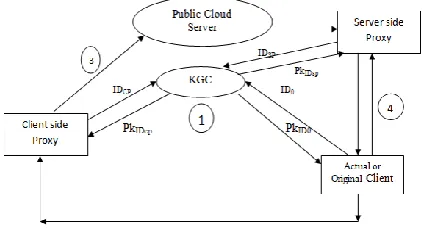
Fig. 1: Architecture of our ID-PUIC Protocol
The Cloud Service Consumer Layer:
3. RELATED WORK
There are numerous assortment of security issues and issues in the distributed computing [1], [2]. Our paper depends on different research comes about on proxy based cryptography, character situated public key cryptography and remote honesty check of the information on public cloud servers. In the majority of the views, the cryptography task is been spoken to by the outsider, for instance proxy. Subsequently, we are bound to the proxy based cryptography. Proxy based cryptography is an imperative cryptography crude unit. Amid 1996, Mambo et al. communicated the thoughts on the proxy based cryptosystem [3]. With the assistance of bilinear pairings been brought into the personality based cryptography, identity00based cryptography has turned into the best and commonsense.
As the personality based cryptography has turned out to be more compelling because of the property that it maintain a strategic distance from the declaration administration, substantial and extensive specialists are suited to examine character 0based proxy cryptography. At 2013, Yoon et al. given an ID situated proxy signature framework and plan with message recuperation [4]. Chen et al. proposed a proxy signature thought and a verge proxy signature organize from the Weil coupling [5]. By joining the substitute cryptography with encryption technique, some proxy re00encryption designs are foreseen. Liu et al. purify and developed the feature00based proxy signature [6]. Guo et al. displayed a non interactive CPA (chose plaintext assault)- secure proxy re-encryption thought, which is against plot assault in manufacture re-encryption keys [7]. Numerous other solid proxy re-encryption plans and their applications are likewise proposed [8]– [10].
At the public cloud servers, remote information uprightness checking is an essential security issue. As the customers enormous information is out of their sort out, may customers information might be tainted by the malignant cloud servers regardless of the results of purposely or not intentionally. With a specific end goal to address the first wellbeing issue, more proficient model is advertised. In 2007, Ateniese et al. proposed attestable information ownership (ADP) worldview [11]. In ADP show, the checking can confirm the remote information uprightness without recovery or download of the entire information. ADP is a probabilistic confirmation on remote information uprightness check by contributing arbitrary arrangement of pieces from the public mists servers, which essentially diminishes I/O costs. The inspector can do the remote information trustworthiness checking by keeping up little information about the information.
Following that, some unique PDP models and guidelines are considered [1]– [6]. Following Ateniese et al, progressive work, numerous remote information respectability examination models and conventions have been anticipated [7]– [9]. In 2008, proof of retrievability (POR) strategy was advanced by Shacham et al. [2]. POR is a more grounded show which makes the administrator checks the remote information dependability as well as bring the remote information. More POR proposition has been proposed [1] to [6]. On some case, the customer may dole out the remote information respectability checking undertaking to the outsider.
successful and security based ID-PUIC convention is more suitable for cloud customers fit for utilizing as versatile end gadgets.
From the part of the remote information uprightness overseer, all the remote information respectability examination conventions are grouped into two classes: private remote trustworthiness information check and public remote information honesty check. In the counter review period of private remote information honesty checking, some private data is focal. On the partner, mystery data isn't required in the rebound checking of public remote information respectability check. Especially, when the private data is given over to the outsider, the outsider can even execute the remote information trustworthiness checking. For this situation, it is likewise called appointed checking.
Ateniese et al. [6] was the first to pioneer the ―Provable Data Possession (PDP)‖ form and anticipated a respectability substantiation plot for standing information utilizing Rivest, adi shamir, based homomorphic authenticator. Amid a similar period, Juels et al. [8] proposed the ―Proof of Irretrievability (PoR)‖ display which has more quality than the PDP show in the knowledge that the framework also ensure the retrievability of outsourced information.
Information honesty confirmation in distributed storage by Sravan Kumar gives an arrangement to static stockpiling of information [2] with revealed least cost and less undertaking. To ensure secrecy, respectability and confirmation of the real information, a dependable administration in light of dedicated encryption plot is furnished with relentless access pedals and arranged information reinforcement. Specifically, the proposers proposed an on spot confirmation way to deal with undertaking responsibility for records and connected with blunder adjusting coding
innovation to guarantee the retrievability. As a limitation on their plan is that the quantity of test is restrained. Shacham et al. [10] used the homomorphism signature in [2] to plan an enhanced PoR conspire.
4. PROPOSED SYSTEM
In public cloud, this article gives the reasonable clarification of Identity based proxy situated information transferring and remote information honesty checking capability. With a specific end goal to defeat the exploitation, proposed an ID-PUIC convention. ID-ID-PUIC convention is a novel proxy arranged information transferring and remote information respectability checking model in public cloud, planned to formal and security display for ID-PUIC convention. They bolstered direct blending which outlines the essential cement IDPUIC convention. This ID-PUIC convention depends on irregular prophet demonstrate. This is unquestionable security, it underpins the customer endorsement. This convention will see assign checking, private checking, public checking.
A. Concrete ID-PUIC Protocol
This convention in light of 4 techniques:
1. Unique Client: User, which has huge accumulation of information to be transferred to public cloud server by proxy.
2. PCS (public cloud server): is an element which handle substantial capacity limit and computational assets to safeguard the customers information.
3. Proxy: is a substance, which favors the undertaking to unique Client's data and transfer them, This choice and assent by customer.
B. Bilinear Pairing
This ID-PUIC convention on bilinear blending. Implying G1 and G2 as two cyclic multiplicative gatherings who have a similar prime request q. Give Z∗ q a chance to signify the multiplicative gathering of the field Fq. Bilinear pairings is a bilinear guide. e : G1 × G1 → G2 which fulfills the properties as demonstrated as follows:
1) Bilinearity: ∀g1, g2, g3 ∈ G1 and a, b ∈ Z∗ q ,e(g1, g2g3) = e(g2g3, g1) = e(g2, g1)e(g3, g1)e(g1a, g2b) =e(g1, g2)ab
2) Non-decline: ∃ g4, g5 ∈ G1 with the end goal that e(g4, g5) 6=1G2 .
3) Computability: ∀g6, g7 ∈ G1, there is a productive calculation to figure e(g6, g7).
The solid bilinear pairings e can be organized by utilizing the Weil or Tate pairings on elliptic Curves. Our ID-PUIC convention development takes utilization of the of DDH (Decisional Diffie-Hellman) issue while its security depends on the hardness of CDH (Computational Diffie-Hellman) issue.
C. Performance Analyasis
While adding time server to the framework to decide singular document in moment time, and record is available to shopper or customers. At the point when the time terminate no document availability. So cloud are not assume to store documents for quite a while. Proxy server, While transferring records on cloud proxy stores duplicate of document so that if records on cloud are hacked by extortion or control or honesty of records isn't guarantee at that point, this documents are reestablish from proxy.
5. CONCLUSION
This paper proposes the novel security idea of IDPUIC in public cloud. The paper formalizes ID-PUIC's framework model and security show. At that point, the principal solid ID-PUIC convention is outlined by utilizing the bilinear pairings method. The solid ID-PUIC convention is provably secure and proficient by utilizing the formal security confirmation and productivity investigation. Then again, the proposed IDPUIC convention can likewise acknowledge private remote information uprightness checking, appointed remote information trustworthiness checking and public remote information honesty checking in view of the first customer's approval.
REFERENCES
[1] B. Chen, H. Yeh, “Secure proxy signature schemes from the weil pairing”, Journal of Supercomputing, vol. 65, no. 2, pp. 496-506, 2013.
[2] X. Liu, J. Ma, J. Xiong, T. Zhang, Q. Li, “Personal health records integrity verification using attribute based proxy signature in cloud computing”, Internet and Distributed Computing Systems, LNCS 8223,pp. 238-251, 2013.
[3] H. Guo, Z. Zhang, J. Zhang, “Proxy re-encryption with unforgeable re-re-encryption keys”, Cryptology and Network Security, LNCS 8813, pp. 20- 33, 2014.
[4] E. Kirshanova, “Proxy re-encryption from lattices”, PKC 2014, LNCS 8383, pp. 77-94, 2014.
[5] P. Xu, H. Chen, D. Zou, H. Jin, “Fine-grained and heterogeneous proxy re-encryption for secure cloud storage”, Chinese Science Bulletin, vol.59, no.32, pp. 4201-4209, 2014.
re-encryption”, CT-RSA 2015, LNCS 9048, pp. 410-428, 2015.
[7] G. Ateniese, R. Burns, R. Curtmola, J. Herring, L. Kissner, Z. Peterson, D. Song, “Provable data possession at untrusted stores”, CCS’07, pp.598- 609, 2007.
[8] G. Ateniese, R. DiPietro, L. V. Mancini, G. Tsudik, “Scalable and efficient provable data possession”, Secure Comm 2008, 2008.
[9] H. Wang, “Proxy provable data possession in public clouds,” IEEE Transactions on Services Computing, vol. 6, no. 4, pp. 551-559, 2013.
[10] H. Wang, “Identity-based distributed provable data possession in multi cloud storage”, IEEE Transactions on Services Computing, vol. 8, no. 2, pp. 328-340, 2015.
[11] H. Wang, Q. Wu, B. Qin, J. Domingo-Ferrer, “FRR: Fair remote retrieval of outsourced private medical records in electronic health networks”, Journal of Biomedical Informatics, vol. 50, pp. 226-233, 2014.
[12] H. Wang, “Anonymous multi-receiver remote data retrieval for pay-tv in public clouds”, IET Information Security, vol. 9, no. 2, pp. 108-118, 2015.
[13] H. Shacham, B. Waters, “Compact proofs of retrievability”, ASIACRYPT 2008, LNCS 5350, pp. 90-107, 2008.
[14] Q. Zheng, S. Xu, “Fair and dynamic proofs of retrievability”, CODASPY’ 11, pp. 237-248, 2011.
[15] D. Cash, A. K¨upc¸ ¨u, D. Wichs, “Dynamic proofs of retrievability via oblivious ram”, EUROCRYPT 2013, LNCS 7881, pp. 279-295, 2013.