Discovering User-Item Subgroup and
Predicting Domain-Specific Correlations in
Recommendation Approaches by Using DsRec
Algorithm
1
sunitha Vanamala, 2 Umarani, 3myakala Gouthami
1
Assistant Professor, Department of Information Technology, Kakatiya Institute of Technology & Science, District
Warangal, Telangana, India
2
Associate Professor, Department of CSE, School of Information Technology (JNTUH), Kukatpally, District Medchal,
Telangana, India
3
M. Tech Student, Department of CSE, School of Information Technology (JNTUH), Kukatpally, District Medchal,
Telangana, India
ABSTRACT: with the wide kind of services and products to be had at the internet, it is hard for users to pick out the product or service that maximum meets their wishes. In order to reduce or maybe put off this issue, recommender systems have emerged. A recommender system is used in diverse fields to suggest items of interest to users. One of the main regions where this concept is currently used is e-commerce that interacts immediately with customers by suggesting products of interest with the intention of enhancing its income. Motivated via the remark, a novel Domain-sensitive Recommendation (DsRec) set of rules is proposed, to make the rating prediction by using exploring the user-item subgroup evaluation concurrently, in which a consumer-user-item subgroup is deemed as a website together with a subset of items with comparable attributes and a subset of customers who have pastimes in these objects. Collaborative Filtering (CF) is an effective and widely adopted recommendation approach. Different from content material-primarily based recommender structures which rely on the profiles of customers and gadgets for predictions, CF approaches make predictions by using most effective utilizing the user-item interaction records consisting of transaction history or object pride expressed in scores, etc.
I. INTRODUCTION
in progress associated with applying records partitioning/clustering algorithms to scores records in collaborative filtering. We use current facts partitioning and clustering algorithms to partition the set of items primarily based on person score statistics. Collaborative filtering approaches can be labeled into primary categories: model-based totally approaches and memory primarily based approaches. Model-based procedures research user/object score patterns to construct statistical models that offer score estimations. Memory-based totally tactics, then again, compute user/item similarities based totally on distance and correlation metrics, and use these similarities to locate similar-minded humans of the energetic user.
II. RELATED WORK
Jing Liuet al.(2016) proposed In this approach, a singular Domain-touchy Recommendation (DsRec) set of rules is proposed to make the score prediction by means of manner of exploring the patron-object subgroup assessment simultaneously, wherein a consumer-item subgroup is deemed as a website which includes a subset of objects with similar attributes and a subset of clients who've hobbies in those gadgets. The proposed framework of DsRec includes 3 additives: a matrix factorization model for the determined rating reconstruction, a bi-clustering model for the man or woman item subgroup assessment, and regularization phrases to connect the above components right into a unified method. Extensive experiments on Movielens-100K and actual-international product evaluation datasets show that our method achieves the higher common overall performance in terms of prediction accuracy criterion over the present day methods. Badrul Sarwaret al. (2001) in this approach, unique item-based advice era algorithms are analyzed. There are crucial worrying situations. First is to enhance the scalability of the collaborative filtering algorithms. Second is to decorate the extremely good of suggestions for the customers. These challenges are in struggle for the motive that less time an set of guidelines spends searching out neighbours, the greater scalable it will be, and the worst its extraordinary. Here, those issues are addressed with the aid of utilizing an method- item-primarily based set of rules. The bottleneck in this algorithm is the search for neighbor among a huge patron populace of capability neighbours. Item-based totally algorithms avoid this bottleneck through the use of exploring the relationship among clients Pedro G. Campos et al. (2013) has proposed a scheme that's addressed with the resource of wearing out an empirical contrast of numerous pre-filtering, post filtering and contextual modeling tactics at the film advice area. To acquire assured contextual facts, a person look at is executed in which members had been requested to fee films, mentioning the time and social associate with which they favored to watch the rated films Michele Gorgoglione et al. (2009), proposed scheme which makes a specialty of evaluating the prefiltering and the publish-filtering procedures and figuring out which approach dominates the other and under which activities. Since there aren't any clean winners on this evaluation, an possibility more powerful method of selecting the winners is proposed in the pre- vs. The put up-filtering comparison. This approach gives analysts and agencies with a sensible concept on the manner to choose a super pre- or put up filtering technique in an effective manner to beautify performance of a context-aware recommender system. Victor Codina et al. (2015) proposed a Distributional-Semantics filtering (DSPF) that's similar to Generalized Pre-filtering: it's miles a discount-based totally completely technique, however in place of attempting to find the most useful segmentation of the scores, it exploits similarities amongst situations to generate segments that aggregate the ratings tagged with conditions just like the goal one. Hence, the important thing distinction is that this approach leverages the knowledge of the situation-to-situation similarity of contextual situations in choice to relying on the generally limited circumstance-to-situation hierarchical relationships defined in context taxonomy.
III. FRAME WORK
restriction the overall performance of ordinary CF methods. On one hand, user’s interests usually middle on a few particular domains however not all the domain names. On the opposite hand, the essential assumption for standard CF methods is that user’s price similarly on partial items, and as a result they will fee on all the other objects further. However, it's far discovered that this assumption isn't usually so tenable. Usually, the collaborative impact amongst users varies throughout extraordinary domains. In other phrases, customers have comparable tastes in a single area can't infer that they have similar flavor in different domain. Numerous efforts have been paid on this direction. Generally, those efforts can be divided into two kinds. The first type is to find out domain names with the assist of outside records which includes social believe community, product category information, etc. In the proposed approach, the consumer’s statistics is saved in database and used for rating predictions and product recommendation. DsRec is not anything but the end result of combine running of reminiscence-primarily based algorithm and version-based set of rules.
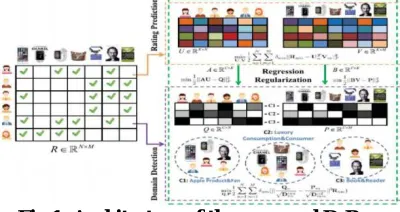
Fig 1: Architecture of the proposed DsRec
Memory-based totally set of rules makes use of the complete useritem database to generate prediction. These structures employ statistical techniques to discover a set of users, referred to as acquaintances that have comparable records with the goal consumer. Once a community of customers is formed, these structures use different algorithms to combine the preferences of buddies to provide a prediction or top-n hints for the lively person. This method is likewise called nearest-neighbor or man or domain based collaborative filtering, is extra famous and widely used. For instance, anticipate there may be a client A who search for Asus product most time and the every other purchaser B look for Apple merchandise, the database will save the searching history of each the customers A and B. Memory-primarily based algorithms provide excellent predictions. Database will include the user records as well as product information. Then through the usage of memory based totally set of rules the whole database is applied for calculating the score predictions of all merchandise. Using distinct algorithms pinnacle-N tips are calculated. Model-based Algorithm this set of rules works on the assumption that a high rating score rated through a consumer to an item encourages the person and the item to be assigned to the identical subgroups together. As an end result, the objects relatively rated by way of the equal consumer are probable grouped collectively, and the same to the case that the users who prefers to the equal item. Accordingly, a few useritem subgroups each which include a subset of items and a group of customers who interested by the ones objects can be received. Model-based totally collaborative filtering algorithms provide object advice by first growing a model of user scores. The model constructing method is completed by way of system learning algorithms which include Bayesian community, clustering and rule-primarily based procedures. After domain detection the clusters of these domain names are shaped. The person having equal region of hobby and equal tips are located in a single cluster.
IV. EXPERIMENTAL RESULTS
In domain detection model it will create four domains based on the users ratings. Using prediction model, Enter movie name (same as in dataset). In prediction model we just enter (”missing) movie name. But it shows number of movies in the sub group with similar ratings based on domains. These similar ratings given by different users; this is called domain sensitive recommendation.
In subgroup rating score chart. It shows subgroup names and average score.
V. CONCLUSION
REFRENCES
[1] Y. Zhang, B. Cao, and D.-Y. Yeung, “Multi-domain collaborative filtering,” in Proc. 26th Conf. Annu. Conf. Uncertainty Artif. Intell., 2010, pp. 725–732.
[2] X. Zhang, J. Cheng, T. Yuan, B. Niu, and H. Lu, “TopRec: Domainspecific recommendation through community topic mining in social network,” in Proc. 22nd Int. Conf. World Wide Web, 2013, pp. 1501–1510.
[3] Y. Jiang, J. Liu, X. Zhang, Z. Li, and H. Lu, “TCRec: Product recommendation via exploiting social-trust network and product category information,” in Proc. 22nd Int. Conf. World Wide Web, 2013, pp. 233–234.
[4] S. Han, S. Chee, J. Han, and K. Wang, “RecTree: An efficient collaborative filtering method,” in Proc. 3rd Int. Conf. Data Warehousing Knowl. Discovery, 2001, pp. 141–151.
[5] B. M. Sarwar, J. Konstan, and J. Riedl, “Recommender systems for large-scale e-commerce: scalable neighborhood formation using clustering,” in Proc. 5th Int. Conf. Comput. Inf. Technol., 2002, pp. 1–6.
[6] G.-R. Xue, C. Lin, Q. Yang, W. Xi, H.-J. Zeng, Y. Yu, and Z. Chen, “Scalable collaborative filtering using cluster-based smoothing,” in Proc. Res. Develop. Inf. Retrieval, 2005, pp. 114–121.
[7] A. Bellogin and J. Parapar, “Using graph partitioning techniques for neighbour selection in user-based collaborative filtering,” in Proc. 6th ACM Conf. Recommender Syst., 2012, pp. 213–216.
[8] M. O’Connor and J. Herlocker, “Clustering items for collaborative filtering,” in Proc. ACM SIGIR Workshop Recommender Syst., 1999, pp. 1–4. [9] L. Ungar, D. Foster, E. Andre, S. Wars, F. S. Wars, D. S. Wars, and J. H. Whispers, “Clustering methods for collaborative filtering,” in Proc. Workshop Recommendation Syst., 1998, pp. 114–129.