Working Paper 2
www.ictd.ac
Environmental Taxation & Development:
A scoping Study
Stephen Spratt
June 2012
1
ICTD Working Paper 2
Environmental Taxation and Development:
A Scoping Study
Stephen Spratt
2
Environmental Taxation and Development: A Scoping Study Stephen Spratt
ICTD Working Paper 2
First published by the Institute of Development Studies in June 2012 © Institute of Development Studies 2011
ISBN: 978 1 78118 066 2
A catalogue record for this publication is available from the British Library.
All rights reserved. Reproduction, copy, transmission, or translation of any part of this publication may be made only under the following conditions:
• with the prior permission of the publisher; or
• with a licence from the Copyright Licensing Agency Ltd., 90 Tottenham Court Road, London W1P 9HE, UK,
or from another national licensing agency; or • under the terms set out below.
This publication is copyright, but may be reproduced by any method without fee for teaching or nonprofit purposes, but not for resale.
Formal permission is required for all such uses, but normally will be granted immediately. For copying in any other circumstances, or for reuse
in other publications, or for translation or adaptation, prior written permission must be obtained from the publisher and a fee may be
payable. Available from: Communications Unit,
Institute of Development Studies, Brighton BN1 9RE, UK
Tel: +44 (0) 1273 915637 Fax: +44 (0) 1273 621202 E-mail: [email protected]
Web: www.ids.ac.uk/ids/bookshop
3
Environmental Taxation and Development: A Scoping Study
Stephen Spratt
Summary
Developing countries face increasing environmental pressures across a range of
dimensions. At the same time, the capacity of these governments to effectively pursue policy goals is often constrained by a lack of resources, with tax revenues in many countries being half of what is common in developed economies. For some, these are distinct issues that should be considered separately. For others, they can and should be dealt with together. This paper reviews the potential of one type of mechanism to address both goals
simultaneously: environmental taxation.
After distinguishing between different forms, the paper uses a Pigouvian framework to organise and analyse theoretical and empirical evidence on the impacts of environmental taxes in developing countries. Despite limited evidence it is possible to draw some
conclusions. First, taxes that are carefully designed and reflect local conditions can be effective in achieving environmental goals, and may be the best instruments under some conditions. Second, while it is possible to raise significant revenues, there may be less potential than is often supposed: environmental goals are more likely to be achieved where tax revenues are used, in part, to further the same ends; it may also be necessary – and desirable – to use some revenue to offset regressive effects; also, support for environmental taxes is likely to be undermined if they are seen to be revenue raising tools. More broadly, limits to the effectiveness of environmental taxes become more severe as the number of policy goals increases: achieving „double-dividends‟ may be hard, and „triple-dividends‟ harder still. A more realistic aim, therefore, may be a „one and a half‟ dividend approach, with the environmental goal being the primary focus. Third, regardless of the quality of design, environmental taxes may fail without strong, high-level political support, particularly where they conflict with other policy goals that do have this support.
In the light of this analysis, the penultimate section of the paper develops a decision-making framework, designed to help policy-makers weigh the merits of environmental taxes to achieve specified goals. The paper concludes with a comprehensive research agenda.
Keywords: Environmental tax; environmental fiscal reform (EFR); externalities; Pigou; public goods; resource mobilization; poverty; development.
Stephen Spratt is a Research Fellow in the Globalisation Team at IDS. Stephen‟s research
interests relate to development finance, capital flows and investment, financial regulation, climate change finance, environmental taxation, low carbon development and the
intersection between these issues. Professionally, he has been Head of the Sustainable Markets Group at IIED, Research Director and Chief Economist at the New Economics Foundation and a Lecturer in international finance and development at the University of Reading. He has also worked in the private sector in the City of London.
4
Contents
Summary 3
Acronyms 5
1. Environmental taxation & development: theory and practice 6
1.1. Definitions, categories and theory 6
1.1.1. Environmental taxation: definition, forms and some theory 6
a) Natural resource taxation 6
b) Pigouvian taxation 7
c) User fees and payments for ecosystem services (PES) 9 1.1.2. Public goods and environmental taxation 10
1.1.3. Packages of environmental taxation 11
1.2. Current and planned practice 13
1.2.1. First best mechanisms 13
1.2.2. Second best mechanisms 13
a) Air- and water-borne pollutants 13
b) Renewable resource taxes 17
1.2.3. Third best taxation 24
a) Fuel taxes and subsidies 25
1.2.4. Other third best taxes 26
1.2.5. Environmental Fiscal Reform 27
1.3. Lessons from the literature 30
1.3.1. Double dividend(s) 30
a) Revenue 30
b) Poverty 31
c) Growth 31
1.3.2. Distributional effects 33
1.3.3. Summary of lessons from the literature 34
a) Lessons from developed countries 34
b) Environmental goals 35
c) Revenue goals 36
d) Multiple goals 37
2. Decision-making framework for policy-makers 39
2.1. Questions for policy analysis and formulation 39 2.2. A conceptual framework for decision-making 41
3. Research gaps and a research agenda 43
3.1. Research gaps and questions for future research 43
3.1.1. Technical 43
3.1.2. Political economy 44
3.2. Priority research areas 45
3.2.1. REDD+ and national forest revenue systems 46 a) The determinants of environmental policy formation 46
b) Tracking the impacts of environmental tax 46
c) Tracking public attitudes to environmental tax 47 d) The economics and political economy of fuel subsidies 47
References 48
Figures
Chart 1 Petrol taxes, 2008 25
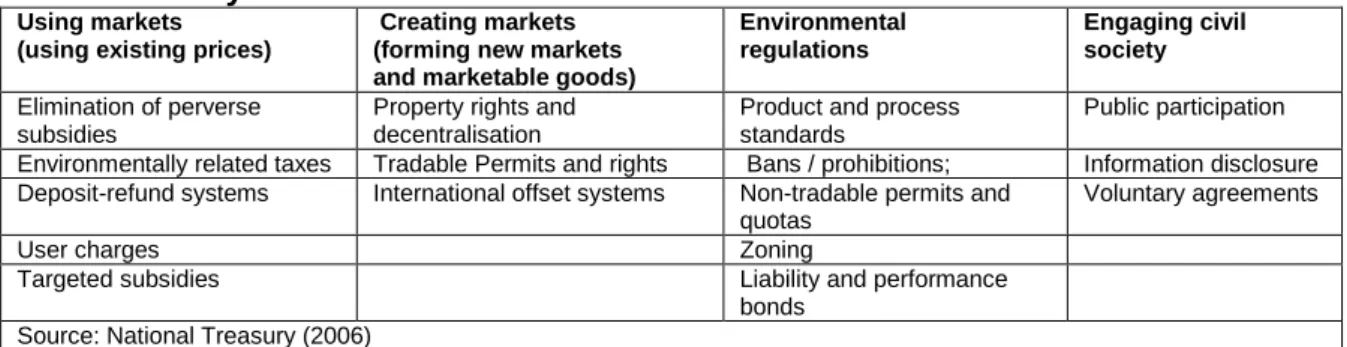
Table 1 Environmental tax as share of total tax revenues 28
Table 2 Policy Matrix of Interventions 29
Table 3. Possible Environmental Policy Instruments 41 Appendix 1: South Africa‟s EFR Decision Framework 55
5
Acknowledgements
I would like to thank Matthew Lockwood and Christian von Haldenwang for helpful comments on an earlier draft of this paper.
Acronyms
C&C Command and control
CDM Clean development mechanism CGE Computable General Equilibrium
CORNARE Corporación Autónoma Regional Rionegro-Nare CO Carbon monoxide
CO2 Carbon Dioxide DD Double Dividend
ECLAC Economic Commission for Latin America and the Caribbean EEA European Environment Agency
EFR Environmental fiscal reform ETR Environmental tax reform
FAO Food and Agriculture Organisation GEF Global environment facility
GFC Green fiscal commission GHG Greenhouse gases
HCFCs Hydrochlorofluorocarbons IEA International Energy Agency LDC Least developed country/ies LIC Low income country/ies
MA Millennium Ecosystem Assessment MDGs Millennium Development Goals MIC Middle income country/ies
NAMA Nationally Appropriate Mitigation Actions NOx Oxides of Nitrogen
OECD Organisation for Economic Cooperation and Development OFR Orthodox fiscal reform
OIOR Outcome input output recycle PES Payment for Ecosystem Services PM10 Particulate matter
REDD Reducing Emissions from Deforestation and Forest Degradation SMEs Small and medium enterprises
TEEB The Economics of Ecosystems and Biodiversity UNEP United Nations Environmental programme VOCs Volatile organic compound
UNFPA United Nations Population Fund
6
Environmental taxation & development:
theory and practice
1.1. Definitions, categories and theory
1.1.1. Environmental taxation: definition, forms and some theory
If a tax is defined as a compulsory and non-reciprocated payment to the state by an
individual or other legal entity, how should we define an environmental tax? Helpfully, there is a standard definition, which is used by major statistical agencies such as Eurostat, the OECD and the International Energy Agency (IEA). It is as follows: ‘A tax whose tax base is a physical unit (or a proxy of it) that has a proven, specific negative impact on the
environment.‟(OECD, 2010a)
Three main categories can be used to frame environmental taxation issues. First, we can think of taxes on natural resources, both non-renewables, like oil or metals, and renewables, such as forests or fisheries. Second, there is the Pigouvian framework, wherein taxes are used to correct market prices so as to take account of externalities. Third, there are user fees and Payments for Environmental Services (PES).1
Despite the overlap between these categories, each illuminates environmental tax issues in specific ways and all are therefore employed at different stages of this report. In this first section, we briefly outline the relevant features of each of these categories.
a) Natural resource taxation
It is important to distinguish between non-renewable and renewable forms of natural resource taxation. While we are primarily interested in renewable resources2, it is worth spending some time on non-renewable taxation issues, which have a more mature
literature.3 Two basic propositions from this literature are particularly relevant. First, because non-renewable resources do not require inputs4 to create them, companies can earn
supernormal profits – more formally termed economic, or natural resource, rents. Second, the depletion of natural capital5 through natural resource extraction should be offset by
1 While these are reciprocated payments – and so strictly speaking not taxes at all – they are
included here as they share many of the properties of taxation.
2
While non-renewable resource extraction clearly has environmental impacts, often, very significant ones, in this report we focus on tax mechanisms that have at least a partial environmental motivation. Generally speaking, the taxation of non-renewable resources is examined through a revenue raising and distribution lens. Taxes may be structured to influence the rate of resource extraction, for example, but the aim is to influence the resulting revenue stream rather than to achieve an environmental goal.
3
See Dasgupta and Heal (1979) for an early example.
4
There are (significant) extraction costs, however, so this is not akin to plucking fruit from a tree.
5
Natural capital is the extension of the economic notion of capital (manufactured means of
production) to environmental goods and services. A functional definition of capital in general is: 'A stock that yields a flow of valuable goods or services into the future.' Natural capital is thus the stock of natural ecosystems that yields a flow of valuable ecosystem goods or services into the future. For example, a stock of trees or fish provides a flow of new trees or fish, a flow which can be sustainable indefinitely. Natural capital may also provide services like recycling wastes or
7 investment6 in other forms of physical capital (such as infrastructure) so as to preserve the same level of total capital (von Haldenwang, 2011).
Both these propositions are relevant to the taxation of renewable resources such as forests and fisheries: a) are rents effectively captured?; and b) are proceeds reinvested in other forms of capital? There are also important differences, however, particularly as local people may be dependent on environmental goods and services from renewable resources in a way that is not the case with non-renewables. Another difference is that renewable natural
resources may have global, as well as national and local functions.
Forests illustrate these differences well. Countries may legitimately wish to deplete their stock of forests7, but as with non-renewable resources, the captured rent should be subject to the reinvestment test of Hartwick‟s Rule. An important difference with renewable
resources concerns the optimal level of resource stock to be conserved. In the case of forests, it is no longer a question of simply maximising revenue streams, but of balancing potential revenue with the benefits forests generate for local people – as well as their global functions as carbon sinks or centres of biodiversity. A key point is that the optimal level (and form) of forest cover – when balancing revenue potential and local needs – will be different when global functions are considered.
The taxation of renewable natural resources thus takes two forms. First, we have situations where stocks are being depleted and rents captured; here, insights from renewable resource taxation on revenue maximisation and reinvestment are important. Second, there is the very different question of sustainable resource management, where the aim is to preserve the capital stock at a particular level. What this level should be, and how taxes can contribute towards maintaining it, is best analysed within a Pigouvian framework.
b) Pigouvian taxation
Where the social costs of an activity are greater than the private costs, private actors will undertake more of it than is socially optimal. Conversely, where the social benefits of an activity are greater than the private benefits, less of the activity will be undertaken than would be socially optimal. The first outcome results because private operators capture the rewards but do not bear all the costs; the second, because they bear the costs but do not capture all the rewards. Where social and private costs and benefits diverge in this way, markets will tend to overproduce „bads‟ and underproduce „goods‟. These concepts of negative and positive externalities were developed by the economist Arthur Pigou (1877-1959), and provide a theoretical rational for using environmental taxation to enhance social welfare.
Societies could eliminate pollution by eliminating polluting activities. They do not, however, because these activities yield other benefits in the form of employment, income or access to consumer goods. Similarly, logging or fishing could be halted, but both yield economic
water catchment and erosion control. Since the flow of services from ecosystems requires that they function as whole systems, the structure and diversity of the system are important
components of natural capital.'(Costanza, 2008: www.eoearth.org/article/Natural_capital)
6 Known as Hartwick‟s Rule, such re-investments are designed to preserve intergenerational
equity, ensuring that countries do not become progressively poorer over time (Hartwick, 1977). von Haldenwang (op cit) correctly points out that Hartwick‟s Rule underestimates the amount of investment required, however, as it does not take account of the costs of redressing the
environmental impacts of resource extraction.
7
8 benefits. What is needed is an optimal level of activity where competing costs and benefits are balanced across society. If well designed, Pigouvian taxes can maintain production at a level where marginal social costs equal marginal social benefits.8
Pigouvian taxes can also be negative. Where an activity yields positive externalities,9 a subsidy can increase private returns to the activity and so raise the willingness of private actors to undertake it. Marginal private benefits are thus aligned with marginal social benefits, and production can be maintained at the (higher) socially optimal level. Pigouvian taxes take one of three forms: first, second and third best. First best taxes generate the largest net social benefits by maximising the difference between total social costs and benefits. While elegant in theory, in practice this raises severe problems. To calibrate a tax accurately, it is necessary to know the shape of the marginal social costs and benefits curves. For the latter, this requires knowledge of the value people place on
environmental goods and services. As these are rarely traded, such valuations must be estimated using a variety of measures10, all of which have theoretical problems. Perhaps more importantly, both are extremely time-consuming and expensive to undertake. When combined with the difficulty of measuring marginal costs,11 and the fact that both costs and benefits are constantly changing, first best forms remain an abstract ideal rather than a reality (Bluffstone, 2003).
Second best taxes do not optimise, but start from a desired environmental outcome (e.g. a particular pollution level or atmospheric concentration; logging rate or total forest cover) and design taxes to achieve this. Desired outcomes may be based on scientific indicators of safety (e.g. air pollution) or sustainability (e.g. fish stocks), or the best estimates of the optimal resource stock given local needs (e.g. forest cover). Alternatively, desired outcomes may be driven by external factors, such as commitments resulting from international
agreements, or pressure from donors. If well calibrated, second best taxes provide incentives for individual private operators to innovate such that the desired reduction (in pollution, logging or fishing, for example) is achieved at the lowest possible cost to the economy (ibid).12
Where there is uncertainty over how industries will react to a given tax rate, but it is
important that a threshold is not breached, two-tier taxes may be used. Here, a low or zero-rate applies up to the threshold, beyond which punitive zero-rates kick-in.13 While these forms of
8 If production – or resource use – is higher than this, marginal social costs exceed benefits,
making society worse off. If below this level, further usage would create net social benefits.
9
The sustainable management of forests to support biodiversity, for example.
10 There are two main types of mechanism: measures that infer people‟s valuations from their
behaviour (so-called „revealed preference); and those which estimate subjective valuations from what people say. For example, hedonic pricing attempts to mimic market prices and capture people‟s valuations in „revealed preferences‟. A well known example is the value people place on peace and quiet, measured through the discount of house prices near to airports. The main alternative is contingent valuation, where surveys ask people what they would be willing to pay to maintain access to an environmental good such as a forest, or what they would be willing to accept as compensation for the removal of this access.
11
Again, information asymmetries are a problem in this regard, as companies have little incentive to reveal their true average or marginal cost structures.
12
Although it is not necessary to measure marginal social benefits to set second best tax rates, the relevant industry‟s average marginal costs need to be understood. In order to know how private actors will respond to a tax of a particular rate – and so what the environmental outcome will be – it is necessary to know how the tax will affect costs and therefore profits.
13
9 mechanisms can ensure thresholds are not breached, they do not provide incentives for change in behaviour below this threshold – i.e. they are not dynamically efficient. They also have considerable information requirements. Activity needs to be monitored on an ongoing basis, for example, whether this is pollution (in the form of emissions) or deforestation (in the form of logging).
With third best Pigouvian taxes, the activity is not targeted directly but through related inputs or outputs that are more easily measured. For example, emissions of CO2 may be difficult to monitor, but fuel usage – a major source of CO2 – is not. A tax on fuel, therefore, will reduce usage and so reduce CO2 emissions.
The main advantage of third best taxes is that they are easy to implement and enforce; the main disadvantage is that they incentivise only a particular class of solutions. For example, it is possible – if improbable – to imagine a motor vehicle that used petrol but did not emit CO2. However, a tax on fuel would not create an incentive to develop such a vehicle, as the level of tax paid would be unaffected.
c) User fees and payments for ecosystem services (PES)
Strictly speaking, user fees are not taxes – voluntary payments are made and goods or services received in exchange. They are included here, however, because they resemble (Pigouvian) taxes in important ways. Specifically, user fees and Pigouvian taxes have the same potential functions: regulation of use and revenue generation.14
When considering the appropriate level of user fees there is a need to balance cost
recovery/sustainable resource use and affordability. It may be that user fees compatible with full cost recovery and the maintenance of sustainable resource use are higher than many people can afford. Possible policy responses are: a) to reduce fees across the board; b) to reduce fees for particular groups; or c) to reduce fees for a given level of usage.15
The first option is unattractive on both revenue and environmental grounds. Reducing fees for everyone would require an expensive subsidy, while also not providing the desired incentive to reduce use. By being more targeted, the second option does better on both counts, but is more time and resource intensive as a result. Whether ex-ante (e.g.
exemptions) or ex-post (e.g. rebates) mechanisms are used, it is necessary to identify those who qualify. The third option also requires some monitoring, but this time with respect to the amount of usage rather than to identity the user. For example, fees may be very low (or zero) up to a level of subsistence usage, and beyond this escalate sharply.
The similarities with Pigouvian taxes are clear. Issues of equity and distribution (i.e.
affordability) are central to debates on Pigouvian taxation, for example. Where a regressive impact is likely, proposed solutions are broadly the same as those suggested for user fees. Payments for ecosystem services (PES) are not taxes either, but payments for which a reciprocal service is provided, as with user fees. In this case, however, the „service‟ is provided by the stock of natural capital (forests, fisheries, etc).
14
In principle, user fees for water should raise sufficient funds to finance the treatment and supply of safe water and maintain water usage at sustainable levels. A Pigouvian tax levied on water usage, where the proceeds are hypothecated for water treatment and distribution, would perform the same functions.
15
10 The Millennium Ecosystem Assessment (2005:39) defines PES in four different categories as follows:
„Ecosystem services are the benefits provided by ecosystems. These include provisioning services such as food, water, timber, fiber, and genetic resources; regulating services such as the regulation of climate, floods, disease, and water quality as well as waste treatment; cultural services such as recreation, aesthetic enjoyment, and spiritual fulfillment [sic]; and supporting services such as soil formation, pollination, and nutrient cycling.‟
These services underpin all economies and can be thought of as a high-value input to production processes. An early estimate by Costanza et al (1997) put the global value of ecosystem services at $33 trillion. More recently, The Economics of Ecosystems and
Biodiversity (TEEB) project was established by the UNEP to explore the value of ecosystem services. By including these values, appraisals of economic projects can arrive at very different conclusions.16 Taking these broader – but still „real‟ – values into account, a project that appeared economically rational can look anything but.
The problem is that the owner of the land on which a mangrove swamp is located, for example, does not capture this value and so has no incentive to maintain the swamp when offered a commercially viable alternative. PES aims to overcome this by paying landowners to manage resources so that environmental services continue to flow sustainably. This can be understood in the same way as the positive externalities associated with forests
described above. Natural forests support a wide range of biodiversity, which has real economic benefits for many stakeholders. They also help to protect and regulate water sources, benefiting everyone within a given area. Forests also function as global carbon sinks and thus provide environmental benefits from which everyone in the world potentially benefits.
Pigouvian subsidies, calibrated to reflect this wider value, are a way of encouraging private actors to maintain these environmental services. As with Pigouvian taxes, such subsidies can, in principle, be calibrated to maintain this flow at the „optimum‟ level. This raises the important question of optimal for whom, however. The next section considers this in the context of local, regional and global public goods.
1.1.2. Public goods and environmental taxation
The concept of public goods is credited to Paul Samuelson (1954). Pure public goods have two defining characteristics: non-rivalry and non-excludability. Non-rivalry means that one person‟s consumption does not affect the ability of others to consume. Non-excludability means that once the good is provided, it is not possible (or feasible) to prevent anyone from consuming it.17
16
For example, clearing mangrove swamps to create shrimp farms in South East Asia is common. A TEEB study from 2007 describes how these farms can generate returns of $1,220 per hectare in Thailand, which far exceeds the direct benefits of the mangrove swamps (Barbier, 2007). The study also estimates the wider value of ecosystem services to local people, however, including the regulation of fisheries and coastal management. When combined with forest projects, the value of these services is $12,000 per hectare.
17
While distinct in theoretical and epistemological terms, public goods are similar to positive externalities – where social benefits exceed private benefits – in practice. For a pure public good, there is no private benefit at all, so none of the good will be produced by private actors. In practice, there are very few public goods that are completely „pure‟ in this sense. More common
11 A variant is the „joint product‟, defined as a public good that results from the production of another good, which is often private. For example, an individual may wish to educate themselves to further their own private interests, but in doing so, the sum of knowledge in society increases, with positive impacts on economic productivity. A public good arises as a result of the pursuit of a private good, and is therefore a form of positive externality. Arce and Sandler (2002: 15) extend this idea to the international sphere:
„A transnational activity that gives rise to multiple outputs that may vary in their degree of publicness is an example of a joint product. In particular, an activity that yields both purely public transnational benefits and country specific benefits is an instance of joint products. Such joint product activities may also confer private benefits on all, or a subset, of the providers of public goods.‟
Neither public goods nor externalities need be nationally confined, and the extent of „spillover‟ varies. For example, a national government may want to preserve a particular quantity of forest cover for commercial purposes and to maintain a supply of forest services to local people. From a taxation perspective, this would suggest a particular set of structures and rates. It is also the case, however, that the quantity and quality of forest cover has a significant effect on watershed management, which influences the supply of water to rural and urban communities. Watersheds do not respect national boundaries and are often transnational. As a result the maintenance of good watershed management can be thought of as more of a regional than a national public good (ibid).
The logic is readily extended to the global sphere. Because of the role that tropical forests play in providing carbon sinks and protecting biodiversity, increased forest cover – and sustainable management with respect to biodiversity – has global spillovers.
Given that any country will have a locally optimal level of forestation for domestic reasons – at least in principle – a combination of national taxes (calibrated to achieve this) and global Pigouvian subsidy/PES (calibrated to maintain a globally optimal level and form of
management) may be a way of balancing national and global public goods.
1.1.3. Packages of environmental taxation
While taxes have long been levied on natural resources, proposals to use them to achieve environmental goals are more recent. More recent still are frameworks which bring together a portfolio of environmental taxes (and subsidies) as part of wider fiscal reforms. There are two main approaches:
First, Environmental Tax Reform (ETR) can be defined as:
„[...] a reform of the national tax system where there is a shift of the burden of taxation from conventional taxes, for example on labour, to environmentally
are impure public goods, which exhibit partial rivalry or excludability. For example, it may be difficult to exclude people from access to fishing waters, but fishing is „rival‟ in that one person‟s usage depletes another's. Road transport is another example: beyond a certain level of
congestion, access to the road by additional people does affect the ability of others to consume the good. When goods are partly rival but non-excludable, overuse is the likely result, which can be addressed by exclusion mechanisms such as fishing quotas or congestion charges (Sandler, 2002).
12 damaging activities, such as resource use or pollution. The burden of taxes should fall more on 'bads' than 'goods.‟
(EEA, 2005)
ETR is associated with developed countries, particularly in Europe. In the quote above, the key word is „shift‟. ETR is designed to be revenue neutral, so that new environmental taxes should be offset by reductions in – or removals of – other forms of tax. As well as addressing environmental goals by taxing „bads‟, ETR aims to reduce taxation on „goods‟, such as labour and investment, thus generating higher employment and/or growth. This is known as the „double-dividend‟ and is a core part of the case for ETR.
A closely related approach is Environmental Fiscal Reform (EFR), which is defined as; „[...] a range of taxation or pricing instruments that can raise revenue, while simultaneously
furthering environmental goals‟ (World Bank, 2005).
The key distinction between these two concepts is that of revenue neutrality. As the term „fiscal reform‟ suggests, EFR is a comprehensive set of measures of tax and subsidy designed to achieve specific environmental goals, and also to raise overall tax revenues rather than be revenue neutral. Both the OECD (2006) and World Bank (2005) have been strong advocates of EFR in developing countries.
Comparing EFR with orthodox fiscal reform (OFR) in developing countries, we can identify a number of similarities and differences. For similarities18:
Tax policy of all kinds will be influenced by the structure of developing country economies – i.e. large informal and agrarian sectors, and prevalence of small and medium enterprises (SMEs).
Issues of distributional impact can also be relevant for OFR.
Capacity constraints – not least the ability to monitor economic activity (and its environmental consequences) – restrict the options available to policy-makers. Reforming fiscal policy can be severely hampered by vested interests.
Issues of accountability to citizens, and the influence of external parties (including donors) on policy is a shared feature.
And for differences:
From an environmental perspective, what might be thought of as an „optimal‟ tax is the opposite of its counterpart in standard tax theory. In the latter, ideal taxes are relatively low, applied to as broad a base as possible, and levied at a uniform rate. The idea is to raise the maximum amount of revenue while not reducing incentives, or distorting behaviour. In contrast, environmental taxes are explicitly designed to influence behaviour by altering relative prices, and are focused on a narrow base, such as a particular sector.
While vested interests may seek to block reform in both cases, the parties are likely to differ. For example, EFR brings environmental ministries into potential conflict with finance and trade ministries, particularly where these have strong links to incumbent industries which stand to be negatively affected by EFR.
Issues relating to the funding of national, local and global public goods discussed above have not arisen in OFR19 in the way that they do in EFR.
18
13
1.2. Current and planned practice
We consider subsidies to be a negative form of Pigouvian tax, PES to be an example of such a subsidy and user fees to be closely related. The taxation of renewable natural resources turns on questions of aligning private and social benefits. As a result, this section examines all of these phenomena within a Pigouvian framework, organised into first, second and third best mechanisms.
1.2.1. First best mechanisms
Because of difficulties in measuring marginal social benefits and costs, first best taxes remain an ideal rather than a reality. The concept is important, however, as it highlights and clarifies the trade-offs facing policy makers. In an idealised sense, the job of politicians is to „imagine‟ the shape of the social benefit curve, propose policies that accord with this and – when in government – implement these in a way that balances the concerns of citizens. In practice, of course, policy formulation will be far messier than this, but it is often helpful to start with an idealised system, not least to identify the gap between this and existing practice.
For example, when considering the balance between environmental and other goals in developing countries, the interests of the poor need to be fully taken into account. As we have seen, the livelihoods of poor people are often inextricably linked with the flow of goods and services from the natural environment. Decisions on optimal resource use – and tax policy to foster this – need to be informed by these realities, rather than by the interests of elite groups alone.20
An „idealised‟ framework designed to maximise total social welfare could help achieve this, and serve as an important reference point for actual policy measures.
1.2.2. Second best mechanisms
Second best taxes (and subsidies) target the activity to be discouraged (or encouraged) directly. We can identify three main categories.
a) Air- and water-borne pollutants
As well as CO2, a number of air-borne emissions present environmental and health-related hazards, some of which can be quite localised in their effects. 21 The UK‟s Department for 19
The subject of global public goods has a large literature, some of which addresses issues of funding, including global taxes to fund global public goods (see Kaul et al, 1999, for example). The EFR distinction is made for two reasons. First, while there is literature on global taxation and global public goods, this is a long way from being orthodox. Second, through mechanisms such as REDD+, real world examples of these rather abstract concepts are beginning to emerge in the environmental sphere. There is no reason, in principle, why the same logic could not be
extended to non-environmental public goods, however.
20
Where tax policy is the outcome of bargaining between political and economic elites (Moore, 2008), and these groups have a relatively short-term extractive perspective, taxes may not be structured so as to foster sustainable long-term management, despite the fact that this may be in the interests of a significant group of citizens.
21
Acid rain, for example, is the result of sulphur dioxide and nitrogen oxide emissions, which react with water molecules in the atmosphere to create acids
14 Environment, Food and Rural Affairs (DEFRA) describes the relationship of localised air pollution to the process of development as follows:
„Historically, the main air pollution problem in both developed and rapidly
industrialising countries has typically been high levels of smoke and sulphur dioxide emitted following the combustion of sulphur-containing fossil fuels such as coal, used for domestic and industrial purposes. These days, the major threat to clean air is now posed by traffic emissions. Petrol and diesel-engined motor vehicles emit a wide variety of pollutants, principally carbon monoxide (CO), oxides of nitrogen (NOx), volatile organic compounds (VOCs) and particulate matter (PM10), which have an increasing impact on urban air quality.‟22
In low-income countries (LICs), localised air pollution is unlikely to be a major problem, but this is not so in middle-income countries (MICs). Many face increasing problems in urban areas, and have set up monitoring systems,23 and a range of pollutant taxes, to address the issue. One of the most cited examples in developing countries is China‟s sulphur tax. Introduced in 2006, energy production that has not been „de-sulphurised‟ was subject to a tax. The proceeds were used to fund the cost of de-sulphurisation ($350m per year), and the tax designed to spread these costs between consumers and producers. By 2008, the tax had already reduced emissions by 70 per cent of the 2006-10 target, and this target was duly achieved (GIZ, 2008).
Interestingly, a number of commentators have pointed out that China‟s pollution taxes were set at low levels for a long time, well below marginal abatement costs in most cases. In 2000, for example, the World Bank estimated that sulphur taxes would have to rise by a factor of 50 to equal marginal abatement costs (Wheeler et al, 2000). The subsequent increase in the tax rate was not of this magnitude, but did bring costs closer to marginal abatement levels.
While the experiences of developing countries with direct taxes on CO2 emissions are limited,24 a number of countries are considering the implementation of a carbon tax. This can be levied either directly according to the level of emissions, or indirectly, according to the carbon content of another good, usually a type of fuel (i.e. coal, gas, oil). Many middle-income countries considering second best carbon taxes of some form are located in Asia – China and Vietnam, for example. What these countries share is an experience of rapid growth and industrialisation, reflected in sharply increasing levels of CO2 emissions. Vietnam‟s Environmental Tax Law comes into force in January 2012, in keeping with the original commitment made in 2004 by the prime minister to implement a carbon tax by this date. GIZ (formerly GTZ) have been working with the Vietnamese finance ministry for some years to assist in the design of the tax. GIZ (2011) describe the outcome as follows:
„The Vietnamese government will levy taxes not only on energy in terms of refined fuels and coal, but also on environmentally harmful substances, such as
22
http://uk-air.defra.gov.uk/air-pollution/causes
23 For example, since 2008 China‟s State Environmental Protection Agency has monitored pollution
levels in 86 cities on a daily basis. Measuring concentrations of sulphur dioxide (SO2), nitrogen dioxide (NO2), suspended particulates (PM10), carbon monoxide (CO) and ozone (O3), the resulting data are combined to form the Air Pollution Index.
24
It is important to distinguish carbon taxes from fuel taxes at this point. As we shall see, many countries have implemented taxes on fuels, but this is not a second best Pigouvian tax as it is not levied on the pollutant directly.
15 hydrochlorofluorocarbons (HCFCs), selected pesticides and soft plastic bags. The exact tax rates will be determined by the central government for each tax period. As an example, petrol will have tax rates ranging between VND 1,000 and 4,000 per litre – which corresponds at present to an ad valorem tax rate of between 5.9 % and 17.6 % – and will abolish the current petrol charge in the amount of VND 1,000.‟
The original framework would therefore have seen petrol prices rise, as much as fourfold. Public opposition may have triggered a rapid change in policy prior to implementation. In an interview with the Viet Nam Economic Times, Vu Thi Mai, deputy minister of finance, made clear that the tax would not affect petrol prices:
„Under the law, petrol and diesel will be subject to an environmental tax. That tax is already levied on petrol and diesel under the existing environmental law, so service stations will not have to pay more tax, it's just now it will come under the new Environmental Protection Tax Law...the tariff levied on petroleum will in effect be unchanged. In other words, retailers will have to pay VND 1,000 per litre of petrol; VND500 per litre of diesel; VND300 per litre of kerosene, machine oil and lubricant oil; and VND300 per kilogram of grease. Once again I want to emphasise that the new law will not affect the petroleum price.‟
If implemented in this way, Vietnam‟s „carbon tax‟ looks more like a third and a second best Pigouvian tax. Furthermore, given the rate will remain unchanged from the current level, it is difficult to see that it will result in additional behaviour change.
China‟s 12th 5-year plan was announced in 2011, and was heavily trailed as marking a shift towards a greater environmental focus. Upon release, the plan did indeed stress the
importance of improving air and water quality. A range of second best, Pigouvian taxes are envisaged, though details remain sketchy at the time of writing. The possibility of a carbon tax was also floated in the plan, and in the Climate Change White Paper, published in
November 2011, the prospect of a national Cap & Trade system was articulated.25 In the first instance, these measures will be trialled in a number of provinces before country-wide implementation, it is suggested, by 2015.
As with all economic instruments to achieve environmental goals, the devil will be in the detail, and at present there is very little detail. However, it is highly significant that China – as the world‟s largest emitter of CO2, in total rather than per capita – appears to be choosing instruments based on economic incentives rather than command and control (C&C) regulation.
For countries considering implementing second best taxes, the experience of the Nordic countries,26 all of which introduced a carbon tax of some form in the 1990s, may be
25
www.gov.cn/english/official/2011-11/22/content_2000272.htm
26
The first to introduce a carbon tax was Finland in 1990. Originally the tax was specific to CO2 emissions, but was subsequently reformed to become a part CO2/part energy tax. In this respect, it is now a part second best/part third best form. Initially, there were few exemptions. In 1991 Sweden followed suit, introducing a tax on the CO2 content of fossil fuels. Unlike in Finland, however, industrial emitters only paid half of the standard rate, and intensive users of energy were exempted entirely. Norway also introduced a carbon tax in 1991. As with Sweden, energy intensive industries were exempted so as not to adversely affect competition. Following the opening of the Nordic electricity market, the fact that Finnish energy companies were subject to the carbon tax, but their counterparts in the other countries were not, put them at a competitive disadvantage. Finland‟s attempts to impose a tax on imported energy ran afoul of EU Single Market legislation, with the result that Finland decided to exempt its own companies (Vourc'h and
16 informative. An important – if somewhat obvious – lesson is that carbon taxes can have very different effects:
If set at very low rates, behavioural effects will be minimal;
If introduced unilaterally at a high rate, carbon taxes can induce companies to relocate to countries without carbon taxes, rather than change their behaviour; If introduced at a high rate but with exemptions for heavy users, positive results will
require complementary incentives as part of a long-term, strategic package; Where a sector is subject to significant international competition, agreements
between countries will be far more effective than unilateral moves, which are likely to be eroded over time.
Water-borne pollutants (or effluents) are also subject to second best taxes, for which there is a strong case. Sources of pollutants are often difficult to trace and assess individually. As a result taxing final outflows incentivises firms to find the most cost-effective means of
reducing effluents. Also, if the tax is set at the level of average marginal abatement costs, the cheapest forms of abatement will be incentivised most. As a result, reducing emissions to a given level will be achieved at the lowest possible costs. Unlike C&C regulations, effluent taxes also encourage innovation and raise tax revenues (Boyd, 2003).
Given these advantages, it is surprising that effluent taxes remain a relative rarity, with command and control regulation being by far the most common approach. In developed countries, France and Germany were early implementers of effluent taxes on industrial polluters, first introducing measures in the 1960s and 1970s respectively. For a long time, advocates pointed to France and Germany as exemplars. More recently, however, the consensus has changed so that the role of complementary regulations in reducing pollution in both countries is more recognised. Also, the French and German systems have come to be seen as primarily revenue-raising mechanisms, as they are set at too low a level27 – i.e. well below marginal abatement costs – to induce behavioural change (Boyd, op cit)
In developed countries, the only „success story‟ in terms of effluent taxes is the Netherlands. The Dutch system levies charges on biochemical oxygen and heavy metals, with proceeds used to subsidise industry improvements. Uniquely it seems, taxes are also high enough to trigger behaviour change, and studies have suggested that it is the taxes rather than
regulation that have driven reductions in effluents (ibid). For Boyd (op cit: 15) „[...] the Dutch program stands as the single international example of a successful charge-based system‟. While limited, there is some experience of effluent taxes in developing countries, with more countries planning to implement them. Colombia‟s experience is generally considered a success, being credited with reducing demand for biochemical oxygen by 27 per cent and suspended solids in total by 45 per cent between 1997 and 2002. The first phase of the process involved an agreement to reduce pollutants within a given watershed area by a specified amount. All stakeholders, including local communities, participated in this process. Those responsible for releasing pollutants within the area were then required to submit
Jimenez, 2000). While Norway and Sweden offered exemptions – or reduced rates – for industry, both the standard and reduced rates in Sweden are higher than in Norway, with the difference between the standard rates being particularly marked. While there are other factors to consider – not least the role played by oil in the Norwegian economy – this may go some way to explaining the difference in outcome. By 2008, per capita emissions had increased by 15 per cent in Norway, but had fallen by 9 per cent in Sweden (Abboud (2008) and Swedish Ministry of Environment (2008) respectively. Both quoted in Sumner et al (2009))
27
17 information on the quantity of different pollutants. The tax was then calculated to achieve the agreed reduction. Where the target was not met, a „regional multiplier‟ was applied in the subsequent period (Castro, 2003)
While the tax succeeded in reducing effluents, the use of the regional multiplier led to considerable opposition. Regional targets were repeatedly missed so that the multiplier caused real tax rates to increase „exponentially‟. In part, this was because of a lack of appreciation of the difficulty – and cost – of reducing effluents, but also because insufficient work was done to assist companies in reducing pollution or time allowed for this to take place. On the positive side, a report by the Economic Commission for Latin America and the Caribbean (ECLAC, 2001) found little in the way of negative economic effects and even some examples of positive impacts due to higher productivity. Finally, transparency and revenue recycling were key:
„One key point in CORNARE‟s success is the transparency with which the collected funds have been managed. From the start, CORNARE determined that 50% of the money would be used to co-finance projects designed to deal with municipal
pollution, 30% for investment in industrial reengineering and cleaner production, 10% for environmental science and technology research, environmental education, and dissemination of information about the environmental tax, and an impressively low 10% for operating expenses.‟
(Castro, 2003: 67)
China‟s existing complex Pollution Levy System addresses water- and air-borne pollutants. Traditionally, a two-tier system has been used, with taxes only applying once a threshold was breached. As with air-borne pollutants, however, tax rates have been kept very low, well below marginal abatement cost levels (GIZ, 2008). When combined with China‟s rapid and sustained industrialisation, pollution levels have risen significantly. The 12th 5-year plan envisages a significant increase in tax rates, with behaviour change the clear goal.
b) Renewable resource taxes
In this section we consider Pigouvian forms of tax levied on natural resources, such as fisheries and forest. Following the discussion of national and global public goods, we also consider the issue of Pigouvian subsidies in the forestry sector (i.e. REDD+), and Payments for Ecosystem Services (PES) more generally. Finally, we examine the tax-like aspects of user fees.
As with non-renewables, it has generally proved difficult for governments to effectively extract resource rents from renewable resources, not least because it is hard to predict how much rent will be generated over time, and thus what rate of tax should be applied.
Companies have also proved adroit at „managing‟ their levels of reported profits in different jurisdictions.28 An alternative to profit taxes are royalties, where a fee is charged in exchange
28
Extractive sectors are characterised by high sunk costs, uncertainty over how much can be extracted and how easily, and long time frames before revenues accrue. Also, volatile
international prices make future revenues extremely difficult to forecast (Daniel et al, 2010). In addition to these external factors, firms in the extractive industries are often large multinationals and so able to shift profits between the different jurisdictions they operate in. Combined with their ability to negotiate favourable terms at the outset, this means that developing country tax
authorities can find there are few profits to tax. (See Christian Aid, 2008, for a good – if understandably one-sided – take on these issues)
18 for permission to mine, or per unit extracted.29 While uncertainty is transferred from the government to the company, the inherent information asymmetry30 puts the government at a disadvantage. The company will have a far clearer idea on costs, and possibly an advantage in forecasting global prices when conducting negotiations, for example.31
Given these factors, revenues from natural resource taxes vary hugely. This is true between countries (because of the different systems used and agreements made), and over time (because of large fluctuations in market prices).32 One plausible solution to the problems of asymmetric information and uncertainty is to auction extraction rights33, which should – under certain conditions34 – generate the best returns for governments (Collier and
Venables, 2008). A caveat is needed here: While competitive auctions can certainly increase government revenues, it does not necessarily follow that the resultant valuations are
accurate. There are numerous examples of companies overbidding for rights as a result of competitive pressure and over-optimism about future prospects.35 Auctions – if well designed – do have distinct advantages over other forms of rights allocation, however. Despite this, they remain the exception rather than the rule for both renewable and non-renewable rights (Karsenty, 2011).
1. Forest taxes
Long-term concessions have been the most common forest management arrangement, generally combining volume-based taxes on trees felled, with area-based taxes, based on the size of the area under the concession. The rationale for this combination is as follows: „In cases where...there are only volume-based taxes and no area-based charges, logging companies have an incentive to hold concession areas larger than they can actually harvest. They would do so in order to secure an expanded access to the resource in the future and to keep other players out. In this sense, the area-based charge represents the price logging companies pay to secure their access to future timber supplies. A long-term concession system without annual area-based fees practically 'sells' this security to loggers at no cost. Sufficiently high annual area-based charges on concession areas on the other hand, help ensure that logging companies do not hold concessions larger than what they can manage.‟
(GIZ, 2005: 5)
29 See World Bank (2006) for a comprehensive – though again somewhat one-sided – overview of
the role of royalties in the taxation of mining and energy companies.
30
See Stiglitz and Weiss (1981).
31
They are also able to hedge price and foreign exchange risk, thus partially offsetting volatility and future uncertainty.
32
For example, the increase in tax takes in sub-Saharan Africa over the past ten years can be strongly linked with buoyant commodity prices over the same period (Keen and Mansour, 2010).
33
See Cramton (2007) for a good discussion of the different options for auctioning oil rights, which has relevance for natural resource rights more generally.
34
For example, a minimum number of bidders are required for the auction to function properly.
35
The financial crisis of 2008 led to the collapse of world timber prices. As a result, companies that had agreed area fees based on pre-crisis price expectations faced severe economic difficulties. In Cameroon – one of the few countries to have auctioned area rights and obtained high fees in the process – payments were suspended to reflect changed economic circumstances (Karsenty et al, 2011).
19 While the incorporation of area-fees has increased government revenues, they remain low in many cases.3637 Traditional concession systems have also proved ineffective in fostering sustainable management38, as this is rarely if ever the most commercially viable approach. Managing forests to support biodiversity and ecosystem maintenance, for example, would require a very different approach than one which would maximise revenue streams. In the latter case, focusing on a limited number of fast-growing tree species, or even forest clearance and alternative land use, are likely to be considerably more profitable than sustainable management. In addition to these two forms of tax, many countries apply a tax to exports, which is designed to stimulate domestic industry, as well as raise revenue
In principle, a combination of these three forms of tax, calibrated at the right rates and linked to global prices to maintain constant incentives, would be capable of maintaining a given level (and form) of forest cover, and stimulating a sustainable domestic timber processing industry. In practice, however, experience with forest taxes has not been encouraging, not least as the enforcement of taxes and prevention of illegal logging has proved extremely difficult.
The experience of Tanzania is quite typical. The country has a standard set of forest taxes, in line with the model described above. The problem is not tax design, however, but
compliance. A 2007 study estimated Tanzania was losing up to 96 per cent of potential tax revenues, or $58 million per year. This is starkly demonstrated by the fact that trade figures show China importing ten times the level of timber products from Tanzania than was officially exported. Deforestation in Tanzania continues at a rate of 1 per cent per year on average. In some provinces the situation is far worse:
„At the harvest rates experienced during 2003 and 2004, and based on official forest inventories, it is apparent that all harvestable Class I and II trees in Rufiji and Kilwa Districts will have been felled within 20 years.‟
(Milledge et al, 2007: 4)
This is not a phenomena restricted to the forestry sector. A review of 68 tax compliance studies estimated average compliance rates in Tanzania at 27 per cent (Kobb, 2001). Corruption is also widespread. Most countries award logging rights on an „administrative‟ rather than a competitive basis. The lack of transparency is conducive to corrupt practices. Some countries have been more successful. In Cameroon, for example, revenues grew from $3 million to $30 million between 1995 and 2001, accounting for a quarter of government revenues (OECD, 2008). As suggested above, one solution is to auction rights. Karsenty (2011) reports useful lessons from Cameroon in this respect:
36
It is broadly accepted that natural resources are undertaxed in many developing countries. While some countries are able to extract resource rents successfully, this is the exception rather than the norm. For example, the World Bank (2005) estimates that taxes on fisheries, forests, mining and agricultural land in Mozambique could be increased to around 19 per cent of tax revenue by 2015, compared to 5 per cent in 2003 (cited in Slunge and Sterner, 2010)
37
See Whiteman (2003) for a good review of the difficulties of generating revenues from forests in both developed and developing countries.
38
In efforts to promote long-term management through the granting of property rights, some forests have been turned over entirely to private ownership, particularly in Latin America. The hope was that the granting of property rights would ensure sustainable management of a valuable
resource. But in slow-growing tropical forests, sustainable logging is generally not commercially viable, so that private ownership has often lead to rapid extraction of the resource and the introduction of a more economically viable land-use (GIZ, 2005).
20 Bids for areas were higher than that charged on an administrative basis, suggesting
companies are well-aware of latent value.
Auction-based systems appear effective at capturing rents.
Some concession holders responded to higher costs (i.e. fees) by diversifying their products and moving up to value chain into timber processing.
Others responded by greater tax evasion, however.
In practice most companies mixed both types of response, suggesting that tax
incentives need to be accompanied by strictly enforced regulation to prevent evasion. Irregularities in auctions are likely with only one bidder, where potential competitors
have been screened out of the process on „technical‟ grounds.
Thus while auctions can be an effective tool to capture rent, they are open to abuse and can have negative effects if not complemented by strong regulation. While higher taxes (and greater enforcement) may discourage over-logging, they also incentivise illegal logging. Similarly, higher taxes may encourage a focus on the more valuable hardwoods. As
Karsenty (ibid) notes, this is not compatible with sustainable forest management, particularly with respect to biodiversity.
One proposed solution has been greater involvement of forest-based communities in managing resources sustainably. Numerous international agencies have been undertaking research into the ways that „traditional knowledge‟ can inform sustainable forest
management practices.39 There is also a growing understanding of the commercial potential of timber and non-timber forest products and the role that forest-based communities can play. In the context of The Gambia, the FAO (2008: iii) describes the rationale as follows:
„Experience in participatory forest management in the Gambia has shown that once local communities have recognized the value of trees and forests, they will develop a vested interest in their protection as permanent sources of income and/or
livelihoods.‟
Clearly, there is potential to expand the range of (taxable) forest activity, and greater
involvement of forest-based communities is an important part of this, from both an equity and sustainability perspective. Furthermore, addressing tax evasion through illegal logging is a prerequisite to progress of any kind. It is possible to imagine systems of best-practice tax and regulation that would facilitate this.
It is unlikely, however, that the quantity and quality of tropical forests needed globally (i.e. for carbon sinks and biodiversity) can be achieved as a by-product of their commercial
exploitation. To address this, we need to consider the other side of the Pigouvian coin: subsidies.
2. Forest subsidies
While taxes can reduce the profitability – and so potentially the quantity – of logging, this will not necessarily encourage sustainable forest management. Indeed, given that taxes reduce profits, they may make it less likely that loggers will manage forests sustainably, as this would add to costs and reduce profits further.
To address this, landowners need to be compensated for undertaking sustainable management activities, with payments reflecting the value of the resulting positive
39
21 externalities. If the desire to generate these externalities is domestic in source, the subsidy should be funded from national sources. If the aim is to contribute to global public goods (e.g. biodiversity or carbon sinks), the sources should be international.
An example of the former is Costa Rica. In 1997, Costa Rica implemented a carbon tax, with the proceeds being used to fund payments (i.e. PES) to landowners to manage forests sustainably. The fund now distributes around $15 million per year, and has been credited with maintaining biodiversity, as well as significant reforestation, which is in stark contrast to the experience of other developing countries.
One problem with replicating this model is that other countries do not necessarily believe it is in their interests to expand forest cover and manage it sustainably. The Reducing Emissions from Deforestation and Forest Degradation (REDD)40 programme was designed to address this by ascribing a value to the carbon content of forests. Payments would be made to developing countries to preserve their stock of forests and maintain them as carbon sinks. REDD+ extended the framework to include payments for „sustainable forest management‟, forest conservation and afforestation.
One of the few successes to emerge from COP-15 at Copenhagen was the commitment of $4.5 billion of „fast start‟ funding to REDD+ for the 2010-12 period. It is estimated that up to $30 billion per year may ultimately be transferred to developing countries through REDD+. An important question is how PES through REDD+ should be integrated with national systems of forest taxation and regulation. Forests will still be exploited for commercial purposes – though hopefully in a sustainable way – and so arguments on extracting
resource rents, and using Pigouvian taxes to align the private interests of logging companies with social interests of nations, retain their validity.
As well as the technical and administrative questions this raises, a final point is how
combinations of national taxes and global subsidies will affect political dynamics, particularly the degree to which governments are responsive to their citizens (i.e. taxpayers) or to international actors (i.e. sources of REDD+ payments). The specifics of REDD+ transfer payments are likely to be important in this regard: who is paid; on what terms; and who are they accountable to, for example.
3. Fisheries taxation
Fisheries exhibit two important differences to the forestry sector. National jurisdictions account for a large proportion of the world‟s fishing grounds, the rest are in international waters. Also, unlike trees, fish move.
As international waters are outside any jurisdiction, there is no authority to levy a tax or control the size of catches using other means. As a result, deep-sea fishing is subject to classic „tragedy of the commons‟ issues, with overfishing the result.41
The fact that deep-sea fishing is often subsidised only makes this worse.42 Also, while many of the richest remaining fishing grounds are in territorial waters it is not always feasible to police these areas. The size of areas relative to the capacity of the authorities‟ fleets creates ample scope to flout the restrictions that do exist.
40 www.un-redd.org/ 41 Hartin (1968) 42 See www.mcbi.org/what/what_pdfs/LastWildHuntPR_FinalFeb14_2007.pdf?ID=150
22 Many African countries have signed fishing agreements43 with the European Union, allowing EU trawlers to fish in their waters.44 Historically, these have been widely criticized, with many arguing that overfishing has adversely affected local fishermen using traditional techniques, while governments often benefit little from tax revenues. Revenues from access agreements can be significant, however. The EU‟s agreement with Mauritania, for example, generates $80 million annually, or 25 per cent of total government revenues. To the extent that these are a) genuinely „surplus‟ fish stocks, b) the government receives a fair price, and c) the revenues are invested wisely, there is a reasonable development case. Too often, however, these conditions have not held. 45
For countries with rich fishing waters, the long-term aim should be to develop a viable fish processing industry. From a value-chain perspective, this is where the benefits of this resource can be maximised. One of the few successful examples in this regard is Namibia. Following independence in 1990, a policy of „Namibianisation‟ was pursued in combination with a focus on sustainable resource management.
First, limits were placed on the total allowable catch, (non-transferable) quotas allocated to a specified number of vessels, and catches taxed on a volume basis. The use of quota fees corresponds to that of area fees in the forestry sector and has been credited with enabling Namibia to capture resource rents effectively (Manning, 2000). Second, incentives were offered (in terms of tax rebates on the catch and the awarding of longer quota right periods) for the employment of Namibians, involvement of Namibian businesses and the
establishment of fish processing industries within the country. Third, significant resources were devoted to monitoring and enforcement of the system.
The results have been impressive. From 1992 to 1998 the proportion of Namibians
employed in the fishing sector grew from 55 per cent to 75 per cent. The onshore processing industry is the fastest growing in the economy and fish stocks – which were heavily depleted prior to independence – have returned to more sustainable levels. The costs of the policy are twofold. First, lower tax revenues from restricting the size of catches, and second, relatively high costs of monitoring and enforcement (Sumaila et al, 2005).
It is noteworthy that the gains to Namibia are relatively long-term, while the costs are short-term; implementing such an approach thus requires a government to have a relatively long-term view. The specific components of „success‟ appear to be to:
a) determine what is a sustainable level of resource use; b) put in place mechanisms to maintain stocks at that level;
c) develop dynamic incentives to generate spillovers in terms of broader economic development;46
d) put in place supporting polices to facilitate these spillovers (e.g. incentives to establish local production facilities); and,
e) enforce the system rigorously, using sufficient resources.
43
In 2002 such agreements were renamed Fishing Partnership Agreements to reflect a greater focus on sustainable development.
44
The US, Japan, China, South Korea and Russia are the other main parties to have negotiated bilateral fishing access agreements.
45
See Mbithi (2006), for example.
46
The alternative is to use C&C regulation such as local content requirements. While there is a case for regulations of this form, it is also the case that economic instruments can provide dynamic incentives, potentially creating better long-term outcomes.
23 It is important to remember that these options do not apply to deep-sea fishing. In this the taxation of fisheries differs significantly from that of forests. In the forest sector, the existence of a national „owner‟ of forests creates the potential for Pigouvian subsidies to maintain a globally optimal level of forestation. Outside of national waters, in contrast, there are no owners of fish stocks, and so nobody to whom subsidies could be paid to induce behaviour change. This „tragedy of the commons‟ suggests that national regimes will work best in a controlled global environment where deep sea fish stocks are not over-exploited. Given the lack of an „owner‟, such a framework would need to be created by international treaties and regulation rather than global taxes.
4. User Fees
User fees generate significant controversy, particularly in the health sector, where many developing countries were encouraged by international financial institutions to introduce fees. The rationale was one of cost recovery, but also of limiting demand to genuine need. A problem, however, was that the introduction of fees priced the poorest out of the work, thus often limiting demand by income rather than according to need.47
While we are interested in fees on natural resource-related goods and services here, issues of affordability are similarly important, particularly with respect to water.
The image above shows the increase in water stress predicted from 1995 to 2025. For the UNEP:
„[...]more than 2.8 billion people in 48 countries will face water stress, or scarcity conditions by 2025. Of these countries, 40 are in West Asia, North Africa or sub-Saharan Africa. Over the next two decades, population increases and growing demands are projected to push all the West Asian countries into water scarcity conditions. By 2050, the number of countries facing water stress or scarcity could rise to 54, with a combined population of four billion people - about 40% of the projected global population of 9.4 billion (Gardner-Outlaw and Engleman, 1997; UNFPA, 1997).” 48
47
See Save the Children (2008: Appendix 1) for a review of studies estimating the impact of health service user fees on service utilisation. Evidence of a reduction in usage are uniform, with the magnitude ranging from 10 per cent to 50 per cent, with the figure rising as incomes fall.
48