AN EXPLORATORY STUDY INTO
THE EXPORT BEHAVIOUR OF VIETNAMESE
SMALL AND MEDIUM ENTERPRISES
BY
ANH THI HONG PHAN
A thesis
submitted to the Victoria University of Wellington in fulfilment of the requirements for the degree of
Master of Commerce and Administration
Victoria University of Wellington 2013
2
ACKNOWLEDGMENT
I owe my deepest gratitude to my supervisor - Prof. Dr. David Crick at Victoria University who gave me valuable advices to clarify my idea for this dissertation. He not only provided me with many priceless academic advices but also continuously encouraged my spirit. In every step of my action plan for conducting this thesis, I could easily meet and discuss with him my difficulties.
I am grateful to the School of Marketing and International business for providing a convenient, friendly and comfortable study environment. My special thanks go to my Ms Le and Mary Roberts at the Student Learning Support Service. They helped me to modify my writing style and grammar mistakes. With their help, my thesis became more coherent and cohesive.
I wish to express my gratitude to twenty two managers of Vietnamese small and medium enterprises. These managers generously spent their time and shared their experience. Through interviews with them, I was able to gain a lot of insight about the Vietnamese market and exporting activities of Vietnamese SMEs. I would like to thank Mr Vuong, Mr Khanh, Ms Lien, Mr Phuong, Ms Quynh who have helped me to make contact with these target firms easily.
Finally, I owe my deepest gratitude to my parents, my younger brother and my friends for their encouragement and love. Without their support, I was not able to complete my Masters dissertation.
Anh Thi Hong Phan March, 2013
3
ABSTRACT
With the fast growth of information, technology and communication, the number of small and medium enterprises (SMEs) engaged in exporting activities has increased rapidly. However, the number of research studies on Vietnamese SMEs is quite limited. In order to fill this gap, this study focuses on exploring exporting behaviours of Vietnamese SMEs. Specifically, this study will address three questions related to export motivations, export barriers and firms‟ performance. This study provides three main contributions. The first contribution is to add to the existing literature regarding exporting study based on Vietnamese context. The second contribution is to provide selected background data involving exporting activities in Vietnam at the current time. The third contribution is to suggest some recommendations for Vietnamese managers, government and associations to help Vietnamese SMEs to develop their exporting activities and improve their firms‟ performance. In this study, a literature review on export motivations, export barriers, and firms‟ performance is provided.
In order to answer these questions, fourteen in-depth interviews of Vietnamese exporting SMEs and eight in-depth interviews of Vietnamese non-exporting SMEs are conducted. Based on interview data, some key findings are identified. In terms of export motivations, exporting SMEs mentioned 22 reasons why they go overseas whereas non-exporters listed 5 reasons. Exporting SMEs‟ motivations are influenced by both internal and external stimuli. Compared to exporting firms, non-exporting counterparts pay more attention to the influence of internal factors in decision-making. Non-exporters‟ stimuli are more proactive in nature than exporters‟ stimuli. When examining Vietnamese export motivations, the researcher may need to take into account the influence of firm‟s operating sectors and the percentage of export activities. In terms of export barriers, to develop exporting activities, SMEs exporters identified 18 barriers whereas non-exporters suggested eight difficulties to start their exporting activities. The lack of resources to start or maintain exporting activities is the most mentioned barriers whereas the least mentioned barriers are those related to the environmental area. Exporting experience may be applied to provide a better understanding about the level impacts of different export barriers and the number of export barriers. In terms of firms‟ performance, both exporters and non-exporters proposed to use economic indicators to measure their firms‟ performance. There are 19 factors and 11 factors that can be used to explain exporters and non-exporters‟ performance, respectively. In order to understand Vietnamese SMEs‟ performance, the combination of the resource-based view and institution-based view need to be applied. This study also suggests some recommendations and implications for future research as well as Vietnamese firms‟ managers, government and associations to improve SMEs‟ performance and enhance their exporting activities.
4 TABLE OF CONTENTS ACKNOWLEDGMENT ... 2 ABSTRACT ... 3 LIST OF FIGURES... 8 ABBREVIATIONS ... 9 CHAPTER 1. INTRODUCTION ... 10
1.1. Background to the research ... 10
1.2. Research objectives and questions ... 12
1.4. Research contributions ... 14
1.5. Definition of SMEs ... 15
1.5.1. International levels... 15
1.5.2. Vietnam level... 16
1.6. Structure of the thesis ... 17
1.7. Chapter summary ... 18
CHAPTER 2. LITERATURE REVIEW ... 19
2.1. Introduction ... 19
2.2. Vietnamese context ... 19
2.2.1. Vietnam‟s economy ... 19
2.2.2. Vietnamese SMEs‟ characteristics and development ... 22
2.3. Export motivations ... 24
2.3.1. The importance of different motivational factors ... 25
2.3.2. Export motivations‟ classifications ... 28
2.3.3. The dynamic of export motivations ... 31
2.4. Export barriers ... 32
2.4.1. Export barriers‟ classifications ... 32
5
2.5. Firms’ performance ... 41
2.5.1. Firms‟ performance measures ... 41
2.5.2. Factors influencing firms‟ performance ... 42
2.5.3. Differences between exporting and non-exporting firms ... 46
2.6. Chapter summary ... 47
CHAPTER 3. METHODOLOGY ... 49
3.1. Introduction ... 49
3.2. Methodology and data collection ... 49
3.3. Justification for the paradigm and methodology ... 51
3.4. Research validity and reliability ... 54
3.5. Ethical issues ... 55 3.6. Characteristics of Participants ... 55 3.7. Chapter summary ... 58 CHAPTER 4. FINDINGS ... 59 4.1. Introduction ... 59 4.2. Exporting SMEs ... 59 4.2.1. Export motivations ... 59 4.2.2. Export barriers ... 63 4.2.3. Firms‟ performance ... 68 4.3. Non-exporting firms ... 71
4.3.2. Potential export motivations ... 71
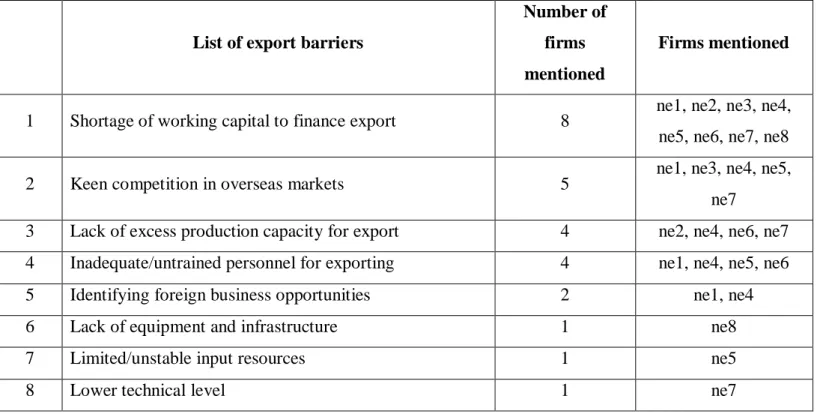
4.3.3. Perceived export barriers ... 73
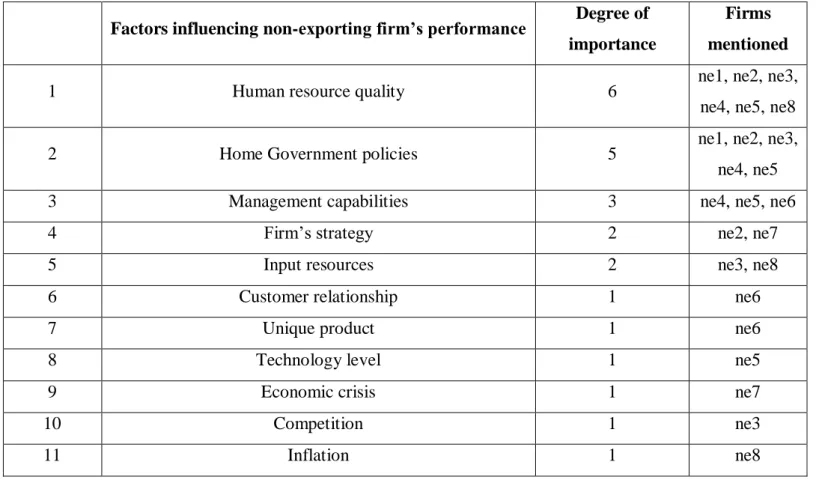
4.3.4. Firms‟ performance ... 76
4.4. The comparison between exporting firms and non-exporting firms ... 78
4.4.1. Export motivations ... 78
4.4.2. Export barriers ... 78
6
4.5. Chapter summary ... 80
CHAPTER 5. DISCUSSION, CONCLUSIONS AND RECOMMENDATIONS .. 82
5.1. Introduction ... 82
5.2. Discussion and key conclusions ... 82
5.2.1. Exporting motivations ... 82
5.2.2. Export barriers... 87
5.2.3. Firms‟ performance ... 92
5.3. Limitations ... 94
5.4. Recommendations ... 95
5.4.1. Recommendations for Vietnamese SMEs‟ managers ... 95
5.4.2. Recommendations for Vietnamese government and associations ... 96
5.4.3. Recommendations for future research ... 97
7
LIST OF TABLES
Table 1. Vietnamese SMEs‟ classification………..18
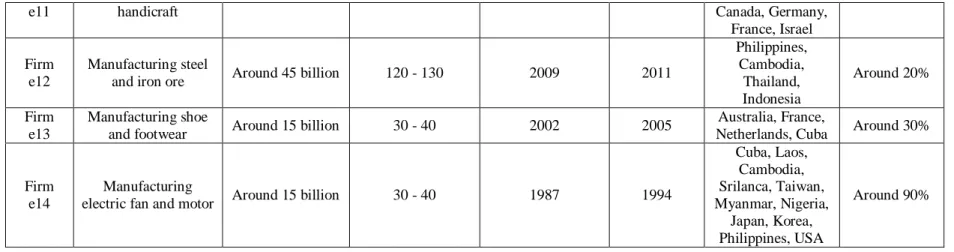
Table 2. Basic information of the target firms………57
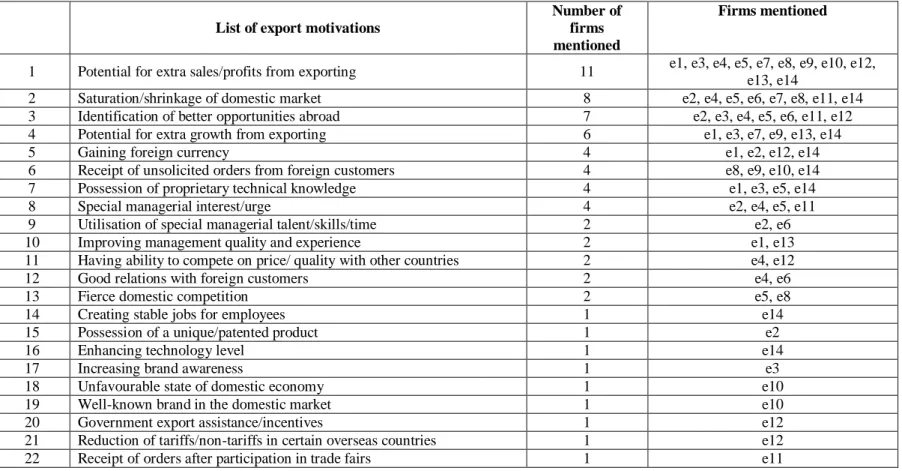
Table 3. Summary of export motivations of Vietnamese exporting SMEs………60
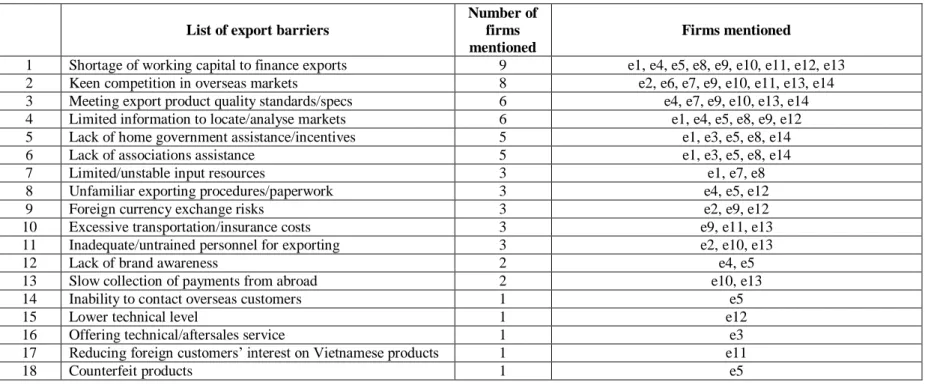
Table 4. Summary of export barriers of Vietnamese exporting SMEs………...64
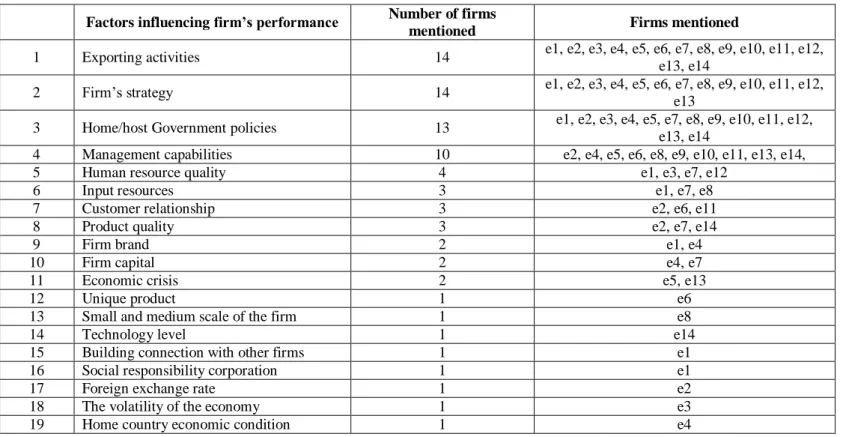
Table 5. Summary factors influencing Vietnamese exporting SMEs‟ performance…...70
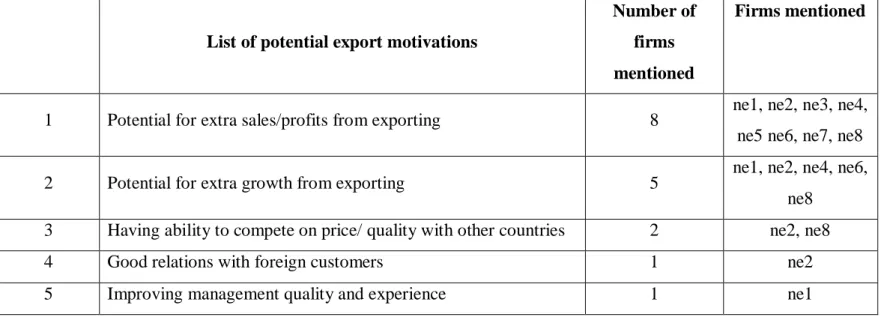
Table 6. Summary of potential export motivations of Vietnamese non-exporting SMEs……….73
Table 7. Summary of perceived export barriers of Vietnamese non-exporting SMEs……….76
Table 8. Summary of factors influencing Vietnamese non-exporting SMEs‟ performance………...79
Table 9. Analysis of export motivations of Vietnamese SMEs………..87
Table 10. Analysis of export barriers of Vietnamese SMEs………...92
8
LIST OF FIGURES
Figure 1. Classification of export stimuli………31 Figure 2. Classification of export barriers………...38
9
ABBREVIATIONS
APEC Asia-Pacific Economic Co-operation Forum
ASEAN Association of Southeast Asian Nations
ASMED Agency for SME Development
CIA Central Intelligence Agency
EU European Union
GDP Gross domestic product
IFC International Finance Corporation
IMF International Monetary Fund
MIGA Multilateral Investment Guarantee Agency
MNEs Multi-national enterprises
OECD Organisation for economic co-operation and development
PWC PricewaterhouseCoopers
ROA Return On Assets
ROE Return On Equity
ROS Return On Sales
SMEs Small and medium sized enterprises
TPB Theory of planned behaviour
UK United Kingdom
USA United States of America
10
CHAPTER 1. INTRODUCTION
1.1. Background to the research
With the fast growth of information, technology and communication, the number of firms engaging in international activities has increased rapidly. When assessing foreign markets, firms can pursue different entry modes such as exporting, licensing, franchising, joint venture or foreign direct investment. Among these entry modes, exporting is considered as the most popular entry mode for SMEs (Douglas and Craig, 1992; Root, 1994; Leonidou, 1995a). Nowadays, SMEs are changing their role in international trade and playing an important role in developing their home countries‟ economies.
In general, SMEs contribute approximately 25 to 35% of world manufactured exports and the share of SMEs‟ contribution to exports varies among countries (OECD, 2004a; United Nations, 2011). These different levels of contribution by SMEs to export shows “(a) how such businesses can or cannot compete in regional and global markets, and (b) where specific support measures may be needed to improve their performance” (United Nations, 2011, p.103). The contribution of SMEs to export is different in developing and developed countries. For example, SMEs‟ contribution to exports often ranges from 14.2% to 69.2% in Asia-Pacific regions whereas these percentages may be higher for SMEs in developed countries (United Nations, 2011). Compared to other countries in the world, the contribution of SMEs to export in Vietnam is still quite low with approximately 20% (United Nations, 2011), which means Vietnamese SMEs do not have strong competitiveness in international markets and they still need a large number of supporting programs to improve their performance.
There are some main reasons to explain the popularity of exporting over other entry modes. By applying this entry mode, firms are able to minimize business risks, have low commitment of resources and achieve high flexibility movements (Czinkota and Ronkainen, 2007; Leonidou et al., 2007; Mtigwe, 2005). However, to become successful exporters, firms need to take into account large psychic and geographic distances between themselves and their buyers (Johanson and Wiedersheim-Paul, 1975). Others need a more rapid approach to account for issues such as first mover status (Crick, 2009). Despite this fact, benefits exporting offers are clear. O‟Farrell,
11
Wood and Zheng (1996) proposed that firms‟ ability to engage in exporting activities can be used as the measure of competitive performance of a country or a region. In fact, exporting not only offers various benefits for the home country (e.g. improving levels of employment, creating backward and forward linkages in the economy, releasing resources to support other economic activities, bringing foreign exchange revenues and developing industry) but also helps firms enhance their performance, achieve corporate prosperity and long-term commercial viability, diversify business risks across different markets, as well as improve technology, quality and service levels (Arteaga-Ortiz and Fernández-Ortiz, 2010; Girma, Greenaway and Kneller, 2009; Köksal and Kettaneh, 2011). Therefore, most countries offer export promotions, support and subsidies to encourage firms to increase their export involvement (Bael and Bellis, 2009; Ilias, Hanrahan and Villarreal, 2013; International Trade Centre, 2009).
These facts accelerate the interest of the research community in examining firms‟ export activities (Gao et al., 2010; Hutchinson, Köksal and Kerraneh, 2011; Kneller and Pisu, 2011). Within exporting study, Yaprak (1985, p.73) summarised that studies in this area mainly focused on exploring four main issues including “the internationalization process, internal firm dynamics associated with the initiation or the continuance of export marketing activity, perceived barriers to export marketing and export modelling studies”. The objective of this study is to explore the first three issues. Specifically, motivational factors, barriers and factors influencing performance of firms when engaging in international activities will be examined. Noticeably, when conducting studies in international business area, many authors emphasized the importance of the business sector (such as SMEs) and market context (such as Vietnamese context) (Benito and Gripsrud, 1992; Rialp, Rialp and Knight, 2005). Considering this factor and personal interest, this thesis will investigate export behaviour of Vietnamese SMEs in low and medium tech industries.
12
1.2. Research objectives and questions
This study is designed to achieve two main objectives. The first objective is to examine selected export behaviour of a small sample of Vietnamese SMEs. The second objective is to suggest some recommendations for managers of Vietnamese SMEs, policy makers and associations to improve these firms‟ performance and enhance their exporting activities. In order to provide a better understanding about export behaviour of Vietnamese SMEs, this thesis used and analysed in-depth data involving a limited number of Vietnamese SMEs to address three main questions below:
1. Why do these Vietnamese SMEs decide to export?
2. What challenges or barriers do these Vietnamese SMEs face when engaging in exporting activities?
3. Which factors influence the performance of these Vietnamese SMEs?
The first question explores reasons or stimulating factors that influence the decision of Vietnamese exporting SMEs to go overseas. In addition, potential export motivations of non-exporting SMEs are also examined. By doing that, the effects of internal and external motivations on Vietnamese SMEs are identified. The second question finds out perceived barriers of not only current exporting firms but also non-exporting firms when they decide to engage in exporting activities. A comparison of exporting barriers between these two types of firms was conducted. Furthermore, the degree influence of each barrier is also identified. The purpose of question three is to identify factors that might influence Vietnamese SMEs‟ performance. The influence of these factors could be explained by different views namely the resource-based view, institution-based view and industry-based view. By answering question three, the usefulness of these three views in explaining Vietnamese SMEs‟ performance are examined. Moreover, this question provides the answer for the way that Vietnamese SMEs use to measure their firms‟ performance.
13
1.3.Justification for the research
There are many reasons for the importance of this research. The majority of studies in exporting area have mainly been conducted based on the information of exporters and non-exporters from USA and developed countries (Bell, 1997; Köksal and Kettaneh, 2011; Suarez, 2003). Although Sullivan and Bauerschmidt (1989) argued that testing concepts in different contexts (e.g. different economic, political, cultural and institutional environment) plays an important role in evaluating the robustness of prevailing theories, research based on developing countries, especially Vietnam, has received less attention from the research community (Aulakh, Kotabe and Teegen, 2000; Köksal and Kettaneh, 2011; O‟Farrell et al., 1996). Therefore, this research is designed to fill this gap by providing more information and knowledge about exporting activities in developing countries, especially Vietnam.
Furthermore, although studies on exporting have increasingly attracted attention from the research community, the knowledge of this area in small and medium firms is still limited. In fact, the number of studies on SMEs is still small compared to the number of studies on larger firms despite the important role of SMEs in job creation (Hutchinson, Fleck and Lloyd-Reason, 2009), economic growth (Sorroshian et al., 2011; Wheelen, Haunger and Hunger, 2009), “poverty alleviation, democratisation of the economic participation, and the promotion of pluralistic societies” (Magagula and Obben, 2001, p.1). Yaprak (1985) argued that SMEs may expose export behaviours that are different to large firms because of their different characteristics. Compared to larger firms, SMEs have more limited demographic characteristics. They may possess scale advantages and sources of technological innovation. Therefore, SMEs have the ability to respond quickly to market uncertainty and exploit niche markets efficiently. When engaging in international activities, these characteristics can be used to explain distinguishing exporting behaviours of SMEs. Therefore, it is essential to conduct studies about exporting activities of SMEs.
Moreover, the impact of factors encouraging and inhibiting small and medium exporters and non-exporters is still controversial issues (Bauerschmidt, Sullivan and Gillespie, 1985; Westhead, Wright and Ucbasaran, 2001). Different studies with the application of different methodologies and variables may present different results (Katsikeas and Piercy, 1993; Leonidou et al., 2007; Westhead et al., 2001). These differences make it
14
difficult to compare results among studies in this area. Furthermore, compared to current exporters, factors stimulating or preventing exporting involvement of non-exporters are largely neglected by the research community (Bell, 1997; Leonidou, 1995b). This study will focus on exploring the impact of motivational factors as well as export barriers and challenges by providing in-depth empirical evidences of Vietnamese exporting and non-exporting SMEs. By understanding different export behaviours between exporting and non-exporting firms, public policy makers are able to design more effective support policies and programs for non-exporters to encourage them to engage in exporting activities and for exporters to raise their exporting involvement. In addition, although benefits of exporting on the development of a nation are well known, the relationship between exporting and firms‟ performance has received a lack of attention from the research community (Girma, Greenaway and Kneller, 2009). Therefore, this study explores this relationship by identifying factors that influence Vietnamese SMEs‟ performance. Some suggestions for public policy makers and managers to improve firms‟ performance will be provided at the end of this study.
1.4. Research contributions
By conducting this dissertation based on limited interviews, three main contributions in both theoretical and empirical areas are expected. Firstly, by providing empirical evidence, specific export motives, export barriers and factors influencing Vietnamese SMEs‟ performance are identified. By doing this, the validity of each motivation, barrier and factor which are mainly developed based on studies of firms from developed countries is examined. This study will add to the existing literature the exporting study based on Vietnamese context. Secondly, this dissertation provides selected background data involving exporting activities of Vietnamese SMEs. Finally, some recommendations for Vietnamese SMEs and government to improve firms‟ performance and develop exporting activities are also provided.
15
1.5. Definition of SMEs
According to Euresearch (2006), SMEs “include in particular, self-employed persons and family businesses engaged in craft or other activities, and partnerships or associations regularly engaged in an economic activity”. At the current time, SMEs‟ criteria vary across countries and even sectors. In addition, within a country, many definitions of SMEs may be applied. Like other countries, there are different definitions of SMEs which have been used in Vietnam. This section focuses on providing the overall understanding of SMEs‟ definitions at both international and Vietnam levels.
1.5.1. International levels
Based on different economic, social, cultural situations in different countries, SMEs‟ characteristics are different (OECD, 2004b). For example, Canada uses a threshold in revenue whereas UK, the Slovak Republic, Mexico and Greece apply the number of employees to distinguish between large firms and SMEs. In terms of the number of employees, firms with less than 250 employees are considered SMEs in EU whereas in New Zealand, firms with less than 20 employees are SMEs (OECD, 2004b; Ministry of Economic Development, 2011).
Even in one country, different definitions of SMEs may exist (e.g. legal and statistical definitions) (OECD, 2004b). In most EU countries, the number of employees (not more than 250 employees), annual turnover (not more than 50 million Euro), annual balance sheet (less than 43 million Euro) and independence (not more than 25% of business shares are in the control of another enterprise) are criteria to define SMEs legally whereas statistical definition only pays attention to the number of employees (less than 250 employees). In some countries (e.g. Netherlands, Spain, New Zealand, Brazil, Denmark, France, Norway and Switzerland), there is no common legal and administrative definition of SMEs (OECD, 2004b). Furthermore, different criteria can be used based on different purposes and different organisations (USAID, 2007). Multilateral Investment Guarantee Agency (MIGA) and International Finance Corporation (IFC) suggested firms that satisfy two out of three conditions (less than 300 employees, less than $15 million total assets and less than $15 million total annual sales) are considered as SMEs. However, Asia Pacific Economic Cooperation (APEC) mentioned firms with less than 100 employees are SMEs.
16
In addition, SMEs‟ definitions may vary across economic sectors (OECD, 2004b). In Australia, the number of employees is used to identify the size of firms in most economic sectors except agriculture. For firms operating in agriculture, physical production and sales value are used as criteria to identify SMEs. In Japan, SMEs operating in manufacturing, construction and transportation will have 300 employees and 300 million yen capital/investment while firms working in retail trade are considered as SMEs when they have 50 employees and 50 million yen capital/investment. The US government has proposed set of size standards for each industry in order to classify different firms (U.S. Small Business Administration, 2012). According to these standards, the criterion to distinguish between large firms and small firms in manufacturing, mining industry and wholesale trade industries is the number of employees (less than 500 employees for manufacturing and mining industry, less than 100 employees for wholesales trade industries) whereas annual receipts are chosen to determine SMEs in other industries (e.g. less than $33.5 million for most general and heavy construction industries, less than $0.75 million for most agricultural industries). Due to these differences, when conducting studies about SMEs, different researchers may apply different criteria to define SMEs (Abor and Quartey, 2010; McAuley, 2001).
1.5.2. Vietnam level
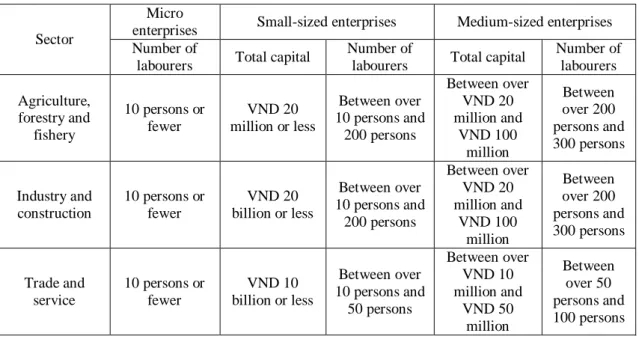
Like other countries in the world, there are two main accepted definitions of SMEs in Vietnam including statistical and legal definitions. In a statistic definition, SMEs are simply defined as firms that have less than 300 employees (Asasen and Asasen, 2003; Hall, 2002; Ministry of planning and development, 2008). In terms of the legal definition, in 2001, Vietnamese government issued Government Decree 90/2001/ND-CP which provided the definition of SMEs. According to this Decree, “SMEs are independent production and business establishments, which make business registration according to the current law provisions, each with registered capital not exceeding VND 10 billion or annual labour not exceeding 300 people. On the basis of the concrete socio-economic situation of each branch or locality, in the course of implementing the support measures and programs, both or either of the above-mentioned criteria on capital and labour may be applied in a flexible manner” (ASMED, 2006a). Eight years later, the government proposed a clearer definition of SMEs in the Decree 56/2009/ND-CP (Dung, 2009). This new definition takes into account different industry sectors (e.g. agriculture, forestry and fishery; industry and construction; trade and service) and
17
different types of SMEs (e.g. micro, small and medium sized firms). The detail of criteria can be seen in Table 1. This research will apply criteria mentioned in Decree 56/2009/ND-CP to identify SMEs. The main target interviewees of this research are SMEs in low and medium tech industries and do not include the trade and service sector. Therefore, all participating firms need to have less than 100 million total capital and less than 300 labourers.
Sector
Micro
enterprises Small-sized enterprises Medium-sized enterprises
Number of
labourers Total capital
Number of
labourers Total capital
Number of labourers Agriculture, forestry and fishery 10 persons or fewer VND 20 million or less Between over 10 persons and 200 persons Between over VND 20 million and VND 100 million Between over 200 persons and 300 persons Industry and construction 10 persons or fewer VND 20 billion or less Between over 10 persons and 200 persons Between over VND 20 million and VND 100 million Between over 200 persons and 300 persons Trade and service 10 persons or fewer VND 10 billion or less Between over 10 persons and 50 persons Between over VND 10 million and VND 50 million Between over 50 persons and 100 persons
Table 1. Vietnamese SMEs‟ classification (Dung, 2009).
1.6. Structure of the thesis
This thesis includes six main chapters: the introduction; literature review; methodology; findings; discussion, conclusions and implications. In chapter 1, the introduction, the background of the research, the research questions, the justification to research and the research contributions are discussed. Furthermore, SMEs definitions in international levels and Vietnamese level are also mentioned in the first chapter. In the second chapter, the literature review, the overall picture of the Vietnamese context including Vietnam‟s economy, Vietnamese SMEs‟ characteristics and development are introduced and analysed. Previous studies related to export motivations, export barriers and firms‟ performance are discussed in this chapter. After reviewing the related literature, the next chapter, methodology, will identify the methodological approach of this study. Specifically, the justification of the chosen methodology, research validity and reliability in addition to ethical considerations are emphasized in this chapter. The
18
data collected by using the chosen methodology will then be presented and discussed in the next chapter, the findings. Some comparisons in terms of exporting motivations, barriers and performance will be made between exporting firms and non-exporting counterparts. In the final chapter, these findings will be compared and contrasted with findings in previous studies. This chapter also aims to provide answers to the three questions proposed in the introduction chapter. Some limitations of this thesis and recommendations for policy makers, managers and future research are suggested at the end of this chapter.
1.7. Chapter summary
This chapter has a number of key findings. Based on the overall review of key studies in the same interest area, research topic has been identified, the export behaviour of Vietnamese SMEs. In order to explore this topic, the purpose of this research is to answer three main questions related to export motivations, export barriers and firms‟ performance. Conducting this research is essential because of the lack of studies based on the developing countries and SMEs as well as the limited knowledge about export behaviours and firms‟ performance between exporting and non-exporting SMEs. By conducting this study, the researcher makes three main contributions including providing empirical evidences about Vietnamese SMEs‟ export motivations, export barriers and performance; providing selected background data involving exporting activities in Vietnam at the current time and suggesting some recommendations for Vietnamese SMEs and government to develop exporting activities and improve their firms‟ performance. Furthermore, the definitions of SMEs at international and Vietnamese level are also discussed in this chapter. This research will follow the Vietnamese definition of SMEs mentioned in Decree 56/2009/NP-CP. In addition, this chapter indicates the structure of this thesis which includes five chapters. The next chapter will review the literature on the Vietnamese context and exporting area.
19
CHAPTER 2. LITERATURE REVIEW
2.1. Introduction
The last chapter provided an introduction to this study including the background, objectives, contribution and structure. This chapter is divided into four main sections. The first section will summarize information provided in a variety of journals, magazines and newspapers in order to provide an overall picture of Vietnam‟s economy as well as Vietnamese SMEs‟ characteristics and development. The main focus of the second section is reviewing articles related to export motivations. More specifically, the importance of different factors, different classifications and the dynamic of export motivations will be identified and discussed. The third section focuses on examining barriers and challenges when firms engage in exporting activities. Different classifications of export barriers and different perceptions of exporting and non-exporting firms on these barriers are outlined. The final section analyses studies related to firms‟ performance. This section will discuss different firms‟ performance measures, underlying theories to explain firms‟ performance and different characteristics between exporting and non-exporting firms.
2.2. Vietnamese context
2.2.1. Vietnam‟s economy
Vietnam is located in the South-East Asian region with around 310.000 sq. Km land area and approximately 86 million people (CIA, 2012; Trading Economics, 2012; Vietnam Online, 2012). The development of Vietnam‟s economy can be divided into three main periods including before 1975, 1975-1985 and after 1985 (Mai, 2008). Before 1975, Vietnam had a war-ravaged economy. Vietnam had been divided into two main parts since 1954. North Vietnam operated a socialist economy whereas South Vietnam had a capitalist economy. In the north, the government made all decisions in many areas, especially trading activities while “a quasi-capitalist consumer economic model” with support from America was applied in the south (Mai, 2008, p.11). In the second period 1975-1985, the south and north were reunited and under the control of the Socialist Republic of Vietnam. Vietnam‟s economy underwent the most difficult time due to adverse effects of decades of warfare. The level of imports was recorded four to five times higher than the level of exports (Consulate General of Vietnam in San
20
Francisco, 2006). The inflation rate was 587.2% in 1985 and 774.7% in 1986 (Consulate General of Vietnam in San Francisco, 2006).
After renovation (“doi moi”) in 1986, Vietnam‟s economy has moved from a centrally planned economy to a transitional economy (CIA, 2012). Private organizations, individuals and economic sectors have been stimulated and encouraged (Bui, 2000). However, at the current time, state-owned enterprises still hold an important role in Vietnam‟s economy and contribute approximately 40% of the GDP of this country (CIA, 2012). Since 1986, Vietnam‟s economy has been growing quickly and achieved remarkable results. According to IMF (2012), Vietnam‟s GDP increased rapidly from $33.873 billion US in 1986 to $122.722 billion US in 2011 (IMF, 2012). In 2017, Vietnam‟s GDP is forecasted to reach $206.207 billion US (IMF, 2012). In terms of GDP real growth rates, Vietnam was placed in the 50th position in the world with 5.8% in 2011 (CIA, 2012). In 2011, industry contributed to the largest amount of GDP with 41.4% (Global Finance, 2011). Agriculture and service consisted of 20% and 38.6% GDP, respectively (Global Finance, 2011). In terms of labour force, over 90% of the population is of working age (Ketels et al., 2010). The abundant and cheap workforce is considered as a competitive advantage of Vietnamese firms in the international market (Vietnam local news, 2012).
By following the renovation process, at the current time, Vietnam is not been listed as an under-developed country and has become an average income country (Vietnam local news, 2012). According to PWC (2012), Vietnam is listed as one of the fastest growing economies to 2050. However, nowadays, Vietnam‟s economy is still confronting some difficulties and challenges such as high inflation rates, low foreign exchange reserves, an undercapitalized banking sector, high borrowing costs and high levels of corruption (CIA, 2012; Transparency International, 2011). These challenges are mainly related to the government‟s strong growth-oriented economic policies (CIA, 2012). In fact, Vietnam has the highest inflation rate in the East and Southeast Asian region with 23% in August 2011 and an average of 18% over the whole of 2011 (CIA, 2012). Among 183 countries and territories, Vietnam ranks 112th in corruption perception index (Transparency International, 2011). These facts may have adverse impacts on Vietnamese firms‟ activities.
21
In terms of international activities, Vietnam has opened its economy and joins in a variety of coordination activities such as normalizing its relationship with the United States in 2001, becoming a member of the Association of Southeast Asian Nations in 1995, the Asia-Pacific Economic Co-operation Forum in 1998 and the World Trade Organization in 2007 (Association of Southeast Asian Nations, 2012; Asia-Pacific Economic Cooperation, 2012; US-Vietnam Trade Council, 2012; World trade organization, 2012). Since then, Vietnam‟s economy has increased its engagement in international trade, especially in exporting activities (Dutta, 1995). Since 1997, Vietnam has become the world‟s second largest rice exporter and the world largest pepper exporter (Minot and Goletti, 2000; U.S. Department of State, 2012). At the current time, Vietnam holds the third position in the top 10 countries exporting leather and footwear (VietnamPlus, 2012). The largest export markets of Vietnamese firms are “USA (18.8%), Japan (13.2%), China (10.3%), Australia (6.9%), Singapore (5.2%), Germany (4%) and UK (3.8%)” (GlobalSecurity, 2012). Recently, Vietnamese firms have paid more attention to export opportunities in new markets such as Africa, New Zealand and South Korea (VietnamNet, 2011).
Its main export products are “crude oil (22.1%), textiles and garments (17.1%), footwear (10.5%), fisheries products (9.4%), and electronics (4.1%)” (GlobalSecurity, 2012). This year, 2012, textiles and garments, leather and footwear, wood products and seafood sectors are expected to have high export growth rates (VietnamPlus, 2012). In 1980, there were only 84 export products which earned more than US$100,000 each but by 2005 this number had risen to 235 (UNCTAD, 2005). Compared to other developing countries in the world, Vietnam held the highest position in the export diversification index and the export concentration index from 1995 to 2005 (UNCTAD, 2007). The export turnover in 2011 achieved approximately $96 billion USD (VietnamNet, 2011). Compared to 2010, the export turnover increased by 33% (VietnamNet, 2011). The export turnover accounted for approximately 78% of GDP in 2011 as the result of the Vietnamese export-led growth strategy (VietnamNet, 2011; IMF, 2012). With the US$200 billion total import-export turnover, Vietnam has become the fifth biggest importer-exporter in South East Asia (VietnamNet, 2011). In a conference for commercial counsellors, the Vietnamese government has emphasized that there is still a high demand for Vietnamese goods in the world so Vietnamese firms need to grasp these opportunities to go abroad (Business Times, 2012a). The government also expects
22
that the total export value in 2020 will be three times as much as that in 2011 and the annual average export growth rate will increase 10-12% from 2012 to 2030 (Business Times, 2012b).
2.2.2. Vietnamese SMEs‟ characteristics and development
The main purpose of this section is to provide an overall picture about the development and characteristics of Vietnamese SMEs. Specifically, this section will discuss a number of characteristics of Vietnamese SMEs including number, ownership types, business sectors, geographic coverage and their contributions to Vietnam‟s economy, especially in the exporting area. In general, SMEs play important roles in the development of Vietnam‟s economy. The number of Vietnamese SMEs with less than 300 employees rapidly increased from 49,062 firms in 2001 to 127,600 firms in 2006 (Ministry of Planning and Investment, 2008). In January 2010, this number reached approximately 242,453 firms (Ministry of Planning and Investment, 2012). SMEs also account for 94.9% and 97.2% of the total number of Vietnamese businesses in 2001 and 2006 respectively (Ministry of Planning and Investment, 2008). In 2012, the number of SMEs consists of nearly 99% of the number of businesses (ESOMAR, 2012). From 2006 to spring 2011, the total number of SMEs reached nearly 400,000 firms (Runckel, 2012). Among SMEs, firms which have 10-49 employees contributed the largest number with 39,366 firms in 2006 (Ministry of Planning and Investment, 2008). In other words, the majority of Vietnamese SMEs are small firms. In terms of capital, approximately 95.97% of Vietnamese firms invest less than VND 100 billion (Ministry of Planning and Investment, 2012). The number of firms which invested between 1 and 5 billion accounts for the largest percentage with 55.93% in 2006 (Ministry of Planning and Investment, 2008).
In terms of ownership types, non-state firms make up the largest amount (approximately 89% in 2001 and 96% in 2006) (Ministry of Planning and Investment, 2008). Vietnamese SMEs employed up to 77.3% of all employees in the labour market in 2002 and 85% in 2004 (ASMED, 2006b; Le, Tran and Nguyen, 2006). Although SMEs are currently operating in various industry sectors, Ministry of Planning and Investment (2008) estimated that there are around 40% of SMEs operate in the trading sector, 21% in manufacturing and 14% in construction. In the manufacturing sector, more than 90% of firms are SMEs (Ministry of Planning and Investment, 2008).
23
Geographically, Vietnamese SMEs are located mainly in the biggest cities (e.g. Ho Chi Minh City, Ha Noi, Hai Phong, Da Nang, etc.) (Ministry of Planning and Investment, 2008). In particular, the number of enterprises registered in Ho Chi Minh City accounted for approximately 30% of all enterprises in Vietnam at the end of 2007. However, according to Ho (2007), although Vietnamese SMEs account for the largest number of Vietnamese businesses, their contribution to Vietnam‟s economy is still limited. They provided approximately 39% of GDP and 32% of the total investment in 2006.
There is a large number of SMEs solely serving the domestic market due to their “high production costs, poor quality of products and low degree of innovativeness”, weak linkages with other SMEs as well as upstream and downstream industries. However, SMEs‟ international activities have increased rapidly since the integration with other international organizations (such as ASEAN, ASPEC and WTO) (Le and Nguyen, nd, p.325; Ministry of Planning and Investment, 2008; Tran, Ho, 2007; Vo, Trinh and Dinh, 2005). By the end of 2004, the number of SMEs conducting exporting and importing activities is up to 80.6% and 84.2% the total number of exporting and importing firms respectively (ASMED, 2006a). The ability of Vietnamese SMEs to access a larger international market has also improved. However, Vietnamese SMEs which export product overseas and stay in the domestic market must face a lot of challenges which derive from a fierce competition with foreign firms in both the international market and domestic market. To encourage SMEs‟ participation in the global market, the Vietnamese government has cooperated with other organisations and banks have launched many supporting programs such as credit guarantee funds, human resource training support, support programs on improving productivity and quality for SMEs, support programs on enterprises‟ intellectual property, national key trade promotion program, national trademarks development programs, programs on setting up infrastructure of trade promotion in domestic and foreign markets, the business portal websites, etc. (Ministry of Planning and Investment, 20012). These supporting programs motivate SMEs to enter the international market step by step and enhance SMEs‟ competitiveness. With an increase in the number of foreign investment enterprises in Vietnam, the number of SMEs becoming suppliers of these enterprises has increased rapidly (Ministry of Planning and Investment, 2008). This is the result of indirect exporting activities of Vietnamese SMEs through backward linkages with
24
MNEs. Some specialized SMEs have already become a small part of the international supply chain and engage in direct exporting (Ministry of Planning and Investment, 2008).
Besides other well-known difficulties of SMEs (e.g. lack of managerial and marketing skills, lack of financial resources), Vietnamese SMEs also confront some unique difficulties that derive from Vietnamese institutional environment (Mai, 2008). These difficulties are results of a weak legal system, complex and opaque bureaucracy, pandemic corruption, ineffective associations and poor business services, lack of access to investment capital, inadequate education system, limited access to effective information channels and high input costs (Business Issues Bulletin, 2004; Han and Baumgarte, 2000; Nguyen and Stromseth, 2002; Transparency International, 2011; Webster, 1999; World Bank, 2003). Especially, in 2011, with an adverse effect of the global downturn, Vietnamese SMEs suffered from “a devalued currency, high inflation, higher bank interest rates and rising raw material costs” (Runckel, 2012). These difficulties threatened the existence of Vietnamese SMEs and somehow decreased the effectiveness of their exporting activities. Since the beginning of 2012, the number of Vietnamese SMEs which went bankrupt has reached to more than 15,460 firms (The Voice of Vietnam, 2012).
2.3. Export motivations
According to Leonidou et al. (2007, p.737), “export stimuli, also called motives, incentives, or attention evokers, refer to all those factors triggering the decision of the firm to initiate and develop export activities”. Understanding firms‟ motivators who go overseas is necessary for public policy makers to design effective promotional programs for these firms (Crick and Spence, 2005; Katsikeas, 1995; Leonidou, 1995b; Leonidou et al., 2007; Morgan and Katsikeas, 1997; Stewart and MacAuley, 1999; Tzokas et al., 2000). Since the early 1970s, export motivations are received a lot of attention from the research community (Katsikeas, 1995; Leonidou et al., 2007; Wiedersheim-Paul, Olson and Welch, 1978). In the literature, there is a variety of motivators or reasons why SMEs decide to export their products (Leonidou et al., 2007). Some export motivators are growing foreign market dependence, declining domestic market shares or saturated home markets, receipt of unsolicited foreign orders, etc (Katsikeas and Piercy, 1993; Leonidou, 1995b; Morgan and Katsikeas, 1997;
25
Sullivan and Bauerschmidt, 1990). In many studies, motivational factors can be listed up to 40 items (Leonidou et al., 2007).
2.3.1. The importance of different motivational factors
Among these motivators, managerial perception of exporting activities is determined to play an important role in the firm‟s decision to export (Cavusgil and Nevin, 1981). Bilkey (1978) pointed out managerial interest is an important motivator to encourage the firm go overseas by increasing the confidence about its competitive advantage. These findings are supported by the study of Leonidou et al. (2007). Especially, managerial interest plays a more important role in exporting engagement and development of small firms than large firms because exporting decisions of small firms are usually made by only a single or just a few managers (Hollensen, 2004). Furthermore, managerial attitudes, experience, motivation and expectation also contribute significantly to the firms‟ decision in the internationalization process (Reid, 1981). Leonidou et al. (2007) pointed out that managers in some cases (e.g. be born overseas, be better educated, have spent some time in a foreign country setting, have previous positive experience with exporting in other organisations, have professional experience in a global environment through involvement in multinational corporations, international organisations or military service, be interested in understanding foreign cultures and socialising with foreign people as well as travelling abroad, etc.) showed more interest in international activities than others. With this interest and experience, managers will have more opportunities to understand foreign customers‟ demand as well as build and maintain good relationships with foreign partners (Aaby and Slater, 1989). These managers often “perceive less risk and/or greater control in their [firms] foreign activities” (Acedo and Galán, 2011, p.661). Therefore, their firms are likely engaging in exporting activities. The theory of planned behaviour (TPB) is usually used to explain a strong influence of manager characteristics on the firm‟s export decision, especially for small firms (Acedo and Galán, 2011; Cools and Van den Broeck, 2008; Hisrich, 2000; Marcati, Guido and Peluso, 2008;Wiklund and Shepherd, 2003). According to this theory, the behavioural intentions (or motivations) can be directly influenced by an individual‟s attitudes, subjective norms and perceptions of control (Ajzen, 1988). These motivations will then interact with the perceived behavioural control to determine behaviour (Ajzen, 1991).
26
Based on aggregate analysis, Leonidou (1995b) indicated that unsolicited orders from foreign customers are considered as the most common reason why firms decide to export in many previous studies. Foreign customers often find and make contact with firms through business directories, advertisement in trade journals, word-of-mouth or corporate websites (Leonidou et al., 2007). In the study by Czinkota and Ronkainen in 2006, more than half the number of small USA firms agreed that they decided to go overseas because they accidentally received orders from foreign customers. Following unsolicited orders from foreign customers, the availability of unutilised production capacity and the saturation/shrinkage of the domestic market are the other two common reasons (Leonidou, 1995b). According to Leonidou et al. (2007), there are two different reasons that can be used to explain small firms‟ availability of unutilised production capacity. The first reason is the firm does not estimate the size of the domestic market before it establishes factories. Therefore, its factories are able to produce more products than domestic customers‟ need. With its idle capacity, the firm is able to serve foreign customers. The second explanation is the firm intends to expand their business overseas in the future so they build larger manufacturing facilities.
When discussing the saturation/shrinkage of the domestic market stimuli, Leonidou et al. (2007) and Hollensen (2004) explained that the firm is eager to export when it is under four main situations such as experiencing declining sales and operating at a loss; facing stiff competition from other rivals in the market; limiting its potential for achieving company growth; and sustaining economies of scale and scope difficultly. These three most common stimuli imply that a large number of SMEs follow passive approaches to exporting activities. Although many previous studies conducted in different time frame, different areas and different industrial sectors, these three stimuli are still found to have the highest level of influence on firms‟ exporting decision (Karafakioglu, 1986; Kaynak, 1990; Kaynak, Ghauri and Olofsson-Bredenlow, 1987; Leonidou, 1988; Leonidou, 1995b; Pavord and Bogart, 1975; Sullivan and Bauerschmidt, 1990). Besides these three stimuli, other stimuli have a great impact on export decision are the desire to achieve extra sales, profits and growth, exploit a unique/patented product, reduce home market dependence, possession of a financial advantage, need to achieve economies of scale, need to exploit proprietary technical knowledge, and identification of better opportunities abroad (Leonidou et al., 2007). However, compared to exporting firms, non-exporting firms‟ stimuli are more active in
27
nature. When conducting the study in Cyprus with 224 non-exporting firms, Leonidou (1995b) pointed out three top stimuli are the potential for extra sales resulting from exporting, the potential for extra led-growth and the achievement of economies of scales from exporting. The difference between exporting firms and non-exporting firms can be explained by managers‟ perception. Before deciding to export, managers are influenced more by positive factors. When they actually decide to export, less positive motivators may influence their firms‟ decisions more.
In terms of the least mentioned motivators, the difference between exporting firms and non-exporting firms can be seen clearly. According to Leonidou (1995b), the provision of export-related incentives by the home government (e.g. loan guaranteeing, trade fair organisation, trade mission sponsorship, etc.) is evaluated as the stimulus which is the least mentioned by exporting firms. This fact demonstrates the inadequacy and ineffective of government export encouragement program in many countries all over the world. For non-exporters, stimuli related to production such as the accumulation of unsold inventory/overproduction and the availability of unutilized production capacity have the lowest influence on their decision to go overseas (Leonidou, 1995b). Other low impact stimuli are smoothing product seasonality, accumulation of unsold inventory, favourable foreign exchange rates and relaxation of foreign restrictions (Leonidou et al., 2007).
When conducting fieldwork time analysis and geographic focus analysis, Leonidou (1995b) indicated some differences. For example, based on the studies in pre-1985, the majority of reasons why firms export were mainly derived from firms‟ competitive advantages and the encouragement of external agents whereas potential for extra growth and profits as well as the decline in domestic sales are used to explain most firms‟ motivations in studies conducted after 1985. Geographically, studies based on USA and Canada found that the potential for extra export-related profits and the identification of better opportunities abroad influence firms‟ decisions more while the potential for export-driven growth and intense competition in the home market are emphasized more by managers in other areas.
28 2.3.2. Export motivations‟ classifications
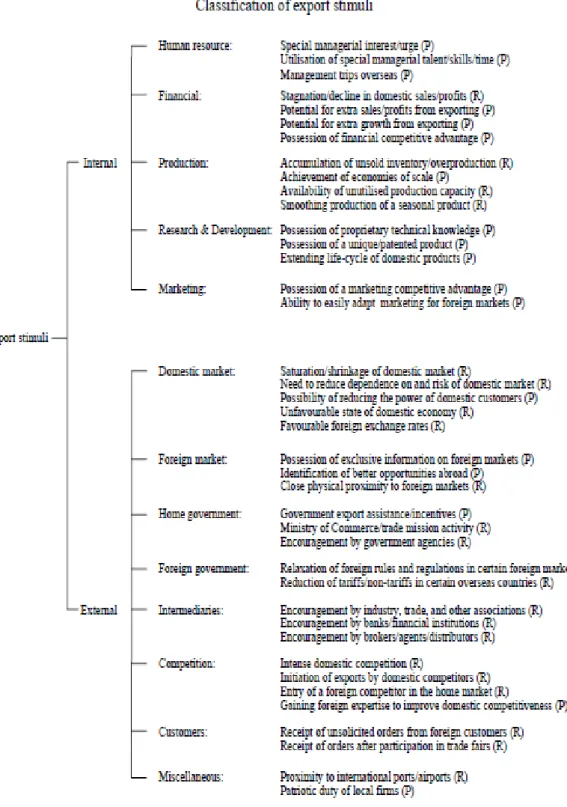
There are different export motivations‟ classifications that have been used in the literature. Yaprak (1985) clarified export motivators into different categories such as market, decision-maker, finance and product-based motivators. Another classification accepted broadly is that motivation includes internal and external factors (Kaynak and Stevenson, 1982; Brooks and Rosson, 1982; Leonidou et al., 2007). Internal factors are intrinsic to the firm whereas external factors are exogenous (Wiedersheim-Paul et al., 1978; Lee and Brasch, 1978). These authors also emphasized internal motivators are considered as positive approaches to exporting activities as opposed to negative approaches of external motivators. After reviewing 32 empirical studies from 1974-2005, Leonidou et al. (2007) offered a clearer and more detailed classification for both internal and external stimuli. According to their view, internal motivators include motivators in five main functional areas including human resources, financial, research and development, production and marketing. External motivators include factors associated with domestic market, foreign market, home government, foreign government, intermediaries, competition, and customers. Detailed summary of the classification provided by Leonidou et al. (2007) can be seen in Figure 1.
Other researchers divided these stimuli into reactive and proactive stimuli (Morgan and Katsikeas, 1997). Firms‟ unique capabilities are considered as proactive stimuli while reactive stimuli are resulted from the influence of the environment such as domestic or foreign market on the firm (Bilkey and Tesar, 1977). Both internal and external motivators can include not only reactive but also proactive factors. Based on this concern, Albaum et al. (2004) suggested a more comprehensive classification for export stimulation. In their views, motivational factors can be grouped into four main categories including internal-proactive, internal-reactive, external-proactive and external-reactive. Internal-proactive factors are defined as factors related to firms‟ unique internal competences such as special managerial interest/urge, utilisation of special managerial talent/skills/time, management trips overseas, potential for extra sales/profit/growth from exporting, etc. (Leonidou et al., 2007). Internal-reactive factors result from firms‟ response to pressures imposed by factors in their internal environment such as stagnation/decline in domestic sales/profits, accumulation of unsold inventory/overproduction, availability of unutilised production capacity, and smoothing production of a seasonal product (Leonidou et al., 2007).
29
External-proactive factors mention factors associated with firms‟ ability to exploit market opportunities such as the possibility of reducing the power of domestic customers, exclusive information on foreign markets, identification of better opportunities abroad, government export assistance/incentives, gaining foreign expertise to improve domestic competitiveness and patriotic duty of local firms (Leonidou et al., 2007). External-reactive factors include firms‟ respondents to pressure from their external environment such as saturation/shrinkage of the domestic market, need to reduce dependence on and risk of the domestic market, unfavourable state of the domestic economy, etc. (Leonidou et al., 2007). Leonidou (1995b) summarised that exporters‟ main reasons for engaging exporting activities mostly are external-reactive factors whereas internal-proactive factors demonstrate non-exporters‟ perspective on export stimulation. Although there are a variety of ways to classify export motivations, this thesis applies the classifications offered by Leonidou et al. (2007) to analyse data. There are three reasons explaining for this choice. Firstly, their classification is summarised after reviewing 32 empirical studies. Therefore, it is able to provide the more comprehensive classification. Secondly, this classification is offered in 2007 and it is relatively new compared to other previous classification. Finally, the authors refer to use this classification when examining SMEs. This purpose is compatible with the purpose of this study.
30
31 2.3.3. The dynamic of export motivations
Leonidou et al. (2007) argued that the impact of each stimulus on a firm‟s export decision is quite different because of their different frequency, intensity and importance perceived by managers. According to Leonidou and Katsikea (1996), the export development process can be divided into three main phases depending on different levels of firms‟ interest in exporting activities including pre-engagement phase, the initial phase and the advanced phase. Among these phases, firms that do not show any interest in exporting activities are in pre-engagement phase. Firms in the initial phase are considering export their products overseas while all firms that used to export are in an advanced phase. The main limitation of this division is as pointed by Leonidou and Katsikea (1996) the lack of attention paid to firms which are currently conducting exporting activities. To overcome this limitation, Suárez-Ortega (2003) suggested a new division. In her study, she divided the export development process into four main stages including uninterested non-exporters, interested non-exporters, initial exporters and experienced exporters. In every stages of the export involvement, motivations still play active roles in firms‟ export decision (Leonidou and Katsikeas, 1996; Morgan, 1997). However, the frequency, importance and intensity of export motivations can change during different stages (Barker and Kaynak, 1992). These changes can be explained by changes in firms‟ internal and external environment (Crick and Chaudhry, 1997). Therefore, the nature of export motivations is dynamic, complex and situation-specific (Leonidou et al., 2007). This fact also becomes the main reason to explain why researchers can not underestimate low impact stimuli. In fact, these stimuli can have a considerable impact on a firm‟s export decision in a certain situation and dramatic impact stimuli may be complemented by their role (Leonidou et al., 2007).
In addition, when examining the exporting stimuli, researchers bear in mind that the overall impact of each stimulus on each firm can be different because of their different demographic characteristics such as smaller vs larger, non-exporters vs ex-exporters, younger vs older. For example, increased competition in the domestic market, the potential for extra profits and extra sales resulting from exporting, the production of goods with unique qualities, the provision of government export-related incentives and the saturation/shrinkage of the home market are emphasized more by larger firms than smaller firms as their motivational factors (Leonidou, 1995b). However, the relationship between firm size and export motivations is found no significant in other
32
studies (Katsikeas and Piercy, 1993). In terms of export involvement, Leonidou (1995b) found that the achievement of economies of scale from exporting, the potential for extra growth resulting from exporting and the receipt of orders from trade fairs/missions have a powerful impact on exporters than non-exporters. Firms in the early stage of export involvement are more likely to be influenced by reactive-external stimuli whereas firms in the late stage are more likely to be influenced by proactive-internal stimuli (Leonidou et al., 2007). In terms of firms‟ age, although the study of Leonidou (1995b) found there is no significant relationship between domestic experience with export stimulation, this relationship is positive in other studies (Wiedersheim-Paul et al., 1978). In their studies, they emphasized that inter-state expansion experience increase the likelihood of firms to export.
2.4. Export barriers
Suárez-Ortega (2003) defined export barriers and called export problems or obstacles all factors (external or internal factors) which enable to dissuade or hinder firms‟ export activities. Export barriers received a lot of attention from the research community since 1970s (Karakaya, 1993; Leonidou, 2004; Craig and Zafar, 2005; Arteaga-Ortiz and Fernández-Ortiz, 2010). By understanding these obstacles and managers‟ perceived export barriers, small business managers, public policymakers, business educators and exporting researchers are able to modify their current activities to reduce or remove these barriers (Leonidou, 2004; Köksal and Kettaneh, 2011). Tesar (1977) and Köksal and Kettaneh (2011) also pointed out that the significant amount of the variance of firms‟ sales, market share and productivity is the consequence of these barriers. Export barriers are considered as “reason for business failures in foreign markets” (Jaeger, 2008, p.44).
2.4.1. Export barriers‟ classifications
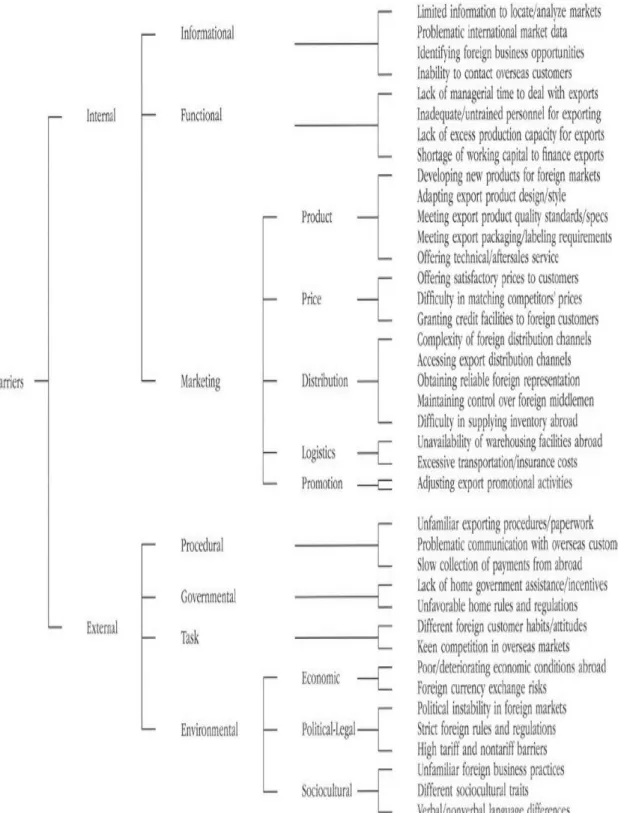
In general, when deciding to engage in exporting activities, the firm may face a lot of barriers or challenges (Arteaga-Ortiz and Fernández-Ortiz, 2010). These barriers derive from high risk vs. low short-term profit potential, insufficient financing sources, prohibitive or protective foreign government regulations, inadequate distribution channels, insufficient knowledge of marketing opportunities abroad, and lack of foreign marketing connections (Bilkey, 1978). Another classification is suggested by Bauerschmidt, Sullivan and Gillespie (1985). In their studies, they grouped seventeen
33
barriers into five main factors including national export policy, comparative marketing distance, lack of export commitment, exogenous economic constraints and competitive rivalry. After conducting a survey of 117 U.S firms operating in the paper industry, Bauerschmidt et al. (1985) found that exogenous economic constraints are mentioned the most by managers as the greatest barriers for their firm to engage in exporting activities whereas competitive rivalry factor received the least attention from U.S managers. The other three factors such as national export policy, comparative marketing distance and lack of export commitment have moderate influence on firms‟ export decision.
Other classification is proposed by López (2007) and Ramaswami and Yang (1990). Compared to the classification of Bauerschmidt et al. (1985), these classifications pay more attention to barriers associated with firms‟ internal resources. A simpler classification is suggested by López (2007). In her study, she divided exporting barriers into three main groups including managerial factors, organisational factors and external factors. The first group of barriers includes characteristics of managers, their level of education, knowledge, capabilities, expectation and attitude towards internationalization as well as their international experience (Tseng and Yu, 1991; Aksoy and Kaynak, 1994; Crick and Chaudhry, 1996; Leonidou, 2003; Javalgi, Griffith and White, 2003; Chetty and Campbell-Hunt, 2003; Suárez-Ortega and Álamo-Vera, 2005). The second group of barriers includes small size, insufficient personnel, and financial constraints, a limited number of years firms are operating (Gripsud, 1990; Tseng and Yu, 1991; Hart, Webb and Jones, 1994; Aksoy and Kaynak, 1994; Katsikeas, 1994; Leonidou, 1995a; Hamill and Gregory, 1997; Samiee and Walters, 2002; Leonidou, 2003; Dhanaraj and Beamish, 2003; Suárez, 2003; Jeong, 2003). The third group of barriers relates to product/market problems to exporting, industry characteristics, the competitive forces, public institutions, region where the firm operates, and barriers associated with local government, infrastructural facilities or logistics system (Tseng and Yu, 1991; Karakaya, 1993; Hamill and Gregory, 1997; Leonidou, 2004; Smith, Broberg and Overgård, 2002; Suárez-Ortega and Álamo-Vera, 2005). After conducting the survey with more than 55,000 Spanish enterprises, López (2007) found that “date of foundation” is the major organisational barrier whereas industry sector is the most important external barriers for these firms when they decide to export their products overseas.
34
Ramaswami and Yang (1990) offered another category of export barriers including export knowledge, internal resource constraints, procedural barriers and exogenous variables. The first category – export knowledge barriers refers to the lack of awareness of export assistance available, lack of awareness of economic and non-economic benefits of export, lack of knowledge of best potential markets, general lack of knowledge of how to export, and lack of staff for export planning (Leonidou, 1995c; Ahmed et al., 2002; Qian, 2002; Suárez-Ortega, 2003). These barriers are demonstrated in a lot of studies as one of the pioneers of export barriers (Pavord and Bogart, 1975; Kneller and Pisu, 2011). In the study by Karagozoglu and Lindell in 1998, this first export barriers category is evaluated as the second most difficulty by small technology-based firms when they want to go overseas. The second category – internal resource constraints are emphasized by many small and medium enterprises as their main barriers when they consider going overseas (Bilkey, 1978). Some examples of internal resource constraints are lack of finances for market research, lack of capital or credit to finance export sales, lack of local banks with adequate international expertise, unwillingness of banks to serve small and medium-sized businesses (Barker and Kaynak, 1992; Suárez-Ortega, 2003; Kneller and Pisu, 2011).
The third category is procedural barriers. They can be red tape, documentations, import tariffs, various quality control and safety standards, transport and distribution difficulties in foreign markets, differences in consumption habits, language and cultural barriers (Diamantopoulos and Schlegelmilch, 1990; Barker and Kaynak, 1992; Suárez-Ortega, 2003). Regarding to procedural barriers, Ramaswami and Yang (1990) pointed out there are two types of procedural barriers such as non-controllable barriers (e.g. non-tariff barriers) and controllable barriers (e.g. documentation). The final category – exogenous barriers refer to uncertainties in the international markets including high competition, political instability in the foreign markets, exchange rate risk and the risk of losing money (Diamantopoulos and Schlegelmilch, 1990; Suárez-Ortega, 2003; Arteaga-Ortiz and Fernández-Ortiz, 2010). The study by Suárez-Ortega in 2003 based on the data of both non-exporting and exporting small and medium Spanish wine firms found that lack of resources to conduct or maintain exporting activities is the most common barriers of these firms whereas macro-environmental aspects (e.g. trade barriers, language and cultural barriers, the risk of exchange rate fluctuation) received the least attention from firms. These results are supported by Leonidou and