A
dministratio
Publica
VOLUME 27
ISSUE 4Administratio P
ublica
VOL UME 27 ISSUE 4ASSOCIATION OF SOUTHERN AFRICAN SCHOOLS AND DEPARTMENTS OF PUBLIC ADMINISTRATION AND MANAGEMENT (ASSADPAM)
Chief Editor: Dr Vain Jarbandhan (University of Johannesburg)
Deputy Editor: Prof Harry Ballard (Cape Peninsula University of Technology)
Technical Editor: Liza van Jaarsveldt (University of South Africa)
Editorial Committee
Ms Adéle Burger (University of Stellenbosch)
Dr Enaleen Draai (Nelson Mandela Metropolitan University) Prof Liezel Lues (University of the Free State)
Prof Natasja Holtzhausen (University of Pretoria) Dr Thokozani Nzimakwe (University of KwaZulu-Natal) Prof Shikha Vyas-Doorgapersad (University of Johannesburg) Prof Gerda van Dijk (North West University)
Prof Michelle Esau (University of Western Cape)
Editorial Council
Prof Christelle Auriacombe (University of Johannesburg) Prof M J (Jide) Balogun (Former Senior Advisor, UNDESA) Prof Benon Basheka (University Kabale, Uganda) Prof Geert Bouckaert (EGPA, Leuven) Prof Robert Cameron (University of Cape Town) Prof Valiant Clapper (University of South Africa) Prof Michiel S de Vries (University of Nijmegen, Netherlands) Prof G K Karyeija (Uganda Management Institute)
Prof Jerry Kuye (Chief Editor: African Journal of Public Affairs (AJPA)) Prof Jesse Lutabingwa (Appalachian State University, North Carolina) Prof Cynthia Lynch (Southern University, Louisiana)
Prof Michael Macaulay (Victoria University, New Zealand) Prof Anne McLennan (University of the Witwatersrand) Prof R K Mishra (Osmania University, India) Prof Dele Olowu (ISS,The Hague) Prof Louis A Picard (University of Pittsburgh) Prof P S Reddy (University of KwaZulu-Natal)
Prof Christoph Reichard (EAPAA, University Potsdam, Germany) Prof Dovhani Thakhathi (University of Fort Hare)
Prof Anthonie van Nieuwkerk (University of the Witwatersrand) Prof M van der Steen (University of Tilburg, Netherlands)
ISSN 1015-4833
About the Journal
Administratio Publica is a double blind, peer-reviewed journal accredited with the South African Department of Higher Education and Training (DoHET) and produced four times a year and aims to promote academic scholarship in public administration and management and related fi elds. Analytical articles in the form of original theoretical and empirical articles, debates, research viewpoints, review articles and book reviews in English will be considered for publication. Nationally, only contributions of paid-up members of ASSADPAM will be published. International authors are welcome to submit articles for review but page fees must be paid before publication.
Page fees and Journal subscription
• Individual and institutional subscription 2018: Local R588.00 per volume (postage of R145.00 per volume excluded) or R147.00 per issue (postage excluded); Foreign – $100.00; €77.00 (postage of $50 or €38 per volume excluded).
• Authors are required to pay a fee of R350.00 per page as well as R150.00 per graphic for any manuscript printed in the Journal (excluding the costs of language editing where needed).Payment is due on receiving confi rmation from the Editor that a
contribution is to be published in a specifi c issue of the Journal. Payment should be made directly in to the account of ASSADPAM, but proof of payment must also be submitted to the Editor to avoid any possible delay in the publication of a contribution.
Account details
Standard Bank
Account number 01 543 8511 Branch Code 12-645 Lifestyle Centre Centurion
Where to send articles
All correspondence concerning articles should be directed to [email protected] or: Dr Vain Jarbandhan
Head: Department of Public Management and Governance Faculty of Management P O Box 524 Auckland Park 2006 Tel: +27 11 559 2905 Email: [email protected] Subscription enquiries: Prof L Lues
Contents
Editorial
1
V Jarbandhan
Evaluating the Role of Good Governance in Development 7
Evidence from MauritiusD C Ukwandu
The Most Influential Decision-making Criteria in
South African Parliamentary Committees
26
B Rabie
The Potential of a Power-Sharing Government to
Prevent Post-election Violence in Uganda
47
Perspectives from Mid-Western Region
D Mwesigwa
Overcoming the Uneasy Political and
Administrative Interrelationship for Effective
Governance in a Municipality
69
Z Maqoko and K Asmah-Andoh
Implications of Socio-economic Issues on the Practice
of Co-creation and Governance in South Africa
88
S Pillay
Value-adding Activities of Operational Risk
Management Methodologies
110
A South African Perspective
J Young
Good Governance Perspectives in Public
Administration and Cybersecurity
134
POSTGRADUATE FORUM
Conceptualising South African Policy and
Entrepreneurial Development
158
A Female Perspective
N Meyer
New Public Management, Quick Fixes and Policy
Churn in South Africa
178
A Case Study of Eastern Cape Hospitals
M Mpofana and G Ruiters
Improving the Management of Inappropriate Use
of Information Technology by University Students
197
S Ramoshaba and G S Cloete
The Role of Street-Level Bureaucracy in Development
Assistance Management in Third-World Countries
216
A Case Study of Selected Sports Development Activities in South Africa
O C Dodo and E O C Ijeoma
Formulation and Application of a Local Government
Financial Health Index
235
The Case of the Sedibeng Region
J R Neethling and D F Meyer
INTERNATIONAL FORUM
Public Sector Development under the New
Constitutional Dispensation in Kenya
256
A Kinoti Meru and M W Kinoti
Improving Our Theory of Evaluation Through
an African-made Process
275
An Ubuntu Answer to the Decolonising Question
The key attributes of good governance are crucial elements for development. In ‘Evaluating the Role of Good Governance in Development: Evidence from Mauritius’, Damian Ukwandu argues that the key attributes of good governance have been paramount in the transformation of countries in different parts of the world. The purposes of his article are to provide a critical interrogation of the reasons for poverty and underdevelopment in sub-Saharan Africa, and to unfurl the relationship between good governance and development. The article demon-strates that the robust economy of Mauritius serves as a best practice for policy options in countries in sub-Saharan Africa. The article recommends the idea of a “negotiated network” as a solution to the problem of poor governance that has continued to stifle economic growth and development in sub-Saharan Africa.
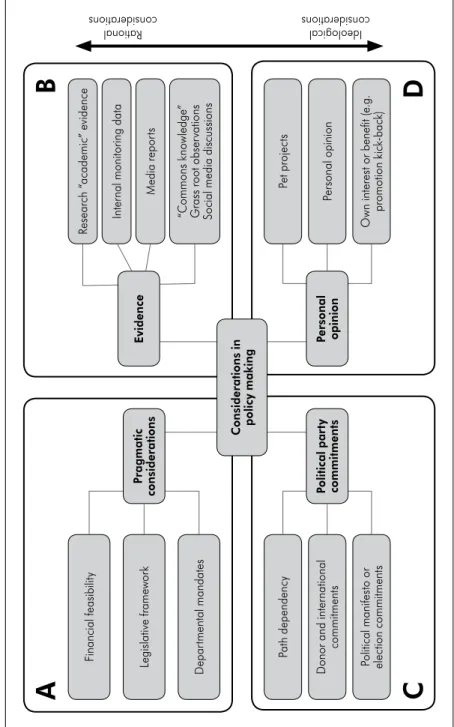
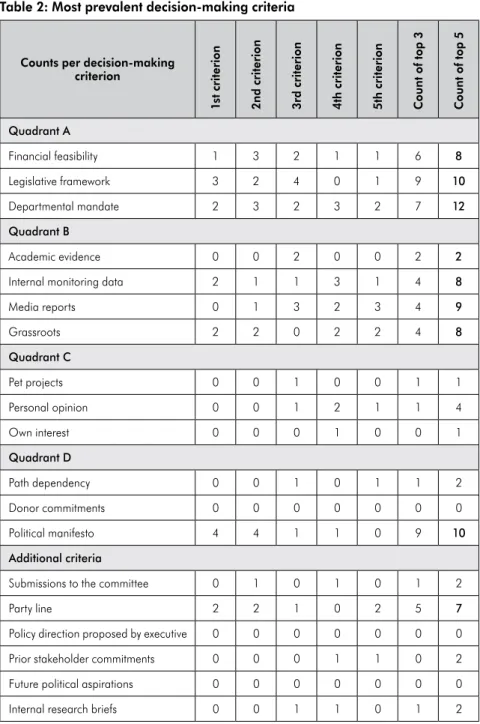
Babette Rabie in ‘The Most Influential Decision-making Criteria in South African Parliamentary Committees’ reviews research in the field of evidence-influenced policymaking to present an integrated decision-making model that bal-ances evidence from alternative sources with pragmatic considerations, individual opinion and political party commitments. According to the author, evidence-based policymaking is advocated as an alternative to opinion-evidence-based policymak-ing, which prioritises the opinion of the policymaker and selects evidence to confirm the predetermined political stance of the policymaker which illustrates the complexity of policy decision-making. Evidence-influenced decision-making acknowledges that evidence is one of many factors.
The article offers valuable insight into the decision-making criteria that mem-bers of parliamentary committees regard as important adding that stakeholders engaging with the parliamentary committees can frame submissions to align with the decision-making criteria, enabling stakeholders to formulate compelling argu-ments that will resonate with the members of parliamentary committees and will more likely be considered during deliberations.
According to David Mwesigwa in ‘The Potential of a Power-Sharing Government to Prevent Post-election Violence in Uganda: Perspectives from Mid-Western Region’ studies have revealed that a number of countries in the East African region have faced challenges in preventing post-election violence. His article examines the potential of a Power-Sharing Government (PSG) to pre-venting post-election violence in Uganda. PSG is emerging as an issue, seeing that the country has endured post-election violence since the 2006 elections.
Editorial
V JarbandhanHis findings suggest that adopting the PSG approach facilitates a coalition to have authority to bargain in the interest of the country; a joint veto can lessen majority influence by allowing minority groups to prevent a change in policy; proportional representation can surpass the electoral system in a divided coun-try; and equitable distribution of key positions in the national military can lead to sanity in the country’s defence sector. The article concludes that PSG can succeed in mitigating potential post-election violence even if every ideal fac-tor put forth by a consociational approach is not adopted in totality. It is rec-ommended that political leaders and other stakeholders should seek possible means to achieving a comprehensive PSG.
Zandile Maqoko and Kwame Asmah-Andoh in their article, ‘Overcoming the Uneasy Political and Administrative Interrelationship for Effective Governance in a Municipality’ analyse the relationship between councillors and appointed officials at the Nelson Mandela Bay Municipality in the Eastern Cape, and its ef-fect on service delivery and governance. They argue that the dichotomy of strictly classical political administration has been a challenging endeavour, especially within local government in exercising political oversight. The article contributes to the debate on the effects of the uneasy political and administrative relationship on a local government level. In an analysis of the Nelson Mandela Bay Municipality, the authors found a fragmented public service system that has blurred lines be-tween functional competencies and Human Resource Management (HRM). The uneasy political and administrative relationship seems to be further complicated by party-political contestations and the politicisation of the administration, as politicians interfere in the appointment of officials. This article contributes to the debate on the effects of the uneasy political and administrative relationship on a local government level. The authors contend that the cadre deployment strategy of the African National Congress (ANC) contributes to the uneasy political admin-istrative relations in municipalities and suggest that a single professional public service could improve the working relationship between elected councillors and appointed administrative officials.
According to Sareesha Pillay the pressures facing the South African public sec-tor have directed attention to raising the profile of responsiveness and interaction in governance and the democratic nature of South Africa; the role played by citi-zens in governance has come to the forefront. The author adds that continuous ef-forts are being made to involve citizens in the promotion of effective government processes and to ignite transformation in current government practices. The author states in ‘Implications of Socio-economic Issues on the Practice of Co-creation and Governance in South Africa’ thatwith the paradigmatic shift towards co-creation, citizen participation now surpasses the former one-dimensional bottom-up approach to governance. The foundation of co-creation is key in explicitly giving equal importance to the contributions that citizens make as ‘customers’ to
the process-based framework of contemporary democratic governance in South Africa. According to the author, although co-creation is aimed at encompassing more collaborative efforts between citizens and their government, the practical aspects of co-creation in the South African context remains highly flawed and that the service-systems approach to co-creation that has been adopted is not structurally conducive to the socio-political and socio-economic climate of South Africa. Consequently, reform in the public sector and effective governance re-mains strained in view of the underlying challenges predominantly evident in the socio-economic environment, according to the author. The deeply entrenched triple challenge of poverty, inequality and unemployment together with infra-structural limitations continue to impact negatively on democratic participation. The article addresses the concept of co-creation in relation to participation and governance and highlights the socio-economic issues and their implications on governance in South Africa. Comparisons are made between the strengths and challenges of co-creation in practice within the South African context. The article provides recommendations to facilitate the improved practice of co-creation and effective governance in South Africa.
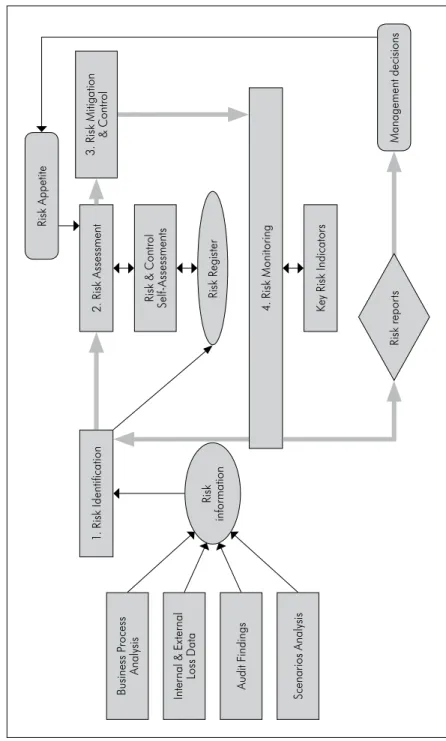
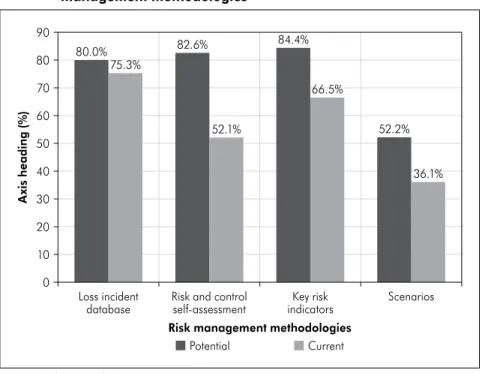
In ‘Value-adding Activities of Operational Risk Management Methodologies: A South African Perspective’ Jacobus Young notes that operational risk manage-ment forms a crucial part of managemanage-ment and since the early 1990s this practice has escalated rapidly due to various reasons, such as an increase in the regula-tory requirements and risk-related incidents. The financial legislative framework requires institutions to implement and maintain effective, efficient and transparent systems of risk management and control. In his article the author cites incidents, such as the fall of the VBS Mutual Bank, which indicated problems with adequate operational risk management. He argues that the development and implemen-tation of operational risk management methodologies could add value to the management of operational risk exposures and adherence to specific regulatory requirements. According to the author, it seems that operational risk method-ologies are currently only used for compliance and not used appropriately. The article investigates the value-adding activities of risk methodologies which can contribute to ensure an effective operational risk management. These activities are empirically confirmed by means of a survey which also identified a gap be-tween the envisaged value and its current implementation by organisations.
According to Mogie Subban and Vain Jarbandhan, in their article ‘Good Governance Perspectives in Public Administration and Cybersecurity’ the frequency of cyber-breaches, poses serious governance challenges facing the techno-economy. Government intervention around cybersecurity is pluralistic in nature as it focuses on areas such as sovereignty, terrestrial space and democratic governance, according to the authors. Their article examines technology-led public administration and information governance to ensure open, transparent,
efficient and effective service delivery. The authors state that it is important to grasp what constitutes good governance in cyber- security and to advance and regulate the cyberspace for responsible and sustainable practice. Their article pro-poses a framework that South Africa could follow in implementing a cybersecurity policy. One of the main findings of this article is the clarion call for increased ac-countability and transparency, together with new forms of resilience. As a value-add, the article explores cybersecurity regulation as an important aspect of good cybergovernance amidst the onslaught of the Fourth Industrial Revolution (4IR). The authors conclude that by introducing cybercentric measures in e-governance, a more reflective approach could bring about positive changes and measures in how information is managed, disseminated and governed while improving service delivery in the 21st century and beyond.
In ‘Conceptualising South African Policy and Entrepreneurial Development: A Female Perspective’ Natanya Meyer argues thatthe full benefits from entrepre-neurship cannot be utilised if proper policies and the effective implementation thereof is not present in a country. Her article aims to conceptualise the theoreti-cal background on some of the supporting entrepreneurial and small business de-velopment policies in the South African context. According to the author, gender equality has been prominent in the formulation of recent policies and therefore some aspects within the discussed policies will also be addressed. According to her, entrepreneurship development has become a prominent term and focus area not only in social science research but also among various economic agents. She adds that it is considered, not only on a national level, but also internationally by policy formulators as a possible link to increased and sustained economic growth and development. Although entrepreneurship is considered important globally, the benefits to developing countries, such as South Africa, could have a signifi-cant impact on poverty alleviation and employment creation.
In ‘New Public Management, Quick Fixes and Policy Churn in South Africa: A Case Study of Eastern Cape Hospitals’ Mziwonke Mpofana andGreg Ruiters examine policy issues in the context of New Public Management through a case study of two Eastern Cape hospitals from 2003 to 2012. According to the authors, after 2003, the Eastern Cape Provincial government introduced three institutional changes at its urban hospitals: the ‘business-isation’ of the hospitals; the amalga-mation of large hospitals into mega-complexes; and the implementation of a per-formance management system. The article depicts various actors’ understandings of these New Public Management reforms and found that the provincial govern-ment authorised hasty reforms and that changing policy paradigms and person-nel created an unstable situation, where staff were caught between competing models, cultures and identities.
In ‘Improving the Management of Inappropriate Use of Information Technology by University Students’ Sefoko Ramoshaba and Fanie Cloete
seek answers for the better management of inappropriate use of Information Technology (IT) by students. According to the authors IT brought with it ethical challenges, where human beings are tempted into using IT to commit crime and to engage in other forms of unethical behaviour. This has led to a need for IT ethics, and measures on how to manage these challenges. In recent years, ethical problems related to the inappropriate use of IT have been transplanted from so-ciety to the university environment. Universities are now experiencing the same, and in some cases even more, extreme forms of unethical behaviour, which have been committed through the inappropriate use of IT by students. This study sought answers for the better management of inappropriate use of IT by students.
The current literature on the issue was assessed to find out how students use IT to behave unethically, and about the types of IT devices students use to do this. Comparative analysis and assessment of selected university case studies were then employed to determine how those case studies deal with the issue. The main findings of the study indicated that universities have their own student disciplinary units and IT usage policies but that their respective IT management strategies can be improved to achieve better results.
In ‘The Role of Street-Level Bureaucracy in Development Assistance Management in Third-World Countries: A Case Study of Selected Sports Development Activities in South Africa’ O C Dodo and E O C Ijeoma aim to explore the role of street-level bureaucracy and public policy to advance develop-ment assistance, by focusing on a case study of football and rugby developdevelop-ment in South Africa. The current study applies street-level bureaucratic theory to explore stakeholders’ perceptions and decision-making approaches to implementing in-stitutional and public policies relating to sports transformation and development. More specifically, it focuses on whether policies translate into opportunities for target groups in the areas of football and rugby. Based on the interviews with stakeholders, the current study shows that there has been little progress in bridg-ing the gap between the rich and poor segments of society since 1994. The study also found the street-level bureaucrats faced challenges that contributed to the slow progress in this area. The study recommends that a strategic stakeholders’ management model be implemented, which employs a street-level bureaucracy policy approach (bottom-up principles) to advocate for effective sports develop-ment policy in South Africa.
In ‘Formulation and Application of a Local Government Financial Health Index: The Case of the Sedibeng Region’,J R Neethling and Danie Meyer ar-gue that various academic scholars have attempted to measure financial health; however, these indexes have not comprehensively captured the full extent of financial management at the local government sphere. The primary objective of their article is to formulate and apply a Financial Health Index (FHI) for local government that includes all the main elements of financial health by means of
a quantitative methodology. This index focused on four sub-indexes of financial health namely (1) income and expenditure; (2) liquidity ratios; (3) solvency ratios; and (4) profitability ratios. The research setting is the Sedibeng District Municipal region, which includes the local municipal areas of Midvaal, Emfuleni and Lesedi. The article found that the Midvaal Local Municipality had the highest index score of 49 out of a maximum of 65 or a percentage index score of 75%, followed by Lesedi with 57% and Emfuleni with only 52%. According to the authors, the utilisation of this FHI could be useful in measuring the financial health of local municipalities in South Africa and assist policymakers in the identification of key financial issues for strategy development towards improvement of their financial situation.
Abel Kinoti Meru and M W Kinoti, in their article ‘Public Sector Development under the New Constitutional Dispensation in Kenya’ investigate development-focused public leadership under the new Constitution of Kenya of 2010. The article aims to isolate development-focused public leadership on one hand, and shared national values and principles of good governance, as enshrined in the Constitution of 2010, on the other. The purpose of the article is to examine whether development-focused public leadership promotes national values and principles of good governance, as envisaged in the Constitution of Kenya of 2010 and empirically examines the interplay between these leadership foci, the eight factors advancing national values and the principles of good governance, as en-shrined in the Constitution of Kenya of 2010.
In ‘Improving Our Theory of Evaluation Through an African-made Process: An Ubuntu Answer to the Decolonising Question’ Steven Wallis argues that since the emergence of the Social/Behavioural Sciences, it has been assumed that researchers working in separate disciplines who generate more/better data would generate improved theory. He adds that despite the rapid increase in available data and scholarly publications, theory (and practice) has advanced at a slow pace and instead, most disciplines complain that this research approach has led to fragmentation and confusion – as evidenced by the many theories, sub-disciplines and differing curriculums of several evaluation programmes across Africa and the world. To address this problem, this article uses an emerging process related to an Ubuntu perspective to rigorously synthesise 19 evaluation theories. The author, from that new perspective, identified strengths and weaknesses along with gen-eral and specific research opportunities to accelerate the development of theory and practice. Additionally, a path is presented for developing a community of scholars to fast-track the benefits of evaluation to boost true sustainable develop-ment in Africa.
INTRODUCTION
This article is divided into six parts. First, a succinct contextual background inter-rogates the possible reasons for sub-Saharan Africa’s slow growth rate compared
ABSTRACT
Good governance is an essential component of development. This key attrib-ute has been paramount in the transformation of countries in different parts of the world. Good governance was crucial in the remarkable transforma-tion of Southeast Asian countries such as South Korea. This research article employed conceptual research methodology. The research methods entailed a literature review and desktop analysis to obtain information from journals, articles, theses, and publications to arrive at an objective conclusion. The objective of the article is to provide a critical interrogation of the reasons for the poverty and underdevelopment in sub-Saharan Africa, as well as to unfurl the relationship between good governance and development. The article submits that proof from the Indian Ocean country of Mauritius demonstrates that there is hope for countries in sub-Saharan Africa. This means that de-velopment can be achieved if the lessons are followed of how this Indian Ocean country transformed itself from a backwater country at independence into a flourishing economy today. Finally, the article provides conclusions, a summary, and recommendations that contain the policy options available to countries in sub-Saharan Africa. The article recommends the idea of a “ne-gotiated network” as a solution to the problem of poor governance that has continued to stifle economic growth and development in sub-Saharan Africa.
Evaluating the Role of Good
Governance in Development
Evidence from Mauritius
D C UkwanduSchool of Public Management, Governance and Public Policy College of Business and Economics
to other parts of the world. To provide a firm theoretical background, contextual and conceptual descriptions of development, governance, and good governance are provided. The article also provides an exposition on the link between poor governance and underdevelopment. The article then interrogates the intrinsic link between good governance and development. It also examines the role of good governance in invigorating development. The author draws from the development trajectory of Mauritius as a possible policy option for countries in sub-Saharan Africa. The article concludes by providing vital recommendations that could bol-ster economic transformation in the sub-region.
CONTEXTUAL BACKGROUND
Sub-Saharan Africa is the poorest region in the world. According to the United Nations Conference on Trade and Development (UNCTAD 2012:16), 33 African countries are presently classified as least developed countries (Ukwandu 2015). The primary components of these countries include a lack of inclusive devel-opment, poverty, and underdevelopment. It also includes the absence of basic necessities of life such as water and electricity, as well as limited housing and employment opportunities (UNCTAD 2012:35). It is no coincidence that most African countries are at the bottom of the Human Development Index (HDI) (United Nations Development Programme [UNDP] 2012:12). Published annually, the HDI presents a summary of all the global HDIs. Pakistani economist, Mahbub ul Haq, and Indian economist, Amartya Sen, jointly developed the HDI in 1990 (UNDP 2012:12). The template helps countries, organisations, and people to comprehend whether a country is developed or undeveloped (Ukwandu 2015). The HDI is published as it is believed that capturing people’s living conditions is the best way to measure development, as “people are the real wealth of a nation” (UNDP 1990). Development template data is captured by factors such as “life expectancy, education, literacy and per capita gross domestic product (GDP)” (UNDP 2012:12).
Despite the tremendous natural resources and endowments available in the sub-Saharan African region, it continues to “wallow in poverty and deprivation” (Ukwandu 2014). There is no consensus among researchers on the reasons for poverty and underdevelopment in Africa (Ukwandu 2014:127). Some scholars are of the view that the treacherous geography in sub-Saharan Africa is responsible for its endemic poverty (Ukwandu 2014:128; Toynbee 1961:28). Encapsulated in these narratives is the idea that sub-Saharan Africa’s geography and climate lead to diseases, a weak economy, and a high mortality rate (Diamond 1997:43; Sachs 2001:15; Machiavelli 1987:25; Montesquieu 1989:32). Scholars in the develop-ment and governance nexus postulate that the high incidence of diseases such as
HIV/AIDS, malaria, and tuberculosis is related to poverty and underdevelopment in Africa (Bloom and Sachs 1998:211; Gallup and Sachs 2001:88).
The third reason indicated by researchers for Africa’s poverty and underde-velopment postulates that slavery has derailed the region’s productive ability and potential for centuries (Gemery and Hogendorn 1979:38; Manning 1981:508; Inikori 1992:500). This evocative legacy remains part of post-colonial Africa’s nar-rative. The fourth dominant factor relates to the pernicious impact of colonialism on sub-Saharan Africa’s developmental outcomes (Ukwandu 2014). Proponents of this narrative posit that colonialism led to poverty and underdevelopment in sub-Saharan Africa (Grosfoguel 2007:218; Fall 1993:22; Northrup 1988:44; Mehmet 1999:60).
The chief proponents of this narrative argue that “[w]e cannot hope to formu-late an adequate development theory and policy for the majority of the world’s population who suffer from underdevelopment without first learning how their past economies and societal history gave rise to their present underdevelopment” (Frank 1966:17). Rodney (1972:60) endorses this sentiment and advises that “in order to formulate a strategy and tactics for African emancipation and develop-ment, we have to understand how the present came into being and what trends are for the near future”.
In conclusion, scholars point to the debilitating effects of globalisation on Africa. In essence, globalisation performs a dual role because it could lead to economic fragmentation and inclusiveness. In this case, globalisation is blamed for the dismal growth and development of the continent (Wallerstein 1974:68; Gutall 2007:528; Aksu and Camilleri 2002:29; Diehl 2001:41). Those who hold this view argue that globalisation has not benefited the poorest communities in sub-Saharan Africa. It has led to job losses, increased poverty, and unemployment (Ukwandu 2014:109).
CONCEPTUAL CLARIFICATIONS
Development
There is a deluge of expositions on the notion of development. It is imperative to elucidate on what development entails for communities who live in developing parts of the world such as South Africa (Ukwandu 2014:41). For people living in the leafy suburbs of Sydney, Australia, development could entail protecting animal rights and climate change. Conversely, for those living in poor informal settlements such as Alexandra, South Africa, development should and could con-note the improvement of living standards. It could mean a struggle for the basic necessities of life such as food, shelter, a job, water, etc. (Ukwandu 2014:45). This
article endeavours to appraise the notion of development through the prisms of communities who live in poverty and underdevelopment in sub-Saharan Africa. Subsequently, it is crucial to distinguish the crux of development as it pertains to communities in sub-Saharan Africa. Rondinelli and Ruddle (cited in Rondinelli 1993:8) provide an apt elucidation of what development entails to the majority of Africans. While this definition is a bit dated, its main tenets constitute the es-sence of development for an ordinary African. The authors define development as follows: “The essence of development is the expansion of participation in economic activities through the creation of social and economic systems that draw larger numbers of people into processes of production, exchange and con-sumption, that involve greater numbers in entrepreneurship and employment, that increases levels of income for the poorest groups and reduce disparities between rich and poor so that a larger majority of people can obtain basic goods, save and invest and gain access to services necessary to enrich the quality of their lives. Development is a process of expanding the productive capacity of public and private organisations, large and small firms, in rural and urban regions of a country at a steady pace. It involves stimulating the use of potentially productive resources, adapting appropriate technologies and institutions to traditional as well as modern communities, transforming subsistence agricultural and rural sectors into employment- and income-generating elements of the national economy and providing social services and facilities that allow people not only to satisfy basic needs but also to develop their productive capacity and human potential” (cited in Rondinelli 1993:8).
Embedded in the definition is the central perception of development as mak-ing provision for basic human needs (Sen 1999:41). This means that all policies on development in the region should focus on enhancing opportunities for the poor, alleviating poverty, creating better health services, improving the quality of education, reducing infant mortality, etc. In summary, this can be referred to as “human development”. This is contrary to the outdated conception of develop-ment outcomes grounded on GDP. The GDP-based evaluation of developdevelop-ment is flawed. This is because authentic development that encompasses the goals enunciated by Seers (1969:12) still eludes many people in Africa. Despite huge improvements in the continent’s economic growth figures during the past decade, employment opportunities in the region have been limited. This is due to the fact that a handful of politicians in power reap all the benefits of economic growth, without making any real difference in citizens’ lives (Mills and Herbst 2012:65).
The World Bank (1991b) further enunciates this view with its much broader conceptualisation of the notion of development. The definition was broadened to incorporate other aspects such as education, health, the environment, and the social benefits of development (Ukwandu 2018). The World Bank (1991b) opines that economic development should pivot on a sustainable increase in
living standards. This encompasses material consumption, education, health, and environmental protection (World Bank 1991a); however, the World Bank is of the view that this narrow focus is insufficient. The World Bank provided a much more comprehensive and inclusive definition of development that included all segments of the population. This was encapsulated as follows: “Development in a broader sense is understood to include other important and related attributes as well, notably more equality of opportunity and political freedom and civil liberties. The overall goal of development is therefore to increase the economic, political and civil rights of all people across gender, ethnic groups, religion, races, regions and countries” (World Bank 1991a:31).
This brief overview of what development entails to the average person liv-ing in sub-Saharan Africa was provided in order to offer sufficient clarity on development.
Governance
The notion of good governance is similar to what Weber (1964:156) defines as “a modern state with a compulsory association with a territorial base claiming the monopoly of the legitimate use of physical force” (Weber 1964:156). Albrow (1970:45) clarifies that “such a state and its instruments of governance must be run by an impersonal bureaucratic staff, in the context of a legal-administrative order, regulated and limited by legislation and representative government”. The history of state formation and its legacy of colonialism mean that most states in sub-Saharan Africa are not similar to the Weberian ideal. Developed countries of the world, especially those in Europe, however, share these common characteris-tics. It is vital that states in Africa emulate policies and systems that have worked in other parts of the world, while adjusting them to suit their countries’ unique socio-economic and political milieus.
Weber (1965:155) opines that “states that desire to reduce poverty, unemploy-ment and underdevelopunemploy-ment should focus on activities that promote economic growth and development”. Weber (1965:155) explains: “Principally there are no mysterious incalculable forces that come into play, but rather one can, in principle, master all things by calculation. This means that the world is disenchanted. One need no longer have recourse to magical means in order to master or implore the spirits, as did the savage, for whom mysterious powers existed, technical means and competence perform the service”.
In Weber’s (1965) view, states in sub-Saharan Africa should enact and imple-ment policies that would stimulate commerce and industry, which, in turn, will bolster economic growth and development. Weber (1965) emphasises the key role of governance in development. According to the Asian Development Bank (ADB 1999), ”governance means the manner in which power is exercised in the
management of a country’s economic and social resources for development”. This definition accentuates the role that the state plays in mobilising both the pri-vate and public sectors in the quest for development. This is the path undertaken by newly developed countries of Southeast Asia. Canada Corps (2005:25) de-fines governance as “the way that decisions are made in towns, cities, provinces and countries”.
Governance encapsulates how government, civil society, and the private sector work together in harmony towards well-defined goals of development. Furthermore, it illuminates how a specific government functions, and which de-partment is in charge of what sector in the policy process and formulation. It also interrogates how the merits and demerits of political activity are distributed within a country. The World Bank (1992:70) defines governance as “the exercise of po-litical power to manage a nation’s affairs”. In line with this, Dwivedi (2001:36) defines governance as a “system of values, policies and institutions by which a society manages its economic, political and social interaction within and among the state, civil society and private sector”.
In turn, the UNDP (1997:21) defines governance as “the exercise of economic and administrative authority to manage a country’s affairs at all levels. It comprises the mechanisms, processes and institutions through which citizens and groups articulate their interests, exercise their legal rights, meet their obligations and me-diate their differences”.
The International Monetary Fund (IMF 2005:4) highlights the economic di-mensions of governance by arguing that “governance is in two spheres: improv-ing the management of public resources; and supportimprov-ing the development and maintenance of a transparent and stable economic and regulatory environment conducive to efficient private sector activities”. The Department for International Development (DFID 2001:11) highlights that “governance has to do with how the institutions, rules and systems of the state – the executive, legislature, judiciary and military – operate at central and local level and how the state relates to indi-vidual citizens, civil society and the private sector”. The United States Agency for International Development (USAID 2005:1) reiterates this sentiment by stating that “governance relates to the ability of government to develop an efficient, effective and accountable public management process that is open to citizen participation and that strengthens rather than weakens a democratic system of government”. Hyden, Court and Mearse (2004:16) regard governance as the formation and stewardship of formal and informal rules that regulate the public realm.
The concept of good governance
The concept of good governance has become popular globally (Kabumba 2005:6). Even though the concept of good governance has become a common
and frequently utilised concept, it varies depending on the context (Kabumba 2005:6). In developing countries, establishing good governance has become a fundamental requirement before the granting of aids and loans by the developed world. This means that international aid agencies and donor countries demand accountability and good governance as a key condition for aid assistance (Santiso 2001:1). This approach was initiated after the World Bank diagnosed the persis-tent poverty and underdevelopment that characterise countries of sub-Saharan Africa as a governance crisis.
Consequently, the World Bank identified good public management as a prereq-uisite of socio-economic development (Azmat and Coghill 2005:625). According to Romeo (2003:89), complying with the requests of donors, the governments of developing countries are able to develop participatory local government in order to support overall good governance. Bilney (1994:17) defines good governance as “managing of a country’s economic and social resources in an effective manner that is accountable, equitable, open and transparent”. The UNDP (1997:9) views good governance in the same way as “democratic forms of governance”. These forms of government “depend on accountability, participation and transparency” (UNDP 1997:9). Other scholars state that good governance is defined as “the re-sponsible and transparent management of resources of the public for the purposes of sustainable development” (Holtz 2000:10). The notion of good governance can be divided into two parts, namely political good governance and corporate good governance.
Political good governance refers to “ethical, effective and efficient man-agement of public resources and affairs by democratically elected officials” (Kabumba 2005:9). This concept takes into consideration the idea that demo-cratically elected leaders and appointed officials often mismanage the resources and affairs of a country. However, in the same sense, assuming that elections are fair and free, members of the public must blame themselves for wrong decisions (Kabumba 2005:10). Authoritarian governments can manage the affairs of a state in an efficient manner. Citizens find themselves in a dilemma where they have to choose between democratically elected leaders who mismanage the affairs and resources of the country and the self-imposed leaders who manage resources in an effective manner (Kabumba 2000).
Corporate good governance envisages the management of resources and af-fairs of an organisation in an effective, efficient, and ethical manner by individuals chosen in accordance with existing rules or laws (Kabumba 2005:10). This is most common in the non-state sectors. In this scenario, corporate good governance is applicable to the management of organisations. According to Ukwandu and Jarbandhan (2016:25), corporate governance has less to do with formal struc-tures and institutions, and more to do with the overall system whereby private organisations and public organisations are controlled and directed. The principles
of openness, accountability, and integrity are often included in corporate gover-nance (Ukwandu and Jarbandhan 2016:25).
According to Vu Thi (2012:17), six criteria of good governance exist in the pub-lic sector; namely:
● a political system that promotes input from all groups of civil society;
● credible and impartial electoral administration and active and informed
citizenry;
● reinforced public sector administrative and legislative institutions;
● accountability, predictability, and transparency in decisions made by
government;
● management of the public sector with macroeconomic conditions that are
sta-ble, resource mobilisation that is effective, and using resources in an efficient manner; and
● compliance with the rule of law in a manner that protects civil and personal
liberties, gender equity, and ensures public safety and security with equal ac-cess to justice for all.
The system of good governance requires that the decision-making process and formulation of public policy be accountable and transparent (Naidoo 2011:32). It goes beyond the capacity of the public sector to make the rules that create a framework that is legitimate, effective, and efficient for the conduct of public policy (Naidoo 2011:32). It implies management of public affairs in a manner that is participatory, accountable, equitable, and transparent (Court 2006). Good gov-ernance entails participation that is effective in policymaking processes, the prev-alence of an independent judiciary and rule of law, and institutional checks and balances through vertical and horizontal separation of power (Naidoo 2011:33). This discussion on the area of good governance as it relates to the public sector is very timely as the author is interrogating the link between good governance and development. This means that it is a type of good governance that is engineered through the good policies of the public sector institutions in Mauritius.
POOR GOVERNANCE AND
UNDERDEVELOPMENT IN AFRICA
This article argues that without good governance, it would be difficult for sub-Saharan Africa to navigate away from the treacherous waters of poverty and underdevelopment. Conversely, it accentuates the deleterious effects of poor gov-ernance, which include a poor investment climate, slow economic growth, and overall lack of development in the sub-Saharan region (Ukwandu 2014:300). The article also argues that good governance helps to create jobs and spurs economic
growth and development. This raises the following question: Why do coffee-pro-ducing countries in Africa, such as Ethiopia, the Ivory Coast, Uganda, and Kenya, fail to follow suit and replicate the example of Mauritius? The answer is simple: the inveterate interests (political, economic, cultural, religious, etc.) of the ruling elite and poor governance are sabotaging development efforts in the region.
Poor governance has impeded development efforts in sub-Saharan Africa. Poor governance has hampered the economic growth, job creation, poverty alleviation, and overall development in the region. Mozambique serves as an example of a sub-Saharan African country that is subject to poor governance. International financial institutions often refer to Mozambique as the “beacon of hope and reform” (Ukwandu 2014); however, in reality, it takes six months to register a company in the country (Emery and Spence 1999:9). During this six-month-period, various government departments will demand permits, licences, and mandatory fees that amount to almost 10% of a company’s budgeted costs (Emery and Spence 1999:9).
These corrupt practices characterise most government officials and institu-tions in the region. As such, it is almost impossible for small-scale business owners to obtain permits and start their businesses. Good governance will result in improved practices in the public sector of countries in sub-Saharan Africa. This means that the private sector would help reduce poverty and create jobs (Ukwandu 2014:300). Another illustration of poor governance in the region is evidenced in the high “transaction costs” that militate against entrepreneurial growth and development. It takes 153 days to register a company in Mozambique and 14 steps to complete the registration process. It takes three months and 16 processes to register a company in the Democratic Republic of the Congo (DRC) (Ukwandu 2014:300).
A more detailed study showed that in Nigeria, 15 different types of taxes are paid to the local, state, and federal governments to register and start a company (Ukwandu 2014). Starting a new business in Nigeria is bedevilled by the dual problem of inadequate infrastructure and electricity (Ukwandu 2018). In addition, business owners must provide their own security, water, and electricity (Ukwandu 2014:218). It takes almost a year for an office telephone line to be installed in Ghana, Nigeria, Cameroon, the DRC, Sierra Leone, and Liberia (Ukwandu 2014).
Layers of different taxes and sometimes deliberate double taxation by the local and national government discourage people from starting small-scale businesses in Cameroon. In Malawi, it is far better to operate without registering a company, as the government charges all business owners prohibitive fees and taxes (BBC News 2006). This article has shown that poor governance is the most profound impediment to development efforts in sub-Saharan Africa. Poor governance stunts agricultural growth and production, and hampers job creation and poverty alleviation as well (Ayittey 2005:133). For example, poor governance has led to
the widespread exploitation and manipulation of peasant farmers in most of sub-Saharan Africa. National governments, not market forces, determine the prices farmers in Africa receive for their produce (Ayittey 2005).
This creates an avenue for the flourishing of corruption and exploitation. According to Ayittey 2005:133), “[o]n average, between 1964/65 and 1984/85, the peasants of Gambia were robbed of 60 percent of the international price of their groundnuts. For 20 years the Jawara government ‘officially’ took, free of charge, 3 out of every 5 bags, leaving the peasants with a gross of 2. With deduc-tions for subsistence credit fertilizer, seeds, etc., the peasant would end up with a net 1 bag out of five”.
GOOD GOVERNANCE AND DEVELOPMENT
The essence of capitalism is entrenched in the mutual exchange of goods and services in a free-market economy. This has led to the unparalleled wealth and prosperity in developed countries (Oskarsson, Svensson and Öberg 2009:175). Good governance and subsequent transparent transaction costs invigorate eco-nomic growth and development globally. This is well documented in the work of Milgrom and Roberts (cited in Oskarsson et al. 2009:175). The authors explain this key relationship as follows: “The cost of deciding, planning, arranging and negotiating the actions to be taken and the terms of exchange when two or more parties do business; the costs of changing plans, renegotiating terms and resolv-ing disputes as changresolv-ing circumstances may require; and the costs of ensurresolv-ing that parties perform as agreed. Transaction costs also include any losses resulting from inefficient group decisions, plans, arrangements or agreements; inefficient responses to changing circumstances; and imperfect enforcement of agreements” (Milgrom and Roberts cited in Oskarsson et al. 2009:175).
As Milgrom and Roberts (cited in Oskarsson et al. 2009:175) and Ukwandu (2014:50) indicate, the pace of economic growth and development, a subsequent reduction in poverty, and overall economic growth and development depend on the smooth functioning of, and trust in, the regulations that govern business activi-ties in a country.
Many scholars have interrogated the intrinsic link between good governance and development, and more specifically the correlation between transaction costs in a country and its economic growth and development (Martinez and Dacin 1999:80). Martinez and Dacin (1999:80) state that transaction costs play a significant role in a country’s productivity, economic growth, and overall de-velopment. In cases where countries focus on stimulating economic growth and development, the transaction costs should ideally set out the terms of operation, rules, and regulations, as well as agreements between individuals and firms. The
aforementioned is of importance, as consistency and transparency help entrepre-neurs and companies to plan accordingly. The high transaction costs of doing business in Africa are detrimental to businesses and companies and hamper the flow of commerce, as well as economic growth and development.
In order for the majority of people within a state to reap the benefits of capi-talism, good governance must create an enabling environment. Ideally, it should energise entrepreneurial skills and the potential available in both the public and private sectors of the economy (North 1990:65). This means that sound govern-ment policies and programmes should encourage economic growth and develop-ment (Ukwandu 2018:50). Specifically, good governance helps in the production and exchange of goods and services in society. This is referred to as “transaction costs”. These encompass the costs of doing business in a country. They need to be significantly minimised for commerce and industry to be able to flourish (North 1990:65).
In essence, the transaction costs of producing a product like plastic include the cost of electricity to power the machines and the cost of labour, transport, etc. that would help make the product a finished article. All these costs determine the total or final cost of producing a particular product. Manufacturers conduct a final cost estimation and analysis before deciding to build a factory in a particular country. This means that every government that desires economic growth and development should endeavour to minimise the transaction costs of products in their countries so as to attract foreign direct investment. These investments will in the long run translate into more factories being built and more jobs being created. The government can help stimulate socio-economic growth and development by simplifying the transaction costs involved in setting up a business in their coun-tries through good governance. This is the link between good governance and development.
North (1990) stresses the key role that good institutions or good governance plays in stimulating a country’s growth and development. Importantly, the afore-mentioned creates efficient and cheap transaction costs to bolster economic growth and development (North 1990:65). North (1990:65) clarifies the link as follows: “We have only to contrast the organisation of production in a Third World economy with that of an advanced industrial economy to be impressed by the consequences of poorly defined and ineffective property rights. Not only will the institutional framework result in high costs of transacting in the former, but also insecure property rights will result in using technologies that employ little capital and do not entail long-term agreements “... Moreover, such mundane problems as the inability to get spare parts or a two-year wait to get a telephone installed will necessitate a different organisation of production that an advanced country requires. A bribe sufficient to get quick delivery through the maze of import controls or get rapid telephone installation may exist, but the resultant
shadow transactions costs significantly alter relative prices and consequently the technology employed”.
Adam Smith (cited in Rodrick, Subramanian and Trebbi 2002) elucidates cer-tain rules that favour commerce and industry. He is of the opinion that govern-ments that seek to alleviate poverty and bolster economic growth and develop-ment should regard these rules as a top priority. Smith (cited in Rodrick et al. 2002) further explains: “Commerce and manufacturing can seldom flourish in any state which does not enjoy a regular administration of justice in which the people do not feel themselves secure in their possession of their property, in which the faith of contracts are not supported by law, and in which the authority of the state is not supposed to be regularly enforced in the payment of debts from all those who are able to pay. Commerce and manufacturing cannot flourish in any state in which there is not a certain degree of confidence in the justice of government”.
Sharma (2007:35) reiterates the important role of good governance in devel-opment. The author describes poor governance as a state of uncertainty, while good governance is characterised by certainty and clarity. Informal methods of conducting interpersonal exchanges or business, which are common among people in traditional societies, are unsuitable for complex, modern societies. Given the complex division of labour and specialised skills needed for eco-nomic growth and development within a globalisation-focused paradigm, good governance is crucial in the formulation and implementation of any develop-ment policy. The global economy is presently characterised by unparalleled globalisation. Most development experts agree that good governance plays an inextricable role in stimulating and solidifying any development initiative (Kaufmann, Kraay and Zoido-Lobaton 2000; Knack 2003:32; Hall and Jones 1999:20; Henisz 2000:15).
THE MAURITIAN EXAMPLE
Arbache and Page (2008) interrogated the factors that influenced the growth and development of 44 countries in sub-Saharan Africa from 1975 to 2005. Their study found that Mauritius was an impressive example concerning the reduction of poverty, improvement in living standards, and overall development. The island nation was grouped alongside countries such as Botswana, South Africa, Cape Verde, Namibia, and the Seychelles. Arbache and Page’s (2008) study found that Mauritius performed better than oil-rich countries such as Equatorial Guinea, Nigeria, and Angola. It also fared better than resource-poor countries such as Burundi, the Central African Republic, and Chad (Arbache and Page 2008).
Why did Mauritius perform so well between 1975 and 2005? The study found that good governance energised the growth and development of the country. This
fact was affirmed by the president of Mauritius, Sir Anerood Jugnauth (quoted in Zafar 2011:1), who stated: “There is no miracle here; it is due simply to hard work, discipline, and will.” It is no coincidence that Mauritius defied the predictions of James Meade, a Nobel Prize recipient in economics, who in 1961 famously predicted a dismal future for Mauritius (Ukwandu 2014).
Meade was of the view that “the absence of natural resources, as well as its treacherous climate and geography, makes the country vulnerable to the vicissi-tudes of inclement weather, price shocks and absence of any viable alternatives for job creation outside the sugar sector” (1961 cited in Subramanian and Roy 2003). Against all these odds, Mauritius overcame severe developmental ob-stacles to make significant strides in its fight against poverty and underdevelop-ment. This small island nation in the Indian Ocean with approximately 1.3 mil-lion people transformed itself from a poor sugar economy into a country with one of the highest per capita incomes in Africa (Ukwandu 2014). The growth trajectory of the country accentuates the remarkable role of good governance in development.
Zafar (2011) succinctly captured the remarkable development trajectory of Mauritius by explaining that the country has made huge improvements as a result of good governance. Zafar (2011) explained that GDP per capita rose exponen-tially between 1970 and 2010, from less than US$500 to US$6 000. Crucially, the country was able to transform the main drivers of its economy from sugar to textiles. It later broadened the important drivers of the economy into a service economy comprising manufacturing and other sectors. As in Botswana, it was simply based on good governance and leadership that was focused on poverty al-leviation and development, unlike most of sub-Saharan Africa, where government policies are geared towards the interests of a few elites in power.
What is very illuminating about Zafar’s (2011) study on the development and economic growth of Mauritius is that the growth has benefited the majority of its citizens and has led to significant improvement in the HDI of the country. This is in contrast to the economic growth without development witnessed in resource-rich countries in Africa such as Nigeria, Angola, the DRC, and Equatorial Guinea. Zafar (2011) noted that life expectancy at birth in Mauritius increased from 62 years in 1970 to 73 years in 2008. Furthermore, the infant mortality rate decreased from 64 per 1 000 in 1970 to 15 per 1 000 in 2008 (Ukwandu 2014).
Mauritians living below the level of poverty, which was below 40% in 1970, was less than 2% in 2010, and primary school enrolment was close to 90% in the 2000s. These statistics show that the transformation of Mauritius was underpinned by good governance. The facts exemplify that irrespective of natural endow-ments, any country that desires to make significant changes in its development trajectories must adopt the principle of good governance. Resource endowment is
not a guarantee that a country will be able to overcome the problems of poverty and unemployment. This can be seen in the disastrous economic performance of many resource-rich countries in Africa such as the DRC, Nigeria, Angola, etc. In all these cases, good governance is sacrosanct to development.
During a visit to South Africa, the former Brazilian president, Lula da Silva, remarked: “The biggest legacy of my presidency is not the programmes that took 30 million Brazilians out of absolute poverty and created 15 million jobs. It is the accountability of the public institutions and the real partnership with business, labour and civil society that brought hope to the people. We put the needs of the people first, not ours” (quoted in Naidoo 2012:15).
Kaufmann (2003:5) is of the opinion that “[g]overnance can be measured along six dimensions (voice and external accountability; political accountability and lack of violence, crime and terrorism; government effectiveness; lack of regu-latory burden; rule of law; control of corruption”. In line with this, Lula da Silva highlighted good governance as one of the main legacies he strived to instil in Brazil. As such, poor governance and the endemic corruption in public institu-tions are some of the greatest catalysts for growth and development.
CONCLUSIONS AND RECOMMENDATIONS
Cubitt (2014:3) postulates that evidence indicates that “governance is not working for the majority of African populations who encounter every day the realities and consequences of ineffective government in their states. These include a model of democracy where citizens observe, but do not receive, the benefits of economic growth; the prevalence of violence, or threat of violence, and the paucity of law and order in every corner of the continent; a lack of opportunity, the continuance of deep poverty, and the persistent marginalisation and disempowerment of large sections of the population”.
As previously mentioned, it is easy to blame external factors such as slavery, geography, and colonialism for the poverty and underdevelopment in sub-Saharan Africa. The fact is that poor governance has been a hindrance to socio-economic growth on the continent.
Mauritius was able to chart a new course in its developmental efforts be-cause it has the kind of public governance that is fair, transparent, accountable, and responsible. There is good governance in its public institutions. Auriacombe (2019:117) posits that in order for governments in Africa to keep up with their changing role of promoting development in their societies, they need to adopt a type of public governance referred to as a “negotiated network”. This involves a collaborative effort between the public sector, civil society, and business in order to accelerate service delivery in public governance. This kind of collaboration is
crucial if Africa is to ensure service delivery and socio-economic development. This entails building consensus between all the stakeholders in society before a policy is designed and implemented in a country. This is necessary because all parts of government are interconnected and interwoven. It is counterproductive to design policies for people without their input or to design policies for the registration and regulation of business without input from the business com-munity. It is clear from the literature as discussed above that governance failure is an impediment towards the eradication of poverty and underdevelopment in the region
REFERENCES
Aksu, A. and Camilleri, J.A. 2002. Democratising Global Governance. Basingstoke: Palgrave. Albrow, M. 1970. Bureaucracy. London: Macmillan.
Amin, S. 1974. Accumulation on a World Scale. New York: Monthly Review Press.
Arbache, J.S. and Page, J. 2008. Hunting for Leopards: Long Run Country Income Dynamics in Africa.
Policy Research Working Paper Series 4715. Washington, D.C.: The World Bank.
Asian Development Bank (ADB). 1999. Governance: Sound Development Management. Manila: ADB. Auriacombe, C.J. 2019. School of Public Management, Governance and Public Policy. UJ Internal
Handbook 2019 (APK and Sow) PMG 2B Section A, Semester 2. Johannesburg: University of Johannesburg.
Ayittey, G. 2005. Africa Unchained: The Blueprint for Africa’s Future. New York: Palgrave Macmillan. Azmat, F. and Coghill, K. 2005. Good governance and market-based reforms: A study of Bangladesh.
International Review of Administrative Sciences. 71(4):625–38.
BBC News. 2006. How Easy Is It to Do Business? Available at: http://news.bbc.co.uk/2/hi/
africa/4678380.stm. (Accessed on 22 August 2019).
Bilney, G. 1994. Good governance and participatory development in Australia’s aid programme.
Development Bulletin. 32:16–19.
Bloom, D. and Sachs, J. 1998. Geography, demography and economic growth in Africa. Brookings Papers on Economic Activity. 2(4):207–295.
Canada Corps. 2005. Guide to Key Concepts in Governance and Development: Knowledge Sharing Kit. Available at: http//www.canadacorps.gc.ca. (Accessed on 6 July 2019).
Court, J. 2006. Governance and Aid Effectiveness: Has the White Paper Got It Right? ODI Opinion Paper. United Kingdom: Overseas Development Institute.
Cubitt, C. 2014. An introduction to governance in Africa. Governance in Africa. 1(1): Art. 1. Available
at: http://doi.org/10.5334/gia.ae. (Accessed on 8 January 2019).
Department of Foreign and International Development (DFID). 2001. Making Government Work for the Poor. London: DFID.
Diamond, J. 1997. Guns, Germs, and Steel: The Fates of Human Societies. New York: W.W. Norton and Company.
Diehl, P. 2001. The Politics of Global Governance: International Organisations in an Interdependent World. Boulder: Lynn Rienner Publishers.
Dwivedi, O.P. 2001. On Common Good and Good Governance: An Alternative Approach. Paper presented at the 25th Congress on Congress on Governance of the International Institute of Administrative Sciences, Athens, Greece, 9–13 July.
Emery, J.J. and Spence, M.T. 1999. Administrative Barriers to Investment in Africa: The Redtape Analysis. Washington, D.C.: World Bank.
Fall, B. 1993. Le Travail Forcé en Afrique Occidentale Française, 1900–1945. Paris: Karalla. Frank, G. 1966. The development of underdevelopment. Monthly Review Journal. 18(4):12–14. Gallup, J. and Sachs, J. 2001. The economic burden of Malaria. American Journal of Tropical
Medicine and Hygiene. 64(2):85–96.
Gemery, H. and Hogendorn, J. 1979. The Economic Costs of West African Participation in the Atlantic Slave Trade: A Preliminary Sampling for the Eighteenth Century. London: Praeger Publishers. Grosfoguel, R. 2007. The epistemic decolonial turn: Beyond political-economy paradigms. Cultural
Studies. 21(2–3):211–223.
Guttall, S. 2007. Globalisation. Development in Practice. 17(4/5):523–531.
Hall, P. and Soskice, D. 2001. An introduction to the varieties of capitalism. In Hall, P. and Soskice, D. (Eds.). Varieties of Capitalism: The Institutional Foundations of Comparative Advantage. Oxford: Oxford University Press.
Hall, R. and Jones, C. 1999. Why do some countries produce so much more output per worker than others? Quarterly Journal of Economics. 114(1):8–95.
Held, A. and McGrew, A. (Eds.). 2002. Governing Globalisation: Power, Authority and Global Governance. Cambridge: Polity Press.
Henisz, W. 2000. The institutional environment for economic growth. Economics and Politics.
12(1):1–31.
Holtz, U. 2000. Partnership for the 21st Century: A Preliminary Assessment of the EU-ACP Agreement. D+C Development and Cooperation: No. 2/2000. California: Sage Journals.
Hyden, G., Court, J. and Mearse, K. 2004. Making Sense of Governance: Empirical Evidence from Sixteen Developing Countries. Boulder: Lynne Rienner Publishers.
Inikori, J. 1992. The Chaining of a Continent: Export Demand for Captives and the History of Africa South of the Sahara, 1450–1870. Jamaica: Institute of Social and Economic Research, University of the West Indies.
International Monetary Fund (IMF). 2005. Good Governance: The IMF’s Role. Available at: http//
www.imf.org/external/pubs/ft/exerp/govern/govindex.htm. (Accessed on 6 June 2019).
Iriye, A. 2002. Global Community: The Role of International Organisations in the Making of the Contemporary World. Los Angeles: University of California Press.
Kabumba, I. 2005. Good Governance and Sustainable Development in Africa: Meaning, Relationship, Problems and Strategies. Zambia: AAPAM.
Kaufmann, D. 2003. Rethinking Governance: Empirical Lessons Challenge Orthodoxy. Washington, D.C.: World Bank.
Kaufmann, D., Kraay, A. and Zoido-Lobaton, P. 2000. Governance Matters: From Measurement to Action, Finance and Development. Available at: http://www.imf.org/external/pubs/ft/
fandd/2000/06/kauf.htm0. (Accessed on 13 June 2019).
Keohane, R. 2002. Power and Governance in a Partially Globalized World. London: Routledge. Knack, S .2003. Democracy, Governance and Growth. Ann Arbor: The University of Michigan Press. Machiavelli, N. 1987. Discourses on Livy. New York: Oxford University Press.
Manning, P. 1981. The enslavement of Africans: A demographic model. Canadian Journal of African Studies. 15(3):499–526.
Martinez, R. and Dacin, T. 1999. Efficiency, motives and normative forces. Journal of Management.
25(4):75–96.
Mehmet, O. 1999. Westernizing the Third World: The Eurocentricity of Economic Development Theories. London: Routledge.
Mills, G. and Herbst, J. 2012. Africa’s Third Liberation: The New Search for Prosperity and Jobs.
Johannesburg: Penguin Books.
Montesquieu, C. 1989. The Spirit of the Laws. New York: Cambridge University Press.
Naidoo, I.A. 2011. The Role of Monitoring and Evaluation in Promoting Good Governance in South Africa: A Case Study of the Department of Social Development. Johannesburg: University of Witwatersrand.
Naidoo, J. 2012. Let us learn from Brazil. The Times Newspaper.22/ August/2012.
North, D.C. 1990. Institutions, Institutional Change, and Economic Performance. New York: Cambridge University Press.
Northrup, D. 1988. Beyond the Bend in the River: African Labor in Eastern Zaire, 1865–1940. Athens: Ohio University Press.
Oskarsson, S., Svensson, T. and Öberg, P. 2009. Trust, power, and institutional constraints: Individual level evidence. Rationality and Society. 21(2):171–195.
Rodney, W. 1972. How Europe Underdeveloped Africa. London: Bolge-L’Ouverture.
Rodrick, D., Subramanian, A. and Trebbi, F. 2002. Institutions Rule: The Primacy of Institutions over Geography and Integration in Economic Development. Working Paper 97. Cambridge: Centre for International Development, Harvard University. Available at: http://www.cid.harvard.edu/
cidwp/097.htm. (Accessed on 12 June 2019).
Romeo, L.G. 2003. The role of external assistance in supporting decentralisation reform. Public Administration and Development. 23(1):89–96.
Rondinelli, D.A. 1993. Development Projects as Policy Experiments: An Adaptive Approach to Development Administration. London: Routledge.
Sachs, J.D. 2001. Tropical Underdevelopment. Available at: https://www.nber.org/ papers/w8119. (Accessed on 12 June 2019).
Santiso, C. 2001. Good governance and aid effectiveness: The World Bank and conditionality. The Georgetown Public Policy Review. 7(1):1–22.
Seers, D. 1969. The Meaning of Development. IDS Communication 44. Brighton: Institute of Development Studies.
Sen, A.K. 1999. Development as Freedom. Oxford: Clarendon Press.
Sharma, S. 2007. Democracy, good governance, and economic development. Taiwan Journal of Democracy. 3(1):29–62.
Simonis, U.E. 2004. Defining Good Governance – The Conceptual Competition Is On. Berlin: Wissenschaftszentrum: Berlin für Sozialforschung.
Subramanian, A. and Roy, D. 2003. Who Can Explain the Mauritian Miracle. Meade, Romer. Svensson, T. and Öberg, P. 2005. How is coordinated market economies coordinated? Evidence
from Sweden. West European Politics. 24(4):1075–1100.
Toynbee, A.J. 1961. A Study of History. Oxford: Oxford University Press.
Ukwandu, D.C. 2014. The Role of Good Governance in Africa’s Elusive Quest for Development.
Unpublished PhD Thesis. Pretoria: University of South Africa.
Ukwandu, D.C. 2015. David Ricardo’s theory of comparative advantage and its implication for development in Sub-Saharan Africa: A decolonial view. African Journal of Public Affairs.
8(3):17–34.
Ukwandu, D.C. 2018. A critical review of the