I
Exploring the Application of Web 2.0 Technologies
in the context of e-Government
A thesis submitted for the degree of Doctor of Philosophy
by
Uthayasankar Sivarajah (Sankar)
Brunel Business SchoolBrunel University February 2014
II
Electronic government (e-Government) in terms of public service delivery and administration has endured signification transformation over the last decade. More recently, modern second generation web technologies (Web 2.0) have started to be used to deliver e-Government. However, this in turn has brought about additional challenges. By its nature, Web 2.0 is more interactive than the traditional model of information provision or creation of digital services and as such opens up a new set of benefits, costs and risks to those who make use of it as part of their Government approach. In the main, the usage of Web 2.0 is in its infancy within e-Government and this creates a need for research into exploring the application of Web 2.0 technologies in e-Government and to provide practical advice to practitioners. This research draws on the existing literature to present a novel conceptual model that could be used to guide implementation and evaluation of Web 2.0. The conceptual model draws the existing literature into the traditional information systems (IS) evaluation model (benefits, costs and risks) specifically in terms appropriate to Web 2.0. In turn that evaluation is set in the context of the impact on the organisation in terms of organisational, technological and social consequences. This conceptual model was tested in a United Kingdom local government authority (LGA) that had recently started to make use of Web 2.0 in terms of service delivery and for internal work purposes by its employees. The result was a qualitative enquiry making use of interviews and documentary evidence to explore the validity of the conceptual model as a tool to assist decision making in this field. The findings elicited from the in-depth case study offer an insight into IS evaluation criteria and impact factors of Web 2.0 from both a practical setting and an internal organisational perspective. An interesting finding of this study was the contrast between the agreement on the need for evaluation of Web 2.0 tools and how to carry that out, and the fact that this had not been formally carried out by the case study with respect to its early Web 2.0 projects. This study concludes that a combined analysis of the evaluation and impact factors rather than a singular approach would better assist the decision making process that leads to effective application of Web 2.0 technologies.
Keywords: e-Government, Web 2.0, Information Systems Evaluation, Impact, Local Government Authorities (LGAs).
III
The completion of this work would not have been possible without the support and the help of many people.
Firstly and most importantly, I would like to express my deep gratitude and appreciation to my supervisor, Professor Zahir Irani for providing me with several great opportunities and one of which was to encourage me to pursue my doctoral studies. I am thankful for the invaluable comments that he has provided me with and the endless time that he has devoted for me throughout my research studies. Needless to say, I am ever grateful for this effort and honoured to have had the opportunity to work under his supervision and learn from him along this eventful journey.
I would also like to thank my second supervisor, Dr. Tilal Eldabi for his motivation and guidance during my research.
I would like to acknowledge the case study organisation and their senior members of staff, for their valuable time and assistance that have offered in generating the necessary data to ensure the completion of this thesis.
I would also like to extend my thanks to Brunel Business School for funding my doctoral studies through a Graduate Research Assistant scholarship, and to all the staff for their kind support throughout my studies.
Finally, I would like to sincerely thank my parents and my family for their support, patience and encouragement in achieving my academic goals even when I thought I wouldn’t be able to attain these goals.
IV
I declare that, to the best of my knowledge, no portion of the work referred to in the thesis has been submitted in support of an application for another degree, or qualification to any other university, or institute of learning.
The thesis conforms to British Standard BS 4821: 1990, the 'British Standard Recommendations for the Presentation of Thesis and Dissertations', and follows the Harvard referencing system.
Some of the material displayed herein has already been published in the form of the following publications:
Sivarajah, U., Irani, Z. and Jones, S. (2014) “Application of Web 2.0 Technologies in e-Government: A United Kingdom Case Study,” Proceedings of the 47th Annual Hawaii International Conference on System Sciences (HICSS 47), January 6-9, 2014, Computer Society Press, 2014
Sivarajah, U. and Irani, Z. (2013) “A Theoretical Model for the Application of Web 2.0 in e-Government”, CD-ROM/Online Proceedings of the European, Mediterranean & Middle Eastern Conference on Information Systems (EMCIS), Accepted Refereed Papers, 2013, 17-18 October, Beaumont Estate, Windsor, United Kingdom
Sivarajah, U. and Irani, Z. (2012) “Exploring the Application of Web 2.0 in e-Government: A United Kingdom Context”, Proceedings of the Transforming Government Workshop 2012 (tGov2012), Brunel University, London, United Kingdom
V
1.1 The use of Information and Communications Technology by Governments ... 2
1.2 The Evolution of the Web and the Rise of Web 2.0 ... 2
1.3 Types of Web 2.0 Technologies ... 5
1.4 e-Government meets Web 2.0 ... 7
1.5 Research rationale ... 9
1.6 Research aim and objectives ... 10
1.6.1 Aim of the research: ... 10
1.6.2 Objectives of the research: ... 11
1.7 Thesis Outline ... 12
2. Literature review: Critical Analysis of the Research Area ... 16
2.1 Introduction ... 16
2.2 e-Government Characteristics ... 17
2.2.1 Exploring the e-Participation dimension of e-Government ... 20
2.2.2 Exploring the e-Service dimension of e-Government ... 22
2.2.3 Exploring the e-Administration dimension of e-Government ... 24
2.3 Global e-Government developments ... 26
2.4 United Kingdom’s developments and issues in e-Government ... 31
2.5 Defining Web 2.0 and its Key Characteristics ... 35
2.6 Exploring the Web 2.0 phenomenon in the Government context ... 36
2.6.1 Application of Web 2.0 technologies in Government Organisations ... 37
2.6.2 The Significance of Web 2.0 technologies in e-Government ... 41
2.7 Benefits, Costs and Risks of Web 2.0 in e-Government ... 44
2.7.1 Evaluation of Benefits, Costs and Risks Taxonomies... 46
2.7.2 Benefits of Web 2.0 technologies in e-Government ... 50
2.7.3 Costs of Web 2.0 technologies in e-Government ... 52
2.7.4 Risks of Web 2.0 technologies in e-Government ... 53
2.8 Organisational, Technological and Social Impact of Web 2.0 in e-Government... 55
2.8.1 Organisational Impact of Web 2.0 technologies in e-Government ... 57
2.8.2 Technological Impact of Web 2.0 technologies in e-Government ... 58
2.8.3 Social Impact of Web 2.0 technologies in e-Government ... 58
2.9 Evaluation of Theory Development in e-Government ... 59
2.10 Gaps in the literature ... 61
VI
3.2 Conceptual model Evolution ... 69
3.3 The conceptual model - Web 2.0 Application in e-Government ... 69
3.4 IS Evaluation: A Web 2.0 Perspective ... 72
3.4.1 Benefits of Web 2.0 in e-Government ... 74
3.4.2 Costs of Web 2.0 in e-Government ... 76
3.4.3 Risks of Web 2.0 in e-Government ... 77
3.4.4 Summary ... 80
3.5 Web 2 .0 Impact Factors ... 80
3.5.1 Organisational impact of Web 2.0 ... 83
3.5.2 Technological impact of Web 2.0 ... 83
3.5.3 Social impact of Web 2.0 ... 84
3.5.4 Summary ... 85
3.6 Contribution of the conceptual model ... 85
3.7 Conclusions ... 87
4. Research Methodology: A Qualitative Case Study Approach ... 90
4.1 Introduction ... 90
4.2 Choosing an Appropriate Research Approach ... 90
4.2.1 Epistemology: Philosophical Underpinnings ... 91
4.3 Choosing an Appropriate Research Strategy ... 94
4.4 Case Study Research Strategy... 95
4.4.1 Case Study Objective: Theory Testing ... 96
4.4.2 Case Study Approach: Single versus Multiple Case Study Research ... 96
4.4.3 Developing Insights from a Single Case Study against Multiple Case Studies ... 98
4.5 Empirical Research Methodology ... 100
4.5.1 Research Design ... 102
4.5.2 Case Study Data Collection ... 102
4.5.3 Interview Process ... 105
4.5.4 Case Study Validity ... 106
4.5.5 Case Study Data Analysis ... 107
4.6 Case Study Protocol: An Operational Action Plan ... 108
4.6.1 Case Study Overview ... 109
4.6.2 Fieldwork Procedures ... 109
4.6.3 Case Study Questions... 112
VII
5.1 Introduction ... 117
5.2 Background to Case Organisation ... 117
5.3 Organisational Culture, the Role of ICT and Web 2.0 Adoption in UKLGA – a non-IT managerial perspective ... 120
5.4 Web 2.0 Strategy and its Application in the Case Organisation ... 123
5.5 IS Evaluation: A Web 2.0 Perspective ... 131
5.5.1 Benefits Evaluation of Web 2.0 Technologies ... 133
5.5.2 Costs Evaluation of Web 2.0 Technologies ... 140
5.5.3 Risks Evaluation of Web 2.0 technologies ... 145
5.6 Impact of Web 2.0 on the UKLGA ... 151
5.6.1 Organisational Impact of Web 2.0 technologies on UKLGA ... 154
5.6.2 Technological Impact of Web 2.0 Technologies on UKLGA ... 156
5.6.3 Social Impact of Web 2.0 Technologies on UKLGA ... 157
5.7 Overall Assessment of Web 2.0 Application in the Case Organisation ... 158
5.8 Conclusions ... 160
6. Revised Model for Web 2.0 Application in e-Government ... 164
6.1 Introduction ... 164
6.2 The Revised Model for Web 2.0 Application in e-Government ... 165
6.3 Revised IS Evaluation Criteria: A Web 2.0 Perspective ... 167
6.3.1 Benefits Evaluation of Web 2.0 Technologies ... 167
6.3.2 Costs Evaluation of Web 2.0 Technologies ... 169
6.3.3 Risks Evaluation of Web 2.0 technologies ... 171
6.4 Revised Impact Analysis of Web 2.0 on the UKLGA ... 172
6.4.1 Organisational Impact of Web 2.0 technologies on LGA ... 174
6.4.2 Technological Impact of Web 2.0 Technologies on UKLGA ... 174
6.4.3 Social Impact of Web 2.0 Technologies on UKLGA ... 175
6.5 Contribution of the revised model ... 175
6.6 Conclusions ... 176
7. Conclusions ... 182
7.1 Introduction ... 182
7.2 Meeting the Research Aim and Objectives ... 183
7.3 Research Findings and Evaluation ... 185
7.4 Research Novelty ... 187
VIII
7.6 Lessons Learnt from the UKLGA Case Study ... 190
7.7 Recommendations for Further Work ... 191
References ... 193
Appendix A: Completed Research Ethics Forms ... 217
Appendix B: Interview Agenda ... 222
Appendix C: Relationships between Conjectures and Interview Agenda ... 238
IX
Table 1.1 Types of Web 2.0 Technologies 6
Table 2.1 e-Government Characteristics 19
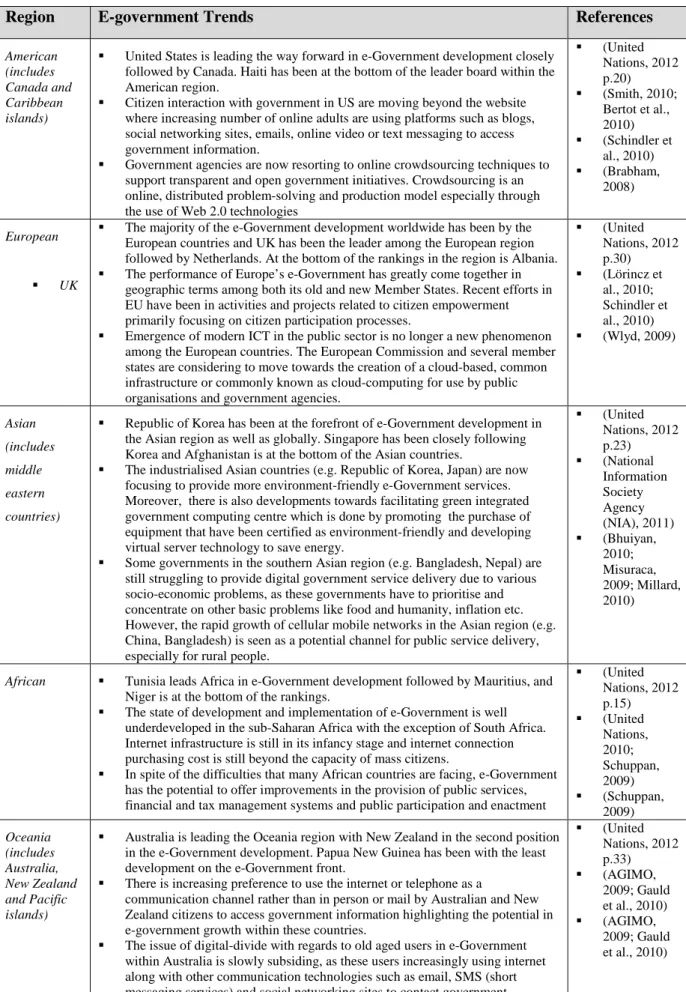
Table 2.2 Global trends in e-Government Development 28
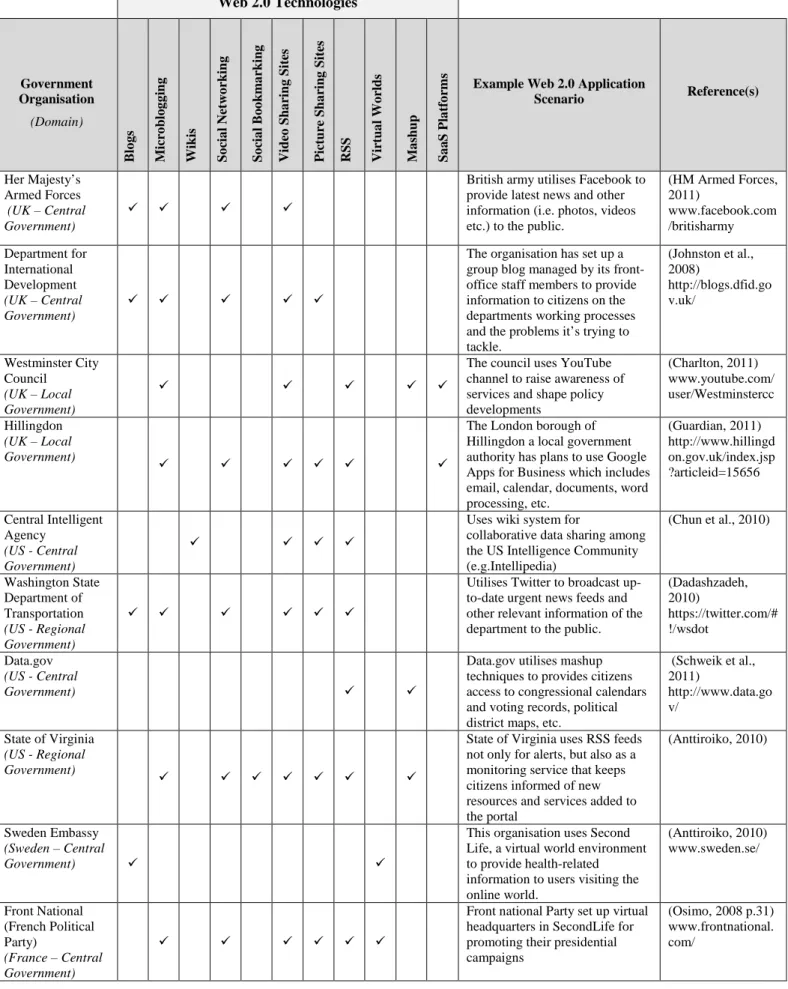
Table 2.3 Government organisations adopting Web 2.0 Technologies 43
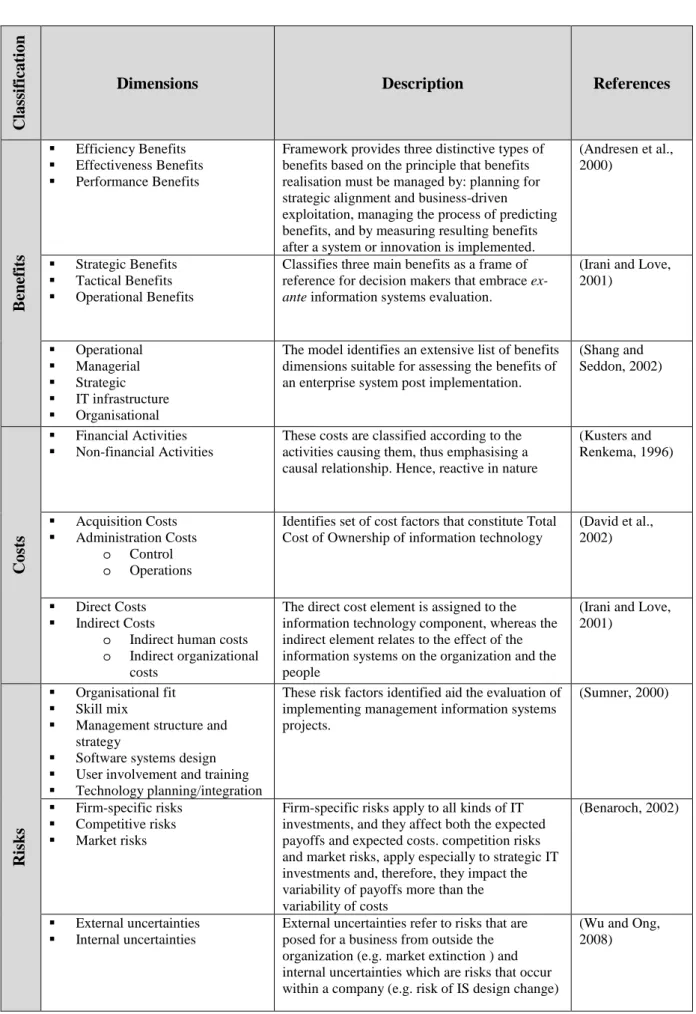
Table 2.4 Benefits, Costs and Risk Taxonomies 47
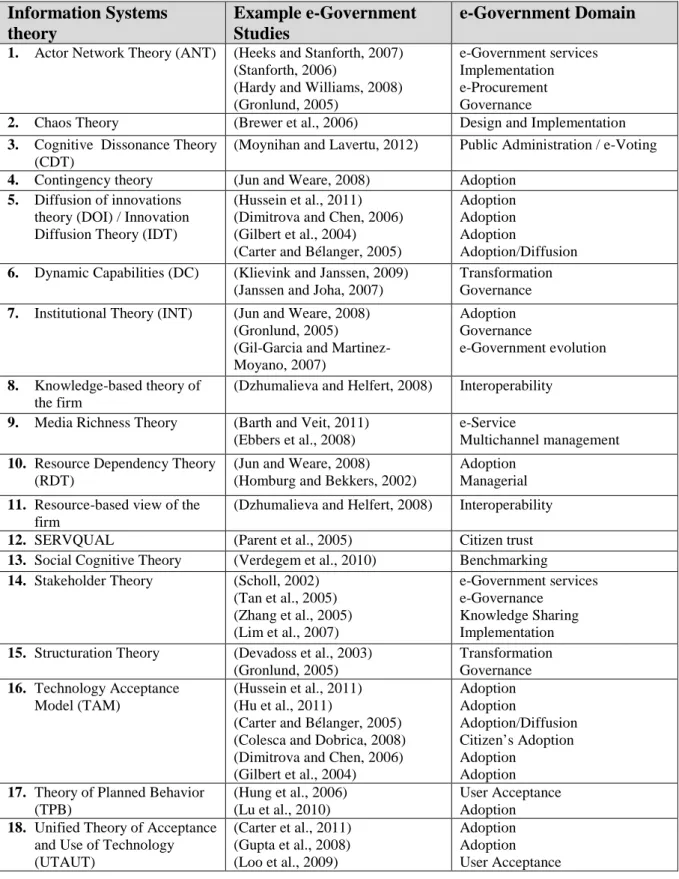
Table 2.5 Information Systems Theory used in e-Government 60
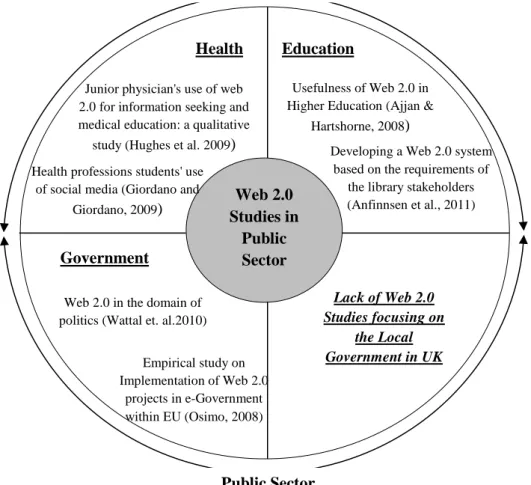
Table 2.6 Web 2.0 studies in Public Sector 62
Table 3.1 Benefits of Web 2.0 in e-Government 75
Table 3.2 Costs of Web 2.0 in e-Government 77
Table 3.3 Risks of Web 2.0 in e-Government 79
Table 3.4 Organisational, Technological and Social Impact of Web 2.0 82
Table 4.1 Empirical materials used in the case study 104
Table 4.2 List of Interview Participants from the Case Study (UKLGA) 106
Table 4.3 Questions Addressed by the Empirical Research 113
Table 5.1 Web 2.0 technologies adopted by UKLGA for internal organisational use 119
Table 5.2 UKLGA’s Social Media User Group 122
Table 5.3 UKLGA’s Social media policy document review 124
Table 5.4 Support offered by UKLGA for the application of Web 2.0 tools 128 Table 5.5 Web 2.0 technologies used by IT senior management for work purposes 129 Table 5.6 Importance of Web 2.0 benefits for effective application in the UKLGA 135 Table 5.7 Significance of Web 2.0 costs for effective application in the UKLGA 142 Table 5.8 Significance of Web 2.0 risks for effective application in the UKLGA 146
Table 5.9 Impact of Web 2.0 technologies on UKLGA 153
Table 6.1 Benefits of Web 2.0 mapped against findings of case study organisation 168 Table 6.2 Costs of Web 2.0 mapped against findings of case study organisation 170 Table 6.3 Risks of Web 2.0 mapped against findings of case study organisation 171 Table 6.4 Impact of Web 2.0 mapped against findings of case study organisation 173 Table 6.5 Summary of the revised findings of IS evaluation Factors of Web 2.0 177 Table 6.6 Summary of the revised findings of Impact Factors of Web 2.0 179
Table 7.1 Research Objectives mapped against Thesis Chapters 183
Table B.1 Relationship between Conjectures C1, C2 and C3 239
and the Interview Questions
Table B.2 Relationship between Conjectures C4, C5 and C6 241
and the Interview Questions
X
Figure 2.1 Fundamental functions of e-Government 20
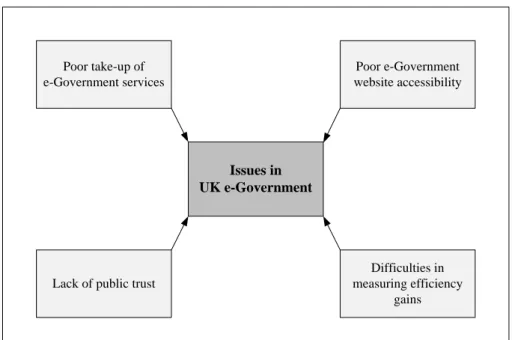
Figure 2.2 Issues in UK e-Government 34
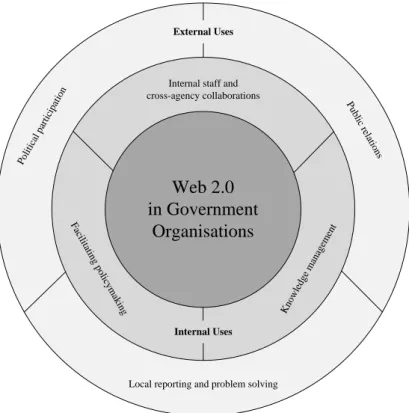
Figure 2.3 External and Internal uses of Web 2.0 in Government Organisations 40
Figure 2.4 Research Focus 64
Figure 3.1 Proposed Conceptual model for Web 2.0 Application in e-Government 71
Figure 3.2 IS Evaluation – A Web 2.0 Perspective 73
Figure 3.3 Web 2.0 Impact Factors 80
Figure 4.1 Empirical Research Methodology Process 101
Figure 4.2 Data Analysis Process 107
Figure 4.3 Case study structure for analysis 114
1
Chapter 1
Introduction
2
1.
Introduction
1.1 The use of Information and Communications Technology by Governments
Governments worldwide are striving to deliver more efficient and effective public services in order to meet the increasing demands and expectations of citizens whilst overcoming the major hurdle of reduced public budgets (Osimo, 2008; Ferro et al., 2013). This also applies to transnational bodies such as the European Union where high standards in public services are considered to be a key driver in the European policy for realising social cohesion, inclusion and better quality of life for its citizens (Huijboom et al., 2009). Information and communications technology (ICT) in this context is considered to be instrumental for the improvement and innovation of public services (Zissis and Lekkas, 2011). Furthermore, the rise of Internet and the World Wide Web (Web) in the 1990s enabled countries to redesign their government processes in order to improve the quality of its service and the political participation of citizens, companies and societal organisations (Bekkers and Homburg, 2007). The continuous developments in ICT has been one of the pivotal factors for the rise in popularity and the transformation from how government services were delivered traditionally (e.g. face-to-face meetings etc.) to electronic-government (e-Government) where government services are delivered using digital technologies such as the Web (Tat-Kei Ho, 2002).Hence, ICT systems are now at the heart of government processes where efforts are still being made to ensure they continue to improve the delivery of government services. In addition to this, citizen-demand and new public management initiatives, have also contributed to the advent of e-Government (Irani et al., 2005).
1.2 The Evolution of the Web and the Rise of Web 2.0
In the last few decades, Internet technologies such as the Web, email and semantic search engines have provided unparalleled opportunities and worldwide connectivity for individuals and organisations. The Web in particular has become almost an iconic cultural reference that is ubiquitous and familiar to almost everyone. According to recent internet usage statistics, the number of internet users doubled to more than two billion users between the years 2005 and 2013 (The World Bank, 2013). The Web in particular, has seen a recent explosive growth
3 in usage with more than a billion users (Anderson, 2007) and has also been leading the way in the shift away from closed proprietary systems such as paid software’s (e.g. Microsoft Office applications, etc.) (Dunn and Varano, 1999). The Web has evolved rapidly from the time of its inception in the early 1990s and has since transformed from the traditional (Web 1.0) to a second generation Web (Web 2.0). In contrast to the earlier Web, Web 2.0 is more participative, interactive and emphasises on-line collaboration and communication with users using new software services and tools (O'Reilly, 2007). According to Buigues-García and Giménez-Chornet (2012), despite these attributes being planned at the start of the Web, the main difference is due to the increase in the scale and speed of internet users, making Web 2.0 more superior. Coromode (2008), states that the substantial shift in Internet traffic has been a result of the dramatic increase in the usage of Web 2.0 sites.
While a precise definition of both these Web generations is elusive, a common consensus among researchers and practitioners is that the concept of Web 2.0 was introduced around 2003-2004, and is now an umbrella term that encompasses Web applications and Websites differently from their predecessors in the earlier years of the Internet which is now referred to as Web 1.0 (Cormode and Krishnamurthy, 2008). Web 1.0 served as a passive information resource with one-way transmission of information to the consumers (Shinn, 2008; Xiushuang et al., 2006), whereas Web 2.0 presents a social and participatory platform allowing individuals to collaborate, network and interact with each other (O'Reilly, 2007). Hence, the essential difference between the two Web generations is that in Web 1.0, only a few users acted as content generators while the majority of users were consumers of content. Web 2.0, on the other hand, allows any user to be a participant as well as a content creator, thus enabling users to exploit the large knowledge pool of information created by them (Cormode and Krishnamurthy, 2008). During the Web’s infancy, knowledge of technical skills such as Hyper Text Markup Language (HTML) was required by the users in order to publish information online. Thus, restricting the number of users who were able to write as well as read information on the Web. However, now with such constraints increasingly reducing due to the availability of easier and user-friendly Web publishing tools, Web 2.0 can be thought to be a platform for creation of products and services by the people that use them (Tapscott and Williams, 2009).
The term Web 2.0 was coined by Tim O‘Reilly and Dale Dougherty while investigating the differences between businesses that survived and those that did not survive the dot com
4 catastrophe of 2001 (O'Reilly, 2007). Following O’Reilly, Web 2.0 technologies are a simple and effective second generation of Web services that provide a social and participatory virtual platform for businesses to collaborate, network and interact with stakeholders (O'Reilly, 2007). Wienclaw (2008) argues that even though the term Web 2.0 implies that it is a new form of Web (i.e. a new technological version of WWW) but in actual fact, it does not refer to a technical upgrade or incremental version. Likewise, Wienclaw asserts that Web 2.0 is not a new technology but is the creative use and synthesis of existing technologies for use in new ways (ibid). In the past few years, there has been a rapid development and wide adoption of Web 2.0 technologies where new applications emerge on a daily basis, creating fresh choices for the Web users. According to Constantinides and Fountain (2007), the rapid development of these applications is because the applications are increasingly being built on open-source frameworks rather than proprietary platforms. As a result, this has also facilitated the applications to be built with new forms of functionality allowing the “democratisation” of technology. Chong and Xie (2011) discuss that applications such as social networking sites have already “matured” to the “age-neutral” stage where Internet users, young or old, use social networking sites in their everyday lives.
To summarise, the emergence of Web 2.0 is a result of following various combinations:
Accessibility to technology: an increasing number of people around the globe having access to the internet and the rapid take up of mobile devices such as smart phones, laptops and tablets outnumbering personal desktop computers (Levy, 2009). Furthermore, the United Nations (2011) declaration of Internet access as a fundamental human right and disconnecting people from it being against international law should now mean that there is even little restriction for people to gain access to Internet.
Technological advancements: this has been a key enabler for the development of Web 2.0 has been to include better graphical user interfaces (GUI) and a more interactive platform for users in contrast to Web 1.0. Although there has been no new and revolutionary techniques that make Web 2.0 applications or technologies different, the development of technologies and programming languages such as AJAX (Asynchronous JavaScript and XML) and Application Programming Interface (API)
5 is considered a major technology for Web 2.0 applications such as Facebook, YouTube and Google Maps (Kim et al., 2009)
Marketing of technology: the attempt to build a positive opinion towards the Web after the dot com bubble burst, at fall 2001 by the software industry (O'Reilly, 2007; Constantinides and Fountain, 2007).
This supports an argument that the upsurge of Web 2.0 technologies has not been mainly due to one significant change in internet technologies but due to the combination of various factors.
1.3 Types of Web 2.0 Technologies
The traditional notion of a single static website (Web 1.0) as the sole provider of information is being challenged by increasing trends towards social collaborative networks. Web 2.0 tools such as social networking sites have become the mainstream activity for internet users of all ages. According to recent figures almost one in seven people worldwide use social networking sites at least once a month and is predicted that by 2017 the global social network audience will be at least 2.3 billion (Gaudin, 2013). These numbers are only continuing to rise and highlight the rapid adoption and the significance people and organisations place on these applications.
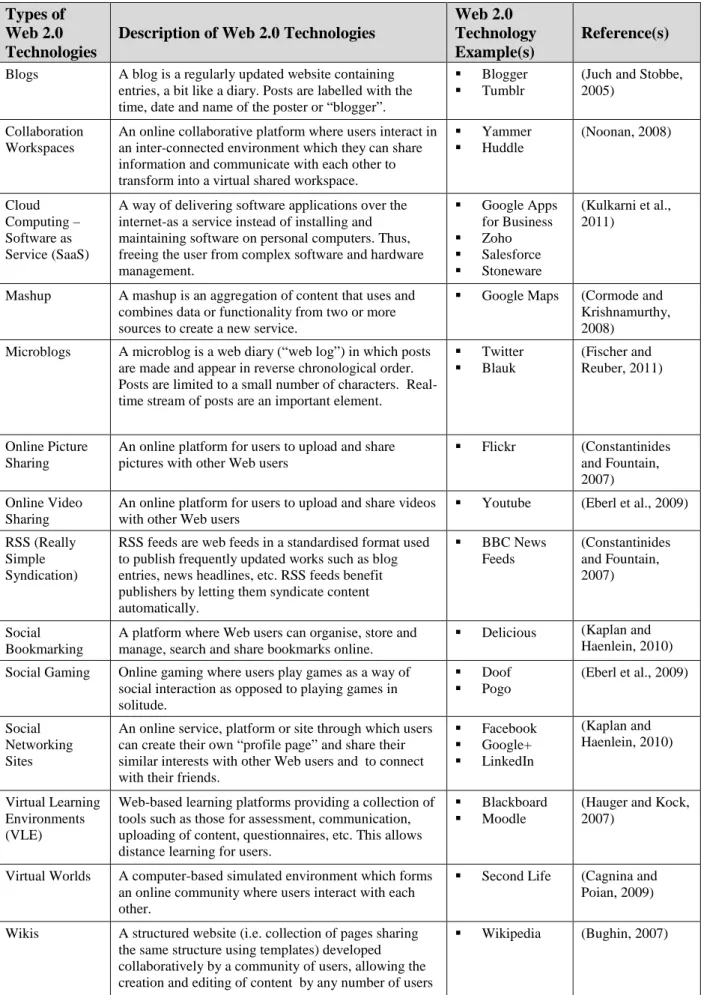
There are several types of Web 2.0 technologies or popular applications that are well known and in some aspects define the practical aspect of the principles described above. In this regard, Table 1.1 presents some of the notable category types and examples of Web 2.0 technologies.
6 Types of
Web 2.0 Technologies
Description of Web 2.0 Technologies
Web 2.0 Technology Example(s)
Reference(s)
Blogs A blog is a regularly updated website containing entries, a bit like a diary. Posts are labelled with the time, date and name of the poster or “blogger”.
Blogger Tumblr
(Juch and Stobbe, 2005)
Collaboration Workspaces
An online collaborative platform where users interact in an inter-connected environment which they can share information and communicate with each other to transform into a virtual shared workspace.
Yammer Huddle (Noonan, 2008) Cloud Computing – Software as Service (SaaS)
A way of delivering software applications over the internet-as a service instead of installing and maintaining software on personal computers. Thus, freeing the user from complex software and hardware management. Google Apps for Business Zoho Salesforce Stoneware (Kulkarni et al., 2011)
Mashup A mashup is an aggregation of content that uses and combines data or functionality from two or more sources to create a new service.
Google Maps (Cormode and Krishnamurthy, 2008)
Microblogs A microblog is a web diary (“web log”) in which posts are made and appear in reverse chronological order. Posts are limited to a small number of characters. Real-time stream of posts are an important element.
Twitter Blauk (Fischer and Reuber, 2011) Online Picture Sharing
An online platform for users to upload and share pictures with other Web users
Flickr (Constantinides and Fountain, 2007) Online Video
Sharing
An online platform for users to upload and share videos with other Web users
Youtube (Eberl et al., 2009)
RSS (Really Simple Syndication)
RSS feeds are web feeds in a standardised format used to publish frequently updated works such as blog entries, news headlines, etc. RSS feeds benefit publishers by letting them syndicate content automatically. BBC News Feeds (Constantinides and Fountain, 2007) Social Bookmarking
A platform where Web users can organise, store and manage, search and share bookmarks online.
Delicious (Kaplan and Haenlein, 2010) Social Gaming Online gaming where users play games as a way of
social interaction as opposed to playing games in solitude. Doof Pogo (Eberl et al., 2009) Social Networking Sites
An online service, platform or site through which users can create their own “profile page” and share their similar interests with other Web users and to connect with their friends.
Facebook Google+ LinkedIn (Kaplan and Haenlein, 2010) Virtual Learning Environments (VLE)
Web-based learning platforms providing a collection of tools such as those for assessment, communication, uploading of content, questionnaires, etc. This allows distance learning for users.
Blackboard Moodle
(Hauger and Kock, 2007)
Virtual Worlds A computer-based simulated environment which forms an online community where users interact with each other.
Second Life (Cagnina and Poian, 2009)
Wikis A structured website (i.e. collection of pages sharing the same structure using templates) developed collaboratively by a community of users, allowing the creation and editing of content by any number of users
Wikipedia (Bughin, 2007)
7 Even though the Web 2.0 technologies and examples identified above are not an exhaustive list, the table does present the most popular tools which are commonly utilised and provide an overview of the existing various types of Web 2.0 technologies. Despite the popularity, not all internet applications on the Web are “2.0” and often categorising Web applications as Web 2.0 technologies is not an easy task as an application may comply with two or more principles and may not comply with others (Cormode and Krishnamurthy, 2008). Moreover, to add to the existing complication, Anttirokio (2010) highlights that many recent trends in technological development such as location-based services (LBS), radio frequency identification (RFID) and open source software (OSS) have also been attached to Web 2.0. The elusiveness of Web 2.0 concept is further increased by the fact that there are already discussions of Web 3.0, 4.0, 5.0 and so on due to the introduction of systemic intelligence into interactive Web and information systems (Kambil, 2008). This clearly makes categorising Web applications as “2.0” a challenge; however an increasing number of Web 2.0 principles are slowly being integrated as components of internet solutions (Levy, 2009).
In any case, although there are several disagreements on the definition and the notion of Web 2.0, Tredinnick (2006) states that it is certain that Web 2.0 is changing the way in which Web users interact with information resources as it is now more powerful, engaging and facilitates greater user interactive experience in contrast to its predecessor, Web 1.0.
1.4 e-Government meets Web 2.0
The “reinventing government” movement, which started in the late 1980s, was an effort to reorient the focus of government operations from an inward-looking approach to outward-looking one by emphasizing the concerns and needs of end users (Tat-Kei Ho, 2002). e-Government generally refers to the use of ICT, especially Web-based internet applications by the government to provide and enhance the access of governmental information and services to citizens, employees, business organisations and other government agencies (Irani et al., 2005; Freeman and Loo, 2009). However, e-Government does not merely have to be the application of new technologies to modernise public administration but it also has the potential in building of citizen-centric and cooperative modern governance (Leitner, 2003). Public administrations now see e-Government as a key enabler to transform the public sector by significantly changing their relationships with public bodies; government to citizen (G2C),
8 government to employee (G2E), government to business (G2B), and government to government (G2G). Thus, adoption of e-Government allows gains in efficiency and effectiveness of the services in the process (Zhao, 2010; Lörincz et al., 2010; Leitner, 2003).
e-Government is being adopted across the globe as various states seek to extract benefits in terms of service delivery. However, implementation has been slow and a common concern is the readiness of bureaucracies to adapt and citizens to adopt e-Government (Schuppan, 2009; Kassen, 2010; Gauld et al., 2010). Progress and implementation of e-Government has been of interest to international agencies such as the UN and private consulting firms (United Nations, 2010; Smith, 2010; Lörincz et al., 2010; Capgemini, 2009). The UK Government has placed significant emphasis on e-Government as a means to deliver services (Lörincz et al., 2010) with this commitment being matched by the commitment of both financial and organisational resources (Margetts, 2006; Irani et al., 2007; Kamal et al., 2011). The intention is that by using web based interaction, tasks can be automated and the scope for processing errors reduced as well as allowing for savings in terms of the cost of delivery (Gilbert et al., 2004).
However, as Irani et al. (2006) argue, e-Government is not just about cost reduction but also about service improvement and expansion. However, despite the expected benefits there remains a number of concerns about the adoption and implementation of e-Government. One issue is that the complexity of public administration means that it is very hard to convert existing systems to an ICT platform. This means managing such projects are a significant challenge to the public sector (Irani et al., 2009; Weerakkody et al., 2007).
Equally an early concern was of citizen take up, but the expansion of Web 2.0 technologies by internet users offers the prospect that this barrier to adoption has been removed (Osimo, 2008; Ferro and Molinari, 2010). Likewise from a technological point of view, Web 2.0 tools are now widely adopted in a range of organisations (Tucker, 2011) and there are a variety of applications that can be adopted by the public sector (Kuzma, 2010a). In effect, Web 2.0 technologies offer the means to improve both the internal operations of a government organisation and take up of e-Government initiatives (Osimo, 2008).
9
1.5 Research rationale
Governments have followed private sector organisations in implementing and trying out Web 2.0 technologies and now they are focusing on investments in these technologies as part of their Information Technology (IT) Strategy (Dadashzadeh, 2010). However, government agencies may not be able to afford the use of the same trial and error approach adopted by the commercial organisations and have an obligation to implement new technologies responsibly in a way that does not compromise privacy and security (Kinder, 2010). In the UK, there already remains a lack of public trust due to the government’s failures of large-scale IT projects which have repeatedly failed to deliver their technical promise, service objectives or project savings (Kinder, 2010). For example, the failure of London Ambulance Service Computer Aided Despatch system in 1992, UK benefit cards, Identification (ID) Cards. In addition, there is also added pressure on government officials by their stakeholders on the accountability of public budget spent on IT (ibid). Hence, in order to meet the increasing demands and expectations of their stakeholders, government agencies now need to deliver more efficient and effective public services whilst overcoming the burden of reduced public budgets.
The review of the existing literature highlights that the use of Web 2.0 technologies in the private sector have been studied in detail. However, research into its application in e-Government especially within local government has many gaps and still remains a developing area. This has been supported and highlighted in various studies (Bertot et al., 2012; Adams and Smith, 2010; Osimo, 2008). Thus, the value of this research study lays in the fact that the development of knowledge of factors that encumber or encourage adoption of Web 2.0 technologies in public services, will enable governments to implement Web 2.0 technologies that suit the needs and wants of their stakeholders. Moreover, the proposed development of a conceptual model in this research may be used as a decision-making tool and thus, support management when taking decisions regarding the adoption of Web 2.0 technologies from an internal organisational perspective (i.e. provider’s perspective) in the context of e-Government.
On the whole, the evaluation of Web 2.0 technologies for the use by local government authorities (LGAs) can help government officials understand the implications of these tools in the context of e-Government. It may also assist ICT managers formulate a realistic strategy
10 for the adoption of these technologies within government organisations. Furthermore, it may help government officials to understand the real value that these tools have to offer to the public services to engage with their stakeholders. In effect, using Web 2.0 technologies can lead to a stronger relationship between the government organisations and their stakeholders. A better relationship means that they can sense and respond to what is needed and wanted by their stakeholders effectively. Understanding the real value of Web 2.0 applications may also help change government officials’ negative perceptions associated with tools such as social networking sites being a distraction to employees (Sander, 2008). Overall, this study will be of significant relevance to public sector and information systems (IS) researchers, policy makers, local government authorities and practitioners when implementing Web 2.0 technologies to for use by employees and enhance e-Government services.
1.6 Research aim and objectives
1.6.1 Aim of the research:
There remains a plethora of Web 2 .0 technologies in use today, with no doubt many more to emerge in the future. Many scholars and practitioners clearly suggest that the public sector organisations can leverage Web 2.0 tools to enhance e-Government services and operations of government organisations. However, the challenge for government agencies is in evaluating the use of existing Web 2.0 applications and exploring the extent of their impact. There are an increasing number of studies emerging on the implications of Web 2.0 on various public sector domains ranging from politics to health (Anfinnsen et al., 2011; Wattal et al., 2010; Hughes et al., 2009; Ajjan and Hartshorne, 2008). However, there is a dearth of research studies focusing on Web 2.0 and its application in the context of e-Government especially at a local government level. Also, the very few studies that exist in this domain lack theoretical underpinning and the backing of empirical research. The main objective of this research is to create a contribution to fill the abovementioned void. Therefore, the aim of this thesis is as follows:
“To identify the evaluation and impact criteria associated with Web 2.0 application in UK local government. In doing so, resulting in the development of a descriptive model which
11
will facilitate the local government authorities in their decision-making process for Web 2.0 adoption in the context of e-Government”
The research project aims to contribute to the emerging field, specifically by focussing on the following research questions:
How could local government authorities approach an effective application of Web 2.0 technologies in the context of e-Government?
What is the evaluation criteria that a local government authority can use to assess Web 2.0 technologies for internal work purposes prior to its implementation?
What are the impacts of Web 2.0 technologies application by a local government authority for internal work purposes?
1.6.2 Objectives of the research:
Objective 1: To critically review the published literature in the area of information systems evaluation with a particular focus on e-Government domain. Then describe the evaluation and impacts factors of Web 2.0 from an organisational perspective, thus establishing the basis for the research.
Objective 2: To translate the research need into a conceptual model and conjectures.
Objective 3: To identify evaluation (i.e. benefits, costs and risk) and impact (i.e. organisational, technological and social) factors associated with Web 2.0 decision making by following an appropriate and a rigorous research methodology.
Objective 4: To generalise (within the confines of the study) the empirical results to the conjectures. Then, extrapolate data that translates into a revised Web 2.0 Application model.
12
1.7 Thesis Outline
This thesis is organised into seven key chapters along with the references and appendices. It follows the structure suggested by Phillips and Pugh (2005) and is broken down into four key elements: (1) background theory, (2) focal theory, (3) data theory and (4) novel contribution.
The background theory sets out the broad research domain (chapter 1), evaluates the existing research and identifies gaps and areas of concern (chapter 2). This is then used to develop the second element of the thesis (focal theory) that creates a conceptual model which was tested in the course of the research (chapter 3). The data theory addresses issues such as the most appropriate epistemological stance to adopt, the development of a suitable research methodology and the constraints on the chosen research strategy. These issues are discussed in chapter 4 of this thesis. Chapter 5 then sets out the data derived from the chosen case study and provides the empirical core to the thesis. The fourth element (novel contribution) is concerned with linking the findings of the thesis to the wider field so as to set out the contribution of this research (chapter). Chapter 7 summarises the research presented in this thesis with a brief outline of contributions and discusses the potential areas for further research. Overall, as highlighted these four elements are spread over the seven chapters which are briefly outlined below.
(1) Background Theory
Chapter 1: Introduction
This chapter provides an overview of the research and considers key themes connected with e-Government and Web 2.0. The focus of the study is on the need to integrate the IS in a more flexible and maintainable way and improve the decision making process in LGAs. This chapter concludes with an outline of the structure of the whole thesis.
Chapter 2: Literature review – Critical Analysis of the Research Area
This chapter evaluates the existing research on e-Government and Web 2.0. Initially, this chapter critically reviews e-Government characteristics and its developments. It then explores the use of Web 2.0 technologies in the government context. Finally it outlines the literature findings of the benefits, costs and risks of Web 2.0 and the organisational, technological and
13 social impact of Web 2.0 use in e-Government respectively. This allows identification of both a conceptual model that can be tested as well as gaps in the existing literature.
(2) Focal Theory
Chapter 3: Developing a Conceptual model – Web 2.0 Application in e-Government
Chapter 3 draws on the themes in the literature review and proposes a conceptual model for Web 2.0 application in e-Government from an organisational perspective (figure 3.2). The goal of this model is twofold. It is designed to create a model and set of research conjectures that can be tested using the data gathered in the course of this research. In addition, it represents the first step towards generating a theoretical construct that can be used by practitioners considering the adoption of Web 2.0 approaches.
Chapters 2 and 3 set out the background of this research and were used to construct a conceptual model for Web 2.0 adoption in LGAs. Chapter 3 is important as it has provided a set of testable conjectures. In turn, this informed the choice of research methodology used to test the proposed conceptual model in the practical arena.
(3) Data Theory
This is split into two chapters. The first considers the appropriate research methodology and the second reports on the data gathered in the course of this research.
Chapter 4: Research Methodology – A Qualitative Case Study Approach
Chapter 4 sets out the rationale for the research design adopted. This starts with a brief review of choosing the appropriate research approach in terms of epistemological stance that meets the research aims of this thesis. It then provides an analysis of the chosen research strategy which was a qualitative in-depth case study. The problems within the various research methods are stated and the justification of the chosen research strategy and methodology is provided. Finally the research methodology is discussed in detailed and the case study protocol is reported.
Chapter 5: Case Empirical Data Analysis and Conjectures Testing
This chapter provides a description of the case study conducted in the United Kingdom (UK). The chapter starts with a background to the chosen Local Government Authority (referred to
14 as UKLGA) and describes and analyses the main issues including: (a) a non-IT managerial perspective of the organisation’s culture and the role of ICT, (b) the authorities Web 2.0 strategy and its adoption in the organisation, (c) findings of the benefits, costs and risks evaluation of Web 2.0 (d) findings of the organisational, technological and social impact of Web 2.0 in the case organisation and finally (e) overall assessment of the application of Web 2.0 tools in the organisation.
(4) Novel Contribution
Chapter 6 – Revised Model for Web 2.0 Application in e-Government
Based on the case study empirical findings and the literature review, this chapter reviews the conceptual model proposed in chapter 3. This chapter starts by presenting the revised model. It then maps the factors of the model with the findings of the case study to the factors extrapolated from the literature. This helps (a) revising the existing factors influencing the decision making process for Web 2.0 adoption in the case organisation, (b) describing new factors extracted from the empirical findings. In doing so, this contributes to one of the aims of this thesis by offering the decision-makers and researchers a revised model for Web 2.0 application in e-Government. In addition, the revised model of application can be used to support management when taking decisions regarding Web 2.0 adoption in LGAs. Finally the contribution of this revised model is reported
Chapter 7 – Conclusions
This chapter summarises the overall research study. It first reports how this thesis has met the research aim and objectives. It then sets out the overall research findings and an evaluation of the main findings. Afterwards, the possible limitations of the research are reported. It then presents how the development of the conceptual model contributes to the overall research field by discussing the novelty of this study in terms of theoretical and practical contribution. Finally, it describes the potential areas of further research.
15
Chapter 2
Literature review: Critical Analysis
of the Research Area
16
2.
Literature review: Critical Analysis of the Research Area
2.1 Introduction
The continued development of ICT has seen significant changes in human interaction, the management of corporations, and governance of states (Bhuiyan, 2010). Governments around the world have placed great efforts and focused on ICT as a tool for transforming both internal operations and the external delivery of its services (Cabinet Office, 2011). The use of a broad class of technologies ranging from personal computers to mobile devices has enabled governments to offer convenient and enhanced accessibility to government services and information to citizens, businesses and governmental units (Carter and Bélanger, 2005). The internet and the developments around Web in particular has been able to provide a new generation of instruments to facilitate social networking, information sharing and collaborative work (Osimo et al., 2009). It has opened new sets of possibilities for governments, ranging from the joint production of public services in cooperation with citizens, social organisations and businesses, from the wide distribution and re-use of government information to the introduction of new forms of democratic participation. Governments around Europe are aware of these new possibilities and have actively started exploring them (ibid).
However, e-Government is about far more than simply introducing new technologies and involves major changes in internal organisational structures as well as the need to convince potential users that e-Government is in their interests (Irani et al., 2009; Weerakkody et al., 2007). Despite spending enormous amounts on web-based initiatives, government agencies often fail to meet users’ needs online. One solution, following Baumgarten and Chui (2009), is by employing new governance models, investing in Web capabilities, and embracing user participation, agencies can raise the effectiveness of their online presence. Government agencies must therefore assess the business case and the requisite organisational and governance changes that a shift to Web 2.0 entails prior to adopting these modern technologies (Dovey and Eggers, 2009). In addition, the internet itself is constantly changing as social media sites such as Facebook and Twitter gain and lose popularity. This means that
17 those introducing e-Government often face a moving target as to which social media platforms to make use of (Saulles, 2011).
2.2 e-Government Characteristics
The term e-Government has been open to several different interpretations and there is no universally accepted definition of e-Government in the literature (Moon, 2002; L. Elaine, 2004; Irani et al., 2006; Yildiz, 2007). The definitions generally differ according to the varying e-Government focus and are usually centred on technology, citizen, business, government, functional or a process outlook (Seifert and Petersen, 2002; Weerakkody and Dhillon, 2008; Weerakkody et al., 2011). Moreover, the terms digital government, e-Government, and e-Governance have become synonymous with the use of ICT in government agencies (Gottschalk, 2009). Nevertheless, the term that eventually gained wide acceptance is “e-Government” (Chan et al., 2008). Therefore, in order to adequately highlight the variety of e-Government uses, some definitions from the literature are presented below.
As early as 1990’s, Milward and Snyder (1996 p.262), referred to e-Government as the use of technology to connect citizen to government services, thereby eliminating or reducing the need to interact with government employees to gain access to services. Similarly, Silcock (2001 p.88) defines e-Government as the use of technology to enhance the access to and delivery of government services to benefit citizens, businesses and employees. The term e-Government is discussed in more detail by Fang (2002 p.1), as “a way for governments to use the most innovative ICT tools, particularly web-based Internet applications, to provide citizens and businesses with more convenient access to government information and services, to improve the quality of the services and to provide greater opportunities to participate in democratic institutions and processes”. For Ciborra (2005 p.261), e-Government is ICT applied to collation of three kind of processes. The first process according to the author is “the relationship (transaction) between the administration and the citizen (customer) and the related re-engineering of the activities internal to the administration”. The second process is “the way in which boundaries between the state and market are redrawn, by the creation of an electronic, minimal state, more transparent, agile and accountable”. Finally, the third level process is discussed as to deal with the purpose of aid policies to help introduce
e-18 Government into developing countries. The key element of all these definitions however, is the use of ICT to enhance the public sector by transforming its internal and external processes and its interrelationship with stakeholders.
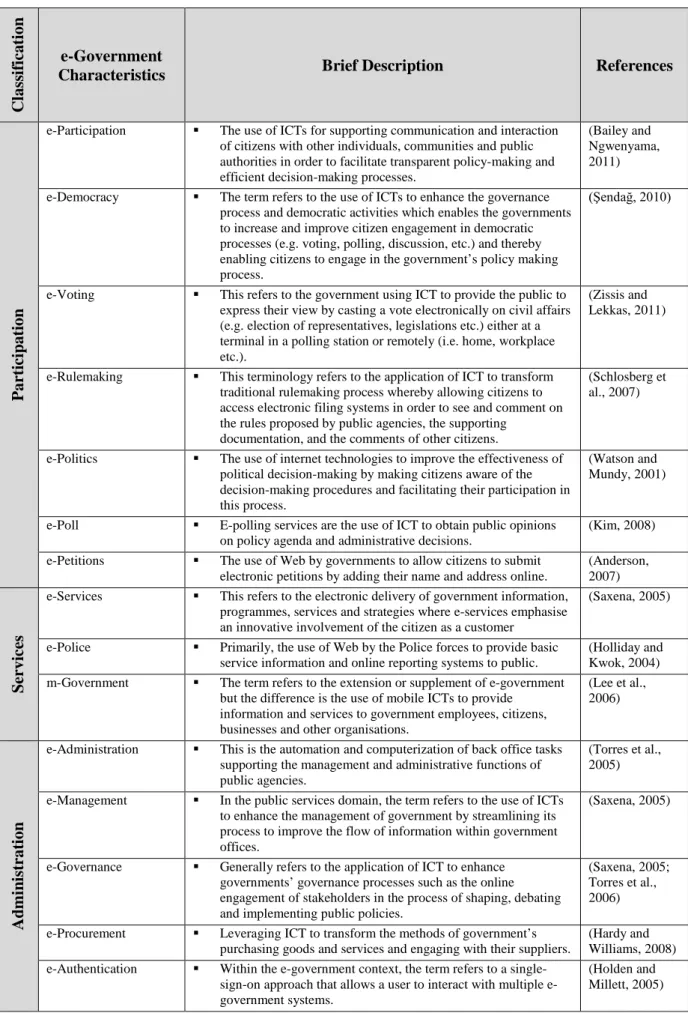
Nevertheless, at times the narrow approach to defining and conceptualising e-Government limits consideration of the range of opportunities it offers. As highlighted by Ndou (2004), one of the main reasons why e-Government initiatives fail is related to narrow definitions and poor understanding of the e-Government concept, processes and functions. e-Government in general can be distinguished between the objectives for internally focused processes (operations) and objectives for externally focussed services which is to fulfil public needs (Zhao, 2010). There are various dimensions that reflect the functions of government itself within the broad definition of e-Government (Saxena, 2005). Therefore, in order to understand these functions, table 2.1 presents a taxonomy to characterize the e-Government’s components. The characteristics of e-Government has been systematically categorised against three classifications; participation, services and administration, which outline the overall functions of e-Government. These have been developed as they represent the main broad strands in the e-Government literature (Saxena, 2005). Participation relates to the process by which citizens can be assisted in interacting with governance, both as a means to support the conventional electoral process, gather feedback on policy developments and to enable new ideas such as on-line petitions (Sæbø et al., 2011). Service delivery was probably the most common early form of e-Government, in its basic form allowing citizens to carry out some interactions (such as application for services or to pay bills) online rather than visit a government office (Zhao, 2010). Administration is primarily about the use of ICT for internal bureaucratic processes, in effect streamlining the operation of public administration (Schuppan, 2009). As with all such categorisations, there is some overlap, but this typology indicates some of the main differences in the wider field of e-Government.
19 C la ss if ic a tio n e-Government
Characteristics Brief Description References
P a rt ic ip a tio n
e-Participation The use of ICTs for supporting communication and interaction of citizens with other individuals, communities and public authorities in order to facilitate transparent policy-making and efficient decision-making processes.
(Bailey and Ngwenyama, 2011) e-Democracy The term refers to the use of ICTs to enhance the governance
process and democratic activities which enables the governments to increase and improve citizen engagement in democratic processes (e.g. voting, polling, discussion, etc.) and thereby enabling citizens to engage in the government’s policy making process.
(Şendağ, 2010)
e-Voting This refers to the government using ICT to provide the public to express their view by casting a vote electronically on civil affairs (e.g. election of representatives, legislations etc.) either at a terminal in a polling station or remotely (i.e. home, workplace etc.).
(Zissis and Lekkas, 2011)
e-Rulemaking This terminology refers to the application of ICT to transform traditional rulemaking process whereby allowing citizens to access electronic filing systems in order to see and comment on the rules proposed by public agencies, the supporting
documentation, and the comments of other citizens.
(Schlosberg et al., 2007)
e-Politics The use of internet technologies to improve the effectiveness of political decision-making by making citizens aware of the decision-making procedures and facilitating their participation in this process.
(Watson and Mundy, 2001)
e-Poll E-polling services are the use of ICT to obtain public opinions on policy agenda and administrative decisions.
(Kim, 2008) e-Petitions The use of Web by governments to allow citizens to submit
electronic petitions by adding their name and address online.
(Anderson, 2007)
S
erv
ices
e-Services This refers to the electronic delivery of government information, programmes, services and strategies where e-services emphasise an innovative involvement of the citizen as a customer
(Saxena, 2005)
e-Police Primarily, the use of Web by the Police forces to provide basic service information and online reporting systems to public.
(Holliday and Kwok, 2004) m-Government The term refers to the extension or supplement of e-government
but the difference is the use of mobile ICTs to provide information and services to government employees, citizens, businesses and other organisations.
(Lee et al., 2006) A d m in is tr a tio n
e-Administration This is the automation and computerization of back office tasks supporting the management and administrative functions of public agencies.
(Torres et al., 2005) e-Management In the public services domain, the term refers to the use of ICTs
to enhance the management of government by streamlining its process to improve the flow of information within government offices.
(Saxena, 2005)
e-Governance Generally refers to the application of ICT to enhance governments’ governance processes such as the online engagement of stakeholders in the process of shaping, debating and implementing public policies.
(Saxena, 2005; Torres et al., 2006) e-Procurement Leveraging ICT to transform the methods of government’s
purchasing goods and services and engaging with their suppliers.
(Hardy and Williams, 2008) e-Authentication Within the e-government context, the term refers to a
singlsign-on approach that allows a user to interact with multiple e-government systems.
(Holden and Millett, 2005)
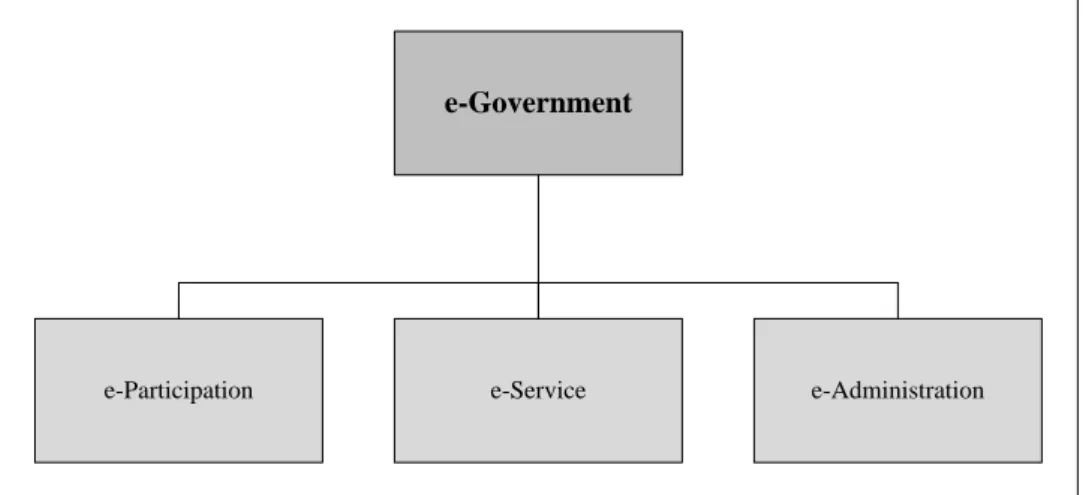
20 The characteristics presented above can be used to draw parallels and differences between them. Despite not being an extensive list, they do highlight some of the most notable elements of e-Government. In particular, although all the dimensions play a significant role in Government, three fundamental dimensions help highlight the overall functions of the e-Government: connecting the government and the people (e-Service), building and improving external interactions (e-Participation) and improving internal work process of the government (Administration). Hence, it is now important to explore these key dimensions of e-Government in more detail. As highlighted above, the categorisation has been developed by the researcher as a means to classify the wide range of functions that are captured under the rubric of e-Government and figure 2.1 graphically illustrates these functions.
e-Participation e-Service e-Administration
e-Government
Figure 2.1: Fundamental functions of e-Government
2.2.1 Exploring the e-Participation dimension of e-Government
The development of enhanced public participation lies at the heart of many governments’ modernisation agendas (Sæbø et al., 2011). The use of ICT has long been anticipated to be a significant tool for greater and more effective political participation (Komito, 2005). As e-Government initiatives advance, there is increasing focus among governments on the access, usage and electronic participation to support political processes (Bailey and Ngwenyama, 2011). Therefore, the notion of electronic participation (e-Participation) among governments is often advanced as a means to revive citizen participation (Salmat et al., 2011). e-Participation is the use of ICT to extend political participation by enabling citizens to communicate and interact with all stakeholders such as elected representatives, societies and
21 public agencies and generally to connect citizens with local governance (Mossberger et al., 2013). This also facilitates transparent policy-making and efficient decision-making processes instead of just top-down initiatives of the governments (Macintosh and Whyte, 2006; Bailey and Ngwenyama, 2011). Some examples of ICT tools to enable e-Participation are electronic forums, chat technologies, electronic voting systems, group decision support systems and blogs (Sanford and Rose, 2007). The key drivers for e-Participation initiatives by governments have been mainly attributed to the growing awareness of the need to achieve more democratic governance along with a widespread public interest in the potential of ICT to empower citizens (Coleman and Gøtze, 2001; Hart and Teeter, 2003; Sanford and Rose, 2007). These e-Participation initiatives serves varied objectives such as providing information to public, using publics’ input in decision making, generating support among public and inquiring for public needs (Salmat et al., 2011). Further, it also enables a two-way communication between governments and citizens which can help educate citizens on the rationale and complexity of policy-making, legitimize government decisions and provide opportunities for mutual learning (Coleman and Gøtze, 2001).
According to Phang and Kankanhalli (2008), e-Participation offers a number of benefits over offline channels of participation such as public hearings or newspaper forums. The use of internet for e-Participation can overcome the offline difficulties of physical constraints of time and space for citizens which can in turn enhance accessibility and increase their chances of engagement. Hacker and Van Dijk (2000), state that successful e-Participation implementation can help establish more transparency in government by allowing citizens to use new channels of influence which reduce barriers to public participation in policy making. Further, e-Participation could be an effective tool for collecting or disseminating information and knowledge from citizen, experts, and stakeholders (Salmat et al., 2011). It can also extend the appeal of political participation, particularly with hard to reach groups such as people from ethnic minorities and younger people who are less willing to participate in traditional forms of consultation such as public meetings (Gibson et al., 2005; Macintosh et al., 2003).
While e-Participation can help to enhance transparency, participatory decision making and accountability, the governments still need to overcome challenges to implement and facilitate it. In particular, such initiatives emphasise the importance of any digital divide in limiting the participation of all citizens (Barzilai-Nahon and Scholl, 2007; Odendaal, 2006). One of the
22 main issues to the development of e-Participation is the inclusion of low-income, older and non-tech savvy citizens (Bailey and Ngwenyama, 2011). Further, there is also the challenge of accessibility, usage and low literacy levels within different groups of society which must also be addressed (Conroy and Evans-Cowley, 2006; Loukis et al., 2009; Scholl et al., 2009). Andersen (2007) argues that even though e-Participation might lead to better governance and cost reduction of public services over time, public organisations need to be aware of the administrative costs in transferring e-Participation practices and techniques. This is mainly because of the uncertainties, the externalities and the challenges in measuring and capitalizing on Participation. There is also the issue of the choice and the use of e-Participation tools amidst the large number and variety of available tools, making the decision about platform and services more difficult for managers in public organisations (Andersen et al., 2007). Therefore, it is vital to use appropriate ICT tools for different e-Participation objectives at various phases of the policymaking process to increase the effectiveness of e-Participation initiatives (Phang and Kankanhalli, 2008). These are all some of the factors that need to be scrutinized to ensure successful e-Participation initiatives.
Overall, e-Participation is a key dimension of e-Government and with the aid of ICT it has the potential to help increase citizens’ input to government. Consequently, ensuring a larger number of people to participate in the movement of e-Government where the communication between government and its stakeholders can be freely accessible.
2.2.2 Exploring the e-Service dimension of e-Government
The provision of electronic services (e-Service) to citizens plays an integral role in the application of e-Government (Zhao, 2010). e-Service, a key dimension of e-Government, refers to the electronic delivery of government information, programmes and services by the government to its stakeholders (Saxena, 2005). According to Zhao (2010), one of and the key purposes of e-Government is to provide efficient, high-quality, standardised, transparent and all-inclusive public services to citizens. Government agencies at all levels, now provide a variety of online services to their stakeholders of which majority are the citizens (Johnson, 2007). For example, some of the services provided by governments to citizens (G2C) compromises of motor vehicle agency services, personal income tax filing, home and community services and employment related services. In addition, there are also services
23 offered by government to businesses (G2B) which include new business registrations, license verification and tax payments. It is certain that the array of e-services offered by governments is growing with no doubt many more to follow in the future.
However, in an ever changing and demanding political and societal environment, the provision of digital services is often challenging (Apostolou et al., 2011). Hence, there is a need for governments to constantly enhance these services in order to reflect the political and societal change. The continuing changes of e-Government services as highlighted by Apostolou (2011) may be instigated by the changing citizens’ needs, varying legislations, new outsourcing opportunities, provision of different service models and the rapid evolution of new technologies. Since the governments provide an extremely diverse set of services, this also proves challenging as it requires prioritization in e-Service development for effective budget allocation where costly traditional service channels cannot be eliminated still, because of the non-adopters of online services (Lee and Rao, 2009). Furthermore, even with the rapid digitisation of major public services, there is also the issue of the gaps in the adoption of these services by the citizens (Horst et al., 2007).The lower levels of user acceptance of the e-Services are recognized as a prevalent problem for government policy makers, government agencies and e-Government services providers (Hung et al., 2006; Lee et al., 2011). This has resulted in many studies which have examined to test citizens’ adoption of e-Government services (Doong et al., 2010). According to Shalini (2009), the take-up of online services depends upon both rational and emotional arguments. The rational motives include apprehensions over the time and money spent in comparison to traditional services, and trust in terms of privacy, data protection and information security. On the other hand, emotional arguments vary among different groups of users, where for example senior citizens may not use online services as they may prefer to talk to civil servants and have a face to face meeting. Moreover, a study by Carter and Belanger (2005) highlighted that compatibility; trustworthiness and perceived ease of use of e-Government services are all positively correlated towards citizens’ intention to use the online services. In addition, there are also concerns over the e-Services offered by government agencies which have fallen short of being citizen-centric due to the lack of representative user involvement in the design process (van Velsen et al., 2009).
Nevertheless, the issues that reflect on the provision of e-Services and the low level usage of these services should not discourage the policy makers and government agencies but inspire
24 them to show their firm commitment into investigating the issues. Hence, there is now a need for governments to offer more value in terms of online benefits to persuade citizens to forgo the same amount of offline benefits. It is also important for governments to constantly evaluate the online public services offered to citizens in order to understand the development situation of a citizen-centric e-Government (Zhao, 2010).
2.2.3 Exploring the e-Administration dimension of e-Government
An efficient and effective public administration is widely seen as an essential prerequisite for economic and social development (Schuppan, 2009). The exploitation of ICT extends the operational potential and reliability of modern public administration thus helping to achieve progress, development and good governance (Bhuiyan, 2011). Electronic administration (e-Administration) has therefore become a key enabler for e-Government (Saxena, 2005), and there is a growing consensus among governments worldwide to rejuvenate public administration and introduce innovations in their organizational structure, practices, and capacities (United Nations, 2008; Bhuiyan, 2011). Torres et al. (2005) refer to e-Administration as the automation and computerization of back office operations supporting the management and administrative functions of public agencies. For example, some of these operations compromise of data and information management, the flow of information between different departments and the maintenance of electronic records. According to Munoz-Canavate and Hipola (2011), reduced public budgets, the revolution of technologies and political pressure from international organisations such as the Organisation for Economic Co-operation and Development (OECD) have all been some of the important drivers for the development of e-Administration.
e-Administration offers many potential benefits to enhance the traditional back-office operations. It offers solutions for the adaptation and integration of back-office processes for the development of new means of service delivery (Torres et al., 2005). A study by Monga (2008) highlights the change in the governmental services and information to the public by using electronic means over traditional approaches which has brought about a revolution in the quality of service delivery to the citizens. This change has, in particular, resulted in improved transparency in the administrative process, simplification of procedures, saving time due to single window service provisions using the Web, improved office and record
25 management, and also improvement in the attitude and behaviour of civil servants. However, in some instances, fears were expressed that e-Government would allow state officials to be less responsive due to the loss of personal contact with citizens (Al-Fakhri et al., 2008; Basu, 2004). On balance, the impact has been positive and, for example, Munoz-Canavate and Hipola (2011) states that e-Administration can also provide for the introduction of tools that make it easier to fight corruption. For example, the study highlights a case where the online publication of plans for the development of a number of Spanish municipalities’ reduced corruption (Muñoz-Cañavate and Hípola, 2011). However, Heeks (1998) offers several case studies in which ICT-implemented systems did not completely avoid corrupt practices by modernising public administration. An example by Heeks highlights that in a public sector railway system, the implementation of ICT system did not manage to completely eliminate corruption practices and some booking staff were still accepting bribes to provide tickets to passengers. Hence, it is clear that if public administration corruption practices are to be fought, then unethical organisation practices need to be dealt with initially.
There are also instances where using e-Administrative services for greater monetary savings. A fitting example was discussed by Muñoz-Cañavate and Hípola (2011), where the discontinuation of an official Spanish state paper bulletin would result in savings of 6.3 million euros as well as having an environmental benefit in the 3,500 tonnes of paper previously used each year. In comparison, the costs related to renovation of systems, certification of electronic signature and servers and the new system of production was less than 200,000 euros.
There are, however, challenges that arise in the transition from traditional back-office operation to automated and computerised operations. One of the main challenges that needs to be addressed is the public institution’s readiness to implement new technologies. As Heeks (2001) highlights, the lack of electronic readiness (e-Readiness) contributes to the lack and potential failure of e-Government initiatives such as e-Administration. Parrado (2002) presented several elements that could be included in an e-Readiness gap analysis for governments and below is an extrapolation of some of the key elements:
Readiness of technological infrastructure. For example, the required computing and telecommunication facilities