Beadle Scholar
Beadle Scholar
Masters Theses & Doctoral Dissertations
Spring 5-2020
Faculty Perceptions of Open Educational Resources in Cyber
Faculty Perceptions of Open Educational Resources in Cyber
Curriculum: A Pilot Study
Curriculum: A Pilot Study
Alan StinesFollow this and additional works at: https://scholar.dsu.edu/theses
Part of the Curriculum and Instruction Commons, Educational Technology Commons, Higher Education Commons, Other Computer Sciences Commons, and the Other Education Commons
FACULTY PERCEPTIONS OF OPEN EDUCATIONAL
RESOURCES IN CYBER CURRICULUM: A PILOT
STUDY
A dissertation submitted to Dakota State University in partial fulfillment of the requirements for the degree of
Doctor of Philosophy in Cyber Operations May 2020 By Alan Stines Dissertation Committee: Dr. Kyle Cronin Dr. Wayne Pauli Dr. Mark Geary Dr. Alex Koohang Dr. Kevin Floyd
ACKNOWLEDGMENT
The pathways through life do not always extend in a straight line; only through the guidance of others have I been able to be here with the research presented herein. Brittany, as my wife and best friend, being here would be impossible without your multi-faceted support. Special thanks to my mom, Kathy, for always being available to help proofread my papers and encouraging me to follow my passions in life. To my sister, Amy, thank you for goading me a bit and pushing me to be a better version of myself. To my greater extended family, thank you for all the love, support, and encouragement to be a happy individual.
My committee has been very valuable in providing insights into my research and mentoring me as a growing academic. When I transitioned from industry in 2015 to pursue a career in teaching technology, I very much felt like a fish out of water when it comes to the classroom as an educator. Through your involvement during this process, I have not only produced stronger research but have absorbed and grown my teaching philosophy. Thank you, Dr. Cronin, for agreeing to be my chair and helping me focus on what is important as both a student, educator, and academic. There is a bigger purpose we all fulfill in our paths of life, and I am grateful for the opportunity to be blessed by so many in our paths together.
If I have seen further than others, it is by standing upon the shoulders of giants. ~ Isaac Newton
ABSTRACT
The cyber landscape is growing and evolving at a fast pace. Public and private industries need qualified applicants to protect and defend information systems that drive the digital economy. Currently, there are not enough candidates in the pipeline to fill this need in the workforce. The digital economy is still growing, thus presenting an even greater need for skilled workers in the future. The lack of a strong workforce in cybersecurity presents many challenges to safeguarding U.S. national security and citizens across the world. The William and Flora Hewlett Foundation defines Open Educational Resources (OER) as teaching, learning, and research materials in any medium – digital or otherwise – that reside in the public domain or have been released under an open license that permits no-cost access, use, adaptation, and redistribution by others with no or limited restrictions. OERs weaken barriers to learning by reducing costs, increasing access, and allowing adaptability of educational materials to meet the needs of an instructor in their field. In this study, the research aims to study cyber faculty members from higher educational institutions in the United States to determine their
perceptions of using OER for cyberlearning. A survey instrument from the Babson Survey Research Group was adopted and adapted by the researcher for use in statistical analysis. Individuals from cyber professional organizations, an academic conference, and professional development opportunities in the Summer of 2019 completed the survey to help build the sample for data analysis. The research questions in the study aim to look for statistically significant differences in perceptions of cyber faculty by looking at their years of experience and the number of specialty roles faculty fill in their cyber endeavors. Further understanding
of the perceptions of OER by cyber faculty will help understand the roles these educational tools play in tackling the challenges that exist in the cyber landscape.
DECLARATION
I hereby certify that this dissertation constitutes my own product, that where the
language of others is set forth, quotation marks so indicate, and that appropriate credit is given where I have used the language, ideas, expressions, or writings of another.
I declare that the dissertation describes original work that has not previously been presented for the award of any other degree of any institution.
Signed,
TABLE OF CONTENTS
DISSERTATION APPROVAL FORM ... ERROR! BOOKMARK NOT DEFINED.
ACKNOWLEDGMENT ... III ABSTRACT ... IV DECLARATION ... VI TABLE OF CONTENTS ... VII LIST OF TABLES ... X LIST OF FIGURES ... XI INTRODUCTION ... 1 BACKGROUND ... 1 PROBLEM STATEMENT ... 8 PURPOSE ... 9 SIGNIFICANCE ... 10 NATURE OF STUDY ... 10 RESEARCH QUESTIONS ... 11 CONCEPTUAL FRAMEWORK ... 12 ASSUMPTIONS ... 14
SCOPE,LIMITATIONS, AND DELIMITATIONS ... 15
CHAPTER SUMMARY ... 16
LITERATURE REVIEW ... 17
NEEDS OF CYBER WORKFORCE ... 17
THE DIGITAL DIVIDE ... 20
EDUCATIONAL THEORIES ... 24
CYBER CURRICULUM DEVELOPMENT ... 26
BACKGROUND OF OER ... 28
OPEN TEXTBOOKS ... 32
OERLANDSCAPE ... 33
CYBER OER ... 35
OERRESEARCH ... 36
OERPERCEPTIONS RESEARCH ... 38
CONCLUSION ... 40
RESOURCES ... 40
RESEARCH METHODOLOGY ... 42
RESEARCH METHODS AND DESIGN... 43
POPULATION ... 44
SAMPLING... 45
INFORMED CONSENT ... 45
DATA COLLECTION PROCEDURES ... 46
INSTRUMENT ... 47
RELIABILITY AND VALIDITY ... 48
DATA ANALYSIS ... 49
CHAPTER SUMMARY ... 51
RESULTS AND DISCUSSION ... 53
DATA ANALYSES ... 64
DESCRIPTIVE ANALYSIS ... 65
RESEARCH QUESTION FINDINGS ... 68
CONCLUSION ... 69
CONCLUSIONS ... 70
FINDINGS ... 71 LIMITATIONS ... 72 DISCUSSION ... 73 FUTURE WORK ... 73 CONCLUSION ... 74 REFERENCES ... 76
APPENDIX A: SURVEY INSTRUMENT ... 89
INFORMED CONSENT ... 89
PART 1:GENERAL QUESTIONS PLEASE PROVIDE ANSWERS TO THE FOLLOWING QUESTIONS: ... 91
PART 2:CYBER FACULTY PERCEPTIONS OF OERAWARENESS ... 94
PART 3:CYBER FACULTY PERCEPTIONS OF OEREFFECTIVENESS ... 95
LIST OF TABLES
Table 1. Seven NICE Framework Categories ... 22 Table 2. General Survey Demographic Information ... 55 Table 3. Demographic Information for Independent Variables ... 60
LIST OF FIGURES
Figure 1. Cyber Faculty Gender Demographic ... 57
Figure 2. Cyber Faculty Institution Type Demographic ... 57
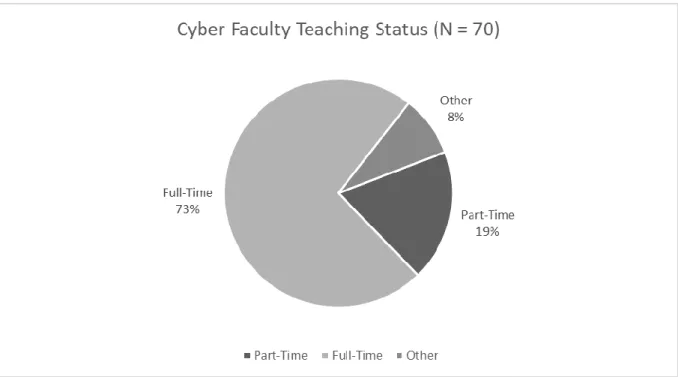
Figure 3. Cyber Faculty Teaching Status Demographic ... 58
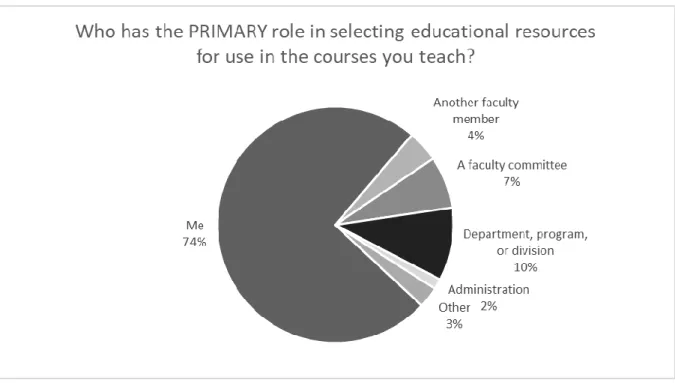
Figure 4. Cyber Faculty Roles in Educational Resource Selection ... 59
Figure 5. Number of Years Teaching at Collegiate Level ... 62
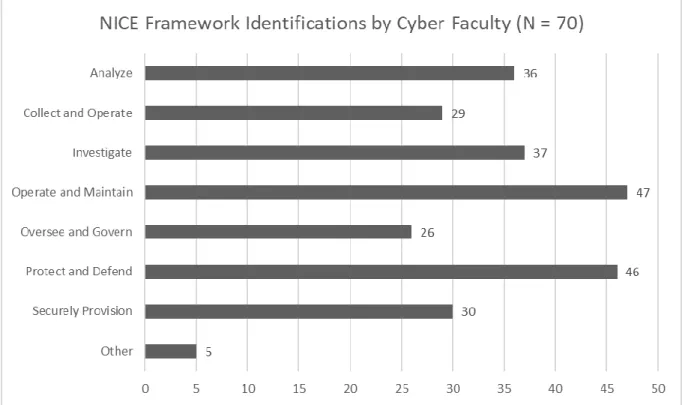
Figure 6. NICE Framework Identifications by Cyber Faculty ... 63
CHAPTER 1
INTRODUCTION
Background
Executive order 13870 in May 2019 by the president of the United States views the cybersecurity workforce as “a strategic asset that protects the American people, the homeland, and the American way of life.” The order calls on federal agencies to grow the capability of the cyber workforce and provide cyberlearning pathways and incentives for cyber
professionals. The founding of the President’s Cup Cybersecurity Competition will identify untapped cybersecurity potential existing in the United States government workforce with recommendations to extend the competition to non-federal employees. The use and improvement of the NICE framework to develop cyber potential and career pathways are highly encouraged among federal entities according to the executive order (Trump, 2019).
One of the professional organizations associated with promoting cybersecurity, the Aspen Cybersecurity Group, is a cross-sector public-private forum consisting of government officials, industry executives, academia, journalism, and other members from civil society. The role of the group is to bring attention to the challenges in the cybersecurity workforce, promote collaboration between private and public sectors, and work towards strengthening the pipelines in supplying qualified candidates to the workforce through skills development and educational opportunities. The Aspen Cybersecurity Group identifies four major trends contributing to the workforce gap listed below (Aspen Cybersecurity Group, 2018).
2. Untapped potential for cybersecurity roles exists in the current workforce.
3. More than 50% of candidates are considered unqualified by employer
requirements.
4. The general population remains unaware of the potentials in cyber career fields
In testimony before the United States House of Representatives’ Committee on Science, Space and Technology’s Subcommittee on Research and Technology, Dr. Diana L. Burley recommended in 2017 that post-secondary institutions collaborate to build a
comprehensive cybersecurity curriculum and ultimately guide individuals into the cybersecurity workforce and should extend to K-12 education. Raising awareness and broadening participation to women and minorities should also be a key priority in building a more diverse workforce. The testimony recommends that any actions are taken based on the testimony be empirically based, sustainable, and scalable to meet the dynamic landscape of the cybersecurity field (Subcommittee on Research and Technology, 2017).
One partnership between government, academia, and private sector organizations is the National Initiative for Cybersecurity Education (NICE). The National Institute of Standards and Technology (NIST) of the U.S. Department of Commerce coordinates NICE. Through cybersecurity training, education, and workforce development opportunities, NICE works to strengthen the posture of the cyber ecosystem. The ultimate vision is empowering a digital economy with knowledgeable and skilled individuals in the cyber workforce. NICE has three major goals to deliver on its missions, through its vision, and upholding the values of the organization. The first goal is to accelerate learning and skills development for individuals to address the shortage of skilled cybersecurity workers. The second goal is to nurture a diverse learning community where individuals can strengthen their education and
opportunities. Guiding career development pathways and adjusting methodologies is NICE’s third goal to match the changing needs of the workforce (Beecroft & Edwards, 2016).
In the NIST’s special publication 800-181, NICE’s Cybersecurity Workforce
Framework defines a consistent taxonomy for defining the cyber ecosystem that is not limited to job titles or specific occupational terms. The framework consists of categories, specialty areas, and work roles that classify the Knowledge, Skills, and Abilities (KSAs) that are needed by individuals working in the field. Seven categories make high-level groupings over various Specialty Areas among cybersecurity professionals. Specialty Areas coalesce within each category that defines more specific groupings to Work Roles individuals fill in their career paths. Work Roles consist of various tasks, knowledge, skills, and abilities individuals employ that are applicable in the workforce. The NICE framework describes a rich ecosystem consisting of interrelated components that all work together to improve the security posture in an organization (Newhouse, Keith, Scribner, & Witte, 2017).
The cyber landscape continues to evolve at a fast pace, a yearly report from the European Union Agency for Network and Information Security (ENISA) demonstrates a shifting landscape of a wide variety of topics related to cybersecurity. In 2017 alone, many new emerging attack threats emerged that require constant development and refinement of skills by professionals to identify and respond to these cyber developments (European Union Agency for Network and Information Security, 2018). For all that these topics display the landscape in-breadth, it takes very diverse skillsets, both technical and non-technical, from individuals to make an impact on cyber readiness overall (Jones, Namin, & Armstrong, 2018). Cyber professionals become life-long learners of their trade, constantly following
United States Department of Defense is taking strong initiatives to develop partnerships in industry, academia, and government bodies as a key initiative in its strategic plan (Myauo, 2016). Through collaboration and resource sharing throughout the industry can new individuals begin to develop the skills needed to succeed in the workplace.
Using tools in cyber practices is a big part of performing job duties, but practitioners cannot be reliant on just using tools alone. Technical skills complement analytical skills to build a well-rounded cyber professional. The field requires skills that go deeper into researching how attacks happen and creating mitigations that prevent their success. Performing job duties in cybersecurity often requires problem-solving skills in addition to highly technical skills like programming to create new tools in this shifting environment. Educators should strive to not focus on teaching specific tools for techniques in identifying and preventing cyber threats; but instead try to bestow a more investigative and operational standpoint to learning cyber operations practices (Pauli & Engebretson, 2012). There is a shortage of qualified students to meet the needs of the evolving workforce (Krutz & Richards, 2017). In addition to preventing and mitigating attacks, professionals must create resilient systems and practices for recovering from cyber events (Mailloux & Grimaila, 2018).
Traditional learning methods usually consist of using a textbook and following problems that emphasize memorization or stress fact-based findings in the resource. Proponents of information technology fields are challenging educators to move beyond traditional teaching methods to emphasize a more hands-on learning environment to prepare students for the workforce (Martin & Woodward, 2013). Active learning is an approach used by many educators to emphasize hands-on learning in the development of skills that
concepts and should include giving hands-on experience to students. Cyberlearning materials could mean access to a variety of machines and networks to simulate real-world environments (Topham, Kifayat, Younis, Shi, & Askwith, 2016).
Professional certifications are becoming more common in the hiring decisions for potential candidates in entry computer science roles (Denning & Frailey, 2011). Some certifications, like EC-Council’s Certified Ethical Hacker certificate, undergo continuous improvement cycles to include the latest tools, techniques, and procedures relevant in the workforce (EC-Council, 2019). Knapp et al. recommend faculty monitor and maintain personal certifications to make informed decisions as to the direction of their curriculum. They note in the limitations that certifications should not be considered the only important input to maintaining curriculum in a cybersecurity program; educational accreditation entities, local advisory boards, and evolving industry standards (Knapp, Maurer, & Plachkinova, 2017).
The cybersecurity field is increasingly looking for candidates that possess the hands-on skills for performing specific job duties. Traditihands-onal classroom learning focuses hands-on
theoretical teaching and not necessarily on hands-on learning skills relevant to the workforce. In cybersecurity, there is a challenge to safely offer students the opportunity to work with cyber concepts they will experience in the field while not compromising the security of University systems and software. As more educational opportunities are offered online, not on the traditional on-campus environment, providing a laboratory for cyber activities becomes a challenge. In the landscape of cybersecurity education, many topics may require varying laboratories for hands-on instruction. Some of these topics may include things like cryptography, malware analysis, secure software development, ethics training, security
auditing, digital forensics, and even ethical hacking. Providing an environment for students to engage with hands-on activities with these topics may require many resources, including multiple computers, networks, and infrastructure, to mirror a real-life environment (Martin & Woodward, 2013).
Typically a cyber laboratory should be isolated from real-life technology
environments, including University infrastructure and even the students’ home network environment. These situations can provide many challenges to cyber faculty wishing to engage in cyber learning opportunities. Several laboratory types have been proposed, including physical labs, simulation labs, virtual machine labs, and even multiple virtual machine labs. Physical laboratories work well in the traditional learning approach at an educational institution but are not flexible enough to apply to online learning models. A simulation laboratory Is often an environment specifically set up to emphasize certain cyberlearning topics. Simulated environments can help students understand the real-life impact have certain cyber concepts. Virtual environments can be either cloud-based or based on desktop virtualization (Topham et al., 2016).
Knowledge of programming structures and logic presents major core literacies in the development of cyber professional skills. Forging new pathways in education to elevate computer literacy through reading, writing, and mathematical literacy is pivotal in preparing individuals in the digital age (Arquilla & Guzdial, 2017). A recent survey from the
Organization for Economic Co-operation and Development (OECD) found that individuals with higher literacy and problem-solving skills in technology-rich environments are more employable and tend to have higher wages. Future outlooks on the labor force also show an
increase in demand for individuals to enter the workforce who possess computer skills and problem-solving competencies (OECD, 2016).
Open educational materials provide a unique opportunity for individuals to reduce barriers in educational endeavors. No cost materials, cheap distributions methods, such as the internet, and diversity of available topics is transforming learning for individuals across the globe (Richter & McPherson, 2012). In particular, the availability of open materials on mobile devices is becoming increasingly popular for accessing information (Ally & Samaka, 2013). Individuals seeking to transform the landscape of cybersecurity education can create and find resources to shape the technical, analytical, and problem-solving skills needed for the cyber workforce.
Online learning models can experience many advantages and disadvantages to the learning environment. A major advantage of online learning is the convenience for students to participate in the learning environment. Students are no longer limited by geographic location when engaging in educational opportunities, allowing students the freedom to seek and control their educational destiny. Online learning is typically more cost-effective for both the student and educational institutions as well. However, several barriers are present in online learning models. For example, Computer literacy can create a huge gap since most of the course material may rely on technology to deliver learning. Some students may lack access to the Internet from which many online learning Models rely on for course delivery. Access to technology can present a barrier to those wishing to expand their educational opportunities. Online courses typically involve a little bit more faculty preparation to be effective then there is in traditional face to face courses. Students learn using a variety of methods, but some literature suggests cyberlearning is best via tactile or kinesthetic modality, which can be
difficult to engage students within a course that is purely online. Online learning opportunities can provide many advantages and disadvantages to students in the educational sphere, but faculty should take care to be sure that they meet the needs of the student and the population that universities serve to deliver qualified candidates to the workforce (Fedynich, 2014).
This research surveys the literature to discover the awareness, effectiveness, and potential barriers creators and adopters of Open Educational Resources (OER) may have when dealing with cybersecurity topics.
Problem Statement
There are not enough workers to meet current workforce demand in cybersecurity (“Cybersecurity Supply/Demand Heat Map,” n.d.). Also, the cyber industry is growing and will need even more skilled workers to fill cyber roles in the future (Reagin & Gentry, 2018). Building bridges over the Digital Divide to shape a safer digital society in the future is essential for success in society (Rogers, 2016). Educators are increasingly aware of using open learning materials in traditional learning environments to aid course pedagogy (Adams, Liyanagunawardena, Rassool, & Williams, 2013). Though cyber practices exist in computer science disciplines, cyber contexts extend beyond the digital realm across industries, society, and are a vital part of the modern infrastructure (Goodman, 2014).
Using the National Initiative for Cybersecurity Education (NICE) framework as a guide, educators can cultivate the Knowledge, Skills, and Abilities (KSAs) through a variety of sources to help students succeed in cyber-related fields (Jones et al., 2018). These learning experiences can be a way to cultivate cyber awareness among the population and supply a cyber-resilient workforce who protects the digital infrastructure in their future occupations
(Mailloux & Grimaila, 2018). In the context of the NICE framework’s cyber specialty areas, there is a broad range of contexts that cyber entails, which are not limited to the technology discipline.
Open Educational Resources (OER) provide no-cost opportunities for helping learners advance academic pursuits (Richter & McPherson, 2012). As awareness of OER is increasing among faculty for potential use in course curricula, there is a growing acceptance of OER throughout higher education (Adams et al., 2013). Gaps in the literature exist when
researching the influence of OER in the tumultuous and changing field of cybersecurity. With a broad range of options for delivering a curriculum for students in key cyber study areas; cyber professionals report in one study that the knowledge, skills, and abilities required for their job roles were mostly learned on-the-job or self-taught as opposed to a school setting (Jones et al., 2018). To what extent are OERs being used by instructors in their course pedagogy, do faculty find it effective, and what are the perceptions of the barriers that exist for faculty with OER?
Purpose
The purpose of this study is to frame faculty perceptions of OER in the context of cyber curriculum usage in U.S. higher education environments. According to Creswell (2014), survey design “provides quantitative data or numeric description of trends, attitudes, or
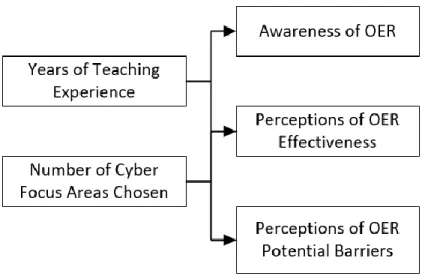
opinions of a population by studying a sample of that population” (Creswell, 2014). The study focuses on two independent variables, years of teaching experience and the number of cyber discipline focus areas chosen, to determine if there are significant statistical differences with the dependent variables framed into three constructs: OER awareness, OER perceived
effectiveness, and OER potential barriers. The research measures each independent variable for its significance with each of the three constructs of dependent variables.
Significance
The study will set a foundation to study the awareness, perceptions of OER effectiveness, and perceptions of OER potential barriers to the adoption of OER in cyber curricula. It will paint a big picture of the current perceptions of faculty surrounding OER usage in cyber course pedagogy. Results will lead to further research on the utilization and efficacy of OER in different high-level functions of the cyber discipline and help cyber faculty make informed decisions when deciding content for cyber curriculum instruction.
Nature of Study
The figure below frames the research model of this study. It shows the relationship between years of teaching experience and the number of cyber focus areas chosen as independent variables, and the awareness of OERs perceived OER's effectiveness and
perceptions of OER potential barriers in cyber curriculum context as dependent variables. The model adapts from previous research into faculty perceptions of OER with alterations in application to the context of cyber disciplines (Leichte, 2018).
Figure 1. Working Model
Research Questions
This research deals with perceptions of OERs from the perspective of faculty members teaching cybersecurity-related content. The first question illuminates the perceptions of cyber faculty and how they may differ based on faculty experience teaching in academia. The second question sheds light on any perceptions that may exist within cyber faculty grouping based on whether the faculty is a specialist, focusing on fewer aspects of the cyber landscape or a generalist, teaching many different subjects across the NICE framework. The last
question looks for differences in perceptions of cyber faculty to determine if there is a significant difference with the amount of time a faculty member has been teaching and whether they are a specialist or generalist according to the NICE framework. The questions
RQ1: Are there statistically significant differences in the combined dependent variables (OER awareness, OER perceptions of effectiveness, and perceptions of OER potential barriers) and the independent variable of the number of years teaching experience held by faculty?
RQ2: Are there statistically significant differences in the combined dependent variables (OER awareness, OER perceptions of effectiveness, and perceptions of OER potential barriers) and the independent variable of the number of cyber focus areas chosen?
RQ3: Is there a statistically significant interaction between the independent variables of the number of years teaching experience held by faculty and the number of cyber focus areas chosen on the combined dependent variables of OER awareness, OER perceptions of effectiveness, and perceptions of OER potential barriers?
Conceptual Framework
The Babson Survey Research Group has published multiple reports summarizing faculty perceptions of open educational resources over the years. The most recent was conducted during 2017-2018 and gathered over 4000 responses from faculty and department chairpersons. The report uses descriptive statistics to highlight the perceptions of OER by participants. The survey reports an overall awareness of OER among faculty of about 46%, with faculty awareness increased since the last survey period. Awareness identifies as a possible grouping of related questions to the perceptions of open educational resources by faculty (Seaman & Seaman, 2018). This researcher uses the Babson survey as a basis for instrument creation in this study of faculty perceptions of OER in the cyber curriculum and identifies the first construct of awareness.
Hilton identifies twenty studies surrounding perceptions in OER published between 2015 and 2018. In total, these studies included 10,807 students and only 379 faculty. Hilton reports that one of the challenges in studying OER research is that several studies have serious methodological issues (Hilton, 2019). One study, containing a sample size of 127 educators,
frames perspectives of OER in terms of efficacy using descriptive statistics, but the study disseminates through a popular open textbook distributor, OpenStax, which may introduce bias (Pitt, 2015). Though the term efficacy and benefits exist in the literature, this research
into the effects of OER in cyber usage uses the term benefits to frame a construct on the
positive impacts on course pedagogy.
In 2014, a quantitative study on factors influencing motivations for faculty to share and collaborate on course curriculum identified that several key factors influence successful adoption and usage strategy of OER. Among them are the technological readiness of the institution, the awareness of OER, and the knowledge of how to find high-quality OER. The sample included 754 responses from teachers in primary, secondary, and higher education. Data analysis procedures include factor analysis. The authors of this survey were able to determine five factors contributing specifically to barriers in OER adoption and usage (Pirkkalainen, Jokinen, & Pawlowski, 2014). The researcher forms the third construct,
barriers that exist within the context of this study on cyber faculty perceptions of OER. It also helps frame methodology using factor analysis to identify subgroups in the data.
Many studies in the literature seem to be using various definitions of contributing factors that exist in OER research. A common theme in the literature is to use descriptive statistics of individual questions to paint a picture of specific aspects OER usage and adoption of OER in results. Using Hilton’s warning that methodological flaws exist in published literature (Hilton, 2019), the researcher surmises there is lacking empirical data and results surrounding the factors that affect faculty perceptions of OER. In this research, the researcher proposes a stronger methodology for identifying factors and reporting how OER perceptions
among the cyber faculty population, giving an introspective look to the population of cyber faculty.
Assumptions
The researcher reports the following assumptions and potential bias to limit accidental interference during this research. For the reasons listed below, the researcher has chosen not to be an active participant in the study for concerns of being a potential outlier in the data. The researcher has chosen a methodology and data analysis plan that will focus on the descriptive statistics of the population of the study. Where possible, the researchers aim to reduce the influence of preconceived notions that may skew the results of the study.
The researcher of this study is a full-time faculty member employing OERs in multiple courses at a public state university in the United States. The researcher only teaches courses in computer science and cybersecurity disciplines. The researcher has co-authored OER
materials in a statewide initiative to support open textbook transformation grants and adopt OER (Croteau, 2017). The researcher’s home institution, as of 2019, has over 35% of its course sections tagged as no- or low-cost for course materials, well above the state average. It
is the researcher’s philosophy that access to knowledge comes with as little impedance as
possible. Proof of knowledge is the responsibility of certifying agents like formal education
programs, certifications, boot-camp programs, and others to verify individuals have the knowledge, skills, and abilities to be successful in the workforce. The researcher believes that it is a fundamental human right to have access to knowledge. Digital OER is a means to that end in the researcher’s opinion.
Scope, Limitations, and Delimitations
The scope of the project aims to answer the stated research questions, provide a strengthened methodology for those pursuing OER research, validate the conceptual framework proposed, and gain insights of cyber educators in U.S. higher education that engage in scholarly activities to broaden their knowledge of the cybersecurity landscape. The researcher’s goal in this study is to study the population of cyber faculty and their perceptions towards open educational resources in their course instruction. Following other publishers in the field, the researcher aims to provide statistical data that describe the population of cyber faculty and their perceptions towards open course materials.
A significant limitation in the research is obtaining a large enough sample size to describe the actual population adequately. The researcher has limited resources to offer incentives and participate in events for soliciting participation from relevant sources. The study uses online professional organization communication methods and in-person cyber professional development opportunities to build a sample from the relevant cyber faculty population. Using a diverse recruitment strategy, the researcher hopes to improve the sample size to provide adequate coverage of the population (Ponto, 2014).
Though the strength of the data may be a concern due to small sampling, the study will tie together in the field of ever-changing field cybersecurity and OER research. Further
research into OER studies with cyber context will have a methodology to begin working their path of inquiry. The researcher intends to draw focus on the potential impacts of OER
research to solve a cyber workforce development issue. Descriptive statistics will provide a mechanism to gain familiarity with the field and set a baseline for understanding the OER context in the field of cybersecurity.
Chapter Summary
In this chapter, the researcher provides a frame of reference to the research presented in this study. The needs of the cybersecurity workforce are increasing for qualified candidates. More job opportunities are becoming available, but many positions go unfilled simply due to a lack of qualified candidates. The complexity of the cybersecurity field means public, private, and academic sectors must find creative ways to foster the knowledge, skills, and abilities to build a diverse cyber workforce. Open educational resources (OERs) reduce the barriers needed to gain access to knowledge. With increased acceptance of OERs in
traditional learning environments, there is an opportunity to leverage OER to help solve the cyber workforce issue. This study will build upon previous research into OER to set a baseline of faculty perceptions specific to the cyber field.
CHAPTER 2
LITERATURE REVIEW
Needs of Cyber Workforce
A cybersecurity professional group, the International Information System Security
Certification Consortium (ISC)2, notes in a 2018 study with cybersecurity professionals that
59% of their respondents view their organization is at extreme or moderate risk due to cybersecurity staff shortage. The top reported job concern was the lack of skilled or experienced cybersecurity personnel, followed by a lack of resources to perform the job effectively. The top three most important qualifications for employment were or relevant cybersecurity work experience, knowledge of cybersecurity concepts, and certifications. For job satisfaction, 68% of respondents reported being very satisfied or somewhat satisfied with their employment. Cyber professionals in the survey reported the most valuable educational methods to be face-to-face instructor-led training and internet-based training. 54% of respondents reported that they were going to pursue a cybersecurity certification within the next year (International Information System Security Certification Consortium, 2018).
Cyber Seek, an organization focused on studying the supply and demand of
cybersecurity jobs across the United States, notes that there are almost a million individuals currently employed in the cybersecurity industry. However, the current vacant jobs total over 504,000 at the time of this study (“Cybersecurity Supply/Demand Heat Map,” n.d.). Cyber professionals are understaffed in their work environments, with the demand for cyber
professionals still growing. Maximizing diversity and transforming the workforce across multiple disciplines could help educate teachers and students of the possibility of a cyber profession. Maximizing awareness of cyber professions across STEM fields could help to improve the pipeline of qualified candidates to the workforce (Ivy, Lee, Franz, & Crumpton, 2019). Goodman, in 2014, recommends a two-pronged approach for improving the
cybersecurity workforce posture. The first is to investigate the workforce itself and identify the knowledge, skills, and abilities that individuals need to possess to succeed. The second is to form partnerships in academia, government, and industry to help grow the workforce in a bottom-up approach (Goodman, 2014).
The Aspen CyberSecurity Group has put forward four recommendations that they believe contribute to the gap in cybersecurity employment. The first trend is that the demand for skills is significantly outpacing the growth and supply of qualified candidates. Inventive ways are needed to educate the populace and train them in the skills needed to participate in the workforce. Another trend contributing to the gap is that large pools of skilled count candidates are left untapped. Unfilled positions could be from a lack of awareness among the population of cybersecurity career pathways or due to individuals with existing skill sets not fitting into the workforce pipeline. A contributing factor limited eligibility is that employers often over-spec the requirements needed for positions. Doing so means that more than 50% of applicants are unqualified for entry-level jobs. Awareness of cybersecurity career paths and how individuals can succeed is also a major contributing factor for building and qualified candidate pipeline. The Aspen CyberSecurity Group encourages employers to review job postings to make sure they're relevant to the jobs in which they are seeking applicants and embrace mentorship, learning, and pathways for allowing individuals to grow their skill sets.
Other factors identified that could help solve this workforce issue include things like not requiring college degrees as a mandatory requirement for employment, simplifying job postings so that they use the NICE framework and avoid industry jargon, and commit to employee development by launching apprenticeship training programs to help individuals grow in their job duties (Aspen Cybersecurity Group, 2018).
Secondary education plays a vital role in the development of individuals for the cyber workforce. Both students and teachers lack awareness of career pathways and the ability to grow within the workforce. Recommendations to help close this gap include professional development opportunities, information sessions, and seeding the possibilities of cyber
professionalism outside of their traditional computer science curriculum. Employers may seek highly technical skills, but soft skills such as verbal communication, written communication, the ability to work independently, and work as a member of a team are also important. While STEM fields tend to focus on developing problem-solving abilities, other fields can contribute to the context and critical thinking skills desired in the workforce (Ivy et al., 2019).
GenCyber, a summer camp aiming to engage students from kindergarten to high school, can help raise awareness of cyber careers to individuals at an early age. Students can discover more about the cyber career field, the type of work that professionals use in day-to-day operations, and begin growing skill sets needed for the workforce. The mission of GenCyber is to increase interest in cybersecurity, increase diversity in the cybersecurity workforce, raise awareness, and help improve teaching cybersecurity content in K through 12 curricula. There are three types of summer camps available: camps for students, camps for teachers, and camps featuring a combination of teachers and students. Camps can vary in length between one week and three weeks an is open to the general populace free of charge.
Funding for the camps comes from the National Security Agency (NSA) and the National Science Foundation (NSF). In 2016, the GenCyber program funded over 120 camps nationwide that reached more than 4,000 students and 1,000 teachers. These programs are offered at universities and institutions nationwide and have shown success in generating interest in both teachers and students (Ladabouche & LaFountain, 2016).
The Digital Divide
In President Bill Clinton’s 1990 State of the Union address, he unveiled a comprehensive plan to help make computers and the internet more widely available to Americans as a top priority for his administration. The Digital Divide to Digital Opportunity proposal aimed to make the internet and communications technologies commonplace in homes, schools, libraries, and throughout local communities. President Clinton stressed the importance technology would play in the future economic, political, and social life of all
Americans. The speech helped define the term Digital Divide in the following quote.
“Opportunity for all requires something else today – having access to a computer and knowing how to use it. That means we must close the digital divide between those who’ve got the tools and those who don’t.” The plan included funding and partnerships with technology industries to make computers more ubiquitous in U.S society (“Making a difference in communities across the nation,” 2000).
Internet and computing technologies have become commonplace in American society in the almost twenty years since President Clinton’s original proposal. In 2018, one report states that over half of the world’s population is currently using the internet and that 85.3% of households in developed countries had access to the internet (ITU Publications, 2018).
Research into the digital divide continues to identify gaps in access to technology among many types of groups but extends to include topics such as skill-based competencies.
Consumption skills, for example, primarily focus on the abilities of users to consume and use commodity technology; such as reading websites, email, and consuming digital content. Production skills are abilities for users to not just consume technology but to produce new technologies. For example, this may include activities like creating websites, writing code, or producing new content for others to consume through the internet (Rogers, 2016).
In 2016, President Obama signed an executing order creating a commission for enhancing the U.S. national cybersecurity posture. The commission examined the
cybersecurity landscape and tasked with working with both private and public entities across industry, academia, and government to provide recommendations to improve U.S.
cybersecurity capabilities. The mandate of the commission includes studying and researching actions necessary to improve cybersecurity awareness, risk management, and adoption of best practices throughout the private sector and all levels of government (Obama, 2016).
NICE Framework
The National Cybersecurity Workforce Framework (NCWF) by the National Initiative for Cybersecurity Education (NICE) is an effort to increase cyber awareness for workforce development needs. The framework identifies seven key areas to the cybersecurity field, which does not use jargon or technical language based on different roles cybersecurity professionals may work in the field (Santos, Pereira, & Mendes, 2017). These non-technical descriptions help eliminate language barriers to individuals with low computer skills to understand and interpret concepts into learning about the field. In August 2017, under the
National Institute of Science and Technology (NIST) Special Publication 800-181, conceptualizes the NICE framework (Newhouse et al., 2017).
Table 1. Seven NICE Framework Categories
Code Category Description
SP Securely
Provision
Conceptualizes, designs, procures, and/or builds secure information technology systems, with responsibility for aspects of system and/or network development
OM Operate and
Maintain
Provides the support, administration, and maintenance necessary to ensure the effective and efficient information technology (IT) system performance and security.
OV Oversee and
Govern
Provides leadership, management, direction, or development and advocacy so the organization may effectively conduct cybersecurity work.
PR Protect and
Defend
Identifies, analyzes, and mitigates threats to internal information technology (IT) systems and/or networks.
AN Analyze Performs highly-specialized review and evaluation of incoming
cybersecurity information to determine its usefulness for intelligence
CO Collect and
Operate
Provides specialized denial and deception operations and collection of cybersecurity information that may be used to develop intelligence.
IN Investigate Investigates cybersecurity events or crimes related to information
Goodman (2014) identified two major viewpoints about building a cybersecurity workforce (Goodman, 2014). The first involves taking an introspective look at the needs-based demand on the cybersecurity field. In a recent survey of cybersecurity professionals, the top ten skills and abilities identified as important to the job, all were learned mostly on-the-job by the individual to fill a required task. Learning the knowledge from a school setting showed the second most important for only three of the most important skills. Individuals reported that most of the top skills required in the cybersecurity knowledge they acquired are either on-the-job or self-taught. Two limitations to this study exist: the concept of self-taught versus school setting might be ambiguous, and the KSAs could be covered in school course curricula but additionally learned from self-learning or on-the-job training. Questions on the survey asked what medium of instruction was most beneficial to their learning; therefore, multiple forms of learning for the same KSA could apply. The KSA associated with programming logic and structures participants rated a school environment as being most beneficial to their learning. A common theme among all respondents is that soft skills were very important to learn in a school setting before joining the workforce (Jones et al., 2018). Goodman’s (2014) second viewpoint identifies the need for colleges and universities to develop pathways to the workforce and partnerships with industry (Goodman, 2014). Working towards a secure digital infrastructure through cybersecurity can be seen as a public good and akin to providing safety for society (Asllani, White, & Ettkin, 2013). Building communities of responsible computer users will rely on extending cyber awareness beyond the computer science curriculum into other disciplines of study and contexts (Santos et al.,
2017). Research relating to digital citizenship builds upon this notion that users must take
Raising awareness of the benefits, risks, and consequences of participating in digital interactions is increasingly becoming common in K-12 educational environments (Hollandsworth, Donovan, & Welch, 2017). Institutions that embrace and teach digital citizenry concepts may have an advantage in incorporating deeper cybersecurity-related content into the curriculum.
Educational Theories
Individuals joining the cyber workforce need more than just technical skills to be successful. Science, technology, engineering, and mathematical (STEM) fields play a role in a well-rounded workforce, but a resilient cyber workforce also includes psychology, critical thinking, reasoning skills, and the ability to interact in a team environment socially (Dawson & Thomson, 2018). Secondary education provides an opportunity to help build an
interdisciplinary approach to the cyber workforce pipeline by portraying how both technical and non-technical roles can fill the cyber workforce pipeline and raise awareness of
cybersecurity issues (Ivy et al., 2019). The educational and awareness in higher education cybersecurity strategies must focus on the needs of the cybersecurity workforce (Goodman, 2014).
John Dewey Is an influential figure in educational and social reform topics. Though
Dewey’s works are largely from the early to mid 20th century, the influence of his
perspectives still influences the educational landscape today in the 21st century. Dewey was
an outspoken critic of the traditional “old school” teaching methodologies that emphasized studying the body of knowledge as static and unchanging. Instead, Dewey promoted a child-centered approach to educational reform emphasizing education as a necessity of life, social
change, and reconstruction of individual experience (Achkovska-Leshkovska & Spaseva, 2016).
Dewey saw education as a means of social change and a key pillar upon which a democratic, free, and peaceful world relies. Only educated individuals could fully participate in a free and democratic society. Education, under Dewey, should aim to create individuals who can understand the complexity of social issues and take an active approach to engage in societal concerns. Education should not just consist of telling of facts and body of knowledge, but rather be an active and constructive process that promotes cognitive development and critical thinking skills (Pérez-Ibáñez, 2018).
Dewey viewed education as a continuous process constantly undergoing renewal, reconstruction, and shaping the evolution of society. Educational philosophy is a lens by which individuals can discuss important societal factors, understand them, and reach consensus on the impacts of solutions in the social community. Education, in an iterative development cycle, will influence the direction that society evolves through time (Campbell, 2016).
Bloom’s Taxonomy, first introduced in 1956 by Dr. Benjamin Bloom, is a popular classification system for organizing educational objectives. The goal is to describe different levels of learning and how learning objectives can scale to higher levels of thinking. Bloom’s Taxonomy exists as a pyramid as a symbol that higher levels of thinking build upon a base of common knowledge. At the bottom of the pyramid, knowing and understanding facts and knowledge is required for a learner to have a solid foundation of the contexts under study. As the learner moves up the pyramid, that can build upon that context into applying and
create and evaluate new topics inside a body of knowledge. Bloom’s Taxonomy is one of the most imperative elements in designing curriculum, building learning outcomes, and
evaluating that students are meeting objectives through the curriculum (Sikandar, 2017). The use of rubrics in educational settings is a way of ensuring that students are meeting performance expectations in their studies. Rubrics contain concise performance criteria, rating scales, and descriptions that give clear expectations for students to succeed on deliverables (Minnich et al., 2018). Rubrics help educators measure how well students are performing to expectations, promote critical thinking in students to meet those expectations, and facilitate communication between students and instructors for directional learning (de la Rosa Gómez, Meza Cano, & Miranda Díaz, 2019). The use of a rubric in cybersecurity education can help educators make sure that student learning outcomes meet the needs of the cybersecurity industry.
Cyber Curriculum Development
Developing materials for cyber training comes with many challenges. The shifting landscape means that materials must undergo improvement cycles for relevance in real-world scenarios. Individuals cannot expect to come prepared to the field of cyber for every scenario that may occur; instead, educators must focus on bestowing relevant skills needed to excel in the field from both technical and non-technical contexts (Jones et al., 2018).
Further research shows that hands-on exercises and case studies can be very beneficial to improving understanding and retention of cyber training in general. Those in the field of cyber must develop a diverse set of skills to tackle the wide array of topics that exist in real-life scenarios and try to align learning objectives to that of the workforce. An underlying
theme that individuals should keep in mind is that there is little research to show that cyber curricula reflect the needs of the industry (Santos et al., 2017). Integrating Bloom’s
Taxonomy into cyber curriculum usage could help qualify that individuals are gaining higher levels of thinking while engaging in cybersecurity topics (Harris & Patten, 2015).
Professional certifications may hold the key to shaping cybersecurity curricula.
Industry certifications help qualify that individuals possess the knowledge, skills, and abilities for work in the job field as much as one-third of cybersecurity-related jobs require some form of certification. Educators can find value by shaping and refining the curriculum based on certifying organizations and their pursuits to remain relevant in a changing landscape. Maintaining knowledge of industry certifications, and how they evolve to meet the needs of industry, could provide great insight for those wishing to create and refine cyber curricula to meet the needs of the workforce. Educators need to acknowledge that education should not focus on qualifying individuals for certification or test. Instead, educators should focus on learning the skills and abilities needed to enhance learners' knowledge of new techniques and trends (Knapp et al., 2017).
Some curriculum developers suggest that cyber education programs need to extend beyond the traditional classroom environment to entail more extracurricular activities and partnerships with local industries requiring individuals with cyber skills. These partnerships and learning opportunities can help develop new opportunities for learners the practice the skills they need to succeed in the industry (Woodward, Imboden, & Martin, 2013). Expanding beyond computer-related disciplines, proponents of cyber literacy may begin to run into new issues spreading awareness of topics in today’s world. The Digital Divide for knowledge of Information and Communications Technologies (ICTs) continues to separate not only those
with the skills and abilities to perform simple computer-related tasks; but for individuals to bridge the barrier between not just being consumers of technology, but those that understand how it works in-depth (Rogers, 2016). The proliferation of technology continues to evolve as more people gain access to the internet; assuming all learners have access to such ICT devices is still premature (Rowsell, Morrell, & Alvermann, 2017). The rise in mobile devices and faster mobile broadband speeds hold high potential as a possible conduit for reaching out to individuals in bridging the digital divide; however, the cost of such devices and access continues to be a limiting factor for many individuals (U.S. Department of Commerce: National Telecommunications and Information Administration, 2014). Capitalizing on OER and mobile device access continues to be an interesting area of study for furthering
educational goals for those who did not have access to it before (Ally & Samaka, 2013).
Background of OER
In 2002, The United Nations Educational, Scientific, and Cultural Organization (UNESCO) put forward a report summarizing a forum studying education in developing countries. Participants included members from government, industry, and educational backgrounds. General topics discussed included defining open courseware and the impact it could have on higher education. Additional topics included recommendations, assessing needs, limitations, and other concerns. The forum began with a rough definition of Open Courseware, as defined below.
Open Courseware
1. Provides educational resources for college and university faculties to adapt following
2. Includes the technology to support open, meaningful access, and use of the courseware.
3. Includes at a minimum the course description, syllabus, calendar, and at least one of
the following:
• Lecture notes
• demonstrations, simulations, illustrations, learning objects
• reading materials
• assessments projects
4. Does not normally provide direct open learning support for students
Working groups at the forum were organized and tasked with making
recommendations concerning the use of open courseware in higher education of developing countries. One goal of the working group was to formalize the name and definition of the concept known as open courseware. The group recommended the term Open Educational Resources with the following definition:
“The open provision of educational resources, enabled by information and
communication technologies, for consultation, use, and adaptation by a community of users for non-commercial purposes.”
The working group gave other recommendations for open educational resources. Research areas for evaluation, improvement, accessibility, quality, usability, and effectiveness were identified as potential areas to study in OER research (UNESCO, 2002).
Since its initial finding, the terminology for Open Educational Resources has
expanded to include many definitions by various. The William and Flora Hewlett Foundation is one such organization that was present at the first UNESCO forum investigating the use of open of course materials in developing countries. They are partners with UNESCO, Creative Commons, and MIT and share a common goal of promoting worldwide public access to learning materials organizations and tasked with evaluating the usage of OER (William and Flora Hewlett Foundation, 2019). The William and Flora Hewlett Foundation’s definition is used to set the context for what OER entails in this study.
Open educational resources are teaching, learning, and research materials in any medium -- digital or otherwise -- that reside in the public domain or have been released under an open license that permits no-cost access, use, adaptation, and redistribution by others with no or limited restrictions (William and Flora Hewlett Foundation, n.d.).
Open-Source Software
The term “open-source” refers to something people can freely modify and share because the design is publicly accessible. This term developed in the context of software engineering as an approach to creating software programs (“What is open source?,” n.d.). Open Source Software (OSS) is the source code from a computer program that anyone can inspect, modify, or enhance to their liking. Programmers in this design approach
collaboratively work together to create software programs and freely share code among one another to fix and add features. This approach is different from other approaches in that either the person team or organization who created it maintains exclusive control over the rights. Dictating how people can modify or use the software is known as “proprietary” or
“closed-source” software. Authors of open-source software freely share their code and make it available to others who can use it (Open Source Initiative, 2007).
Just because the software is openly accessible does not mean then it isn't subject to licensing agreements from the authors. These licensing agreements dictate free redistribution, allowing derived works, provide no discrimination against persons or groups, and be non-restrictive with other software. Open-source licensing can affect the way people use, study, modify, distribute, and attribute those that created the software (Open Source Initiative, 2007). Some people may prefer using open-source software over proprietary software because it includes more control, ability to train, security, and stability. Many organizations hire programmers and developers specifically for their knowledge of open source software (“What is open source?,” n.d.).
source software has proven beneficial in software development courses. Open-source software can simulate real working environments that develop software. The
collaborative environment among members contributing to a team effort and the flexibility for source code modifications teaches students to develop their skills during instruction. Open-source software can help facilitate learning and understanding of version and Open-source control systems and leverage developer documentation as a learning instrument. Open-source software is generally free, helping to reduce the costs of course materials. Students must understand the software development process, how to test, and configure the environment. The use of open-source software can help set the context of a real-life project. In one study, the researchers found that by including open-source software as course material helped increase the confidence of students dealing with complex in real-world projects (Dorodchi & Dehbozorgi, 2016).
Open Textbooks
The costs of traditional textbooks can present a barrier for many students wishing to further educational endeavors. Open textbooks are a type of OER that faculty can choose to replace the traditional textbook. Open textbooks provide faculty and students with low-cost alternatives to traditional textbooks to help make higher education more affordable (Costello, Bolger, Soverino, Brown, & Conole, 2019). The Community College Open Textbook Project (CCOTP), in partnership with Rice University’s Connexions program, was created in March 2008 to study and identify sustainable models for promoting the use of open textbooks at community colleges and provide a proof-of-concept for an open textbook. The CCOTP Identified several challenges to the production and adoption open textbooks: 1) faculty members and students expectations of high production quality and inclusion ancillary
materials in open textbooks 2) methods for documenting and maintaining control over various versions of open textbooks, and 3) the process of converting existing open content to digital and accessible formats (Baker, Thierstein, Fletcher, Kaur, & Emmons, 2009).
Rice University’s Connexion program evolved into today’s OpenStax textbook repository. The repository consists of many textbooks that cover various subject areas
common in education. Over 1,000 courses internationally use OpenStax textbooks as primary source material (The William and Flora Hewlett Foundation, 2015). One study reports that the use of open textbooks is key to reducing costs for students. The study found that grades given in the courses were comparable regardless of textbook choice between a traditional or open textbook. The withdrawal rate was reduced in the courses using an open-source textbook over a traditional textbook (Clinton, 2018).
OER Landscape
William and Flora Hewlett Foundation in 2019 released a strategic report on the global OER landscape. They surveyed around 150 articles from around the world surrounding OER research. Experts recognize that in North America, the costs, perceptions, open textbooks, and student outcomes tend to be the most prominent topics of study. Of 126 of the studies, higher education studies form about 58% of the OER research body identified in the report. 70% of studies explore multiple topics in OER. Most studies tend to focus on the adoption and discoverability of OER (34%) and teacher practice and pedagogy using OER (34%). Studies of perceptions of OER (27%) and policy design and implementation (25%) are other common areas of focus in the literature. Around 50% of these studies use mixed methodologies and around 31% use opinion/perceptions surveys. Five experts interviewed for the strategic report largely believe that openly licensed textbooks lead to as good or better student learning outcomes than traditional textbooks. Policy advocates recommend more research on the adoption implementation OER in educational settings. These methods can include financing, overcoming administrative challenges, or promoting educator best practices. One expert notes an area for improvement, “I've seen hardly any research that is scientifically rigorous. The vast majority of the research is anecdotal in nature and a lot of it is so small scale that it becomes irrelevant for generalization of findings.” The experts recommend as a priority to see if more rigorous research methods can validate the impacts on student learning outcomes.
Funding for OER research can come from a variety of sources. Though there are some global partners like the Hewlett and flora Hewlett foundation that fund OER projects. Many monetary gains by OER authors more likely will come from institutional or small-scale benefactors. Funders may include state governments, industry partners, or strategic
organizations. One advocate notes OER itself is underfunded, but individuals that can capitalize on OER as a means to solve a problem can find big money available to them in such pursuits. OER practitioners can provide a more versatile learning toolset by adopting OER pedagogy and engage in learning opportunities (William and Flora Hewlett Foundation, 2019). Though OER usage shows cost savings for students over traditional learning materials, developing sustainable financial models to encourage faculty and policy-makers to continue supporting OER is a concern. Barriers to the adoption of OER could be reservations about the quality and the loss of control over intellectual property when adopting OER. A common theme among the literature surrounding the financial sustainability of OER is its inability to generate stable revenue streams and that it may compete for commercially available
alternatives. Many forms of monetary compensation may come in the form of grants to faculty for creating or adopting OER. However, most projects do not survive beyond two to three years in practice once start-up funding has been exhausted (Annand, 2015).
The University System of Georgia (USG) consists of 26 post-secondary public institutions of higher learning in the southeastern state of Georgia. The state of Georgia passed a budget proposal in 2014 that includes an initiative for an Affordable Learning Georgia program. This initiative implemented Textbook Transformation Grants that included monetary benefits for encouraging faculty to transform their learning materials into lower-cost options for students (Croteau, 2017). Since its inception, the initiative has saved over 379,000 students an estimated 61.9 million dollars in textbook costs. All 26 of the USG institutions have participated in the initiative, with 334 out of 566 applications funded (“ALG statistics, research, and reports,” n.d.). In 2018, the USG conducted a system-wide faculty perception survey of OER among faculty and professional staff at the institutions. The instrument used
by USG builds upon the same survey instrument used in this study by Seaman and Seaman. In total, 1,719 faculty and staff across 25 of the USG institutions participated in the survey. 84.5% of the respondents were instructional faculty, primarily teaching in a face-to-face setting (Gallant & Lasseter, 2018).
Cyber OER
The Cybersecurity Labs and Resource Knowledge Base (CLARK) is an OER repository consisting of cybersecurity topics. Clark organizes cybersecurity topics into courses, units, modules, micro modules, and nanomodules. CLARK aims to be a
cybersecurity digital library that allows faculty teaching cybersecurity to post materials and share their cybersecurity curriculum with other educators (Dark, Kaza, & Taylor, 2018).
CLARK requires submissions to be learning-outcomes based on Bloom’s Taxonomy. Submissions also follow classification themes to help searchers find relevant cyber OER easier. For example, a course can be marked with a level indicator to show its relevance towards various K-12 education environments, multiple higher education environments, or job training purposes(“CLARK,” n.d.).
As of 2018, CLARK contains 116 learning objects entered by 38 different curriculum developers. The systems design is scalable to adjust to emerging topics across the
cybersecurity landscape. A National Security Agency grant financially supports CLARK for continued development and support (Dark et al., 2018).
OER Research
Since 2002, the United Nations Educational Scientific and Cultural Organization (UNESCO) and other proponents of OER continue to embrace the creation and adoption of open learning materials to supply and improve learning (UNESCO, 2002). Open Educational Resources (OERs) provide educators with unique opportunities to transform learning for individuals across the world (Richter & McPherson, 2012). Many free resources exist for students and educators to help them improve student engagement. Educators should be encouraged to seek out new sources on materials and develop their content (Johnson, 2014). The creation and adoption of OER resources continue to increase among educators and institutions, wanting to leverage the benefits of embracing OER (Adams et al., 2013). This research will focus on UNESCO’s definition of OER described as “teaching, learning, and research materials in any medium, digital or otherwise, that reside in the public domain or available under an open license that permits no-cost access, use, adaptation, and redistribution by others with no or limited restrictions (UNESCO, 2002).”
For what OER can help to improve learning environments, there are limitations and recommendations that adopters should consider when adopting OER (Wiley & Hilton III, 2018). In one report published in the Higher Education Journal, the authors identified three main tensions that exist for educators using a mixed methodology when engaging with OER resources. The barriers include tensions between organizational policies and needs of the individual educator, institutional responsibility to maintain academic integrity, and the balance between cost efficiency and learning objectives for students (Kaatrakoski, Littlejohn, & Hood, 2017). Educators can spend as much or even more time building course materials when using open materials (Bliss, Robinson, Hilton, & Wiley, 2013). Research into