Report of the May 10–11, 2002, Workshop Conducted by the Basic Energy Sciences and Advanced Scientific Computing
Advisory Committees to the Office of Science, Department of Energy
Theory and
Modeling in
Nanoscience
Cover illustrations:
TOP LEFT: Ordered lubricants confined to nanoscale gap (Peter Cummings).
BOTTOM LEFT: Hypothetical spintronic quantum computer (Sankar Das Sarma and Bruce Kane). TOP RIGHT: Folded spectrum method for free-standing quantum dot (Alex Zunger).
MIDDLE RIGHT: Equilibrium structures of bare and chemically modified gold nanowires (Uzi Landman). BOTTOM RIGHT: Organic oligomers attracted to the surface of a quantum dot (F. W. Starr and S. C. Glotzer).
Theory and Modeling in Nanoscience
Report of the May 10–11, 2002, Workshop Conducted by the Basic Energy Sciences and Advanced Scientific Computing
Advisory Committees to the Office of Science, Department of Energy
Organizing Committee
C. William McCurdy
Co-Chair and BESAC Representative Lawrence Berkeley National Laboratory
Berkeley, CA 94720 Ellen Stechel
Co-Chair and ASCAC Representative Ford Motor Company
Dearborn, MI 48121 Peter Cummings The University of Tennessee
Knoxville, TN 37996 Bruce Hendrickson Sandia National Laboratories
Albuquerque, NM 87185 David Keyes Old Dominion University
Norfolk, VA 23529
This work was supported by the Director, Office of Science, Office of Basic Energy Sciences and Office of Advanced Scientific Computing Research, of the U.S. Department of Energy.
Table of Contents
Executive Summary ...1
I. Introduction...3
A. The Purpose of the Workshop...3
B. Parallel Dramatic Advances in Experiment and Theory...3
C. The Central Challenge ...5
D. Key Barriers to Progress in Theory and Modeling in Nanoscience...6
E. Consensus Observations ...7
F. Opportunity for an Expanded Role for the Department of Energy...7
G. Need for Computational Resources and Readiness to Use Them...8
H. Summary of Specific Challenges and Opportunities ...9
Giant Magnetoresistance in Magnetic Storage...11
II. Theory, Modeling, and Simulation in Nanoscience ...12
A. Nano Building Blocks...14
Transport in Nanostructures: Electronic Devices ...14
Optical Properties on the Nanoscale: Optoelectronic Devices ...15
Coherence/Decoherence Tunneling: Quantum Computing...15
Soft/Hard Matter Interfaces: Biosensors...15
Spintronics: Information Technology...16
Implications for Theory and Modeling...16
B. Complex Nanostructures and Interfaces ...17
C. Dynamics, Assembly, and Growth of Nanostructures...21
III.The Role of Applied Mathematics and Computer Science in Nanoscience...24
A. Bridging Time and Length Scales...26
B. Fast Algorithms...31
Linear Algebra in Electronic Structure Calculations ...32
Monte Carlo Techniques...33
Data Exploration and Visualization...34
Computational Geometry...35
C. Optimization and Predictability ...35
Optimization ...35
Predictability...37
Software ...37
Appendix A: Workshop Agenda ...39
Executive Summary
On May 10 and 11, 2002, a workshop entitled “Theory and Modeling in Nano-science” was held in San Francisco to iden-tify challenges and opportunities for theory, modeling, and simulation in nanoscience and nanotechnology and to investigate the growing and promising role of applied mathematics and computer science in meet-ing those challenges. A broad selection of university and national laboratory scientists contributed to the workshop, which included scientific presentations, a panel discussion, breakout sessions, and short white papers. Revolutionary New Capabilities in Theory, Modeling, and Simulation
During the past 15 years, the fundamental techniques of theory, modeling, and simula-tion have undergone a revolusimula-tion that paral-lels the extraordinary experimental advances on which the new field of nanoscience is based. This period has seen the development of density functional algorithms, quantum Monte Carlo techniques, ab initio molecular dynamics, advances in classical Monte Carlo methods and mesoscale methods for soft matter, and fast-multipole and multigrid al-gorithms. Dramatic new insights have come from the application of these and other new theoretical capabilities. Simultaneously, ad-vances in computing hardware increased computing power by four orders of magni-tude. The combination of new theoretical methods together with increased computing power has made it possible to simulate sys-tems with millions of degrees of freedom. Unmistakable Promise of Theory,
Modeling, and Simulation
The application of new and extraordinary experimental tools to nanosystems has cre-ated an urgent need for a quantitative under-standing of matter at the nanoscale. The
ab-sence of quantitative models that describe newly observed phenomena increasingly limits progress in the field. A clear consen-sus emerged at the workshop that without new, robust tools and models for the quan-titative description of structure and dynam-ics at the nanoscale, the research community would miss important scientific opportuni-ties in nanoscience. The absence of such tools would also seriously inhibit wide-spread applications in fields of nanotechnol-ogy ranging from molecular electronics to biomolecular materials. To realize the un-mistakable promise of theory, modeling, and simulation in overcoming fundamental challenges in nanoscience requires new human and computer resources.
Fundamental Challenges and Opportunities
With each fundamental intellectual and computational challenge that must be met in nanoscience comes opportunities for re-search and discovery utilizing the ap-proaches of theory, modeling, and simula-tion. In the broad topical areas of (1) nano building blocks (nanotubes, quantum dots, clusters, and nanoparticles), (2) complex nanostructures and nano-interfaces, and (3) the assembly and growth of nanostructures, the workshop identified a large number of theory, modeling, and simulation challenges and opportunities. Among them are:
• to bridge electronic through macroscopic length and time scales
• to determine the essential science of transport mechanisms at the nanoscale • to devise theoretical and simulation
ap-proaches to study nano-interfaces, which dominate nanoscale systems and are necessarily highly complex and hetero-geneous
• to simulate with reasonable accuracy the optical properties of nanoscale structures and to model nanoscale opto-electronic devices
• to simulate complex nanostructures in-volving “soft” biologically or organi-cally based structures and “hard” in-organic ones as well as nano-interfaces between hard and soft matter
• to simulate self-assembly and directed self-assembly
• to devise theoretical and simulation ap-proaches to quantum coherence, deco-herence, and spintronics
• to develop self-validating and bench-marking methods
The Role of Applied Mathematics
Since mathematics is the language in which theory is expressed and advanced, develop-ments in applied mathematics are central to the success of theory, modeling, and simu-lation for nanoscience, and the workshop identified important roles for new applied mathematics in the above-mentioned chal-lenges. Novel applied mathematics is re-quired to formulate new theory and to de-velop new computational algorithms appli-cable to complex systems at the nanoscale. The discussion of applied mathematics at the workshop focused on three areas that are directly relevant to the central challenges of theory, modeling, and simulation in nano-science: (1) bridging time and length scales, (2) fast algorithms, and (3) optimization and predictability. Each of these broad areas has a recent track record of developments from the applied mathematics community. Recent advances range from fundamental ap-proaches, like mathematical homogenization (whereby reliable coarse-scale results are made possible without detailed knowledge
of finer scales), to new numerical algo-rithms, like the fast-multipole methods that make very large scale molecular dynamics calculations possible. Some of the mathe-matics of likely interest (perhaps the most important mathematics of interest) is not fully knowable at the present, but it is clear that collaborative efforts between scientists in nanoscience and applied mathematicians can yield significant advances central to a successful national nanoscience initiative. The Opportunity for a New Investment The consensus of the workshop is that the country’s investment in the national nano-science initiative will pay greater scientific dividends if it is accelerated by a new in-vestment in theory, modeling, and simula-tion in nanoscience. Such an investment can stimulate the formation of alliances and teams of experimentalists, theorists, applied mathematicians, and computer and compu-tational scientists to meet the challenge of developing a broad quantitative under-standing of structure and dynamics at the nanoscale.
The Department of Energy is uniquely situated to build a successful program in theory, modeling, and simulation in nano-science. Much of the nation’s experimental work in nanoscience is already supported by the Department, and new facilities are being built at the DOE national laboratories. The Department also has an internationally re-garded program in applied mathematics, and much of the foundational work on mathe-matical modeling and computation has emerged from DOE activities. Finally, the Department has unique resources and expe-rience in high performance computing and algorithms. The combination of these areas of expertise makes the Department of En-ergy a natural home for nanoscience theory, modeling, and simulation.
I.
Introduction
A.
The Purpose of the Workshop
On May 10 and 11, 2002, a workshop enti-tled “Theory and Modeling in Nanoscience” was held in San Francisco, California, sup-ported by the offices of Basic Energy Sci-ence and Advanced Scientific Computing Research of the Department of Energy. The Basic Energy Sciences Advisory Committee and the Advanced Scientific Computing Advisory Committee convened the work-shop to identify challenges and opportunities for theory, modeling, and simulation in nanoscience and nanotechnology, and addi-tionally to investigate the growing and promising role of applied mathematics and computer science in meeting those chal-lenges. The workshop agenda is reproduced in Appendix A.A broad selection of university and na-tional laboratory scientists were invited, and about fifty were able to contribute to the workshop. The participants are listed in Ap-pendix B. There were scientific presenta-tions, a panel discussion, and breakout ses-sions, together with written contributions in the form of short white papers from those
participants from the DOE labs. This report is the result of those contributions and the discussions at the workshop.
This workshop report should be read in the context of other documents that define and support the National Nanotechnology Initiative. Those documents describe a broad range of applications that will benefit the principal missions of the Department of En-ergy, ranging from new materials and the energy efficiencies they make possible, to improved chemical and biological sensing. Key among those reports is the one from the Office of Basic Energy Sciences entitled “Nanoscale Science, Engineering and Tech-nology Research Directions” (http://www. sc.doe.gov/production/bes/nanoscale.html), which points out the great need for theory and modeling. Other nanoscience documents from the Department of Energy can be found at http://www.er.doe.gov/production/ bes/NNI.htm, and a number of reports from other agencies and groups are linked to the Web site of the National Nanotechnology Initiative, http://www.nano.gov/.
B.
Parallel Dramatic Advances in Experiment and Theory
The context of the workshop was apparentat the outset. The rapid rise of the field of nanoscience is due to the appearance over the past 15 years of a collection of new ex-perimental techniques that have made ma-nipulation and construction of objects at the nanoscale possible. Indeed, the field has emerged from those new experimental tech-niques.
Some of those experimental methods, such as scanning tunneling microscopy,
cre-ated new capabilities for characterizing nanostructures. The invention of atomic force microscopy produced not only a tool for characterizing objects at the nanoscale but one for manipulating them as well. The array of experimental techniques for con-trolled fabrication of nanotubes and nano-crystals, together with methods to fabricate quantum dots and wells, produced an en-tirely new set of elementary nanostructures. Combinatorial chemistry and genetic tech-niques have opened the door to the synthesis
of new biomolecular materials and the creation of interfaces and nano-interconnects between hard and soft matter. Nanoscience arose from the entire ensemble of these and other new experimental tech-niques, which have created the building blocks of nanotechnology.
Over the same 15-year period, the fun-damental techniques of theory, modeling, and simulation that are relevant to matter at the nanoscale have undergone a revolution that has been no less stunning. The advances of computing hardware over this period are universally familiar, with computing power increasing by four orders of magnitude, as can be seen by comparing the Gordon Bell Prizes in 1988 (1 Gflop/s) and 2001 (11 Tflop/s). But as impressive as the increase in computing power has been, it is only part of the overall advance in theory, modeling, and simulation that has occurred over the same period. This has been the period in which: • Density functional theory (DFT)
trans-formed theoretical chemistry, surface science, and materials physics and has created a new ability to describe the electronic structure and interatomic forces in molecules with hundreds and sometimes thousands of atoms
(Figure 1).
• Molecular dynamics with fast multipole methods for computing long-range inter-atomic forces have made accurate cal-culations possible on the dynamics of millions and sometimes billions of atoms.
• Monte Carlo methods for classical simulations have undergone a revolu-tion, with the development of a range of techniques (e.g., parallel tempering, continuum configurational bias, and ex-tended ensembles) that permit extraordi-narily fast equilibration of systems with long relaxation times.
• New mesoscale methods (including dis-sipative particle dynamics and field-theoretic polymer simulation) have been developed for describing systems with long relaxation times and large spatial scales, and are proving useful for the rapid prototyping of nanostructures in multicomponent polymer blends.
• Quantum Monte Carlo methods now
promise to provide nearly exact descrip-tions of the electronic structures of molecules.
• The Car-Parrinello method for ab initio
molecular dynamics with simultaneous computation of electronic wavefunctions and interatomic forces has opened the way for exploring the dynamics of mole-cules in condensed media as well as complex interfaces.
The tools of theory have advanced as much as the experimental tools in nano-science over the past 15 years. It has been a true revolution.
The rise of fast workstations, cluster computing, and new generations of mas-sively parallel computers complete the pic-ture of the transformation in theory, model-ing, and simulation over the last decade and a half. Moreover, these hardware (and basic software) tools are continuing on the
Moore’s Law exponential trajectory of im-provement, doubling the computing power available on a single chip every 18 months. Computational Grids are emerging as the next logical extension of cluster and parallel computing.
The first and most basic consensus of the workshop is clear: Many opportunities for discovery will be missed if the new tools of theory, modeling, and simulation are not fully exploited to confront the challenges of nanoscience. Moreover, new investments by the DOE and other funding agencies will be
required to exploit and develop these tools for effective application in nanoscience.
This consensus is not merely specula-tion, but is based on recent experience of the role of theory in the development of nano-technology. Perhaps no example is more celebrated than the role of calculations based on density functional theory in the develop-ment of giant magnetoresistance in magnetic storage systems. The unprecedented speed with which this discovery was exploited in small hard disk drives for computers de-pended on a detailed picture from theoretical simulations of the electronic structure and electron (spin) transport in these systems. Some details of this remarkable story are given in a sidebar to this report (page 11).
Figure 1. Nanotubes break by first forming a bond rotation 5-7-7-5 defect. An application of density functional theory and multigrid methods by Buongiorno Nardelli, Yakobson, and Bernholc, Phys. Rev. B and Phys. Rev. Letters (1998).
C.
The Central Challenge
The discussions and presentations of the workshop identified many specific funda-mental challenges for theory, modeling, and simulation in nanoscience. However, a cen-tral and basic challenge became clear. Be-cause of the rapid advance of experimental investigations in this area, the need for quantitative understanding of matter at the nanoscale is becoming more urgent, and its absence is increasingly a barrier to progress in the field quite generally.The central broad challenge that emerged from discussions at the workshop can be stated simply: Within five to ten years, there must be robust tools for quan-titative understanding of structure and dy-namics at the nanoscale, without which the scientific community will have missed many scientific opportunities as well as a broad range of nanotechnology applications.
The workshop audience was reminded in the opening presentation that the electronics industry will not risk deploying billions of
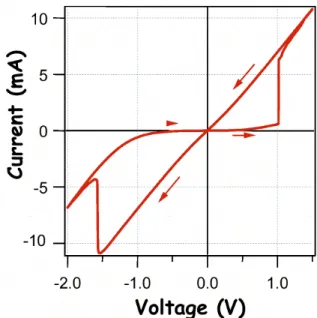
Figure 2. Calculated current-voltage curve for a novel memory-switchable resistor with 5µµµµ×××× 5µµµµ junctions. (Stan Williams, Hewlett-Packard)
devices based on molecular electronics, even when they can be built, unless they are thor-oughly understood (Figure 2) and manufac-turing processes are made predictable and controllable. The electronics industry must
have new simulations and models for nano-technology that are at least as powerful and predictive as the ones in use today for con-ventional integrated circuits before it can chance marketing molecular electronics de-vices for a myriad of applications. It can be argued that biological applications of nano-technology will require the same level of quantitative understanding before they are widely applied.
The fundamental theory and modeling on which industry will build those tools does not exist. While it is the province of industry to provide its own design tools, it is the role of basic science to provide the fundamental underpinnings on which they are based. Those fundamental tools for quantitative understanding are also necessary to the pro-gress of the science itself.
D.
Key Barriers to Progress in Theory and Modeling in
Nanoscience
Much of the current mode of theoretical study in nanoscience follows the traditional separation of the practice of experiment from the practice of theory and simulation, both separate from the underpinning applied mathematics and computer science. This is not a new observation, nor does it apply only to theory, modeling, and simulation in nanoscience. Nonetheless, it is a particularly problematic issue for this field.
By its very nature, nanoscience involves multiple length and time scales as well as the combination of types of materials and molecules that have been traditionally stud-ied in separate subdisciplines. For theory, modeling, and simulation, this means that fundamental methods that were developed in separate contexts will have to be combined and new ones invented. This is the key rea-son why an alliance of investigators in nano-science with those in applied mathematics and computer science will be necessary to the success of theory, modeling, and simu-lation in nanoscience. A new investment in theory, modeling and simulation in nano-science should facilitate the formation of such alliances and teams of theorists, com-putational scientists, applied mathemati-cians, and computer scientists.
A second impediment to progress in theory, modeling, and simulation in
nano-science arises because theoretical efforts in separate disciplines are converging on this intrinsically multidisciplinary field. The specific barrier is the difficulty, given the present funding mechanisms and policies, of undertaking risk but potentially high-payoff research, especially if it involves ex-pensive human or computational resources. At this early stage in the evolution of the field, it is frequently not at all clear what techniques from the disparate subdisciplines of condensed matter physics, surface sci-ence, materials science and engineering, theoretical chemistry, chemical engineering, and computational biology will be success-ful in the new context being created every week by novel experiments. The traditional degree of separation of the practice of ex-periment from the practice of theory further intensifies the challenge.
For these reasons, opportunities will be missed if new funding programs in theory, modeling, and simulation in nanoscience do not aggressively encourage highly specula-tive and risky research. At least one experi-mentalist at this workshop complained that high-risk and speculative theoretical and computational efforts are too rare in this field, and that sentiment was echoed by a number of theorists.
E.
Consensus Observations
A broad consensus emerged at the workshop on several key observations.• The role of theory, modeling, and simu-lation in nanoscience is central to the success of the National Nanotechnology Initiative.
• The time is right to increase federal in-vestment in theory, modeling, and simulation in nanoscience to accelerate scientific and technological discovery. • While there are many successful theo-retical and computational efforts yield-ing new results today in nanoscience, there remain many fundamental
intel-lectual and computational challenges that must be addressed to achieve the full potential of theory, modeling, and simulation.
• New efforts in applied mathematics, particularly in collaboration with theo-rists in nanoscience, are likely to play a key role in meeting those fundamental challenges as well as in developing computational algorithms that will be-come mainstays of computational nano-science in the future.
F.
Opportunity for an Expanded Role for the Department of Energy
The time is ripe for an initiative in theoryand modeling of nanoscale phenomena not only because of the magnitude of the poten-tial payoff, but also because the odds of achieving breakthroughs are rapidly im-proving.
Computational simulation is riding a hardware and software wave that has led to revolutionary advances in many fields repre-sented by both continuous and discrete mod-els. The ASCI and SciDAC initiatives of the DOE have fostered capabilities that make simulations with millions of degrees of free-dom on thousands of processors for tens of days possible. National security decisions and other matters of policy affecting the en-vironment and federal investment in unique facilities, such as lasers, accelerators, toka-maks, etc. are increasingly being reliably informed by simulation, as are corporate de-cisions of similar magnitude, such as where to drill for petroleum, what to look for in new pharmaceuticals, and how to design billion-dollar manufacturing lines.
Universi-ties have begun training a new generation of computational scientists who understand scientific issues that bridge disciplines from physical principles to computer architecture. Advances in extensibility and portability make major investments in reusable soft-ware attractive. Attention to validation and verification has repaired credibility gaps for simulation in many areas.
Nanotechnologists reaching toward simulation to provide missing understanding will find simulation technology meeting new challenges with substantial power. However, theorists and modelers working on the inter-face of nanotechnology and simulation tech-nology are required to make the connec-tions.
The workshop focused considerable at-tention on the role of applied mathematics in nanoscience. In his presentation, one of the scientists working on molecular dynamics studies of objects and phenomena at the nanoscale expressed the sentiment of the
workshop effectively by saying that the role of applied mathematics should be to “make tractable the problems that are currently im-possible.” As mathematics is the language in which models are phrased, developments in applied mathematics are central to the suc-cess of an initiative in theory and modeling for nanoscience. A key challenge in nano-science is the range of length and time scales that need to be bridged. It seems likely that fundamentally new mathematics will be needed to meet this challenge.
The diverse phenomena within nano-science will lead to a plethora of models with widely varying characteristics. For this reason, it is difficult to anticipate all the ar-eas of mathematics which are likely to con-tribute, and serendipity will undoubtedly play a role. As models and their supporting mathematics mature, new algorithms will be needed to allow for efficient utilization and application of the models. These issues and some significant areas of activity are
dis-cussed in Section 3 of this report. But this discussion is not (and cannot be) fully com-prehensive due to the breadth of nanoscience and the unknowable paths that modeling will follow.
The Department of Energy is uniquely situated to build a successful program in theory, modeling, and simulation in nano-science. Much of the experimental work in nanoscience is already supported by the De-partment, and new facilities are being built. The Department also has an internationally regarded program in applied mathematics, and much of the foundational work on mathematical modeling and computation has emerged from DOE activities. Finally, the Department has unique resources and expe-rience in high performance computing and algorithms. The conjunction these areas of expertise make the Department of Energy a natural home for nanoscience theory and modeling.
G.
Need for Computational Resources and Readiness to Use Them
The collection of algorithms andcomputa-tional approaches developed over the last 15 years that form the basis of the revolution in modeling and simulation in areas relevant to nanoscience have made this community tense users of computing at all levels, in-cluding the teraflop/s level. This field has produced several Gordon Bell Prize winners for “fastest application code,” most recently in the area of magnetic properties of materi-als. That work, by a team led by Malcolm Stocks at Oak Ridge National Laboratory, is only one example of computing at the tera-scale in nanoscience.
The workshop did not focus much dis-cussion specifically on the need for compu-tational resources, since that need is ubiqui-tous and ongoing. The presentations showed computationally intensive research using the
full range of resources, from massively par-allel supercomputers to workstation and cluster computing. The sentiment that not enough resources are available to the com-munity, at all levels of computing power, was nearly universally acknowledged. This community is ready for terascale computing, and it needs considerably more resources for workstation and cluster computing.
A significant amount of discussion in the breakout sessions focused on scalable algo-rithms, meaning algorithms that scale well with particle number or dimension as well as with increasing size of parallel computing hardware. The simulation and modeling community in nanoscience is one of the most computationally sophisticated in all of the natural sciences. That fact was demon-strated in the talks and breakout sessions of
the workshop, and is displayed particularly in the sections of this report devoted to fast
algorithms and well characterized nano building blocks.
H.
Summary of Specific Challenges and Opportunities
The sections that follow identify a largenumber of challenges in theory, modeling, and simulation in nanoscience together with opportunities for overcoming those chal-lenges. Because an assembly of 50 scientists and applied mathematicians is too small a number to represent all the active areas of nanoscience and related mathematics, the list compiled at the workshop is necessarily incomplete. However, a summary of even the partial catalog accumulated during the workshop and described briefly in the fol-lowing sections should make a compelling case for investment in theory, modeling, and simulation in nanoscience. The challenges and opportunities include:
• To determine the essential science of transport mechanisms, including electron transport (fundamental to the functional-ity of molecular electronics, nanotubes, and nanowires), spin transport (funda-mental to the functionality of spintron-ics-based devices), and molecule trans-port (fundamental to the functionality of chemical and biological sensors, mo-lecular separations/membranes, and nanofluidics).
• To simulate with reasonable accuracy the optical properties of nanoscale structures and to model nanoscale opto-electronic devices, recognizing that in confined dimensions, optical properties of matter are often dramatically altered from properties in bulk.
• To devise theoretical and simulation ap-proaches to study nano-interfaces, which are necessarily highly complex and het-erogeneous in shape and substance, and
are often composed of dissimilar classes of materials.
• To simulate complex nanostructures in-volving many molecular and atomic spe-cies as well as the combination of “soft” biological and/or organic structures and “hard” inorganic ones.
• To devise theoretical and simulation ap-proaches to nano-interfaces between hard and soft matter that will play cen-tral roles in biomolecular materials and their applications.
• To address the central challenge of bridging a wide range of length and time scales so that phenomena captured in atomistic simulations can be modeled at the nanoscale and beyond.
• To simulate self-assembly, the key to large-scale production of novel struc-tures, which typically involves many temporal and spatial scales and many more species than the final product. • To devise theoretical and simulation
ap-proaches to quantum coherence and de-coherence, including tunneling phenom-ena, all of which are central issues for using nanotechnology to implement quantum computing.
• To devise theoretical and simulation ap-proaches to spintronics, capable of accu-rately describing the key phenomena in semiconductor-based “spin valves” and “spin qubits.”
• To develop self-validating and bench-marking methodologies for modeling and simulation, in which a coarser-grained description (whether it is
atomistic molecular dynamics or meso-scale modeling) is always validated against more detailed calculations, since appropriate validating experiments will often be difficult to perform.
For each entry in this list, and the many that can be added to it, there is an estab-lished state of the art together with an array of specific technical issues that must be faced by researchers. For all of the chal-lenges listed, there is also an array of fun-damental questions to be addressed by re-searchers in applied mathematics.
This report is a brief synthesis of the effort of approximately 50 experts in the nanosciences, mathematics, and computer science, drawn from universities, industry, and the national laboratories. Following the scientific presentations and a panel discus-sion on the roles of applied mathematics and computer science, the principal recommen-dations of the workshop were developed in
breakout sessions. Three of them focused on nanoscience directly:
• Well Characterized Nano Building Blocks
• Complex Nanostructures and Interfaces • Dynamics, Assembly, and Growth of
Nanostructures
Three others focused on the role of ap-plied mathematics and computer science: • Crossing Time and Length Scales • Fast Algorithms
• Optimization and Predictability There were, of course, other possible ways to organize the discussions, but the outcome would likely have been the same no matter what the organization of the top-ics. Nevertheless, the structure of this report reflects this particular selection of categories for the breakout sessions.
Giant Magnetoresistance in Magnetic Storage
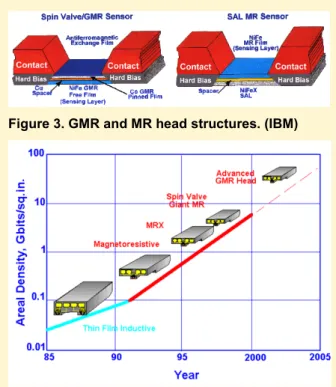
The giant magnetoresistance (GMR) effect was discovered in 1988 and within a decade was in wide commercial use in computer hard disks (Figure 3) and magnetic sensors. The technol-ogy significantly boosted the amount of informa-tion that could be recorded on a magnetic sur-face (Figure 4). The unprecedented speed of application (less than 10 years from discovery to deployment) resulted largely from advances in theory and modeling that explained the micro-scopic quantum-mechanical processes respon-sible for the GMR effect.
Figure 3. GMR and MR head structures. (IBM)
Figure 4. Magnetic head evolution. (IBM)
The effect is observed in a pair of ferromag-netic layers separated by a (generally) nonmag-netic spacer. It occurs when the magnonmag-netic mo-ment in one ferromagnetic layer is switched from being parallel to the magnetic moment of the other layer to being antiparallel (Figure 5). When a read head senses a magnetic “bit” on the stor-age medium, it switches the magnetic moment on one layer and measures the resistance, thus sensing the information on the disk.
Soon after the discovery of GMR, the phe-nomenon was seen to be related to the different “resistances” of electrons having different spins
ia Rantiparallel ip Rparallel i a Rantiparallel i a Rantiparallel ip Rparallel i p Rparallel
Figure 5. Schematic of GMR indicating change in resistance accompanying magnetization reversal upon sensing an opposing bit. (IBM)
(up or down). In fact, the magnetic moment itself results from an imbalance in the total number of electrons of each spin type. Modern quantum-mechanical computational methods based on density functional theory (for which Walter Kohn was awarded the 1998 Nobel Prize) then pro-vided a detailed picture of the electronic struc-ture and electron (spin) transport in these sys-tems. Indeed, some unexpected effects, such as spin-dependent channeling, were first predicted on the basis of first-principles calculations and were only later observed experimentally.
In fact, GMR is only one aspect of the rich physics associated with the magnetic multilayers now used in read heads. Equally important are oscillatory exchange coupling (which is used to engineer the size of the magnetic field required to switch the device) and exchange bias (which is used to offset the zero of the switching field in order to reduce noise). In exchange coupling, a detailed understanding of the mechanisms re-sponsible has been obtained on the basis of first-principles theory. Less is known about ex-change bias, but significant progress has been made on the basis of simplified models and with first-principles calculations of the magnetic struc-ture at the interface between a ferromagnet and an antiferromagnet.
Impressive as these advances in theory and modeling have been, their application to nano-magnetism has only just begun. New synthesis techniques have been discovered for magnetic nanowires, nanoparticles, and molecular mag-nets; magnetic semiconductors with high Curie temperatures have been fabricated; and spin-polarized currents have been found to drive magnetic-domain walls. When understood through theory and modeling, these findings also are likely to lead to technological advances and commercial applications.
II.
Theory, Modeling, and Simulation in Nanoscience
The challenges presented by nanoscience and nanotechnology are not simply re-stricted to the description of nanoscale sys-tems and objects themselves, but extend to their design, synthesis, interaction with the macroscopic world, and ultimately large-scale production. Production is particularly important if the technology is to become useful in society. Furthermore, the experi-ence of the participants in the workshop from the engineering community strongly suggests that a commercial enterprise will not commit to large-scale manufacture of a product unless it can understand the material to be manufactured and can control the pro-cess to make products within well-defined tolerance limits.
For macroscopic systems—such as the products made daily by the chemical, mate-rials, and pharmaceutical industries—that knowledge is often largely or exclusively empirical, founded on an experimental char-acterization over the ranges of state condi-tions encountered in a manufacturing proc-ess, since macroscopic systems are intrinsi-cally reproducible. Increasingly, however, this characterization is based on molecular modeling, including all of the tools relevant to modeling nanoscale systems, such as electronic structure, molecular simulation, and mesoscale modeling methods. Indeed, the report Technology Vision 2020: The U.S. Chemical Industry1 has identified molecular modeling as one of the key technologies that the chemical industry needs to revolutionize its ability to design and optimize chemicals and the processes to manufacture them.
Molecular modeling already plays a major role in the chemical, materials, and
1 American Chemical Society et al., 1996, http://
membership.acs.org/i/iec/docs/chemvision2020.pdf.
pharmaceutical industries in the design of new products, the design and optimization of manufacturing processes, and the trouble-shooting of existing processes. However, the exquisite dependence on details of molecu-lar composition and structures at the nano-scale means that attempting to understand nanoscale systems and control the processes to produce them based solely on experi-mental characterization is out of the ques-tion.
The field of nanoscience is quite broad and encompasses a wide range of yet-to-be-understood phenomena and structures. It is difficult to define nanoscience precisely, but a definition consistent with the National Nanotechnology Initiative is:
The study of structures, dynamics, and properties of systems in which one or more of the spatial dimen-sions is nanoscopic (1–100 nm), thus resulting in dynamics and properties that are distinctly differ-ent (often in extraordinary and un-expected ways that can be favora-bly exploited) from both small-molecule systems and systems mac-roscopic in all dimensions.
Rational fabrication and integration of nanoscale materials and devices offers the promise of revolutionizing science and tech-nology, provided that principles underlying their unique dynamics and properties can be discovered, understood, and fully exploited. However, functional nanoscale structures often involve quite dissimilar materials (for example, organic or biological in contact with inorganic), are frequently difficult to characterize experimentally, and must ulti-mately be assembled, controlled, and util-ized by manipulating quantities (e.g., tem-perature, pressure, stress) at the macroscale.
This combination of features puts un-precedented demands on theory, modeling, and simulation: for example, due to nano-scale dimensionality, quantum effects are often important, and the usual theories valid either for bulk systems or for small mole-cules break down. Qualitatively new theo-ries are needed for this state of matter inter-mediate between the atomic scale and a large-enough scale for collective behavior to take over, as well as methods for connecting the nanoscale with finer and coarser scales.
Within the context of this definition of nanoscience and the need for significant ad-vances in our understanding of the nano-scale, three breakout sessions on theory, modeling, and simulation in nanoscale sci-ence considered three broad classes of nano-systems:
• The first class consisted of nano building blocks (such as nanotubes, quantum dots, clusters, and nanoparticles), some of which can be synthesized quite repro-ducibly and well characterized experi-mentally.
• The second class consisted of complex nanostructures and nano-interfaces,2 reflecting the importance of nano-interfaces in a wide variety of nanoscale systems. This session was specifically asked to consider steady-state properties of complex nanostructures and nano-interfaces.
2 We can distinguish between interfaces in general
and nano-interfaces as follows: Typically, an inter-face separates two bulk phases; we define, consistent with the above definition, a nano-interface as one in which the extent of one or more of the phases being separated by the interfaces is nanoscopic. In nano-interfaces we include nano-interconnects, which join two or more structures at the nanoscale. For nano-interfaces, traditional surface science is generally not applicable.
• The focus of the third session was dy-namics, assembly, and growth of nano-structures, and so was concerned with the dynamical aspects of complex nano-structures. Hence, transport properties (such as electron and spin transport and molecular diffusion) of complex nano-structures, as well as the dynamic proc-esses leading to their creation, particu-larly self-assembly, were central to this session.
The reports presented below are summa-ries drafted by the session chairs. Given the ostensibly different charges presented to each group, there is remarkable unanimity in their conclusions with respect to the out-standing theory, modeling, and simulation needs and opportunities. Among the com-mon themes are:
• the need for fundamental theory of dy-namical electron structure and transport • algorithmic advances and conceptual
understanding leading to efficient elec-tronic structure calculations of large numbers of atoms
• new theoretical treatments to describe interfaces and assembly of nano-structures
• fundamentally sound methods for
bridging length and time scales and their integration into seamless modeling envi-ronments
• commitment to an infrastructure for community-based open-source codes. These common themes have been incor-porated into the recommendations and chal-lenges outlined in Section I of this report.
A.
Nano Building Blocks
Well characterized building blocks for nano-science need to be created and quantitatively understood for a number of crucial reasons. A key aspect of construction, whether at the macroscopic or microscopic scale, is the no-tion of a “building block.” Office buildings are often made from bricks and girders, molecular components from atoms. Just as knowledge of the atom allows us to make and manipulate molecular species, knowl-edge of bricks and mortar allows us to con-struct high-rise buildings.
Well-characterized nano building blocks will be the centerpiece of new functional nanomechanical, nanoelectronic, and nano-magnetic devices. A quantitative under-standing of the transport, dynamics, elec-tronic, magnetic, thermodynamic, and me-chanical properties is crucial to building at the nanoscale. As an example, current theo-retical approaches to nanoelectronics often cannot accurately predict I-V curves for the simplest molecular systems. Without a co-herent and accurate theoretical description of this most fundamental aspect of devices, progress in this area will necessarily be lim-ited.
Theoretical studies for these systems will necessarily have to be based on ap-proximate methods; the systems are simply too large and too complex to be handled purely by ab initio methods. Even if the problems are tractable, we will make much greater progress with well-validated ap-proximate models. Thus a variety of bench-marking methodologies and validation test-ing are needed to establish the accuracy and effectiveness of new models and approxi-mate theory.
At the nanoscale, what are the nano building blocks that would play an analo-gous role to macro building blocks? Several
units come to mind which range from clus-ters less than 1 nm in size to nanoparticles, such as aerosols and aerogels much larger than 100 nm. However, we believe the best-characterized and most appropriate building blocks are:
• clusters and molecular nanostructures • nanotubes and related systems
• quantum wells, wires, films and dots. These blocks are well defined by ex-periment and frequently tractable using contemporary theory. Moreover, they have been demonstrated to hold promise in exist-ing technology. We believe that buildexist-ing blocks would have an immediate impact in the five areas described below.
Transport in Nanostructures: Electronic Devices
Any electronic device needs to control and manipulate current. At the nanoscale, new phenomena come into play. Classical de-scriptions become inoperable compared to quantum phenomena such as tunneling, fluctuations, confined dimensionality, and the discreteness of the electric charge. At these dimensions, the system will be domi-nated entirely by surfaces. This presents further complications for electronic materi-als, which often undergo strong and com-plex reconstructions. Defining accurate structure at the interface will be difficult. However, without an accurate surface structure, it will be even more difficult to compute any transport properties. Moreover, current-induced changes within the structure may occur. This situation will require the complexity, but not intractable approach, of a careful self-consistent solution in a non-equilibrium environment.
Optical Properties on the Nanoscale: Optoelectronic Devices
At confined dimensions, optical properties of matter are often dramatically altered. For example, silicon is the dominant electronic material, but it has poor optical properties for optoelectronic devices such as solar cells or lasers. However, at small dimensions the properties of silicon can be dramatically al-tered; the band gap in silicon can be blue-shifted from the infrared to the optical re-gion. One of the first manifestations of this effect occurs in porous silicon, which ex-hibits remarkable room temperature lumi-nescence. To properly capitalize on such phenomena, a deeper quantitative under-standing of the optical properties of matter will be required.
Optical excitations are especially chal-lenging because most commonly used meth-ods for structural energies, such as density functional theory, are not well suited for ex-cited state properties. The problem is exac-erbated for nanoscale systems, where the many-body effects are enhanced by the physical confinement of the excitation. Coherence/Decoherence Tunneling: Quantum Computing
While silicon dominates electronic devices, there is a fundamental limit to this technol-ogy. As the size of a transistor is reduced each year, eventually one will approach the new size regimes where traditional elec-tronics must be viewed in different terms. The approach to this regime will happen in the not too distant future. Current litho-graphic techniques can create semiconductor chips with characteristic lengths of only a few hundred nanometers; quantum effects are likely to dominate at tens of nanometers. At this latter length scale, transistor technol-ogy will be solidly in the regime of quantum phenomena.
Components will eventually function solely through quantum effects, for which we will need the capability to accurately simulate or predict in order to control. It has been suggested that new computers can be devised at nanoscales that will function by using the creation of coherent quantum states. By creating and maintaining such co-herent states, it should be possible to store enormous amounts of information with un-precedented security. In order to construct such new quantum computers, new fabrica-tion methods will need to be found and guided by theory. Current technology is far removed from the routine generation of quantum logic gates and quantum networks. Without a better quantitative description of the science at the nanoscale, the emergence of quantum computing will not happen. Soft/Hard Matter Interfaces: Biosensors Nanotechnology has the potential to make great advances in medical technology and biosecurity. The technologies for controlling and processing materials for semiconductor devices can be used to make types of nano-interfaces. Nanostructure synthesis and joining of biological or soft matter with tra-ditional semiconductors like silicon would offer new pathways to the construction of novel devices. For example, one could gain the ability to develop new types of sensors directly integrated into current device tech-nology. A number of clear applications such as biosensors for national security, drug de-livery and monitoring, and disease detection are plausible.
However, numerous complex and diffi-cult issues must be addressed. These include quantitative descriptions of nanofluids, re-action kinetics, and a selectivity to particular biological agents. Perhaps no systems are as complex at the nanoscale as these, because they require the understanding of the details of interactions between quite diverse sys-tems, i.e., soft, biological materials
inter-faced with semiconductors or other in organic solids.
Spintronics: Information Technology Spintronics centers on controlling the spin of electrons in addition to controlling other transport properties. For example, dilute magnetic semiconductors have attracted considerable attention, because they hold the promise of using electron spin, in addition to charge, for creating a new class of spintronic semiconductor devices with unprecedented functionality. Suggested applications include spin field effect transistors, which could al-low for software reprogramming of the mi-croprocessor hardware during run time; semiconductor-based spin valves, which would result in high-density, non-volatile semiconductor memory chips; and even spin qubits, to be used as the basic building block for quantum computing.
At the nanoscale, spintronic devices of-fer special challenges owing to the enhanced exchange terms arising from quantum con-finement. Few quantitative studies exist on magnetic properties of quantum dots and the evolution of ferromagnetic properties with size.
Implications for Theory and Modeling These five areas of research offer great promise but will require new theories (ap-proximate models) and computationally in-tensive studies. Current algorithms must be made more efficient and sometimes more accurate, or new algorithms must emerge in order to address the challenges highlighted above. For example, ab initio methods can address systems with hundreds of atoms, and empirical methods can handle tens of thousands of atoms. To fully exploit these approaches, algorithms need to be made scalable and take full advantage of current computer technology, i.e., highly parallel environments. Fully ab initio methods are
especially useful in providing benchmarks for these building blocks, where experi-mental data is lacking or is unreliable due to unknown variability or uncontrolled critical function characteristics. Embedding meth-ods whereby one can take the best features of a particular approach will be crucial.
Algorithms for particular aspects of nanoscale systems need to be developed. For example, ab initio methods for optical prop-erties such as GW and Bethe-Salpeter meth-ods are known to be accurate and robust, yet these systems are limited in their applicabil-ity to rather small systems, e.g., to systems of less than 50 atoms. The essential physical features of these methods need to be adapted to address much larger systems.
Nonequilibrium and quantum dynamics present special problems. These systems of-ten lack clear prescriptions for obtaining re-liable results. Some recent attempts to match experiments on electron transport through molecular systems often get the correct transport trends, but not quantitative num-bers. A number of entanglements exist: Is the experimental data reliable owing to problems with contacts? Or is there some fundamental component missing from our understanding? New experiments will need to be designed to ensure reproducibility and the validity of the measurements. New theo-ries will need to be constructed and cross-checked by resorting to the fundamental building blocks.
A chronic and continuing challenge arising in most nanosystems concerns a lack of understanding of structural relationships. Often nanosystems have numerous degrees of freedom that are not conducive to simple structural minimizations. Simulated anneal-ing, genetic algorithms, and related tech-niques can be used for some systems, but in general it will require new optimization techniques in order to obtain a quantitative
description of the structure of nanoscale systems.
While great strides have been made in simulation methods, a number of funda-mental issues remain. The diversity of time and length scales remains a great challenge at the nanoscale. Rare event simulation methods will be essential in describing a number of phenomena such as crystal growth, surface morphologies, and diffu-sion. Of course, the transcription of quantum force fields to classical interatomic poten-tials is a difficult task. Intrinsic quantum
at-tributes like hybridization and charge trans-fer remain a challenge to incorporate into classical descriptions. At best, current clas-sical-like descriptions can be used for tar-geted applications.
In order to facilitate dissemination of new algorithms and numerical methods, open-source software should be encouraged and made widely available. Toolkits and ef-ficient codes should be offered without re-strictions for distribution to as wide an audi-ence as possible.
B.
Complex Nanostructures and Interfaces
Central to nanoscience is the assembly andmanipulation of fundamental building blocks on the nanoscale to create functional structures, materials, and devices (Figure 6). Unlike traditional materials, nanostructured materials that will enable the nanotechnol-ogy revolution will be highly complex and heterogeneous in shape and substance, com-posed of dissimilar materials, and dominated by nano-interfaces (Figure 7). These char-acteristics require that new theoretical ap-proaches and computational tools be devel-oped to provide a fundamental understand-ing of complexity at the nanoscale, the physics and chemistry of nano-interfaces, and how interfaces and complexity at the nanoscale control properties and behavior at larger scales.
Nano-interfaces and complexity at the nanoscale play a central role in nearly all aspects of nanoscience and nanotechnology. For example, in molecular electronic de-vices, DNA and other biomolecules such as proteins are being explored both as assem-blers of molecular components like carbon nanotubes and semiconductor quantum dots (Figure 8), and as active components them-selves (Figures 9 and 10). In such devices, soft biomolecular matter and hard matter
will come together at complex nano-interfaces across which transport of charge may occur, or which may provide structural stability. In new spintronic devices, the nano-interfaces between ferromagnetic and antiferromagnetic domains may control the speed of switching needed for faster com-puters. In polymer nanocomposites, where nanoscopic particles are added to a polymer, interactions at the polymer/particle nano-interface can have profound effects on bulk properties, leading to stronger yet lighter-weight structural and other materials. The manipulation of interfaces in soft matter systems at the nanoscale provides a wealth of opportunities to design functional, nano-structured materials for templating, scaffolds for catalysis or tissue growth, photonic de-vices, and structural materials (Figure 11). The high surface-to-volume ratio result-ing from the prevalence of nano-interfaces, combined with the complexity of these nano-interfaces and of nanostructures, pro-vides much of the challenge in developing predictive theories in nanoscience. In this respect, materials designed at the nanoscale are distinctly different from traditional bulk materials. One of the largest driving forces behind the need for new theory and
simula-Figure 6. Three-dimensional view of Charles Lieber's concept for a suspended crossbar array shows four nanotube junctions (device elements), with two of them in the “on” (contacting) state and two in the “off” (separated) state. The bottom nano-tubes lie on a thin dielectric layer (for example, SiO2) on top of a conducting layer (for example, highly doped silicon). The top nanotubes are sus-pended on inorganic or organic supports (gray blocks). Each nanotube is contacted by a metal elec-trode (yellow blocks). (IBM)
Figure 7. Schematic of an assembled structure of nanoscopic building blocks tethered by organic “linkers.” The structure is dominated by interfacial connections. (S. C. Glotzer, 2002)
Figure 8. Top: Schematic of nanoscale building blocks tethered by DNA. The “soft/hard” interface in this complex nanostructure controls the transport of information through the structure. Bottom: Schematic of nanoscopic gold nanoparticles bled onto a surface with DNA. Such guided assem-bly can be used, e.g., to position the nanoparticles for fabrication into a nanowire.
Figure 9. Atomistic simulation of a nanostructure composed of polyhedral oligomeric silsesquioxane cages. (J. Kieffer, 2002)
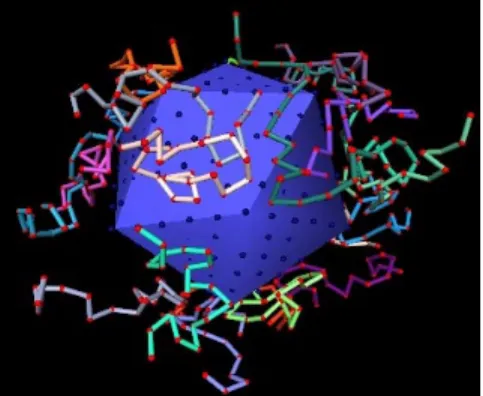
Figure 10. Simulation of organic oligomers attracted to the surface of a nanoscopic quantum dot. (F. W. Starr and S. C. Glotzer, 2001)
Figure 11. Simulation of nanostructured domains in a polymer blend where the interfaces are controlled at the nanoscale. (S. C. Glotzer, 1995)
tion in nanoscience is the fact that there are few experimental techniques capable of di-rectly imaging or probing nano-interfaces. Typically, those techniques having atomic-scale resolution require extensive theory to produce more than qualitative information. Indeed, it is likely that the fundamental in-terfacial and spatial information required to predict the behavior and performance of nanostructures will come from simulation and theory in many cases.
Focused theory and simulation at a wide range of scales is needed to develop a quan-titative understanding of nano-interfaces and their consequent influence on properties and emergent behavior of nanoscale materials and devices. Breakthroughs in theory and simulation will also be necessary in order to describe and predict the complexity of na-nostructures and the relationship between structural complexity and emergent proper-ties and behavior.
A major challenge for nanoscience in which theory, modeling, and simulation will play a pivotal role lies in the definition of the nano-interface, which is nontrivial be-cause the definition may depend upon the properties or behavior of interest. For exam-ple, the relevant nano-interface leading to a particular mechanical behavior may be dif-ferent than that for transport properties, such as electrical transport. Strategies for ad-dressing nano-interfaces will also be needed. With an appropriate definition of nano-interfaces, new approaches can be developed that characterize relevant nano-interfaces in order to construct quantitatively predictive theories that relate the nano-interfaces to interesting nanoscale properties and behav-ior.
To develop theories and quantitative un-derstanding of nano-interfaces, it will be necessary to obtain information on the or-ganization of matter at nano-interfaces, that is, the arrangement, composition,
conforma-tion, and orientation of matter at hard-hard, hard-soft, and soft-soft nano-interfaces. Much of this information may only be ac-cessible by simulation, at least for the fore-seeable future. The geometry and topology of interfaces, bonding at
nano-interfaces, structure and dynamics at or near a interface, transport across nano-interfaces, confinement at nano-nano-interfaces, deformation of nano-interfaces, activity and reactivity at nano-interfaces, etc. must all be investigated by simulation. Such informa-tion is needed before very accurate theories relating all of these to material and device operations and behavior will be fully for-mulated and validated.
For example, to properly design, opti-mize and fabricate molecular electronic de-vices and components, we must quantita-tively understand transport across soft/hard contacts, which in turn will likely depend on the arrangement of components on the sur-face and the complexity of structures that can be assembled in one, two, and three di-mensions. Comprehending transport will likely require a quantitative understanding of the nature of nano-interfaces between biological matter and hard matter, between synthetic organic matter and hard matter, and between biological matter and synthetic organic matter. It will also require optimiza-tion of structures and tailoring of nano-interfaces, which in turn will require a quantitative understanding of the stability of nano-interfaces.
As we move towards the goal of first-principles-based fully theoretical prediction of the properties of nanoscale systems, there is an urgent need to critically examine the application of bulk thermodynamic and sta-tistical mechanical theories to nanostructures and nano-interfaces, where violations of the second law of thermodynamics have been predicted and observed, and where mechani-cal behavior is not described by continuum theories.
Theories are required that abstract from behavior at a specific nano-interface to pre-dict the behavior of extended structures or material that is comprised of primarily nano-interfaces. Additionally, when describing nanostructures that are collections of a countable number of fundamental building blocks, one must question whether the con-cept of temperature has the same meaning as in a bulk system. An important task for theo-reticians and simulationists will be to iden-tify what can be brought to nanoscience from traditional methods of investigation and description, and then determine what new theories or approaches must be invoked at the nanoscale.
When materials or devices are domi-nated by nano-interfaces, new physics is likely to result. Examples of nano-interface-dominated physics include the electric field at surfaces, luminescence of rare-earth orthosilicates, surface-enhanced Raman scattering, and deformation of nanocrystal-line materials. Nanocomposites and assemblies are just two examples of nano-structures where nano-interfaces are preva-lent and may dominate behavior at larger scales. The high surface-to-volume ratio of complex nanostructures may also lead to novel collective or emergent phenomena, which would require new theory and simu-lation efforts to address and understand.
Because of the present lack of theories to fully describe nano-interfaces at the nanoscale and the ramifications of nano-interfaces on larger scales, and the lack of experimental data on nano-interfaces, simu-lations will play a pivotal role in advancing knowledge in this area. Ab initio calcula-tions in particular will be required, but the
present state of the art limits the number of atoms to numbers too small to obtain meaningful data in many instances. Conse-quently, breakthroughs in methodologies will be required to push ab initio simulations to larger scales. Ab initio simulations con-taining of the order of 10,000 atoms would enable, for example, the study of spin structure at antiferromagnetic-ferromagnetic nano-interfaces.
New or improved computational meth-ods are needed to simulate also the dynam-ics of nano-interfaces from first principles. Such simulations will be needed to predict, for example, electronic transport across nano-interfaces, as well as to provide vali-dation or benchmarks for coarser-grained theoretical descriptions of nano-interfaces in which electronic structure is not explicitly considered. For molecular dynamics ods and other classical, particle-based meth-ods, new (for many purposes reactive) force fields capable of describing nano-interfaces between dissimilar materials are urgently needed. For some problems, further coarse-graining will be required to capture com-plexity on all relevant length and time scales, and thus new mesoscale theories and computational methods will be needed. To connect the properties and behavior of com-plex nanostructures and/or nano-interfaces to properties and behavior at the macroscale, it may be necessary to develop new consti-tutive laws (and ask if it is even appropriate to talk about constitutive laws in systems where properties and behavior are domi-nated by nano-interfaces) and then develop and integrate theories at different levels.
C.
Dynamics, Assembly, and Growth of Nanostructures
The focus of this section is thetime-dependent properties of nanostructures (such as transport properties) and the
time-dependent processes used to produce nano-structures and nanostructured materials (such as directed self assembly, nucleation and growth, and vapor deposition methods).
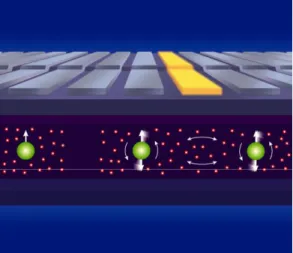
The primary route to manufacturable functional nanoscale systems is universally conceded to be self-assembly, which may be directed or not. Self-assembly of nano-structured materials is scalable to industrial levels of production because it does not re-quire control at the nanoscale (such as, for example, manipulation via AFM tip). There is a wide variety of transport mechanisms relevant to nanoscience, including electron transport (relevant to molecular electronics, nanotubes, and nanowires), spin transport (relevant to spintronics-based devices, see Figure 12), and molecule transport (relevant to chemical and biological sensors, molecu-lar separations/membranes, and nanoflu-idics).
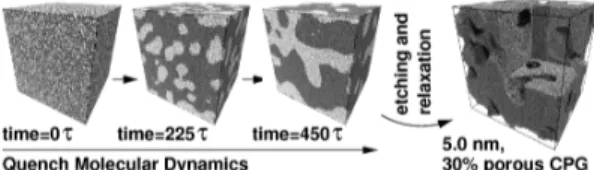
Examples of nanostructures and nano-structured systems formed by (or capable of formation by) self-assembly include quan-tum dot arrays, nano- and microelectrome-chanical systems (NEMS and MEMS), nanoporous adsorbents and catalytic materi-als (produced by templated self-assembly, see Figure 13), nanocrystals, and biomimetic materials. This list is by no means exhaus-tive.
The role that mathematics and computer science researchers can play is to apply mathematical and computational tools de-veloped in other contexts to the understand-ing, control, design, and optimization of nanostructured materials and functional systems based on nanoscale structures. Each of these elements—understanding, control,
Figure 13. Templated self assembly of nano-porous material—in this case, MCM-41. (From X. S. Zhao, “Synthesis, modification, characteri-zation and application of MCM-41 for VOC Control,” Ph.D. thesis, University of Queensland, 1998)
Figure 12. Spintronics devices utilize an elec-tron’s spin rather than its charge. Shown here is an artist’s depiction of a proposal by Bruce Kane of the University of Maryland for a quantum computer based on the nuclear spin of phosphorus atoms (green), which interact by means of spin-polarized electrons (red). The quantum properties of superposition and en-tanglement may someday permit quantum computers to perform certain types of compu-tations much more quickly using less power than is possible with conventional charge-based devices. (From S. Das Sarma, “Spin-tronics,” American Scientist 89, 516 (2001))
design, and optimization—is essential to the manufacturability of systems composed of nanoscale objects, as noted by Stan Wil-liams of Hewlett-Packard in the opening talk of the workshop.
Among the major challenges facing theory, modeling, and simulation (TMS) in the dynamics, assembly, and growth of nanostructures is simulation of self-assembly (which typically involves many temporal and spatial scales, and many more species than the final product), methods for calculating electron and spin transport prop-erties in nanoscale systems, and the proc-essing and control (particularly to achieve more uniform size distribution) of self-assembly of heterostructures composed of hard materials (such as group IV semicon-ductors, obtained by combined ion and mo-lecular beam epitaxial growth).
The TMS methods needed to faithfully model the dynamics, assembly, and growth of nanostructures consist of the usual meth-ods we associate with TMS (electronic structure methods, atomistic simulation, mesoscale and macroscale methods) but with additional variations specific to these problems. These variations include: • Hybrid electronic structure/molecular
dynamics methods scalable to very large systems are needed to model combined reaction and structure evolution.
• Coarse graining/time spanning methods are crucial, owing to the large times as-sociated with self-assembly and the large microscopic and mesoscopic domains that exist in many systems.
• Since many self-assembly processes take place in solution, electronic structure methods incorporating solvation are nec-essary.
• Molecular and nanoscale methods that incorporate phase equilibria and
non-equilibrium multiphase systems (in-cluding interfaces) are required. Participants also saw the necessity of traditional finite element elastic/plastic codes for stress/strain description at the macroscale, since ultimately nanostructured materials must connect with the macro-scopic world. It was noted that upscaling (going to coarser length and time scales) typically results in the introduction of sto-chastic terms to reflect high-frequency mo-tion at smaller scales; thus, more rigorous methods for including stochasm and more effective methods for characterizing and solving stochastic differential equations are required.
New developments in nonequilibrium statistical mechanics, both of classical and quantum systems, are needed. For example, the recent discovery by nonequilibrium mo-lecular dynamics, confirmed by nonlinear response theory, of violations of the second law of thermodynamics for nanoscale sys-tems indicates the importance of new theo-retical developments focused on nanoscale systems. Quantifying errors in calculated properties was identified as a significant problem that consists of two parts—charac-terization of uncertainty due to inaccuracies inherent in the calculation (such as limita-tions of a force field in molecular dynamics or of a basis set in electronic structure cal-culations) and performing useful sensitivity analyses.
The important aspect of nanoscale sys-tems that makes them such a TMS challenge is that the characterization of uncertainty will often have to be done in the absence of experimental data, since many of the prop-erty measurement experiments one would like to perform on nanoscale systems are impossible in many cases or unlikely to be done in cases where they are possible. Hence, the concept of self-validating TMS methods arises as a significant challenge in