Original Research Article
Study of demographic profile of animal bite cases and management
practices in a dedicated anti rabies clinic of a tertiary care hospital,
Hassan, Karnataka
Praveen Gowda, Subhashini K. J.
*
, Siddharam S. Metri, M. Sundar
INTRODUCTION
Animal bites cause a big burden in terms of morbidity and mortality throughout the world. As per the World Health Organization (WHO), the dog bites are the cause for tens of millions of injuries annually, followed by snake bites (5 million), cat bites (2-50%) and monkey bites (2-21%) of animal bite injuries globally.1 These bites could be caused by rabid animals.2 In India, 17.4 million animal bite occurs every year. Every 2 seconds, a
person is bitten and the annual incidence of animal bites in India is 1.7% (or 17 per 1000 persons).3
Rabies is an endemic, highly fatal disease in India which is transmitted to humans through exposure to saliva from infected animals (from bites, scratches, or licks on broken skin and mucous membranes).4,5The estimated incidence of rabies in India is 2.74 cases per 100 000 people annually.6 In India, every 30 minutes, someone dies from rabies.3 Rabies is the 10th biggest cause of death due to infectious disease worldwide. Annually about 59000 ABSTRACT
Background: Animal bites cause a big burden in terms of morbidity and mortality throughout the world. These bites
could be caused by rabid animals causing rabies. Annually about 59,000 persons die of rabies, of which 20,000 is from India alone. Rabies though 100% fatal is preventable with post-exposure prophylaxis which includes wound wash, anti-rabies vaccination (ARV) and rabies immunoglobulin. The objectives of the present study was to describe the demographic profile of animal bite cases and to assess the management practices of animal bite cases reporting to dedicated anti-rabies clinic (ARC) of a tertiary care hospital, Hassan, Karnataka.
Methods: A cross-sectional study was conducted from the inception of anti-rabies clinic (12th October 2017) to August 2018 among animal bite cases reported to ARC. They were interviewed by using a semi-structured, pre-designed and pre-tested proforma. Data regarding socio-demographic profile were collected from the animal bite victims. All the animal bite cases were managed as per WHO guidelines.
Results: The total number of animal bite victims reported to ARC during the study period was 3500.Majority of the
bite victims belonged to adult population (20-60 years). Majority were males (66.2%). 77% belonged to the rural population. Dogs (97.1%) were the most common biting animal. 79% of the bites were provoked. Turmeric powder was the most commonly used irritant. Most bites belonged to Category III (84%). Category I, II, III bites were managed appropriately according to WHO guidelines.
Conclusions: Knowing the burden, socio-demographic characteristics and the management of animal bite victims in
the dedicated ARC of HIMS has helped the programme officer in implementing the National Rabies Control Programme in Hassan district.
Keywords: Rabies, Anti-rabies clinic, Fatal disease, Demographics, Rabies control programme
Department ofCommunity Medicine, Hassan Institute of Medical Sciences, Karnataka, India
Received: 27 August 2019
Accepted: 05 October 2019
*Correspondence:
Dr. Subhashini K. J.,
E-mail: [email protected]
Copyright: © the author(s), publisher and licensee Medip Academy. This is an open-access article distributed under
the terms of the Creative Commons Attribution Non-Commercial License, which permits unrestricted non-commercial use, distribution, and reproduction in any medium, provided the original work is properly cited.
persons die of rabies, of which 20,000, that is nearly one-third are from India alone. About 99% (97% in India) of these deaths are following bites/exposures to dogs, i.e., dog-mediated human rabies.2 In Asia, an estimated 35,172 human deaths (59.6% of global deaths) and loss of approximately 2.2 million DALYs occur per year in Asia due to dog-mediated rabies.7 Animal bite adds not only to the mortality due to a disease like rabies, but also to the resources, in terms of man, money, time towards wound care and vaccination.8 The cost of post exposure prophylaxis (PEP) is highest in Asia, with estimates up to US$ 1.5 billion per year.7
Though rabies being a 100% fatal disease, it is also 100% preventable by following proper and PEP.8 PEP is considered of monumental importance in prevention of rabies.9 PEP consists of thorough wound washing with soap and water, anti-rabies vaccination (ARV) and timely administration of rabies immunoglobulin (RIG) for category III bites.10 In India, Updated Thai Red Cross regimen of Intradermal vaccination (2-2-2-0-2) is adopted.11
Sporadic studies have been conducted in various parts of India but profile of animal bites vary from country to country and also from region to region within the country.12 But epidemiological profile and demographic characteristics of those bite victims in respective regions are not clearly defined and there is a need to describe the socio-demographic profile and to assess the management practices for effective implementation of National Rabies Control Programme. District Health and Family Welfare, Hassan is also trying to implement National Rabies Control Programme (NRCP) in Hassan district. So taking up this study to understand the epidemiological profile of animal bite cases helps the policy makers in better implementation of the programme in Hassan district. Also the logistics required for management of animal bites can be approximated by undertaking this study.
Objectives
The objectives of the present study was to describe the demographic profile of animal bite cases and to assess the management practices of animal bite cases reporting to dedicated anti-rabies clinic of a tertiary care hospital, Hassan, Karnataka.
METHODS
The dedicated anti-rabies clinic (ARC) was started under the Department of Community Medicine, Government Medical College, Hassan on 12th October 2017. Management of animal bites except snake bites are exclusively provided in dedicated ARC. ARV and RIG for prevention of rabies are being provided completely free of cost to all victims irrespective of their socio-economic status. On an average, 15-20 animal bite cases are being reported daily for treatment. Postgraduates and interns are posted to ARC on a regular basis. The cases
are educated by the treating physician routinely on the importance of completing the full course of ARV to prevent rabies as it is 100% fatal yet preventable.
Information, education and communication materials are displayed in the ARC and cases are educated with those materials by the treating physician.
A cross-sectional study was conducted from 12th October 2017 to 31st August 2018 including all the animal bite cases reporting to ARC. Patients visited the dedicated ARC of the district hospital not only from the Hassan taluk but also from all the other seven taluks of Hassan for treatment of animal bites because of the non-availability of rabies biologicals in their area. Hence, all the patients who attended the dedicated ARC were included in the study.
Inclusion criteria
All the animal bite victims irrespective of age were included.
Exclusion criteria
Rat bite, rabbit bite, rodent bite, snake bite and human bite cases; cases who came for pre-exposure prophylaxis and re-exposure prophylaxis; those who were critically injured and not able to respond.
Ethical clearance was obtained from institutional ethical committee. Informed verbal consent was sought from the study participants and assent from those below 18 years of age. The animal bite victims fulfilling the inclusion and exclusion criteria who attended the anti-rabies clinic during the study period were found to be 3500. They were interviewed by using a semi structured, pre-designed, pre-tested, semi-open ended proforma that included data regarding socio-demographic profile and compliance to PEP was noted through interview. The patients’ or relatives’ or guardians’ phone number was also recorded for all patients who attended the ARC. The patients were categorized according to WHO Categorization of contact with suspected animal bites into Category I, II, III. All animal bite victims belonging to category II and III who require PEP were given ARV and all category III victims were provided rabies immunoglobulin.
Statistical analysis
Data entered in Microsoft Excel 2016 and analyzed using SPSS version 20. Descriptive statistics was employed for data analysis and depicted as proportions and percentages. Results depicted as tables and graphs.
RESULTS
snake bite and human bite cases were excluded as they do not require ARV or RIG.
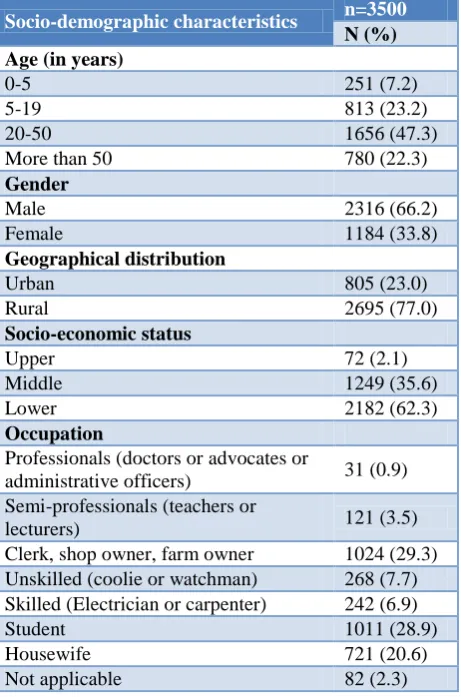
Table 1 shows that 47.3% of the animal bite victims belonged to the age group of 20-50 years. The proportion of animal bite cases less than 19 years old were 30.4%. Majority of the animal bite victims were males (66.2%) and females constituted 33.8%. Majority belonged to the rural population (77.0%). Most of them (62.3%) belonged to lower socio-economic status followed by middle (35.6%) and upper (2.1%) classes classified according to modified B.G. Prasad classification 2018.13
Table 1: Socio-demographic characteristics of the animal bite victims.
Socio-demographic characteristics n=3500
N (%) Age (in years)
0-5 251 (7.2)
5-19 813 (23.2)
20-50 1656 (47.3)
More than 50 780 (22.3)
Gender
Male 2316 (66.2)
Female 1184 (33.8)
Geographical distribution
Urban 805 (23.0)
Rural 2695 (77.0)
Socio-economic status
Upper 72 (2.1)
Middle 1249 (35.6)
Lower 2182 (62.3)
Occupation
Professionals (doctors or advocates or
administrative officers) 31 (0.9) Semi-professionals (teachers or
lecturers) 121 (3.5)
Clerk, shop owner, farm owner 1024 (29.3) Unskilled (coolie or watchman) 268 (7.7) Skilled (Electrician or carpenter) 242 (6.9)
Student 1011 (28.9)
Housewife 721 (20.6)
Not applicable 82 (2.3)
In our study, dog was the most common biting animal (97.1%) followed by cat (1.6%) and cattle (0.6%) bites. Bites by other animals like cheetah, monkey, pigs constituted 0.7%. Most of the bites (79%) were from the pets at home. Bite resulted from subject initiating interaction with the pet animal such as playing with the dog or annoying the dog during his meal was considered as provokedand more than half the bites (59.2%) were provoked. 71.9% of the bites occurred in the lower limbs.12
In our study, there was an increase in number of cases in summer months of March to May, with highest number
of cases recorded in May 2018 and also increase in cases were noted in the months of November-December. (Figure 1).
Table 2: Characteristics of animal bite exposure.
Biting animal n=3500
N (%)
Dog 3399 (97.1)
Cat 57 (1.6)
Cattle 21 (0.6)
others 23 (0.7)
Category of biting animal
Stray 734 (21.0)
Domestic 2766 (79.0)
Status of the animals
Provoked 2071 (59.2)
Unprovoked 1429 (40.8)
Site of Exposure
Upper limb 784 (22.4)
Lower limb 2517 (71.9)
Head and neck 56 (1.6)
Trunk 143 (4.1)
Figure 1: Month-wise distribution of animal bite cases during the study period (n=3500).
Figure 2: Distribution of study subjects based on categorization of animal bite (n=3500).
Figure 2 shows the distribution of animal bite victims categorized according to WHO classification of animal
319 483
398 241 250
442 393
519
139 125 191 0
100 200 300 400 500 600
N
o
.
o
f
a
n
im
a
l
b
it
e
v
ic
ti
m
s
Month
3
13
84
0 10 20 30 40 50 60 70 80 90
Category of Animal bite Exposure
Pe
rc
en
ta
g
e
Categry I
bite exposures. 105 (3.0%) belonged to category I, 455 (13.0%) belonged to Category II and 2940 (84.0%) belonged to Category III.
Table 3: Distribution of study subjects according to practices immediately following animal bites.
First-aid following animal bite or exposure
n=3500
N (%)
Wound wash not given 249 (7.1)
Wound wash with water and soap 3178 (90.8)
Wound wash with water 73 (2.1)
Use of irritants following exposure
Yes 681 (19.5)
No 2819 (80.5)
Type of irritants used n=681*
Turmeric 264 (38.7)
Slaked Lime 221 (32.5)
Plant juices 158 (23.2)
Chilli powder 38 (5.6)
*19.5% of subjects who have used irritants.
When study subjects were interviewed regarding the practices they do follow immediately following animal bites, almost 90.8% of the subjects had washed their wound with soap and water immediately and 19.5% of them had applied some form of irritant to the wound based on the cultural practices prevailing in their locality. Of those irritants, turmeric was most commonly applied followed by slaked lime.
Table 4: Distribution of study subjects according to management practices.
Management
n=3395
Yes No
N (%) N (%)
Wound wash with soap/water and povidone iodine
3395 (100) 0 (0)
Injection TT 2986 (88) 409 (12)
Injection ARV 3395 (100) 0 (0)
RIG administration 2940 (86.6) 455 (13.4)
On assessment of management practices, all category II and III cases (n=3395) were given wound wash with soap or water and povidone iodine. Injection tetanus toxoid (TT) was given to 88% of category II and III bites and the remaining 12% had history of receiving injection TT in the previous 3 years. All animal bite victims belonging to category II and III who require PEP were given ARV (n=3395) and all category III victims were provided rabies immunoglobulin (n=2940).
DISCUSSION
Animal bites pose a major public health threat as they are root cause of the most fatal disease, rabies. Lack of
awareness about the fatality of the disease, myths and misconceptions associated with animal bites management, inaccessibility to health care facilities and non-availability of rabies biologicals at affordable costs, lack of political and administrative commitment, rabies not being included in the list of notifiable diseases and absence of a specific national health programme for rabies are few of the factors responsible for the larger burden of disease in India.14 With the initiative of implementing National Rabies Control Programme across all states of India with the goal of achieving zero-rabies mission by 2030, steps have been taken in Hassan district also.15
In our study, 3500 animal bite victims reported to ARC during the study period. The majority of the bite victims belonged to adult population of 20 to 50 years. This may be because of the adults going outside for work and approaching the health care facility better when compared with the pediatric group. Most of the times, children do not report about their bites to their parents unless it is obviously evident. This is similar to the study done by Marathe et alwhereas several other studies revealed that animal bites were common in the pediatric age group.5,6,8,12,15
In our study, majority of the bite victims were males which is similar to other studies conducted across the country.6,8,12,15-17 Increased bites among males may be because males are more involved in outdoor activity. 77% of study subjects were from the rural population similar to the studies by Pavithra et al,and Kulkarni et al.5,16 The WHO’s latest technical report series quotes that increased occurrence of animal bite cases are found in rural areas.7 Increased exposures in rural areas were noted probably because animal exposure is more appreciated in rural areas than in urban areas and agriculture is the main occupation of rural people which is associated with increased animal exposure. The majority of the bite victims belonged to lower socio-economic status which goes in line with the studies done by Pavithra et al,and Kulkarni et al.5,16 This may be attributed because people from lower socio-economic status are tend to sleep outdoors that increases the risk of exposure to animals.
rabies by 2030.18 Mission rabies is a charity founded as a project of Worldwide Veterinary Service with an aim, of eliminating dog mediated rabies through a research driven One Health approach and they are primarily involved in vaccinating the dogs in various regions of the country.19 In our study more than half the bites (59.2%) were provoked and 71.9% of the bites occurred in the lower limbs. This is similar to the studies done in others regions of the country.5,6,12,15
In our study, more number of cases were seen in summer months of March to May, and also during the months of November-December. This is because of increased exposure to animals at the time of vacations, probably most of them remain outdoor and are being more prone for animal bite. This is similar to studies done by Sreenivas et al,Acharya et al and Borkar A et al.8,20,21 In our study, 84% belonged to category III which is consistent with the results of the other studied reported.2,6,8,15,17
In our study, it was quite appreciable that 92.9% of the study subjects washed their wounds with water and/or soap immediately and 19.5% gave history of application of irritants like turmeric, slaked lime, plant juices and chilli powder. This proportion is much higher compared to the study done in Belagavi district of Karnataka by Pavithra et alwhich reported only 42% of the subjects washed their wounds with soap and/or water and turmeric and lime were the commonly used irritants.5 Other studies reported the use of mud, jackfruit gum, salt etc., following animal bites.15,16
As rabies is 100% preventable by following appropriate PEP, the WHO protocol of treating animal bites were strictly followed in the dedicated ARC. All category II and III cases were given wound wash with soap/water and povidone iodine and ARV (n=3395) and all category III victims were provided rabies immunoglobulin (n=2940). All the animal bite victims were followed up to complete the full course of ARV.
CONCLUSION
The current study was undertaken to understand the socio-demographic profile and the burden of animal bite cases in the district of Hassan for effective implementation of the National Rabies Control Programme. This study has helped the programme officers for implementation of NRCP in Hassan District of Karnataka. The working experience from this study has helped us in approximating the logistics requirement for uninterrupted services and also highlighted the importance of creating awareness about rabies and its management among general public.
Recommendations
Health education regarding the management of animal bite cases and the seriousness of the deadly disease,
rabies has to be done through the mass media and the health care workers. Availability of rabies biologicals in health care facilities should be insisted to the common people and their uninterrupted supply to be ensured in all health care facilities. As pediatric age is one group of concern, prevention and treatment of rabies have to be part of their curriculum. Vaccination of all pets should be made compulsory for all pet owners and control of stray dogs should be done by government under NRCP with co-ordination from the NGOs who are involved in rabies prevention activities. Human and canine rabies have to be considered as one health approach.
ACKNOWLEDGEMENTS
The authors would like to thank the participants of the study for their full co-operation and also thank the interns posted in the dedicated ARC for their support.
Funding: No funding sources Conflict of interest: None declared
Ethical approval: The study was approved by the Institutional Ethics Committee
REFERENCES
1. World Health Organization (WHO). News Fact sheets. Key facts. Animal bites. WHO; 2018.
Available at:
http://www.who.int/mediacentre/factsheets/fs373/en /. Accessed on 10 July 2019.
2. Sudarshan MK, Madhusudana SN, Mahendra BJ, Rao NS, Narayana DA, Rahman SA, et al. Assessing the burden of human rabies in India: results of a national multi-center epidemiological survey. Int J Infect Dis. 2007;11(1):29-35.
3. Kole AK, Roy R, Kole DC. Human rabies in India: a problem needing more attention. Bull World Health Organisation. 2014;92(4):230.
4. World Health Organization. Rabies Fact Sheet. World Health Organization; 2017 Available at: http://www.who.int/mediacentre/factsheets/fs099/en /. Accessed on 10 July 2019.
5. Pavithra R, Viveki RG, Halappanavar AB. Socio demographic profile and management practices of animal bite cases attending anti rabies clinic in a tertiary care centre in North Karnataka. IJAR. 2015;5(1):371-3.
6. Subathra V, Kishore SG, Ranganath TS, Kumar AK. Profile of animal bite victims attending anti - rabies clinic in a tertiary care hospital, Bangalore. RGUHS Nat J Public Health. 2016;1(2):62-7. 7. World Health Organization. WHO Expert
Consultation on Rabies, third report. Geneva: World Health Organization; 2018: WHO Technical Report Series, No. 1012.
study. Int J Community Med Public Health. 2017;4:2538-42.
9. Manna N, Chakraborty A, Lahiri A, Bag S. Practices related to post-exposure prophylaxis of rabies in animal bite cases: a clinic-based study from a tertiary care hospital, West Bengal. IOSR J Dent Med Sci. Dec 2017;16(12):26-9.
10. World Health Organization. Rabies vaccines and immunoglobulins: WHO position. World Health Organization; 2018.
11. World Health Organization. WHO guide for rabies pre and post exposure prophylaxis in humans. World Health Organization; 2018.
12. Marathe N, Kumar S. Epidemiological study of animal bite victims in Central India: a cross sectional institutional study. Int J Community Med Public Health. 2016;3:78-82.
13. Pandey VK, Aggarwal P, Kakkar R. Modified BG Prasad’s Socio-economic Classification-2018: The need of an update in the present scenario. Indian J Community Health. 2018;30(1):82-4.
14. Agarwal N, Reddajah VP. Epidemiology of dog bites: a community-based study in India. Trop Doct. 2004;34(2):76-80.
15. Parmar D, Vora D, Rathod P, Narlawar U. Epidemiological profile of animal bite cases attending Anti rabies clinic and pre-treatment practices adopted by them following animal bite: A cross-sectional study. Int J Med Health Res. 2016;2(4):11-3.
16. Kulkarni P, Marulappa VG, Manjunath R. Clinico-epidemiological study of human rabies cases attending epidemic disease hospital Mysore city,
Karnataka, India. Int J Community Med Public Health. 2017;4:2825-9.
17. Vishwanath GR, Rajderkar SS, Sangrulkar TV, Sharma SK, Gajbhiye RI. Animal bite cases in western Maharashtra, India: a retrospective study 2010-2015. Int J Community Med Public Health. 2018;5:1610-2.
18. World Health Organization (WHO) and World Organisation for Animal Health (OIE). Global elimination human rabies of dog-mediated human rabies- Report of the Rabies Global Conference. Geneva: World Health Organization and World Organisation for Animal Health; 2016.
19. Mission Rabies. Home. USA; 2019. Available at: http://www.missionrabies.com/. Accessed on 10 July 2019.
20. Acharya R, Sethia R, Sharma G, Meena R. An analysis of animal bite cases attending anti-rabies clinic attached to tertiary care centre, Bikaner, Rajasthan, India. Int J Comm Med Public Health. 2016;1945-8.
21. Borkar A. Epidemiology of animal bite cases reported to anti-rabies vaccination clinic, at a tertiary care hospital, in tribal area. IJAR. 2014;4(9):426-8.