Original Research Article
Risk factors of hearing loss among preschool children
in Hanoi, Vietnam
Nguyen Tuyet Xuong
1*, Van Dinh Tran
2INTRODUCTION
World Health Organization (WHO) estimates that 460 million people worldwide have disabling hearing loss, and 34 million of these are children. It is projected that by 2050 over 900 million people will have disabling hearing loss.1 Hearing loss has important effects on academic achievement, language development, communication difficulties, and children’s auditory perception economic and educational disadvantage, social isolation and poor self-concept and stigmatization.2-5 Early identification of hearing loss followed by a timely and effective intervention is necessary to minimize its negative effects
on the development of cognition, psychological and verbal communication skills.2
WHO reports that hearing loss has many causes. These include exposure to loud sounds, chronic ear infections, ototoxicity, and other risk factors such as congenital rubella infections, bacterial meningitis infections, and congenital cytomegalovirus infection. However, it is not always be possible to determine the exact cause.1 Hearing loss in children may be inherited, caused by maternal rubella or complications at birth, certain infectious diseases such as meningitis, measles, chronic ear infections, use of ototoxic drugs, and exposure to excessive noise. A study in schoolchildren in Nigeria
ABSTRACT
Background: Risk factors of hearing loss among preschool children is still unknown in Vietnam. This study was to assess the risk factors of hearing loss among preschool children in Hanoi, Vietnam.
Methods: A case-control study was conducted in Hanoi, Vietnam. A total of 314 hearing loss cases (aged 2-5 years) and 628 controls, frequency matched by age and sex, were selected. Information about prenatal, perinatal, and postnatal factors the children were obtained from direct interview using a questionnaire. Unconditional logistic regression analyses were performed to assess the association between different factors and hearing loss condition of children.
Results: The results found five risk factors of hearing loss among preschool children, including maternal rubella (adjusted Odds ratio [OR]=11.72, 95%CI: 2.90-47.33), prolonged oxygen use (adjusted OR (95%CI: 2.72-70.82), severe jaundice (adjusted OR=13.47, 95%CI=5.09-35.59), meningitis (adjusted OR=26.44, 95%CI=5.65-123.59), and chronic ear infections (adjusted OR=14.03, 95%CI: 9.85-19.97).
Conclusions: Different risk factors of hearing loss among preschool children in Hanoi found, including maternal rubella, prolonged oxygen use, severe jaundice, meningitis, and chronic ear infections. Studies regarding the prevention of hearing loss among children are urgently needed.
Keywords: Hearing loss, Preschool children, Preschoolers, Risk factors, Case-control study, Vietnam 1
Department of ENT, National Hospital of Pediatrics, Hanoi, Vietnam 2
Department of Public Health, National Institute of Hygiene and Epidemiology, Hanoi, Vietnam
Received: 21 May 2019
Accepted: 05 June 2019
*Correspondence:
Dr. Nguyen Tuyet Xuong,
E-mail: [email protected]
Copyright: © the author(s), publisher and licensee Medip Academy. This is an open-access article distributed under the terms of the Creative Commons Attribution Non-Commercial License, which permits unrestricted non-commercial use, distribution, and reproduction in any medium, provided the original work is properly cited.
showed that out of 1500 pupils, 35 (2.3%) had chronic suppurative otitis media and 46.9% had associated hearing loss in one or both ears.6 Another study analyzed the risk factors associated with unilateral hearing loss in children who initially passed newborn hearing screening found that the most common risk factors of hearing loss were neonatal indicators, craniofacial anomalies, family history, and stigmata of syndrome associated with hearing loss.7 Although many causes can of hearing loss, WHO estimates that about 60% of hearing loss is due to preventable causes.2
The Joint Committee on Infant Hearing urged that comprehensive audiological assessment should be provided to children with hearing impairment at or before 3 months of age and appropriate intervention commence by 6 months of age.8 However, many developing countries, including Vietnam, encounter barriers in launching early hearing screening programs and follow-up services due to a higher priority for life-threatening diseases, unaffordable costs and a lack of human and material resources.
Knowledge on hearing loss in Vietnam is remain limited. According to the Vietnam Ministry of Education and Training 180,000 children under 18 years have hearing loss. In fact, those number could be higher due to limited hearing screening programs in the country.9 Vietnam only recently began providing education and resources to professionals, teachers, and families who work with or have hearing-impaired children.9
This study aimed to analyze the risk factors of hearing loss among preschool children in Hanoi, Vietnam. Results of the study could be important implications for public health intervention.
METHODS
A case-control study was conducted between 2011 and 2012.
Cases
Preschoolers in public kindergartens Hanoi confirmed of hearing loss using hearing screening method recommended by the Joint Committee on Infant Hearing (JCIH): two automated oto-acoustic emissions (AOAE) steps followed by auditory brainstem response (ABR) in the ENT department, National Hospital of Pediatrics in Hanoi, the capital city of Vietnam.8 Controls were randomly selected from children who passed the hearing screening during the performance of the program, who were frequency-matched to cases on sex and age on a 1:2 ratio. Their hearing loss status was verified by qualified bio-medical staff in the Department of ENT, National Hospital of Pediatrics, Hanoi with OAE (-). Eligible consented controls were then interviewed using the same questionnaire as the cases.
Inclusion criteria for control were (1) individuals who attended hospital outpatient departments of ear-nose-throat and dentistry due to minor health problems; (2) children with normal hearing confirmed by OEA test with Pass result; and (3) same sex and age as cases.
Cases of hearing loss were determined by the recommended method for hearing loss screening with 2 step OEA and ARB with abnormal results in the audiological center at the National Hospital of Pediatrics.8 Hearing loss was defined in this study is hearing loss (≥20 dB).10
A total of of 314 hearing loss cases and 628 eligible controls were recruited during the same period of data collection. All patients agreed to participate in the study. Interview
A trained interviewer used the same questionnaire to interview all mothers of the participants after obtaining their signed informed consent. Each interview took about 30 minutes to complete. The interview was conducted in a private room at the hospital to maximize the accuracy of information collected. All participants were blinded to the study hypothesis. The interviewer followed a standardized protocol for the interview procedure. Written informed consent was obtained from all their parents.
Statistical analysis
Characteristics between case and control groups were compared using two sample t-test. Unconditional logistic regression analyses were performed for associated factors of hearing loss. Both crude and adjusted odds ratios (OR) and associated 95% confidence intervals (CI) were presented. Collected data were entered and managed by Epidata software and was analyzed using SPSS 20.0.
RESULTS
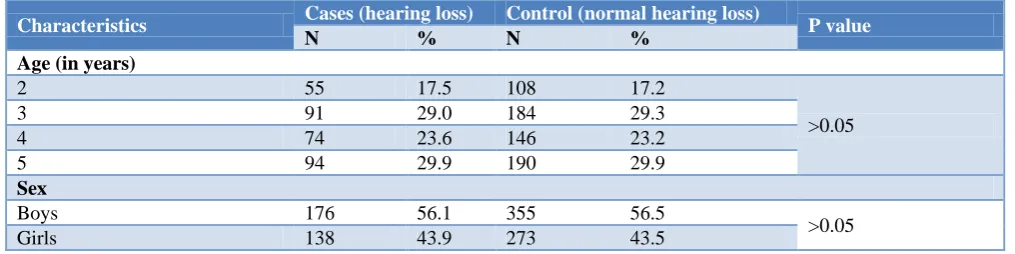
Table 1 shows characteristics of the sample by case-control status. There was no statistically significant different between cases and controls in terms of age and sex (p>0.05).
Univariate analysis was performed to determine the strength of association of the potential risk factors with hearing loss among preschool children in Hanoi. Tables 2, 3 and 4 show the univariate odds ratios with 95 percent confidence intervals (CI) of the potential prenatal, perinatal, and postnatal risk factors, respectively with hearing loss.
Table 1: Characteristics of the studied participants (n=942).
Characteristics Cases (hearing loss) Control (normal hearing loss) P value
N % N %
Age (in years)
2 55 17.5 108 17.2
>0.05
3 91 29.0 184 29.3
4 74 23.6 146 23.2
5 94 29.9 190 29.9
Sex
Boys 176 56.1 355 56.5
>0.05
Girls 138 43.9 273 43.5
Table 2: The association between prenatal factors and hearing loss among preschool children in Hanoi, Vietnam (univariate odds ratio).
Prenatal factors Cases (n=314) Controls (n=628) OR
(95% CI)
N % N %
Maternal influenza 6 1.9 4 0.6 3.03 (0.85-10.84)
Maternal rubella 7 2.2 3 0.5 4.75 (1.22–18.49)
Maternal fever 2 0.6 1 0.2 4.02 (0.36–44.49)
Table 3: The association between perinatal factors and hearing loss among preschool children in Hanoi, Vietnam (univariate odds ratio).
Perinatal factors Cases (n=314) Controls (n=628) OR
(95% CI)
N % N %
Preterm (<37 weeks) 7 2.2 3 0.5 4.75 (1.22–18.49)
Birthweight (<2500 gram) 10 3.2 6 1.0 3.41 (1.22–9.47)
Cesarean section (compared
with vaginal delivery 117 37.3 260 41.4 0.84 (0.63-1.11) Prolonged oxygen use 14 4.5 2 0.3 14.70 (3.32-65.11)
Severe jaundice 25 8.0 6 1.0 8.96 (3.63-22.09)
Table 4: The association between postnatal factors and hearing loss among preschool children in Hanoi, Vietnam (univariate odds ratio).
Postnatal factors Cases (n=314) Controls (n=628) OR
(95% CI)
N % N %
Roseola 6 1.9 4 0.6 3.03 (0.85-10.84)
Encephalitis 3 1.0 1 0.2 6.04 (0.62-58.38)
Meningitis 12 3.8 2 0.3 12.43 (2.76-55.92)
Chronic ear infections 177 56.4 70 11.1 10.29 (7.37-14.38)
Table 3 reports four perinatal factors, including preterm (<37 weeks), birthweight (<2500 gram), prolonged oxygen use, and severe jaundice were significant risk factors of hearing loss. The strength of the association was highest for prolonged oxygen use (OR=14.70 (95% CI: 3.32-65.11) followed by severe jaundice (OR=8.96, 95% CI: 8.96-22.09).
Table 4 demonstrates that meningitis (OR= 12.43, 95% CI: 2.76-55.92) and chronic ear infections (OR=10.29, 95% CI: 7.37-14.38) were the two postnatal factors associated with hearing loss.
Table 5: Association between prenatal, perinatal, and postnatal factors and hearing loss among preschool children in Hanoi, Vietnam–multivariable analyze.
Factors Adjusted OR 95% CI
Maternal rubella 11.73 2.90–47.33
Prolonged oxygen use 13.89 2.72–70.82
Severe jaundice 13.47 5.09–35.59
Meningitis 26.44 5.65–123.59
Chronic ear infections 14.03 9.85–19.97
DISCUSSION
To the best of our knowledge, the present case-control study was the first epidemiological investigation of risk factors of hearing loss among preschool children in Vietnam. Our finding of the risk factors of hearing loss among preschool children included maternal rubella, birth asphyxia, severe jaundice, meningitis, and chronic ear infections. Although the hearing loss is usually identified in early childhood, there have been reports of children with a progressive auditory impairment beginning several years after birth.11 A significant proportion of preschool children have undiagnosed delayed-onset hearing loss was reported. A study conducted in Hubei Province, China to investigate the prevalence of delayed-onset hearing loss in preschool children who previously passed newborn hearing screening showed that high prevalence of hearing loss preschoolers among those population.12 The provision of hearing screening in preschool children remains essential for identifying delayed-onset deafness. There has no national universal newborn hearing screening in Vietnam, therefore, hearing loss screening for preschool children will be very important in terms of screening hearing loss children in the country.13
The findings of the current study support previous studies. A recent study conducted among 400 preschool children aged 4-6 years old and attending public kindergartens in urban and rural areas of Tirana, Albania found that the only associations preserving their statistical significance were the presence of otitis media in objective examination and the high number of past otitis media, which significantly increased the likelihood of hearing loss by 5.62 times (95% CI: 2.18-14.4) and 1.82 times (95% CI: 1.33-2.51), respectively, compared to absence of current and past otitis media, respectively.14 Study showed that secretory otitis media is common among children in Vietnam, accounting for 22.0%.15 Chronic ear infectinon is also a leading cause of hearing loss among children reported by the WHO.2
Meningitis was showed a risk factor of hearing loss among preschool children. This finding is in line with international reports. A case-control study with cases and controls were matched based on aged and sex was conducted in Sophia’s Children Hospital, Netherland also found that meningitis was associated with sensorineural heraing loss among children admitted to the neonatal intensive care unit.16
A thirty-year study to assess the neonatal risk factors of permanent hearing loss found that oxygen use was the most significant predictor of hearing loss.17 Permanent hearing loss remains an adverse outcome of extreme prematurity, complicated by significant delayed-onset and progressive loss. Prolonged supplemental oxygen use is a marker for predicting permanent hearing loss; this requires detailed analysis of the pathophysiologic features, to reduce the prevalence of permanent hearing loss.17
The risk of damage to a fetus following maternal rubella in early pregnancy is well recognized.17,18 Rubella infection acquired during early pregnancy may cause congenital defects, of which sensorineural deafness is by far the most common and often occurs in isolation.19 The association between rubella infection during early pregnancy and hearing loss in their children was reported in many studies.20-22 The study in Bangladesk indicated a strong association between rubella infection and hearing impairment in Bangladeshi children.20 Similarly, a recent case-control study was conducted in Sub-Saharan Africa reported a statistically significant association between the group of children under 14 years of age with hearing loss and immunity for rubella.22
Several limitations should be mentioned in the present study. A cause effect relationship between the factors and hearing loss may not be established due to the retrospective cross-sectional design. Second, our sample is representative only of preschool children in public kindergartens in Hanoi. Third, recall bias may lead to spurious associations between risk factors and the outcome (hearing loss). In this study, the direct interview of both case and control groups by the same trained interviewer should help to reduce recall bias and improve the accuracy of information obtained.
CONCLUSION
Maternal rubella, birth asphyxia, severe jaundice, meningitis, and chronic ear infections were the risk factors of hearing loss among preschool children in Hanoi, Vietnam. Studies regarding the prevention of hearing loss among children are urgently needed.
ACKNOWLEDGEMENTS
The authors are indebted to the study participants, including their mothers who agreed to be interviewed. Thanks are also due to the medical, nursing, and staff of National Hospital of Pediatrics for their assistance in patient recruitment and data collection.
Funding: Funded by the Hanoi Department of Health Conflict of interest: None declared
REFERENCES
1. WHO. Deafness and hearing loss 2019. Available at: https://www.who.int/news-room/fact-sheets/ detail/deafness-and-hearing-loss. Accessed on 10 April 2019.
2. WHO. Childhood hearing loss: Strategies for prevention and care. Geneve: WHO Press; 2016. 3. Watkin P, McCann D, Law C, Mullee M, Petrou S,
Stevenson J, et al. Language ability in children with permanent hearing impairment: the influence of early management and family participation. Pediatrics. 2007;120(3):e694-701.
4. Lieu JE, Tye-Murray N, Fu Q. Longitudinal study of children with unilateral hearing loss. The Laryngoscope. 2012;122(9):2088-95.
5. Norman P, Chandran M, Dhandapani T. Prevalence of hearing impairment in school children (aged 8-14 years) in the villages of Vadamavanthal, Tamil Nadu, India. Int J Community Med Public Health. 2016;3(12):3369-73.
6. Olatoke F, Ologe FE, Nwawolo CC, Saka MJ. The prevalence of hearing loss among schoolchildren with chronic suppurative otitis media in Nigeria, and its effect on academic performance. Ear Nose Throat J. 2008;87(12):19.
7. Appelbaum EN, Howell JB, Chapman D, Pandya A, Dodson KM. Analysis of risk factors associated with unilateral hearing loss in children who initially passed newborn hearing screening. Int J Pediatr Otorhinolaryngol. 2018;106:100-4.
8. JCIH. Year 2007 position statement: Principles and guidelines for early hearing detection and intervention programs. Pediatrics. 2007;120(4):898-921.
9. Stringer P. A Global Approach to Pediatric Hearing Loss in Vietnam. The Hearing J. 2012;65(10):1. 10. Paludetti G, Conti G, Di Nardo W, De Corso E,
Rolesi R, Picciotti PM, et al. Infant hearing loss: from diagnosis to therapy Official Report of XXI Conference of Italian Society of Pediatric Otorhinolaryngology. Acta Otorhinolaryngol Ital. 2012;32(6):347-70.
11. Anvar B, Mencher GT, Keet SJ. Hearing loss and congenital rubella in Atlantic Canada. Ear Hear. 1984;5(6):340-5.
12. Chen G, Fu S, Luo S, Zhang W, Yang G. Screening of delayed-onset hearing loss in preschool children in the mid-south of China. Int J Audiol. 2013;52(8):568-71.
13. Lam AMK, Stringer P, Toizumi M, Dang DA, McPherson B. An international partnership analysis of a cohort of Vietnamese children with hearing impairment. Speech Language Hearing. 2016;19(1):27-35.
14. Sallavaci. Prevalence and Factors associated with Hearing Impairment in Preschool Children in Albania. Arch Med. 2016;8(4):1.
15. Dang HS, Nhan TS, Le T, Tran KP, Tran TT, Vu MT, et al. Point prevalence of secretory otitis media in children in southern Vietnam. Ann Otol Rhinol Laryngol. 1998;107(5):406-10.
16. Coenraad S, Goedegebure A, van Goudoever JB, Hoeve LJ. Risk factors for sensorineural hearing loss in NICU infants compared to normal hearing NICU controls. Int J Pediatr Otorhinolaryngol. 2010;74(9):999-1002.
17. Robertson CM, Howarth TM, Bork DL, Dinu IA. Permanent bilateral sensory and neural hearing loss of children after neonatal intensive care because of extreme prematurity: a thirty-year study. Pediatrics. 2009;123(5):797-807.
18. Adams Waldorf KM, McAdams RM. Influence of infection during pregnancy on fetal development. Reproduction. 2013;146(5):151-62.
19. Munro ND, Sheppard S, Smithells RW, Holzel H, Jones G. Temporal relations between maternal rubella and congenital defects. Lancet. 1987;2(8552):201-4.
20. Rahman MM, Khan AM, Hafiz MM, Ronny FM, Ara S, Chowdhury SK, et al. Congenital hearing impairment associated with rubella: lessons from Bangladesh. Southeast Asian J Trop Med Public Health. 2002;33(4):811-7.
21. Wild NJ, Sheppard S, Smithells RW, Holzel H, Jones G. Onset and severity of hearing loss due to congenital rubella infection. Arch Dis Child. 1989;64(9):1280-3.
22. Caroça C, Vicente V, Campelo P, Chasqueira M, Caria H, Silva S, et al. Rubella in Sub-Saharan Africa and sensorineural hearing loss: a case control study. BMC Public Health. 2017;17(146):1.