Original Research Article
A cross-sectional study on preference of tubectomy over vasectomy
among eligible couples in Bengaluru, Karnataka
Nivedita Basavaraj Mayani, Pradeep C.*, Mangala Subramanian
INTRODUCTION
According to census 2011, the population of India was exactly 1,210,193,422, which means India has crossed the one billion mark. This is the second most populous country of the world after China and the various studies have projected that India will be world’s number one populous country, surpassing China, by 2025.1
The two main common causes leading to over population in India are: The birth rate is still higher than the death rate i.e. we have been successful in declining the death rates but not birth rates and the fertility rate due to the
population policies and other measures has been falling but even then, it is much higher compared to other countries.
With its historic initiation in 1952, the family planning programme has undergone transformation in terms of policy and actual programme implementation.2 The objectives, strategies and activities of the Family Planning division are designed and operated towards achieving the family welfare goals and objectives stated in various policy document (NPP: National Population Policy 2000, NHP: National Health Policy 2002, and NHM: National Health Mission) and to honour the
ABSTRACT
Background: Population policies, family planning and welfare programmes undertaken by the Government of India, have led to continuous decrease in the fertility rate but sustainability and target of net reproduction rate 1 is not yet achieved. With increase trend of adopting the permanent method of contraception by eligible couples, the preferences of tubectomy over vasectomy is still remarkable. Hence, the present study is taken up to find Knowledge, Attitude and Practice regarding sterilization and factors influencing it.
Methods: A cross-sectional study is conducted in the year 2017 among eligible couples who have completed their family size or pregnant women who came for second confinement to Vydehi Institute of Medical Sciences and Research Centre and Shreyas Maternity Home, Hoskote and Shreyas maternity home are included. An institutional ethics committee (IEC) is given on vasectomy, the better method of sterilization and responses are recorded.
Results: A total 92.6% couples were aware of permanent family planning methods. Among them only 30.6% couples are aware of vasectomy. There is a significant association between number of children in a family and to undergo sterilization (p=0.02) method. Reason for not choosing vasectomy are unawareness (49.3%) and social stigma (38%) mainly. 11 couples (7.3%) changed their opinion to undergo vasectomy after giving an IEC.
Conclusions: Many couples were knowledgeable about tubectomies and opted for it. Only a small number of couples changed their opinion from tubectomy to vasectomy after being given an IEC.
Keywords: Eligible couples, Family planning methods, Institutional ethics committee, Tubectomy, Vasectomy Department ofCommunity Medicine, VIMS and RC, Bengaluru, Karnataka, India, India
Received: 08 November 2019 Revised: 13 December 2019 Accepted: 16 December 2019
*Correspondence: Dr. Pradeep C.,
E-mail: [email protected]
Copyright: © the author(s), publisher and licensee Medip Academy. This is an open-access article distributed under the terms of the Creative Commons Attribution Non-Commercial License, which permits unrestricted non-commercial use, distribution, and reproduction in any medium, provided the original work is properly cited.
commitments of the Government of India (including ICPD: International Conference on Population and Development, MDG: Millennium Development Goals, SDG: Sustainable Development Goals, Family Planning 2020 Summit and others).3 In spite of these, the Govt. of India have led to a continuous decrease in the fertility rate, yet the actual stabilization of population can take place only by 2050.
According to NFHS-4 (2015-16), TFR is 1.7 in urban and 1.9 in rural, female sterilization (tubectomy) is 42.8% and 52.8% in urban and rural respectively as compared to NFHS-3 (2005-06) which was 48.6% and 57.4%. Whereas male sterilization (vasectomy) is 0.1% in urban and 0% in rural compared to NFHS-3 which was 0.1% and 0.2% respectively.4
Inspite of advances in scientific technology in birth control, from cafeteria approach to choose spacing methods to permanent methods of sterilization including newer methods (vaccines etc.) and many privileges (incentives) from government to implement these but still there exists a loop hole in the communication system in making people to adopt these methods.
Even though its known that vasectomy is safer, effective and feasible compared to tubectomy where mother should go through complications; the rates of tubectomy are higher than vasectomy, as there are misconceptions about the health effects of vasectomy in both men and women; especially among the people of lower socioeconomic status due to lack of education and political backlash still persisting from the 1970’s.5
The present study is taken up to assess the knowledge, attitude and practice regarding permanent family planning methods among eligible couples; factors influencing their preferences of tubectomy over vasectomy and also a role of an IEC in making them to choose vasectomy.
METHODS
A cross sectional study was conducted from 1st March 2017 to 30th April 2017, among eligible couples who have completed their family size or who came for second confinement at Vydehi Institute of Medical Sciences and Research Centre and Shreyas Maternity Home, Hoskote, Bangalore are included. Participants who are not willing to take part in the study and who are at high risk for surgery are excluded from study. Using convenience sampling technique, sample size of 150 couples were obtained, for whom interview was conducted using pre-tested semi structured questionnaire consisting of three parts: socio-demographic profile, information about choosing the permanent sterilization method and reason behind it and questions directed to find out the changes in their perspective to choose or select vasectomy over tubectomy after an IEC.
After obtaining an ethical clearance from Vydehi Institute of Medical Sciences and Research Centre to conduct a study, written consent was obtained from participants for their participation. Each couple interviewed using questionnaire and their responses were recorded. An IEC is given on vasectomy, being the better, safe and simple method of sterilization to undergo. Responses after IEC are recorded to see any change in their opinion to opt or undergo for vasectomy as permanent method of sterilization. Obtained results are than analysed using statistical tests, chi square and fisher exact test.
RESULTS
Our study involved 150 eligible couples who have come for safe confinement or antenatal visits at Vydehi institute of medical sciences and Shreyas maternity home, Hoskote.
The minimum and maximum age of husbands are 23 and 43 years with mean age of 30.29 whereas of wives 19 and 36 years respectively, with mean age of 25.21.
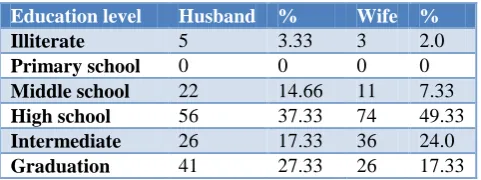
Table 1: Education level of study population.
Education level Husband % Wife %
Illiterate 5 3.33 3 2.0
Primary school 0 0 0 0
Middle school 22 14.66 11 7.33
High school 56 37.33 74 49.33
Intermediate 26 17.33 36 24.0
Graduation 41 27.33 26 17.33
Table 1 shows the education status of husband and wives of study population.
Among 150 husbands, except 5 (illiterate) all completed middle school with highest number 56 (37.3%) of them have completed high school and 41(27.3%) are graduates whereas 3 (2.0%) are illiterate among wives with highest number 74 (49.3%) of them have completed high school and 26 (17.3%) are graduates (Table 1).
Table 2: Source of information about family planning methods.
Source of information Frequency
(couples) %
Medical professionals 29 20.86
Mass media/social media 38 27.33
Relatives and friends 51 36.69
Health workers 17 12.23
Others 4 2.87
Total 139 100
Other demographic details show that 105 (70%) couples of our study population belongs to the lower middle class according to Kuppuswamy classification. 75 (50%) families were nuclear, 65 (43%), 62 (41%) and 23 (15.3%) couples had only 1, 2 and more than 2 children respectively.
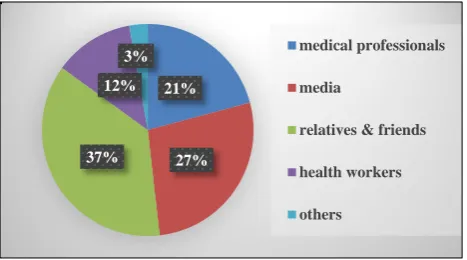
Figure 1: The different sources of information for utilization of permanent methods of family planning.
The different sources of information regarding the family planning methods like: medical professionals (Medical officers, specialists, nursing staff), mass media, social media, health workers (ANM, ASHAs), relatives, friends and others (books/materials) are important sources of information for using contraceptive methods (Table 2 and Figure 1).
It shows that 139 couples were aware of family planning methods of which 51 (36.7%) got information from relatives and friends, followed by 38 (27.3%) of couples through mass media, 29 (20.8%) and 17 (12.2%) through medical professionals and health workers respectively.
Figure 2: Awareness about family planning methods.
Out of 11 couples who were not aware of family planning methods, 8 (72.7%) couples stated that it was due to lack of sources of information while 3 (27.3%) couples stated communication barrier as the reason (Figure 2).
Among 150 eligible couples, total 140 (93.3%) were aware of family planning methods. Among 140, 139
(92.6%) couples were aware of permanent methods and only 46 (30.6%) couples were aware of vasectomy.
Figure 3: Number of children in family and permanent family planning method.
Table 3: Husband’s education status and change of opinion.
Husband’s education
Change of opinion from
tubectomy to vasectomy Total (%)
No (%) Yes (%)
Illiterate 3 (3.5) 0 (0) 3 (3) Middle school 12 (14.1) 1 (7.1) 13 (13) High school 32 (37.6) 6 (42.9) 38 (38) Intermediate 17 (20) 1 (7.1) 18 (18.2) Graduate 21 (24.7) 6 (42.9) 27 (27) Total 85 (100) 14 (100) 99 (100) Fishers exact value=2.7, p=0.59, no significant association seen.
Table 4: Wife’s education status and change of opinion.
Wife’s education
Change of opinion from
tubectomy to vasectomy Total
No (%) Yes (%)
Illiterate 2 (2.4%) 0 (0%) 2 (2%) Middle school 8 (9.4%) 1 (7.1%) 9 (9%) High school 44 (51.8%) 6 (42.9%) 50 (50%) Intermediate 20 (23.5%) 4 (21.4%) 24 (24%) Graduate 11 (12.9%) 3 (21.4%) 14 (14%) Total 85 (100%) 14 (100%) 99 (100%) Fishers exact value=1.5, P-value=0.86, No Significant association seen.
There is no significance association between change of opinion of undergoing vasectomy from tubectomy with their (eligible couples) education status (Table 3 and 4).
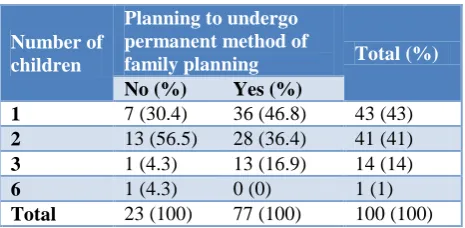
There is a significant association seen between number of children in a family and planning to undergo permanent methods of sterilization (Table 5).
21%
27% 37%
12%
3% medical professionals
media
relatives & friends health workers others
0 20 40 60 80 100
FAMILY PLANNING
METHOD
PERMANENT FAMILY PLANNING
METHOD
TUBECTOMY VASECTOMY
93.3% 92.6% 92.6%
Pe
rc
en
ta
g
e
Not Aware Aware
30.6%
30.4
56.5
4.3 4.3
46.8
36.4
16.9
0
43 41
14
1 0
10 20 30 40 50 60
1 2 3 6
Table 5: Number of children and undergoing permanent method of family planning.
Number of children
Planning to undergo permanent method of
family planning Total (%)
No (%) Yes (%)
1 7 (30.4) 36 (46.8) 43 (43)
2 13 (56.5) 28 (36.4) 41 (41)
3 1 (4.3) 13 (16.9) 14 (14)
6 1 (4.3) 0 (0) 1 (1)
Total 23 (100) 77 (100) 100 (100) Fishers exact value=10.1, p value=0.02.
It was observed that 11 (7.3%) out of 150 couples changed their opinion to undergo vasectomy from tubectomy after receiving an IEC, whereas others (141 couples) either opted to undergo tubectomy or no method of permanent method of family planning presently.
DISCUSSION
A community based cross-sectional study was carried out in Nandagudi shown that 52% of study population are between 31-40 years of age and 62% belongs to socioeconomic status class II and III whereas current study shows that men are between 23-43 years with mean age of 30.29 and their wives 19-36 years with mean age of 25.21.6 70% of 150 couples of our study population belongs to the lower middle class according to Kuppuswamy classification.
A cross-sectional study “knowledge and perception of vasectomy among male staffs of Novena University Ogume Delta State Nigeria” conducted by Otovwe et al, shown that mean age 36.9 years. 57% among 151 male staffs had good knowledge; 58.3% demonstrated poor perception and 57% exhibited poor attitude towards vasectomy.7
A descriptive cross-sectional study “knowledge and attitude of married men towards vasectomyin an urban slum of Navi Mumbai” carried out among 121 married men by Nair et al shown that 70.2% men were aware of vasectomy. Sources of information were mass media (42.35%) followed by family and friends (29.4%); doctors (24.7%) whereas as present study shows 36.7% of 139 couples got information from relatives and friends, followed by 27.3% through mass media, 20.8% and 12.2% through medical professionals and health workers respectively.8
A descriptive cross-sectional study “vasectomy: a study of attitudes, beliefs, knowledge and practices among literate men” conducted by Sood et al in three districts of Punjab shown that 70% of 225 men heard about vasectomy but only 11% wants to undergo the procedure. 52% of them told the reason not to undergo procedure is that they feared of procedure that their partners becoming
of pregnant whereas present study shows that 30.6% couples were aware of vasectomy and 7.3% out of 150 couples changed their opinion to undergo vasectomy from tubectomy after receiving an IEC.9
A hospital based cross-sectional study “A study on Factors Influencing in Acceptance of Vasectomy” conducted in Govt. maternity hospital, Tirupati by Lakshmi et al, shown that 61% of 350 men were aware of family planning methods and 50% were aware about vasectomy whereas current study shows 95% of 150 couples were aware of family planning methods and only 30.6% couples were aware of vasectomy.10
A hospital based cross-sectional survey “ a study on factors influencing the choice of permanent method of family planning” conducted in Govt. Maternity Hospital, Tirupati by Lakshmi et al shown that reasons for preference of tubectomy were ease of tubectomy (33.5%), lack of knowledge of vasectomy (20.5%), husband’s rest (13.5%), financial loss (9%), fear of ill effects on husband’s health (8%) and sexual dysfunction (1.5%), belief that women can withstand procedure better than men (1%) among 200 women.11
A study “barriers and facilitators affecting vasectomy acceptability (a multi stages study in a sample from north eastern of Iran), Asia Pacific Family Medicine, 2005-07) by Keramat et al, shown positive association between male and female education levels and choosing to have vasectomy whereas present study did not show any significant association between education levels but shows there is significant association between number of children in family and adoption of permanent family planning methods.12
A study on “knowledge and practice of contraception in urban slum community, Mumbai” conducted by Khan et al, reveals that there is a significant association between education and adoption of family planning methods. Family with two or more children opt for permanent family planning methods. Awareness about vasectomy was found good but practice nil as fear of side effects and religious beliefs.13
CONCLUSION
Only a small number of couples (7%) changed their opinion from tubectomy to vasectomy after being given an IEC about vasectomy - a safe, simple and easy procedure to undergo. Compared to other studies of similar nature we have gotten a higher percentage of couples willing to undergo tubectomy over vasectomy.
ACKNOWLEDGEMENTS
Authors would like to thanks the Director, Dean and Ethical Committee members of Vydehi Institute of Medical Sciences and Research Centre, for giving an opportunity and assistance in conducting a study. Our sincere thanks to Shreyas Maternity Home, Administration and Nursing supervisors and also to Intern Medical Officers who consistently helped in collection of data.
Funding: No funding sources Conflict of interest: None declared
Ethical approval: The study was approved by the Institutional Ethics Committee
REFERENCES
1. Phukan RS. Overpopulation in India - Causes, Effects and How to Control it?, August 5, 2019. Available at: www.mapsofindia.com/my-india/india/ overpopulation-in-india-causes-effects-and-how-to-control-it. Accessed on 15 April 2019.
2. National Health Portal, India. National Programme for Family Planning. Available at: https://www.nhp. gov.in/national-programme-for-family-planning_pg. Accessed on 01 November 2019.
3. Ministry of Health and Family Welfare. Annual Report 2017-18. Chapter 6: family Planning: 85-108. Available at: https://mohfw.gov.in. Accessed on 01 November 2019.
4. National Family Health Survey, India. Fact sheet: NFHS-4(2015-16). Available at: http://rchiips.org/ nfhs/factsheet_nfhs-4.shtml. Accessed 20 October 2019.
5. Soutik Biswas. India’s dark history of sterilisation. BBC NEWS Asia India. Nov 2014. Available at:
http://www.bbc.com/news/world-asia-india-30040790. Accessed on 01 November 2019.
6. Suwarna M, Pavithra M. A study about perceptions, attitude, and knowledge among men toward vasectomy in Bangalore rural population. Int J Med Sci Pub Health. 2015;4(8):1066-70.
7. Otovwe A, Okandeji-Barry RO. Knowledge and perception of vasectomy among male staffs of Novena University Ogume Delta State Nigeria. J Nurs Health Sci. 2018;7(1):71-6.
8. Nair GR, Wadke R, Relwani N, Mahadik V, Anjenaya S. Knowledge and attitude of married men towards vasectomyin an urban slum of Navi
Mumbai. Int J Comm Med Pub Health.
2017;4(12):4563-8.
9. Sood A, Pahwa P. Vasectomy: a study of attitudes, beliefs, knowledge and practices among literate men in Punjab, India. Int J Reprod Contracept Obstet Gynecol. 2014;3(2):418-23.
10. Geeta Lakshmi S et al. A study on Factors Influencing in Acceptance of Vasectomy. IOSR J Dental and Med Sci. 2018;17(12):31-8
11. Lakshmi SG, Chandrasekhran PA, RadhaRani GA. study on factors influencing the choice of permanent method of family planning at Government Maternity Hospital, S. V. Medical College, Tirupati. IOSR J Dent Med Sci. 2015;14(6):16-22.
12. Keramat A, Zarei A, Arabi M. Barriers and facilitators affecting vasectomy acceptability (a multi stages study in a sample from north eastern of Iran) 2005-07. Asia Pacific Fam Med. 2011;10(1):5. 13. Khan MM, Shaik ST, Shroff AG. Study of knowledge and practice of contraception in urban slum community, Mumbai. Int J Current Med Appl Sci. 2014;3(2):35-41.