ABSTRACT
Human resources are vital to the success or failure of the organization. However, there exist challenges in maintaining these human resources although human resource practices are deliberated as an important factor to improve employees’ commitment to the organization. Hence, this study aimed to investigate the nature of relationship that exists between human resource practices and normative commitment with motivation as the mediator. Employed a quantitative research approach, 64 SME employees in Selangor were surveyed. It was found that all human resource practices have positive effect on normative commitment with compensation, training and employee involvement-decision being significant. This study also revealed that motivation has a mediating effect for the relationship of training and both employee involvement with normative commitment. Thus, it can be concluded that both training and employee involvement create sense of loyalty and obligation to stay when employees are motivated.
Keywords: human resource practices, motivation and normative commitment
EXAMINING THE EFFECT OF MOTIVATION
ON THE INFLUENCE OF HUMAN RESOURCE
PRACTICES AND NORMATIVE COMMITMENT
AMONG SMEs IN SELANGOR
Elaina Rose Johar1*, Norzanah Mat Nor1, Roshidi Hassan1 and Rusnifaezah Musa2
1Arshad Ayub Graduate Business School, Universiti Teknologi MARA, Malaysia
E-mail: [email protected], [email protected], [email protected]
2School of Business Management, College of Business, Universiti Utara Malaysia,
E-mail: [email protected]
ARTICLE INFO
Article History:
INTRODUCTION
Having new generations coming into the labor market, most organizations are currently fighting in a war of talent. Undoubtedly, human resources in the organization indispensably lead to the success or failure of the organization and what each employee brings to the organization is unique and not easily imitated (Subramaniam, Faridahwati Mohd Shamsudin & Hadziroh Ibrahim, 2011). Consequently, human resource practices are deliberated as an important factor to improve employees’ commitment to the organization and that organizational commitment is the pillar of the modern HRM philosophy as well as the strength that binds HRM practices (Mahal, 2012; Mulolli, Islami & Skenderi, 2015; Osa & Amos, 2014). When employees are more committed to the organization, the more motivated they would be and more willing to work ‘above and beyond contract’; committed employees feel a greater responsibility, thus reducing the manager’s need to monitor and supervise; and committed employees are expected less likely to leave the organization, resulting in the reduction of recruitment and selection expenditures (Mahal, 2012).
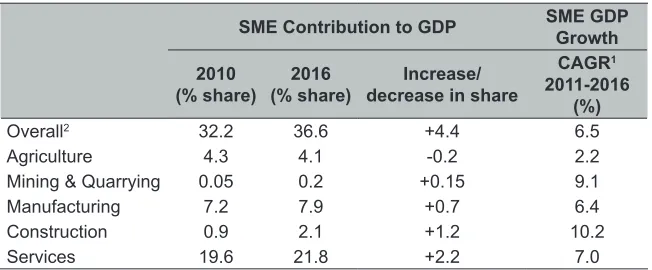
Notably, with reference to Table 1, small and medium sized enterprises (SMEs) in Malaysia play an important role in ensuring the growth of the
Malaysian economy with its contribution to the overall GDP of 36.6%
in 2016 (SME, 2017). Furthermore, lack of job readiness, low utilization of existing training programs and non-competitive rewards and benefits
among SMEs workforce are among the key challenges of human capital
development identified in the SME Master Plan 2012-2020. Thus, these identified challenges make it critical for SMEs to properly manage their
human resources, as it is important to note that previous studies have yet
to tackle issues pertaining to HRM in SMEs as compared to larger firms such as low employee commitment and switching job frequently (Cardon & Stevens, 2004; Fazzari & Mosca, 2009; Grigore, 2013; National SME Development Council, 2012; Szamosi, 2006). Hence, this study focused on the employees’ commitment resulting from the implementation of human resources practices among service organizations in Malaysian SME as research on service sector firms is scarce. Also, this study aimed to examine
the mediating role of motivation in the relationship between human resource
Table 1: SME GDP by Key Economic Activity (constant 2010 prices)
SME Contribution to GDP SME GDP Growth
2010
(% share) (% share)2016 decrease in shareIncrease/
CAGR1
2011-2016 (%)
Overall2 32.2 36.6 +4.4 6.5
Agriculture 4.3 4.1 -0.2 2.2
Mining & Quarrying 0.05 0.2 +0.15 9.1
Manufacturing 7.2 7.9 +0.7 6.4
Construction 0.9 2.1 +1.2 10.2
Services 19.6 21.8 +2.2 7.0
1CAGR refers to compounded annual growth rate (underlying growth of 7.9% for 2014) 2Total value-added after taking into account import duties
Source: Department of Statistics, Malaysia
LITERATURE REVIEW
Employee Commitment
Organizational commitment is a belief, significantly related to employees’ perceptions of the employer’s commitment to them as they reciprocate their perceptions of the organization’s actions in their own attitudes and behavior (Osa & Amos, 2014; Shore & Tetrick, 1991). Commitment as conceptualized is referred to as affective, continuance, and normative commitment (Meyer & Allen, 1991). It views commitment as a psychological state that (a) characterizes the employee’s relationship with the organization, and (b) has implications for the decision to continue or discontinue membership in the organization. In this context, normative commitment reflects a feeling of obligation to continue employment.
Employees with a high level of normative commitment feel that they ought
to remain with the organization.
Human Resource Practices and Employee Commitment
Practices has always been defined upon HRM as a set of practices
rather than a more general process of incorporating human resource
organization’s performance. Previously organizations have s overlooked the purpose of HRM in contributing to organizational success (Zakaria, Mohamed Zainal & Mohd Nasurdin, 2011). Additionally, SMEs might use HRM in different ways and are less likely to formalize as compared to larger organizations. Thus it is a valuable starting point to initiate an investigation as SMEs generally emphasize on specific practices (Abdul Hamid, Baharun & Hashim, 2006; Cassell, Nadin, Gray & Clegg, 2002). As suggested by (Guest, 1997), this study has conceptualized human resource
practices as consisting of compensation, training, recruitment and employee involvement, the dominant dimensions that are being focused by most
human resource studies to explain variance in the construct. Additionally, Cardon and Stevens (2004) have reviewed the literature that summarized compensation as the second most focused topic in the relationship of HRM and entrepreneurship because compensation notably affects recruiting and retention efforts of small firms as critical skills or knowledge cannot be recruited, retained or operated effectively if they cannot pay the candidates enough. Ultimately, salary, bonus and compensation have a significant positive efect on employee commitment (Coetzee, Mitonga-Monga & Swart, 2014; Hassan & Mahmood, 2016; Hashim, Ismail & Hassan, 2016; Lin, Lin & Lin, 2012). Correspondingly, employees are more willing to stay in the organization, which provide better economic rewards, salary
and bonus.
On the same note, training denotes the methods used to give new or present employees the skills, knowledge behaviors and other abilities they
need to perform their jobs, modify individuals’ skills or attitudes as well as
help in the development of positive dispositions towards growth and change
Besides that, staffing was found to be important to both employees’ commitment and satisfaction particularly in the micro enterprise firms in Malaysia (Hashim et al., 2016). Moreover, empirical evidence indicate
that outsourcing recruitment process has no impact on both employee
commitment and loyalty (Jamil & Naeem, 2013). Finally, Adham (2011) suggested two types of direct employee involvement (EI) that is (EI-autonomy and EI-decision). EI-(EI-autonomy was found to have a positive
impact on satisfaction and commitment when authority is given to
employees in terms of their daily work and EI-decision was found to have more influence on both satisfaction and commitment when employees are kept in the loop and permitted to influence final decisions. Additionally, employee involvement was found to have a positive relation with affective and normative commitment (Chelliah, Sundarapandiyan & Vinoth., 2015). Hence, based on the previously stated studies, the current study hypothesized
that:
H1a: There is a significant relationship between compensation and employee
commitment
H1b: There is a significant relationship between training and employee
commitment
H1c: There is a significant relationship between recruitment and employee
commitment
H1d: There is a significant relationship between employee
involvement-autonomy and employee commitment
H1e: There is a significant relationship between employee
involvement-decision and employee commitment
Motivation and its Role as Mediator
In describing the relationship between HRM and commitment, previous studies have looked into the “black box” of the linkage and the AMO (ability, motivation and opportunity) framework is one of the popular variables used (Appelbaum et al., 2000). Furthermore, Obeidat, Mitchell and Bray (2016) proposed for further future research should investigate
the interaction between each of the AMO dimensions to enable a clearer
to incentives whereas intrinsic factors come from individual’s interests and values (Minbaeva, 2012; Schimansky, 2014). Moreover, in the HRM setting, motivation-enhancing practices can ensure employees give their best in completing organizational objectives and produce a high level of performance (Marin-garcia & Tomas, 2016). Based on discussions above,
the following hypotheses are proposed:
H2a: Motivation mediates the relationship between compensation and employee commitment
H2b: Motivation mediates the relationship between training and employee commitment
H2c: Motivation mediated the relationship between recruitment and employee commitment
H2d: Motivation mediates the relationship between employee involvement-autonomy and employee commitment
H2e: Motivation mediates the relationship between employee involvement-decision and employee commitment
METHODOLOGY
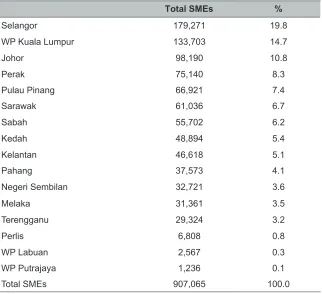
the study sample with some key external statistics relevant to the study. Correspondingly, Table 2 shows that there are 179,271 SMEs in Selangor. The purposive sampling technique was used for the respondent pool. Again, Rowley (2014) suggested that the sample for purposive sampling is “hand-picked” for the research when the researcher already knows something about the specific cases and deliberately selects specific ones because they are likely to produce the most valuable data. A total of 100 questionnaires were distributed to SMEs employees based on the list of SMEs organization in service sector provided in the SME Corp Malaysia website. This study managed to obtain a response rate of 64%. The data collected were analyzed using multiple and hierarchical regression through the SPSS version 23. The data were cleaned from any missing data and outliers.
Table 2: Number of Establishment by State
Selangor 179,271 19.8
WP Kuala Lumpur 133,703 14.7
Johor 98,190 10.8
Perak 75,140 8.3
Pulau Pinang 66,921 7.4
Sarawak 61,036 6.7
Sabah 55,702 6.2
Kedah 48,894 5.4
Kelantan 46,618 5.1
Pahang 37,573 4.1
Negeri Sembilan 32,721 3.6
Melaka 31,361 3.5
Terengganu 29,324 3.2
Perlis 6,808 0.8
WP Labuan 2,567 0.3
WP Putrajaya 1,236 0.1
Total SMEs 907,065 100.0
Source: Economic Census 2016, Profile of Small and Medium Enterprises (reference year 2015), Department of Statistics, Malaysia
Additionally, factor analysis was conducted to determine if the
measures or items are loaded on the appropriate factors as identified by previous researchers (Venkatraman, 1989). Meanwhile the reliability test
was conducted to examine the internal inconsistency of the constructs employed in this study; employee commitment, human resource practices
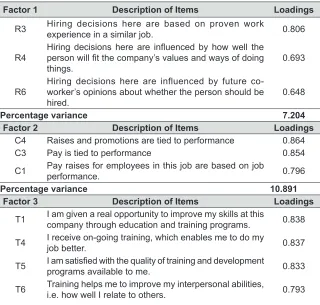
and motivation. Factor analysis was conducted for the human resource practices construct only to validate the dimensions of the human resource
practices (Table 3). The measurement scales for human resource practices consisted of 25 items and varimax rotated principal components factor
analysis was then conducted. Prior to this, the suitability of the data for factor analysis was assessed. Only loadings of at least 0.30 were included
in the factor (Hair et al., 2006).
Table 3: Factor Analysis on Human Resource Practices
Factor 1 Description of Items Loadings
R3 Hiring decisions here are based on proven work experience in a similar job. 0.806
R4 Hiring decisions here are influenced by how well the person will fit the company’s values and ways of doing
things. 0.693
R6 Hiring decisions here are influenced by future co-worker’s opinions about whether the person should be
hired. 0.648
Percentage variance 7.204
Factor 2 Description of Items Loadings
C4 Raises and promotions are tied to performance 0.864
C3 Pay is tied to performance 0.854
C1 Pay raises for employees in this job are based on job performance. 0.796
Percentage variance 10.891 Factor 3 Description of Items Loadings
T1 I am given a real opportunity to improve my skills at thiscompany through education and training programs. 0.838
T4 I receive on-going training, which enables me to do my job better. 0.837
T5 I am satisfied with the quality of training and development programs available to me. 0.833
T3 My supervisor helped me acquire some additional job training when I needed. 0.753 T2 I have had sufficient job-related training. 0.742 T7 Training taught me about the company’s values and ways of doing things. 0.656
Percentage variance 22.888 Factor 4 Description of Items Loadings
EI7 How good are managers at informing employees about changes in staffing? 0.872
EI8 How good are managers at informing staff about changes in the way you do your job? 0.850
EI9 How good are managers at informing staff about financial matters? 0.808
EI10 How good are managers at seeking views of employees/workers representatives? 0.799
EI6 How good are managers at telling staff about changes in how the organization is run? 0.789
EI11 How good are managers at responding to suggestions from employees/workers representatives? 0.750
EI12 How good are managers at allowing employees/workers representatives influence final decisions? 0.642
Percentage variance 22.041 Factor 5 Description of Items Loadings
EI2 In general how much influence do you have over the pace at which you work? 0.884
EI5 In general how much influence do you have on time start/finish working day? 0.864
EI3 In general how much influence on order for you to carry out tasks? 0.853
EI1 In general how much influence do you have over the tasks you do? 0.838
EI4 In general how much influence do you have in how you do your work? 0.820
Percentage variance 16.544
Total percentage variance 79.569
Kaiser Meyer Olkin Measure of Sampling Adequacy 0.854 Bartlett’s Test of Sphericity:
Approx. Chi-Square 1587.285
DF 300
The Kaiser-Meyer-Olkin (KMO) measure of sampling adequacy for the items were 0.854, exceeding the recommended value of 0.6 Kaiser (1974), and thus interpreted as in the range of “fair” (Hutcheson, Graeme
& Sofroniou, 1999). Barlett’s Test of Sphericity was also found to be
significant at p<0.001, with the approximate Chi-Square value of 1587.285,
indicating the appropriateness of the correlations among the variables
and thus provide a sufficient basis for factor analysis (Durbin, James & Geoffrey, 1951). Consequently, the factor analysis resulted in five factors with an eigenvalue greater than 1 that explained 79.56 percent of variance in the data. The first factor reflected the recruitment dimension accounted
for 7.20 percent of the total variance with an eigenvalue of 1.801. The second factor consisted of three items of compensation, which accounted for 10.89 percent of the total variance in the data. The eigenvalue was
2.723. Besides that, the third factor represented by seven factors classified
as training and accounted for 22.89 percent of the total variance with an eigenvalue of 5.722. Additionally, the forth factor consisted of seven items
of employee involvement-decision, which comprised of 22.04 percent of the total variance in the data with eigenvalue of 5.510. Finally, the fifth factor of employee involvement-autonomy accounted for 16.54 percent of
the total variance with an eigenvalue of 4.136.
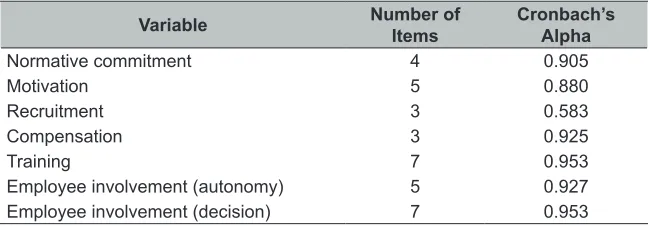
Table 4 indicates the results of internal consistency of the variables.
The scores of reliability coefficient after factor analysis showed most of the
variables achieved strong scores for reliability. Only recruitment variables achieved moderate scores at 0.583. This score indicates that the strength of
association between items is excellent as it achieved more than 0.9 scores but not more than 0.95 as highlighted by Hair et al. (2006) that scores above
Table 4: Reliability Coefficient After Factor Analysis
Variable Number of Items Cronbach’s Alpha
Normative commitment 4 0.905
Motivation 5 0.880
Recruitment 3 0.583
Compensation 3 0.925
Training 7 0.953
Employee involvement (autonomy) 5 0.927
Employee involvement (decision) 7 0.953
RESULT AND ANALYSIS
Descriptive Analysis
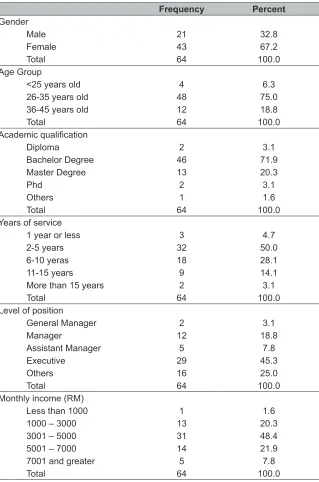
Table 5 shows the respondent’s demographic profile that described the
background of SMEs employees. Both genders were well represented with female respondents at 67.2 percent and male respondents at 32.8 percent.
In addition, the findings of the SME employees’ age was dominated by the respondents aged 26 – 35 years old (75.0 percent), followed by respondents who are at 36 – 45 years old (18.8 percent). The academic qualifications
of respondents showed most of the employees are bachelor degree holders
at 71.9 percent. About 95.3 percent of respondents have work experiences
of more than one year whereby 50.0 percent of the respondents have 2 to 5
Table 5: Profile of Respondents
Frequency Percent
Gender
Male 21 32.8
Female 43 67.2
Total 64 100.0
Age Group
<25 years old 4 6.3
26-35 years old 48 75.0
36-45 years old 12 18.8
Total 64 100.0
Academic qualification
Diploma 2 3.1
Bachelor Degree 46 71.9
Master Degree 13 20.3
Phd 2 3.1
Others 1 1.6
Total 64 100.0
Years of service
1 year or less 3 4.7
2-5 years 32 50.0
6-10 yeras 18 28.1
11-15 years 9 14.1
More than 15 years 2 3.1
Total 64 100.0
Level of position
General Manager 2 3.1
Manager 12 18.8
Assistant Manager 5 7.8
Executive 29 45.3
Others 16 25.0
Total 64 100.0
Monthly income (RM)
Less than 1000 1 1.6
1000 – 3000 13 20.3
3001 – 5000 31 48.4
5001 – 7000 14 21.9
7001 and greater 5 7.8
Correlation Analysis
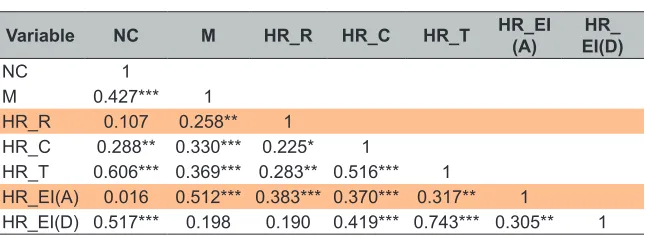
The independent variables (compensation, training and employee involvement-decision) as well as the mediator (motivation) had a significant relationship with the dependent variable, normative commitment (NC). Training (HR_T), employee involvement-decision (HR_EI(D)) and motivation (M) were correlated with normative commitment (NC) at the significance level p < 0.01. Meanwhile, the variable compensation (HR_C) correlated with NC at the significance level p < 0.05 In addition, recruitment (HR_R) and employee involvement-autonomy (HR_EI(A)) had an insignificant relationship with NC (Table 6).
Table 6: Pearson Correlation Result
Variable NC M HR_R HR_C HR_T HR_EI (A) EI(D)HR_
NC 1
M 0.427*** 1
HR_R 0.107 0.258** 1
HR_C 0.288** 0.330*** 0.225* 1
HR_T 0.606*** 0.369*** 0.283** 0.516*** 1
HR_EI(A) 0.016 0.512*** 0.383*** 0.370*** 0.317** 1
HR_EI(D) 0.517*** 0.198 0.190 0.419*** 0.743*** 0.305** 1
Note: Normative Commitment (NC), Motivation (M), Recruitment (HR_R), Compensation (HR_C), Training (HR_T), Employee Involvement-Decision (HR_EI(D)), Employee Involvement-Autonomy (HR_EI(A)). Correlation significance *: p < 0.1, **: p < 0.05, ***: p < 0.01, 2-tailed.
Hierarchical Regression Analysis
Table 7 reports the findings of motivation as a mediator through hierarchical analysis. Model 1 indicates a good fit of the model where 64.6 percent explains all the variability of the response data around its mean. Training has a significant effect on normative commitment at (p < 0.01) and employee involvement-autonomy had a negative significant effect on normative commitment at (p<0.1). Significance of F change also indicates a significance value for the model. Therefore, H1b and H1d are accepted.
In Model 2, the variable, motivation (M) was included and resulted
in an increment in R squared at 0.553. In this model also, M was found to
have a negative significant effect at (b = -0.411, p < 0.01) and a positive significant effect on employee involvement-decision (HR_EI(D)) at (b = 0.290, p < 0.05) and training (HR_Training) at (b = 0.366, p < 0.01).
Results in model 2 yielded a better increment in the value of R with the
model where (R = 0.743, R² = 0.553, Adj. R² = 0.506). This finding proved that the mediator variable; motivation enhanced the model, where the significance of F change was found to have a significant effect at p < 0.01. Furthermore, this finding indicated that motivation mediated the relationship between human resource practices (training and employee involvement)
and normative commitment among SMEs employees in Selangor. Thus,
we accept H2b, H2d and H2e.
Table 7: Hierarchical Regression Result
Independent Variable Model 1 Model 2
Model variable
HR_Recruitment 0.000 -0.007
HR_Compensation 0.017 -0.018
HR_Training 0.531*** 0.366**
HR_Employee Involvement (Autonomy) -0.215* -0.411*** HR_Employee Involvement (Decision) 0.182 0.290** Mediating variable
Motivation (M) 0.452***
R 0.646a 0.743b
R² 0.417 0.553
Adj. R² 0.367 0.506
Sig. F Change 0.000 0.000
FINDINGS AND DISCUSSION
Sanders & Bumatay, 2012). However, an opposite result exists whereby training on job skills contributed to a weak relation with organizational commitment (Sendogdu et al., 2013). It can be postulated that the more training opportunities given to employees, the more motivated they will become and more committed to the organization. Also, appropriate training given to employees, will increase their level of confidence and the ability to complete the tasks given. Moreover, employees will have motivation to go to work everyday and lead to a feeling of obligation to stay in the organization as a result of reciprocation for the additional skills obtained from the training provided to them. On top of that, the significant findings on both employee involvement are consistent with previous research (Adham, 2011; Chelliah et al., 2015; Zopiatis, Constanti & Theocharous, 2014). Surprisingly, before motivation was put in the model as a mediator, the result for employee involvement-decision was insignificant but after it was added, the result became significant. This proves that, when employees are empowered to make decisions and always kept in the loop of what is happening in the work setting, they will become more motivated as they feel that their voices are heard and consequently increase their sense of responsibility for the job.
The findings showed that compensation and recruitment had
insignificant results. Conversely, previous work have found significant effects of compensation with employee commitment (Coetzee et al., 2014; Hassan & Mahmood, 2016; Hashim et al., 2016; Lin et al., 2012).
Consequently, it shows that money or remuneration is no longer a motivational urge for employees to become committed and obliged in an
organization. Rather, there exists other ways to earn an extra income instead of depending on the fixed salary. In today’s digital era, it is possible for employees to find alternatives to earn passive income without neglecting
their daily work routines such as online businesses. Likewise, recruitment
showed an insignificant result. Nonetheless, previous findings confirmed that recruitment or staffing to be important to both employees’ commitment and satisfaction (Hashim et al., 2016). As a matter of fact, the lack of ability of SMEs to find the right candidates that fulfill the criteria in the process
of hiring potential employees leads to this problem. Most employers feel
that hiring is just a matter of filling a vacant position and perceives that
fresh graduates need to secure a job rather than really looking for a job that
the lack of motivation and passion to the job. Eventually, employees will
become demotivated and couldn’t care less about being obligated.
CONCLUSION
This pilot study provided timely and much needed insights into what drives employees to commit and remain at a particular organization. The findings may aid in understanding what drives the employees on a day-to-day level in the workplace and what drives their career in terms of overarching goals. In this context, in order for SMEs to grasp a greater impact on employee commitment specifically normative commitment, it is important for them to take note of the mediating effects of motivation. Motivation can be the compelling key metrics for organizations especially for owners, managers and HR practitioners to create a positive impact towards employee commitment. These findings can help organizations to realign their approach towards employees and deliver more effective methods in recognizing and valuing them. Finally, this study highlights the findings that are related to the identified objectives, as well as research contribution to different parties. This study results represent a small fraction in understanding the complexity of employee commitment as well motivation and thus cannot be generalized. Future studies should adopt the proposed research model among different types of SMEs to generalize the findings and explore other relevant mediators or perhaps moderators by duplicating the method used in this present study. It is believed that such a research would provide new, meaningful perspectives to the body of knowledge and offer greater insights for the management as well as practitioners in managing the smooth and sophisticated characteristics of employees particularly in SMEs.
REFERENCES
Abdul Hamid, A. B., Baharun, R., & Hashim, N. H. (2006). Comparative
analysis of managerial practices in small medium enterprises in Malaysia. Jurnal Kemanusiaan, 8, 34-45.
Adham, A. (2011). Employee involvement and its impact on job satisfaction
and organisational commitment. International Journal of Sciences:
Appelbaum, E., Bailey, T., Berg, P., & Kalleberg, A. L. (2000).
Manufacturing advantage: Why high- performance work systems pay off. London: ILR Press.
Bashir, N., & Long, C. S. (2015). The relationship between training and organizational commitment among academicians in Malaysia. Journal
of Management Development, 34(10), 1227–1245.
Cardon, M. S., & Stevens, C. E. (2004). Managing human resources in small organizations: What do we know? Human Resource Management Review, 14, 295–323.
Cassell, C., Nadin, S., Gray, M., & Clegg, C. (2002). Exploring human resource management practices in small and medium sized enterprises.
Personnel Review, 31(6), 671–692.
Chelliah, S., Sundarapandiyan, N., & Vinoth, B. (2015). A research on employees’ organisational commitment in organisations: A case of
SMEs in Malaysia. International Journal of Managerial Studies and Research, 3(7), 10-18.
Coetzee, M., Mitonga-Monga, J., & Swart, B. (2014). Human resource practices as predictors of engineering staff’s organisational commitment.
SA Journal of Human Resource Management, 12(1), 1–9.
Delery, J. E., & Doty, D. H. (1996). Modes of theorizing in strategic
human resource management : Tests of universalistic, cotigency and
configurational performance predictions. Academy of Management Journal, 39(4), 802–835.
DeNisi, A. S., & Griffin, R. W. (2001). Human resources management. New
York, NY: Houghton Mifflin Company.
Duberley, J. P., & Walley, P. (1995). Assessing the adoption of HRM by small and medium-sized manufacturing organizations. The International
Fazzari, A. J., & Mosca, J. B. (2009). Partners in perfection: Human resources facilitating creation and ongoing implementation of
self-managed manufacturing teams in a small medium enterprise. Human
Resource Development Quarterly, 20(3), 353–376.
Geringer, J. M., Frayne, C. A., & Milliman, J. F. (2002). In search of “best practices” in international human resource management: Research
design and methodology. Human Resource Management, 41(1), 5–30.
Grigore, A. M. (2013). Highlights on the HRM in SME’s– A Romanian study
case. International Journal of Business and Social Science, 4(3), 73–78.
Guay, F., Vallerand, R. J., & Blanchard, C. (2000). On the assessment of situational intrinsic and extrinsic motivation: The Situational Motivation Scale (SIMS). Motivation and Emotion, 24(3), 175–213.
Guest, D. E. (1997). Human resource management and performance: A
review and research agenda. The International Journal of Human
Resource Management, 8(3), 263–376.
Hashim, J. Ismail, Y. & Hassan, A. (2016). Formality of HRM Practices
Matters to Employees Satisfaction and Commitment. Journal of Human
Resources Management and Labor Studies, 4(1), 47–64.
Hassan, S., & Mahmood, B. (2016). Relationship between HRM practices and organizational commitment of employees: An empirical study of textile sector in Pakistan. International Journal of Academic Research
in Accounting, Finance and Management Sciences, 6(1), 23–28.
Herold, D. M., & Fedor, D. B. (2003). Individual differences in feedback
propensities and training performance. Human Resource Management Review, 13, 675–689.
Hooi, L. W., & Ngui, K. S. (2014). Enhancing organizational performance of Malaysian SMEs The role of HRM and organizational learning
Ihionkhan, P. A., & Aigbomian, E. E. (2014). The influence of human
resource management practices on organisational commitment: A study of manufacturing organisations in Nigeria. Indian Journal of Commerce & Management Studies, 5(1), 18–28.
Jamil, R., & Naeem, H. (2013). The impact of outsourcing external
recruitment process on the employee commitment and loyalty: Empirical evidence from the telecommunication sector of Pakistan.
IOSR Journal of Business and Management, 8(2), 69–75.
Jones, D. C., Kalmi, P., & Kauhanen, A. (2010). How does employee involvement stack up ? The effects of human resource management policies on performance in a retail firm. Industrial Relations, 49(1), 1–22.
Kim, K. Y., Pathak, S., & Werner, S. (2015). When do international human capital enhancing practices benefit the bottom line? An ability,
motivation, and opportunity perspective. Journal of International
Business Studies, 46(7), 784–805.
Lin, S., Lin, J. S., & Lin, Y. (2012). Human resource management practices affecting organizational commitment: A study on CEO’s
transformational leadership. African Journal of Business Management,
6(22), 6575–6586.
Lyons, P. (2009). Action theory and the training and performance application:
Performance templates. Industrial and Commercial Training, 41(5), 270–279.
Mahal, P. K. (2012). HR practices as determinants of organizational
commitment and employee retention. The IUP Journal of Management Research, 11(4), 37-53.
Marin-garcia, J. A., & Tomas, J. M. (2016). Deconstructing AMO
framework: A systematic review. Intagible Capital, 12(4), 1040–1087.
Meyer, J. P., & Allen, N. J. (1991). A three-component conceptualization of organizational commitment. Human Resource Management Review,
Minbaeva, D. B. (2012). Strategic HRM in building micro-foundations of organizational knowledge-based performance. Human Resource
Management Review, 23(4), 378–390.
Moynihan, L. M., Gardner, T. M., & Wright, P. M. (2002). High performance HR practices and customer satisfaction: Employee process mechanisms
(CAHRS Working Paper No. 02-09). Retrieved from https:// digitalcommons.ilr.cornell.edu/cgi/viewcontent.cgi?referer=https:// www.google.com.my/&httpsredir=1&article=1049&context=cahrswp
Mulolli, E., Islami, X., & Skenderi, N. (2015). Human resource management practices and SMEs performance: Study based in Kosovo. International
Review of Management and Business Research, 4(4), 1171–1180.
National SME Development Council. (2012). SME Master Plan 2012-2020.
National SME Development Council, Kuala Lumpur.
National SME Development Council. (2015). SME Annual Report
2015/2016. National SME Development Council, Kuala Lumpur.
Zakaria, N., Mohamed Zainal S. R., & Mohd Nasurdin, A. (2011).
Investigating The role of human resource management practices on the performance of SME: A conceptual framework. Journal of Global
Management, 3(1), 80–98.
Obeidat, S. M., Mitchell, R., & Bray, M. (2016). The link between high performance work practices and organizational performance: Empirically validating the conceptualization of HPWP according to
the AMO model. Employee Relations, 38(4), 578–595.
Osa, I. G., & Amos, I. O. (2014). The impact of organizational commitment
on employees productivity: A case study of Nigeria Brewery, PLC.
International Journal of Research in Business Management, 2(9),
107–122.
Rowley, J. (2014). Designing and using research questionnaires.
Schimansky, S. (2014). The effect of a high-commitment work system
on innovative behavior of employees. Paper presented at the 3rd IBA
Bachelor Thesis Conference. Retrieved from https://essay.utwe nte.
nl/65249/1/Schimansky_BA_MB.pdf
Sendogdu, A. A., Kocabacak, A., & Guven, S. (2013). The relationship between human resource management practices and organizational commitment: A field study. Procedia-Social and Behavioral Sciences, 99, 818-827.
Shin, D., & Konrad, A. M. (2014). Causality between high-performance work systems and organizational performance. Journal of Management,
43(4), 973–997.
Shore, L. M., & Tetrick, L. E. (1991). A construct validity study of the survey of perceived organizational support. Journal of Applied Psychology,
76(5), 637–643.
Snell, S. A., & Dean, J. W. (1992). Integrated manufacturing and human
resource management: A human capital perspective. The Academy of
Management Journal, 35(3), 467–504.
Subramaniam, C., Faridahwati Mohd Shamsudin, & Hadziroh Ibrahim. (2011). Linking human resource practices and organisational
performance: Evidence from small and medium organisations in Malaysia. Jurnal Pengurusan, 32, 27–37.
Szamosi, L. T. (2006). Just what are tomorrow’s SME employees looking for? Education & Training, 48(8/9), 654–655.
Vandenberg, R. J., Richardson, H. A., & Eastman, L. J. (1999). The impact of high involvement work processes on organizational effectiveness.
Group & Organization Management, 24(3), 300–339.
Wayne, S., Shore, L. M., & Liden, R. C. (1997). Perceived organizational support and leader- member exchange: A social exchange perspective.
Yang, H., Sanders, K., & Bumatay, C. P. (2012). Linking perceptions of training with organizational commitment: The moderating role of
self-construals. European Journal of Work and Organizational Psychology,
21(1), 125–149.
Zopiatis, A., Constanti, P., & Theocharous, A. L. (2014). Job involvement,