IJEDR1702070
International Journal of Engineering Development and Research (www.ijedr.org)404
Non Value Added Time Reduction and Process
Cycle Efficiency Improvement by Implementing
Inventory Management System
Sagar S. Mehta
#1, Prasad S. Puranik
*2, Ankit V. Vaishnav
#3#1PG Student –Department of Mechanical Engineering, Atmiya Institute of Technology and Science, *2
Head of Department, Department of Mechanical Engineering, Atmiya Institute of Technology and Science ,
#3Assistant Professor, Department of Mechanical Engineering, Atmiya Institute of Technology and Science,
Abstract—This paper de pic ts how Inventor y Manage ment Syste m was used to eli minate Non Value Adde d Time in a
manufacturing pl ant. A current Pr ocess Cycle Efficiency was measure d and data for c onstructi ng the present Pr ocess Cycle Efficienc y was c ollecte d thr ough pr oducti on line visits, inter vie ws of e mpl oyees and obser vation of machine ’s func tion at di fferent produc tion stages. Different causes of Non Value Adde d Ti me was deter mine d. Regression anal ysis wi th the hel p of Mini tab software were applie d to e valuate most affecte d causes of Non Value Adde d Ti me. At present, Process Cycle Efficiency was found 63.47% . In or der to i mprove Pr ocess Cycle Efficiency and to Re duce Non Value Adde d Ti me it was propose d to imple me nt Inve ntory Manage me nt Syste m, it was e valuate d that futu re state Pr ocess Cycle Efficiency woul d be i mprove d to 67.78% at initi al stage.
Index Terms-Process Cycle Efficiency, Non Value Adde d Ti me , Inventory Manage ment System(k ey words)
I. INTRODUCTION
Develop ment of pro ject consists of many co mp licat ions. All the parts of p roject is very sensitive and accurate. So for the development of project highly accurate instruments are used. The accuracy required for a ll the parts should be greater than 3 (Sig ma). Pro ject is developed by passing through different processes known as Process Cycle. Process Cycle allows the specification of task dependencies and their inter-relat ionship and then controls the execution of that process specification. Current Process Cycle takes more time than estimated time, in which Non Va lue Ad ded Time (NVAT) takes more time than estimated time. So, to reduce Non Value Added Time (NVAT) and to Improve Process Cycle Inventory Management System (IMS) was Imple mented.
Inventory Management System (IM S) is software application that helps to maintain the details of tools, instruments, materia ls etc. Softwa re p rovides the details of inventories like who is responsible person, what he/she is using, for what purpose and also time duration to return inventory.
By imple menting Inventory Management System (IM S), e xisting process will be simplified, decrease in Non -Value Added Time (NVAT) and reduction in loss of data. This results into increase in overall effic iency and output.
II. LITERATURE S URVEY
To identify the causes of non-value added times and manufacturing waste, to reduce the lead time and to improve the process cycle effic iency. Throughout this study the existing manufacturing line was assayed by using Value Strea m Mapping, where current cycle t ime, lead time , and non-value added time were found; thereby the present process cycle efficiency to reduce total manufacturing cycle time [1].
This paper presented with some specific objectives which were -to identify, quantify and to reduce the non-value added (NVAT) activities and time towards the improved Process Cycle Effic iency (PCE) and therefore to reduce the total manufacturing cycle time. Cycle time is the required time to co mp lete one manufacturing process in the value stream. Change over time is the NVD time required to convert a setup from one product line to another product line. This concept imp lies that go there instantly where a proble m is occurred; check out the problem; ta ke a te mpora ry measure on spot; find out the ma in causes beyond the problem [2].
This paper depicts how Process Cycle Efficiency was used to eliminate the manufacturing waste in a litchi juice production plant of Y food and beverage industry in Bangladesh. A current data of litchi ju ice production line was constructed. Diffe ren t causes of non-value adding (NVAT) activ ities we re find out and try to improve process cycle efficiency [3].
The production flow was optimized thus min imizing several non -value added activities/times such as bottlenecking time , wait ing time, materia l handling t ime, etc. In general, the various components associated with the lead time of any production process are (i) Waiting t ime befo re process (ii) Setup time (iii) Process time (iv) Waiting t ime after process (v) Transfer t ime. It focuses the revamp of operations by eliminating non value-added time and improving cycle e fficiency [4].
IJEDR1702070
International Journal of Engineering Development and Research (www.ijedr.org)405
according to e xpiry, receiv ing, and activation date then re leasing it to the dea ler. ERP is a business manage ment software that a company can use to collect, store, manage and interpret data fro m many business activities [5].This paper based on the present development situation of the most enterprises materia l inventory management system. A iming at the e xisted proble ms and deficiency of the materials inventory manage ment system, co mbined with the actual needs of modern inventory manage ment and advanced technology of computer software development technology, and designed a scientific and practica l materia ls inventory management process. The process can monitor the order information of the materia ls, and provide some functions the real-t ime querying, etc. [6].
Unified Modelling Language (UM L) enables the visualizat ion, specification, construction, and documentation of software -intensive system. Wholesale manage ment system is developed aim to improve the effic iency and performance of da ily business activity of the wholesaler. Un ified Modelling Language (UM L) is used at init ia l phases of software develop ment because of having a reasonable support of diagra ms and notations but has not proved sufficient for the co mplete modelling of functional and non-functional require ments of a system [7].
Inventory control is not a just an advantage but also a necessity. Proper raw materia l inventory control pro motes firm profitability and sustainability in a business environment. The paper presents a new approach for Inventory Managemen t System utilized by firms in the Tool and Die industry operating in a d istributed manufacturing fra me work. The system will aid in the proper control of raw materia l inventory used in the sector thus improving the efficiency [8].
This paper deals with development of inventory management system for a manufacturing Industry. The developed software System is easy to use, less time consuming & all detail about the inventory items & transaction status. Enterprise Resource Planning (ERP) software presents a fra me work for organizations to better utilize their processes. The Bac kend used is SQL server database that ensures total security and no data loss or corruption. The database management systems are warehouses of informat ion, where large a mount of data can be stored. The main idea of this paper is to handle the all details of inventory manage ment system. In this software package has been developed to smoothen the processing of ite m transaction in inventory such as item receive, ite m issue, etc. [9].
Inventory management is the process of effic iency overseeing the constant flo w of units into and out of an e xisting stock of goods. The system is protected from unauthorized user. This research has designed a Co mputerized Inventory Management System to ascertain stock level of a supermarket [10].
III.WORKING METHODOLOGY OF THE STUDY
Fig. 1: Complete Methodology of the study
Comparison With Old Data
Development and Implementation of Techniques To Solve
The Problem
Finding Out The Techniques To Solve The Problem
Identification of Parameter which affect the efficiency
IJEDR1702070
International Journal of Engineering Development and Research (www.ijedr.org)406
A. Basic Project Development Cycle:
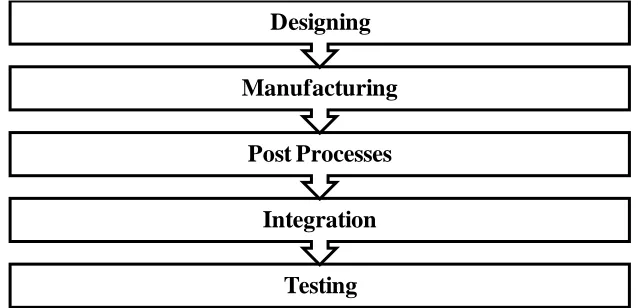
Fig. 2: Sample Basic Project Development Cycle
B. Evaluation of Time St udy for Project Processes:
As project consists of large numbers of parts and theses large number of parts are developed by different processes. So, to find out and improve the effic iency of Pro ject Develop ment Cycle one method is followed known as Process Cycle Efficiency.
I. Cycle Time (CT):
Cycle time is the total time fro m the beginning to the end of p rocess. Cyc le t ime inc ludes process time, setup time, part loa ding time, part unloading t ime, move time of part and delay time.
𝐶𝑇 = 𝑃𝑇 + 𝑆𝑇 + 𝐿𝑇 + 𝑈𝑇 + 𝑀𝑇 + 𝐷𝑇 Also,
𝐶𝑇 = 𝑉𝐴𝑇 + 𝑁𝑉𝐴𝑇 Where,
CT = Cycle Time PT = Process Time ST = Setup Time LT = Load ing Time UT = Unloading Time MT = Move Time DT = Delay Time
VAT = Va lue Added Time NVAT = Non-Va lue Added Time
II. Value Added Time (VAT):
This is the a mount of time it ta kes to actually p roduce the product. Obviously, production time is a value added time because it creates a product fro m ra w materia ls.
𝑉𝐴𝑇 = 𝑃𝑇
III. Non-Value Added Time (NVAT):
Non-value added time is a mount of the production cycle time that does not directly produce product or part. The non -value added time is the sum of setup time , loading time, Un loading time, Move time and De lay time.
𝑁𝑉𝐴𝑇 = 𝑆𝑇 + 𝐿𝑇 + 𝑈𝑇 + 𝑀𝑇 + 𝐷𝑇
IV. Process Cycle Efficiency (PCE ):
Process Cycle Effic iency is a metric useful for priorit izing improve ment opportunities. Ca lculating process cycle effic iency begins with identifying those areas that do not contribute to the value of the product. This typically can be done using a va lue stream map.
Process Cycle Efficiency helps to formulate an action plan to eliminate the Non -Va lue added time. It also helps to identify the causes of unexpected Non-Value added time that results in the long lead time and lo wer Process Cycle Efficiency.
The Process Cycle Efficiency can be defined as the percentage ratio of Value added time and cycle time (Zhen, 2011; Ra jenthiraku ma r et a l., 2011). Mathe matica lly it is denoted as following –
Testing
Integration
Post Processes
Manufacturing
IJEDR1702070
International Journal of Engineering Development and Research (www.ijedr.org)407
PCE η =𝑉𝐴𝑇
𝐶𝑇 𝑋 100 %
Where,
VAT = Va lue Added Time CT = Cycle T ime
However, to improve the PCE, the Non-value added time should be reduced, which is the objective of this study. Project which is consider or choose for study consists of total 184 parts or co mponents.
Fro m that 18 co mponents are carried out for detail s tudy due to limitation of t ime .
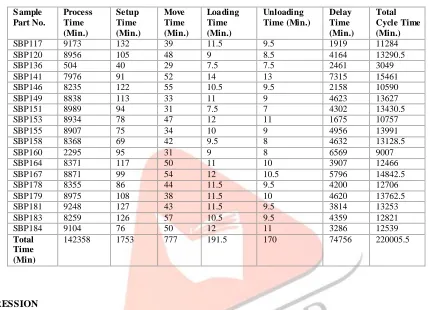
Table 1: Selected component’s time duration table
S ample Part No. Process Time (Min.) Setup Time (Min.) Move Time (Min.) Loading Time (Min.) Unloading Time (Min.) Delay Time (Min.) Total Cycle Time (Min.)
SBP117 9173 132 39 11.5 9.5 1919 11284
SBP120 8956 105 48 9 8.5 4164 13290.5
SBP136 504 40 29 7.5 7.5 2461 3049
SBP141 7976 91 52 14 13 7315 15461
SBP146 8235 122 55 10.5 9.5 2158 10590
SBP149 8838 113 33 11 9 4623 13627
SBP151 8989 94 31 7.5 7 4302 13430.5
SBP153 8934 78 47 12 11 1675 10757
SBP155 8907 75 34 10 9 4956 13991
SBP158 8368 69 42 9.5 8 4632 13128.5
SBP160 2295 95 31 9 8 6569 9007
SBP164 8371 117 50 11 10 3907 12466
SBP167 8871 99 54 12 10.5 5796 14842.5
SBP178 8355 86 44 11.5 9.5 4200 12706
SBP179 8975 108 38 11.5 10 4620 13762.5
SBP181 9248 127 43 11.5 9.5 3814 13253
SBP183 8259 126 57 10.5 9.5 4359 12821
SBP184 9104 76 50 12 11 3286 12539
Total Time (Min)
142358 1753 777 191.5 170 74756 220005.5
IV.REGRESSION
Regression analysis is a way of mathe matica lly sorting out which of the variab les does indeed have an impact. Regression attempts to determine the strength of the relationship between one responder (usually denoted by Y) and a series of other changing variables.
Regression analysis is a form of predictive mode lling technique which investigates the relationship between responder and continues predictor. This technique is used for forecasting, time series modelling and finding the causal effect re lationship between the variables.
There are mu ltip le benefits of using regression analysis. They are as follo ws:
It indicates the significant re lationships between dependent variable and independent variable. It indicates the strength of impact of mult iple independent variables on a dependent variable.
IJEDR1702070
International Journal of Engineering Development and Research (www.ijedr.org)408
Figure 3: Regression analysis result
Fro m result it can be found out that the most affected time in payload develop ment cycle is process time and delay t ime a lso found out that by modificat ion in delay t ime, effic iency will be increased.
Analysis of Variance (A NNOVA ):
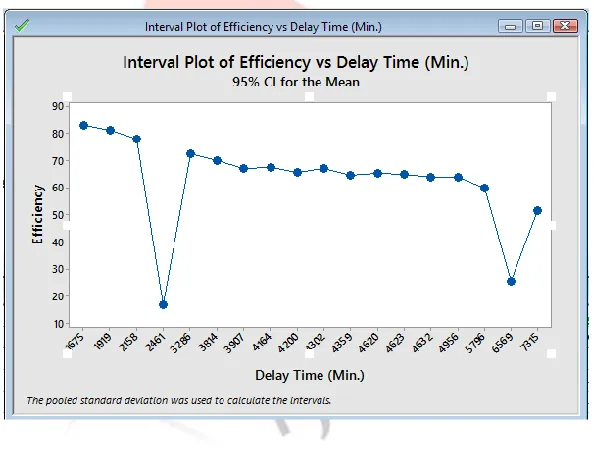
Figure 4: Interval plot of efficiency vs delay time
IJEDR1702070
International Journal of Engineering Development and Research (www.ijedr.org)409
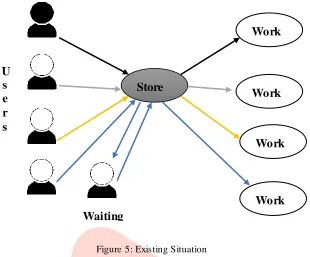
V. INVENTORY MANAGEMENT S YSTEM (IMS)Figure 5: Existing Situation
Inventory control is not a just an advantage but also a necessity.Inventory management system (IMS) is a necessary approach for every warehouse. An Inventory Management System provides less effort, more effic ient, and re liab le results compared to manual handled system.
Inventory management system is developed aim to imp rove the effic iency and performanc e of daily act ivity of develop ment cycle of Pro ject.Proper control is crucia l for the profitability of the organization. Enables the visualizat ion of inventorie s like tools, instruments, materia ls etc. Software p rovides the details of inventories like who is responsible person, what he/she is using, for what purpose and also time duration to return inventory.
Normal User
Approve r
Issuer
Update in System
Return
Normal User and approval can Search
Figure 6: IM S Design database model
A. How Inventory Management Software (IMS) Works:
Inventory Management System (IMS) helps to manage inventories like tools, fasteners, materia ls etc.
In order to get required inventory, user have to raise the job card request, then it has to be approved by ap prover. Approver ha s the rights to approve/reject the job-card request sent by user. If approved, then it can be issued by issuer to the user, else user cannot issue the inventory. If the issued inventories are of returnable type, then it can be returned b y user to the system, through the issuer. This track of a ll inventories is managed by Barcode System i.e. all inventories are having unique barcode attache d with it. A lso during the issue of inventory mail is sent to the user and approver regarding issue a nd probable return date, if the
U
s
e
r
s
Store
Work
Work
Work
Work
IJEDR1702070
International Journal of Engineering Development and Research (www.ijedr.org)410
inventory is returnable and also re minder ma il regarding to return of inventory is sent to same if user fail to return invent ory in definite time duration.B. Detail View of Inventory Management System (IMS):
Normal User
Approve r
Issuer
Figure 7: Use case diagram
Inventory Management System (IMS) consists of ma inly four activit ies: 1. Request New Job-Card
2. Approve Job-Card
3. Issue/Return requested Inventory 4. Admin istration module
1. Request New Job-Card:
Norma l user by means of secure login request new job-card a lso view job-card status, Deposit new inventory, Search Job-card , view/change profile etc.
2. Approve Job-Card:
Approver by secure login, approve or reject the requested job -card fully or can approve the partial a mount of quantity of inventory.
Also Approver can perform the other norma l user functionalities like vie w job -card status, Deposit new inventory, Search Job-card, Vie w/change profile etc.
3. Issue/Return requested inventory: Inve ntory issue (Job car d re quest)
Appr ove/ Reject Job car d re quest Vie w job
car d status
Handle Issue/Return
of i nve ntory Inve ntory
de posit request
Assign locati on to
inventor y
Job c ar d search
IJEDR1702070
International Journal of Engineering Development and Research (www.ijedr.org)411
After approval, issuer issue the requested inventory to user. Also same inventory can be returned, after use. This process is engaged with the Ba rcode system i.e. unique barcode is attached with each inventory.Issuer can also assign location to respective inventory organized with barcode. This is useful for trac king the inventory corresponding to location.
4. Admin istration module :
Admin can add Project, Category, Sub- Category and location in the system. Also, ad min has the rights of User Management i.e. admin can edit the user details or can re move the user fro m the system.
Effective inventory management is all about knowing what is on hand and where it is in use. Accurately ma intaining records of fasteners, tools and materia ls makes it possible to quickly convey information as to what is availab le at any given time.
Inventory management software is a computer based network applications that track, manage and organize fasteners, tools and materia ls. Gone are the days of tracking inventory with pencil and paper. Organizat ion can now use systems based on barcodes to see where the inventories are? And if it is returnable then when it is returned? By using inventory manage ment software , businesses reduce the time and efforts previously put into basic tracking, and instead focus on a nalyzing, finding and reducing ineffic iencies.
Inaccurate inventory records create a higher lead t ime (the time between the in itiat ion and e xecution of a p rocess), wh ich me an s a slower response to demand. This, in turn, can create e mp loyees disapproval whe n inventories aren’t available as needed.
VI.TES TING AND IMPLEMENTATION OF INVENTORY MANAGEMENT S YSTEM
I. Software Requirements:
Windows 7 or higher version Intranet Facility
Platform: java
Database: My SQLII. Hardware Requirement:
Workstation with Plantiu m 4 or h igher version Barcode Scanner Barcode Printer
Barcode TapesA. Pre-test the database:
The project tea m should practice in the test database to confirm that all in formation is accurate and working correct ly. Use a full week of rea l transaction data to push through the system to validate output. Make sure all necessary interfaces are designed and integration issues are resolved to ensure the software works appropriately.
B. Final Testing:
Make sure the actual Standard Operat ing Procedures works properly or not and determine whether modificat ions need to ma ke . The project team needs to perform a final test on the data and ma ke any needed adjustments.
C. Implementation:
Software imple mentation is the process of rea lizing design as a system. Organizations are increasingly imp le menting Inventory Management System (IMS) software solutions to improve operations and provide faster response. Choosing anIMS that meets specific business require ments will enable to have a smoother imp le mentation. A we ll designed imp le mentation plan is the ke y to success. For Imple mentation training was given to employees regarding awareness about Inventory Management System.
VII. RES ULT AND CONCLUS ION
IJEDR1702070
International Journal of Engineering Development and Research (www.ijedr.org)412
REFRENCES1. Hossain MonirMd, et al. ―Lead Time Reduction and Process Cycle Improvement of an Ice-cream Manufacturing Factory in Bangladesh by Using Value Stream Map and Kanban Board.‖ Australian Journal Of Basic and Applied Sciences (2016)
2. Hossain, MdMonir, and M. Ka ma l Uddin. "An Approach to Improve the Process Cycle Effic iency and Reduce the Lead Time o f a Mango Juice Processing Line by Using Lean Tools: A Case Study."
3. Hossain, MdMonir, and M. Ka mal Uddin. "A Case Study to Reduce the Manufacturing Waste Prior to Imp rove the Productivity Factors of a Litchi Juice Production Plant by Using Value Strea m Map and Six Sig ma Scale." International Journal of Sc ientific & Engineering Research 6.9 (2015): 1895-1905.
4. Ra jenthiraku ma r, D., P. V. Mohanram, and S. G. Ha rikarthik. "Process cycle efficiency improve ment through lean: a case study." International Journal of Lean Thin king 2.1 (2011): 46-58.
5. Atieh, Anas M., et al. "Performance imp rovement of inventory management system processes by an automated warehouse management system." Procedia CIRP 41 (2016): 568-572.
6. YU, Zhongli, et al. "The Research and Design of the Materials Inventory Management System based on the digital pipeline." (2015).
7. Maidawa Mustapha, et al. ―Design of a Whole Sale Inventory Management System Using UML‖ Proceedings of the 1st Management, Technology, and Development Co nference (2015).
8. Dewa, M. T., et a l. "A web-based holonic inventory management system for tool and die workshop operations." 9. Choudhary, Sushil Ku mar, and Nira j Gupta. "Deve lopment of the Inventory Management System for ERP
Imple mentation in Manufacturing Industry."