Available online on 25.06.2014 at http://jddtonline.info
Journal of Drug Delivery and Therapeutics
Open access to Pharmaceutical and Medical research
© 2014, publisher and licensee JDDT, This is an Open Access article which permits unrestricted noncommercial use, provided the original work is properly cited
RESEARCH ARTICLE
DESIGN & DEVELOPMENT OF SOLID SELF MICRO-EMULSIFYING OSMOTIC
DRUG DELIVERY SYSTEM FOR ISRADIPINE
Yeramwar Shriniwas1*, Patil Sumit1, Sharma Pankaj2, Bhargava Anurag3
1
Department of Pharmaceutics, Sai Nath University, Ranchi, Jharkhand, India 2
School of Pharmaceutical Sciences, Jaipur National University, Jaipur, Rajasthan, India 3
Ch. Devi Lal College of Pharmacy Bhawangah, Jagadhri, Yamuna Nagar, Haryana, India
*Corresponding author Email: [email protected]
INTRODUCTION
In recent years, considerable attention has been focused on the development of novel drug delivery systems (NDDS). The reason for this significant shift is relatively low development cost and time required for introducing NDDS ($ 20-50 million and 3-4 years respectively) as compared to new molecule. (approximately $500 million to $ 1 billion and 10-12 years, respectively). In the form of NDDS, an existing drug molecule can get a “new life”, thereby increasing its market value, competitiveness, and patent life1. Approximately 40% of new drug candidates have poor water solubility and the oral delivery of such drugs is frequently associated with low bioavailability, high intra-subject and inter subject variability, and a lack of dose proportionality. If a drug candidate has reasonable membrane permeability, then often the rate limiting process of absorption is the dissolution of dug in gastrointestinal lumen. This is a characteristics of compounds classified as Biopharmaceutical Classification system (BCS) Class II drugs2. The issue arose in particular when drug discovery moved from wet chemistry to combinatorial chemistry and high throughput screening in mid 1990’s. The
properties of new chemical entities shifted towards higher molecular weight and increasing lipophilicity, resulting in decreased aqueous solubility..
Several strategies to improve the solubility and dissolution of poorly water soluble drugs have been developed and described in literature, which were at start primarily based on modifying the drug’s physicochemical properties. Particle size reduction and salt formation became frequently taken paths in a quest for dissolution improvement, but both methods revealed limitations 3, 4. As a result, altering drug solubility or dissolution through formulation approaches has become more and more popular. Formulation plays a major role in determining the rate and extent of absorption of such a drugs from the gastrointestinal tract.
Lipid-based formulations for lymphatic delivery
The lymphatic system is an extensive drainage network spread throughout all areas of the body. It shadows the blood circulation system and functions mainly to return fluid, which has leaked into the interstitial space, back to
ABSTRACT
Objective: The objective of the study was to design and develop self-microemulsifying osmotic pump tablet Isradipine, a BCS Class IV antihypertensive agent for improved solubility and obtain controlled release characteristics.
Material & Methods: Methodology for undertaken project involved pre-formulation studies, comprising of analytical method adoption and drug: excipient compatibility studies. Further steps involve formulation and characterization of liquid SMEDDS of Isradipine. Developed SMEDDS was incorporated into selected adsorbent and compressed with osmotic agents, a binder and lubricant into tablet. Tablets were film coated with semi-permeable membrane and drilled with orifice. Final formulation was optimized for various formulation components and evaluated on various dimensions, among dissolution profiling and stability studies.
Results and Discussion: Solubility studies in oils, surfactants and co-surfactants were carried out and SMEDDS formulation was finalized as Isradipine (11.63%), Gelucire 50/13 (34.88%), Lutrol F127 (30.23%) and Transcutol P (23.26%). Neusilin US 2 was selected as adsorbent in 1:1 ratio based on excellent adsorption and huge surface area. Final optimized formulation of tablet comprises of core tablet and functional coatings of cellulose acetate (60%) and PEG 400 (40%) with 5% film coating build up. Developed formulation was optimized for various formulation components and evaluated for release kinetics and accelerated stability study.
Conclusion: The developed novel SME-OPT of Isradipine will be a promising template for formulating controlled release dosage form of BCS Class II and IV bioactive agents. The technology used for the preparation of SME-OPT is relatively simple manufacturing technology which can be easily adopted in industrial units on a commercial scale.
the blood. Advantages of drug delivery to the intestinal lymphatic system include; avoidance of hepatic first pass metabolism and the potential to target specific disease states known to spread via the lymphatic’s for example - certain lymphomas and HIV 5.
Self Micro-emulsifying Drug Delivery Systems (SMEDDS)
Self micro-emulsifying drug delivery systems (SMEDDS) are defined as isotropic mixtures of natural or synthetic oils, solids or liquid surfactants or alternatively, one or more hydrophilic solvents, and co-solvents or co-surfactants [5]. SMEDDS are able to self micro-emulsify rapidly into fine O/W microemulsion in the gastrointestinal fluids, under gentle agitation provided by the gastrointestinal tract. This fine O/W emulsion results in small droplets of oil dispersed in the gastrointestinal fluids that provide a large interfacial area enhancing the activity and minimizing the irritation due to contact of drug in the gut wall. Self microemulsifying System (SMES) can be formulated with little energy input and the shelf life is longer than conventional emulsions1, 06-10. Self emulsifying drug delivery systems (SEDDS) typically produce emulsion with a droplet size between 100 to 300 nm, while self micro-emulsifying drug delivery system (SMEDDS) form transparent micro-emulsions with a droplet size of less than 100 nm. The excipients used in SEDDS or SMEDDS are oils, surfactants, co-solvents, co- surfactants 9,10.
Solid Self Micro-emulsifying Drug Delivery System (S-SMEDDS)
SMEDDS are normally prepared as liquid dosage forms that can be administrated in soft gelatine capsules, which have some disadvantages especially in the manufacturing process 11. Given the advantages of solid dosage forms, S- SMEDDS have been extensively exploited in recent years, as they frequently represent more effective alternatives to conventional liquid SMEDDS. From the perspective of dosage forms, S-SMEDDS means solid dosage forms with self micro-emulsification properties. S-SMEDDS focus on the incorporation of liquid/ semisolid self microemulsifying ingredients into powders/ nanoarticles by different solidification techniques (e.g. adsorptions to solid carriers, spray drying, melt extrusion, nanoparticle technology, and so on). To some extent, S-SMEDDS are combinations of SMEDDS and solid dosage forms, so many properties of S-SMEDDS (e.g. excipients selection, specificity, and characterization) are the sum of the corresponding properties of both SMEDDS and solid dosage forms 12.
Oral controlled release system and Osmotic Drug Delivery System (ODDS)
Controlled release delivery systems provide desired concentration of drug at the absorption site allowing maintenance of plasma concentrations within the therapeutic range and reducing the dosing frequency. These products typically provide significant benefits over immediate-release formulations, including greater effectiveness in the treatment of chronic conditions, reduced side effects, and greater patient convenience due to a simplified dosing schedule 13. Using osmotic
pressure as the energy source, the semipermeable membrane controls water inflow, generating hydrodynamic pressure inside the device and, thereby controlling drug delivery.
Rationale for design of self emulsifying osmotic delivery system
Ideal oral drug controlled delivery systems are those that steadily meter out a measurable, reproducible amount of the drug over a prolonged period. In recent years much attention has been focused on lipid-microemulsion formulations with particular emphasis on self-microemulsifying or self emulsifying drug delivery systems to improve oral bioavailability of poorly water-soluble drugs and lipophilic drugs. A new formulation can be developed which combines the advantage of SMEDDS and controlled drug delivery system and exhibit synergistic desired release profile 14-18.
Drug profile- Isradipine
Isradipine is a calcium channel antagonist. It is available for once-daily oral administration as a controlled-release 5-mg and 10-mg tablet. Isradipine is mainly used for the treatment of hypertension, angina pectoris. Successful treatment can be achieved by maintaining constant & uniform therapeutic plasma drug concentration. Isradipine has plasma half life 1.5 to 2 hr; therefore it needs to be taken two/three times a day (depending upon disease condition). Drug has poor bioavailability (15-24%) which is mainly due to extensive pre-systemic & gastrointestinal metabolism and poor solubility 19-22. A formulation of Isradipine which could increase bioavailability through improvement of solubility, first pass avoidance and at the same time also release Isradipine for an extended period of time, thereby improving patient compliance will be highly appreciated 22
. In present work we intended to develop a system wherein, solid self microemulsifying system will solubilize drug and also avoid first pass effect by lymphatic absorption, moreover combination of this system with osmotic system will provide controlled release of drug.
MATERIALS & METHODS
MATERIALS
Isradipine was obtained as a gift sample from Glaxo Smith Kline Pharmaceuticals Ltd., Nashik, India; Gelucire 44/14, Gelucire 50/13 and Transcutol P was obtained from Gattefosse india Private Limited, Mumbai, India. Samples of Lutrol F127 were obtained from BASF, India. Grades of Zeopharm (5170 and 177) and Neusilin US 2 was obtained from J.M. Huber Corporation, India. Different grades of Aerosil and Aeroperl obtained from Degussa, India. PEG400, cellulose acetate, Methocel E3LV was generous gift from Signet Chemical Corporation, Mumbai. Distilled water was freshly prepared and used for the study. All the chemicals and reagents were of analytical reagent (AR) grade and used without further purifications.
METHODS
UV spectrophotometric method for estimation of Isradipine was adopted from USP. The calibration curve was plotted to determine unknown concentration of the drug. The mean absorbance (at 328 nm) and versus the concentration of respective standard was plotted to obtain the curve. The drug solution in 5:95 ratio mixture of methanol and 0.1% aqueous solution of lauryl dimethyl amine oxide having concentration of 5, 10, 15, 20, 25 µg/ml were analyzed at λmax 328 nm23.
Drug-Excipients Compatibility Study
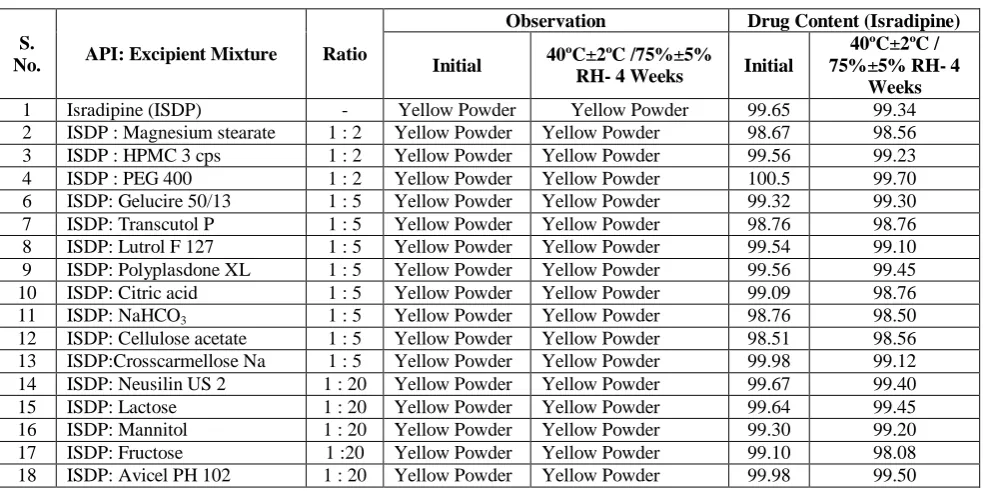
To select suitable excipients for the formulation of Isradipine Self microemulsifying osmotic pump tablet (SME-OPT), the mixture of Isradipine drug substance with various excipients were prepared in different ratio and exposed at 40ºC ± 2ºC / 75% ± 5% RH in glass vials for 4 weeks. The samples were evaluated for any change in the physical characteristics and description and also analyzed for the drug content at initial and after 4 weeks exposure.
Formulation of liquid self microemulsifying system of Isradipine
Solubility Studies in oils, surfactants and co-surfactants: The solubility of Isradipine was determined in various solvents, surfactants, co-surfactants and oils. An excess amount of Isradipine was added to 1.5 ml snap-cap Eppendorf tube containing various additives. The resulting mixture was sufficiently mixed and then placed in a constant temperature water bath at 37°C for 3 days. Aliquots were centrifuged at 10,000 rpm for 10 min. The supernatant layer was carefully collected and then adjusted with a proper dilution. The concentration of Isradipine was analyzed by spectrophotometric method at 328 nm after dilution with methanol.
Solubility Studies of isradipine in various ratio of surfactant ratio: Solubility of isradipine in various ratios of surfactants, and co-surfactants was carried out by adding excess amount of isradipine into the 1.5 ml snap-cap Eppendorf tube. The resulting mixture was sufficiently mixed and then placed in a constant temperature water bath at 37°C for 3 days. Aliquots were centrifuged at 10,000 rpm for 10 min. The supernatant layer was carefully collected and then adjusted with a proper dilution. The concentration of Isradipine was analyzed by spectrophotometric method at 328 nm after dilution with methanol.
Preparation of liquid SMEDDS formulations:
Isradipine, surfactant and fatty acid were homogenously mixed together based on the formulation compositions. The resulting mixtures were slightly heated at various temperatures and sufficiently stirred. The mixture was kept heating at 60°C until all the materials were melted. The obtained mixture was mixed by vortex until a clear solution formed. The mixture was self-microemulsifying non aqueous base.
Characterization of liquid SMEDDS
Particle size measurement: Self microemulsifying system was diluted by 100 times with distilled water, and
then droplet size of the resultant emulsion was determined by Zeta sizer nano ZS90. The mean droplet size and polydispersity index of the liquid SMEDDS was recorded.
Percent transmittance: The percent transmittance of diluted SMEDDS (1 ml to 100 ml) in distilled water was measured at 650 nm using UV visible double beam spectrophotometer.
Dilution Potential: The prepared formulation was diluted 100 times with continuous media (distilled water), and appearance recorded.
Zeta Potential: Measurement of zeta potential has become inextricably connected with the study and characterization of colloidal dispersions, as this parameter is highly useful for the assessment of the physical stability of colloidal dispersions. In the present work, for the zeta potential measurements Zetasizer Nano ZS90 (Malvern Instruments Inc., U.K.) had been employed. Clear disposable zeta cell made up of polystyrene was used for measurement. The instrument settings used were; temperature 25° C, viscosity 0.8872 centipoise, dispersant refractive index 1.33, material refractive index 1.58 and run time 10 sec for each run.
Formulation of Solid SMEDDS
Preparation of solid self emulsifying adsorbate: The melted SMEDDS solution was added to various adsorbents. After mixing it for 15 minutes in blender, the mixtures were cooled at 2-8°C for 2 hours. The solidified mass was pulverized thoroughly by a pestle and mortar and finally, passed through a 40 mesh sieve to obtain free flowing solid SMEDDS powder.
Reconstitution properties of S-SMEDDS: Solid self-micro-emulsifying drug delivery systems (S-SMEDDS) were dispersed in water under stirring for 30 min at 25 ± 0.5°C. Dispersion was filtered through 0.45 um filter to separate insoluble adsorbent component. The average droplet size and polydispersity index of microemulsion obtained from re-dispersed solid SMEDDS were determined by Zeta Sizer Nano ZS90
Formulation of self microemulsifying osmotic pump tablet (SME-OPT)
Preparation of core tablets: Solid self microemulsifying adsorbate, lactose or fructose or selected osmotic agent, citric acid and sodium bicarbonate were blended for 15 minutes in blender. After pre-lubrication, the mixture was screened through 40 mesh sieve. This was followed by lubrication blending for 5 minutes after addition of 1% (w/w) magnesium stearate and finally compression using tablet compression machine with an 11 mm standard concave punch to obtain a 600 mg (or as per trial) tablet with hardness of 6.0 –8.0 kp determined using tablet hardness tester.
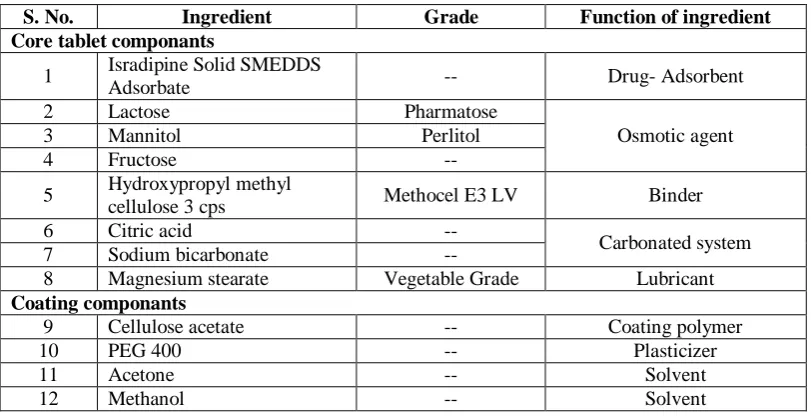
Table 1: List of ingredients used in various trials and their functional category
S. No. Ingredient Grade Function of ingredient
Core tablet componants
1 Isradipine Solid SMEDDS
Adsorbate -- Drug- Adsorbent
2 Lactose Pharmatose
Osmotic agent
3 Mannitol Perlitol
4 Fructose --
5 Hydroxypropyl methyl
cellulose 3 cps Methocel E3 LV Binder
6 Citric acid --
Carbonated system
7 Sodium bicarbonate --
8 Magnesium stearate Vegetable Grade Lubricant
Coating componants
9 Cellulose acetate -- Coating polymer
10 PEG 400 -- Plasticizer
11 Acetone -- Solvent
12 Methanol -- Solvent
Coating of core tablets with Cellulose Acetate:
Cellulose Acetate was dissolved in acetone: methanol (70:30), and PEG 400 was used as plasticizer. Initially cellulose acetate and PEG 400 were dispersed with the help of methanol; complete solubilzation of cellulose acetate was achieved by use of acetone. Core tablets
were coated with above solution to obtain coated tablets with predetermined weight gains (examples are 5, 7 and 9%) using R & D coater. Coating composition & Coating processing parameters are listed in table 1 & 2 respectively.
Table 2: Tablet Coating Parameters
Orifice Drilling: An appropriate size (0.8 mm or as per trial) was created on one face of the tablet through the coating membranes using mechanical drill. Tablets of each batch were cured at 40 ºC for 12 hour before evaluation.
Evaluation of core tablet
Compressed core teblets were evaluated for general appearance, weight variation, tablet thickness, hardness, friability and drug content by compendia methods.
EVALUATION of SME-OPT
Physical Characterization of Isradipine in SME-OPT
When self-microemulsifying drug delivery system was prepared into solid dosage form, it might be important to identify the physical characterization of the drug in the dosage form. For the physical characterization, sample of Isradipine, placebo mixture, physical mixture and solid self microemulsifying mixture with Isradipine was used for DSC and X-ray diffraction experiments. To make the spectra clearer, only self microemulsifying system containing Isradipine adsorbed on to the adsorbent was used for the study.
Differential Scanning Calorimetery (DSC): DSC was performed using Perkin Elmer 1020 series DSC-7 thermal analysis system. Samples (2-3 mg) were heated in hermetically sealed aluminium pans under nitrogen flow (60 Kg/cm2) at a scanning rate of 10°C/min from 25 ºC to 300 ºC. Empty aluminium pan was used as a reference. The DSC thermograms were obtained for Isradipine, placebo mixture, physical mixture and solid self microemulsifying mixture with Isradipine.
X-Ray Powder Diffraction (XRPD): XRPD patterns of samples were recorded at room temperature on Bruker’s D8 advance diffractometer with Cu Kα radiation (1.54 Å), at 40 kV, 40 mA passing through nickel filter. Analysis was performed in a continuous mode with a step size of 0.02° and step time of 1 sec over an angular range of 2- 40° 2θ. Obtained diffractograms were analyzed with DIFFRAC plus EVA (version 9.0) diffraction software.
In-Vitro Drug Release: To prove that, formulated SME-OPT has the controlled release characteristic; in-vitro drug release of the all trial formulations were carried out using USP recommended dissolution condition for Isradipine capsules. The conditions are using paddle apparatus USP type II dissolution apparatus (Paddle, 50
S. No. Parameters Conditions
1 Inlet temperature 40 ºC - 50 ºC 2 Exhaust temperature 32 ºC - 42 ºC
3 Pan speed 5 – 10 rpm
4 Spray speed 1 – 4 g/min
rpm, 37 ºC ± 0.5 ºC). The dissolution medium consisted of 500 ml of 0.1% aqueous solution of lauryl dimethyl amine oxide. The experiment was carried out under sink condition. At predetermined time intervals, 5 ml samples were withdrawn and the drug concentration was determined by UV spectrophotometer at 328 nm after suitable dilution. The volume removed was replaced each time with fresh dissolution medium.
Formulation optimization
Following formulation variables were optimized for desired product characteristics-
Selection and quantity of osmotic agents
Composition of semi-permeable coating
% weight gain for coating layer
Quantity of carbonated systems
Accelerated stability studies: Optimized formulations of isradipine SME-OPT 10 mg were packed in HDPE Bottle pack and aluminum-aluminium blister packs. The
packed formulations were stored in stability chambers maintained at 40 ºC and 75% RH for 3 months. The samples were withdrawn periodically and evaluated for dissolution profiling studies and other parameters. Similarity factor (f1) and difference factor (f2) were evaluated for comparison of dissolution profile of both stability batches.
RESULTS & DISCUSSION
Analytical method for estimation of Isradipine
Experimentally λmax in different medium such as methanol, 5:95 ratio mixture of methanol and 0.1% aqueous solution of lauryl dimethyl amine oxide was determined & found to be 328 nm. The coefficient of correlation showed excellent correlation between concentration and absorbance with the coefficient of variance (CV) of 0.999. The relation between drug concentration and absorbance is linear and the curves obey Beer-Lambert’s law within the concentration range of 5-25 µg/ml of isradipine.
Table 3: Concentration and absorbance of standard drug solution
S. No.
in 5:95 ratio mixture of methanol and 0.1% aqueous solution of lauryl dimethyl amine oxide Concentration (µg/ml) Absorbance
1 5 0.26
2 10 0.52
3 15 0.77
4 20 1.04
5 25 1.28
Drug-Excipients Compatibility Study
Following excipients were screened with their respective ratios. Physical observation at Initial and after 4 weeks exposure was recorded and tabulated. It was clear that,
Isradipine drug substances was compatible with all the excipients used for the study, as there was no change in description. Also, there was no significant reduction in drug content.
Table 4: API–Excipient compatibility study: Physical Observations and drug content
S.
No. API: Excipient Mixture Ratio
Observation Drug Content (Isradipine)
Initial 40ºC±2ºC /75%±5%
RH- 4 Weeks Initial
40ºC±2ºC / 75%±5% RH- 4
Weeks
1 Isradipine (ISDP) - Yellow Powder Yellow Powder 99.65 99.34
2 ISDP : Magnesium stearate 1 : 2 Yellow Powder Yellow Powder 98.67 98.56
3 ISDP : HPMC 3 cps 1 : 2 Yellow Powder Yellow Powder 99.56 99.23
4 ISDP : PEG 400 1 : 2 Yellow Powder Yellow Powder 100.5 99.70
6 ISDP: Gelucire 50/13 1 : 5 Yellow Powder Yellow Powder 99.32 99.30
7 ISDP: Transcutol P 1 : 5 Yellow Powder Yellow Powder 98.76 98.76
8 ISDP: Lutrol F 127 1 : 5 Yellow Powder Yellow Powder 99.54 99.10
9 ISDP: Polyplasdone XL 1 : 5 Yellow Powder Yellow Powder 99.56 99.45
10 ISDP: Citric acid 1 : 5 Yellow Powder Yellow Powder 99.09 98.76
11 ISDP: NaHCO3 1 : 5 Yellow Powder Yellow Powder 98.76 98.50
12 ISDP: Cellulose acetate 1 : 5 Yellow Powder Yellow Powder 98.51 98.56
13 ISDP:Crosscarmellose Na 1 : 5 Yellow Powder Yellow Powder 99.98 99.12
14 ISDP: Neusilin US 2 1 : 20 Yellow Powder Yellow Powder 99.67 99.40
15 ISDP: Lactose 1 : 20 Yellow Powder Yellow Powder 99.64 99.45
16 ISDP: Mannitol 1 : 20 Yellow Powder Yellow Powder 99.30 99.20
17 ISDP: Fructose 1 :20 Yellow Powder Yellow Powder 99.10 98.08
Formulation of liquid self micro-emulsifying drug delivery system (SMEDDS)
Solubility Studies of isradipine in various oils and surfactants: To develop a liquid SMEDDS of isradipine, suitable oils and surfactants need to be selected. Table 5 shows measured solubility of drug in various oils and surfactant. Among the oils tested, isradipine showed the highest solubility in Gelucire 50/13 and was selected as an oil phase for the formulation of SMEDDS. From solubility studies, it was concluded that isradipine showed maximum solubility in Lutrol F127 followed by Transcutol P. Lutrol F127 was selected as surfactant and Transcutol P as a co-surfactant.
Solubility Studies of isradipine in various ratio of surfactant ratio: Selection of oils, surfactant co-surfactant and the co-surfactant/co-co-surfactant ratio plays an important role in the formulation of SMEDDS. Solubility of isradipine in various ratio of Transcutol: Lutrol F 127 (1:1.1, 1:1.3, and 1:1.5) was carried out to find out the ratio having maximum solubility for isradipine without precipitation on dilution with 100 times with water and 0.1% aqueous solution of lauryl dimethyl amine oxide. Table 6 showed Transcutol: Lutrol F127 at ratio of 1:1.3 and 1:1.5 showed no significant difference and maximum solubility for isradipine without precipitation observed & ratio of 1:1.3 selected for optimized formulation.
Table 5: Solubility of isradipine in various oils, surfactants and co-surfactants
S. No. Excipients (oils) Solubility of isradipine (μg/ml)
Excipients (Surfactants/
Co-surfactants)
Solubility of isradipine (μg/ml)
1 Peceol 10.50 Soluphor P 40.50
2 Caproyl 90 35.60 Lutrol F127 80.90
3 Gelucire 44/14 80.60 Tween 20 15.90
4 Gelucire 50/13 105.60 Tween 80 20.50
5 Capmul MCM C 8 30.60 Transcutol P 60.50
6 Isopropyl myristate 40.50 Span 80 10.50
7 Safflower oil 20.60 Labrasol 40.80
8 Oleic Acid 40.50 Cremophor EL 4.50
Table 6: Solubility Study of Isradipine in various ratio of Transcutol: Lutrol F127
S. No. Ratio of Transcutol : Lutrol F 127 Solubility of isradipine (μg/ml)
1 1 : 1.1 75.50
2 1 : 1.3 95.60
3 1 : 1.5 98.30
Preparation of liquid SMEDDS
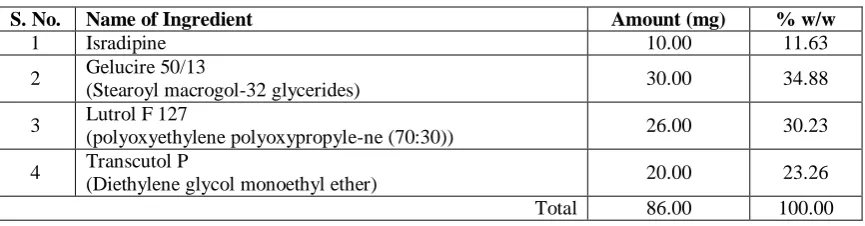
Oils, surfactant, surfactant/co-surfactant ratio was selected on the basis of isradipine solubility, Table 7 provides list of ingredients finalized for the optimized liquid SMEDDS formulation with their chemical name & solubility.
Table 7: Finalized formula of liquid self microemulsifying system (SMES)
S. No. Name of Ingredient Amount (mg) % w/w
1 Isradipine 10.00 11.63
2 Gelucire 50/13
(Stearoyl macrogol-32 glycerides) 30.00 34.88
3 Lutrol F 127
(polyoxyethylene polyoxypropyle-ne (70:30)) 26.00 30.23
4 Transcutol P
(Diethylene glycol monoethyl ether) 20.00 23.26
Evaluation of Liquid SMEDDS and solid SMEDDS
Results of evaluation of liquid SMEDDS are as follows
Table 8: Evaluation of Liquid SMEDDS and solid SMEDDS
For liquid SMES For Solid SMEDDS
Z – Average
Diameter (nm) 64.78 ± 5.76 68.95 ± 5.20
Polydispersity
Index (PDI) 0.16 ± 0.0645 0.19 ± 0.0567
Percent
transmittance 99.87 ± 0.034 98.12 ± 0.054
Dilution Potential No signs of precipitation or phase separation of microemulsion.
No signs of precipitation or phase separation of microemulsion.
Zeta Potential -14.87 ± 1.54
High negative value of zeta potential indicated stable SMEDDS formulation.
-13.45 ± 1.79
High negative value of zeta potential indicated stable SMEDDS formulation.
Preparation of Solid SMEDDS (S-SMEDDS)
Finally, Neusilin US2, a synthetic, amorphous magnesium alumino- metasilicate, was chosen for its high liquid adsorptive capacity (due to its very small particle size and large specific surface area), and its good compressibility compared to the considered silica derivatives. An additional reason for preferring Neusilin® US2 was its greater surface area (355.5 m2/g in respect to 268.4 m2/g of Aeroperl® 300) and its higher mesoporosity (1.0 and 0.5 cm3/g, respectively). In fact, it is foreseeable that these favourable properties should allow a more homogeneous and very fine dispersion of the adsorbed drug solution, enabling its rapid re-dissolution when in contact with the re-dissolution medium.
Physical Characterization of isradipine in solid SEDDS
Differential Scanning Calorimetery (DSC): The DSC study of Pure Isradipine API, Physical mixture, Liquid Isradipine SMES and solid Isradipine self microemulsifying system were performed and results mentioned in fig. I. Isradipine exhibited a sharp endothermic peak at 168°C to 172°C, which corresponded to its melting point. The DSC curve of the physical mixture also showed the peaks around 170 °C,
owing to Isradipine crystals present in physical mixture but intensity of the isradipine peak was reduced as the drug content was low in the physical mixture. The disappearance of the endothermic peak of isradipine from the thermogram of Liquid isradipine SMES, Solid isradipine SMEDDS compared with the thermogram of Isradipine API and physical mixture proved that the self emulsifying system results into conversion of crystalline isradipine to amorphous in solid SEDDS. Conversion of crystalline to amorphous is considered as perquisite for enhanced dissolution and bioavailability.
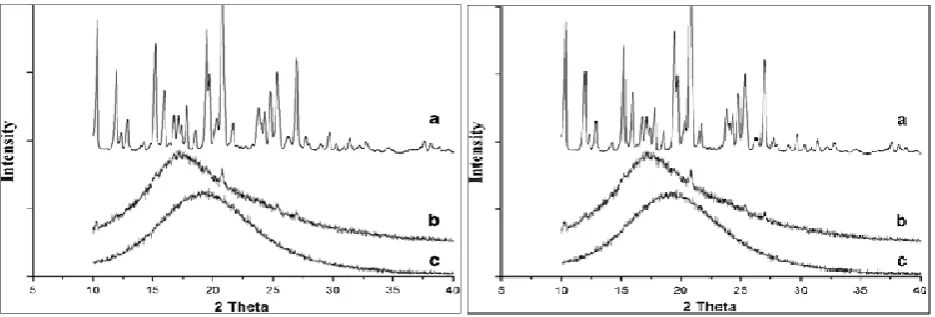
X-Ray Powder Diffraction (XRPD): From X-ray powder diffractograms shown in Fig. I, it is clear that, the internal physical state of isradipine in the solid SMEDDS was further verified. Due to the dilution by adsorbent, a few peaks appeared in the physical mixture of isradipine and adsorbant (curve b). No obvious peaks representing crystals of isradipine were seen for the solid SMEDDS (curve c). The XRD patterns of self microemulsifying mixture containing Isradipine exhibited the absence of characteristic diffraction peaks of Isradipine, indicating that the crystalline characteristic of Isradipine has disappeared in this self microemulsifying mixture.
Preparation of EOP incorporating Isradipine S-SMEDDS
Preliminary Trial
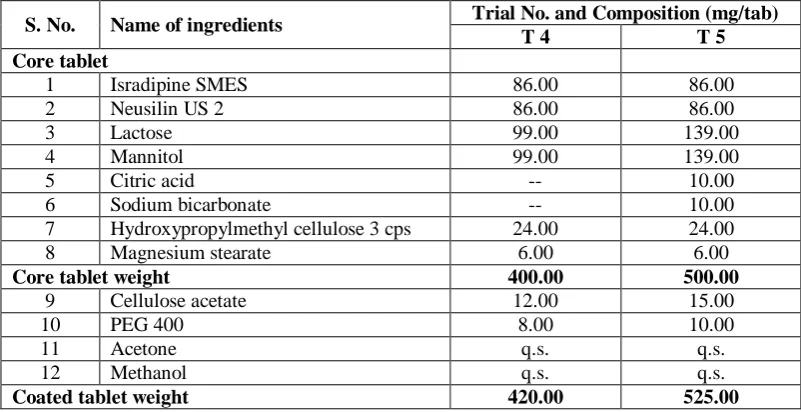
Table 9: Detailed composition of trial batch T4 and T5
S. No. Name of ingredients Trial No. and Composition (mg/tab)
T 4 T 5
Core tablet
1 Isradipine SMES 86.00 86.00
2 Neusilin US 2 86.00 86.00
3 Lactose 99.00 139.00
4 Mannitol 99.00 139.00
5 Citric acid -- 10.00
6 Sodium bicarbonate -- 10.00
7 Hydroxypropylmethyl cellulose 3 cps 24.00 24.00
8 Magnesium stearate 6.00 6.00
Core tablet weight 400.00 500.00
9 Cellulose acetate 12.00 15.00
10 PEG 400 8.00 10.00
11 Acetone q.s. q.s.
12 Methanol q.s. q.s.
Coated tablet weight 420.00 525.00
Isradipine SME-OPT is basically an elementary osmotic pump tablet. Isradipine is practically insoluble in water. In liquid SMEDDS development drug was solubilized using self microemulsifying system, which is an essential criteria for development of elementary osmotic pump.
Initial aim of the trial batches was only to achieve release of drug from EOP, irrespective of the amount of drug release. Table 9 gives detailed composition of trial batch T4 and T5. The coating composition & weight gain was kept constant at 5% for these trials.
Table 10: Physical and chemical parameters of Trial T 5
Parameters Values for core tablets of Trial T5
General appearance Light yellow biconvex tablets
Tablet weight range (mg) 495.69 – 503.78
Thickness range (mm) 5.89 – 5.98
Hardness range (kp) 6.5 – 7.3
Friability (% w/w) 0.09
Drug content/Assay (% of label claim) 99.20
Content uniformity 98.3 -102.1%.
In vitro dissolution study
The dissolution study is the key in formulation development and the dissolution result of a formulation
was used for further changes in formulation till the desired result is achieved. Given below are the dissolution profiles of the initial trial batches carried out during formulation development process.
In formulation T 4, drug release was found to be 40.50 % within 12 hours. This release of drug was incomplete and slow.
So, it was necessary to search out the factors and their optimum concentration in order to improve release of drug. It was reported that citric acid & sodium bicarbonate can be used as a carbonated system to enhance the process of emulsification24, so in batch T 5, carbonated systems were included, which results in drug release up to 76 % as shown in figure II, and the release was greater than batch T 4 but still insufficient.
From batch T 4, & T 5, it was confirmed that prepared elementary osmotic pump tablet allows the release of drug over 12 hours.
Next aim was to achieve complete release of drug from self microemulsifying osmotic pump tablet (SME-OPT). It was hypothesized that, drug release from Batch T 5 was incomplete which may be due to following reasons. Osmotic agent used was insufficient to force out the
drug from SME-OPT for the period of 12 hours Amount of carbonated system used to fasten the
process of emulsification may be insufficient. Optimization of coating composition and % weight
gain of semipermeable coating and diameter of orifice.
Formulation optimization
Following formulation variables were optimized for Trial T5 for desired product characteristics-
Selection and quantity of osmotic agents % weight gain for coating layer
Composition of semi-permeable coating Quantity of carbonated systems
The optimized formulation was evaluated for- Mathematical modeling of drug release Accelerated stability studies
Selection and quantity of osmotic agents
Trials were carried out to check effect of different osmotic agent individually or in combination on drug release. Trials were taken with different types of osmotic agents like, fructose, lactose and Mannitol and combination of them and finalized based upon the dissolution profiling.
Composition of trials for optimization of osmotic agents
Trial T5: With 139.00 mg of Lactose and 139.00 mg of Mannitol
Trial T6: With 189.00 mg of Lactose and 189.00 mg of Mannitol
Trial T7: With 378.00 mg of Lactose Trial T8: With 378.00 mg of Mannitol
Trial T9: With 189.00 mg of Lactose and 189.00 mg of Fructose
Trial T10: With 189.00 mg of Mannitol and 189.00 mg of Fructose
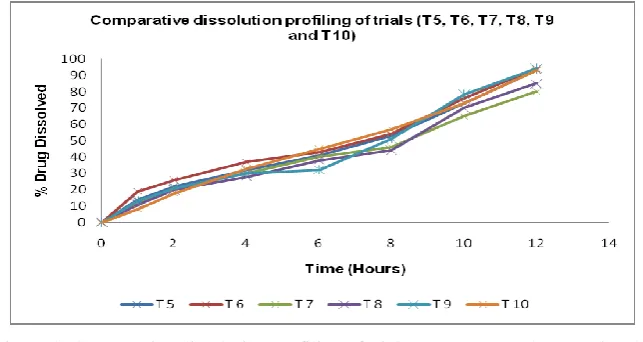
Figure 3: Comparative dissolution profiling of trials (T5, T6, T7, T8, T9 and T10)
Inference: It was found that, there was observed incomplete isradipine release for the trials with only lactose (T7) and only Mannitol (T8). Also observed is the complete and controlled release with trials with combination of osmotic agents in case of increased quantity of lactose and Mannitol (T6), combination of increased quantity of lactose and fructose (T9) and combination of increased quantity of Mannitol and fructose (T 10).
Conclusion: It was concluded that, any single osmotic agent will not be suitable for controlled and complete release of isradipine from designed SME-OPT, and
combination of any of the two osmotic agents from Lactose, Mannitol and fructose is required for complete and controlled release.
Optimization of % weight gain for semi-permeable coating
Composition of trials for optimization of osmotic agents
Trial T10: With 5% coating weight gain Trial T11: With 6% coating weight gain
Trial T12: With 7% coating weight gain Trial T13: With 8% coating weight gain Trial T14: With 10% coating weight gain
Figure 4: Comparative dissolution profiling of trials (T10, T11, T12, T13, and T14)
Inference: Complete and controlled release was obtained with 5% (T10), 6% (T11) and 7% (T12) of coating system weight gains. It was found that, there was observed incomplete release for the trial with 8% weight gain (T13). Trial T 14 was taken with 10 % weight gain of coating system and it shows very slow and incomplete release of isradipine.
Conclusion: It was concluded that, as % weight gain and quantity of osmotic coating per tablet increases, the dissolution profile was slow and incomplete beyond 8% weight gain of coating system. Acceptable dissolution profiling was confirmed with range of 5 % to 7% of coating polymer system.
Composition of semi-permeable coating
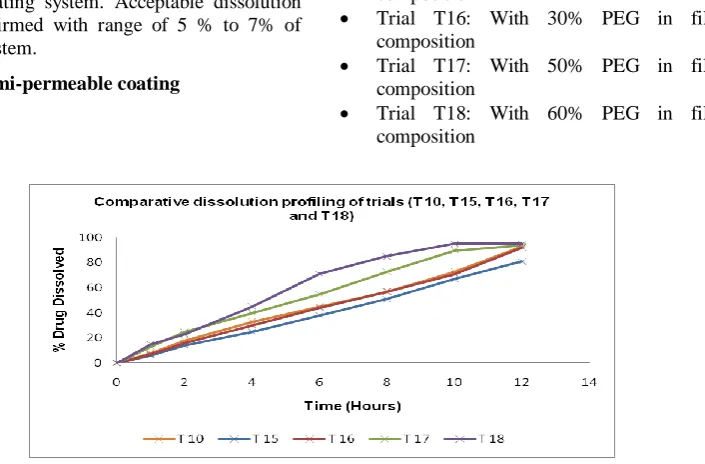
To study the influence of amount of PEG-400 on the drug release profiles, coating % weight gain was kept constant at 6% & CA membranes were plasticized with 20%, 30%, 40%, 50%, and 60% of PEG-400 and dissolution studies were carried out.
Composition of trials for optimization of osmotic agents Trial T10: With 40% PEG in film coating
composition
Trial T15: With 20% PEG in film coating composition
Trial T16: With 30% PEG in film coating composition
Trial T17: With 50% PEG in film coating composition
Trial T18: With 60% PEG in film coating composition
Figure 5: Comparative dissolution profiling of trials (T10, T15, T16, T17 and T18)
Inference: It is evident that increase in PEG 400 level leads to increase in drug release. Complete and controlled release was obtained with 40% PEG 400 (T10), and 30% PEG 400 (T16) used as plasticizer. Trial (T15) with 20% PEG 400 used as plasticizer showed very slow and incomplete release. Trials with 50% PEG 400 (T17) and 60% PEG 400 (T18), isradipine drug release was somewhat rapid and uncontrolled.
Conclusion: It was concluded that, as % of plasticizer increase in semipermeable coating of SME-OP Tablets, there was corresponding increase in rate of drug release. Acceptable dissolution profiling was confirmed with range of 30 % to 40% of PEG 400 used as plasticizer in semi-permeable membrane.
To study the influence of amount of citric acid and sodium bicarbonate on the drug release profiles, all other formulation components were kept constant as per Trial T10 and quantity of citric acid-sodium bicarbonate varied to assess the impact of it on dissolution profiling.
Composition of trials for Optimization of Quantity of carbonated systems
Trial T10: Batch with 10 mg each of Sodium bicarbonate and citric acid
Trial T19: Batch without carbonated system
Trial T20: Batch with 15 mg each of Sodium bicarbonate and citric acid
Trial T21: Batch with 20 mg each of Sodium bicarbonate and citric acid
Trial T22: Batch with 40 mg each of Sodium bicarbonate and citric acid
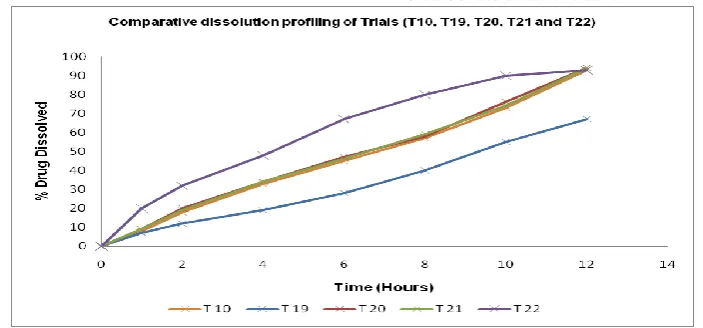
Figure 6: Comparative dissolution profiling of Trials (T10, T19, T20, T21 and T22)
Inference: A batch (T19) taken without carbonated systems is showing slow and in complete release of isradipine from SME-OPT. Trial batch (T20) and (T21) with slightly increased quantity of citric acid-sodium bi-carbonate are showing similar and controlled and complete release of Isradipine from SME-OPT. A trial (T22) with 40 mg each of citric acid and sodium bi-carbonate is showing uncontrolled and rapid release of Isradipine from SME-OPT and levels above this are not studied.
Conclusion: It was concluded that, as quantity of carbonated systems increase in SME-OP Tablets, there
was corresponding increase in drug release. Acceptable dissolution profiling was confirmed with range of 10 mg to 20 mg of citric acid and same amount of sodium bi-carbonate used as bi-carbonated system for controlled release of Isradipine from SME-OPT.
From all above formulation composition optimization trials, it was concluded that controlled & maximum drug release was achieved in batch T 21, so this batch composition was subjected to extensive evaluation and process optimization.
Formula & dissolution profile of optimized trial T 21 shown in Table 34 & figure VII respectively.
Table 11: Optimized Formula of Isradipine Self-Microemulsifying Osmotic Pump Tablet. (Trial T 21)
S. No. Name of ingredients Composition
(mg/tab) Core tablet
1 Isradipine SMES 86.00
2 Neusilin US 2 86.00
3 Mannitol 179.00
4 Fructose 179.00
5 Citric acid 20.00
6 Sodium bicarbonate 20.00
7 Hydroxypropylmethyl cellulose 3 cps 24.00
8 Magnesium stearate 6.00
Core tablet weight 600.00
9 Cellulose acetate 18.00
10 PEG 400 12.00
11 Acetone q.s.
12 Methanol q.s.
Figure 7: Dissolution profiling of finalized Isradipine SME-OPT (Trial T 21)
Evaluation of finalized SME-OPT composition
Mathematical modeling of drug release
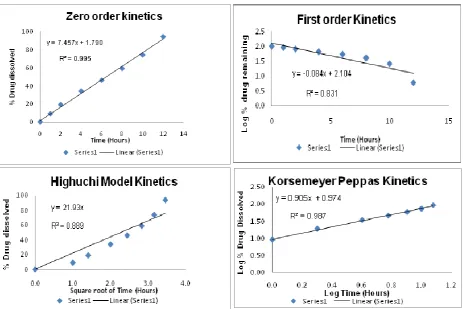
In order to study the drug release mechanism of the finalized SME-OP tablet (T21), the dissolution profiles were analyzed according to the zero-order, first-order, Higuchi’s square root equations and Korsemeyer Peppas
equation (Table 12. and Fig VIII). Best goodness-of-fit test (R2) was taken as criteria for selecting the most appropriate model. The drug release mechanism was best explained by Zero order equation, as the plots showed the highest linearity (r2 = 0.995). As the drug release was best fitted in zero order kinetics, it indicated that the rate of drug release is concentration independent.
Figure 8: Mathematical modeling of drug release profile (a) Zero order plot, (b) First order plot, (c) Higuchi plot, (d) Korsemeyer Peppas Kinetics
Accelerated stability studies
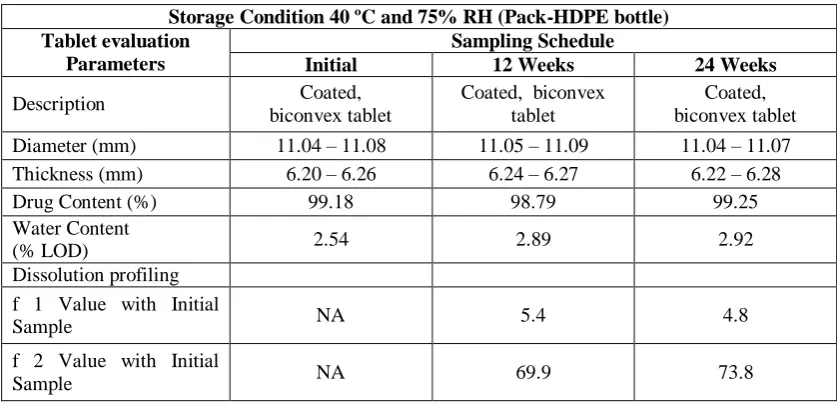
Table 12: Evaluation of tablet exposed to accelerated stability condition
Storage Condition 40 ºC and 75% RH (Pack-HDPE bottle) Tablet evaluation
Parameters
Sampling Schedule
Initial 12 Weeks 24 Weeks
Description Coated,
biconvex tablet
Coated, biconvex tablet
Coated, biconvex tablet
Diameter (mm) 11.04 – 11.08 11.05 – 11.09 11.04 – 11.07
Thickness (mm) 6.20 – 6.26 6.24 – 6.27 6.22 – 6.28
Drug Content (%) 99.18 98.79 99.25
Water Content
(% LOD) 2.54 2.89 2.92
Dissolution profiling f 1 Value with Initial
Sample NA 5.4 4.8
f 2 Value with Initial
Sample NA 69.9 73.8
Inference: The stability testing results showed that there was no change in physical parameters like description, dimensions of the tablet, after 24 weeks when stored in HDPE Bottle pack at 40 ºC and 75% RH. There was no significant change in drug content of isradipine when stored in HDPE Bottle over 24 weeks. As there was no change in drug content, it can also be concluded that, there was no significant generation of Isradipine impurities. f1 and f2 values calculations also showed that, there was no change in dissolution profiling after stability studies compared to initial control sample.
CONCLUSION
The current study illustrates the formulation of self micro-emulsifying osmotic pump tablet system of model drug isradipine, where in Isradipine is water insoluble anti- hypertensive drug administered as extended release formulation for prolonged duration. Solubility of Isradipine was significantly increased by use of self micro-emulsifying system. It can be explained by conversion of crystalline nature to more soluble amorphous nature when formulated as solid self microemulsifying system, as endorsed by PXRD and DSC studies. Various oils, surfactants, co-surfactants and adsorbents were screened for suitability for incorporation in SME-OPT. The formulation involved a stable self micro-emulsifying liquid concentrate incorporating isradipine formulated as directly compressible tablet using selected Neusilin US2 as adsorbent for SMES. Final manufacturing process involves coating of Self
micro-emulsifying core tablets with semi-permeable coating polymer system and drilling of orifice to create self micro-emulsifying osmotic pump tablet (SME-OPT). Final composition was optimized for quantity of osmotic agents, carbonated systems, % weight gain for coating membrane, composition of coating system. Mathematical modeling data showed that drug release from self emulsifying pump tablet follows zero order release kinetic, for period of 12 hour - a highly desirable characteristics of controlled release formulation. Final coated tablet formulation was found to be stable when stored in HDPE bottle pack at 40°C/75% RH for 24 weeks. The developed novel SME-OPT of Isradipine will be a promising template for formulating controlled release dosage form of BCS Class II and IV bioactive agents. The technology used for the preparation of SME-OPT is relatively simple manufacturing technology which can be easily adopted in industrial units on a commercial scale.
ACKNOWLEDGMENTS
The authors would like to thank Glaxo Smith Kline Pharmaceuticals Ltd., Nashik, India for the sample of Isradipine and Gattefosse India and Pvt. Ltd, Degusa, India, Signet Chemical corporation and BASF India for providing various excipients samples.
CONFLICTS OF INTEREST
The authors declare no conflict of interest.
REFERENCES
1. Verma, R., Garg, S. Current status of drug delivery technologies and future directions. Pharmaceutical Technology, 2001, (25), 1–14.
2. Yu, L.X., Amidon, G.L., Polli, J.E., Zhao, H., Mehta, M.U., Conner, D.P., Shah, V.P. and Lesko, L.J. Biopharmaceutics classification system: the scientific basis for biowaiver extensions. Pharmaceutical Research, 2002, (19), 921–925. 3. R. Liu, "Water-insoluble drug formulation", Interpharm Press,
Denver, Colorado. 2000.
4. M. Perrut, J. Jung and F. Leboeuf, "Enhancement of dissolution rate of poorly-soluble active ingredients by
supercritical fluid processes Part I: Micronization of neat particles," Int. J. Pharm. 2005, (288), 3-10.
5. Muranishi, S., Fujita, T., Murakami, M., Yamamoto, A. Potential for lymphatic targeting of peptides. Journal of Controlled Release. 1997, 46, 157–164.
6. Warkley, M., Pouton, C.W. and Meakin, B.J. Evaluation of the self emulsifying performance of a non ionic surfactant-vegitable oil mixture. Journal of Pharmacy Pharmacology.
7. O’Driscoll,C.M. Lipid based formulation for intestinal lymphatic delivery. European Journal Pharmaceutical Sciences 2002,(15), 405‐415.
8. Shah,N.H., Carvajal, M. T., Patel C,I., Infiled M, H. and Malick, A.W. Self emulsifying Drug Delivery systems (SEDDS) with polyglycolized glycerides for improving in‐vitro dissolution and oral absorption of lipophilic drugs.
International Journal of Pharmaceutics. 1994, 106, 15‐23. 9. Khoo, S. M., Humberstone, A. J., Porter, C.J.H., Edward,
G.A. and Charman, W.N. Formulation Design and bioavailability assessment of lipidic self‐emulsifying formulation of halofantrine, International Journal of Pharmaceutics. 1998, (167), 155‐164.
10. Amidon, G.L., Lennernas, H., Shah, V.P. and Crison, J.R.A. Therotical basis for a biopharmaceutical classification: The correlation of invitro drug product dissolution and in vivo bioavailability. Pharmaceutical Research. 1995, (12), 413‐420.
11. Jing-ling Tang, Jin Sun and Zhong-Gui He, Self-Emulsifying Drug Delivery Systems: Strategy for Improving Oral Delivery of Poorly Soluble Drugs. Current Drug Therapy. 2, 85-93. (2007).
12. Bo Tang., Gang Cheng., Jian-Chun Gu and Cai-Hong Xu. Development of solid self-emulsifying drug delivery systems: preparation techniques and dosage forms. Drug Discovery
Today, 2008, Vol 13, Number 13/14, 606-612.
13. Theeuwes, F., Swanson, D.R., Guittard, G. , Ayer, A. and Khanna, S. Osmotic delivery systems for the beta-adrenoceptor antagonists metoprolol and oxprenolol: design
and evaluation of systems for once-daily administration.
Journal of Clinical Pharmacology. 1985, 19 69S–76s. 14. Chiao, C. S. L., and Robinson, J. R. Sustained and
Controlled-Release Drug Delivery Systems. 19th ed. Philadelphia: Mark Publishing Company. 1995.
15. Banakar, U. V. Drug delivery systems of the 90s: Innovations in controlled release. Journal of the American Pharmacists Association. 1987, NS 27(2):39–42, 47–48.
16. Khan, M. A., Bolton, S., and Kislalioglu, M. S. Optimization of process variables for the preparation of ibuprofen coprecipitates with eudragit S100. International Journal of Pharmaceutical sciences. 1994, 102(1–3),185-192.
17. Khan, M. A., Karnachi, A. A., Singh, S. K., et al. Controlled release coprecipitates: formulation considerations. Journal of Controlled Release. 1995, 37(1–2), 131–141.
18. Jonkman, J. H. Food interactions with sustained-release theophylline preparations. A review. Clinical Pharmacokinetic. 1989, 16(3),162–179.
19. Florey, Klaus., Analytical Profiles of Drug substances. Volume:18, Page No:221-288.
20. www.drugbank.com.
21. www.medscape.com.
22. Patient Information Leaflet of DYNACIRC CR jointly manufactured by Novartis Consumer Health, Inc and Patheon Pharmaceuticals Inc.
23. Monograph for Isradipine Capsules USP32–NF27 Page 2726 24. Chen, H., Chang, X., Du, D., Li, J., Xu, H. and Yang, X..