EAR BASED BIOMETRIC AUTHENTICATION SYSTEM
1
Ranjita Chowdhury, Dalia Ghosh, 1Puja Agarwal and 2*Prof. Samir Kumar Bandyopadhyay
1Dept. of Computer Science and Engineering St. Thomas’ College of Engineering &
Technology, Kolkata, West Bengal, India.
2
Department of Computer Science and Engineering, University of Calcutta, Kolkata, India.
Article Received on 29/07/2016 Article Revised on 18/08/2016 Article Accepted on 08/09/2016
ABSTRACT
Ear biometrics is a subset of Biometric Authentication System which is
gaining popularity and research view point. Ear biometric finds its
applications in the crime investigation, attendance monitoring, security
purpose etc. Ear biometrics using Index Segmentation for gray scale
images is proposed in this paper and has been implemented by using
edge detection and matching techniques.
KEYWORDS: Ear biometrics, Human identification, Recognition.
INTRODUCTION
Modern society depends on systems to provide secure environments and services to people.
This is usually established by extracting some form of information from the individual to
check against information held by the system about valid users. Biometrics refers to the
physiological or behavioural traits of a person which can be used to identify him uniquely.
Biometrics authentication (or realistic authentication)is used in computer science as a form of
identification and access control. It is also used to identify individuals in groups that are
under surveillance. Today in many areas identity of a person needs to be proven, like to use
an ATM, for gaining access to a restricted area. This can be done by using convectional
system of using tokens, passwords, PINS, etc. But they can be lost, stolen, shared, and
destroyed. Hence we apply Biometric System for authentic identification of an individual.
All the conventional security systems have some drawbacks. The prime reason behind their
World Journal of Engineering Research and Technology
WJERT
www.wjert.org
SJIF Impact Factor: 3.419*Corresponding Author
Prof. Samir Kumar
Bandyopadhyay
Department of Computer
Science and Engineering,
University of Calcutta,
inclination towards ear biometrics is due to the presence of all the properties i.e. universality,
uniqueness, permanence and collectable in nature in ear biometric. Also ears are not variable
in its appearance during the change in pose and facial expressions.
Alphonse Bertillon was the first individual to foresee the power of ear biometric for
recognizing the criminals in jail since ear has a reputation of stable biometric feature that
does not vary with time. Research also shows the evidence that slight ear size variation do
happen as the person ages. Nixon studies prove that recognition rate is not affected by aging.
In this paper, we start with discussing the anatomy of human ear, freely available ear
database, different method used in ear recognition, the problem faced in ear biometrics and
the applications related to it.
Biometrics is related to material or behavioural characteristics that can be used for human
identification. For example, many a times identity of a person needs to be proven like, to use
an ATM, entering an organization, while using the facility of e-commerce or to gain access to
any high security zone. There are several conventional means for personal identification
which include passports, keys, tokens, access cards, personal identification number (PIN),
passwords, etc. It can be lost, stolen or duplicated, and passwords, PINs, etc can be forgotten,
cracked or shared. These drawbacks cause great loss to the concerned. These drawbacks also
affect the organization in identifying an individual appropriately. The uniqueness,
universality, permanence and collectability of the identifying features are lost. The growing
demand for new techniques in the field of biometrics has led to the development of Ear
Biometrics to such a great extent.
DATABASE OF EAR
This database consist of three set of data i.e. Dataset -1, Dataset-2 and Dataset-3. Data Set-1
has 801 side face images acquired from 190 subjects. Data Set 2 has again 801 side face
images collected from 89 subjects named data set 802. It consist of frontal view of the ears
captured at three positions, first when a person is looking straight, second when person is
looking approximately 20down and third when person is looking approximately20 up . The
Dataset-3 was acquired from 100 different subjects, having the age range of 19-65 years. For
each individual, seven images (six right ear images and one left ear image) were taken. The
In this section, we made a survey only on 2D ear recognition techniques. In the 2D ear
recognition techniques, basically researcher focuses on finding the methods for extracting
features point present in the subject image. Then, subject image is compared with stored
feature vector database. The possibility of identifying people by the shape of their outer ear
was first discovered by the French criminologist Bertillon, and refined by the American
police officer Iannarelli, who proposed a first ear recognition system based on only seven
features. When compared to face recognition, ear recognition is found to give better result.
Different approaches have been proposed for ear recognition [1]. Iannarelli [2] claims that the
ear is unique feature of an individual.
Choras (2005) [3] proposed a method for identification featuring human ear images, since
they are considered to be unchanging over time and could provide more precise features that
are available for classification. The method used by Choras was based on placing the center
of the new coordinate system in the centroid, making any rotation of the image irrelevant for
the purposes of identification, as well as negating the need for translation and scaling, which
will allow RST inquiries. The centroid is a key reference point in the feature extraction
algorithm, which is divided into two steps. Later, Choras (2007) added additional
experiments to expand on the earlier study, and determined that emerging ear biometric
methods can be useful in the field of automated computer vision human identification
systems. In particular, Choras recommended using multimodal (hybrid) biometrics systems a
process that is receiving more attention as time goes on. Due to its advantages over other
methods, including facial recognition, ear biometrics could provide additional support to the
more well-known methods such as iris, fingerprint or face identification [4]. The most recent
research in ear biometrics includes Zhou et al. (2011) [12] who offered a robust technique for
2D ear recognition using color SIFT features. Based on the experiments conducted by the
researchers, these methods attain better recognition rates than other methods that are typically
viewed as state-of-the-art on the same datasets.
EAR ANATOMY
Ear does not have a completely random structure. It has standard parts as other biometric
traits like face. Figure .1 shows the standard features of the ear. Unlike human face, ear has
no expression changes, make-up effects and moreover the colour is constant throughout the
Figure 1. Anatomy of the Ear
In addition to the familiar rim or helix and ear lobe, the ear also has other prominent features
such as the anti-helix which runs parallel to the helix, and a distinctive hairpin-bend shape
just above the lobe called the inter tragic notch. The central area or Concha is named for its
shell-like appearance.
PROPOSED METHOD
Ear biometrics has gone through a number of improvements which resulted in its further
advancements. In our algorithm we have proposed a novel idea of matching technique using
the method of correlation. Along with the pre-processing methods and other necessities we
have made an effort to demonstrate an easy yet authentic way to implement the matching
technique which forms one of the most important parameter in ear authentication process.
Our proposed algorithm consists of following steps as shown in figure 2.
Figure 2. Proposed Methodology
The side face images have been acquired using Sony DSC-1600 camera in the same
been stored in PNG format. The images should be carefully taken such that the outer ear
shape is preserved. The less erroneous the outer shape is the more accurate the results are.
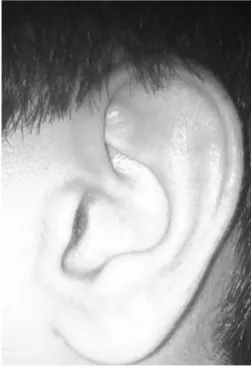
Figure 3 shows an image which conserves the outer shape of the Ear.
Figure 3 Outer shape of the Ear
The cropped ear image may be of varying size so the feature set of images may also vary.
Hence the images are normalized to a constant size by resizing technique used database. Each
file in the database has images of the right ear taken image resize 200*318. Two images per
person have been taken and stored.
MATLAB has been used for completing the method to extract features and match the images
to the database. For each of the images a feature vector was planned as follows: First, the
colour images were converted to a gray scale image.
The ear part is manually cropped from the side face image and portions of the ear, which do
not constitute the ear, are coloured black leaving only the ear. The coloured image is then
converted to a gray scale image. The Figure 4 given below contributes the gray scale image
which is obtained by cropping the ear part of the image.
The edge detection is done using the canny edge detector method. If w is the width of the
image in pixels and h is the height of the image, the canny edge detector used takes as input
an array w*h of gray values (float values) and sigma (standard deviation) and outputs a
binary image with a value 1 for edge pixels, i.e. the pixels which constitute an edge, and a
value 0 for all other pixels. Figure below contributes a gray scale image and its corresponding
edge detected binary image obtained from the canny edge detector.
It can be observed that the edge detected image has many noisy edges. For edge detection the
canny edge detection is used with a threshold of 0.3 as canny detection gives the best results
under the given illumination conditions. Along with this dilation is used to connect the edges
which may be broken by the edge detection process. Thinning has already been incorporated
in the canny detection.
Segmentation partitions an image into distinct regions containing each pixel with similar
attributes. To be meaningful and useful for image analysis and interpretation, the regions
should strongly relate to depict objects or features of interest. Meaningful segmentation is the
first step from low-level image processing, transforming a gray scale or colour image into
one or more other images to high-level image description in terms of features, objects, and
scenes. The success of image analysis depends on the reliability of segmentation, but an
accurate partitioning of an image is generally a very challenging problem. The segmentation
and measures ear recognition has been Canny Edge detection was applied to identify the main
edges of the ear image. Since the ear has quite a lot of ridges, it seemed like a suitable choice.
The ear image processing has a centre point on this line is calculated. Figure 5 shows the
Histogram equalization is a technique for adjusting image intensities to enhance contrast.
Histogram of an image can be drawn by plotting pixel intensities versus frequency of the
pixel intensities or probabilities of pixel intensities. It is a method that improves the contrast
in an image, in order to stretch out the intensity range. Equalization implies mapping one
distribution (the given histogram) to another distribution (a wider and more uniform
distribution of intensity values) so the intensity values spread over the whole range. This
allows for areas of lower local contrast to gain a higher contrast. Histogram equalization
accomplishes this by effectively spreading out the most frequent intensity values. This
method is useful in images with backgrounds and foregrounds that are both bright or both
dark.
The following steps to perform Histogram Equalisation:
1. To count the total number of pixels associated with each pixel intensity of an image matrix.
2. Calculate probability of each pixel intensity in the image matrix. Probability is number of
pixels divided by total number of pixels.
3. Calculate cumulative probability and multiply it by that factor in the range of which we
want our image to be enhanced. Numbers so obtained are rounded to their floor values.
Thus using this technique the intensity range of pixels will increase resulting in a more spread
histogram. Figure 6 and figure 7 depicts the effect before and after histogram equalisation.
Figure 6. Before Histogram Equalisation.
We have used correlation method to match two digital images. This technique is also known
as template matching. It compares portions of one image against another on a pixel-by-pixel
basis. Correlation is a measure of degree to which two variables agree, not necessarily in
actual value but in general behavior .The two variables are the corresponding pixel values in
two images in the template and source and it is shown in figure 8.
Figure 8. Process of Correlation Measure.
The matching process moves the template image to all possible positions in a larger source
image and computes a numerical index that indicates how well the template matches the
image in that position.
Template is nothing but a small region of image. Correlation method is simple and hence can
be analyzed appreciatively. There are two key features which make it simple and they are:
shift-invariant and linear.Shift-invariant means that we perform the same operation at every
point in the image. Linear means replacing every pixel with a linear combination of its
neighbours.
The goal of this method is to find the correlated pixel within a certain disparity range that
minimizes the associated error and maximizes the similarity.
RESULTS
The authenticated result follows the following steps and results are shown in Table 1.
1. The proposed technique breaks the derived edges of the profile face into a set of convex
edges to reduce the participation of noisy edges in the cluster of true ear edges.
2. Identification of true ear among the probable ear candidates with the help of an ear x,
y
Template Image
Input Image
I(x, y)
O(x, y)
Output Image x, y Correlati
technique in performs ear localization merely based on the size of the connected components
which often leads to wrong ear localization as there may exist a cluster of the largest size of
non-ear edges.
3. The performance obtained in the proposed technique is found to be robust and stable on a
larger dataset.
Table 1: Comparison between existing method and proposed method.
Data Set Existing Proposed Method(%) Method(%)
Data Set 1 801 95.88 99.20 Data Set 2 802 94.73 98.51 Data Set 3 1070 91.11 95.65
CONCLUSIONS
Ear biometrics for Automatic Index Segmentation is the recent technique emerging in
biometrics for authentication and identification. Ear index point detection is used as a pattern
in recognition of ear images. We have identified the boundary of the outer ear from the given
image and determined the shape. We have performed Canny Edge Detection using binary
extraction. Canny Edge Detection gives better performance than the method to other
algorithm.
We have chosen human ear authentication as a secondary approach for identification due to
its certain limitations. For example sometimes due to some reasons like wearing various
accessories like earrings may differ the size of the original ear and so due to this mismatch, it
gives us undesirable outputs. Furthermore, images occluded with hair are difficult to match as
certain parts are not properly visible and thus it creates a major problem. Also our body
posture while taking the image at the time of verification may slightly change which results
in mismatch with the image stored in database.
Besides these limitations in ear authentication procedure, our method gives effective results
in case of small firms or in areas where accuracy is not the highest priority. Greatest essence
and value of our algorithm lies in its simplicity. It can be implemented easily with ease.
Being a secondary approach, it can be combined with a stronger procedure to produce
REFERENCES
1. Anika Pug & Christoph Busch, “Ear Biometrics: A Survey of Detection, Feature Extraction and Recognition Methods”, July 2, 2012.
2. A. Iannarelli, “Ear identification, forensic identification series”, Paramount Publishing
Company, 1989.
3. Choras, M., 2005. Ear Biometrics Based on Geometrical Feature Extraction. Electronic
Letters on Computer Vision and Image Analysis, 5(3): 84-95.
4. Choras, M., 2007. Emerging Methods of Biometrics Human Identification. Proceedings
of the Second International Conference on Innovative Computing, Information and
Control, pp: 365.
5. Zhou, Z, & Huang, T.S. Multimodal Surveillance: Sensors, Algorithms and Systems.
Artech House: London.
6. Nadler, M., E.P. Smith, “Pattern Recognition Engineering”, Wiley: New York 1993.
7. Rettberg, A., R. Dömer, M. Zanella, A. Gerstlauer, F. Rammig, Embedded System
Design: Topics, Techniques, and Trends. New York: Springer, 2007.
8. Li, S.J., A.K. Jain, Encyclopedia of Biometrics. Springer: East Lansing, 2009.
9. Jain, A.K., A. Ross and S. Prabhakar, An Introduction to Biometric Recognition. IEEE
Transactions on Circuits and System for Video Technology, 2004; 14(1): 4-20.
10.Hurley, D.J., B. Arbab-Zavar, M.S. Nixon, The Ear as a Biometric. Handbook of
Biometrics, 2007; pp: 25-29.