Knowledge of Diabetes Mellitus among Pregnant
Women in Three Districts of Nepal
Background:
Diabetes mellitus is an emerging health problem in developing world with the consumption of energy
dense diet and inactive lifestyle. The problem of diabetes is further expanded due to ignorance and lack of knowledge.
The aim of the study was to assess the knowledge of diabetes among pregnant women in three districts of Nepal.
Methods:
A community based cross-sectional study was conducted in three districts in mountain, hilly and plain
areas of Nepal. A total of 590 pregnant women were interviewed during the period of July 2009 to June 2010. A
knowledge score system was applied. Poor score was <40%, average (40-60%) and good (>60%) of the total score.
Statistical software SPSS 11.5 was used for data entry, data management and analysis.
Results:
Out of 590 pregnant women, only 41% had heard about diabetes mellitus. Majority of the participants
(75%) from age group >30 years had not heard about diabetes. Among the 241 with some knowledge, the knowledge
score median percent(range) on the meaning, symptoms, risk factors, treatment, prevention, complications and
overall knowledge were 50%100), 25% 75), 20% 60), 20% 100), 25% 100), 20% 60) and 26%
(0-58) respectively. According to defined category, majority of those who ever heard about diabetes had poor knowledge
(95%). Knowledge among literate women (p=.001), women residing in Kailali district (plain region) (p=.003) and
those with positive family history of diabetes (p=.003) was found to be significant.
Conclusions:
As large proportions of Nepalese pregnant women do not have any knowledge or have poor
knowledge regarding diabetes, extensive health education and health promotion programs are urgently recommended
to prevent diabetes in Nepal.
Keywords:
diabetes mellitus; knowledge.
Shrestha S,
1Thapa P,
2Saleh F,
3Thapa N,
1Stray-Pedersen B,
4Khanom K
51Department of Community Health Nursing, Nepalese Army Institute of Health Sciences-College of Nursing, Kathmandu, Nepal, 2Department of Epidemiology and Biostatistics, Bangladesh Institute of Health Sciences(BIHS), Dhaka, Bangladesh, 3Department of Community Nutrition, BIHS,Dhaka, Bangladesh, 4Division of Women and Children, Oslo University Hospital, Rikshospitalet and Institute of Clinical Medicine, University of Oslo, Norway, 5Health Education and Health
Promotion, BIHS, Dhaka, Bangladesh.
Correspondence:
Sheela Shrestha, Nepalese Army Institute of Health Sciences-College
of Nursing, Post Box No. 10160, Kathmandu Nepal. Email: [email protected].
np, Phone: 9841360689.
ABSTRACT
INTRODUCTION
Diabetes mellitus (DM) is a serious public health concern whose number in Nepal is estimated to reach 6,38,000 by the year 2025.1 There will be an alarming increase in the population with type 2 diabetes mellitus, both in developed and developing countries over the next two decade.2,3The KAP scores of diabetic patients on diabetes were found to be low.4 Several studies have shown that culturally appropriate health education program can improve knowledge regarding DM and glycaemic control.5,6
There is a lack of public awareness regarding DM in Nepal where medical services are poor.7 Obtaining information regarding the level of awareness about diabetes in a population is the first step in formulating a prevention program for diabetes.8 A very few hospital based studies have been done on knowledge regarding diabetes mellitus among diabetic patients in Nepal.4 But no community based study has so far been conducted among pregnant women of the country. This study will help to reveal the gap of knowledge that needs to be reinforced, thereby providing a baseline data for formulating prevention programs for diabetes.
J Nepal Health Res Counc 2013 Sep;11(25):259-63
Special
METHODS
A community based cross-sectional study was conducted from July 2009 to June 2010 in Dhading, Kailali and Solukhumbu districts representing hilly, plain and mountain areas respectively. From each district, two or three Village Development Committe (VDCs)/ Municipality were selected conveniently. Considering urban and rural population, study samples were selected. Based on Population Census 2001 and Annual Report 2064/65, expected numbers of pregnant women of 24 weeks and above were estimated per study area.9,10The list of pregnant women of 24 gestational weeks and above was obtained from Maternal and Child Health Workers (MCHW) and Female Community Health Volunteers(FCHV). A total of 590 eligible respondents were recruited as study sample by simple random technique using lottery method. Respondents were interviewed at their household and health centres.
Data were collected using pre-tested structured questionnaire in simple Nepali language by three trained data collectors (two Auxiliary Nurse Midwives and one Community Medical Assistant). The questionnaire included socio-demographic information, knowledge about the meaning, risk factors, symptoms, treatment, prevention and complications of diabetes.
To assess knowledge, a scoring system was used for each component of the questionnaire: each correct answer was given a score of 1 and 0 for each incorrect or ‘do not know’ answer. Three categories were defined on the basis of the score obtained by each participant: poor (<40% of the total score), average (40%-60% of the total score), and good (> 60% of the total score).11 Ethical clearances from Nepal Health Research Council (NHRC) and Bangladesh Diabetic Samity (BADAS) were obtained before conducting the research. An informed verbal consent was taken from the respondents. The collected data was entered and analyzed by using SPSS 11.5 version. A p-value less than or equal to 0.05 was considered significant.One-way ANOVA (Post Hoc- Bonferroni) and Chi-square were used as the test of significance.
RESULTS
In total 60, 140 and 390 samples were recruited from Solukhumbu, Dhading and Kailali districts respectively. Of the total 590 respondents, only 241(41%) had heard about diabetes. Among the respondents, 93% were Hindu, 46% were of age group 21-25 years, and 71% were literate. Above half of the women were house wives (52%) and lived in a joint family (52%). About 62% of them lived in rural area and 74% had income less than
Table 1. Characteristics of the pregnant women (n= 590).
Parameters Knowledge of
Diabetes mellitus p value
Yes No
Age, years No. (%) No. (%) Below 20
21-25 26-30 > 30
67(36) 115(43)
52(50) 7(25)
120(64) 155(57) 53(50) 21(75)
0.035
Religion
Hindu Buddhist Others
231(42) 6(19) 4(50)
319(58) 26(81)
4(50) 0.018
Location
Solukhumbu (Mountain region) Dhading (Hilly region) Kailali (plain region)
18(30)
54(39) 169(43)
42(70)
86(61) 221(57)
Habitate
Rural Urban
114(31) 127(56)
250(69) 99(44) 0.001
Income range($) < 70
70-210 > 210
49(26) 177(47)
15(71)
143(74) 200(53) 6(29)
0.001
Education of women
Illiterate
Informal Education Literate
10(11) 20(25) 211(50)
77(89) 61(75) 211(50)
0.001
Occupation of women
Housewife Agriculture Service holder Self employed Others
139(45) 62(27) 14(78) 24(71) 2(67)
169(55) 165(73) 4(22) 10(29)
1(33) 0.001 Type of family
Nuclear Joint Extended
70 138
33
110 166 73
0.03
Regarding knowledge on diabetes, majority (75%) from the age group of more than 30 years had not heard about diabetes. About 69% of those coming from the rural areas and 74% with monthly income <$70 were unaware of diabetes. The study also showed that 89% of the illiterate and 73% farmers did not know about diabetes.
treatment such as insulin injection and regular blood sugar monitoring. Only 7% of the respondents were aware of maintaining ideal body weight for prevention of diabetes. Regarding complications of diabetes, 95% were unaware of eye disease followed by foot ulcer 91%, heart disease and kidney disease.
Table 2. Distribution of respondent’s knowledge on different aspects of diabetes mellitus (n=241).
Categories of
Knowledge Correct answer Incorrect answer/ Don’t know
Knowledge score Median % (range) A. Meaning of
Diabetes * No. (%) No. (%) 50(0-100) Increase in blood
glucose level Insufficient insulin or Body not responding to insulin
193(80)
7(3) 48(20)243(97)
B. Symptoms of
Diabetes* 25(0-75)
Excessive thirst Excessive urination Excessive hunger Fatigue
50(21) 111(46) 34(14) 19(8)
191(79) 130(54) 207(86) 222(92) C. Risk Factors of
DM* 20(0-60)
Hereditary Obesity
Decrease physical activity
Age > 40 years Problem with pancreas
26 (11) 134(56) 10 (4) 14 (6) 0 (0)
215(89) 107 (44) 23.1 (96) 227(94) 241(100)
D. Treatment of
Diabetes * 20(0-100)
Eating healthy diet Regular exercise Insulin injection Oral medicine Regular blood sugar monitoring
87 (36) 41(17) 9(4) 120 (50) 21 (9)
154 (64) 200 (83) 232(96) 121 (50) 220 (91)
E. Prevention of
Diabetes* 25(0-100)
Eating healthy diet Regular exercise Maintaining ideal body weight
Regular health check up for diabetes
117 (49) 69 (29) 17 (7) 53(22)
124(51) 172(71) 224 (93) 188 (78)
F. Complications of
Diabetes* 20(0-60)
Eye disease Heart disease Kidney disease Foot ulcer
12 (5) 49 (20) 48 (20) 23 (10)
229 (95) 192 (80) 193 (80) 218 (91) G. Overall
knowledge score 26(0-58)
*Multiple response items
Majority (95%) of those that had heard about diabetes were found to have poor knowledge score (Figure1). The knowledge score median percent(range) on meaning, symptoms, risk factors, treatment, prevention, complications and overall knowledge of diabetes were 50% 100), 25% 75), 20% 60), 20% 100), 25% (0-100), 20% (0-60) and 26% (0-58) respectively (Table 2).
Figure 1. Knowledge level of respondents regarding diabetes (n=241).
Scoring: Poor (<40%), average (40-60%) and good (>60%) of the total score.
Table 3. Percentage of knowledge of the respondents according to the location, level of education and family history of diabetes (n=241).
Location Knowledge score median % (range)
F/p
Solukhumbu (Mountain region) (n= 17)
19(0-36)
5.17/0.006
Dhading (Hilly region) (n= 54)
15(0-53)
Kailali (Plain region) (n= 170)
24(0-55)
Level of Education
Knowledge score median % (range) F/p Illiterate (n=10) 13(0-30)
7.05/.001 Informal education
(n=20)
16(0-35)
Literate ((n=211) 24(0-55)
Family History of DM Knowledge score median % (range)
F/p
Yes ( n= 39) 25(5-55)
5.93/0.003 No (n=191) 21(0-53)
Don’t know (n=11) 15(0-30)
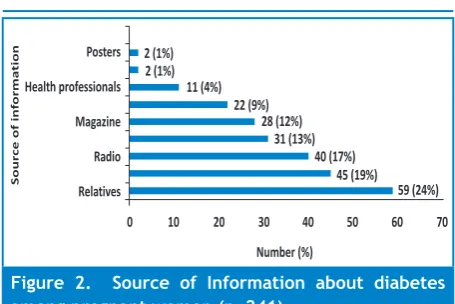
Figure 2. Source of Information about diabetes among pregnant women (n=241).
Respondents from Kailali district have significantly higher knowledge than the rest (F=6.034, p=0.003). Literate women had significantly higher score of knowledge about diabetes than illiterate and informally educated pregnant women (F=7.149, p=0.001) (Table 3). The median percent (range) knowledge score was significantly higher among respondents with positive family history of diabetes (F=5.93, p=0.003). The relatives, friends and the radio were the major leading source of information regarding diabetes followed by books and magazines whereas a very few respondents obtained diabetes related information from health professionals (Figure 2).
DISCUSSION
This study revealed that knowledge on diabetes mellitus among Nepalese pregnant women was very low. It was found that about 59% of the respondents had never heard about diabetes. Among those who had heard the term diabetes, the majority (95%) had poor knowledge on diabetes. Similar finding was observed in ethnic group (Appalachian population) in West Virginia, US.12 This is in contrast to the better knowledge found in a study from India among Chennai population,8 where 75.5% knew about diabetes. The difference in our findings may be due to the low frequency of DM in our study population and also low availability of information and education on diabetes. Chennai city in India is supposed to be the model city for diabetes related activities which included both diabetic and non-diabetic population.
Knowledge score median percent (range) on meaning of diabetes was found to be poor 33% (0-66). Lack of concern in issues unrelated to them and also lack of exposure to diabetic patients may be the possible explanation for the low scores. Our finding is in contrast to the finding from an Oman,13 which revealed that 56.8% were aware of meaning of diabetes.
Most of the respondents have poor knowledge score percent (range) 25% (0-75) on symptoms of diabetes.
Similarly, the Oman study showed that they had limited knowledge (57%) on classic symptoms of diabetes.13 In a hospital based study done among diabetic patients in Malaysia, it was found that 90% had good knowledge.14
Almost all respondents (96%) did not have knowledge about physical inactivity as a risk factor for diabetes. Similarly, studies from Chennai,8 and Oman,13 showed 92% and 79% non-diabetic subjects respectively were not aware of physical inactivity as risk factor. Since diabetes has become epidemic, knowledge about its risk factors may enforce the high risk group to lead a healthy life style.
Most of the respondents were not aware of any treatment and complications of diabetes. Only 4% were aware of insulin injection as treatment of diabetes. This finding is in contrast to the population based study done in Singapore,15 where 85.5% knew about insulin injection. This may be due to type 2 diabetes being more common in Singapore. Also the study included almost all healthy pregnant women. Sothey might not have bothered about the treatment and complications of diabetes. It may also be due to fact that they might not be in touch with diabetic patients or lack of dissemination of diabetes related information.
Only 7% of the respondents were aware of maintaining ideal body weight as preventive measures for diabetes. This can be due to the fact that 97% of the respondents were unaware of physical inactivity as a risk factor of diabetes which is similar to the findings of study done in Oman among non-diabetic respondents where 80% were unaware of physical inactivity as a risk factor.13
The knowledge score median percent (range) 25% (5-55) of the respondents with family history of diabetes was significantly high (p=0.001). This might be due to involvement of their family members in diabetes care and also through health professionals while giving company to them in the hospital. This finding is consistent with studies from Singapore,15 and Oman.13
The knowledge score median percent (range) of literate group was significantly higher compared to illiterate and informal education group (p=0.001). Similar finding was observed in study from Chennai,8 Pakistan,11 Oman,13 and Britain.16
In the present study, occupation did not play any significant role on the level of knowledge. However, housewife, farmer and self employed had less knowledge on diabetes compare to service holder which is similar with the study in Pakistan.11,12
from relatives (24%) followed by friends (19%), radio (17%), course books (13%) and magazines respectively. This shows that we cannot neglect the power of verbal communication. Similar findings were obtained in study from Singapore.15 It was found that only 4% obtained information regarding diabetes from health professionals. This could be due to lack of knowledge regarding diabetes among the health workers working in grass root level or due to lack of interest among pregnant women or they were healthy and did not seek any help from health professionals.
The study findings cannot be generalized because of the limited number of respondents. Large scale cross-sectional as well as interventional studies with inclusion of other issues like beliefs, attitudes and perceptions regarding diabetes mellitus should be undertaken in future.
CONCLUSIONS
The study found that a large proportion of Nepalese pregnant women lacked knowledge or had very little knowledge regarding diabetes. Six out of ten pregnant women in Nepal are not even acquainted with term diabetes. Location, education and family history of diabetes have significant influence on knowledge score of pregnant women. Thus, extensive health education and health promotion programs are urgently recommended to prevent DM in our population giving more emphasis on mass communication like electronic and print media.
ACKNOWLEDGEMENTS
The authors would like to give special thanks to Letten foundation, Norway for the financial support, Professor Liaquat Ali for his valuable suggestions, Dr Puja Lama and Sarswoti Shrestha for their support during data entry and also grateful to MCHWs and FCHVs of Dhading, Kailali and Solukhumbu districts including those pregnant women of the respective districts for their cooperation and willingness to participate in this survey.
REFERENCES
1. King H, Aubert RE, Herman WH. Global burden of diabetes, 1995-2025: Prevalence, numerical estimates, and projections. Diabetes care. 1998;21:1414-31.
2. Wild S, Roglic G, Green A, Sicree R, King H. Global prevalence of diabetes: estimates for the year 2000 and projections for 2030. Diabetes Care.2004;27:1047-53.
3. Radulian G, Rusu E, Dragomir A, Posea M. Metabolic effects of low glycaemic index diets. Nutrition Journal.2009;8(5):1-8. 4. Upadhya DK, PalaianS, Shankar PR, Mishra P. Knowledge, attitude
and practice about Diabetes in Western Nepal. 2007; Journal of Nepal Medical Association. 2005;44(160):129-34.
5. Hawthorne K. Effect of culturally appropriate health education on glycaemic control and knowledge of diabetes in British Pakistani women with type 2 diabetes mellitus. Health Education Research Theory and practice. 2001;16(3):373-81.
6. Mauldon M, Melkus GD, Cagganello M. Tomando Control: a culturally appropriate diabetes education program for Spanish-speaking individuals with type 2 diabetes mellitus--evaluation of a pilot project. Diabetes Educ. 2006 Sep-Oct;32(5):751-60. 7. Karki P, Baral N, Lamsal M, Rijal S, Koner BC, Dhungel S, Koirala
S. Prevalence of non-insulin dependent diabetes mellitus in urban areas of eastern Nepal: a hospital based study. Southeast Asian J Trop Med Public Health. 2000 Mar;31(1):163-6.
8. Mohan D, Raj D, Shanthirani CS, Datta M, Unwin NC, Kapur A, Mohan V. Awareness and knowledge of diabetes in Chennai--the Chennai Urban Rural Epidemiology Study [CURES-9]. J Assoc Physicians India. 2005 Apr;53:283-7.
9. Annual Health Report 2064/65. Kathmandu: Department of Health Service (Nepal); 2065.
10. Central Bureau of Statistics: Population of Nepal 2001. Kathmandu: National planning Commission Secretariat (Nepal); 2002.
11. Rafique G, Azam SI, White F. Diabetes knowledge, beliefs and practices among people with diabetes attending a university hospital in Karachi, Pakistan. East Mediterr Health J. 2006 Sep;12(5):590-8.
12. Tessaro I, Smith SL, Rye S. Knowledge and perceptions of diabetes in an Appalachian population. Prev Chronic Dis. 2005 Apr;2(2):A13.
13. Al Shafaee MA, Al-Shukaili S, Rizvi SG, Al Farsi Y, Khan MA, Ganguly SS, et al. Knowledge and perceptions of diabetes in a semi-urban Omani population. BMC Public Health. 2008 Jul 22;8:249.
14. Ambigapathy R, Ambigapathy S, Ling HM. A knowledge, attitude and practice (KAP) study of diabetes mellitus among patients attending Klinik Kesihatan Seri Manjung. NCD Malayasia. 2003;2(2):6-16.
15. Wee HL, Ho HK, Li SC. Public awareness of diabetes mellitus in Singapore. Singapore Med J. 2002 Mar;43(3):128-34.