THE IMPROVEMENT OF READING
LITERACY AND ACCESS TO KNOWLEDGE
IN TECHNICAL EDUCATION
Zvonka Cencelj
Primary school Vransko - Tabor, Slovenia E-mail: [email protected]
Marija Ropič University of Maribor, Maribor, Slovenia
E-mail: [email protected]
Abstract
Teachers often realize that the main cause of learning problems concerning students is a very bad reading literacy. It can be found out that the majority of students have problems reading; they often avoid textual exercises or read them slowly and confront with the problem of not understanding the text they have read. Reading literacy has been dealt with very often lately. Slovenia as a country takes part in some international projects and researches, trying to develop, improve and measure reading literacy.
The following article is written to present the results of the 2009 PISA study on reading literacy, milestones for reading at the end of the third three-year cycle, the level of comprehension in reading and our findings on the functional literacy of elementary school pupils of one of Slovenian schools in teaching technical subjects.
Key words: functional literacy, reading and learning strategies, technical science and technology, reading comprehension.
Introduction
slovenia takes part in more than one international knowledge researches that measure the reading literacy. in slovenia this field of science is developed and measured by pisa and pirls researches. the pisa periodically researches reading, mathematical and science literacy on the level of primary and high school education. in 2009 the pisa research was focused on general reading literacy. 470.000 pupils from all over the world co-operated in the research. in slovenia 7.764 high school students from 333 high school educational programmes and 46 pupils from 24 primary schools participated. the results of the research showed that the achievements of slovenian students, compared to the eu and oecd, are below the average and they had aggravated since 2006 by 11 points. slovenia scored 483 points on this area (the eu average is 489 and the oecd average is 494). according to the research the basic reading competences are reached by 79% of the students (the eu average is 82%). these competences enable students to continue their education on every single field and to be successful and efficient in their everyday life. the highest reading competences are reached by 0.3% of slovenian students (1% in oecd and 0.6% in the eu) (http://www.pei.si/default.aspx).
of education in the 21st century Volume 46, 2012 29
characteristics and particularities. the pupil with bad learning methods stays bad even if he has a good teacher, so teachers must use efficient methods to pass them on to young people (Pečjak, 1977). one of the goals of our educational system is that the students, at the end of compulsory education, should reading literate. this means they read fluently, understand what they have read and are capable to use the information they have read to use for solving life’s and learning problems and for their own personal growth (Pečjak, 2002).
Reading is highly organized activity and brain activity (Pečjak, 1996). some authors talk about two basic components of the reading process, namely the process of decoding and understanding the process, while others approach the teaching of reading in terms of time series and talk about two basic stages in reading development. this is the stage of learning to read and phase of learning through reading (Pečjak, 1995).
school teachers insist on too many facts to be learnt. new working methods are embraced regularly but pupils are usually left on their own when talking about their learning methods (aberšek, 2012). students should be encouraged to discover the essence of the text, search for keywords, determine important details in the text and to make a conceptual map. students’ motivation for reading can be encouraged by selecting various texts and to thereby facilitate the processing of texts (Wood, lapp, flood and taylor, 2008). students achieve significantly greater quantity and quality of knowledge when being familiar with basic skills and strategies of reading and how to use them (buehl, 2000 by Gregory and cahill, 2010).
When finishing the primary school education, the pupils should master: ● Reading technique, namely:
• read fluently and accurately,
• have a rich vocabulary (general and technical)
• be familiar with the basic elements of voice and know how to use them,
• in silent reading recognize all the words in the texts of the appropriate difficulty • slow down the speed of silent reading for longer and less abundant words,
• enrich their vocabulary by learning a variety of new words encountered in texts and the directly learn new, mainly abstract words (out of context and isolated), ● Reading strategies,
• pre-reading (prior knowledge, to predict content, purpose, objective reading, types of texts, the purpose of the author).
• while reading (unknown words, consistency with the forecasts, promptly correc the errors).
• after reading (identifying the essence of the important / unimportant, a cause-effect, semantic networks, a genre and the text structure, comparison with other texts, assessing and evaluating the content and the structure of the text).
● Study strategy
• the use of indexes, glossaries, indexes in a book. • looking for books in the library.
• using the dictionary (new words). • encyclopedias, atlases ...
• reading simple graphic messages. • different speed strategy (Pečjak, 1995)
after two or three years of being pupils most children master reading technique only, reading and understanding makes the whole process of further learning, because the biggest part of learning in school and during the study presents learning through texts - learning from texts (Pečjak, 1995).
• verbal comprehension, • reorganization,
• interpretive understanding, • useful understanding Guszak, barret:
• verbal comprehension,
• understanding with the reasoning • evaluation
• critical and creative understanding dechant, smith:
• verbal comprehension, • interpretation,
• critical and creative reading.
in general, there are three levels of understanding: • reading (comprehension);
• memorization;
• reproduction - recovery; recognition (Pečjak, 1995, p. 6)
the first phase of learning through teaching materials is meeting the material. the second phase is the phase remembrance which is strongly influenced by the level of understanding the text. much more data and information can be remembered if you understand the text well. the data we see as well stay longer in our memory. this is shown especially in the third stage of learning where the learning effect is checked.
to get students to good reading comprehension and learning, we need to know the different levels of understanding. understanding of the reading can be defined by qualitative and quantitative terms. the qualitative approach is dealt with by various authors that divide this approach into different levels. these levels are checked by using a variety of questions. issues that are different at each level affect different thought processes. so we talk about lower and upper level issues (Pečjak, 1995).
the lowest level is the level of understanding or verbal understanding of words that appear in the text. the questions require low levels of reproduction of data and facts only. often these are questions that do not require a deeper understanding and large cognitive processes - mostly starting questions with question words: who, when, where, how, what it is ... the answer requires only reproduction of data.
Questions of the higher level activate higher level of thought processes such as analysis, comparison and synthesis. the second level of understanding is to understand with reasoning. the essence of understanding at this level is that students master the conclusion on the basis of information from the text, they can connect parts of the text and they can explain them. at this level of understanding the background plays a major role.
there are three types of reasoning:
• the implicit reasoning is reasoning that is included and clearly reflected in the wording.
• elaborating reasoning allows the student to link the information in the text with prior knowledge.
of education in the 21st century Volume 46, 2012 31
the pupil stores, and retains only certain information. there are already higher level questions appearing. students form the answers in their own words, give the main ideas or continue with the thoughts.
the highest - the third level of understanding is the level where students are able to transform the text, translate the graphs and tables into a written form, to clarify certain symbols and metaphors, in other words, to use facts and data in other texts, to analyze the text, to evaluate the validity of the texts, to analyze the text, to evaluate the validity in the text, to connect ideas from the text with their own knowledge, to compare the scanned text with another text. Questions directed at the learner apply his knowledge to new situations. convergent and divergent questions are emerging, offering more answers and illustrating the creativity of students in reading (Pečjak, 1995).
Research Problem
students in today’s primary schools have fewer and fewer school subjects, where they would be able to develop manual dexterity. technical science is performed only in the 6th, 7th and 8th class. While teaching, it is often noticed that students aren’t able to make the something using the manuals only. When teaching technical science, really close attention should be paid to students’ individual work and learning through reading.
the study focuses on functional literacy on the fields of learning technical science and technology in primary school.
Methodology of the Research
the basic of the research was the experiment where it was tried to find out about the functional literacy of the pupils at technical science and technology lessons. the pupils had to make the requisites for their mardi Grass costume with the help of instructions. the text was equipped with sketches and photos.
The Pattern of the Research
the pupils from class 6 to class 9 of the primary school co-operated in the research. they are from countryside where there is a tradition to join the local mardi Gras festival. every year the school organizes a technical day where pupils make their mardi Gras costumes.
The Tasks of Checking the Reading Comprehension
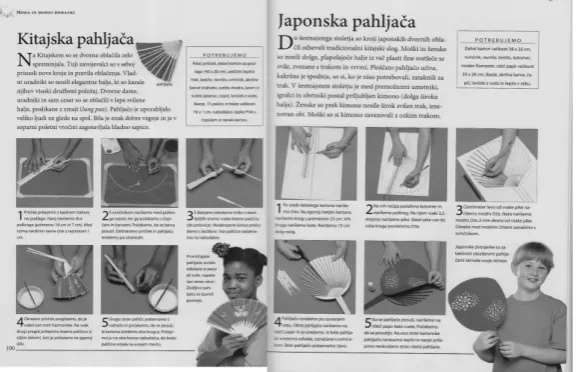
Figure 1: Instructions for making carnival masks (Gray, 2010, p. 100-101).
students scanned materials submitted with the aim to select the text (instructions for making carnival masks), which they would use and to decide what would be produced. before manufacturing they had to read the instructions for making masks individually and to answer the following questions:
level 1:
• What will your carnival mask represent? • What product did you decide for? • Where was the product used?
• list the tools that you need to produce this product.
• list the materials that you need to produce the selected product.
level 2:
• list the additional materials that you need to make your carnival mask. • name the tools you'll need to produce your product.
level 3:
• draw a sketch of your product.
• describe how you will create your product.
The results and their interpretation
in determining the functional literacy i was particularly interested in:
1. Whether the pupil was able to read the text independently and to find the answers to the questions,
2. if the pupil answered the questions that when i read the instructions with the emphasis on some words in sentences,
3. if the pupil wrote the responses using the teacher’s guidance, and additional questions 4. Whether the student did not gather responses from the text even when guided by the teacher,
of education in the 21st century Volume 46, 2012 33
Figure 1: Data analysis in par. enrolled students.
a high percentage of students who would not write anything was expected, but anyway, 48% of those who did not manage to find the answers was a surprisingly high percentage.
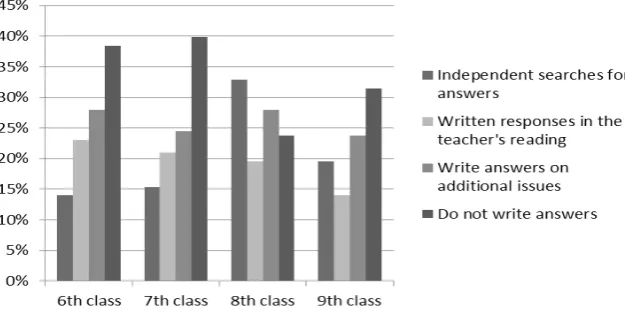
Figure 2: Analysis of the data by class.
the six grade students meet tit for the first time. the autonomous way of finding information and making the subject according to the instructions for them are somehow new. concerning the number of written responses the eighth grade pupils deviate. such i expected a result like that i think that is mainly due to the flexible performing of teaching technical science and technology in the 7th and 8th class. the eight grade pupils had the technical science and technology in the first semester, but students of the seventh classes only just started with tit.
also, the percentage of students who did not write the answers in the 9th class is very high. students in the 9th class no longer have tit, they were not interested in making masks but the fact as well is that some of them still read poorly and are slow in reading.
all the pupils made the product in time given. it was made from agreed materials, with appropriate tools and treatment techniques. they had quite a few problems with reading the instructions and finding the data in the text. their frequent questions were: do i have to read all this? do i have to write down all these answers? etc.
.
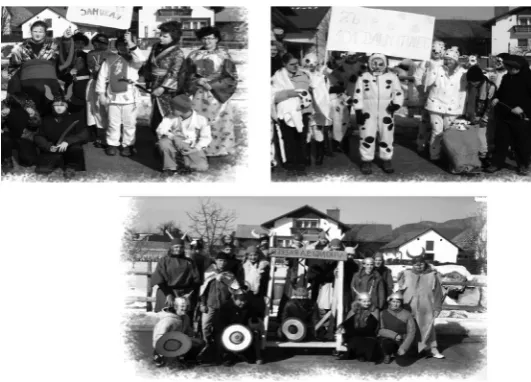
Figure 2: Made carnival masks.
(Source: Archive photos Primary School Vransko – Tabor. Photo: Marija Završnik)
Discussion
too much factual knowledge is still required from the students . teachers all over slovenia are receptive to new methods of work, but the students are left on their own to make their own way through the new teaching methods. students should be taught the strategies to determine the essence and important details of the text, search for keywords, make notes, make conceptual folders, read texts with understanding, ...
the teachers realize that the origin of the many students’ learning difficulties is in poor reading literacy. many students have difficulty simply by reading, and often avoid the tasks that include the text or the reading is slow and the text is not understood correctly.
When talking about reading literacy, slovenia is ranked below the oecd average. the lack of reading skills is often the main obstacle for the successful resolution of the tasks. to improve the functional literacy in the classroom, greater emphasis should be placed on strategies and teaching methods which affect students’ performance especially in the field of technical education and on the use of e-learning materials in teaching technical science. the students’ activity in the field of autonomous learning should be raised.
Conclusion
the main intention was to use the results to find out how many students have difficulty in reading and understanding given instructions. all students finished the product but they were successful in their work due to the additional support of the teacher, materials were equipped with many pictures (and as we like to call “at technical science the good drawing is more important than the text”), so they could use the drawings and their own experience to help them make the product. some of them got stuck at production where the procedure was only described and no photos were added to the text and they used the mentioned technique for the first time.
of education in the 21st century Volume 46, 2012 35
to achieve the desired objective a use as many potential online resources as possible will be used, so they will help to reach our final goals.
References
aberšek, b. (2012). Didaktika tehniškega izobraževanja med teorijo in prakso, ljubljana, Zavod republike slovenije za šolstvo.
buehl, d. (2000). Classroom Strategies for Interactive Learning. newark, de: international reading association.
Gibson, r. (1993). Maske. ljubljana: dZs.
Gray, l. (2010). 120 zgodovinskih projektov. radovljica: didakta.
Gregory, a. e., cahill, m. a. (2010). Kindergartners can do it, too! comprehension strategies for early readers. The Reading Teacher, 63 (6), 515-520.
nacionalna strategija za razvoj pismenosti, (http://arhiv.acs.si/publikacije/nsrp.pdf , 11. 3. 2012).
Pečjak, S. (1993). Kako do boljšega branja: tehnike in metode za izboljšanje bralne učinkovitosti.
ljubljana: Zavod rs za šolstvo in sport.
Pečjak, S. (1996). Kako do boljšega branja: tehnike in metode za izboljšanje bralne učinkovitosti.
ljubljana: Zavod rs za šolstvo in šport.
Pečjak, S. (1995). Ravni razumevanja in strategije branja. Trzin: Založba Different, d. o. o.
Pečjak, S. (1999). Osnove psihologije branja: spiralni model kot oblika razvijanja bralnih sposobnosti
učencev. ljubljana: Znanstveni inštitut filozofske fakultete.
Pečjak, S. Gradišar, A. (2002). Bralne učne strategije. ljubljana: Zavod rs za šolstvo.
Pečjak, V. (1991). Hitro in uspešno branje. Ljubljana: Samozaložba. Spletni strani Pedagoškega inštituta:
http://www.pei.si/default.aspx (9. 3. 2012)
Wood, K. d., lapp, d., flood, J., taylor, d. b. (2008). Guiding readers through text: Strategy Guides for New Times. newark, de: international reading association.
Advised by Laima Railienė, University of Siauliai, Lithuania
received: May 15, 2012 accepted: July 25, 2012
Zvonka Cencelj Primary School Vransko - Tabor, Vransko 23, Vransko 3305, Slovenia. E-mail: [email protected]
Marija Ropič PhD, Assistant Professor, �niversity of �aribor, �ac�lty of E��cation, �oro�ka ��0,�niversity of �aribor, �ac�lty of E��cation, �oro�ka ��0, 2000 �aribor, Slovenia..