R E S E A R C H
Open Access
Genetic structure and population diversity
of eleven edible herbs of Eastern Crete
Antonia Psaroudaki
1,2, Nikolaos Nikoloudakis
3, Georgios Skaracis
1and Andreas Katsiotis
3*Abstract
Background:The present work aimed to investigate the genetic structure of 11 edible herbs grown in the wild of eastern Crete that are becoming vulnerable due to habitat destruction and unregulated harvesting. Thirty three populations (268 individuals) ofReichardia picroides,Scolymus hispanicus,Scandix pecten-veneris,Leontodon tuberosus, Cichorium spinosum, Sonchus asperssp. glaucescens,Urospermum picroides,Prasium majus,Hypochoeris radicata, Centaurea raphaninassp. raphaninaandAnagallis arvensiswere collected and identified from nine regions with distinct microclimate (Lassithi prefecture), and their genetic composition was studied by means of RAPD markers. Results:A total of ten primers per population were used to detect genetic diversity and bootstrap analysis was conducted for clustering the samples. High levels of heterogeneity were revealed while the Analysis of Molecular Variance documented that variance was allocated mainly within populations and at a lesser extent among
populations.Fstvalues among regions were moderate to high, suggesting partial population fragmentation.
Bayesian structure analysis revealed fine genetic composition and substantial admixture between species present in different regions, although clustering was mainly geographically related.
Conclusions:High altitude regions, with little residential and agricultural development (Kefala, Agrilos, Ziros and Tziritis), were the areas where high biodiversity was detected. On the other hand, coastal regions had lower biodiversity, probably due to degradation of their habitat.
Keywords:Compositae, Umbelliferae, Labiatae, Primulaceae, DNA amplification fingerprinting, AMOVA
Background
Greece is a country where more than six thousand plant species are listed, from which almost 500 of them are in-digenous. At the island of Crete alone about 2000 differ-ent taxa have been recorded [1]. Local endemism is a rather common feature of the island, which shelters more than 140 indigenous species [1]. In addition, low plant species homogeneity exists among different re-gions of Crete. This has been attributed to the natural geographical barriers, such as high mountains, and the different microclimates between the island’s regions [1]. Due to its geographical location, Lassithi in particular presents a unique flora, being in the eastern part of Crete and at the most southern part of Europe.
Another distinct feature of the Cretan vegetation is that many herbs, endemic or not, are edible and consti-tute an integral part of the everyday traditional diet. Sev-eral studies on wild edible herbs consumed in Crete even today have demonstrated their great nutritional value [2–6]. However, up to now there have not been any studies concerning the biodiversity of wild edible species populations in eastern Crete. This is essential for any program relating to the conservation and exploit-ation of genetic resources (in situ and/or ex situ) that are under threat, mainly because of over-harvesting from the wild (it is difficult to cultivate them and no proper guidelines exist) as well as by the agricultural intensifica-tion and urbanizaintensifica-tion. Recently, a directive from the Greek forestry department was issued for all regions in Crete prohibiting collecting from the wild of edible plants for marketing reasons, while restricted quantities are allowed for personal use, in order to promote the growth of natural populations.
* Correspondence:[email protected]
3Department of Agricultural Science, Biotechnology and Food Science,
Cyprus University of Technology, Athinon and Anexartisias 57, 3603 Limassol, Cyprus
Full list of author information is available at the end of the article
© 2015 Psaroudaki et al. This is an Open Access article distributed under the terms of the Creative Commons Attribution License (http://creativecommons.org/licenses/by/4.0), which permits unrestricted use, distribution, and reproduction in any medium, provided the original work is properly credited. The Creative Commons Public Domain Dedication waiver (http:// creativecommons.org/publicdomain/zero/1.0/) applies to the data made available in this article, unless otherwise stated.
To acquire a general overview of the genetic diversity of 11 edible wild species, 33 populations were collected from nine different locations of eastern Crete (all located in the Lassithi region) totaling 268 individuals. Surveying morphological variation of wild species is a rather cum-bersome and difficult task since little (if any) morpho-logical descriptors have been developed and there is always the chance that collectors may remove specimens included in any genetic study. In the present study plants were collected for botanical identification as well as for DNA fingerprinting using RAPD markers. We aimed to address: a) the extent of genetic diversity of the sampled populations, b) the within and between popula-tion genetic diversity, and c) the genetic structure of spe-cies/populations related to their distribution. The ultimate purpose is to identify areas where species ex-hibit greater variability for ex situ collection, in situ preservation and possibly propagation of genetic material.
Results
Genetic diversity
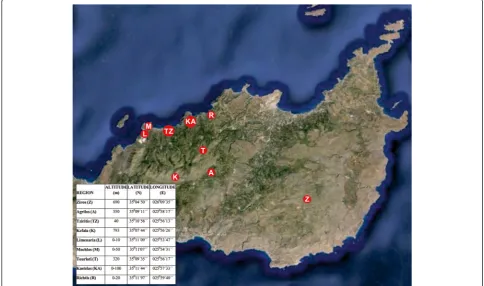
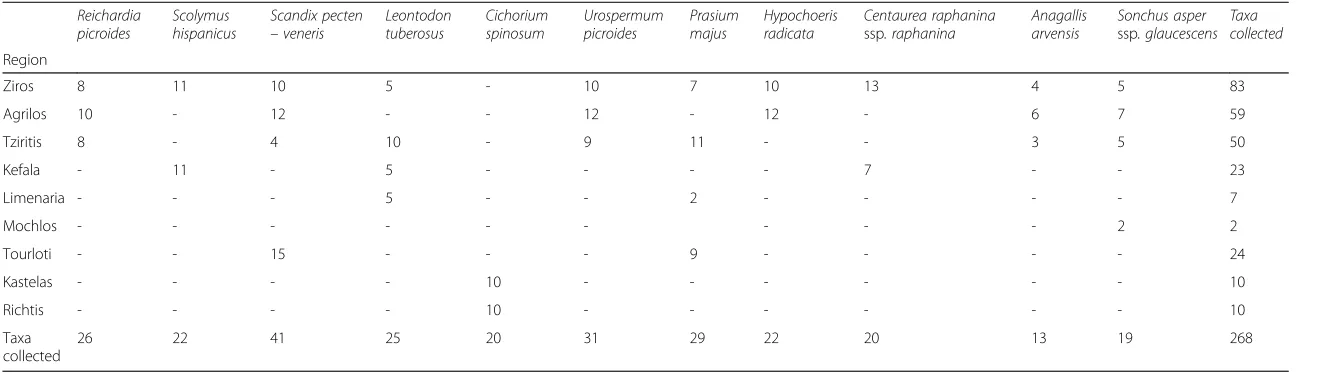
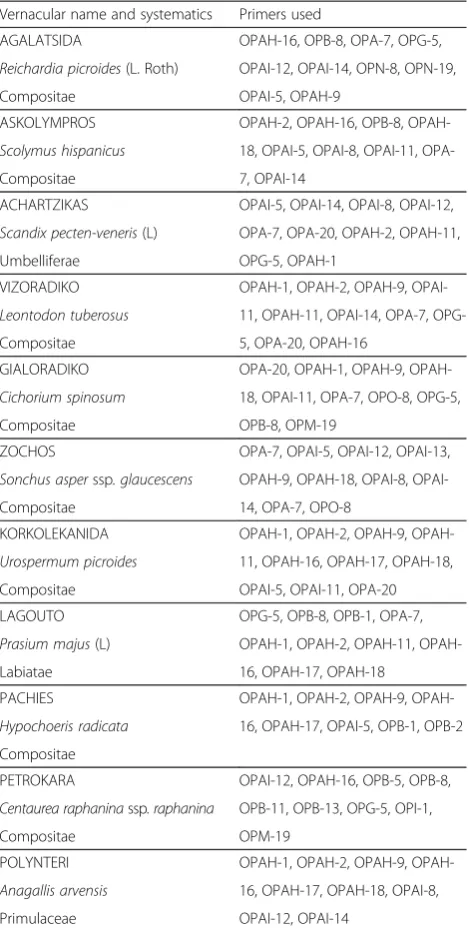
In total, 268 plants were identified and studied in their natural habitat (Figure 1; Table 1). Selected primers (Table 2) provided sufficient polymorphism (more than 80%) in most cases. Specifically, one primer alone (OPAH-16) produced polymorphic fragments for eight of the eleven
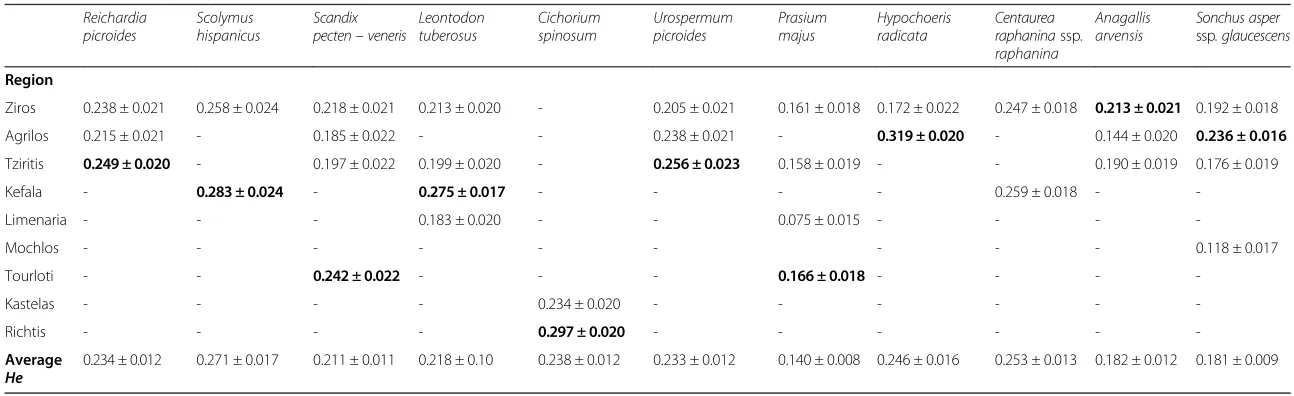
species (100% for S. hispanicus, 100% forL. tuberosus, 91.66% forC. raphanina ssp. raphanina,90.90% for A. arvensis, 88.88% for R. picroides, 70% for U. picroides, 66.66% for H. radicata and 60% for P. majus). Mean heterozygosity (Table 3) was higher in S. hispanicus (0.271 ± 0.017),C. raphaninaSm.ssp. raphanina(0.253 ± 0.013) and H. radicata (0.246 ± 0.016), while the lowest values were recorded forA. arvensis(0.182 ± 0.012),S. asper subsp. glaucescens (0.181 ± 0.009) and P. majus (0.140 ± 0.008).
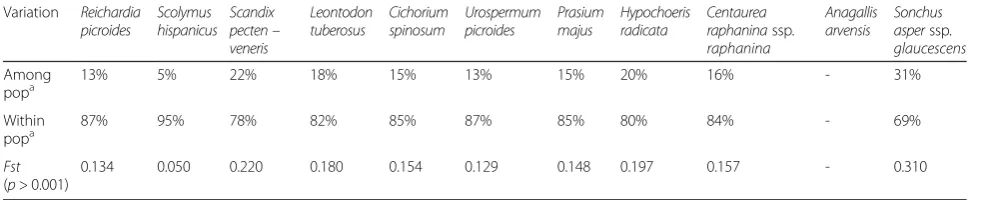
High levels of genetic heterogeneity (Table 3) were de-tected, while the Analysis of Molecular Variance (AMOVA) (Table 4) partitioned the genetic variance mainly within populations (S. hispanicus, 95%; U. picroides, 87%; R. picroides, 87%; C. spinosum, 85%). On the other hand, the lowest within population diversity was recorded forS. asperssp. glaucescens(69%) that also had the highest Fst values (0.310) revealing high levels of divergence.
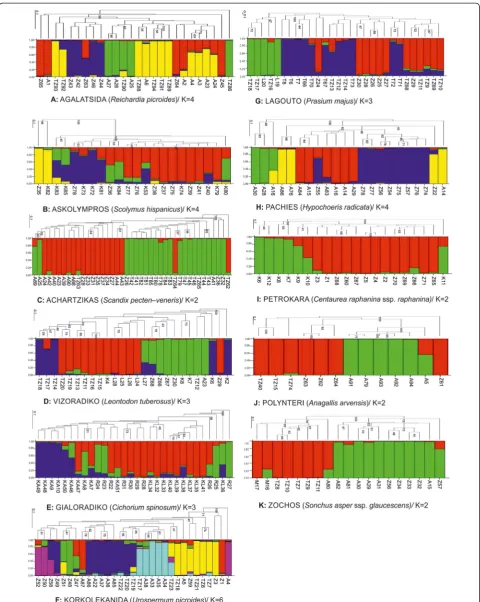
In general, samples were organized in small clusters and further divided in subgroups, showing moderate and high bootstrap values (Figure 2). In several instances, in-dividuals from different populations tended to group to-gether. In the cases ofS. pecten-veneris,C. spinosum, H. radicata, C. raphanina spp. raphanina, A. arvensisand S. asper spp. glaucescens a definite region-oriented clus-tering was recorded. Overall, extensive admixture was recorded among accessions of different populations and
Table 1Number of taxa collected, identified and analyzed
Reichardia picroides
Scolymus hispanicus
Scandix pecten
–veneris
Leontodon tuberosus
Cichorium spinosum
Urospermum picroides
Prasium majus
Hypochoeris radicata
Centaurea raphanina
ssp. raphanina
Anagallis arvensis
Sonchus asper
ssp. glaucescens Taxa collected
Region
Ziros 8 11 10 5 - 10 7 10 13 4 5 83
Αgrilos 10 - 12 - - 12 - 12 - 6 7 59
Τziritis 8 - 4 10 - 9 11 - - 3 5 50
Κefala - 11 - 5 - - - - 7 - - 23
Limenaria - - - 5 - - 2 - - - - 7
Mochlos - - - 2 2
Τοurloti - - 15 - - - 9 - - - - 24
Κastelas - - - - 10 - - - 10
Richtis - - - - 10 - - - 10
Taxa collected
26 22 41 25 20 31 29 22 20 13 19 268
Psaroudak
i
et
al.
Journal
of
Biological
Research-Th
essaloniki
(2015) 22:7
Page
3
of
several subclusters were formed. On the contrary, other populations seemed to cluster together due to reduced genetic diversity among them. Results for each species are as follows:
Reichardia picroides (agalatsida)
High affinity was recorded among individuals from
Τziritis andΑgrilos, while accessions from Ziros revealed a unique genetic composition, although extensive admixture was recorded, as illustrated in Figure 2a. The lowest genetic similarity occurred between populations of Tziritis and Ziros, which are the most geographically distant areas, while theΤziritis population was the most heterogeneous
(Table 3). ModerateFstvalues were recorded among pop-ulations and variation occurred almost exclusively within populations (Table 4).
Scolymus hispanicus (askolymbros)
Samples were clustered according to their geographic origin. The region with the highest diversity was Kefala (Table 3) and extensive admixture was recorded among populations. A population-oriented clustering was not detected by neither the dendrogram nor the Bayesian analysis. Surprisingly, two distinctive accessions (ZC358 and K1E827) that were of unique genetic structure, were grouped together and diverged from the rest (Figure 2b). AMOVA partitioned the genetic diversity almost exclu-sively within populations (95%) while differentiation among populations was minute (Fst= 0.05; Table 4).
Scandix pecten-veneris (achartzikas)
The highest population diversity was detected in the Tourloti region (Table 3). Accessions belonging to the neighboring regions of Tziritis and Tourloti were highly affiliated, as recorded by both the dendrogram and the Bayesian analysis (Figure 2c). Also, individuals from Agrilοs were more related to those from Ziros. Twenty two per-cent of the overall genetic variation was attributed among populations and Fstvalues suggested substantial divergence (Table 4).
Leontodon tuberosus (vizoradiko)
The highest diversity within a population was detected at Kefala (Table 3). Accessions from Tziritis were clus-tered together and supported by high bootstrap values, although the Bayesian analysis showed that there were mainly three genetic subgroups with minimum genetic admixture (Figure 2d). High affinity was recorded among the accessions of Limenaria and Ziros regions, but a number of individuals remained ungrouped. In addition, relatively high within population variability and moder-ate Fst values according to AMOVA were recorded (Table 4).
Cichorium spinosum (gialoradiko)
A definite geographic clustering was observed for this species. Accessions from Κastelas and cultivated C. spi-nosum formed distinctive clusters, having nevertheless fair affinity to the Richtis group, which was the most variable (Table 3) and genetically admixtured (Figure 2e). According to the AMOVA, the variability among popu-lations reached 15% and fair Fst values were obtained (Table 4).
Urospermum picroides (korkolekanida)
This species had the most complex organization since individuals from all regions formed small affiliated Table 2Species studied and primers used
Vernacular name and systematics Primers used
ΑGALATSIDA OPAH-16, OPB-8, OPA-7, OPG-5,
Reichardia picroides(L. Roth) OPAI-12, OPAI-14, OPN-8, OPN-19,
Compositae OPAI-5, OPAH-9
ASKOLYMPROS 2, 16, OPB-8,
OPAH-Scolymus hispanicus 18, OPAI-5, OPAI-8, OPAI-11,
OPA-Compositae 7, OPAI-14
ACHARTZIKAS OPAI-5, OPAI-14, OPAI-8, OPAI-12,
Scandix pecten-veneris(L) OPA-7, OPA-20, OPAH-2, OPAH-11,
Umbelliferae OPG-5, OPAH-1
VIZORADIKO OPAH-1, OPAH-2, OPAH-9,
OPAI-Leontodon tuberosus 11, OPAH-11, OPAI-14, OPA-7,
OPG-Compositae 5, OPA-20, OPAH-16
GIALORADIKO OPA-20, 1, 9,
OPAH-Cichorium spinosum 18, OPAI-11, OPA-7, OPO-8, OPG-5,
Compositae OPB-8, OPM-19
ZOCHOS OPA-7, OPAI-5, OPAI-12, OPAI-13,
Sonchus asperssp. glaucescens OPAH-9, OPAH-18, 8,
OPAI-Compositae 14, OPA-7, OPO-8
KORKOLEKANIDA 1, 2, 9,
OPAH-Urospermum picroides 11, OPAH-16, OPAH-17, OPAH-18,
Compositae OPAI-5, OPAI-11, OPA-20
LAGOUTO OPG-5, OPB-8, OPB-1, OPA-7,
Prasium majus(L) 1, 2, 11,
OPAH-Labiatae 16, OPAH-17, OPAH-18
PACHIES 1, 2, 9,
OPAH-Hypochoeris radicata 16, OPAH-17, OPAI-5, OPB-1, OPB-2 Compositae
PETROKARA OPAI-12, OPAH-16, OPB-5, OPB-8,
Centaurea raphaninassp. raphanina OPB-11, OPB-13, OPG-5, OPI-1,
Compositae OPM-19
POLYNTERI 1, 2, 9,
OPAH-Anagallis arvensis 16, OPAH-17, OPAH-18, OPAI-8,
Table 3Mean heterogeneity (He) and standard error for the species studied
Reichardia picroides
Scolymus hispanicus
Scandix pecten–veneris
Leontodon tuberosus
Cichorium spinosum
Urospermum picroides
Prasium majus
Hypochoeris radicata
Centaurea raphaninassp. raphanina
Anagallis arvensis
Sonchus asper
ssp. glaucescens
Region
Ziros 0.238 ± 0.021 0.258 ± 0.024 0.218 ± 0.021 0.213 ± 0.020 - 0.205 ± 0.021 0.161 ± 0.018 0.172 ± 0.022 0.247 ± 0.018 0.213 ± 0.021 0.192 ± 0.018
Αgrilos 0.215 ± 0.021 - 0.185 ± 0.022 - - 0.238 ± 0.021 - 0.319 ± 0.020 - 0.144 ± 0.020 0.236 ± 0.016
Τziritis 0.249 ± 0.020 - 0.197 ± 0.022 0.199 ± 0.020 - 0.256 ± 0.023 0.158 ± 0.019 - - 0.190 ± 0.019 0.176 ± 0.019
Κefala - 0.283 ± 0.024 - 0.275 ± 0.017 - - - - 0.259 ± 0.018 -
-Limenaria - - - 0.183 ± 0.020 - - 0.075 ± 0.015 - - -
-Mochlos - - - 0.118 ± 0.017
Τοurloti - - 0.242 ± 0.022 - - - 0.166 ± 0.018 - - -
-Κastelas - - - - 0.234 ± 0.020 - - -
-Richtis - - - - 0.297 ± 0.020 - - -
-Average He
0.234 ± 0.012 0.271 ± 0.017 0.211 ± 0.011 0.218 ± 0.10 0.238 ± 0.012 0.233 ± 0.012 0.140 ± 0.008 0.246 ± 0.016 0.253 ± 0.013 0.182 ± 0.012 0.181 ± 0.009
Maximum values per species are emphasized
Psaroudak
i
et
al.
Journal
of
Biological
Research-Th
essaloniki
(2015) 22:7
Page
5
of
subclusters (Figure 2). The most diverged populations were fromΤziritis andΑgrilos (Table 3). However individuals from the Ziros region formed two highly admixtured connecting clusters that encompass elements from the wholeU. picroidesgene pool (Figure 2f). Also, theΑgrilos population was subdivided revealing high similarity to theΤziritis individuals. As a result, genetic variance was allocated within populations, although Fst values sug-gested moderate deviation (Table 4).
Prasium majus (lagouto)
Individuals were grouped mainly according to their re-gion of origin forming subclusters (Figure 2g). The main diversity occurs within theΤοurloti and Ziros (Table 3) populations and minor admixture was detected among populations. The diversity was allocated mainly within populations (85%) while moderate variance was recorded among populations (Table 4).
Hypochoeris radicata (pahies)
The most variable population was located in Αgrilos (Table 3). In addition, Argilos individuals were further subdivided, with each subcluster showing a unique gen-etic composition (Figure 2h). In general, plants were clustered according to their collection sites and espe-cially those from Ziros were highly affiliated (indicated by bootstrap values) and had a distinctive genetic profile. The only exception was one accession that remained un-related and was placed in theΑgrilos subcluster (Figure 2). Genetic variation for H. radicata was attributed mainly within populations (80%) as indicated by AMOVA and populations were fairly diverged (Fst= 0.197; Table 4).
Centaurea raphaninaSm. subsp.raphanina (petrokara) The Kefala region is the area where the highest biodiver-sity ofC. raphaninaSm.subsp. raphaninaoccurs, as in-dicated in Table 3. On the other hand, individuals from Ziros are tightly connected with little genetic admixture (Figure 2i). Little affinity could be the result of population alienation (Fst= 0.157). In this species it seems that vari-ability mainly exists within populations (84%; Table 4).
Anagallis arvensis (polynteri)
Accessions were organized according to geographic ori-gin and clustering was supported by high bootstrap values and minimum genetic admixture (Figure 2j). High affinity was observed among samples of the Tziritis and Ziros regions, while samples from Argilos were more distant. Both Ziros and Tziritis (Table 3) populations ex-hibited the highest amount of diversity.
Sonchus aspersubsp. glaucescens (zochos)
Accessions from the three regions formed distinct clus-ters with high bootstrap values, as illustrated in the den-drogram and almost no genetic admixture was detected by the Bayesian analysis (Figure 2k). The most variable population was from Αgrilos (Table 3). In addition, structure illustrated that accessions from Mochlos were genetically identical to the samples from Tziritis (coastal areas). Besides, high affinity was recorded among the ac-cessions of Ziros and Αgrilos (upland areas), while sub-stantial admixture of genotypes was not revealed (Figure 2). It should be noted that S. aspersubsp. glaucescens was the species that had the highest among population vari-ability and the highestFstvalues in this study; hence ad-mixture among populations was minimal.
Discussion
Although scientific interest is increased for the Cretan diet, still very little information is available about the natural habitat, dispersal and genetic variability of Cre-tan edible annual and/or perennial plants. A few studies have focused on some of the genera included in the present study using molecular markers [7, 8], however samples from Greece were limited. It is generally accepted that information regarding the mode of reproduction (self-/cross-pollination), the life cycle (annual/perennial), the genetic structure and diversity of a plant species is es-sential for its conservation [9–11]. Moreover, considering that wild edible plants are potentially important food sources, it was necessary to study the genetic diversity of their natural gene pool and the spatial distribution in rela-tion to eco-geographical factors.
For all species studied, genetic variability among popu-lations was evident to a lesser or greater extent. For each Table 4Analysis of Molecular Variance (AMOVA) for the species studied
Variation Reichardia picroides
Scolymus hispanicus
Scandix pecten– veneris
Leontodon tuberosus
Cichorium spinosum
Urospermum picroides
Prasium majus
Hypochoeris radicata
Centaurea raphaninassp. raphanina
Anagallis arvensis
Sonchus asperssp. glaucescens
Among
popa 13% 5% 22% 18% 15% 13% 15% 20% 16% - 31%
Within popa
87% 95% 78% 82% 85% 87% 85% 80% 84% - 69%
Fst
(p> 0.001)
0.134 0.050 0.220 0.180 0.154 0.129 0.148 0.197 0.157 - 0.310
a
Fig. 2Bootstrap analysis and Bayesian cluster analysis of the optimum K cluster, for each species studied. Bootstrap values greater than 40 % are shown. The colour in each bar plot represents the probability of each individual belonging to a given group.a:Αgalatsida;b: Askolympros;c: Achartzikas;d: Vizoradiko;e: Gialoradiko;f: Korkolekanida;g: Lagouto;h: Pachies;i: Petrokara;j: Polynteri;k: Zochos
species, the corresponding dendrogram showed a trend for population clustering according to geographic origin, which is consistent with other studies [12]. Furthermore, almost for all collection sites, clustering was found to be non-random, thus indicating a fine degree of genetic structure among the various populations (Figure 2). The present data suggest that the 11 studied species differed substantially in their genetic variability structure. Popu-lations of the related Compositae S. hispanicus and C. raphanina ssp. raphanina had the highest average het-erogeneity, followed by the moderately divergedH. radi-cataand C. spinosum. This is consistent with studies of natural populations, as genetic diversity among popula-tions increases in relation to their geographical distance [12]. However, groups formed by individuals from se-lected regions, indicated that there is no isolation of populations, but in most areas there were entries related to another region, than to those of their own territory. That indicates intra-specific variability in zones that may be associated with cross-pollination [13]. Moreover, nearby populations were more genetically related, espe-cially in the case ofS. pectenveneris. It seems that cross-pollination and the lack of sequestered populations and remote regions has led to genetic homogenization among adjacent populations [13–16]. Hypochoeris radi-catahas been studied due to its recent and rather quick spread around the world. It is considered a species that easily colonizes diverse environments, preferring moist and cool places. In general, annual species with high ger-mination percentage, fast growth and reproduction, show low within and high among population diversity [17]. Honnay et al. [18] and Ortiz et al. [8] refer to H. radicataas a self-pollinating, but primarily is considered as a cross-pollinating species. They proposed that the species in its ancestral hobs (North Africa) behaves as a cross-pollinator and that some individuals appear as pollinators. They can grow up quickly as self-pollinators in order to colonize an area and then behave as cross-pollinators resulting in a buildup of diversity [8]. In the region of Eastern Crete, the species occurs only in higher altitude areas (cooler), and presents mod-erate diversity within populations (possibly because there is a fair amount of self-pollination [19, 20]). This justi-fies the differentiation between areas where variability is relatively high.
Low genetic variability was found for A. arvensis and S. asperssp. glaucescens, indicating population fragmen-tation that could lead to limited gene flow [21]. In isolated populations, insect pollinators cannot reach effortless distant populations and, therefore, populations tend to deteriorate [22–25]. Furthermore, the size of a popula-tion could relate positively to genetic diversity. This comes as no surprise for annual plants, since population size fluctuates year by year [26] and selfing species vary
more than outbreeders regarding effective population size and levels of genetic diversity [13]. Moreover, small populations are prone to stochastic demographic events as well as genetic effects like inbreeding, genetic bottle-necks or even accumulation of deleterious mutations [27]. On the other hand, geographic isolation and undersized populations along with restricted gene flow frequently cause genetic drift and inbreeding [21, 28], leading to high genetic differentiation [29].
Heterozygosity varies greatly in other annual taxa exam-ined e.g., He = 0.004 inCicer arietinum[30], He = 0.005 to 0.049 for five differentLenstaxa [31], or He = 0.241 inPoa annua [32]. This points to the fact that the mode of reproduction may not contribute considerably to gene di-versity [33], although other studies suggest otherwise [17]. It is broadly accepted that the reproduction system influ-ences gene flow dramatically [34–36]. Nybom & Bartish [33], have illustrated that by recording a mean of He around 0.09 for selfing species. In contrast, taxa with a mixed or outcrossing reproduction system have a He value of about 0.22 to 0.26. In the present study, the ap-parent division of individual plant populations according to geographic origin of collection, points out that the pop-ulations came from heterogeneous fragments and there were moderate levels of genetic differentiation among them within a region. In addition, the observed genetic similarity between individuals from different populations sometimes was greater compared to individuals from the same population (R. picroides, L. tuberosus). These observations show the dynamics of populations in vari-ous regions as well as the differentiation of areas con-cerning their biodiversity for all species of indigenous edible plants.
The data presented could facilitate a decision for the in situ conservation of genetic resources and the selec-tion of protected areas. The regions of Kefala, Agrilos, Tziritis and Ziros presented important biodiversity for most of the species investigated, while the areas of Mochlos, Kastelas, Limenaria and Richitis had fewer spe-cies occurrences with reduced variability. The areas of Kefala, Agrilos, Tourloti and Ziros are located in rela-tively high altitude and have restricted residential devel-opment, therefore most species appear to have great heterogeneity. In the region of Kefala, the speciesS. hispa-nicus, L. tuberosus,and C. raphanina Sm. subsp. rapha-nina exhibit broad genetic diversity. In Agrilos great variability is documented for S. asper subsp. glaucescens, U. picroides, H. radicata and A. arvensis, while in Ziros forR. picroides, S. pecten-veneris,andP. majus. Cichorium spinosumwas only found in coastal areas showing high di-versity in the Richtis region. Finally at Tourloti,S. pectin andP. majushad the highest heterogeneity.
regions. The areas with the lowest diversity include mainly cultivated land (olive trees and intensified vege-table cultivation) and large settlements with tourism de-velopment. The low levels of diversity in agricultural land could be caused by the pressure due to the cultiva-tion techniques (plowing, weed control) and may be as-sociated with an increase in inbreeding as the number of plants in a population decline since the only place where they reproduce is at the margins of cultivated land [15]. Furthermore, as arable plants are mainly short-lived and self-pollinated [37], genetic responses to increasing frag-mentation and decreasing population size should be relatively rapid. It is generally acknowledged that mod-ern agricultural practices have exposed autochthonous plant populations to serious survival pressure. Losses in arable plant communities have been larger than in most other human-made vegetation types, to the extent that arable plant communities now belong to the most threat-ened vegetation types [38].
In contrast, regions showing greater plant biodiversity are clearly less residential (Kefala and Agrilos have sea-sonal settlements and no permanent residence), with less intensified agriculture production (presence of perennial crops such as pome fruit and grapes, and ovine ranch-ing). Furthermore, these areas are usually difficult to ac-cess, crossed by rugged rural dirt roads and only approached by shepherds and residents for seasonal works, with fallow land and limited ovine presence. Unfor-tunately, during the last years the Ziros plateau is becom-ing more accessible (paved roads) and more residential, while the grazing sheep/goat populations have increased due to internal migration from the west of Crete [39].
The species examined in the current study could pro-vide an insight to the capacity of eastern Crete genetic resources for edible plants with potential economic value. The increased interest of consumers already has overcome the narrow base of the island, and has resulted in the commercial cultivation of some species (C. spino-sum and S. hispanicus). This in turn has increased col-lection of edible plants from the wild for commercial purposes since collectors have a market with high retail prices. The unmonitored collection, which does not take place in the traditional way (i.e., few individuals per population for personal use), could lead to the decrease or even the extinction of a species.
The economy of collection has also shifted in other ways compared to the past, as older people could iden-tify more plant species, thus collecting plants from sev-eral species to make their‘daily dish of greens’. Younger people recognize fewer species, collect them with per-sistence and as a consequence disturb the planta equilib-rium in a region [40].
Another major risk for the conservation of species and their diversity is the residential development, especially
in recent years. Initially, this has affected coastal areas but now, in combination to tourism development, leads to the extinction of many indigenous plants, due to the loss of their habitat. Agricultural practices also have an effect in the areas where edible wild plants grow. For in-stance, at altitudes above 600 m extensive sowing of clo-ver and other forage plants and deep plowing of soils occur; so there is more grass for small ruminants (sheep, goats), which in turn damages the biodiversity of the region.
The condition for the species examined is considered threatening. Furthermore, Ziros (located in the boundaries of the habitat CORINE Eastern Crete - A00050056, http:// filotis.itia.ntua.gr/biotopes/c/A00050056/) is characterized as degraded/slow degrading, due to disturbances in the ecological balance caused by fires, tourism development and overgrazing, and must be prioritized as a preserved area. Kefala and Agrilos (similarly included in the habitat CORINE Sitia and Mount Ornos - A00040086, http:// filotis.itia.ntua.gr/biotopes/c/A00040086/) are also desig-nated as degraded/slow degrading. Given the fact that the recent land use changes and residential develop-ment apparently can affect the genetic structure of the Cretan edible plant communities, regions should be closely monitored over the coming years and develop conservation policies.
Conclusions
In the present study it was recorded that the plant popu-lations studied have a heterogeneous genetic compos-ition and that substantial levels of genetic diversity exist within a region. This underlines the population dynam-ics in several Cretan areas along with the divergence of zones, regarding the biodiversity of indigenous edible plants of Lassithi. Furthermore, the regions of Kefala, Agrilos and Tziritis were identified as those where popu-lation heterogeneity peaked for most of the studied spe-cies. Urgent measures should be taken in order to protect these areas from habitat degradation.
Methods
Collection areas, species and sampling design
Global Positioning System (GPS) data of eastern Crete areas and plants of the present study (Reichardia picroides, Scolymus hispanicus, Scandix pecten-veneris, Leontodon tuberosus, Cichorium spinosum, Sonchus aspersubsp. glaucescens, Urospermum picroides, Prasium majus, Hypochoeris radicata, Centaurea raphanina Sm. subsp. raphaninaand Anagallis arvensis) are reported in Figure 1 and Table 1. Firstly, leaf samples were collected from labeled plants and were dried in silica gel at the vegetative stage (from November to February). Secondly, at the flowering season (from April to June) the same plants were collected for botanical taxonomy. Taxonomy
was conducted by the Ecology & Classification Division of the Biology Department of the University of Athens and was based on full plant samples. For their classification the following literature was used: Flora Hellenica [41, 42], Flora Europaea [43, 44] and Flora of the Cretan Area [1]. The confirmation of sample identification was achieved through comparisons to botanical material that is stored at the Botanical Museum of the University of Athens (ΑΤΗU). Plant coding reflects the region of origin followed by the serial number of the sample collected. For instance, plant coded as Z42 (Reichardia picroides) was collected at Ziros and was the 42th sample acquired.
DNA extraction and PCR reactions
DNA extraction was performed using the Nucleospin Plant II Kit (Macherey-Nagel) and the lysis buffer I, follow-ing manufacturer’s instructions. DNA concentration and quality was calculated spectrophotometrically (Unicam Helios; OD260nm/OD280nm ratios were above 1.8) and confirmed with 1% agarose electrophoresis using stand-ard λ-phage molecular weights. More than 30 random decamer primers (Operon) were used for the initial screening of samples, from which nine or ten primers, de-pending on the species, were retained for their ability to produce unambiguous polymorphic products among ge-notypes (Table 2). PCR reactions were carried out in a 25 μL reaction mixture using 1X PCR reaction buffer (20 mM Tris–HCl pH 8.4, 50 mM KCl), 50 ng of the total DNA, 100 pmol of each decamer primer, 200 mM dNTP, 1 U Taq DNA polymerase (Promega) and 1.5 mM MgCl2. The cycling profile consisted of an initial denaturation step of 3 min, followed by 35 cycles of 30 s at 94°C, 45 s at 37°C, and 1 min at 72°C and a final elongation step of 10 min at 72°C before cooling to 10°C. PCR products were separated using 2% agarose gel electrophoresis and visualized with Et-Br staining. PCR reactions were per-formed in duplicates for each species and only reprodu-cible fragments were scored.
Statistical analysis
DNA fragments were scored as present (1)/absent (0) for each reaction and were assembled in a binary data matrix table. Genetic similarities and bootstrap analysis were performed using the FreeTree program [45]. Den-drograms were depicted with the TreeView software (http://taxonomy.zoology.gla.ac.uk/rod/treeview.html). An allele-based estimate was used to calculate mean heterozy-gosity over loci among all members of the population using GenAlEx 6.4 [46]. Genotypic variations were assessed across various populations by means of analysis of molecular variance (AMOVA) and the significance of the resulting variance components and inter-population genetic distances were tested using 999 random permutations.
A Bayesian model-based clustering approach for iden-tification of the genetic structure in the edible herb germplasm was performed using STRUCTURE 2.3.4 [47]. The program was run using the admixture model with 10 independent replicate runs per K value (num-ber of clusters) ranging from 1 to 10. Each run in-volved a burn-in period of 50000 iterations, and a post burn-in simulation length of 50000. Validation of the most likely number of clusters K was performed with the Structure Harvester (http://taylor0.biology.ucla.edu/ structureHarvester).
Abbreviations
AMOVA:Analysis of molecular variance; PCR: Polymerase chain reaction.
Competing interests
The authors declare that they have no competing interests.
Authors’contributions
AP: collected germplasm, performed molecular analysis and wrote part of the text. NN: analysed data, performed statistical analysis and wrote the manuscript. GS: supervised the work. AK: conceived the experiment, provided funding and corrected the final version. All authors read and approved the final manuscript.
Author details
1
Department of Crop Science, Laboratory of Plant Breeding and Biometry, Agricultural University of Athens, 75 Iera Odos, Athens, Greece.2Department
of Nutrition and Dietetics, Technological Educational Institute of Crete, Crete, Tripitos, Sitia, Greece.3Department of Agricultural Science, Biotechnology
and Food Science, Cyprus University of Technology, Athinon and Anexartisias 57, 3603 Limassol, Cyprus.
Received: 30 December 2014 Accepted: 13 May 2015
References
1. Turland NJ, Chilton L, Press JR. Flora of the Cretan area. Annotated checklist and atlas. London: The Natural History Museum, HMSO; 1993.
2. Trichopoulou A, Vasilopoulou E, Hollman P, Chamalides C, Foufa E, Kaloudis T, et al. Nutritional composition and flavonoid content of edible wild greens and green pies: a potential rich source of antioxidant nutrients in the Mediterranean diet. Food Chem. 2000;70:319–23.
3. Zeghichi S, Kallithraka S, Simopoulos AP, Kypriotakis Z. Nutritional composition of selected wild plants in the diet of Crete. World Rev Nutr Diet Basel. 2003;91:22–40.
4. Vardavas CI, Majchrzak D, Wagner KH, Elmadfa I, Kafatos A. Lipid concentrations of wild edible greens in Crete. Food Chem. 2006;99:822–34. 5. Özcan T. Analysis of the total oil and fatty acid composition of seeds of
some Boraginaceae taxa from Turkey. Plant Syst Evol. 2008;274:143–53. 6. Ferrara L, Dosi R, Di Maro A, Guida V, Cefarelli G, Pacifico S, et al. Nutritional
values, metabolic profile and radical scavenging capacities of wild asparagus (A. acutifoliusL.). J Food Compos Anal. 2011;24:326–33. 7. Gemeinholzer B, Bachmann K. Examining morphological and molecular
diagnostic character states ofCichorium intybusL. (Asteraceae) andC. spinosumL. Plant Syst Evol. 2005;253:105–23.
8. Ortiz MÁ, Tremetsberger K, Terrab A, Stuessy TF, García-Castaño JL, Urtubey E, et al. Phylogeography of the invasive weedHypochaeris radicata (Asteraceae): from Moroccan origin to worldwide introduced populations. Mol Ecol. 2008;17:3654–67.
9. Höglund J. Evolutionary conservation genetics. New York: Oxford University Press Inc; 2009.
10. Frankham R. Challenges and opportunities of genetic approaches to biological conservation. Biol Conserv. 2010;143:1919–27.
12. Nebauer SG, del Castillo-Agudo L, Segura J. RAPD variation within and among natural populations of outcrossing willow-leaved foxglove (Digitalis obscuraL.). Theor Appl Genet. 1999;98:985–94.
13. Schoen DJ, Brown AHD. Intraspecific variation in population gene diversity and effective population size correlates with the mating system in plants. Proc Natl Acad Sci U S A. 1991;88:4494–7.
14. Lesica P, Allendorf FW. When are peripheral populations valuable for conservation? Conserv Biol. 1995;9:753–60.
15. McRoberts N, Finch RP, Sinclair W, Meikle A, Marshall G, Squire G, et al. Assessing the ecological significance of molecular diversity data in natural plant populations. J Exp Bot. 1999;50:1635–45.
16. Nybom H. Comparison of different nuclear DNA markers for estimating intraspecific genetic diversity in plants. Mol Ecol. 2004;13:1143–55. 17. Hamrick JL, Godt MJW. Effects of life history traits on genetic diversity in
plant species. Phil Trans R Soc Lond B. 1996;351:1291–8.
18. Honnay O, Bossuyt B, Jacquemyn H, Shimono A, Uchiyama K. Can a seed bank maintain the genetic variation in the above ground plant population? Oikos. 2008;117:1–5.
19. Becker U, Reinhold T, Matthies D. Effects of pollination distance on reproduction and offspring performance inHypochoeris radicata: Experiments with plants from three European regions. Biol Conserv. 2006;132:109–18.
20. Pico FX, Ouborg NJ, van Groenendael J. Influence of selfing and maternal effects on life-cycle traits and dispersal ability in the herbHypochaeris radicata(Asteraceae). Bot J Linn Soc. 2004;146:163–70.
21. Leimu R, Vergeer P, Angeloni F, Ouborg NJ. Habitat fragmentation, climate change, and inbreeding in plants. Ann NY Acad Sci. 2010;1195:84–98. 22. Aguilar R, Ashworth L, Galetto L, Aizen MA. Plant reproductive susceptibility
to habitat fragmentation: review and synthesis through a meta-analysis. Ecol Lett. 2006;9:968–80.
23. Diekotter T, Walther-Hellwig K, Conradi M, Suter M, Frankl R. Effects of landscape elements on the distribution of the rare bumblebee speciesBombus muscorum in an agricultural landscape. Biodivers Conserv. 2006;15:57–68.
24. Pauw A. Collapse of a pollination web in small conservation areas. Ecology. 2007;88:1759–69.
25. Potts SG, Biesmeijer JC, Kremen C, Neumann P, Schweiger O, Kunin WE. Global pollinator declines: trends, impacts and drivers. Trends Ecol Evol. 2010;25:345–53.
26. Nunney L. The effective size of annual plant populations: the interaction of a seed bank with fluctuating population size in maintaining genetic variation. Am Nat. 2002;160:195–204.
27. Frankham R, Ballou JD, Briscoe DA, Introduction to conservation genetics. Cambridge University Press; 2002.
28. Angeloni F, Ouborg NJ, Leimu R. Meta-analysis on the association of population size and life history with inbreeding depression in plants. Biol Conserv. 2011;144:35–43.
29. Pico FX, van Groenendael J. Large-scale plant conservation in European semi-natural grasslands: a population genetic perspective. Divers Distrib. 2007;13:920–6.
30. Sudupak MA, Akkaya MS, Kence A. Analysis of genetic relationships among perennial and annualCicerspecies growing in Turkey using RAPD markers. Theor Appl Genet. 2002;105:1220–8.
31. Ferguson ME, Newbury HJ, Maxted N, Ford-Lloyd BV, Robertson LD. Population genetic structure inLenstaxa revealed by isozyme and RAPD analysis. Genet Resour Crop Evol. 1998;45:549–59.
32. Mengistu LW, Mueller-Warrant GW, Barker RE. Genetic diversity ofPoa annua in western Oregon grass seed crops. Theor Appl Genet. 2000;101:70–9. 33. Nybom H, Bartish IV. Effects of life history traits and sampling strategies on
genetic diversity estimates obtained with RAPD markers in plants. Perspect Plant Ecol Evol Syst. 2000;3:93–114.
34. Loveless MD, Hamrick JL. Ecological determinants of genetic structure in plant populations. Annu Rev Ecol Syst. 1984;15:65–95.
35. Charlesworth D. Effects of inbreeding on the genetic diversity of populations. Phil Trans R Soc Lond B. 2003;358:1051–70.
36. Mable BK, Adam A. Patterns of genetic diversity in outcrossing and selfing populations ofArabidopsis lyrata. Mol Ecol. 2007;16:3565–80.
37. Lososova Z, Chytry M, Kuhn I, Hajek O, Horakova V, Pysek P, et al. Patterns of plant traits in annual vegetation of man-made habitats in central Europe. Perspect Plant Ecol. 2006;8:69–81.
38. Meyer S, Leuschner C, van Elsen T. Sanctuaries for the segetal vegetation in Germany−inventory and new impulses by the project“Biodiversity in agricultural landscapes”. J Plant Dis Protect. 2008;21:363–8. 39. Regional Operational Plan (ROP). Regional Operational Plan of Crete,
2000–2006 (in Greek). Irakleion: Region of Crete,, Iraklion, Greece; 2001. 40. PsaroudakiΑ, Dimitropoulakis P, Constantinidis T, Katsiotis A, Skaracis G. Ten
indigenous edible plants and their participation in the diet of the inhabitants of Eastern Crete nowadays. Culture Agric Food Environ. 2012;34:172–7.
41. Strid A, Tan K. Flora Hellenica Vol 1: Gymnospermae to Caryphyllaceae. Koenigstein, Germany: Koeltz Scientific Books; 1997.
42. Strid A, Tan K. Flora Hellenica Vol 2: Nymphaeaceae to Platanaceae. Koenigstein, Germany: Koeltz Scientific Books; 2002.
43. Tutin TG, Burges NA, Chater AO, Edmondson JR, Heywood VH, Moore DM, et al. Flora Europaea Vol 1. Cambridge, UK: Cambridge University Press; 1993. 44. Tutin TG, Heywood VH, Burges NA, Moore DM, Valentine DH, Walters SM,
et al. Flora Europaea Vol. 1–5. Cambridge University Press; Cambridge, UK, 1964–1980.
45. Pavlicek A, Hrda S, Flegr J. FreeTree–freeware program for construction of phylogenetic trees on the basis of distance data and bootstrapping/jackknife analysis of the tree robustness. Application in the RAPD analysis of genus Frenkelia. Folia Biol (Praha). 1999;45:97–9.
46. Peakall R, Smouse PE. GENALEX 6: genetic analysis in Excel. Population genetic software for teaching and research. Mol Ecol Notes. 2006;6:288–95. 47. Pritchard JK, Stephens M, Donnelly P. Inference of population structure
using multilocus genotype data. Genetics. 2000;155:945–59.
Submit your next manuscript to BioMed Central and take full advantage of:
• Convenient online submission
• Thorough peer review
• No space constraints or color figure charges
• Immediate publication on acceptance
• Inclusion in PubMed, CAS, Scopus and Google Scholar
• Research which is freely available for redistribution
Submit your manuscript at www.biomedcentral.com/submit