Enriched Air With Nitrogen And Analysing Nox
Emission By Using Bio- Diesel As Fuel In Powered
IC Engine
K. Ramesh
Department of Mechanical Engineering,
Assistant Professor, Karpagam college of Engineering, Coimbatore, India Email:[email protected]
Abstract: The decreasing availability of fossil fuels pushes the nations have led to the development of alternative sources of energy which are renewable and environmental friendly. (E.g) Fossil fuels (coal,oil and gasU235,U233 ,hydropower etc. These are also known as raw energy resources.Fuel is a substance which burns continuously when raised to its ignition temperature in the presence of oxygen or air. The alternate energy sources which are available for Automotive are Bio Diesel, Solar energy, electric energy and Hydrogen energy. Among the various energy sources Bio-Diesel is recognized as the most feasible and affordable source of energy for future. When Bio-Diesel is a fuel to be considered, the availability of fuel, CO, HC emissions, engine adaptability to fuel, lubrication property, performance of Engine are likely good, and engine noise is less. But when emissions are analyzed, there is a sharp increase in the NOx emission. The valuable reason for increase in NOx formation is due to the higher oxygen content of the Bio-Diesel. This increase in NOx emissions also acts as a major hindrance in commercializing the use of Bio-Diesel, and also NOx causes adverse effect on human beings and Ozone. This research paper is aimed to make a way for commercial use of bio diesel on light duty diesel vehicles by reducing the NOx emission with minimum sacrifice on performance. NOx emissions in a Bio diesel fuel engine can be reduced by enriching Nitrogen in the engine intake air, since Nitrogen gas reduces the O2 available for combustion, reducing the flame temperature. This research paper deals with determining the NOx emission in an engine by using conventional Diesel as fuel.This paper also determining the NOx emission in an engine by using JOME (Jatropha Oil Methyl Ester) [B 100] as fuel,and determining the NOx emission with Nitrogen enrichment using B 100 as fuel. These experimental results can be used to establish that NOx can be reduced in Bio diesel powered IC engine by enriching air with Nitrogen.
Keywords: Biodiesel, Jatropha Oil Methyl Ester, Nit rogen Oxides, Internal combustion Engines.
I. INTRODUCTION
Energy is an important input of all sectors of any countries economy .The energy required for human activities can be classified into the following major areas or sectors.1.Domestic sectors(Houses and offices) 2.Transportation sector 3. Agriculture sector. 4.Industry Sector.Consumption of more energy in a country indicates more activities in these sectors.. The availability of energy in our current global framework relies extensively on the availability of fossil fuels mainly on oil, Natural gas and Coal. Which together constitute 80 percent of global energy consumption. 70% of the Indian crude oil requirement is imported.Due to these reasons it has become important to explore and develop non conventional energy resources It should require minimum modifications of the systems .The development of non-conventional sources will serve as supplements rather than substitute for conventional sources. Biodiesel refers to a vegetable oil or animal fat based diesel fuel consisting of long-chain alkyl (methyl, propyl or ethyl) esters. Bio-diesel is typically made by chemically reacting lipids (e.g., vegetable oil, animal fat (tallow)) with an alcohol. Bio-diesel is proposed to be used in normal diesel engines and differs from the vegetable and waste oils used as fuel in converted diesel engines. Bio-diesel can be used seperately or mixed with petrol Bio-diesel. In this project we have used JOME [B100] as fuel. Although bio diesel has the potential to replace conventional diesel, its emission is a complication to its commercial usage. The NOx emission increases by 10- 15% if B100 is used and NOx emission increases by 2-4% if B20 fuel is used. The NOx effect also depends on the type of the biodiesels rawmaterial, the highest NOx emissions were reported with the most highly unsaturated fuels like soybean, rapeseed, and soap stock-based. Thermal efficiency decreases when the fuel has high viscosity. The NOx emission increase also depends on the
engine technology. Bio-diesel is of particular importance to the automobile industry and other areas in energy and environment because it significantly reduces particulate matter (PM), hydrocarbon (HC) and carbon monoxide (CO) emissions. Biodiesel decreases the carbon particulate emissions and increases the SOF As a result, the visible smoke and opacity are decreased. The effect of biodiesel on total particulate matter depends on the composition of diesel particulates.. The shifts of PM emission towards higher Soluble Organic Fraction content, as well as the absence of sulphur, make biodiesel compatible with diesel oxidation catalysts.It can maximize the PM benefit by controlling SOF. We opted to control the composition of the inlet air. After a deep investigation of literatures and journals, we found that controlling the composition of inlet air can reduce the NOx emission. In our project we have enriched the inlet air with Nitrogen at different proportions and the emission levels were analyzed with Bio Diesel as fuel.
II. EXPERIMENTAL SETUP
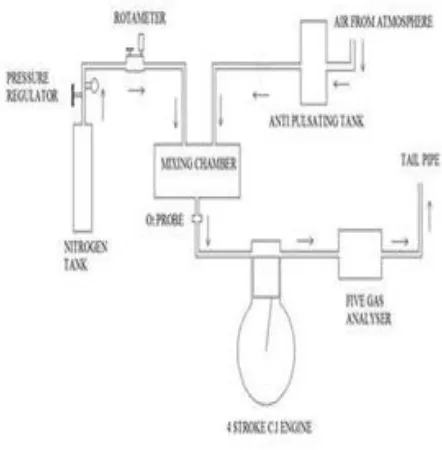
contents were separated in to two layers. The less density layer of methyl esters floated in the upper portion of separating funnel. The color difference between the two layers enabled their easy separation. The traces of soap and glycerin present in the methyl ester layer has to be removed. Esters are washed with distilled water thrice. Washing was done by adding approximately 15% distilled water to methyl esters and it is allowed to settle. Since the methyl esters are less density than water, they float on the top and were removed by separating funnel. The clear methyl esters are obtained. The methyl esters are heated from 105 to 110°c to remove the water content and it is cooled. The pure biodiesel is collected in the container. This procedure is repeated for different catalyst for the production of biodiesel. The oil is checked for its various thermo physical and transport properties and the results are tabulated. For experimental purpose we have designed the procedure as shown in the figure . we supplied nitrogen at 150 bar pressure in order to mix effectively with atmospheric air.The pressure was reduced to 1 bar using regulator .In order to control the flow rate of nitrogen, a controller is used in series. To measure the flow rate Rota meter is used. Then nitrogen is made to mix with atmospheric air in the mixing chamber.To ensure uniform mixing the two gases were made to meet at perpendicular to the chamber output. In order to prevent nitrogen from the mixing chamber to the atmosphere a check valve is used. To measure the volume of oxygen passing to the engine, an oxygen sensor is used. This nitrogen enriched air is let directly into the inlet manifold. To measure the emission from the engine, exhaust gas analyzer is used. A part of the exhaust gas is taken from the tail pipe and it is led to the gas analyzer. The different gases measured are NOx, CO, CO2 , O2 and HC. The gas analyzer contains three filters namely line filter, bottom filter and round filter. It measures CO2, CO, and HC by non-diffractive infrared radiation (NDIR) and oxygen by electrochemical method. The pressure regulator is used , to set the pressure at 1 bar. Based on different test condition the flow rate of nitrogen is controlled by the flow controller
Fig. 1 schematic diagram of Nitrogen Enrichment setup.
III. SPECIFICATION
IV. EXPERIMENTAL TEST MATRIX
RESULTS AND DISCUSSION
Jatropha oil methyl ester biodiesel was successfully used as the fuel for CI engine with various compositions of intake air [Nitrogen and Oxygen]. The performance, SFC, heat release, peak pressure and emissions of the engine with diesel and biodiesel are presented and discussed below.
SMOKE OPACITY
The smoke opacity in the exhaust when Biodiesel is used was less than that of Diesel, this is due to the presence of Oxygen in the Bio diesel which aids in more efficient combustion. The reduction in smoke when using Bio Diesel is believed to result from the oxygenated fuel structure of Bio Diesel and low concentration of aromatics in biodiesel [10] .It is also important to note that smoke concentrations only reveal information about Visible smoke in the exhaust this data should not be extrapolated to make any conclusions about changes in particulate matter emissions (which are the regulated emissions of concern). When Nitrogen is enriched, the Percentage of oxygen available for combustion reduces giving raise to opacity in Smoke.
CARBON MONOXIDE
Fig. 2 Comparison of smoke opacity for different percentages of Nitrogen enrichment with Bio diesel as fuel.
Fig. 3 Comparison of smoke opacity for different percentages of Nitrogen enrichment with Diesel as fuel.
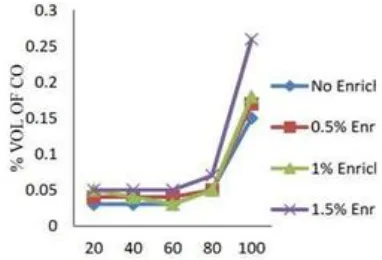
Fig. 4 Comparison of CO emission for different percentages of Nitrogen enrichment with Bio Diesel as fuel.
Fig. 5 Comparison of CO emission for different percentages of Nitrogen enrichment with Diesel as fuel.
The increase in the CO emission is observed when the amount of exhaust gas recirculated is increased. Reduction of O2 concentration in the fuel/air mixture may suppress NOx formation but increases the CO emission. When the percentage of nitrogen is raised at the intake manifold, formation of much stable compound CO2 is reduced because of the decrease in the availability of the inlet oxygen, hence forming unstable compound of CO [11]. This accounts for the increase in the CO percentage as the N2 enrichment percentage is increased.
HYDROCARBON
CARBON DI OXIDE
Fig. 7 Comparison of Hydrocarbon emission for different percentages of Nitrogen enrichment with Diesel as fuel.
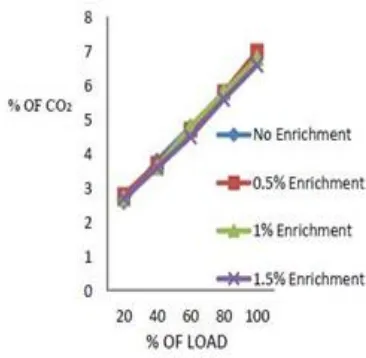
Fig. 8 Comparison of CO2 emissions for different percentages of Nitrogen enrichment with Bio Diesel as fuel.
Fig. 9 Comparison of CO2 Emissions for different percentages of Nitrogen enrichment with Diesel as fuel.
Fig. 10 Comparison of smoke opacity for different percentages of Nitrogen enrichment with Bio Diesel as fuel.
Fig. 11 Comparison of smoke opacity for different percentages of Nitrogen enrichment with Diesel as fuel.
NITROGEN OXIDES
BRAKE THERMAL EFFICIENCY
Fig. 13 Comparison of SFC for different percentages of Nitrogen enrichment with Diesel as fuel.
Fig. 14 Comparison of Brake thermal efficiency for different percentages of Nitrogen enrichment with
Biodiesel as fuel.
Fig. 15 Comparison of Brake thermal efficiency for different percentages of Nitrogen enrichment with Diesel
as fuel.
The brake thermal efficiency is dependent on the calorific value of the fuel, Since Diesel has high calorific value. Bio diesel blends, it has higher efficiency, but JOME fuel efficiency also closely follows it due to the combustion improvements provided by the oxygen which is present inherently in the Methyl ester. The brake thermal efficiency of B20 blends is about 10-12% lesser than that of Diesel
because of lower calorific value of the methyl ester and hence proportionally high BSFC [9]. The Nitrogen enrichment process also produces the same effect of reduced BTE with increasing N2 percentages.
EXHAUST GAS TEMPERATURE
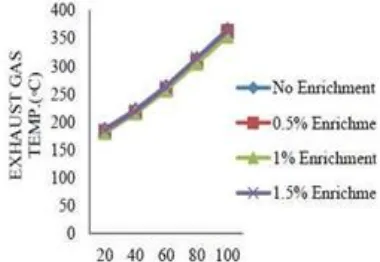
Fig. 16 Comparison of Exhaust Gas temperature for different percentages of Nitrogen enrichment with Bio
Diesel as fuel.
Fig. 17 Comparison of Exhaust gas temperature for different percentages of Nitrogen enrichment with Diesel
as fuel.
The exhaust gas temperature increases with increase in load This is due to higher fuel consumption at higher loads. When Diesel is used as a fuel, with increase in Nitrogen percentage, reduces the O2 for combustion, their by reduces the EGT, but Biodiesel inherently contains O2 which aids in combustion.
VI. CONCLUSION
REFERENCES
[1] Membrane-based air composition control For light-duty diesel vehicles: a benefit And cost assessment K. Stork and R. Poola, Center for Transportation Research, Energy Systems Division, Argonne National Laboratory, 9700 South Cass Avenue, Argonne, Illinois 60439
[2] W.-K. Chen, Linear Networks and Systems (Book style).Belmont, CA: Wadsworth, 1993, pp. 123– 135Experimental Investigation of Pongamia, Jatropha and Neem
[3] Methyl Esters as Biodiesel on C.I. Engine T. Venkateswara Rao, G. Prabhakar Rao, and K. Hema Chandra Reddy.
[4] R. K. Malhotra and N. R. Raje(2003). Bio Fuels as Blending Components forGasoline and Diesel Fuels.SAE Paper No. 2003-26-0011B.
[5] Tiegang Fang,Yuan-chung Lin,Tien Mun Foong and Chia-fon F. Lee(2008).Spray and Combustion Visualization in an Optical HSDI Diesel Engine Operated in Low-Temperature Combustion Mode with Bio-diesel and Diesel Fuels.SAe Paper No.2008-01-1390.
[6] Daisuke Kawano, Hajime Ishii, Yuichi Goto and Akira Noda (2007). Effect of Exhaust Gas Recirculation on Exhaust Emissions from Diesel Engines Fuelled with Biodiesel. SAE Paper No. 2007-24-0128.
[7] V Pradeep and R P Sharma (2005).Evaluation of Performance, Emission and Combustion Parameters of a CI Engine fuelled with Bio-Diesel .SAE Paper No.2005-265-353.
[8] Oxidation Stability, Engine Performance and Emissions Investigations of Karanja, Neem and Jatropha Biodiesel and Blends, Deepak Khurana and Avinash Kumar Aarwal 2011-01-0617.
[9] C. D. Rakopoulos, D. T. Hountalas and T. C. Zannis. Theoretical Study Concerning the Effect of Oxygenated Fuels on DI Diesel Engine Performance and Emissions SAE technical paper series 2004-01-1838.
[10]V.Pradeep & V. Manieniyan and S. Sivaprakasam and (Jiro Senda,Nobunori Okui, Tokihiro Tsukamoto and Hajime Fujimoto). Investigation of Diesel Engine Using Bio-Diesel (Methyl Ester of Jatropha Oil) for Various Injection Timing and Injection Pressure. SAE technical paper No: 2008-01-1577.
[11]Performance Parameter Analysis of a Biodiesel-Fuelled Medium Duty Diesel Engine, Brandon T. Tompkins, Jason Esquivel and Timothy J. Jacobs SAE technical paper series 2009-01-0481.
[12]Daisuke Kawano, Hajime Ishii, Yuichi Goto and Akira Noda (2007). Effect of Exhaust Gas Recirculation on
Exhaust Emissions from Diesel Engines Fuelled with Biodiesel. SAE Paper No. 2007-24-0128.