Research Article
CODEN: IJPNL6
Formulation and evaluation of fairness serum using polyherbal extracts
Shan Sasidharan
1*, Pyarry Joseph
2, Junise
21*
National College of Pharmacy, Kozhikode , research consultant in Solace research (P) Ltd ,
Nirapara, cochin, Kerala, India
2
Department of Pharmaceutics, Al Shifa College of Pharmacy, Poonthavanam P O, Malappuram
Dist., Kerala, India
*Corresponding author e-mail:
[email protected]
ABSTRACT
Cosmetic Serum is a highly concentrated product based on water or oil. When using concentrates we get not only a quick cosmetic effect, but also psychological satisfaction after the treatment because the result will be seen practically immediately. Serum has a property of rapid absorption and ability to penetrate into the deeper layers of the skin, together with its non-greasy finish and intensive formula with a very high concentration of active substances. Based on these properties, the aim of this work was to formulate a fairness serum using poly herbal extracts. The objective was to carry out extraction, and to study the phyto-constituents responsible for the fairness action in the poly herbal extract and to evaluate various physicochemical and biological properties of the formulation. The fairness Serum has a super-special blend of active natural ingredients to penetrate skin‟s epidermis and color cells, resulting in fair complexion and skin tone in addition. It has skin smoothing ingredients to improve skin texture and leaves skin soft, fair and silky smooth. It is made of extracts of Glycyrrhiza glabra, Crocus sativus, Rice branand olive oil in addition. The variousphysical, chemical and biological evaluations were done. The formulationwas found to be of good spreadability and was free from heavy metals. Skin irritation studies proved that it was non-sensitizing and free to use. It is intended to provide fairness action within a week.
Key Words: Cosmetic serum, glabridin, ricebran, and squalene.
INTRODUCTION
Herbal cosmetics are referred to as products formulated using various permissible cosmetic ingredients to form the base in which one or more herbal ingredients are used to provide defined cosmeticbenefits [1].The word cosmetic was derived from the Greek word “kosmeticos” meaning having the power,arrange,skill in decorating. The origin of cosmeticswere associated withhunting,fighting, religion and superstition and later associated withmedicine [2]. Herbal extracts, as the nameindicates, arethe extracts of herbs thatdates back its references to theholy Bible,Vedas and Unaniscriptures [1].Allopathic system alone is provinginsufficient and there is need to supplement it with herbal drugs. Much awareness is created among the consumers towards the use of herbal drugs,
herbalcosmetics, neutraceutical and natural dyes. Personal care industry is now more concentrated on herbal based cosmetics as it is a fast growing segment with a vast scope of manifold expansion in the coming years[3]. Skin lightening products form a major segment of cosmetic products worldwide and carry with them the promise of flawless skin free from agespots, blemishes and scars. The demand for “skin fairness products” is rooted in the need to eliminate localized hyperpigmentation as wellas to lighten the general skin tone. In Western countries, people wish to eliminate or inhibit the development of irregularpigmentation including melisma (chloasma or localized discoloration), age spots (Lentigo senilis) or liver spots (associated with sun damage or aging sometimes appearing as raised spots orSeborrheickeratoses) and freckles (Lentigo aestiva).In Asia,alighter skin color is associated with
International Journal of Pharmacy
beauty and aristocracy. Therefore, in Asian countries, skin lightening products are used with the intent to lighten and brighten the skin tone [4]. Up to 10% of skin cells in theinnermost layer of the epidermis produce a dark pigment known as melanin.The type and amount of melaninsynthesized by the melanocyte, and its distribution pattern in the surrounding keratinocytes, determines the actual color of the skin. Melanin forms through a series of oxidative reactions involving the amino acid tyrosine in the presence of theenzyme tyrosinase[5].
Theroots and rhizomes of liquorice (Glycyrrhiza) species have long been used worldwide as aherbal medicine and natural sweetener. Liquorice root is a traditional medicine used mainly for the treatment of peptic ulcer, hepatitis C, and pulmonary and skin diseases. It has several other useful pharmacological properties such asanti-inflammatory, antiviral, antimicrobial, antioxidative, anticancer activities, immunomodulatory, hepatoprotective andcardioprotectiveeffects [6].Glabridin and isoliquiritigenin present in the liquoriceextract, inhibits the T1and T3 tyrosinase isoenzymeactivity
and therefore serves as a skin lightening agent for the medicinal and cosmeceutical agent [8].
Rice bran is a by-product from milling process of paddy rice to produce polished rice. It contains 12-20% of total kernel weight including pericarp, seed coat, nucellar layer, aleurone layer, embryo, and outer portion of the starchy endosperm. Rice bran is the most nutritious part of rice and a good source ofbioactive phytochemicals such as γ-oryzanol, tocopherols, and tocotrienols; which have health beneficial properties and antioxidant activity. Rice bran oil contains a little variable quantity of tocotrienols and is naturally very rich in tocopherol. The antioxidant activity of derivatives of rice branmakes its presence in cosmetic industry [9]. Olive oilis the fixed oil expressed from the fruits of the treeOlea europea. The major constituents are triolein, tripalmitin, trilinolein, tristearate, monostearate, triarachidin, squalene,β-sitosterol and tocopherol. It is used as a solvent, in skin and hair conditioner, fatty acid penetration enhancer, oleaginous excipient in oral, topical and parenteral solutions.The antioxidant property of olive oil constitutes its part in cosmetic formulations [10,11]. Saffron,Crocussati usLinn,(Iridaceae), a precious spice that basically comprises yellow colored „Stigma‟ of the flowers. Three main chemical compounds include the bright yellow coloring carotenoids (water soluble α-crocin); a bitter taste, picrocrocin (A glycoside of safranal); a spice aroma,safranal[12].The antioxidant activityis mostly due to the presenceof crocin as itscavenges free
radicals, mainly the superoxide anions which makes it a suitable ingredient in cosmeceuticals[13,14]. Cosmetic Serum is a highly concentrated product based on water or oil. Serums, or concentrates, contain approximately ten times more of biologically active substances than creams, therefore quicker and more effectively coping with cosmetic problems.Serums act locally upon different body parts: face, neck, decollate, eyelids.They can be used irrespective of age [15]. The purpose of this study was to formulate a polyherbal serum by mixing the extracts of liquorice, rice bran, saffron and olive oil which was intended toproduce rapid fairness action.
MATERIALS AND METHODS
Materials
Plant Materials: Samples of the dried roots and rhizomes of Glycyrrhizaglabra L. Family: Leguminosae and Crocus sativus L. Family: Iridaceae,were purchased from Ernakulam, India and kindly authenticated by Mr.Azeem, Department of Pharmacognosy, Al Shifa College of Pharmacy. The samples were airdried, crushedand kept in tightly closed containers.
Animals: Three adult rabbits of both sexes weighing 1.5-2 Kg were used in the experiments. Animals were housed under standardized conditions of light and temperature. Animals were randomly assigned to different experimental groups; each kept in separate cageand were supplied with fresh food and water. All animal procedures wereperformed after approval from the Institutional Ethical Committee (IAEC) of the PANKAJAKASTHURI AYURVEDA MEDICAL COLLEGE and R&D Sectionand in accordance with the recommendations for the proper care and use of laboratory animals.
Methods
Collection ofdata:
Extraction of active constituents:
Aqueous extract of liquorice: 50gs of the powdered dry roots of liquorice was placed in 300ml of distilled water and macerated for two days, filtered, concentrated under reduced pressure and stored in cold condition for further use. [16].
is filtered and concentrated under reduced pressure and stored in cold condition for further use.[16].
Aqueous extract of rice bran: 50gs of rice bran was placed in 300ml of distilled water and macerated for two days, filtered and stored in cold condition.[17].
Extraction of rice bran oil: 50gs of rice bran was placed in 250ml of hexane and macerated for two days. It was filtered and kept for solvent removal in Soxhlet extractor. The obtained oil is stored in cold condition.[18].
Aqueous extract ofsaffron: 1g ofthe floral stigmas were placed in 25ml of distilled water and percolated for two hours by applying heat, filtered and stored in cold condition for further use.[14].
Preliminary phytochemical screening of saffron and liquorice extracts: The preliminary phytochemical studies were performed for testing different chemical groups present in different extracts of Pet. ether, chloroform, methanol, ethanol and water for the stigmas of saffron and acetone, methanol, ethanol and water forliquorice.
Formulation of fairness serum:
Procedure: Mechanical Homogenization method
The oil extracts of suitable quantity was taken and size reduced by mechanical homogenization. The different aqueous extractswere mixed properly in sufficient quantity andwasadded little by little in to the size reduced oil extracts inthe homogenizer and triturated until it forms a thick,clear liquid. The preservatives methyl paraben and propyl parabenadded in the formulation were in the proportion (1:1). Suitable quantity ofperfume was added as a flavoring agent [19]. The formula for serum is shown in the Table 1.
Evaluation of fairness serum: Physical evaluation[20]:
Colourand appearance: The colour and appearanceof the formulationwas observed visually.
Homogeneity:The formulation produced uniform distribution of extracts. This was confirmed by visual appearance and by touch.
Rheologicalstudies:Viscosity of the formulation wasdetermined by Brookfield Viscometer at 100rpm, using spindle type model S64.5 ml of the serum was taken in a beaker and the spindle was dipped in it for about 5 minutes and then the readings were taken.
Spreadability:Spreadability denotes the extent of area to which the serum readily spreads on application to skin or the affected part. To simulate human skin, Fisher brand filter Paper was chosen. Each filter paper weighs within milligrams of any other sheet ofthat size and type. A Becton Dickinson &Co. 5ml latex syringe without the needle attached was used. Liquid pushed out of the needle attachment end of the B-D syringe formed very uniform drops. Each drop is approximately 0.03 gram in weight. Standard aluminum foil is used as a base to lay the filterpaper onfor testing [21].
Procedure
a. Begin the test by putting a new sheet of aluminum foil (that is larger than the filter paper) onto the lab bench. Use a leveled lab bench surface.
b. Choose a filter paper type (P5 or P2) and weigh the sheet as accurately as possible. Record thisweight as W1.
c. Measureand record thetotal area of the filter paper. Recordthis measurement as A1.
d. Carefully place the filter paper in the center of the aluminum foil sheet. Do not bend, fold or alterthe filter paper in any way. It must remain absolutely flat in order to prevent preferential spreading in folds or creases.
e. Choose the formulationto be tested and draw several milliliters into the B-D 5mL syringe.
f. Holding the syringe over the center of the filter paper carefully push out exactly 20 drops.
g. When the 20th drop hits the filter paper, start a timer or stopwatch to count down for exactly 10 minutes. During the 10 minute test, the liquid will spread in a relatively uniform circular pattern over the filter paper.
h. When 10 minutes have elapsed, remove the filter paper from the aluminum foil base and, using scissors, cut the saturated portion of the filter paper away from the remaining dry section. Be very careful to cut exactly on the linebetween saturated spread and dry filter paper. A single edge razor blade could beused for a more precise cut. The better thecutting, the better the test results.
i. Weigh the remaining dry (unsaturated) filter paper. Record this weight as W2.
j. Measure the diameter of thesaturated portion of filter paper. If the spread was not a perfect circle, then take several diameterreadings around the spread area and determine an average diameter. Record this measurement as A2.
Determining Percent Spread by Area: To determine the percent spread by area, calculate as follows:
After feel: Emolliency, slipperiness and amount of residue left after the application of fixed amount of serum wasfound by applying it over the skin.
Redispersion test: This was done by using micro centrifugationmethod. The formulations were centrifuged for 3 minutes at 2000 Rpm. After centrifuging, the product was shaken and noted for redispersion. If it is redispersed, the formulation is found to be good.
Chemical evaluation:
pH of the serum:The pH meter was calibrated using standard buffer solution. About 1 ml of the serum was weighed and dissolved in 50.0 ml of distilled water and its pH was measured [20].
Heavy metal test: Cosmetics areone of the most important sources of releasing heavy metals in the environment. The possibility of skin allergy/contact dermatitis may increase due to the presence of heavy metals in cosmetics.Metals that response to this test are lead, mercury, bismuth, arsenic, antimony, tin, cadmium, silver, copper, and molybdenum. The metallic impurities in substances are expressed as parts of lead per million parts of parts of the substance. The usual limit as per Indian Pharmacopoeia is 20 ppm.The method has been adopted from Indian Pharmacopoeia. This is used for the substances which give clear colorless solution under specified limits [22]. The procedure is shown in Table 2.The color producedin sample solution should not be greater than standard solution. If color producedin sample solution is less than the standard solution, the sample passes the limit test of heavy metals and vice versa.
Biological evaluation:
Skin irritation test on animals: Healthy young male albino rabbits weighing 1.5-2 kg at the start of experiment are used as experimental animals in the present study. These animals arekept indifferent cages and supplied with freshfood and water during the test period, 24 hours prior to test, the hair from the dorsal side of rabbits are shaved to expose sufficiently large test area. The test site is cleaned with surgical spirit. The animals are divided into three batches. Thendeveloped formulation of serum was applied on the test animals. The test site is observed forerythema and edema for 24 hr,48 hr and 72 hr after application. This test is conducted to evaluate the irritation caused by the prepared serum on the intact skin of animals [23].
Stability studies:Formulation and development of a pharmaceutical product is not complete without
proper stability analysis carried out on it to determine physical and chemical stability and thus safety of the product. A general methodology for predicting the stability is accelerated stability analysis which subjects the material to elevated temperatures. The stability studies were carried out as per ICH guidelines. Short term accelerated stability study was carried out for the period of 3 months for the formulation. The samples were stored at different storage conditions of temperatures such as 3-5oC, 250C RH=60% and 40oC±2% RH=75%. Samples were withdrawn on monthly interval and analyzed[24].
Test for microbial growth in formulated serum:
The formulated serum was inoculated on the plates of agar media by streak plate method and a control was prepared by omitting the cream. The plates were placed in to the incubator and are incubated at 370C for 24 hours. After the incubation period, plates were taken out and check the microbial growth by comparingit with the control[20].
Globule size determination: Serum was analyzed under microscope to confirm the globule size. A drop of serum was placed on the glass slide and diluted with water and covered by glass cover and wasobserved under themicroscope [25].
RESULTS AND DISCUSSION:
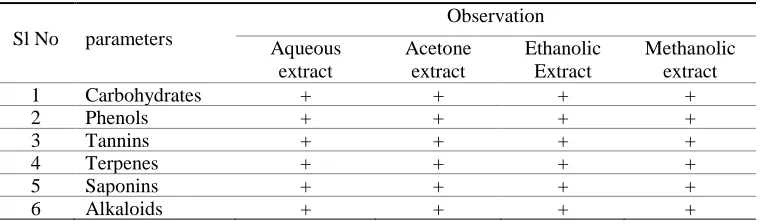
Preliminary phytochemical screening of saffron and liquorice extracts: Phytochemical screening ofGlycyrrhiza glabra Linn.revealed that acetone extract, ethanol extract, methanol extract and aqueous extract contain Alkaloids, Proteins, Flavanoids, Carbohydrates, Tannins, Glycosides, Saponins and Steroids. Phytochemical screening of Crocus sativus Linn. revealed that Petroleum ether extract containsSteroids and triterpenes, Chloroform extract contains Steroids, Triterpenes, Saponins, Alkaloids, Flavanoids and Resins, 90% Alcoholic extract contain Carbohydrates, Proteins and Flavanoids and Aqueous extract contain Carbohydrates, Proteins, Saponins, Flavanoids and Resins.It is shown in table 3 and 4.
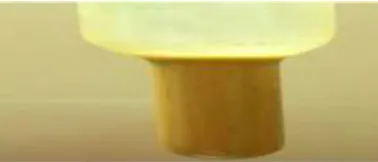
Physical appearance: Serum formulation wasBrownish yellow viscous liquid preparationwith a smooth homogeneous texture and glossy appearance. Consistency was found to be good. It is shown in Figure 1.
wasfound to be 62.9%. The viscosity was in the range of 2304cps.
Chemical evaluation: The pH of the formulation was foundto be 5.1. As the skin is having an acidic pH of around 4–6, this pH range of the formulation is suitable. The formulation was found to be free from heavy metals.
Biological evaluation: The skin irritation studies revealedthat theformulation was non-sensitizing and safe for use.
Test for microbial growth in formulated serum:
The formulationwas free from microbes as they have not produced any microbial growth when they got inoculated in the agar medium.It is shown inFigure 2.
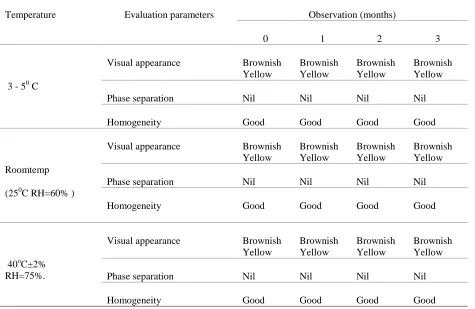
Stability studies: The formulation was undertaken stability studies for physical and chemical change. No considerable variations in properties of the formulation were observed.The results are shown inTable5.
Globule size determination: The globule size was found to be in the range of 0.1- 0.2µm. This range of particles enhance the penetrating power of the formulation which result in better and fast effect. It is shownin Fig 3.
CONCLUSION
The aim of the study was to formulate and evaluate extracts of different herbals in to aserum for fairnessactivity. The roots of liquorice and stigmas of saffron were successfully extracted withhexane, acetone, chloroform, ethanoland water. The phytochemicals present intheliquoriceand saffronextractswere identified by qualitative phytochemical screening, which reveals thepresence of flavonoids,phenols andcarbohydrates in aqueous extract. Stability studies revealed that there was no significantdifference in the physical and chemical parameters. Thus theformulation was found to be stable for three months.Biological evaluation of serumrevealed that theformulation is non-sensitizing and safe for use. The spreadability was found to be good. No residues were formed and was easy to wash out. The pharmacological evaluation ofserum proved that it produces the fairness action within a week.
ACKNOWLEDGEMENT
The authors are greatly thankful toMr. BIJU KARNAN, Vice Chairman of Solace Research, for giving us an opportunity in carrying out the project work in their reputed firm, Dr.K.G REVIKUMAR, Director, Al Shifa College of Pharmacy , Dr.B.SEETHADEVI Director and professor of pharmacognosy, National college of pharmacy, Calicut, Dr.SURIYAPRAKASH, Principal, Al Shifa College of Pharmacy.
Figure 1: Physical appearance of serum
a, test b, control
Figure 3: Globule size determination of serum
Table 1: Working formula for serum
Table 2: Procedure for determining heavy metal content in the formulation
Table 3: Preliminary phytochemical screening of Glycyrrhiza glabra
Sl No parameters
Observation Aqueous
extract
Acetone extract
Ethanolic Extract
Methanolic extract 1 Carbohydrates + + + + 2 Phenols + + + + 3 Tannins + + + + 4 Terpenes + + + + 5 Saponins + + + + 6 Alkaloids + + + +
Ingredients Quantity Aqueous extract of liquorice 15 ml Polymer extract of liquorice 10 ml Aqueous extract of rice bran 26.6 ml Rice bran oil 3.6 ml Aqueous extract of saffron 15 ml
Vitamin E 19 g
Methyl paraben &Propyl paraben 2%
Perfume q.s
Test sample Standard compound Solution is prepared as per the monograph and 25 ml
is transferred in Nessler‟s cylinder
Take 2 ml ofstandard lead solution and dilute to 25 ml with water
Adjust the pH between 3 to 4 by adding dilute acetic acid „Sp‟ or dilute ammonia solution „Sp‟
Adjust the pH between 3 to 4 by adding dilute acetic acid „Sp‟ or dilute ammonia solution „Sp‟
Dilute with water to 35 ml Dilute with water to 35 ml Add freshly prepared 10 ml of hydrogen sulphide
solution
Add freshly prepared 10 ml of hydrogen sulphide solution
Table 4: Preliminary phytochemical screening of Crocus sativus
Sl No Phytoconstituents
Stigma Extracts
PE CH ME EH AQ 1 Carbohydrates _ _ _ + + 2 Proteins _ _ _ + +
3 Fats + + _ _ _
4 Triterpenes &steroids + + + _ _ 5 Saponins _ + + _ + 6 Glycosides _ _ _ _ _ 7 Alkaloids _ + _ _ _ 8 Tannins/ phenolic compounds _ _ _ _ _ 9 Flavanoids _ + + + + 10 Resins _ + _ _ +
Table 5: Stability studies of the formulation
Temperature Evaluation parameters Observation (months)
0 1 2 3
3 - 50 C
Visual appearance Brownish Yellow
Brownish Yellow
Brownish Yellow
Brownish Yellow Phase separation Nil Nil Nil Nil Homogeneity Good Good Good Good
Roomtemp (250C RH=60% )
Visual appearance Brownish Yellow
Brownish Yellow
Brownish Yellow
Brownish Yellow Phase separation Nil Nil Nil Nil Homogeneity Good Good Good Good
40oC±2% RH=75%.
Visual appearance Brownish Yellow
Brownish Yellow
Brownish Yellow
Brownish Yellow Phase separation Nil Nil Nil Nil Homogeneity Good Good Good Good
REFERENCES
1. 1. Pandey Shivanand. IJPLS, 2010; 1(5): 260-267
2. Sujith Varma,A. Fathima, P. Jagannath, M. Akash. IJDFR,2011; 2(5):140-165 3. V P Kapoor. NPR, 2005; 4(4): 306-314
4. Lakshmi Prakash, Muhammed Majeed. Euro cosmetics, 2009; 19-23.
5. Shoukat Parvez, Moonkyu Kang, Hwan-Suck Chung, Chongwoon Cho, Moo-Chang Hong, Min-Kyu Shin.Phytother, Res.2006, 20(1): 921–934
6. Marjan Nasiriya Asl, HosseinHosseinzadeh .Phytother. Res, 2008; 22(1): 709–724
8. Sanjay Saxena.NPR,2005; 4(5): 358-367
9. Anuchita Moongngarm, Natcha Daomukdaa, Saowarose Khumpika.APCBEE Procedia, 2012; 2(1):73-79 10. Antonio M. Rabasco levered and Maria Luisa Gonzalez. Fasc, 2000; 51(1): 74-96.
11. Anca Maria Juncan, A. Roşu, Cristina Elena Horga, Maria Lungu.IJMD, 2012; 2(4): 245-250 12. Radhika R Dangar, RajuDDangar,Ms. BK Shah, K NPatel. IJPRT, 2011; 1(2):17-21
13.Maryam Mashmoul, AzrinaAlana, Huzwah Khaza‟ai, Barakatun Nisak Mohd Yusof Sabariah Mohd Noor. Antioxidants,2013;2(1):293-308
14. Vyas L. K, Tapar K. K, Nema R. K.IJPCR,2010; 2(2): 76-79
15. Skin care article - http://www.ost-cosmetics.com/about-skin-care/anti-aging-serum.html 16.Hemraj Vashist, Diksha Sharma. Asian J Pharm Clin, 2013; 6(4): 55-59
17. Andrew Proctor, Mamoon A Mansoor. JAOCS, 2003; 80(1): 24-29 18. A. Proctor, D. J. Bowen. JAOCS,1996; 73(6): 811-813.
19. Sahu M K, Soni GC, Prajapati SK. IJPRS, 2012; 1(3): 224-235 20. Sujith S Nair, Molly Mathew, Sreena K.IJPCS, 2012; 1(4): 1362-1368 21. Spreadability- Applications Department: APP09: 1-2
22. Limit test for heavy metals-
http://www.web-formulas.com/Formulas_of_Chemistry/Limit_Test_of_Heavy_Metals.aspx 23.Sujith S Nair, Molly Mathew, Sreena K. AJBPR, 2012; 2(3): 184-189
24.ICH Harmonized Tripartite Guidelines, Stability testing of new drug substances and products, ICH Committee. Federal register 2003: 68.