Research Article
CODEN: IJPNL6
COMPLEXATION,
OPTIMIZATION,
FORMULATION
DEVELOPMENT
AND
CHARACTERIZATION OF CLINDAMYCIN PHOSPHATE GEL USING ZINC
ACETATE DIHYDRATE
*
Manoj Kumar Mishra and Pramod Kumar Biswal
Kunwar HariBansh Singh College of Pharmacy, Near Zafarabad Police Station, Mahrupur,
Jaunpur, Uttar Pradesh- 222181, India
*Corresponding author e-mail: [email protected]
ABSTRACT
A stable zinc-clindamycin complex gel was formed by optimizing concentration of clindamycin phosphate (1.188gm) and zinc acetate dehydrate (500 mg), determining optimum pH condition (pH 7.5) and stabilizing (pH 5-8) the complex using various gelling agents. Drug identification was carried out by FTIR and DSC study. Related substances analysis and quantitative determination of drug were carried out on HPLC. Physical parameters like color, smoothness/ grittiness, ease of application, oiliness/greasiness, skin irritation, pHandviscosity of gel were conducted from time to time. Antimicrobial effectiveness test were screened against five selected pathogens. A Franz diffusion cells system was used to determine the release rate profile of the formulation which produces better result comparable to the marketed product (Dalacin® lotion) concludes the topical application of gel useful in acne vulgaris is capable of storage during shelf life for longer period of time without losing its therapeutic effectiveness and maintaining the uniformity.
Keywords: Clindamycin phosphate, zinc acetate dehydrate, gel, acne vulgaris, Franz diffusion cell, high performance liquid chromatography
INTRODUCTION
Over the last decades the treatment of illness has been accomplished by administrating drugs to human body via topical route containing formulation to treat cutaneous disorders (e.g. acne vulgaris) or the cutaneous manifestations of a general disease (e.g. psoriasis) with the intent of containing the pharmacological or other effect of the drug to the surface of the skin or within the skin [1]. Acne is a disease with an initial pathologic condition involving a micro comedo; characterized by a follicular eruption of the comedo, which initiates an
inflammatory reaction, formation of papules,
pustules, and/or cysts results from the inflammation
[2]
.
The advantages of topical antibacterials in contrast with oral preparations are the reduced risk of
systemic adverse effects, the avoidance of resistance selection in the gut micro flora, the direct delivery at the affected area, the overall usage of fewer drugs and the high local tolerability [3]. Topical antibacterial agents such as clindamycin [4], erythromycin [5] and tetracycline [6] are an essential part of the armamentarium for treating acne vulgaris. The effectiveness of topically applied clindamycin for the treatment of acne vulgaris exhibits a marked affinity for pigmented tissues [7]. Clindamycin phosphate because of its lower percutaneous absorption [8] was selected for the present study. Combination therapies are also used in the treatment of acne vulgaris, these include erythromycin with zinc or with benzoyl peroxide [9].
Clindamycin phosphate [10] is chemically Methyl7-chloro-6, 7, 8-trideoxy-6-[[[(2S, 4R
)-1-methyl-4-propylpyrrolidin-2yl] carbonyl]
amino]-1-thio-L-International Journal of Pharmacy
threo-a-D-galacto-octopyranoside 2 (dihydrogen phosphate). Clindamycin is a lincosamide antibiotic with primarily bacteriostatic action against Gram positive aerobes and wide range of anaerobic
bacteria. Clindamycin phosphate also causes
pseudomembranous colitis and diarrhea after
systemic absorption. To avoid these side effects, clindamycin phosphate can be combined with zinc acetate dehydrate as complex forming agent .This complex cannot penetrate easily through the stratum corneum and avoids reaching to systemic circulation. Gels [11, 12] are semisolid systems consisting of dispersions of small or large molecules in an aqueous liquid vehicle rendering jelly-like through the addition of gelling agent. The active ingredients in gel based formulations are better percutaneously absorbed than cream or ointment bases [13].
So the primary objective of the invention was to form a stable zinc-clindamycin complex by optimizing concentration of clindamycin phosphate and zinc acetate dihydrate, determining optimum pH condition and stabilizing the complex.
MATERIALS AND METHODS
Materials: Clindamycin phosphate (CP) was received as a gift sample from Pfizer Limited (Mumbai, India). Zinc acetate dihydrate (ZAD) and Ethanol were obtained from Merck Chemicals (Darmstadt, Germany). Propylene glycol was purchased from Spectrum Chemicals (Gardena, CA). Carbopol 934P was supplied from Hi-Media Lab Pvt Ltd (Mumbai, India). Hydroxypropyl cellulose was obtained from Shin-Etsu Chemicals Co. Ltd. (Tokyo, Japan). Sodium carboxymethyl cellulose (Na-CMC) was procured from Loba-Chemie Indoaustranat Co. (Mumbai, India). Hydroxyethyl cellulose was obtained from Bharat Coats (Chennai, India). Xanthan gum was purchased from Farabi Co. (Isfahan, Iran) and sodium hydroxide (NaOH) was obtained from Central Drug House (Mumbai, India). Dalacin® lotion was obtained as a gift from Upjohn Company, Puurs, Belgium. Other reagents used were of analytical grade.
Methods
Clindamycin phosphate (CP): Different tests were carried out to establish the identity and purity of the drug and the results were compared with specifications reported in literatures. The parameters studied include:
1) Identification Test: Identification test for CP were carried out using Fourier Transform Infrared
(FTIR) Spectroscopy [14] and Differential
Scanning Colorimetry (DSC)
a) Fourier Transform Infrared (FTIR)
spectroscopy: An FTIR spectrum of drug sample was obtained on Jasco V5300 Fourier transform infrared spectroscopy (FTIR) (Jasco, Tokyo, Japan). The pellets were prepared on KBr press (Spectra Lab, Mumbai, India) using mixture of drug sample and KBr (powdered and dried at 60oC for an hour) in ~1:10 ratio. The spectra were recorded over the wave number range of 4000 to 500 cm−1.
b) Differential Scanning Colorimetry (DSC): DSC study [15] was conducted for pure drug, drug-polymer samples. They were separately weighed and hermetically sealed in the aluminum pans. A Mettler Toledo DSC 821e equipped with intracooler, a refrigerated cooling system, was used (Mettler-Toledo, Greifensee, Switzerland). Indium standard was used to calibrate the DSC temperature and enthalpy scale. The system was purged with nitrogen gas at a flow rate of 80 mL/min, and heating was performed from 30ºC to 350ºC at a rate of 5ºC/min. DSC of CP was measured in order to check the presence of impurities.
2) Description: The drug samples were characterized for various parameters like physical appearance, color, odor, solubility, melting point andpH.
3) Solubility: The relative solubility characteristic of clindamycin phosphate, as per USP nomenclature indicates that CP is considered to be soluble in aqueous solutions.
4) Melting Point: The melting point of the drug was
determined by using capillary method and
compared with the values in literature.
5) pH:pH of 10%w/w solution was recorded.
Drug – Excipient Compatibility Study
Related Substances: Drug and excipients were taken in 1:1 molar ratio and properly mixed and kept for compatibility study in stability chamber for one month at 25ºC/60%RH ,40ºC/75%RH and for 15 days at 50ºC and analyzed on high performance liquid chromatography (HPLC, Waters India) for related substances [16].
Formulation Development (Part -1)
a) Complex Formation Preparation of CP solution
Preparation of 30%w/w NaOH solution
Process:
1. Mix 10gm of purified water and 12gm of ethanol using homogenizer (Remi motors, Mumbai, India) with continuous homogenization, add 1.188gm of CP to form a suspension.
2. Add NaOH 30% w/w solution drop wise in above CP suspension to make pH 7.5.
3. Add required quantity of 10% ZAD solution. [Different concentration of ZAD solution like 1ml, 2ml, 4ml, 6ml and 8ml were added] to step 1 to form CP-ZAD complex.
b) Effect of different pH condition on stability of complex formation
Process:
1. Mix 10gm of purified water and 12 gm of ethanol using homogenizer with continuous homogenization, add 1.188gm of CP to form a suspension.
2. Add NaOH 30%w/w solution or 1N HCl drop wise in above CP suspension to make required pH [different pH condition are maintained].
3. Add 5ml of 10% ZAD solution to step 1 to form CP-ZAD complex and finally observe the complex formed and keep it for stability study.
c) Investigation of physical stability of CP-ZAD complex
Stability of CP-ZAD complex at different pH condition is studied by using 30% w/w NaOH solution and 20%w/w citric acid solution.
Process:
1. Mix 10gm of purified water and 12 gm of ethanol using homogenizer with continuous homogenization, add 1.188gm of CP to form a suspension.
2. Add drop wise NaOH 30%w/w solution in above clindamycin phosphate suspension to make pH 7.5.
3. Dissolve 0.516 gm of ZAD in purified water solution and add this solution in step 1 to form CP-ZAD complex.
4. Make the different pH of this complex using 30%w/w NaOH solution and 20% w/w citric acid solution finally observe it and kept for stability study.
Formulation Development (Part-2)
When CP-ZAD complex formed using
water, it forms granular complex.
When CP-ZAD complex formed using water
and ethanol, it forms smooth and uniform complex.
This complex is then added in a suitable gel base using various gelling agent to form a
clear, translucent, homogenous gel
formulation.
Trial batches with application of various strategies were taken as mentioned below to form a stable, clear, transparent, homogenous gel formulation.
Manufacturing Process: Step 1-Complex formation
1. Mix ethanol and purified water using homogenizer. Add CP to form a suspension.
2. Prepare 30%w/w NaOH solution in purified water. 3. While mixing, add NaOH solution drop wise to get desired pH. Record pH, Note quantity of NaOH added.
4. Dissolve ZAD in purified water.
5. Add zinc acetate solution to CP solution with continuous homogenization to form CP-ZAD complex.
Step 2-Gel base formation
1. Mix ethanol and propylene glycol using homogenizer.
2. Add gelling base and mix continuously till a homogeneous gel base was formed.
Step 3- Final gel formation
1. Add step 1 to step 2 and mix continuously till a homogenous, white translucent gel was formed. 2. Add purified water to adjust weight to 100% and mix well.
3. Check pH and fill in esssel propack laminate tube.
EVALUATION PARAMETER
Physico-Chemical Parameters: The physico-chemical evaluation [17] of formulation is important as directly related with patient acceptance. Thus various physical parameters color, smoothness/ grittiness,
ease of application, oiliness/greasiness, skin
irritation, pH determined by digital pH meter
(Mettler-Tolrdo, Japan), viscosity of gel determined by CAP 2000+Brookfield viscometer (Brookfield Engineering Laboratories, USA) were checked at initially and also at each stability time point.
Assay of ethanol (GC method), related substances and calculation of percentage total impurities were carried out by using suitable chromatographic conditions.
Antimicrobial Effectiveness Test: Antimicrobial effectiveness test [19] must be demonstrated for multiple dose topical and oral dosage forms and for other dosage forms such as ophthalmic, otic, nasal,
irrigation and dialysis fluids. Antimicrobial
preservative effectiveness test were performed according to USP 24 with following microorganisms:
Candida albicans (ATCC No.10231), Aspergillus
niger (ATCC No.16404), Escherichia coli (ATCC
No. 8739), Pseudomonas aeruginosa (ATCC No.
9027), and Staphylococcus aureus (ATCC No.6538).
Soybean-casein digest was used as bacterial culture medium. Sabouraud-dextrose agar was used for C. albicans and A. niger culture media. Incubate the bacterial cultures at 30°C to 35°C for 18-24 hours and cultures of C. albicans and A. niger at 20°C - 25°C for 48 hours and 7 days respectively. A stock suspension of each bacterial culture of 108 cfu ml-1 was prepared in sterile saline solution and kept in 4ºC for 24 h [20].
Microbial Limit Test: The microbial limit Tests [21] were designed to perform the quantitative and qualitative estimation of total viable counts of (bacteria and fungi) and E. coli.Different media and incubation temperature were required for the growth of bacteria and fungi (molds and yeasts).
Preparation of Test Fluids: To dissolve or to dilute the sample, use phosphate buffer (pH 7.2), sodium chloride peptone buffer solution used for the test and make it 100ml. Use membrane filtration method (≠0.45μm) and after filtration, for bacteria detection, place the filter on a plate of soyabean casein digest agar medium, and for fungi detection, add an antibiotic to the medium and place them on a plate of one of Sabouraud glucose agar. Incubate the plates at least for 5 days at 30-35°C for bacteria detection and at 20-25°C for fungi detection and count the number of colonies.
Diffusion study of final formulation of gel by Franz six cell diffusion system: Franz diffusion cells with 3.14cm2 surface areas available for diffusion (PermeGear Inc., PA, USA) were used. The receptor phase was stirred constantly with a spinning bar magnet to ensure proper mixing [22]. The receptor compartment was filled with 15.0 ml of pH 4.0 acetate buffer maintained at 37± 0.5 ºC and stirred by a magnetic bar at 600 rpm. Filter of cellulose acetate 0.45 µ placed on diffusion vessel. One gram of gel
formulation was placed on the membrane and at predetermined time intervals 0.1mL of receptor medium were withdrawn and immediately replaced by an equal volume of fresh receptor solution to maintain the sink condition. The samples were analyzed for drug content by using HPLC method.
RESULT AND DISCUSSION
Preformulation Studies
Identification Test
a) FTIR Spectroscopy Study: FTIR absorption spectrum of CP was taken and the spectral assignment for major bands provided are in consistent with the structure of clindamycin phosphate “Figure 1” proves the purity of CP. b) Differential Scanning Calorimetric Study (DSC): DSC thermograms of pure CP, ZAD and CP-ZAD complex. The DSC thermogram of pure CP showed 3 sharp and 1 small endothermic peak. The first, second and third sharp endothermic peaks were observed at 70°C, 196°C and 243°C respectively, whereas small endothermic peak was observed at 214°C after an exothermic peak at 205°C indicated the fusion of the solvated crystals and the oxidation reaction between CP and oxygen in air environment fusion [23] respectively. CP-ZAD complex using 1:1 ethanol shows the sharp endothermic peak at 196°C confirms the presence of pure drug but there is slight shift of its first peak from its original position at 51°C.Use of 1:1 water shows no peaks indicates that complex with 1:1 ethanol reproduce better results. From the DSC analysis, the melting point of CP was found to be 208-212°C.Hence CP is pure.
Drug – Excipient Compatibility Study
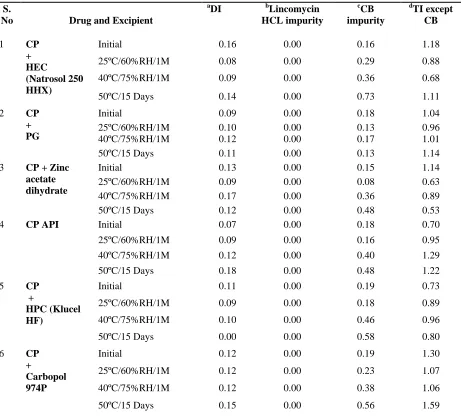
Related Substances: Related substances analysis was carried out on HPLC and results obtained are given in Table 2. The above observations show that impurities produced after interaction of CP with any excipient are within limits. Hence CP was found to be compatible with the excipients which are used in the formulation.
Formulation Development (Part -1)
for complex formation, 1:1 molar ratio or onwards (1:1.5, 1:2) molar ratio of CP and ZAD were required.
DSC Study of Complex: DSC thermograms of CP, ZAD and CP-ZAD complex showing that CP forms complex with zinc acetate dehydrate “Figure 2” indicates that peaks observed in DSC thermogram of drug disappears or changes in the complex, hence it is concluded that complete complex is formed.
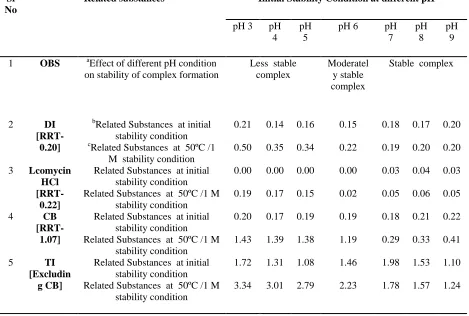
a) Effect of different pH condition on stability of complex formation: Effect of different pH condition on stability of complex formation was depicted on Table 4. From the observation table, it concludes that CP forms stable complex with zinc acetate dihydrate at alkaline pH or above pH 7. For better safety, pH 7.5 was considered for stable complex formation.
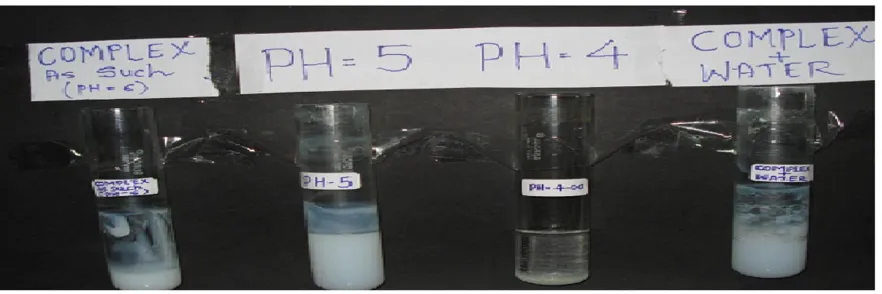
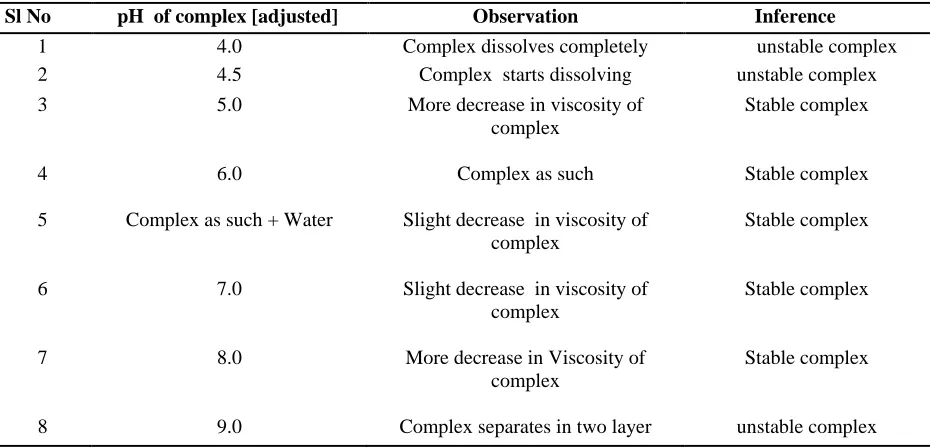
b) Investigation of physical stability of CP-ZAD complex: Investigation of physical stability of CP-ZAD complex were established “Figure 3 and 4” along with their observations were given on Table 5, which concluded that CP-ZAD complex was physically stable at pH 5.00 to pH 8.00.
Formulation Development (PART 2)
a) Trial batches with different gelling agent:
A trial batch with different gelling agent confirms that the consistency/viscosity of formulations using Hydroxyethylcellulose was comparatively superior to other gelling agent and physical appearance was also good. Hence it was selected for formulation of gel.
Evaluation Parameter: The optimized formulations were subjected to stability study as per ICH guidelines for the period of two months. The stability evaluation data mentioned below:
Physico-Chemical Parameters: Physico- Chemical evaluations were done initially and after 1st and 2nd month of stability and results were given in Table 6. The pH of the final formulation after stability testing was within the range of 5.5 to 6.5 during storage [As per USP]. The viscosity of the final
formulation after stability testing
(40°C/75% RH _2M) were represented in Table 7 and was almost similar with the initial viscosity. Hence the formulation was said to be stable during storage condition.
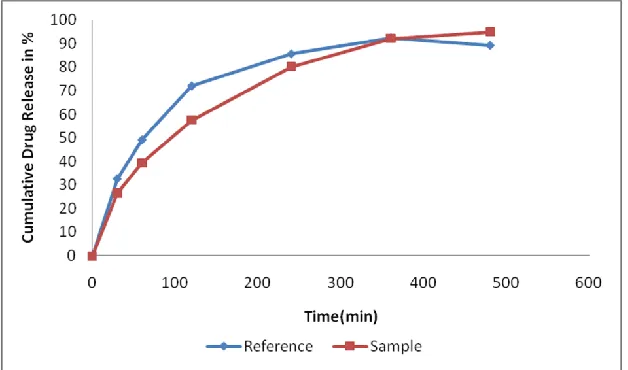
Diffusion study: Cumulative drug release (%) Vs Time in minute “figure 6” were determined and given in Table 11, which concludes that the formulated gel produces better cumulative drug release (%) as compared to the reference (Dalacin® lotion)
marketed product. Hence final gel
formulation complies with Dalacin® lotion.
CONCLUSION
Based on the various studies carried out in the formulation trials, we arrived to the following conclusions:
1. Zinc acetate dihydrate forms stable complex with Clindamycin Phosphate at pH 7.5
2. pH and Viscosity were found to be
satisfactory.
3. API Content (Assay) and RS at stability conditions were found to be within range as per US Pharmacopoeia.
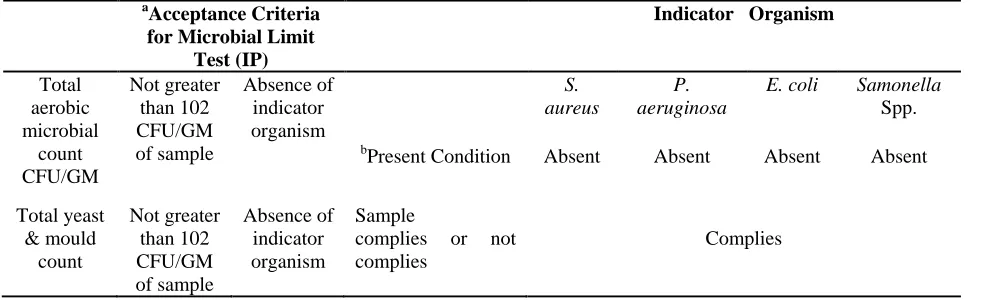
4. Microbial Effectiveness Test and Microbial Limit Test showed that the sample was free from micro-organisms and is complying
with the specifications of Indian
Pharmacopoeia.
5. Diffusion study showed that the drug release from the sample comply with the drug release from the reference marketed product (Dalacin® lotion).
As a result of these experiments, we have arrived at a final formula for the topical application of gel to be used in Acne Vulgaris containing Clindamycin Phosphate. The final formulation is capable of stored for longer period of time without losing its therapeutic effectiveness and maintaining the uniformity and stability during shelf life period.
ACKNOWLEDGEMENTS
Figure 1: FTIR absorption spectrum of clindamycin phosphate-API
Figure 2: DSC thermogram of clindamycin phosphate API (A), zinc acetate dehydrate (B) and CP-ZAD complex
Figure 4: Investigation of physical stability of zinc –clindamycin complex at different pH condition
Figure 5: Chromatogram of placebo (A), initial sample (B), sample -2M (25ºC/60%RH) (C), sample -2 M
(40ºC/75%RH) (D), sample -2 M (25ºC/60%RH) (E), marketed sample -2 M (40ºC/75%RH) (F)
Table 1:
aCharacterization of pure drug (clindamycin phosphate)
Tests
Specifications
Results
Color
White
Confirms
Physical state
Crystalline powder
Confirms
Identification
Melting Point 208ºC to 212ºC
209ºC
pH of 10% water solution
3.5 to 4.5
3.9
Table 2:Study data of related substances analysis
Clindamycin phosphate (CP), Hydroxy ethyl cellulose (HEC), Propylene glycol (PG), Hydroxy propyl cellulose (HPC)
a
Degradation impurities (DI), bLincomycin HCL impurity, cClindamycin Base (CB) impurity, dTotal impurities (TI) except clindamycin base
S.
No Drug and Excipient
a
DI bLincomycin
HCL impurity
c
CB impurity
d
TI except CB
1 CP
+ HEC (Natrosol 250 HHX)
Initial 0.16 0.00 0.16 1.18
25ºC/60%RH/1M 0.08 0.00 0.29 0.88
40ºC/75%RH/1M 0.09 0.00 0.36 0.68
50ºC/15 Days 0.14 0.00 0.73 1.11
2 CP
+ PG
Initial 0.09 0.00 0.18 1.04
25ºC/60%RH/1M 0.10 0.00 0.13 0.96
40ºC/75%RH/1M 0.12 0.00 0.17 1.01
50ºC/15 Days 0.11 0.00 0.13 1.14
3 CP + Zinc acetate dihydrate
Initial 0.13 0.00 0.15 1.14
25ºC/60%RH/1M 0.09 0.00 0.08 0.63
40ºC/75%RH/1M 0.17 0.00 0.36 0.89
50ºC/15 Days 0.12 0.00 0.48 0.53
4 CP API Initial 0.07 0.00 0.18 0.70
25ºC/60%RH/1M 0.09 0.00 0.16 0.95
40ºC/75%RH/1M 0.12 0.00 0.40 1.29
50ºC/15 Days 0.18 0.00 0.48 1.22
5 CP
+
HPC (Klucel HF)
Initial 0.11 0.00 0.19 0.73
25ºC/60%RH/1M 0.09 0.00 0.18 0.89
40ºC/75%RH/1M 0.10 0.00 0.46 0.96
50ºC/15 Days 0.00 0.00 0.58 0.80
6 CP
+ Carbopol 974P
Initial 0.12 0.00 0.19 1.30
25ºC/60%RH/1M 0.12 0.00 0.23 1.07
40ºC/75%RH/1M 0.12 0.00 0.38 1.06
Table 3: aEffect of different concentration of zinc acetate dihydrate on complex formation
Sl No. Different conc. Zinc acetate dehydrate 10% w/w solution (100 mg/ ml)
Observation
1 10 mg Less viscous complex
2 200 mg Less viscous complex
3 300 mg Less viscous complex
4 400 mg Moderately viscous complex
5 500 mg Complete viscous complex
6 600 mg Complete viscous complex
7 700 mg Complete viscous complex
Table 4:Effect of different pH condition on stability of complex formation
a
Effect of different pH condition on stability of complex formation, bRelated substances at initial stability condition and cRelated substances at 50C /1 M stability condition
Sl No
Related substances Initial Stability Condition at different pH
pH 3 pH
4
pH 5
pH 6 pH
7
pH 8
pH 9
1 OBS aEffect of different pH condition
on stability of complex formation
Less stable complex
Moderatel y stable complex
Stable complex
2 DI
[RRT-0.20]
b
Related Substances at initial stability condition
0.21 0.14 0.16 0.15 0.18 0.17 0.20
c
Related Substances at 50ºC /1 M stability condition
0.50 0.35 0.34 0.22 0.19 0.20 0.20
3 Lcomycin HCl
[RRT-0.22]
Related Substances at initial stability condition
0.00 0.00 0.00 0.00 0.03 0.04 0.03
Related Substances at 50ºC /1 M stability condition
0.19 0.17 0.15 0.02 0.05 0.06 0.05
4 CB
[RRT-1.07]
Related Substances at initial stability condition
0.20 0.17 0.19 0.19 0.18 0.21 0.22
Related Substances at 50ºC /1 M stability condition
1.43 1.39 1.38 1.19 0.29 0.33 0.41
5 TI
[Excludin g CB]
Related Substances at initial stability condition
1.72 1.31 1.08 1.46 1.98 1.53 1.10
Related Substances at 50ºC /1 M stability condition
Table 5: Investigation of physical stability of zinc –clindamycin complex at different pH condition
Sl No pH of complex [adjusted] Observation Inference
1 4.0 Complex dissolves completely unstable complex
2 4.5 Complex starts dissolving unstable complex
3 5.0 More decrease in viscosity of
complex
Stable complex
4 6.0 Complex as such Stable complex
5 Complex as such + Water Slight decrease in viscosity of
complex
Stable complex
6 7.0 Slight decrease in viscosity of
complex
Stable complex
7 8.0 More decrease in Viscosity of
complex
Stable complex
8 9.0 Complex separates in two layer unstable complex
a
Investigation of physical stability of zinc –clindamycin complex at different pH condition
Table 6: aPhysical observation of final formulation
Table 7: aViscosity and bpH of the final formulation
a
Viscosity of the Final Formulation bpH of the Final Formulation Condition RPM Shear
rate (1/sec)
Viscosity(p) of formulation
Viscosity(p) of marketed
sample
pH of formulation
pH of marketed
sample
Initial 100 1333 0.956 0.881 6.36 6.55
1 M 100 1333 1.050 0.975 6.37 6.31
2 M 100 1333 1.020 0.985 6.35 6.37
a
Viscosity of the final formulation and bpH of the final formulation
Physical Parameter
Stability Condition
25ºC/60%RH 30ºC/65%RH 40ºC/75%RH
Color Clear, translucent,
homogenous gel
Clear, translucent,
homogenous gel
Clear, translucent,
homogenous gel
Grittiness Free from grittiness Free from grittiness Free from grittiness
Oiliness/Greasiness Non-greasy Non-greasy Non-greasy
Ease of application Easily/Smoothly applied Easily/Smoothly applied Easily/Smoothly applied
Table 8: The assay of the drug and antimicrobial agent
Name
aLimit of
Assay as
per USP
b
Assay (%)
Initial
25ºC/60%RH
30ºC/65%RH
40ºC/75%RH
1M
2M
1M
2M
1M
2M
CP
90-110%
101.2
106.40 105.01 105.80 104.61 106.50 102.10
Ethanol
80-120%
99.53
98.33
96.12
98.05
93.27
98.11
92.97
a
Limits of assay as per pharmacopoeia
and
bThe assay of the drug and antimicrobial agent
Table 9: aObservation of antimicrobial effectiveness test
Culture used
Peptone water count CFU/gm Cfu×104
0hr. count CFU/gm of sample Cfu×104
7hr. count CFU/gm of sample Cfu×104
14hr. count CFU/gm of sample Cfu×104
21hr. count CFU/gm of sample Cfu×104
28hr. count CFU/gm of sample Cfu×104
S. aureus
ATCC 6538
221 184 149 12 2 0
P. aeruginosa
ATCC 9027
201 200 158 17 1 0
E. coli
ATCC 8739
214 203 171 9 3 0
C. albicans
ATCC 10231
209 201 165 8 1 0
A. niger ATCC 16404
194 181 166 12 1 0
Table 10: Result of microbial limit test
a
Acceptance Criteria for Microbial Limit
Test (IP)
Indicator Organism
Total aerobic microbial
count CFU/GM
Not greater than 102 CFU/GM of sample
Absence of indicator organism
S. aureus
P. aeruginosa
E. coli Samonella
Spp.
b
Present Condition Absent Absent Absent Absent
Total yeast & mould
count
Not greater than 102 CFU/GM of sample
Absence of indicator organism
Sample
complies or not
complies
Table 11: Cumulative drug release in % vs time in minute
REFERENCES
1. Jain NK. Controlled and Novel Drug Delivery, 1st ed., Delhi; CBS Publishers and Distributors: 1997.
2. White GM. J Am Acad Dermatol, 1998; 39(2): S34-7.
3. Krautheim A, Gollnick H. Clin Pharmacokinet, 2003; 42(14): 1287-304.
4. Milestone EB, McDonald AJ, Scholhamer CF. Arch Dermatol, 1981; 117(3): 154-5.
5. Coskey RJ. Cutis, 1975(2); 15: 710-2. 6. Clark C. The Practice, 1993; 237(1): 160-4.
7. Barza M, Goldstein JA, Kane A, Feingold DS, Pochi PE. J Am Acad Dermatol, 1982; 7(2): 208-14.
8. Guin JD, Lummis WL. J Am Acad Dermatol, 1982; 7(2): 265-8.
9. Cunliffe Simpson NB, Disorders of the sebaceous glands, in: Textbook of Dermatology. Blackwell Science
Ltd, Oxford: 1998, pp.1927-1984.
10. Meyers BR, Kaplan K, Weinstein L. Appl Microbiol, 1969; 17(5): 653-7.
11. Kibbe HA. Hand Book of Pharmaceutical Excipients, 3rd ed., London; Pharmaceutical Press: 2000.
12. Reddy MS, Mutalik S, Rao GV. Ind J Pharm Sci, 2006; 68(4): 432-6.
13. Paranjyothy KLL. Ind Drugs, 1994; 31(3): 224-8.
14. Black DB, Lovering EG. J Pharm Pharmacol, 1977; 29(1): 684-7.
15. Kaneniwa N, Otsuka M, Hayashi T. Chem Pharm Bull, 1985; 33(8): 3447-55.
16. ICH Topic Q 1 A (R2), Stability testing of new drug substances and products, 2003; CPMP/ICH/2736/99.
17. Lachman L, Lieberman HA, Kanig JC. The Theory and Practice of Industrial Pharmacy, 3rd ed., Mumbai;
Varghnese Publishing House: 1991.
18. Pereira AS, Kenney KB, Cohen MS, Hall JE, Eron JJ, Tidwell RR, Dunn JA. J Chromatogr B Biomed Sci
Appl, 2000; 742(1): 173-83.
19. Indian Pharmacopoeia, Ministry of health and family welfare, Vol. I, Ghaziabad; Indian Pharmacopoeia Commission: 2007.
20. Sechi LA, Lezcano I, Nunez N, Espim M, Dupre I, Pinna A, Molicotti P, Fadda G, Zanetti S . J Appl Microbiol, 2001; 90(2): 279-84.
21. United States Pharmacopeia and National Formulary, The United States Pharmacopeial Convention, 24th ed., Rockville; INC: 2000.
22. Shah VP, Elkins J, Lam S, Skelly JP. Int J Pharm, 1989; 53(1): 53-9.
23. Puttipipatkhachorn S, Pongjanyakul T, Priprem A. Int J Pharm, 2005; 293(1-2): 51-62.
Time in minute Cumulative drug release in %
Reference (Marketed sample)
Sample
0 0 0
30 32.7 26.6
60 49.2 39.5
120 72 57.5
240 85.6 80.3