Original Research Article
245 |P a g e Int J Med Res Prof.2017; 3(2); 245-52. www.ijmrp.com
Prehypertension among Male Medical Students of Umm Al
-
Qura University
,
Makkah Al-Mokarramah
Adel Mesfer Alghamdi
1*, Sameer Awad Saban
2, Abdullah Abdulwahab Alabdulwahab
31*Alnawaria Primary Health Care Center, Ministry of Health, Makkah, Saudi Arabia. 2Ministry of Health, Makkah, Saudi Arabia.
3Internal Medicine Department, College of Medicine, Dammam University, Saudi Arabia.
ABSTRACT
Background: Data on prehypertension in young adults are lacking, and little is known on the risk factors for prehypertension and their association with other CVD risk factors. It is presently unclear whether the increased risk of CVD among prehypertensive subjects is wholly related to increased BP or whether it can be attributed to a deleterious CVD risk factor profile.
Objectives: To determine the prevalence of prehypertension and its associated factors among male medical students of Umm Al-Qura university in Makkah, 2013.
Subjects and Methods:This was an analytical cross-sectional
study included a representative male students (grades 4th, 5th and 6th), College of Medicine, Umm Al-Qura University, Makkah. A stratified random sampling technique with proportional allocation method was applied to select the Fe. A modified validated World Health Organization Stepwise approach to Surveillance (WHOSTEPS) instrument for collecting data on non-communicable diseases risk factors was used for data collection. Weight, height and waist circumference measurements were obtained. Blood pressure measurements were taken following JNC 7 recommendations for accurate blood pressure measurement using a digital sphygmomanometer which was calibrated on August, 2013.
Results: Response rate of 91.3% has been obtained. The study included 136 senior medical students. Their age was less than 21 years among a quarter of them while it ranged between 21 and 24 among 35.3% of them while it was over 24 years among the remaining 39.7% of them. They almost equally distributed between the three clinical years 4th, 5th and
6th. Majority of them (94.9%) were Saudi and singles (91.9%).
The prevalence of prehypertension according to JNC7 criteria was 23.5% while that of hypertension was 3.7%. Multivariate logistic regression analysis revealed students who consumed more than 6 units of vegetables were at lower significant risk
for prehypertension (Adjusted OR=0.04; 95%CI:0.01-0.93). Considering normal students as a reference category, obese students were at almost eleven folded increased risk for prehypertension (Adjusted OR=10.81; 95%CI: 3.94-32.01). Compared to students with waist circumference less than 102 cm, students with waist circumference of 102 cm or more were at almost fourteen folded increased risk for prehypertension (Adjusted OR=14.01; 95%CI: 6.11-42.15). Students whose mothers were university graduated or above were at significant increased risk for prehypertension as opposed to those whose mothers were illiterate or just able to read and write (Adjusted OR=3.76; 95%CI: 1.24-13.77).
Conclusion: Our results indicate that prehypertension is common among senior medical students, Umm Al-Qura University, Makkah Al-Mokarramahand is related to being obese, having central obesity, low vegetable consumer and having highly educated mothers.
Keywords: Prehypertension, Medical Students, Prevalence,
Associated Factors.
*Correspondence to:
Dr. Adel Mesfer Alghamdi, SBFM
Family Medicine Consultant,
Alnawaria Primary Health Care Center, Ministry of Health, Makkah, Saudi Arabia.
Article History:
Received: 21-02-2017, Revised: 06-03-2017, Accepted: 29-03-2017
Access this article online
Website:
www.ijmrp.com
Quick Response code
DOI:
10.21276/ijmrp.2017.3.2.050
INTRODUCTION
Hypertension (HTN) is a major public health problem worldwide associated with high morbidity and mortality rates.1 The majority of
cases are asymptomatic and, therefore, go unrecognized and untreated, leading to a high risk of coronary artery disease, heart failure, renal failure, and cerebrovascular disease (CVD).2-4
Primary prevention, with a focus on reducing avoidable risk factors, is the most cost-effective approach to containing this emerging epidemic.7 Recently, hypertension was identified as the
most common risk factor for coronary heart disease events.8 It
also represents the single greatest preventable cause of death in humans.9 Prospective observational studies have suggested that
the risk of CVD death begins at systolic/diastolic blood pressure (BP) 115/75 mm Hg and doubles for each increment of 20/10 mm Hg in a nearly linear fashion.10
Accordingly, the Seventh Report of the Joint National Committee on Prevention, Detection, Evaluation and Treatment of High Blood
Pressure (JNC7) introduced a new category, “prehypertension”,
defined as systolic BP of 120–139 mmHg and/or a diastolic BP of
80–89 mmHg, replacing former categories of “above optimal” and
“high normal”.11
Long-term follow-up of patients destined to develop essential (primary) hypertension demonstrates that blood pressure (BP) readings gradually increase over time. They may initially be normal, then prehypertensive, and then intermittently elevated.11
The National Health and Nutrition Examination Survey (NHANES) 1999-2000 reported that the overall prevalence of prehypertension was 31% all over the world, which was higher in men than in women.12 The prevalence of prehypertension is much higher than
hypertension in the U.S. population and were 37% and 28.6%, respectively.13,14
The development of hypertension was increase in the frequency in prehypertensive when compared to those with normal blood pressure.15,16 Patients with prehypertension appear to have a
greater prevalence of traditional cardiovascular risk factors than those with normal blood pressures.17,18 There was also increased
incidence of microalbuminuria, a risk factor for cardiovascular disease and early cardiovascular mortality, among individuals with prehypertension.19 Also, it was found that prehypertensive are at
higher risk to develop type diabetes and chronic kidney disease.20,21
Data on prehypertension in young adults are lacking, and little is known on the risk factors for prehypertension and their association with other CVD risk factors. It is presently unclear whether the increased risk of CVD among prehypertensive subjects is wholly related to increased BP or whether it can be attributed to a deleterious CVD risk factor profile.22
This study aimed to determine the prevalence and determinants of prehypertension among male medical students of Umm Al-Qura University in Makkah, 2013.
SUBJECTS AND METHODS
A cross sectional study was carried out among male students of Faculty of Medicine, Umm Al-Qura University, Makkah (clinical years 4th, 5th, and 6th), during the academic year 2013-2014. Total number of students was 459 students (clinical year 4: 164 students, clinical year five: 147students and clinical year six: 148 students). Makkah Al-Mokarramah is the holy city for all Muslims. Total population in Makkah city in the last statistics at 2010 was around 1,675,368. Makkah has only one university called Umm Al-Qura University in which, there is more than 60,000 undergraduate students.
After getting all needed permissions, academic affairs office was contacted to get the name lists for all male medical students of clinical years (4th, 5th and 6th Academic Year). Sample size was
calculated by Raosoft online website based on the following assumptions: the prevalence of prehypertension was17.3%,(23)
confidence Interval was 95% and error margin was 5%. Accordingly, the estimated sample size was 149 students. Using a stratified random sampling technique with proportional allocation method, 53, 48 and 48 students were invited from 4th, 5th, and sixth clinical years, respectively to participate in the study. Then, each student name was labeled by natural number
(1,2,3,4…..etc). Then simple randomization was adopted on
numbers using online random number generator:24 to select
students from the list of all names specific to each clinical year. A modified validated World Health Organization Stepwise approach to Surveillance (WHOSTEPS) instrument for collecting data on non-communicable diseases risk factors was used which includes a questionnaire and physical measurements.25
The questionnaire collected data on written consent for participation, socio-demographic details and risk factors for CVD (e.g. current daily tobacco smoking, moderate intensity physical activity hypercholesterolaemia, diabetes, hypertension and family history of hypertension), as well as dietary habits (e.g. frequency of consuming vegetables, fruits and fast food per week and type of fat used for cooking).
Physical measurements were done by trained nurses. Students who selected randomly were classified into 3 groups according to their academic year. Each group was examined separately for around three days. Researcher visited selected students class during their break time, he explained the study aim and procedure to them, ask them to visit researcher's place during break time and get verbal consent to participate. If selected student was not present, researcher tried to meet him in the next day. By third day if the student cannot be found, next student in the list was taken. Participants were asked also to avoid caffeine, exercise, and smoking for at least 30 minutes prior to attendance. In examination place, weight, height and waist circumference of participants were measured initially. Then, they were asked set down to fulfill questionnaire and to take rest for 10 min before blood pressure measurements. If waist circumference was over 102 cm, central obesity was considered. Body mass index (BMI) was calculated and classified according to WHO criteria into: normal (BMI 18.5–24.9 kg/ m2), overweight (BMI 25–29.9 kg/m2)
and obesity (BMI ≥ 30 kg/m2).
Blood pressure measurements were taken following JNC 7 recommendations for accurate blood pressure measurement using a digital sphygmomanometer which was calibrated on August, 2013. With feet on the floor and the right arm was supported and placed on the table to be at heart level, the appropriate cuff size was used. Two BP measurements were taken while the student seated and the average was recorded. There was about 5-10 minutes between two measurements. Those on antihypertensive medication were considered as hypertensive.
Blood pressure was classified according to the JNC7 criteria as follows:
▪ Normal < 120 mm Hg systolic and < 80 mm Hg diastolic;
▪ Prehypertension: 120–139mm Hg systolic or 80–89 mm Hg diastolic;
▪ Hypertension: ≥ 140 mm Hg systolic or ≥ 90 mm Hg diastolic
247 |P a g e Int J Med Res Prof.2017; 3(2); 245-52. www.ijmrp.com data entry and analysis. Data were presented using descriptive
statistics in the form of frequencies and percentages for qualitative categorical variables, and means and standard deviations for quantitative variables. Analytic statistics using Chi Square tests
(χ2) to test for the association and/or the difference between two
categorical variables were applied. P-value equal or less than 0.05 was considered statistically significant.
Prehypertension was treated as dependent variable in multivariate logistic regression analysis. Significant variables from the univariate analysis were treated as independent variables.
Multiple associations were evaluated based on the backward stepwise selection. This procedure allowed the estimation of the strength of the association between each independent variable while taking into account the potential confounding effects of the other independent variables. Each category of the predictor variables was contrasted with the initial category (reference category). The adjusted measures of association between risk factors and prehypertension was expressed as the odds ratio (OR) with 95% Confidence Interval (95% CI). Adjusted ORs with 95% CI that did not include 1.0 were considered significant.
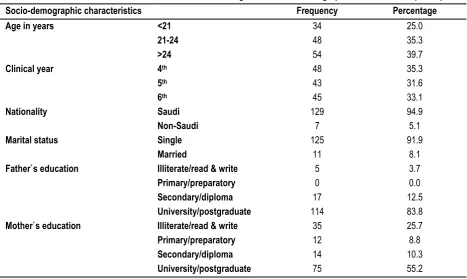
Table 1: Distribution of male medical students according to their socio-demographic characteristics (n=136)
Socio-demographic characteristics Frequency Percentage
Age in years
<21 21-24 >24
34 48 54
25.0 35.3 39.7
Clinical year
4th 5th 6th
48 43 45
35.3 31.6 33.1
Nationality Saudi
Non-Saudi
129 7
94.9 5.1
Marital status
Single Married
125 11
91.9 8.1
Father`s education Illiterate/read & write
Primary/preparatory Secondary/diploma University/postgraduate
5 0 17 114
3.7 0.0 12.5 83.8
Mother`s education
Illiterate/read & write Primary/preparatory Secondary/diploma University/postgraduate
35 12 14 75
25.7 8.8 10.3 55.2
Figure 1: Distribution of body mass index among medical students, Umm Al-Qura University, Makkah.
57, 41.9%
40, 29.4% 39, 28.7%
Normal
Overweight
RESULTS
Response rate of 91.3% has been obtained (136 of medical students responded out of 149 invited to participate).
Table 1 presents the socio-demographic characteristics of the responded male medical students. Their age was less than 21 years among a quarter of them while it ranged between 21 and 24 among 35.3% of them while it was over 24 years among the remaining 39.7% of them. They almost equally distributed between the three clinical years 4th, 5th and 6th. Majority of them
(94.9%) were Saudi and singles (91.9%). Majority of them (83.8%) had university or above graduated fathers while more than half of them (55.2%) had university or above graduated mothers. Family history of hypertension among first degree relatives was reported among almost a quarter of students (27.9%). Ten students representing 7.4% of them reported history of hypercholesterolemia. Duration was 5 years or more among two students (20%) while it was less than 5 years in eight students (80%). Only three students representing 2.2% of them reported history of diabetes mellitus. Duration was 5 years or more among one student (33.3%) while it was <5 years in two students (66.7%). Prevalence of active smoking among responded medical
students was 18.4% while that of ex-smoking was 8.1%. Most of students (73.5%) never smoked. Regarding type of smoking, 41.7% of smokers (active and ex) reported smoking of cigarettes only while the remaining smokers (58.3%) reported smoking of
cigarettes and hookah (shisha or Mu’asel). The duration of
smoking was five years or more among more than a third of smoker students (38.9%) while it was less than five years among the remaining 61.1%. Exactly a third of smoker students smoked between 5 and 20 cigarettes per day whereas 44.4% smoked more than 20 cigarettes per day. Among 21 students who reported hookah smoking, 14 (66.7%) reported hookah smoking for less than 5 years whereas the remaining 7 (33.3%) reported smoking for 5 years or more. Regarding number of smoked hookah, 66.7% of students reported smoking of 1-2 times/day.
More than half of the medical students (52.2%) consumed less than one unit of vegetables whereas 11% of them consumed more than 6 units per week. Similarly, 52.2% of them consumed less than one unit of fruits whereas 11.8% of them consumed more than 6 units per week. Slightly less than half of them (47.1%) consumed more than 6 fast food meals per week.
Figure 2: Distribution of waist circumference among medical students, Umm Al-Qura University, Makkah.
Table 2: Risk factors for prehypertension among male medical students,Umm Al-Qura University, Makkah: Multivariate logistic regression analysis
Adjusted Odds ratio 95% confidence interval
Vegetable consumption (times/day)
<1 (n=67)a 1-6 (n=49) >6 (n=15)
1.0 0.46 0.04
- 0.19-1.12 0.01-0.93*
BMI
Normal (n=57) a Overweight (n=37) Obese (n=37)
1.0 2.91 10.81
- 0.88-10.03 3.94-32.01*
Waist circumference <102 cm (n=80) a
≥102 cm (n=51)
1.0 14.01
- 6.11-42.15*
Mother`s education Illiterate/read &write (n=35) a
1ry/intermediate (n=12) 2ry/diploma (n=14) University+ (n=70)
1.0 0.71 3.02 3.76
- 0.03-6.39 0.58-15.81 1.24-13.77* Here a reference category; *p<0.05; Age, marital status, father`s education and fruit consumption were removed
from the final logistic regression model
80, 58.8% 56, 41.2%
<102 cm
249 |P a g e Int J Med Res Prof.2017; 3(2); 245-52. www.ijmrp.com Almost a quarter of students (24.3%) reported practicing vigorous
physical activity. The duration of each set was more than 60 minutes among 36.4% of them while the frequency was less than three days/week among most of them 84.8%.
The prevalence of obesity among responded medical students was 28.7% whereas that of overweight was 29.4% as seen in figure 1. Waist circumference was 102 cm or more among 58.8% of the participants while it was less than 102 cm among 41.2% of them as shown in figure 2.
As obvious from figure 3, the prevalence of prehypertension according to JNC7 criteria was 23.5% while that of hypertension was 3.7%.
As shown from multivariate logistic regression analysis in table 2, compared to students who consumed less than one unit of
vegetables per week, those who consumed more than 6 units were at lower significant risk for prehypertension (Adjusted OR=0.04; 95%CI:0.01-0.93). Considering normal students as a reference category, obese students were at almost eleven folded increased risk for prehypertension (Adjusted OR=10.81; 95% CI: 3.94-32.01).
Compared to students with waist circumference less than 102 cm, students with waist circumference of 102 cm or more were at almost fourteen folded increased risk for prehypertension (Adjusted OR=14.01; 95%CI: 6.11-42.15). Students whose mothers were university graduated or above were at significant increased risk for prehypertension as opposed to those whose mothers were illiterate or just able to read and write (Adjusted OR=3.76; 95%CI: 1.24-13.77).
Figure 3: Prevalence of prehypertension and hypertension among medical students, Umm Al-Qura University, Makkah.
DISCUSSION
The prevalence of prehypertension varied in a very wide range across studies. Using the JNC-7 Report’s criteria for BP
classification, our finding showed that the overall prevalence of prehypertension among senior male medical students in Umm Al-Qura University was 23.5%, which exceeds the figure that has been reported by Al-Asmary, et al23 in their study conducted
among Saudi military persons in Western Saudi Arabia (17.3%) whereas, it was lower than that reported among male teachers in Jeddah (43%).9
In Oman, a prevalence of 54.1% has been reported among prediabetic Omani adults.26 In Kuwait, in a study conducted
among students aged from 17 to 23 years, prevalence was 39.5%.27 In South of Iran, the prevalence of prehypertension was
33.7% for adult men.28 Among Turkish adult men, a prevalence of
16.8% has been reported29 while among Israeli adults; a
prevalence of 50.6% has been published among adult males.2 In
India, a prevalence of 40.2% has been reported30 while in another
Indian study conducted among young military adults, a prevalence of 80% has been found.31 In Tailand,32 South Korea,33 Jamaica,34
China35 and Japan36 prehypertension prevalence were
33%, 26.9%, 35%, 40.5% and 32% respectively. A recent study conducted in 5 Indian cities showed that the prevalence of
prehypertension in Indian adult men was 30.0%.37 Results from
the SUNSET study conducted in Europe showed that the overall prevalence of prehypertension was 32.8%.38 In the United States,
the prevalence of prehypertension in an adult population 18 years and older was 41% in men.39 A simple meta-analysis was done to
combine the findings of different studies using random-effects models found, on the basis of 20 included studies, that the overall prevalence of prehypertension was 36%.40 Economic
development, changes in lifestyle and diet, and an increase in life expectancy may explain the rapid increase in the prevalence and total number of prehypertension cases reported in developing countries, including Saudi Arabia.
Increased body weight is a strong risk factor for prehypertension as confirmed in the present study. Consequently, weight loss is important for the prevention and treatment of prehypertension and hypertension. A lot of clinical trial data documented the significant BP-lowering effect of weight loss. A meta-analysis of randomized controlled trials included twenty-five randomized, controlled trials (comprising 34 strata) published between 1966 and 2002 with a total of 4874 participants was performed to estimate the effect of weight reduction on blood pressure overall and in population subgroups in 2003. Blood pressure reductions were −1.05 mmHg
99, 72.8% 32, 23.5%
5, 3.7%
Normal
(95% CI, −1.43 to −0.66) systolic and −0.92mmHg (95% CI,−1.28
to −0.55) diastolic when expressed per kilogram of weight loss.41
Another meta-analysis of 24 case-control studies in China reported that being overweight was an important risk factor for hypertension, with pooled OR 1.616 (95% CI, 1.600–1.633).42 The
consistent effect of being overweight or obese on both prehypertension and hypertension might indicate that these conditions have the same impact on BP. Although the proposed causes of hypertension have been discussed in many studies,43-45
the mechanism remains uncertain.
In this study, it was found that obese subjects were 10 folds more likely to develop prehypertension and increased waist circumference over 102 cm was significantly associated with increased prehypertension risk. In addition, high consumption of vegetables was significantly associated with reduced risk for prehypertension. Practicing physical exercise was not proved to be significantly associated with prehypertension in the current study. This could be due to the fact that we did not ask in details of physical activity as we concentrated only on vigorous physical activity. In controlling arterial hypertension, weight reduction has resulted in significant decreases.46, 47 It is reasonable to conclude
that the same benefits apply to prehypertension. Cocco and Pandolfi observed that with weight reduction, there were reduced blood pressure, decreased cardiovascular risks, and improved abnormal left ventricular relaxation.41
In regard to smoking, we found their effects on prehypertension to be unclear. The same finding has been reported by Zhang and Li.48 Some studies concluded that smoking contributes to
hypertension,49,50 while others did not.51 The heterogeneity
between studies may result in these uncertain outcomes. The significant association between higher mother`s educational level and increase in the prevalence of prehypertension among medical students was proved in the present study, even after controlling for other significant confounding factors in multivariate logistic regression analysis. This could be attributed to the fact that mother`s education is considered as a predictor of high socio-economic status which usually accompanied with sedentary life style, no enough exercise, long sitting time, and increase social-related stress on medical students.
In a study conducted by Zhang and Li (2011),48 after adjustment
for the other factors, their results showed that a controlled diet with low calorie and fat was associated with lower prevalence of prehypertension among urban adults (aOR=0.87, 95% CI: 0.81–
0.94), indicating that a healthy life style may be a good method of controlling high BP. In accordance with this finding, higher consumption of vegetables and fruits was significantly associated with lower risk of prehypertension in univariate analysis of risk factors in the present study. However, only consumption of vegetables was retained in the multivariate analysis.
The JNC-7 report recommends lifestyle modifications for all patients with prehypertension, including losing weight, increasing physical activity, and adopting the Dietary Approaches to Stop Hypertension (DASH) eating plan.52 Patients who reported
adopting these lifestyle modifications were found to be 6-fold more likely to have their hypertension under control.53
Three main limitations of the present study should be noted.
▪ This was a cross-sectional study, the findings cannot be used to establish a conclusive cause-and-effect relationship between the risk factors and prevalence of prehypertension.
▪ Bovet et al. have reported that BP tends to decrease greatly across repeated visits on separate days, and the prevalence of high BP based on repeated readings at a second visit will estimate fairly well the true prevalence in the population.54
However, in the present study, “prehypertension” based on
only 1 visit (even if based on the mean of 2 readings), which may markedly overestimate the true prevalence of hypertension.
▪ Due to limited resources and time, we did not considered important risk factors based on laboratory investigations as lipid profile and blood glucose
In summary, prehypertension has become a major public health problem among Saudi young adults as almost a quarter of male medical students in Umm Al-Qura University are victims of it in the present study. This emphasizes the urgent need to develop strategies for preventing and treating prehypertension among this sector of population, not only medical students.
REFERENCES
1. Israeli E, Schochat T, Korzets Z, Tekes-Manova D, Bernheim J, Golan E. Prehypertension and obesity in adolescents: a population study. American journal of hypertension. 2006 Jul;19(7):708-12. PubMed PMID: 16814125.
2. Grotto I, Grossman E, Huerta M, Sharabi Y. Prevalence of prehypertension and associated cardiovascular risk profiles among young Israeli adults. Hypertension. 2006 Aug;48(2):254-9. PubMed PMID: 16754794.
3. Kress AM, Hartzel MC, Peterson MR. Burden of disease associated with overweight and obesity among U.S. military retirees and their dependents, aged 38-64, 2003. Preventive medicine. 2005 Jul;41(1):63-9. PubMed PMID: 15916994. Epub 2005/05/27. eng.
4. Nowicki EM, Billington CJ, Levine AS, Hoover H, Must A, Naumova E. Overweight, obesity, and associated disease burden in the Veterans Affairs ambulatory care population. Military medicine. 2003 Mar;168(3):252-6. PubMed PMID: 12685694. Epub 2003/04/11. eng.
5. Al-Rukban MO, Al-Sughair AM, Al-Bader BO, Al-Tolaihi BA. Management of hypertensive patients in primary health care setting, auditing the practice. Saudi medical journal. 2007 Jan;28(1):85-90. PubMed PMID: 17206296. Epub 2007/01/09. eng.
6. Chalmers J, MacMahon S, Mancia G, Whitworth J, Beilin L, Hansson L, et al. 1999 World Health Organization-International Society of Hypertension Guidelines for the management of hypertension. Guidelines sub-committee of the World Health Organization. Clinical and experimental hypertension (New York, NY: 1993). 1999 Jul-Aug;21(5-6):1009-60. PubMed PMID: 10423121. Epub 1999/07/28. eng.
7. Khatib O. Noncommunicable diseases: risk factors and regional strategies for prevention and care. Eastern Mediterranean health journal = La revue de sante de la Mediterranee orientale = al-Majallah al-sihhiyah li-sharq al-mutawassit. 2004 Nov;10(6):778-88. PubMed PMID: 16335764.
251 |P a g e Int J Med Res Prof.2017; 3(2); 245-52. www.ijmrp.com 9. Ibrahim NK, Hijazi NA, Al-Bar AA. Prevalence and
Determinants of Prehypertension and Hypertension among Preparatory and Secondary School Teachers in Jeddah. The Journal of the Egyptian Public Health Association. 2008;83(3-4):183-203. PubMed PMID: 19302774.
10. Lewington S, Clarke R, Qizilbash N, Peto R, Collins R. Age-specific relevance of usual blood pressure to vascular mortality: a meta-analysis of individual data for one million adults in 61 prospective studies. Lancet. 2002 Dec 14;360(9349):1903-13. PubMed PMID: 12493255. Epub 2002/12/21. eng.
11. Chobanian AV, Bakris GL, Black HR, Cushman WC, Green LA, Izzo JL, Jr., et al. The Seventh Report of the Joint National Committee on Prevention, Detection, Evaluation, and Treatment of High Blood Pressure: the JNC 7 report. JAMA : the journal of the American Medical Association. 2003 May 21;289(19):2560-72. PubMed PMID: 12748199. Epub 2003/05/16. eng.
12. Wang Y, Wang QJ. The prevalence of prehypertension and hypertension among US adults according to the new joint national committee guidelines: new challenges of the old problem. Archives of internal medicine. 2004 Oct 25;164(19):2126-34. PubMed PMID: 15505126.
13. Roger VL, Go AS, Lloyd-Jones DM, Adams RJ, Berry JD, Brown TM, et al. Heart disease and stroke statistics--2011 update: a report from the American Heart Association. Circulation. 2011 Feb 1;123(4):e18-e209. PubMed PMID: 21160056.
14. Hajjar I, Kotchen JM, Kotchen TA. Hypertension: trends in prevalence, incidence, and control. Annual review of public health. 2006;27:465-90. PubMed PMID: 16533126. Epub 2006/03/15. eng.
15. Vasan RS, Larson MG, Leip EP, Evans JC, O'Donnell CJ, Kannel WB, et al. Impact of high-normal blood pressure on the risk of cardiovascular disease. The New England journal of medicine. 2001 Nov 1;345(18):1291-7. PubMed PMID: 11794147. Epub 2002/01/17. eng.
16. Sit JW, Sijian L, Wong EM, Yanling Z, Ziping W, Jianqiang J, et al. Prevalence and risk factors associated with prehypertension: identification of foci for primary prevention of hypertension. The Journal of cardiovascular nursing. 2010 Nov-Dec;25(6):461-9. PubMed PMID: 20938249.
17. Greenlund KJ, Croft JB, Mensah GA. Prevalence of heart disease and stroke risk factors in persons with prehypertension in the United States, 1999-2000. Archives of internal medicine. 2004 Oct 25;164(19):2113-8. PubMed PMID: 15505124.
18. Pletcher MJ, Bibbins-Domingo K, Lewis CE, Wei GS, Sidney S, Carr JJ, et al. Prehypertension during young adulthood and coronary calcium later in life. Annals of internal medicine. 2008 Jul 15;149(2):91-9. PubMed PMID: 18626048. Pubmed Central PMCID: 2587255.
19. Zhang Y, Lee ET, Devereux RB, Yeh J, Best LG, Fabsitz RR, et al. Prehypertension, diabetes, and cardiovascular disease risk in a population-based sample: the Strong Heart Study. Hypertension. 2006 Mar;47(3):410-4. PubMed PMID: 16446387. 20. Mullican DR, Lorenzo C, Haffner SM. Is prehypertension a risk factor for the development of type 2 diabetes? Diabetes care. 2009 Oct;32(10):1870-2. PubMed PMID: 19628813. Pubmed Central PMCID: 2752916.
21. Kim MJ, Lim NK, Park HY. Relationship between prehypertension and chronic kidney disease in middle-aged people in Korea: the Korean genome and epidemiology study.
BMC public health. 2012;12:960. PubMed PMID: 23137348. Pubmed Central PMCID: 3549294.
22. Grotto I, Grossman E, Huerta M, Sharabi Y. Prevalence of prehypertension and associated cardiovascular risk profiles among young Israeli adults. Hypertension. 2006;48:254-259 22. Al-Nozha MM, Ali MS, Osman AK. Arterial hypertension in Saudi Arabia. Annals of Saudi medicine. 1997 Mar;17(2):170-4. PubMed PMID: 17377424. Epub 1997/03/01. eng.
23. Al-Asmary SM, Al-Shehri AA, Farahat FM, Abdel-Fattah MM, Al-Shahrani MM, Al-Omari FK, et al. Community-based screening for pre-hypertension among military active duty personnel. Saudi medical journal. 2008 Dec;29(12):1779-84. PubMed PMID: 19082233. Epub 2008/12/17. eng.
24. Online random number generator. Available at: http://stattrek.com/Tables/ Random.aspx.
25. World Health Organization. Chronic diseases and health promotion. STEP wise approach to surveillance (STEPS). Available at: http://www.who.int/chp/steps /en/.
26. Ganguly SS, Al-Shafaee MA, Bhargava K, Duttagupta KK. Prevalence of prehypertension and associated cardiovascular risk profiles among prediabetic Omani adults. BMC public health. 2008;8:108. PubMed PMID: 18394173. Pubmed Central PMCID: 2386813.
27. Al-Majed HT, Sadek AA. Pre-hypertension and hypertension in college students in Kuwait: a neglected issue. Journal of family & community medicine. 2012 May;19(2):105-12. PubMed PMID: 22870414. Pubmed Central PMCID: 3410173.
28. Rahmanian K, Shojaie M. The prevalence of pre-hypertension and its association to established cardiovascular risk factors in south of Iran. BMC research notes. 2012;5:386. PubMed PMID: 22838639. Pubmed Central PMCID: 3506467.
29. Erem C, Hacihasanoglu A, Kocak M, Deger O, Topbas M. Prevalence of prehypertension and hypertension and associated risk factors among Turkish adults: Trabzon Hypertension Study. Journal of public health. 2009 Mar;31(1):47-58. PubMed PMID: 18829520.
30. Gupta R, Deedwania PC, Achari V, Bhansali A, Gupta BK, Gupta A, et al. Normotension, prehypertension, and hypertension in urban middle-class subjects in India: prevalence, awareness, treatment, and control. American journal of hypertension. 2013 Jan;26(1):83-94. PubMed PMID: 23382331.
31. Ray S, Kulkarni B, Sreenivas A. Prevalence of prehypertension in young military adults & its association with overweight & dyslipidaemia. The Indian journal of medical research. 2011 Aug;134:162-7. PubMed PMID: 21911967. Pubmed Central PMCID: 3181015.
32. Aekplakorn W, Abbott-Klafter J, Khonputsa P, Tatsanavivat P, Chongsuvivatwong V, Chariyalertsak S, et al. Prevalence and management of prehypertension and hypertension by geographic regions of Thailand: the Third National Health Examination Survey, 2004. Journal of hypertension. 2008 Feb;26(2):191-8. PubMed PMID: 18192831.
33. Choi KM, Park HS, Han JH, Lee JS, Lee J, Ryu OH, et al. Prevalence of prehypertension and hypertension in a Korean population: Korean National Health and Nutrition Survey 2001. Journal of hypertension. 2006 Aug;24(8):1515-21. PubMed PMID: 16877953.
relationship to risk factors for cardiovascular disease in Jamaica: analysis from a cross-sectional survey. BMC cardiovascular disorders. 2008;8:20. PubMed PMID: 18752689. Pubmed Central PMCID: 2551581.
35. Meng X-J, Dong G-H, Wang D, Liu M-M, Liu Y-Q, Zhao Y, et al. Epidemiology of prehypertension and associated risk factors in urban adults from 33 communities in China (The CHPSNE Study) Circ J 2012; 76: 900 – 906
36. Ishikawa Y, Ishikawa J, Ishikawa S, Kayaba K, Nakamura Y, Shimada K, et al. Prevalence and determinants of prehypertension in a Japanese general population: The Jichi Medical School Cohort Study. Hypertens Res 2008; 31: 1323 –
1330.
37. Singh RB, Fedacko J, Pella D, Macejova Z, Ghosh S, de Amit K, et al; Five City Study Group, Gupta AK. Prevalence and risk factors for prehypertension and hypertension in five Indian cities. Acta Cardiol 2011; 66: 29 – 37.
38. Agyemang C, van Valkengoed I, van den Born BJ, Stronks K. Prevalence and determinants of prehypertension among African Surinamese, Hindustani Surinamese, and White Dutch in Amsterdam, the Netherlands: The SUNSET study. Eur J Cardiovasc Prev Rehabil 2007; 14: 775 – 781.
39. Wang Y, Wang QJ. The prevalence of prehypertension and hypertension among US adults according to the new joint national committee guidelines: New challenges of the old problem. Arch Intern Med 2004; 164: 2126 – 2134.
40. Guo X, Zou L, Zhang X, Li J, Zheng L, Sun Z, et al. Prehypertension: A meta-analysis of the epidemiology, risk Factors, and predictors of progression. Tex Heart Inst J 2011;38(6):643-52)
41. Cocco G, Pandolfi S. Physical exercise with weight reduction lowers blood pressure and improves abnormal left ventricular relaxation in pharmacologically treated hypertensive patients. Journal of Clinical Hypertension 2011;13(1):23–29.
42. Luo L, Luan RS, Yuan P. Meta-analysis of risk factor on hypertension in China [in Chinese]. Zhonghua Liu Xing Bing Xue Za Zhi 2003;24(1):50-3.
43. Enriori PJ, Evans AE, Sinnayah P, Cowley MA. Leptin resistance and obesity. Obesity (Silver Spring) 2006;14 Suppl 5: 254S-258S.
44. Messerli FH, Ventura HO, Reisin E, Dreslinski GR, Dunn FG, MacPhee AA, Frohlich ED. Borderline hypertension and obesity: two prehypertensive states with elevated cardiac output. Circulation 1982;66(1):55-60.
45. Esler MD, Eikelis N, Lambert E, Straznicky N. Neural mechanisms and management of obesity-related hypertension. Curr Cardiol Rep 2008;10(6):456-63.
46. Lavie CJ, Amodeo C, Ventura HO, Messerli FH. Left atrial abnormalities indicating diastolic ventricular dysfunction in cardiopathy of obesity. Chest 1987;92(6):1042-6.
47. Lavie CJ, Milani RV. Obesity and cardiovascular disease: the Hippocrates paradox? J Am Coll Cardiol 2003;42(4):677-9. 48. Zhang W, Li N. Prevalence, risk Factors, andmanagement of prehypertension International Journal of Hypertension 2011; Volume 2011: Article ID 605359, 6 pages
49. Kim JW, Park CG, Hong SJ, Park SM, Rha SW, Seo HS, et al. Acute and chronic effects of cigarette smoking on arterial stiffness. Blood Press 2005;14(2):80-5.
50. Valkonen M, Kuusi T. Passive smoking induces atherogenic changes in low-density lipoprotein. Circulation 1998; 97 (20): 2012-6.
51. Benowitz NL, Sharp DS. Inverse relation between serum cotinine concentration and blood pressure in cigarette smokers. Circulation 1989;80(5):1309-12.
52. Svetkey LP, Simons-Morton DG, Proschan MA, Sacks FM, Conlin PR, Harsha D; DASH-Sodium Collaborative Research Group. Effect of the dietary approaches to stop hypertension (DASH) diet and reduced sodium intake on blood pressure control. J Clin Hypertens 2004; 6: 373 – 381.
53. He J, Muntner P, Chen J, Roccella EJ, Streiffer RH, Whelton PK. Factors associated with hypertension control in the general population of the United States. Arch Intern Med 2002; 162: 1051
– 1058.
54. Bovet P, Gervasoni JP, Ross AG, Mkamba M, Mtasiwa DM, Lengeler C, et al. Assessing the prevalence of hypertension in populations: Are we doing it right? J Hypertens 2003; 21: 509 –
517.
[
Source of Support: Nil. Conflict of Interest: None Declared.
Copyright: © the author(s) and publisher. IJMRP is an official publication of Ibn Sina Academy of Medieval Medicine & Sciences, registered in 2001 under Indian Trusts Act, 1882. This is an open access article distributed under the terms of the Creative Commons Attribution Non-commercial License, which permits unrestricted non-commercial use, distribution, and reproduction in any medium, provided the original work is properly cited.
Cite this article as: Adel Mesfer Alghamdi, Sameer Awad Saban, Abdullah Abdulwahab Alabdulwahab. Prehypertension among Male Medical Students of Umm Al-Qura University, Makkah Al-Mokarramah. Int J Med Res Prof. 2017; 3(2):245-52.